NESCA’s Newton, MA location has immediate availability for neuropsychological evaluations. Our MA clinicians specialize in the following evaluations: Neuropsychological; Autism; and Emotional and Psychological, as well as Academic Achievement and Learning Disability Testing.

Visit www.nesca-newton.com/intake for more information or to book an evaluation.

Tag

ASD Archives - Page 2 of 5 - NESCA

Subscribe to NESCA Notes

Why Do So Many Girls Get Diagnosed with ASD Later in Life?

By | NESCA Notes 2024

By: Renee Cutiongco Folsom, Ph.D.
Pediatric Neuropsychologist

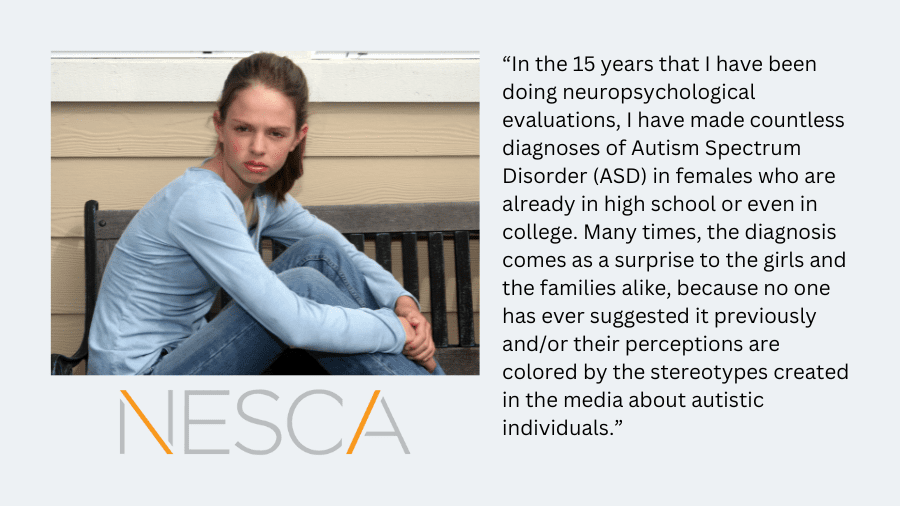
In the 15 years that I have been doing neuropsychological evaluations, I have made countless diagnoses of Autism Spectrum Disorder (ASD) in females who are already in high school or even in college. Many times, the diagnosis comes as a surprise to the girls and the families alike, because no one has ever suggested it previously and/or their perceptions are colored by the stereotypes created in the media about autistic individuals. However, a discussion about what ASD is and how it manifests in females as opposed to males usually helps my clients and their families understand the nuanced and comprehensive nature of the ASD diagnosis. They often pivot to feelings of relief and gratitude for having a label for what they have been struggling with for a long time. Many of my clients learn to embrace this new diagnosis and use it as a framework for celebrating their strengths and looking for supports to address their vulnerabilities. They often say, “It totally makes sense!”

Autism Spectrum Disorder is a developmental disorder that manifests in challenges with social communication and interaction, and in the presence of repetitive, restricted behaviors that significantly impact functioning. When autism was first introduced by Dr. Leo Kanner in 1943, he described children (boys) who showed little interest in other people, insisted on routines, and displayed unusual body movements, like rocking back-and-forth and flapping their hands. Many of the children could talk but they rarely used their speech to communicate with others, and they had a variety of pervasive learning difficulties. For the most part, this continues to be the image that is conjured when people mention autism. However, with advances in research, especially within the last few decades, we have come to recognize the various manifestations of autism in children and adolescents who are higher functioning, have better communication skills, and have fewer learning issues. Thus, the newer conceptualization of autism as a spectrum with a wide range of capabilities and communication skills. More recently, researchers have also discovered that the presentation of autism varies in boys versus girls. This has made the diagnosis of ASD in girls difficult.

In their book Girls Growing Up on the Autism Spectrum, ASD researchers Shana Nichols, Ph.D., Gina Moravcik, MA, CCC-SLP, and Samara Pulver Tetenbaum, MA, outlined some preliminary findings of differences between males and females on the spectrum. They reported that:

  • The play of boys with ASDs is more restricted in range and more repetitive when compared to girls with ASDs who have stronger pretend-play skills.
  • Girls have stronger communication skills.
  • Sex-related social difficulties emerge over time – boys have more impairments early on (thus leading to earlier diagnoses), whereas for girls, the difficulties appear more in early adolescence.
  • Boys are more easily distracted when compared to girls.
  • Girls with mild difficulties may not be included in research samples.

They added that these differences could impact the assessment and diagnosis of ASD. They wondered if girls with ASD are being missed or overlooked during an evaluation because their presentation does not fit how professionals currently characterize ASD based on a male prototype. Other researchers have suggested that girls with ASD may be better able to compensate for symptoms despite having persistent core deficits associated with ASD, which might contribute to greater social “camouflage” or what is called “masking” (an individual hides or suppresses symptoms, behaviors, or difficulties). Indeed, as I have been learning more and working with girls diagnosed with ASD, I have been keeping in mind these potential sex differences. For example, I often compare my client’s social and communicative abilities to what is considered normative for girls their age and cognitive ability. I have been avoiding comparing my female clients with what has been the prototypical profile of autism in males. I also think about other manifestations of repetitive behaviors and interests in girls with ASD that are more socially acceptable, for example, an obsession on reading or running as opposed to preferred topics of males on the spectrum (e.g., trains, schedules, calendars, etc.).

Researchers have speculated that these differences in the manifestation of ASD in girls versus boys stem from how girls are socialized at an early age to pay attention to social cues/actions as opposed to boys. There is also research that suggests that girls are more able to follow social actions by delayed imitation. They observe and copy other children more effectively than do boys. This could lead to the phenomenon of masking and to milder presentations when compared to boys.

Sources:

Evans, S., et. al. (2019). Sex/gender differences in screening for autism spectrum disorder: Implications for evidence-based assessment. Journal of Clinical Child Adolescent Psychology, 48 (6), 840-854.

Nichols, S., Moravcik, G. & Tetenbaum, S. P. (2009). Girls growing up on the autism spectrum. London: Jessica Kingsley Publishers.

Ozonoff, S., Dawson, G. & McPartland, J. (2002). A parent’s guide to asperger syndrome and high functioning autism. New York: Guilford Press.


About the Author

Dr. Renee Cutiongco Folsom, Ph.D. has been working with families in the greater Boston area since 2015. Prior to this, she was on staff at Johns Hopkins University and trained at the University of California, Los Angeles (UCLA). She provides comprehensive neuropsychological evaluations of children, adolescents, and young adults who have learning, behavioral, and socio-emotional challenges. Her areas of expertise include Autism Spectrum Disorder and other conditions that usually co-occur with this diagnosis; Attention-Deficit/Hyperactivity Disorder; Dyslexia and other Specific Learning Disabilities; and Anxiety/Depression. She thinks that the best part of being a pediatric neuropsychologist is helping change the trajectory of children’s lives.

To schedule an appointment with one of NESCA’s pediatric neuropsychologists, please complete our online intake form

NESCA is a pediatric neuropsychology practice and integrative treatment center with offices in Newton, Plainville, and Hingham, Massachusetts; Londonderry, New Hampshire; and the greater Burlington, Vermont region, serving clients from infancy through young adulthood and their families. For more information, please email info@nesca-newton.com or call 617-658-9800.
 

How to Make the Holidays Less Stressful

By | Nesca Notes 2023

By: Maggie Rodriguez, Psy.D.
Pediatric Neuropsychologist, NESCA

Are the holidays the “most magical time of the year?” Maybe, but they can also be the most stressful. In fact, a recent survey by the American Psychological Association found that 41% of U.S. adults experience increased stress levels around the holidays, while 52% find their stress levels remain the same, and only 7% feel less stressed this time of year. A whopping 43% of American adults acknowledge that the stress that accompanies the holidays compromises their ability to enjoy them (and that number includes only the people willing to admit it!).

As an adult reading this, you may be thinking this information comes as no surprise and you’re all too aware of the stress that comes with the holidays. What you may not realize as fully is that this time of year can be stressful for children as well. While the holidays can bring excitement and fun, they can also present challenges, particularly for our kids and teens who struggle with underlying mental health issues (such as anxiety or depression) or neurodevelopmental conditions (such as Autism, Attention-Deficit/Hyperactivity Disorder, or Sensory Processing Disorder). For the next few weeks, many of us will be attempting to navigate our own holiday-related stress and manage the stress our children may feel and express in a variety of ways. So, if you’re feeling less overwhelmed with excitement and joy and instead simply overwhelmed, you’re not alone. Here are some strategies for making the holidays work for you:

Notice and recognize the impact of expectations. It all starts here. From Hallmark movies to the pictures posted by mom-fluencers on Instagram, we are bombarded with unrealistic images of what the holidays “should” look like. Social media is particularly insidious, as it tends to contribute to a sense that the everyday, real people around us (not just those celebrities in magazines) are living what we see reflected in their carefully edited and curated photos. It’s important to remind ourselves that these images don’t reflect the reality of life and that we don’t see 99% of what happens in the daily lives of those we follow on social media. We may see the images of perfectly decorated Christmas cookies but not the kitchen counters covered in flour, eggs, and frosting (or the parent yelling) in the background. We click on the beautiful photo of three kids all smiling at the camera from Santa’s lap but don’t see the 25 outtakes featuring those same children in tears, sticking out their tongues, or bolting out of the frame. Realizing this and taking a step back is key for ourselves and our children, who may also need explicit information about what they can expect (for instance, regarding the number of and type of gifts they will get based on your family’s budget versus what they envision).

Realize we also all harbor implicit ideas about what the holidays “should” look like based on our experiences growing up and the way our families did things, which we take for granted. If you’re in a relationship, you may have encountered your own hidden expectations if they ever come into conflict with those of your significant other. Even if you celebrate the same holiday(s), you may do so in very different ways. Some of you may be familiar with conversations, such as, “What do you mean your family decorates the tree Christmas Eve? Christmas trees go up as soon as we put our jack-o-lanterns in the compost on November 1st!” If you and your partner celebrate different holidays or your kids split their time between your home and that of another parent, all of this becomes much more complicated. So, talk about it openly and together. As a family, re-evaluate your expectations and traditions, and start with a blank slate. Sit down together, make your expectations explicit, then assess them together.

Ask some questions, such as:

  • What does each family member, kids included, envision the holidays will look like? This might be general and abstract (maybe Mom wants to ensure there’s downtime for rest and relaxation) or concrete (maybe the kids want to go ice skating over winter break, and Dad wants to make sure the family goes to midnight mass on Christmas Eve). How will you make this work both logistically and in terms of balancing different needs?
  • What traditions do you automatically take part in, and do they work for your family at this particular moment in time? Although traditions are important and meaningful, blind and rigid adherence to rituals and routines that don’t work for us don’t benefit anyone. We often take part in traditions without questioning whether they add to our lives or why we started doing them in the first place.

Once you’ve had these discussions, consider that you don’t have to “do” the holidays the same way ever single year. There’s no rule that says every holiday season has to look the same. Do you always go take photos with Santa at the mall even though your kids inevitably resist the idea, become anxious and overwhelmed, and you end up frustrated? Open up to the possibility of forgoing that tradition even if it’s just for the time being. Do you make an elaborate holiday dinner each year but aren’t up to it this year? Consider finding an alternative for now that takes the stress off of you and still aligns with your priorities. If what’s important to you is enjoying a meal with your family, maybe you can still do that while letting go of the need to do it all yourself.

Modify your expectations and make accommodations for your children given their unique personalities and potential challenges. This might mean forgoing busy and crowded events, such as parties, for children and teens who struggle with anxiety in social settings or become easily overwhelmed by sensory input. Or maybe you still attend, but you have a pre-established plan for leaving by a certain time and/or managing distress that may arise. These days, many public spaces that host events (e.g., museums, theaters) hold modified sensory-friendly versions of events at specified times. For many children, building in predictable routines, and previewing special plans or changes to their usual schedules can be very helpful. For kids or adolescents with significant “picky” eating or Avoidant-Restrictive Food Intake Disorder (ARFID), you might consider hosting a holiday dinner at your house so you have control over the menu or bringing food you know your child will eat if you’re visiting others. Many kids with ADHD will need movement breaks, so think ahead about how you’ll work those in depending on your plans. It helps to think ahead and have a flexible plan for meeting your kids’ needs in different scenarios.

Now for the twist. Remember that APA study I quoted at the start of this blog? Well, even though so many people reported significant stress, it also found that 69% of adults feel the stress of the holidays is “worth it,” and many endorse positive outcomes related to the holidays, including an increased sense of togetherness. No matter what or how you celebrate, the holidays can be a wonderful and meaningful time of the year, and the odds of finding joy, connection, and calm will be higher if you take a step back and figure out how to make the holidays fit into your life and work for your family.

References:
https://www.apa.org/news/press/releases/2023/11/holiday-season-stress


About the Author

Maggie Rodriguez, Psy.D., provides comprehensive evaluation services for children, adolescents, and young adults with often complex presentations. She particularly enjoys working with individuals who have concerns about attention and executive functioning, language-based learning disorders, and those with overlapping cognitive and social/emotional difficulties.

Prior to joining NESCA, Dr. Rodriguez worked in private practice, where she completed assessments with high-functioning students presenting with complex cognitive profiles whose areas of weakness may have gone previously undiagnosed. Dr. Rodriguez’s experience also includes pre- and post-doctoral training in the Learning Disability Clinic at Boston Children’s Hospital and the Neurodevelopmental Center at MassGeneral for Children/North Shore Medical Center. Dr. Rodriguez has spent significant time working with students in academic settings, including k-12 public and charter school systems and private academic programs, such as the Threshold Program at Lesley University.

Dr. Rodriguez earned her Psy.D. from William James College in 2012, where her coursework and practicum training focused on clinical work with children and adolescents and on assessment. Her doctoral thesis centered on cultural issues related to evaluation.

Dr. Rodriguez lives north of Boston with her husband and three young children.  She enjoys spending time outdoors hiking and bike riding with her family, practicing yoga, and reading.

To book a consultation with Dr. Rodriguez or one of our many other expert neuropsychologists, complete NESCA’s online intake form.

NESCA is a pediatric neuropsychology practice and integrative treatment center with offices in Newton, Plainville, and Hingham, Massachusetts; Londonderry, New Hampshire; and the greater Burlington, Vermont region, serving clients from infancy through young adulthood and their families. For more information, please email info@nesca-newton.com or call 617-658-9800.

Neurodevelopmental Evaluations for Children under Age 5

By | Nesca Notes 2023

By: Lauren Halladay, Ph.D.
Pediatric Neuropsychologist, NESCA

Many families are curious about neurodevelopmental testing. Neuropsychologists who specialize in working with young children are often asked about when it is appropriate to pursue an evaluation, what the evaluation process entails, and where to go.

Why Would a Young Child Need an Evaluation?

There are developmental milestones across several domains that children are expected to achieve within certain timeframes. When children are showing delays in achieving those milestones within expected age ranges, seeking an evaluation may be warranted. From birth to 5 years of age, the areas of development that are especially important to monitor include:

  • Speech and Language (e.g., use of single words/phrases, following directions)
  • Social Skills (e.g., eye contact, social smile, interest in others, imaginative play skills)
  • Motor Skills (e.g., crawling, walking, using a pincer grasp)
  • Cognition/Early Problem Solving Skills (e.g., matching shapes and objects, completing simple puzzles)

If delays in any of the areas listed above are observed, pursing an evaluation sooner rather than later is recommended, as research has shown that early diagnosis and intensive treatment are the most important factors in determining rapid progress and long-term prognosis.

What Does a Neurodevelopmental Evaluation Entail?

Within a comprehensive neurodevelopmental evaluation, the child is administered tests that look at the developmental areas listed above. Information should also be collected from parents, teachers, and other caregivers who know the child well. These evaluations help to provide a better understanding of the child’s developmental profile, including areas of relative strength and weakness. In other words, the evaluation can provide more information about where the child’s skills currently fall when compared to their same age peers. Such information can provide diagnostic clarification, as well as help to inform recommendations for services if needed.

Where to Go

There are several options for where families can pursue evaluations, each with their benefits and drawbacks:

  • Early Intervention (EI): EI is meant to support families of children birth to three years of age who have developmental delays or are at risk of developmental delays. The goal of the Massachusetts EI program is to collaboratively promote skill acquisition based on the family’s priorities and child’s individual needs. Evaluations are typically conducted within the home setting to determine the child’s eligibility for EI services. While these evaluations can provide valuable information about the child’s strengths and weaknesses, a diagnosis will not be provided.
  • Hospital-based Setting: These evaluations are structured differently depending on the hospital system. In most cases, these evaluations are interdisciplinary, meaning that they involve a team of providers from different disciplines (i.e., psychologist, medical provider (pediatrician, nurse practitioner) speech and language pathologist, occupational therapist, etc.). While outcomes of these evaluations can include diagnosis and recommendations for services when appropriate, waitlists are often long, and reports tend to be brief.
  • Independent Setting/Private Practice: Independent evaluations usually involve several visits with a pediatric psychologist or neuropsychologist, rather than with a team of providers. Similar to the hospital-based evaluations, independent evaluations can result in diagnosis when appropriate. Specific recommendations based on the child’s individual profile are offered. These evaluations tend to be more detailed and comprehensive than those conducted by EI and within hospital-based settings. Clinicians also have the option to observe the child in other settings (e.g., daycare, preschool, elementary school), as well as attend school-based meetings.

Relatedly, NESCA is currently providing evaluations for children 12 months to 3 years of age who are showing early signs of an autism spectrum disorder (ASD). The wait time is 1 month or less – by design –  so children who meet criteria for an ASD diagnosis can access the appropriate interventions for them. If you are interested in learning more about ASD Diagnostic Testing through NESCA’s ASD Diagnostic Clinic, please visit our website at https://nesca-newton.com/asd-diagnostic-clinic-2/ and/or complete our online Intake Form.

Related resources and links to help track developmental milestones:


About Lauren Halladay, Ph.D.

Dr. Halladay conducts comprehensive evaluations of toddlers, preschoolers, and school-aged children with a wide range of developmental, behavioral, and emotional concerns. She particularly enjoys working with individuals with Autism Spectrum Disorder, Intellectual and Developmental Disabilities, and complex medical conditions. She has experience working in schools, as well as outpatient and inpatient hospital settings. She is passionate about optimizing outcomes for children with neurodevelopmental disabilities by providing evidence-based, family-oriented care.


If you are interested in booking an appointment for an evaluation with a Dr. Halladay or another NESCA neuropsychologist/clinician, please fill out and submit our online intake form


NESCA is a pediatric neuropsychology practice and integrative treatment center with offices in Newton, Plainville, and Hingham, Massachusetts; Londonderry, New Hampshire; and the greater Burlington, Vermont region, serving clients from infancy through young adulthood and their families. For more information, please email info@nesca-newton.com or call 617-658-9800.

Falling through the Cracks

By | Nesca Notes 2023

By: Yvonne Asher, Ph.D.
NESCA Pediatric Neuropsychologist

“You’re going to have a tough conversation on your hands,” I said. The parent sighed and nodded in response. “That’s what her ABA provider said, too,” she responded.

This conversation would not be difficult because her child was acting out, engaging in challenging behaviors, or taking up a great deal of adult time. In fact, she was exactly the opposite. Quiet, calm, gentle, and well-regulated were some of the words I used during our feedback session. And this, we discussed, is a huge part of the problem.

Despite their best efforts, teachers simply cannot be with every child that needs help, each time they need help. School providers do not have infinite caseloads, time, or capacity. There are real-world limitations to providing support and services for children at school. And yet, the children who suffer from these very real constraints are so often the quietest and least disruptive. This is extremely unfortunate when the child has real, diagnosed, observable deficits that absolutely require special attention and intervention at school.

Our brains often develop schema in order to reduce the brain’s workload (these occur entirely outside of our conscious awareness). Many social psychology studies have characterized the harm that schema can do. One such harm often comes to children for whom teachers have either strong positive or strong negative schema about. The effects of negative schema are likely obvious, but the positive schema can be just as challenging to manage. When teachers view a child very positively, they may be more likely to “write off” concerns (e.g., “she was just tired today,” “he really does know, he’s just having a bad day”), over-emphasize the child’s effort and diligence (rather than their actual skill level or mastery), and focus on positive attributes of the child in place of focusing on their weaknesses.

It can be challenging for parents to hear such positive feedback, particularly when it does not correlate with their perception of the child’s difficulties. Although neuropsychology attempts to be a strength-based field as much as possible, fully exploring and adequately characterizing deficits is often an invaluable part of what we do. This can help us to bring objective, data-driven recommendations to school teams for all students, hopefully preventing those quiet, hard-working youngsters from “falling through the cracks.”


About the Author

Dr. Yvonne M. Asher enjoys working with a wide range of children and teens, including those with autism spectrum disorder, developmental delays, learning disabilities, attention difficulties and executive functioning challenges. She often works with children whose complex profiles are not easily captured by a single label or diagnosis. She particularly enjoys working with young children and helping parents through their “first touch” with mental health care or developmental concerns.

Dr. Asher’s approach to assessment is gentle and supportive, and recognizes the importance of building rapport and trust. When working with young children, Dr. Asher incorporates play and “games” that allow children to complete standardized assessments in a fun and engaging environment.

Dr. Asher has extensive experience working in public, charter and religious schools, both as a classroom teacher and psychologist. She holds a master’s degree in education and continues to love working with educators. As a psychologist working in public schools, she gained invaluable experience with the IEP process from start to finish. She incorporates both her educational and psychological training when formulating recommendations to school teams.

Dr. Asher attended Swarthmore College and the Jewish Theological Seminary. She completed her doctoral degree at Suffolk University, where her dissertation looked at the impact of starting middle school on children’s social and emotional wellbeing. After graduating, she completed an intensive fellowship at the MGH Lurie Center for Autism, where she worked with a wide range of children, adolescents and young adults with autism and related disorders.


NESCA is a pediatric neuropsychology practice and integrative treatment center with offices in Newton, Plainville, and Hingham (coming soon), Massachusetts; Londonderry, New Hampshire; and the greater Burlington, Vermont region, serving clients from infancy through young adulthood and their families. For more information, please email info@nesca-newton.com or call 617-658-9800.


To book an appointment with Dr. Yvonne Asher or another NESCA clinician, please complete our Intake Form today. For more information about NESCA, please email info@nesca-newton.com or call 617-658-9800.


NESCA Offers Vermont-based Transition and Coaching Services

By | Nesca Notes 2023

By: Jane Hauser
Director of Marketing & Outreach, NESCA

NESCA recently announced that it is now offering transition services and coaching services in the Greater Burlington, Vermont region. Learn more about what is being offered by our Vermont-based staff from my interview with Vermont-based Program Manager Dr. Lyndsay Wood, OTD, OTR/L.

Why did NESCA expand to Vermont and how can clients benefit from your services?

NESCA is expanding our in-person services to Vermont to widen the breadth of transition services offered within the state. Through research and conversations with local professionals and parents, we recognized that there is an opportunity to bolster local transition services for students to meet their personal postsecondary goals and to live fulfilling lives post-high school. Through our variety of services, our goal is to empower teens and young adults to create their own vision for the future and build the skills necessary to achieve it. This is important for students currently in public middle and high schools as well as local college students and young adults new to the world of work. At NESCA, we take a relational approach with to build a strong foundational relationship between ourselves and the clients we support. Our priority to is create a safe, inclusive, and welcoming environment within our sessions.

What services do you offer?

At this time, NESCA’s Vermont-based practice will offer transition assessment, real-life skills coaching, executive function coaching, transition consultation, and functional community-based occupational therapy evaluations. All Vermont-based services are delivered by experienced occupational therapists and transition specialists with expertise in developing functional and relevant goals. For more information on each of these services, please visit our website and view our Post-Secondary Transition Services and Coaching Services links: https://nesca-newton.com/our-services/. Many folks are unfamiliar with transition assessments, so to learn more, see the following blog written by our Director of Transition Services Kelley Challen, Ed.M., CAS: https://nesca-newton.com/transition-assessment-what-is-it-anyway-how-is-it-different-from-neuropsychological-evaluation/.

What type of client does NESCA serve in Vermont?

NESCA’s Vermont-based practice primarily works with teens and young adults with autism spectrum disorders (ASD), attention-deficit/hyperactivity disorder (ADHD), mental health diagnoses, specific learning disabilities, executive function (EF) challenges, and other complex cases based on the expertise of our providers. A specialty at NESCA is working with clients who have multiple diagnoses or who don’t fit neatly into a singular diagnostic box.

Where are you in Vermont? Are services in-person or remote?

Coaching services will be offered in the home, school, or community within the greater Burlington area. Services can also be delivered remotely if deemed appropriate for the client. Transition assessment is typically conducted within the client’s school setting.

What is different about what NESCA offers in Vermont compared to other organizations or services already available?

NESCA will be a premier independent transition assessment provider in Vermont. We are happy to collaborate with school districts or work with families directly. Additionally, we are unique in providing one-on-one occupational therapy services that specifically address life skills within a client’s home and community setting. Working within the home and community, and not only within the school setting, is incredibly important for the generalization of life skills as well as social skills, functional academic skills, and executive functioning skills.

Does insurance cover your services in Vermont?

NESCA is primarily a private pay service provider. Some families are able to obtain some coverage or reimbursement for our real-life skills coaching service with their health insurance, but it is vital that folks first check with their insurance provider to ensure our services would be covered.

How do people get more information about NESCA’s Vermont services?

To learn more about NESCA, please visit our website at: https://nesca-newton.com/.

If you would like to fill out an intake form, follow this link: https://nesca-newton.com/intake.

If you have more specific questions, do not hesitate to call: 617-658-9818

Additionally, you can contact our Vermont-based Program Manager Dr. Lyndsay Wood, OTD, OTR/L, directly at: lwood@nesca-newton.com


About Lyndsay Wood, OTD, OTR/L

Lyndsay Wood, OTD, OTR/L, is an occupational therapist who focuses on helping students and young adults with disabilities to build meaningful skills in order to reach their goals. She has spent the majority of her career working in a private school for students with ASD. She has also spent some time working in an inpatient mental health setting. Lyndsay uses occupation-based interventions and strategies to develop life skills, executive functioning, and emotional regulation. While completely her doctoral degree at MGH Institute of Health Professions, Lyndsay worked with the Boston Center for Independent Living to evaluate transition age services. She uses the results from her research to deliver services in a way that is most beneficial for clients. Specifically, she focuses on hands-on, occupation-based learning that is tailored the client’s goals and interests.


To book coaching and transition services at NESCA, complete NESCA’s online intake form

NESCA is a pediatric neuropsychology practice and integrative treatment center with offices in Newton and Plainville, Massachusetts, Londonderry, New Hampshire, and Burlington, Vermont, serving clients from preschool through young adulthood and their families. For more information, please email info@nesca-newton.com or call 617-658-9800.

Why Knowing Yourself and Saying No Matters to Neurodivergent Individuals

By | Nesca Notes 2023

By Jasmine Badamo, MA
Educational Counselor; Executive Function Tutor

The ability to say “no” and honor your limits is a beautifully powerful skill that we can all benefit from. In a productivity-focused culture where today’s 40-hour work week is roughly equivalent to a 160-hour work week in 1950’s time (read more in Devon Price’s Laziness Does Not Exist), it’s easy to ignore our limits and put pressure on ourselves to perform at an otherworldly capacity.

While life requires all of us to push ourselves at times, it is impossible to work at 100% capacity 100% of the time. And by saying no, or deciding where to strategically place your energy, you leave yourself with the bandwidth and energy needed to be more effective and consistent in the activities that are priorities to you.

This is definitely not the first time you’ve heard these ideas. However, today I’d like to focus on why saying no and honoring your limits can be especially important for neurodivergent individuals.

Neurodiversity is the natural brain diversity that exists within the human population, similar to other forms of human diversity. The terms “neurodivergent,” “neurominority,” or “neurovariant” typically refer to individuals with a brain makeup that falls outside of the statistical majority of human neurotypes. Being a neurominority is not a problem, nor is it something to overcome. However, being a minority often means having to function within a world that is generally not designed by or for you.

Because of this, neurodivergent individuals are often implicitly or explicitly taught to modify their thoughts and actions to better fit their environment. Instead of being able to honor their individual needs and boundaries, they are frequently asked to push themselves beyond their limits. While every person—neurodivergent or not—must operate outside their comfort zone at times, for neurodivergent individuals it can become a default way of life. This is exhausting and can result in burnout.

During intake sessions with new clients, I make it a point to clarify that I’m not here to “cure” ADHD, autism, or a learning disability. I’m here to help reduce, and also cope with, the disconnect between the client, their environment, and the activities they are being asked to regularly manage. Together we find ways to make the environment better fit the individual and their needs, and then (and only then) we will implement strategies for navigating the remaining barriers to reaching their goals.

And in order to make the environment better fit the individual, each client needs to figure out what works for them and, most importantly, what does NOT work for them. For some neurodivergent folk, it can be truly ground-breaking to ask themselves, “What about my environment or current activities is not working for me? What can I start to say ‘no’ to?” It’s an important step in learning more about yourself and how your brain works, and what is sustainable for you (not someone else).

This can be hard, especially if your productivity or ability to “keep up” with others has become a pattern—or even a part of your identity. Learning to say no and to let go of not only what others regularly ask of you, but also what you have become accustomed to asking of yourself, takes time, patience, and practice.

Remember, you wouldn’t begrudge a cactus for wilting if it were asked to constantly absorb more water than its capacity, or if it didn’t get the amount of sun it required. And once you provide that cactus with the specific and appropriate external conditions, it will be able to flourish and show the world all the unique beauty it has to offer.

All of this is much easier said than done, but one of the most rewarding aspects of my job is being able to join clients as they learn how to work with their brains, accept their specific way of being in the world, and start to say no to the rest.

To read more on this topic:
https://www.simonandschuster.com/books/Laziness-Does-Not-Exist/Devon-Price/9781797120591

If your child, teen, or young adult needs support in this realm, complete our online Intake Form to learn more about NESCA’s Executive Function and Real-life Skills Coaching.


About the Author

Jasmine Badamo, MA, is an educational counselor and executive function coach who works full-time at NESCA supporting students ranging from elementary school through young adulthood. In addition to direct client work, Ms. Badamo provides consultation and support to parents and families in order to help change dynamics within the household and/or support the special education processes for students struggling with executive dysfunction. She also provides expert consultation to educators, special educators and related professionals.

Ms. Badamo is a New York State Certified ENL and Special Education teacher. She has more than 10 years of teaching experience across three countries and has worked with students and clients ranging in age from 7 to adulthood. She earned her bachelor’s degree in Biological Sciences from Cornell University and her master’s degree in TESOL from CUNY Hunter College. She has also participated in graduate coursework focusing on academic strategies and executive function supports for students with LD, ADHD, and autism as part of the Learning Differences and Neurodiversity (LDN) certification at Landmark College’s Institute for Research and Training. In addition to being a native English speaker, Ms. Badamo is also conversationally fluent in verbal and written Spanish.

Having worked in three different New York City public schools, Ms. Badamo has seen firsthand the importance of executive function skills in facilitating student confidence and success. Her coaching and consultation work focuses on creating individualized supports based on the specific needs and strengths of each client and supporting the development of metacognition (thinking about one’s own thought processes and patterns), executive function skills, and independence. She will guide clients to generate their own goals, identify the barriers to their goals, brainstorm potential strategies, advocate for support when needed, and reflect on the effectiveness of their applied strategies.

Ms. Badamo is a highly relational coach. Building an authentic connection with each client is a top priority and allows her to provide the best support possible. Additionally, as a teacher and coach, Ms. Badamo believes in fostering strong collaborations with anyone who supports her clients including service providers, classroom teachers, parents, administrators, and community providers.


To book executive function coaching with Jasmine Badamo or another EF or Real-life Skills Coach at NESCA, complete NESCA’s online intake form


NESCA is a pediatric neuropsychology practice and integrative treatment center with offices in Newton and Plainville, Massachusetts, Londonderry, New Hampshire, and Burlington, Vermont, serving clients from preschool through young adulthood and their families. For more information, please email info@nesca-newton.com or call 617-658-9800.

Welcoming Renee Cutiongco Folsom, Ph.D., Pediatric Neuropsychologist

By | Nesca Notes 2023

By: Jane Hauser
Director of Marketing & Outreach, NESCA

NESCA recently welcomed Pediatric Neuropsychologist Renee Cutiongco Folsom, Ph.D. to its clinical staff. Dr. Cutiongco Folsom brings a wealth of experiences and vast knowledge in assessing and diagnosing autism spectrum disorders (ASD) as well as conducting international evaluations. Take a moment to learn more about Dr. Cutiongco Folsom from my interview with her. 

Tell us about your background and how you got to NESCA.

I grew up in the Philippines. I started my career as a preschool teacher there for two years. At that point, I knew I wanted to work with children. I eventually got my master’s degree in psychology and took a neuropsychology class with a professor who was trained at Boston Children’s Hospital. I immediately fell in love with neuropsychology. I then came to the U.S. to pursue my Ph.D. and did my fellowship in neuropsychology at UCLA. I planned to go back to the Philippines but met my husband here in the U.S. and decided to stay here.

Since I did not go back to the Philippines, I was interested in practicing neuropsychology internationally, which I was able to do in Baltimore at Johns Hopkins. I was interested in the work NESCA has been doing internationally. The opportunity to work with a talented team at NESCA and the ability to do international evaluations was the right move for me.

What do you mean by looking beyond the data when conducting neuropsychological evaluations?

I refer to employing the “Boston Process Approach” in my evaluations and assessments because my mentor in the Philippines was trained in this approach when she did her postdoctoral work at Boston Children’s Hospital. She tried to ingrain this methodology in her trainees. What it means is that when we look at the data, we do not just look at a score. There is so much more to a child’s story than a number. As neuropsychologists, we are always looking at how the child comes up with an answer to a test. It is possible for a child to get a low score on a test of reproducing designs using blocks, for example, because the child threw or even ate the blocks! We must decipher what is behind the process by which the child produced the answer. This critical information falls outside of the data or what a score is. It tells us how the child learns, and what will help them at school, at home, and in their day-to-day life. This is the approach I take when I work with a child. I take a LOT of notes! I look to see what the child says and does, whether he or she is paying attention, and note other behaviors throughout the evaluation process. Then, I analyze all the data and look for patterns and discrepancies across various tests and measures.

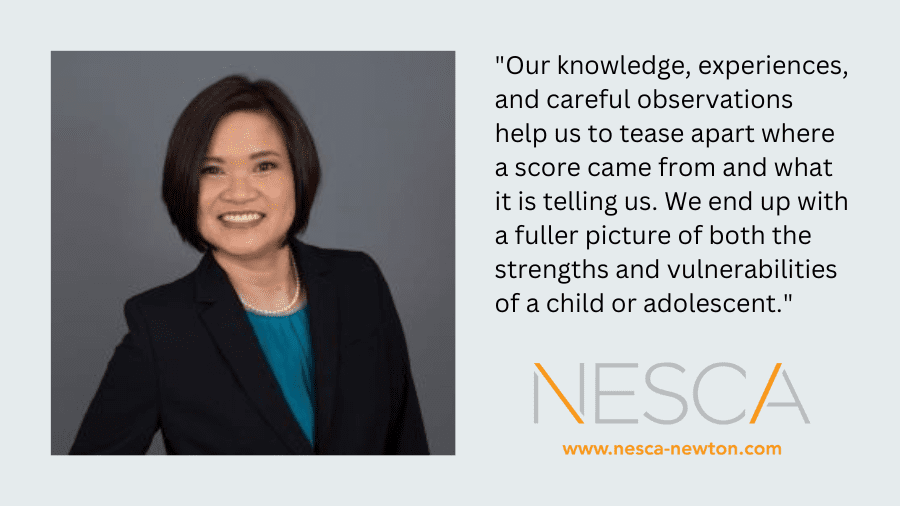
When we see the data associated with the performance on a test, we must ask why, for instance, they achieved a low score. What other factors are at play? Is it anxiety or a visual-motor issue? What we observe throughout the evaluation can guide us to administer some tests that may not have been initially scheduled. Our knowledge, experiences, and careful observations help us to tease apart where a score came from and what it is telling us. We end up with a fuller picture of both the strengths and vulnerabilities of a child or adolescent.

What kind of international work were you doing previously?

After I completed my fellowship in neuropsychology at UCLA, my first job was with the Kennedy Krieger Institute at Johns Hopkins. Because so many families go there from other countries seeking answers, the organization assembled interdisciplinary teams to serve international patients. We conducted week-long intensive and comprehensive evaluations involving a neurologist, neuropsychologist, occupational therapist, speech-language pathologist, and social worker who could help them access resources in their home country. At the end of the week of intense evaluation, we came together as a team to make a diagnosis, if warranted, and provide recommendations for interventions. It was a challenging and intense program because we needed to develop our impressions immediately. And we often saw some of the most difficult and complex cases because the families had already exhausted all the resources available to them in their home countries before traveling overseas.

What do you find most rewarding about being a pediatric neuropsychologist?

I have been practicing neuropsychology for a long time. I chose to work in pediatric neuropsychology vs. adult because we can do so much more with children. We have a particularly good chance of making a bigger impact on their lives at such an early age.

What I find most rewarding is to have patients come back for a follow-up evaluation, and I can see how the child has progressed. Their parents often thank me for providing them with a diagnosis and helping them to access resources and attest how far their child has come. Working alongside families to change the trajectory of a child’s life is very powerful.

 You specialize in autism spectrum disorders (ASD). How do you make a diagnosis and differentiate ASD from its related challenges?

You rely on years of training, your knowledge and expertise, trust your clinical judgment, and factor in the wisdom of colleagues when needed. This is how you make meaningful conclusions and diagnoses that impact a child’s life.

What do you feel makes NESCA a unique environment and practice?

The beauty of a practice like NESCA is that we get a broad spectrum of clients who present with different challenges or diagnoses. We get to see a range of ages and draw clients from all over the New England region as well as internationally. That variety enriches your perspective and gives more insight into your clinical work.

I have been at NESCA for about a month, and they take collaboration to heart. My colleagues at NESCA are a giving group of professionals when it comes to sharing experiences and knowledge. The clinicians are humble, candid, open, and eager to help children, adolescents, and young adults. As a pediatric neuropsychologist, I also get to collaborate with transition specialists, educational consultants, OTs, SLPs, and more. The multidisciplinary approach, learning from other perspectives, is a refreshing addition to my work experience.


About the Author

Dr. Renee Cutiongco Folsom, Ph.D. has been working with families in the greater Boston area since 2015. Prior to this, she was on staff at Johns Hopkins University and trained at the University of California, Los Angeles (UCLA). She provides comprehensive neuropsychological evaluations of children, adolescents, and young adults who have learning, behavioral, and socio-emotional challenges. Her areas of expertise include Autism Spectrum Disorder and other conditions that usually co-occur with this diagnosis; Attention-Deficit/Hyperactivity Disorder; Dyslexia and other Specific Learning Disabilities; and Anxiety/Depression. She thinks that the best part of being a pediatric neuropsychologist is helping change the trajectory of children’s lives.

To schedule an appointment with one of NESCA’s pediatric neuropsychologists, please complete our online intake form

NESCA is a pediatric neuropsychology practice and integrative treatment center with offices in Newton and Plainville, Massachusetts, Londonderry, New Hampshire, and the greater Burlington, Vermont area, serving clients from preschool through young adulthood and their families. For more information, please email info@nesca-newton.com or call 617-658-9800.


Shouldn’t We All Get Neuropsychological Evaluations, Then?

By | Nesca Notes 2023

By: Yvonne Asher, Ph.D.
NESCA Pediatric Neuropsychologist

One frequent question I have been asked by parents following a neuropsychological evaluation is, “Wouldn’t this process be helpful for everyone?” This tends to come up around the issue of disclosing results of an evaluation to children and teenagers and helping them better understand “how their brain works.” Many families with whom I have had the privilege of working come back months or years later with siblings of an initial client, noting that the process was so valuable the first time, they are hoping for a similar experience for their other child or children.

So, should we all get neuropsychological evaluations? Largely, I think this question is motivated by parents who are eager to help their children understand their own strengths and weaknesses. This is a wonderful goal, as self-understanding is one of the most valuable and lifelong gifts we can give our children.

In my experience, many people come to this kind of self-understanding naturally, over time, through experiences in adolescence and young adulthood. In particular, experiences that involve more independence in living and learning promote this kind of understanding. During childhood, we may learn our relative skill among family members (“I’m good at soccer, and my sibling is good at piano”), but these relative differences may not hold once we leave our family of origin. Many people venture out into the world and find that, compared to their peers, they are actually quite skilled at getting groups of friends together, doing everyday math, putting their thoughts down in writing, or staying organized. These real-world strengths often reflect the strengths that could be found through formal evaluation. As we gain self-understanding, we may be prompted to enter certain professions, take on particular hobbies, or pursue friends and partners with specific traits.

A neuropsychological evaluation can “speed up” the process of self-understanding, giving some young people a head start on the identity formation process that naturally occurs during adolescence. For some, this head start is vital – their brains are structured in ways that present clear, observable differences between them and their peers. This may be the case with diagnoses like autism spectrum disorder, a learning disability, or ADHD. For these individuals, the feedback from a neuropsychological evaluation can (under the best of circumstances) stave off feelings of inadequacy, negative self-esteem, and shame, helping a young person to recognize the deeply important strengths that are present alongside their more observable challenges. In these cases, a neuropsychological evaluation is not only for self-understanding, but also for self-compassion. Our goal as neuropsychologists in these cases is not just to help the child or teen understand themselves, but also to be gentle and kind with how they view their difficulties. Our hope is that, when these individuals venture out of their families and into the broader world, they are able to show resiliency in the face of the obstacles that will almost certainly be present.


About the Author

Dr. Yvonne M. Asher enjoys working with a wide range of children and teens, including those with autism spectrum disorder, developmental delays, learning disabilities, attention difficulties and executive functioning challenges. She often works with children whose complex profiles are not easily captured by a single label or diagnosis. She particularly enjoys working with young children and helping parents through their “first touch” with mental health care or developmental concerns.

Dr. Asher’s approach to assessment is gentle and supportive, and recognizes the importance of building rapport and trust. When working with young children, Dr. Asher incorporates play and “games” that allow children to complete standardized assessments in a fun and engaging environment.

Dr. Asher has extensive experience working in public, charter and religious schools, both as a classroom teacher and psychologist. She holds a master’s degree in education and continues to love working with educators. As a psychologist working in public schools, she gained invaluable experience with the IEP process from start to finish. She incorporates both her educational and psychological training when formulating recommendations to school teams.

Dr. Asher attended Swarthmore College and the Jewish Theological Seminary. She completed her doctoral degree at Suffolk University, where her dissertation looked at the impact of starting middle school on children’s social and emotional wellbeing. After graduating, she completed an intensive fellowship at the MGH Lurie Center for Autism, where she worked with a wide range of children, adolescents and young adults with autism and related disorders.


NESCA is a pediatric neuropsychology practice and integrative treatment center with offices in Newton and Plainville, Massachusetts, Londonderry, New Hampshire, and Burlington, Vermont, serving clients from preschool through young adulthood and their families. For more information, please email info@nesca-newton.com or call 617-658-9800.


To book an appointment with Dr. Yvonne Asher or another NESCA clinician, please complete our Intake Form today. For more information about NESCA, please email info@nesca-newton.com or call 617-658-9800.


Getting to Know NESCA Pediatric Neuropsychologist J. Michael Abrams, Ph.D.

By | Nesca Notes 2023

By: Jane Hauser
Director of Marketing & Outreach

I recently spoke with J. Michael Abrams, Ph.D., pediatric neuropsychologist practicing in NESCA’s Londonderry, New Hampshire office. Dr. Abrams joined NESCA last fall. Take a few minutes to learn more about him in today’s blog interview. 

How did you became interested in neuropsychology?

Back in the mid-80s, I worked at McLean Hospital, in the Child & Adolescent Inpatient program. They had an educational program set up for the kids that was run by psychologists who were embedded in the classrooms. There was a fair amount of test development going on at that time that used a lot of materials to build executive function and cognitive skills among the students. I was always interested in education and special education, but it was this experience that changed my career mindset toward psychology. So, I went back to school to study psychology.

Tell us about your career journey.

I always wanted to work with children and adolescents. That desire stemmed from my initial interest in special education and education in general, and I was on that path. I spent about seven and a half years at McLean, with the first couple of years working on an inpatient unit. Then I transferred to the psychologist-run education program, where I was a classroom educator.

After switching to psychology, my original clinical interest was with children who had experienced abuse and neglect and those who were involved in children’s eyewitness testimony. The focus was on how the experiences they had been through affected their memory, attention, and cognitive development. The more I worked with children and adolescents, the more I recognized how these neuropsychological factors impacted all aspects of their lives. It became much more than what I saw in the context of a legal case; instead, I saw how their experiences affected the management of themselves, their image of themselves, their hopes and aspirations, etc. I became really interested in how their neuropsychology intersected with their opportunities and experiences.

What segment of children and adolescents do you primarily work with? What is your specialty area?

I am particularly interested in working with children from age eight through 14, when their cognitive development is really taking off and they are trying to master this whole new set of skills. This time is filled with questions and challenges concerning self-esteem, mood, relationships, family relationships, etc. It’s a time when they are asking themselves what they are good at, where they struggle, and what those strengths and challenges say about them as a person. There is a great opportunity to have a big impact on kids in this age range. It’s such a gift to allow them to see themselves as successful and have that lead to future success.

What do you find most rewarding and most challenging about your profession?

The rewarding part is two-fold. The first is the interpersonal emotional piece. On a personal level, it’s rewarding to be able to contribute to other peoples’ success, whether it’s the clients, the practice, or the field overall. The second piece is more personal and intellectual. It’s intellectually stimulating to be able to integrate all of the information we gather or identify about a person, and to be able to communicate those findings or revelations to a child and their parents or caregivers. The intellectual reward lies in the ability to effectively communicate a child’s cognitive complexity in a way that they understand and can use to help reach their goals.

The challenging part has to do with the mental health landscape overall. As someone who is involved in neuropsychological assessments, it can feel like operating within a silo in the overall landscape. So many of the systems, such as insurance and education, are not set up for seamless collaboration with psychology practices or other areas of behavioral health. Unfortunately, this can make getting the appropriate mental health care or educational/therapeutic interventions a cumbersome, sometimes adversarial process. It’s the frustration that accompanies the much larger, more overarching need to develop a genuine collaboration among all the pieces within the health and mental health care settings.

What interested you about NESCA?

I was drawn to the opportunity NESCA provides to interact with other psychologists and affiliated clinicians on an ongoing basis. Professionally, I am not operating in a silo. At NESCA, there is more regular consultation and collaboration on how to put together a comprehensive and coherent plan for these kids. I was very excited to have a team of highly qualified, very experienced professionals, within the same organization, who can provide a range of supports and services for the kids we work with. Having this as a resource is a great opportunity for our clients and our staff, alike.


About Pediatric Neuropsychologist J. Michael Abrams, Ph.D.

Dr. J. Michael Abrams has over 30 years of experience in psychological, educational, and neuropsychological assessment and psychotherapy in various settings. A significant aspect of Dr. Abrams’ continuing interest and experience also includes the psychological care and treatment of children, adolescents, and young adults with a broad variety of emotional and interpersonal problems, beyond those that arise in the context of developmental differences or learning-related difficulties.


To book a neuropsychological evaluation with Dr. Abrams in Londonderry, NH, or to book with another expert NESCA neuropsychologist, complete NESCA’s online intake form


Neuropsychology & Education Services for Children & Adolescents (NESCA) is a pediatric neuropsychology practice and integrative treatment center with offices in Newton and Plainville, Massachusetts, Londonderry, New Hampshire, and Burlington, Vermont, serving clients from preschool through young adulthood and their families. For more information, please email info@nesca-newton.com or call 617-658-9800.

How Can a Neuropsychological Evaluation Help?

By | Nesca Notes 2023

By: Maggie Rodriguez, Psy.D.
Pediatric Neuropsychologist, NESCA

Recently I met with a family seeking a neuropsychological evaluation for their daughter. After talking about their reasons for pursuing testing, the parents asked me, “So…do you think this will help? Is this type of testing what our child needs?” It’s an important question and one I’m sure many families wonder about but don’t always ask. A comprehensive neuropsychological evaluation can be of tremendous value, but the process requires time and energy as well as a financial investment, so it makes sense to consider this question carefully.

Though it may be surprising to hear this coming from a neuropsychologist, the answer to the question of whether to have a child evaluated is not always clear-cut. For instance, parents sometimes wonder if there is practical benefit to seeking testing when a child or adolescent already has a diagnosis but there are questions about its accuracy. Consider the following scenario as an example. A child with issues regulating attention and with weaknesses in social skills has a diagnosis of Attention-Deficit/Hyperactivity Disorder (ADHD). Her therapist has raised the question of whether a diagnosis of Autism Spectrum Disorder (ASD) might better explain the issues the child is facing. Inattention can be present in both ADHD and ASD, and both conditions can result in social difficulties. Especially if a child is already receiving appropriate services, does the diagnostic label matter, and is it worth pursuing formal assessment?

There are valid arguments to be made in favor of seeking an evaluation in this type of situation and valid arguments to support choosing not to invest in an assessment.  In such a scenario, I would encourage a family to consider the following questions:

  • Will diagnostic clarification address unanswered questions that previous diagnoses have not fully addressed?

Sometimes an established diagnosis partially explains a child’s issues but there are lingering questions about other aspects of a child’s presentation. If a different or additional diagnosis could fill in the gaps, it may be worth assessing.

  • Could testing help identify your child’s unique pattern of strengths and weaknesses?

Especially when an existing diagnosis has been made without testing (for instance by a therapist or physician), there may be important aspects of a child’s neuropsychological profile that have not yet been identified. For instance, individuals with Autism Spectrum Disorder share certain key features, but they also differ in significant ways. A diagnosis alone cannot capture the nuances of an individual child’s strengths and weaknesses, while a full neuropsychological evaluation can more fully describe a child on an individual level.

  • Will understanding the root of the problem help guide recommendations?

NESCA’s clinic director compares a child’s observable difficulties to the “tip of an iceberg.” There are inevitably hidden underlying factors, and discerning these can be important in determining how to address the issues that are visible on the surface. For example, problems with social interactions can arise from deficits in social communication (e.g., difficulty interpreting facial expressions), as seen in Autism. Alternatively, a child with ADHD may encounter social challenges because they have trouble paying attention to relevant social cues or because impulsivity leads them to behave inappropriately. Someone with social phobia may have few relationships because their anxiety drives them to avoid social interactions. Effective intervention in each of these cases requires a nuanced approach that targets not just the surface issue but the factors underlying it.

  • Will establishing a particular diagnosis open up opportunities for additional support and resources that may be important?

In some cases, there are specific resources that are available to individuals with particular diagnoses. For instance, in Massachusetts, individuals with a diagnosis of Autism Spectrum Disorder or Intellectual Disability may be eligible to receive services through the Department of Developmental Services. If qualifying for such services could be beneficial, diagnostic clarification may be important.

More broadly, the internet and social media have allowed people with shared diagnoses to connect in new ways. The opportunity to connect with others experiencing similar difficulties can be invaluable, and online communities can provide a sense of support, educational information, and practical resources for children and parents alike.

The answers to these questions and to the bigger question of whether to seek neuropsychological evaluation will be different for different families. There are many factors to weigh in making the decision to seek testing. If you are considering an assessment for your child and need additional information to make an informed decision, answers to frequently asked questions about neuropsychological evaluation can be found on NESCA’s website.


About the Author

Maggie Rodriguez, Psy.D., provides comprehensive evaluation services for children, adolescents, and young adults with often complex presentations. She particularly enjoys working with individuals who have concerns about attention and executive functioning, language-based learning disorders, and those with overlapping cognitive and social/emotional difficulties.

Prior to joining NESCA, Dr. Rodriguez worked in private practice, where she completed assessments with high-functioning students presenting with complex cognitive profiles whose areas of weakness may have gone previously undiagnosed. Dr. Rodriguez’s experience also includes pre- and post-doctoral training in the Learning Disability Clinic at Boston Children’s Hospital and the Neurodevelopmental Center at MassGeneral for Children/North Shore Medical Center. Dr. Rodriguez has spent significant time working with students in academic settings, including k-12 public and charter school systems and private academic programs, such as the Threshold Program at Lesley University.

Dr. Rodriguez earned her Psy.D. from William James College in 2012, where her coursework and practicum training focused on clinical work with children and adolescents and on assessment. Her doctoral thesis centered on cultural issues related to evaluation.

Dr. Rodriguez lives north of Boston with her husband and three young children.  She enjoys spending time outdoors hiking and bike riding with her family, practicing yoga, and reading.


To book a consultation with Dr. Rodriguez or one of our many other expert neuropsychologists, complete NESCA’s online intake form.

Neuropsychology & Education Services for Children & Adolescents (NESCA) is a pediatric neuropsychology practice and integrative treatment center with offices in Newton and Plainville, Massachusetts, Londonderry, New Hampshire, and staff in greater Burlington, Vermont, serving clients from preschool through young adulthood and their families. For more information, please email info@nesca-newton.com or call 617-658-9800.

Skip to content