NESCA’s Newton, MA location has immediate availability for neuropsychological evaluations. Our MA clinicians specialize in the following evaluations: Neuropsychological; Autism; and Emotional and Psychological, as well as Academic Achievement and Learning Disability Testing.

Visit www.nesca-newton.com/intake for more information or to book an evaluation.

Tag

NESCA Archives - NESCA

Subscribe to NESCA Notes

Image of teo children reading outside on the grass with a quote from NESCA Pediatric Neuropsychologist Alissa Talamo, Ph.D.

How to Encourage Summer Reading with Your Child

By | NESCA Notes 2026

Image of teo children reading outside on the grass with a quote from NESCA Pediatric Neuropsychologist Alissa Talamo, Ph.D.By: Alissa Talamo, PhD
Pediatric Neuropsychologist, NESCA

Summer is an important time for children to relax and recharge, but it also provides a valuable opportunity to make reading enjoyable. Research consistently shows that students who do not read over the summer are at risk for the “summer slide,” which is a decline in reading skills acquired during the school year. In contrast, children who continue to read during the summer not only maintain but can even improve their literacy abilities.

The benefits of summer reading extend well beyond academics. Regular reading helps expand general knowledge, improve vocabulary and spelling, and strengthen focus and attention. According to Dr. Sally Shaywitz, author of Overcoming Dyslexia, children who read for just 20 minutes a day are exposed to approximately 1.8 million words each year, compared to only 8,000 words for those who read just a few minutes daily. This increased exposure to language supports both language development and writing skills.

Reading for just 20 minutes each day offers numerous advantages. Children experience significant vocabulary growth, encounter diverse perspectives that foster empathy, and develop stronger critical thinking skills as they engage with stories and information. Additionally, reading can be a relaxing activity, particularly before bedtime, helping children unwind after a busy day.

Despite these benefits, some children may be reluctant to read due to reading difficulties, uncertainty about their interests, or a preference for other activities. To encourage reading, it is important to let children choose books that interest them, set aside time to read together, and create a cozy reading environment at home. Pairing reading with interactive activities, such as visiting a museum, landmark, or travel destination related to a book’s topic, characters, or setting, can also make reading more appealing. Regular library visits, audiobooks, and a variety of reading materials—including magazines, comics, and graphic novels—can also help sustain interest. Introducing children to book series and modeling your own enjoyment of reading are additional strategies to foster a positive reading culture.

Helpful Resources and Tools

There are many excellent websites and apps that can support your child’s reading journey. Here are some sites to consider:

  • Unite for Literacy: A collection of audio/picture books read aloud to your child.
  • Reading Rockets—Reading Adventure Packs: Downloadable guides with book suggestions and activities.
  • Starfall.com: Early literacy games and books, ideal for young children.
  • Talking is Teaching: Encourages parents to talk, read, and sing with children to boost early brain and vocabulary development.

Other Resources:

Conclusion

Encouraging your child to read over the summer—and throughout the year—can have lasting benefits for their academic, social, and emotional development. By making reading enjoyable and accessible, and by supporting their individual interests and needs, you can help your child build a lifelong love of reading.


References:

  • Sally Shaywitz, MD, Overcoming Dyslexia (2020 Edition): Second Edition, January 4, 2005
  • https://specialedresource.com/benefits-of-reading-20-minutes-a-day
  • https://www.k12reader.com/why-read-20-minutes-a-day/
  • https://www.understood.org/articles/en/14-ways-to-encourage-your-grade-schooler-to-read


About the Author

Alissa Talamo headshotWith NESCA since its inception in 2007, Dr. Talamo had previously practiced for many years as a child and adolescent clinical psychologist before completing postdoctoral re-training in pediatric neuropsychology at the Children’s Evaluation Center.

After receiving her undergraduate degree from Columbia University, Dr. Talamo earned her doctorate in clinical health psychology from Ferkauf Graduate School of Psychology and the Albert Einstein College of Medicine at Yeshiva University.

She has given a number of presentations, most recently on “How to Recognize a Struggling Reader,” “Supporting Students with Working Memory Limitations,” (with Bonnie Singer, Ph.D., CCC-SLP of Architects for Learning), and “Executive Function in Elementary and Middle School Students.”

Dr. Talamo specializes in working with children and adolescents with language-based learning disabilities including dyslexia, attentional disorders, and emotional issues. She is also interested in working with highly gifted children.

Her professional memberships include MAGE (Massachusetts Association for Gifted Education), IDA (International Dyslexia Association), MABIDA (the Massachusetts division of IDA) and MNS (the Massachusetts Neuropsychological Society).

She is the mother of one college-aged daughter.

To book a consultation with Dr. Talamo or one of our many other expert neuropsychologists, complete NESCA’s online intake form.

NESCA is a pediatric neuropsychology and related services practice with offices in Newton, Plainville, and Hingham, Massachusetts; Londonderry, New Hampshire; and Coral Gables, Florida, serving clients from infancy through young adulthood and their families. For more information, please email info@nesca-newton.com or call 617-658-9800.
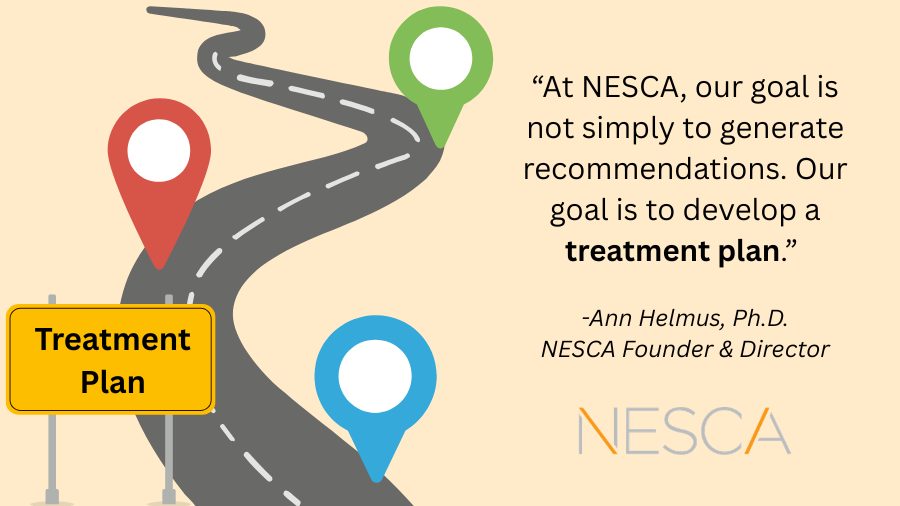
a roadmap wirh a treatment plan sign showing the way; quote from Dr. Ann Helmus

Beyond Recommendations: Creating a Roadmap for Change

By | NESCA Notes 2026

a roadmap wirh a treatment plan sign showing the way; quote from Dr. Ann HelmusBy Ann Helmus, Ph.D.
Founder & Director, NESCA

I recently attended a continuing education course on the treatment of sleep problems. The instructor shared something not altogether surprising, but genuinely thought-provoking: simply giving people a list of “sleep hygiene” recommendations has not been shown to be particularly effective.

Most of us have heard these recommendations before:

  • Turn off screens before bed
  • Keep the room cool and dark
  • Avoid caffeine late in the day
  • Maintain a consistent sleep schedule

The problem isn’t that these recommendations are wrong. The problem is that they are often delivered as a generic list. So, what does work? A personalized approach to a plan.

For example, instead of handing someone a list of 10 recommendations, an effective approach by a clinician might be to say: “Let’s focus on one thing this week – moving your afternoon coffee a little earlier in the day. We’ll see how that goes, what obstacles come up, and whether it makes a difference before we add anything else.”

Here, the recommendations are tailored to the individual, prioritized based on what is most likely to help, and then followed up on to determine what is working and what needs adjustment.

The same can be said about the recommendations that are provided after a neuropsychological evaluation. After an assessment, families receive evaluation reports that often contain pages of recommendations. While many of those suggestions may be reasonable, a long list can leave parents wondering where to start, which recommendation matters the most, or which recommendation will make the biggest difference for my child right now. It can be overwhelming.

At NESCA, our goal is not simply to generate recommendations. Our goal is to develop a treatment plan.

A treatment plan factors in the full understanding of the child’s unique strengths and challenges, identifies the issues that are having the greatest impact on daily functioning, and prioritizes the interventions that are most likely to improve quality of life and long-term improvement.

For one child, improving sleep may be the most important first step. For another, it may be anxiety management, executive functioning support, social skills coaching, speech-language intervention, or school accommodations. The recommendations may look similar on paper, but the strategy is very different.

A thoughtful evaluation should answer not only what to do, but why, when, and in what order.

Most importantly, meaningful change rarely comes from a report sitting on a shelf. It comes from partnership, implementation, progress monitoring, and adjustments as needed.

Just as effective treatment for sleep difficulties involves more than a list of sleep hygiene tips, effective support for a child involves more than an exhaustive list of recommendations.

It requires a roadmap. At NESCA, our goal is to help families build one.


About the Author

NESCA Founder and Director Ann Helmus, Ph.D., is a licensed clinical neuropsychologist who has beenAnn Helmus headshot practicing neuropsychology for 35 years and has been director of NESCA’s Neuropsychology practice for nearly three decades, continuously training and mentoring  neuropsychologists to meet the highest professional standards.

To book a neuropsychological evaluation at NESCA, complete NESCA’s online intake form

NESCA is a pediatric neuropsychology and related services group practice with offices in Newton, Plainville, and Hingham, Massachusetts; Londonderry, New Hampshire; and Coral Gables, Florida, serving clients from infancy through young adulthood and their families. For more information, please email info@nesca-newton.com or call 617-658-9800.

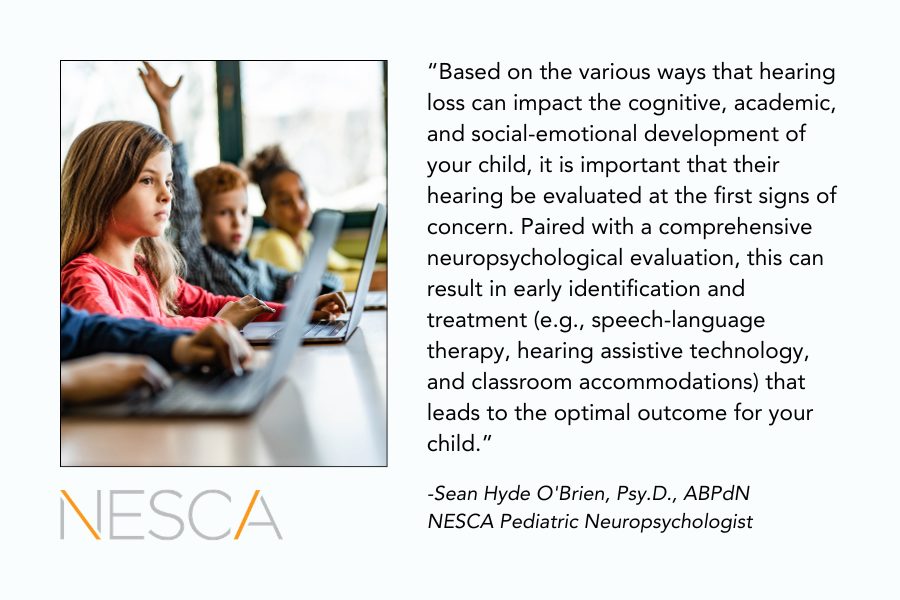
Image showing a student concentrating in class; quote from Dr. Sean Hyde O'Brien

Hearing Loss and Neuropsychological Development

By | NESCA Notes 2026

Image showing a student concentrating in class; quote from Dr. Sean Hyde O'BrienBy: Sean Hyde O’Brien, Psy.D., ABPdN 
Pediatric Neuropsychologist, NESCA

As the husband of a pediatric audiologist, I often hear stories of children referred for audiological evaluations that end up having normal hearing but are thought to have other conditions that fall within the purview of neuropsychology, including Language Disorder, Autism Spectrum Disorder, Intellectual Disability, and Attention-Deficit/Hyperactivity Disorder. It made me think about the way that children typically referred for neuropsychological evaluations can be potentially impacted by hearing loss, particularly in terms of their cognitive, academic, and social-emotional functioning. Review of the literature indicates the following:

  1. Language Acquisition and Communication:

Children with hearing loss may experience delays in development of communication skills including speech articulation and receptive-expressive language. This can make it difficult to for children to understand instructions, participate in discussions, and express ideas.

  1. Literacy Skills:

Development of reading and writing skills are closely tied to language abilities. Hearing loss can lead to difficulties in phonological awareness, decoding, and comprehension, resulting in lower literacy achievement in children with otherwise intact cognitive profiles.

  1. Executive Functioning:

Hearing loss may affect executive functioning skills such as attention, organization, and task completion due to difficulties in following multi-step instructions or classroom routines.

  1. Cognitive Load:

Increased effort required to listen and comprehend spoken information can lead to cognitive fatigue, reducing the capacity for learning and retention.

  1. Classroom Engagement:

Students with hearing loss may struggle to follow lessons, especially in environments with significant background noise or when teachers are not facing the class. They may miss important information, instructions, or peer interactions, leading to reduced participation and engagement.

  1. Academic Achievement:

Studies have shown that children with hearing loss are at greater risk for lower academic achievement, particularly in subjects that rely heavily on verbal instruction and interaction (language arts, social studies, etc.).

  1. Access to Curriculum:

Without appropriate accommodations (e.g., hearing assistive technology, preferential seating, captioning, sign language support), students may not have equitable access to curriculum content.

  1. Social-Emotional Functioning:

Finally, hearing loss can contribute to feelings of social isolation, frustration, and decreased self-esteem if communication barriers lead to difficulties in making friends or participating in group activities.

Based on the various ways that hearing loss can impact the cognitive, academic, and social-emotional development of your child, it is important that their hearing be evaluated at the first signs of concern. Paired with a comprehensive neuropsychological evaluation, this can result in early identification and treatment (e.g., speech-language therapy, hearing assistive technology, and classroom accommodations) that leads to the optimal outcome for your child.

For more information, please visit the American Speech-Language-Hearing Association (ASHA) website at https://www.asha.org/public/hearing/effects-of-hearing-loss-on-development/


About the Author

Dr. Sean O’Brien has been providing comprehensive neuropsychological evaluations in the GreaterSean Hyde O'Brien Boston area since 2006. He specializes in the assessment of children and adolescents who present with a wide range of developmental conditions, such as  Attention-Deficit/Hyperactivity Disorder, Specific Learning Disorder (reading, writing, math), Intellectual Disability, and Autism Spectrum Disorder; as well as children whose cognitive functioning has been impacted by medical, psychiatric, and genetic conditions. He also has extensive experience working with children who were adopted both domestically and internationally.

To schedule an appointment with one of NESCA’s neuropsychologists, please complete our online intake form

NESCA is a pediatric neuropsychology practice and integrative treatment center with offices in Newton, Plainville, and Hingham, Massachusetts; Londonderry, New Hampshire; the greater Burlington, Vermont region; and Coral Gables, Florida, serving clients from infancy through young adulthood and their families. For more information, please email info@nesca-newton.com or call 617-658-9800.

Image of a Neuropsychological Evaluation Report with the question, What's Next? There is also a quote from Dr. Maggie Rodriguez

Navigating Life After a Neuropsychological Evaluation: What Comes Next?

By | NESCA Notes 2026

Image of a Neuropsychological Evaluation Report with the question, What's Next? There is also a quote from Dr. Maggie RodriguezBy: Maggie Rodriguez, Psy.D.
Pediatric Neuropsychologist, NESCA

Going through the process of getting a neuropsychological evaluation can be a big investment of time, energy, and money.  Once it’s completed, you should have some important information about your child and a detailed report. But now what? What do you do with this information and who do you share it with?

As a parent who has been through the neuropsychological evaluation process with two of my children, I know firsthand how overwhelming it can feel to move from diagnosis to action. The report you receive is often extensive and should be filled with valuable insights and recommendations. But translating those findings into real-world support for your child is the next crucial step. Here are some thoughts and practical tips on what to do next:

1) School: The Starting Point for Support

For many families, the primary motivation for seeking a neuropsychological evaluation is to better understand their child’s learning profile and needs in the school setting. The report can be a powerful tool in advocating for appropriate accommodations, interventions, and support.

  • Share the report with your child’s teacher, special education coordinator, and/or school psychologist. If you don’t know where to start, reach out to the school to ask who your contact person should be.
  • Use the findings to inform IEP (Individualized Education Program) or 504 Plan meetings. NESCA neuropsychologists are available to present the findings directly to your child’s team at meetings and can be a valuable resource in this regard.
  • Ask for specific classroom strategies or modifications based on the recommendations. You may want to consider collaborating with an educational advocate as well.

2) Treatment Providers: Building a Collaborative Team

Your child may already be working with therapists, counselors, psychiatrists, or other healthcare professionals. Alternatively, you may be working on setting up treatment. Sharing the neuropsychological report with providers can help them tailor their interventions and monitor progress more effectively.

  • Consider providing copies or summaries of the report to your child’s treatment team.
  • Discuss how the findings might impact therapy goals, medication management, or behavioral strategies.
  • Ask for their input on how best to support your child at home and in other settings.

3) Family: Creating Understanding and Empathy

Sometimes, the people closest to us—grandparents, step parents, siblings—may not fully understand the challenges your child faces. Sharing relevant parts of the neuropsychological evaluation can foster empathy and support within your family.

  • Choose what information is most helpful for family members to know.
  • Have open conversations about your child’s strengths and challenges.
  • Ask for support in implementing strategies at home, such as routines or communication techniques.

4) Care Providers: Ensuring Consistency Across Settings

If your child regularly spends time with nannies, babysitters, or other caregivers, it may be important that they understand your child’s needs and the best ways to support them.

  • Consider sharing key takeaways and practical recommendations from the report that will help caregivers respond effectively.
  • Provide written instructions or checklists if needed.
  • Maintain open communication about what works and what doesn’t.

A Few Final Thoughts

Receiving a neuropsychological evaluation report can be both a relief and a challenge. It offers clarity, but also raises new questions about how to move forward. Here are some tips to help you navigate the next steps:

  • Take time to review and digest the report. Don’t hesitate to ask the neuropsychologist for clarification or a follow-up meeting.
  • Organize the information. Consider making a summary sheet of key findings and recommendations for easy reference.
  • Empower your child. Depending on their age and understanding, talk to your child about their strengths and areas for growth in a positive, supportive way.
  • Remember that you are not alone. There are many resources and communities available for parents navigating similar journeys.

Ultimately, the goal of a neuropsychological evaluation is to help your child thrive. By sharing the findings thoughtfully with the right people, you can build a team of support around your child and help them reach their fullest potential.


About the Author

Maggie Rodriguez, Psy.D., provides comprehensive evaluation services for children, adolescents, and young adults with often complex presentations. She particularly enjoys working with individuals who have concerns about attention and executive functioning, language-based learning disorders, and those with overlapping cognitive and social/emotional difficulties.

Prior to joining NESCA, Dr. Rodriguez worked in private practice, where she completed assessments with high-functioning students presenting with complex cognitive profiles whose areas of weakness may have gone previously undiagnosed. Dr. Rodriguez’s experience also includes pre- and post-doctoral training in the Learning Disability Clinic at Boston Children’s Hospital and the Neurodevelopmental Center at MassGeneral for Children/North Shore Medical Center. Dr. Rodriguez has spent significant time working with students in academic settings, including k-12 public and charter school systems and private academic programs, such as the Threshold Program at Lesley University.

Dr. Rodriguez earned her Psy.D. from William James College in 2012, where her coursework and practicum training focused on clinical work with children and adolescents and on assessment. Her doctoral thesis centered on cultural issues related to evaluation.

Dr. Rodriguez lives north of Boston with her husband and three young children.  She enjoys spending time outdoors hiking and bike riding with her family, practicing yoga, and reading.

To book a consultation with Dr. Rodriguez or one of our many other expert neuropsychologists, complete NESCA’s online intake form.

NESCA is a pediatric neuropsychology and related services practice  with offices in Newton, Plainville, and Hingham, Massachusetts; Londonderry, New Hampshire; the greater Burlington, Vermont region; and Coral Gables, Florida, serving clients from infancy through young adulthood and their families. For more information, please email info@nesca-newton.com or call 617-658-9800.

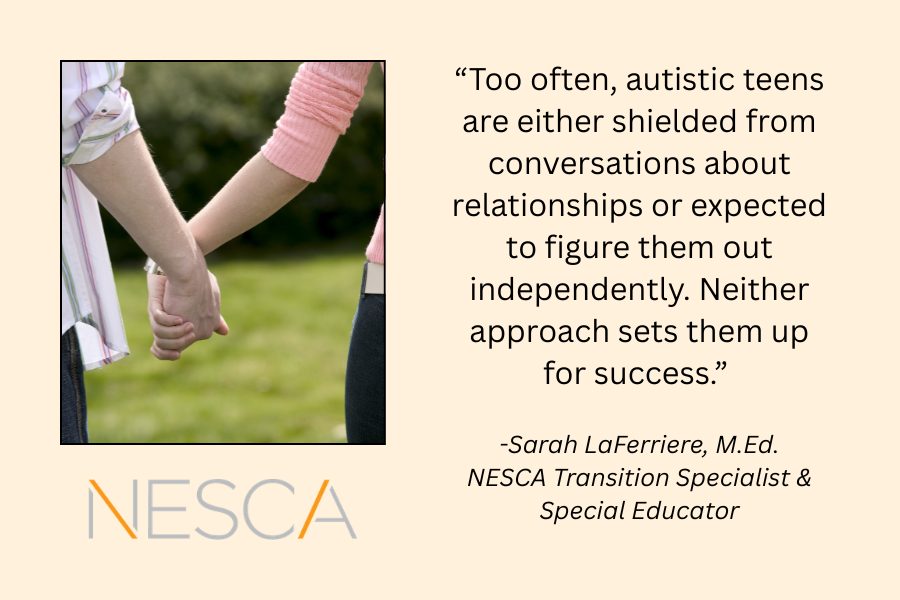
Image of teens holding hands, signifying a romantic relationship along with a quote by Sexual Health Educator Sarah LaFerriere

How to Teach Consent to Teens with Autism – A Guide for Parents and Professionals

By | NESCA Notes 2026

Image of teens holding hands, signifying a romantic relationship along with a quote by Sexual Health Educator Sarah LaFerriereBy: Sarah LaFerriere, M.Ed.
Transition Specialist & Special Educator, NESCA

Consent is often treated as a one-time conversation: something brief, uncomfortable, and easy to delay. But for teens with autism, that approach isn’t just ineffective, it can leave them without the tools they need to safely and confidently navigate relationships. Consent is not a single talk. It’s a set of learnable, teachable skills. And for many teens, those skills need to be taught explicitly, practiced regularly, and reinforced across environments.

Why Consent Needs to Be Taught Explicitly
Many autistic teens:

  • Have difficulty interpreting nonverbal communication (facial expressions, tone, body language)
  • Tend to think in concrete, literal terms
  • Have a history of being reinforced for compliance
  • May strongly desire connection but lack clear social frameworks

Because of this, common advice like “you’ll know when it’s right” or “just pay attention to cues” is not actionable. Instead, they benefit from clear language, direct instruction, and repetition.

Start with a Clear, Concrete Definition
Avoid vague or abstract explanations. Define consent in simple, direct terms:

  • Consent means asking first
  • Consent means getting a clear “yes”
  • Consent can be changed or taken back at any time
  • Silence, hesitation, or “I guess” = not consent

Provide actual scripts teens can use:

  • “Can I hug you?”
  • “Is this okay?”
  • “Do you want to keep going?”

When we give language, we reduce guesswork.

Teaching Both Sides: Asking and Responding
Teens need to understand both roles in an interaction:

How to:

  • Ask for permission clearly
  • Recognize a genuine “yes”
  • Say “no” in a direct way
  • Respond appropriately when someone else says “no”

This is especially important for teens who may default to people-pleasing or masking. They need to hear explicitly: “You are allowed to say no, even if you said yes before.”

Make It Concrete and Practice-based
Conceptual discussions alone are not enough. Use structured, real-life examples:

  • “What would you say if you want to hold someone’s hand?”
  • “What do you do if someone says, ‘not right now’?”
  • “What if someone doesn’t answer you?”

Role-play is one of the most effective tools here. While it may feel uncomfortable, it creates a safe space to:

  • Practice asking for consent
  • Practice declining
  • Practice handling rejection

For professionals, this can be embedded into social skills groups or transition programming. For parents, this can happen in brief, low-pressure moments at home.

Explicitly Teach What Consent Is Not
Many teens benefit from clear contrasts. Consent is not:

  • Silence or lack of response
  • Freezing or shutting down
  • Agreeing due to pressure
  • Continuing after someone changes their mind

Side-by-side examples (“This is consent” vs. “This is not”) can make abstract ideas more concrete.

Include Digital Boundaries
Consent extends beyond in-person interactions. Make sure to address:

  • Sending photos or messages (“Do you want me to send this?”)
  • Respecting privacy (not sharing others’ images or texts)
  • Navigating online relationships and pressure

Teens may understand physical boundaries but struggle to apply the same rules digitally unless explicitly taught.

Normalize and Teach How to Handle “No”
Rejection is a critical part of understanding consent – and often one of the hardest skills. Teens should learn that:

  • Hearing “no” is normal and expected at times
  • It is not a personal failure
  • The correct response is to respect it immediately

Provide simple, usable responses:

  • “Okay, that’s fine.”
  • “Thanks for telling me.”
  • “No problem.”

Practicing these responses reduces anxiety and increases appropriate behavior in real situations.

Frame Consent as a Relationship Skill, Not Just a Rule
Consent is often taught in a risk-avoidance framework. While safety matters, that alone can feel limiting or fear-based.

It’s equally important to frame consent as:

  • A way to show respect
  • A way to build trust
  • A foundation for healthy relationships

This perspective can be especially motivating for teens who are seeking connection.

Make It Ongoing and Integrated
Consent should not be a one-time lesson. Revisit and build on it:

  • As teens mature
  • As relationships become more complex
  • As new situations arise (dating, work, online interactions)

Final Thoughts
Too often, autistic teens are either shielded from conversations about relationships or expected to figure them out independently. Neither approach sets them up for success. When parents and professionals take a direct, skill-based approach to teaching consent, we give teens something essential: a clear, usable framework for understanding their own boundaries and respecting someone else’s.

For families and professionals looking for more individualized support, Transition Specialist & Special Educator Sarah LaFerriere, M.Ed. offers virtual sexual health coaching through NESCA in Newton. These sessions are designed to meet students where they are, using clear, direct, and developmentally appropriate instruction to build understanding of consent, boundaries, relationships, and personal safety. Coaching is tailored to each individual’s needs and can be especially helpful for students who benefit from explicit teaching and guided practice in a supportive, judgment-free environment. To learn more or inquire about services, families can explore options through NESCA.


About the AuthorHeadshot of Sarah LaFerriere, M.Ed.

Sarah LaFerriere, M.Ed., is a transition specialist and special educator who has nearly a decade of experience working with transition aged students in public schools, college, and home-based settings. She provides transition assessment, consultation, and coaching services to a wide range of clients, and specializes in supporting students with autism, intellectual disabilities, developmental disabilities, mental health conditions, and medical conditions.

To book with Sarah LaFerriere or one of our many other expert transition specialists, neuropsychologists, or other clinicians, complete NESCA’s online intake form.

NESCA is a pediatric neuropsychology and related services practice with offices in Newton, Plainville, and Hingham, Massachusetts; Londonderry, New Hampshire; and Coral Gables, Florida, serving clients from infancy through young adulthood and their families. For more information, please email info@nesca-newton.com or call 617-658-9800.

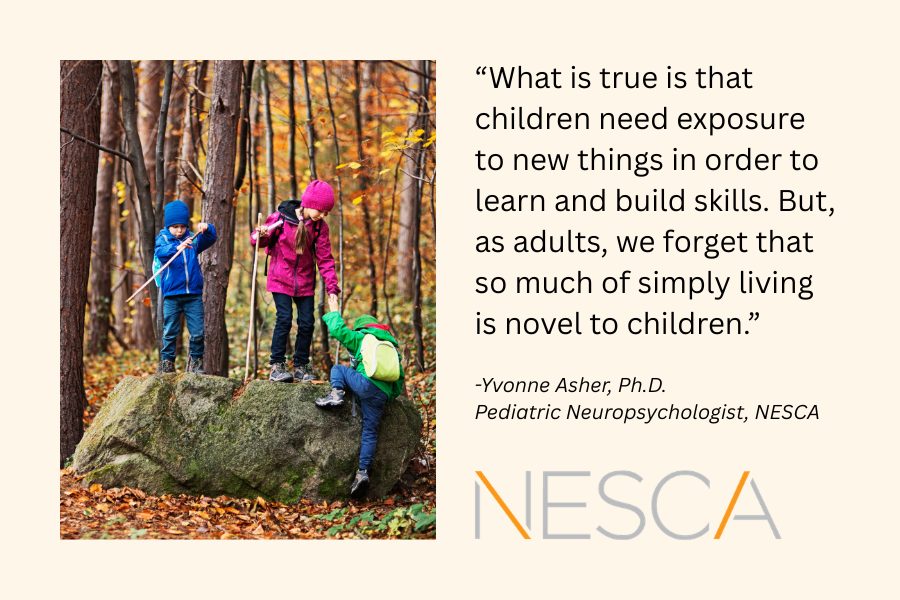
image of kids exploring in nature, with a quote from Dr. Yvonne Asher

In Praise of Under-Scheduling

By | NESCA Notes 2026

image of kids exploring in nature, with a quote from Dr. Yvonne AsherBy: Yvonne Asher, Ph.D.
NESCA Pediatric Neuropsychologist

This is the time of year where things can go off the rails. Standardized testing, planning for summer, planning for next year, winter sports wrapping up, spring sports starting, recitals, end of year performances, science fairs, prom, graduation. And somewhere on social media are the perfect families with the impeccable photo collages of their children’s activities, everyone posed in matching outfits, effortlessly adorable.

Somewhere far more real are the rest of us, begging one child to put on anything other than sweatpants for their piano recital while comforting another because they KNOW they will “never have friends again” once they start middle school, all while someone eats too many cookies at the lacrosse banquet and pukes all over the car.

Extracurricular activities can be wonderful – they can teach valuable motor and self-regulation skills, build creativity and independence, help children gain self-confidence, build friendships and social competence, and support emotional development. As neuropsychologists, we recommend a multitude of non-school-based activities – sports, martial arts, tutoring, outpatient therapies, therapeutic horseback riding, social skills groups, and more.

And.

They can be a lot. Draining, expensive, exhausting, and unpleasant. For some kids, some families, and some situations, extracurricular activities are the lynchpin. Maybe your kid lives to play soccer. Or participate in competitive gymnastics. Or play violin. If it works for your kid and your family, that is amazing. However, for many families, there is downward pressure into toddlerhood to “expose” children to dozens of structured activities. This can cause stress and anxiety for kids, parents, and siblings, and can eat away at the small amounts of calm family time remaining in between work and school.

What is true is that children need exposure to new things in order to learn and build skills. But, as adults, we forget that so much of simply living is novel to children. Going to a new grocery store? Let’s figure out how to get there using a map and our visual-spatial skills. Beautiful spring day? Take a walk in a new neighborhood. Better yet? Take a hike! What plants do you see? Bugs? Animals? Habitats? Science abounds outside. Have a weekend day with nothing to do? Make a new recipe! Read the recipe, write a shopping list, use math to double it or halve it.

Extracurricular activities themselves are, of course, not the true problem. As often happens in this digital age of parenting, the problem is pressure from others. Feeling like our kids are falling behind the curve, late to the game. And this is dramatically exacerbated for kids with disabilities or challenges, when parents know that they are, in some areas, behind their peers already. It can feel embarrassing to have the one kid who won’t stand up for the choir concert or cries when it is their turn at bat in t-ball. So why must we push them into it?

Of course, sometimes there is a very good “why.” Maybe they love it most of the time and are anxious at recitals. Maybe it’s deeply important to your family and a long tradition for kids to learn this particular skill. Maybe they really need outpatient speech therapy. Many “whys” make it worthwhile to push through an activity. But, sometimes, the “why” is simply “everyone else seems to be doing it” or “they have to do something.”

In these cases, a step back may be worthwhile. At least for now. Enjoy some Saturday mornings spent in pajamas making six different kinds of pancakes because you have nowhere else to be. Play a board game after a lengthy family dinner because everyone got home early. Let your kid pick up every rock they see on the way home from school – maybe today is a good day to paint some for your garden.


About the Author

Dr. Yvonne M. Asher enjoys working with a wide range of children and teens, including those with autism spectrum disorder, developmental delays, learning disabilities, attention difficulties and executive functioning challenges. She often works with children whose complex profiles are not easily captured by a single label or diagnosis. She particularly enjoys working with young children and helping parents through their “first touch” with mental health care or developmental concerns.

Dr. Asher’s approach to assessment is gentle and supportive, and recognizes the importance of building rapport and trust. When working with young children, Dr. Asher incorporates play and “games” that allow children to complete standardized assessments in a fun and engaging environment.

Dr. Asher has extensive experience working in public, charter and religious schools, both as a classroom teacher and psychologist. She holds a master’s degree in education and continues to love working with educators. As a psychologist working in public schools, she gained invaluable experience with the IEP process from start to finish. She incorporates both her educational and psychological training when formulating recommendations to school teams.

Dr. Asher attended Swarthmore College and the Jewish Theological Seminary. She completed her doctoral degree at Suffolk University, where her dissertation looked at the impact of starting middle school on children’s social and emotional wellbeing. After graduating, she completed an intensive fellowship at the MGH Lurie Center for Autism, where she worked with a wide range of children, adolescents and young adults with autism and related disorders.


NESCA is a pediatric neuropsychology and related services practice with offices in Newton, Plainville, and Hingham, Massachusetts; Londonderry, New Hampshire; Coral Gables, Florida; and Coral Gables, Florida, serving clients from infancy through young adulthood and their families. For more information, please email info@nesca-newton.com or call 617-658-9800.


To book an appointment with a NESCA clinician, please complete our Inquiry/Intake Form today. For more information about NESCA, please email info@nesca-newton.com or call 617-658-9800.


Image of a feedback session with a parent and neuropsychologist along with a quote from Dr. Rodriguez

Beyond a Label: The Value of Neuropsychological Evaluation Even When There’s No Clear Diagnosis

By | NESCA Notes 2026

Image of a feedback session with a parent and neuropsychologist along with a quote from Dr. RodriguezBy: Maggie Rodriguez, Psy.D.
Pediatric Neuropsychologist, NESCA

Why Diagnosis Matters

Most parents seek out a neuropsychological evaluation because they’re looking for answers. Often, someone in the child’s life—whether a parent, teacher, or caregiver—has noticed something that doesn’t quite add up. Pursuing testing is a wise and proactive step toward understanding the root of a child’s challenges. In many cases, families hope to find a diagnosis that explains what’s going on. To borrow a phrase from psychiatrist and author Dan Siegel, “You have to name it to tame it.” Having a name for a child’s difficulties is often the first step toward effective support and intervention. Many parents describe feeling validated and relieved when a professional can identify and explain what their child is experiencing. Knowing there is an understandable reason behind their child’s struggles can be both reassuring and empowering.

Why A Clear Diagnosis Isn’t Always Possible

Despite everyone’s best efforts, sometimes a child’s challenges don’t fit neatly into a single diagnostic label. There are several reasons for this:

  • Human complexity: Diagnoses can be helpful frameworks, but they don’t always capture the full picture. Children are wonderfully complex, and their unique mix of strengths and challenges often doesn’t align perfectly with one specific category.
  • Overlap between conditions: Diagnoses are often presented as distinct “boxes,” but in real life, there is a lot of overlap between conditions. It’s often more accurate to picture diagnoses as overlapping circles in a Venn diagram, with many children’s experiences falling in the spaces where these circles intersect. It’s not always possible—or even helpful—to fully separate features into distinct diagnoses.
  • Gradual emergence of symptoms: Some conditions develop slowly and may not be fully recognizable until later in life. For example, mild Autism Spectrum Disorder can be subtle and hard to identify, especially in gender-conforming girls and women. Social challenges may not be obvious in early childhood but can become clearer as social demands increase in adolescence, delaying a clear diagnosis.
  • Lack of formal diagnostic labels: There are profiles commonly seen in clinical settings that don’t yet have formal diagnostic labels. For instance, significant executive functioning weaknesses can greatly impact daily life and academics, but there is no official diagnosis for this. Similarly, while we may use the term “Non-Verbal Learning Disorder” to describe certain patterns of difficulty with visual-spatial skills, organization, social cues, or motor abilities, this label isn’t formally recognized in current diagnostic systems.

What To Do Next

Receiving an evaluation without a clear diagnosis can be disappointing and even anxiety-provoking for parents; however, a neuropsychological assessment still offers significant value. The true strength of a thorough evaluation lies in its ability to provide a detailed understanding of your child’s unique strengths and challenges, and to clearly outline the supports and interventions that will be most helpful. Even among children who share a diagnosis, there can be important differences in how their difficulties present. A high-quality assessment goes beyond simply assigning a label; rather, it paints a comprehensive picture of your child as an individual. Ultimately, the most effective recommendations are those tailored specifically to your child’s needs, regardless of whether they meet criteria for a particular diagnosis.

If you find yourself in this situation, allow yourself space for your feelings. It’s natural to crave clear answers, and it can be difficult to live with uncertainty. Yet, there are concrete steps you can take:

  • Recognize challenges independently of diagnosis: Throughout history, people have faced real and significant difficulties long before science could provide official explanations. For example, prior to advanced imaging, vision problems caused by multiple sclerosis were often mislabeled as “hysterical blindness” until CT scans revealed nervous system lesions. Similarly, before HIV was identified as the cause of AIDS, individuals suffered and died from the illness without a clear diagnosis. Sometimes, it takes time for science to catch up. In the same way, your child’s needs are real and valid, regardless of whether a formal diagnosis has been made.
  • Advocate for your unique child: Similarly, focus on addressing their specific areas of need, rather than waiting for a label.
  • Seek appropriate support services: There’s no need to wait for a formal diagnosis to pursue executive function coaching, psychotherapy, occupational or speech therapy, or specialized academic support. In some cases, early intervention may even help prevent a difficulty from becoming a full-blown diagnosis.
  • Try to be patient and stay open to change:  Remember that your child is still developing in very significant ways. Consider re-evaluation in a few years, as more information may become clear over time.

Remember, your child is more than a label. The insights from a neuropsychological evaluation can guide you in supporting their growth and well-being, even when there isn’t a specific diagnostic term to describe their unique profile. If you have questions or want to discuss whether a neuropsychological evaluation might be helpful, our team is here to support you.


About the Author

Maggie Rodriguez, Psy.D., provides comprehensive evaluation services for children, adolescents, and young adults with often complex presentations. She particularly enjoys working with individuals who have concerns about attention and executive functioning, language-based learning disorders, and those with overlapping cognitive and social/emotional difficulties.

Prior to joining NESCA, Dr. Rodriguez worked in private practice, where she completed assessments with high-functioning students presenting with complex cognitive profiles whose areas of weakness may have gone previously undiagnosed. Dr. Rodriguez’s experience also includes pre- and post-doctoral training in the Learning Disability Clinic at Boston Children’s Hospital and the Neurodevelopmental Center at MassGeneral for Children/North Shore Medical Center. Dr. Rodriguez has spent significant time working with students in academic settings, including k-12 public and charter school systems and private academic programs, such as the Threshold Program at Lesley University.

Dr. Rodriguez earned her Psy.D. from William James College in 2012, where her coursework and practicum training focused on clinical work with children and adolescents and on assessment. Her doctoral thesis centered on cultural issues related to evaluation.

Dr. Rodriguez lives north of Boston with her husband and three young children.  She enjoys spending time outdoors hiking and bike riding with her family, practicing yoga, and reading.

To book a consultation with Dr. Rodriguez or one of our many other expert neuropsychologists, complete NESCA’s online intake form.

NESCA is a pediatric neuropsychology practice and integrative treatment center with offices in Newton, Plainville, and Hingham, Massachusetts; Londonderry, New Hampshire; the greater Burlington, Vermont region; and Brooklyn, NY, serving clients from infancy through young adulthood and their families. For more information, please email info@nesca-newton.com or call 617-658-9800.

Image of a road sign with College ahead on it portraying the topic of the blog about college planning with ADHD

College Planning for Families of Students with ADHD

By | NESCA Notes 2026

Image of a road sign with College ahead on it portraying the topic of the blog about college planning with ADHDBy: Julie Weieneth, Ph.D.
Pediatric Neuropsychologist, NESCA

The transition from high school to college brings stress for most families. As a parent of a high school junior, I am currently helping my teen juggle schoolwork, extracurriculars, and all the “must-do’s” for college planning. At times, it feels very overwhelming for me, so I can only imagine how it feels for my daughter. As a neuropsychologist, I often reflect on how neurodiversity, especially ADHD, shapes this journey.

Over the years, I have worked with many bright students with ADHD who have successfully navigated the college planning process. These teens bring unique strengths to the table. When families are able to recognize these strengths, support ongoing areas of need, and seek professional guidance as needed, college planning can become a process of growth for both teens and their parents.

ADHD Strengths in College Planning

  • Creativity and Problem-Solving: Many students with ADHD naturally think outside the box. They approach challenges from fresh angles, which can help them identify colleges, majors, or support services that might otherwise be overlooked. Their creative solutions can make the search process more dynamic and tailored to their needs.
  • Energy and Enthusiasm: Students with ADHD often bring a high level of energy and excitement to new experiences. This enthusiasm motivates them to explore a wide range of colleges, participate in campus tours, and engage with student groups. Their passion can help them stand out in interviews and application essays.
  • Hyperfocus on Interests: While ADHD is often associated with distractibility, many students experience periods of intense focus, especially on topics that truly interest them. This hyperfocus can be a tremendous advantage when researching colleges, preparing application materials, or delving into extracurricular opportunities that align with their passions.
  • Resilience and Adaptability: Navigating the ups and downs of ADHD often builds resilience. Many students learn to adapt quickly, bounce back from setbacks, and persist in the face of challenges. These qualities are invaluable during the college search and application process, which can involve rejection, waitlists, or unexpected changes.

How Parents Can Help

Parents play a key role in supporting their teens’ transition to college. Here are some practical steps:

  • Foster Self-Advocacy: Encourage your teen to understand their needs and practice asking for help. Role-play conversations about accommodations and celebrate their efforts.
  • Find the Right Fit: Focus on colleges that match your teen’s needs, not just prestige. Visit campuses, meet with disability services, and consider factors like class size and available supports.
  • Secure Accommodations: Keep neuropsychological testing up to date, as colleges require documentation. Encourage early use of academic supports and check in regularly.
  • Build Executive Function Skills: Practice time management and organization before college. Gradually let your teen take the lead and consider executive function coaching if needed.
  • Plan for Medication and Health: Help your teen set up prescription management and health routines. Practice independence with gentle reminders.
  • Support Social and Emotional Well-being: Encourage involvement in clubs and normalize seeking help from campus resources. Keep long-term supports in place, and encourage booster sessions with therapists, executive function and real-life skills coaches, tutors, during breaks or through virtual sessions as needed.

Also, it is important to remember to care for yourself! This transition is significant for parents, too. Seek support for yourself as needed.

At NESCA, in addition to neuropsychological evaluations, we offer consultations and executive function and real-life skills coaching. Please feel free to reach out to us if we can help you and your child navigate this process.


About the AuthorJulie Weineth headshot

Dr. Weieneth is a licensed clinical psychologist who has worked with children and families with complex diagnostic and treatment needs for the last twenty years. Her areas of specialty include ADHD, autism spectrum disorders, anxiety, mood disorders, learning disabilities, executive functioning, and school-related challenges. That being said, Dr. Weieneth also understands that not all individuals fit cleanly into diagnostic groups or labels. Her goals for each evaluation are to help families feel comfortable with the process, use all the tools available to best understand each individual’s unique strengths and needs, and to write a clear and comprehensive report that will guide educational and treatment planning.

To book a consultation with Dr. Weieneth or one of our many other expert neuropsychologists or other clinicians, complete NESCA’s online intake form.

NESCA is a pediatric neuropsychology and related services practice with offices in Newton, Plainville, and Hingham, Massachusetts; Londonderry, New Hampshire; and Coral Gables, Florida, serving clients from infancy through young adulthood and their families. For more information, please email info@nesca-newton.com or call 617-658-9800.

Graphic depicting a student growing, developing, and changing over time

Why Follow-up Matters

By | NESCA Notes 2026

Graphic depicting a student growing, developing, and changing over timeBy: Erin Gibbons, Ph.D. 
NESCA MA Clinical Director; Pediatric Neuropsychologist

When a child undergoes a neuropsychological evaluation, families often breathe a sigh of relief – finally, there are answers to questions about learning, behavior, or development. But neuropsychological assessment isn’t a “one-and-done” process. Children’s brains are constantly growing, and their needs change as they move through school and life. That’s why follow-up evaluations are a crucial part of a family’s journey.

Why Is Follow-up Important?

  1. Children Change! Unlike adults, children’s brains are still developing. Skills like attention, memory, and executive function can improve or shift dramatically as kids mature. A child who struggles with reading in first grade may have different needs by fourth grade. Follow-up helps ensure recommendations stay relevant.
  2. Medical and Neurodevelopmental Conditions Evolve Developmental disabilities such as ADHD or autism may impact a child differently as they age. Some challenges become less pronounced, while others may surface later. Regular assessment helps families and providers spot these changes early and tailor services accordingly.
  3. School Demands Increase As children progress through school, academic and social expectations rise. What worked in elementary school may not be enough in middle or high school. Follow-up assessments help tailor services to new environments and demands.
  4. Interventions Need Adjustment Therapies, accommodations, and strategies should be reviewed periodically. Follow-up evaluations provide data to refine interventions, ensuring they are effective and appropriate.

What Does a Follow-up Look Like?

  • Consult Sometimes a short check-in is enough. A clinician can review recent progress reports, meet with families, and ensure that things are on the right track.
  • Academic Re-evaluation For some students, academic progress is the primary concern, whereas other areas (e.g., social skills, motor skills, emotional self-regulation) are less concerning. To ensure that your child is making appropriate academic gains, an academic re-evaluation can be critical. These are typically scheduled 6-12 months after interventions have been initiated.
  • Full Re-evaluation A complete re-evaluation might be necessary in order to monitor progress across domains and evaluate the effectiveness of current treatment. Schools must evaluate students with IEPs every 3 years. Many families use a similar timeline for independent evaluations.

The Takeaway

A quality neuropsychological evaluation is about more than a single snapshot in time. There needs to be a process of understanding, supporting, and celebrating each child’s unique journey. Follow-up evaluations empower families and professionals to provide the right help, at the right time, so children can thrive.


About the Author

Since 2011, Dr. Gibbons has been a trusted expert at NESCA where she evaluates children presenting with a range of attentional, learning,Erin Gibbons headshot and developmental disabilities. She has a particular interest in children with autism spectrum disorders, intellectual disabilities, and those with complex medical histories. In addition, she evaluates adults who have concerns about whether they meet criteria for an ASD or ADHD diagnosis.
If you are interested in booking an evaluation with a NESCA neuropsychologist/clinician, please fill out and submit our online intake form

NESCA is a pediatric neuropsychology and related services practice with offices in Newton, Hingham, and Plainville, Massachusetts; Londonderry, New Hampshire; and Coral Gables, Florida, serving clients from preschool through young adulthood and their families. For more information, please email info@nesca-newton.com or call 617-658-9800.

Student struggling in school

When Capable Children Struggle

By | NESCA Notes 2026

Student struggling in schoolBy NESCA Neuropsychology Clinical Staff

Understanding the Gap Between Intelligence and Performance

“I know my child is smart.” This is something parents sometimes say to me with both confidence and confusion.

During intake meetings, parents describe their children to me as being able to grasp complex ideas, ask thoughtful questions, and often seem to understand more than their schoolwork shows. Yet school feels harder than it should. Assignments take too long, work is inconsistent, focus slips under pressure, and emotions rise quickly when tasks become demanding.

Over time, a gap becomes visible where intelligence is clear, but performance does not consistently reflect it. Understanding that gap requires looking beyond intelligence alone.

Intelligence Is Only Part of the Picture

Intelligence reflects the ability to reason, understand concepts, and make connections. It is an important foundation.

Performance reflects how intelligence interacts with other essential skills, such as attention, language, memory, organization, emotional control, and follow-through. When one or more of these areas is strained, a child may know the material yet struggle to show it consistently.

Sometimes attention drifts. Sometimes reading or writing requires more effort than it appears. Sometimes instructions are harder to hold in mind. Sometimes frustration rises quickly when work feels open-ended. Often, it is not one issue. It is the interaction among several of these areas.

Intelligence and performance are not the same thing.

Why It Often Becomes More Noticeable Over Time

In the early years, structure is built in, tasks are shorter, and teachers provide frequent guidance. As children grow older, expectations shift, and assignments become longer and less structured. Organization is assumed, and independence is expected. As demands increase, underlying vulnerabilities become harder to compensate for. The child’s intelligence has not changed, but the demands have.

What Happens When Demands Rise

Academic tasks require coordination. A child must sustain attention, organize ideas, remember instructions, manage frustration, and monitor accuracy – often at the same time. When any part of that system is stretched, patterns shift, work slows down, mistakes increase, focus drops, frustration intensifies, and often voidance or shutdown follows.

These reactions are not signs of limited ability; they are often signs that demands are exceeding capacity in one or more areas. That distinction matters. It shifts the question from “Why aren’t they trying?” to “What is making this harder right now?”

When Structure Helps…and When It Doesn’t

Some children appear steady in structured settings but struggle during independent work. External support can temporarily reduce strain. But when that support is reduced, inconsistencies become more visible. Without context, this can feel confusing; however, with a broader understanding, it often makes sense.

A Broader View

Looking only at intelligence can leave the picture incomplete. Considering how intelligence interacts with attention, learning processes, language, emotional patterns, and self-management brings greater clarity. Children and students are not simply performing or underperforming. Instead, they are navigating a complex interaction of strengths and vulnerabilities within changing demands. Understanding that interaction allows parents and educators to respond with greater clarity and thoughtfulness.

My Approach

In my work with children, teens, and families, I focus on integration. I consider how different aspects of a child’s profile – from cognitive strengths to patterns of attention and emotional response – all come together within the real demands of school and daily life.

My goal is not to simplify difficulty to a single cause, but to clarify patterns. When these interactions are understood, conversations shift. Blame decreases, and direction becomes clearer.

Clarity does not eliminate challenges. It does, however, replace confusion with understanding, which helps adults respond in ways that are steadier, more precise, and better aligned with their child or student.

To book a neuropsychological evaluation, complete NESCA’s online intake form

NESCA is a pediatric neuropsychology and related services practice with offices in Newton, Plainville, and Hingham, Massachusetts; Londonderry, New Hampshire; and Coral Gables, Florida, serving clients from infancy through young adulthood and their families. For more information, please email info@nesca-newton.com or call 617-658-9800.

Skip to content