
By: Erin Gibbons, Ph.D.
NESCA MA Clinical Director; Pediatric Neuropsychologist
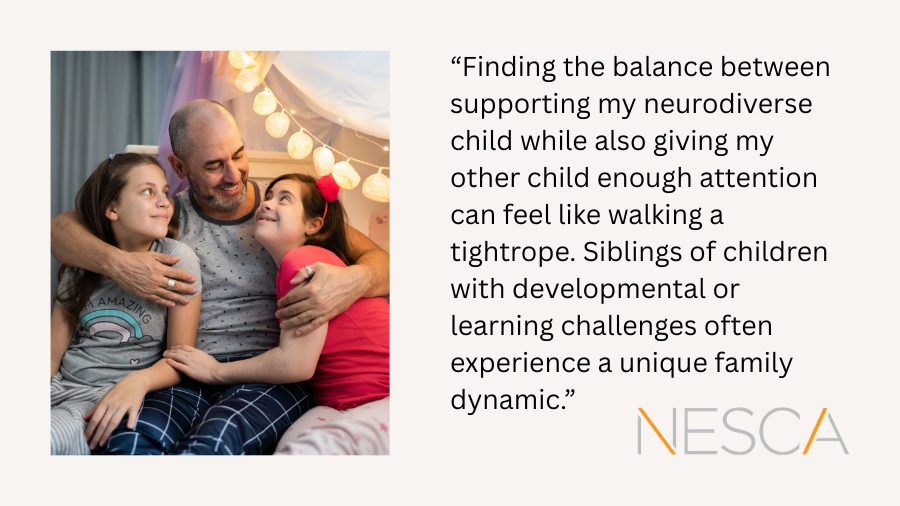
I am a parent of two amazing children, one of whom is neurotypical and one of whom is neurodiverse. Finding the balance between supporting my neurodiverse child while also giving my other child enough attention can feel like walking a tightrope. Siblings of children with developmental or learning challenges often experience a unique family dynamic.
- To foster healthy sibling relationships, it’s crucial to promote open communication. Creating a safe and open environment for discussions helps them understand the situation and feel heard.
- Providing age-appropriate information about the sibling’s disability can help demystify behaviors and challenges, fostering empathy and reducing misconceptions or frustrations.
- Recognizing and validating the emotions of siblings, whether positive or negative, is also important. It’s natural for them to have mixed feelings, and acknowledging these emotions helps them process and cope effectively.
- Encourage siblings to pursue their own interests, reinforcing their identity outside of the family role.
- Try to dedicate individual time with each child to strengthen personal bonds and make them feel special and attended to.
- Encourage siblings to support each other and work as a team.
If you find that sibling dynamics are causing family discord, it might be helpful to connect with sibling support groups where children can meet others in similar situations. Consulting a family therapist or counselor can also be helpful and provide tailored strategies to facilitate improved family interactions.
About the Author
Since 2011, Dr. Gibbons has been a trusted expert at NESCA where she evaluates children presenting with a range of attentional, learning, and developmental disabilities. She has a particular interest in children with autism spectrum disorders, intellectual disabilities, and those with complex medical histories. In addition, she evaluates adults who have concerns about whether they meet criteria for an ASD or ADHD diagnosis.
If you are interested in booking an evaluation with a NESCA neuropsychologist/clinician, please fill out and submit our online intake form.
NESCA is a pediatric neuropsychology and related services practice with offices in Newton, Hingham, and Plainville, Massachusetts; Londonderry, New Hampshire; and Coral Gables, Florida, serving clients from preschool through young adulthood and their families. For more information, please email info@nesca-newton.com or call 617-658-9800.
