
NESCA’s Newton, MA location has immediate availability for neuropsychological evaluations. Our MA clinicians specialize in the following evaluations: Neuropsychological; Autism; and Emotional and Psychological, as well as Academic Achievement and Learning Disability Testing.

Visit www.nesca-newton.com/intake for more information or to book an evaluation.

Tag

OT Archives - Page 7 of 7 - NESCA

Subscribe to NESCA Notes

Five Tips for Promoting Fine Motor Development in the Home!

By | NESCA Notes 2020

By: Sophie Bellenis, OTD, OTR/L
Occupational Therapist; Real-life Skills Program Manager and Coach

  • Writing on a vertical surface is a great way to promote proper hand/wrist positioning and fine motor growth – try taping paper to an easel or to the wall and allowing them to try writing on this plane.
  • Skip the fat pencils for our little learners. While specific adapted writing utensils for children with fine motor needs can be best assessed by an occupational therapist, for the majority of our young learners, the rule “the object promotes the grasp!” is applicable. If we want our learners to be building strength and learning proper hand positioning, I suggest trying either a standard number 2 pencil or a mini golf pencil.
  • Let your children peel off and stick on their own stickers! In reality this could end up with some ripped stickers or extra time spent on a project, but peeling off stickers promotes a pincer grasp, bilateral coordination and visual motor integration. If your child is too young to find the edge and begin to peel, consider starting the sticker and then letting them finish peeling it off independently.
  • Use scissors to cut anything and everything! While supplies of construction paper and worksheets sent home from school may be dwindling, consider letting your children cut up junk mail (make sure it’s sanitized), old magazines, newspapers and scraps of old cloth. Some of our kids will want to use these scraps to create a collage or other art projects, while others will simply enjoy the act of shredding. You can make this activity accessible for really young kids by simply having them tear the paper with both hands.
  • Bring out the tool box! Twisting a bolt onto a screw, using a wrench to tighten a hex-nut and using a hammer to pull nails out of a block of wood all help with fine motor and increasing strength. For more of a visual perception task, considering mixing all of the screws, nails and bolts together and having your child sort them into different bowls or containers.


About the Author

Dr. Sophie Bellenis is a Licensed Occupational Therapist in Massachusetts, specializing in educational OT and functional life skills development. Dr. Bellenis joined NESCA in the fall of 2017 to offer community-based skills coaching services as a part of the Real-life Skills Program within NESCA’s Transition Services team. Dr. Bellenis graduated from the MGH Institute of Health Professions with a Doctorate in Occupational Therapy, with a focus on pediatrics and international program evaluation. She is a member of the American Occupational Therapy Association, as well as the World Federation of Occupational Therapists. Having spent years delivering direct services at the elementary, middle school and high school levels, Dr. Bellenis has extensive background with school-based occupational therapy services.  She believes that individual sensory needs and visual skills must be taken into account to create comprehensive educational programming.

To book an appointment or to learn more about NESCA’s Occupational Therapy Services, please fill out our online Intake Form, email info@nesca-newton.com or call 617-658-9800.


Neuropsychology & Education Services for Children & Adolescents (NESCA) is a pediatric neuropsychology practice and integrative treatment center with offices in Newton, Massachusetts, Plainville, Massachusetts, and Londonderry, New Hampshire, serving clients from preschool through young adulthood and their families. For more information, please email info@nesca-newton.com or call 617-658-9800.
 

Visual Skill and Academic Success – Looking Past 20/20 Vision

By | NESCA Notes 2019

By: Sophie Bellenis, OTD, OTR/L
Occupational Therapist; Community-Based Skills Coach

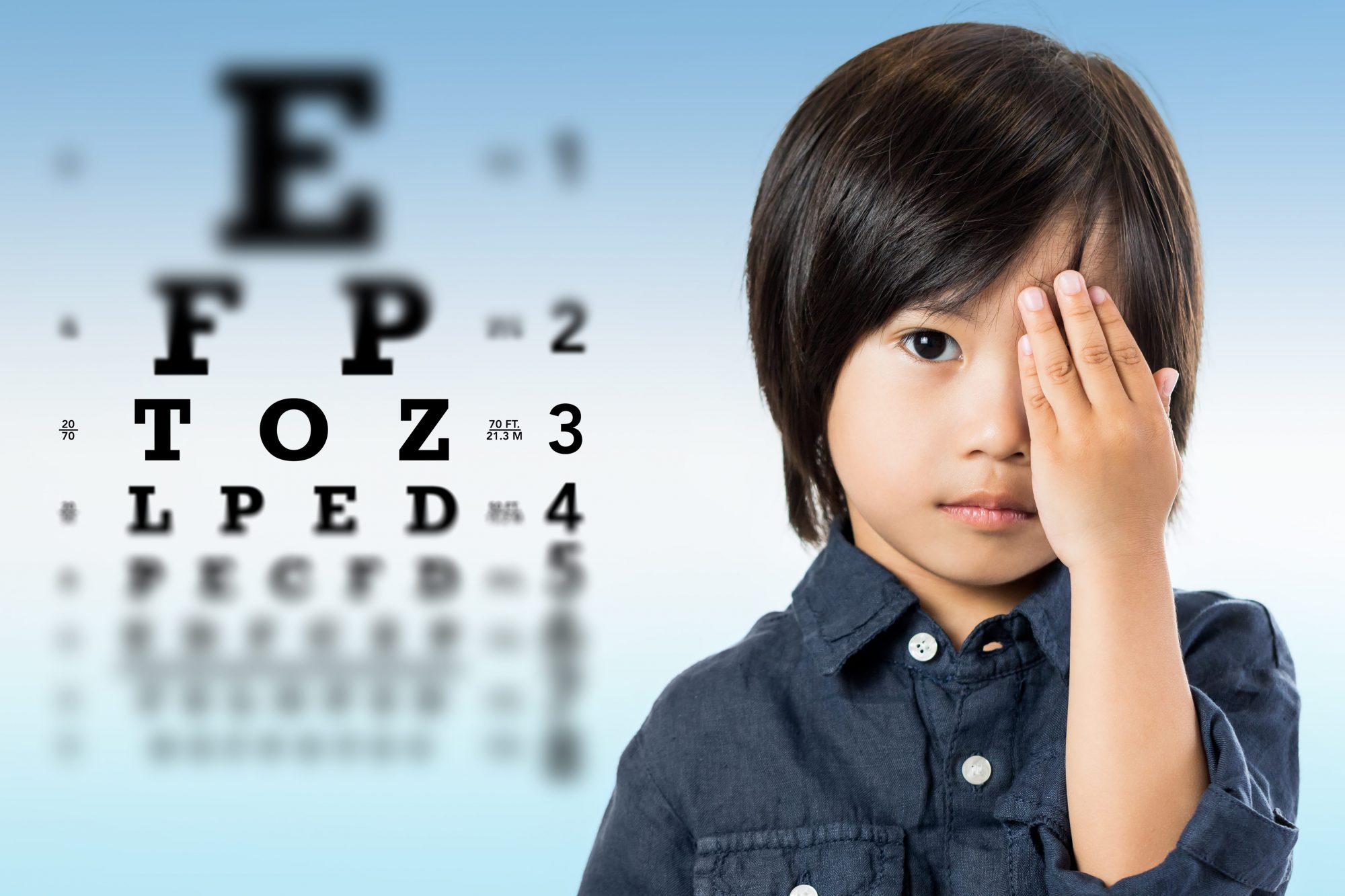
When a school nurse pulls a child into his or her office to complete a basic eye screening, he or she may write, “20/20 vision in both eyes. No visual concerns.” This child has successfully looked at an eye chart and read the letters; demonstrated the ability to look straight ahead, from an appropriate distance without things becoming blurry or illegible; and demonstrated visual acuity, or the ability to see with acceptable clarity.

But does this necessarily mean there are no concerns?

Visual acuity measures whether a stimulus is being seen – not necessarily if the information is truly being understood. The visual system is a complex part of the central nervous systems that incorporates the eyes, ocular pathways and brain to produce and interpret sight. It requires consistent communication between all of these individual anatomical pieces, the vestibular system and the skeletomuscular system. Essentially, vision is complicated and messy and requires many many different skills.

Breaking It Down

In terms of visual skills needed for academic success, we often break things down into three main areas: ocular motor control, visual perception and visual motor integration.

  • Ocular motor control describes the ability to physically move the eyes using the 9 ocular muscles. It encompasses the ability to track an object across a screen or a line of text across a book, or the ability to look up at the board and then quickly refocus on a sheet on paper on the desk. Imagine trying to watch a basketball game without the ability to track the ball across the screen smoothly. It quickly becomes tiring and frustrating. Occupational therapists often refer to these specific eye movements with technical terms, such as visual saccades, pursuits, convergence/divergence and accommodation. But in essence they describe eye movement.
  • Visual perception or visual processing is in many ways more nuanced. It focuses on the brain’s ability to organize, interpret and fully understand the information it receives from the eyes. Two main skills needed at school are visual figure ground and visual closure.
    • Visual figure ground is the ability to discern relevant information from a busy or cluttered background. A student with visual figure ground difficulty may not be able to search a busy white board and find a homework assignment. These students may also be visually overwhelmed by a worksheet with 20 math problems, but successful with the same problems presented individually.
    • Visual closure is a skill that specifically helps with reading efficiency and fluency. It is the ability to identify or visualize a complete form or picture when given incomplete visual information or when only a small piece of the image is shown. Visual closure allows us to read a sentence quickly without stopping to decode each individual letter. It is aslo oen raeosn taht mnay pelope can raed setneces wtih julmbled up ltetres. We recognize the form, not simply the sequential letters.  :  )
    • Visual closure plays a role in sight words and reading partially-covered papers or street signs in the community. While there are many more important visual perception skills, these two examples have functional, measurable effects in the classroom setting and are commonly identified through occupational therapy testing.
  • Visual motor integration (VMI) describes the ability to use all of these foundational visual skills in conjunction with foundational motor skills. It is the ability to interpret visual information and produce a precise motor response. In the classroom, this affects a student’s ability to copy shapes, produce legible handwriting and use scissors to cut along a line. Not only can these things be difficult, they can be exhausting as a child tries to use all of these skills at once.

While all of these visual components have multiple layers and intricacies, it is important to simply acknowledge that there’s more than the eye can see when it comes to vision. A child who “can’t see the board,” but has 20/20 vision, may just be visually overwhelmed. A child who looks at a page full of small block text and immediately gives up may not have the visual skill to read across a line. And a child who is learning to read beautifully, but still has difficult forming the letters in his name may have poor visual motor integration. Fortunately, there are many interventions and accommodations that can help build on and develop these skills further to foster confidence and success in the class and community.

About the Author:

Dr. Sophie Bellenis is a Licensed Occupational Therapist in Massachusetts, specializing in pediatrics and occupational therapy in the developing world. Dr. Bellenis joined NESCA in the fall of 2017 to offer community-based skills coaching services as well as social skills coaching as part of NESCA’s transition team. Dr. Bellenis graduated from the MGH Institute of Health Professions with a Doctorate in Occupational Therapy, with a focus on pediatrics and international program evaluation. She is a member of the American Occupational Therapy Association, as well as the World Federation of Occupational Therapists. In addition to her work at NESCA, Dr. Bellenis works as a school-based occupational therapist for the city of Salem Public Schools and believes that individual sensory needs, and visual skills must be taken into account to create comprehensive educational programming.


Neuropsychology & Education Services for Children & Adolescents (NESCA) is a pediatric neuropsychology practice and integrative treatment center with offices in Newton, Massachusetts, Plainville, Massachusetts, and Londonderry, New Hampshire, serving clients from preschool through young adulthood and their families. For more information, please email info@nesca-newton.com or call 617-658-9800.


Skip to content