NESCA’s Newton, MA location has immediate availability for neuropsychological evaluations. Our MA clinicians specialize in the following evaluations: Neuropsychological; Autism; and Emotional and Psychological, as well as Academic Achievement and Learning Disability Testing.

Visit www.nesca-newton.com/intake for more information or to book an evaluation.

Tag

sophie bellenis Archives - Page 4 of 4 - NESCA

Subscribe to NESCA Notes

An OT’s Guide to Home Learning: Board Games and Puzzles

By | NESCA Notes 2020

By: Sophie Bellenis, OTD, OTR/L
Occupational Therapist; Real-life Skills Program Manager and Coach

As social distancing recommendations, stay-at-home orders and shelter-in-place mandates continue to keep families confined to the home, parents are quickly being asked to take on the roles of teacher, therapist, warden, work-from-home professional, best friend and more. For parents of children with special needs and learning differences, this can feel extra daunting. There are countless online resources providing specific in-home activities, recommendations, and suggestions for working on targeted skills (e.g., literacy, fine motor, sensory integration, gross motor, etc.) in the home. It’s easy to get quickly overwhelmed by the onslaught of information.

While I believe there are many useful and creative free resources available online (I’ve written some of them!), our “new normal” includes many barriers to easy implementation including time, expertise, resources and confidence. Today, I want to share how some fun activities involving board games that you may already have in your home could make the task of keeping children engaged, interested and learning a little bit easier. Our game makers are getting increasingly creative and aware of their role in helping children build their skills, and the games listed below are just a few of the many options available.

5 Board Games for Development of Visual Perception

  • Connect 4 – Playing Connect 4 with the traditional rules requires kids to track horizontally, vertically and diagonally with their eyes. They need to visualize where their checker will land and place it in the correct spot at the top. Additionally, children need to monitor two colors at a time to ensure that they do not need to block their opponent on their next turn. For younger children, consider using the board to practice patterns or make shapes out of one color.
  • Quirkle – Quirkle combines colors, shapes and a grid pattern to create an interactive game for children to play with their parents. It promotes form perception, visual discrimination, tracking and matching.
  • Dominoes – There are many different games that can be played with Dominoes, making it easy to scaffold the activity for all different ages. Dominoes works on many of the same skills as Quirkle, but really allows children to practice visual figure ground. Figure ground is the ability to distinguish relevant information from a busy or overwhelming background. Dominoes have lots of different colored little dots in different patterns and alignments allowing children to practice this skill. Notably, Dominoes often have a tactile aspect allowing children to both see and feel the dots.
  • Spot it! / Spot it Jr! – Spot it! has quickly become a favorite game of occupational therapists, speech language pathologists and school psychologists alike. It practices a multitude of important skills. In terms of visual perception, Spot it! focuses on visual discrimination, hand-eye coordination, attention to detail, figure ground and more. Due to its popularity, Spot it! has provided us with an excellent variety of specific versions, such as Alphabet, NFL, Gone Camping, Animals, as well as substantial Spot it Jr.! options.
  • Memory – Unsurprisingly, the game Memory works on increasing visual memory! Children have to remember which cards they have picked, where they are on a grid and where the matches are. There are lots of options to order online, but this can absolutely be played used playing cards or DIY pictures drawn on pieces of paper. Children are also able to practice pronation/supination by flipping over the cards and placing them back down on the table.

 5 Board Games for Development of Fine Motor Skills

  • Trouble – Trouble allows children to work on building hand strength as they push down the pop-o-matic die roller. Try to ensure that children are using the muscles in their hands and fingers to push down, and limit the amount of body weight they use to help them push down. Additionally, children practice a pincer grasp as they pinch their pegs to move them around the board.
  • Hi-Ho! Cherry-O! – This game includes little plastic fruit that need to be placed in a basket to promote a pincer grasp and a spinner board that helps teach kids to flick or push a spinner.
  • BedBugs – Tongs and tweezers are part of an OT’s go-to toolbox as they promote fine motor precision, keeping an open webspace, and hand strength and coordination. This game is for children age 4 and up and provides each player with their own tongs to try and catch little bouncy bugs on a bed. Add a layer of complexity by having kids each try to catch one color!
  • Avalanche Fruit Stand – Another game that incorporates tweezers, Avalanche Fruit Stand promotes grip strength, pincer grasp and problem-solving as children need to balance different fruits on a stand. There is also a spinner to add in another element.
  • Hungry Hungry Hippos – Use this game to practice finger isolation and increase finger/hand strength. Encourage your children to use one finger at a time to depress the lever and make their hippo eat the marbles. Try switching fingers for each round.

*Bonus!* While many of these games work on more than one skill at a time, one age-old recreational activity that targets visual perception, visual motor integration and fine motor skill is simply completing a puzzle. Focus on teaching strategy and problem-solving by having your children start with the edge pieces, organize by color or choose one figure or character in the puzzle to build independently.

About the Author

Dr. Sophie Bellenis is a Licensed Occupational Therapist in Massachusetts, specializing in educational OT and functional life skills development. Dr. Bellenis joined NESCA in the fall of 2017 to offer community-based skills coaching services as a part of the Real-life Skills Program within NESCA’s Transition Services team. Dr. Bellenis graduated from the MGH Institute of Health Professions with a Doctorate in Occupational Therapy, with a focus on pediatrics and international program evaluation. She is a member of the American Occupational Therapy Association, as well as the World Federation of Occupational Therapists. Having spent years delivering direct services at the elementary, middle school and high school levels, Dr. Bellenis has extensive background with school-based occupational therapy services.  She believes that individual sensory needs and visual skills must be taken into account to create comprehensive educational programming.

To book an appointment or to learn more about NESCA’s Occupational Therapy Services, please fill out our online Intake Form, email info@nesca-newton.com or call 617-658-9800.


Neuropsychology & Education Services for Children & Adolescents (NESCA) is a pediatric neuropsychology practice and integrative treatment center with offices in Newton, Massachusetts, Plainville, Massachusetts, and Londonderry, New Hampshire, serving clients from preschool through young adulthood and their families. For more information, please email info@nesca-newton.com or call 617-658-9800.


Five Tips for Promoting Fine Motor Development in the Home!

By | NESCA Notes 2020

By: Sophie Bellenis, OTD, OTR/L
Occupational Therapist; Real-life Skills Program Manager and Coach

  • Writing on a vertical surface is a great way to promote proper hand/wrist positioning and fine motor growth – try taping paper to an easel or to the wall and allowing them to try writing on this plane.
  • Skip the fat pencils for our little learners. While specific adapted writing utensils for children with fine motor needs can be best assessed by an occupational therapist, for the majority of our young learners, the rule “the object promotes the grasp!” is applicable. If we want our learners to be building strength and learning proper hand positioning, I suggest trying either a standard number 2 pencil or a mini golf pencil.
  • Let your children peel off and stick on their own stickers! In reality this could end up with some ripped stickers or extra time spent on a project, but peeling off stickers promotes a pincer grasp, bilateral coordination and visual motor integration. If your child is too young to find the edge and begin to peel, consider starting the sticker and then letting them finish peeling it off independently.
  • Use scissors to cut anything and everything! While supplies of construction paper and worksheets sent home from school may be dwindling, consider letting your children cut up junk mail (make sure it’s sanitized), old magazines, newspapers and scraps of old cloth. Some of our kids will want to use these scraps to create a collage or other art projects, while others will simply enjoy the act of shredding. You can make this activity accessible for really young kids by simply having them tear the paper with both hands.
  • Bring out the tool box! Twisting a bolt onto a screw, using a wrench to tighten a hex-nut and using a hammer to pull nails out of a block of wood all help with fine motor and increasing strength. For more of a visual perception task, considering mixing all of the screws, nails and bolts together and having your child sort them into different bowls or containers.


About the Author

Dr. Sophie Bellenis is a Licensed Occupational Therapist in Massachusetts, specializing in educational OT and functional life skills development. Dr. Bellenis joined NESCA in the fall of 2017 to offer community-based skills coaching services as a part of the Real-life Skills Program within NESCA’s Transition Services team. Dr. Bellenis graduated from the MGH Institute of Health Professions with a Doctorate in Occupational Therapy, with a focus on pediatrics and international program evaluation. She is a member of the American Occupational Therapy Association, as well as the World Federation of Occupational Therapists. Having spent years delivering direct services at the elementary, middle school and high school levels, Dr. Bellenis has extensive background with school-based occupational therapy services.  She believes that individual sensory needs and visual skills must be taken into account to create comprehensive educational programming.

To book an appointment or to learn more about NESCA’s Occupational Therapy Services, please fill out our online Intake Form, email info@nesca-newton.com or call 617-658-9800.


Neuropsychology & Education Services for Children & Adolescents (NESCA) is a pediatric neuropsychology practice and integrative treatment center with offices in Newton, Massachusetts, Plainville, Massachusetts, and Londonderry, New Hampshire, serving clients from preschool through young adulthood and their families. For more information, please email info@nesca-newton.com or call 617-658-9800.


Visual Skill and Academic Success – Looking Past 20/20 Vision

By | NESCA Notes 2019

By: Sophie Bellenis, OTD, OTR/L
Occupational Therapist; Community-Based Skills Coach

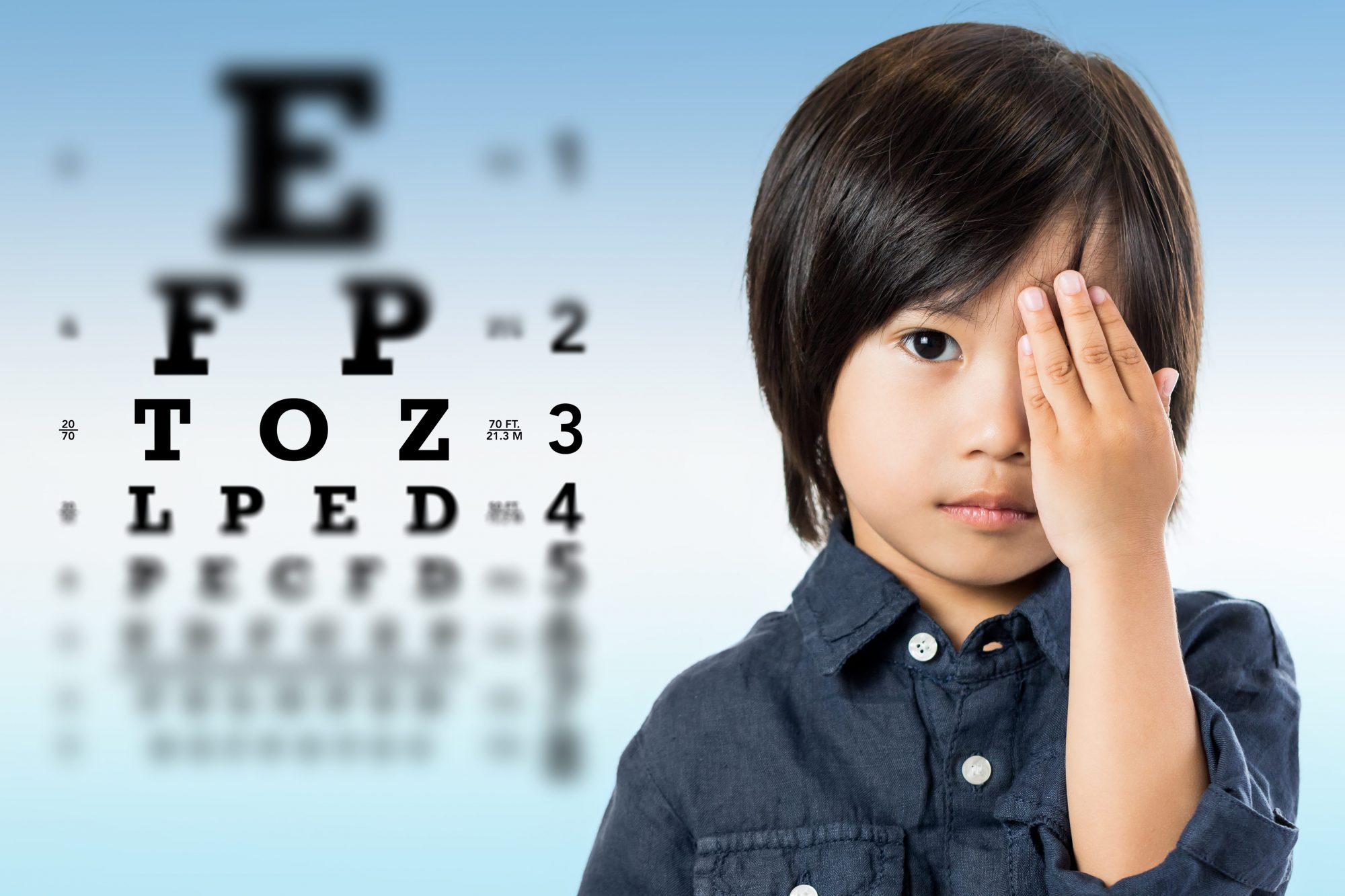
When a school nurse pulls a child into his or her office to complete a basic eye screening, he or she may write, “20/20 vision in both eyes. No visual concerns.” This child has successfully looked at an eye chart and read the letters; demonstrated the ability to look straight ahead, from an appropriate distance without things becoming blurry or illegible; and demonstrated visual acuity, or the ability to see with acceptable clarity.

But does this necessarily mean there are no concerns?

Visual acuity measures whether a stimulus is being seen – not necessarily if the information is truly being understood. The visual system is a complex part of the central nervous systems that incorporates the eyes, ocular pathways and brain to produce and interpret sight. It requires consistent communication between all of these individual anatomical pieces, the vestibular system and the skeletomuscular system. Essentially, vision is complicated and messy and requires many many different skills.

Breaking It Down

In terms of visual skills needed for academic success, we often break things down into three main areas: ocular motor control, visual perception and visual motor integration.

  • Ocular motor control describes the ability to physically move the eyes using the 9 ocular muscles. It encompasses the ability to track an object across a screen or a line of text across a book, or the ability to look up at the board and then quickly refocus on a sheet on paper on the desk. Imagine trying to watch a basketball game without the ability to track the ball across the screen smoothly. It quickly becomes tiring and frustrating. Occupational therapists often refer to these specific eye movements with technical terms, such as visual saccades, pursuits, convergence/divergence and accommodation. But in essence they describe eye movement.
  • Visual perception or visual processing is in many ways more nuanced. It focuses on the brain’s ability to organize, interpret and fully understand the information it receives from the eyes. Two main skills needed at school are visual figure ground and visual closure.
    • Visual figure ground is the ability to discern relevant information from a busy or cluttered background. A student with visual figure ground difficulty may not be able to search a busy white board and find a homework assignment. These students may also be visually overwhelmed by a worksheet with 20 math problems, but successful with the same problems presented individually.
    • Visual closure is a skill that specifically helps with reading efficiency and fluency. It is the ability to identify or visualize a complete form or picture when given incomplete visual information or when only a small piece of the image is shown. Visual closure allows us to read a sentence quickly without stopping to decode each individual letter. It is aslo oen raeosn taht mnay pelope can raed setneces wtih julmbled up ltetres. We recognize the form, not simply the sequential letters.  :  )
    • Visual closure plays a role in sight words and reading partially-covered papers or street signs in the community. While there are many more important visual perception skills, these two examples have functional, measurable effects in the classroom setting and are commonly identified through occupational therapy testing.
  • Visual motor integration (VMI) describes the ability to use all of these foundational visual skills in conjunction with foundational motor skills. It is the ability to interpret visual information and produce a precise motor response. In the classroom, this affects a student’s ability to copy shapes, produce legible handwriting and use scissors to cut along a line. Not only can these things be difficult, they can be exhausting as a child tries to use all of these skills at once.

While all of these visual components have multiple layers and intricacies, it is important to simply acknowledge that there’s more than the eye can see when it comes to vision. A child who “can’t see the board,” but has 20/20 vision, may just be visually overwhelmed. A child who looks at a page full of small block text and immediately gives up may not have the visual skill to read across a line. And a child who is learning to read beautifully, but still has difficult forming the letters in his name may have poor visual motor integration. Fortunately, there are many interventions and accommodations that can help build on and develop these skills further to foster confidence and success in the class and community.

About the Author:

Dr. Sophie Bellenis is a Licensed Occupational Therapist in Massachusetts, specializing in pediatrics and occupational therapy in the developing world. Dr. Bellenis joined NESCA in the fall of 2017 to offer community-based skills coaching services as well as social skills coaching as part of NESCA’s transition team. Dr. Bellenis graduated from the MGH Institute of Health Professions with a Doctorate in Occupational Therapy, with a focus on pediatrics and international program evaluation. She is a member of the American Occupational Therapy Association, as well as the World Federation of Occupational Therapists. In addition to her work at NESCA, Dr. Bellenis works as a school-based occupational therapist for the city of Salem Public Schools and believes that individual sensory needs, and visual skills must be taken into account to create comprehensive educational programming.


Neuropsychology & Education Services for Children & Adolescents (NESCA) is a pediatric neuropsychology practice and integrative treatment center with offices in Newton, Massachusetts, Plainville, Massachusetts, and Londonderry, New Hampshire, serving clients from preschool through young adulthood and their families. For more information, please email info@nesca-newton.com or call 617-658-9800.


Enjoying the Holidays with Sensory Needs

By | NESCA Notes 2018


By: Sophie Bellenis, OTD, OTR/L 
NESCA Occupational Therapist; Community-Based Skills Coach

School vacation! Bright lights! Snow! Holiday cards on the wall! Bells a’ringing!

For many of us, the holiday season is an exciting, family filled occasion that brings people together to celebrate yearly traditions.  However, for some of our children with sensory needs, the season can be over-stimulating, anxiety producing, and difficult to navigate successfully.  Even children who love the spirit of the season can quickly become saturated with the onslaught of visual, auditory, tactile, and olfactory input.  Here are some tips to consider as we head into December!

  1. Make Your Home a Safe Space – Consider reducing decorations, holding off on moving furniture, and choosing a select few holiday cards from friends and family to display. With everything from daily routines to the look of familiar neighborhood streets changing throughout the month, maintaining consistency within a child’s home can help offer a much needed respite from the visual clutter. While these changes may seem minor, visual clutter causes some children’s eyes to continuously scan the room, move from place to place, and constantly work to perceive all of the information. This is exhausting!
  2. Less is often More – For a child who is easily over-stimulated, opening two presents can be much more exciting and rewarding than ten. One hour visiting family can feel easy, while two hours feels impossible. And a small tree can look beautiful, while a huge tree feels intimidating and scary. Set children up for success by keeping activities manageable.
  3. Have a Designated Sensory Retreat – When venturing out to visit family or friends, preparation is always key. Discussing a sensory plan before arriving and having supports in place can catch stressful situations before they develop. A pre-planned hand signal or code word can save a child from having to explain that their body feels dysregulated and they are overwhelmed. Children may want to take breaks in a quiet bedroom, bring a popup tent to hide in, or eat their meal somewhere quiet before a big sit down dinner begins. For adolescents, this sensory retreat may simply be sitting in the car for 10-15 minutes in silence.  Give children permission to take what they need.
  4. Enlist the Help of Teachers – Social stories, modified visual routines, and exposure to holiday sensory input are all strategies that teachers and therapists in the school setting can help to develop and introduce to a child. Previewing the plan for school vacation can make the week off go much more smoothly.

In a household such as mine, that celebrates both Christmas and Hanukah, the month of December is fraught with routine change, decorations, and new smells from rarely cooked, homemade meals.  Allowing our children with sensory processing disorder, autism spectrum disorder, and other sensory needs to prioritize their internal regulation can help make the season fun for everyone!


About the Author:

Sophie Bellenis, OTD, OTR/L  is a Licensed Occupational Therapist in Massachusetts, specializing in pediatrics and occupational therapy in the developing world. For the past five years her work has primarily been split between children and adolescents on the Autism Spectrum in the United States, and marginalized children in Tanzania, East Africa.

Dr. Bellenis graduated from the MGH Institute of Health Professions with a Doctorate in Occupational Therapy, with a focus on pediatrics and international program evaluation. She is a member of the American Occupational Therapy Association, as well as the World Federation of Occupational Therapists.

Dr. Bellenis has worked for the Northshore Education Consortium at the Kevin O’Grady School providing occupational therapy services and also at the Spaulding Cambridge Outpatient Center. She also has extensive experience working at the Northeast ARC Spotlight Program using a drama-based method to teach social skills to children, adolescents, and young adults with autism, Asperger’s Syndrome, and related social cognitive challenges.

Internationally, Dr. Bellenis has done extensive work with the Tanzanian Children’s Fund providing educational enrichment and support. She has also spent time working with The Plaster House, a post-surgical, pediatric rehabilitation center in Ngaramtoni, Tanzania.

Dr. Bellenis currently works as a school-based occupational therapist for the city of Salem Public Schools and believes that individual sensory needs and visual motor skills must be taken into account to create comprehensive educational programming. Dr. Bellenis joined NESCA in the fall of 2017 to offer community-based skills coaching services as well as social skills coaching as part of NESCA’s transition team.


If you are interested in a consultation or individualized skill coaching with Dr. Bellenis, please complete NESCA’s online intake form today.


Neuropsychology & Education Services for Children & Adolescents (NESCA) is a pediatric neuropsychology practice and integrative treatment center with offices in Newton, Massachusetts, Plainville, Massachusetts, and Londonderry, New Hampshire, serving clients from preschool through young adulthood and their families. For more information, please email info@nesca-newton.com or call 617-658-9800.


The Role of Pediatric Occupational Therapy

By | NESCA Notes 2018

By: Sophie Bellenis, OTD, OTR/L
Occupational Therapist; Community-Based Skills Coach

In order to fully understand the role that occupational therapy can play in pediatric health and wellbeing, it is first important to understand the term “occupation.”  The World Federation of Occupational Therapy (WFOT) defines occupations as, “the everyday activities that people do as individuals, in families, and in communities that occupy time and bring meaning and purpose to life.”  As we know, these activities look different at every age, and our routines, habits, and responsibilities are continually growing and changing.

During childhood, the development of these skills moves more quickly than any other period of life. For example, a two-year old little girl, Katie, is learning to put on her shirt independently, kick a ball, and sort by color.  Within ten short years, Katie may be getting herself ready for the bus, writing a three-paragraph essay, and learning to play the saxophone.  The transition to adolescence comes with even more new experiences and expectations.

So where does occupational therapy come in?

Occupational therapy focuses on the child, the activity at hand, and the environment around them.  By considering all of these factors, OTs work to determine the correct modifications, adaptations, and strategies that may be necessary for success.

What is the goal?

Due to the fact that occupations are incredibly personalized, the goal of OT is often to simply increase independence and participation in valued activities.  One child may be working on learning to independently tie his shoes, while another may need help developing a morning routine to consistently follow.  These goals are only worth focusing on and problem-solving if they are important to the child and his or her family.

How do we get there?

Consider the child’s strengths and limitations. These may include physical, emotional, cognitive, sensory abilities, and much more.  A child’s particular interests, level of motivation, and understanding of themselves all play a role in their ability to engage in the things that are important to them.

Consider the environment. The environment in which a child lives and grows is physical, spiritual, social, and cultural. It is this individuality that makes it nearly impossible for an environment to be a “good fit for all users.”  Occupational therapists often work to modify the environment, or help individuals understand the role that the environment plays.

Consider the activity itself. The list of childhood occupations is seemingly never-ending.  From brushing your teeth, getting dressed, and doing chores, to maintaining friendships, navigating the digital world, and learning to take the bus, these skills all require numerous steps and different abilities.  These activities often must be broken down into small steps to determine how to help a child be successful.

My work at NESCA

At NESCA, I am currently working as a community-based skills coach, using occupational therapy to create experiential learning opportunities, and develop functional living skills.  I love having the ability to work with tweens, teens, and young adults in their own environment to collaborate on creating lasting strategies for participation and independence.

Dr. Bellenis works with a small caseload of clients aged 12-26 who have recently participated in neuropsychological evaluation and/or transition assessment at NESCA. If you have questions about working with Dr. Bellenis for Community-Based Skills Coaching, please email Kelley Challen, Director of Transition Services, at kchallen@nesca-newton.com.


About the Author:

Dr. Sophie Bellenis is a Licensed Occupational Therapist in Massachusetts, specializing in pediatrics and occupational therapy in the developing world. Dr. Bellenisjoined NESCA in the fall of 2017 to offer community-based skills coaching services as well as social skills coaching as part of NESCA’s transition team. Dr. Bellenis graduated from the MGH Institute of Health Professions with a Doctorate in Occupational Therapy, with a focus on pediatrics and international program evaluation. She is a member of the American Occupational Therapy Association, as well as the World Federation of Occupational Therapists. In addition to her work at NESCA, Dr. Bellenis works as a school-based occupational therapist for the city of Salem Public Schools and believes that individual sensory needs, and visual motor skills must be taken into account to create comprehensive educational programming.


Neuropsychology & Education Services for Children & Adolescents (NESCA) is a pediatric neuropsychology practice and integrative treatment center with offices in Newton, Massachusetts, Plainville, Massachusetts, and Londonderry, New Hampshire, serving clients from preschool through young adulthood and their families. For more information, please email info@nesca-newton.com or call 617-658-9800.


Skip to content