
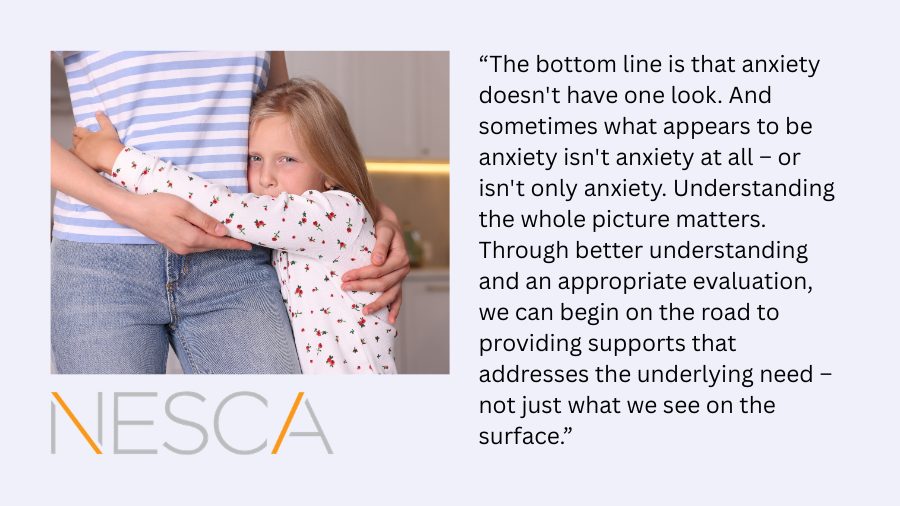
NESCA now accepts United Behavioral Health for neuropsychological evaluations!

To book an appointment, complete our Inquiry/Intake Form.

Tag

nesca plainville ma Archives - NESCA

Subscribe to NESCA Notes

school student frustrated over the work

Navigating the Post-Honeymoon Phase: Signs Your Child May Need Support This School Year

By | NESCA Notes 2025

school student frustrated over the workBy Miranda Milana, Psy.D.
Pediatric Neuropsychologist

With the start of the school year well underway, we are beginning to see students and teachers settling into their classroom routines. Along with this increase in familiarity and comfortability, parents often start to see bits and pieces of challenges arise around this time of year that may have gone unnoticed during the initial “honeymoon period.” You may be wondering what challenges you should be looking out for and when those challenges warrant an evaluation to determine further supports and services. Let’s take some time to explore what to keep an eye on, and when it might be time to reach out to schedule an evaluation to dive a bit deeper into what is going on.

Academics

No matter their age, if you ever feel your child is inundated and overwhelmed with schoolwork, it is a great idea to reach out to their teachers; ask how long homework should be taking and whether it should feel like review vs. new material. If homework starts to consistently become a battle, it might be worth taking a closer look into why. It could be because it’s a new and appropriately challenging course. It could also be because there are underlying language-based learning disabilities, a nonverbal learning disability, executive function challenges, or increasing symptoms of anxiety or depression. Some specific things to watch for:

  • Frequent tears during homework that appear to be getting worse instead of better
  • Not appearing to “get it” even after review and repetition
  • Difficulty studying/holding information in memory
  • Dysfluent reading or not understanding what they’ve read
  • Challenges understanding math concepts or memorizing math facts
  • Difficulty applying and generalizing concepts
  • Opposition to handwriting tasks or when asked to compose a writing assignment
  • Poor penmanship that is illegible and/or immature for age
  • Not meeting benchmarks on assessments

Social Skills

At this point in the school year, children are typically starting to be interested in other peers within their classrooms. For younger kids, they are likely to feel more comfortable interacting with other children in their play. Common social concerns can include:

  • Not remembering any names or faces of kids in their class
  • Preferring to play alone; hesitant to join in with a group
  • Appearing unaware of social cues or how to initiate conversation with others
  • Rigidity in play – always wanting to play their own game by their own specific rules
  • Frequent peer conflicts and feeling rejected or left out

Emotional Functioning

A new school year often elicits feelings of anxiety in kids no matter how outgoing and social they may be! When might it be a sign that there is something more?

  • Continued and persistent resistance to going to school
  • Frequent somatic complaints with no apparent cause (e.g., headaches, stomachaches)
  • Change in sleeping patterns – not being able to fall asleep at night or waking up frequently
  • Difficulty with regulating their emotions/frequent tantrums
  • Changes in appetite
  • Negative statements about themselves
  • Increase in irritability
  • Withdrawal from others or previously preferred activities
  • Always wanting to know what is happening next and struggling with changes in routine (i.e., Does a substitute teacher derail their whole day? If a friend is out sick, is there a perseveration on where they are? Do you wait to tell them about changes in plans so they don’t worry in advance?)

Attention/Focus

Have you ever found yourself feeling restless and distracted when sitting through a work meeting? Kids are no different! Sitting still and paying attention for extended periods of time can be really tough – especially after being on summer break! Here are a few things to keep an eye on:

  • Frequently fidgeting in their seat or needing a fidget item to increase concentration
  • Difficulty with multi-step directions
  • Not remembering information presented during lectures
  • Acting impulsively
  • Easily distracted/daydreaming
  • Acting as if running by a motor
  • Blurting out thoughts, interrupting conversations
  • Teacher feedback that they are interrupting other students or not able to sit quietly and attend to class discussions

As always, you know your child best! If you feel like this year is off to a rocky start, or you’re starting to have questions regarding their functioning, do not hesitate to reach out and schedule an evaluation. A comprehensive neuropsychological evaluation is designed to look at ALL aspects of a child to determine what is getting in their way of reaching their potential. We are always here to help!


About the Author

Dr. Miranda Milana provides comprehensive evaluation services for children, adolescents, and young adults with a wide range of concerns, includingMiranda Milana Headshot attention deficit disorders, communication disorders, intellectual disabilities, and learning disabilities. She particularly enjoys working with children and their families who have concerns regarding an autism spectrum disorder. Dr. Milana has received specialized training on the administration of the Autism Diagnostic Observation Schedule (ADOS).

Dr. Milana places great emphasis on adapting her approach to a child’s developmental level and providing a testing environment that is approachable and comfortable for them. She also values collaboration with families and outside providers to facilitate supports and services that are tailored to a child’s specific needs.

Before joining NESCA, Dr. Milana completed a two-year postdoctoral fellowship at Boston Children’s Hospital in the Developmental Medicine department, where she received extensive training in the administration of psychological and neuropsychological testing. She has also received assessment training from Beacon Assessment Center and The Brenner Center. Dr. Milana graduated with her B.A. from the University of New England and went on to receive her doctorate from William James College (WJC). She was a part of the Children and Families of Adversity and Resilience (CFAR) program while at WJC. Her doctoral training also included therapeutic services across a variety of settings, including an elementary school, the Family Health Center of Worcester and at Roger Williams University.

Dr. Milana grew up in Maine and enjoys trips back home to see her family throughout the year. She currently resides in Wrentham, Massachusetts, with her husband and two golden retrievers. She also enjoys spending time with family and friends, reading, and cheering on the Patriots, Bruins, Red Sox, and Celtics.​

To book an appointment with Dr. Miranda Milana or another expert NESCA neuropsychologist, please complete our Intake Form today. 

NESCA is a pediatric neuropsychology practice and integrative treatment center with offices in Newton, Plainville, and Hingham, Massachusetts; Londonderry, New Hampshire; the greater Burlington, Vermont region; and Coral Gables/Miami, Florida, serving clients from infancy through young adulthood and their families. For more information, please email info@nesca-newton.com or call 617-658-9800.


school student frustrated over the work

Navigating the Post-Honeymoon Phase: Signs Your Child May Need Support This School Year

By | NESCA Notes 2024

school student frustrated over the workBy Miranda Milana, Psy.D.
Pediatric Neuropsychologist

With the start of the school year well underway, we are beginning to see students and teachers settling into their classroom routines. Along with this increase in familiarity and comfortability, parents often start to see bits and pieces of challenges arise around this time of year that may have gone unnoticed during the initial “honeymoon period.” You may be wondering what challenges you should be looking out for and when those challenges warrant an evaluation to determine further supports and services. Let’s take some time to explore what to keep an eye on, and when it might be time to reach out to schedule an evaluation to dive a bit deeper into what is going on. 

Academics

No matter their age, if you ever feel your child is inundated and overwhelmed with schoolwork, it is a great idea to reach out to their teachers; ask how long homework should be taking and whether it should feel like review vs. new material. If homework starts to consistently become a battle, it might be worth taking a closer look into why. It could be because it’s a new and appropriately challenging course. It could also be because there are underlying language-based learning disabilities, a nonverbal learning disability, executive function challenges, or increasing symptoms of anxiety or depression. Some specific things to watch for:

  • Frequent tears during homework that appear to get worse instead of better
  • Not appearing to “get it” even after review and repetition
  • Difficulty studying/holding information in memory
  • Dysfluent reading or not understand what they’ve read
  • Challenges understanding math concepts or memorizing math facts
  • Difficulty applying and generalizing concepts
  • Opposition to handwriting tasks or when asked to compose a writing assignment
  • Poor penmanship that is illegible and/or immature for age
  • Not meeting benchmarks on assessments

Social Skills

At this point in the school year, children are typically starting to be interested in other peers within their classrooms. For younger kids, they are likely to feel more comfortable interacting with other children in their play. Common social concerns can include:

  • Not remembering any names or faces of kids in their class
  • Preferring to play alone, hesitant to join in with a group
  • Appearing unaware of social cues or how to initiate conversation with others
  • Rigidity in play—always wanting to play their own game by their own specific rules
  • Frequent peer conflicts and feeling rejected or left out

Emotional Functioning

A new school year often elicits feelings of anxiety in kids no matter how outgoing and social they may be! When might it be a sign that there is something more?

  • Continued and persistent resistance to going to school
  • Frequent somatic complaints with no apparent cause (e.g., headaches, stomachaches)
  • Change in sleeping patterns – not being able to fall asleep at night or waking up frequently
  • Difficulty with regulating their emotions/frequent tantrums
  • Changes in appetite
  • Negative statements about themselves
  • Increase in irritability
  • Withdrawal from others or previously preferred activities
  • Always wanting to know what is happening next and struggling with changes in routine (i.e., Does a substitute teacher derail their whole day? If a friend is out sick, is there a perseveration on where they are? Do you wait to tell them about changes in plans so they don’t worry in advance?)

Attention/Focus

Have you ever found yourself feeling restless and distracted when sitting through a work meeting? Kids are no different! Sitting still and paying attention for extended periods of time can be really tough – especially after being on summer break! Here are a few things to keep an eye on:

  • Frequently fidgeting in their seat or needing a fidget item to increase concentration
  • Difficulty with multi-step directions
  • Not remembering information presented during lectures
  • Acting impulsively
  • Easily distracted/daydreaming
  • Acting as if run by a motor
  • Blurting out thoughts, interrupting conversations
  • Teacher feedback that they are interrupting other students or not able to sit quietly and attend to class discussions

As always, you know your child best! If you feel like this year is off to a rocky start, or you’re starting to have questions regarding their functioning, do not hesitate to reach out and schedule an evaluation. A comprehensive neuropsychological evaluation is designed to look at ALL aspects of a child to determine what is getting in their way of reaching their potential. We are always here to help!


About the Author

Dr. Miranda Milana provides comprehensive evaluation services for children and adolescents with a wide range of concerns, includingMiranda Milana Headshot attention deficit disorders, communication disorders, intellectual disabilities, and learning disabilities. She particularly enjoys working with children and their families who have concerns regarding an autism spectrum disorder. Dr. Milana has received specialized training on the administration of the Autism Diagnostic Observation Schedule (ADOS).

Dr. Milana places great emphasis on adapting her approach to a child’s developmental level and providing a testing environment that is approachable and comfortable for them. She also values collaboration with families and outside providers to facilitate supports and services that are tailored to a child’s specific needs.

Before joining NESCA, Dr. Milana completed a two-year postdoctoral fellowship at Boston Children’s Hospital in the Developmental Medicine department, where she received extensive training in the administration of psychological and neuropsychological testing. She has also received assessment training from Beacon Assessment Center and The Brenner Center. Dr. Milana graduated with her B.A. from the University of New England and went on to receive her doctorate from William James College (WJC). She was a part of the Children and Families of Adversity and Resilience (CFAR) program while at WJC. Her doctoral training also included therapeutic services across a variety of settings, including an elementary school, the Family Health Center of Worcester and at Roger Williams University.

Dr. Milana grew up in Maine and enjoys trips back home to see her family throughout the year. She currently resides in Wrentham, Massachusetts, with her husband and two golden retrievers. She also enjoys spending time with family and friends, reading, and cheering on the Patriots, Bruins, Red Sox, and Celtics.​

To book an appointment with Dr. Miranda Milana or another expert NESCA neuropsychologist, please complete our Intake Form today. 

NESCA is a pediatric neuropsychology practice and integrative treatment center with offices in Newton, Plainville, and Hingham, Massachusetts; Londonderry, New Hampshire; the greater Burlington, Vermont region; and Brooklyn, New York (coaching services only) serving clients from infancy through young adulthood and their families. For more information, please email info@nesca-newton.com or call 617-658-9800.


Busting a Common Autism Myth

By | NESCA Notes 2024

By Miranda Milana, Psy.D.
Pediatric Neuropsychologist

I often hear from parents and caregivers that their child has several friends and likes going to social events, leading them to wonder how they could have autism.

First, let’s take a look at what autism is:

Autism spectrum disorder is a neurodevelopmental disorder classified by persistent deficits in social communication and social interaction skills.

To meet criteria for an autism spectrum disorder, one must exhibit the following social communication deficits across multiple contexts:

  1. Deficits in social-emotional reciprocity—this may include feeling unsure or uncomfortable when approaching others, having difficulty initiating social interactions, or having difficulty responding appropriately when approached by others. When engaged in conversation with others, it may be difficult to engage in back-and-forth conversation and share interests/emotions.
  2. Deficits in nonverbal communication skills—examples include poor eye contact, poorly integrated gestures in conversation, reduced facial expressions, difficulty reading the facial expressions and gestures of others, and not picking up on subtle body language cues.
  3. Deficits initiating, maintaining, and understanding relationships—characterized by difficulties making new friends, not wanting to engage with peers in any capacity, or difficulties maintaining long lasting friendships.

One must also demonstrate evidence of at least two of the following: repetitive behaviors, inflexibility/rigidity, restricted and intense interests, and sensory sensitivities.

Next, let’s look at what autism isn’t:

While individuals with autism experience social challenges, it is a common misconception that having autism means not having any friends or social skills at all. Contrary to this popular misconception, I evaluate many children, adolescents, and adults who are on the autism spectrum, are socially motivated, and have numerous friendships.

It is important to remember that while a diagnosis of autism requires social communication deficits, that does not mean a complete lack of skills must be evident. For example, I see many individuals on the autism spectrum who have several longstanding friendships but have difficulty making new friends. Conversely, some individuals find that they initiate friendships well, but have difficulty maintaining friendships over time. It is also possible for an autistic individual to demonstrate appropriate eye contact and facial expressions but have difficulty reading subtle nonverbal cues of others. With high social motivation, it still may be challenging to know how to participate in social conversation, how to build on the interests of others, and how to respond to emotional reactions.

Individuals with high-functioning autism often get overlooked as they have learned to “mask” or “camouflage” really well. That is to say that they work hard to “fit in” or hide areas of vulnerability. It might not feel comfortable for them to participate in group conversations or to interpret nonliteral language. They may feel as though there are written social rules that everyone else has access to except for them. When observing them, it may appear as though they are social and well-integrated into social environments; however, they may report a vastly different internal experience.

Taken together, having an autism diagnosis does NOT mean there is a complete inability to form friendships or participate in social settings. Rather, aspects of social communication can be challenging and warrant supports and services designed to enhance these skills.

If you have any questions or concerns regarding your child’s social development, speak with your pediatrician and/or schedule an evaluation with one of our neuropsychologists at NESCA.


About the Author

Dr. Miranda Milana provides comprehensive evaluation services for children and adolescents with a wide range of concerns, including attention deficit disorders, communication disorders, intellectual disabilities, and learning disabilities. She particularly enjoys working with children and their families who have concerns regarding an autism spectrum disorder. Dr. Milana has received specialized training on the administration of the Autism Diagnostic Observation Schedule (ADOS).

Dr. Milana places great emphasis on adapting her approach to a child’s developmental level and providing a testing environment that is approachable and comfortable for them. She also values collaboration with families and outside providers to facilitate supports and services that are tailored to a child’s specific needs.

Before joining NESCA, Dr. Milana completed a two-year postdoctoral fellowship at Boston Children’s Hospital in the Developmental Medicine department, where she received extensive training in the administration of psychological and neuropsychological testing. She has also received assessment training from Beacon Assessment Center and The Brenner Center. Dr. Milana graduated with her B.A. from the University of New England and went on to receive her doctorate from William James College (WJC). She was a part of the Children and Families of Adversity and Resilience (CFAR) program while at WJC. Her doctoral training also included therapeutic services across a variety of settings, including an elementary school, the Family Health Center of Worcester and at Roger Williams University.

Dr. Milana grew up in Maine and enjoys trips back home to see her family throughout the year. She currently resides in Wrentham, Massachusetts, with her husband and two golden retrievers. She also enjoys spending time with family and friends, reading, and cheering on the Patriots, Bruins, Red Sox, and Celtics.​

To book an appointment with Dr. Miranda Milana or another expert NESCA neuropsychologist, please complete our Intake Form today. 

NESCA is a pediatric neuropsychology practice and integrative treatment center with offices in Newton, Plainville, and Hingham, Massachusetts; Londonderry, New Hampshire; the greater Burlington, Vermont region; and Brooklyn, New York (coaching services only) serving clients from infancy through young adulthood and their families. For more information, please email info@nesca-newton.com or call 617-658-9800.


Understanding the Neuropsychological Evaluation Process When an Autism Spectrum Disorder is Suspected

By | NESCA Notes 2024

By Miranda Milana, Psy.D.
Pediatric Neuropsychologist

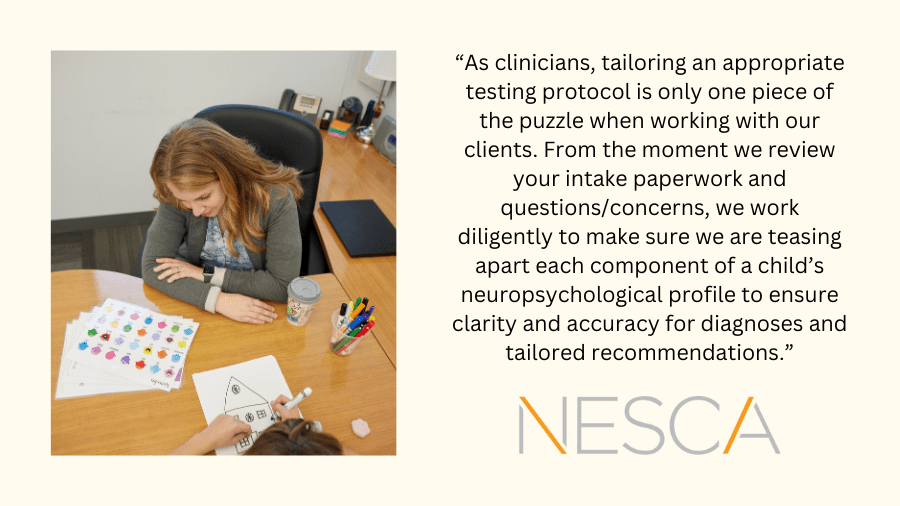
In January, Dr. Folsom published a blog post detailing the reasons why so many females on the autism spectrum are misdiagnosed in childhood. Here at NESCA, we are continuously working to improve our testing practices and administration protocols to ensure that we accurately capture one’s diagnostic picture when they come in for a comprehensive neuropsychological evaluation regardless of gender identity, age, or diagnostic presentation. As clinicians, tailoring an appropriate testing protocol is only one piece of the puzzle when working with our clients. From the moment we review your intake paperwork and questions/concerns, we work diligently to make sure we are teasing apart each component of a child’s neuropsychological profile to ensure clarity and accuracy for diagnoses and tailored recommendations. Here is a look into some of what that process looks like:

Initial Paperwork: Before your first intake appointment, your clinician will thoroughly review all of the intake paperwork and supporting documents you have submitted to us. We make sure to read all of your questions and concerns, while also making our own notes of questions that we will have for you during the intake appointment. All neuropsychologists here at NESCA are trained to identify “red flags” or areas of potential concern that we want to know more about through our interviews with you, your child, teachers, and our testing protocols.

Intake Appointment: During this appointment, we will ask you more in-depth questions about your responses and questions from the intake paperwork you provided. This is an opportunity for us to explore any concerns we may have. For many diagnoses, there are overlapping diagnostic features that are important to tease apart. For example, inflexibility and rigidity (not handling transitions well, struggling with changes in routine) may be related to an anxiety diagnosis, a mood disorder, an autism spectrum diagnosis, and/or executive functioning weaknesses.

Speaking with Collaterals: Oftentimes, clinicians will ask for permission to speak to other caregivers who have knowledge of your child, such as teachers, therapists, and pediatricians. Because we only see your child for a “snapshot” in time, it is important for us to also consider the perspectives of those who have longstanding relationships with them in a variety of contexts and environments.

Developing a Testing Battery: After the intake appointment, clinicians put together a tentative list of assessment measures that we may want to utilize. Tentative is the key word because oftentimes testing batteries change throughout the course of the assessment as a diagnostic picture becomes clearer or when specific areas of deficit become more apparent.

At NESCA, we have access to multiple testing tools that allow us to tailor our testing battery to capture any nuanced constellation of symptoms or diagnostic profile. For example, when thinking about how to accurately diagnose someone who is “high functioning” or “masking” areas of vulnerability related to an autism spectrum diagnosis, clinicians have access to the following batteries:

  • Autism Diagnostic Observation Schedule—2nd (ADOS-2): The ADOS-2 is one of the most well-known assessments for autism as it utilizes a semi-structured format to assess social communication skills as well as restricted interests, repetitive behaviors, sensory sensitivities, and rigidity. The ADOS-2 relies on standardized observations to capture any difficulties in the aforementioned categories.
  • Childhood Autism Rating Scale—2nd (CARS-2): The CARS-2 is another measure that involves a standardized rating scale based on direct observations of the child. While playing and interacting with your child, the clinician is able to fill out this rating scale to assess symptoms associated with an Autism Spectrum Disorder. The CARS-2 also includes a parent questionnaire to allow for qualitative parent observations.
  • Monteiro Interview Guidelines for Diagnosing the Autism Spectrum—2nd (MIGDAS-2): The MIGDAS-2 assesses qualitative observations of language and communication skills, social relationships, emotional responses, as well as sensory interests and/or sensitivities. The MIGDAS-2 can be particularly helpful for children and adolescents who are “high-functioning,” or do not fit the presentation of the “male prototype” described in Dr. Folsom’s blog.
  • Social Language Development Test (SLDT): The SLDT measures social communication skills such as the ability to make inferences, interpret social situations, and navigate peer conflicts.

In addition to the above measures, clinicians may also choose to administer subtests related to social thinking, perspective taking, and/or emotion identification. Examples of these subtests include:

  • Affect Recognition and Theory of Mind from the NEPSY-II
  • Inferences, Meaning from Context, Idiomatic Language and Pragmatic Language on the CASL-2

For older children and adolescents, clinicians may ask them to fill out/answer questions about their own perceptions of their lived experiences. This can be done through an unstructured interview or by one of the following:

  • Camouflaging Autistic Traits Questionnaire (CAT-Q)
  • Ritvo Autism Asperger Diagnostic Scale—Revised (RAADS-R)
  • Autism Spectrum Quotient (ASQ)

Parent Questionnaires: Whenever there are any questions or concerns related to social communication and interpersonal relatedness, your clinician may ask you to fill out rating scales assessing your perception of your child’s ability to interact with others, engage in age-appropriate play, be flexible in their responses to change or new environments, and have a variety of interests. These questionnaires include:

  • Social Responsiveness Scale—2nd (SRS-2)
  • Social Communication Questionnaire (SCQ)
  • Autism Diagnostic Interview—Revised (ADI-R)
  • Gilliam Autism Rating Scale—3rd (GARS-3)
  • Gilliam Asperger’s Disorder Scale (GADS)
  • Autism Spectrum Rating Scales (ASRS)

As you can see, we have a wide variety of measures available at NESCA to look at symptoms of an Autism Spectrum Disorder. Based on the discretion of your clinician, one or more of these may be used to further assess social communication concerns. While you may have heard of some of these being referred to as “the gold standard,” your clinician will use their knowledge, experience, and training to tailor a testing battery for the individual needs of your child. There is never a one size fits all approach to neuropsychological testing!


About the Author

Dr. Miranda Milana provides comprehensive evaluation services for children and adolescents with a wide range of concerns, including attention deficit disorders, communication disorders, intellectual disabilities, and learning disabilities. She particularly enjoys working with children and their families who have concerns regarding an autism spectrum disorder. Dr. Milana has received specialized training on the administration of the Autism Diagnostic Observation Schedule (ADOS).
Dr. Milana places great emphasis on adapting her approach to a child’s developmental level and providing a testing environment that is approachable and comfortable for them. She also values collaboration with families and outside providers to facilitate supports and services that are tailored to a child’s specific needs.

Before joining NESCA, Dr. Milana completed a two-year postdoctoral fellowship at Boston Children’s Hospital in the Developmental Medicine department, where she received extensive training in the administration of psychological and neuropsychological testing. She has also received assessment training from Beacon Assessment Center and The Brenner Center. Dr. Milana graduated with her B.A. from the University of New England and went on to receive her doctorate from William James College (WJC). She was a part of the Children and Families of Adversity and Resilience (CFAR) program while at WJC. Her doctoral training also included therapeutic services across a variety of settings, including an elementary school, the Family Health Center of Worcester and at Roger Williams University.

Dr. Milana grew up in Maine and enjoys trips back home to see her family throughout the year. She currently resides in Wrentham, Massachusetts, with her husband and two golden retrievers. She also enjoys spending time with family and friends, reading, and cheering on the Patriots, Bruins, Red Sox, and Celtics.​

To book an appointment with Dr. Miranda Milana or another expert NESCA neuropsychologist, please complete our Intake Form today. 

NESCA is a pediatric neuropsychology practice and integrative treatment center with offices in Newton, Plainville, and Hingham, Massachusetts; Londonderry, New Hampshire; the greater Burlington, Vermont region; and Brooklyn, New York (coaching services only) serving clients from infancy through young adulthood and their families. For more information, please email info@nesca-newton.com or call 617-658-9800.


Skip to content