To accommodate requests for neuropsychological evaluations after the start of the new school year, NESCA has added evaluation dates in its Newton, MA office. Immediate openings are now available for scheduling. Please complete our Inquiry/Intake Form for more information or to start the scheduling process.

Tag

resilience Archives - Page 2 of 2 - NESCA

Subscribe to NESCA Notes

Let’s Stop Trash-talking Stress and Anxiety-Part 1

By | NESCA Notes 2020

By:  Stephanie Monaghan-Blout, Psy.D.

Coordinator of Therapy Services; Trauma-informed Therapist

Stress and anxiety have gotten a really bad name in our society. Just ask kids – it is a question we sometimes pose to our clients during testing, and the answers we get usually run along the lines of, “Are you kidding? There’s nothing good about stress!”. So, let’s talk about the purpose of stress, how it functions, and what we can do to manage it.

From a scientific viewpoint, stress is a challenge or stimulus to DO SOMETHING when certain circumstances arise – specifically, when danger is detected. Let’s make this easy – what would your body need to do if a tiger showed up? Let’s start with upping your heart rate and breathing faster to get oxygen into your blood so that you are able to move quickly, and then let’s send some fuel (glucose) to your muscles for strength. This is the process that happens when some kind of danger is sensed – the brain sends down orders to the body that diverts resources to the systems that help us escape from the tiger (fight, flight or freeze) while diverting resources from systems that are less important at that time (rest, digest and think). When the danger is over, the focus changes; our fear response is dampened, our heart rate and breathing slow down and those other systems come back online to get our bodies back to normal.

The feedback between these two systems of getting us prepared for danger (activation of the sympathetic nervous system) and calming down after the event has passed (activation of the parasympathetic nervous system) remain important, even when tigers are no longer a concern. Remember that stress is a stimulus to do something in the face of fear or danger. A little stress in our daily lives helps us get things done, like studying for that big test. It is also adaptive to be anxious at a time like now, when our whole world is under the threat of the COVID-19 virus. There’s lots to be worried about, and this stress can help us remember to take precautions like staying home and keeping physical distance. We’ll get back to this.

But what happens if the threat is more immediate, the danger sensor is too sensitive and/or the body never gets a chance to calm down? In this situation, the person remains activated, looking for danger and ready to respond, even when it is not appropriate or even against their best interests. Remember, during these times of perceived danger, the child does not have access to higher-level cognitive processes, like thinking flexibly, problem solving or even access to language. At these times of high stress, they are not available for learning. Asking a child to “talk about it” or even tell you what the problem is can be beyond their capacity at the time and will only add to their stress. This is the situation in school encountered by many children with learning issues, emotional concerns, autism or other neurodevelopmental disorders. They may find the academic, organizational and social demands of school to be so threatening that their danger alert is set off and only gets the chance to reset when school is finished.

So, what does the overly stressed child look like and how can we help? This is going to be the challenging part, because you are going to be asked to look at common behaviors in a different way. Let’s go back to the Fight-Flight-Freeze responses. Most of us tend to prefer one of these, though we will use all three depending on the situation.

Fight – This version of the response involves active resistance to the threat, but in the classroom or the dinner table, it more likely takes the shape of being argumentative, noncompliant and defiant (“You can’t make me!”).

Flight – This version is characterized by avoidance or getting away from the threat. This could mean needing to go the bathroom, see the school nurse or suddenly remembering that very important pen in their cubby that they absolutely have to have at that moment. However, it could also mean leaving mentally (“spacing out”).

Freeze – This version involves immobilization strategies, like wild animals who “freeze” so as not to attract the attention of a predator. In children, these behaviors are more subtle; they manifest as problems with getting started, switching from one thing to another and/or stopping. Oftentimes these kids are described as “shutting down,” but it is more accurate to describe them as “stuck.”

How do we help our kids get out of this stress response?

Remember, stress is a response to the perception of danger, and anxiety is the feeling of being helpless and out of control.

What “turns off” the threat alert and allows us to feel more capable and ready to try? The perception of being safe. When children feel safe, they can focus and concentrate on the task at hand. They can think and problem solve. And, they are more aware of others and what they are saying and doing.

How do we help our children feel safe and capable of tackling a challenge? Say a child doesn’t like math and does everything to avoid doing their homework. Which of these three approaches would make them feel more safe and ready to give it a try?

  • “Stop acting like a baby and just get that math done. It’s only 10 problems! Don’t even think of playing any video games tonight.”
  • “You poor thing. I know you are bad at math and it’s mean that your teacher is making     you work so hard. I’m going to write to her and tell her you can’t do that much.”
  • “Wow, you really don’t like to do your math homework, do you? That’s hard! Tell you what, I’ll help you with the first two and when you are done with the rest, we’ll play a game together!”

Notice that in the last example, the parent started with validating the child’s feelings, or just recognizing what the child’s emotional experience is like at the moment – not the same as agreeing with him or her. The second thing s/he did was to offer some help, and the third was to offer a fun activity to help the child feel calmer and more connected.

What if the child is really upset and can’t switch gears to start working? Just change the order of the events. Validate feelings, offer a calming and connecting activity and offer some help to get back to work. The calming/connecting activity doesn’t have to be a game – it just needs to be something they makes the child feel cared for and gives them something else to think about, like a cup of tea or a special cookie.

But what if the stress and anxiety is related to something that is bigger than math homework and can’t be easily fixed with a cup of tea and some extra help with those fractions? What if it is something that is out of the parent’s control, like the COVID pandemic? Again, the way to “turn off” the threat alert in our children’s brains is to help them feel safe and to have some control over what is happening to them. How do we do that? Validate their feelings makes them feel heard. Answering their questions (but sticking to their concerns) will tell you what they are really worried about and allow you to correct misperceptions and reassure them. Calming and connecting activities are still really important. Finally, helping them feel more in control by being able to do something to help. Utilize a child’s skills and interests in finding ways for them to help. If your child likes to draw, have them make pictures for family, friends and neighbors. Do you have a budding computer whiz? Help them make a zoom video of their classmates saying hi to their teacher. Is your child someone who loves people and isn’t shy? Have them call grandparents and older neighbors who may not be able to leave their houses. Equally importantly, remind them that they can help others by following the guidelines of washing their hands, keeping physical distance and, as hard as it is, staying home.

In a follow-on blog, we’ll discuss how to build resilience in children.


About the Author:

Dr. Stephanie Monaghan-Blout is a senior clinician who joined NESCA at its inception in 2007. She specializes in the neuropsychological and psychological assessment of children and adolescents with complex learning and emotional issues and enjoys consulting to schools on these issues. Her responsibilities at NESCA also include acting as Clinical Coordinator, overseeing therapeutic services, providing therapy and psychoeducational counseling and, in the time of the COVID-19 crisis, providing teletherapy to parents and teens.

In her early career as an adolescent and family therapist, Dr. Monaghan-Blout became very interested in the needs of those contending with traumatic experiences. She brought that interest to her work as a pediatric neuropsychologist and continues to be passionate about treating this population. She has developed an expertise in working with adoptive children and others who have experienced early trauma. She is a longtime member of the Trauma and Learning Policy Initiative (TLPI) associated with Massachusetts Advocates for Children and the Harvard Law Clinic and presents nationally and regionally on assessment and treatment of children with complex/developmental trauma.

Dr. Monaghan-Blout graduated from Bowdoin College and received a Master’s Degree in Counselor Education from Boston University. She obtained her Doctorate in Clinical Psychology from Antioch New England Graduate School with a dissertation entitled, “A Different Kind of Parent; Resisting the Intergenerational Legacy of Maltreatment.” She completed an internship in pediatric neuropsychology and child psychology at North Shore University Hospital in New York, and a postdoctoral fellowship at HealthSouth/Braintree Rehabilitation Hospital.

She joined Dr. Ann Helmus at Children’s Evaluation Center in 2003, and again at NESCA in 2007. A member of the Massachusetts Neuropsychological Society Board of Directors from 2010 – 2013 and from 2014-2017, Dr. Monaghan-Blout served in many capacities, including as President. Dr. Monaghan-Blout is the mother and stepmother of four children and the grandmother of six. She is also an avid ice hockey player, cook, gardener and devotee of urban fantasy.


To book therapy services with Dr. Monaghan-Blout or an evaluation with one of our many expert neuropsychologists and transition specialists, complete NESCA’s online intake form.


Neuropsychology & Education Services for Children & Adolescents (NESCA) is a pediatric neuropsychology practice and integrative treatment center with offices in Newton, Massachusetts, Plainville, Massachusetts, and Londonderry, New Hampshire, serving clients from preschool through young adulthood and their families. For more information, please email info@nesca-newton.com or call 617-658-9800.
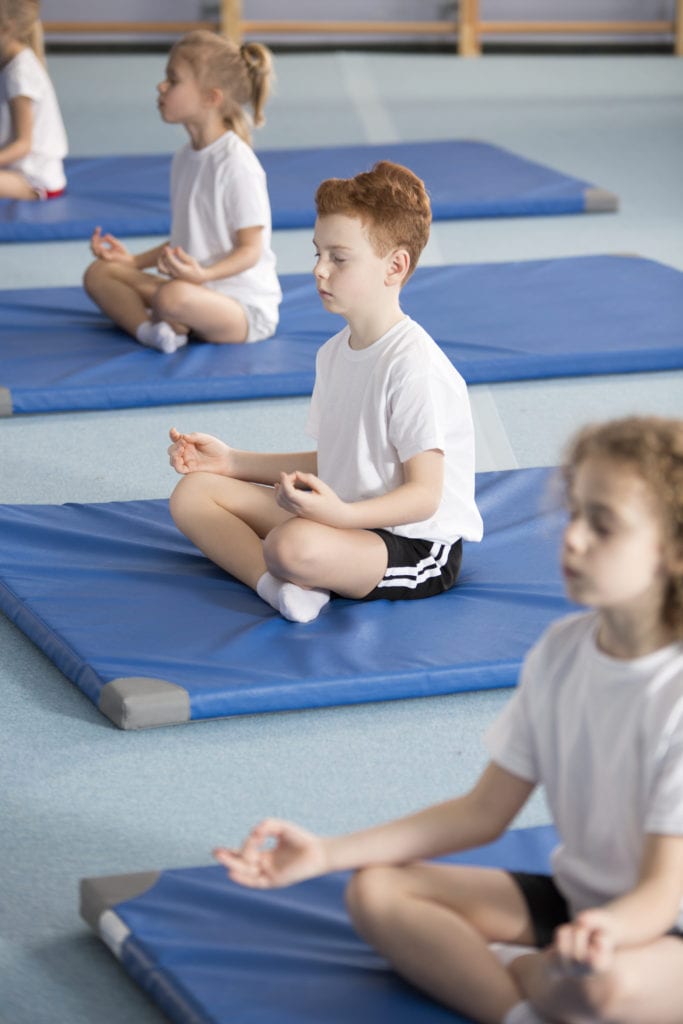
Mindfulness: It’s Not Just for Grown-ups

By | NESCA Notes 2019

By: Cynthia Hess, PsyD
Pediatric Neuropsychologist Fellow

There has been increasing interest in intervention strategies that target self-regulation in childhood. Self-regulation is the process through which the systems of emotion, attention and behavior are controlled in response to a situation, stimulus or demand. It develops rapidly in the early years of life. Self-regulation is necessary for social development because it supports and enhances peer acceptance and social success. Furthermore, it increases academic performance, particularly in elementary school. Problems with self-regulation and the accompanying executive functioning have been shown to correlate with a number of behavioral and emotional problems, particularly depression and anxiety. Mindfulness is emerging as an effective intervention for children struggling with self-regulation, especially when implemented at a time when children are acquiring these foundational skills.

Mindfulness is a way of paying attention, on purpose and non-judgmentally, to the experience of the present moment. Being mindful involves reflecting on the current internal experiences such as thoughts or emotions and the current external environment, such as sights and sounds, both clearly and objectively. This act of purposeful reflection enhances and facilitates self-regulation by promoting control, such as sustained attention and cognitive flexibility. Furthermore, it helps to reduce the incidences of such things as snap judgments, emotional reactivity or distressing thoughts.

Mindfulness-based social-emotional training has been shown to be effective in reducing stress, improving coping skills and building resilience when used with children. Mindfulness teaches children the skills needed to improve focus, calm themselves, plan and organize, and behave in a thoughtful manner. Research on adult populations shows that practicing mindfulness may reduce symptoms of anxiety and depression, and limited number of studies show some of the same benefits in children. Mindfulness is well tolerated by children and has been proven to improve psychological well-being. Introducing mindfulness practices to children has the potential to make a positive impact on a child’s ability to self-regulate, and thus facilitate their social, emotional and educational growth.

There are a number of ways to introduce children to mindfulness. One activity that children have responded positively to is being challenged to sit still and silent for as long as they possibly can. I have used this strategy in classrooms of children from pre-k to high school, as well as individually with children of all ages. Sometimes they are able to sit for 15 seconds, but they embraced the challenge of trying to beat their record by trying it again. Another mindful technique that works well with children is called “grounding.” Grounding techniques use the five senses to bring ourselves into the present moment. One grounding technique is finding five things in the room – they can be 5 things of the same color or any five things; four things the child can feel; three things the child can hear; two things the child can smell; and one thing the child can taste. Mindfulness can be playful and fun for children and families while effectively reducing stress, improving coping skills, improving ability to self-regulate and building resilience in children.


Helpful resources for families:

Mindful Games Activity Cards: 55 Fun Ways to Share Mindfulness with Kids and Teens. Susan Kaiser Greenland and Annaka Harris

A Still Quiet Place: A Mindfulness Program for Teaching Children and Adolescents to Ease Stress and Difficult Emotions By Amy Salzman, MD

I am Peace: A Book of Mindfulness By Susan Verde and Peter H. Reynolds

Breathe Like a Bear: 30 Mindful Moments for Kids to Feel Calm and Focused Anytime, Anywhere By Kira Willey


References:

Britton, W. B., Lepp, N. E., Niles, H. F., Rocha, T., Fisher, N. E., & Gold, J. S. (2014). A randomized controlled pilot trial of classroom-based mindfulness meditation compared to an active control condition in sixth-grade children. Journal of School Psychology, 52(3), 263-278.

Masten, A. S., Best, K. M., & Garmezy, N. (1990). Resilience and development: Contributions from the study of children who overcome adversity. Development and psychopathology, 2(4), 425-444.

Schonert-Reichl, K. A., Oberle, E., Lawlor, M. S., Abbott, D., Thomson, K., Oberlander, T. F., & Diamond, A. (2015). Enhancing cognitive and social–emotional development through a simple-to-administer mindfulness-based school program for elementary school children: A randomized controlled trial. Developmental psychology, 51(1), 52.

Schonert-Reichl, K. A., & Lawlor, M. S. (2010). The effects of a mindfulness-based education program on pre-and early adolescents’ well-being and social and emotional competence. Mindfulness, 1(3), 137-151.

Sibinga, E. M., Webb, L., Ghazarian, S. R., & Ellen, J. M. (2016). School-based mindfulness instruction: an RCT. Pediatrics, 137(1), e20152532.


About the Author

Dr. Cynthia Hess recently graduated from Rivier University with a PsyD in Counseling and School Psychology. Previously, she earned an M.A. from Antioch New England in Applied Psychology. She also worked as an elementary school counselor and school psychologist for 15 years before embarking on her doctorate. During her doctorate, she did her pre-doctoral internship with RIT in Rochester, N.Y. where she worked with youth ages 5-17 who had experienced complex developmental trauma. Dr. Hess’s first post-doctoral fellowship was with The Counseling Center of New England where she provided psychotherapy and family therapy to children ages 5-18, their families and young adults. She also trained part-time with a pediatric neuropsychologist conducting neuropsychological evaluations. Currently, Dr. Hess is a second-year post-doctoral fellow in pediatric neuropsychological assessment, working with NESCA Londonderry’s Dr. Angela Currie and Dr. Jessica Geragosian.


To schedule an appointment with one of NESCA’s expert neuropsychologists, please complete our online intake form. 


Neuropsychology & Education Services for Children & Adolescents (NESCA) is a pediatric neuropsychology practice and integrative treatment center with offices in Newton and Plainville, Massachusetts, and Londonderry, New Hampshire, serving clients from preschool through young adulthood and their families. For more information, please email info@nesca-newton.com or call 617-658-9800.


Why are they called “Soft” Skills?

By | NESCA Notes 2019

By Kathleen Pignone, M.Ed., CRC
Transition Specialist

If they are soft, why are they so crucial in this hard, cruel world? As a transition specialist, I meet with young adults and their parents on a daily basis. All parents want to know what is that missing piece for child to really succeed after high school? What should my priorities be? Is the right college more important than the right internship or vise versa? I often hear the saying, “I remember in my day, you just dusted yourself off and kept going. Why is this new generation struggling?”

While I don’t have an answer to those profound questions, I can offer some go-to skills that will support our young adults as they transition from high school to college, the world of work and the great beyond…soft skills—those intangible, hard-to-pin-down skills that we all know we need to succeed, but are so hard to teach. As a wise practitioner once told me, “Just because it is simple, it doesn’t make it easy.” While it’s critical to teach, prepare and equip our students with the necessary skills for academic success, soft skills can be just as important in many instances. Young adults need a balance of academic, executive functioning, communication and soft skills to set themselves up for success in their multi-faceted life after high school. These soft skills can make the difference between candidates competing for college acceptance and job opportunities.

I also like to refer to these skills as the job keeping and high achieving skills. Strong foundational academic, planning and team-building skills are necessary for success, but these soft skills are the subtle differences observed in the student chosen for that internship by the professor and recognized in the entry-level employee who quickly advances to the mentor employee.

In my practice, I am witness to amazing, capable, energizing and unique young adults, who are unaware of the many talents and strengths they already possess. I work to coach, teach and persuade them that these soft skills are in there, but are struggling to make an appearance. The key is identifying them and knowing when to call on them in stressful times. As a transition specialist, I offer the young people I meet with the opportunities to name and own these skills within themselves. For example, when a teenager is struggling with school, but shows up every day, I introduce them to their “grit,” their get-up- and-go and “try again” skill.  By identifying skills that may just be lying dormant or unrecognized, I offer them a chance to see that they have an innate strength that has both a name and a purpose. These skills are not only necessary, but are transferable to all aspects of their future lives. Their internal grit pushes them to go to class when their roommate is sleeping in and go to work even though they have a cold and could call out sick.

By definition, students ready to transition from high school are at an age and stage of curiosity, exploration, hope and optimism. But they may easily miss out on identifying these characteristics as strengths and skills, if we do not point it out and celebrate it with them. When they are resisting rules and boundaries, they are employing their skills of curiosity and exploration. When they want to protest against inequity in this unfair world and are perceived as naive and inexperienced, I praise their hope and optimism. We talk about how these soft skills are integral to their success as an adult and will serve them as they continue to grow and learn.

Young adults in our current society have no other option than to be flexible and adaptable. Technology is constantly updating and changing, forcing them to move forward or be left behind. Their resilience in handling all that social media exposes them to on a daily basis is admirable. I wouldn’t have stood as tall and strong as they do with such public scrutiny.

As we prepare our young adults for life after high school, let us always take the time to see, name and recognize the strengths and soft skills they show us. We have the opportunity to observe and learn from them and value these skills so that they may offer themselves as resources to their community. The balance necessary to teach young people how to manage an interdependent world as an adult is complicated. It is exciting and energizing to witness young people find these strengths within themselves, helping them to conquer that great big world.


About the Author:

Kathleen Pignone, M.Ed. CRC is a deeply knowledgeable and experienced transition specialist. Prior to her tenure at NESCA, Ms. Pignone was the Career Development Director at Bay Cove Academy for 15 years, providing students with classroom and real-world employment skills training, community job placement and on the job employment-training. She has also worked at Massachusetts Department of Secondary and Elementary Education and privately as a vocational rehabilitation consultant. As a certified rehabilitation counselor, Ms. Pignone brings unique expertise carrying out vocational assessment and employment planning for adolescents and young adults as well as supporting local school programs. In addition to fortifying NESCA’s premier transition assessment services, Ms. Pignone engages in person-centered planning with teens and young adults, consultation and training for parents, providers and schools, and community-based coaching services.

Neuropsychology & Education Services for Children & Adolescents (NESCA) is a pediatric neuropsychology practice and integrative treatment center with offices in Newton, Massachusetts, Plainville, Massachusetts, and Londonderry, New Hampshire, serving clients from preschool through young adulthood and their families. For more information, please email info@nesca-newton.com or call 617-658-9800.

To book a transition assessment or consultation with Kathleen, please complete NESCA’s online intake form. 


Skip to content