NESCA’s Londonderry, NH location has immediate availability for neuropsychological evaluations. Our NH clinicians specialize in the following evaluations: Neuropsychological; Autism; and Emotional and Psychological, as well as Academic Achievement and Learning Disability Testing. Our NH clinicians also conduct evaluations for students who are at boarding schools, and two of our NH clinicians have PsyPACT authorization, allowing them to conduct evaluations out-of-state.

Visit www.nesca-newton.com/intake for more information or to book an evaluation.

Category

NESCA Notes 2025

Subscribe to NESCA Notes

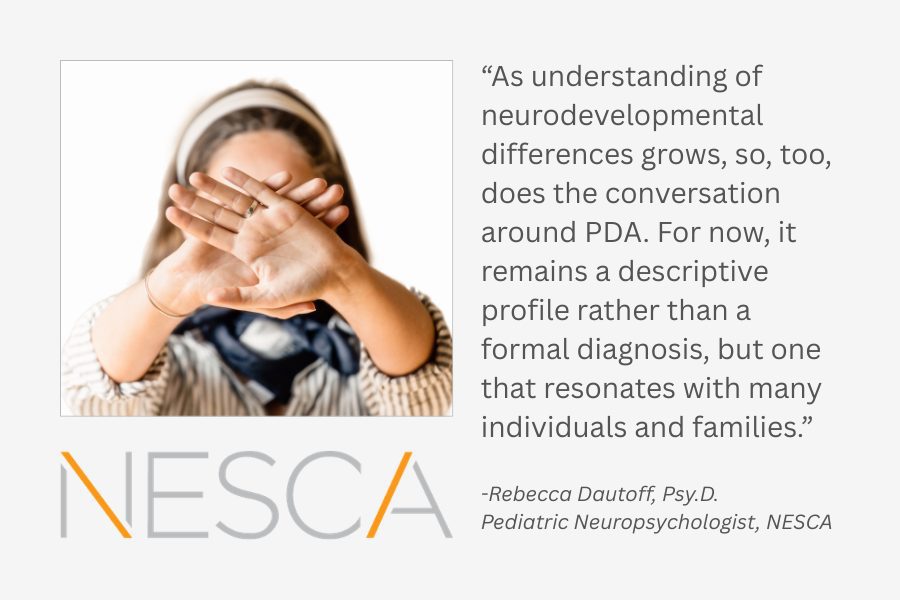
Child saying no

Understanding the Pathological Demand Avoidance (PDA) Conversation

By | NESCA Notes 2025 | No Comments

Child saying noBy: Rebecca Dautoff, Psy.D.
Pediatric Neuropsychologist, NESCA

Pathological Demand Avoidance (PDA) is a term that has sparked both interest and debate within the autism community and among professionals. While some families and clinicians find the concept meaningful, it remains a debated and not formally recognized profile within current diagnostic frameworks.

First described by British psychologist Elisabeth Newson in the 1980s and formally introduced in a 2003 research paper, PDA was proposed as a way to identify a group of children who did not fit the prevailing definitions of autism at that time. Instead, these children shared a key characteristic: a persistent and marked resistance to everyday demands. Since then, researchers and clinicians have suggested variations to this list, but the core descriptions have remained largely consistent.

The most commonly cited core features of PDA include:

  • Resisting and avoiding the ordinary demands of life: This resistance is continual and can be seen in daily routines, requests, or expectations.
  • Using social strategies (e.g., excuses or negotiation) as forms of resistance to avoid demands.

Other proposed characteristics include:

  • Appearing sociable, but experiencing differences in social understanding (such as recognizing social and family hierarchies);
  • Experiencing intense mood swings and impulsivity;
  • Appearing comfortable in role play; and
  • Displaying dedicated and focused interests, often centered on other people.

It’s important to note that historically, descriptions of PDA have used language associated with the “deficit model” of autism vs. a strengths-based perspective. Many now consider such language outdated and prefer terminology that recognizes the diversity of neurodevelopmental profiles without pathologizing difference.

While demand avoidance, especially when accompanied by social strategies, is widely recognized as a characteristic observed in some individuals, research has not yet provided strong evidence for the full group of traits proposed for PDA. Because of the current lack of research, PDA is not recognized as a clinical diagnosis in major U.S. or international medical manuals, such as the ICD or DSM. Although PDA is not a formal diagnosis recognized by the DSM, some individuals receive a diagnosis of autism with a “demand avoidant profile” or even a “PDA profile” noted. Others may self-identify with the PDA label and as a “PDAer.” There is also discussion about the terminology itself, with some objecting to the word “pathological,” preferring alternatives like “Persistent Drive for Autonomy.”

At NESCA, we focus less on labels and more on understanding the underlying drivers of a child’s behavior, such as anxiety, cognitive flexibility, sensory sensitivities, and social-emotional development,so that supports and recommendations can be individualized and clinically grounded, regardless of the terminology used.

As understanding of neurodevelopmental differences grows, so, too, does the conversation around PDA. For now, it remains a descriptive profile rather than a formal diagnosis, but one that resonates with many individuals and families. Continued research and open dialogue are essential to better understand the experiences of this population and to ensure that support and language reflect their needs and perspectives.


About the Author

Dr. Rebecca Dautoff provides comprehensive neuropsychological and psychological (projective) evaluation services for children, adolescents,Headshot of Rebecca Dautoff, Psy.D. and young adults who have complex presentations with a wide range of concerns, including attention deficit disorders, psychiatric disorders, intellectual disabilities, and autism spectrum disorders (ASD). She also values collaboration with families and outside providers to facilitate supports and services that are tailored to each child’s specific needs.


If you are interested in booking an appointment for an evaluation with Dr. Dautoff or another NESCA neuropsychologist/clinician, please fill out and submit our online intake form


NESCA is a pediatric neuropsychology and related services practice with offices in Newton, Plainville, and Hingham, Massachusetts; Londonderry, New Hampshire; and the Coral Gables, Florida, serving clients from infancy through young adulthood and their families. For more information, please email info@nesca-newton.com or call 617-658-9800.

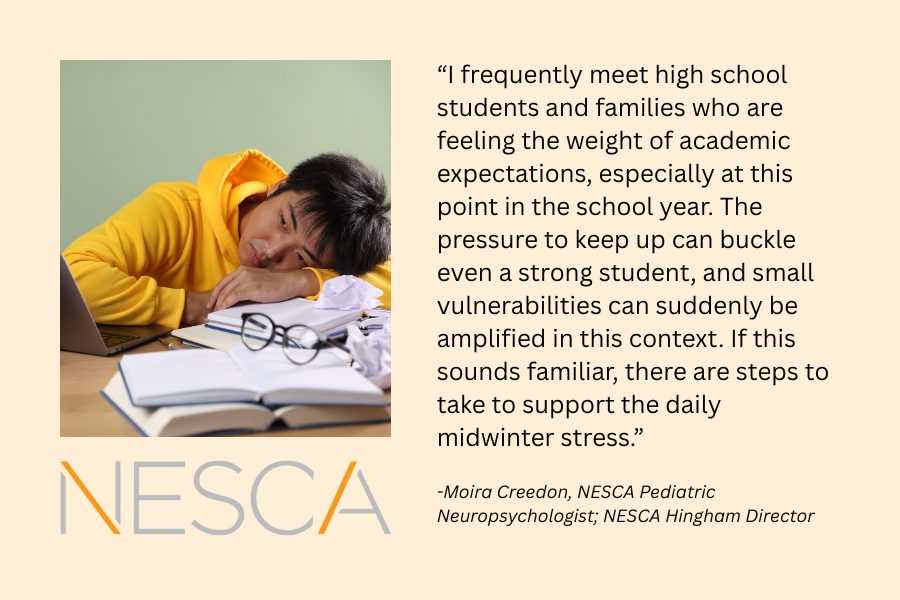
High school student image who is struggling with the overwhelm of school pressures

When High School Feels Overwhelming: How Neuropsychology Can Help Students Thrive

By | NESCA Notes 2025

High school student image who is struggling with the overwhelm of school pressuresBy: Moira Creedon, Ph.D. 
NESCA Hingham Director & Pediatric Neuropsychologist

I frequently meet high school students and families who are feeling the weight of academic expectations, especially at this point in the school year. Maybe your child recently finished midterms and the results weren’t what you hoped for. Maybe the daily stress of managing coursework of AP classes, standardized test preparation, extracurriculars, and college research feels like too much. The pressure to keep up can buckle even a strong student, and small vulnerabilities can suddenly be amplified in this context. If this sounds familiar, there are steps to take to support the daily midwinter stress.

Why Are So Many Students Struggling?

The challenges of high school are not limited to academics alone. It is a time of rapid growth in physical size, independence, academic demands, social environment, and emotional development. For some students, it is a time to shine with increased independence and responsibility. For others, the demands quickly exceed their skill set. The minor organizational and study challenges of middle school are amplified with more content and the burden to juggle simultaneous demands. Put simply, the executive functioning system gets put to the test in high school. These struggles do not mean you have a student who is not capable or intelligent. It may mean they need support for their unique learning profile.

What are Some Warning Signs of the Mid-year Slump?

Warning signs can include trouble keeping track of deadlines or assignments. It can be studying for hours for a test with a lackluster performance that doesn’t match the effort. It can come in the form of increased procrastination, trouble finishing tasks, and poor follow-through. It can also come in the form of increased fatigue, a sense of “burn out,” anxiety, or overall perception of stress. For some students, it can feel like their plate is too full but without a great plan for how to prioritize to make life manageable.

What Can Help?

  1. Consider a Neuropsychological Evaluation

A neuropsychological evaluation is a comprehensive assessment that looks at how a student learns with an eye toward their unique pattern of strengths and weaknesses. A neuropsychological examination can help clarify a diagnosis or diagnoses (ADHD, anxiety, or a learning disability, to name a few), but it can also provide a detailed understanding of the overall process of learning. Bright students who feel overloaded can learn valuable information about their approach to learning so they can figure out how to study smarter, not longer. These evaluations can also include tailored recommendations for how to approach the stress, with suggestions for where and how to seek the appropriate help.

  1. Explore Executive Functioning Coaching

Executive functioning coaches work with students to develop practical strategies for organization, time management, and study skills. Unlike a tutor in a specific subject domain, executive functioning coaches work across subject areas. Coaching sessions are individualized and can help students learn how to break down large assignments, create effective study schedules, prioritize tasks, and manage distractions. In addition to improvement in your academic performance, coaching can help students build independence and confidence.

  1. Seek Support at School

Start with your academic advisor, adjustment counselor, or favorite teacher. Let them know your student is struggling to manage all the demands of their academic life. Many students pursue learning supports or accommodations at school via special education. Your school will need to review evaluations to determine if your child qualifies for a 504 Plan or Individualized Education Program (IEP) as these formalized supports require a diagnosis of a disability. Outside of these more formal support avenues, many schools offer peer tutoring or after-school homework support. Your student does not have to hide their struggles from their teachers!

  1. Take Care of Yourself

With all of the growth in high school, it is important to remember to prioritize emotional health. Your academic success cannot last if it comes at the expense of your mental health. I encourage students to prioritize the basics – to get enough sleep, eat nutritious foods, exercise or move daily, and leave time for fun. If you sit down to create a calendar or task list with your child, keep these items on the list. A rested and restored brain is far more effective at learning.

We Can All Be in This Together

It is normal for your teen to feel a little overwhelmed at times in high school. Instead of viewing this as an opportunity for panic, let’s see it as an opportunity for growth. It does not have to be a journey you and your child take alone. With the right supports, your high schooler can manage their workload, develop more effective study habits, and build resilience to handle future stress. Neuropsychologists at NESCA are happy to support you in this journey through evaluations, consultation, and to connect you to executive functioning and school resources.


About the Author

Dr. Creedon offers her expertise in evaluating children and teens with a variety of presenting issues. SheMoira Creedon headshot is interested in uncovering an individual’s unique pattern of strengths and weaknesses to best formulate a plan for intervention and success. She tailors each assessment to address a range of referral questions, such as developmental disabilities, including Autism Spectrum Disorder, learning disabilities, attention challenges, executive functioning deficits, and social-emotional struggles. She also evaluates college-/grad school-age/adult individuals with developmental issues, such as ASD and ADHD, particularly when there is a diagnostic clarity or accommodation question.


If you are interested in booking an evaluation with Dr. Creedon or another NESCA neuropsychologist, please fill out and submit our online intake form


NESCA is a pediatric neuropsychology and related services practice with offices in Newton, Plainville, and Hingham, Massachusetts; Londonderry, New Hampshire; and Coral Gables, Florida, serving clients from infancy through young adulthood and their families. For more information, please email info@nesca-newton.com or call 617-658-9800.

Image of a student being testing in school

When School-based Testing Is Not Enough

By | NESCA Notes 2024, NESCA Notes 2025

Image of a student being testing in schoolBy: Sean Hyde O’Brien, Psy.D., ABPdN 
Pediatric Neuropsychologist, NESCA

Often when a child is struggling at school — whether related to academic, behavioral, or social-emotional functioning — they may be referred for testing by a member of their educational team (often at the parents’ request). Such testing can include psychological, educational, speech-language, occupational, and physical therapy assessments conducted by qualified school personnel, as well as more specialized transition, functional/adaptive behavioral, and autism-related assessments. These evaluations are generally conducted to determine a student’s eligibility for special education services, identify appropriate supports, and establish goals to monitor progress.

In many cases, school-based testing is sufficient to meet the needs of the student and family by facilitating access to services and supports. However, there are situations in which school-based testing may not be sufficient on its own:

Need for a Clinical Diagnosis
School evaluations are designed to determine eligibility for special education services under educational categories (e.g., “Health Impairment,” “Specific Learning Disability,” or “Sensory Impairment”), rather than to establish diagnoses for medical or treatment purposes. When a formal diagnosis is needed to guide treatment, medication decisions, or access to private insurance-based services, a neuropsychological evaluation may be necessary.

Complex or Co-occurring Issues
Neuropsychological evaluations are designed to integrate information across multiple domains, offering a more comprehensive understanding of the student as a whole.

Disagreement with School Findings
If parents have concerns about the conclusions or recommendations from a school evaluation, they may pursue an Independent Educational Evaluation (IEE) or seek private testing with a neuropsychologist to obtain an additional perspective.

Evaluation of Non-academic Concerns
Concerns such as anxiety, depression, trauma, or family stressors — which can significantly affect learning — may fall outside the primary scope of school-based testing and may be more fully explored through a comprehensive neuropsychological evaluation.

Legal or Eligibility Requirements
Certain services, accommodations, or agencies (such as Social Security Disability benefits, specific therapies, or independent schools) may require documentation or diagnoses from a licensed clinical provider. Neuropsychologists are licensed psychologists with specialized doctoral and post-doctoral training in brain-behavior relationships who can provide this type of documentation when needed.

In summary, school-based testing is often a valuable and important first step in understanding a child’s needs within the educational setting. In some cases, however, a comprehensive neuropsychological evaluation can provide additional insight into a student’s profile as well as medical documentation needed to access a variety of services.


About the Author

Dr. Sean O’Brien has been providing comprehensive neuropsychological evaluations in the GreaterSean Hyde O'Brien Boston area since 2006. He specializes in the assessment of children and adolescents who present with a wide range of developmental conditions, such as  Attention-Deficit/Hyperactivity Disorder, Specific Learning Disorder (reading, writing, math), Intellectual Disability, and Autism Spectrum Disorder; as well as children whose cognitive functioning has been impacted by medical, psychiatric, and genetic conditions. He also has extensive experience working with children who were adopted both domestically and internationally.

To schedule an appointment with one of NESCA’s neuropsychologists, please complete our online intake form

NESCA is a pediatric neuropsychology practice and integrative treatment center with offices in Newton, Plainville, and Hingham, Massachusetts; Londonderry, New Hampshire; the greater Burlington, Vermont region; and Coral Gables, Florida, serving clients from infancy through young adulthood and their families. For more information, please email info@nesca-newton.com or call 617-658-9800.

Unbiased Does Not Mean Uninformed

By | NESCA Notes 2025

By Angela Currie, Ph.D.

NH Clinical and Operational Director; Pediatric Neuropsychologist; PSYPACT-authorized

Families often come to NESCA after a long journey through previous evaluations, diagnoses, and educational plans, sometimes feeling frustrated or misunderstood. When seeking a new neuropsychological evaluation, it is common for parents to hope for a “clean slate.” Understandably, some request that we not review prior reports, IEPs, or teacher input, worrying that this information will bias our perspective or simply repeat what’s been said before.

This desire for objectivity is completely valid. If you disagreed with a previous diagnosis or felt that earlier testing missed the mark, it’s natural to want the new evaluator to approach your child or teen without any preconceived notions. However, it is important to understand that unbiased does not mean uninformed¸ and, in fact, review of previous documents and school input is a critical component of a fresh perspective and comprehensive evaluation.

Why Background Information Matters

A comprehensive neuropsychological evaluation is much more than a set of test scores – it is a synthesis of data, history, observation, and context. Reviewing previous reports, IEPs, and teacher feedback is not about accepting others’ conclusions at face value. Rather, it allows the evaluator to:

  • Understand the full picture: Seeing how strengths and challenges evolve over time helps identify patterns, progress, and trajectories, rather than isolated moments in time.
  • Spot gaps and inconsistencies: Previous testing may have missed key areas of possible concern or used measures that just scratch the surface. Knowing what was done helps the evaluator focus on what still needs to be explored.
  • Avoid unnecessary repetition: There are many measures that should not be repeated within a given timeframe, so it is important to know what to avoid. Knowing recent scores also allows the evaluator to avoid unnecessary redundancy and dig deeper into other skills.
  • Clarify and explain differences: If a previous diagnosis or past recommendations are not supported, the evaluator can integrate previous information into a bigger picture explanation for why a shift in perspective is supported.
  • Address discrepancies in presentation across settings: Often times disagreements between families and schools can result from the fact that children and teens may present differently across settings. Integrating teacher input is critical for determining if concerns are consistent across settings or if the client is working hard to compensate and “look good.”
  • Support IEP development and special education due process: Evaluations that lack integration of school records and input are much more likely to be rejected by the IEP team, as they do not provide a complete picture of the child’s functioning. They are also more likely to be viewed as lacking in credibility should the family proceed with special education due process.

Building Trust Through Transparency

Our role as neuropsychologists is to provide an assessment that is both thorough and fair. We approach each client with fresh eyes, critically evaluating all available information. Reviewing past reports allows us to be confident in our conclusions and build on what is already known. This allows for greater clarity and better advocacy for the client’s unique needs. By blending past information with new observations and data, we can provide the most accurate, insightful, and actionable recommendations possible.

If you have questions about how background information is used in our evaluations, please reach out. At NESCA, we believe that true objectivity comes from being informed and that every client deserves an evaluation that tells their whole story.


About the Author

Dr. Currie specializes in evaluating children, teens, and young adults with complex profiles, working to tease apart the various factors lending to their challenges, such as underlying learning, attentional, social, or emotional difficulties. She particularly enjoys working with the seemingly “unmotivated” child, as well as children who have “flown under the radar” for years due to their desire to succeed. She also evaluates adults for concerns regarding ASD and ADHD.


To book an evaluation with Dr. Currie or one of our many other expert neuropsychologists, complete NESCA’s online intake form. Indicate whether you are seeking an “evaluation” or “consultation” and your preferred clinician in the referral line.


NESCA is a pediatric neuropsychology and related services practice with offices in Newton, Plainville, and Hingham, Massachusetts; Londonderry, New Hampshire; greater Burlington, Vermont, and Coral Gables, Florida, serving clients from infancy through young adulthood and their families. For more information, please email info@nesca-newton.com or call 617-658-9800.

Image of a Neuropsychological Evaluation Report with the question, What's Next? There is also a quote from Dr. Maggie Rodriguez

Navigating Life After a Neuropsychological Evaluation: What Comes Next?

By | NESCA Notes 2025

Image of a Neuropsychological Evaluation Report with the question, What's Next? There is also a quote from Dr. Maggie RodriguezBy: Maggie Rodriguez, Psy.D.
Pediatric Neuropsychologist, NESCA

Going through the process of getting a neuropsychological evaluation can be a big investment of time, energy, and money.  Once it’s completed, you should have some important information about your child and a detailed report. But now what? What do you do with this information and who do you share it with?

As a parent who has been through the neuropsychological evaluation process with two of my children, I know firsthand how overwhelming it can feel to move from diagnosis to action. The report you receive is often extensive and should be filled with valuable insights and recommendations. But translating those findings into real-world support for your child is the next crucial step. Here are some thoughts and practical tips on what to do next:

1) School: The Starting Point for Support

For many families, the primary motivation for seeking a neuropsychological evaluation is to better understand their child’s learning profile and needs in the school setting. The report can be a powerful tool in advocating for appropriate accommodations, interventions, and support.

  • Share the report with your child’s teacher, special education coordinator, and/or school psychologist. If you don’t know where to start, reach out to the school to ask who your contact person should be.
  • Use the findings to inform IEP (Individualized Education Program) or 504 Plan meetings. NESCA neuropsychologists are available to present the findings directly to your child’s team at meetings and can be a valuable resource in this regard.
  • Ask for specific classroom strategies or modifications based on the recommendations. You may want to consider collaborating with an educational advocate as well.

2) Treatment Providers: Building a Collaborative Team

Your child may already be working with therapists, counselors, psychiatrists, or other healthcare professionals. Alternatively, you may be working on setting up treatment. Sharing the neuropsychological report with providers can help them tailor their interventions and monitor progress more effectively.

  • Consider providing copies or summaries of the report to your child’s treatment team.
  • Discuss how the findings might impact therapy goals, medication management, or behavioral strategies.
  • Ask for their input on how best to support your child at home and in other settings.

3) Family: Creating Understanding and Empathy

Sometimes, the people closest to us—grandparents, step parents, siblings—may not fully understand the challenges your child faces. Sharing relevant parts of the neuropsychological evaluation can foster empathy and support within your family.

  • Choose what information is most helpful for family members to know.
  • Have open conversations about your child’s strengths and challenges.
  • Ask for support in implementing strategies at home, such as routines or communication techniques.

4) Care Providers: Ensuring Consistency Across Settings

If your child regularly spends time with nannies, babysitters, or other caregivers, it may be important that they understand your child’s needs and the best ways to support them.

  • Consider sharing key takeaways and practical recommendations from the report that will help caregivers respond effectively.
  • Provide written instructions or checklists if needed.
  • Maintain open communication about what works and what doesn’t.

A Few Final Thoughts

Receiving a neuropsychological evaluation report can be both a relief and a challenge. It offers clarity, but also raises new questions about how to move forward. Here are some tips to help you navigate the next steps:

  • Take time to review and digest the report. Don’t hesitate to ask the neuropsychologist for clarification or a follow-up meeting.
  • Organize the information. Consider making a summary sheet of key findings and recommendations for easy reference.
  • Empower your child. Depending on their age and understanding, talk to your child about their strengths and areas for growth in a positive, supportive way.
  • Remember that you are not alone. There are many resources and communities available for parents navigating similar journeys.

Ultimately, the goal of a neuropsychological evaluation is to help your child thrive. By sharing the findings thoughtfully with the right people, you can build a team of support around your child and help them reach their fullest potential.


About the Author

Maggie Rodriguez, Psy.D., provides comprehensive evaluation services for children, adolescents, and young adults with often complex presentations. She particularly enjoys working with individuals who have concerns about attention and executive functioning, language-based learning disorders, and those with overlapping cognitive and social/emotional difficulties.

Prior to joining NESCA, Dr. Rodriguez worked in private practice, where she completed assessments with high-functioning students presenting with complex cognitive profiles whose areas of weakness may have gone previously undiagnosed. Dr. Rodriguez’s experience also includes pre- and post-doctoral training in the Learning Disability Clinic at Boston Children’s Hospital and the Neurodevelopmental Center at MassGeneral for Children/North Shore Medical Center. Dr. Rodriguez has spent significant time working with students in academic settings, including k-12 public and charter school systems and private academic programs, such as the Threshold Program at Lesley University.

Dr. Rodriguez earned her Psy.D. from William James College in 2012, where her coursework and practicum training focused on clinical work with children and adolescents and on assessment. Her doctoral thesis centered on cultural issues related to evaluation.

Dr. Rodriguez lives north of Boston with her husband and three young children.  She enjoys spending time outdoors hiking and bike riding with her family, practicing yoga, and reading.

To book a consultation with Dr. Rodriguez or one of our many other expert neuropsychologists, complete NESCA’s online intake form.

NESCA is a pediatric neuropsychology and related services practice  with offices in Newton, Plainville, and Hingham, Massachusetts; Londonderry, New Hampshire; the greater Burlington, Vermont region; and Coral Gables, Florida, serving clients from infancy through young adulthood and their families. For more information, please email info@nesca-newton.com or call 617-658-9800.

Image of a procedures manual and a quote from Dr. Angela Currie

Reflecting on Excellence: How NESCA’s Updated Procedures Manual Sets the Standard for Neuropsychology

By | NESCA Notes 2025

Image of a procedures manual and a quote from Dr. Angela CurrieBy Angela Currie, Ph.D.

NH Clinical and Operational Director; Pediatric Neuropsychologist; PSYPACT-authorized

As we undertake our annual update to NESCA’s comprehensive procedures manual, it’s a moment to reflect on what truly sets our practice apart. The level of structure and support can vary widely in private neuropsychological practices. However, at NESCA, we have intentionally built a model that prioritizes a high degree of structure, explicit expectations, and robust support for our neuropsychologists. We believe this approach ensures the highest quality of care for our clients and the greatest professional growth for our clinicians. Our neuropsychology procedure manual is not just a set of rules; it is a living document that embodies our commitment to excellence.

A Culture of Structure and Accountability

Few neuropsychology practices can claim to have an employee procedures manual as comprehensive, and as regularly updated, as NESCA’s. Our manual is reviewed and revised annually to reflect the latest best practices, regulatory changes, and the evolving needs of our clients and staff. This level of procedural clarity is a hallmark of our commitment to excellence.

From the moment a referral is received, every step – intake documentation, insurance, file management, scoring protocols, feedback, and report writing – is governed by clear, detailed procedures. Our clinicians are never left to guess what is expected, as there are explicit expectations and timelines for every stage of the evaluation and reporting process. These standards are tracked and reinforced by clinical directors.

Unmatched Oversight and Training

At NESCA, oversight is about ensuring quality and fostering growth. New staff are onboarded with in-person training and have direct access to clinical directors for case consultation and procedural questions. We not only have real-time clinical support, but we also have a strong administrative team that can troubleshoot anything from an IT issue to ordering supplies. Thanks to the roles clearly defined in the manual, there is never a question about who to go to when these needs arise.

Although many practices see frequent psychometrician turnover, NESCA has had a consistent, strong team of psychometricians who are committed to excellence in scoring. The procedures manual outlines standardized procedures for scoring, data management, and file security, and clinicians are responsible for cross-checking all data. Although rare, errors are addressed through direct feedback, and there is a clear chain of communication for resolving issues that arise. This system of checks and balances helps ensure the accuracy and integrity of our clinical data, allowing clinicians and clients to feel confident in their findings.

A Commitment to Professional Development

NESCA’s oversight goes hand-in-hand with our commitment to professional development. Not only do we provide regular staff training, our procedures manual includes guidance on matters such as efficient report writing, guidance for legal hearings, insurance requirements, and the latest assessment technologies. We emphasize ongoing education, with recommendations for tracking CEU workshops and maintaining up-to-date curriculum vitae (CVs).

Why This Matters

Neuropsychology is complex, and the stakes are high. Clients come to us seeking answers and guidance for some of life’s greatest challenges. By providing a highly structured, supportive environment, NESCA ensures our clinicians deliver the highest standard of care – consistently, efficiently, and ethically. NESCA emphasizes strong systems and a culture of continuous improvement. This benefits our staff, our clients, our referring partners, and the field as a whole. NESCA leads the way by valuing structure, mentorship, and excellence. We don’t just set the bar – we raise it every year.

And on that note, I better get back to updating that manual – after all, the bar isn’t going to raise itself.


About the Author

Dr. Currie specializes in evaluating children, teens, and young adults with complex profiles, working to tease apart the various factors lending to their challenges, such as underlying learning, attentional, social, or emotional difficulties. She particularly enjoys working with the seemingly “unmotivated” child, as well as children who have “flown under the radar” for years due to their desire to succeed. She also evaluates adults for concerns regarding ASD and ADHD.


To book an evaluation with Dr. Currie or one of our many other expert neuropsychologists, complete NESCA’s online intake form. Indicate whether you are seeking an “evaluation” or “consultation” and your preferred clinician in the referral line.


NESCA is a pediatric neuropsychology and related services practice with offices in Newton, Plainville, and Hingham, Massachusetts; Londonderry, New Hampshire; greater Burlington, Vermont, and Coral Gables, Florida, serving clients from infancy through young adulthood and their families. For more information, please email info@nesca-newton.com or call 617-658-9800.

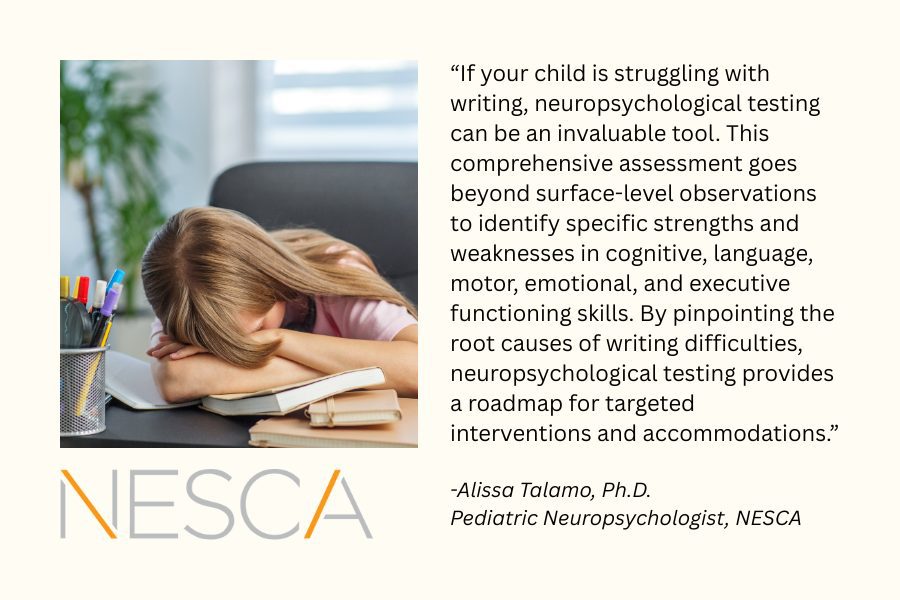
Image of a student struggling to write and a quote from Alissa Talamo, Ph.D.

Why Does My Child Struggle With Writing?

By | NESCA Notes 2025

Image of a student struggling to write and a quote from Alissa Talamo, Ph.D.By: Alissa Talamo, PhD
Pediatric Neuropsychologist, NESCA

A concern I often hear from parents is that their child is bright, creative, and articulate—able to express ideas clearly in conversation—but gets “stuck” when asked to put those same thoughts into written form. Instead of demonstrating the full extent of their knowledge, these children often write just enough to complete the assignment, leaving teachers and parents wondering what’s holding them back.

Difficulties with written expression can arise for a variety of reasons. For some children, an expressive language disorder makes it challenging to find the right words and organize their thoughts on paper. Others may have fine motor difficulties, making the physical act of writing laborious and frustrating. Children who struggle with spelling often limit themselves to simple words, even if their spoken vocabulary is much richer. These challenges are relatively straightforward to identify, but there are many children who don’t fit these patterns—children who seem to have all the necessary skills yet still find writing to be an uphill battle.

In these cases, neuropsychological testing often confirms what parents already suspect: the child is intelligent, insightful, and capable of high-level thinking, but something is interfering with their ability to express themselves in writing. One of the most common underlying issues is difficulty with executive functioning. Executive functioning is a set of mental skills that includes planning, organization, time management, working memory, attention control, task initiation, self-monitoring, impulse control, emotional regulation, cognitive flexibility, goal setting, and problem-solving. Writing is a uniquely demanding task because it requires the simultaneous use of many of these skills. To write effectively, a student must generate ideas, organize those ideas, keep track of them in working memory, and attend to mechanics like spelling, punctuation, and grammar—all at the same time. It’s no wonder that writing can feel overwhelming!

The good news is that once a child’s specific areas of weakness are identified, there are many strategies and supports available to help them improve their writing skills. Executive functioning tutoring can be especially beneficial, teaching students how to use graphic organizers (such as compare/contrast charts, part/whole relationships, or cause/effect diagrams) and writing templates to structure their thoughts. Tutors can also help students develop strategies for catching mistakes that result from inattention to detail, such as errors in grammar, spelling, or capitalization. In addition, tailored recommendations can be made for in-class support, allowing the student to build their writing skills in a supportive environment.

Why Neuropsychological Testing Can Make a Difference

If your child is struggling with writing, neuropsychological testing can be an invaluable tool. This comprehensive assessment goes beyond surface-level observations to identify specific strengths and weaknesses in cognitive, language, motor, emotional, and executive functioning skills. By pinpointing the root causes of writing difficulties, neuropsychological testing provides a roadmap for targeted interventions and accommodations. With the right supports in place, children can overcome barriers to written expression, gain confidence in their abilities, and more fully demonstrate their knowledge and creativity—both in school and beyond.


About the Author

Alissa Talamo headshotWith NESCA since its inception in 2007, Dr. Talamo had previously practiced for many years as a child and adolescent clinical psychologist before completing postdoctoral re-training in pediatric neuropsychology at the Children’s Evaluation Center.

After receiving her undergraduate degree from Columbia University, Dr. Talamo earned her doctorate in clinical health psychology from Ferkauf Graduate School of Psychology and the Albert Einstein College of Medicine at Yeshiva University.

She has given a number of presentations, most recently on “How to Recognize a Struggling Reader,” “Supporting Students with Working Memory Limitations,” (with Bonnie Singer, Ph.D., CCC-SLP of Architects for Learning), and “Executive Function in Elementary and Middle School Students.”

Dr. Talamo specializes in working with children and adolescents with language-based learning disabilities including dyslexia, attentional disorders, and emotional issues. She is also interested in working with highly gifted children.

Her professional memberships include MAGE (Massachusetts Association for Gifted Education), IDA (International Dyslexia Association), MABIDA (the Massachusetts division of IDA) and MNS (the Massachusetts Neuropsychological Society).

She is the mother of one daughter.

To book a consultation with Dr. Talamo or one of our many other expert neuropsychologists, complete NESCA’s online intake form.

NESCA is a pediatric neuropsychology practice and related services center with offices in Newton, Plainville, and Hingham, Massachusetts; Londonderry, New Hampshire; the greater Burlington, Vermont region; and Coral Gables, Florida, serving clients from infancy through young adulthood and their families. For more information, please email info@nesca-newton.com or call 617-658-9800.

Visuals of a covid and pregnancy test not the same as the visual with a child being tested; quote from Dr. Ann Helmus

Test Results Are Not The Answer

By | NESCA Notes 2025

Visuals of a covid and pregnancy test not the same as the visual with a child being tested; quote from Dr. Ann HelmusBy Ann Helmus, Ph.D.
Founder & Director, NESCA

A few days ago, a routine blood test showed high cholesterol. My doctor was concerned and suggested I start on a life-long medication.

But here’s what was missing from that recommendation:

Six weeks earlier, I had Covid. When I tested negative, I launched into a grueling stretch of all-day meetings, international travel, public speaking, and disrupted sleep. I never fully recovered.

At the time of my blood test, I was still in a post-viral fatigue phase, which is known to increase cholesterol. All other medical tests showed normal results. Instead of looking at the pattern of test results, my doctor focused on the one abnormal value, which likely reflects my lack of adequate recovery from Covid and travel stress, not an underlying problem with cholesterol.

This experience illustrates an important principle in neuropsychological evaluation: An individual test result rarely speaks for itself. It must be interpreted in the context of other results, history, and clinical observation.

There is no test for ADHD or for ASD or for LD or any of the other conditions that we see. There are only data points to be connected. There is no single test result that can explain: why a child is struggling, what the underlying issue is, or the type(s) of support that will help them thrive.

Those answers come from interpretation that involves:

  • Deep developmental history-taking
  • Pattern analysis across multiple measures
  • Direct clinical observation
  • Integration of cognitive, emotional, academic, and behavioral data
  • And years of diagnostic experience

A neuropsychological evaluation is not like a Covid test, the results of which can be easily interpreted by a layperson. Neuropsychological testing results need to be carefully analyzed and interpreted by a highly trained professional relying on their experience and clinical judgement to determine the meaning of the results, and, most importantly, what they mean for treatment.

When interpretation is shallow, children are likely to be improperly diagnosed, which leads to:

  • Wrong educational placements
  • Inappropriate medications
  • Mismatched interventions
  • Years of frustration for a child who was misunderstood

A high-quality evaluation does not simply label. It provides a proper explanation that leads to meaningful intervention. We don’t treat numbers. We don’t treat checklists. We don’t treat isolated test results. We treat human beings.


About the Author

NESCA Founder and Director Ann Helmus, Ph.D., is a licensed clinical neuropsychologist who has beenAnn Helmus headshot practicing neuropsychology for 35 years and has been director of NESCA’s Neuropsychology practice for nearly three decades, continuously training and mentoring  neuropsychologists to meet the highest professional standards.

To book a neuropsychological evaluation at NESCA, complete NESCA’s online intake form

NESCA is a pediatric neuropsychology and related services group practice with offices in Newton, Plainville, and Hingham, Massachusetts; Londonderry, New Hampshire; the greater Burlington, Vermont region; and Coral Gables, Florida, serving clients from infancy through young adulthood and their families. For more information, please email info@nesca-newton.com or call 617-658-9800.

An Occupational Therapist’s Perspective – How AI Can Support Teens and Young Adults with Life Skills

By | NESCA Notes 2025

By: Lyndsay Wood, OTD, OTR/L
NESCA Transition Specialist & Occupational Therapist

There is constant discussion in the media about artificial intelligence (AI) technology and the impact it will have on the world. With the availability of ChatGPT and other AI technologies, the way we work, learn, and live will change significantly. While change can be difficult – and there are often many considerations to make before adopting a new technology system – ChatGPT and other AI platforms are useful tools that can support different aspects of life when used properly. Specifically, they may be very helpful in developing and supporting life- and transition-related skills for teens and young adults. Here are several ways that AI tools can support independence with real-life skills.

1.Meal Planning and Grocery Lists: Often meal planning can be daunting, and it heavily relies on strong executive functioning skills. To make this process easier, AI technology can be utilized. Simply tell ChatGPT that you would like a meal plan for the week (or any amount of time you desire), and it will create a specific meal plan and provide the grocery list if requested. It will also break down the nutritional value if requested. You can input dietary restrictions or any special considerations, and ChatGPT will create a plan in seconds. Below is an example of the prompt I provided and the response I received.

Prompt I input: Create a one-day vegan meal plan with a grocery list. Make sure it is high in protein.

Response from ChatGPT:

Breakfast:

  • Tofu Scramble with Spinach and Mushrooms
    1. 1 block of firm tofu
    2. 1 cup of spinach
    3. 1 cup of sliced mushrooms
    4. 1 tbsp of olive oil
    5. 1/4 tsp of turmeric
    6. Salt and pepper to taste
    7. 2 slices of whole grain toast

 Snack:

  • Apple and Almond Butter
    1. 1 apple
    2. 2 tbsp of almond butter

Lunch:

  • Quinoa and Black Bean Salad
    1. 1 cup of cooked quinoa
    2. 1/2 cup of black beans
    3. 1/2 cup of diced bell peppers
    4. 1/2 cup of diced tomatoes
    5. 1/4 cup of chopped cilantro
    6. 1/4 cup of diced red onion
    7. 1 tbsp of olive oil
    8. 1 tbsp of lime juice
    9. Salt and pepper to taste

 Snack:

  • Roasted Chickpeas
    1. 1 can of chickpeas
    2. 1 tbsp of olive oil
    3. 1 tsp of paprika
    4. 1/2 tsp of cumin
    5. Salt and pepper to taste

 Dinner:

  • Lentil and Vegetable Stir Fry
    1. 1 cup of cooked lentils
    2. 1 cup of mixed vegetables (broccoli, carrots, bell peppers, etc.)
    3. 1 tbsp of olive oil
    4. 1 tbsp of soy sauce
    5. 1/2 tsp of garlic powder
    6. Salt and pepper to taste
    7. 1 cup of brown rice

 Grocery List:

  • Tofu
  • Spinach
  • Mushrooms
  • Whole grain bread
  • Apple
  • Almond Butter
  • Quinoa
  • Black beans
  • Bell peppers
  • Tomatoes
  • Cilantro
  • Red onion
  • Olive oil
  • Lime juice
  • Chickpeas
  • Paprika
  • Cumin
  • Lentils
  • Mixed vegetables
  • Soy sauce
  • Garlic powder
  • Brown rice

This meal plan provides approximately 90 grams of protein, which is well above the recommended daily intake for most people.


2. Role Playing Social Scenarios: ChatGPT can create role playing scenarios to help teens and young adults navigate challenging or new social situations. This can help teens figure out what wording they may want to use and what someone may say in response to prepare for an interaction. Below is an example of a role play created by ChatGPT to practice social introductions.

Prompt I input: I am trying to make friends. What is a good way to introduce myself to a classmate? What might she say back? Can you create a role play?

Response from ChatGPT:

Role Play:

You: Hi there! My name is Jane. What’s your name?

Classmate: Hi, Jane! I’m Sarah.

You: Nice to meet you, Sarah! How’s your day going so far?

Classmate: It’s going pretty well, thanks for asking. How about you?

You: It’s going pretty good too. I’m excited to be in this class. What do you think about it so far?

Classmate: Yeah, me too! I’m really interested in the subject matter. What about you?

You: Same here! I think it’s going to be really interesting. Hey, do you want to grab lunch together sometime this week and chat more about the class?

Classmate: That sounds great! I would love to. How about Thursday?

You: Thursday works for me. Let’s plan on meeting in the cafeteria at noon?

Classmate: Perfect. I’ll see you then!

You: Great! Looking forward to it. See you on Thursday, Sarah.

Classmate: See you then, Jane!


3. Writing Professional Emails: Many teens and young adults struggle with composing professional emails. Determining what to say and making it professional can be very difficult for folks who struggle with social pragmatics, written language, anxiety, and executive functioning. When provided with a prompt, ChatGPT can help support this skill. Below is a sample email composed by ChatGPT to ask a professor for an extension on an assignment because the student has been sick.

Prompt I input: Write a professional email to my professor asking for extended time on a project because I am sick.

Response from ChatGPT:

Subject: Request for an Extension on Project Submission

Dear Professor [Name],

I am writing to request an extension on the project submission deadline, which is due on [date]. Unfortunately, I have been unwell for the past few days, and I have been unable to work on the project as planned. I am currently under medication and resting to recover fully.

I am aware that the project is a crucial part of our coursework, and I understand the importance of meeting the deadline. However, given my current health condition, I am finding it challenging to complete the project on time. I am hoping that you can grant me an extension of [number of days] days to submit the project.

I assure you that I will utilize the extended time to work diligently on the project and submit it as soon as possible. I am willing to accept any penalty that comes with the late submission, and I am committed to ensuring that the quality of my work is not compromised.

Thank you for considering my request. I appreciate your understanding and support during this challenging time. Please let me know if you require any further information or clarification.

Sincerely,

[Your Name]


4. Job Applications: ChatGPT can provide a significant amount of support around job applications. ChatGPT can create a resume template, provide cover letter examples, outline a cover letter, and create sample interview questions. Below is a sample outline created by ChatGPT for a cover letter to Starbucks.

Prompt I input: Create an outline for a cover letter to Starbucks

Response from ChatGPT:

Introduction

  • Briefly introduce yourself and express your interest in working for Starbucks

Relevant experience and skills

  • Highlight any previous experience or skills that would make you a good fit for the company
  • Mention any experience working in customer service or the food and beverage industry
  • Emphasize your ability to work in a fast-paced environment and handle multiple tasks at once

Passion for coffee and the Starbucks brand

  • Discuss your love for coffee and how it has influenced your desire to work for Starbucks
  • Mention any knowledge you have about the company’s values and mission

Availability and willingness to learn

  • State your availability to work and any flexibility in your schedule
  • Express your eagerness to learn and grow within the company

Closing

  • Thank the reader for considering your application and express your excitement for the opportunity to join the Starbucks team.

These four examples are just a few of the many ways that AI can help support our teens and young adults with real-life skills. As with anything that is computer-generated, it is important to teach our teens and young adults to review the output and modify information for their needs, match their own voice, and make it their own. It is exciting to see how these methods will evolve and be utilized to supplement and support learning and independence in the future.


Note: it is important to make sure to check school/company policies around AI use prior to using the technology and to remember that AI is not human and therefore may not afford the “human touch” that is still essential.


About Lyndsay Wood, OTD, OTR/L

Lyndsay Wood, OTD, OTR/L, is an occupational therapist who focuses on helping students and young adults with disabilities to build meaningful skills in order to reach their goals. She has spent the majority of her career working in a private school for students with ASD. She has also spent some time working in an inpatient mental health setting. Lyndsay uses occupation-based interventions and strategies to develop life skills, executive functioning, and emotional regulation. While completely her doctoral degree at MGH Institute of Health Professions, Lyndsay worked with the Boston Center for Independent Living to evaluate transition age services. She uses the results from her research to deliver services in a way that is most beneficial for clients. Specifically, she focuses on hands-on, occupation-based learning that is tailored the client’s goals and interests.


To book coaching and transition services at NESCA, complete NESCA’s online intake form

NESCA is a pediatric neuropsychology and related services practice with offices in Newton, Hingham, and Plainville, Massachusetts; Londonderry, New Hampshire; and Burlington, Vermont; and Coral Gables, Florida, serving clients from preschool through young adulthood and their families. For more information, please email info@nesca-newton.com or call 617-658-9800.

Image of an adult looking at a tablet with a child and a quote from Dr. Hernandez Medellin

Looking for the Best Holiday Gift?

By | NESCA Notes 2025

Image of an adult looking at a tablet with a child and a quote from Dr. Hernandez MedellinBy Luisa Hernandez Medellin, Psy.D., PMH-C
Pediatric Neuropsychologist, NESCA

I have three children, ages 7, 13, and 20. I have seen most consoles from the past two decades, from the Wii U to the PS5, including a couple of Nintendo DS versions and X-Boxes. I have purchased Minecraft swords, mini kitchens, baby dolls, Little People, tablets, costumes, skateboards, Rubik’s Cubes, bikes, Pokémon cards, Ninja Turtles, makeup sets, Robux, Battle passes, and phones. And every year, I get the same mixed feelings about the value of gifts, their meaning, and their purpose, especially when it comes to electronics.

As a pediatric neuropsychologist, I want my children to get toys and games that are fun and instill curiosity and creativity. I want their gifts to encourage them to learn new skills, go outside, and play with other kids, but I also understand that some of the skills they learn now will be different from the ones we learned as we grew up.

Online group games can teach kids how to play as a team, communicate with others, assign and/or accept roles, strategize, and reach a common goal. Supervised and monitored by adults, video games can also teach them discipline, limits, and boundaries. How? Because even if they are teenagers, our kids need to learn that using electronics is a privilege, not a right. They need to be monitored regarding the content of their games, their online conversations, and the impact of their actions in the digital world. To use their devices, parental controls must be enabled, and their game’s rating must be appropriate for their age. Their Discord account – if allowed one – must be accessible to the parents for them to check it as needed. The older they get, the “spicier” the conversations. But that also opens the door to having more thoughtful and meaningful conversations with them about cyberbullying, racism, discrimination, sexting, and pornography, as well as where you stand regarding family values, ethics, morals, and life in general.

The same is true of phone use and social media. Research says that having access to social media before the age of 16 has a major negative impact on self-esteem, body image, and mental health – especially in girls – as unfortunately, the algorithms feed them negative ideas and unrealistic expectations about their bodies, as well as relationships, making them more prone to depression and anxiety. While the emotional effects on boys are typically not as severe, the free access to the virtual world tends to expose them to sex, pornography, drugs, and aggressive content earlier, if social media is not supervised.

Therefore, if you ask me, and all the other concerned parents and social scientists, I would not recommend giving kids a smartphone until they are 12-13, depending on their level of maturity and the level of honest communication with each other. And once they have one, the apps downloaded to their phones must be approved by their parents (both iPhones and Androids let you create that set-up). Likewise, their access to YouTube, Instagram, Snapchat, etc., must continue to be monitored by parents until they are adults. The misuse of devices and social media should have consequences and must not be taken lightly. If, as a parent or caregiver, you would not allow certain behavior or vocabulary in person, it should not be allowed in the virtual world either.

Here are other factors to consider when deciding when your child is ready for a smartphone:

  • Child’s maturity: Assess your child’s responsibility, self-control, and ability to handle the device’s features and potential social pressures.
  • Need for communication: Consider if the child needs a phone for safety and communication due to independence (e.g., biking to school, after-school activities).
  • Alternatives to a smartphone: Before getting a smartphone, consider alternatives like a basic phone or a smartwatch with tracking and communication features but without internet access.
  • Wait Until 8th pledge: A movement called “Wait Until 8th” encourages parents to delay giving children smartphones until at least eighth grade, with the support of other families to reduce peer pressure.

Now, for the younger ones, I also have a word of caution for the use of tablets and other devices. Research shows that children under two should not be “plugged” into a tablet, as it reduces socialization time and may affect language development. With supervision, including limiting the time of use, after age four, children could use it for specific educational games and to watch videos for short periods. All tablets allow you to set up parental controls as to what they can do/watch, and for how long, so parents… learn to use them. And please, make sure you do not set up an Apple account/number with free texting or FaceTime on your child’s tablet, as it would pretty much work the same way as giving them a smartphone.

I once read that the best holiday gift a child can get is the one that comes accompanied by a caring adult – and I think that is still true for all electronics. The world we grew up in no longer exists, and this era requires involved parents who are willing to learn, guide, set limits, and model responsibility and integrity while having fun with the new technologies at hand.


Headshot of NESCA Pediatric Neuropsychologist Dr. Luisa Hernandez MedellinAbout the Author

As a bilingual pediatric neuropsychologist, Dr. Hernandez Medellin conducts comprehensive and culturally sensitive neurodevelopmental and neuropsychological assessments, comprehensive diagnostic evaluations, and effective care plans, providing appropriate recommendations for the client’s school, home, and the community. She specializes in the identification and assessment of neurodevelopmental disorders such as Autism Spectrum Disorders, ADHD, developmental and learning disorders, and their co-occurrence with anxiety and mood disorders. She also works with children and young adults with acquired brain injuries, epilepsy, brain tumors, strokes, general medical conditions, and genetic disorders affecting the nervous system. She is a native Spanish-speaker, passionate about serving the eclectic and vibrant South Florida community, as well as international patients looking for high-quality and compassionate care.

To book evaluation services at NESCA in Coral Gables, Florida, complete NESCA’s online intake form. 

To book a neuropsychological evaluation or other services at NESCA’s New England offices, complete NESCA’s online intake form

NESCA is a pediatric neuropsychology and related services practice with offices in Newton, Plainville, and Hingham, Massachusetts; Londonderry, New Hampshire; the greater Burlington, Vermont region; and Miami/Coral Gables, Florida, serving clients from infancy through young adulthood and their families. For more information, please email info@nesca-newton.com or call 617-658-9800.

Skip to content