NESCA’s Newton, MA location has immediate availability for neuropsychological evaluations. Our MA clinicians specialize in the following evaluations: Neuropsychological; Autism; and Emotional and Psychological, as well as Academic Achievement and Learning Disability Testing.

Visit www.nesca-newton.com/intake for more information or to book an evaluation.

Tag

ANXIETY Archives - Page 5 of 6 - NESCA

Subscribe to NESCA Notes

Anxiety Reducers for Children and Teens with ASD

By | NESCA Notes 2021

By Renée Marchant, Psy.D.
Pediatric Neuropsychologist

Research indicates that children and teens with Autism Spectrum Disorders (ASD) are more sensitive to heightened physiological sympathetic arousal (the “fight or flight” response), including increased heart rate, breathing rate, feeling “on edge” and body-based tenseness. Heightened physiological arousal is neurologically connected to sensory processing and emotional responses. This is why some children with ASD have “high startle responses” or sensitivities to specific sensations, such as touch or sounds. This is also why some children and teens with ASD are vulnerable to feelings of anxiety, particularly within social situations and settings.

There is growing research focusing on possible strategies and interventions that reduce anxiety and “buffer” the “fight or flight” response that can be activated for many children and teens with ASD.

5 Research-driven Anxiety Reducers:

Animals: Include companion or therapy animals in social groups or social outings (particularly new social events). In one study, children with ASD showed a 43% decrease in skin conductance responses during free play with peers in the presence of animals, as compared to toys (O’Haire, McKenzie, Beck, & Slaughter, 2015).

Exercise: Make a plan to engage in a “warm up” body-based activity right before a social event when anxiety levels are increasing (e.g., jumping jacks, burpees, squats). Research indicates that exercise calms the amygdala and decreases physiological arousal.

Relax or Distract: Practice progressive muscle relaxation (PMR). Recent research has indicated that regular and routine engagement in PMR sessions can be a useful strategy for individuals with ASD. Distract yourself from the anxiety-producing situation for the short term (e.g., count by 3s, name three things you can see and hear in the room, repeat words from your favorite song in your head).

Plan to Take a Break: Children and teens can benefit from having a healthy “escape plan” to take a break from socially-demanding and sensory-demanding settings (e.g., a large event like a play or concert, a college lecture, an interview for a job). Research indicates that “rest breaks” during mentally demanding tasks result in increased alertness, decreased fatigue and heightened relaxation.

Social Stories: Social stories provide the opportunity to practice and prepare for stressful situations, decreasing “fight or flight” responses. Read more about examples and applications of social stories in my colleague, Dr. Erin Gibbons’ previous blog post.


About the Author:

Dr. Renée Marchant provides neuropsychological and psychological (projective) assessments for youth who present with a variety of complex, inter-related needs, with a particular emphasis on identifying co-occurring neurodevelopmental and psychiatric challenges. She specializes in the evaluation of developmental disabilities including autism spectrum disorder and social-emotional difficulties stemming from mood, anxiety, attachment and trauma-related diagnoses. She often assesses children who have “unique learning styles” that can underlie deficits in problem-solving, emotion regulation, social skills and self-esteem.

Dr. Marchant’s assessments prioritize the “whole picture,” particularly how systemic factors, such as culture, family life, school climate and broader systems impact diagnoses and treatment needs. She frequently observes children at school and participates in IEP meetings.

Dr. Marchant brings a wealth of clinical experience to her evaluations. In addition to her expertise in assessment, she has extensive experience providing evidence-based therapy to children in individual (TF-CBT, insight-oriented), group (DBT) and family (solution-focused, structural) modalities. Her school, home and treatment recommendations integrate practice-informed interventions that are tailored to the child’s unique needs.

Dr. Marchant received her B.A. from Boston College with a major in Clinical Psychology and her Psy.D. from William James College in Massachusetts. She completed her internship at the University of Utah’s Neuropsychiatric Institute and her postdoctoral fellowship at Cambridge Health Alliance, a Harvard Medical School teaching hospital, where she deepened her expertise in providing therapy and conducting assessments for children with neurodevelopmental disorders as well as youth who present with high-risk behaviors (e.g. psychosis, self-injury, aggression, suicidal ideation).

Dr. Marchant provides workshops and consultations to parents, school personnel and treatment professionals on ways to cultivate resilience and self-efficacy in the face of adversity, trauma, interpersonal violence and bullying. She is an expert on the interpretation of the Rorschach Inkblot Test and provides teaching and supervision on the usefulness of projective/performance-based measures in assessment. Dr. Marchant is also a member of the American Family Therapy Academy (AFTA) and continues to conduct research on the effectiveness of family therapy for high-risk, hospitalized patients.


To book an evaluation with Dr. Marchant or one of our many other expert neuropsychologists, complete NESCA’s online intake form. Click here to learn more about NESCA’s ASD Diagnostic Clinic.


Neuropsychology & Education Services for Children & Adolescents (NESCA) is a pediatric neuropsychology practice and integrative treatment center with offices in Newton and Plainville, Massachusetts, and Londonderry, New Hampshire, serving clients from preschool through young adulthood and their families. For more information, please email info@nesca-newton.com or call 617-658-9800.


Good Night, Sleep Tight: What if I Can’t Sleep Right?

By | NESCA Notes 2020

By: Moira Creedon, Ph.D. 
Pediatric Neuropsychologist, NESCA

The American Psychological Association recently issued a press release about the impact of the COVID-19 pandemic on our dreaming. Not surprisingly, the information in four published articles indicates that people are having more anxious dreams now. This seems obvious given the emotional toll and high levels of stress as everyone juggles work, virtual school, health and safety, and family needs in a pandemic. We have an overflowing plate of stress on our hands with distant notions of when this stress will end. While these articles describe the anxious dreaming and sleep of adults, it’s not a stretch to consider that children and teens may have disrupted sleep right now. Their plates are overflowing, too, as they manage virtual and hybrid learning, confusing social demands, less movement and exercise than usual, and less contact with both adults and kids.

We cannot underestimate the importance of sleep to our system. Sleep is when our body restores itself, builds important immune functions and consolidates memories and learning. When children do not get enough sleep, we can see a whole host of problems, including issues with attention, concentration, learning, irritability, poor emotion regulation and risky behaviors in addition to the physical health outcomes.

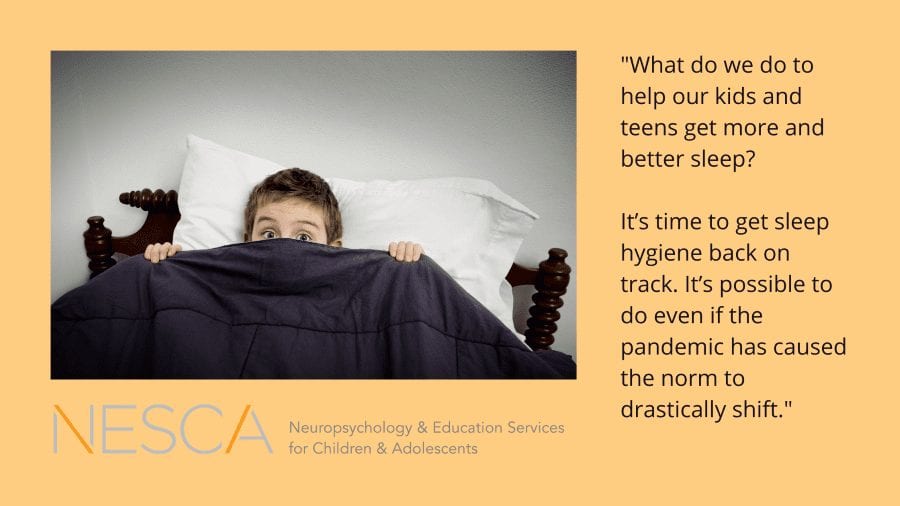
What do we do to help our kids and teens get more and better sleep? It’s time to get sleep hygiene back on track. It’s possible to do even if the pandemic has caused the norm to drastically shift. Here are some tips for promoting sleep for children and teens:

Establish a consistent schedule. I cannot emphasize this one enough. Establish consistent times for settling down for bed and waking up that are the same every day of the week. Try to stick to this schedule whether your child is having an in-person learning day or remote, whether it is a weekend or weekday. This can be tricky with teenagers who tend to sleep in on weekend days. Try to stick within an hour, if possible, to get your body on a more consistent schedule. Avoid naps during the day if you can, even if there has been a rough night of sleep (or limit naps to less than 30 minutes). Daytime napping can interrupt night sleep patterns.

Develop a routine to settle for bed. Children and teens need to settle down for bed gradually. We can’t go from wide awake to peaceful slumber in a few moments. Limit screen time 30 minutes before bed as the light that is given off by televisions, phones or other devices confuses our systems and causes delays in releasing melatonin (the magic sleep hormone). Choose the same relaxing activity each night. Children and teens can read (or listen to a story read aloud by a parent), listen to an audiobook, color in special coloring book, listen to music or a podcast, or take a warm bath or shower. Include your child or teen in conversations about what relaxing activity to try before bed. Keep the same activity for several weeks before trying other ones. The brain does not want variety when you are trying to settle for bed, or it can become more alert in the face of a novel activity. The routine promotes relaxation.

Schedule talk time. Children and teens tend to think about their day as they are laying down. This can lead to “just one more thing” that kids have to tell us or one more question. They can also anticipate what is happening next, which can lead to an increase in anxiety. Schedule a “talk time” with your child or teen to discuss the day and think ahead to tomorrow. Do this at least 30 minutes before bedtime (ideally closer to dinnertime) to avoid a lengthy conversation that can activate anxiety. Use this time to validate feelings and model problem-solving about any issues coming up.

Provide comfort after dreams. We can expect that everyone may wake up at some point after an anxiety dream. If we can predict it, it can make it feel less overwhelming. Teach children and teens what to do when they wake up feeling anxious, including seeking the support of their parent for the very upsetting ones. Offer comfort and a tuck back into bed. Encourage your child to talk about how to resolve the frightening dream in a way that is silly, funny or triumphant to shift the focus away from what felt upsetting. Have a scary dream about a monster? Imagine him having to perform a ballet while balancing hot sauce on his head. Have an anxiety dream about a teacher yelling at you for forgetting your homework? Imagine turning it in and your teacher leading the rest of class in a celebratory song. You can also encourage children or teens to think of their favorite movie or book, and ask them to close their eyes and replay the movie or book to refocus the mind.

Practice breathing. To soothe our overactive anxiety systems, practice taking deep breaths. Imagine your breath filling up the back of your lungs and visualize the air going through your body. Practice circle breathing where air comes in one nostril and out the other (of course it comes in and goes out both!).  With younger kids, a little modeling helps. You can also encourage kids and teens to tense different parts of their body, hold for a count of 10, and then release to feel more relaxed.

Reach out for help. If your child or teen has persistent trouble with sleep, contact your pediatrician. It may be time for a more thorough evaluation to rule out sleep disorders, medical causes or behavioral patterns that signal a bigger sleep problem.


For more information, please check out these resources:

American Psychological Association (APA) press release related to dreaming:  https://www.apa.org/news/press/releases/2020/09/upsetting-dreams-covid-19

Fantastic APA resource on sleep: https://www.apa.org/monitor/2020/07/ce-corner-sleep

What To Do When You Dread Your Bed: A Kid’s Guide to Overcoming Problems with Sleep (2008) by Dawn Huebner, Ph.D.


About the Author: 

Dr. Creedon has expertise in evaluating children and teens with a variety of presenting issues. She is interested in uncovering an individual’s unique pattern of strengths and weaknesses to best formulate a plan for intervention and success. With experiences providing therapy and assessments, Dr. Creedon bridges the gap between testing data and therapeutic services to develop a clear roadmap for change and deeper of understanding of individual needs.


If you are interested in booking an evaluation with Dr. Creedon or another NESCA neuropsychologist, please fill out and submit our online intake form


Neuropsychology & Education Services for Children & Adolescents (NESCA) is a pediatric neuropsychology practice and integrative treatment center with offices in Newton and Plainville, Massachusetts, and Londonderry, New Hampshire, serving clients from preschool through young adulthood and their families. For more information, please email info@nesca-newton.com or call 617-658-9800.

Positive Coping Strategies for Stress, Anxiety and Trauma During Times of Crisis

By | NESCA Notes 2020

By Renée Marchant, Psy.D.
Pediatric Neuropsychologist

Amidst the global pandemic, children, their caregivers, their teachers and therapists are naturally experiencing heightened stress and anxiety. We are more likely to be sent into “fight, flight, freeze, mode” – the body and brain’s critical survival strategy to prepare and deal with perceived threat. For example, when you see a Grizzly Bear on your hiking trail, you instinctually run, fight back or hide.

However, we can become “stuck” or more sensitive to this instinctual urge, which is not adaptive and can negatively impact physical, emotional and social health. For example, chronic deployment of the “flight, flight, freeze” response occurs for individuals who experience post-traumatic stress disorder. Chronic deployment of “fight, flight, freeze” responses is also more likely amidst a global pandemic, such as COVID-19. Importantly, chronic deployment of “fight, flight, freeze” responses also occurs for individuals and communities who experience chronic racial injustice and oppression.

Under chronic experiences of stress and threat, our body remains activated and hyper-aroused, even when deploying this response is not helpful. For example, children may shut down or dysregulate when faced with even small stressors – making an error on a math worksheet or even accidentally spilling something on the table. Children and teens may be more irritable, defiant or isolative. Overall, chronic deployment of the “fight, flight, freeze” response heightens anxiety, stress and general feelings of malaise.

So, what can we do? What can we do to “turn off” or lessen this stress response? What are some ways to positively cope during these difficult times?

  1. Research shows that the #1 resiliency factor is the reliable presence of at least one supportive relationship with an adult. Build connection and community through shared activities and conversations about your experiences. Remember to always take care of yourself before taking care of others – self-care is critical.
  2. Focus on validation first; problem-solving second. Validating, acknowledging and accepting pain, distress, hurt and the like builds communication and naturally decreases tension and stress. Validation is the essential first step prior to action, problem-solving and positive coping.
  3. In order to grow positive coping, it is helpful to build mastery and self-expression. Strategies that can help to both organize and “release” feelings and stressful experiences rather than “bottle them up” include:
  • Use your body to heal your mind: play, do yoga, engage with nature, exercise;
  • Engage in shared action to promote communication and change at a community and systemic level. Volunteer or advocate for a cause of importance. Contact your local legislators and express your concerns;
  • Write or draw about your experience. Use collages, images or videos to express your goals, experiences and fears;
  • Engage in therapeutic movement. Create a music playlist for various emotions. Dance or engage in rhythmic actions (e.g. knitting, pottery);
  • Identify your strengths and what you value in life. Happiness is fleeting – goals and values last longer and support positive coping. For a free strengths and values survey, check out: https://www.viacharacter.org/;
  • Connect with community resources available in your area, such as therapists, mentors, religious organizations, support groups, local-nonprofits, etc.; and
  • Be kind to yourself and practice self-compassion.


About the Author:

Dr. Renée Marchant provides neuropsychological and psychological (projective) assessments for youth who present with a variety of complex, inter-related needs, with a particular emphasis on identifying co-occurring neurodevelopmental and psychiatric challenges. She specializes in the evaluation of developmental disabilities including autism spectrum disorder and social-emotional difficulties stemming from mood, anxiety, attachment and trauma-related diagnoses. She often assesses children who have “unique learning styles” that can underlie deficits in problem-solving, emotion regulation, social skills and self-esteem.
Dr. Marchant’s assessments prioritize the “whole picture,” particularly how systemic factors, such as culture, family life, school climate and broader systems impact diagnoses and treatment needs. She frequently observes children at school and participates in IEP meetings.

Dr. Marchant brings a wealth of clinical experience to her evaluations. In addition to her expertise in assessment, she has extensive experience providing evidence-based therapy to children in individual (TF-CBT, insight-oriented), group (DBT) and family (solution-focused, structural) modalities. Her school, home and treatment recommendations integrate practice-informed interventions that are tailored to the child’s unique needs.

Dr. Marchant received her B.A. from Boston College with a major in Clinical Psychology and her Psy.D. from William James College in Massachusetts. She completed her internship at the University of Utah’s Neuropsychiatric Institute and her postdoctoral fellowship at Cambridge Health Alliance, a Harvard Medical School teaching hospital, where she deepened her expertise in providing therapy and conducting assessments for children with neurodevelopmental disorders as well as youth who present with high-risk behaviors (e.g. psychosis, self-injury, aggression, suicidal ideation).

Dr. Marchant provides workshops and consultations to parents, school personnel and treatment professionals on ways to cultivate resilience and self-efficacy in the face of adversity, trauma, interpersonal violence and bullying. She is an expert on the interpretation of the Rorschach Inkblot Test and provides teaching and supervision on the usefulness of projective/performance-based measures in assessment. Dr. Marchant is also a member of the American Family Therapy Academy (AFTA) and continues to conduct research on the effectiveness of family therapy for high-risk, hospitalized patients.


To book an evaluation with Dr. Marchant or one of our many other expert neuropsychologists, complete NESCA’s online intake form.


Neuropsychology & Education Services for Children & Adolescents (NESCA) is a pediatric neuropsychology practice and integrative treatment center with offices in Newton and Plainville, Massachusetts, and Londonderry, New Hampshire, serving clients from preschool through young adulthood and their families. For more information, please email info@nesca-newton.com or call 617-658-9800.


How Do I Prepare My Child for a Neuropsychological Evaluation?

By | NESCA Notes 2020

By: Erin Gibbons, Ph.D.
Pediatric Neuropsychologist, NESCA

Parents often ask us what they should tell their child about their upcoming neuropsychological evaluation, especially when it is their first experience with testing. I advise parents to refer to the neuropsychologist using his or her first name, as the term “doctor” can be scary and raise fears about medical exams. I might also add that the visit will not involve any shots! In order to describe the evaluation itself; here is some helpful language:

  • They are going to ask you questions, and you just need to do your best to answer.
  • They might ask you to do some drawing or writing.
  • Some activities might feel like you’re in school; for example, reading stories or doing math problems.

It may also be helpful to create a simple social story prior to the evaluation to help preview what to expect for your child.

To explain the reasons for doing the evaluation, some key phrases to use with your child include:

  • We want to understand how you learn, because everybody learns differently.
  • We are going to be “brain detectives” and figure out how your brain works!
  • This will help us identify your strengths and areas that we need to work on. That way, we can help you with things that are harder for you.
  • This will help your teachers understand your learning style so they can help you better at school.
  • Just try your best!

Testing in the age of Covid-19 is different. It can be harder to help children feel at ease when everyone is wearing masks, and we can’t offer a high five for good work. But as we are all learning, children are often more resilient than adults. Prior to coming in for an evaluation, you might want to remind your child to wear their mask, wash their hands and not approach people too closely.

It is also important to understand that a neuropsychological evaluation is a lot of work for your child! Finding a way to reward them for their effort will go a long way in helping them stay motivated and positive. This could be as simple as swinging by the drive-thru for a donut or something more extravagant, like a new video game. Whatever you choose to do, create a plan with your child and let the neuropsychologist know. When I have a child in my office who is starting to fatigue, it’s always a great motivator to remind them of the special prize they’ll get at the end of the visit!


About the Author: 

Erin Gibbons, Ph.D. is a pediatric neuropsychologist with expertise in neurodevelopmental and neuropsychological assessment of infants,

children, and adolescents presenting with developmental disabilities including autism spectrum disorders, Down syndrome, intellectual disabilities, learning disabilities, and attention deficit disorders. She has a particular interest in assessing students with complex medical histories and/or neurological impairments, including those who are cognitively delayed, nonverbal, or physically disabled. Dr. Gibbons joined NESCA in 2011 after completing a two-year post-doctoral fellowship in the Developmental Medicine Center at Boston Children’s Hospital. She particularly enjoys working with young children, especially those who are transitioning from Early Intervention into preschool. Having been trained in administration of the Autism Diagnostic Observation Schedule (ADOS), Dr. Gibbons has experience diagnosing autism spectrum disorders in children aged 12 months and above.


If you are interested in booking an evaluation with Dr. Gibbons or another NESCA neuropsychologist, please fill out and submit our online intake form


Neuropsychology & Education Services for Children & Adolescents (NESCA) is a pediatric neuropsychology practice and integrative treatment center with offices in Newton and Plainville, Massachusetts, and Londonderry, New Hampshire, serving clients from preschool through young adulthood and their families. For more information, please email info@nesca-newton.com or call 617-658-9800.

“Doomscrolling” and Creating Space for Gratitude

By | NESCA Notes 2020

By: Cynthia Hess, PsyD
Pediatric Neuropsychologist Fellow and Therapist

A recent article in the New York Times (July 15, 2020) discusses a newly coined term for a coping strategy that has become pervasive amidst all the uncertainty: “Doomscrolling.” In the article, doomscrolling is defined as, “…the experience of sinking into emotional quicksand while bingeing on doom-and-gloom news.” It has become so common, it has a name.

We are collectively experiencing a great deal of anticipatory anxiety, which occurs when we feel anxious or stressed about an event that will happen in the future. We know there will be an event, but we do not know when or what that event will be. For those who participate in doomscrolling, perhaps it is an effort to find a sense of certainty. If we know what is coming next, it helps us feel more in control. However, while doomscrolling may provide a short-term sense of control, like many maladaptive ways of coping, it will eventually take a toll on our mental and physical well-being. Several wonderful suggestions are offered in the article and a follow-up piece to deal with doomscrolling. Another positive strategy for coping with anxiety and stress is practicing gratitude.

According to the National Institutes of Health, early research suggests that a daily habit of practicing gratitude may improve emotional and physical health. Practicing gratitude reduces stress and anxiety by regulating stress hormones in the brain. It also enhances the production of dopamine and serotonin, two neurotransmitters responsible for our emotions and sense of well-being. Practicing gratitude can be as simple as taking a moment to appreciate a good cup of coffee or a refreshing breeze on a hot day. There are many ways to create space for gratitude:

  • Take a few moments each day to write down as many things as you can that you are grateful for
  • Try to notice positive moments as they are happening
  • Compliment yourself each day and say it out loud
  • Keep a gratitude journal that includes: Compliments that you give yourself, current challenges and what you are learning, people you are grateful for, and significant assets of your life right now.
  • Start a gratitude jar with your family where each person writes one thing they are grateful for that day on a slip of paper and adds it to the jar. The notes can be read aloud at the start of each new week.

For further reading check out these articles:

https://www.nytimes.com/2020/07/15/technology/personaltech/youre-doomscrolling-again-heres-how-to-snap-out-of-it.html

https://www.nytimes.com/2020/07/16/technology/coronavirus-doomscrolling.html?searchResultPosition=2

https://positivepsychology.com/neuroscience-of-gratitude.


About the Author

Dr. Cynthia Hess recently graduated from Rivier University with a PsyD in Counseling and School Psychology. Previously, she earned an M.A. from Antioch New England in Applied Psychology. She also worked as an elementary school counselor and school psychologist for 15 years before embarking on her doctorate. During her doctorate, she did her pre-doctoral internship with RIT in Rochester, N.Y. where she worked with youth ages 5-17 who had experienced complex developmental trauma. Dr. Hess’s first post-doctoral fellowship was with The Counseling Center of New England where she provided psychotherapy and family therapy to children ages 5-18, their families and young adults. She also trained part-time with a pediatric neuropsychologist conducting neuropsychological evaluations. Currently, Dr. Hess is a second-year post-doctoral fellow in pediatric neuropsychological assessment, working with NESCA Londonderry’s Dr. Angela Currie.


To schedule an appointment with one of NESCA’s expert neuropsychologists, please complete our online intake form


Neuropsychology & Education Services for Children & Adolescents (NESCA) is a pediatric neuropsychology practice and integrative treatment center with offices in Newton and Plainville, Massachusetts, and Londonderry, New Hampshire, serving clients from preschool through young adulthood and their families. For more information, please email info@nesca-newton.com or call 617-658-9800.


Positive Coping Strategies for Stress, Anxiety and Trauma During Times of Crisis

By | NESCA Notes 2020

By Renée Marchant, Psy.D.
Pediatric Neuropsychologist

Amidst the global pandemic, children, their caregivers, their teachers and therapists are naturally experiencing heightened stress and anxiety. We are more likely to be sent into “fight, flight, freeze, mode” – the body and brain’s critical survival strategy to prepare and deal with perceived threat. For example, when you see a Grizzly Bear on your hiking trail, you instinctually run, fight back or hide.

However, we can become “stuck” or more sensitive to this instinctual urge, which is not adaptive and can negatively impact physical, emotional and social health. For example, chronic deployment of the “flight, flight, freeze” response occurs for individuals who experience post-traumatic stress disorder. Chronic deployment of “fight, flight, freeze” responses is also more likely amidst a global pandemic, such as COVID-19. Importantly, chronic deployment of “fight, flight, freeze” responses also occurs for individuals and communities who experience chronic racial injustice and oppression.

Under chronic experiences of stress and threat, our body remains activated and hyper-aroused, even when deploying this response is not helpful. For example, children may shut down or dysregulate when faced with even small stressors – making an error on a math worksheet or even accidentally spilling something on the table. Children and teens may be more irritable, defiant or isolative. Overall, chronic deployment of the “fight, flight, freeze” response heightens anxiety, stress and general feelings of malaise.

So, what can we do? What can we do to “turn off” or lessen this stress response? What are some ways to positively cope during these difficult times?

  1. Research shows that the #1 resiliency factor is the reliable presence of at least one supportive relationship with an adult. Build connection and community through shared activities and conversations about your experiences. Remember to always take care of yourself before taking care of others – self-care is critical.
  2. Focus on validation first; problem-solving second. Validating, acknowledging and accepting pain, distress, hurt and the like builds communication and naturally decreases tension and stress. Validation is the essential first step prior to action, problem-solving and positive coping.
  3. In order to grow positive coping, it is helpful to build mastery and self-expression. Strategies that can help to both organize and “release” feelings and stressful experiences rather than “bottle them up” include:
  • Use your body to heal your mind: play, do yoga, engage with nature, exercise;
  • Engage in shared action to promote communication and change at a community and systemic level. Volunteer or advocate for a cause of importance. Contact your local legislators and express your concerns;
  • Write or draw about your experience. Use collages, images or videos to express your goals, experiences and fears;
  • Engage in therapeutic movement. Create a music playlist for various emotions. Dance or engage in rhythmic actions (e.g. knitting, pottery);
  • Identify your strengths and what you value in life. Happiness is fleeting – goals and values last longer and support positive coping. For a free strengths and values survey, check out: https://www.viacharacter.org/;
  • Connect with community resources available in your area, such as therapists, mentors, religious organizations, support groups, local-nonprofits, etc.; and
  • Be kind to yourself and practice self-compassion.

To learn more about this topic, a helpful webinar is available at “Supports for Students with a History of Trauma and Significant Anxiety,“ presented by Dr. Renee Marchant, PsyD, and Dr. Stephanie Monaghan-Blout, PsyD.


About the Author:

Dr. Renée Marchant provides neuropsychological and psychological (projective) assessments for youth who present with a variety of complex, inter-related needs, with a particular emphasis on identifying co-occurring neurodevelopmental and psychiatric challenges. She specializes in the evaluation of developmental disabilities including autism spectrum disorder and social-emotional difficulties stemming from mood, anxiety, attachment and trauma-related diagnoses. She often assesses children who have “unique learning styles” that can underlie deficits in problem-solving, emotion regulation, social skills and self-esteem.

Dr. Marchant’s assessments prioritize the “whole picture,” particularly how systemic factors, such as culture, family life, school climate and broader systems impact diagnoses and treatment needs. She frequently observes children at school and participates in IEP meetings.

Dr. Marchant brings a wealth of clinical experience to her evaluations. In addition to her expertise in assessment, she has extensive experience providing evidence-based therapy to children in individual (TF-CBT, insight-oriented), group (DBT) and family (solution-focused, structural) modalities. Her school, home and treatment recommendations integrate practice-informed interventions that are tailored to the child’s unique needs.

Dr. Marchant received her B.A. from Boston College with a major in Clinical Psychology and her Psy.D. from William James College in Massachusetts. She completed her internship at the University of Utah’s Neuropsychiatric Institute and her postdoctoral fellowship at Cambridge Health Alliance, a Harvard Medical School teaching hospital, where she deepened her expertise in providing therapy and conducting assessments for children with neurodevelopmental disorders as well as youth who present with high-risk behaviors (e.g. psychosis, self-injury, aggression, suicidal ideation).

Dr. Marchant provides workshops and consultations to parents, school personnel and treatment professionals on ways to cultivate resilience and self-efficacy in the face of adversity, trauma, interpersonal violence and bullying. She is an expert on the interpretation of the Rorschach Inkblot Test and provides teaching and supervision on the usefulness of projective/performance-based measures in assessment. Dr. Marchant is also a member of the American Family Therapy Academy (AFTA) and continues to conduct research on the effectiveness of family therapy for high-risk, hospitalized patients.


To book an evaluation with Dr. Marchant or one of our many other expert neuropsychologists, complete NESCA’s online intake form.


Neuropsychology & Education Services for Children & Adolescents (NESCA) is a pediatric neuropsychology practice and integrative treatment center with offices in Newton and Plainville, Massachusetts, and Londonderry, New Hampshire, serving clients from preschool through young adulthood and their families. For more information, please email info@nesca-newton.com or call 617-658-9800.


YES! COVID-19 May be Making Basic Daily Tasks More Difficult: The Link Between Executive Function Difficulties and Anxiety/Stress

By | NESCA Notes 2020

By: Sophie Bellenis, OTD, OTR/L

Occupational Therapist; Real-life Skills Program Manager and Coach

As our country continues to adapt to life in the era of COVID-19, it is quite well established that there has been a rise in anxiety and stress among our population. According to the Centers for Disease Control and Prevention (CDC), the mental health effects of the current pandemic have been substantial and include difficulty sleeping, worsening chronic health problems, changes in eating patterns, fear about personal health and the health of loved ones, and increased use of tobacco and alcohol (CDC, 2020). Many of these fears and new challenges are expected and understandable. They are responses that intuitively make sense to us as humans, as many of us experience them on a small scale throughout a typical year. Most people can name a time when they could not fall asleep before a big test or did not take excellent care of their physical health when they were hugely stressed or anxious. However, one effect of this newly heightened stress and anxiety that is less frequently mentioned is the decrease in executive function skills.

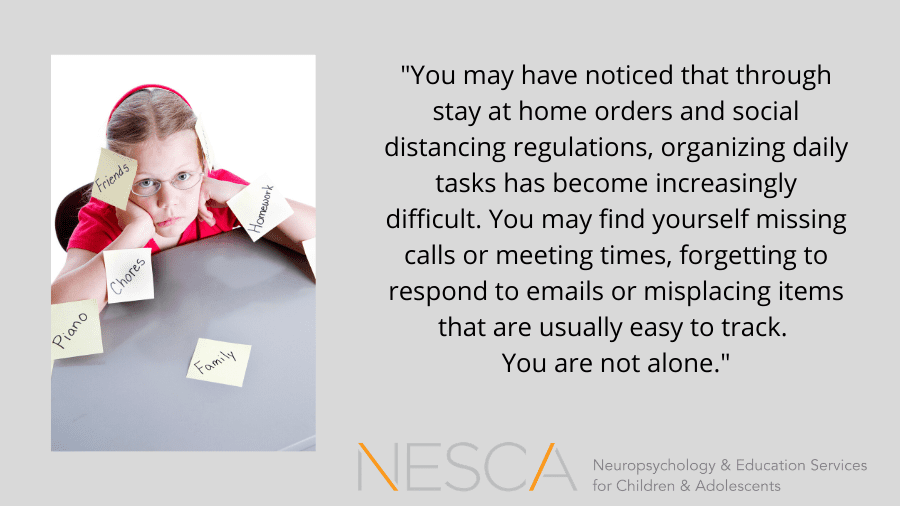
The term executive function refers to the brain processes that allow someone to stay organized, initiate tasks, maintain focus and attention, and manipulative information in their mind. As NESCA Pediatric Neuropsychologist Dr. Alissa Talamo describes in her piece, “What is Executive Function?,” this group of skills can be thought of as the conductor of the brain, similar to the conductor of an orchestra. They are keeping time, telling us when to start and stop tasks and helping us to stay regulated through the ups and downs of the day. You may have noticed that through stay at home orders and social distancing regulations, organizing daily tasks has become increasingly difficult. You may find yourself missing calls or meeting times, forgetting to respond to emails or misplacing items that are usually easy to track. You are not alone. Some people have started to describe a brain fog and a perceived inability to stay focused on a task for more than a short period of time.

While maybe not as intuitive as a lack of sleep, this decrease in executive function is to be expected as we collectively move through this stressful experience. Substantial research has described the correlation between depression, anxiety and stress, and executive function deficits. This seems to be particularly strong for adolescents with depressive and anxious symptoms, who have trouble with cognitive flexibility (Han, Helm, Iucha, Zahn-Waxler & Hastings, 2016). Similarly, university students are another population vulnerable to these effects, as described by Ajilchi and Nejati in 2017, who found specific difficulties with sustained attention and decision making. It is no surprise that one diagnostic criteria for generalized anxiety disorder is “difficulty concentrating or mind going blank” (APA, 2013). When reviewing the literature, it is clear that the brain fog and inability to focus through COVID-19 is not only unsurprising, for many people, it was inevitable.

So, what do we do? How do we soldier on through this incredibly unique time, despite the feeling that everything takes just a bit more time and effort?

It is increasingly important to cut ourselves some slack and stop expecting perfection. Focusing on self-care and taking care of each other emotionally will potentially lead to a natural return to successful executive function. By creating habits and routines that promote positive mental health, we are more likely to mitigate the feelings of being overwhelmed and the potential for burnout. Additionally, using technology and digital reminders to help take over the tasks of initiation and organization can give our over-extended brains a bit of a rest.

Finally, it is imperative that we think about the adolescents and students in our communities who are just starting to build these skills. Building executive function skills comes from a combination of direct instruction and opportunity to practice. Currently, students are being provided ample opportunity to practice, with limited direct instruction and guidance. Consider teaching your children and adolescents the tricks that you have learned to stay organized, prepared and productive. If you feel like teaching these skills is outside of your wheelhouse, or at all daunting, look into the prospect of an executive function coach. With all of the uncertainty about what education will look like this fall, helping students feel ready to tackle learning is one way to mitigate the anxiety and stress of this transitional time.


References

Ajilchi, B., & Nejati, V. (2017). Executive Functions in Students with Depression, Anxiety, and Stress Symptoms. Basic and clinical neuroscience8(3), 223–232. https://doi.org/10.18869/nirp.bcn.8.3.223

American Psychiatric Association. (2013). Diagnostic and statistical manual of mental disorders (5th ed.). Arlington, VA: American Psychiatric Publishing.

Center for Disease Control and Prevention. (2020) Coronavirus disease 2019: Coping with stress. Retrieved from: https://www.cdc.gov/coronavirus/2019-ncov/daily-life-coping/managing-stress-anxiety.html

Han, G., Helm, J., Iucha, C., Zahn-Waxler, C., Hastings, P. D., & Klimes-Dougan, B. (2016). Are Executive Functioning Deficits Concurrently and Predictively Associated with Depressive and Anxiety Symptoms in Adolescents?. Journal of clinical child and adolescent psychology : the official journal for the Society of Clinical Child and Adolescent Psychology, American Psychological Association, Division 5345(1), 44–58. https://doi.org/10.1080/15374416.2015.1041592


About the Author

Dr. Sophie Bellenis is a Licensed Occupational Therapist in Massachusetts, specializing in educational OT and functional life skills development. Dr. Bellenis joined NESCA in the fall of 2017 to offer community-based skills coaching services as a part of the Real-life Skills Program within NESCA’s Transition Services team. Dr. Bellenis graduated from the MGH Institute of Health Professions with a Doctorate in Occupational Therapy, with a focus on pediatrics and international program evaluation. She is a member of the American Occupational Therapy Association, as well as the World Federation of Occupational Therapists. Having spent years delivering direct services at the elementary, middle school and high school levels, Dr. Bellenis has extensive background with school-based occupational therapy services.  She believes that individual sensory needs and visual skills must be taken into account to create comprehensive educational programming.

To book an appointment or to learn more about NESCA’s Occupational Therapy Services, please fill out our online Intake Form, email info@nesca-newton.com or call 617-658-9800.


Neuropsychology & Education Services for Children & Adolescents (NESCA) is a pediatric neuropsychology practice and integrative treatment center with offices in Newton, Massachusetts, Plainville, Massachusetts, and Londonderry, New Hampshire, serving clients from preschool through young adulthood and their families. For more information, please email info@nesca-newton.com or call 617-658-9800.


Preparing our Kids to Reenter the Community

By | NESCA Notes 2020

By: Erin Gibbons, Ph.D.
Pediatric Neuropsychologist, NESCA

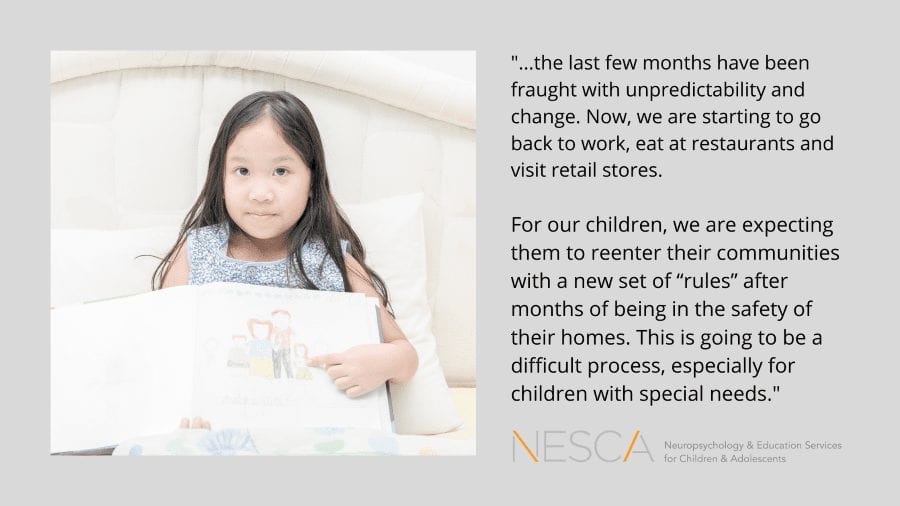
For many children, new experiences are frightening and anxiety-provoking. Children thrive on routine and predictability; when these get interrupted, it can be hard for them to understand what is happening. As we all know, the last few months have been fraught with unpredictability and change. Now, we are starting to go back to work, eat at restaurants and visit retail stores. As adults, we might have mixed feelings about this – relief to get out of the house but also fear about the ongoing pandemic. For our children, we are expecting them to reenter their communities with a new set of “rules” after months of being in the safety of their homes. This is going to be a difficult process, especially for children with special needs.

So how do we prepare children for all of the new experiences they are about to face?

One method that has been found to be effective is the use of Social Stories™. Social Stories were first developed in 1990 by Carol Gray, a special education teacher. In essence, Social Stories are used to explain situations and experiences to children at a developmentally appropriate level using pictures and simple text. In order to create materials that are considered a true Social Story, there are a set of criteria that must be used. More information can be found here: https://carolgraysocialstories.com/social-stories/what-is-it/.

While special educators or therapists are expected to use this high standard in their work, it is also relatively easy for parents to create modified versions of these stories to use at home. I was inspired by one of my clients recently who made a story for her son with Down syndrome to prepare him for the neuropsychological evaluation. During her parent intake, she took pictures of me and the office setting. At home, she created a short book that started with a picture of her son, a picture of their car, a picture of my office, a picture of me and so on. On each page, she wrote a simple sentence:

  • First we will get in the car
  • We will drive to Dr. Gibbons’ office
  • We will play some games with Dr. Gibbons
  • We will go pick a prize at Target
  • We will drive home

Throughout the evaluation, she referred to the book whenever her son became frustrated by the tests or needed a visual reminder of the day’s schedule. Something that probably only took a few minutes to create played an important role in helping her son feel comfortable and be able to complete the evaluation.

The options for creating similar types of stories are endless, giving parents a way to prepare their children for a scary experience.

Some examples of stories to create during the ongoing pandemic:

  • Wearing a mask when out of the house
  • Proper hand washing
  • Socially distant greetings (bubble hugs, elbow bumps, etc.)

Some examples of more general stories include:

  • Doctor’s visits
  • Going to the dentist
  • Getting a haircut
  • Riding in the car
  • First day of school

You can use stock photos from the internet or pictures of your child and the actual people/objects they will encounter. If you have a child who reads, you can include more text; if your child does not read, focus on pictures only. Read the story with the child several times in the days leading up to the event. For ongoing expectations (e.g., wearing a mask) – you can review the story as often as needed. Keep it short and simple. And have fun with it!


About the Author: 

Erin Gibbons, Ph.D. is a pediatric neuropsychologist with expertise in neurodevelopmental and neuropsychological assessment of infants,

children, and adolescents presenting with developmental disabilities including autism spectrum disorders, Down syndrome, intellectual disabilities, learning disabilities, and attention deficit disorders. She has a particular interest in assessing students with complex medical histories and/or neurological impairments, including those who are cognitively delayed, nonverbal, or physically disabled. Dr. Gibbons joined NESCA in 2011 after completing a two-year post-doctoral fellowship in the Developmental Medicine Center at Boston Children’s Hospital. She particularly enjoys working with young children, especially those who are transitioning from Early Intervention into preschool. Having been trained in administration of the Autism Diagnostic Observation Schedule (ADOS), Dr. Gibbons has experience diagnosing autism spectrum disorders in children aged 12 months and above.


If you are interested in booking an evaluation with Dr. Gibbons or another NESCA neuropsychologist, please fill out and submit our online intake form


Neuropsychology & Education Services for Children & Adolescents (NESCA) is a pediatric neuropsychology practice and integrative treatment center with offices in Newton and Plainville, Massachusetts, and Londonderry, New Hampshire, serving clients from preschool through young adulthood and their families. For more information, please email info@nesca-newton.com or call 617-658-9800.

Let’s Stop Trash-talking Stress and Anxiety-Part 1

By | NESCA Notes 2020

By:  Stephanie Monaghan-Blout, Psy.D.

Coordinator of Therapy Services; Trauma-informed Therapist

Stress and anxiety have gotten a really bad name in our society. Just ask kids – it is a question we sometimes pose to our clients during testing, and the answers we get usually run along the lines of, “Are you kidding? There’s nothing good about stress!”. So, let’s talk about the purpose of stress, how it functions, and what we can do to manage it.

From a scientific viewpoint, stress is a challenge or stimulus to DO SOMETHING when certain circumstances arise – specifically, when danger is detected. Let’s make this easy – what would your body need to do if a tiger showed up? Let’s start with upping your heart rate and breathing faster to get oxygen into your blood so that you are able to move quickly, and then let’s send some fuel (glucose) to your muscles for strength. This is the process that happens when some kind of danger is sensed – the brain sends down orders to the body that diverts resources to the systems that help us escape from the tiger (fight, flight or freeze) while diverting resources from systems that are less important at that time (rest, digest and think). When the danger is over, the focus changes; our fear response is dampened, our heart rate and breathing slow down and those other systems come back online to get our bodies back to normal.

The feedback between these two systems of getting us prepared for danger (activation of the sympathetic nervous system) and calming down after the event has passed (activation of the parasympathetic nervous system) remain important, even when tigers are no longer a concern. Remember that stress is a stimulus to do something in the face of fear or danger. A little stress in our daily lives helps us get things done, like studying for that big test. It is also adaptive to be anxious at a time like now, when our whole world is under the threat of the COVID-19 virus. There’s lots to be worried about, and this stress can help us remember to take precautions like staying home and keeping physical distance. We’ll get back to this.

But what happens if the threat is more immediate, the danger sensor is too sensitive and/or the body never gets a chance to calm down? In this situation, the person remains activated, looking for danger and ready to respond, even when it is not appropriate or even against their best interests. Remember, during these times of perceived danger, the child does not have access to higher-level cognitive processes, like thinking flexibly, problem solving or even access to language. At these times of high stress, they are not available for learning. Asking a child to “talk about it” or even tell you what the problem is can be beyond their capacity at the time and will only add to their stress. This is the situation in school encountered by many children with learning issues, emotional concerns, autism or other neurodevelopmental disorders. They may find the academic, organizational and social demands of school to be so threatening that their danger alert is set off and only gets the chance to reset when school is finished.

So, what does the overly stressed child look like and how can we help? This is going to be the challenging part, because you are going to be asked to look at common behaviors in a different way. Let’s go back to the Fight-Flight-Freeze responses. Most of us tend to prefer one of these, though we will use all three depending on the situation.

Fight – This version of the response involves active resistance to the threat, but in the classroom or the dinner table, it more likely takes the shape of being argumentative, noncompliant and defiant (“You can’t make me!”).

Flight – This version is characterized by avoidance or getting away from the threat. This could mean needing to go the bathroom, see the school nurse or suddenly remembering that very important pen in their cubby that they absolutely have to have at that moment. However, it could also mean leaving mentally (“spacing out”).

Freeze – This version involves immobilization strategies, like wild animals who “freeze” so as not to attract the attention of a predator. In children, these behaviors are more subtle; they manifest as problems with getting started, switching from one thing to another and/or stopping. Oftentimes these kids are described as “shutting down,” but it is more accurate to describe them as “stuck.”

How do we help our kids get out of this stress response?

Remember, stress is a response to the perception of danger, and anxiety is the feeling of being helpless and out of control.

What “turns off” the threat alert and allows us to feel more capable and ready to try? The perception of being safe. When children feel safe, they can focus and concentrate on the task at hand. They can think and problem solve. And, they are more aware of others and what they are saying and doing.

How do we help our children feel safe and capable of tackling a challenge? Say a child doesn’t like math and does everything to avoid doing their homework. Which of these three approaches would make them feel more safe and ready to give it a try?

  • “Stop acting like a baby and just get that math done. It’s only 10 problems! Don’t even think of playing any video games tonight.”
  • “You poor thing. I know you are bad at math and it’s mean that your teacher is making     you work so hard. I’m going to write to her and tell her you can’t do that much.”
  • “Wow, you really don’t like to do your math homework, do you? That’s hard! Tell you what, I’ll help you with the first two and when you are done with the rest, we’ll play a game together!”

Notice that in the last example, the parent started with validating the child’s feelings, or just recognizing what the child’s emotional experience is like at the moment – not the same as agreeing with him or her. The second thing s/he did was to offer some help, and the third was to offer a fun activity to help the child feel calmer and more connected.

What if the child is really upset and can’t switch gears to start working? Just change the order of the events. Validate feelings, offer a calming and connecting activity and offer some help to get back to work. The calming/connecting activity doesn’t have to be a game – it just needs to be something they makes the child feel cared for and gives them something else to think about, like a cup of tea or a special cookie.

But what if the stress and anxiety is related to something that is bigger than math homework and can’t be easily fixed with a cup of tea and some extra help with those fractions? What if it is something that is out of the parent’s control, like the COVID pandemic? Again, the way to “turn off” the threat alert in our children’s brains is to help them feel safe and to have some control over what is happening to them. How do we do that? Validate their feelings makes them feel heard. Answering their questions (but sticking to their concerns) will tell you what they are really worried about and allow you to correct misperceptions and reassure them. Calming and connecting activities are still really important. Finally, helping them feel more in control by being able to do something to help. Utilize a child’s skills and interests in finding ways for them to help. If your child likes to draw, have them make pictures for family, friends and neighbors. Do you have a budding computer whiz? Help them make a zoom video of their classmates saying hi to their teacher. Is your child someone who loves people and isn’t shy? Have them call grandparents and older neighbors who may not be able to leave their houses. Equally importantly, remind them that they can help others by following the guidelines of washing their hands, keeping physical distance and, as hard as it is, staying home.

In a follow-on blog, we’ll discuss how to build resilience in children.


About the Author:

Dr. Stephanie Monaghan-Blout is a senior clinician who joined NESCA at its inception in 2007. She specializes in the neuropsychological and psychological assessment of children and adolescents with complex learning and emotional issues and enjoys consulting to schools on these issues. Her responsibilities at NESCA also include acting as Clinical Coordinator, overseeing therapeutic services, providing therapy and psychoeducational counseling and, in the time of the COVID-19 crisis, providing teletherapy to parents and teens.

In her early career as an adolescent and family therapist, Dr. Monaghan-Blout became very interested in the needs of those contending with traumatic experiences. She brought that interest to her work as a pediatric neuropsychologist and continues to be passionate about treating this population. She has developed an expertise in working with adoptive children and others who have experienced early trauma. She is a longtime member of the Trauma and Learning Policy Initiative (TLPI) associated with Massachusetts Advocates for Children and the Harvard Law Clinic and presents nationally and regionally on assessment and treatment of children with complex/developmental trauma.

Dr. Monaghan-Blout graduated from Bowdoin College and received a Master’s Degree in Counselor Education from Boston University. She obtained her Doctorate in Clinical Psychology from Antioch New England Graduate School with a dissertation entitled, “A Different Kind of Parent; Resisting the Intergenerational Legacy of Maltreatment.” She completed an internship in pediatric neuropsychology and child psychology at North Shore University Hospital in New York, and a postdoctoral fellowship at HealthSouth/Braintree Rehabilitation Hospital.

She joined Dr. Ann Helmus at Children’s Evaluation Center in 2003, and again at NESCA in 2007. A member of the Massachusetts Neuropsychological Society Board of Directors from 2010 – 2013 and from 2014-2017, Dr. Monaghan-Blout served in many capacities, including as President. Dr. Monaghan-Blout is the mother and stepmother of four children and the grandmother of six. She is also an avid ice hockey player, cook, gardener and devotee of urban fantasy.


To book therapy services with Dr. Monaghan-Blout or an evaluation with one of our many expert neuropsychologists and transition specialists, complete NESCA’s online intake form.


Neuropsychology & Education Services for Children & Adolescents (NESCA) is a pediatric neuropsychology practice and integrative treatment center with offices in Newton, Massachusetts, Plainville, Massachusetts, and Londonderry, New Hampshire, serving clients from preschool through young adulthood and their families. For more information, please email info@nesca-newton.com or call 617-658-9800.

How to Talk to Your Kids about Racial Inequality and Current Events

By | NESCA Notes 2020

By: Cynthia Hess, PsyD
Pediatric Neuropsychologist Fellow and Therapist

It is old news that parents and children have been experiencing an increased sense of uncertainty and vulnerability due to COVID-19. That vulnerability may be exacerbated by the news of violent protests that were sparked by anger over police brutality against black men and women. News of widespread violence around the country spread rapidly in a country already stressed to its capacity in dealing with a global pandemic and the resulting economic hardship. In the aftermath of these recent tragedies, parents should be aware that children may be experiencing collateral consequences, such as fear, anxiety and confusion. Rhea Boyd, MD, MPH, stated, “Whether from social media accounts, conversations with peers or caregivers, overheard conversations, or the distress they witness in the faces of those they love, children know what is going on. And without the guidance and validation of their caregivers, they may be navigating their feelings alone.” So, what do we do?

First, take care of yourself. Now is a good time to practice self-compassion and selfcare. The stress of watching traumatic events on television and smartphones “lingers within our bodies and minds,” states developmental pediatrician Dr. Jenny Radesky. Recognize that vicarious trauma is real, and even if you have not been directly affected, you may be experiencing heightened anxiety, difficulty sleeping, fatigue or increased irritability. Practice accepting your own feelings, instead of controlling them. Go for a walk, talk with a friend, practice relaxation techniques or do something you enjoy.

It is important to consider how we talk with children. While children from birth to age three do not understand what is happening, they can feel it through the reactions of the adults around them. You may notice that your young child has become more irritable, or perhaps crying more than usual. In addition to calming your child, limit the amount of time you spend accessing unsettling news reports in the presence of young children.

With elementary children, it is wise to begin your discussion with, “tell me what you know.” By elementary age, children have a good idea about what is happening. Asking children what they know and following up with any questions they might have will help you to provide age appropriate information. It is important to keep channels of communication open, because as time passes it is likely more questions will arise. Children may want to know that they are safe and, if they ask, provide reassurance. With that being said, limit their exposure to media, be it on television, tablet or smartphone. If they are accessing media, be aware of what they are watching and learning. Answer questions as appropriate and, as with all ages, validate their feelings and assure them that whatever they are feeling, it is okay.

It is probable that teenage youth have seen the images and been involved in learning about the events that precipitated the violence that unfolded. They may even be getting involved in activism by posting and re-posting social media messages. Teenagers often process events by talking with their peers, and it can, at times, be difficult to engage them in conversation. Approach the topic with your teen from a position of curiosity. What do they know? How do they know it? How do they feel about it? It is also a good time for you and your teen to become more educated about the history of racism in our country and how it has been perpetuated through generations of people. A broader societal context of racism will help youth have a better understanding of the anger seen in the demonstrations. A documentary called “13th,” about the 13th amendment, takes an in-depth look at the prison system in the United States and how it mirrors the nation’s history of racial inequality. It is both educational and provides a starting point for having conversations about race with your teen. Additionally, as much as possible, be aware of your teen’s online activity. There is a lot of misinformation and inflammatory rhetoric on social media, and teens need guidance on how to be thoughtful and responsible consumers of all types of media.

Given that the recent unrest was sparked by anger over police brutality against black people, it is important take this opportunity to have these conversations with children about race and racism. By age four, children have begun to internalize cultural attitudes and values, thus, it is not too early to introduce your child to the concepts of race and inequality. Books that include multi-racial characters are a good way to introduce children to people of color in a positive light. Common Sense Media has a list of books appropriate for kids of all ages beginning in infancy, and the link is provided below.

Experts stress that parents also need to give their children the broader societal context of racism to try to explain the rage of protestors filling the streets of cities across the nation. Doing so helps build empathy and teach perspective-taking, shifting the focus from the child’s specific fears. Helping children to view events from different perspectives provides understanding and promotes empathy. When your child sees something on television, YouTube or social media, employ a sense of curiosity. Ask them what they saw, how they felt about what they saw, and have them think about and share how they think different people involved in the situation felt. Dr. Radesky suggests, “Instead of focusing on questions the child may have about concrete things, ask them questions like ‘How do you think those people were feeling? Do you know why they were angry? What do you do when you feel like something is unfair?’” We all have our different perspectives regarding racism and the complex history of race in our country. Providing space for children to ask questions, discuss their feelings and process the world around them will help them cope with the myriad emotions that may arise due to current events and the sense of helplessness and fear they may be experiencing.


Some helpful resources:

https://www.pbs.org/parents/authors/jenny-radesky-md

https://www.commonsensemedia.org/lists/books-with-characters-of-color

https://www.commonsensemedia.org/blog/black-history-movies-that-tackle-racism

https://www.commonsensemedia.org/lists/movies-that-inspire-kids-to-change-the-world

https://pediatrics.aappublications.org/content/144/2/e20191765

https://raisingequity.org/


About the Author

Dr. Cynthia Hess recently graduated from Rivier University with a PsyD in Counseling and School Psychology. Previously, she earned an M.A. from Antioch New England in Applied Psychology. She also worked as an elementary school counselor and school psychologist for 15 years before embarking on her doctorate. During her doctorate, she did her pre-doctoral internship with RIT in Rochester, N.Y. where she worked with youth ages 5-17 who had experienced complex developmental trauma. Dr. Hess’s first post-doctoral fellowship was with The Counseling Center of New England where she provided psychotherapy and family therapy to children ages 5-18, their families and young adults. She also trained part-time with a pediatric neuropsychologist conducting neuropsychological evaluations. Currently, Dr. Hess is a second-year post-doctoral fellow in pediatric neuropsychological assessment, working with NESCA Londonderry’s Dr. Angela Currie.
 

To schedule an appointment with one of NESCA’s expert neuropsychologists, please complete our online intake form


Neuropsychology & Education Services for Children & Adolescents (NESCA) is a pediatric neuropsychology practice and integrative treatment center with offices in Newton and Plainville, Massachusetts, and Londonderry, New Hampshire, serving clients from preschool through young adulthood and their families. For more information, please email info@nesca-newton.com or call 617-658-9800.


Skip to content