NESCA’s Newton, MA location has immediate availability for neuropsychological evaluations. Our MA clinicians specialize in the following evaluations: Neuropsychological; Autism; and Emotional and Psychological, as well as Academic Achievement and Learning Disability Testing.

Visit www.nesca-newton.com/intake for more information or to book an evaluation.

Tag

iep Archives - Page 3 of 4 - NESCA

Subscribe to NESCA Notes

Transition Assessment: How to Prepare for the Team Meeting

By | NESCA Notes 2022

By: Kelley Challen, Ed.M., CAS
Director of Transition Services; Transition Specialist, NESCA

Every child who receives special education services in the United States is entitled to transition services—a coordinated set of activities that will facilitate the student’s preparation for postsecondary education and/or training, competitive employment, independent living, and community participation.[1] In order to provide these services, an IEP team has to first conduct “age-appropriate transition assessment.”[2] I have written about transition assessment in previous blogs, including Transition Assessment: What is it anyway? How is it different from neuropsychological evaluation? and Vocational Assessment and Transition Planning.

A challenge for students and families who are participating in transition assessment for the first time, is knowing how to prepare for team meetings where transition planning and services will be discussed. When you attend a team meeting after an occupational therapy evaluation or academic evaluation, you know that you are going to be discussing what occupational therapy services or academic instruction your child may need as part of their IEP process. However, when a student has participated in transition assessment, the team will be discussing a whole variety of activities (e.g., regular and specialized instruction, related services, community experiences, linkage to adult human service agencies) that the student will need to participate in as the student is preparing for adulthood. Some transition assessment reports contain dozens of recommendations for comprehensive planning. Recommendations may include activities that you are used to discussing with your team, such as instruction and services for a current IEP period, but recommendations may also include other activities that should occur outside of school with support from a parent or community member or actions that may need to occur at a later date. To make the most of your team meeting, it is helpful to do a little bit of homework and preparation after you receive your transition assessment report.

As discussed in previous blogs, if the student is going to be part of the team meeting (which they should be), then the student should have the opportunity to discuss the assessment results with the evaluator or another trusted adult. If your school district conducted the transition assessment, ask when and how they are going to review the results with the student prior to the meeting. If you obtained an independent or private evaluation, ask if you can schedule a student feedback meeting with that evaluator prior to the student’s team meeting. Students need to be aware of the findings and the recommendations that are being made, and they need to be prepared to actively participate in discussion about the results. Whether a student supports or disagrees with recommendations from a transition assessment can have a large impact on changes that are made, or not made, to the IEP.

In addition to student preparation, all team members should be prepared to discuss the assessment recommendations in a planful and organized manner. As a parent, it is helpful to read each recommendation in the report and consider the following questions:

  • Is this a skill or activity that you can reasonably tackle at home this year or in coming years? Do you need any training or consultation to be able to support the student?
  • Is this a skill or activity that would be best supported by a community provider rather than a parent, family member, or school staff?
  • Is this a skill or piece of knowledge that the student must attain this academic year in order to make progress toward their long-term goals? Do they need specialized instruction or related services to learn the skills or gain this knowledge?
  • Is this a skill, piece of knowledge, or service that needs to be focused on at a later time, but documented somewhere so that the team does not forget the recommendation?

It can be helpful to put together an abbreviated list of the goals, objectives, or services that you know your child will need this school year based on the assessment. Alternatively, some families find it useful to create a table or grid to organize transition planning activities. Here is one possible presentation that a family might use to prepare for a team meeting.


  Parent Community Providers School/IEP
Education/Training ·   Tour three colleges

·   Attend summer program on college campus

·   Counseling on enrollment process for postsecondary educational programs with Pre-Employment Transition Service (Pre-ETS) provider ·   Update postsecondary goals

·   Instruction of Study Skills, including notetaking

·   Assistive technology consultation

·   Personal Finance course

·   Sexual Health Instruction

Employment ·   Create first student resume

·   Set up informational interview with family friend who works as an accountant

·   Self-advocacy counseling with Pre-ETS provider ·   Help student obtain work permit

·   Support student in applying for paid part-time work

Independent Living ·   Review family health history

·   Teach student to complete medical history paperwork

·   Prepare questions with student ahead of medical appointments

·   Assist student in opening checking account

·   Include student in home maintenance activities

·   Individual counseling


·   Instruction in tracking sleep hygiene, diet, and exercise activities

·   Assistive technology consultation for health habits

Community Engagement ·   Support student in learning to carry out personal shopping activities ·   Social skills group with insurance-based provider

·   Study for driver’s permit test with Transition to Adulthood Program (TAP) provider

·   Travel orientation with local public transit authority

·   Make referral to Vocational Rehabilitation (VR) service provider

·   Invite VR service provider to team meeting with parent & student consent


It is also helpful to consider how the information from the transition assessment can flow through the IEP document. Information learned about the student’s postsecondary goals (i.e., the student’s goals for their life after high school) must be documented in the IEP and used to guide IEP development. Portions of the assessment may also be included as key evaluation results and current performance data, may inform how the team considers various federal and state special factors such as the students need for assistive technology or more functional means of communication, may suggest linkages that are needed with state resources and adult human service agencies, and may inform other aspects of the IEP. It is important to think about each section of your child’s IEP and how the assessment results might impact the team’s discussion of that section.

Many schools and families are familiar with transition assessment services at NESCA but do not realize that our transition specialists will consult with students, parents, and teams to plan for transition assessments, review assessments that have been conducted by other clinicians, or support the team meeting process. For more information about transition planning, consultation, and assessment services at NESCA, visit our transition services page and our transition FAQs.

[1] https://sites.ed.gov/idea/regs/b/a/300.43

[2] https://sites.ed.gov/idea/regs/b/d/300.320/b


About the Author
Kelley Challen, Ed.M., CAS, is NESCA’s Director of Transition Services, overseeing planning, consultation, evaluation, coaching, case management, training and program development services. Ms. Challen also provides expert witness testimony in legal proceedings related to special education. She is also the Assistant Director of NESCA, working under Dr. Ann Helmus to support day-to-day operations of the practice. Ms. Challen began facilitating programs for children and adolescents with special needs in 2004. After receiving her Master’s Degree and Certificate of Advanced Study in Risk and Prevention Counseling from Harvard Graduate School of Education, Ms. Challen spent several years at the MGH Aspire Program where she founded an array of social, life and career skill development programs for teens and young adults with Asperger’s Syndrome and related profiles. She additionally worked at the Northeast Arc as Program Director for the Spotlight Program, a drama-based social pragmatics program, serving youth with a wide range of diagnoses and collaborating with several school districts to design in-house social skills and transition programs. Ms. Challen is co-author of the chapter “Technologies to Support Interventions for Social- Emotional Intelligence, Self-Awareness, Personality Style, and Self-Regulation” for the book Technology Tools for Students with Autism. She is also a proud mother of two energetic boys, ages six and three. While Ms. Challen has special expertise in supporting students with Autism Spectrum Disorders, she provides support to individuals with a wide range of developmental and learning abilities, including students with complex medical needs.


Neuropsychology & Education Services for Children & Adolescents (NESCA) is a pediatric neuropsychology practice and integrative treatment center with offices in Newton, Massachusetts, Plainville, Massachusetts, and Londonderry, New Hampshire, serving clients from preschool through young adulthood and their families. For more information, please email info@nesca-newton.com, call 617-658-9800 or complete our online Intake Form.

Transition Planning: The Important Difference Between Postsecondary Goals and Annual Goals

By | NESCA Notes 2022

By: Kelley Challen, Ed.M., CAS
Director of Transition Services; Transition Specialist, NESCA

One of the most important aspects of transition planning for students with individual education programs (IEPs)—and for every student—is development of postsecondary goals. These goals are often described synonymously as the student’s postsecondary vision: the outcomes that the student and their IEP team expects the student to achieve after exiting public education. Legally, every IEP in the country needs to include explicit postsecondary goals in the areas of education or training, employment, and independent living, when appropriate. In Massachusetts, students need to have goals for Independent Living as well as Community Engagement. Because this topic is so important, I previously wrote a blog describing the importance of measurable postsecondary goals including a formula for writing such goals.

But, two years later, I am still finding that this is a misunderstood aspect of the IEP process, particularly here in Massachusetts. This is in some ways because our state IEP was not designed with transition planning or student-centered planning at the foundation. Currently, when you read an IEP from Massachusetts, there is only one section of the IEP used for describing the Vision Statement for the student. For students under the age of 14, this section is typically used to describe what the parents and team hope and dream for the student over the next 1-to-5-year period. But then, no later than when the student turns 14, we use the same section of the IEP to write out the student’s vision statement for after high school, and that statement legally needs to reflect the student’s preferences and interests and the student’s desired outcomes (i.e., postsecondary goals) for adult independent living and community engagement, work, and learning or training environments. For reference, this is the language currently in the Massachusetts IEP.

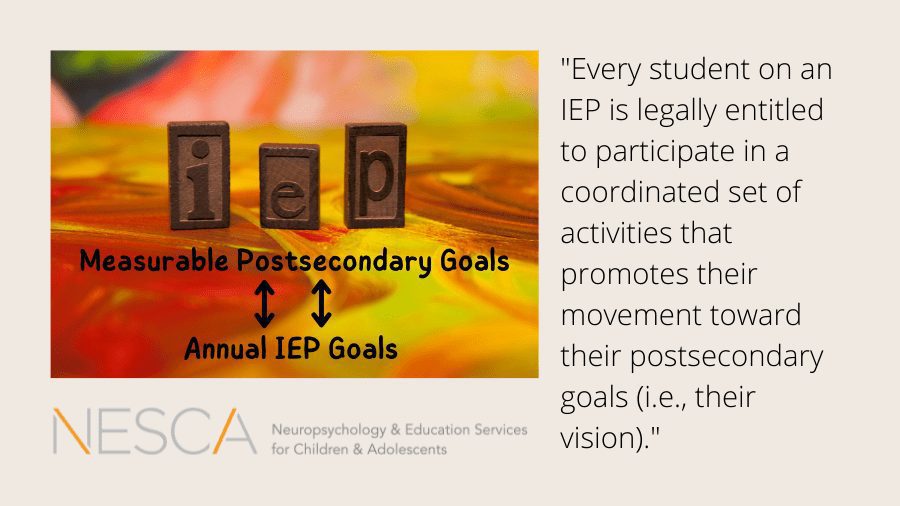
This shift is confusing! Parents are used to coming to IEP meetings ready to share their visions for their children, and students are often unprepared to share their goals for life after high school. But this shift is also absolutely critical for ensuring that students receive appropriate transition services. This is because every student on an IEP is legally entitled to participate in a coordinated set of activities that promotes their movement toward their postsecondary goals (i.e., their vision). These activities can include instruction, related services, community experiences, development of employment and post-school living objectives, and acquisition of daily living skills and functional vocational evaluation.[1] The only way a student can receive appropriate transition services, and an appropriately calibrated and coordinated set of transition activities, is if we clearly identify and define appropriate postsecondary (i.e., post-high school) goals for the student. And, these need to be listed out at the start of the IEP. In Massachusetts, these need to be listed in the vision statement.

Nevertheless, once we have done the important work of defining the student’s postsecondary goals or vision (which always involves transition assessment), then we have more important work to do. We have to make sure that the IEP that is developed includes necessary annual IEP goals, and related services, that will effectively support the student in making progress toward their postsecondary goals. We need to carefully crosswalk between each of the postsecondary goals set for the student and the annual goals we are developing. It is vital to make sure that there is at least one annual goal (or objective/benchmark within an annual goal) that addresses each of the student’s measurable postsecondary goals. We are very good at making sure that each of the services a student receives relates to the annual goals a student is working on. But we rarely pay attention to whether each of the student’s measurable postsecondary goals (i.e., each of the goals listed in the student’s vision statements) is supported by an annual goal. Annual goals for transition-aged students need to be determined from two sources: the student’s disability-related needs AND the student’s measurable postsecondary goals. Annual goals and coursework for a student with autism and language-based issues should be different depending on whether the student intends to be an artist or a veterinarian technician. Goals should be different for a student who intends to be a licensed driver and a student who intends to use door-to-door van transportation. In all cases, the team needs to annually discuss what skills the student needs to build this year in order to be able to attain their postsecondary goals in the future. The team needs to make sure that each postsecondary goal that the student has is supported by the student’s annual goals. If this is not explicitly discussed at the team meeting, we are not effectively planning for the student—and we are not effectively supporting students in being able to plan for themselves.

For more information about postsecondary goals and annual IEP goals in Massachusetts, check out Technical Assistance Advisory SPED 2013-1: Postsecondary Goals and Annual IEP Goals in the Transition Planning Process from MA DESE: http://www.doe.mass.edu/sped/advisories/13_1ta.html


[1] https://sites.ed.gov/idea/regs/b/a/300.43


About the Author
Kelley Challen, Ed.M., CAS, is NESCA’s Director of Transition Services, overseeing planning, consultation, evaluation, coaching, case management, training and program development services. Ms. Challen also provides expert witness testimony in legal proceedings related to special education. She is also the Assistant Director of NESCA, working under Dr. Ann Helmus to support day-to-day operations of the practice. Ms. Challen began facilitating programs for children and adolescents with special needs in 2004. After receiving her Master’s Degree and Certificate of Advanced Study in Risk and Prevention Counseling from Harvard Graduate School of Education, Ms. Challen spent several years at the MGH Aspire Program where she founded an array of social, life and career skill development programs for teens and young adults with Asperger’s Syndrome and related profiles. She additionally worked at the Northeast Arc as Program Director for the Spotlight Program, a drama-based social pragmatics program, serving youth with a wide range of diagnoses and collaborating with several school districts to design in-house social skills and transition programs. Ms. Challen is co-author of the chapter “Technologies to Support Interventions for Social- Emotional Intelligence, Self-Awareness, Personality Style, and Self-Regulation” for the book Technology Tools for Students with Autism. She is also a proud mother of two energetic boys, ages six and three. While Ms. Challen has special expertise in supporting students with Autism Spectrum Disorders, she provides support to individuals with a wide range of developmental and learning abilities, including students with complex medical needs.


Neuropsychology & Education Services for Children & Adolescents (NESCA) is a pediatric neuropsychology practice and integrative treatment center with offices in Newton, Massachusetts, Plainville, Massachusetts, and Londonderry, New Hampshire, serving clients from preschool through young adulthood and their families. For more information, please email info@nesca-newton.com, call 617-658-9800 or complete our online Intake Form.

Managing Stress while Navigating the Initial IEP Referral Process

By | NESCA Notes 2022

By: Angela Currie, Ph.D.
Pediatric Neuropsychologist, NESCA
Director of Training and New Hampshire Operations

The special education process is naturally stressful, particularly when submitting a first request for eligibility. It is difficult to watch your child struggle in school, and while the IEP process may bring hope for things improving, there are complex procedures and timelines, as well as feelings of anxiety and uncertainty, that must first be navigated. Luckily, there are some things that families can do to help manage the stress that comes with the IEP eligibility process:

  • Acknowledge from the onset that the process will be stressful and that stress is okay. Stress is telling you that something is important and requires your attention. Try to accept stress as part of the process and use that to help prepare yourself.
  • Build a team. Allow yourself to just be the caregiver, and find professionals who can take on other duties. This may include hiring an educational advocate or attorney who can help you understand special education laws as well as advocate for your child’s needs at meetings. This may also include seeking a private evaluation to obtain an expert opinion on your child’s needs and inviting this individual to participate in the meeting. The goal is to divide responsibilities, focus on your child, and speak to your concerns as the caregiver.
  • If you had an evaluation and are working through a new diagnosis, take in information at a pace that you can handle. Ask your evaluator for clarifying information when needed, and try to reduce your Googling and online research. Do not get yourself stuck in a rabbit hole of online information that may or may not pertain to your child. If you feel uncertain about things, use your team and ask questions.
  • Maintain effective communication with your IEP team. Know your goal for each meeting and plan your input ahead of time. Be concise but include observations or history to support your point, and state your specific goals for each meeting.
  • Manage your expectations. Concerns and requests may not be entirely resolved within one meeting, and there may be many steps you have to go through before a plan is in place.
  • For children who “fly under the radar” at school, take some basic notes of what you observe at home, such as difficulty with homework, “meltdowns” after school, etc., which you can share with the team. That said, only take these notes for a manageable time frame (e.g., two weeks), allowing you to maintain your sanity.
  • Lastly, engage in self-care. While this may sound cliché, it is indeed important to take time to yourself and do activities that bring you some peace and enjoyment while navigating through these stressful procedures.


About the Author

Dr. Angela Currie is a pediatric neuropsychologist at NESCA. She conducts neuropsychological and psychological evaluations out of our Londonderry, NH office. She specializes in the evaluation of anxious children and teens, working to tease apart the various factors lending to their stress, such as underlying learning, attentional, or emotional challenges. She particularly enjoys working with the seemingly “unmotivated” child, as well as children who have “flown under the radar” for years due to their desire to succeed.


To book an evaluation with Dr. Currie or one of our many other expert neuropsychologists, complete NESCA’s online intake form. Indicate whether you are seeking an “evaluation” or “consultation” and your preferred clinician in the referral line.


Neuropsychology & Education Services for Children & Adolescents (NESCA) is a pediatric neuropsychology practice and integrative treatment center with offices in Londonderry, NH, Plainville, MA, and Newton, MA serving clients from preschool through young adulthood and their families. For more information, please email info@nesca-newton.com or call (603) 818-8526.

The Relationship Between Dyslexia and Dyscalculia

By | NESCA Notes 2021

By: Alissa Talamo, PhD
Pediatric Neuropsychologist, NESCA

Reading disability (RD) and math disability (MD) are common developmental disorders that are defined by significant academic underachievement that is unexpected based on an individual’s age and development (e.g., American Psychiatric Association, 2000).”

Research has shown that children who struggle with learning to read often also struggle with math and understanding numbers. It is not uncommon for students to have both a reading disability (dyslexia) and a math disability, with this co-occurrence found at a rate of approximately 40% (2013, ncbi.nlm.nih.gov).

Dyscalculia is a learning disability that makes math challenging to process and understand, with these problems not explained by a lack of proper education, intellectual disabilities, or other conditions. At this time, the estimated prevalence of dyscalculia in school populations is 3 to 6 percent. There is no medication that treats dyslexia or dyscalculia; however, treating any co-occurring issues (e.g., AD/HD, Anxiety) can be helpful.

What are some signs of dyscalculia?

Elementary School Difficulties:

    • trouble learning and recalling number facts
    • trouble processing numbers and quantities, such as connecting a number to the quantity it represents (the number 2 to two books)
    • difficulty counting, backwards and forwards
    • difficulties recognizing quantities without counting
    • weak mental math and problem-solving
    • trouble making sense of money and estimating quantities
    • difficulty quickly identifying right and left
    • difficulty identifying signs like + –
    • trouble recognizing patterns and sequencing numbers
    • poor processing of graphs and charts
    • persistent finger-counting is typically linked to dyscalculia, especially for easy, frequently repeated calculations
    • lack of confidence in areas that require math

Adolescent Difficulties:

    • trouble applying math concepts to money
    • difficulty counting backward
    • slow to perform calculations
    • weak mental arithmetic
    • poor sense of estimation
    • high levels of math anxiety

Under the Individuals with Disabilities Education Act (IDEA), students diagnosed with a Specific Learning Disability (SLD) with impairment in math (i.e., dyscalculia) are eligible for special services in the classroom. In-school dyscalculia services and accommodations may include:

    • direct, specialized pull-out instruction to target core, foundational skills
    • extra time on assignments, quizzes, and tests
    • use of a calculator
    • modifying the task
    • breaking down complex problems into smaller steps

If you believe that your child may be experiencing difficulties in the area of math, one step is to determine the root of the difficulty. For example, does the student have an underlying learning disability or reduced self-regulation that may be negatively impacting their progress? Receiving a neuropsychological evaluation could be a useful tool in determining the appropriate supports and services to best help your child. If you are interested in learning more about NESCA’s Neuropsychological Evaluations, email: info@nesca-newton.com or complete our online intake form.

Sources:

https://www.ncbi.nlm.nih.gov/pmc/articles/PMC5987869/

https://www.understood.org/

https://safespot.org

https://www.additudemag.com/

https://dyslexiafoundation.org/


About the Author

With NESCA since its inception in 2007, Dr. Talamo had previously practiced for many years as a child and adolescent clinical psychologist before completing postdoctoral re-training in pediatric neuropsychology at the Children’s Evaluation Center.

After receiving her undergraduate degree from Columbia University, Dr. Talamo earned her doctorate in clinical health psychology from Ferkauf Graduate School of Psychology and the Albert Einstein College of Medicine at Yeshiva University.

She has given a number of presentations, most recently on “How to Recognize a Struggling Reader,” “Supporting Students with Working Memory Limitations,” (with Bonnie Singer, Ph.D., CCC-SLP of Architects for Learning), and “Executive Function in Elementary and Middle School Students.”

Dr. Talamo specializes in working with children and adolescents with language-based learning disabilities including dyslexia, attentional disorders, and emotional issues. She is also interested in working with highly gifted children.

Her professional memberships include MAGE (Massachusetts Association for Gifted Education), IDA (International Dyslexia Association), MABIDA (the Massachusetts division of IDA) and MNS (the Massachusetts Neuropsychological Society).

She is the mother of one teenage girl.


To book a consultation with Dr. Talamo or one of our many other expert neuropsychologists, complete NESCA’s online intake form.

Neuropsychology & Education Services for Children & Adolescents (NESCA) is a pediatric neuropsychology practice and integrative treatment center with offices in Newton, Massachusetts, Plainville, Massachusetts, and Londonderry, New Hampshire, serving clients from preschool through young adulthood and their families. For more information, please email info@nesca-newton.com or call 617-658-9800.

Student Involvement in IEPs: Ten Tips to Help Middle School Students Get Started – Part 2

By | NESCA Notes 2021

By: Kelley Challen, Ed.M., CAS
Director of Transition Services; Transition Specialist, NESCA

As discussed in my previous blog, federal law requires that students with Individual Education Programs (IEPs) be invited to attend their transition IEP meetings. In Massachusetts, this means that students approaching the age of 14, often 8th graders, should be invited to attend their IEP meetings to start the process of transition planning if this has not already begun. However, many students are not invited to their team meetings until high school, if at all. Additionally, research has indicated that when students do attend team meetings, they have the lowest level of satisfaction about their IEP meeting of any team member and they feel the least comfortable sharing their thoughts and suggestions in the meeting.[i] Nevertheless, studies across the country have shown that students can learn skills to actively participate in their IEP meetings, especially when they are directly taught terminology, roles, and how to participate, and when team members expect student participation.[ii] In the first part of this blog series, I provided five tips for helping students to become involved in their IEP process: Explicitly learn about the IEP document and process; Talk about strengths; Talk about challenges; Complete interest and preference inventories; and, Talk about the student’s goals for after high school. Today, I am adding five more tips aimed at truly helping the student to be an instrumental part of their team meeting. After all, the student’s voice and their vision are the most important aspects of transition planning and special education.

  1. If testing is being discussed, make sure that an adult talks about the testing with the student BEFORE the IEP meeting—The ability to use assessment information to develop goals is one of the most important skills a student needs in order to be an active participant in their transition planning process. This means that students need to have access to, and an understanding of, assessment information just like every other member of the team. Professionals and parents all have the right to access evaluation results ahead of a team meeting and traditionally come to the meeting having read the evaluations, often more than once. Moreover, they have typically seen the same tests or similar tests beforehand and usually already have some sense of the student’s learning profile, strengths, and challenges. When the student has undergone evaluations that will inform IEP development, it is critical for the evaluator or another adult who understands the testing well to sit with the student and explain the findings and recommendations from the evaluations in a developmentally appropriate manner. The student needs to know what areas were evaluated, and to have a general sense of the strengths, challenges, interests, and preferences that were highlighted within the testing, in order to be able to participate in a meaningful discussion about their short- and long-term goals and the services that they need. Moreover, they need to have time to process this information, with support, before they are expected to participate in a discussion about what to do with the information.
  2. Give the student options as to how they would like to participate—Just like any other activity, an IEP meeting can be broken down through a task analysis process, and participation in the IEP meeting can be scaffolded, rather than taking an all or nothing approach. There are many actions and “micro-actions” that a student can take to be involved in their team meeting in a way that feels comfortable and satisfying to the student. Certainly, there are the preparatory activities described in my previous blog (e.g., participating in assessment, learning about the IEP, completing a one-pager, etc.). But there are also administrative tasks that the student can participate in, like photocopying materials or sending out invitations or reminders to participants. Students may also want to prepare a script, PowerPoint, video, work portfolio or other materials they can share with the team during the meeting. Also, they may want to share their experience at the meeting with peers afterward or present highlights of the meeting to a staff member or family member who could not attend. There are many examples of ways to participate before, during, and after the team meeting in this great brochure from the I’m Determined project (https://www.imdetermined.org/wp-content/uploads/2017/10/iep_participation_brochure.pdf). Some students may choose to take a more passive role, but it is important that the student has the opportunity to prepare and to make an informed choice regarding their participation. Over time, students should be building their skills for IEP participation so that they can ultimately lead one or more of their transition IEP meetings (http://www.ciclt.net/ul/mgresa/2.HowtoHelpStudentsLeadIEP.pdf).
  3. Practice!—This tip may seem obvious, but I am taking time to state it because it is often something that is forgotten. Participating in an IEP meeting, especially as the student, is not a normal activity. Sitting in tight quarters with your parents, general educators, special educators, therapists, counselors, and any number of other professionals, who are all talking about you and your challenges is inherently uncomfortable—especially if you have difficulties with language, social cues, anxiety, etc. One way to make the experience “less weird” is to practice. Generally, students will be asked questions about their concerns, strengths, accomplishments, challenges, and goals for the future. It helps to practice answering questions about these areas outside of the IEP meeting and to not be answering these types of questions for the first time in the meeting. An even more useful practice activity is to have a mock IEP meeting. There are plenty of scripts online that follow the typical format of an IEP meeting, such as introductions and attendance, questions and concerns, reports of current performance, transition planning, and IEP development. It is particularly important for the student to be aware of times in the meeting when they will be specifically asked for their contribution (e.g., introductions, student concerns, vision statement, etc.).
  4. Invite preferred staff—Scheduling team meetings is a logistical puzzle, and often not all staff can be present for the whole meeting, if at all. Ask the student who they feel knows them best and who they really want on their team. If you know which teachers are the most motivating for the student, make sure that they are invited. Moreover, when there is a choice related to staff participation, prioritize having the meeting at a time when staff who the student likes and feels comfortable with can be part of the meeting. For student’s who have 1:1 paraprofessional support, it is really important for the paraprofessional to be at the meeting so that the student can have the same level of assistance (and feel the same sense of safety and support) that they do throughout their school day. The student is the most important member of their IEP team, and they will feel most included if they look around the room and see familiar faces of people they know are on their side.
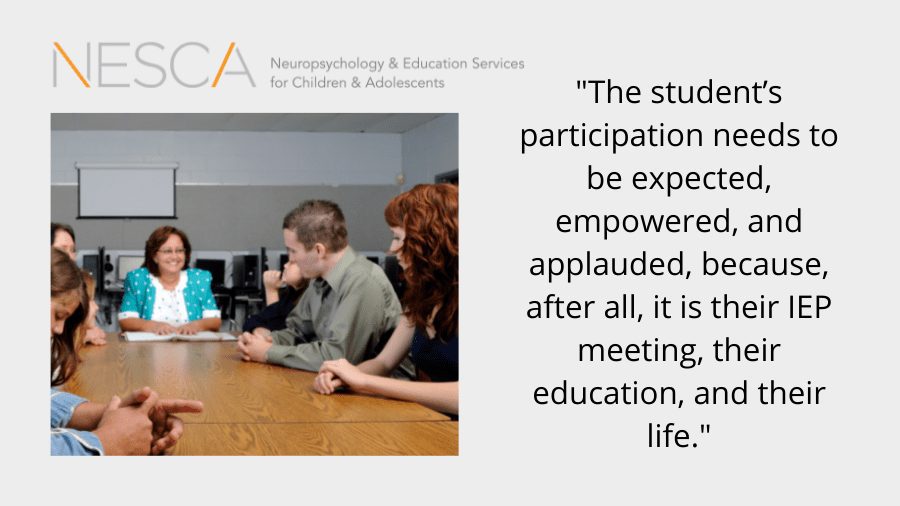
  5. Expect the student to participate!—The  most important thing that adults can do to assist students in participating in their IEP meetings is to make the time and space for the student to participate in the meeting. This may mean requesting a longer meeting than usual so that adults in the meeting can slow down or rephrase language in terms that are accessible for the student and so that the student has time to formulate their thoughts and language in order to participate in the meeting. Whatever accommodations a student needs to participate actively in a classroom discussion should be considered and put in place if they are needed for a student to participate actively in the team meeting discussion. Adults need to be respectful of the student’s voice and to not speak for the student, interrupt the student, talk over the student, or disregard the student’s input. The student’s participation needs to be expected, empowered, and applauded, because, after all, it is their IEP meeting, their education, and their life.

[i] http://www2.ku.edu/~tccop/files/Martins_Perspective.pdf

[ii] http://www2.ku.edu/~tccop/files/Martins_Perspective.pdf


About the Author
Kelley Challen, Ed.M., CAS, is NESCA’s Director of Transition Services, overseeing planning, consultation, evaluation, coaching, case management, training and program development services. Ms. Challen also provides expert witness testimony in legal proceedings related to special education. She is also the Assistant Director of NESCA, working under Dr. Ann Helmus to support day-to-day operations of the practice. Ms. Challen began facilitating programs for children and adolescents with special needs in 2004. After receiving her Master’s Degree and Certificate of Advanced Study in Risk and Prevention Counseling from Harvard Graduate School of Education, Ms. Challen spent several years at the MGH Aspire Program where she founded an array of social, life and career skill development programs for teens and young adults with Asperger’s Syndrome and related profiles. She additionally worked at the Northeast Arc as Program Director for the Spotlight Program, a drama-based social pragmatics program, serving youth with a wide range of diagnoses and collaborating with several school districts to design in-house social skills and transition programs. Ms. Challen is co-author of the chapter “Technologies to Support Interventions for Social- Emotional Intelligence, Self-Awareness, Personality Style, and Self-Regulation” for the book Technology Tools for Students with Autism. She is also a proud mother of two energetic boys, ages six and three. While Ms. Challen has special expertise in supporting students with Autism Spectrum Disorders, she provides support to individuals with a wide range of developmental and learning abilities, including students with complex medical needs.


Neuropsychology & Education Services for Children & Adolescents (NESCA) is a pediatric neuropsychology practice and integrative treatment center with offices in Newton, Massachusetts, Plainville, Massachusetts, and Londonderry, New Hampshire, serving clients from preschool through young adulthood and their families. For more information, please email info@nesca-newton.com, call 617-658-9800 or complete our online Intake Form.

Handwriting vs. Typing: Where do we draw the line?

By | NESCA Notes 2021

By: Sophie Bellenis, OTD, OTR/L
Occupational Therapist; Real-life Skills Program Manager and Coach, NESCA

For many of our students with dysgraphia, or those who struggle with the fine motor precision and the skills necessary for written output, digital tools and accommodations that promote the use of tech and keyboarding in the academic setting are immensely helpful. These tools allow our students to show their knowledge, demonstrate their written abilities, and fully access their curriculum.  When implemented correctly, these accommodations can have a huge impact on a student’s academic career. While all of this is true, it is worth discussing whether fully taking away the need to produce and practice handwritten work is leaving some of our students at a disadvantage.

When working with adolescents and young adults to help figure out future career or education plans, I am consistently reminded of the fact that despite our continuing transition toward a more and more digitally-based world, the need for handwriting has not disappeared. While we absolutely do not need to be handwriting essays, papers, or long letters sent via snail mail, there are aspects of almost every profession and daily life that require the skill. Here are a few common issues that I am seeing pop up that speak to the need for some continued practice –

  1. Job or rental applications. While some of this has moved over to an online format, many of these still need to be filled out appropriately and legibly by an applicant.
  2. Jotting down notes. The importance of this skill should not be diminished. Whether taking a phone message, making a grocery list, or writing down a phone number, most young adults are expected to be able to read their own handwriting at a later date, or leave a message for someone else who will need to be able to read it.
  3. Vocational responsibilities. Many of our students with disabilities choose to forgo the traditional college path and find a more suitable career field to pursue. Many of my clients have become successful carpenters, mechanics, or other tradespeople. These fields all require vast skill and talent, and often require employees to mark down measurements or make quick notations.
  4. Signing documents. Many banks, institutions, and legal documents require a handwritten signature and initials on any paperwork.

While I am not advocating that we take away accommodations from our students who do not have the foundational skills to write long paragraphs or essays, I am advocating that we stop fully eliminating the demand. By expecting some quick, consistent practice of handwriting, we are building a skill that will be needed multiple times throughout life. I would suggest that students who are being given a keyboarding fine motor/visual motor accommodation, also continue to receive instruction or opportunities to practice writing activities that are less fatiguing in order to continue to build the motor planning and skill necessary. It is unfair to equate the inability to use handwriting as a tool for academic output, with an inability to learn handwriting as a useful functional tool for life.


About the Author
Sophie Bellenis is a Licensed Occupational Therapist in Massachusetts, specializing in educational OT and functional life skills development. Bellenis joined NESCA in the fall of 2017 to offer community-based skills coaching services as a part of the Real-life Skills Program within NESCA’s Transition Services team. Bellenis graduated from the MGH Institute of Health Professions with a Doctorate in Occupational Therapy, with a focus on pediatrics and international program evaluation. She is a member of the American Occupational Therapy Association, as well as the World Federation of Occupational Therapists. Having spent years delivering direct services at the elementary, middle school and high school levels, Bellenis has extensive background with school-based occupational therapy services.  She believes that individual sensory needs and visual skills must be taken into account to create comprehensive educational programming.


To book an appointment or to learn more about NESCA’s Occupational Therapy Services, please fill out our online Intake Form, email info@nesca-newton.com or call 617-658-9800.


Neuropsychology & Education Services for Children & Adolescents (NESCA) is a pediatric neuropsychology practice and integrative treatment center with offices in Newton, Massachusetts, Plainville, Massachusetts, and Londonderry, New Hampshire, serving clients from preschool through young adulthood and their families. For more information, please email info@nesca-newton.com or call 617-658-9800.
 

Student Involvement in IEPs: Ten Tips to Help Middle School Students Get Started – Part 1

By | NESCA Notes 2021

By: Kelley Challen, Ed.M., CAS
Director of Transition Services; Transition Specialist, NESCA

Federal law requires that students with Individual Education Programs (IEPs) be invited to attend their transition IEP meetings. In Massachusetts, this means that students approaching the age of 14, often 8th graders, should be invited to attend their IEP meetings to start the process of transition planning if this has not already begun. For many, the idea of a middle school student attending an IEP meeting, an activity that can often be intimidating and upsetting for parents, can initially be overwhelming. And historically research has indicated that when students do attend team meetings, they have the lowest level of satisfaction about their IEP meeting of any team member and they feel the least comfortable sharing their thoughts and suggestions in the meeting.[i] However, research across the country has also shown that students can learn skills to actively participate in their IEP meetings, especially when they are directly taught terminology, roles, and how to participate, and when team members expect student participation.[ii] Student participation in IEPs is not only important because it is federally mandated, it is also essential because the IEP is supposed to be based on the student’s strengths, interests, preferences, and needs as well as the student’s post-high school goals—and because it’s the student’s life! For those reasons, I am choosing to focus this blog (and some future blogs) on tips for helping middle school students to become involved in their IEP processes.

  1. Explicitly learn about the IEP document and process—There are clear rules and vocabulary used to govern the IEP process. However, these are wholly unfamiliar and strange to anyone who has not participated in the process before (and even perplexing for those of us who have a lot of experience at team meetings). Therefore, one of the most critical ways to prepare a student to attend transition IEP meetings and to be a self-directed member of their IEP team is to equip them with knowledge of the vocabulary and rules that govern the process. One organization that has created useful materials for helping to teach students about the IEP process is imdetermined.org which has documents designed to assist students in understanding the IEP (https://imdetermined.org/resource/understanding-my-iep-differentiated/) and preparing for the IEP (https://imdetermined.org/resource/understanding-my-iep-differentiated/), but it may also be important to reference and simplify certain sections of the IEP Process Guide (https://www.doe.mass.edu/sped/iep/proguide.pdf). If students are not ready to review their entire IEP (which many students are not), it may be helpful just to think about the present levels of performance, strengths, or accommodations.
  2. Talk about strengths—While it’s critical that students be able to talk about their strengths and challenges, sometimes it’s easiest to start with strengths. People can have all kinds of strengths, such as character strengths, social strengths, language strengths, academic strengths, technical strengths, extracurricular strengths, and more. For kids who have a hard time with open-ended questions, there are checklists that can be found or completed online, such as character strengths inventories, transferable skills checklists, and strengths worksheets. There are also activities that can be useful for documenting strengths over time, such as this Strengths Chain activity (https://www.understood.org/articles/en/strengths-chain-for-kids), keeping a running list or journal of strengths and accomplishments, or building a deck of strength cards. All students need help learning to describe their strengths, especially the first time. Some students may have a hard time identifying the strengths they see in themselves, but may have an easy time sharing what other people say about them or compliment them on. Talking about strengths is not a one-time activity. Make sure that you are talking about and referring to the student’s strengths often while also highlighting how various members of the household or students in the class have different strengths and skills.
  3. Talk about challenges!—While transition planning is a strengths-based process, an IEP is based on a student needing specialized instruction and related services because the student has a disability and would struggle to make effective progress in school or the general education curriculum without special education. If we are going to ask students to be actively involved in a process of goal-setting based principally on their having a disability and related challenges, it is critical that the student has the opportunity to talk about what is hard for them and what they want to get better at… in their own words. At the same time, it is important to normalize the fact that all people have challenges, learn different information at different rates, and need help (and tools) to function successfully. Ultimately, being able to use a diagnostic label and understand the impact of a diagnosis on functioning is important, but what is more important is being able to describe what is hard on a daily basis and what makes those difficult activities easier. For some students, it is helpful to read a book or watch a television show or movie with characters who face similar struggles and to label similarities between the youth and the character. Some of the same checklists mentioned for documenting strengths can be helpful for identifying areas of challenge or undeveloped skills. It may also be helpful to start filling in a worksheet similar to this one-pager (https://imdetermined.org/resource/one-pager/) or this self-awareness worksheet (https://www.understood.org/articles/en/download-self-awareness-worksheet-for-kids). Just as with strengths, it is important to talk about and refer to specific challenges that each person in the household or class faces.
  4.  Complete interest and preference inventories—Learning to engage in self-assessments and talk about those self-assessments is an important part of transition planning and IEP participation. There are so many fun interest and personality quizzes online that can be taken in minutes. Some examples include these personality tests from National Geographic Kids (https://kids.nationalgeographic.com/games/personality-quizzes), this free personality type explorer (https://www.16personalities.com/free-personality-test), or even the O*Net Career Interest Profiler (https://www.mynextmove.org/explore/ip). Have the student take the test—and take these tests yourself—and talk about how your results are similar or different and how well the student thinks the results of the assessment capture them. Think about whether there are strengths or challenges to add to their running lists or worksheets based on their experience taking these inventories.
  5. Talk about the student’s goals for after high school—Students have the right to input as much as possible into their postsecondary vision statement, no matter how realistic or unrealistic their input is. The only way that they can be prepared to provide input at a team meeting is if they have spent some time thinking and talking about their post-high school goals and learning about their choices and options. Just recently, my colleague Becki Lauzon wrote a blog with important discussion points for talking about post-high school goals with students, which can be found here. A robust transition planning process should include helping a student to have detailed goals for their future education or training, employment, independent living, and community engagement; however, initial discussions might just include ruling in or out things like obtaining a high school diploma, continuing learning after high school, having a paid job, driving a car, and living with other people. In middle school, the goal of talking with a student about their postsecondary vision is just to help the student learn to comfortably engage in those discussions and to find out where future work needs to be done in order to help the student build a more complete picture of their adult postsecondary life.

Every student is different and is able to engage in the process in different ways and at different times, but I hope that there is at least one tip in these blogs that is useful for you. Next month, I will be writing a second blog with more tips for engaging middle school students in the IEP process.

If you are interested in having your child work with Kelley Challen or another NESCA transition specialist to plan and prepare to be part of their IEP meeting, please fill out an intake for our transition consultation and planning services or our student coaching services today!

[i] http://www2.ku.edu/~tccop/files/Martins_Perspective.pdf

[ii] http://www2.ku.edu/~tccop/files/Martins_Perspective.pdf


About the Author
Kelley Challen, Ed.M., CAS, is NESCA’s Director of Transition Services, overseeing planning, consultation, evaluation, coaching, case management, training and program development services. Ms. Challen also provides expert witness testimony in legal proceedings related to special education. She is also the Assistant Director of NESCA, working under Dr. Ann Helmus to support day-to-day operations of the practice. Ms. Challen began facilitating programs for children and adolescents with special needs in 2004. After receiving her Master’s Degree and Certificate of Advanced Study in Risk and Prevention Counseling from Harvard Graduate School of Education, Ms. Challen spent several years at the MGH Aspire Program where she founded an array of social, life and career skill development programs for teens and young adults with Asperger’s Syndrome and related profiles. She additionally worked at the Northeast Arc as Program Director for the Spotlight Program, a drama-based social pragmatics program, serving youth with a wide range of diagnoses and collaborating with several school districts to design in-house social skills and transition programs. Ms. Challen is co-author of the chapter “Technologies to Support Interventions for Social- Emotional Intelligence, Self-Awareness, Personality Style, and Self-Regulation” for the book Technology Tools for Students with Autism. She is also a proud mother of two energetic boys, ages six and three. While Ms. Challen has special expertise in supporting students with Autism Spectrum Disorders, she provides support to individuals with a wide range of developmental and learning abilities, including students with complex medical needs.


Neuropsychology & Education Services for Children & Adolescents (NESCA) is a pediatric neuropsychology practice and integrative treatment center with offices in Newton, Massachusetts, Plainville, Massachusetts, and Londonderry, New Hampshire, serving clients from preschool through young adulthood and their families. For more information, please email info@nesca-newton.com, call 617-658-9800 or complete our online Intake Form.

Diplomas, Graduation Dates and IEP Transition Services Revisited

By | NESCA Notes 2021

By: Kelley Challen, Ed.M., CAS
Director of Transition Services; Assistant Director, NESCA

Three years ago, on March 26, 2019, the Massachusetts Department of Elementary and Secondary Education (DESE) sent out an important administrative advisory regarding transition services and graduating with a high school diploma (Administrative Advisory SPED 2018-2: Secondary Transition Services and Graduation with a High School Diploma). At the time, I wrote a blog about the advisory, wanting to bring attention to the much-needed guidance clarifying when and how students with IEPs (Individualized Education Programs) should be issued a high school diploma.

Today, more than a year into the COVID-19 pandemic, seems like a very important time to revisit what it means for a student on an IEP to be ready to graduate high school with a diploma this June. Given the lengthy school shutdown in Spring 2020—followed by ongoing limitations in social contact, community engagement, employment opportunities, and more—many students and their families are questioning whether they are ready for graduation. In fact, I sat in a team meeting last week where a special educator asked an adult student whether they would like to take their diploma or “refuse” their diploma in June. [This phrasing, “refusing” or “rejecting” a diploma, is often used but is inaccurate as a student is not refusing to take their diploma. Rather, the team is instead delaying or deferring graduation in certain circumstances.]

As a parent and professional regularly involved in the IEP process, a comfort throughout this pandemic is that while education has been reinvented several times, and community safety and engagement is highly variable, special education laws (including the Individuals with Disabilities Education Act of 2004, which outlines the requirement for school districts to provide transition services) remain the same. The decision for a student receiving special education services to take a diploma, or defer taking a diploma, continues to be based primarily on the same variables:

  1. Meeting local graduation requirements;
  2. Passing the state Competency Determination (CD); and
  3. Receiving Free and Appropriate Public Education (FAPE) that includes secondary transition services based on age-appropriate transition assessment.

Prior to COVID-19, passing the state CD in Massachusetts typically involved passing on-demand tests in English Language Arts (ELA), Mathematics and Science or successfully completing an alternate assessment competency portfolio. For students who have an anticipated graduation date prior to October 1, 2021 (as noted in their most recent signed IEP), something that has changed during the pandemic is that there are now Modified CD requirements that allow for CD in ELA and mathematics to be awarded upon district certification that the student earned full credit for a relevant course aligned to the curriculum framework in the subject matter and demonstrated competency in that subject. A similar Modified CD requirement for science is also available for students graduating in classes of 2021-2023. Therefore, a student who did not pass on-demand MCAS testing in 2019 may be eligible to graduate with a diploma using the Modified CD requirements.

However, as students, their parents, and their education teams ponder June 2021 graduation dates, it is important to keep focus on the same variables that we have always used for considering whether a student is ready to accept a local diploma. Here are some questions that may help when considering these variables.

  1. Has the student met all local graduation requirements? Did they complete the core courses required by the district? Or, were they given credit for courses/activities that varied greatly from courses that general education students completed? What about attendance requirements? Did the student stop attending classes or have a significantly lower rate of attendance than general education peers in the past year? Did the student meet requirements for community service hours or a capstone project if those were required of general education students?
  2. Did the student pass the state Competency Determination? Did the student have the opportunity to participate in MCAS on-demand testing? If they did not, did the student have a track record of passing MCAS tests? Was the student scheduled to graduate this June or did someone from the school district propose changing the student’s graduation date to take advantage of the Modified CD requirements currently being used by the department of education due to COVID-19?
  3. Did the student receive FAPE including secondary transition services based on age-appropriate transition assessment while in high school? Is there a Transition Planning Form (28M/9) that the team has been updating annually? Are there appropriate measurable postsecondary goals in the student’s IEP vision statement that are based on transition assessment (PLEASE remember that interview is an important assessment tool for many students)? Was the student’s voice part of team meetings where transition services were discussed? Does the student’s IEP have measurable goals that will reasonably help the student to progress toward their IEP vision statement? Has the student made effective progress on the goals outlined in the IEP over the past year? Has the student been able to engage in transition services that were described in the IEP? Was the student’s graduation date supposed to be this June or was it “TBD”? And, if appropriate, was a representative of an adult human service agency (e.g., Department of Mental Health, Department of Developmental Services, Massachusetts Rehabilitation Commission, Massachusetts Commission for the Blind, Massachusetts Commission for the Deaf and Hard of Hearing) involved in one or more IEP meetings?

Having missed out on school and community-based activities in the past year can create an immediate concern that a student needs to hang on to their special education protections and should not graduate this June. But the truth is that the pandemic created opportunities for students to generalize skills and practice functional skills, and some students are more ready than ever to move on from special education. And, as I stated in my previous blog, there is no universal set of skills or level of knowledge that deems a student on an IEP “ready” to graduate. In fact, students on IEPs, just as with mainstream students, graduate all the time without being ready for many adult activities (e.g., apartment hunting, changing jobs, applying for a bank loan, comparing health insurance plans).

When you are considering whether the student has received FAPE, it is important to remember that every student missed some typical high school planning steps over the past year. When school buildings closed down and community engagement came to a halt, educators and special educators had to pivot many times. Transition planning steps may have been missed or services may not have been delivered in originally anticipated ways without any clear fault or person to blame. If a student’s progress towards their measurable postsecondary goals was substantially halted, this might be important for the team to discuss. But there are many circumstances where students continued to make progress in spite of the missed opportunities. Perhaps the pandemic even created new opportunities for progress that would not typically be available until a student exits high school (e.g., a paid job, increased self-direction through participation in remote learning, easier access to pre-employment transition services, increased communication with peers through technology, etc.).

Regardless, as you are thinking about graduation, please remember that the most important question to ask is not, “Is my child/student ready to graduate?” Instead, the critical question to ask when a student approaches their graduation date is, “Has the student received a Free and Appropriate Public Education (FAPE)?” If the answer is “yes,” it is vital to give the student the opportunity to step into adult postsecondary life and begin applying the skills they have learned through their education and special education. Although the pandemic has created a lot of anxiety and uncertainty, let’s not fall victim to a pattern of rejecting IEPs (essentially rejecting/refusing diplomas) out of fear.

If you are interested in working with a transition specialist at NESCA for consultation, planning, or evaluation, please complete our online intake form: https://nesca-newton.com/intake-form/.

Resources:

Transition Resources and Advisories from MA Department of Elementary and Secondary Education:

While this blog includes some specific content that applies only to families of students in IEPs in Massachusetts, the requirement to deliver transition services for students on IEP is a federal mandate and impacts graduation in all states.


About the Author
Kelley Challen, Ed.M., CAS, is NESCA’s Director of Transition Services, overseeing planning, consultation, evaluation, coaching, case management, training and program development services. Ms. Challen also provides expert witness testimony in legal proceedings related to special education. She is also the Assistant Director of NESCA, working under Dr. Ann Helmus to support day-to-day operations of the practice. Ms. Challen began facilitating programs for children and adolescents with special needs in 2004. After receiving her Master’s Degree and Certificate of Advanced Study in Risk and Prevention Counseling from Harvard Graduate School of Education, Ms. Challen spent several years at the MGH Aspire Program where she founded an array of social, life and career skill development programs for teens and young adults with Asperger’s Syndrome and related profiles. She additionally worked at the Northeast Arc as Program Director for the Spotlight Program, a drama-based social pragmatics program, serving youth with a wide range of diagnoses and collaborating with several school districts to design in-house social skills and transition programs. Ms. Challen is co-author of the chapter “Technologies to Support Interventions for Social- Emotional Intelligence, Self-Awareness, Personality Style, and Self-Regulation” for the book Technology Tools for Students with Autism. She is also a proud mother of two energetic boys, ages six and three. While Ms. Challen has special expertise in supporting students with Autism Spectrum Disorders, she provides support to individuals with a wide range of developmental and learning abilities, including students with complex medical needs.


Neuropsychology & Education Services for Children & Adolescents (NESCA) is a pediatric neuropsychology practice and integrative treatment center with offices in Newton, Massachusetts, Plainville, Massachusetts, and Londonderry, New Hampshire, serving clients from preschool through young adulthood and their families. For more information, please email info@nesca-newton.com or call 617-658-9800.

Celebrate the Small Wins

By | NESCA Notes 2021

By: Tabitha Monahan, M.A., CRC
NESCA Transition Specialist/Counselor

In the moment, it can be hard to see the change. It can be hard to find the successes. This is true for any improvement we try to do, whether it is trying to have a healthier lifestyle or build the skills needed for postsecondary life. When looking at a student’s vision, it can feel like getting there is an impossible task. Maybe the student is the only one who believes they can get there. Perhaps they don’t understand all the pieces that need to be put in place. When the rest of the IEP team has doubts, those doubts will likely spread to the student. Objectives about SMART Goals might be added to help the student learn how to set realistic goals and build an understanding of setting small goals and determining specific objectives. However, when we look back to where the student was their freshman year or in elementary school, the progress they made may seem massive. Many small wins over time turn into big wins.

What are the small wins? It might be getting a better grade on a test in math. It might be fastening the buttons on a shirt without help. It could be understanding another’s point of view one time.  Maybe it was trying a bite of one new food. Maybe they were able to identify a coping skill that would have helped after having a rough day. By themselves, none of these seems like they will help a person reach success once they leave special education. But small wins build confidence. They build pride. If we celebrate the small wins, not only do we get reminded that progress is possible, but the student knows they accomplished something. An IEP is filled with areas where the student needs help and even at a young age – when the student is getting more help than their peers – they know it. They should know where they are succeeding, too.

So how can we help our student celebrate the small wins?

  • A high five and a “way to go”
  • Help your child create a list of successes and have them add each win to the list
  • Remind them of where they were at the beginning of the year
  • Pick a fun activity as a “reward”
  • Have your child add to one of their favorite hobbies (e.g., a small LEGO set, a new book, trading cards, collectibles, action figures)
  • Frame it! (If it’s not paper, make part of the celebration part art project)

What do you do to celebrate the small wins?


About the Author

Tabitha Monahan, M.A., CRC, is an experienced transition evaluator and vocational counselor. While she is well-versed in supporting a wide range of transition-aged youth, she is especially passionate and knowledgeable in helping clients and their families navigate the complex systems of adult services and benefits as well as medical and mental health systems. She is further adept in working individually with students of all abilities to empower self-advocacy and goal achievement.


To schedule an appointment with one of NESCA’s expert transition specialists or neuropsychologists, please complete our online intake form


Neuropsychology & Education Services for Children & Adolescents (NESCA) is a pediatric neuropsychology practice and integrative treatment center with offices in Newton and Plainville, Massachusetts, and Londonderry, New Hampshire, serving clients from preschool through young adulthood and their families. For more information, please email info@nesca-newton.com or call 617-658-9800.
 

Developing S-M-A-R-T Goals in 2021

By | NESCA Notes 2021

By: Tabitha Monahan, M.A., CRC
NESCA Transition Specialist/Counselor

Happy New Year! Now two weeks into 2021, maybe it’s time to revisit those New Year Resolutions.  French writer Antoine de Saint-Exupéry wrote: “a goal without a plan is just a wish.” This is true for resolutions, just as it is for any goal. How can we help our young people change their wishes, visions and dreams into goals? We teach them (and maybe ourselves while we’re at it) how to plan. One of my favorite strategies for both teaching and reaching goals is by creating SMART Goals. What is a Smart Goal?

Specific – The goal should be specific. I’ll increase the distance I run is vague. Will you increase the distance by 20 feet, 2 miles? Are you planning for a marathon? Instead, let’s take a look at step 2, making it measurable.

Measurable – There’s a good chance that if your goal is not specific enough, it will be hard to measure if you have succeeded in that goal. So, let’s make our exercise goal both specific and measurable. I’ll increase the distance I run from 1 mile to 3.2 miles (5k).

Attainable – Attainable is the hard one for many students who are still building awareness of their strengths and challenges. Let’s say a person who has never run wants to run in the Boston Marathon. This is likely not an attainable goal, even if it is specific and measurable. Couch to 5k training exists; I have not seen the couch to marathon training program. Having measurable steps also helps break down the goal into smaller pieces, which will be further discussed later.

Relevant – If I am trying to increase my social circle and group leisure skills, running is unlikely to get me there. However, if, like many people, we’re trying to improve our health in 2021 (or take off some of those quarantine pounds), increasing the distance we run certainly will get us there. Many young adults may need to bounce ideas off someone to ensure the goal is relevant to the area at hand.

Time-bound – Attainable and time-based work tightly together. If you do not give yourself a deadline, the goal may still be there come December 2021. Humans work best with deadlines. We need the motivation to complete a plan, and often motivation needs a sense of urgency.

Okay, so what does our SMART goal look like for increased health and wellness? I will increase the distance I run from 1 mile to 3.2 miles (5k) in ¼ mile increments by June 30, 2021.

We have all the pieces. It is specific, and we know precisely what the end goal will be and how we will get there. It’s measurable; there is something we can check off as complete, like a to-do list. It’s attainable and seems realistic. We are not trying to run the Boston Marathon course after only running a mile. We will start as a beginner runner and work towards a 5k, and we are not trying to do it tomorrow with no steps in between. It’s relevant; we are working on bettering our health in 2021. And it is time-based. We want to meet our goal by the end of June.

Now that we’ve refreshed our minds on SMART goals, how do we build these skills in transition-aged youth? Ask them. Ask your child, your students, your clients what they want for themselves in education, employment and independent living. We already have the starting points. We have their vision. We have the IEP TEAM’s goals and objectives.

The youth may have a far-reaching (and maybe seemingly unattainable) goal. Help them break that big goal down into smaller parts and work backward. Do they want to be an engineer? Engineers need a college degree. What does the student need to do to graduate college? They need to get into college. How do they get into college? They need to apply and graduate from high school. What do they need to do to graduate high school? They need to pass their science class. That seems like a reasonable starting place, and it is still related to the vision. What might a SMART goal look like for that student? I will receive a passing grade on my final exam by answering the end of chapter questions each week and asking for clarification from my teacher for any questions I got wrong by the end of the spring semester.

But how do we support them when they aren’t making progress? Many people have a hard time adjusting once they have made a plan. Whenever we set a goal, we need to look at our progress periodically. We need to check that the goal is still attainable by the deadline we gave ourselves. Are we making progress? If we are still running only a mile and it’s March, what adjustments do we need to make? Suppose a student is not finding answering the end of chapter questions helpful in confirming their knowledge of the material. What changes can they make to increase their understanding of the material? Maybe the student asks the teacher if they can work one-on-one twice a week to increase understanding? Frustration, when the plan doesn’t work, makes many give up on the goal. Learning how to adapt is just as essential as learning how to make a goal.

A person who has practiced SMART goals is a person who will have an increased understanding of the objectives and smaller steps they need to reach their vision. They will have more confidence in their abilities and more awareness of their challenges. A person who has goal-setting skills is a person who has control of their own life. What are your SMART goals for 2021?


About the Author

Tabitha Monahan, M.A., CRC, is an experienced transition evaluator and vocational counselor. While she is well-versed in supporting a wide range of transition-aged youth, she is especially passionate and knowledgeable in helping clients and their families navigate the complex systems of adult services and benefits as well as medical and mental health systems. She is further adept in working individually with students of all abilities to empower self-advocacy and goal achievement.


To schedule an appointment with one of NESCA’s expert transition specialists or neuropsychologists, please complete our online intake form


Neuropsychology & Education Services for Children & Adolescents (NESCA) is a pediatric neuropsychology practice and integrative treatment center with offices in Newton and Plainville, Massachusetts, and Londonderry, New Hampshire, serving clients from preschool through young adulthood and their families. For more information, please email info@nesca-newton.com or call 617-658-9800.


Skip to content