
NESCA’s Newton, MA location has immediate availability for neuropsychological evaluations. Our MA clinicians specialize in the following evaluations: Neuropsychological; Autism; and Emotional and Psychological, as well as Academic Achievement and Learning Disability Testing.

Visit www.nesca-newton.com/intake for more information or to book an evaluation.

Tag

Julie Weieneth Archives - NESCA

Subscribe to NESCA Notes

Image of a road sign with College ahead on it portraying the topic of the blog about college planning with ADHD

College Planning for Families of Students with ADHD

By | NESCA Notes 2026

Image of a road sign with College ahead on it portraying the topic of the blog about college planning with ADHDBy: Julie Weieneth, Ph.D.
Pediatric Neuropsychologist, NESCA

The transition from high school to college brings stress for most families. As a parent of a high school junior, I am currently helping my teen juggle schoolwork, extracurriculars, and all the “must-do’s” for college planning. At times, it feels very overwhelming for me, so I can only imagine how it feels for my daughter. As a neuropsychologist, I often reflect on how neurodiversity, especially ADHD, shapes this journey.

Over the years, I have worked with many bright students with ADHD who have successfully navigated the college planning process. These teens bring unique strengths to the table. When families are able to recognize these strengths, support ongoing areas of need, and seek professional guidance as needed, college planning can become a process of growth for both teens and their parents.

ADHD Strengths in College Planning

  • Creativity and Problem-Solving: Many students with ADHD naturally think outside the box. They approach challenges from fresh angles, which can help them identify colleges, majors, or support services that might otherwise be overlooked. Their creative solutions can make the search process more dynamic and tailored to their needs.
  • Energy and Enthusiasm: Students with ADHD often bring a high level of energy and excitement to new experiences. This enthusiasm motivates them to explore a wide range of colleges, participate in campus tours, and engage with student groups. Their passion can help them stand out in interviews and application essays.
  • Hyperfocus on Interests: While ADHD is often associated with distractibility, many students experience periods of intense focus, especially on topics that truly interest them. This hyperfocus can be a tremendous advantage when researching colleges, preparing application materials, or delving into extracurricular opportunities that align with their passions.
  • Resilience and Adaptability: Navigating the ups and downs of ADHD often builds resilience. Many students learn to adapt quickly, bounce back from setbacks, and persist in the face of challenges. These qualities are invaluable during the college search and application process, which can involve rejection, waitlists, or unexpected changes.

How Parents Can Help

Parents play a key role in supporting their teens’ transition to college. Here are some practical steps:

  • Foster Self-Advocacy: Encourage your teen to understand their needs and practice asking for help. Role-play conversations about accommodations and celebrate their efforts.
  • Find the Right Fit: Focus on colleges that match your teen’s needs, not just prestige. Visit campuses, meet with disability services, and consider factors like class size and available supports.
  • Secure Accommodations: Keep neuropsychological testing up to date, as colleges require documentation. Encourage early use of academic supports and check in regularly.
  • Build Executive Function Skills: Practice time management and organization before college. Gradually let your teen take the lead and consider executive function coaching if needed.
  • Plan for Medication and Health: Help your teen set up prescription management and health routines. Practice independence with gentle reminders.
  • Support Social and Emotional Well-being: Encourage involvement in clubs and normalize seeking help from campus resources. Keep long-term supports in place, and encourage booster sessions with therapists, executive function and real-life skills coaches, tutors, during breaks or through virtual sessions as needed.

Also, it is important to remember to care for yourself! This transition is significant for parents, too. Seek support for yourself as needed.

At NESCA, in addition to neuropsychological evaluations, we offer consultations and executive function and real-life skills coaching. Please feel free to reach out to us if we can help you and your child navigate this process.


About the AuthorJulie Weineth headshot

Dr. Weieneth is a licensed clinical psychologist who has worked with children and families with complex diagnostic and treatment needs for the last twenty years. Her areas of specialty include ADHD, autism spectrum disorders, anxiety, mood disorders, learning disabilities, executive functioning, and school-related challenges. That being said, Dr. Weieneth also understands that not all individuals fit cleanly into diagnostic groups or labels. Her goals for each evaluation are to help families feel comfortable with the process, use all the tools available to best understand each individual’s unique strengths and needs, and to write a clear and comprehensive report that will guide educational and treatment planning.

To book a consultation with Dr. Weieneth or one of our many other expert neuropsychologists or other clinicians, complete NESCA’s online intake form.

NESCA is a pediatric neuropsychology and related services practice with offices in Newton, Plainville, and Hingham, Massachusetts; Londonderry, New Hampshire; and Coral Gables, Florida, serving clients from infancy through young adulthood and their families. For more information, please email info@nesca-newton.com or call 617-658-9800.
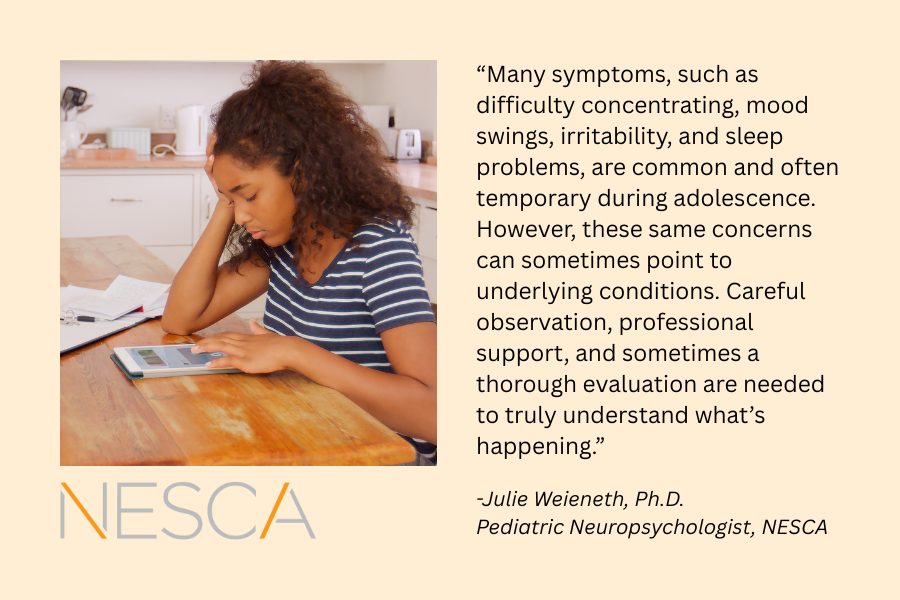
Image of a stressed out teenager along with a quote from Julie Weieneth, Ph.D..

Is This Stress or Something More?

By | NESCA Notes 2025

Image of a stressed out teenager along with a quote from Julie Weieneth, Ph.D..By: Julie Weieneth, Ph.D.
Pediatric Neuropsychologist, NESCA

Understanding ADHD, Anxiety, Depression, and Typical Adolescent Development

As both a neuropsychologist and a parent, I see firsthand how challenging academic and social pressures can be for teenagers. Like many parents, I sometimes wonder whether my own teen’s struggles are just part of growing up or if they might signal something more serious, such as ADHD, anxiety, or depression. From my clinical perspective, recognizing the difference is crucial. Early intervention not only supports long-term success but can also help prevent more persistent issues in the future.

Why It Can Be Hard to Tell

Many symptoms, such as difficulty concentrating, mood swings, irritability, and sleep problems, are common and often temporary during adolescence. However, these same concerns can sometimes point to underlying conditions. Careful observation, professional support, and sometimes a thorough evaluation are needed to truly understand what’s happening.

Signs of ADHD

  • Ongoing struggles with attention, organization, and time management in different settings
  • Frequently losing items or forgetting important things
  • Trouble staying focused on tasks that require sustained effort
  • Restlessness or fidgeting
  • Symptoms usually begin in childhood (often by age 12) and are consistent, not just a reaction to stress or specific situations

Signs of Anxiety

  • Excessive worry about school, friendships, or the future
  • Physical complaints, such as headaches or stomachaches
  • Avoidance of stressful situations, including tests or social events
  • Perfectionism and fear of making mistakes
  • Symptoms often become more noticeable during times of increased stress

Signs of Depression

  • Persistent sadness or irritability
  • Loss of interest in activities that used to be enjoyable
  • Fatigue and low energy
  • Changes in sleep or eating habits
  • Withdrawal from friends and family
  • Symptoms last for two weeks or longer and can significantly affect motivation and daily functioning

Typical Adolescent Challenges

  • Occasional procrastination or forgetfulness
  • Temporary mood swings or frustration
  • Feeling stressed before exams or social events
  • Desire for more independence and privacy
  • These concerns are usually mild, short-lived, and tend to improve with support, structure, and time

How a Neuropsychological Evaluation Can Help

A neuropsychological assessment can help clarify whether a teen’s symptoms are part of normal development or indicate a clinical concern. This process includes reviewing developmental and academic history, conducting standardized testing, and gathering input from parents, teachers, and the teen.

Ways to Support Teens Based on Their Needs

  • For ADHD, strategies such as organizational (Executive Function – EF) coaching, academic accommodations, behavioral therapy, and sometimes medication may be needed
  • For anxiety, counseling, stress management techniques, a supportive environment, and sometimes medication may be needed
  • For depression, therapy, healthy routines, and sometimes medication can make a significant difference
  • For teens experiencing more than one of these concerns, a combination of strategies and coordinated care is often most effective
  • For typical adolescent challenges, open communication, structure, and encouragement usually work well

If your teen’s difficulties persist or begin to interfere with everyday life, reaching out to a neuropsychologist can provide clarity and guidance. Early understanding and tailored support can help your teen feel better and succeed both now and in the future. If you are unsure whether your teen needs a full neuropsychological evaluation, you can schedule a consultation with a NESCA clinician who will review your concerns and help you decide how best to proceed.


About the AuthorJulie Weineth headshot

Dr. Weieneth is a licensed clinical psychologist who has worked with children and families with complex diagnostic and treatment needs for the last twenty years. Her areas of specialty include ADHD, autism spectrum disorders, anxiety, mood disorders, learning disabilities, executive functioning, and school-related challenges. That being said, Dr. Weieneth also understands that not all individuals fit cleanly into diagnostic groups or labels. Her goals for each evaluation are to help families feel comfortable with the process, use all the tools available to best understand each individual’s unique strengths and needs, and to write a clear and comprehensive report that will guide educational and treatment planning.

To book a consultation with Dr. Weieneth or one of our many other expert neuropsychologists or other clinicians, complete NESCA’s online intake form.

NESCA is a pediatric neuropsychology and related services practice with offices in Newton, Plainville, and Hingham, Massachusetts; Londonderry, New Hampshire; the greater Burlington, Vermont region; and Coral Gables, Florida, serving clients from infancy through young adulthood and their families. For more information, please email info@nesca-newton.com or call 617-658-9800.

Skip to content