
NESCA’s Londonderry, NH location has immediate availability for neuropsychological evaluations. Our NH clinicians specialize in the following evaluations: Neuropsychological; Autism; and Emotional and Psychological, as well as Academic Achievement and Learning Disability Testing. Our NH clinicians also conduct evaluations for students who are at boarding schools, and two of our NH clinicians have PsyPACT authorization, allowing them to conduct evaluations out-of-state.

Visit www.nesca-newton.com/intake for more information or to book an evaluation.

Tag

Leah Weinberg Archives - NESCA

Subscribe to NESCA Notes

Child with behavioral challenges is evaluated

Often Overlooked: Recognizing and Supporting Children with Fetal Alcohol Spectrum Disorder

By | NESCA Notes 2025

Child with behavioral challenges is evaluatedBy Leah Weinberg, Ph.D. 
Pediatric Neuropsychologist, NESCA

One of the reasons I joined the NESCA team was for the opportunity to continually learn and grow professionally. NESCA has a well-earned reputation for fostering an environment where clinicians can expand their knowledge and refine their skills in meaningful ways, and a session I was able to attend for our staff earlier this year was a perfect example of that.

I attended an insightful seminar on Fetal Alcohol Spectrum Disorder (FASD), a topic that is often overlooked yet critically important in neuropsychological practice. The presentation provided clinically relevant information and tools to better recognize and address this condition.

One key takeaway was a reminder of how challenging FASD can be to diagnose. While many people associate the condition with characteristic facial abnormalities, these features are present in only a minority of affected children. Additionally, the social stigma around alcohol use during pregnancy means parents may be reluctant to disclose this history. This can make it easy to miss the diagnosis, particularly in children who present with behavioral or learning challenges that could be attributed to other conditions.

Hallmark symptoms of FASD include executive functioning deficits (e.g., working memory), poor impulse control, difficulties with generalization (people, situations, consequences), difficulties with abstraction, perseverations, and diminished adaptive skills within the context of healthy levels of intellect.

The seminar emphasized why making an accurate diagnosis is so critical: It directly informs how we approach treatment, including how we assist families in accessing services, setting realistic expectations for the child, diminishing the risk of the child receiving inappropriate diagnoses (e.g., Oppositional Defiant Disorder), and assisting the child in developing stronger self-awareness and self-advocacy skills. Moreover, it is important for the adults in the child’s life, including parents and educators, to understand that behaviors that are part of the disability are not willful. Behavioral challenges in children with FASD, for example, often do not respond well to traditional behavioral programs. Instead, a trauma-informed approach is typically more effective, as it accounts for the neurodevelopmental impact of prenatal alcohol exposure and addresses the underlying emotional and regulatory difficulties these children face.

Being part of a team that prioritizes professional development, like the one at NESCA, means continually sharpening my skills and expanding my understanding to better serve the children and families we work with. The FASD seminar was not only a great learning experience but also a reminder of the importance of staying open to complex diagnoses and tailoring treatment plans to meet the unique needs of each child.

About the Author

Dr. Weinberg specializes in the assessment of school-aged children and adolescents with a wide range of concerns including development disorders, such as autism spectrum disorder, learning disabilities (e.g. dyslexia, dysgraphia), language-based learning difficulties, AttentionHeadshot of Leah Weinberg, Ph.D. Deficit Hyperactivity Disorder (ADHD), Nonverbal Learning Disability (NVLD), and executive functioning disorders (e.g. slow processing speed). She also has experience in working with individuals with psychiatric difficulties, such as anxiety, mood disorders (e.g. depression), and behavioral disorders. Dr. Weinberg has expertise in working with children with complex profiles or multiple areas of strength and weakness that cannot be encapsulated by a single diagnosis. Dr. Weinberg is passionate about helping families better understand their child’s neuropsychological profile and the impact it may be having on their behavior or functioning in order to best support them in all areas of their life.

To book a neuropsychological evaluation with Dr. Weinberg or another expert neuropsychologist at NESCA, complete NESCA’s online intake form

NESCA is a pediatric neuropsychology practice with offices in Newton, Plainville, and Hingham, Massachusetts; Londonderry, New Hampshire; and the greater Burlington, Vermont region, serving clients from infancy through young adulthood and their families. For more information, please email info@nesca-newton.com or call 617-658-9800.
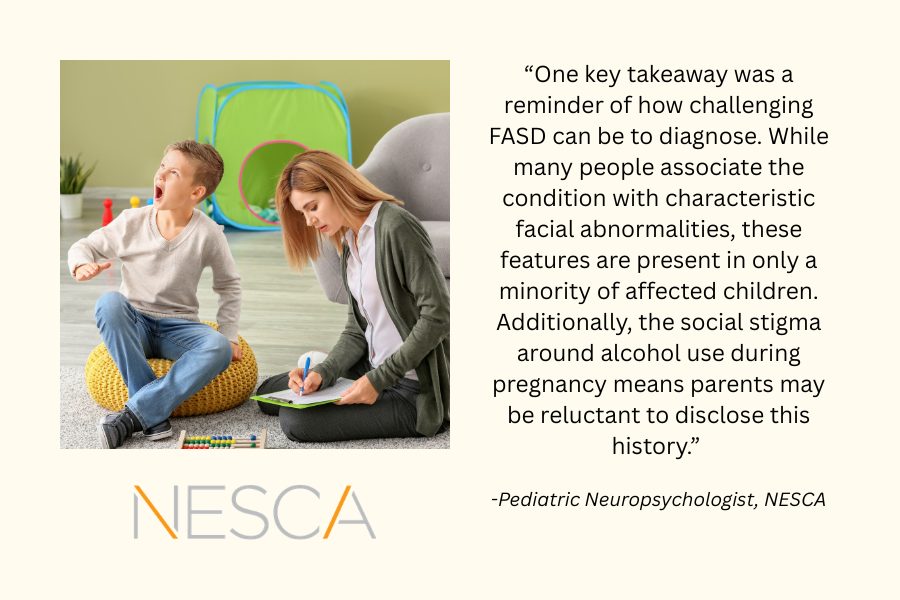
image of a girl impacted by trauma

Approaching Cultural Knowledge and Sensitivity as More Than Just Buzzwords: A Neuropsychologist’s Perspective

By | NESCA Notes 2024

image of a girl impacted by traumaBy Leah Weinberg, Ph.D. 
Pediatric Neuropsychologist, NESCA

In recent years, the conversation around cultural knowledge and sensitivity has gained significant traction across many fields, including education, healthcare, and psychology. Yet, despite the increasing prevalence of these terms, we must ask ourselves: Are we truly embodying cultural sensitivity, or are we merely paying lip service to it?

As a neuropsychologist, originally from the former Soviet Union (what is now Ukraine), I believe that cultural competence is not just a set of buzzwords we throw around to make ourselves sound aware; it’s a crucial, ongoing practice that demands attention, empathy, and, above all, genuine understanding. Now more than ever, as we witness global conflicts and societal shifts, it’s essential to engage deeply with the cultural and psychological needs of children who are affected by these events. The horrific events of October 7, 2023, in Israel, the subsequent rise in incidents involving anti-Jewish sentiments, and other crises around the world have had a profound impact on vulnerable children. How can we, as mental health professionals, approach these children in a way that truly honors their cultural identities while understanding the potential toll of trauma?

Children who experience trauma often find themselves at the intersection of multiple identities—cultural, familial, national, and personal. In the Jewish community, for example, the devastating events of October 7, 2023, marked a profound moment of collective grief and fear. For some Jewish children, the emotional impact of these events may be compounded by historical trauma, including awareness of past experiences of antisemitism and persecution. These children may be processing not only the immediacy of their own situation but also an ancestral history of violence and oppression. Similarly, Ukrainian children displaced by the ongoing conflict face a complex mix of trauma. These children might not only be mourning the loss of their homes, but also grappling with the disintegration of their sense of safety and national identity. The trauma of war is not just physical; it disrupts the very fabric of who these children are and how they see the world. Their cultural identity, bound up in language, traditions, and the shared history of their people, may suddenly feel threatened or fragmented.

It’s essential to recognize that cultural knowledge is not simply about understanding “facts” about a group’s history or customs. It’s about recognizing the psychological and emotional realities of that culture in the present moment, particularly when faced with trauma. When working with children from these communities, it’s important to begin by listening. Listen not only to their words, but also to the silence in between, to their body language, and to the nuances of how they express their grief and fear. Children from these communities may not always have the language to articulate their feelings, particularly when these feelings are wrapped up in both current trauma and long-standing cultural narratives. For instance, a Jewish child might not immediately say, “I’m scared because of antisemitism.” Instead, they may exhibit anxiety in social settings, avoidance of certain situations, or a sense of hypervigilance. It’s essential to recognize these subtler expressions of distress. Furthermore, cultural sensitivity means appreciating how culture influences coping mechanisms. For Jewish children, faith, community rituals, and family structures often play a significant role in both day-to-day life and in how they process adversity. These rituals, whether it’s a prayer or a specific practice for remembering the dead, can provide crucial emotional support, and understanding their importance can help guide effective interventions. Similarly, Ukrainian children may draw strength from their deep cultural connection to the land and their national identity. Understanding these cultural touchstones allows us to better support their emotional recovery.

To effectively support children affected by trauma, it is important to approach care from a framework that integrates both cultural sensitivity and trauma-informed practice. Children need to feel understood, and this means recognizing their cultural identity as an integral part of their experience. Safe spaces where children can express themselves without fear of judgment are paramount. It is important for clinicians not only to appreciate the current crisis but also the cumulative effect of historical events that have shaped the children’s cultures. As a clinician, this means being aware of the historical context and acknowledging the weight of collective memory. This helps to build trust and validates the child’s emotional experience. Working with families and community leaders helps ensure that interventions are not only culturally relevant but also supported by the broader social structure. This collaborative approach fosters resilience and provides ongoing emotional support.

Cultural competence is not a static goal, but rather a lifelong learning process. As clinicians, we must constantly engage with the evolving cultural, social, and political landscapes to ensure our approach remains relevant and respectful. This includes continuing education and being open to adjusting our practices based on new insights. Ultimately, cultural sensitivity is not about checking off a list of “do’s and don’ts.” It’s about recognizing and understanding that culture shapes how children experience and process the world. This empathetic approach allows us to meet children where they are—emotionally, psychologically, and culturally—and to support them as needed. As we move forward, let us take cultural sensitivity beyond a buzzword and make it a true cornerstone of our practice. In times of crisis, the need for empathy, understanding, and culturally informed care has never been greater.

NESCA has a long-standing commitment to working with internationally based clients, families, and schools through neuropsychological evaluation, consultation, coaching, and transition services. For more information on NESCA’s international work, visit: https://nesca-newton.com/international/.

About the Author

Dr. Weinberg specializes in the assessment of school-aged children and adolescents with a wide range of concerns including development disorders, such as autism spectrum disorder, learning disabilities (e.g. dyslexia, dysgraphia), language-based learning difficulties, AttentionHeadshot of Leah Weinberg, Ph.D. Deficit Hyperactivity Disorder (ADHD), Nonverbal Learning Disability (NVLD), and executive functioning disorders (e.g. slow processing speed). She also has experience in working with individuals with psychiatric difficulties, such as anxiety, mood disorders (e.g. depression), and behavioral disorders. Dr. Weinberg has expertise in working with children with complex profiles or multiple areas of strength and weakness that cannot be encapsulated by a single diagnosis. Dr. Weinberg is passionate about helping families better understand their child’s neuropsychological profile and the impact it may be having on their behavior or functioning in order to best support them in all areas of their life.

To book a neuropsychological evaluation with Dr. Weinberg or another expert neuropsychologist at NESCA, complete NESCA’s online intake form

NESCA is a pediatric neuropsychology practice and integrative treatment center with offices in Newton, Plainville, and Hingham, Massachusetts; Londonderry, New Hampshire; the greater Burlington, Vermont region; and Brooklyn, New York (coaching services only) serving clients from infancy through young adulthood and their families. For more information, please email info@nesca-newton.com or call 617-658-9800.
Leah Weinberg headshot and quote

NESCA Adds Pediatric Neuropsychologist Leah Weinberg, Ph.D. to its Team

By | NESCA Notes 2024

Leah Weinberg headshot and quoteBy: Jane Hauser
Director of Marketing & Outreach, NESCA

NESCA is pleased to welcome Dr. Leah Weinberg to its team of expert neuropsychologists. Learn more about her professional experiences and what she hopes to bring to NESCA and the families it serves. 

Tell us about your career path and what made you get into neuropsychology.

My path to neuropsychology was not a direct one. My initial field of interest was in school psychology, a discipline that focuses on the mental health, behavioral, and academic needs of students within the school setting. The program I went to at Fordham University had a focus on testing, but also offered very strong consultation and counseling components. That’s how I got into psychology, broadly speaking. I did my internship at and worked as a school psychologist in a large private school for different age groups. During that time, I worked in early childhood, elementary, and in high school grades. As a school psychologist, I engaged in psychoeducational assessment, provided direct therapeutic support to students, and collaborated closely with educators, parents, and administrators to promote positive student outcomes.

And as a side job during and after graduate school, I dipped my toes into some teaching – assistant teaching, regular classroom instruction, some special education settings, and school counseling, primarily with middle to high schoolers. From there, I got into neuropsychology, which brought together my love of testing and helping children/students – and by extension, their families – by helping to figure out what is going on and how to direct them to the appropriate intervention(s).

I was a post-doctoral fellow at a group practice in the greater Boston area and stayed with them as a pediatric neuropsychologist for a total of 10 years.

What are your areas of expertise in evaluating students?

As far as ages go, I like to work with individuals from age six through the college years or into young adulthood. Regarding the profiles of students I evaluate, I have experience in a little bit of everything, but largely focus on children with executive function and attention deficits. I also evaluate for learning disabilities, including reading, math, and writing challenges, nonverbal learning disability, as well as children with concerns of various types of anxiety, depression, or mood issues. I also see a lot of children with emotional regulation issues, presenting as emotional outbursts, behavioral outbursts, meltdowns, or ADHD-type symptoms.

It’s really interesting to me to determine the cause of the various forms of regulation challenges. It may stem from being born prematurely or could also be related to a disorder or disability. The behaviors that children with regulation challenges exhibit may look similar from one child to another, but no two children are the same. The root cause is unique within each child or individual.

I really enjoy working with these kids and helping their parents or caregivers understand what’s going on with them. It’s often mind-blowing to see their parents or caregivers finally understand that there is a reason behind the difficult behaviors and that they have a chance to support them. You can watch them start to connect the dots or see things start to make more sense to them. It’s like pulling the veil off of something that looks and feels very complex, but through evaluation, we are giving them a path to go down to support the child and mitigate the challenges. This is why I love my job. I can provide clarity to parents and other providers. And with that clarity, we can empower them to seek appropriate and tailored care and support for their child.

What were you looking for in choosing to join the NESCA team?

I was hoping for a more supportive and collaborative environment and with a strong peer group. I wanted to be in a setting surrounded by colleagues who love their jobs as much as I do and who can work well together and independently.

I am hoping to nurture the relationships I have with the families I work with and also with my colleagues. From what I’ve experienced, NESCA is a supportive environment that will assist me in doing my job through its collaborative, enriching peer group, and that benefits the families we serve and strengthens our skills as neuropsychologists. I love learning from the different perspectives, experiences, and insights into schools, providers, and interventions we recommend.

What do you tell parents or caregivers who are hesitant to have their child evaluated?

Often, parents are setting out trying to find answers for their child’s struggles, maybe for the first time. Very frequently, they are unsure of the process and what it all means. They are worried about their child getting a label, what the implications of having a label will be  and for how long their child will carry this. They are scared of what they don’t know. Those who have been seeking answers for quite some time may be skeptical that a neuropsychological evaluation won’t deliver the answers they are desperate for.

Parents and caregivers exploring whether to get a neuropsychological evaluation carry a lot of fear, and rightfully so. In my role, I try to put myself in their shoes. They feel as if they are putting their child under a microscope and are unsure and afraid of what we will find. I keep their journey or experiences, which are often frustrating and tumultuous, in mind and educate them about the different ways in which a neuropsychological evaluation can be beneficial. For example, beyond assisting the family in understanding their child’s strengths and weaknesses in a thorough fashion, a diagnostic label may just be the key to giving their child (and them) some relief from their struggles. With a diagnostic label, they may finally access the services needed to help their child realize their full potential as a student, friend, or community member. Our goal is always to make things better for the child.

What have you been seeing in children, teens, and young adults since Covid hit?

I am seeing more emotionally driven scenarios, stemming from the increase in anxiety. I am also seeing kids with more of a mood component to their profiles. In addition, we are seeing an increase in learning disabilities alongside that mood piece. In many cases, it is more difficult to distinguish what exactly is the root cause of the challenges, whether each issue they have exists independently of or is part of another disorder, or which of the issues they are experiencing is at the forefront of the challenges. We also are seeing younger students taking much more time to learn to develop their academic skills, such as reading. Since Covid, there have been more cases involving questions about gender identity

We are also seeing a large population of students who are struggling with those important developmental and educational transitions, such as with the jump from elementary school to middle school and middle school to high school. The time that should have been dedicated to preparing students for these types of milestones was wildly disrupted. These students were left struggling to navigate so much on their own – things like how to work with multiple teachers, how to get around in a new environment and with a different schedule than they were used to. Their transitional preparation was essentially bypassed and children were required to carry out their education in developmentally unsuitable ways that they were not prepared for.

Finally, schools scaled down the level of work so much during Covid, which made it more challenging for the students when they came back to school. Since being back in the school setting, their demands were raised back up. It’s been difficult  for students and families to rebound, especially if there is some kind of identified need or challenge with the student. We’re still very much dealing with the ramifications of these shifts.


About the Author

Dr. Leah Weinberg specializes in the assessment of school-aged children and adolescents with a wide range of concerns including development disorders, such as Autism spectrum disorder, learning disabilities (e.g. dyslexia, dysgraphia), language-based learning difficulties, Attention Deficit Hyperactivity Disorder (ADHD), Nonverbal Learning Disability (NVLD), and executive functioning disorders (e.g. slow processing speed). She also has experience in working with individuals with psychiatric difficulties, such as anxiety, mood disorders (e.g. depression), and behavioral disorders. Dr. Weinberg has expertise in working with children with complex profiles or multiple areas of strength and weakness that cannot be encapsulated by a single diagnosis. Dr. Weinberg is passionate about helping families better understand their child’s neuropsychological profile and the impact it may be having on their behavior or functioning in order to best support them in all areas of their life.


If you are interested in booking an appointment for an evaluation with Dr. Weinberg or another NESCA neuropsychologist/clinician, please fill out and submit our online intake form


NESCA is a pediatric neuropsychology practice and integrative treatment center with offices in Newton, Plainville, and Hingham, Massachusetts; Londonderry, New Hampshire; the greater Burlington, Vermont region; and Brooklyn, New York (coaching services only) serving clients from infancy through young adulthood and their families. For more information, please email info@nesca-newton.com or call 617-658-9800.

Skip to content