NESCA’s Londonderry, NH location has immediate availability for neuropsychological evaluations. Our NH clinicians specialize in the following evaluations: Neuropsychological; Autism; and Emotional and Psychological, as well as Academic Achievement and Learning Disability Testing. Our NH clinicians also conduct evaluations for students who are at boarding schools, and two of our NH clinicians have PsyPACT authorization, allowing them to conduct evaluations out-of-state.

Visit www.nesca-newton.com/intake for more information or to book an evaluation.

Tag

real-life skills coaching Archives - NESCA

Subscribe to NESCA Notes

An Occupational Therapist’s Perspective – How AI Can Support Teens and Young Adults with Life Skills

By | NESCA Notes 2025

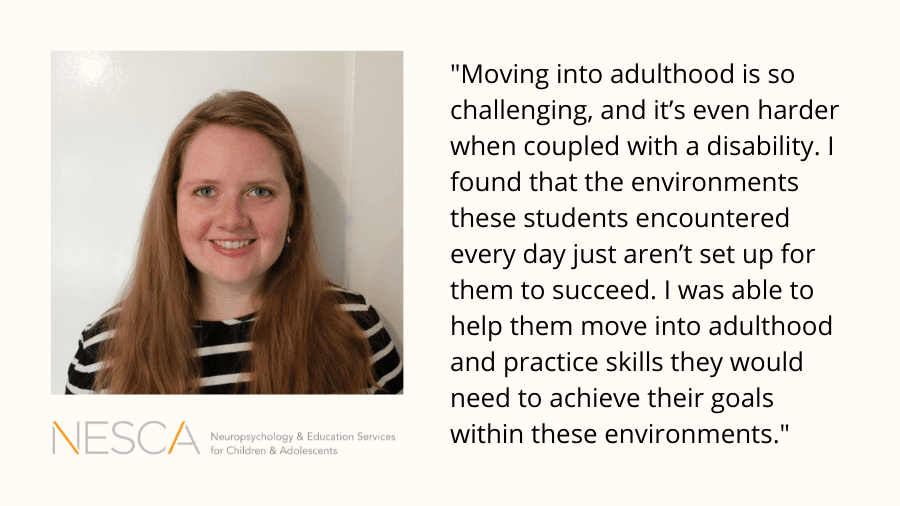
By: Lyndsay Wood, OTD, OTR/L
NESCA Transition Specialist & Occupational Therapist

There is constant discussion in the media about artificial intelligence (AI) technology and the impact it will have on the world. With the availability of ChatGPT and other AI technologies, the way we work, learn, and live will change significantly. While change can be difficult – and there are often many considerations to make before adopting a new technology system – ChatGPT and other AI platforms are useful tools that can support different aspects of life when used properly. Specifically, they may be very helpful in developing and supporting life- and transition-related skills for teens and young adults. Here are several ways that AI tools can support independence with real-life skills.

1.Meal Planning and Grocery Lists: Often meal planning can be daunting, and it heavily relies on strong executive functioning skills. To make this process easier, AI technology can be utilized. Simply tell ChatGPT that you would like a meal plan for the week (or any amount of time you desire), and it will create a specific meal plan and provide the grocery list if requested. It will also break down the nutritional value if requested. You can input dietary restrictions or any special considerations, and ChatGPT will create a plan in seconds. Below is an example of the prompt I provided and the response I received.

Prompt I input: Create a one-day vegan meal plan with a grocery list. Make sure it is high in protein.

Response from ChatGPT:

Breakfast:

  • Tofu Scramble with Spinach and Mushrooms
    1. 1 block of firm tofu
    2. 1 cup of spinach
    3. 1 cup of sliced mushrooms
    4. 1 tbsp of olive oil
    5. 1/4 tsp of turmeric
    6. Salt and pepper to taste
    7. 2 slices of whole grain toast

 Snack:

  • Apple and Almond Butter
    1. 1 apple
    2. 2 tbsp of almond butter

Lunch:

  • Quinoa and Black Bean Salad
    1. 1 cup of cooked quinoa
    2. 1/2 cup of black beans
    3. 1/2 cup of diced bell peppers
    4. 1/2 cup of diced tomatoes
    5. 1/4 cup of chopped cilantro
    6. 1/4 cup of diced red onion
    7. 1 tbsp of olive oil
    8. 1 tbsp of lime juice
    9. Salt and pepper to taste

 Snack:

  • Roasted Chickpeas
    1. 1 can of chickpeas
    2. 1 tbsp of olive oil
    3. 1 tsp of paprika
    4. 1/2 tsp of cumin
    5. Salt and pepper to taste

 Dinner:

  • Lentil and Vegetable Stir Fry
    1. 1 cup of cooked lentils
    2. 1 cup of mixed vegetables (broccoli, carrots, bell peppers, etc.)
    3. 1 tbsp of olive oil
    4. 1 tbsp of soy sauce
    5. 1/2 tsp of garlic powder
    6. Salt and pepper to taste
    7. 1 cup of brown rice

 Grocery List:

  • Tofu
  • Spinach
  • Mushrooms
  • Whole grain bread
  • Apple
  • Almond Butter
  • Quinoa
  • Black beans
  • Bell peppers
  • Tomatoes
  • Cilantro
  • Red onion
  • Olive oil
  • Lime juice
  • Chickpeas
  • Paprika
  • Cumin
  • Lentils
  • Mixed vegetables
  • Soy sauce
  • Garlic powder
  • Brown rice

This meal plan provides approximately 90 grams of protein, which is well above the recommended daily intake for most people.


2. Role Playing Social Scenarios: ChatGPT can create role playing scenarios to help teens and young adults navigate challenging or new social situations. This can help teens figure out what wording they may want to use and what someone may say in response to prepare for an interaction. Below is an example of a role play created by ChatGPT to practice social introductions.

Prompt I input: I am trying to make friends. What is a good way to introduce myself to a classmate? What might she say back? Can you create a role play?

Response from ChatGPT:

Role Play:

You: Hi there! My name is Jane. What’s your name?

Classmate: Hi, Jane! I’m Sarah.

You: Nice to meet you, Sarah! How’s your day going so far?

Classmate: It’s going pretty well, thanks for asking. How about you?

You: It’s going pretty good too. I’m excited to be in this class. What do you think about it so far?

Classmate: Yeah, me too! I’m really interested in the subject matter. What about you?

You: Same here! I think it’s going to be really interesting. Hey, do you want to grab lunch together sometime this week and chat more about the class?

Classmate: That sounds great! I would love to. How about Thursday?

You: Thursday works for me. Let’s plan on meeting in the cafeteria at noon?

Classmate: Perfect. I’ll see you then!

You: Great! Looking forward to it. See you on Thursday, Sarah.

Classmate: See you then, Jane!


3. Writing Professional Emails: Many teens and young adults struggle with composing professional emails. Determining what to say and making it professional can be very difficult for folks who struggle with social pragmatics, written language, anxiety, and executive functioning. When provided with a prompt, ChatGPT can help support this skill. Below is a sample email composed by ChatGPT to ask a professor for an extension on an assignment because the student has been sick.

Prompt I input: Write a professional email to my professor asking for extended time on a project because I am sick.

Response from ChatGPT:

Subject: Request for an Extension on Project Submission

Dear Professor [Name],

I am writing to request an extension on the project submission deadline, which is due on [date]. Unfortunately, I have been unwell for the past few days, and I have been unable to work on the project as planned. I am currently under medication and resting to recover fully.

I am aware that the project is a crucial part of our coursework, and I understand the importance of meeting the deadline. However, given my current health condition, I am finding it challenging to complete the project on time. I am hoping that you can grant me an extension of [number of days] days to submit the project.

I assure you that I will utilize the extended time to work diligently on the project and submit it as soon as possible. I am willing to accept any penalty that comes with the late submission, and I am committed to ensuring that the quality of my work is not compromised.

Thank you for considering my request. I appreciate your understanding and support during this challenging time. Please let me know if you require any further information or clarification.

Sincerely,

[Your Name]


4. Job Applications: ChatGPT can provide a significant amount of support around job applications. ChatGPT can create a resume template, provide cover letter examples, outline a cover letter, and create sample interview questions. Below is a sample outline created by ChatGPT for a cover letter to Starbucks.

Prompt I input: Create an outline for a cover letter to Starbucks

Response from ChatGPT:

Introduction

  • Briefly introduce yourself and express your interest in working for Starbucks

Relevant experience and skills

  • Highlight any previous experience or skills that would make you a good fit for the company
  • Mention any experience working in customer service or the food and beverage industry
  • Emphasize your ability to work in a fast-paced environment and handle multiple tasks at once

Passion for coffee and the Starbucks brand

  • Discuss your love for coffee and how it has influenced your desire to work for Starbucks
  • Mention any knowledge you have about the company’s values and mission

Availability and willingness to learn

  • State your availability to work and any flexibility in your schedule
  • Express your eagerness to learn and grow within the company

Closing

  • Thank the reader for considering your application and express your excitement for the opportunity to join the Starbucks team.

These four examples are just a few of the many ways that AI can help support our teens and young adults with real-life skills. As with anything that is computer-generated, it is important to teach our teens and young adults to review the output and modify information for their needs, match their own voice, and make it their own. It is exciting to see how these methods will evolve and be utilized to supplement and support learning and independence in the future.


Note: it is important to make sure to check school/company policies around AI use prior to using the technology and to remember that AI is not human and therefore may not afford the “human touch” that is still essential.


About Lyndsay Wood, OTD, OTR/L

Lyndsay Wood, OTD, OTR/L, is an occupational therapist who focuses on helping students and young adults with disabilities to build meaningful skills in order to reach their goals. She has spent the majority of her career working in a private school for students with ASD. She has also spent some time working in an inpatient mental health setting. Lyndsay uses occupation-based interventions and strategies to develop life skills, executive functioning, and emotional regulation. While completely her doctoral degree at MGH Institute of Health Professions, Lyndsay worked with the Boston Center for Independent Living to evaluate transition age services. She uses the results from her research to deliver services in a way that is most beneficial for clients. Specifically, she focuses on hands-on, occupation-based learning that is tailored the client’s goals and interests.


To book coaching and transition services at NESCA, complete NESCA’s online intake form

NESCA is a pediatric neuropsychology and related services practice with offices in Newton, Hingham, and Plainville, Massachusetts; Londonderry, New Hampshire; and Burlington, Vermont; and Coral Gables, Florida, serving clients from preschool through young adulthood and their families. For more information, please email info@nesca-newton.com or call 617-658-9800.

Leah Bridge headshot and quote

Occupational Therapist Leah Bridge, MSOT, OTR, Joins NESCA’s Coaching Team

By | NESCA Notes 2024

Leah Bridge headshot and quoteBy: Jane Hauser
Director of Marketing & Outreach, NESCA

NESCA welcomed Occupational Therapist Leah Bridge, MSOT, OTR, as a per diem Real-life Skills and Executive Function Coach this past fall. Learn more about Leah and what she brings to her clients from our recent interview. 

How did you become interested in occupational therapy?
As a younger student, I was diagnosed with a learning disability and was exposed to other students with various challenges in my classes and while receiving services. Through that experience, mostly in high school, I became interested in helping other friends and students engage with their work. That kickstarted my desire to work in an area where I was able to support the specialized needs population engage more in their everyday lives.

When I started my undergraduate degree, I actually didn’t know about occupational therapy at all. After ruling out other career paths and with the help of my advisor, I realized that OT was exactly the path I wanted to go down. It encompassed so much of what I love to do.

Once I started my occupational therapy graduate program, I learned about the mental health side of OT, which I hadn’t really known about before. That was very interesting to me, so I did a clinical placement at a behavioral health hospital, which set me on the path to becoming a mental health occupational therapist. From there, I ended up working at Cambridge Health Alliance for the past two years in the inpatient pediatrics, adolescents, and neurodevelopmental unit. Since these are acute settings, the patients mainly come in after a mental health crisis, and my job was to help stabilize them and work with them on self-regulation and coping skills.

Why are you a NESCA Real-Life Skills and Executive Function Coach?
I wanted to work with clients from start to finish, showing them the necessary skills for life. I came on board at NESCA as a per diem coach and quickly learned just how amazing it is to help people build skills. I love working with people, watching them progress, become more resilient, and build skills.

What approaches do you take in working with our coaching clients when they are so unique from one another?
I want my  clients to feel like I’m easygoing and approachable. I use a very warm, empathetic approach and a lot of humor to make connections with them. I also like to see where individuals are at and follow their lead – never pushing someone too quickly and meeting their comfort level throughout the process. Once we have a foundational relationship, I can see where to challenge them.

What skills do you work on in Real-life Skills Coaching?
It can be a whole range of things. So far, I’ve worked on behavioral activation, meal prepping, note taking, folding laundry, taking out the trash, placing things into the dishwasher – generally helping people to take more of an independent approach to their daily tasks.

In the community, it could be anything from going into a store and feeling comfortable interacting with different employees in that store. I may take an individual into a store and practice some of the different types of jobs we are working on, like organizing a shelf in Target that was a bit disheveled and putting items back in their places. It’s a more interactive way to work on the organizational skills we may be building. We may also just walk around a crowded grocery store or mall where we can determine different self-regulation techniques that work in these overstimulating and overwhelming moments. It helps individuals be confident that, in the future, they may be able to go to these places alone and feel completely comfortable there.

What is the profile of some of the students that you’ve worked with?
I like working with people of all ages, and I love the differences among all of the patients, students, and clients I’ve seen. I’ve worked with a whole wide variety. At Cambridge Health, I worked with kids who are struggling from depression, anxiety, or a mood disorder, like bipolar, borderline personality disorder or psychosis. In the neurodevelopmental unit, I worked with a lot of different kids with autism, have an intellectual disability, or a traumatic brain injury. While there, I worked with kids who are both very resistant to working together as well as those who are incredibly self-motivated and really want to do the work.

At NESCA, I’ve also seen a variety of clients who are really fun to work with. We do things like work towards building skills they can use when they go off to college, helping them to be more independent and live on campus more confidently. I’ve also worked with students who are taking some time off from college or graduate school to rebuild their confidence and mental health before going back into the school setting. We’re working on a lot of daily tasks to help them feel more regulated and less overwhelmed, and on strategies to help in those difficult moments and remember that they can do this.

How do you gain buy-in from the individuals you work with?
Meeting coaching students where they’re at is so important. I go in with an open attitude and determine where they are at in each session, adjusting my plan from there. I never force anything, but rather go at their pace. I find I’m more successful when we just take time to get to know each other, build trust and understanding, and then the buy-in comes.

Most people are more willing to participate when they know why they are engaging in an activity or some type of coaching. When they learn that I am trying to teach them skills to help them advocate for themselves, they feel more empowered – not just that their parents are making them do this. It’s been very helpful to show them that they have a say in the process and a voice that helps them get to that place of independence.

How does NESCA’s collaborative approach help you in your coaching practice?
It offers amazing value. As an example, I may be thinking of an approach to use in a session, and then I hear from or consult with someone from another discipline within the practice about how they may approach it. It opens your eyes to a whole other way of looking at something. I’m also someone who is very eager to learn and improve my own skills, so I love getting input from other people and delving into the resources they suggest. I always want what’s best for my clients and my patients, so I am always happy to collaborate with everyone to be able to get that for them.

What’s your approach to designing a program or curriculum for someone?
I start off with doing some assessments to determine the areas that are within the domains of OT, such as activities of daily living, leisure activities, work/school activities, and also looking at what skills the individual can already do on their own, and ranking their performance level within each of those along the way. Some clients are able to complete these assessments independently, and some require input from their parents or caregivers. From there, we choose what areas we want to start with and set goals, mainly based on what the greatest areas of need are. We typically work in increments of eight-week sessions. Near the end of the eight weeks, we reevaluate and see if we want to do more.

What are some of the goals your students are working on?
A person may have the goal to go to a grocery store and pick out items from a shopping list. We may not start with going to the grocery store right away. Instead, we may sit down and look at a map of the grocery store and get a feel for what each aisle looks like and what we can find in each one. We may do this kind of work for the first four sessions and then spend the next four sessions going to different places where we can look at how different stores are set up, and how we can find items when the aisles look different from store to store. If we can’t find the items, we work on how to approach someone and ask where we can find them.

What is your take on using different technology tools or apps?
I’m someone who loves learning all about new approaches, including technology, to see what may work. I’m open to exploring new technology and introducing it to students if I think it is something that will support them in reaching their goals. There are some great ones available for anxiety, which may help them engage in our sessions together. There are others for banking, scheduling, and calendaring. If a student prefers using Google Sheets or Excel to help organize their day, I am definitely willing to work with them using those as long as they are a support.

Is there anything else that you would like people to know about you?
I love working with individuals who are going through mental health challenges, whether short-term or chronic. But it’s not the only area I am interested in. I’m someone who feels I can offer a lot and am willing to do the work to really learn and feel as though I can provide the best care to those with whom I work. So, for me, there’s really nothing that I feel I want to avoid. I’m a very open person in that sense that I really just want to help as many people as I can.


About Leah Bridge, MSOT, OTR

Leah Bridge, MSOT, OTR, is a licensed occupational therapist with a passion for helping individuals develop the skills needed toHeadshot of Leah Bridge meaningfully engage in their daily lives. With a Master’s degree in Occupational Therapy from Regis College and a Bachelor’s degree in Kinesiology from the University of Massachusetts Amherst, Leah brings a well-rounded educational background to her practice. She is currently licensed to practice in Massachusetts.

Throughout her career, Leah has specialized in mental health-based occupational therapy across various settings, including inpatient units, partial hospitalization programs, and schools. She has worked closely with individuals aged 4 to 26, addressing critical areas such as activities of daily living (ADLs), self-regulation techniques, executive functioning, and routine development. Her experience spans a wide range of diagnoses, including autism spectrum disorder (ASD), attention-deficit/hyperactivity disorder (ADHD), traumatic brain injury (TBI), and mental health conditions such as depression, generalized anxiety disorder (GAD), and bipolar disorder.

Leah’s therapeutic approach is client-centered and holistic, adapting her interventions to suit the unique needs of each individual and their environment. Whether facilitating community engagement with adolescents in schools, providing vocational consults and life skills groups at partial programs, or teaching coping and self-regulation techniques in inpatient settings, Leah is committed to tailoring her strategies to each client’s specific goals.

Leah’s work is deeply collaborative, and she frequently partners with families and with other professionals such as social workers, psychiatrists, nurses, and psychologists to ensure comprehensive care. Her ability to foster strong therapeutic relationships, combined with her humor and validation techniques, helps clients feel comfortable and supported throughout their therapy journey.

To schedule an appointment with one of NESCA’s coaches, please complete our online intake form

NESCA is a pediatric neuropsychology practice and integrative treatment center with offices in Newton, Plainville, and Hingham, Massachusetts; Londonderry, New Hampshire; the greater Burlington, Vermont region; and Brooklyn, NY (coaching services only) serving clients from infancy through young adulthood and their families. For more information, please email info@nesca-newton.com or call 617-658-9800.

Technology Tools to Boost Your Productivity Part 3

By | NESCA Notes 2024

By: Lyndsay Wood, OTD, OTR/L
NESCA Executive Function and Real-life Skills Program Manager

Summer is coming! We are finally feeling that sunshine on our skin. You may be noticing your motivation increasing as you thaw from your winter hibernation. A lot of people find that this is a great time to start tackling those goals and projects you have been putting off through the dark days of winter. Perhaps now it is time to do that thorough spring clean, or maybe you want to meet a new fitness goal. No matter what you are trying to do, there are technology tools that can help. Below is a list of apps that can help kickstart that renewed sense of motivation you may be feeling. These are just a few tools, but please feel free to check out my previous two blogs on this topic to find even more helpful tools and apps.

  1. Todoist: Todoist is a task management app that helps you organize and prioritize your tasks effectively. Through this app, you can create to-do lists, set deadlines, and manage your activities. Todoist integrates with various other apps and platforms, making it easier to keep track of your tasks across all your devices.
  2. TickTick: No, I do not mean TikTok, which typically has the opposite effect on productivity and motivation! TickTick combines a to-do list and a calendar. It allows you to create tasks, set reminders, and even track your habits.
  3. Shmoody: Shmoody is an app designed to help improve your mood and overall mental health. Whether you’re dealing with stress, anxiety, or just feeling down, Shmoody offers practical activities and tools to boost your spirits. The app provides daily mood check-ins, gratitude journaling, and guided exercises to help you develop a positive mindset. It also allows you to set goals and objectives for the day.
  4. Remove Distracting Apps: Perhaps it is time for a social media detox. Are you finding yourself scrolling endlessly through TikTok, Instagram, etc.? Discover which app you are using the most and take a break. Maybe it is just for the afternoon, or maybe a whole month. See how your productivity, mood, and motivation change when you step away from the scroll. Use built-in features on your smartphone, like Screen Time on iOS or Digital Wellbeing on Android, to track your app usage and set limits. Taking a break from distracting apps can free up your time and mental space, allowing you to focus on more meaningful activities and goals.

Embrace the summer energy and make the most of these tools to boost your motivation and productivity. Whether you’re aiming to improve your mental health, get organized, or eliminate distractions, these apps can help you achieve your summer goals. Happy summer!


About Lyndsay Wood, OTD, OTR/L

Lyndsay Wood, OTD, OTR/L, Vermont-based Executive Function and Real-life Skills Program Manager, is an occupational therapist who focuses on helping students and young adults with disabilities to build meaningful skills in order to reach their goals. She has spent the majority of her career working in a private school for students with ASD. She has also spent some time working in an inpatient mental health setting. Lyndsay uses occupation-based interventions and strategies to develop life skills, executive functioning, and emotional regulation. While completely her doctoral degree at MGH Institute of Health Professions, Lyndsay worked with the Boston Center for Independent Living to evaluate transition age services. She uses the results from her research to deliver services in a way that is most beneficial for clients. Specifically, she focuses on hands-on, occupation-based learning that is tailored the client’s goals and interests.

Dr. Wood accepts Vermont- and Massachusetts-based transition and occupational therapy assessments. Her in-home and community-based coaching services are available in the greater Burlington, Vermont area. Dr. Wood can accept virtual coaching clients from both Massachusetts and Vermont.


To book coaching and transition services at NESCA, complete NESCA’s online intake form


NESCA is a pediatric neuropsychology practice and integrative treatment center with offices in Newton, Plainville, and Hingham, Massachusetts; Londonderry, New Hampshire; the greater Burlington, Vermont region; and Brooklyn, New York (coaching services only) serving clients from infancy through young adulthood and their families. For more information, please email info@nesca-newton.com or call 617-658-9800.

Preparing for a College Visit

By | NESCA Notes 2024

By: Kelley Challen, Ed.M., CAS
Director of Transition Services, NESCA

With vacation weeks coming up in Massachusetts and New Hampshire, many local families—especially those with juniors in high school—are contemplating visits to college campuses. School vacation weeks in the spring are a great time to visit colleges because you can tour the campus at a point in time when students are engaged in a typical flurry of academic and extracurricular activities. Summer may allow for more convenient or peaceful tours, but it is not a time of year when the happenings on campus accurately reflect student life (unless there is a very active summer session). Instead, spring and fall are often considered the optimal seasons for campus visits. For those of you planning upcoming visits, here are a few tips to consider—especially if you are a student with a learning disability, autism, or a mental health diagnosis.

  • Sign up ahead of time for the tour through the college’s web site. Even if a college does not require registration, potential students should go ahead and register for the college tour so that they get “credit” for their visit. There are lots of metrics that count as part of the college admissions process, and one of these important variables is literally the number of times that a potential student makes contact with the college. Things like registering for a tour, emailing admissions, following the college on social media, visiting with college representatives at college fairs, and signing up to receive materials by mail or email can all be considered “points of contact” with the college and may help students to ultimately be accepted.
  • Be prepared to answer a few questions about yourself. Most college information sessions or tours will start with the admissions staff and/or tour guide introducing themself and asking a few questions about the students in the group. Students should be prepared to share things like their name, hometown, grade, potential major, and clubs or activities they might want to participate in during college. Not all of this information will be requested outright, but some will typically be part of introductions and more may be asked during a presentation or tour. For students who have a hard time answering questions on the spot, they will feel much more comfortable if they have thought about—and practiced—answering these questions before the tour. They can also be more actively involved. Terms like undergraduate, graduate, first-year, and transfer may also come up when visiting colleges, and it can be helpful to review some college vocabulary ahead of time so that students are not flustered in the moment.
  • Ask questions of your own! (But make sure you are asking the right people your questions.) Information sessions and college tours are typically facilitated by admissions staff and college students. These are the times when you are learning about the college in general and getting a sense of campus culture, facilities, and services available to all students on the campus. For legal reasons, college admissions and college disability supports are notably separate entities. This means that college information sessions and tours are not typically the time and place for accommodation- and disability-specific questions. So, what questions should you ask? Well, there are plenty of web-based resources that you can look to in order to create your own personal list of tour questions. Here are just a few you might find interesting:

Even if you have done online research about a college, it’s a good idea to ask a few questions about items that are important to you to see if things on campus are really as described. Also, if you are a student with a disability, you might ask some of the questions that get at culture and inclusion: What’s it like to be a new student on campus? How do you see the college demonstrate commitment to diversity and inclusion? What controversial issues have come up on campus?

  • Don’t panic if you don’t see yourself or your student in the tour guide. College tour guides are typically some of the highest performing, actively involved students at the college and are usually representative of an extreme rather than the “average” student. While these students are certainly a part of the campus and culture, it is important to get a sense of who else is on the campus. Take time to observe and talk with other students you see walking around on campus. If you can, circle back to an academic building in an area of interest and find a student to talk to there. Or just stop a few students around campus and ask informal questions (e.g., Why did you pick this college? What do you wish you could change? What do you do like about being a student here? What do you wish you knew before you started college here?).
  • Take time to eat on campus. Make time before or after your tour to eat in a main cafeteria or campus center. If you are going to be eating three meals a day on campus, its important to know what that experience will be like. Certainly, the food is important. You need to know if there are a variety of food options and that there is something you would be comfortable eating for all meals. Also, you want to get a sense of the atmosphere, including how crowded it is and how easy it is to find a table.
  • If you are just getting started on your college search process and do not have a set list of schools yet, don’t worry. You can still get out and visit schools. I often suggest starting with different college archetypes (e.g., big school, little school, school spread out in a city, school with more defined campus, private, public, community, etc.). It can be good to just pick a few different school types, visit the colleges, and then do some real downloading of information and preferences immediately after the visits. I often ask students to do some ratings of colleges as they leave the schools so that they can quantify their “gut feeling” about a school and use that for comparison even if they aren’t sure exactly what it was that they liked or disliked. Even a bad college visit can help to determine some of the things that are most important about the college search process!

Embarking on college campus visits is a bit of a house hunting process—you are looking at potential academic homes. It can definitely be overwhelming, especially when it’s a process that you have not been through before and you may not know exactly what you want or what’s worth looking at. But you have to start somewhere. Following these suggestions should allow you to get a true sense of campus life and culture while also learning about yourself and your own preferences and values. Be prepared, but also trust yourself, and let each experience help you learn who you want to be as a future college student.


NESCA offers many services designed to help students bridge the transition from high school to college, work, and more independent adult life. Such services include executive function coaching, pre-college coaching, transition planning, and neuropsychological evaluation. To learn more specifically about our coaching services, visit: https://nesca-newton.com/coaching-services/ . NESCA also offers postsecondary transition consultation to families who want support identifying whether students are ready for college transition, or they may need a step in between or a scaffolded transition: https://nesca-newton.com/transition/#planning. To schedule an appointment with one of our expert clinicians or coaches, please complete our intake at: https://nesca-newton.com/intake/.


About the Author
Kelley Challen, Ed.M., CAS, is an expert transition specialist and national speaker who has been engaged in evaluation, development, and direction of transition-focused programming for teenagers and young adults with a wide array of developmental and learning abilities since 2004. While Ms. Challen has special expertise in working with youth with autism, she enjoys working with students with a range of cognitive, learning, communication, social, emotional and/or behavioral needs.

Ms. Challen joined NESCA as Director of Transition Services in 2013. She believes that the transition to postsecondary adulthood activities such as learning, living, and working is an ongoing process–and that there is no age too early or too late to begin planning. Moreover, any transition plan should be person-centered, individualized and include steps beyond the completion of secondary school.

Through her role at NESCA, Ms. Challen provides a wide array of services including individualized transition assessment, planning, consultation, training, and program development services, as well as pre-college coaching. She is particularly skilled in providing transition assessment and consultation aimed at determining optimal timing for a student’s transition to college, technical training, adult learning, and/or employment as well as identifying and developing appropriate programs and services necessary for minimizing critical skill gaps.

Ms. Challen is one of the only professionals in New England who specializes in assisting families in selecting or developing programming as a steppingstone between special education and college participation and has a unique understanding of local postgraduate, pre-college, college support, college transition, postsecondary transition, and 18-22 programs. She is additionally familiar with a great number of approved high school and postsecondary special education placements for students from Massachusetts including public, collaborative, and private programs.

Ms. Challen enjoys the creative and collaborative problem-solving process necessary for successfully transitioning students with complex profiles toward independent adulthood. As such, she is regularly engaged in IEP Team Meetings, program consultations, and case management or student coaching as part of individualized post-12th grade programming. Moreover, she continually works to enhance and expand NESCA’s service offerings in order to meet the growing needs of the families, schools and communities we serve.

When appropriate, Ms. Challen has additionally provided expert witness testimony for families and school districts engaged in due process hearings or engaged in legal proceedings centering on transition assessment, services and/or programming—locally and nationally.

Nearly two decades ago, Ms. Challen began her work with youth with special needs working as a counselor for children and adolescents at Camp Good Times, a former program of Milestones Day School. She then spent several years at the Aspire Program (a Mass General for Children program; formerly YouthCare) where she founded an array of social, life and career skill development programs for teens and young adults with Asperger’s Syndrome and related profiles. Also, she worked at the Northeast Arc as Program Director for the Spotlight Program, a drama-based social pragmatics program, serving youth with a wide range of diagnoses and collaborating with several school districts to design in-house social skill and transition programs.

Ms. Challen received her Master’s Degree and Certificate of Advanced Graduate Study in Risk and Prevention Counseling from the Harvard University Graduate School of Education. While training and obtaining certification as a school guidance counselor, she completed her practicum work at Boston Latin School focusing on competitive college counseling.

Ms. Challen has worked on multiple committees involved in the Massachusetts DESE IEP Improvement Project, served as a Mentor for the Transition Leadership Program at UMass Boston, participated as a member of B-SET Boston Workforce Development Task Force, been an ongoing member of the Program Committee for the Association for Autism and Neurodiversity (AANE), and is a member of the New Hampshire Transition State Community of Practice (COP).

She is also co-author of the chapter, “Technologies to Support Interventions for Social-Emotional Intelligence, Self-Awareness, Personality Style, and Self-Regulation,” for the book Technology Tools for Students with Autism: Innovations that Enhance Independence and Learning.

To schedule an appointment with one of NESCA’s transition specialists, please complete our online intake form

NESCA is a pediatric neuropsychology practice and integrative treatment center with offices in Newton, Plainville, and Hingham, Massachusetts; Londonderry, New Hampshire; the greater Burlington, Vermont region; and Brooklyn, NY (coaching services only) serving clients from infancy through young adulthood and their families. For more information, please email info@nesca-newton.com or call 617-658-9800.

Summer Planning for Teenagers

By | NESCA Notes 2024

By: Kelley Challen, Ed.M., CAS
Director of Transition Services, NESCA

March is an incredibly busy time in my household. Three out of four of our family members celebrate birthdays, winter sports turn into playoffs, and school events seem to pop up every week. March is also the time when we finalize our “summer camp plan” and manage lengthy online registration processes. If you have a teenager in the household, particularly a teen with a disability, you may also be thinking about summer and feeling particular pressure to “make the most” of the time while your child is still in high school. In case you are still scrambling for your own summer plan, I wanted to offer up several activities that are worth considering as part of your teen’s summer plan.

Get a paid summer job! Time and time again, research indicates that individuals who have paid employment in high school are more successful college students and more successful in obtaining employment as adults. If your child is college bound, having a paid work experience among their high school activities is a huge boost to their college applications. And, if not, paid work experiences teach soft skills for employment, help students figure out more about their career interests and preferences, and help to build meaningful resumes. Being able to do work that meets someone else’s standards is a vital life skill, and summer is an optimal time to build that skill.

Gain overnight experience. Students who plan to go to college but have never spent a night away from home need to know how they are going to handle that experience. There are all sorts of summer programs where students can spend time overnight, away from home, among peers. Overnight programs vary in length. Students who are just venturing out for the first time may feel most comfortable in a program that lasts a week or less, whereas other students may want a 3-week or 6-week experience. For college-bound students, I often recommend taking advantage of programs that happen right on college campuses in dorms. But there are also great programs outdoors or even travel programs in the United States or overseas. Knowing that you can spend the night away from family (and knowing what it’s like to “live” among a whole group of young people) is often a critical step in setting post-high school goals.

Use the time to build new executive functioning or emotional regulation skills. Students who struggle with executive functioning or emotional regulation often need coaching or therapy during the school year, just to keep up with school activities. However, students and families often reach out for these resources because they are already in crisis. A student will seek out an executive function coach when a student is already behind with assigned work or grades. Families often seek out therapy when an emotional crisis has occurred. School provides a number of executive functioning and emotional demands, so it can be hard for a coach or therapist to build new skills with a student while the student is also meeting those demands. Summer can be an optimal time to work more intensively to build new skills, strategies, and systems because it is a time when other demands are reduced. If your teen has a therapist, tutor, executive function coach, social pragmatic coach, or other support person who is helping them to tread water during the school year, it’s definitely worth asking whether intensive services over the summer might help the student to build skills that will last long-term and help the student be better prepared for the following school year.

Summer can also be a great time to tackle time-consuming activities, like completing the college application, drafting a college essay or two, cleaning out a bedroom or reorganizing study space, or building a new life skill, like driving, cooking, or mastering a laundry routine.

March is a great time to take stock of what your teenager wants to do after high school, what challenges might impede them smoothly transitioning to those activities, and thinking about how summer might be the perfect time to eliminate some of those challenges!

NESCA offers many services designed to help students bridge the transition from high school to college, work, and more independent adult life. Such services include executive function coaching, pre-college coaching, transition planning, and neuropsychological evaluation. To learn more specifically about our coaching services, visit: https://nesca-newton.com/coaching-services/. NESCA also offers postsecondary transition consultation to families who want support identifying the most meaningful ways for their student to spend the summer: https://nesca-newton.com/transition/#planning. To schedule an appointment with one of our expert clinicians or coaches, please complete our intake at: https://nesca-newton.com/intake/.


About the Author
Kelley Challen, Ed.M., CAS, is an expert transition specialist and national speaker who has been engaged in evaluation, development, and direction of transition-focused programming for teenagers and young adults with a wide array of developmental and learning abilities since 2004. While Ms. Challen has special expertise in working with youth with autism, she enjoys working with students with a range of cognitive, learning, communication, social, emotional and/or behavioral needs.

Ms. Challen joined NESCA as Director of Transition Services in 2013. She believes that the transition to postsecondary adulthood activities such as learning, living, and working is an ongoing process–and that there is no age too early or too late to begin planning. Moreover, any transition plan should be person-centered, individualized and include steps beyond the completion of secondary school.

Through her role at NESCA, Ms. Challen provides a wide array of services including individualized transition assessment, planning, consultation, training, and program development services, as well as pre-college coaching. She is particularly skilled in providing transition assessment and consultation aimed at determining optimal timing for a student’s transition to college, technical training, adult learning, and/or employment as well as identifying and developing appropriate programs and services necessary for minimizing critical skill gaps.

Ms. Challen is one of the only professionals in New England who specializes in assisting families in selecting or developing programming as a steppingstone between special education and college participation and has a unique understanding of local postgraduate, pre-college, college support, college transition, postsecondary transition, and 18-22 programs. She is additionally familiar with a great number of approved high school and postsecondary special education placements for students from Massachusetts including public, collaborative, and private programs.

Ms. Challen enjoys the creative and collaborative problem-solving process necessary for successfully transitioning students with complex profiles toward independent adulthood. As such, she is regularly engaged in IEP Team Meetings, program consultations, and case management or student coaching as part of individualized post-12th grade programming. Moreover, she continually works to enhance and expand NESCA’s service offerings in order to meet the growing needs of the families, schools and communities we serve.

When appropriate, Ms. Challen has additionally provided expert witness testimony for families and school districts engaged in due process hearings or engaged in legal proceedings centering on transition assessment, services and/or programming—locally and nationally.

Nearly two decades ago, Ms. Challen began her work with youth with special needs working as a counselor for children and adolescents at Camp Good Times, a former program of Milestones Day School. She then spent several years at the Aspire Program (a Mass General for Children program; formerly YouthCare) where she founded an array of social, life and career skill development programs for teens and young adults with Asperger’s Syndrome and related profiles. Also, she worked at the Northeast Arc as Program Director for the Spotlight Program, a drama-based social pragmatics program, serving youth with a wide range of diagnoses and collaborating with several school districts to design in-house social skill and transition programs.

Ms. Challen received her Master’s Degree and Certificate of Advanced Graduate Study in Risk and Prevention Counseling from the Harvard University Graduate School of Education. While training and obtaining certification as a school guidance counselor, she completed her practicum work at Boston Latin School focusing on competitive college counseling.

Ms. Challen has worked on multiple committees involved in the Massachusetts DESE IEP Improvement Project, served as a Mentor for the Transition Leadership Program at UMass Boston, participated as a member of B-SET Boston Workforce Development Task Force, been an ongoing member of the Program Committee for the Association for Autism and Neurodiversity (AANE), and is a member of the New Hampshire Transition State Community of Practice (COP).

She is also co-author of the chapter, “Technologies to Support Interventions for Social-Emotional Intelligence, Self-Awareness, Personality Style, and Self-Regulation,” for the book Technology Tools for Students with Autism: Innovations that Enhance Independence and Learning.

To schedule an appointment with one of NESCA’s transition specialists, please complete our online intake form

NESCA is a pediatric neuropsychology practice and integrative treatment center with offices in Newton, Plainville, and Hingham, Massachusetts; Londonderry, New Hampshire; the greater Burlington, Vermont region; and Brooklyn, NY (coaching services only) serving clients from infancy through young adulthood and their families. For more information, please email info@nesca-newton.com or call 617-658-9800.

Technology Tools to Boost Your Productivity Part 2

By | NESCA Notes 2024

By: Lyndsay Wood, OTD, OTR/L
NESCA Executive Function and Real-life Skills Program Manager

As winter envelops us in its chilly embrace, it’s easy to feel the drag on our productivity. The cold, dark days can sap our motivation, making it challenging to tackle our to-do lists. But fear not! In this second part of our series on technology tools to enhance productivity, we’ll explore five more applications designed to support you through the winter slump.

Before diving into these tools, remember to be kind to yourself. It’s normal to experience dips in productivity, especially during the winter months. These apps are here to provide an extra boost for those who may need it.

  1. Finch: Finch is a self-care app used to build healthy habits and routines. Within this app you will be given a virtual pet bird. As you set, meet, and reach your goals, you will boost your pet’s energy so that it is able to go out on adventures. You will earn coins to buy your pet new outfits, home décor, and flights to new destinations. This app helps gamify the process of building healthy habits by creating fun incentives to get your tasks done.
  2. Forest App: Spending too much time on your phone or computer can contribute to feelings of lethargy and distraction, especially during the winter months. Forest is a clever app that encourages you to put down your device and focus on what’s important. Simply set a timer, plant a virtual tree, and watch it grow while you work. If you succumb to the temptation of checking your phone or browsing the web, your tree will wither and die. With Forest, you can cultivate healthier digital habits and reclaim your productivity.
  3. Cozi: Cozi is a family organizer app designed to streamline your household routines. From managing schedules and appointments to coordinating grocery lists and meal plans, Cozi helps keep your family on track during the hectic winter months. With shared calendars and reminders, everyone stays in sync, reducing stress and ensuring that nothing falls through the cracks.
  4. Streaks: Forming good habits is essential for maintaining productivity, especially when the days are short and the nights are long. Streaks is a habit-tracking app that helps you establish and maintain positive routines. Whether you want to exercise more, drink more water, or practice mindfulness, Streaks makes it easy to track your progress and stay motivated. Streaks empowers you to build habits that stick, even when the winter weather tempts you to hibernate.
  5. Headspace: Taking care of your mental well-being is crucial, especially during the darker days of winter. Headspace is a meditation app that offers guided mindfulness exercises to help you reduce stress, improve focus, and cultivate a sense of calm. Whether you’re struggling with seasonal affective disorder or simply feeling overwhelmed by winter blues, Headspace can provide the support you need to prioritize your mental health and boost your productivity.

The winter months can be challenging, but with the right technology tools at your disposal, you can stay focused, organized, and productive. Whether you’re building healthy habits and routines, reducing screen time, coordinating family schedules, or prioritizing mental health, these apps are here to support you every step of the way. So don’t let the winter blues hold you back—embrace the power of technology and conquer your to-do list!


About Lyndsay Wood, OTD, OTR/L

Lyndsay Wood, OTD, OTR/L, Vermont-based Executive Function and Real-life Skills Program Manager, is an occupational therapist who focuses on helping students and young adults with disabilities to build meaningful skills in order to reach their goals. She has spent the majority of her career working in a private school for students with ASD. She has also spent some time working in an inpatient mental health setting. Lyndsay uses occupation-based interventions and strategies to develop life skills, executive functioning, and emotional regulation. While completely her doctoral degree at MGH Institute of Health Professions, Lyndsay worked with the Boston Center for Independent Living to evaluate transition age services. She uses the results from her research to deliver services in a way that is most beneficial for clients. Specifically, she focuses on hands-on, occupation-based learning that is tailored the client’s goals and interests.

Dr. Wood accepts Vermont- and Massachusetts-based transition and occupational therapy assessments. Her in-home and community-based coaching services are available in the greater Burlington, Vermont area. Dr. Wood can accept virtual coaching clients from both Massachusetts and Vermont.


To book coaching and transition services at NESCA, complete NESCA’s online intake form


NESCA is a pediatric neuropsychology practice and integrative treatment center with offices in Newton, Plainville, and Hingham, Massachusetts; Londonderry, New Hampshire; the greater Burlington, Vermont region; and Brooklyn, New York (coaching services only) serving clients from infancy through young adulthood and their families. For more information, please email info@nesca-newton.com or call 617-658-9800.

6 Technology Tools to Boost Your Productivity and Organization for the New School Year

By | Nesca Notes 2023

By: Lyndsay Wood, OTD, OTR/L
NESCA Executive Function and Real-life Skills Program Manager

As the new school year unfolds, many of us struggle to transition from the carefree days of summer into the rigorous routines of being a productive and organized student. If you find yourself grappling with low energy, an overwhelming list of tasks, scattered notes, forgotten homework, and neglected chores, take comfort in the fact that you’re not alone. The beginning of a school year can be a challenging adjustment. Fortunately, modern technology offers a number of solutions to help ease the cognitive load that comes with academic responsibilities. Below are six technology tools that can help you reclaim control over your productivity and organization.

  1. Goblin Tools: The first tool on the list, Goblin Tools, is a versatile platform designed to empower folks to independently manage their lives and it was specifically designed for the neurodiverse community. The tool can be used on a desktop or can be downloaded as an app. Goblin Tools has a number of features, including the “Magic To-Do List,” that breaks down simple to complex tasks into manageable steps, a time estimator for effective planning, and a writing formalizer to polish communication. It even includes a tone judge to assist with interpreting the tone of written messages, a brain dump compiler to organize your thoughts into a to-do list, and a “chef” which can recommend recipes based on the ingredients you have in your house.
  2. Google Calendar: Google Calendar is an extremely popular tool when it comes to staying organized. It allows you to keep track of events, create tasks, set reminders, and collaborate with others on the platform. Google Calendar syncs across all devices, which allows individuals to ensure they are not missing important appointments or assignments. The integration with Gmail and other Google services further streamlines productivity by centralizing your tasks and appointments.
  3. Reminders App (iPhone): If you’re an iPhone user, the built-in Reminders app is a hidden gem for boosting productivity. It offers a straightforward way to create to-do lists, set time-based and location-based reminders, and categorize tasks. The app integrates with Siri, allowing you to add tasks with voice commands.
  4. Habitica: Habitica gamifies the process of staying organized and forming good habits. This unique tool transforms your daily tasks and goals into a role-playing game, where you earn rewards and level up by completing your to-do list and adhering to your habits. Habitica also allows you to join parties with friends, creating a supportive community of accountability. By turning productivity into an enjoyable game, Habitica makes the journey toward organization and productivity both fun and motivating!
  5. Livescribe: Livescribe is a note-taking tool that bridges the gap between traditional pen-and-paper note-taking and digital organization. This smart pen not only records your handwritten notes but also synchronizes them with an app on your device. As you write, it captures audio recordings of lectures or discussions, making it an invaluable resource for reviewing class materials. You can even tap on your written notes to hear the corresponding audio, allowing you to revisit important moments and enhance your understanding of complex topics.
  6. Rocketbook: Rocketbook is a digital notebook designed to bring together the ease of handwritten notes with the organization of a digital storage system. Using special erasable pens, you can take notes on Rocketbook’s pages and then use a companion app to scan and store your notes in the cloud. The pages are reusable and can be wiped clean with a damp cloth. This solution ensures your notes are organized, accessible, and eco-conscious. You will no longer be scrambling to find where you scribbled down the information about an upcoming test. All of your notes will be stored in the same place.

Transitioning into a new school year can be a daunting task, but with the right technology tools at your disposal, you can navigate the challenges of productivity and organization with confidence!


About Lyndsay Wood, OTD, OTR/L

Lyndsay Wood, OTD, OTR/L, Vermont-based Executive Function and Real-life Skills Program Manager, is an occupational therapist who focuses on helping students and young adults with disabilities to build meaningful skills in order to reach their goals. She has spent the majority of her career working in a private school for students with ASD. She has also spent some time working in an inpatient mental health setting. Lyndsay uses occupation-based interventions and strategies to develop life skills, executive functioning, and emotional regulation. While completely her doctoral degree at MGH Institute of Health Professions, Lyndsay worked with the Boston Center for Independent Living to evaluate transition age services. She uses the results from her research to deliver services in a way that is most beneficial for clients. Specifically, she focuses on hands-on, occupation-based learning that is tailored the client’s goals and interests.

Dr. Wood accepts Vermont- and Massachusetts-based transition and occupational therapy assessments. Her in-home and community-based coaching services are available in the greater Burlington, Vermont area. Dr. Wood can accept virtual coaching clients from both Massachusetts and Vermont.


To book coaching and transition services at NESCA, complete NESCA’s online intake form


NESCA is a pediatric neuropsychology practice and integrative treatment center with offices in Newton, Plainville, and Hingham (coming soon), Massachusetts, Londonderry, New Hampshire, and Burlington, Vermont, serving clients from preschool through young adulthood and their families. For more information, please email info@nesca-newton.com or call 617-658-9800.

NESCA Offers Vermont-based Transition and Coaching Services

By | Nesca Notes 2023

By: Jane Hauser
Director of Marketing & Outreach, NESCA

NESCA recently announced that it is now offering transition services and coaching services in the Greater Burlington, Vermont region. Learn more about what is being offered by our Vermont-based staff from my interview with Vermont-based Program Manager Dr. Lyndsay Wood, OTD, OTR/L.

Why did NESCA expand to Vermont and how can clients benefit from your services?

NESCA is expanding our in-person services to Vermont to widen the breadth of transition services offered within the state. Through research and conversations with local professionals and parents, we recognized that there is an opportunity to bolster local transition services for students to meet their personal postsecondary goals and to live fulfilling lives post-high school. Through our variety of services, our goal is to empower teens and young adults to create their own vision for the future and build the skills necessary to achieve it. This is important for students currently in public middle and high schools as well as local college students and young adults new to the world of work. At NESCA, we take a relational approach with to build a strong foundational relationship between ourselves and the clients we support. Our priority to is create a safe, inclusive, and welcoming environment within our sessions.

What services do you offer?

At this time, NESCA’s Vermont-based practice will offer transition assessment, real-life skills coaching, executive function coaching, transition consultation, and functional community-based occupational therapy evaluations. All Vermont-based services are delivered by experienced occupational therapists and transition specialists with expertise in developing functional and relevant goals. For more information on each of these services, please visit our website and view our Post-Secondary Transition Services and Coaching Services links: https://nesca-newton.com/our-services/. Many folks are unfamiliar with transition assessments, so to learn more, see the following blog written by our Director of Transition Services Kelley Challen, Ed.M., CAS: https://nesca-newton.com/transition-assessment-what-is-it-anyway-how-is-it-different-from-neuropsychological-evaluation/.

What type of client does NESCA serve in Vermont?

NESCA’s Vermont-based practice primarily works with teens and young adults with autism spectrum disorders (ASD), attention-deficit/hyperactivity disorder (ADHD), mental health diagnoses, specific learning disabilities, executive function (EF) challenges, and other complex cases based on the expertise of our providers. A specialty at NESCA is working with clients who have multiple diagnoses or who don’t fit neatly into a singular diagnostic box.

Where are you in Vermont? Are services in-person or remote?

Coaching services will be offered in the home, school, or community within the greater Burlington area. Services can also be delivered remotely if deemed appropriate for the client. Transition assessment is typically conducted within the client’s school setting.

What is different about what NESCA offers in Vermont compared to other organizations or services already available?

NESCA will be a premier independent transition assessment provider in Vermont. We are happy to collaborate with school districts or work with families directly. Additionally, we are unique in providing one-on-one occupational therapy services that specifically address life skills within a client’s home and community setting. Working within the home and community, and not only within the school setting, is incredibly important for the generalization of life skills as well as social skills, functional academic skills, and executive functioning skills.

Does insurance cover your services in Vermont?

NESCA is primarily a private pay service provider. Some families are able to obtain some coverage or reimbursement for our real-life skills coaching service with their health insurance, but it is vital that folks first check with their insurance provider to ensure our services would be covered.

How do people get more information about NESCA’s Vermont services?

To learn more about NESCA, please visit our website at: https://nesca-newton.com/.

If you would like to fill out an intake form, follow this link: https://nesca-newton.com/intake.

If you have more specific questions, do not hesitate to call: 617-658-9818

Additionally, you can contact our Vermont-based Program Manager Dr. Lyndsay Wood, OTD, OTR/L, directly at: lwood@nesca-newton.com


About Lyndsay Wood, OTD, OTR/L

Lyndsay Wood, OTD, OTR/L, is an occupational therapist who focuses on helping students and young adults with disabilities to build meaningful skills in order to reach their goals. She has spent the majority of her career working in a private school for students with ASD. She has also spent some time working in an inpatient mental health setting. Lyndsay uses occupation-based interventions and strategies to develop life skills, executive functioning, and emotional regulation. While completely her doctoral degree at MGH Institute of Health Professions, Lyndsay worked with the Boston Center for Independent Living to evaluate transition age services. She uses the results from her research to deliver services in a way that is most beneficial for clients. Specifically, she focuses on hands-on, occupation-based learning that is tailored the client’s goals and interests.


To book coaching and transition services at NESCA, complete NESCA’s online intake form

NESCA is a pediatric neuropsychology practice and integrative treatment center with offices in Newton and Plainville, Massachusetts, Londonderry, New Hampshire, and Burlington, Vermont, serving clients from preschool through young adulthood and their families. For more information, please email info@nesca-newton.com or call 617-658-9800.

An Occupational Therapist’s Perspective – How AI Can Support Teens and Young Adults with Life Skills

By | Nesca Notes 2023

By: Lyndsay Wood, OTD, OTR/L
NESCA Transition Specialist & Occupational Therapist

Recently there has been a lot of talk in the media about artificial intelligence (AI) technology and the impact it will have on the world. With the recent development of ChatGPT and other AI technologies, the way we work, learn, and live may see some significant changes. While change can be difficult – and there are often many considerations to make before adopting a new technology system – ChatGPT is a useful tool that can support different aspects of life when used properly. Specifically, it may be a very helpful tool to support life- and transition-related skills for teens and young adults. Here are four ways that ChatGPT can support independence with real-life skills.

1.Meal Planning and Grocery Lists: Often meal planning can be daunting, and it heavily relies on strong executive functioning skills. To make this process easier, AI technology can be utilized. Simply tell ChatGPT that you would like a meal plan for the week (or any amount of time you desire), and it will create a specific meal plan and provide the grocery list if requested. It will also break down the nutritional value if requested. You can input dietary restrictions or any special considerations, and ChatGPT will create a plan in seconds. Below is an example of the prompt I provided and the response I received.

Prompt I input: Create a one-day vegan meal plan with a grocery list. Make sure it is high in protein.

Response from ChatGPT:

Breakfast:

  • Tofu Scramble with Spinach and Mushrooms
    1. 1 block of firm tofu
    2. 1 cup of spinach
    3. 1 cup of sliced mushrooms
    4. 1 tbsp of olive oil
    5. 1/4 tsp of turmeric
    6. Salt and pepper to taste
    7. 2 slices of whole grain toast

 Snack:

  • Apple and Almond Butter
    1. 1 apple
    2. 2 tbsp of almond butter

Lunch:

  • Quinoa and Black Bean Salad
    1. 1 cup of cooked quinoa
    2. 1/2 cup of black beans
    3. 1/2 cup of diced bell peppers
    4. 1/2 cup of diced tomatoes
    5. 1/4 cup of chopped cilantro
    6. 1/4 cup of diced red onion
    7. 1 tbsp of olive oil
    8. 1 tbsp of lime juice
    9. Salt and pepper to taste

 Snack:

  • Roasted Chickpeas
    1. 1 can of chickpeas
    2. 1 tbsp of olive oil
    3. 1 tsp of paprika
    4. 1/2 tsp of cumin
    5. Salt and pepper to taste

 Dinner:

  • Lentil and Vegetable Stir Fry
    1. 1 cup of cooked lentils
    2. 1 cup of mixed vegetables (broccoli, carrots, bell peppers, etc.)
    3. 1 tbsp of olive oil
    4. 1 tbsp of soy sauce
    5. 1/2 tsp of garlic powder
    6. Salt and pepper to taste
    7. 1 cup of brown rice

 Grocery List:

  • Tofu
  • Spinach
  • Mushrooms
  • Whole grain bread
  • Apple
  • Almond Butter
  • Quinoa
  • Black beans
  • Bell peppers
  • Tomatoes
  • Cilantro
  • Red onion
  • Olive oil
  • Lime juice
  • Chickpeas
  • Paprika
  • Cumin
  • Lentils
  • Mixed vegetables
  • Soy sauce
  • Garlic powder
  • Brown rice

This meal plan provides approximately 90 grams of protein, which is well above the recommended daily intake for most people.


2. Role Playing Social Scenarios: ChatGPT can create role playing scenarios to help teens and young adults navigate challenging or new social situations. This can help teens figure out what wording they may want to use and what someone may say in response to prepare for an interaction. Below is an example of a role play created by ChatGPT to practice social introductions.

Prompt I input: I am trying to make friends. What is a good way to introduce myself to a classmate? What might she say back? Can you create a role play?

Response from ChatGPT:

Role Play:

You: Hi there! My name is Jane. What’s your name?

Classmate: Hi, Jane! I’m Sarah.

You: Nice to meet you, Sarah! How’s your day going so far?

Classmate: It’s going pretty well, thanks for asking. How about you?

You: It’s going pretty good too. I’m excited to be in this class. What do you think about it so far?

Classmate: Yeah, me too! I’m really interested in the subject matter. What about you?

You: Same here! I think it’s going to be really interesting. Hey, do you want to grab lunch together sometime this week and chat more about the class?

Classmate: That sounds great! I would love to. How about Thursday?

You: Thursday works for me. Let’s plan on meeting in the cafeteria at noon?

Classmate: Perfect. I’ll see you then!

You: Great! Looking forward to it. See you on Thursday, Sarah.

Classmate: See you then, Jane!


3. Writing Professional Emails: Many teens and young adults struggle with composing professional emails. Determining what to say and making it professional can be very difficult for folks who struggle with social pragmatics, written language, anxiety, and executive functioning. When provided with a prompt, ChatGPT can help support this skill. Below is a sample email composed by ChatGPT to ask a professor for an extension on an assignment because the student has been sick.

Prompt I input: Write a professional email to my professor asking for extended time on a project because I am sick.

Response from ChatGPT:

Subject: Request for an Extension on Project Submission

Dear Professor [Name],

I am writing to request an extension on the project submission deadline, which is due on [date]. Unfortunately, I have been unwell for the past few days, and I have been unable to work on the project as planned. I am currently under medication and resting to recover fully.

I am aware that the project is a crucial part of our coursework, and I understand the importance of meeting the deadline. However, given my current health condition, I am finding it challenging to complete the project on time. I am hoping that you can grant me an extension of [number of days] days to submit the project.

I assure you that I will utilize the extended time to work diligently on the project and submit it as soon as possible. I am willing to accept any penalty that comes with the late submission, and I am committed to ensuring that the quality of my work is not compromised.

Thank you for considering my request. I appreciate your understanding and support during this challenging time. Please let me know if you require any further information or clarification.

Sincerely,

[Your Name]


4. Job Applications: ChatGPT can provide a significant amount of support around job applications. ChatGPT can create a resume template, provide cover letter examples, outline a cover letter, and create sample interview questions. Below is a sample outline created by ChatGPT for a cover letter to Starbucks.

Prompt I input: Create an outline for a cover letter to Starbucks

Response from ChatGPT:

Introduction

  • Briefly introduce yourself and express your interest in working for Starbucks

Relevant experience and skills

  • Highlight any previous experience or skills that would make you a good fit for the company
  • Mention any experience working in customer service or the food and beverage industry
  • Emphasize your ability to work in a fast-paced environment and handle multiple tasks at once

Passion for coffee and the Starbucks brand

  • Discuss your love for coffee and how it has influenced your desire to work for Starbucks
  • Mention any knowledge you have about the company’s values and mission

Availability and willingness to learn

  • State your availability to work and any flexibility in your schedule
  • Express your eagerness to learn and grow within the company

Closing

  • Thank the reader for considering your application and express your excitement for the opportunity to join the Starbucks team.

These four examples are just a few of the many ways that AI can help support our teens and young adults with real-life skills. As with anything that is computer-generated, it is important to teach our teens and young adults to review the output and modify information for their needs or to match their own voice. It is exciting to see how these methods will evolve and be utilized in the classroom to supplement and support learning and independence in the future.


Note: it is important to make sure to check school/company policies around AI prior to using the technology and to remember that AI is not human and therefore may not afford the “human touch” that helps with some activities.


About Lyndsay Wood, OTD, OTR/L

Lyndsay Wood, OTD, OTR/L, is an occupational therapist who focuses on helping students and young adults with disabilities to build meaningful skills in order to reach their goals. She has spent the majority of her career working in a private school for students with ASD. She has also spent some time working in an inpatient mental health setting. Lyndsay uses occupation-based interventions and strategies to develop life skills, executive functioning, and emotional regulation. While completely her doctoral degree at MGH Institute of Health Professions, Lyndsay worked with the Boston Center for Independent Living to evaluate transition age services. She uses the results from her research to deliver services in a way that is most beneficial for clients. Specifically, she focuses on hands-on, occupation-based learning that is tailored the client’s goals and interests.


To book coaching and transition services at NESCA, complete NESCA’s online intake form

NESCA is a pediatric neuropsychology practice and integrative treatment center with offices in Newton and Plainville, Massachusetts, Londonderry, New Hampshire, and Burlington, Vermont, serving clients from preschool through young adulthood and their families. For more information, please email info@nesca-newton.com or call 617-658-9800.

Meet NESCA Transition Specialist & Occupational Therapist Lyndsay Wood, OTD, OTR/L

By | NESCA Notes 2022

By: Jane Hauser
Director of Marketing & Outreach

NESCA is thrilled to have welcomed a new Occupational Therapist who is serving as a Transition Specialist on the Transition Services Team. Learn more about Lyndsay Wood, OTD, OTR/L, in my interview with her below.

How did you become interested in Occupational Therapy, specifically for transition-aged students?

Right after college, I worked in an assisted living center in an administrative role. I got to know the Occupational Therapist (OT) there, who was amazing at what she did. She helped people with the skills they needed to do on a daily basis. I asked to shadow her so I could learn more about the profession and what kind of skills she was teaching the residents to do. Energized by what I learned, I then became a Teaching Assistant (TA) in the CASE Collaborative’s high school program. This is where I started to learn about the needs of transition-aged students and how Occupational Therapy played a role in that area. Again, I was fortunate to learn so much from another talented OT, particularly around the importance of transition, with our students who are often underserved on that front. Moving into adulthood is so challenging, and it’s even harder when coupled with a disability. I found that the environments these students encountered every day just aren’t set up for them to succeed. I was able to help them move into adulthood and practice skills they would need to achieve their goals within these environments.

What made you realize that you wanted to work as a Transition Specialist?

I had already developed a passion for working with transition-aged students in the school setting both during my time as a TA and as an occupational therapist at The League School of Greater Boston. I loved working with the students on life skills, emotional regulation, and executive functioning. I found that I most enjoyed working with the students on hands-on, real-life learning. It seemed to be the most important and most effective way that, as an OT, I could help young adults and teens become more self-determined and thrive. They were able to see what they were able to do, and that was exciting!

Why did you join NESCA?

I loved working with students, but I wanted the opportunity to work with transition-aged youth out in the community. It’s often really difficult for this group to generalize what they learn in the school setting to the experiences they face in the community or even at home. I wanted to help them do just that.

I was thrilled to learn that NESCA offers Transition and Coaching services since I didn’t know anything like that existed outside of an academic setting. I initially joined NESCA as an Occupational Therapist; Executive Function and Real-life Skills Coach on a per diem basis during the summer of 2021. I got to take the skills our teens and young adults learn in school and tailor them to be put into place in the community in a hands-on way. We’re able to teach clients skills like grocery shopping, using the subway or Uber to get to where they need to go, making a deposit at the bank and any other skills they may need to succeed in real life. Having recently moved into a full-time Occupational Therapist; Transition Specialist position here, I look forward to doing much more of these kinds of activities!

What is the most rewarding part of what you do?

The most rewarding aspect of what I do is when I actually get to see the client perform the skill(s) that they have had a hard time with and that they have been working toward for so long. Watching them accomplish their goal is so gratifying. When you see that success, it’s a wonderful feeling!

I also love that I am able to do what I do – not only within the walls of a classroom or school – but in the outside world. I always wanted my students to practice the skills that we were working on in the school environment out in the real world so I knew they would be prepared for experiences they were likely to face in their daily lives. This could be anything from placing an order at Starbucks, riding the bus or refilling a prescription. I get to do that with them here at NESCA…and so much more.

What’s your specialty area? Who do you most enjoy working with?

My passion is working with those who are on their way to adulthood. I am definitely where I want to be with the transition-aged youth and young adults! When working with teens, you get to see them prosper and make monumental changes that can help them build a high quality of life, allowing them to be successful and happy for a greater portion of their lifespan.

I really enjoy working with a wide population of clients, including those with mental health challenges, Autism Spectrum Disorders (ASD) and Attention-Deficit/Hyperactivity Disorder (ADHD). I especially find it rewarding to work with young adults with mental health issues, such as anxiety or depression, to help manage those challenges and lead a fulfilling life.

Tell us a little about yourself. What do you like to do in your spare time?

I grew up in Acton, Massachusetts, and I’m a big outdoors person. I like to spend most weekends in Vermont or New Hampshire, exploring new places to hike. I also enjoy skiing, kayaking and most other outdoor activities. I also like to read, play weekly board games and dance when I get the chance!


About Lyndsay Wood, OTD, OTR/L

Lyndsay Wood, OTD, OTR/L, is an occupational therapist who focuses on helping students and young adults with disabilities to build meaningful skills in order to reach their goals. She has spent the majority of her career working in a private school for students with ASD. She has also spent some time working in an inpatient mental health setting. Lyndsay uses occupation-based interventions and strategies to develop life skills, executive functioning, and emotional regulation. While completely her doctoral degree at MGH Institute of Health Professions, Lyndsay worked with the Boston Center for Independent Living to evaluate transition age services. She uses the results from her research to deliver services in a way that is most beneficial for clients. Specifically, she focuses on hands-on, occupation-based learning that is tailored the client’s goals and interests.


To book coaching and transition services at NESCA, complete NESCA’s online intake form

Neuropsychology & Education Services for Children & Adolescents (NESCA) is a pediatric neuropsychology practice and integrative treatment center with offices in Newton and Plainville, Massachusetts, as well as Londonderry, New Hampshire. NESCA serves clients from preschool through young adulthood and their families. For more information, please email info@nesca-newton.com or call 617-658-9800.

Skip to content