NESCA’s Newton, MA location has immediate availability for neuropsychological evaluations. Our MA clinicians specialize in the following evaluations: Neuropsychological; Autism; and Emotional and Psychological, as well as Academic Achievement and Learning Disability Testing.

Visit www.nesca-newton.com/intake for more information or to book an evaluation.

Tag

SELF-REGULATION Archives - Page 2 of 2 - NESCA

Subscribe to NESCA Notes

Mind the Gap: Why You Should Consider Summer OT and Speech Services at NESCA

By | NESCA Notes 2021

By: Julie Robinson, OT
Director of Clinical Services; Occupational Therapist, NESCA

It has been a challenging school year, with ever-changing schedules, routines, and unfortunately with a good deal of inconsistency in the provision of therapeutic services through the schools, due to the many impacts of COVID. Parents, caregivers and students have all experienced differing levels of anxiety about what progress has been and is being made, with many children experiencing some level of regression with regard to behavior, self-regulation, motor skills or language development. In anticipation of many of our children returning to school in-person in April, parents have expressed concerns that their children may be lagging behind or that they have not had ample support throughout the earlier parts of their school year to ensure they can keep up with the other children in their class. Over the months of April, May and June, we will all get to see firsthand where the gaps might arise. And then when school is over, many of us might be concerned that the gains of just a few short months will be lost again over summer. This is why those of us at NESCA perceive that the benefits of summer services will be an important part of ensuring progress and the ability to jump right back into learning – as we hope all school will be in-person again in the fall.

NESCA is available to provide summer services, as we do consistently for our weekly patients. In addition, we are offering short-term services to those children who may not qualify for them through their school systems, or for those families who would simply like to supplement what their children are receiving in-district to give them a boost before school begins again in the fall.

Our occupational therapists (OTs) can work on the following areas of focus with your child:

  • self-regulation and coping skills
  • how best to transition from the quiet of home to the multiple stimuli of a classroom full of children
  • how to cope with longer hours of wearing a mask
  • how to follow social distancing requirements, when they long for a closer physical connection with their peers

We can also help to ease the anxiety some children may have about becoming sick or how NOT to feel fearful of getting back into the classroom when sensory processing issues push them to feel uneasy. Our OTs can continue work on handwriting and motor development work started throughout the school year to ensure there is no regression or to improve the speed and automaticity of written expression and legibility. We can teach organizational and executive functioning skills to encourage kids to be independent, prioritize assignments and manage their time. OTs can address self-care skills of dressing, shoe tying, feeding and hygiene, which are likely to require more independence with social distancing requirements. While it’s summer, we help build outdoor skills, such as bike riding and greater self-confidence on the playground to elicit more social connections with peers. Our OTs are providing services in-person in our Newton and Plainville, Massachusetts clinics, by teletherapy or outdoors in the community as appropriate.

Our speech therapists at NESCA can also help to continue and supplement the hard work children have been putting in throughout the school year. They can work on social pragmatics and help with the skills needed to transition from so much time alone, to being in groups with their peers once again. NESCA’s speech therapists can support children on how to:

  • initiate play
  • find shared interests
  • be flexible thinkers
  • communicate with kindness and an appropriate level of voice
  • read gestures and non-verbal communication (especially while wearing masks, which can impede the ability to properly read another person’s mood, reactions or emotions)

We can continue to work on the established goals from school, regarding both expressive and receptive communication, language articulation and language as it pertains to written communication. Our speech therapists are currently providing all services via teletherapy while we work on a transition back to in-person therapy.

If you are interested in seeking out summer services at NESCA, or any of our assessments and services, please contact NESCA’s Director of Clinical Services Julie A. Robinson. She can be reached at jrobinson@nesca-newton.org and will conduct a phone intake with you to help you best determine your needs.


About the Author

Julie Robinson is an occupational therapist with over 25 years of experience as a clinician. The work Julie does is integral to human development, wellness and a solid family unit. She particularly enjoys supporting families through the process of adoption and in working with children who are victims of trauma. Julie has extensive experience working with children diagnosed with an Autism Spectrum Disorder (ASD), or who have learning or emotional disabilities. She provides services that address Sensory Processing Disorder (SPD) and self-regulation challenges, as well as development of motor and executive functioning skills.

To book an appointment or to learn more about NESCA’s Occupational Therapy Services or other clinical therapies, please fill out our online Intake Form, email info@nesca-newton.com or call 617-658-9800.


Neuropsychology & Education Services for Children & Adolescents (NESCA) is a pediatric neuropsychology practice and integrative treatment center with offices in Newton, Massachusetts, Plainville, Massachusetts, and Londonderry, New Hampshire, serving clients from preschool through young adulthood and their families. For more information, please email info@nesca-newton.com or call 617-658-9800.


The Benefits of Sensory-based Play

By | NESCA Notes 2021

By: Madelyn (Maddie) Girardi, OTD, OTR/L
Occupational Therapist, NESCA

The importance of play for child development

Play is considered an essential aspect of child development as it contributes to cognitive, physical, social and emotional well-being. As a pediatric occupational therapist, play is an integral part of my job. When children have opportunities to play, this allows them to build their creativity and imagination, resolve conflicts and learn self-advocacy skills. Through play, children develop new abilities that lead to enhanced confidence and resiliency, skills crucial for navigating day to day challenges. Play allows kids to practice decision-making skills, discover areas of interest and engage in passions. (Ginsburg, 2007).

 What is sensory-based play?

Sensory play can be described as any play activity that stimulates an individual’s sensory system. The sensory system includes touch (tactile), smell (olfactory), taste (gustatory), sight (visual), hearing (auditory), balance (vestibular) and movement (proprioception). Common examples include sensory bin or sandbox play, play with shaving cream, finger paint and/or food, use of a balance beam, ball pit, and/or swings, sound tubes, and so much more!

Why is sensory play beneficial?

While we know that play is a critical part of child development, incorporating a multi-sensory approach into play activities can be particularly beneficial. When activities are fun and meaningful – our senses are engaged – we learn best!

  • Promotes learning – children who engage multiple senses to accomplish a task are better able to remember and recall learned information.
  • Facilitates exploration, creativity and curiosity in children who may be seeking, or avoiding, certain types of stimuli.
  • Allows for strengthening of the brain pathways and connections that allow for efficient sensory integration.
  • Promotes self-regulation by allowing for interaction with different mediums that may be calming for the child (Educational Playcare, 2016).

What kinds of OT skills can be targeted through sensory play?

  • Sensory processing skills
  • Fine motor skills
  • Gross motor skills
  • Feeding skills
  • Body awareness
  • Motor planning
  • Visual perceptual skills
  • Communication and play skills
  • Self-regulation and coping skills

References:

Educational Playcare. (2016, October 27). Why Sensory Play is Important for Development.
https://www.educationalplaycare.com/blog/sensory-play-important-development/#:~:text=Sensory%20play%20includes%20any%20activity,%2C%20create%2C%20investigate%20and%20explore

Ginsburg, K. R. (2007). The importance of play in promoting healthy child development and
maintaining strong parent-child bonds. Pediatrics119(1), 182-191.

To learn more about Maddie Girardi, watch this video interview between NESCA Occupational Therapists Sophie Bellenis, OTD, OTR/L, and Maddie Girardi, OTD, OTR/L.

About the Author
Madelyn (Maddie) Girardi is a Licensed Occupational Therapist in Massachusetts with experience in both school-based and outpatient pediatric settings. Maddie received her undergraduate degree in Exercise Science/Kinesiology at The College of Charleston in South Carolina and  earned her Doctorate degree in Occupational Therapy from The MGH Institute of Health Professions in Boston.

Maddie is a passionate therapist with professional interest in working with young children with neurodevelopmental disorders, fine and gross motor delays and Autism Spectrum Disorder (ASD).

To book an appointment or to learn more about NESCA’s Occupational Therapy Services, please fill out our online Intake Form, email info@nesca-newton.com or call 617-658-9800.


Neuropsychology & Education Services for Children & Adolescents (NESCA) is a pediatric neuropsychology practice and integrative treatment center with offices in Newton, Massachusetts, Plainville, Massachusetts, and Londonderry, New Hampshire, serving clients from preschool through young adulthood and their families. For more information, please email info@nesca-newton.com or call 617-658-9800.


Mindfulness: It’s Not Just for Grown-ups

By | NESCA Notes 2019

By: Cynthia Hess, PsyD
Pediatric Neuropsychologist Fellow

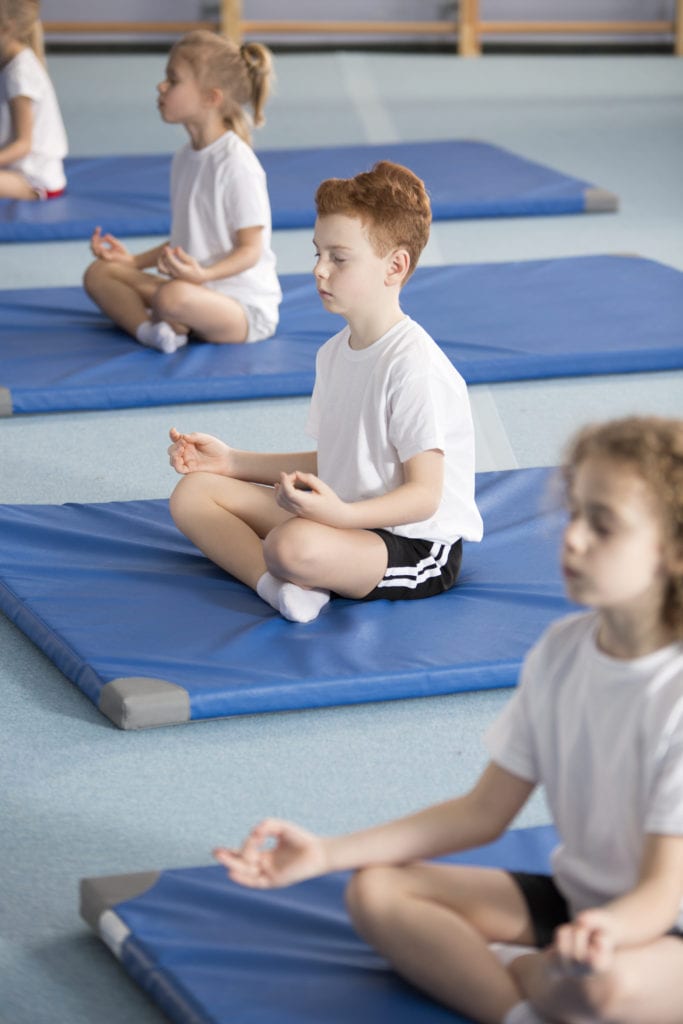
There has been increasing interest in intervention strategies that target self-regulation in childhood. Self-regulation is the process through which the systems of emotion, attention and behavior are controlled in response to a situation, stimulus or demand. It develops rapidly in the early years of life. Self-regulation is necessary for social development because it supports and enhances peer acceptance and social success. Furthermore, it increases academic performance, particularly in elementary school. Problems with self-regulation and the accompanying executive functioning have been shown to correlate with a number of behavioral and emotional problems, particularly depression and anxiety. Mindfulness is emerging as an effective intervention for children struggling with self-regulation, especially when implemented at a time when children are acquiring these foundational skills.

Mindfulness is a way of paying attention, on purpose and non-judgmentally, to the experience of the present moment. Being mindful involves reflecting on the current internal experiences such as thoughts or emotions and the current external environment, such as sights and sounds, both clearly and objectively. This act of purposeful reflection enhances and facilitates self-regulation by promoting control, such as sustained attention and cognitive flexibility. Furthermore, it helps to reduce the incidences of such things as snap judgments, emotional reactivity or distressing thoughts.

Mindfulness-based social-emotional training has been shown to be effective in reducing stress, improving coping skills and building resilience when used with children. Mindfulness teaches children the skills needed to improve focus, calm themselves, plan and organize, and behave in a thoughtful manner. Research on adult populations shows that practicing mindfulness may reduce symptoms of anxiety and depression, and limited number of studies show some of the same benefits in children. Mindfulness is well tolerated by children and has been proven to improve psychological well-being. Introducing mindfulness practices to children has the potential to make a positive impact on a child’s ability to self-regulate, and thus facilitate their social, emotional and educational growth.

There are a number of ways to introduce children to mindfulness. One activity that children have responded positively to is being challenged to sit still and silent for as long as they possibly can. I have used this strategy in classrooms of children from pre-k to high school, as well as individually with children of all ages. Sometimes they are able to sit for 15 seconds, but they embraced the challenge of trying to beat their record by trying it again. Another mindful technique that works well with children is called “grounding.” Grounding techniques use the five senses to bring ourselves into the present moment. One grounding technique is finding five things in the room – they can be 5 things of the same color or any five things; four things the child can feel; three things the child can hear; two things the child can smell; and one thing the child can taste. Mindfulness can be playful and fun for children and families while effectively reducing stress, improving coping skills, improving ability to self-regulate and building resilience in children.


Helpful resources for families:

Mindful Games Activity Cards: 55 Fun Ways to Share Mindfulness with Kids and Teens. Susan Kaiser Greenland and Annaka Harris

A Still Quiet Place: A Mindfulness Program for Teaching Children and Adolescents to Ease Stress and Difficult Emotions By Amy Salzman, MD

I am Peace: A Book of Mindfulness By Susan Verde and Peter H. Reynolds

Breathe Like a Bear: 30 Mindful Moments for Kids to Feel Calm and Focused Anytime, Anywhere By Kira Willey


References:

Britton, W. B., Lepp, N. E., Niles, H. F., Rocha, T., Fisher, N. E., & Gold, J. S. (2014). A randomized controlled pilot trial of classroom-based mindfulness meditation compared to an active control condition in sixth-grade children. Journal of School Psychology, 52(3), 263-278.

Masten, A. S., Best, K. M., & Garmezy, N. (1990). Resilience and development: Contributions from the study of children who overcome adversity. Development and psychopathology, 2(4), 425-444.

Schonert-Reichl, K. A., Oberle, E., Lawlor, M. S., Abbott, D., Thomson, K., Oberlander, T. F., & Diamond, A. (2015). Enhancing cognitive and social–emotional development through a simple-to-administer mindfulness-based school program for elementary school children: A randomized controlled trial. Developmental psychology, 51(1), 52.

Schonert-Reichl, K. A., & Lawlor, M. S. (2010). The effects of a mindfulness-based education program on pre-and early adolescents’ well-being and social and emotional competence. Mindfulness, 1(3), 137-151.

Sibinga, E. M., Webb, L., Ghazarian, S. R., & Ellen, J. M. (2016). School-based mindfulness instruction: an RCT. Pediatrics, 137(1), e20152532.


About the Author

Dr. Cynthia Hess recently graduated from Rivier University with a PsyD in Counseling and School Psychology. Previously, she earned an M.A. from Antioch New England in Applied Psychology. She also worked as an elementary school counselor and school psychologist for 15 years before embarking on her doctorate. During her doctorate, she did her pre-doctoral internship with RIT in Rochester, N.Y. where she worked with youth ages 5-17 who had experienced complex developmental trauma. Dr. Hess’s first post-doctoral fellowship was with The Counseling Center of New England where she provided psychotherapy and family therapy to children ages 5-18, their families and young adults. She also trained part-time with a pediatric neuropsychologist conducting neuropsychological evaluations. Currently, Dr. Hess is a second-year post-doctoral fellow in pediatric neuropsychological assessment, working with NESCA Londonderry’s Dr. Angela Currie and Dr. Jessica Geragosian.


To schedule an appointment with one of NESCA’s expert neuropsychologists, please complete our online intake form


Neuropsychology & Education Services for Children & Adolescents (NESCA) is a pediatric neuropsychology practice and integrative treatment center with offices in Newton and Plainville, Massachusetts, and Londonderry, New Hampshire, serving clients from preschool through young adulthood and their families. For more information, please email info@nesca-newton.com or call 617-658-9800.


Why are they called “Soft” Skills?

By | NESCA Notes 2019

By Kathleen Pignone, M.Ed., CRC
Transition Specialist

If they are soft, why are they so crucial in this hard, cruel world? As a transition specialist, I meet with young adults and their parents on a daily basis. All parents want to know what is that missing piece for child to really succeed after high school? What should my priorities be? Is the right college more important than the right internship or vise versa? I often hear the saying, “I remember in my day, you just dusted yourself off and kept going. Why is this new generation struggling?”

While I don’t have an answer to those profound questions, I can offer some go-to skills that will support our young adults as they transition from high school to college, the world of work and the great beyond…soft skills—those intangible, hard-to-pin-down skills that we all know we need to succeed, but are so hard to teach. As a wise practitioner once told me, “Just because it is simple, it doesn’t make it easy.” While it’s critical to teach, prepare and equip our students with the necessary skills for academic success, soft skills can be just as important in many instances. Young adults need a balance of academic, executive functioning, communication and soft skills to set themselves up for success in their multi-faceted life after high school. These soft skills can make the difference between candidates competing for college acceptance and job opportunities.

I also like to refer to these skills as the job keeping and high achieving skills. Strong foundational academic, planning and team-building skills are necessary for success, but these soft skills are the subtle differences observed in the student chosen for that internship by the professor and recognized in the entry-level employee who quickly advances to the mentor employee.

In my practice, I am witness to amazing, capable, energizing and unique young adults, who are unaware of the many talents and strengths they already possess. I work to coach, teach and persuade them that these soft skills are in there, but are struggling to make an appearance. The key is identifying them and knowing when to call on them in stressful times. As a transition specialist, I offer the young people I meet with the opportunities to name and own these skills within themselves. For example, when a teenager is struggling with school, but shows up every day, I introduce them to their “grit,” their get-up- and-go and “try again” skill.  By identifying skills that may just be lying dormant or unrecognized, I offer them a chance to see that they have an innate strength that has both a name and a purpose. These skills are not only necessary, but are transferable to all aspects of their future lives. Their internal grit pushes them to go to class when their roommate is sleeping in and go to work even though they have a cold and could call out sick.

By definition, students ready to transition from high school are at an age and stage of curiosity, exploration, hope and optimism. But they may easily miss out on identifying these characteristics as strengths and skills, if we do not point it out and celebrate it with them. When they are resisting rules and boundaries, they are employing their skills of curiosity and exploration. When they want to protest against inequity in this unfair world and are perceived as naive and inexperienced, I praise their hope and optimism. We talk about how these soft skills are integral to their success as an adult and will serve them as they continue to grow and learn.

Young adults in our current society have no other option than to be flexible and adaptable. Technology is constantly updating and changing, forcing them to move forward or be left behind. Their resilience in handling all that social media exposes them to on a daily basis is admirable. I wouldn’t have stood as tall and strong as they do with such public scrutiny.

As we prepare our young adults for life after high school, let us always take the time to see, name and recognize the strengths and soft skills they show us. We have the opportunity to observe and learn from them and value these skills so that they may offer themselves as resources to their community. The balance necessary to teach young people how to manage an interdependent world as an adult is complicated. It is exciting and energizing to witness young people find these strengths within themselves, helping them to conquer that great big world.


About the Author:

Kathleen Pignone, M.Ed. CRC is a deeply knowledgeable and experienced transition specialist. Prior to her tenure at NESCA, Ms. Pignone was the Career Development Director at Bay Cove Academy for 15 years, providing students with classroom and real-world employment skills training, community job placement and on the job employment-training. She has also worked at Massachusetts Department of Secondary and Elementary Education and privately as a vocational rehabilitation consultant. As a certified rehabilitation counselor, Ms. Pignone brings unique expertise carrying out vocational assessment and employment planning for adolescents and young adults as well as supporting local school programs. In addition to fortifying NESCA’s premier transition assessment services, Ms. Pignone engages in person-centered planning with teens and young adults, consultation and training for parents, providers and schools, and community-based coaching services.

Neuropsychology & Education Services for Children & Adolescents (NESCA) is a pediatric neuropsychology practice and integrative treatment center with offices in Newton, Massachusetts, Plainville, Massachusetts, and Londonderry, New Hampshire, serving clients from preschool through young adulthood and their families. For more information, please email info@nesca-newton.com or call 617-658-9800.

To book a transition assessment or consultation with Kathleen, please complete NESCA’s online intake form


Understanding Motivation in Children and Teenagers, and Where We Went Wrong

By | NESCA Notes 2018

By: Angela Currie, Ph.D.
Pediatric Neuropsychologist
Director of New Hampshire Operations

As parents and teachers, we hear, and say, these things all the time:

“Why doesn’t he just do it?”

“How many times do I have to ask you?”

“Why don’t you care about your work?”

“She just doesn’t have the drive.”

Be it schoolwork, chores, or social events, some kids seemingly just aren’t motivated to do things. We punish. We nag. We fight. But even with all of this, sometimes things do not change.

It is easy to become frustrated, but in this state of frustration, we often forget to ask ourselves why finding motivation is so difficult for the child.

There are two types of motivation – intrinsic and extrinsic. Intrinsic motivation is an internal desire or drive to do something based strictly on the resulting feeling of satisfaction or enjoyment. Extrinsic motivation relies on external rewards, such as money, good grades, stickers, toys, or other things. Intrinsic motivation has long-lasting effects, while behavior based on extrinsic motivation is fleeting.

Some children seem to develop intrinsic motivation naturally. For other children, we attempt to gain compliance or task completion through extrinsic motivation – behavioral charts, rewards, punishments, etc. Sometimes this works in the short term, but as soon as the rewards or punishments are gone, so is the behavior. Other times, even extrinsic motivation seems absent and behavior still does not change, no matter how big the reward or punishment.

Frustration ensues and we often find ourselves feeling or saying the above things – the child does not have the motivation, therefore the work or task does not get done. But where does this leave us? The adults are defeated, the child feels blamed, and the situation worsens.

So where’d we go wrong?

Our understanding of motivation is often backwards – motivation exists, therefore successful behavior occurs. This is wrong. We are not born inherently knowing how to motivate ourselves. We learn it through successful experiences in the world. So, what really happens is: successful behavior occurs, therefore motivation develops.

Lesson #1: Motivation is the effect, not the cause.

In reversing the relationship, we can now ask ourselves: “What is causing the lack of motivation?” If we are able to identify and address the underlying challenges, the child can begin to experience the successes that are necessary for motivation to develop over time. Further, in accepting that motivation is learned through experience and not inherent, we accept that the term “intrinsic” is somewhat misleading.

Lesson #2: Intrinsic motivation is not naturally intrinsic – it becomes intrinsic after feelings of success are internalized.

By identifying and addressing skills deficits, we can help children to experience more successes and increase their willingness and ability to “try harder.” Academic deficits, attention problems, anxiety, low self-esteem, social challenges, executive function weaknesses, among other things, can all interfere with motivation. Challenges in any one of these areas can, and will, interfere with motivation. As such, motivation is not a single thing. It is a complex skill that can only develop once other, more basic, skills have developed.

Lesson #3: Motivation is not one thing – it is the coordination of many skills.

Now viewing motivation as something that is learned over time as other, more basic, skills develop and a child experiences successes in life, we are better able to develop a plan for how to intervene.

Take home message: All children and teens can be motivated – it is our job to teach them how.

When motivation seems absent or fleeting, we must become detectives, working to figure out what underlying challenges or deficits are present. This may be aided through conversations with the child’s teachers or other support providers. Other times, a comprehensive evaluation may be necessary in order to specifically identify the child’s strengths and challenges, as well as receive individualized recommendations for how to address their needs.

Dr. Currie will be offering a free webinar about motivation and self-regulation this Spring. Stay tuned for sign-up information. 

About the Author:

Dr. Angela Currie conducts neuropsychological and psychological (projective) assessments out of NESCA’s Londonderry, NH and Newton, MA offices, seeing individuals with a wide range of concerns. She enjoys working with stressed-out children and teens, working to tease apart the various factors that may be lending to their stress, including assessment of possible underlying learning challenges (such as dyslexia or nonverbal learning disability), attentional deficit, or executive function weakness. She also often conducts evaluations with children confronting more primary emotional and anxiety-related challenges, such as generalized anxiety, obsessive compulsive disorder, or depression. Dr. Currie particularly enjoys working with the seemingly “unmotivated” child as well as children who have “flown under the radar” for years due to their desire to succeed.


Skip to content