To accommodate requests for neuropsychological evaluations after the start of the new school year, NESCA has added evaluation dates in its Newton, MA office. Immediate openings are now available for scheduling. Please complete our Inquiry/Intake Form for more information or to start the scheduling process.

Tag

STRESS Archives - Page 3 of 3 - NESCA

Subscribe to NESCA Notes

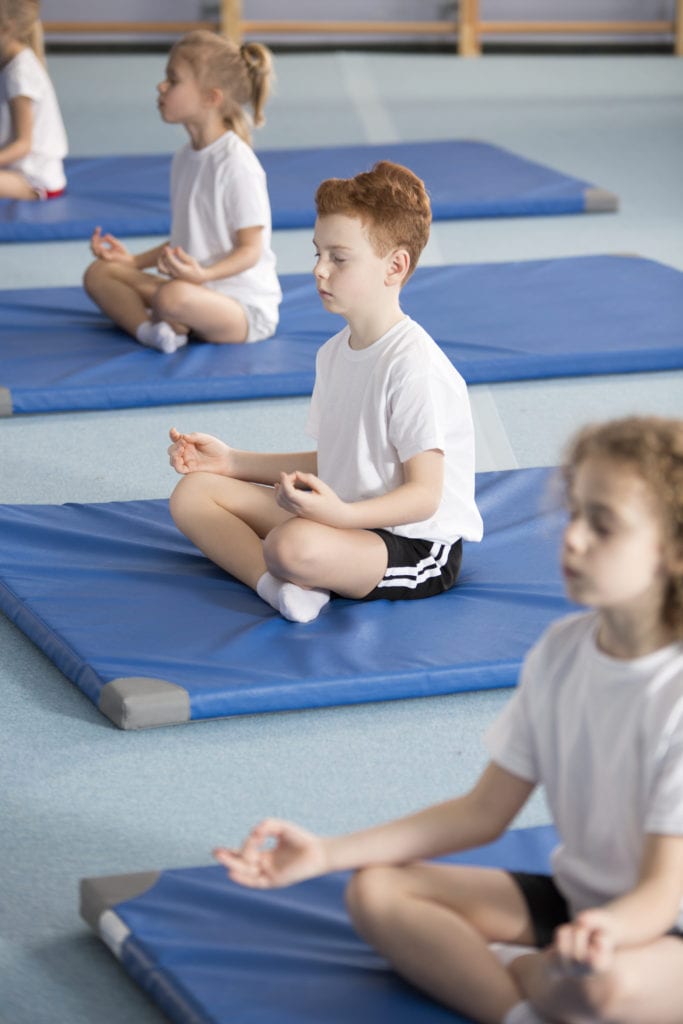
Mindfulness: It’s Not Just for Grown-ups

By | NESCA Notes 2019

By: Cynthia Hess, PsyD
Pediatric Neuropsychologist Fellow

There has been increasing interest in intervention strategies that target self-regulation in childhood. Self-regulation is the process through which the systems of emotion, attention and behavior are controlled in response to a situation, stimulus or demand. It develops rapidly in the early years of life. Self-regulation is necessary for social development because it supports and enhances peer acceptance and social success. Furthermore, it increases academic performance, particularly in elementary school. Problems with self-regulation and the accompanying executive functioning have been shown to correlate with a number of behavioral and emotional problems, particularly depression and anxiety. Mindfulness is emerging as an effective intervention for children struggling with self-regulation, especially when implemented at a time when children are acquiring these foundational skills.

Mindfulness is a way of paying attention, on purpose and non-judgmentally, to the experience of the present moment. Being mindful involves reflecting on the current internal experiences such as thoughts or emotions and the current external environment, such as sights and sounds, both clearly and objectively. This act of purposeful reflection enhances and facilitates self-regulation by promoting control, such as sustained attention and cognitive flexibility. Furthermore, it helps to reduce the incidences of such things as snap judgments, emotional reactivity or distressing thoughts.

Mindfulness-based social-emotional training has been shown to be effective in reducing stress, improving coping skills and building resilience when used with children. Mindfulness teaches children the skills needed to improve focus, calm themselves, plan and organize, and behave in a thoughtful manner. Research on adult populations shows that practicing mindfulness may reduce symptoms of anxiety and depression, and limited number of studies show some of the same benefits in children. Mindfulness is well tolerated by children and has been proven to improve psychological well-being. Introducing mindfulness practices to children has the potential to make a positive impact on a child’s ability to self-regulate, and thus facilitate their social, emotional and educational growth.

There are a number of ways to introduce children to mindfulness. One activity that children have responded positively to is being challenged to sit still and silent for as long as they possibly can. I have used this strategy in classrooms of children from pre-k to high school, as well as individually with children of all ages. Sometimes they are able to sit for 15 seconds, but they embraced the challenge of trying to beat their record by trying it again. Another mindful technique that works well with children is called “grounding.” Grounding techniques use the five senses to bring ourselves into the present moment. One grounding technique is finding five things in the room – they can be 5 things of the same color or any five things; four things the child can feel; three things the child can hear; two things the child can smell; and one thing the child can taste. Mindfulness can be playful and fun for children and families while effectively reducing stress, improving coping skills, improving ability to self-regulate and building resilience in children.


Helpful resources for families:

Mindful Games Activity Cards: 55 Fun Ways to Share Mindfulness with Kids and Teens. Susan Kaiser Greenland and Annaka Harris

A Still Quiet Place: A Mindfulness Program for Teaching Children and Adolescents to Ease Stress and Difficult Emotions By Amy Salzman, MD

I am Peace: A Book of Mindfulness By Susan Verde and Peter H. Reynolds

Breathe Like a Bear: 30 Mindful Moments for Kids to Feel Calm and Focused Anytime, Anywhere By Kira Willey


References:

Britton, W. B., Lepp, N. E., Niles, H. F., Rocha, T., Fisher, N. E., & Gold, J. S. (2014). A randomized controlled pilot trial of classroom-based mindfulness meditation compared to an active control condition in sixth-grade children. Journal of School Psychology, 52(3), 263-278.

Masten, A. S., Best, K. M., & Garmezy, N. (1990). Resilience and development: Contributions from the study of children who overcome adversity. Development and psychopathology, 2(4), 425-444.

Schonert-Reichl, K. A., Oberle, E., Lawlor, M. S., Abbott, D., Thomson, K., Oberlander, T. F., & Diamond, A. (2015). Enhancing cognitive and social–emotional development through a simple-to-administer mindfulness-based school program for elementary school children: A randomized controlled trial. Developmental psychology, 51(1), 52.

Schonert-Reichl, K. A., & Lawlor, M. S. (2010). The effects of a mindfulness-based education program on pre-and early adolescents’ well-being and social and emotional competence. Mindfulness, 1(3), 137-151.

Sibinga, E. M., Webb, L., Ghazarian, S. R., & Ellen, J. M. (2016). School-based mindfulness instruction: an RCT. Pediatrics, 137(1), e20152532.


About the Author

Dr. Cynthia Hess recently graduated from Rivier University with a PsyD in Counseling and School Psychology. Previously, she earned an M.A. from Antioch New England in Applied Psychology. She also worked as an elementary school counselor and school psychologist for 15 years before embarking on her doctorate. During her doctorate, she did her pre-doctoral internship with RIT in Rochester, N.Y. where she worked with youth ages 5-17 who had experienced complex developmental trauma. Dr. Hess’s first post-doctoral fellowship was with The Counseling Center of New England where she provided psychotherapy and family therapy to children ages 5-18, their families and young adults. She also trained part-time with a pediatric neuropsychologist conducting neuropsychological evaluations. Currently, Dr. Hess is a second-year post-doctoral fellow in pediatric neuropsychological assessment, working with NESCA Londonderry’s Dr. Angela Currie and Dr. Jessica Geragosian.


To schedule an appointment with one of NESCA’s expert neuropsychologists, please complete our online intake form. 


Neuropsychology & Education Services for Children & Adolescents (NESCA) is a pediatric neuropsychology practice and integrative treatment center with offices in Newton and Plainville, Massachusetts, and Londonderry, New Hampshire, serving clients from preschool through young adulthood and their families. For more information, please email info@nesca-newton.com or call 617-658-9800.


Addressing Anxiety through the IEP Process

By | NESCA Notes 2019

By: Erin Gibbons, Ph.D.
Pediatric Neuropsychologist, NESCA

Anxiety disorders are becoming more and more common among children and adolescents. Recent data from the National Institute of Mental Health (NIMH) reported that 31.9% of adolescents between 13-19 have an identified anxiety disorder. Although fewer statistics are available, it is clear that students who have a developmental, learning, or attention disorder are at high risk for developing clinically significant anxiety in light of their struggles with academics, learning, and/or social development. Given the rising numbers of affected children and adolescents, it has become increasingly important that a student’s emotional health is addressed both at home through private counseling, as well as through the provision of school-based services. When students experience a high level of unmitigated anxiety throughout the day, they are less able to learn and meet their potential.

When parents are seeking services for anxiety through their school system, there are different levels of support. First, teachers can provide classroom supports and address emotional health with all students, whether or not they have an identified anxiety disorder. Some examples of useful classroom strategies include:

  • Create predictable routines and clear expectations.
  • Provide warnings about upcoming transitions.
  • Have a “cool down space” available in the classroom or another room in the school.
  • Incorporate movement into lessons throughout the day.

There are also programs designed to address emotional regulation that can be used throughout the school or district. For example:

If these supports are not sufficient to meet a student’s needs, then it is necessary to develop goals through the IEP process. In order to make needed progress, it is important that the goals and benchmarks in the IEP are specific. For example, a benchmark might state: “Johnny will show better emotional regulation in stressful situations.” A more specific benchmark might state: “When Johnny starts to shut down or refuse to participate during a math class, he will identify his current emotion(s) in 4 out of 5 opportunities.”

When parents seek supports for their child’s anxiety through the IEP, they should consider whether their child needs accommodations, specialized instruction or both.

Examples of accommodations for anxiety include:

  • Extra time in testing situations.
  • Opportunities to take tests in a quiet setting.
  • Access to breaks as needed.
  • Access to the school counselor as needed.
  • Student does not need to sign out of class to use the bathroom.
  • Student is prompted to take breaks when showing signs of distress.
  • Student has modified homework.
  • Teacher will check in with student before independent work blocks.
  • Specialized instruction can be provided in the classroom (push-in) or in a different setting (pull-out).

Push-in services might include:

  • Provision of an instructional aide to support emotion identification and regulation.
  • The school counselor/psychologist works with the entire class once or twice a month to discuss emotional health.

Pull-out services might include:

  • Regular sessions with the school counselor/psychologist.
  • Social skills groups.

Consultation services are also important, especially if a student participates in private therapy outside of school. Parents should consider giving permission for the private therapist to speak with the school counselor to discuss common treatment goals and ways in which the student’s coping skills can be supported and reinforced in school.

About the Author:

GibbonsErin Gibbons, Ph.D. is a pediatric neuropsychologist with expertise in neurodevelopmental and neuropsychological assessment of infants, children, and adolescents presenting with developmental disabilities including autism spectrum disorders, Down syndrome, intellectual disabilities, learning disabilities, and attention deficit disorders. She has a particular interest in assessing students with complex medical histories and/or neurological impairments, including those who are cognitively delayed, nonverbal, or physically disabled. Dr. Gibbons joined NESCA in 2011 after completing a two-year post-doctoral fellowship in the Developmental Medicine Center at Boston Children’s Hospital. She particularly enjoys working with young children, especially those who are transitioning from Early Intervention into preschool. Having been trained in administration of the Autism Diagnostic Observation Schedule (ADOS), Dr. Gibbons has experience diagnosing autism spectrum disorders in children aged 12 months and above.

Dr. Gibbons recently began serving clients in NESCA’s newest location in Plainville/Foxborough, MA. She is thrilled to bring her expertise in evaluating and supporting children with a wide range of abilities to this area of the state.


To book an evaluation with Dr. Gibbons or one of our many other expert neuropsychologists and transition specialists, complete NESCA’s online intake form.


Neuropsychology & Education Services for Children & Adolescents (NESCA) is a pediatric neuropsychology practice and integrative treatment center with offices in Newton, Massachusetts, Plainville, Massachusetts, and Londonderry, New Hampshire, serving clients from preschool through young adulthood and their families. For more information, please email info@nesca-newton.com or call 617-658-9800.


The Struggle is Not Only Real, It is Necessary

By | NESCA Notes 2018


By: Angela Currie, Ph.D.
Pediatric Neuropsychologist

From an early age, we are subliminally taught that stress is a bad thing. Whether frustrated because your LEGO tower broke or confused about which two paint colors to mix to get green, you were more likely to hear “Calm down – no reason to get stressed,” than you were to hear “Let’s use your stress to help us make a plan for how to solve this problem.”

For most adults, the natural, well-meaning response to a child’s expression of stress, or most any unwanted feeling, is to try to fix it, make it go away, avoid it, or make it seem like it isn’t such a big deal. We do this by saying things like:

“Don’t be sad.”
“No need to worry about it.”
“It’s not as bad as you think it is.”
“Just try thinking about something else.”
“Let me do that for you.”

We all say and do these things, and the good intention is clear. Nobody likes to see a child struggle or experience discomfort. Unfortunately, manageable stress and discomfort is necessary for growth. When we minimize, distract, or dismiss a child’s emotional reaction, we are sending the message that feelings are unimportant, untrustworthy, and bad. This means that we are also missing the opportunity to teach the child about why we have feelings, and how even the unwanted ones are incredibly useful.

Stress and anxiety are at an all-time high nowadays. It is important to think about small things that we can do each day to help children feel more confident and competent in their ability to navigate this stressful world. One of the best ways we can help them to become more resilient is by creating an environment where emotions are acknowledged, accepted, and used in a functional manner. To start doing this, here are some basic things to keep in:

1) Feelings are information. They are telling us that something is important and may require our attention.
2) Feelings are never bad or “negative,” though they may be unwanted.
3) Stress is often a good thing – without it we would not prepare for tests, show up to work, or care about our relationships. Life without stress would be pretty unfulfilling.
4) The goal is not to control stress or other unwanted feelings – the goal is to recognize, use, and cope with them.
5) Acknowledging and accepting unwanted emotions is one of the best ways to reduce their impact.
6) Regular, casual discourse about wanted and unwanted feelings is healthy and normal. If we talk about the day to day feelings, it will make it easier to talk about the “big ones.”
7) Let children struggle sometimes. Don’t feel the need to fix things right away. Help them express how they’re feeling, gently guide them toward problem-solving, and praise their persistence in the face of challenge.


About the Author:

Currie

Dr. Angela Currie conducts neuropsychological and psychological (projective) assessments out of NESCA’s Londonderry, NH and Newton, MA offices, seeing individuals with a wide range of concerns. She enjoys working with stressed-out children and teens, working to tease apart the various factors that may be lending to their stress, including assessment of possible underlying learning challenges (such as dyslexia or nonverbal learning disability), attentional deficit, or executive function weakness. She also often conducts evaluations with children confronting more primary emotional and anxiety-related challenges, such as generalized anxiety, obsessive-compulsive disorder, or depression. Dr. Currie particularly enjoys working with the seemingly “unmotivated” child as well as children who have “flown under the radar” for years due to their desire to succeed.


To book an evaluation or consultation with Dr. Currie or one of our many other expert neuropsychologists, complete NESCA’s online intake form. Indicate whether you are seeking an “evaluation” or “consultation” and your preferred clinician in the referral line.


Neuropsychology & Education Services for Children & Adolescents (NESCA) is a pediatric neuropsychology practice and integrative treatment center with offices in Newton, Massachusetts, Plainville, Massachusetts, and Londonderry, New Hampshire, serving clients from preschool through young adulthood and their families. For more information, please email info@nesca-newton.com or call 617-658-9800.


Skip to content