

By: Cynthia Hess, PsyD
Pediatric Neuropsychologist
One of society’s leading sources of information is social media, which can be an excellent source of information and support. Parents may turn to social media when they notice their child struggling, trying to find others with similar concerns or answers about why their child seems “different.” Additionally, many children, adolescents, and young adults who feel different or out of place seek and find people or ideas that resonate with them online. While it may put them at ease, it often leads parents and their children to question if there is a diagnosis that will help them understand their child or themselves. Increasingly, people are asking if it is autism or another neurodivergent condition.
Neurodivergence is a term used to describe individuals whose brains function differently from what is considered typical. Neurodivergence is a broad term describing neurodevelopmental disorders present at birth and lasting throughout one’s life. Identifying if your child is neurodivergent can be the first step in understanding their unique strengths and challenges. There are numerous neurodivergent conditions, such as autism spectrum disorder (ASD), attention-deficit/hyperactivity disorder (ADHD), dyslexia, and others, each with their own characteristics and support needs.
Recognizing signs of neurodivergence in children can vary depending on the specific condition, but some common indicators include:
- Difficulty with social interactions and communication
- Repetitive behaviors or intense interests
- Sensory sensitivities or aversions
- Challenges with attention and focus
- Delayed speech or language development
- Difficulties with organization and planning
- Impulsivity or hyperactivity
- Unusual reactions to sensory stimuli
- Emotional regulation difficulties
- Learning and academic challenges
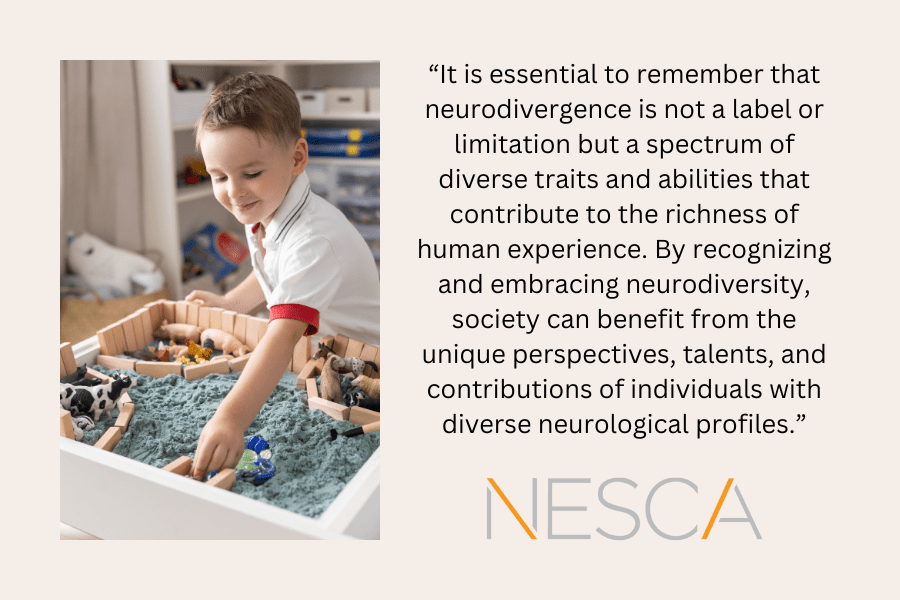
Observing patterns of behavior, communication, and sensory processing in your child can help indicate if they may be neurodivergent. Seeking a professional evaluation from a psychologist or developmental specialist can provide a more accurate diagnosis and guidance on supporting your child effectively. It is essential to remember that neurodivergence is not a label or limitation but a spectrum of diverse traits and abilities that contribute to the richness of human experience. By recognizing and embracing neurodiversity, society can benefit from the unique perspectives, talents, and contributions of individuals with diverse neurological profiles. Proper diagnosis, support, understanding, and accommodation are essential in helping neurodivergent individuals thrive and succeed in their lives.
About the Author
Dr. Cynthia (Cindy) Hess conducts neuropsychological evaluations as a pediatric neuropsychologist at NESCA. Dr. Hess enjoys working with children and young adults with complex emotional and behavioral profiles. She is skilled at evaluating social and emotional challenges as well as a range of learning profiles. Her experience allows her to guide families in understanding the supports and services their child requires to be successful in school.
To schedule an appointment with one of NESCA’s expert neuropsychologists, please complete our online intake form.
NESCA is a pediatric neuropsychology practice and integrative treatment center with offices in Newton, Plainville, and Hingham, Massachusetts; Londonderry, New Hampshire; and staff in the greater Burlington, Vermont region and Brooklyn, New York, serving clients from infancy through young adulthood and their families. For more information, please email info@nesca-newton.com or call 617-658-9800.


 from elementary school through young adulthood. In addition to direct client work, Ms. Badamo provides consultation and support to parents and families in order to help change dynamics within the household and/or support the special education processes for students struggling with executive dysfunction. She also provides expert consultation to educators, special educators and related professionals.

 attention deficit disorders, communication disorders, intellectual disabilities, and learning disabilities. She particularly enjoys working with children and their families who have concerns regarding an autism spectrum disorder. Dr. Milana has received specialized training on the administration of the Autism Diagnostic Observation Schedule (ADOS).
 meaningful skills in order to reach their goals. She has spent the majority of her career working in a private school for students with ASD. She has also spent some time working in an inpatient mental health setting. Lyndsay uses occupation-based interventions and strategies to develop life skills, executive functioning, and emotional regulation. While completely her doctoral degree at MGH Institute of Health Professions, Lyndsay worked with the Boston Center for Independent Living to evaluate transition age services. She uses the results from her research to deliver services in a way that is most beneficial for clients. Specifically, she focuses on hands-on, occupation-based learning that is tailored the client’s goals and interests.

 unique pattern of strengths and weaknesses to best formulate a plan for intervention and success. With experiences providing therapy and assessments, Dr. Creedon bridges the gap between testing data and therapeutic services to develop a clear roadmap for change and deeper of understanding of individual needs.
Connect with Us