NESCA’s Newton, MA location has immediate availability for neuropsychological evaluations. Our MA clinicians specialize in the following evaluations: Neuropsychological; Autism; and Emotional and Psychological, as well as Academic Achievement and Learning Disability Testing.

Visit www.nesca-newton.com/intake for more information or to book an evaluation.

Tag

MENTAL HEALTH Archives - Page 3 of 5 - NESCA

Subscribe to NESCA Notes

Pediatric Neuropsychologist Ferne Pinard, Ph.D., Joins NESCA

By | NESCA Notes 2022

By: Jane Hauser
Director of Marketing & Outreach

I recently had the opportunity to learn more about Pediatric Neuropsychologist Ferne Pinard, Ph.D., who joined NESCA in this August. We are thrilled to have her on board and hope you learn more about her background and specialty areas in today’s blog interview.

How did you choose pediatric neuropsychology as a profession?

I’ve had an interesting journey to get to where I am today professionally. I started working with adolescents in the West Indies as a high school teacher. There I quickly learned that meant not just teaching to the curriculum, but also looking at each student as a whole person – often along with their parents – providing counseling to them and additional academic support as needed to meet their needs. That sparked my initial interest in working to support children.

That spark turned into a deep interest in psychology. In college I decided to major in psychology. I became involved in research examining various aspects of child development and learned about statistical methods.

In graduate school, I worked with my mentor on research projects that involved administration of neuropsychological tests and examining how performance on these tests were related to various outcomes (e.g., academic performance, externalizing behaviors). I enjoyed doing assessment as part of the research project and other training experiences. Although I toyed with the idea of becoming a therapist – as I was trained to provide therapy and conduct assessment – I decided to further my knowledge in the brain/behavior relationship

How have your previous work experiences prepared you to be a neuropsychologist with NESCA?

I spent the last 11 years at Boston Children’s Hospital, first as a post-doctorate fellow and later as an attending neuropsychologist.

As a fellow at Boston Children’s, I had the opportunity to work in various specialty clinics, gaining exposure to patients with a range of medical and genetic conditions, including neurofibromatosis, cancer, etc.

Later, I went on to gain specialty experience in the Pediatric Neuro-immunology and Learning Disabilities programs. As an attending neuropsychologist, I worked with, trained, and supervised pre-doctorate psychology interns and post-doctoral fellows.

As part of the neuroimmunology program, you assisted with research on the impact of post-acute sequelae of COVID-19 (PASC) – also known as Long Haul Covid – on children and their education. Tell us about that.

Yes, I had the opportunity to provide consultation to a previous colleague examining the cognitive impact of Long Covid. I also conducted a few assessments of adolescent struggling with persistent symptoms after being diagnosed with Covid. Difficulties with attention, mood, executive functioning (e.g., working memory and slow processing speed), and fatigue are commonly reported among individuals with Long Covid. These students also experienced disruption in school due to their illness then ongoing symptoms and understandably find it difficult to keep up and meet academic expectations. So many young people were sadder and more anxious throughout Covid…layer Long Haul Covid on top of that, and it’s a huge problem.

How do you see your previous work experiences translating to the families we work with at NESCA?

I bring a lot of knowledge and evaluation experience to NESCA, but most importantly, I bring expertise and compassion in working with families – creating and maintaining relationships with them. The greatest thing I can do for a family is to listen to their concerns, let them feel heard, and allow them to express their feelings about what they and their child are going through. This helps the parents and the child’s school gain a better understanding of the child.

How do you tailor your evaluations for different children, say an anxious child?

Patience and validation are key. I think it is also important to include the child and their caregiver in the discussion. Perhaps I add additional structure to the evaluation (e.g., use of a checklist, breaks at predetermined times), integrate strategies to reduce anxiety (e.g., deep breathing, use of fidgets), or modify the evaluation to take place over three sessions instead of two. Sometimes, the child is allowed to have the parent in the room with them throughout the evaluation. There are different approaches that can be taken based on each individual, and it’s my role to work with the child and caregiver to identify what would work best for the child.

You’ve had a lot of experience evaluating medically complex children and children who are dealing with medical conditions that many think only affect adults. Tell us about that.

It’s true. I’ve worked closely with children who have gone through cancer treatments, including chemotherapy, radiation, and surgery. These are always very touching experiences. These children have been through so much medically that sometimes the medical experiences lead to mental health challenges. They may have gotten through the cancer itself, but there can be residual and sometimes long-term fears of a reoccurrence. Often, there is an intensely emotional component to these assessments because of what the children and their families have endured. I’ve heard the fear in the voices of both the children and their parents’ voices. It’s my job to listen and provide them with a safe space.

Some of the children seen may not be able to maintain engagement for a typical evaluation due to fatigue related to their medical condition and treatment, for example. In these cases, the evaluation will need to be carefully tailored to address the referral question (s). And again, the approach to the evaluation would have to be modified to meet the child where they are.

I’ve also worked with children who have been diagnosed with Multiple Sclerosis and other autoimmune conditions. With these children, I always factor in the amount of stress they are experiencing in life and school as well as the fears they have about how MS may impact them later in life. The stress they feel, whether at school or based on their diagnosis, can have a negative impact on their symptoms. There’s a cascading effect from the brain and all of its thoughts and worries, and that is what we help them deal with. I am always eager to advocate for these children who bear such a heavy load.

What is the most rewarding part of your job as a neuropsychologist?

I feel that I have added value to a child’s life, when I can provide them and their families with a meaningful and comprehensive understanding of their profile—one that includes strengths, not just a focus on weaknesses. I think this is essential as it enables the family and child to advocate for their needs.

Why did you want to be part of NESCA’s team?

Initially, I was really drawn to the integrative approach to care for the children who are with NESCA. Coordination of care, whenever possible, and consultation among professionals involved in a child’s care leads to better outcomes. I was also excited to work with the professionals who specialize in different areas than I am accustomed to working with, such as postsecondary transition. The team here is very willing to collaborate so we can all teach and learn from each other. While I know I will gain great knowledge from the group, it really best serves the families with whom we work.


About Pediatric Neuropsychologist Ferne Pinard, Ph.D.

Dr. Pinard provides comprehensive evaluation services for children, adolescents, and young adults with learning disabilities, attention deficit/hyperactivity disorders (ADHD), and psychiatric disorders as well as complex medical histories and neurological conditions. She has expertise in assessing children and adolescents with childhood cancer as well as neuro-immunological disorders, including opsoclonus-myoclonus-ataxia syndrome (“dancing eyes syndrome”), central nervous system vasculitis, Hashimoto’s encephalopathy, lupus, auto-immune encephalitis, multiple sclerosis (MS), acute disseminated encephalomyelitis (ADEM), and acute transverse myelitis (ATM), and optic neuritis.

To book a neuropsychological evaluation with Dr. Pinard or another expert neuropsychologist at NESCA, complete NESCA’s online intake form

Neuropsychology & Education Services for Children & Adolescents (NESCA) is a pediatric neuropsychology practice and integrative treatment center with offices in Newton and Plainville, Massachusetts, as well as Londonderry, New Hampshire. NESCA serves clients from preschool through young adulthood and their families. For more information, please email info@nesca-newton.com or call 617-658-9800.
Pediatric Neuropsychologist Maggie Rodriguez, Psy.D., Joins NESCA

By | NESCA Notes 2022

By: Jane Hauser
Director of Marketing & Outreach

In today’s blog, I have the pleasure of introducing you to NESCA Pediatric Neuropsychologist Maggie Rodriguez, Psy.D., who recently joined our team of expert clinicians.

How did you discover your interest in neuropsychology?

It was a long and winding road! I went into college, interested in a wide range of subject areas, including medicine. Eventually, I realized my area of interest was truly in psychology. I discovered that I really enjoyed neuropsychological evaluations, since they combined my interests in psychology, neuroscience, working with medical providers, educators, as well as writing and the creativity involved in making a child come alive in a report.

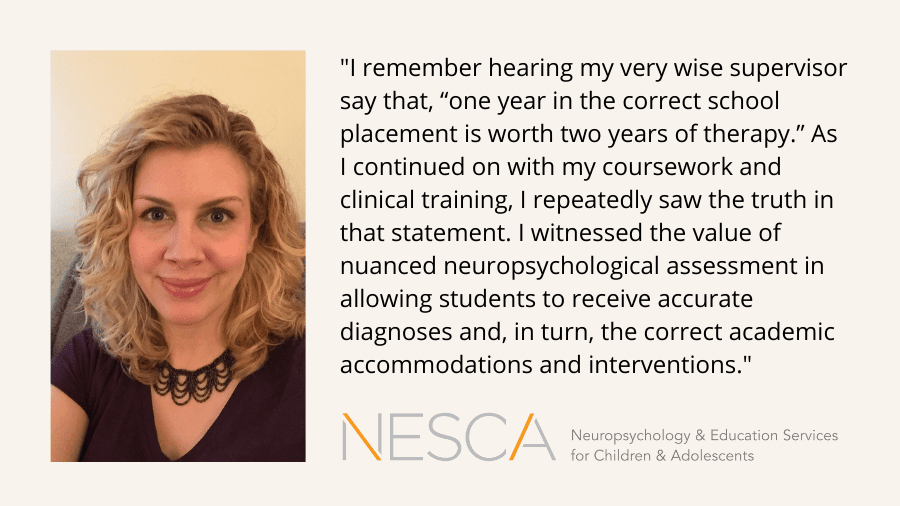
In graduate school, I was fortunate to learn from a number of extremely talented neuropsychologists in a variety of settings. While completing a placement at Children’s Hospital Boston, I remember hearing my very wise supervisor say that, “one year in the correct school placement is worth two years of therapy.” As I continued on with my coursework and clinical training, I repeatedly saw the truth in that statement. I witnessed the value of nuanced neuropsychological assessment in allowing students to receive accurate diagnoses and, in turn, the correct academic accommodations and interventions. I wanted to be part of that, not only to help children and teens succeed academically but to prevent the secondary effects that undiagnosed and untreated learning disorders, neurodevelopmental disorders, and cognitive challenges can have on emotional health, self-esteem, and social functioning.

On the personal side, my interest in neuropsychology was sparked again when I had my own child evaluated. It was surprisingly powerful to go through the process on the parent side, and after taking some time off to have a family, I knew that I wanted to get back into neuropsychology again!

Why did you choose to come to NESCA when re-entering your professional career?

There were several reasons that I looked into NESCA and ultimately opted to join its team. I learned about NESCA while researching neuropsychologists for my child’s evaluation and was impressed with what I saw. Additionally, one of my former testing supervisors told me NESCA is among the best in the business. Having that kind of endorsement from such a trusted source provided me with great confidence being part of NESCA.

I also was really drawn in by NESCA’s emphasis on the continued growth and learning for its clinicians. It was obvious that NESCA is comprised of a highly invested and collaborative team. Every one of us has a lot to learn still, and I valued the opportunity for not just a job, but the continued learning.

NESCA also offers a great work/life balance. Having a family of my own and parents who are approaching the stage where they also require care is a lot to balance. NESCA’s emphasis on supporting its staff in balancing work and life has made it very rewarding. I’ve seen several examples of how the culture of understanding is very much active.

On a very practical level, having clear protocols for handling day-to-day Covid strategies, like masking, cleaning, etc., has been comforting. Returning to clinical work in the midst of a pandemic has been a big transition, and knowing NESCA has put in place measures for keeping staff and clients safe is tremendously important to me. Seeing the creativity and agility in the way the team here tackled the larger challenges—evaluating clients safely and in-person—during Covid was inspiring and told me a lot about the team and culture. Learning that NESCA adapted its methods of testing via the two-office model demonstrated to me that they, as a practice, they are able to roll with those kinds of challenges. That was also very reassuring.

Finally, the interview process provided me with the chance to speak with a number of NESCA’s clinical staff. I was able to get a great feel for the culture and high standards the practice has, which made me confident that this was the right fit for me.

What kinds of concerns do you evaluate or enjoy the most?

I really enjoy working with kids of varying ages, but I do have a keen interest in working with families and children who are just hitting the adolescent years. I get the opportunity to help them understand how all the, sometimes confusing, pieces fit together.

I really enjoy working with kids who may be deemed as “complicated,” where things may have previously been overlooked. Maybe things were going fine for them until they hit a wall academically. Perhaps they got to middle school or high school or even college and began to wonder why things seemed to be falling apart for them. I enjoy the challenge of working with kids who are experiencing executive function deficits, social communication issues, kids whose disability or disabilities are not as straightforward. I like to tease apart whether there are executive function (EF) issues, Attention-Deficit/Hyperactivity Disorder (ADHD), or sensory integration challenges…or perhaps explore whether it could be something else altogether. Is a child’s rigidity due to anxiety, an Autism Spectrum Disorder (ASD), Obsessive-Compulsive Disorder (OCD), cognitive issues or a combination of overlapping challenges? I love teasing all of these things apart. I also work with children whose families have concerns about potential language-based learning disabilities (LBLD), communication issues and challenges with social pragmatics.

It’s incredibly rewarding when you are able to help families understand answers to these kinds of questions that they may have been grappling with for a long time.


About Pediatric Neuropsychologist Maggie Rodriguez, Psy.D. 

Maggie Rodriguez, Psy.D., provides comprehensive evaluation services for children, adolescents, and young adults with often complex presentations. She particularly enjoys working with individuals who have concerns about attention and executive functioning, language-based learning disorders, and those with overlapping cognitive and social/emotional difficulties.
Prior to joining NESCA, Dr. Rodriguez worked in private practice, where she completed assessments with high-functioning students presenting with complex cognitive profiles whose areas of weakness may have gone previously undiagnosed. Dr. Rodriguez’s experience also includes pre- and post-doctoral training in the Learning Disability Clinic at Boston Children’s Hospital and the Neurodevelopmental Center at MassGeneral for Children/North Shore Medical Center. Dr. Rodriguez has spent significant time working with students in academic settings, including k-12 public and charter school systems and private academic programs, such as the Threshold Program at Lesley University.

Dr. Rodriguez earned her Psy.D. from William James College in 2012, where her coursework and practicum training focused on clinical work with children and adolescents and on assessment. Her doctoral thesis centered on cultural issues related to evaluation.

To book a neuropsychological evaluation with Dr. Rodriguez or another expert neuropsychologist at NESCA, complete NESCA’s online intake form

Neuropsychology & Education Services for Children & Adolescents (NESCA) is a pediatric neuropsychology practice and integrative treatment center with offices in Newton and Plainville, Massachusetts, as well as Londonderry, New Hampshire. NESCA serves clients from preschool through young adulthood and their families. For more information, please email info@nesca-newton.com or call 617-658-9800.

Risk Factors & Warning Signs of Substance Use

By | NESCA Notes 2022

By Miranda Milana, Psy.D.
Pediatric Neuropsychologist

It is estimated that approximately one third of adults in the United States have met criteria for an alcohol use disorder at some point in their lives, while approximately 10% have met criteria for another substance use disorder. While these numbers are staggering, what is even more astonishing is the fact that consuming substances before the age of 14 increases the likelihood of abusing substances later in life by 400%. In fact, The National Child Traumatic Stress Network reports that 9 out of 10 individuals who abuse substances began using these substances before the age of 18. So, what are the risk factors and early signs to watch out for? What can you do to help?

Risk Factors:

  • Family history—if you have a family history of addiction, it is important to talk about this with your children just as you would have a conversation about a family history of cancer, diabetes, or any other mental illness. Determine when and how to approach this conversation by talking with your pediatrician.
  • Comorbid diagnoses—having an existing mental health diagnosis (e.g., ADHD, depression, anxiety) increases the chances that one will use and abuse substances later in life. Many individuals start using substances as a method of self-medicating if their mental health symptoms are not well managed.
  • Exposure—having easy access to substances, being exposed to peer groups or family members who use substances, or being exposed to media messages encouraging substance use can also increase the risk of substance use and abuse.
  • Additional risk factors include poor coping skills, academic failure, chaotic home or peer environments, as well as impulsivity and risk taking behaviors.

Warning Signs to Watch for:

  • Unexplained and/or extreme mood swings
  • Dilated pupils/bloodshot eyes
  • Changes in appetite
  • Change in sleep patterns or levels of fatigue
  • Changes in friends
  • Loss of interest in previously preferred hobbies
  • Being secretive about friends and activities
  • Withdrawing from family members and loved ones
  • Not respecting curfew or breaking other house rules
  • Running away from home or sneaking out
  • Stealing or having unexplained amounts of money
  • Increased absences from school
  • Decline in grades
  • Increase in behavioral problems

How to Help:

  • Start the conversation when it is appropriate. Talking to your pre-teen or teen about the effects of substances and alcohol/drug laws is essential in keeping the lines of communication open. Ask them first about their level understanding and what they have already learned or heard about.
  • Increase coping skills—having appropriate communication skills, positive social-emotional connections, strong self-esteem, and confidence in dealing with peer pressure are all extremely beneficial in helping children and teens navigate adolescence. If your child struggles in one or more of these areas, it is important to target these vulnerabilities early on through the appropriate therapeutic supports (i.e., psychotherapy, social skills groups, school counseling, occupational therapy, executive function coaching).
  • If you are concerned your child is using substances, you may contact their pediatrician or find support through SAMHSA’s national helpline (call 1-800-662-HELP or text HELP4U to 435748 to receive information on local treatment facilities, support groups, and local community organizations).

References:

Grant BF, Goldstein RB, Saha TD, et al. Epidemiology of DSM-5 Alcohol Use Disorder: Results From the National Epidemiologic Survey on Alcohol and Related Conditions III. JAMA Psychiatry. 2015;72(8):757–766. doi:10.1001/jamapsychiatry.2015.0584

Grant BF, Saha TD, Ruan WJ, et al. Epidemiology of DSM-5 Drug Use Disorder: Results From the National Epidemiologic Survey on Alcohol and Related Conditions–III. JAMA Psychiatry. 2016;73(1):39–47. doi:10.1001/jamapsychiatry.2015.2132


About the Author

Dr. Miranda Milana provides comprehensive evaluation services for children and adolescents with a wide range of concerns, including attention deficit disorders, communication disorders, intellectual disabilities, and learning disabilities. She particularly enjoys working with children and their families who have concerns regarding an autism spectrum disorder. Dr. Milana has received specialized training on the administration of the Autism Diagnostic Observation Schedule (ADOS).
Dr. Milana places great emphasis on adapting her approach to a child’s developmental level and providing a testing environment that is approachable and comfortable for them. She also values collaboration with families and outside providers to facilitate supports and services that are tailored to a child’s specific needs.

Before joining NESCA, Dr. Milana completed a two-year postdoctoral fellowship at Boston Children’s Hospital in the Developmental Medicine department, where she received extensive training in the administration of psychological and neuropsychological testing. She has also received assessment training from Beacon Assessment Center and The Brenner Center. Dr. Milana graduated with her B.A. from the University of New England and went on to receive her doctorate from William James College (WJC). She was a part of the Children and Families of Adversity and Resilience (CFAR) program while at WJC. Her doctoral training also included therapeutic services across a variety of settings, including an elementary school, the Family Health Center of Worcester and at Roger Williams University.

Dr. Milana grew up in Maine and enjoys trips back home to see her family throughout the year. She currently resides in Wrentham, Massachusetts, with her husband and two golden retrievers. She also enjoys spending time with family and friends, reading, and cheering on the Patriots, Bruins, Red Sox, and Celtics.​


Neuropsychology & Education Services for Children & Adolescents (NESCA) is a pediatric neuropsychology practice and integrative treatment center with offices in Newton, Massachusetts, Plainville, Massachusetts, and Londonderry, New Hampshire, serving clients from preschool through young adulthood and their families. For more information, please email info@nesca-newton.com or call 617-658-9800.


To book an appointment with Dr. Miranda Milana, please complete our Intake Form today. For more information about NESCA, please email info@nesca-newton.com or call 617-658-9800.


Meet NESCA Transition Specialist & Occupational Therapist Lyndsay Wood, OTD, OTR/L

By | NESCA Notes 2022

By: Jane Hauser
Director of Marketing & Outreach

NESCA is thrilled to have welcomed a new Occupational Therapist who is serving as a Transition Specialist on the Transition Services Team. Learn more about Lyndsay Wood, OTD, OTR/L, in my interview with her below.

How did you become interested in Occupational Therapy, specifically for transition-aged students?

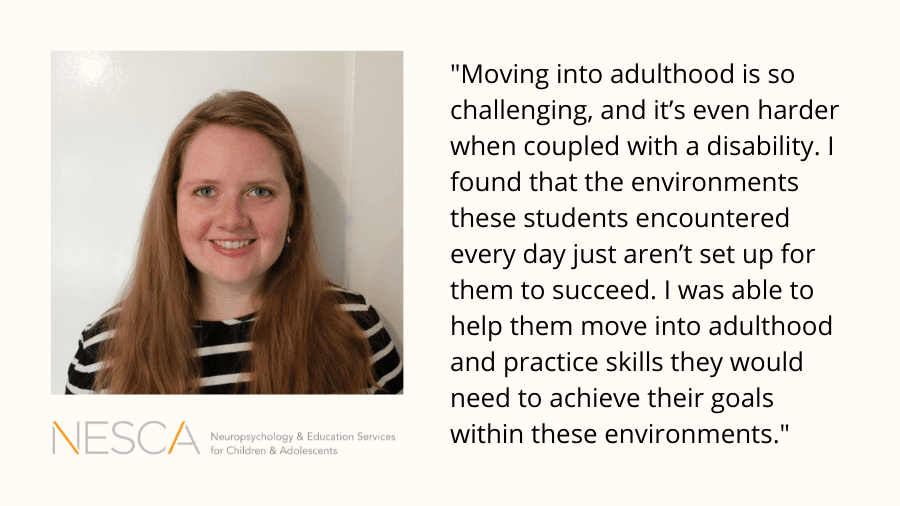
Right after college, I worked in an assisted living center in an administrative role. I got to know the Occupational Therapist (OT) there, who was amazing at what she did. She helped people with the skills they needed to do on a daily basis. I asked to shadow her so I could learn more about the profession and what kind of skills she was teaching the residents to do. Energized by what I learned, I then became a Teaching Assistant (TA) in the CASE Collaborative’s high school program. This is where I started to learn about the needs of transition-aged students and how Occupational Therapy played a role in that area. Again, I was fortunate to learn so much from another talented OT, particularly around the importance of transition, with our students who are often underserved on that front. Moving into adulthood is so challenging, and it’s even harder when coupled with a disability. I found that the environments these students encountered every day just aren’t set up for them to succeed. I was able to help them move into adulthood and practice skills they would need to achieve their goals within these environments.

What made you realize that you wanted to work as a Transition Specialist?

I had already developed a passion for working with transition-aged students in the school setting both during my time as a TA and as an occupational therapist at The League School of Greater Boston. I loved working with the students on life skills, emotional regulation, and executive functioning. I found that I most enjoyed working with the students on hands-on, real-life learning. It seemed to be the most important and most effective way that, as an OT, I could help young adults and teens become more self-determined and thrive. They were able to see what they were able to do, and that was exciting!

Why did you join NESCA?

I loved working with students, but I wanted the opportunity to work with transition-aged youth out in the community. It’s often really difficult for this group to generalize what they learn in the school setting to the experiences they face in the community or even at home. I wanted to help them do just that.

I was thrilled to learn that NESCA offers Transition and Coaching services since I didn’t know anything like that existed outside of an academic setting. I initially joined NESCA as an Occupational Therapist; Executive Function and Real-life Skills Coach on a per diem basis during the summer of 2021. I got to take the skills our teens and young adults learn in school and tailor them to be put into place in the community in a hands-on way. We’re able to teach clients skills like grocery shopping, using the subway or Uber to get to where they need to go, making a deposit at the bank and any other skills they may need to succeed in real life. Having recently moved into a full-time Occupational Therapist; Transition Specialist position here, I look forward to doing much more of these kinds of activities!

What is the most rewarding part of what you do?

The most rewarding aspect of what I do is when I actually get to see the client perform the skill(s) that they have had a hard time with and that they have been working toward for so long. Watching them accomplish their goal is so gratifying. When you see that success, it’s a wonderful feeling!

I also love that I am able to do what I do – not only within the walls of a classroom or school – but in the outside world. I always wanted my students to practice the skills that we were working on in the school environment out in the real world so I knew they would be prepared for experiences they were likely to face in their daily lives. This could be anything from placing an order at Starbucks, riding the bus or refilling a prescription. I get to do that with them here at NESCA…and so much more.

What’s your specialty area? Who do you most enjoy working with?

My passion is working with those who are on their way to adulthood. I am definitely where I want to be with the transition-aged youth and young adults! When working with teens, you get to see them prosper and make monumental changes that can help them build a high quality of life, allowing them to be successful and happy for a greater portion of their lifespan.

I really enjoy working with a wide population of clients, including those with mental health challenges, Autism Spectrum Disorders (ASD) and Attention-Deficit/Hyperactivity Disorder (ADHD). I especially find it rewarding to work with young adults with mental health issues, such as anxiety or depression, to help manage those challenges and lead a fulfilling life.

Tell us a little about yourself. What do you like to do in your spare time?

I grew up in Acton, Massachusetts, and I’m a big outdoors person. I like to spend most weekends in Vermont or New Hampshire, exploring new places to hike. I also enjoy skiing, kayaking and most other outdoor activities. I also like to read, play weekly board games and dance when I get the chance!


About Lyndsay Wood, OTD, OTR/L

Lyndsay Wood, OTD, OTR/L, is an occupational therapist who focuses on helping students and young adults with disabilities to build meaningful skills in order to reach their goals. She has spent the majority of her career working in a private school for students with ASD. She has also spent some time working in an inpatient mental health setting. Lyndsay uses occupation-based interventions and strategies to develop life skills, executive functioning, and emotional regulation. While completely her doctoral degree at MGH Institute of Health Professions, Lyndsay worked with the Boston Center for Independent Living to evaluate transition age services. She uses the results from her research to deliver services in a way that is most beneficial for clients. Specifically, she focuses on hands-on, occupation-based learning that is tailored the client’s goals and interests.
 

To book coaching and transition services at NESCA, complete NESCA’s online intake form

Neuropsychology & Education Services for Children & Adolescents (NESCA) is a pediatric neuropsychology practice and integrative treatment center with offices in Newton and Plainville, Massachusetts, as well as Londonderry, New Hampshire. NESCA serves clients from preschool through young adulthood and their families. For more information, please email info@nesca-newton.com or call 617-658-9800.

Social Skill Concerns in a Time of Reduced Social Opportunities

By | NESCA Notes 2021

By Yvonne M. Asher, Ph.D. 
Pediatric Neuropsychologist

Even in pre-pandemic times, we saw many children and adolescents where social difficulties were the primary concern. Now, almost two years into the life-altering changes brought on by COVID-19, it is rare that I see a young person whose parents do not raise social concerns. Some common concerns include:

My child does not know how to play with peers.

My child is anxious/fearful around peers.

My child avoids peers and/or would rather play alone.

My child does well with 1-2 peers but cannot handle a group.

My child does not have friends and/or does not seem to know how to make friends.

These are all important, valid concerns. Social development is critical to evaluate and understand when we look at a child’s overall functioning, and early social skills lay an important foundation for later independent functioning, fulfilling interpersonal relationships, and vocational/academic success. Concerns about social presentation (i.e., how your child “looks” or behaves socially) can have many varied causes. Sometimes the cause is clear and relatively straightforward to determine with a neuropsychological evaluation. For example, an evaluation may lead to an autism diagnosis, explaining why a child is struggling socially. Other times, the exact cause is unclear, and probably related to many different factors all coming together. For example, children with ADHD very often present with social challenges, though the path from ADHD to social problems is not always “cut and dry.”

For children coming in to testing now (and over the past 18 months), some of the biggest complicating factors are the social isolation, online learning, and reduced social opportunities related to the pandemic. This is not to say that there are no longer clear cases where a child has autism at the root of their social difficulties – there certainly are. However, for each child now, we must consider the impact that COVID has had on their specific social development. This will depend on the child’s age (and age at the onset of the pandemic), school placement and educational environment, family structure (e.g., siblings and/or other children in the home), and community policies. For example, young children who are attending daycare/private preschool may actually not have missed as much socialization time, as many daycares re-opened after only a few months of closure. This is not to minimize the disruption or extreme challenge of such closures to families; for young children, however, it is likely that their social development is not radically impacted by a few months of reduced social opportunities. In contrast, an elementary-age child may have experienced well over a year of reduced socialization, with remote learning in place for many communities until the fall of 2021.

In all cases, pre-existing and/or co-occurring areas of difficulty are extremely important in our conceptualization of why a child is struggling socially. If your child will have an evaluation soon and you have social concerns, you can prepare by thinking about:

  • What was my child like socially before COVID?
    • Did they have strong friendships? Did they have conflict or “drama” with peers often? Were they invited to playdates and/or birthday parties?
  • What was my child like emotionally before COVID?
    • Happy? Easy-going? Quiet and shy? Sensitive? Irritable?
  • What were the practical, observable things that changed from March 2020 through the present?
    • How much time did they spend doing online learning? Did someone in their family become very ill? Lose a job? How isolated were they?
  • What was my child’s response to the things that happened above?
    • Did they enjoy online learning? Were they fearful about becoming sick? Did they miss spending time with friends or family?
  • What other areas seem to be challenging for them?
    • Communicating? Reading? Managing feelings? Paying attention?

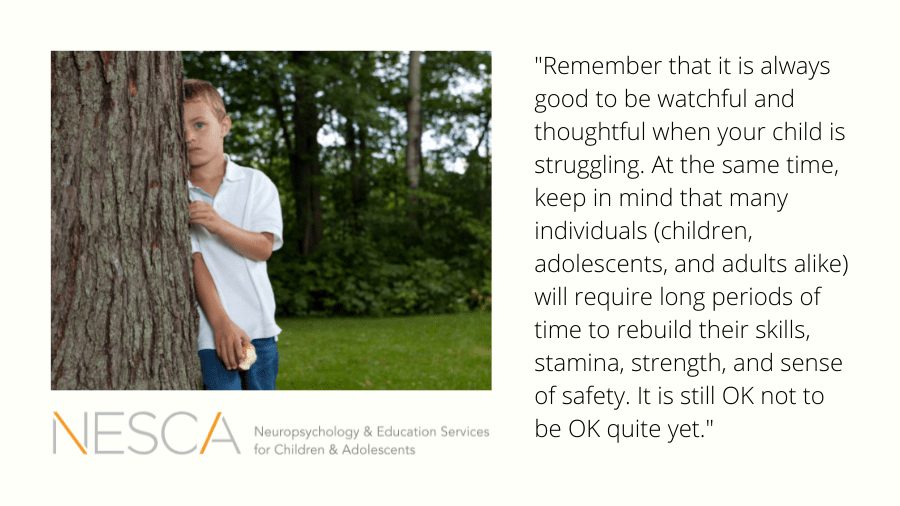
All of these are helpful pieces of information that you can communicate to an evaluator. This will build context for the concerns that you see now, and help us move through the web of complex possibilities that may be contributing to your child’s social challenges. Remember that it is always good to be watchful and thoughtful when your child is struggling. At the same time, keep in mind that many individuals (children, adolescents, and adults alike) will require long periods of time to rebuild their skills, stamina, strength, and sense of safety. It is still OK not to be OK quite yet.


About the Author

Dr. Yvonne M. Asher enjoys working with a wide range of children and teens, including those with autism spectrum disorder, developmental delays, learning disabilities, attention difficulties and executive functioning challenges. She often works with children whose complex profiles are not easily captured by a single label or diagnosis. She particularly enjoys working with young children and helping parents through their “first touch” with mental health care or developmental concerns.
Dr. Asher’s approach to assessment is gentle and supportive, and recognizes the importance of building rapport and trust. When working with young children, Dr. Asher incorporates play and “games” that allow children to complete standardized assessments in a fun and engaging environment.

Dr. Asher has extensive experience working in public, charter and religious schools, both as a classroom teacher and psychologist. She holds a master’s degree in education and continues to love working with educators. As a psychologist working in public schools, she gained invaluable experience with the IEP process from start to finish. She incorporates both her educational and psychological training when formulating recommendations to school teams.

Dr. Asher attended Swarthmore College and the Jewish Theological Seminary. She completed her doctoral degree at Suffolk University, where her dissertation looked at the impact of starting middle school on children’s social and emotional wellbeing. After graduating, she completed an intensive fellowship at the MGH Lurie Center for Autism, where she worked with a wide range of children, adolescents and young adults with autism and related disorders.


Neuropsychology & Education Services for Children & Adolescents (NESCA) is a pediatric neuropsychology practice and integrative treatment center with offices in Newton, Massachusetts, Plainville, Massachusetts, and Londonderry, New Hampshire, serving clients from preschool through young adulthood and their families. For more information, please email info@nesca-newton.com or call 617-658-9800.


To book an appointment with Dr. Yvonne Asher, please complete our Intake Form today. For more information about NESCA, please email info@nesca-newton.com or call 617-658-9800.


The Power of a List

By | NESCA Notes 2021

By Yvonne M. Asher, Ph.D. 
Pediatric Neuropsychologist

For so many children, adolescents, and young adults, I find myself recommending something that seems too simple to be of much use – a list. The power of lists has been identified and described in depth by several experts, such as Atul Gawande (The Checklist Manifesto – an excellent read). These books often discuss efficiency in the workplace, health and safety practices, and maintaining consistency in products or services. As adults, these are the things we often care about – ensuring that we are efficient, consistent, and getting things done.

In my practice, I recommend lists for different reasons. I recommend lists to teach executive functioning skills, such as planning, task initiation, organization, and task monitoring. Lists are also incredibly helpful for children who struggle to hold on to information. These children often miss information that is stated aloud, such as a parent giving directions or a teacher explaining instructions. Their brains often struggle to “keep up” with the pace of information presented in the world. Having the information written down in an organized manner, such a list, can help them access the information without time constraints.

Here is a quick example:

On a typical weekday morning, parents alternate checking on their 8-year-old as he gets ready for school. They give reminders of all the things left to do – “Brush your teeth!” “Get dressed!” “Put your homework in your backpack!” Time before the bus becomes shorter and shorter, as does everyone’s patience. Parents think, “We do the same things every single morning! Why is it so hard for him to remember?” Child thinks, “Why can’t they just leave me alone!” Voice volumes increase, tone shifts, and before anyone knows it or means to, there is a shouting match as the bus is pulling up.

Of course, a list won’t stop hurt feelings or eliminate frustration. However, if the child’s “morning routine” is posted somewhere easy to see, he may need far fewer reminders from his parents of all the tasks he has left to do. Frustration may be reduced, and the child can feel successful completing tasks with greater independence.

A list may be steps in a routine, as illustrated above. A list could also be of materials the child needs for baseball practice, the chores that should be done each week, or the limits and expectations around “screen time.” I often spend time with parents discussing the contents of a list, where the list should be placed, and the format it might take. For example, do you want checkboxes next to each item? Do you want the steps to be numbered? Maybe you love arts and crafts, and you want to laminate the list and have Velcro tabs with a “checkmark” that can be placed next to each completed task. The format and purpose vary, but lists are infinitely useful.

For many children, practice using lists is not only helping them to build skills in the moment, but is excellent practice for later life. Developing comfort with the tools and strategies that work best for you is an invaluable aspect of raising our children to become independent adults who can achieve their goals.


About the Author

Dr. Yvonne M. Asher enjoys working with a wide range of children and teens, including those with autism spectrum disorder, developmental delays, learning disabilities, attention difficulties and executive functioning challenges. She often works with children whose complex profiles are not easily captured by a single label or diagnosis. She particularly enjoys working with young children and helping parents through their “first touch” with mental health care or developmental concerns.

Dr. Asher’s approach to assessment is gentle and supportive, and recognizes the importance of building rapport and trust. When working with young children, Dr. Asher incorporates play and “games” that allow children to complete standardized assessments in a fun and engaging environment.

Dr. Asher has extensive experience working in public, charter and religious schools, both as a classroom teacher and psychologist. She holds a master’s degree in education and continues to love working with educators. As a psychologist working in public schools, she gained invaluable experience with the IEP process from start to finish. She incorporates both her educational and psychological training when formulating recommendations to school teams.

Dr. Asher attended Swarthmore College and the Jewish Theological Seminary. She completed her doctoral degree at Suffolk University, where her dissertation looked at the impact of starting middle school on children’s social and emotional wellbeing. After graduating, she completed an intensive fellowship at the MGH Lurie Center for Autism, where she worked with a wide range of children, adolescents and young adults with autism and related disorders.


Neuropsychology & Education Services for Children & Adolescents (NESCA) is a pediatric neuropsychology practice and integrative treatment center with offices in Newton, Massachusetts, Plainville, Massachusetts, and Londonderry, New Hampshire, serving clients from preschool through young adulthood and their families. For more information, please email info@nesca-newton.com or call 617-658-9800.


To book an appointment with Dr. Yvonne Asher, please complete our Intake Form today. For more information about NESCA, please email info@nesca-newton.com or call 617-658-9800.


The Path Back to Fitness

By | NESCA Notes 2021

By: Ann Helmus, Ph.D.
NESCA Founder/Director

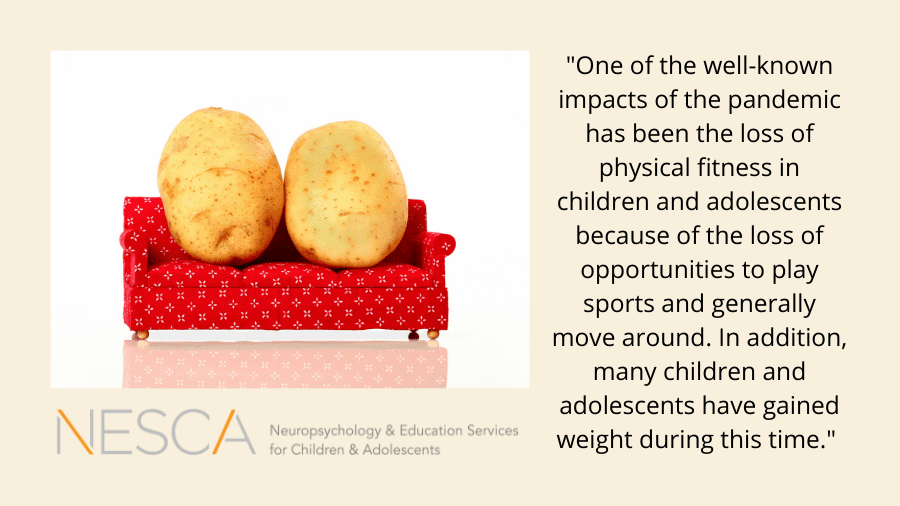
One of the well-known impacts of the pandemic has been the loss of physical fitness in children and adolescents because of the loss of opportunities to play sports and generally move around. In addition, many children and adolescents have gained weight during this time. Maintaining a healthy weight and being physically fit offer many benefits for social-emotional development as well as academic performance. Numerous research studies link physical exercise to significant improvements in the regulation of mood and anxiety as well as attention and executive functioning.

Parents are often at a loss for how to help their child get back into good habits to lose weight, exercise regularly, or get back into a sport. Common parenting approaches, such as offering “helpful suggestions,” encouraging, nagging and bribing usually don’t work for long term—or even short term—positive change. Instead, these approaches often “back fire,” making the child feel even more ashamed or powerless—emotions that are not likely to fuel motivation to change habits.

So how do we support children and adolescents in developing the positive habits that are necessary for maintaining health and fitness? The key lies in empowering the child to determine his or her own goals and establishing their “why” through discussion of why they would like to reach this goal, what they will get by achieving the goal, and, perhaps most important, how they will feel when they reach this goal. This type of motivational interviewing builds internal motivation, which beats external motivators every time in terms of creating long term change.

Once the child or adolescent is clear on what they would like to achieve and why, the next step is determining the behavior changes that will help the child achieve their outlined goal and working with the child to figure out what’s manageable so that success can be ensured. For example, one adolescent might easily commit to a 30-minute daily bike ride, whereas another might want to start with a daily 10-minute walk. Success breeds success, so it is important to set goals that are challenging but also achievable. Throughout this process, the focus is on creating a positive mindset and positive emotional state of empowerment, hopefulness, optimism, and pride.

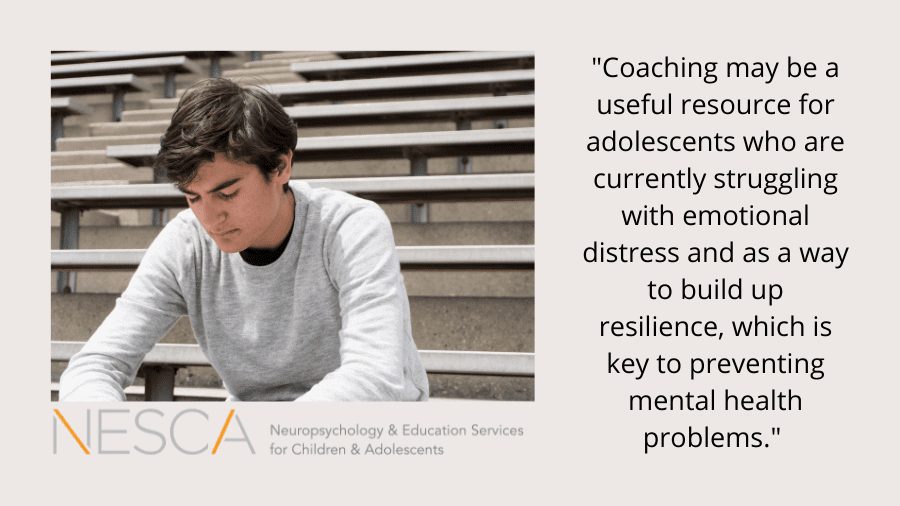
Some children may be open to this type of process with their parents; however, most adolescents will likely not want to be involved at this level with a parent. NESCA offers health and life coaching, aimed at helping adolescents and young adults with this process. Coaching offers a structured approach to helping an adolescent or young adult define his/her own goals and motivations as well as understanding the obstacles that they have encountered in reaching those goals, which are usually limiting beliefs (e.g., “I can never stick to things.”) or faulty self-identities (e.g., “I’m not athletic.”). The coaching process works through a combination of structured activities as well as a highly supportive personal relationship. To learn more, please join us for a webinar on Thursday, September 23 at 1:00 PM ET, view a previous webinar on this topic on our website or contact Health & Life Coach Billy Demiri for a free 30-minute consultation to determine if health coaching might be helpful for your child.


About the Author

NESCA Founder/Director Ann Helmus, Ph.D. is a licensed clinical neuropsychologist who has been practicing for almost 20 years. In 1996, she jointly founded the  Children’s Evaluation Center (CEC) in Newton, Massachusetts, serving as co-director there for almost ten years. During that time, CEC emerged as a leading regional center for the diagnosis and remediation of both learning disabilities and Autism Spectrum Disorders.
In September of 2007, Dr. Helmus established NESCA (Neuropsychology & Education Services for Children & Adolescents), a client and family-centered group of seasoned neuropsychologists and allied staff, many of whom she trained, striving to create and refine innovative clinical protocols and dedicated to setting new standards of care in the field.

Dr. Helmus specializes in the evaluation of children with learning disabilities, attention and executive function deficits and primary neurological disorders. In addition to assessing children, she also provides consultation and training to both public and private school systems. She frequently makes presentations to groups of parents, particularly on the topics of non-verbal learning disability and executive functioning.

To book an evaluation with Dr. Helmus, NESCA Founder and Director, or one of our many other expert neuropsychologists or therapists, complete NESCA’s online intake form

Neuropsychology & Education Services for Children & Adolescents (NESCA) is a pediatric neuropsychology practice and integrative treatment center with offices in Newton and Plainville, Massachusetts, as well as Londonderry, New Hampshire. NESCA serves clients from preschool through young adulthood and their families. For more information, please email info@nesca-newton.com or call 617-658-9800.

Rating Scales/Questionnaires – Why Do We Give Them and Why Do They Matter?

By | NESCA Notes 2021

By Yvonne M. Asher, Ph.D. 
Pediatric Neuropsychologist

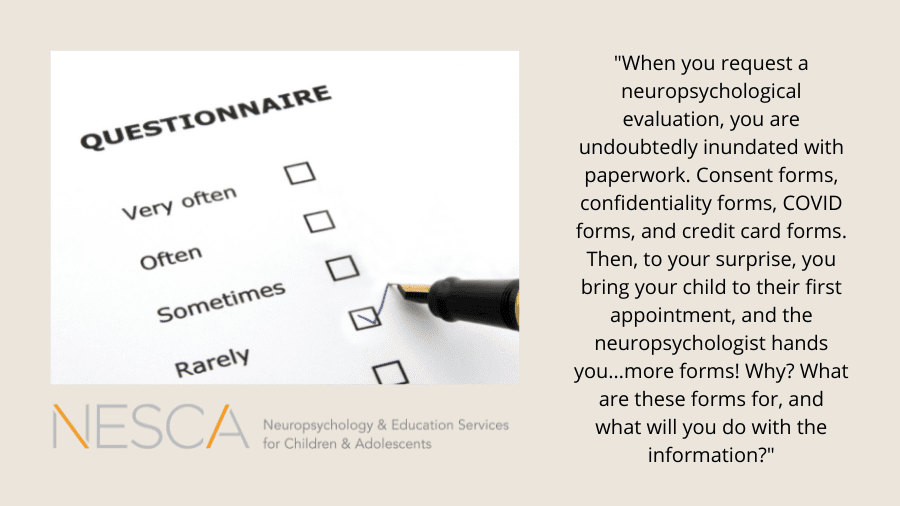
When you request a neuropsychological evaluation, you are undoubtably inundated with paperwork. Consent forms, confidentiality forms, COVID forms, and credit card forms. Then, to your surprise, you bring your child to their first appointment, and the neuropsychologist hands you…more forms! Why? What are these forms for, and what will you do with the information? These are great questions, and always feel free to ask your neuropsychologist. Here are some answers I give when I am asked:

Why do you need so many forms?

Our goal in completing a neuropsychological evaluation is to have as comprehensive picture of a child as possible. This means gathering information from many sources, including what you and/or others are noticing that is raising concerns (what we discuss in the intake appointment), prior evaluations and documentation (e.g., their IEP, testing done at school), your child’s performance on our assessment measures (what they do when they come to the office), and important people’s perceptions of your child’s functioning in daily settings – this is what we assess through the rating scales (also called questionnaires). The parent/teacher rating scales are an important source of information because they not only capture your concerns, but also show us how your concerns may be similar to or different from parents (or teachers) of same-age children. For example, concerns with “attention and focus” are common for us to hear. Attentional skills develop gradually over time, and having a standardized rating scale that evaluates your concerns (or your child’s teacher’s concerns) with attention helps us understand how far off your child’s skills are from what is expected for their age.

What do the forms ask about?

This depends on why your child is being referred for a neuropsychological evaluation. For example, if your child is referred for a question around autism, you will likely be given forms that ask about their social functioning, such as how they do at playdates, birthday parties, the playground, or other community spaces with peers. Your child’s teacher would also likely be given forms to evaluate how your child interacts with peers at school, such as how they do during lunch, snack, and recess; how well they work in groups; and if they have been successful in forming strong friendships. If the concerns are more related to mental health, you may be given forms that ask about their symptoms of anxiety, depression, etc.

What will you do with the forms?

We will take your ratings (or your child’s teacher’s ratings) and compare them to normative data. This is a fancy way of saying “we will see how your child compares to kids their age.” Then, we will take that information to help us form a more comprehensive picture of your child’s profile and our recommendations for how to best help and support them. For example, something I see often is a concern with kids following directions, remembering what they are told to do, and finishing all the steps necessary for a task or project (e.g., getting ready for school or bed). This can be (though certainly isn’t always) a difficulty with working memory or, holding information in mind. We assess working memory in many ways during testing. However, we can’t always see the deficits that parents and teachers see, because testing is inherently different from “real life.” So, rating scales serve as an important source of information in understanding what is going on day-to-day, which helps us to make more comprehensive recommendations.

How do I fill these out?

Please, please, please – read the directions carefully! Each form is meant to evaluate something different. For example, some ask you about your child’s emotional state “in general,” others ask about how they have been behaving over the last two weeks, and others ask about how well they can complete tasks independently (i.e., without any help or guidance). Do your best to complete each question – skipping questions that seem “irrelevant” or “inappropriate” may impact how well we can use the information later on. We realize that not every question will apply to every child – we are using the best tools we have, and some are designed to assess a wide range of children. If you have questions about the wording or phrasing, please ask your neuropsychologist – we really don’t mind!

I have a teenager. Why don’t you just ask them about how they are feeling?

If your child is old enough, we will absolutely talk to them about their perceptions of what is going on, what their concerns are, and what has been helpful for them. Many rating scales have a “child” or “self-report” version, and we may have them complete those, in addition to talking more conversationally about how they are doing.


About the Author

Dr. Yvonne M. Asher enjoys working with a wide range of children and teens, including those with autism spectrum disorder, developmental delays, learning disabilities, attention difficulties and executive functioning challenges. She often works with children whose complex profiles are not easily captured by a single label or diagnosis. She particularly enjoys working with young children and helping parents through their “first touch” with mental health care or developmental concerns.

Dr. Asher’s approach to assessment is gentle and supportive, and recognizes the importance of building rapport and trust. When working with young children, Dr. Asher incorporates play and “games” that allow children to complete standardized assessments in a fun and engaging environment.

Dr. Asher has extensive experience working in public, charter and religious schools, both as a classroom teacher and psychologist. She holds a master’s degree in education and continues to love working with educators. As a psychologist working in public schools, she gained invaluable experience with the IEP process from start to finish. She incorporates both her educational and psychological training when formulating recommendations to school teams.

Dr. Asher attended Swarthmore College and the Jewish Theological Seminary. She completed her doctoral degree at Suffolk University, where her dissertation looked at the impact of starting middle school on children’s social and emotional wellbeing. After graduating, she completed an intensive fellowship at the MGH Lurie Center for Autism, where she worked with a wide range of children, adolescents and young adults with autism and related disorders.


Neuropsychology & Education Services for Children & Adolescents (NESCA) is a pediatric neuropsychology practice and integrative treatment center with offices in Newton, Massachusetts, Plainville, Massachusetts, and Londonderry, New Hampshire, serving clients from preschool through young adulthood and their families. For more information, please email info@nesca-newton.com or call 617-658-9800.


To book an appointment with Dr. Yvonne Asher, please complete our Intake Form today. For more information about NESCA, please email info@nesca-newton.com or call 617-658-9800.


Skip to content