NESCA’s Newton, MA location has immediate availability for neuropsychological evaluations. Our MA clinicians specialize in the following evaluations: Neuropsychological; Autism; and Emotional and Psychological, as well as Academic Achievement and Learning Disability Testing.

Visit www.nesca-newton.com/intake for more information or to book an evaluation.

Tag

MENTAL HEALTH Archives - Page 2 of 5 - NESCA

Subscribe to NESCA Notes

The Power of Mindset

By | NESCA Notes 2024

By: Carly Loureiro, MSW, LCSW
Licensed Clinical Social Worker and Executive Function Coach

Phrases like “mind over matter,” “the glass is half full,” and “making lemonade out of lemons,” are more than just popular sayings; they capture the essence of having a positive mindset. With the complexities that everyday life can bring, maintaining a positive mindset can feel overwhelming. Negative thoughts and emotions often creep in, clouding our judgment and affecting our mental health. Learning how to maintain a positive mindset can help individuals overcome these negative thoughts, leading to a decrease in anxiety and depression symptoms, higher self-esteem, as well as improved physical well-being and interpersonal relationships. Those needing assistance in gaining control of their mindset should consider Cognitive Behavioral Therapy, a therapeutic intervention that can aid in strengthening this skill, leading to desired outcomes.

Understanding Mindset

A mindset is a set of beliefs or attitudes that shape how we perceive and respond to situations. Broadly, mindset can be categorized as positive or negative:

  • Positive Mindset: Involves seeing challenges as opportunities, maintaining optimism, and focusing on potential rather than limitations.
  • Negative Mindset: Involves focusing on problems, expecting unfavorable outcomes, and feeling overwhelmed by obstacles.

Mindset shapes our internal dialogue and emotional responses, such as how we react to challenges. A positive mindset promotes constructive thoughts and emotions, leading to feelings of hope, joy, and contentment. For example, someone with a positive mindset is more likely to engage in proactive coping strategies, such as going for a walk, engaging in positive self-talk, and practicing mindfulness and gratitude. Conversely, a negative mindset can foster destructive thoughts and emotions, leading to avoidance, self-sabotage, or other harmful behaviors.

The Role of Cognitive Behavioral Therapy (CBT)

Cognitive Behavioral Therapy (CBT) is a powerful and effective psychotherapeutic treatment that helps individuals understand how their thoughts, feelings, and behaviors are interconnected. A CBT therapist helps clients learn new skills and strategies to gain more control of their thoughts, leading to a happier and healthier approach to problem solving. CBT is widely used to treat a range of mental health disorders, including depression, anxiety, phobias, and PTSD.

See below a visual of the cognitive triangle, often used to help people better understand the concept of CBT and how it applies to their own personal experiences:

Components of CBT That Contribute to Positive Mindset:

  1. Self-awareness: Becoming aware of your thought patterns and where they originated, noticing when you tend to think negatively, and really understanding how it influences your feelings and behaviors
  2. Cognitive Reframing: Challenging negative thought patterns when you notice them and replacing them with thoughts that are more positive, leading to actions that are productive
  3. Mindfulness and Relaxation Techniques: In order to gain more control of your thoughts, incorporating mindfulness and relaxation techniques can help individuals reset and shift their thinking patterns
  4. Gratitude Practice: Regularly reflecting on things you’re grateful for can also help shift your focus from what’s lacking to what’s abundant in your life, increasing motivation and self-esteem
  5. Positive Affirmations: Reinforcing your self-worth and capabilities with positive affirmations
  6. Homework: CBT therapists may assign tasks to be completed in between sessions in order to practice newly learned skills

An Example:

Tanya, a ninth grade student, has an upcoming history final. Final exams tend to be difficult, as her slower processing speed impacts her ability to grasp a magnitude of details. With her executive function coach, Tanya has learned new ways to memorize larger quantities of information, such as making associations and using mnemonic devices and visuals. In the past, prior to a test or quiz, Tanya got stuck in negative thinking patterns, such as telling herself she will not get a passing score, or that she isn’t smart enough. These negative thoughts would make her feel hopeless, inadequate, and self-conscious. Before the test or quiz, she’d become distracted by these thoughts, not putting forth her best effort, resulting in scores that didn’t reflect her knowledge.

Tanya began working with a CBT therapist to help her mitigate the impact of her performance anxiety. By incorporating mindfulness, gratitude, and thought log exercises (see examples below), she learned how to reframe unhelpful thoughts into productive ones, leading to scores that matched her knowledge and skill set. Instead of telling herself, “I won’t pass this test,” she’d tell herself, “I studied for this test, therefore I have the knowledge and my score will reflect that!” By shifting her mindset and correcting the negative thoughts, Tanya learned the impact they had on her performance. She’s now learning how to apply these strategies to all of her academic classes to normalize having a positive mindset.

Examples of Exercises:

Mindfulness exercise: Each morning while eating breakfast, Tanya listens to a quick 2-minute guided meditation, helping her become more present and ready for the day, moving away from negative thoughts that could impede her success.

Gratitude exercise: Tanya completes a prompt in her gratitude journal before bed, reflecting on daily highlights, such as something that made her smile that day, or a way she helped a friend or classmate.

Thought log exercise: Tanya’s therapist created a thought log for her to challenge her negative thoughts when she found herself experiencing them, and replacing them with an uplifting thought.

Looking for support in this area?

Negative thoughts can be difficult to overcome alone. If you are interested in CBT to receive support in gaining control of harmful thinking patterns, you can book a free introductory call with me by filling out our online intake form.


About the Author

Carly Loureiro is a Licensed Clinical Social Worker practicing in Massachusetts and Rhode Island. Having worked both in private practice and schools, she has extensive experience supporting students, families and educational teams to make positive changes. Mrs. Loureiro provides executive function coaching and psychotherapy to clients ranging from middle school through adulthood. She also offers consultation to schools and families in order to support her clients across home and community environments.

To schedule an appointment with one of NESCA’s counselors, coaches, or other experts, please complete our online intake form

NESCA is a pediatric neuropsychology practice and integrative treatment center with offices in Newton, Plainville, and Hingham, Massachusetts; Londonderry, New Hampshire; and staff in the greater Burlington, Vermont region and Brooklyn, New York, serving clients from infancy through young adulthood and their families. For more information, please email info@nesca-newton.com or call 617-658-9800.


Supporting Teens: Helping Them Engage in Treatment

By | NESCA Notes 2024

By: Moira Creedon, Ph.D. 
Pediatric Neuropsychologist, NESCA

I was fortunate to join my colleague, Kelley Challen, Ed.M., CAS, in a recent presentation about fostering self-advocacy and self-determination for young adults. The focus of our conversation was around encouraging teens to participate in the special education process as active members of their IEP team. It got me thinking: what are other ways that teens should be included in decision making? How do we ensure that teens are included in vital treatment decisions? And what do we do about those teens who are reluctant to engage?

There is a robust body of empirical evidence to suggest that the combination of medications and therapy is most effective at reducing symptom severity for emotional health disorders including anxiety and mood disorders. While adults on a treatment team may be well aware of this evidence, teens may look elsewhere to gather information – turning to the less than reliable sources of anecdotal conversations and social media. If we want teens to participate in the treatment planning process armed with greater information, there are a few steps we can follow to support their treatment engagement.

First, when the question relates to medications, I always encourage teens to have very open discussions with their parents and providers about the risks and side effects of medications. It’s incredibly helpful to open conversations by asking teens what they already know or what they have already heard or read about different types of medications. This helps to eliminate any confusion or misperceptions, either about negative side effects or about their unrealistic expectations that things will be “magically cured” in a very short period of time. It is important for teens to understand how long medications may work in their system, how long they need to take the medication to reach the therapeutic dosing, and the risks of not taking it or experimenting with other substances which may interfere with the mechanisms of action. For anxious kids who may not feel comfortable speaking up within an appointment, I encourage families to make a list of their teen’s questions and a plan for who will read the list of questions in the appointment. There are valuable supports that can help with the executive functioning demands needed to remember medications (e.g., daily pill boxes, setting alarms, or reminders on their phone, etc.).

When it comes to therapy, it is relatively common for me to hear a parent state that a child is reluctant or unwilling to attend therapy. There may be many very valid reasons why a teen may feel this way, and it is a sign that they are engaging in the developmental task of individuation when they push back on this recommendation. We don’t need to fear this struggle, and we can use it as an opportunity to invite a conversation. For teens who struggle to explain why they are reluctant about treatment, I might share a few common explanations to see if they resonate with the teen: “Some teens think it’s boring, or it’s too hard, or it’s a waste of time. Some worry their parents will know each thing they say, or feel like they are not in control of the treatment goals.” It may also be as simple as finding virtual sessions to be frustrating and impersonal, or finding the commute to an office for an in-person session to be time consuming. Many of these logistic concerns can be addressed with scheduling. It is also important for teens to know that therapy is not “one size fits all.” There are different forms of therapeutic treatment, and it is important to find a provider with experience delivering evidence-based treatments for the specific diagnosis that your teen carries.

One of the most important factors in treatment adherence is a trusting therapeutic relationship. Those relationships take time to build. If a teen is not feeling well connected to their therapeutic provider, I encourage them to have a discussion either directly with their provider about this or to explore other treatment providers. The same way someone may not wish to be friends with every person they meet, there are certain connections that just “feel right.” Skilled providers also use techniques, such as Motivational Interviewing, to encourage teens to develop their own goals for treatment. This can help to diffuse the argument that a teen is only engaging in a treatment to appease their parent or caregiver. These powerful tactics include important elements of empathy, highlighting discrepancies in thinking (or in conflicting actions and behaviors), accepting (and even expecting) resistance, and promoting self-efficacy.

In helping teens to find their own voice in the treatment process, a power struggle or a demand for engagement from a parent is unlikely to get us very far. Bringing in the support of other trusted people in a teen’s life (e.g., teacher, school counselor, coach, uncle or aunt, older cousin) may also be a useful way to open the discussion about why therapy feels stressful. While teens may wish for things to get better on their own, ignored or avoided struggles do not just go away magically. Treatment can be hard as it does involve facing anxiety-provoking material. However, teens will be facing this content with a trusted adult and armed with new tools to master these triggers. It is important to acknowledge that therapy can be hard work, and they will not be doing it alone. Engaging in special self-care routines after a therapy session, particularly if parents can acknowledge and create space for these, can be a powerful way to encourage commitment to treatment. When teens feel more control in engaging with their treatment, they are far more likely to persist.

For more information on enhancing motivation for treatment engagement, consider the following resources:


About the Author

Dr. Creedon has expertise in evaluating children and teens with a variety of presenting issues. She is interested in uncovering an individual’s unique pattern of strengths and weaknesses to best formulate a plan for intervention and success. With experiences providing therapy and assessments, Dr. Creedon bridges the gap between testing data and therapeutic services to develop a clear roadmap for change and deeper of understanding of individual needs.


If you are interested in booking an evaluation with Dr. Creedon or another NESCA neuropsychologist, please fill out and submit our online intake form


NESCA is a pediatric neuropsychology practice and integrative treatment center with offices in Newton, Plainville, and Hingham, Massachusetts; Londonderry, New Hampshire; the greater Burlington, Vermont region; and Brooklyn, NY (coaching services only) serving clients from infancy through young adulthood and their families. For more information, please email info@nesca-newton.com or call 617-658-9800.

The Intersection of Mental Health and Executive Function

By | NESCA Notes 2024

By: Carly Edelstein, MSW, LCSW
Licensed Clinical Social Worker and Executive Function Coach

Mental Health challenges and executive function (EF) deficits are often intertwined, as one can easily impact the severity of the other. As a psychotherapist and executive function coach, I find myself regularly assessing my clients with comorbid EF and mental health challenges in order to identify which presented first.

Why does this matter?
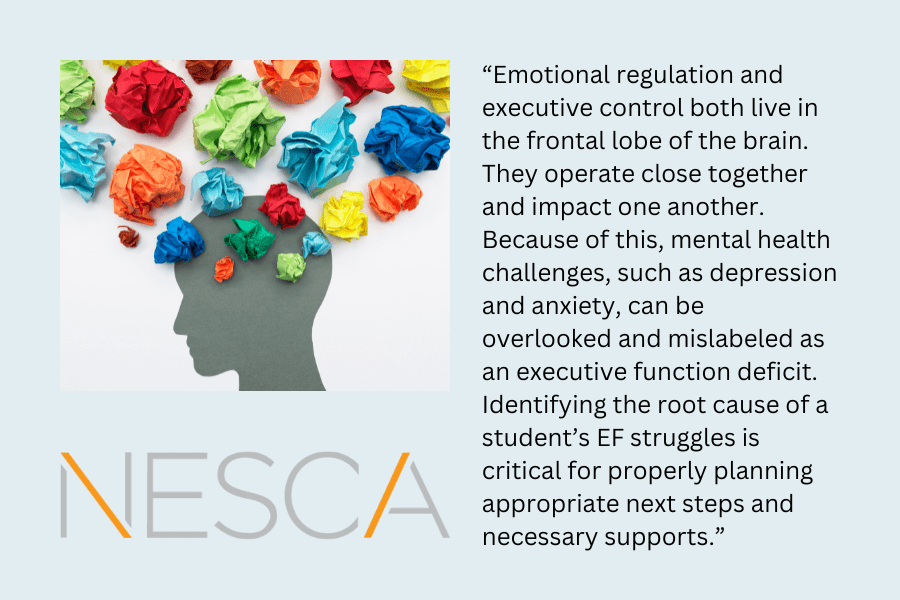
Emotional regulation and executive control both live in the frontal lobe of the brain. They operate close together and impact one another. Because of this, mental health challenges, such as depression and anxiety, can be overlooked and mislabeled as an executive function deficit. Identifying the root cause of a student’s EF struggles is critical for properly planning appropriate next steps and necessary supports. For example, if a student’s depression is causing them not to initiate and/or complete work, the depression usually needs to be addressed before they receive EF coaching. If the student is already working with a mental health professional, such as a therapist, it is important for them to be cleared by the therapist to add in an EF coach. Working on too many new skills at once can be overwhelming, so it is important that enough foundational coping skills are learned first.

An example of anxiety causing an EF deficit:
Clara gets extremely anxious in social situations due to a lack of self-esteem. She had a negative experience in middle school where other students made fun of her lisp whenever she read out loud in class. Now, in high school, Clara is afraid to ask questions, even when she is confused. She is left not fully understanding the material, class assignment expectations, or how to approach studying for quizzes and tests. Rather than asking for help, Clara keeps to herself. Even when teachers offer to help her, she responds with, “Thank you, but I’m all set.”

Clara’s parents can see that she struggles to initiate homework assignments, rarely studies for upcoming tests, and that her grades are declining. They don’t fully understand why, because when they ask her, she is quick to deflect and change the subject.

By checking in with Clara’s teachers, her parents may receive feedback that she often shies away from their support. With a lack of understanding why, her teachers aren’t sure how else to approach the situation other than continuing to check in. Jumping into EF coaching to address her task initiation and study skills may help, but it doesn’t address the root of the problem. A more appropriate action plan would be for Clara to first receive psychotherapy, addressing the bullying that led to her social anxiety and self-esteem issues and then shifting to EF skill building.

An example of an EF deficit causing anxiety/depression:
Gabriel is a seventh grade student diagnosed with ADHD. He has a difficult time advocating for himself and asking for help due to some additional communication challenges. His ADHD also makes it challenging to stay on task and pay attention to details. This results in Gabriel constantly forgetting what his homework assignments are and when they are due, creating a lot of missing work. Gabriel’s teachers are often redirecting him and reminding him of incomplete work. They have tried to help him develop plans to make it up, but he struggles to follow through with these plans. At home, Gabriel’s parents often share their frustrations with him and try to help him get back on track. With adults constantly reminding him he’s behind, Gabriel has developed internalized anxiety, often wondering why he can’t be like everyone else. He tries so hard to remember what his homework is and when it is due, but can never seem to get it right. Over time, he begins to experience symptoms of depression as his self-esteem declines.

In this situation, Gabriel’s lack of EF skills is the root cause of his negative thinking patterns. By receiving EF coaching, he can learn ways to regularly track his assignments. He can be taught how to break them down into smaller, more manageable tasks in a way that helps him overcome procrastination. Additionally, he is able to become proactive and communicate with his teachers so that they are kept on the same page. As these skills get stronger, Gabriel becomes more responsible, and gets praise from his teachers and parents in return. Given the impact of this situation, he may also benefit from short-term counseling to better understand the connection between his EF and anxiety. Increased self-awareness helps students learn how to advocate for themselves the next time they encounter a similar situation.

Does this sound familiar?
These scenarios are common and can be difficult to navigate without proper assessment and guidance from professionals. If you or your child struggles with mental health and EF-related challenges and you are not sure where to start, book a free introductory call with me or one of our other wonderful and experienced EF coaches. NESCA also offers comprehensive neuropsychological evaluation services and neuropsychological consultation for families who are wondering about possible missed learning, attention, mental health, or other diagnoses. We look forward to working with you!


About the Author

Carly Edelstein is a Licensed Clinical Social Worker practicing in Massachusetts and Rhode Island. Having worked both in private practice and schools, she has extensive experience supporting students, families and educational teams to make positive changes. Ms. Edelstein provides executive function coaching and psychotherapy to clients ranging from middle school through adulthood. She also offers consultation to schools and families in order to support her clients across home and community environments.

To schedule an appointment with one of NESCA’s counselors, coaches, or other experts, please complete our online intake form

NESCA is a pediatric neuropsychology practice and integrative treatment center with offices in Newton, Plainville, and Hingham, Massachusetts; Londonderry, New Hampshire; and staff in the greater Burlington, Vermont region and Brooklyn, New York, serving clients from infancy through young adulthood and their families. For more information, please email info@nesca-newton.com or call 617-658-9800.


Sibling Stress: How to Support the Siblings of a Child with Emotional Needs

By | NESCA Notes 2024

By: Moira Creedon, Ph.D. 
Pediatric Neuropsychologist, NESCA

A child with significant mental health or developmental needs impacts the whole family system. The impact is multifaceted – from the way that a child interacts in the home environment to the challenging logistics of coordinating outpatient care and appointments. Families have to make sacrifices with their time, attention, and financial resources to address the mental health needs of one (and sometimes more than one) child. Families may also arrange schedules, including planning vacations or social events, for the family in order to accommodate treatment. It can add more stress when parents stop to consider: how is this impacting the other kids in the family?

To buffer siblings against negative impacts from being in the home with someone struggling with mental health:

  • Create an environment of safety and predictability. Talk in a family meeting about basic safety needs for the household – things like being safe with your body, being safe with property, and maintaining basic travel safety (e.g., staying buckled in the car). It is important that all siblings hear the rules and the consequences for violating the rules. If there is an episode of dysregulation, it can be very helpful to return to this conversation again.
  • Create a plan for when there is dysregulation. Remind your child/children without mental health concerns that the job of the parent is to re-establish safety, and where your other child/children should go while you address a problem. This can be their bedroom, basement playroom, or other identified place in the home. Take a moment to identify Plan B for where the safe place is if the dysregulation is happening in a common space. Talk to your child about what activities may distract and distance them from the commotion.
  • Remind your child what adults are available for them. If you are in a two-parent household, one parent can address dysregulation, and the other can stay with the sibling(s). If you are in a one-parent household (or a partner is not home), remind your child that they can call the other parent, aunt, uncle, grandparent, or identified friend or neighbor if they need some reassurance.
  • Put on your “oxygen mask” first. After an incident of dysregulation, check in with yourself as a parent to regulate emotionally before approaching your other child/children. Take a few moments for deep breaths or progressive muscle relaxation to calm your own nervous system. Once you are re-regulated, your message that safety has been re-established will be more soothing and believable.
  • Set aside time in each day to connect with each child. The focus can often be on positive connection with the child struggling. But, all children need the positive connection, praise, and child-driven interactions. This can help ensure that all children receive the attention they need to thrive.
  • Hold the frame. It can be easy to relax the rules with a sibling whose struggles and behavior may seem mild by comparison. It’s important to establish standards that work for each child’s unique skills and needs. It’s worth a candid conversation with each child about what the expectations are and why.
  • Use the village. Establishing a support system is critical to buffer the entire family from the overwhelming stress that can accompany emotional health issues. Enlist the support of other family members, neighbors, teammates’ families, or school personnel. If you feel that your support system is small, start with your child’s pediatrician or school to connect to community resources.
  • Reach out for help. It’s important to closely monitor siblings for signs of increased anxiety, stress response, low mood, or atypical behaviors. If you see classic signs of anxiety (fight/flight/freeze), reach out to your child’s school or pediatrician to evaluate symptoms and initiate treatment.

Additional resources to support siblings:


About the Author

Dr. Creedon has expertise in evaluating children and teens with a variety of presenting issues. She is interested in uncovering an individual’s unique pattern of strengths and weaknesses to best formulate a plan for intervention and success. With experiences providing therapy and assessments, Dr. Creedon bridges the gap between testing data and therapeutic services to develop a clear roadmap for change and deeper of understanding of individual needs.
 

If you are interested in booking an evaluation with Dr. Creedon or another NESCA neuropsychologist, please fill out and submit our online intake form


NESCA is a pediatric neuropsychology practice and integrative treatment center with offices in Newton, Plainville, and Hingham, Massachusetts; Londonderry, New Hampshire; the greater Burlington, Vermont region; and Brooklyn, NY (coaching services only) serving clients from infancy through young adulthood and their families. For more information, please email info@nesca-newton.com or call 617-658-9800.

Pediatric-onset Multiple Sclerosis

By | Nesca Notes 2023

By: Ferne Pinard, Ph.D.
NESCA Pediatric Neuropsychologist

Although typically thought of as an “adult illness,” children and adolescents can get diagnosed with multiple sclerosis (MS). Pediatric-onset multiple sclerosis (POMS) occurs when MS is diagnosed before age 18.

Approximately 30% of POMS patients show evidence of cognitive impairment. Problems with attention, working memory, processing speed, and language (including word retrieval) are commonly reported. Poorer verbal expression/vocabulary acquisition have also been reported among patients who were diagnosed at younger ages. Overall IQ, memory, complex attention (i.e., shifting attention between competing stimuli) and visual-motor integration skills may also be impacted. These cognitive deficits as well as absences due to illness and fatigue can undermine the student’s academic performance (i.e., grades), leading to feelings of inadequacy and a sense of not being able to “keep up with” their peers academically.

However, POMS can also affect the child’s/adolescent’s social and emotional functioning. Fatigue, depression, bowel/bladder problems and physical limitations can decrease a child’s/adolescent’s interest in socializing. Heat sensitivity can limit participation in physical activities while in a warm environment, which can make them feel even more isolated. They may also feel embarrassed and have lowered self-esteem because they feel different from peers. Children/adolescents with chronic illnesses are also at an increased risk for teasing and bullying from peers. It is no surprise then that children/adolescents with MS are vulnerable to psychiatric disorders. Depression, anxiety, and bipolar disorder occur more often in the MS population than the general population.

Multiple sclerosis is an unpredictable disease. Symptoms can come and go without apparent reason or warning, and no two people experience MS symptoms in exactly the same way. Some symptoms are clearly visible (like weakness, causing walking problems) or less visible (like fatigue or cognitive concerns). It is not possible to predict when symptoms will occur or what parts of the body will be affected. MS symptoms can change from week to week.

It is important that school officials understand that because symptoms come and go without warning, accommodations need to be in place, even when symptoms seem to diminish for a time. Accommodations can include:

    • Home tutoring when students are not able to attend school
    • Excused absences and a reasonable plan to make up missed work
    • Extended time for tests/exams/projects
    • Second set of books at home
    • Preferential seating for visual, attention, or bladder/bowel issues
    • Bathroom pass/extended bathroom time
    • Portable air conditioner/fan
    • Elevator access
    • Psychotherapeutic support
    • Plan to manage fatigue:
      • Frequent/scheduled breaks
      • Modification of class schedule
      • Workload modifications

A detailed neuropsychological evaluation is essential for objectively measuring any neurocognitive deficits, tracking them over time, and informing treatment recommendations. Speech/language, audiology, occupational therapy, and physical therapy evaluations may also be warranted depending on the severity of symptoms to determine whether these services are needed. Psychologists, psychiatrists, school guidance counselors, teachers, and school administrators as well as support groups with other patients and families facing this disease should also be part of the child’s/adolescent’s care team.


About Pediatric Neuropsychologist Ferne Pinard, Ph.D.

Dr. Pinard provides comprehensive evaluation services for children, adolescents, and young adults with learning disabilities, attention deficit/hyperactivity disorders (ADHD), and psychiatric disorders as well as complex medical histories and neurological conditions. She has expertise in assessing children and adolescents with childhood cancer as well as neuro-immunological disorders, including opsoclonus-myoclonus-ataxia syndrome (“dancing eyes syndrome”), central nervous system vasculitis, Hashimoto’s encephalopathy, lupus, auto-immune encephalitis, multiple sclerosis (MS), acute disseminated encephalomyelitis (ADEM), and acute transverse myelitis (ATM), and optic neuritis.


To book a neuropsychological evaluation with Dr. Pinard or another expert neuropsychologist at NESCA, complete NESCA’s online intake form


Neuropsychology & Education Services for Children & Adolescents (NESCA) is a pediatric neuropsychology practice and integrative treatment center with offices in Newton and Plainville, Massachusetts; Londonderry, New Hampshire; and Coaching and Transition staff in greater Burlington, Vermont, serving clients from preschool through young adulthood and their families. For more information, please email info@nesca-newton.com or call 617-658-9800.

The Benefits of Volunteering

By | Nesca Notes 2023

By: Kristen Simon, M.Ed, Ed.S
NESCA Transition Specialist; Psychoeducational Counselor

Volunteering has many benefits for school aged students beginning to participate in transition planning. Many charities and organizations rely on volunteers to continue their services and reach more people. In general, volunteering is a great way to form community connections, achieve a sense of purpose, and boost confidence and self-esteem, all while helping those in need. In thinking about a child’s eventual transition to adulthood, there are many additional hidden benefits to volunteering.

  • Build social connections: Volunteering allows individuals to engage and connect with others in a structured environment. Working with others through task completion towards a common goal is a great way for individuals to form friendships and positive connections in a low-pressure setting.
  • Mental health benefits: Volunteering has been shown to decrease symptoms of depression and loneliness. Many studies have shown that helping others and carrying out altruistic acts makes you happier. In fact, some therapists believe volunteering should be built into a treatment plan in the management of depression.
  • Employment/Transition Skills: Volunteering can help individuals build various skills that will help them in future jobs. Volunteering can help develop leadership skills, one’s ability to work in a team, customer service, following instructions, and punctuality to name a few important pre-employment skills. Volunteering helps individuals learn what type of work they enjoy through exposure to various work activities and work sites. Consistent volunteer work can also help build a young person’s resume.

It may be decided that a good match leads to long-term volunteering; however, it does not have to be a long-term commitment. Consistent volunteering can be a helpful tool in the stressful seasons of the year. Helping others can help to clear your head, reduce stress, and bring a perspective that allows you to engage more fully in your other commitments.

If your child and or family unit is looking for volunteer opportunities, you can start by contacting local animal shelters, senior centers, public libraries, community centers, or food pantries. Other websites to locate family volunteer opportunities in the greater Boston area include:

https://www.doinggoodtogether.org/family-volunteering-boston

https://community-harvest.org/

https://www.cradlestocrayons.org/boston/take-action/volunteer/


About the Author

Kristen Simon, M.Ed, Ed.S, has worked with transition-aged youth as a licensed School Psychologist for more than a decade. She has extensive experience working with children and adolescents with a range of learning and social/emotional abilities. Kristen’s strengths lie in her communication and advocacy skills as well as her strengths-based approach. She is passionate about developing students’ self-awareness, goal-setting abilities, and vision through student-centered counseling, psychoeducation, social skills instruction, and executive functioning coaching. Mrs. Simon has particular interests working with children and adolescents on the Autism spectrum as well as individuals working to manage stress or anxiety-related challenges.

Mrs. Simon is an expert evaluator and observer who has extensive working knowledge of the special education process and school-based special education services, particularly in Massachusetts. She has been an integral part of hundreds of IEP teams and has helped to coordinate care, develop goals, and guide students and their families through the transition planning process. Mrs. Simon further has special expertise helping students to learn about their diagnoses and testing and the IEP process in general. She enjoys assisting students, families, and educators in understanding a student’s disability-related needs as well as the strategies that can help the student to be successful in both academic and nonacademic settings. Mrs. Simon has often been a part of teams in the years when students are initially participating in transition services, and she has helped countless students to build the skills necessary to be part of their first team meetings. She is committed to teaching students—as well as parents and educators—how to participate in student-centered team meetings and the IEP processes.

At NESCA, Mrs. Simon works as a transition specialist and psychoeducational counselor. She works with adolescents, their families, and their school communities to identify and build the skills necessary to achieve their postsecondary goals. Mrs. Simon provides transition assessment (including testing, functional evaluations, and observations), program observations and evaluations, case management and consultation, and individualized counseling and skills coaching.

To schedule an appointment with one of NESCA’s transition specialists, please complete our online intake form

NESCA is a pediatric neuropsychology practice and integrative treatment center with offices in Newton and Plainville, Massachusetts, Londonderry, New Hampshire, and Burlington, Vermont, serving clients from preschool through young adulthood and their families. For more information, please email info@nesca-newton.com or call 617-658-9800.


Signs and Symptoms of Common Eating Disorders

By | Nesca Notes 2023

By Miranda Milana, Psy.D.
Pediatric Neuropsychologist

In today’s world with the toxicity and normalization of diet culture, it can be difficult to identify possible signs and symptoms of a more serious problem such as an eating disorder. At what point does counting calories cross over into anorexia? When does binge eating meet criteria for bulimia? Listed below are the criteria for several eating disorders, possible warning signs, as well as information on how to seek help if you believe your child needs further help/treatment.

Anorexia nervosa is an eating disorder characterized by the restriction of food intake and is characterized by two subtypes: restrictive and binge-purging.

For both presentations, criteria for anorexia nervosa include:

  1. Restriction of food intake leading to a significantly low body weight for age, sex, and developmental trajectory
  2. Intense fear of gaining weight that interferes with one’s ability to gain weight
  3. Feeling disturbed by one’s weight or shape, reduced self-worth second to weight/body shape, or a lack of recognition of the seriousness of their low bodyweight

Criteria for the restricting type include not having recurrent binge eating or purging within the last 3 months

Criteria for the binge eating/purging type include recurrent episodes of binge eating or purging within the last 3 months

Bulimia nervosa is an eating disorder characterized by recurrent episodes of binge eating that include the following:

  1. Eating a “definitively” larger amount of food in a 2-hour period than what most other individuals would eat in similar circumstances
  2. Feeling as though one cannot stop eating or control how much they are eating
  3. Recurrent and inappropriate behaviors aimed at preventing weight gain (e.g., self-induced vomiting, misusing laxatives, fasting, excessive exercise) that occur, on average, at least once a week for 3 months
  4. Self-evaluation being dependent on body shape/weight
  5. Symptoms not occurring exclusively during episodes of anorexia nervosa

Bulimia nervosa is also characterized by two subtypes: purging type and nonpurging type.

To meet criteria for the purging type, one must have regularly engaged in self-induced vomiting, the misuse of laxatives, diuretics, or enemas.

To meet criteria for the nonpurging type, one must have used inappropriate behaviors, such as fasting or excessive exercise without self-induced vomiting, the misuse of laxatives, diuretics, or enemas.

Binge eating disorder and avoidant restrictive food intake disorder (ARFID) are also eating disorders recognized in the Diagnostic and Statistical Manual of Mental Health Disorders (DSM-5).

Binge eating disorder is characterized by:

  1. Recurrent episodes of binge eating (defined by eating an amount of food in a 2-hour period larger than what most people would eat in a similar period of time under similar circumstances as well as feeling a lack of control during the binge eating episode)
  2. Three or more of the following: eating more rapidly than normal, eating until feeling uncomfortably full, eating large amounts of food when not hungry, eating alone due to embarrassment over the amount of food being consumed, feeling disgusted, depressed, or guilty after overeating.
  3. Distress regarding binge eating
  4. Binge eating occurring on average at least 1 day a week for 3 months
  5. Binge eating not associated with the regular use of inappropriate compensatory behaviors, such as purging, fasting, and/or excessive exercise, and does not occur exclusively during the course of anorexia nervosa or bulimia nervosa

Avoidant restrictive food intake disorder (ARFID) is characterized by:

  1. A lack of interest in eating or food, avoidance of food based on sensory characteristics, and/or concern about consequences of eating that lead to one or more of the following:
    1. Significant weight loss or failure to achieve expected weight gain
    2. Dependence on enteral feeding or oral nutritional supplements
    3. Interference with psychosocial functioning
  2. The eating challenges should not be attributable to a medical condition or better explained by another mental health diagnosis. If there is another mental health diagnosis, the severity of the eating disturbance must exceed what is routinely associated with the mental health condition
  3. The eating challenges should not be better explained by a lack of available food or associated with cultural practices
  4. The eating challenges should not occur exclusively during the course of anorexia nervosa or bulimia nervosa

What are warning signs of an eating disorder that I should be looking out for?

  • A preoccupation with weight loss, dieting, exercise, and/or controlling food consumption
  • Refusing to eat certain foods, such as carbohydrates or fats
  • Not being comfortable eating around others, skipping meals, or eating smaller portions
  • Withdrawing from friend groups and/or typical activities
  • Noticeable fluctuations in weight
  • Stomach complaints/digestive concerns
  • Menstrual irregularities
  • Difficulties concentrating
  • Sleep challenges
  • An increase in dental problems

If you suspect your child has an eating disorder, begin by talking to a medical or mental health professional. You can also contact the National Eating Disorders Association (NEDA) Helpline at 1-800-931-2237 or by texting NEDA to 741-741. The Multi-Service Eating Disorders Association (MEDA) is another source of information with support groups and resources. More information can be found at https://www.medainc.org/.


References:

American Psychiatric Association. (2013). Diagnostic and statistical manual of mental disorders (5th ed.). https://doi.org/10.1176/appi.books.9780890425596

Warning signs and symptoms. National Eating Disorders Association. (2021, July 14) https://www.nationaleatingdisorders.org/warning-signs-and-symptoms


About the Author

Dr. Miranda Milana provides comprehensive evaluation services for children and adolescents with a wide range of concerns, including attention deficit disorders, communication disorders, intellectual disabilities, and learning disabilities. She particularly enjoys working with children and their families who have concerns regarding an autism spectrum disorder. Dr. Milana has received specialized training on the administration of the Autism Diagnostic Observation Schedule (ADOS).

Dr. Milana places great emphasis on adapting her approach to a child’s developmental level and providing a testing environment that is approachable and comfortable for them. She also values collaboration with families and outside providers to facilitate supports and services that are tailored to a child’s specific needs.

Before joining NESCA, Dr. Milana completed a two-year postdoctoral fellowship at Boston Children’s Hospital in the Developmental Medicine department, where she received extensive training in the administration of psychological and neuropsychological testing. She has also received assessment training from Beacon Assessment Center and The Brenner Center. Dr. Milana graduated with her B.A. from the University of New England and went on to receive her doctorate from William James College (WJC). She was a part of the Children and Families of Adversity and Resilience (CFAR) program while at WJC. Her doctoral training also included therapeutic services across a variety of settings, including an elementary school, the Family Health Center of Worcester and at Roger Williams University.

Dr. Milana grew up in Maine and enjoys trips back home to see her family throughout the year. She currently resides in Wrentham, Massachusetts, with her husband and two golden retrievers. She also enjoys spending time with family and friends, reading, and cheering on the Patriots, Bruins, Red Sox, and Celtics.​


NESCA is a pediatric neuropsychology practice and integrative treatment center with offices in Newton and Plainville, Massachusetts, Londonderry, New Hampshire, and Burlington, Vermont, serving clients from preschool through young adulthood and their families. For more information, please email info@nesca-newton.com or call 617-658-9800.


To book an appointment with Dr. Miranda Milana or another expert NESCA neuropsychologist, please complete our Intake Form today. For more information about NESCA, please email info@nesca-newton.com or call 617-658-9800.


Getting to Know NESCA Pediatric Neuropsychologist J. Michael Abrams, Ph.D.

By | Nesca Notes 2023

By: Jane Hauser
Director of Marketing & Outreach

I recently spoke with J. Michael Abrams, Ph.D., pediatric neuropsychologist practicing in NESCA’s Londonderry, New Hampshire office. Dr. Abrams joined NESCA last fall. Take a few minutes to learn more about him in today’s blog interview. 

How did you became interested in neuropsychology?

Back in the mid-80s, I worked at McLean Hospital, in the Child & Adolescent Inpatient program. They had an educational program set up for the kids that was run by psychologists who were embedded in the classrooms. There was a fair amount of test development going on at that time that used a lot of materials to build executive function and cognitive skills among the students. I was always interested in education and special education, but it was this experience that changed my career mindset toward psychology. So, I went back to school to study psychology.

Tell us about your career journey.

I always wanted to work with children and adolescents. That desire stemmed from my initial interest in special education and education in general, and I was on that path. I spent about seven and a half years at McLean, with the first couple of years working on an inpatient unit. Then I transferred to the psychologist-run education program, where I was a classroom educator.

After switching to psychology, my original clinical interest was with children who had experienced abuse and neglect and those who were involved in children’s eyewitness testimony. The focus was on how the experiences they had been through affected their memory, attention, and cognitive development. The more I worked with children and adolescents, the more I recognized how these neuropsychological factors impacted all aspects of their lives. It became much more than what I saw in the context of a legal case; instead, I saw how their experiences affected the management of themselves, their image of themselves, their hopes and aspirations, etc. I became really interested in how their neuropsychology intersected with their opportunities and experiences.

What segment of children and adolescents do you primarily work with? What is your specialty area?

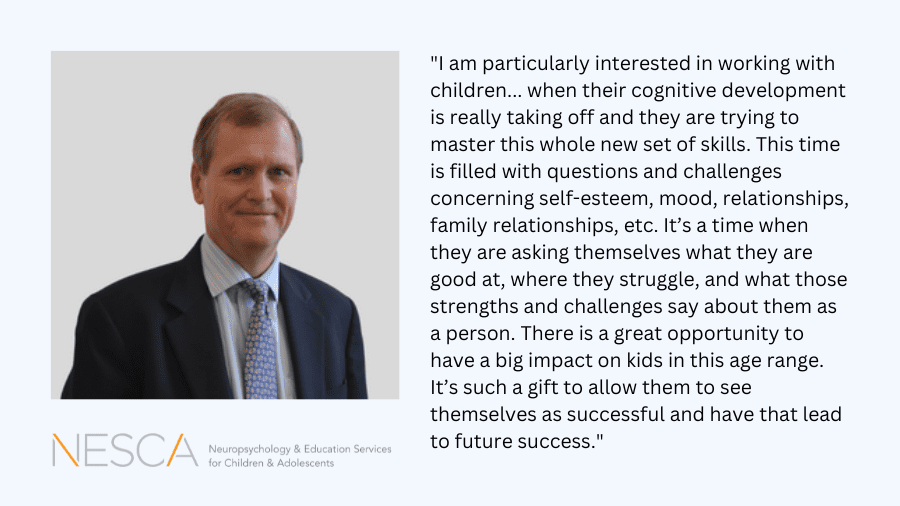
I am particularly interested in working with children from age eight through 14, when their cognitive development is really taking off and they are trying to master this whole new set of skills. This time is filled with questions and challenges concerning self-esteem, mood, relationships, family relationships, etc. It’s a time when they are asking themselves what they are good at, where they struggle, and what those strengths and challenges say about them as a person. There is a great opportunity to have a big impact on kids in this age range. It’s such a gift to allow them to see themselves as successful and have that lead to future success.

What do you find most rewarding and most challenging about your profession?

The rewarding part is two-fold. The first is the interpersonal emotional piece. On a personal level, it’s rewarding to be able to contribute to other peoples’ success, whether it’s the clients, the practice, or the field overall. The second piece is more personal and intellectual. It’s intellectually stimulating to be able to integrate all of the information we gather or identify about a person, and to be able to communicate those findings or revelations to a child and their parents or caregivers. The intellectual reward lies in the ability to effectively communicate a child’s cognitive complexity in a way that they understand and can use to help reach their goals.

The challenging part has to do with the mental health landscape overall. As someone who is involved in neuropsychological assessments, it can feel like operating within a silo in the overall landscape. So many of the systems, such as insurance and education, are not set up for seamless collaboration with psychology practices or other areas of behavioral health. Unfortunately, this can make getting the appropriate mental health care or educational/therapeutic interventions a cumbersome, sometimes adversarial process. It’s the frustration that accompanies the much larger, more overarching need to develop a genuine collaboration among all the pieces within the health and mental health care settings.

What interested you about NESCA?

I was drawn to the opportunity NESCA provides to interact with other psychologists and affiliated clinicians on an ongoing basis. Professionally, I am not operating in a silo. At NESCA, there is more regular consultation and collaboration on how to put together a comprehensive and coherent plan for these kids. I was very excited to have a team of highly qualified, very experienced professionals, within the same organization, who can provide a range of supports and services for the kids we work with. Having this as a resource is a great opportunity for our clients and our staff, alike.


About Pediatric Neuropsychologist J. Michael Abrams, Ph.D.

Dr. J. Michael Abrams has over 30 years of experience in psychological, educational, and neuropsychological assessment and psychotherapy in various settings. A significant aspect of Dr. Abrams’ continuing interest and experience also includes the psychological care and treatment of children, adolescents, and young adults with a broad variety of emotional and interpersonal problems, beyond those that arise in the context of developmental differences or learning-related difficulties.
 

To book a neuropsychological evaluation with Dr. Abrams in Londonderry, NH, or to book with another expert NESCA neuropsychologist, complete NESCA’s online intake form


Neuropsychology & Education Services for Children & Adolescents (NESCA) is a pediatric neuropsychology practice and integrative treatment center with offices in Newton and Plainville, Massachusetts, Londonderry, New Hampshire, and Burlington, Vermont, serving clients from preschool through young adulthood and their families. For more information, please email info@nesca-newton.com or call 617-658-9800.

Why are Some Youths More Susceptible to Anxiety and Anxiety Disorders?

By | Nesca Notes 2023

By: Ferne Pinard, Ph.D.
NESCA Pediatric Neuropsychologist

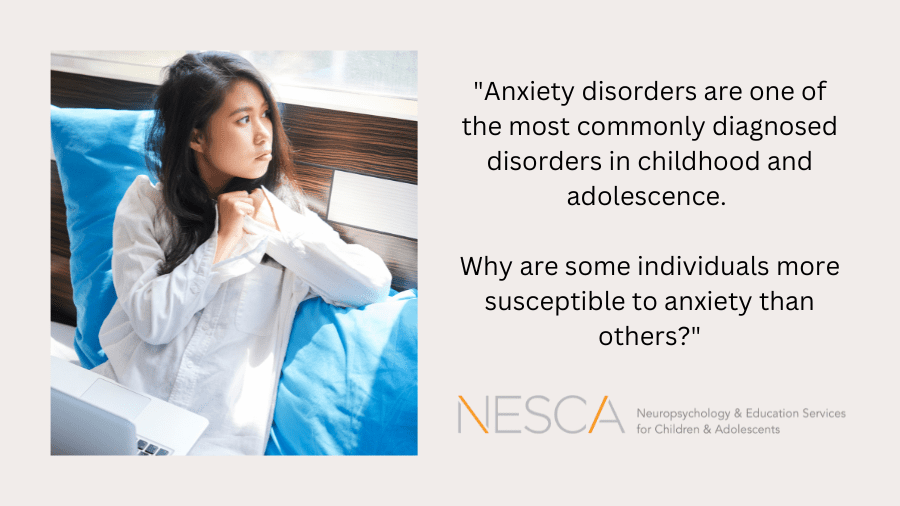
Anxiety disorders are one of the most commonly diagnosed disorders in childhood and adolescence. According to the Centers for Disease Control and Prevention (CDC), 9.4% of children aged 3-17 years (approximately 5.8 million) were diagnosed with anxiety between 2016-2019. These numbers have increased significantly during the COVID-19 pandemic. Some studies estimate that the prevalence of child and adolescent anxiety disorders nearly doubled during the pandemic.

Why are some individuals more susceptible to anxiety than others? The development of anxiety and anxiety disorders during youth is not simple or straightforward but involves complex interactions among the following variables:

  • Temperament: Children with the behavioral inhibition temperamental style described as timidity, shyness, and emotional restraint when with unfamiliar people and or in new places are more likely to develop anxiety disorders.
  • Parent-child Attachment: Children who did not experience a trusting and secure parental bond, but received inconsistent responses from caregivers and are preoccupied with the caregiver’s emotional availability (Ambivalent attachment) are at increased risk for developing an anxiety disorder.
  • Parental Anxiety: Children with anxious parents are at higher risk of developing an anxiety disorder. This relation is partly influenced by genetics. The risk of developing specific anxiety disorders has been associated with various genes. These can be passed to the child, thereby increasing their genetic vulnerability to anxiety disorders. However, parental behavior and practices are also important in understanding this link.
  • Parenting Behavior/Practices: When parents model anxious, overcontrolling, or demanding behavior, their children are more reluctant to explore new situations and display more avoidance behaviors.
  • Adversity: Trauma, negative/stressful life events as well as low socio-economic status are also risk factors for childhood anxiety. The more adverse life events an individual experiences in childhood, the greater the likelihood that they will develop an anxiety disorder. They also experience higher levels of anxiety.
  • COVID-19: The combination of social isolation and lack of support networks increased anxiety among youth during the COVID-19 pandemic.
  • Bullying: Being the victim or perpetrator of bulling is also associated with anxiety symptoms later on in life
  • Externalizing Disorders: Adolescents with early externalizing disorders are at increased risk for later anxiety disorders. Attention Deficit/Hyperactivity Disorder (ADHD), in particular, is a significant risk factor.
  • Sleep: Sleep disturbance often predicts the emergence of anxiety disorders.
  • Cognition: Maladaptive cognitive responses (e.g., inability to tolerate distress, negative beliefs about uncertainty, avoidance of new/unfamiliar people/things, and repetitive negative thinking) are associated with impaired emotion regulation and a greater risk of developing anxiety disorders.

Supportive relationships with family and peers as well as problem-focused coping strategies can guard against anxiety disorders. Problem-focused coping refers to strategies that directly address the problem to minimize its effect.

Parents, caregivers, and other adults involved can also help by:

  • being aware of the signs of anxiety
  • being mindful of expectations set for children and teens
  • encouraging participation in sports teams, clubs, community- or religious-based groups
  • supporting a healthy lifestyle, including a nutritious diet, exercise, and adequate sleep
  • providing access to support services


References:

Donovan, C. L., & Spence, S. H. (2000). Prevention of childhood anxiety disorders. Clinical psychology review20(4), 509-531.

Vallance, A., & Fernandez, V. (2016). Anxiety disorders in children and adolescents: Aetiology, diagnosis and treatment. BJPsych Advances, 22(5), 335-344. doi:10.1192/apt.bp.114.014183

Warner, E. N., & Strawn, J. R. (2023). Risk Factors for Pediatric Anxiety Disorders. Child and Adolescent Psychiatric Clinics. Published: February 26, 2023 DOI: https://doi.org/10.1016/j.chc.2022.10.001


About Pediatric Neuropsychologist Ferne Pinard, Ph.D.

Dr. Pinard provides comprehensive evaluation services for children, adolescents, and young adults with learning disabilities, attention deficit/hyperactivity disorders (ADHD), and psychiatric disorders as well as complex medical histories and neurological conditions. She has expertise in assessing children and adolescents with childhood cancer as well as neuro-immunological disorders, including opsoclonus-myoclonus-ataxia syndrome (“dancing eyes syndrome”), central nervous system vasculitis, Hashimoto’s encephalopathy, lupus, auto-immune encephalitis, multiple sclerosis (MS), acute disseminated encephalomyelitis (ADEM), and acute transverse myelitis (ATM), and optic neuritis.

To book a neuropsychological evaluation with Dr. Pinard or another expert neuropsychologist at NESCA, complete NESCA’s online intake form

Neuropsychology & Education Services for Children & Adolescents (NESCA) is a pediatric neuropsychology practice and integrative treatment center with offices in Newton and Plainville, Massachusetts; Londonderry, New Hampshire; and Coaching and Transition staff in greater Burlington, Vermont, serving clients from preschool through young adulthood and their families. For more information, please email info@nesca-newton.com or call 617-658-9800.

Receiving, Understanding, and Sharing Diagnostic Labels and Profiles

By | NESCA Notes 2022

By Yvonne M. Asher, Ph.D. 
Pediatric Neuropsychologist

A recent New York Times article described a trend, noticed by many mental health professionals, where adolescents and young adults have been exploring mental health on social media. The article references the explosion of TikTok videos in which individuals disclose their psychiatric diagnoses and symptoms. For young people searching on social media, these videos are shown at an increasing rate, based on algorithms. Young people are finding a great deal of validation and connection by watching these videos. Many begin to seek out mental health support, often entering the therapeutic relationship with a clear idea of what their diagnosis will be.

As a mental health professional, I see a great deal of complexity coming from this trend. Certainly, the dissemination of information about mental health and reduction in stigma seems to be positive. Allowing individuals to more readily learn about psychiatric conditions will hopefully reduce fear, embarrassment, shame, and avoidance of mental health care. In addition, promoting self-understanding is important, particularly for young people who are in a developmental stage of identity exploration.

However, there are also concerning implications. First, self-diagnosis can be problematic in mental health, as it is in the medical field. There is a fine balance between being an informed health care consumer and a patient unwilling to listen to the expert opinion of their physician. Entering a physician’s office, unwavering in certainty of your diagnosis, can lead to friction and frustration. In contrast, entering with relevant personal and family history, a thoughtful list of your current symptoms, and readily accessible notes on recent changes in your lifestyle can be invaluable in partnering with your doctor to determine the origin of the problem. This is paralleled in mental health. Entering a therapeutic or evaluation process with information and an open mind is vital to the partnership between clients and clinicians.

The other implication of this trend involves the necessity of a formal diagnosis. I hear from many individuals, after a comprehensive neuropsychological evaluation is completed, that they feel relief at “finally knowing what is wrong.” This validation is entirely understandable, and is not restricted to times when I have provided a diagnostic label. An in-depth exploration of neurocognitive strengths and weaknesses can provide invaluable information that can help individuals understand themselves, access what they need, and plan for their future. Sometimes, a client’s symptoms are best captured by a diagnostic label. However, other times, a person’s comprehensively evaluated profile does not warrant a formal diagnosis. The latter does not mean that a person’s symptoms are any less valid or impactful. Formal diagnoses generally require multiple symptoms, occurring within specified timeframes, and occurring in the presence or absence of other important factors. There are many instances where a symptom is clearly impactful and interfering for a client, without the client’s profile meeting the full range of criteria necessary for a diagnosis. At other times, a symptom that appears, on the surface, to indicate one diagnosis, may in fact indicate a very different diagnosis after a person’s full neuropsychological profile is explored.

As a wise mentor once told me that, in the evaluation process, we must “hold our hypotheses lightly.” We enter a therapeutic relationship, either as a client or a clinician, with a sense of what we might discover or be told. Our initial sense can be entirely accurate, or shockingly incorrect. Therefore, it is vital for all of us to hold our ideas about what may come from an evaluation lightly.


About the Author

Dr. Yvonne M. Asher enjoys working with a wide range of children and teens, including those with autism spectrum disorder, developmental delays, learning disabilities, attention difficulties and executive functioning challenges. She often works with children whose complex profiles are not easily captured by a single label or diagnosis. She particularly enjoys working with young children and helping parents through their “first touch” with mental health care or developmental concerns.

Dr. Asher’s approach to assessment is gentle and supportive, and recognizes the importance of building rapport and trust. When working with young children, Dr. Asher incorporates play and “games” that allow children to complete standardized assessments in a fun and engaging environment.

Dr. Asher has extensive experience working in public, charter and religious schools, both as a classroom teacher and psychologist. She holds a master’s degree in education and continues to love working with educators. As a psychologist working in public schools, she gained invaluable experience with the IEP process from start to finish. She incorporates both her educational and psychological training when formulating recommendations to school teams.

Dr. Asher attended Swarthmore College and the Jewish Theological Seminary. She completed her doctoral degree at Suffolk University, where her dissertation looked at the impact of starting middle school on children’s social and emotional wellbeing. After graduating, she completed an intensive fellowship at the MGH Lurie Center for Autism, where she worked with a wide range of children, adolescents and young adults with autism and related disorders.


Neuropsychology & Education Services for Children & Adolescents (NESCA) is a pediatric neuropsychology practice and integrative treatment center with offices in Newton, Massachusetts, Plainville, Massachusetts, and Londonderry, New Hampshire, serving clients from preschool through young adulthood and their families. For more information, please email info@nesca-newton.com or call 617-658-9800.


To book an appointment with Dr. Yvonne Asher, please complete our Intake Form today. For more information about NESCA, please email info@nesca-newton.com or call 617-658-9800.


Skip to content