NESCA’s Londonderry, NH location has immediate availability for neuropsychological evaluations. Our NH clinicians specialize in the following evaluations: Neuropsychological; Autism; and Emotional and Psychological, as well as Academic Achievement and Learning Disability Testing. Our NH clinicians also conduct evaluations for students who are at boarding schools, and two of our NH clinicians have PsyPACT authorization, allowing them to conduct evaluations out-of-state.

Visit www.nesca-newton.com/intake for more information or to book an evaluation.

Category

Nesca Notes 2023

Subscribe to NESCA Notes

Why Knowing Yourself and Saying No Matters to Neurodivergent Individuals

By | Nesca Notes 2023

By Jasmine Badamo, MA
Educational Counselor; Executive Function Tutor

The ability to say “no” and honor your limits is a beautifully powerful skill that we can all benefit from. In a productivity-focused culture where today’s 40-hour work week is roughly equivalent to a 160-hour work week in 1950’s time (read more in Devon Price’s Laziness Does Not Exist), it’s easy to ignore our limits and put pressure on ourselves to perform at an otherworldly capacity.

While life requires all of us to push ourselves at times, it is impossible to work at 100% capacity 100% of the time. And by saying no, or deciding where to strategically place your energy, you leave yourself with the bandwidth and energy needed to be more effective and consistent in the activities that are priorities to you.

This is definitely not the first time you’ve heard these ideas. However, today I’d like to focus on why saying no and honoring your limits can be especially important for neurodivergent individuals.

Neurodiversity is the natural brain diversity that exists within the human population, similar to other forms of human diversity. The terms “neurodivergent,” “neurominority,” or “neurovariant” typically refer to individuals with a brain makeup that falls outside of the statistical majority of human neurotypes. Being a neurominority is not a problem, nor is it something to overcome. However, being a minority often means having to function within a world that is generally not designed by or for you.

Because of this, neurodivergent individuals are often implicitly or explicitly taught to modify their thoughts and actions to better fit their environment. Instead of being able to honor their individual needs and boundaries, they are frequently asked to push themselves beyond their limits. While every person—neurodivergent or not—must operate outside their comfort zone at times, for neurodivergent individuals it can become a default way of life. This is exhausting and can result in burnout.

During intake sessions with new clients, I make it a point to clarify that I’m not here to “cure” ADHD, autism, or a learning disability. I’m here to help reduce, and also cope with, the disconnect between the client, their environment, and the activities they are being asked to regularly manage. Together we find ways to make the environment better fit the individual and their needs, and then (and only then) we will implement strategies for navigating the remaining barriers to reaching their goals.

And in order to make the environment better fit the individual, each client needs to figure out what works for them and, most importantly, what does NOT work for them. For some neurodivergent folk, it can be truly ground-breaking to ask themselves, “What about my environment or current activities is not working for me? What can I start to say ‘no’ to?” It’s an important step in learning more about yourself and how your brain works, and what is sustainable for you (not someone else).

This can be hard, especially if your productivity or ability to “keep up” with others has become a pattern—or even a part of your identity. Learning to say no and to let go of not only what others regularly ask of you, but also what you have become accustomed to asking of yourself, takes time, patience, and practice.

Remember, you wouldn’t begrudge a cactus for wilting if it were asked to constantly absorb more water than its capacity, or if it didn’t get the amount of sun it required. And once you provide that cactus with the specific and appropriate external conditions, it will be able to flourish and show the world all the unique beauty it has to offer.

All of this is much easier said than done, but one of the most rewarding aspects of my job is being able to join clients as they learn how to work with their brains, accept their specific way of being in the world, and start to say no to the rest.

To read more on this topic:
https://www.simonandschuster.com/books/Laziness-Does-Not-Exist/Devon-Price/9781797120591

If your child, teen, or young adult needs support in this realm, complete our online Intake Form to learn more about NESCA’s Executive Function and Real-life Skills Coaching.


About the Author

Jasmine Badamo, MA, is an educational counselor and executive function coach who works full-time at NESCA supporting students ranging from elementary school through young adulthood. In addition to direct client work, Ms. Badamo provides consultation and support to parents and families in order to help change dynamics within the household and/or support the special education processes for students struggling with executive dysfunction. She also provides expert consultation to educators, special educators and related professionals.

Ms. Badamo is a New York State Certified ENL and Special Education teacher. She has more than 10 years of teaching experience across three countries and has worked with students and clients ranging in age from 7 to adulthood. She earned her bachelor’s degree in Biological Sciences from Cornell University and her master’s degree in TESOL from CUNY Hunter College. She has also participated in graduate coursework focusing on academic strategies and executive function supports for students with LD, ADHD, and autism as part of the Learning Differences and Neurodiversity (LDN) certification at Landmark College’s Institute for Research and Training. In addition to being a native English speaker, Ms. Badamo is also conversationally fluent in verbal and written Spanish.

Having worked in three different New York City public schools, Ms. Badamo has seen firsthand the importance of executive function skills in facilitating student confidence and success. Her coaching and consultation work focuses on creating individualized supports based on the specific needs and strengths of each client and supporting the development of metacognition (thinking about one’s own thought processes and patterns), executive function skills, and independence. She will guide clients to generate their own goals, identify the barriers to their goals, brainstorm potential strategies, advocate for support when needed, and reflect on the effectiveness of their applied strategies.

Ms. Badamo is a highly relational coach. Building an authentic connection with each client is a top priority and allows her to provide the best support possible. Additionally, as a teacher and coach, Ms. Badamo believes in fostering strong collaborations with anyone who supports her clients including service providers, classroom teachers, parents, administrators, and community providers.


To book executive function coaching with Jasmine Badamo or another EF or Real-life Skills Coach at NESCA, complete NESCA’s online intake form


NESCA is a pediatric neuropsychology practice and integrative treatment center with offices in Newton and Plainville, Massachusetts, Londonderry, New Hampshire, and Burlington, Vermont, serving clients from preschool through young adulthood and their families. For more information, please email info@nesca-newton.com or call 617-658-9800.

Redshirting: Pros and Cons of Delaying a Child’s Entry to Kindergarten

By | Nesca Notes 2023

By: Alissa Talamo, PhD
Pediatric Neuropsychologist, NESCA

Redshirting is a phrase that has traditionally been associated with college athletics, such as when coaches “redshirt” first-year athletes, providing younger athletes an additional year to develop skills and extend their playing eligibility. Academically, redshirting your child means choosing to delay kindergarten for a year even though your child is technically old enough to attend kindergarten.

Current research suggests there are pros and cons to redshirting kindergarten depending upon your child’s development and needs. One advantage of redshirting is the opportunity for the child to develop emotional maturity. While some students are ready academically, they may not be ready emotionally. This difference becomes particularly notable in the middle school and high school years, as a year difference in age (or almost two years if some students have been redshirted and your child is young for their grade), can lead to exposure to topics and behaviors your child is not emotionally ready for.

However, if your child has an identified or suspected disability, or you feel they may need extra help in school, you may not want to redshirt, as doing so would result in delay of necessary services provided free through the public schools (e.g., occupational or speech therapy, specialized academic instruction), which research finds to have a meaningful impact on improving a student’s long-term outcome. Additionally, if redshirted, a child loses up to a year of special education eligibility at the other end of their school experience if a student has significant disabilities covered under the IDEA, as those services end based on age (e.g., special education rights end at the age of 22 in Massachusetts).

To help you make an informed decision, it is also recommended that you speak with your child’s preschool teacher in addition to any professionals (e.g., speech therapist or psychologist) working with your child. You may also want to consider meeting with an educational consultant who specializes in this area. Finally, you may consider a neuropsychological evaluation to gain a better understanding of your child’s strengths and challenges as well as to obtain educational recommendations.

Clearly, there is no right or wrong answer to redshirting in kindergarten. It is highly dependent on a child’s level of development and needs. Parents are encouraged to watch for signs of readiness, such as the ability of their child to communicate and listen well, follow instructions, and be able to sit and focus for 10-15 minutes at a time. Also, having a good understanding of your child’s developmental profile (language skills, self-regulation skills, social skills, etc.) can help a parent make an educated decision.


Sources

https://www.psychologytoday.com/us/

https://www.sciencedirect.com/

https://cepa.stanfod.edu


About the Author

With NESCA since its inception in 2007, Dr. Talamo had previously practiced for many years as a child and adolescent clinical psychologist before completing postdoctoral re-training in pediatric neuropsychology at the Children’s Evaluation Center.

After receiving her undergraduate degree from Columbia University, Dr. Talamo earned her doctorate in clinical health psychology from Ferkauf Graduate School of Psychology and the Albert Einstein College of Medicine at Yeshiva University.

She has given a number of presentations, most recently on “How to Recognize a Struggling Reader,” “Supporting Students with Working Memory Limitations,” (with Bonnie Singer, Ph.D., CCC-SLP of Architects for Learning ), and “Executive Function in Elementary and Middle School Students.”

Dr. Talamo specializes in working with children and adolescents with language-based learning disabilities including dyslexia, attentional disorders, and emotional issues. She is also interested in working with highly gifted children.

Her professional memberships include MAGE (Massachusetts Association for Gifted Education), IDA (International Dyslexia Association), MABIDA (the Massachusetts division of IDA) and MNS (the Massachusetts Neuropsychological Society).

She is the mother of one college-aged daughter.

To book a consultation with Dr. Talamo or one of our many other expert neuropsychologists, complete NESCA’s online intake form.

NESCA is a pediatric neuropsychology practice and integrative treatment center with offices in Newton and Plainville, Massachusetts, Londonderry, New Hampshire, and Burlington, Vermont, serving clients from preschool through young adulthood and their families. For more information, please email info@nesca-newton.com or call 617-658-9800.

Transition Assessment: What Are You Testing that Hasn’t Already been Tested?

By | Nesca Notes 2023

By: Kelley Challen, Ed.M., CAS
Director of Transition Services, NESCA

Transition planning is a complex process centered around helping students, typically who receive special education services, to set goals for their postsecondary adult lives and to engage in learning, services, and experiences that will help them to ultimately reach those goals. Assessment is a critical aspect of this process, both as a means for collecting baseline information about the student and measuring progress throughout the planning process. Transition planning is federally mandated for students at age 16. However, some states require schools to start the process earlier. For instance, transition planning is required as part of the IEP process for students turning age 14 in Massachusetts.

Transition assessment is therefore required in middle school or early high school for most students in the United States. By this point in time, students on IEPs have often participated in lots of testing. Students may have had academic testing, psychological evaluation, speech and language testing, occupational and physical therapy assessments, functional behavioral assessment, and even home or health assessments. They have participated in so much previous testing, that some parents or professionals may ask, “What could a transition specialist be testing that has not already been addressed through other evaluations?”

The answer is, “A lot!” There are many areas that can and should be evaluated as part of an informed transition planning process, but which are not frequently evaluated when creating earlier IEPs. This is because initial IEPs and early reevaluations focus on helping students to access education and school life, but transition planning is about helping students to develop necessary skills for accessing learning, living, community, and employment as an adult. The following tables are based on on the Transition Assessment Planning Form developed by the Transition Coalition at the University of Kansas in 2008. These highlight many areas of assessment that can and should be considered as part of a comprehensive transition assessment and planning process. These also indicate which areas have usually not been considered for evaluation prior to a thorough transition assessment process.

Please note that every student on an IEP is an individual with unique strengths and disability-related needs and so these tables are offered as a general picture of what has been observed at NESCA in the majority of cases. Additionally, while all of the areas above are considered as part of a comprehensive transition assessment and planning process, they may not need direct assessment depending on student profile, postsecondary goals, and existing evaluation or report data.

For more information about transition assessment and transition planning at NESCA, visit our transition services page and our transition FAQs.


About the Author
Kelley Challen, Ed.M., CAS, is NESCA’s Director of Transition Services, overseeing planning, consultation, evaluation, coaching, case management, training and program development services. Ms. Challen also provides expert witness testimony in legal proceedings related to special education. She is also the Assistant Director of NESCA, working under Dr. Ann Helmus to support day-to-day operations of the practice. Ms. Challen began facilitating programs for children and adolescents with special needs in 2004. After receiving her Master’s Degree and Certificate of Advanced Study in Risk and Prevention Counseling from Harvard Graduate School of Education, Ms. Challen spent several years at the MGH Aspire Program where she founded an array of social, life and career skill development programs for teens and young adults with Asperger’s Syndrome and related profiles. She additionally worked at the Northeast Arc as Program Director for the Spotlight Program, a drama-based social pragmatics program, serving youth with a wide range of diagnoses and collaborating with several school districts to design in-house social skills and transition programs. Ms. Challen is co-author of the chapter “Technologies to Support Interventions for Social- Emotional Intelligence, Self-Awareness, Personality Style, and Self-Regulation” for the book Technology Tools for Students with Autism. She is also a proud mother of two energetic boys, ages six and three. While Ms. Challen has special expertise in supporting students with Autism Spectrum Disorders, she provides support to individuals with a wide range of developmental and learning abilities, including students with complex medical needs.

To schedule an appointment with one of NESCA’s transition specialists, please complete our online intake form

NESCA is a pediatric neuropsychology practice and integrative treatment center with offices in Newton and Plainville, Massachusetts, Londonderry, New Hampshire, and Burlington, Vermont, serving clients from preschool through young adulthood and their families. For more information, please email info@nesca-newton.com or call 617-658-9800.

The Benefits of Volunteering

By | Nesca Notes 2023

By: Kristen Simon, M.Ed, Ed.S
NESCA Transition Specialist; Psychoeducational Counselor

Volunteering has many benefits for school aged students beginning to participate in transition planning. Many charities and organizations rely on volunteers to continue their services and reach more people. In general, volunteering is a great way to form community connections, achieve a sense of purpose, and boost confidence and self-esteem, all while helping those in need. In thinking about a child’s eventual transition to adulthood, there are many additional hidden benefits to volunteering.

  • Build social connections: Volunteering allows individuals to engage and connect with others in a structured environment. Working with others through task completion towards a common goal is a great way for individuals to form friendships and positive connections in a low-pressure setting.
  • Mental health benefits: Volunteering has been shown to decrease symptoms of depression and loneliness. Many studies have shown that helping others and carrying out altruistic acts makes you happier. In fact, some therapists believe volunteering should be built into a treatment plan in the management of depression.
  • Employment/Transition Skills: Volunteering can help individuals build various skills that will help them in future jobs. Volunteering can help develop leadership skills, one’s ability to work in a team, customer service, following instructions, and punctuality to name a few important pre-employment skills. Volunteering helps individuals learn what type of work they enjoy through exposure to various work activities and work sites. Consistent volunteer work can also help build a young person’s resume.

It may be decided that a good match leads to long-term volunteering; however, it does not have to be a long-term commitment. Consistent volunteering can be a helpful tool in the stressful seasons of the year. Helping others can help to clear your head, reduce stress, and bring a perspective that allows you to engage more fully in your other commitments.

If your child and or family unit is looking for volunteer opportunities, you can start by contacting local animal shelters, senior centers, public libraries, community centers, or food pantries. Other websites to locate family volunteer opportunities in the greater Boston area include:

https://www.doinggoodtogether.org/family-volunteering-boston

https://community-harvest.org/

https://www.cradlestocrayons.org/boston/take-action/volunteer/


About the Author

Kristen Simon, M.Ed, Ed.S, has worked with transition-aged youth as a licensed School Psychologist for more than a decade. She has extensive experience working with children and adolescents with a range of learning and social/emotional abilities. Kristen’s strengths lie in her communication and advocacy skills as well as her strengths-based approach. She is passionate about developing students’ self-awareness, goal-setting abilities, and vision through student-centered counseling, psychoeducation, social skills instruction, and executive functioning coaching. Mrs. Simon has particular interests working with children and adolescents on the Autism spectrum as well as individuals working to manage stress or anxiety-related challenges.

Mrs. Simon is an expert evaluator and observer who has extensive working knowledge of the special education process and school-based special education services, particularly in Massachusetts. She has been an integral part of hundreds of IEP teams and has helped to coordinate care, develop goals, and guide students and their families through the transition planning process. Mrs. Simon further has special expertise helping students to learn about their diagnoses and testing and the IEP process in general. She enjoys assisting students, families, and educators in understanding a student’s disability-related needs as well as the strategies that can help the student to be successful in both academic and nonacademic settings. Mrs. Simon has often been a part of teams in the years when students are initially participating in transition services, and she has helped countless students to build the skills necessary to be part of their first team meetings. She is committed to teaching students—as well as parents and educators—how to participate in student-centered team meetings and the IEP processes.

At NESCA, Mrs. Simon works as a transition specialist and psychoeducational counselor. She works with adolescents, their families, and their school communities to identify and build the skills necessary to achieve their postsecondary goals. Mrs. Simon provides transition assessment (including testing, functional evaluations, and observations), program observations and evaluations, case management and consultation, and individualized counseling and skills coaching.

To schedule an appointment with one of NESCA’s transition specialists, please complete our online intake form

NESCA is a pediatric neuropsychology practice and integrative treatment center with offices in Newton and Plainville, Massachusetts, Londonderry, New Hampshire, and Burlington, Vermont, serving clients from preschool through young adulthood and their families. For more information, please email info@nesca-newton.com or call 617-658-9800.


Understanding Behavior as Communication

By | Nesca Notes 2023

By: Cynthia Hess, PsyD
Pediatric Neuropsychologist

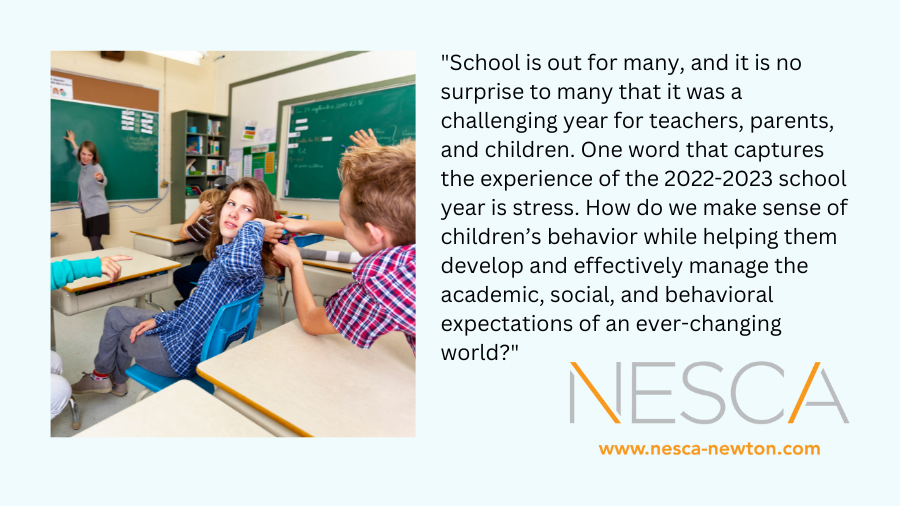
School is out for many, and it is no surprise to many that it was a challenging year for teachers, parents, and children. One word that captures the experience of the 2022-2023 school year is stress. Teachers were stressed as their students continued to contend with the academic and social deficits that resulted from the pandemic. Many students have struggled to adapt to post-pandemic learning, and incidents of acting out behavior have increased precipitously. How do we make sense of children’s behavior while helping them develop and effectively manage the academic, social, and behavioral expectations of an ever-changing world?

Ross Greene, Ph.D., states, “Children want to do well and would if they could.” Behavior is not just random or meaningless. It serves as a way for children to express their needs, feelings, and experiences, especially when they have not yet developed strong verbal or communication skills. When the demands of the environment exceed a child’s capacity to manage them, they are apt to become stressed, increasing the likelihood that they will act out. Stress is a complex concept that is a response to perceived or anticipated demands or pressures that exceed an individual’s coping abilities.

When stressed, the adrenal glands release cortisol, a stress hormone that helps mobilize energy reserves for the fight-or-flight response. Fear and anxiety also increase individuals’ vulnerability to responding with fight or flight. So, while fear is focused on a specific threat, physiologically, it feels much the same as stress. Behavior is, therefore, a way of communicating that something is amiss. For instance, a child who acts aggressively may express frustration, which is stressful. And a child who becomes withdrawn might feel overwhelmed or anxious, triggering a stress response. Behavior is a natural way for children to communicate their needs, emotions, or reactions to the environment.

Our job as adults is first to check our own emotional status, because if we are tired or stressed, it will likely influence how we respond when children behave badly. Observing and interpreting behaviors with a curious and open mindset is important. By paying attention to patterns, triggers, and context, adults can gain insights into what a child might be trying to communicate through their behavior. Our job is not to manage the behavior but to understand, per Dr. Greene, what skills are lagging or what problems need to be solved, build relationships, and work collaboratively with children to solve problems and change behavior.

Resources:

The Explosive Child, Ross Greene, Ph.D., 2021

Beyond Behaviors; Mona Delahooke, Ph.D., 2019

Podcast: Two Sides of the Spectrum; episode dated April 5, 2023; “Safety as the Foundation for Everything


About the Author

Dr. Cynthia Hess (Cindy), a licensed psychologist, worked as an elementary counselor and school psychologist for 15 years before starting her doctorate. In this role, she developed extensive expertise and aptitude for working with individuals and groups struggling with a wide range of emotional and learning challenges.

She completed her pre-doctoral internship with Rochester Institute of Technology in Rochester, N.Y., where she trained at Hillside Family of Agencies in a therapeutic residential school. At Hillside, she worked with youth ages 5-17 who had experienced complex developmental trauma.

She earned her Psy.D. in Counseling and School Psychology from Rivier University in 2018. Having a strong interest in the impact of social media on children and our culture, her doctoral dissertation studied the impact social media has on social skills development in fourth- and fifth-grade children.

Dr. Hess’s first post-doctoral fellowship was with The Counseling Center of New England, where she provided psychotherapy and family therapy to children ages 5-18 and young adults.

Dr. Hess joined NESCA’s Londonderry, N.H. office in 2019, where she completed a second two-year fellowship in pediatric neuropsychological assessment. Dr. Hess now conducts neuropsychological evaluations as a pediatric neuropsychologist and has a particular interest in working with children and young adults with complex emotional and behavioral profiles. Her experience allows her to guide families in navigating the complicated options for school and other support services.


To schedule an appointment with one of NESCA’s expert neuropsychologists, please complete our online intake form


NESCA is a pediatric neuropsychology practice and integrative treatment center with offices in Newton and Plainville, Massachusetts, Londonderry, New Hampshire, and the greater Burlington, Vermont area, serving clients from preschool through young adulthood and their families. For more information, please email info@nesca-newton.com or call 617-658-9800.


Welcoming Renee Cutiongco Folsom, Ph.D., Pediatric Neuropsychologist

By | Nesca Notes 2023

By: Jane Hauser
Director of Marketing & Outreach, NESCA

NESCA recently welcomed Pediatric Neuropsychologist Renee Cutiongco Folsom, Ph.D. to its clinical staff. Dr. Cutiongco Folsom brings a wealth of experiences and vast knowledge in assessing and diagnosing autism spectrum disorders (ASD) as well as conducting international evaluations. Take a moment to learn more about Dr. Cutiongco Folsom from my interview with her. 

Tell us about your background and how you got to NESCA.

I grew up in the Philippines. I started my career as a preschool teacher there for two years. At that point, I knew I wanted to work with children. I eventually got my master’s degree in psychology and took a neuropsychology class with a professor who was trained at Boston Children’s Hospital. I immediately fell in love with neuropsychology. I then came to the U.S. to pursue my Ph.D. and did my fellowship in neuropsychology at UCLA. I planned to go back to the Philippines but met my husband here in the U.S. and decided to stay here.

Since I did not go back to the Philippines, I was interested in practicing neuropsychology internationally, which I was able to do in Baltimore at Johns Hopkins. I was interested in the work NESCA has been doing internationally. The opportunity to work with a talented team at NESCA and the ability to do international evaluations was the right move for me.

What do you mean by looking beyond the data when conducting neuropsychological evaluations?

I refer to employing the “Boston Process Approach” in my evaluations and assessments because my mentor in the Philippines was trained in this approach when she did her postdoctoral work at Boston Children’s Hospital. She tried to ingrain this methodology in her trainees. What it means is that when we look at the data, we do not just look at a score. There is so much more to a child’s story than a number. As neuropsychologists, we are always looking at how the child comes up with an answer to a test. It is possible for a child to get a low score on a test of reproducing designs using blocks, for example, because the child threw or even ate the blocks! We must decipher what is behind the process by which the child produced the answer. This critical information falls outside of the data or what a score is. It tells us how the child learns, and what will help them at school, at home, and in their day-to-day life. This is the approach I take when I work with a child. I take a LOT of notes! I look to see what the child says and does, whether he or she is paying attention, and note other behaviors throughout the evaluation process. Then, I analyze all the data and look for patterns and discrepancies across various tests and measures.

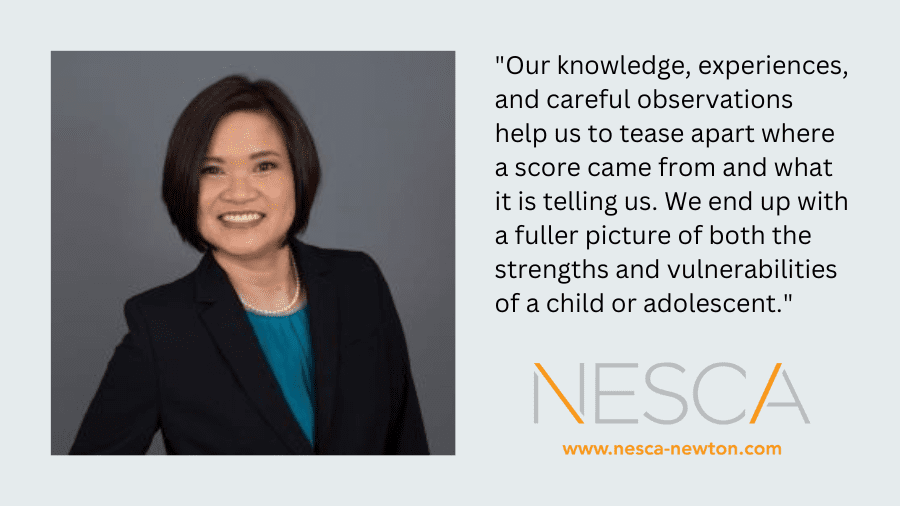
When we see the data associated with the performance on a test, we must ask why, for instance, they achieved a low score. What other factors are at play? Is it anxiety or a visual-motor issue? What we observe throughout the evaluation can guide us to administer some tests that may not have been initially scheduled. Our knowledge, experiences, and careful observations help us to tease apart where a score came from and what it is telling us. We end up with a fuller picture of both the strengths and vulnerabilities of a child or adolescent.

What kind of international work were you doing previously?

After I completed my fellowship in neuropsychology at UCLA, my first job was with the Kennedy Krieger Institute at Johns Hopkins. Because so many families go there from other countries seeking answers, the organization assembled interdisciplinary teams to serve international patients. We conducted week-long intensive and comprehensive evaluations involving a neurologist, neuropsychologist, occupational therapist, speech-language pathologist, and social worker who could help them access resources in their home country. At the end of the week of intense evaluation, we came together as a team to make a diagnosis, if warranted, and provide recommendations for interventions. It was a challenging and intense program because we needed to develop our impressions immediately. And we often saw some of the most difficult and complex cases because the families had already exhausted all the resources available to them in their home countries before traveling overseas.

What do you find most rewarding about being a pediatric neuropsychologist?

I have been practicing neuropsychology for a long time. I chose to work in pediatric neuropsychology vs. adult because we can do so much more with children. We have a particularly good chance of making a bigger impact on their lives at such an early age.

What I find most rewarding is to have patients come back for a follow-up evaluation, and I can see how the child has progressed. Their parents often thank me for providing them with a diagnosis and helping them to access resources and attest how far their child has come. Working alongside families to change the trajectory of a child’s life is very powerful.

 You specialize in autism spectrum disorders (ASD). How do you make a diagnosis and differentiate ASD from its related challenges?

You rely on years of training, your knowledge and expertise, trust your clinical judgment, and factor in the wisdom of colleagues when needed. This is how you make meaningful conclusions and diagnoses that impact a child’s life.

What do you feel makes NESCA a unique environment and practice?

The beauty of a practice like NESCA is that we get a broad spectrum of clients who present with different challenges or diagnoses. We get to see a range of ages and draw clients from all over the New England region as well as internationally. That variety enriches your perspective and gives more insight into your clinical work.

I have been at NESCA for about a month, and they take collaboration to heart. My colleagues at NESCA are a giving group of professionals when it comes to sharing experiences and knowledge. The clinicians are humble, candid, open, and eager to help children, adolescents, and young adults. As a pediatric neuropsychologist, I also get to collaborate with transition specialists, educational consultants, OTs, SLPs, and more. The multidisciplinary approach, learning from other perspectives, is a refreshing addition to my work experience.


About the Author

Dr. Renee Cutiongco Folsom, Ph.D. has been working with families in the greater Boston area since 2015. Prior to this, she was on staff at Johns Hopkins University and trained at the University of California, Los Angeles (UCLA). She provides comprehensive neuropsychological evaluations of children, adolescents, and young adults who have learning, behavioral, and socio-emotional challenges. Her areas of expertise include Autism Spectrum Disorder and other conditions that usually co-occur with this diagnosis; Attention-Deficit/Hyperactivity Disorder; Dyslexia and other Specific Learning Disabilities; and Anxiety/Depression. She thinks that the best part of being a pediatric neuropsychologist is helping change the trajectory of children’s lives.

To schedule an appointment with one of NESCA’s pediatric neuropsychologists, please complete our online intake form

NESCA is a pediatric neuropsychology practice and integrative treatment center with offices in Newton and Plainville, Massachusetts, Londonderry, New Hampshire, and the greater Burlington, Vermont area, serving clients from preschool through young adulthood and their families. For more information, please email info@nesca-newton.com or call 617-658-9800.


So, You Are Taking a Leave of Absence from College—Now What?

By | Nesca Notes 2023

By: Kelley Challen, Ed.M., CAS
Director of Transition Services; Transition Specialist, NESCA

Over three-quarters of college students (76%) reported moderate to severe psychological distress during the 2022-2023 school year (National College Health Assessment, American College Health Association, Spring 2023). College students across the country are continuing to struggle with depression, anxiety, self-harm, and suicidal thoughts this school year. My appointment calendar is often made up of meetings with college students or parents of college students beginning the process of taking a leave of absence and wondering what to do next. Here are some tips that I shared with many of these students and families.

Get Treatment

Many students need to participate in skill-based therapies (cognitive behavioral therapy, dialectical behavioral therapy, exposure and response prevention, acceptance and commitment therapy, etc.) in order to build up coping skills that may not have been developed in high school. Depending on the severity of current mental health issues, a student may need to participate in an intensive inpatient or outpatient treatment. Ultimately, many students need to find a supportive outpatient therapist—ideally someone who will be able to continue treating the student if they plan to make a future college attempt.

Psychopharmacological intervention (i.e., medication) can be important to consider. Sometimes students have not been taking medications as prescribed or they are taking medications exactly as prescribed but not gaining the intended benefits. Consulting with a prescriber can be an important treatment step for determining whether medication, or medication changes, are necessary.

Get Exercise

For any student, having a regular routine for exercise, sleep, and healthy diet has an impact. However, this is even more critical for students who are vulnerable to anxiety and/or depression. Exercise does not have to start big. Walking (with or without the dog), hiking, or just moving along to a YouTube fitness video for 10 minutes a day will make a difference. It’s critical to schedule the exercise in and often easiest if this is part of a morning or evening routine. For some students, working with a personal trainer or attending scheduled classes helps with accountability. Using a wearable exercise tracker like a Fitbit, Garmin Watch, or Apple Watch can also help with motivation and consistency.

Get a Job

Over the past 25 years, we have seen a notable decrease in the number of high school students who have participated in paid employment. Many students went off to college without taking time to connect college participation with future career interests. Using time off from school to explore work preferences and build transferrable skills (and a resume) can help students experience efficacy and improve mood. As a college student, no one is particularly excited when you show up to class, and the professor certainly doesn’t depend on you in order to get their job done. However, as an employee, students can experience tangible success through accomplishing work activities, receiving gratitude from coworkers and supervisors, and earning money. Work can also provide an important social experience. This is also an historic time to be looking for a first or early career position in the American workforce. Entry-level workers can make good wages. and there are plenty of part-time job openings across industries. Moreover, it’s difficult to get fired right now because good help is truly hard to find.

For students who are not ready to commit to paid work, and need time to recover and build energies up, volunteer jobs are also good opportunities. Some students will do better with brief drop-in volunteer activities while others my want to schedule more routine work hours.

Consider Taking Classes

When students take a leave of absence from college, the assumption is that the student will want to return to a college experience. But many students take a leave of absence and determine that they do not want to go back to college or that they do not want to go back to the same college. If a student wants to keep up academic skills, they can audit or take one or more college courses during the spring semester (depending on their college’s policies and whether they are planning to return). Community colleges, state colleges, and part-time or online college programs (like Harvard Extension School) are good options to explore for classes of interest as a non-degree seeking student. Starting back with a class that is high interest or a low degree of difficulty can be helpful for students who need to rebuild confidence. Additionally, when students are unsure if they are going to return to college or uncertain of a potential future major, it can be good to try classes that are likely to transfer and generally meet basic liberal arts requirements.

Get a Coach

Some students with mental health issues have other underlying challenges that contributed to their struggles in college. There could be a learning disability that wasn’t appropriately being addressed with accommodations, executive function challenges that impacted keeping up with pace, or volume of academics, social challenges that were exacerbated by the highly social dorm environment, or other issues. It is important to consider whether there are skill deficits that may have contributed to a student experiencing anxiety or depression. Some students will benefit from life skills, executive function, or social coaching in order to build up areas that are weaker before heading back to college (or may want to continue with that coaching when they head back).

Other students may want to take time to work with a career or transition coach to do some self-exploration. Taking a step back to participate in self-assessment related to one’s preferences and interests and to determine how those align with potential college major and future career interests can be helpful. I have worked with several students on leave to go through a career planning process. For some, they discover that they chose exactly the right college and major, and that can increase motivation when they get back to school, with proper supports in place. For others, this process sets a student on a completely new path.

Let us know, in our online Intake Form, if your student needs support during their time off from school and/or coaching to assist during their time off or when they return to college.


About the Author
Kelley Challen, Ed.M., CAS, is NESCA’s Director of Transition Services, overseeing planning, consultation, evaluation, coaching, case management, training and program development services. Ms. Challen also provides expert witness testimony in legal proceedings related to special education. She is also the Assistant Director of NESCA, working under Dr. Ann Helmus to support day-to-day operations of the practice. Ms. Challen began facilitating programs for children and adolescents with special needs in 2004. After receiving her Master’s Degree and Certificate of Advanced Study in Risk and Prevention Counseling from Harvard Graduate School of Education, Ms. Challen spent several years at the MGH Aspire Program where she founded an array of social, life and career skill development programs for teens and young adults with Asperger’s Syndrome and related profiles. She additionally worked at the Northeast Arc as Program Director for the Spotlight Program, a drama-based social pragmatics program, serving youth with a wide range of diagnoses and collaborating with several school districts to design in-house social skills and transition programs. Ms. Challen is co-author of the chapter “Technologies to Support Interventions for Social- Emotional Intelligence, Self-Awareness, Personality Style, and Self-Regulation” for the book Technology Tools for Students with Autism. She is also a proud mother of two energetic boys, ages six and three. While Ms. Challen has special expertise in supporting students with Autism Spectrum Disorders, she provides support to individuals with a wide range of developmental and learning abilities, including students with complex medical needs.


Neuropsychology & Education Services for Children & Adolescents (NESCA) is a pediatric neuropsychology practice and integrative treatment center with offices in Newton, Massachusetts, Plainville, Massachusetts, and Londonderry, New Hampshire, serving clients from preschool through young adulthood and their families. For more information, please email info@nesca-newton.com, call 617-658-9800 or complete our online Intake Form.

An Occupational Therapist’s Perspective – How AI Can Support Teens and Young Adults with Life Skills

By | Nesca Notes 2023

By: Lyndsay Wood, OTD, OTR/L
NESCA Transition Specialist & Occupational Therapist

Recently there has been a lot of talk in the media about artificial intelligence (AI) technology and the impact it will have on the world. With the recent development of ChatGPT and other AI technologies, the way we work, learn, and live may see some significant changes. While change can be difficult – and there are often many considerations to make before adopting a new technology system – ChatGPT is a useful tool that can support different aspects of life when used properly. Specifically, it may be a very helpful tool to support life- and transition-related skills for teens and young adults. Here are four ways that ChatGPT can support independence with real-life skills.

1.Meal Planning and Grocery Lists: Often meal planning can be daunting, and it heavily relies on strong executive functioning skills. To make this process easier, AI technology can be utilized. Simply tell ChatGPT that you would like a meal plan for the week (or any amount of time you desire), and it will create a specific meal plan and provide the grocery list if requested. It will also break down the nutritional value if requested. You can input dietary restrictions or any special considerations, and ChatGPT will create a plan in seconds. Below is an example of the prompt I provided and the response I received.

Prompt I input: Create a one-day vegan meal plan with a grocery list. Make sure it is high in protein.

Response from ChatGPT:

Breakfast:

  • Tofu Scramble with Spinach and Mushrooms
    1. 1 block of firm tofu
    2. 1 cup of spinach
    3. 1 cup of sliced mushrooms
    4. 1 tbsp of olive oil
    5. 1/4 tsp of turmeric
    6. Salt and pepper to taste
    7. 2 slices of whole grain toast

 Snack:

  • Apple and Almond Butter
    1. 1 apple
    2. 2 tbsp of almond butter

Lunch:

  • Quinoa and Black Bean Salad
    1. 1 cup of cooked quinoa
    2. 1/2 cup of black beans
    3. 1/2 cup of diced bell peppers
    4. 1/2 cup of diced tomatoes
    5. 1/4 cup of chopped cilantro
    6. 1/4 cup of diced red onion
    7. 1 tbsp of olive oil
    8. 1 tbsp of lime juice
    9. Salt and pepper to taste

 Snack:

  • Roasted Chickpeas
    1. 1 can of chickpeas
    2. 1 tbsp of olive oil
    3. 1 tsp of paprika
    4. 1/2 tsp of cumin
    5. Salt and pepper to taste

 Dinner:

  • Lentil and Vegetable Stir Fry
    1. 1 cup of cooked lentils
    2. 1 cup of mixed vegetables (broccoli, carrots, bell peppers, etc.)
    3. 1 tbsp of olive oil
    4. 1 tbsp of soy sauce
    5. 1/2 tsp of garlic powder
    6. Salt and pepper to taste
    7. 1 cup of brown rice

 Grocery List:

  • Tofu
  • Spinach
  • Mushrooms
  • Whole grain bread
  • Apple
  • Almond Butter
  • Quinoa
  • Black beans
  • Bell peppers
  • Tomatoes
  • Cilantro
  • Red onion
  • Olive oil
  • Lime juice
  • Chickpeas
  • Paprika
  • Cumin
  • Lentils
  • Mixed vegetables
  • Soy sauce
  • Garlic powder
  • Brown rice

This meal plan provides approximately 90 grams of protein, which is well above the recommended daily intake for most people.


2. Role Playing Social Scenarios: ChatGPT can create role playing scenarios to help teens and young adults navigate challenging or new social situations. This can help teens figure out what wording they may want to use and what someone may say in response to prepare for an interaction. Below is an example of a role play created by ChatGPT to practice social introductions.

Prompt I input: I am trying to make friends. What is a good way to introduce myself to a classmate? What might she say back? Can you create a role play?

Response from ChatGPT:

Role Play:

You: Hi there! My name is Jane. What’s your name?

Classmate: Hi, Jane! I’m Sarah.

You: Nice to meet you, Sarah! How’s your day going so far?

Classmate: It’s going pretty well, thanks for asking. How about you?

You: It’s going pretty good too. I’m excited to be in this class. What do you think about it so far?

Classmate: Yeah, me too! I’m really interested in the subject matter. What about you?

You: Same here! I think it’s going to be really interesting. Hey, do you want to grab lunch together sometime this week and chat more about the class?

Classmate: That sounds great! I would love to. How about Thursday?

You: Thursday works for me. Let’s plan on meeting in the cafeteria at noon?

Classmate: Perfect. I’ll see you then!

You: Great! Looking forward to it. See you on Thursday, Sarah.

Classmate: See you then, Jane!


3. Writing Professional Emails: Many teens and young adults struggle with composing professional emails. Determining what to say and making it professional can be very difficult for folks who struggle with social pragmatics, written language, anxiety, and executive functioning. When provided with a prompt, ChatGPT can help support this skill. Below is a sample email composed by ChatGPT to ask a professor for an extension on an assignment because the student has been sick.

Prompt I input: Write a professional email to my professor asking for extended time on a project because I am sick.

Response from ChatGPT:

Subject: Request for an Extension on Project Submission

Dear Professor [Name],

I am writing to request an extension on the project submission deadline, which is due on [date]. Unfortunately, I have been unwell for the past few days, and I have been unable to work on the project as planned. I am currently under medication and resting to recover fully.

I am aware that the project is a crucial part of our coursework, and I understand the importance of meeting the deadline. However, given my current health condition, I am finding it challenging to complete the project on time. I am hoping that you can grant me an extension of [number of days] days to submit the project.

I assure you that I will utilize the extended time to work diligently on the project and submit it as soon as possible. I am willing to accept any penalty that comes with the late submission, and I am committed to ensuring that the quality of my work is not compromised.

Thank you for considering my request. I appreciate your understanding and support during this challenging time. Please let me know if you require any further information or clarification.

Sincerely,

[Your Name]


4. Job Applications: ChatGPT can provide a significant amount of support around job applications. ChatGPT can create a resume template, provide cover letter examples, outline a cover letter, and create sample interview questions. Below is a sample outline created by ChatGPT for a cover letter to Starbucks.

Prompt I input: Create an outline for a cover letter to Starbucks

Response from ChatGPT:

Introduction

  • Briefly introduce yourself and express your interest in working for Starbucks

Relevant experience and skills

  • Highlight any previous experience or skills that would make you a good fit for the company
  • Mention any experience working in customer service or the food and beverage industry
  • Emphasize your ability to work in a fast-paced environment and handle multiple tasks at once

Passion for coffee and the Starbucks brand

  • Discuss your love for coffee and how it has influenced your desire to work for Starbucks
  • Mention any knowledge you have about the company’s values and mission

Availability and willingness to learn

  • State your availability to work and any flexibility in your schedule
  • Express your eagerness to learn and grow within the company

Closing

  • Thank the reader for considering your application and express your excitement for the opportunity to join the Starbucks team.

These four examples are just a few of the many ways that AI can help support our teens and young adults with real-life skills. As with anything that is computer-generated, it is important to teach our teens and young adults to review the output and modify information for their needs or to match their own voice. It is exciting to see how these methods will evolve and be utilized in the classroom to supplement and support learning and independence in the future.


Note: it is important to make sure to check school/company policies around AI prior to using the technology and to remember that AI is not human and therefore may not afford the “human touch” that helps with some activities.


About Lyndsay Wood, OTD, OTR/L

Lyndsay Wood, OTD, OTR/L, is an occupational therapist who focuses on helping students and young adults with disabilities to build meaningful skills in order to reach their goals. She has spent the majority of her career working in a private school for students with ASD. She has also spent some time working in an inpatient mental health setting. Lyndsay uses occupation-based interventions and strategies to develop life skills, executive functioning, and emotional regulation. While completely her doctoral degree at MGH Institute of Health Professions, Lyndsay worked with the Boston Center for Independent Living to evaluate transition age services. She uses the results from her research to deliver services in a way that is most beneficial for clients. Specifically, she focuses on hands-on, occupation-based learning that is tailored the client’s goals and interests.


To book coaching and transition services at NESCA, complete NESCA’s online intake form

NESCA is a pediatric neuropsychology practice and integrative treatment center with offices in Newton and Plainville, Massachusetts, Londonderry, New Hampshire, and Burlington, Vermont, serving clients from preschool through young adulthood and their families. For more information, please email info@nesca-newton.com or call 617-658-9800.

Self-efficacy: An Important Characteristic to Develop in Children

By | Nesca Notes 2023

By Dot Lucci, M.Ed., CAGS
Director of Consultation and Psychoeducational Counseling Services, NESCA

We often talk a lot about wanting our children to have good self-esteem. There’s nothing wrong with good self-esteem; it means that a child has a positive view of themselves and their worth. However, self-esteem is not enough. Life has its challenges, failure being one of them. How are we helping children to pick themselves up and try again? If our children are lagging in this ability, we need to help them develop realistic self-efficacy.

Self-efficacy and self-esteem are related but are also qualitatively different. Self-efficacy is related to how you feel about your ability to succeed in different contexts. It is more specific and context-driven versus self-esteem. Is your child capable of preserving at performing a difficult task? Do they stay engaged and try again, or do they give up? Self-esteem is considered a global belief about oneself, whereas, according to psychologist Albert Bandura, self-efficacy is “the belief in one’s capabilities to organize and execute the courses of action required to manage prospective situations.”

A child with high self-efficacy believes their challenges are obstacles to overcome. Failures don’t immobilize them. Their inner voice says, “I’ve got this!” They may demonstrate good self-awareness by knowing their strengths and challenges, thus setting manageable goals and achieving success because the goals are indeed attainable. Their motivation to try difficult tasks is buoyed by a positive thinking style and an inner belief system that recognizes failure as a part of life. So, when they fail at something, their self-esteem remains intact. They don’t “beat themselves up” when they make a mistake. They recognize it as a part of learning. As they say, “they get back in the saddle.” Children with good self-efficacy have better self-regulation, utilize a growth mindset, and have a stronger sense of agency and mastery. As Henry Ford said, “Whether you think you can, or you think you can’t–you’re right.”

Children with poor self-efficacy often shy away from work that they failed at or with tasks that they perceive as difficult. They tend to believe that these tasks are beyond their capabilities, so they shy away from even trying to do them. Children with low self-efficacy often berate themselves when they make a mistake, lose confidence in themselves, and their self-esteem suffers.

Helping children develop self-efficacy is important to their overall social-emotional functioning and well-being. The earlier we start helping to develop self-efficacy in our children, the better off they will be at improving their self-efficacy independently throughout their lives. Bandura identified four influencers or sources that impact self-efficacy: performance experience, vicarious experience, social persuasion, and physical and emotional states. Using these as our guideposts when teaching our children enhances their development of self-efficacy.

Performance Experience refers to when we perform a task successfully, it strengthens our sense of self-efficacy. This can also be called Mastery Experiences. We feel good about ourselves, our skills, and our knowledge; however, the converse is true as well. Failing to perform a task well will further weaken self-efficacy, particularly if it was not strong to begin with. Thus, it is important to emphasize and normalize the concept that failure is a part of the learning process.

When we watch others who are like us succeed by persevering at and completing a difficult task, it can raise the observers’ beliefs that they, too, can achieve it. This is Vicarious Experience or Social Modeling. By watching another person succeed through dedication, a person can be inspired to achieve the goals they set for themselves.

Another way to improve self-efficacy is through Social Persuasion. It is just as it sounds – someone you trust as a credible source giving verbal encouragement about your ability to perform a task can have a positive impact on one’s self-efficacy, becoming a self-fulfilling prophecy.

The last influencer, Our Own Personal Physical Sensations, Moods, Emotional Reactions, and Stress Level, etc., can dramatically…and positively or negatively impact how a person feels about their skills and abilities to complete a task. Bandura, highlighted, “it is not the sheer intensity of the emotional and physical reactions that is important but how they are perceived and interpreted by the person.” If we can acknowledge the stress and minimize it when we are confronted with a challenging task, we can improve self-efficacy. These are all important ways to help facilitate a child’s development of self-efficacy.

Facilitating the development of self-efficacy in our children can be done through a variety of means, keeping Bandura’s four influencers in mind. Here are some approaches to consider:

  • Keep in mind Bandura’s four self-efficacy influencer types as your guideposts.
  • Model self-efficacy and point it out to your children. Share your struggles/set-backs and how you managed to persevere. Talk about how you are willing to work towards a goal even though you failed multiple times along the way. Typically, parents do it without even knowing it.
  • Help children develop realistic self-efficacy by praising them honestly and concretely. Praise their effort, not their ability. Help them recognize failure is a part of life and learning.
  • Preview new learning by saying something like, “Remember you’re learning ___. You might make some mistakes. It’s okay. Mistakes are a part of learning.”
  • Use failures to help build realistic expectations and self-confidence by pointing out growth from previous attempts. Help children learn from their set-backs.
  • Empathize with their emotions related to their failures, struggles, etc.
  • Name their strengths and challenges, and use them as jumping off points related to their effort, not ability.
  • Help children set “realistic” short-term goals and help them stay on track. Help children recognize that their achievements are related to internal strengths, skills, and thoughts – not on external factors (i.e., I learned that hook shot because I practiced, watched and analyzed videos, and listened to my coach, etc.).
  • Create opportunities that are within “their zone of proximal development” (i.e., just right learning level – not too hard or too easy). To help build self-efficacy, a child needs a difficulty level to hold their interest, feel challenged, and experience some amount of struggle while ultimately achieving success.

Self-efficacy is worth paying attention to as it is truly one of the best gifts we can instill in our children. As Mahatma Gandhi said, “If I have the belief that I can do it, I shall surely acquire the capacity to do it even if I may not have it at the beginning.”

References

Bandura, A. 1999. Self-efficacy in Changing Societies. Cambridge Univ. Press, UK.

Self-Efficacy: Helping Children Believe They Can Succeed https://www.forsyth.k12.ga.us/cms/lib3/ga01000373/centricity/domain/31/self-efficacy_helping_children_believe_they_can_suceed.pdf

If You Think You Can’t… Think Again: The Sway of Self-Efficacy https://www.psychologytoday.com/intl/blog/flourish/201002/if-you-think-you-can-t-think-again-the-sway-self-efficacy


About the Author

NESCA’s Director of Consultation and Psychoeducational Services Dot Lucci has been active in the fields of education, psychology, research and academia for over 30 years. She is a national consultant and speaker on program design and the inclusion of children and adolescents with special needs, especially those diagnosed with Autism Spectrum Disorder (ASD). Prior to joining NESCA, Ms. Lucci was the Principal of the Partners Program/EDCO Collaborative and previously the Program Director and Director of Consultation at MGH/Aspire for 13 years, where she built child, teen and young adult programs and established the 3-Ss (self-awareness, social competency and stress management) as the programming backbone. She also served as director of the Autism Support Center. Ms. Lucci was previously an elementary classroom teacher, special educator, researcher, school psychologist, college professor and director of public schools, a private special education school and an education collaborative.

Ms. Lucci directs NESCA’s consultation services to public and private schools, colleges and universities, businesses and community agencies. She also provides psychoeducational counseling directly to students and parents. Ms. Lucci’s clinical interests include mind-body practices, positive psychology, and the use of technology and biofeedback devices in the instruction of social and emotional learning, especially as they apply to neurodiverse individuals.


To book a consultation with Ms. Lucci or one of our many expert clinicians, complete NESCA’s online intake form. Indicate whether you are seeking an “evaluation” or “consultation” and your preferred clinician/consultant/service in the referral line.


NESCA is a pediatric neuropsychology practice and integrative treatment center with offices in Newton and Plainville, Massachusetts, Londonderry, New Hampshire, and Burlington, Vermont, serving clients from preschool through young adulthood and their families. For more information, please email info@nesca-newton.com or call 617-658-9800.


Getting to Know NESCA’s Kristen Simon, M.ED, ED.S

By | Nesca Notes 2023

By: Jane Hauser
Director of Marketing & Outreach, NESCA

Although NESCA Transition Specialist and Psychoeducational Counselor Kristen Simon, M.Ed, Ed.S, has been with NESCA for several months, we are thrilled to announce that she will be joining NESCA on a full-time basis early this fall. Take a few minutes to learn more about her past experience and how she shares that experience with her students here at NESCA.  

Tell us about your educational and career path.

I studied psychology and counseling in undergrad and always knew I was interested in working with children and adolescents in a school setting. I entered graduate school right out of college and got my masters in School Psychology. I wanted to be able to advocate for children with disabilities and help provide students support in the moment they needed it most. When I finished my graduate work, I started as a school psychologist in a middle school and enjoyed my 10+ years in that role very much.

During my 10+ years at the middle school level, I spent a lot of time helping students understand themselves and their disability(ies). My work was strengths-based and focused on skill-building and self-advocacy. Middle school is a difficult time for any student. It was really rewarding to be able to do individual work and skill development with this age group. This is what really drew me to counseling students on social skills, learning disabilities, etc. School psychology offers a lot of variety in the day-to-day landscape.

In your 10+ years as a school psychologist, did you see any notable patterns or changes with students?

I think all educators have noticed a significant increase in anxiety and depression among school-aged students, and we certainly saw a shift in the increased need for support at the middle school I was working at. I was lucky to work in a school that responded to this shift by hiring additional counseling staff, creating therapeutic programs, and ensuring that mental health curriculums were provided to all students.

I also shifted the way I worked with students over the course of my time as a School Psychologist and helped students see themselves as a whole person with long-term goals. Helping students learn how to set goals, make informed decisions for themselves, and communicate and self-advocate across settings became the focus for almost all students I worked with. Many students in middle school had never been to one of their IEP meetings and had limited understanding of their disability(ies) and IEP goals, or why they were working with their school service providers. In Massachusetts, students who are 14 and older are invited to be part of their Team Meetings and IEP planning, so a big part of my job was helping to prepare students to participate. Most of the students I worked with initially were only focusing on their latest math test or English project, not looking at themselves as a person with a future to look toward and plan for. I noticed that they were more interested in the transition to 9th grade than the longer-term transition to adulthood and postsecondary plans. This is how I became interested in transition work.

How did you hear about NESCA?

I did not know too much about all NESCA’s services, but I certainly had read many neuropsychological evaluation reports written by NESCA clinicians for my students. I wasn’t as familiar with NESCA’s transition services and how in-depth they are. I learned that transition covers a lot of territory, and NESCA offers a huge range of those transition services, including the gaps in the services that schools can typically offer.

How do you explain your role as a Transition Specialist and Psychoeducational Counselor?

Transition services can encompass a lot of different things. Our team does transition assessments that look at a student’s skills across the areas outlined by IDEA: education/training, independent living, employment, and community participation. I do a lot of coaching with students to help them understand themselves, develop a vision, and then support them in goal-setting, self-determination, and advocacy. Psychoeducation can also encompass a range of services including self-awareness, understanding their disability and what it means to them, learning about the brain, developing regulation or social skills, and helping students participate in their IEP process.

How do you help prepare students to be part of their own IEP process?

Often, as a school counselor and now at NESCA, I help prepare students for their first IEP meeting in middle school, or whenever they begin attending. Some students have a clear vision for themselves, and I help them with their involvement and their delivery in their IEP meeting. Other students haven’t thought about postsecondary goals at all. The approach is individualized and very different for each student.

Some of the transition specialists at NESCA were involved in the IEP Improvement Project. What are your thoughts about the new Massachusetts IEP format?

I am thrilled that some of my fellow colleagues here at NESCA were involved in the development of the new IEP format. I’m excited about the new IEP format. The new format is intended to be much more student-driven. My hope is that student voices do become a bigger part of the conversation than they are now. Currently, students may say a little here or there in their team meetings. I hope their voices and visions really become a much larger part of the IEP meeting and overall plan.

What has been the most eye-opening finding for you since joining NESCA?

The most eye-opening and truly difficult realization for me has been how many parents and caregivers struggle to support their child after High School or don’t know the resources that are available to them (or what is no longer available to them). We understand that many families are operating “in the moment” and trying to support their teen in getting through High School but transition services and the IEP process are supposed to lead toward specific goals after high school and involve linkage with community services. Graduating from High School and special education tends to be a smoother process and less overwhelming if we can work with students and families to plan for this transition as early as middle school, if not beforehand.

What is the most rewarding aspect of your role with NESCA?

It’s always rewarding to help students find their voice and develop personalized goals. It has also been really rewarding to work with families to make a complicated and often overwhelming process more manageable for them.

What advice do you have for early middle school parents and caregivers?

Middle school is a great time for parents and caregivers to have conversations with their child around their IEP so they can be part of the educational decisions being made. Self-determination is a huge part of being able to succeed after high school. Middle school is a great time to help students think about and try to explain their longer-term goals and to identify the skills, actions, and steps needed to reach those goals. It’s also a great time for families to help their early-middle schooler present and participate in IEP team meetings.


About the Author

Kristen Simon, M.Ed, Ed.S, has worked with transition-aged youth as a licensed School Psychologist for more than a decade. She has extensive experience working with children and adolescents with a range of learning and social/emotional abilities. Kristen’s strengths lie in her communication and advocacy skills as well as her strengths-based approach. She is passionate about developing students’ self-awareness, goal-setting abilities, and vision through student-centered counseling, psychoeducation, social skills instruction, and executive functioning coaching. Mrs. Simon has particular interests working with children and adolescents on the Autism spectrum as well as individuals working to manage stress or anxiety-related challenges.
Mrs. Simon is an expert evaluator and observer who has extensive working knowledge of the special education process and school-based special education services, particularly in Massachusetts. She has been an integral part of hundreds of IEP teams and has helped to coordinate care, develop goals, and guide students and their families through the transition planning process. Mrs. Simon further has special expertise helping students to learn about their diagnoses and testing and the IEP process in general. She enjoys assisting students, families, and educators in understanding a student’s disability-related needs as well as the strategies that can help the student to be successful in both academic and nonacademic settings. Mrs. Simon has often been a part of teams in the years when students are initially participating in transition services, and she has helped countless students to build the skills necessary to be part of their first team meetings. She is committed to teaching students—as well as parents and educators—how to participate in student-centered team meetings and the IEP processes.

At NESCA, Mrs. Simon works as a transition specialist and psychoeducational counselor. She works with adolescents, their families, and their school communities to identify and build the skills necessary to achieve their postsecondary goals. Mrs. Simon provides transition assessment (including testing, functional evaluations, and observations), program observations and evaluations, case management and consultation, and individualized counseling and skills coaching.

To schedule an appointment with one of NESCA’s transition specialists, please complete our online intake form

NESCA is a pediatric neuropsychology practice and integrative treatment center with offices in Newton and Plainville, Massachusetts, Londonderry, New Hampshire, and Burlington, Vermont, serving clients from preschool through young adulthood and their families. For more information, please email info@nesca-newton.com or call 617-658-9800.


Skip to content