NESCA’s Londonderry, NH location has immediate availability for neuropsychological evaluations. Our NH clinicians specialize in the following evaluations: Neuropsychological; Autism; and Emotional and Psychological, as well as Academic Achievement and Learning Disability Testing. Our NH clinicians also conduct evaluations for students who are at boarding schools, and two of our NH clinicians have PsyPACT authorization, allowing them to conduct evaluations out-of-state.

Visit www.nesca-newton.com/intake for more information or to book an evaluation.

Category

Nesca Notes 2023

Subscribe to NESCA Notes

Shouldn’t We All Get Neuropsychological Evaluations, Then?

By | Nesca Notes 2023

By: Yvonne Asher, Ph.D.
NESCA Pediatric Neuropsychologist

One frequent question I have been asked by parents following a neuropsychological evaluation is, “Wouldn’t this process be helpful for everyone?” This tends to come up around the issue of disclosing results of an evaluation to children and teenagers and helping them better understand “how their brain works.” Many families with whom I have had the privilege of working come back months or years later with siblings of an initial client, noting that the process was so valuable the first time, they are hoping for a similar experience for their other child or children.

So, should we all get neuropsychological evaluations? Largely, I think this question is motivated by parents who are eager to help their children understand their own strengths and weaknesses. This is a wonderful goal, as self-understanding is one of the most valuable and lifelong gifts we can give our children.

In my experience, many people come to this kind of self-understanding naturally, over time, through experiences in adolescence and young adulthood. In particular, experiences that involve more independence in living and learning promote this kind of understanding. During childhood, we may learn our relative skill among family members (“I’m good at soccer, and my sibling is good at piano”), but these relative differences may not hold once we leave our family of origin. Many people venture out into the world and find that, compared to their peers, they are actually quite skilled at getting groups of friends together, doing everyday math, putting their thoughts down in writing, or staying organized. These real-world strengths often reflect the strengths that could be found through formal evaluation. As we gain self-understanding, we may be prompted to enter certain professions, take on particular hobbies, or pursue friends and partners with specific traits.

A neuropsychological evaluation can “speed up” the process of self-understanding, giving some young people a head start on the identity formation process that naturally occurs during adolescence. For some, this head start is vital – their brains are structured in ways that present clear, observable differences between them and their peers. This may be the case with diagnoses like autism spectrum disorder, a learning disability, or ADHD. For these individuals, the feedback from a neuropsychological evaluation can (under the best of circumstances) stave off feelings of inadequacy, negative self-esteem, and shame, helping a young person to recognize the deeply important strengths that are present alongside their more observable challenges. In these cases, a neuropsychological evaluation is not only for self-understanding, but also for self-compassion. Our goal as neuropsychologists in these cases is not just to help the child or teen understand themselves, but also to be gentle and kind with how they view their difficulties. Our hope is that, when these individuals venture out of their families and into the broader world, they are able to show resiliency in the face of the obstacles that will almost certainly be present.


About the Author

Dr. Yvonne M. Asher enjoys working with a wide range of children and teens, including those with autism spectrum disorder, developmental delays, learning disabilities, attention difficulties and executive functioning challenges. She often works with children whose complex profiles are not easily captured by a single label or diagnosis. She particularly enjoys working with young children and helping parents through their “first touch” with mental health care or developmental concerns.

Dr. Asher’s approach to assessment is gentle and supportive, and recognizes the importance of building rapport and trust. When working with young children, Dr. Asher incorporates play and “games” that allow children to complete standardized assessments in a fun and engaging environment.

Dr. Asher has extensive experience working in public, charter and religious schools, both as a classroom teacher and psychologist. She holds a master’s degree in education and continues to love working with educators. As a psychologist working in public schools, she gained invaluable experience with the IEP process from start to finish. She incorporates both her educational and psychological training when formulating recommendations to school teams.

Dr. Asher attended Swarthmore College and the Jewish Theological Seminary. She completed her doctoral degree at Suffolk University, where her dissertation looked at the impact of starting middle school on children’s social and emotional wellbeing. After graduating, she completed an intensive fellowship at the MGH Lurie Center for Autism, where she worked with a wide range of children, adolescents and young adults with autism and related disorders.


NESCA is a pediatric neuropsychology practice and integrative treatment center with offices in Newton and Plainville, Massachusetts, Londonderry, New Hampshire, and Burlington, Vermont, serving clients from preschool through young adulthood and their families. For more information, please email info@nesca-newton.com or call 617-658-9800.


To book an appointment with Dr. Yvonne Asher or another NESCA clinician, please complete our Intake Form today. For more information about NESCA, please email info@nesca-newton.com or call 617-658-9800.


Signs and Symptoms of Common Eating Disorders

By | Nesca Notes 2023

By Miranda Milana, Psy.D.
Pediatric Neuropsychologist

In today’s world with the toxicity and normalization of diet culture, it can be difficult to identify possible signs and symptoms of a more serious problem such as an eating disorder. At what point does counting calories cross over into anorexia? When does binge eating meet criteria for bulimia? Listed below are the criteria for several eating disorders, possible warning signs, as well as information on how to seek help if you believe your child needs further help/treatment.

Anorexia nervosa is an eating disorder characterized by the restriction of food intake and is characterized by two subtypes: restrictive and binge-purging.

For both presentations, criteria for anorexia nervosa include:

  1. Restriction of food intake leading to a significantly low body weight for age, sex, and developmental trajectory
  2. Intense fear of gaining weight that interferes with one’s ability to gain weight
  3. Feeling disturbed by one’s weight or shape, reduced self-worth second to weight/body shape, or a lack of recognition of the seriousness of their low bodyweight

Criteria for the restricting type include not having recurrent binge eating or purging within the last 3 months

Criteria for the binge eating/purging type include recurrent episodes of binge eating or purging within the last 3 months

Bulimia nervosa is an eating disorder characterized by recurrent episodes of binge eating that include the following:

  1. Eating a “definitively” larger amount of food in a 2-hour period than what most other individuals would eat in similar circumstances
  2. Feeling as though one cannot stop eating or control how much they are eating
  3. Recurrent and inappropriate behaviors aimed at preventing weight gain (e.g., self-induced vomiting, misusing laxatives, fasting, excessive exercise) that occur, on average, at least once a week for 3 months
  4. Self-evaluation being dependent on body shape/weight
  5. Symptoms not occurring exclusively during episodes of anorexia nervosa

Bulimia nervosa is also characterized by two subtypes: purging type and nonpurging type.

To meet criteria for the purging type, one must have regularly engaged in self-induced vomiting, the misuse of laxatives, diuretics, or enemas.

To meet criteria for the nonpurging type, one must have used inappropriate behaviors, such as fasting or excessive exercise without self-induced vomiting, the misuse of laxatives, diuretics, or enemas.

Binge eating disorder and avoidant restrictive food intake disorder (ARFID) are also eating disorders recognized in the Diagnostic and Statistical Manual of Mental Health Disorders (DSM-5).

Binge eating disorder is characterized by:

  1. Recurrent episodes of binge eating (defined by eating an amount of food in a 2-hour period larger than what most people would eat in a similar period of time under similar circumstances as well as feeling a lack of control during the binge eating episode)
  2. Three or more of the following: eating more rapidly than normal, eating until feeling uncomfortably full, eating large amounts of food when not hungry, eating alone due to embarrassment over the amount of food being consumed, feeling disgusted, depressed, or guilty after overeating.
  3. Distress regarding binge eating
  4. Binge eating occurring on average at least 1 day a week for 3 months
  5. Binge eating not associated with the regular use of inappropriate compensatory behaviors, such as purging, fasting, and/or excessive exercise, and does not occur exclusively during the course of anorexia nervosa or bulimia nervosa

Avoidant restrictive food intake disorder (ARFID) is characterized by:

  1. A lack of interest in eating or food, avoidance of food based on sensory characteristics, and/or concern about consequences of eating that lead to one or more of the following:
    1. Significant weight loss or failure to achieve expected weight gain
    2. Dependence on enteral feeding or oral nutritional supplements
    3. Interference with psychosocial functioning
  2. The eating challenges should not be attributable to a medical condition or better explained by another mental health diagnosis. If there is another mental health diagnosis, the severity of the eating disturbance must exceed what is routinely associated with the mental health condition
  3. The eating challenges should not be better explained by a lack of available food or associated with cultural practices
  4. The eating challenges should not occur exclusively during the course of anorexia nervosa or bulimia nervosa

What are warning signs of an eating disorder that I should be looking out for?

  • A preoccupation with weight loss, dieting, exercise, and/or controlling food consumption
  • Refusing to eat certain foods, such as carbohydrates or fats
  • Not being comfortable eating around others, skipping meals, or eating smaller portions
  • Withdrawing from friend groups and/or typical activities
  • Noticeable fluctuations in weight
  • Stomach complaints/digestive concerns
  • Menstrual irregularities
  • Difficulties concentrating
  • Sleep challenges
  • An increase in dental problems

If you suspect your child has an eating disorder, begin by talking to a medical or mental health professional. You can also contact the National Eating Disorders Association (NEDA) Helpline at 1-800-931-2237 or by texting NEDA to 741-741. The Multi-Service Eating Disorders Association (MEDA) is another source of information with support groups and resources. More information can be found at https://www.medainc.org/.


References:

American Psychiatric Association. (2013). Diagnostic and statistical manual of mental disorders (5th ed.). https://doi.org/10.1176/appi.books.9780890425596

Warning signs and symptoms. National Eating Disorders Association. (2021, July 14) https://www.nationaleatingdisorders.org/warning-signs-and-symptoms


About the Author

Dr. Miranda Milana provides comprehensive evaluation services for children and adolescents with a wide range of concerns, including attention deficit disorders, communication disorders, intellectual disabilities, and learning disabilities. She particularly enjoys working with children and their families who have concerns regarding an autism spectrum disorder. Dr. Milana has received specialized training on the administration of the Autism Diagnostic Observation Schedule (ADOS).
Dr. Milana places great emphasis on adapting her approach to a child’s developmental level and providing a testing environment that is approachable and comfortable for them. She also values collaboration with families and outside providers to facilitate supports and services that are tailored to a child’s specific needs.

Before joining NESCA, Dr. Milana completed a two-year postdoctoral fellowship at Boston Children’s Hospital in the Developmental Medicine department, where she received extensive training in the administration of psychological and neuropsychological testing. She has also received assessment training from Beacon Assessment Center and The Brenner Center. Dr. Milana graduated with her B.A. from the University of New England and went on to receive her doctorate from William James College (WJC). She was a part of the Children and Families of Adversity and Resilience (CFAR) program while at WJC. Her doctoral training also included therapeutic services across a variety of settings, including an elementary school, the Family Health Center of Worcester and at Roger Williams University.

Dr. Milana grew up in Maine and enjoys trips back home to see her family throughout the year. She currently resides in Wrentham, Massachusetts, with her husband and two golden retrievers. She also enjoys spending time with family and friends, reading, and cheering on the Patriots, Bruins, Red Sox, and Celtics.​


NESCA is a pediatric neuropsychology practice and integrative treatment center with offices in Newton and Plainville, Massachusetts, Londonderry, New Hampshire, and Burlington, Vermont, serving clients from preschool through young adulthood and their families. For more information, please email info@nesca-newton.com or call 617-658-9800.


To book an appointment with Dr. Miranda Milana or another expert NESCA neuropsychologist, please complete our Intake Form today. For more information about NESCA, please email info@nesca-newton.com or call 617-658-9800.


Explaining Neuropsychological Testing to Your Child

By | Nesca Notes 2023

By: Lauren Halladay, Ph.D.
Pediatric Neuropsychologist, NESCA

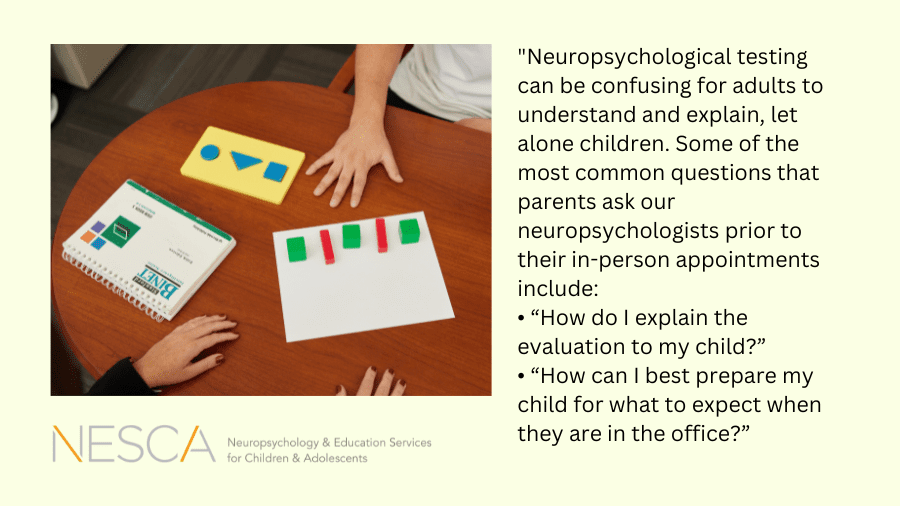
Neuropsychological testing can be confusing for adults to understand and explain, let alone children. Some of the most common questions that parents ask our neuropsychologists prior to their in-person appointments include:

  • “How do I explain the evaluation to my child?”
  • “How can I best prepare my child for what to expect when they are in the office?”

The answers vary depending on several factors. To name a few, your child’s age, level of awareness of areas they are struggling, and your child’s language abilities guide decision-making about the best way to discuss their upcoming evaluation experience. It is important to talk with your neuropsychologist to plan the most appropriate approach for your child. However, below is some standard guidance.

When describing the evaluation itself, I advise parents to use language that reduces pressure on the situation. In other words, it is best to frame the evaluation as a low stakes experience. For example, using words like “testing” or “evaluation” can create unnecessary worry. I often recommend describing the evaluation experience as a variety of “activities,” some of which may include looking at pictures, playing with toys, drawing, and answering questions. Other activities may seem similar to what your child is asked to do in school, such as reading stories, completing math problems, and writing.

Oftentimes, when children hear they are going to the “doctor” they may worry about medical exams. For this reason, it can be helpful to reassure your child that they are not going to be getting poked and prodded; and definitely will not be getting any shots!

To explain the reasons for doing the evaluation, some key phrases to use with your child include:

  • We want to understand how you learn, because everyone learns differently. It’s great that everyone learns differently because it keeps life interesting!
  • Everyone has things they are really good at and other things that are more challenging for them. This will help us understand what comes easy to you and what might be a little trickier, so that we can help you with things like schoolwork, completing activities around the house, and play.
  • We can also share this information with your teacher so they can better understand your learning style and support you at school.
  • Some activities might seem easy and others might be hard, but your job is just to try your best!

For more helpful tips, please see Dr. Gibbons’ previous blog posts, “How Do I Prepare My Child for a Neuropsychological Evaluation?” and “Preparing our Kids to Reenter the Community.”


About Lauren Halladay, Ph.D.

Dr. Halladay conducts comprehensive evaluations of toddlers, preschoolers, and school-aged children with a wide range of developmental, behavioral, and emotional concerns. She particularly enjoys working with individuals with Autism Spectrum Disorder, Intellectual and Developmental Disabilities, and complex medical conditions. She has experience working in schools, as well as outpatient and inpatient hospital settings. She is passionate about optimizing outcomes for children with neurodevelopmental disabilities by providing evidence-based, family-oriented care.


If you are interested in booking an appointment for an evaluation with a Dr. Halladay or another NESCA neuropsychologist/clinician, please fill out and submit our online intake form


Neuropsychology & Education Services for Children & Adolescents (NESCA) is a pediatric neuropsychology practice and integrative treatment center with offices in Newton and Plainville, Massachusetts, Londonderry, New Hampshire, and Burlington, Vermont, serving clients from preschool through young adulthood and their families. For more information, please email info@nesca-newton.com or call 617-658-9800.

Getting to Know NESCA Pediatric Neuropsychologist J. Michael Abrams, Ph.D.

By | Nesca Notes 2023

By: Jane Hauser
Director of Marketing & Outreach

I recently spoke with J. Michael Abrams, Ph.D., pediatric neuropsychologist practicing in NESCA’s Londonderry, New Hampshire office. Dr. Abrams joined NESCA last fall. Take a few minutes to learn more about him in today’s blog interview. 

How did you became interested in neuropsychology?

Back in the mid-80s, I worked at McLean Hospital, in the Child & Adolescent Inpatient program. They had an educational program set up for the kids that was run by psychologists who were embedded in the classrooms. There was a fair amount of test development going on at that time that used a lot of materials to build executive function and cognitive skills among the students. I was always interested in education and special education, but it was this experience that changed my career mindset toward psychology. So, I went back to school to study psychology.

Tell us about your career journey.

I always wanted to work with children and adolescents. That desire stemmed from my initial interest in special education and education in general, and I was on that path. I spent about seven and a half years at McLean, with the first couple of years working on an inpatient unit. Then I transferred to the psychologist-run education program, where I was a classroom educator.

After switching to psychology, my original clinical interest was with children who had experienced abuse and neglect and those who were involved in children’s eyewitness testimony. The focus was on how the experiences they had been through affected their memory, attention, and cognitive development. The more I worked with children and adolescents, the more I recognized how these neuropsychological factors impacted all aspects of their lives. It became much more than what I saw in the context of a legal case; instead, I saw how their experiences affected the management of themselves, their image of themselves, their hopes and aspirations, etc. I became really interested in how their neuropsychology intersected with their opportunities and experiences.

What segment of children and adolescents do you primarily work with? What is your specialty area?

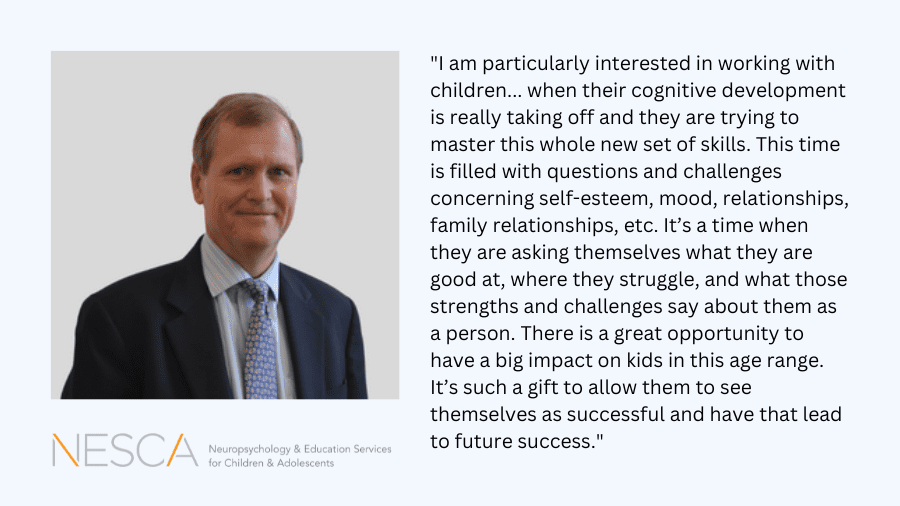
I am particularly interested in working with children from age eight through 14, when their cognitive development is really taking off and they are trying to master this whole new set of skills. This time is filled with questions and challenges concerning self-esteem, mood, relationships, family relationships, etc. It’s a time when they are asking themselves what they are good at, where they struggle, and what those strengths and challenges say about them as a person. There is a great opportunity to have a big impact on kids in this age range. It’s such a gift to allow them to see themselves as successful and have that lead to future success.

What do you find most rewarding and most challenging about your profession?

The rewarding part is two-fold. The first is the interpersonal emotional piece. On a personal level, it’s rewarding to be able to contribute to other peoples’ success, whether it’s the clients, the practice, or the field overall. The second piece is more personal and intellectual. It’s intellectually stimulating to be able to integrate all of the information we gather or identify about a person, and to be able to communicate those findings or revelations to a child and their parents or caregivers. The intellectual reward lies in the ability to effectively communicate a child’s cognitive complexity in a way that they understand and can use to help reach their goals.

The challenging part has to do with the mental health landscape overall. As someone who is involved in neuropsychological assessments, it can feel like operating within a silo in the overall landscape. So many of the systems, such as insurance and education, are not set up for seamless collaboration with psychology practices or other areas of behavioral health. Unfortunately, this can make getting the appropriate mental health care or educational/therapeutic interventions a cumbersome, sometimes adversarial process. It’s the frustration that accompanies the much larger, more overarching need to develop a genuine collaboration among all the pieces within the health and mental health care settings.

What interested you about NESCA?

I was drawn to the opportunity NESCA provides to interact with other psychologists and affiliated clinicians on an ongoing basis. Professionally, I am not operating in a silo. At NESCA, there is more regular consultation and collaboration on how to put together a comprehensive and coherent plan for these kids. I was very excited to have a team of highly qualified, very experienced professionals, within the same organization, who can provide a range of supports and services for the kids we work with. Having this as a resource is a great opportunity for our clients and our staff, alike.


About Pediatric Neuropsychologist J. Michael Abrams, Ph.D.

Dr. J. Michael Abrams has over 30 years of experience in psychological, educational, and neuropsychological assessment and psychotherapy in various settings. A significant aspect of Dr. Abrams’ continuing interest and experience also includes the psychological care and treatment of children, adolescents, and young adults with a broad variety of emotional and interpersonal problems, beyond those that arise in the context of developmental differences or learning-related difficulties.
 

To book a neuropsychological evaluation with Dr. Abrams in Londonderry, NH, or to book with another expert NESCA neuropsychologist, complete NESCA’s online intake form


Neuropsychology & Education Services for Children & Adolescents (NESCA) is a pediatric neuropsychology practice and integrative treatment center with offices in Newton and Plainville, Massachusetts, Londonderry, New Hampshire, and Burlington, Vermont, serving clients from preschool through young adulthood and their families. For more information, please email info@nesca-newton.com or call 617-658-9800.

Why are Some Youths More Susceptible to Anxiety and Anxiety Disorders?

By | Nesca Notes 2023

By: Ferne Pinard, Ph.D.
NESCA Pediatric Neuropsychologist

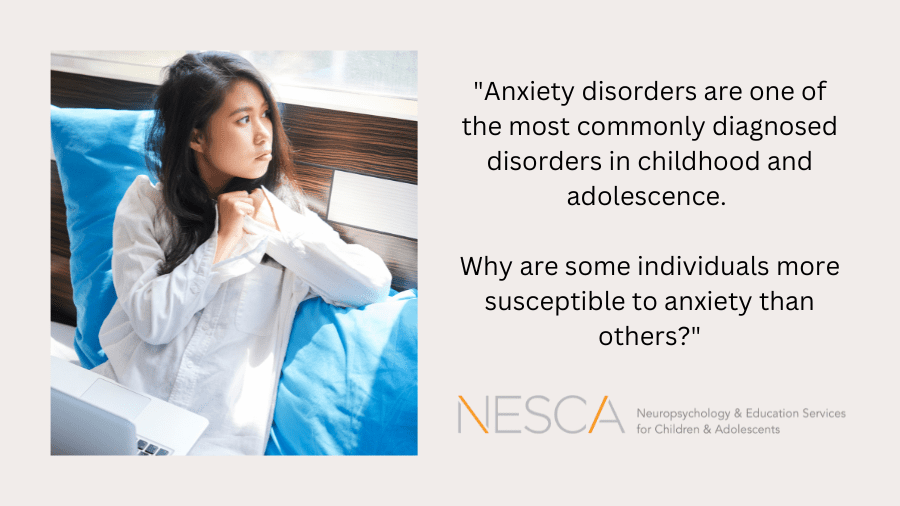
Anxiety disorders are one of the most commonly diagnosed disorders in childhood and adolescence. According to the Centers for Disease Control and Prevention (CDC), 9.4% of children aged 3-17 years (approximately 5.8 million) were diagnosed with anxiety between 2016-2019. These numbers have increased significantly during the COVID-19 pandemic. Some studies estimate that the prevalence of child and adolescent anxiety disorders nearly doubled during the pandemic.

Why are some individuals more susceptible to anxiety than others? The development of anxiety and anxiety disorders during youth is not simple or straightforward but involves complex interactions among the following variables:

  • Temperament: Children with the behavioral inhibition temperamental style described as timidity, shyness, and emotional restraint when with unfamiliar people and or in new places are more likely to develop anxiety disorders.
  • Parent-child Attachment: Children who did not experience a trusting and secure parental bond, but received inconsistent responses from caregivers and are preoccupied with the caregiver’s emotional availability (Ambivalent attachment) are at increased risk for developing an anxiety disorder.
  • Parental Anxiety: Children with anxious parents are at higher risk of developing an anxiety disorder. This relation is partly influenced by genetics. The risk of developing specific anxiety disorders has been associated with various genes. These can be passed to the child, thereby increasing their genetic vulnerability to anxiety disorders. However, parental behavior and practices are also important in understanding this link.
  • Parenting Behavior/Practices: When parents model anxious, overcontrolling, or demanding behavior, their children are more reluctant to explore new situations and display more avoidance behaviors.
  • Adversity: Trauma, negative/stressful life events as well as low socio-economic status are also risk factors for childhood anxiety. The more adverse life events an individual experiences in childhood, the greater the likelihood that they will develop an anxiety disorder. They also experience higher levels of anxiety.
  • COVID-19: The combination of social isolation and lack of support networks increased anxiety among youth during the COVID-19 pandemic.
  • Bullying: Being the victim or perpetrator of bulling is also associated with anxiety symptoms later on in life
  • Externalizing Disorders: Adolescents with early externalizing disorders are at increased risk for later anxiety disorders. Attention Deficit/Hyperactivity Disorder (ADHD), in particular, is a significant risk factor.
  • Sleep: Sleep disturbance often predicts the emergence of anxiety disorders.
  • Cognition: Maladaptive cognitive responses (e.g., inability to tolerate distress, negative beliefs about uncertainty, avoidance of new/unfamiliar people/things, and repetitive negative thinking) are associated with impaired emotion regulation and a greater risk of developing anxiety disorders.

Supportive relationships with family and peers as well as problem-focused coping strategies can guard against anxiety disorders. Problem-focused coping refers to strategies that directly address the problem to minimize its effect.

Parents, caregivers, and other adults involved can also help by:

  • being aware of the signs of anxiety
  • being mindful of expectations set for children and teens
  • encouraging participation in sports teams, clubs, community- or religious-based groups
  • supporting a healthy lifestyle, including a nutritious diet, exercise, and adequate sleep
  • providing access to support services


References:

Donovan, C. L., & Spence, S. H. (2000). Prevention of childhood anxiety disorders. Clinical psychology review20(4), 509-531.

Vallance, A., & Fernandez, V. (2016). Anxiety disorders in children and adolescents: Aetiology, diagnosis and treatment. BJPsych Advances, 22(5), 335-344. doi:10.1192/apt.bp.114.014183

Warner, E. N., & Strawn, J. R. (2023). Risk Factors for Pediatric Anxiety Disorders. Child and Adolescent Psychiatric Clinics. Published: February 26, 2023 DOI: https://doi.org/10.1016/j.chc.2022.10.001


About Pediatric Neuropsychologist Ferne Pinard, Ph.D.

Dr. Pinard provides comprehensive evaluation services for children, adolescents, and young adults with learning disabilities, attention deficit/hyperactivity disorders (ADHD), and psychiatric disorders as well as complex medical histories and neurological conditions. She has expertise in assessing children and adolescents with childhood cancer as well as neuro-immunological disorders, including opsoclonus-myoclonus-ataxia syndrome (“dancing eyes syndrome”), central nervous system vasculitis, Hashimoto’s encephalopathy, lupus, auto-immune encephalitis, multiple sclerosis (MS), acute disseminated encephalomyelitis (ADEM), and acute transverse myelitis (ATM), and optic neuritis.

To book a neuropsychological evaluation with Dr. Pinard or another expert neuropsychologist at NESCA, complete NESCA’s online intake form

Neuropsychology & Education Services for Children & Adolescents (NESCA) is a pediatric neuropsychology practice and integrative treatment center with offices in Newton and Plainville, Massachusetts; Londonderry, New Hampshire; and Coaching and Transition staff in greater Burlington, Vermont, serving clients from preschool through young adulthood and their families. For more information, please email info@nesca-newton.com or call 617-658-9800.

How Can a Neuropsychological Evaluation Help?

By | Nesca Notes 2023

By: Maggie Rodriguez, Psy.D.
Pediatric Neuropsychologist, NESCA

Recently I met with a family seeking a neuropsychological evaluation for their daughter. After talking about their reasons for pursuing testing, the parents asked me, “So…do you think this will help? Is this type of testing what our child needs?” It’s an important question and one I’m sure many families wonder about but don’t always ask. A comprehensive neuropsychological evaluation can be of tremendous value, but the process requires time and energy as well as a financial investment, so it makes sense to consider this question carefully.

Though it may be surprising to hear this coming from a neuropsychologist, the answer to the question of whether to have a child evaluated is not always clear-cut. For instance, parents sometimes wonder if there is practical benefit to seeking testing when a child or adolescent already has a diagnosis but there are questions about its accuracy. Consider the following scenario as an example. A child with issues regulating attention and with weaknesses in social skills has a diagnosis of Attention-Deficit/Hyperactivity Disorder (ADHD). Her therapist has raised the question of whether a diagnosis of Autism Spectrum Disorder (ASD) might better explain the issues the child is facing. Inattention can be present in both ADHD and ASD, and both conditions can result in social difficulties. Especially if a child is already receiving appropriate services, does the diagnostic label matter, and is it worth pursuing formal assessment?

There are valid arguments to be made in favor of seeking an evaluation in this type of situation and valid arguments to support choosing not to invest in an assessment.  In such a scenario, I would encourage a family to consider the following questions:

  • Will diagnostic clarification address unanswered questions that previous diagnoses have not fully addressed?

Sometimes an established diagnosis partially explains a child’s issues but there are lingering questions about other aspects of a child’s presentation. If a different or additional diagnosis could fill in the gaps, it may be worth assessing.

  • Could testing help identify your child’s unique pattern of strengths and weaknesses?

Especially when an existing diagnosis has been made without testing (for instance by a therapist or physician), there may be important aspects of a child’s neuropsychological profile that have not yet been identified. For instance, individuals with Autism Spectrum Disorder share certain key features, but they also differ in significant ways. A diagnosis alone cannot capture the nuances of an individual child’s strengths and weaknesses, while a full neuropsychological evaluation can more fully describe a child on an individual level.

  • Will understanding the root of the problem help guide recommendations?

NESCA’s clinic director compares a child’s observable difficulties to the “tip of an iceberg.” There are inevitably hidden underlying factors, and discerning these can be important in determining how to address the issues that are visible on the surface. For example, problems with social interactions can arise from deficits in social communication (e.g., difficulty interpreting facial expressions), as seen in Autism. Alternatively, a child with ADHD may encounter social challenges because they have trouble paying attention to relevant social cues or because impulsivity leads them to behave inappropriately. Someone with social phobia may have few relationships because their anxiety drives them to avoid social interactions. Effective intervention in each of these cases requires a nuanced approach that targets not just the surface issue but the factors underlying it.

  • Will establishing a particular diagnosis open up opportunities for additional support and resources that may be important?

In some cases, there are specific resources that are available to individuals with particular diagnoses. For instance, in Massachusetts, individuals with a diagnosis of Autism Spectrum Disorder or Intellectual Disability may be eligible to receive services through the Department of Developmental Services. If qualifying for such services could be beneficial, diagnostic clarification may be important.

More broadly, the internet and social media have allowed people with shared diagnoses to connect in new ways. The opportunity to connect with others experiencing similar difficulties can be invaluable, and online communities can provide a sense of support, educational information, and practical resources for children and parents alike.

The answers to these questions and to the bigger question of whether to seek neuropsychological evaluation will be different for different families. There are many factors to weigh in making the decision to seek testing. If you are considering an assessment for your child and need additional information to make an informed decision, answers to frequently asked questions about neuropsychological evaluation can be found on NESCA’s website.


About the Author

Maggie Rodriguez, Psy.D., provides comprehensive evaluation services for children, adolescents, and young adults with often complex presentations. She particularly enjoys working with individuals who have concerns about attention and executive functioning, language-based learning disorders, and those with overlapping cognitive and social/emotional difficulties.

Prior to joining NESCA, Dr. Rodriguez worked in private practice, where she completed assessments with high-functioning students presenting with complex cognitive profiles whose areas of weakness may have gone previously undiagnosed. Dr. Rodriguez’s experience also includes pre- and post-doctoral training in the Learning Disability Clinic at Boston Children’s Hospital and the Neurodevelopmental Center at MassGeneral for Children/North Shore Medical Center. Dr. Rodriguez has spent significant time working with students in academic settings, including k-12 public and charter school systems and private academic programs, such as the Threshold Program at Lesley University.

Dr. Rodriguez earned her Psy.D. from William James College in 2012, where her coursework and practicum training focused on clinical work with children and adolescents and on assessment. Her doctoral thesis centered on cultural issues related to evaluation.

Dr. Rodriguez lives north of Boston with her husband and three young children.  She enjoys spending time outdoors hiking and bike riding with her family, practicing yoga, and reading.


To book a consultation with Dr. Rodriguez or one of our many other expert neuropsychologists, complete NESCA’s online intake form.

Neuropsychology & Education Services for Children & Adolescents (NESCA) is a pediatric neuropsychology practice and integrative treatment center with offices in Newton and Plainville, Massachusetts, Londonderry, New Hampshire, and staff in greater Burlington, Vermont, serving clients from preschool through young adulthood and their families. For more information, please email info@nesca-newton.com or call 617-658-9800.

Why a Task is Never “Just a Simple Task” – a compassionate perspective on executive functioning difficulties

By | Nesca Notes 2023

By Jasmine Badamo, MA
Educational Counselor; Executive Function Tutor

I’ve often experienced the frustration of a student being given a task–whether it be at home or school–and struggling to complete it. Teachers and parents alike have said to me, “I just don’t understand why they can’t get it done. It’s a simple task.” I’d like to challenge the concept of a “simple task.” Once we begin to dig beneath the surface, we start to see all the hidden demands that every task requires of us and our brains.

As a trained Special Education teacher and executive function coach, I was taught to search for the hidden demands in the academic tasks I give my students. For example, asking a student to write a story about a time they were sad involves a multitude of mini-tasks that present varying levels of challenge depending on the student and their learning needs:

  • Recognize what sad feels like to you
  • Activate your memories to recall a time you felt what sad feels like to you
  • Remember the order of events of a memory that may be more visceral than cerebral
  • Determine which details are important vs. less important to include in your story
  • Decide who your audience is, and remember what the purpose of this story is
  • Perspective take and infer what would make your story interesting to your audience
  • Identify words that will accurately convey your experience to your audience
  • Utilize your knowledge of grammar, spelling, and punctuation to craft intelligible writing
  • Understand and implement a proper story arc so that your story flows

All of this is not even including the related emotional demands:

  • Decide if you’re even motivated to do this, and if your relationship with your teacher is worth all this headache
  • Manage the frustration that comes up at every.single.step.along.the.way.
  • Self-soothe when your insecurities bubble up and you start to question your identity as a writer, student, and/or good person

Oh wait, you thought we were done? There is also a myriad of executive function demands such a task places on a student:

  • Understanding the steps you needs to take, and determining where to start
  • Motivating yourself to take the first step despite feeling extremely stuck
  • Deciding which parts of the writing process to prioritize and spend more time on
  • Knowing how long this will take you, and managing your time respectively
  • Maintaining focus on a task that involves doing the most laborious and LEAST interesting thing a teacher could ask you to do…write
  • Managing the impulse to turn to your friend next to you and talk about what you’re really interested in, which is obviously Minecraft

The above lists are far from comprehensive, and even so, they help demonstrate how a “simple” task is in fact a much more complex–and demanding–series of mini-tasks to complete. Depending on the student, they may easily breeze through these mini-tasks, hardly experiencing them as demands, or they may acutely feel the weight of each mini-task. Students with executive function struggles are more likely to fall into the latter category.

While the best way to support your student or child will vary, the first step is the same for everyone: awareness. The more aware teachers and parents can be about the hidden demands involved in the tasks we assign, the better prepared we can be to support students in overcoming those demands. Acknowledgement and compassion go a long way. Start by reflecting on all the mini-tasks involved in each of your own daily activities, and your ability to identify hidden demands will steadily improve. You can extend this new self-awareness to your students or child, helping them to understand that every task contains a series of smaller steps to follow, and all these steps can make a task feel complicated and draining. Soon, both you and your child will be pros at seeing what lies beneath the surface, and you’ll never label something “a simple task” again!

If today’s post resonates with you or your child, consider reaching out to NESCA; we’re here to help with life’s “simple” tasks! For more information about NESCA’s executive function coaching, visit: https://nesca-newton.com/coaching-services/detailed/#coaching-executive-function.


About the Author

Jasmine Badamo, MA, is an educational counselor and executive function coach who works full-time at NESCA supporting students ranging from elementary school through young adulthood. In addition to direct client work, Ms. Badamo provides consultation and support to parents and families in order to help change dynamics within the household and/or support the special education processes for students struggling with executive dysfunction. She also provides expert consultation to educators, special educators and related professionals.

Ms. Badamo is a New York State Certified ENL and Special Education teacher. She has more than 10 years of teaching experience across three countries and has worked with students and clients ranging in age from 7 to adulthood. She earned her bachelor’s degree in Biological Sciences from Cornell University and her master’s degree in TESOL from CUNY Hunter College. She has also participated in graduate coursework focusing on academic strategies and executive function supports for students with LD, ADHD, and autism as part of the Learning Differences and Neurodiversity (LDN) certification at Landmark College’s Institute for Research and Training. In addition to being a native English speaker, Ms. Badamo is also conversationally fluent in verbal and written Spanish.

Having worked in three different New York City public schools, Ms. Badamo has seen firsthand the importance of executive function skills in facilitating student confidence and success. Her coaching and consultation work focuses on creating individualized supports based on the specific needs and strengths of each client and supporting the development of metacognition (thinking about one’s own thought processes and patterns), executive function skills, and independence. She will guide clients to generate their own goals, identify the barriers to their goals, brainstorm potential strategies, advocate for support when needed, and reflect on the effectiveness of their applied strategies.

Ms. Badamo is a highly relational coach. Building an authentic connection with each client is a top priority and allows her to provide the best support possible. Additionally, as a teacher and coach, Ms. Badamo believes in fostering strong collaborations with anyone who supports her clients including service providers, classroom teachers, parents, administrators, and community providers.


To book executive function coaching with Jasmine Badamo or another EF or Real-life Skills Coach at NESCA, complete NESCA’s online intake form


Neuropsychology & Education Services for Children & Adolescents (NESCA) is a pediatric neuropsychology practice and integrative treatment center with offices in Newton and Plainville, Massachusetts, Londonderry, New Hampshire, and Burlington, Vermont, serving clients from preschool through young adulthood and their families. For more information, please email info@nesca-newton.com or call 617-658-9800.

Individualized Education Program or 504 Plan? How do I Know which is Right for My Child?

By | Nesca Notes 2023

By: Alissa Talamo, PhD
Pediatric Neuropsychologist, NESCA

Both an Individualized Education Program (IEP) and a 504 Plan can provide supports for students in grades K-12 who are struggling in school, to ensure the student is able to receive “free and appropriate public education (FAPE).” However, not all students who are struggling will qualify for these supports.

An IEP provides a plan for students who require special education supports and direct related services to meet their unique needs, and these supports need to be provided at no cost to the family.

There are two requirements a child must meet to qualify for an IEP. The student must have one or more of the 13 disabilities noted in The Individuals With Disability Education Act (IDEA), which is the federal special education law for children with disabilities. Some of the disabilities listed include a Specific Learning Disability, autism (ASD), other health impairment (e.g., AD/HD), speech or language impairment, or an intellectual disability (for a full list of the 13 disabilities, see https://www.doe.mass.edu › sped › definitions). The second requirement is that the disability must affect the child’s educational performance and/or ability to learn and benefit from the general education curriculum, meaning the child must need specialized instruction to make progress in school. The IEP sets learning goals and describes the services the school will provide. Some components the IEP must include are: how the child is currently performing in school (e.g., academic and functional performance) along with annual education goals and services the child will receive. Additionally, the school will track progress toward those goals and the IEP team must review the IEP at least once a year.

A 504 Plan stems from Section 504 of the Rehabilitation Act of 1973. This is a federal civil rights law to stop discrimination against people with disabilities and requires the school to provide support and remove barriers for a student with a disability. A 504 Plan provides services and changes to the learning environment to enable students to learn alongside their peers. As with an IEP, a 504 plan is provided at no cost to families. There are two requirements to be eligible for a 504 Plan. A child has any disability, and the disability must interfere with the child’s ability to learn in a general education classroom. According to Section 504, the disability must substantially limit one or more basic life activities. Because the definition of disability is broader on a 504 Plan, a child who does not qualify for an IEP might still be eligible for a 504 Plan. In general, a 504 Plan is a good option for students with disabilities who do not require specialized instruction but do need specific accommodations to receive FAPE (e.g., extended time on tests, larger print text, priority seating close to the front of the classroom).

To determine if your child would qualify for an IEP or 504, it is important that they receive a thorough evaluation (cognitive, educational, functional, social/emotional, etc.) to determine their level of need. This evaluation can be completed through the public school system or an independent evaluator.

Sources:

www.understood.org

https://www.mpgfirm.com/back-to-basic-rights-iep-vs-504/


About the Author

With NESCA since its inception in 2007, Dr. Talamo had previously practiced for many years as a child and adolescent clinical psychologist before completing postdoctoral re-training in pediatric neuropsychology at the Children’s Evaluation Center.

After receiving her undergraduate degree from Columbia University, Dr. Talamo earned her doctorate in clinical health psychology from Ferkauf Graduate School of Psychology and the Albert Einstein College of Medicine at Yeshiva University.

She has given a number of presentations, most recently on “How to Recognize a Struggling Reader,” “Supporting Students with Working Memory Limitations,” (with Bonnie Singer, Ph.D., CCC-SLP of Architects for Learning ), and “Executive Function in Elementary and Middle School Students.”

Dr. Talamo specializes in working with children and adolescents with language-based learning disabilities including dyslexia, attentional disorders, and emotional issues. She is also interested in working with highly gifted children.

Her professional memberships include MAGE (Massachusetts Association for Gifted Education), IDA (International Dyslexia Association), MABIDA (the Massachusetts division of IDA) and MNS (the Massachusetts Neuropsychological Society).

She is the mother of one college-aged daughter.


To book a consultation with Dr. Talamo or one of our many other expert neuropsychologists, complete NESCA’s online intake form.

Neuropsychology & Education Services for Children & Adolescents (NESCA) is a pediatric neuropsychology practice and integrative treatment center with offices in Newton and Plainville, Massachusetts, Londonderry, New Hampshire, and Burlington, Vermont, serving clients from preschool through young adulthood and their families. For more information, please email info@nesca-newton.com or call 617-658-9800.

Meet Jasmine Badamo, MA, NESCA Executive Function Coach

By | Nesca Notes 2023

By: Jane Hauser
Director of Marketing & Outreach

This week, I had the pleasure of talking with Jasmine Badamo, MA, an Educational Counselor and Executive Function Tutor here at NESCA. While Jasmine has been with NESCA for quite a while on a per diem basis, she officially joined our team on a full-time basis within the past few months. Our clients and staff have enjoyed getting to know her, so we’d like to introduce you to her as well.

What brought you to the education field?

In college, I majored in science, but took a different turn when it came to my career path. After I graduated from college, I took a job teaching English abroad. During that time, I realized that I was far more interested in—and better at—teaching than I was in science. This experience solidified for me that education was really where I wanted to take my career. When I was back in the U.S., I earned my Master’s in TESOL (teaching English to speakers of other languages) at CUNY Hunter College. While in the TESOL program, I also became very interested in special education.

How did you learn about the need for Executive Functioning (EF) tutoring or coaching?

During my time in the TESOL program, I noticed there was a lot of overlap among students in the TESOL program and those in special education—there was a need for individualization among both sets of students. During this time, I learned how to modify a curriculum to be appropriate for each unique learner. I went on to work in a school-based special education setting for three years. Here is where I realized that a lot of the underlying needs of students in special education stemmed from their EF challenges.

When I was studying for my special education license, Executive Functioning wasn’t really even a thing yet; there was a concept, but no real name for it. Once it was given a name and there was more of an understanding about it, everything clicked for me. When I learned that I could make EF the focus of a job, I got really excited. I dove in headfirst and immediately started expanding my coursework in that area.

Executive Function covers a lot of territory. Where did you start?

While I was working toward my professional certificate with Landmark College, I was also working as a 4th grade special education teacher. When Covid hit, we all immediately saw the need for putting those EF coaching skills to really good and frequent use in helping our students to transition to remote education. We were able to help our students find functional, realistic, manageable tools to make their life less stressful while learning from home.

What about NESCA did you find attractive?

I was looking to focus a little more on EF outside of the elementary school setting. I found NESCA through a connection I made at Landmark. With NESCA’s EF and Real-life Skills Coaching Program, I was able to offer tutoring to a more diverse population among a wider range of ages, which was exciting to me. Being a part of NESCA’s coaching program also allowed me to really focus in on teaching EF skills, which is where my true interest lies.

How would you describe what you do to those who may not know much about EF?

I initially say that I am kind of like a special education tutor who helps people with study skills and life skills. I work closely with individuals who struggle with organization, time management, and focus to build skills in those areas to make things easier for them to do on their own. I often work with people who have characteristics of Attention-deficit/hyperactivity disorder (ADHD), Autism spectrum disorder (ASD), or a learning disability.

How do you do tutor students in EF?  

It all comes down to individualization. I spend a good amount of time focusing on getting to know a person in the beginning. I try to identify the biggest stress point or disconnect in their life. Together, we develop strategies to tackle those stressors in a way that works for them. We may come up with a bunch of potential strategies, but finding the ones that are realistic for them to maintain independently is the key to success. Once we identify and practice those, we remove the scaffolding bit by bit, giving them the independence they desire.

What is the favorite part of your job?

I love to figure out something that will have a positive impact on a student…that moment when we crack the code! It’s amazing to be able to use my knowledge in a way that can be directly meaningful to someone else in their life.

What do you find most challenging?

The fact that everything I do with each student is totally individualized can be challenging. There’s no script to go off of, and it takes a lot of trial and error to find what you’re looking for. You so desperately want to help the person and ease their struggles. Even if you find the right way to build an EF skill, it still takes a lot of time and patience. Teaching the student to also be patient with themselves during this time can be a challenge. But it’s so worth it!

Are there other areas of EF you’d like to focus on?

A lot of the strategies that can be used with students who struggle with EF are designed for neurotypical people. Often the tier one interventions that work for neurotypical individuals are not really tailored for them. That means we have to find creative ways to support these students while still honoring who they are. We can’t change the world for them, but they need to be able to navigate through it. And yet, we don’t want them to have to change the person who they are. It can be difficult, so I’d love to work on identifying more strategies and tools that may be good options for my specific students. I’d like to help them to find a better balance between the way the world works and the way their brain works.

Tell us what you’ve found rewarding about your work at NESCA so far.

I truly love getting positive feedback from my students’ parents. I am so validated by how appreciative they are that I “get” their kid. Sometimes my students tell me, but more often than not, I hear this feedback from their parents.

Unfortunately, a lot of kids with EF struggles are on the periphery with friends or academics. It’s great to be able to tell them there’s nothing wrong with them and guide them to having more self-compassion and self-empowerment. I strive to let my students know that we all have EF struggles. Life is one giant EF demand on us, and it’s a good thing to seek out support to help manage those demands. We put so much pressure on ourselves to manage it all, but it’s okay to get guidance, support, or a boost from someone else.


About Educational Counselor & Executive Function Tutor Jasmine Badamo, MA

Jasmine Badamo, MA is an educational counselor and executive function coach who works full-time at NESCA supporting students ranging from elementary school through young adulthood. In addition to direct client work, Ms. Badamo provides consultation and support to parents and families in order to help change dynamics within the household and/or support the special education processes for students struggling with executive dysfunction. She also provides expert consultation to educators, special educators and related professionals.

Ms. Badamo is a New York State Certified ENL and Special Education teacher. She has more than 10 years of teaching experience across three countries and has worked with students and clients ranging in age from 7 to adulthood. She earned her bachelor’s degree in Biological Sciences from Cornell University and her master’s degree in TESOL from CUNY Hunter College. She has also participated in graduate coursework focusing on academic strategies and executive function supports for students with LD, ADHD, and autism as part of the Learning Differences and Neurodiversity (LDN) certification at Landmark College’s Institute for Research and Training. In addition to being a native English speaker, Ms. Badamo is also conversationally fluent in verbal and written Spanish.

Having worked in three different New York City public schools, Ms. Badamo has seen firsthand the importance of executive function skills in facilitating student confidence and success. Her coaching and consultation work focuses on creating individualized supports based on the specific needs and strengths of each client and supporting the development of metacognition (thinking about one’s own thought processes and patterns), executive function skills, and independence. She will guide clients to generate their own goals, identify the barriers to their goals, brainstorm potential strategies, advocate for support when needed, and reflect on the effectiveness of their applied strategies.

Ms. Badamo is a highly relational coach. Building an authentic connection with each client is a top priority and allows her to provide the best support possible. Additionally, as a teacher and coach, Ms. Badamo believes in fostering strong collaborations with anyone who supports her clients including service providers, classroom teachers, parents, administrators, and community providers.


To book executive function coaching with Jasmine Badamo or another EF or Real-life Skills Coach at NESCA, complete NESCA’s online intake form


Neuropsychology & Education Services for Children & Adolescents (NESCA) is a pediatric neuropsychology practice and integrative treatment center with offices in Newton and Plainville, Massachusetts, Londonderry, New Hampshire, and Burlington, Vermont, serving clients from preschool through young adulthood and their families. For more information, please email info@nesca-newton.com or call 617-658-9800.

Neuropsychological Evaluations at Different Stages of Childhood & Adolescence

By | Nesca Notes 2023

By: Erin Gibbons, Ph.D.
Pediatric Neuropsychologist, NESCA

Having been at NESCA for more than 11 years, I have been fortunate enough to follow many clients throughout their childhood. In some cases, I have conducted two or three neuropsychological evaluations on the same student at different points in their life. After their first experience with an evaluation, parents will often ask, “Will we need to do this again?” or “How often should we get evaluations?”. As is the case for most things, the answer is different for every child depending on their needs. When determining how often to seek an evaluation, it might be helpful to think about what information you are trying to gather depending on the child’s age.

Preschool (2-5)

  • Concerns about developmental delays (not meeting milestones)
  • Concerns about autism spectrum disorder (ASD)
  • Transition from Early Intervention into preschool
  • Transition from preschool to kindergarten

Elementary School (5-10)

  • Concerns about academic skills – assess for dyslexia, dysgraphia, dyscalculia, or other specific learning disability
  • Why is the student not making expected progress in school?
  • Concerns about attention and executive functioning (possible attention-deficit/hyperactivity disorder (ADHD)
  • Concerns about ASD (if not already diagnosed)
  • For children who already have an identified disability – need to monitor progress
  • Plan for transition to middle school

Middle School (10-14)

  • If this is the first neuropsychological evaluation – it is usually because the child did okay in elementary school but is now struggling with increased demands in the areas of academics, executive functioning, and social
  • For students with a previously identified disability – need to monitor progress
  • Plan for transition to high school

Early High School (14-16)

  • Monitor progress – how is the student managing increased demands of high school?
  • Mental health – emerging concerns about anxiety and/or depression
  • Start planning for postsecondary transition
    • Is the student on track to graduate in 4 years?
    • Does the student need programming beyond 12th grade?

Late High School (16-18)

  • Heavy emphasis on postsecondary transition planning
  • Do we need to work on vocational skills?
  • If the student is college-bound – determine whether any accommodations will be needed
  • If the student is not going to college – what is next?
    • Remain at high school with ongoing special education services
    • Gap year
    • Young adult transition program for students with disabilities
  • Consult with transition specialist to help with planning

Early Adulthood (18+)

  • If the student is in college – do they need additional supports?
  • If the student is still accessing special education services – where should we be putting the emphasis?
    • Academics
    • Vocational
    • Life Skills
  • For students with developmental disabilities, need to plan for adult services
    • Should the parents seek guardianship?
    • Is the student eligible for DDS or other adult service agencies?
    • What resources are available to the family?
  • Combine with transition specialists to help navigate adult services


About the Author

Erin Gibbons, Ph.D. is a pediatric neuropsychologist with expertise in neurodevelopmental and neuropsychological assessment of infants,

children, and adolescents presenting with developmental disabilities including autism spectrum disorders, Down syndrome, intellectual disabilities, learning disabilities, and attention deficit disorders. She has a particular interest in assessing students with complex medical histories and/or neurological impairments, including those who are cognitively delayed, nonverbal, or physically disabled. Dr. Gibbons joined NESCA in 2011 after completing a two-year post-doctoral fellowship in the Developmental Medicine Center at Boston Children’s Hospital. She particularly enjoys working with young children, especially those who are transitioning from Early Intervention into preschool. Having been trained in administration of the Autism Diagnostic Observation Schedule (ADOS), Dr. Gibbons has experience diagnosing autism spectrum disorders in children aged 12 months and above.

If you are interested in booking an evaluation with a NESCA neuropsychologist/clinician, please fill out and submit our online intake form

Neuropsychology & Education Services for Children & Adolescents (NESCA) is a pediatric neuropsychology practice and integrative treatment center with offices in Newton and Plainville, Massachusetts, Londonderry, New Hampshire, and Burlington, Vermont, serving clients from preschool through young adulthood and their families. For more information, please email info@nesca-newton.com or call 617-658-9800.

Skip to content