NESCA’s Londonderry, NH location has immediate availability for neuropsychological evaluations. Our NH clinicians specialize in the following evaluations: Neuropsychological; Autism; and Emotional and Psychological, as well as Academic Achievement and Learning Disability Testing. Our NH clinicians also conduct evaluations for students who are at boarding schools, and two of our NH clinicians have PsyPACT authorization, allowing them to conduct evaluations out-of-state.

Visit www.nesca-newton.com/intake for more information or to book an evaluation.

Category

NESCA Notes 2025

Subscribe to NESCA Notes

image of adults observing a school classroom

Why School Observations Matter in a Neuropsychological Assessment

By | NESCA Notes 2025

image of adults observing a school classroomBy Miranda Milana, Psy.D.
Pediatric Neuropsychologist

When families seek a neuropsychological evaluation for their child, it’s usually because they’re looking for a deeper, more comprehensive understanding of their child’s profile—including both strengths and challenges. This kind of evaluation helps answer important questions about how a child learns, thinks, manages emotions, and interacts with others.

By gaining this insight, we can better support a child in all areas of life—at school, at home, with friends, and in community settings. Sometimes, however, the most valuable piece of the puzzle doesn’t come from test scores at all.

In some cases, your neuropsychologist may determine that observing your child in their natural learning environment—a school observation—can provide crucial information that simply can’t be gathered in an office setting.

What Is a School Observation?

A school observation involves a trained professional—usually the neuropsychologist conducting your child’s evaluation—visiting your child’s school to observe them in real time.

This observation might include time spent watching your child:

  • During classroom instruction
  • In social settings like lunch or recess
  • While transitioning between classes
  • In additional services, such as speech/language therapy or occupational therapy

The purpose is to see how your child functions across different settings and situations throughout their school day.

Why Is a School Observation So Valuable?

You might wonder: if the evaluator already has detailed testing results, rating forms from parents and teachers, and information from the intake appointment and outside providers, why observe at school?

Even the best testing environment can’t fully replicate real-world situations. In a quiet, 1:1 testing setting, a child might appear regulated, focused, and engaged—but in a classroom filled with distractions and increased demands, their behavior and overall presentation might look very different. A school observation helps us understand how a child manages in the real-world environments where challenges often arise.

Observations allow us to:

  • Identify situations that may be triggering challenging behaviors (like transitions, group work, or unstructured time)
  • Determine whether a child is well-matched with their peers or may be in the wrong instructional group
  • Notice social dynamics—Are they connecting with peers? Are they withdrawn or overly controlling during play?

Another critical area we assess during school observations is whether the learning environment is a good fit for your child:

  • Is the classroom appropriately structured?
  • Are staff using the tools and supports outlined in the IEP?
  • Does your child respond well to the strategies, like visual schedules or token boards, being used?

Observing how a child responds to the classroom setup and supports can help determine whether their current environment is truly meeting their needs—or if changes are required to allow them to access the curriculum.

When Is a School Observation Recommended?

Not every evaluation requires a school observation, but there are several situations where it can provide especially meaningful insight. Examples include:

  • A child who struggles with behaviors at school that aren’t seen at home or during testing
  • A child who performs well on standardized tests but is reported to be having a hard time keeping up in class
  • Uncertainty about whether the child’s current classroom or program is the right fit for their learning profile
  • Questions about whether the child would benefit from a different instructional approach, such as a language-based classroom or one using ABA methods

At NESCA, our clinicians are trained to determine when a school observation would add helpful information to the evaluation process. We view it as one of many tools to build the most accurate picture of your child’s needs.

What to Expect During the Observation

If you and your evaluator decide that a school observation would be helpful, we’ll coordinate the visit with your child’s school—with full permission from you and the school team.

On the day of the observation:

  • The evaluator typically sits in the back of the classroom, making every effort not to disrupt the flow of the day.
  • The goal is to blend in and observe naturally occurring interactions and behaviors.
  • Observations are done in a respectful, non-intrusive manner with the sole purpose of helping your child.

Afterward, the evaluator will include a summary of the observation in the written report, and the insights gained will be integrated into the diagnostic impressions and recommendations.

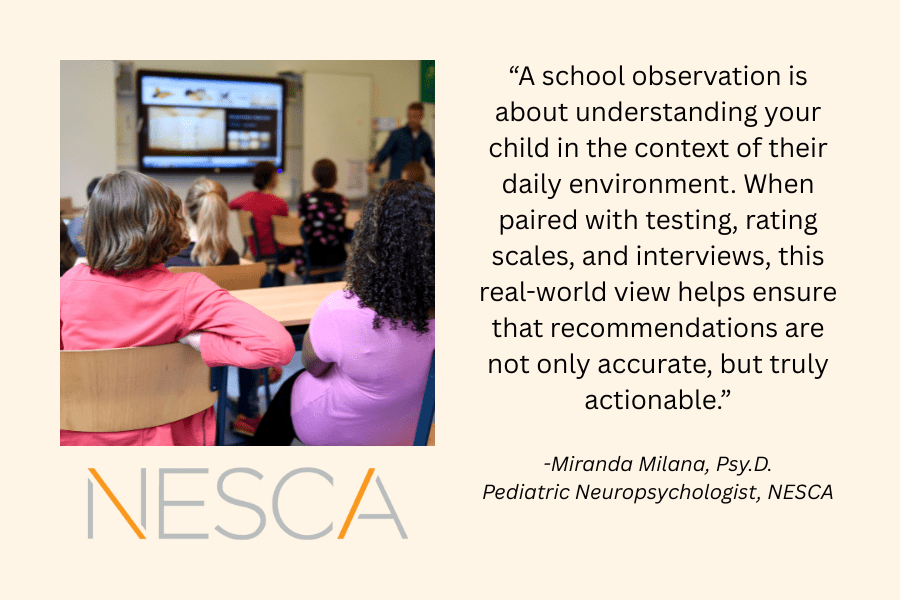
A school observation is about understanding your child in the context of their daily environment. When paired with testing, rating scales, and interviews, this real-world view helps ensure that recommendations are not only accurate, but truly actionable.

If you have any questions about the school observation process—or want to know whether it might be helpful for your child—don’t hesitate to reach out to your evaluator. We’re always here to help guide you through the process and help your child get the support they need to succeed.


About the Author

Dr. Miranda Milana provides comprehensive evaluation services for children and adolescents with a wide range of concerns, includingMiranda Milana PsyD headshot attention deficit disorders, communication disorders, intellectual disabilities, and learning disabilities. She particularly enjoys working with children and their families who have concerns regarding an autism spectrum disorder. Dr. Milana has received specialized training on the administration of the Autism Diagnostic Observation Schedule (ADOS).

Dr. Milana places great emphasis on adapting her approach to a child’s developmental level and providing a testing environment that is approachable and comfortable for them. She also values collaboration with families and outside providers to facilitate supports and services that are tailored to a child’s specific needs.

Before joining NESCA, Dr. Milana completed a two-year postdoctoral fellowship at Boston Children’s Hospital in the Developmental Medicine department, where she received extensive training in the administration of psychological and neuropsychological testing. She has also received assessment training from Beacon Assessment Center and The Brenner Center. Dr. Milana graduated with her B.A. from the University of New England and went on to receive her doctorate from William James College (WJC). She was a part of the Children and Families of Adversity and Resilience (CFAR) program while at WJC. Her doctoral training also included therapeutic services across a variety of settings, including an elementary school, the Family Health Center of Worcester and at Roger Williams University.

Dr. Milana grew up in Maine and enjoys trips back home to see her family throughout the year. She currently resides in Wrentham, Massachusetts, with her husband and two golden retrievers. She also enjoys spending time with family and friends, reading, and cheering on the Patriots, Bruins, Red Sox, and Celtics.​

To book an appointment with Dr. Miranda Milana or another expert NESCA neuropsychologist, please complete our Intake Form today. 

NESCA is a multidisciplinary pediatric neuropsychology practice with offices in Newton, Plainville, and Hingham, Massachusetts; Londonderry, New Hampshire; and the greater Burlington, Vermont region, serving clients from infancy through young adulthood and their families. For more information, please email info@nesca-newton.com or call 617-658-9800.
 

Child with behavioral challenges is evaluated

Often Overlooked: Recognizing and Supporting Children with Fetal Alcohol Spectrum Disorder

By | NESCA Notes 2025

Child with behavioral challenges is evaluatedBy Leah Weinberg, Ph.D. 
Pediatric Neuropsychologist, NESCA

One of the reasons I joined the NESCA team was for the opportunity to continually learn and grow professionally. NESCA has a well-earned reputation for fostering an environment where clinicians can expand their knowledge and refine their skills in meaningful ways, and a session I was able to attend for our staff earlier this year was a perfect example of that.

I attended an insightful seminar on Fetal Alcohol Spectrum Disorder (FASD), a topic that is often overlooked yet critically important in neuropsychological practice. The presentation provided clinically relevant information and tools to better recognize and address this condition.

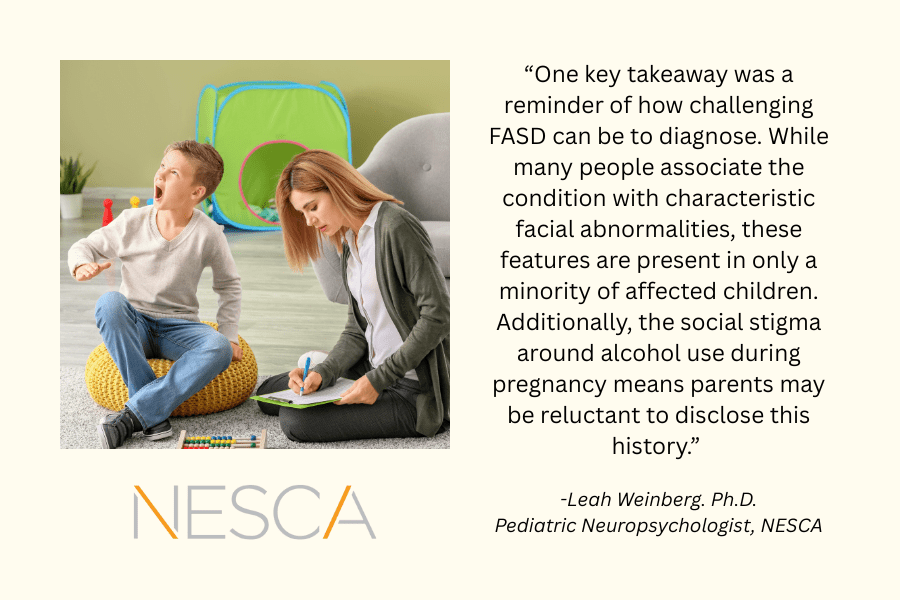
One key takeaway was a reminder of how challenging FASD can be to diagnose. While many people associate the condition with characteristic facial abnormalities, these features are present in only a minority of affected children. Additionally, the social stigma around alcohol use during pregnancy means parents may be reluctant to disclose this history. This can make it easy to miss the diagnosis, particularly in children who present with behavioral or learning challenges that could be attributed to other conditions.

Hallmark symptoms of FASD include executive functioning deficits (e.g., working memory), poor impulse control, difficulties with generalization (people, situations, consequences), difficulties with abstraction, perseverations, and diminished adaptive skills within the context of healthy levels of intellect.

The seminar emphasized why making an accurate diagnosis is so critical: It directly informs how we approach treatment, including how we assist families in accessing services, setting realistic expectations for the child, diminishing the risk of the child receiving inappropriate diagnoses (e.g., Oppositional Defiant Disorder), and assisting the child in developing stronger self-awareness and self-advocacy skills. Moreover, it is important for the adults in the child’s life, including parents and educators, to understand that behaviors that are part of the disability are not willful. Behavioral challenges in children with FASD, for example, often do not respond well to traditional behavioral programs. Instead, a trauma-informed approach is typically more effective, as it accounts for the neurodevelopmental impact of prenatal alcohol exposure and addresses the underlying emotional and regulatory difficulties these children face.

Being part of a team that prioritizes professional development, like the one at NESCA, means continually sharpening my skills and expanding my understanding to better serve the children and families we work with. The FASD seminar was not only a great learning experience but also a reminder of the importance of staying open to complex diagnoses and tailoring treatment plans to meet the unique needs of each child.

About the Author

Dr. Weinberg specializes in the assessment of school-aged children and adolescents with a wide range of concerns including development disorders, such as autism spectrum disorder, learning disabilities (e.g. dyslexia, dysgraphia), language-based learning difficulties, AttentionHeadshot of Leah Weinberg, Ph.D. Deficit Hyperactivity Disorder (ADHD), Nonverbal Learning Disability (NVLD), and executive functioning disorders (e.g. slow processing speed). She also has experience in working with individuals with psychiatric difficulties, such as anxiety, mood disorders (e.g. depression), and behavioral disorders. Dr. Weinberg has expertise in working with children with complex profiles or multiple areas of strength and weakness that cannot be encapsulated by a single diagnosis. Dr. Weinberg is passionate about helping families better understand their child’s neuropsychological profile and the impact it may be having on their behavior or functioning in order to best support them in all areas of their life.

To book a neuropsychological evaluation with Dr. Weinberg or another expert neuropsychologist at NESCA, complete NESCA’s online intake form

NESCA is a pediatric neuropsychology practice with offices in Newton, Plainville, and Hingham, Massachusetts; Londonderry, New Hampshire; and the greater Burlington, Vermont region, serving clients from infancy through young adulthood and their families. For more information, please email info@nesca-newton.com or call 617-658-9800.

Image of a cell phone with a banned symbol over it; quote from Angela Currie, Ph.D.

Teaching Executive Function Strategies in the Landscape of Cell Phone Ban Policies

By | NESCA Notes 2025

Image of a cell phone with a banned symbol over it; quote from Angela Currie, Ph.D.By Angela Currie, Ph.D.
Pediatric Neuropsychologist; Londonderry, NH Director, NESCA

As students head back to school this fall, many are facing new policies and restrictions around cell phone use in school. For many states and districts, this is defined by a “bell to bell” cell phone ban, which prohibits students from using their phones from the first bell to final dismissal. For many, these policies are long awaited, as there has been growing concern about student distraction, social disengagement, and the negative impact of social media access in schools. By removing access to cell phones, tablets, and smart watches, “bell to bell” policies aim to reduce distractions and foster a more focused, interactive learning environment.

The benefits of cell phone policies are clear; however, they also may present unique challenges for some students who have learned to rely on technology as an appropriate tool for executive function. Executive function refers to a set of cognitive and self-management skills that help individuals manage time, stay organized, remember information, and meet goals efficiently. Because cell phones and tablets are readily accessible and have many embedded tools, many students have integrated technology into their daily routines, using features like calendars, alarms, and note-taking apps to stay on top of assignments and deadlines. These digital tools have become a practical way for some students to stay organized and ensure they are meeting expectations.

With “bell to bell” cell phone bans in place, students will no longer have “on demand” access to the apps or other executive function tools that previously kept them organized, possibly raising concern about increased forgetfulness, missed assignments, and heightened stress. Positively, the laws provide exemptions for students whose IEP, 504 plan, or Title IX needs identify specific technology accommodations (e.g., insulin monitoring, assignment log, communication tools, etc.). However, these students may feel hesitant to use their devices during the school day out of concern for standing out or feeling stigmatized. As a result, even students who are permitted to use their devices may choose to find alternative ways to manage their academic demands in order to avoid feeling singled out.

Cell phone policies are being developed for good reasons, but within this landscape, schools and families must start thinking about how to teach executive function strategies that are not technology-based. Children and teens are developing in a technological world, and they may not have the skills for managing demands without these supports. This provides an opportunity for them to learn more independent skills for daily management, but they may not figure this out on their own. To support students, educators and parents can introduce practical strategies, such as using physical planners to track assignments and deadlines, breaking down larger projects into smaller, actionable steps, and organizing materials with color-coded folders or checklists. Teaching time management techniques, encouraging regular routines, and modeling how to prioritize tasks can also help students build the foundational skills they need to succeed both in and out of the classroom, even without the constant aid of technology.

Ultimately, cell phone bans have the potential to create a more focused and engaged learning environment, fostering improved learning and social interactions. However, as access to technology is reduced, it becomes increasingly important for schools to provide explicit instruction in executive function strategies. By offering concrete tools and strategies, educators can help all students develop enduring, life-long skills that will benefit them not only in managing their responsibilities at school, but also in their future personal an


About the Author

Dr. Currie specializes in evaluating children, teens, and young adults with complex profiles, working to tease apart the various factors lending to their challenges, such as underlying learning, attentional, social, or emotional difficulties. She particularly enjoys working with the seemingly “unmotivated” child, as well as children who have “flown under the radar” for years due to their desire to succeed.


To book an evaluation with Dr. Currie or one of our many other expert neuropsychologists, complete NESCA’s online intake form. Indicate whether you are seeking an “evaluation” or “consultation” and your preferred clinician in the referral line.


NESCA is a pediatric neuropsychology practice and integrative treatment center with offices in Newton, Plainville, and Hingham, Massachusetts; Londonderry, New Hampshire; and staff in greater Burlington, Vermont, serving clients from infancy through young adulthood and their families. For more information, please email info@nesca-newton.com or call 617-658-9800.

Image of a signpost with the words Wait and See" and "Check It Out" on it and a quote from Dr. Rebecca Dautoff

When In Doubt, Check it Out

By | NESCA Notes 2025

Image of a signpost with the words Wait and See" and "Check It Out" on it and a quote from Dr. Rebecca DautoffBy: Rebecca Dautoff, Psy.D.
Pediatric Neuropsychologist, NESCA

As a child psychologist, I regularly advise parents that our job is not to eliminate their children’s frustration, anxiety, and disappointment. Instead, our goal is to help kids process and tolerate these emotions. In fact, it’s critical that children face obstacles so they can learn to navigate and endure challenges throughout their life. But what happens when a child has a particularly tough time at school or a really difficult year? What are the next steps?

Deciding what to do can be a hard decision for concerned parents. Some parents question whether they should  “do something” to help the child, or to relieve their own anxiety and guilt. Other parents feel that their child’s issues are due to “a bad fit” with a particular teacher or classroom structure. This can be even harder when the school tells parents that everything is okay, or it’s just a phase that they see all the time. In some cases—such as a child grieving or adjusting to a new school—a short observation period (a few weeks) with close monitoring and open communication can be appropriate. However, this should always come with a clear plan to seek help if things don’t improve, because the “wait and see” approach can pose real risks to a child’s development, mental health, and emotional well-being. Here’s why:

First, childhood is full of developmental windows. These are essentially periods of time or opportunity when the brain is especially receptive to learning a specific skill. If a child is struggling in one of these areas and we wait too long, we risk missing this period of optimal learning. Language delays are a clear example. There is a critical period of language development before the age of 3, meaning that intervention for speech and language challenges are most effective before this age.

Second, children are incredibly perceptive. Kids are highly attuned and hyper aware when they feel like something is harder for them than it is for their friends and classmates. Often, kids internalize their struggles as personal failures. This can lead to frustration, anxiety, withdrawal, or behavioral problems/acting out. These outcomes are even more likely if a child is late to learn a skill. Take reading as an example. If a child is learning to read more slowly than their peers in first or second grade, they are less likely to internalize this as a problem because most of their classmates are also learning to read. It might come more easily to their friends, but they are all learning to read. If we wait to intervene, and a child is still having difficulty with reading in fourth grade, they are more likely to internalize their difficulty as a personal failure because they are no longer surrounded by peers who are also working on the same skill.

Taking a wait and see approach with your child’s mental health can feel like a cautious or hopeful strategy—especially when you’re unsure if something is truly wrong. Unfortunately, mental health conditions are often progressive, and waiting to treat them can allow symptoms to worsen, which makes them harder to treat. Undiagnosed mental health issues can lead to poor academics, social withdrawal, bullying, or acting out. The child may fall behind developmentally or struggle to make or keep friendships, which will impact their self-esteem and exacerbate their mental health issues. In older children and adolescents, we also see untreated mental health issues lead to more dangerous problems, like substance use, self-harm, eating disorders, or suicidal thoughts.

Instead of waiting, parents should proactively communicate with teachers, seek professional help when needed, and consider the child’s overall well-being when making decisions about their education.

What to Do Instead Of “Wait and See”:

  • Talk to your child: Open the door to conversation and let them know you’re there.
  • Keep track of behaviors, moods, or changes.
  • When in doubt, check it out: Even a single consultation with a pediatrician, school counselor, or therapist can provide guidance without committing to long-term treatment. If you suspect there is a deeper learning, emotional, developmental, or behavioral issue, a neuropsychological evaluation can also determine the root cause of the issues and set you and your child on a better path forward.


About the Author

Dr. Rebecca Dautoff provides comprehensive neuropsychological and psychological (projective) evaluation services for children, adolescents,Headshot of Rebecca Dautoff, Psy.D. and young adults who have complex presentations with a wide range of concerns, including attention deficit disorders, psychiatric disorders, intellectual disabilities, and autism spectrum disorders (ASD). She also values collaboration with families and outside providers to facilitate supports and services that are tailored to each child’s specific needs.


If you are interested in booking an appointment for an evaluation with Dr. Dautoff or another NESCA neuropsychologist/clinician, please fill out and submit our online intake form


NESCA is a pediatric neuropsychology practice and integrative treatment center with offices in Newton, Plainville, and Hingham, Massachusetts; Londonderry, New Hampshire; the greater Burlington, Vermont region, serving clients from infancy through young adulthood and their families. For more information, please email info@nesca-newton.com or call 617-658-9800.

How Executive Function Coaching and Therapy Complement One Another-Part 2

By | NESCA Notes 2025

Quote from NESCA and an image of two puxxle pieces fitting together showing how therapy and EF coaching can complement each otherBy Jasmine Badamo, MA
Educational Counselor; Executive Function Coach

Last week I wrote a blog about the complementary nature of executive function coaching and therapy. I discussed the ways in which each service is distinct, as well as where there are overlaps. Today I’d like to share examples of how each service can support the other. If you find the examples helpful, feel free to download the pdf version from our Resources page!

How executive function coaching can support your therapy work:

An executive function coach can…

  • Serve as another person to reinforce the concepts you’re learning in therapy and help you make note of everyday and/or academic situations that connect to your therapy goals.
  • Serve as a source of motivation and accountability to help you implement the recommendations made in therapy, such as improving your sleep hygiene, widening your social circle, or increasing your positive self-talk.
  • Consult with your therapist to provide examples of your everyday struggles and mindset towards them.
  • Provide a safe space for metacognitive and self-reflection discussions, which can serve as a stepping stone if you are not yet ready to embark on therapy or are questioning your current style of therapy. These discussions can promote a new openness to trying therapy or exploring new therapy modalities/approaches.

How therapy can support your executive function work:

A therapist can…

  • Address anxiety, depression, perfectionism, all-or-nothing thinking, or negative self-talk/narratives, all of which can present a significant barrier to coaching because they reduce your motivation and openness to trying new problem-solving strategies.
  • Provide a big picture, comprehensive understanding of the mental and emotional barriers facing you and guide you (and your executive function coach) in choosing motivation and routine-building strategies that would work best.
  • Help you to build coping strategies for managing daily life and novel tasks, freeing up energy for taking on new goals and challenges.

Every service provider brings something important to the table, and therapy and executive function coaching are an extra-special support combination that has truly benefited many of our clients at NESCA. It often takes a team to support an individual through challenging aspects of their life, and NESCA’s coaches are happy to be a part of that team!

NESCA offers executive function coaching for students from elementary school through adulthood who are looking to bolster their organization, scheduling, time management, goal setting, and routine building skills. Students work 1-on-1 with occupational therapists and education specialists to identify specific skills that will help them be more organized and in control of their academic and general life tasks. If you have concerns about your child or student’s executive function challenges and want to try our 1-on-1 coaching, please complete our online Intake Form


About the Author

Jasmine Badamo, MA, is a licensed special educator and seasoned executive function coach. SheJasmine Badamo headshot supports a wide range of clients, ranging from age 7 to adulthood, to develop executive function and independence skills necessary for success with school (including college and graduate school) and in life. She is also uniquely qualified to coach parents and train educators to support EF skill development across settings.

To book executive function coaching with an EF or Real-life Skills Coach at NESCA, complete NESCA’s online intake form

NESCA is a pediatric neuropsychology practice and integrative treatment center with offices in Newton, Plainville, and Hingham, Massachusetts; Londonderry, New Hampshire; and the greater Burlington, Vermont region, serving clients from infancy through young adulthood and their families. For more information, please email info@nesca-newton.com or call 617-658-9800.

Image of two puzzle pieces fitting together to represent therapy and EF coaching

How Executive Function Coaching and Therapy Complement One Another-Part 1

By | NESCA Notes 2025

Image of two puzzle pieces fitting together to represent therapy and EF coachingBy Jasmine Badamo, MA
Educational Counselor; Executive Function Coach

At a recent NESCA case conference, we had a thought-provoking discussion about the relationship between executive function coaching and therapy that inspired me to write this two-part blog series.

Executive function coaching is different from therapy in a few key ways:

  • Most executive function coaches are not trained mental health professionals.
  • Therapy is usually positioned to treat mental health concerns, such as anxiety, depression, OCD, and related emotional patterns.
  • Executive function coaching focuses more directly on improving cognitive skills and strategies (like planning, organizing, prioritizing, time management, focus, and self-regulation) to support clients in reaching their academic, professional, and personal goals.
  • Executive function coaching is often more practical and solution-oriented, while many therapy approaches focus on exploring past experiences and deepening a client’s understanding of themselves.

But there can also be overlap between the two supports:

  • Executive functioning and mental health both impact an individual’s self-regulation and ability to cope with daily life.
  • Executive function coaches and therapists might both implement skill-based activities with clients.
  • Executive function coaches and therapists both focus on improving an individual’s well-being by identifying challenges, setting goals, developing strategies, and building self-awareness.

The truth is that the work we executive function coaches do with our clients frequently relates to their mental health and emotional struggles. For example, we may help individuals strengthen their ability to regulate impulses; reflect inward to better understand their habits and patterns in behavior; move past low motivation to activate and take action; adapt their behavioral patterns to better meet their needs and goals; implement self-care routines; and tackle the logistical challenges of accessing other services, such as therapy.

Additionally, persistent mental health struggles (as well as a person’s naturally fluctuating emotional states) play a large role in a person’s ability to access their prefrontal cortex or “thinking brain,” where our executive function abilities reside. This is because emotional regulation and executive control are both housed in this part of the brain. When one skill set is taxed, the other suffers. Correspondingly, persistent executive function struggles can contribute to increased mental health struggles, such as anxiety or depression.

Given the connected nature of executive functioning and mental health, we recognize that executive function coaching and therapy are distinct, but are also connected and complementary. The two services not only balance each other, but help to amplify the success and effectiveness of each individual service.

Tune in for our blog next week where I’ll delve into the ways executive function coaching can support your therapy work and vice versa!

NESCA offers executive function coaching for students from elementary school through adulthood who are looking to bolster their organization, scheduling, time management, goal setting, and routine building skills. Students work 1-on-1 with occupational therapists and education specialists to identify specific skills that will help them be more organized and in control of their academic and general life tasks. If you have concerns about your child or student’s executive function challenges and want to try our 1-on-1 coaching, please complete our online Intake Form


About the Author

Jasmine Badamo, MA, is an educational counselor and executive function coach who works full-time at NESCA supporting students ranging from elementary school through young adulthood. In addition to direct client work, Ms. Badamo provides consultation and support to parents and families in order to help change dynamics within the household and/or support the special education processes for students struggling with executive dysfunction. She also provides expert consultation to educators, special educators and related professionals.

Ms. Badamo is a New York State Certified ENL and Special Education teacher. She has more than 10 years of teaching experience across three countries and has worked with students and clients ranging in age from 7 to adulthood. She earned her bachelor’s degree in Biological Sciences from Cornell University and her master’s degree in TESOL from CUNY Hunter College. She has also participated in graduate coursework focusing on academic strategies and executive function supports for students with LD, ADHD, and autism as part of the Learning Differences and Neurodiversity (LDN) certification at Landmark College’s Institute for Research and Training. In addition to being a native English speaker, Ms. Badamo is also conversationally fluent in verbal and written Spanish.

Having worked in three different New York City public schools, Ms. Badamo has seen firsthand the importance of executive function skills in facilitating student confidence and success. Her coaching and consultation work focuses on creating individualized supports based on the specific needs and strengths of each client and supporting the development of metacognition (thinking about one’s own thought processes and patterns), executive function skills, and independence. She will guide clients to generate their own goals, identify the barriers to their goals, brainstorm potential strategies, advocate for support when needed, and reflect on the effectiveness of their applied strategies.

Ms. Badamo is a highly relational coach. Building an authentic connection with each client is a top priority and allows her to provide the best support possible. Additionally, as a teacher and coach, Ms. Badamo believes in fostering strong collaborations with anyone who supports her clients including service providers, classroom teachers, parents, administrators, and community providers.

To book executive function coaching with Jasmine Badamo or another EF or Real-life Skills Coach at NESCA, complete NESCA’s online intake form

NESCA is a pediatric neuropsychology practice and integrative treatment center with offices in Newton, Plainville, and Hingham, Massachusetts; Londonderry, New Hampshire; the greater Burlington, Vermont region; and Brooklyn, New York (coaching services only) serving clients from infancy through young adulthood and their families. For more information, please email info@nesca-newton.com or call 617-658-9800.

Image of teo children reading outside on the grass with a quote from NESCA Pediatric Neuropsychologist Alissa Talamo, Ph.D.

How to Encourage Summer Reading with Your Child

By | NESCA Notes 2025

Image of teo children reading outside on the grass with a quote from NESCA Pediatric Neuropsychologist Alissa Talamo, Ph.D.By: Alissa Talamo, PhD
Pediatric Neuropsychologist, NESCA

Summer is an important time for children to relax and recharge, but it also provides a valuable opportunity to make reading enjoyable. Research consistently shows that students who do not read over the summer are at risk for the “summer slide,” which is a decline in reading skills acquired during the school year. In contrast, children who continue to read during the summer not only maintain but can even improve their literacy abilities.

The benefits of summer reading extend well beyond academics. Regular reading helps expand general knowledge, improve vocabulary and spelling, and strengthen focus and attention. According to Dr. Sally Shaywitz, author of Overcoming Dyslexia, children who read for just 20 minutes a day are exposed to approximately 1.8 million words each year, compared to only 8,000 words for those who read just a few minutes daily. This increased exposure to language supports both language development and writing skills.

Reading for just 20 minutes each day offers numerous advantages. Children experience significant vocabulary growth, encounter diverse perspectives that foster empathy, and develop stronger critical thinking skills as they engage with stories and information. Additionally, reading can be a relaxing activity, particularly before bedtime, helping children unwind after a busy day.

Despite these benefits, some children may be reluctant to read due to reading difficulties, uncertainty about their interests, or a preference for other activities. To encourage reading, it is important to let children choose books that interest them, set aside time to read together, and create a cozy reading environment at home. Pairing reading with interactive activities, such as visiting a museum, landmark, or travel destination related to a book’s topic, characters, or setting, can also make reading more appealing. Regular library visits, audiobooks, and a variety of reading materials—including magazines, comics, and graphic novels—can also help sustain interest. Introducing children to book series and modeling your own enjoyment of reading are additional strategies to foster a positive reading culture.

Helpful Resources and Tools

There are many excellent websites and apps that can support your child’s reading journey. Here are some sites to consider:

  • Unite for Literacy: A collection of audio/picture books read aloud to your child.
  • Reading Rockets—Reading Adventure Packs: Downloadable guides with book suggestions and activities.
  • Starfall.com: Early literacy games and books, ideal for young children.
  • Talking is Teaching: Encourages parents to talk, read, and sing with children to boost early brain and vocabulary development.

Other Resources:

Conclusion

Encouraging your child to read over the summer—and throughout the year—can have lasting benefits for their academic, social, and emotional development. By making reading enjoyable and accessible, and by supporting their individual interests and needs, you can help your child build a lifelong love of reading.


References:

  • Sally Shaywitz, MD, Overcoming Dyslexia (2020 Edition): Second Edition, January 4, 2005
  • https://specialedresource.com/benefits-of-reading-20-minutes-a-day
  • https://www.k12reader.com/why-read-20-minutes-a-day/
  • https://www.understood.org/articles/en/14-ways-to-encourage-your-grade-schooler-to-read


About the Author

Alissa Talamo headshotWith NESCA since its inception in 2007, Dr. Talamo had previously practiced for many years as a child and adolescent clinical psychologist before completing postdoctoral re-training in pediatric neuropsychology at the Children’s Evaluation Center.

After receiving her undergraduate degree from Columbia University, Dr. Talamo earned her doctorate in clinical health psychology from Ferkauf Graduate School of Psychology and the Albert Einstein College of Medicine at Yeshiva University.

She has given a number of presentations, most recently on “How to Recognize a Struggling Reader,” “Supporting Students with Working Memory Limitations,” (with Bonnie Singer, Ph.D., CCC-SLP of Architects for Learning), and “Executive Function in Elementary and Middle School Students.”

Dr. Talamo specializes in working with children and adolescents with language-based learning disabilities including dyslexia, attentional disorders, and emotional issues. She is also interested in working with highly gifted children.

Her professional memberships include MAGE (Massachusetts Association for Gifted Education), IDA (International Dyslexia Association), MABIDA (the Massachusetts division of IDA) and MNS (the Massachusetts Neuropsychological Society).

She is the mother of one college-aged daughter.

To book a consultation with Dr. Talamo or one of our many other expert neuropsychologists, complete NESCA’s online intake form.

NESCA is a pediatric neuropsychology practice and integrative treatment center with offices in Newton, Plainville, and Hingham, Massachusetts; Londonderry, New Hampshire; the greater Burlington, Vermont region; and Brooklyn, New York (coaching services only) serving clients from infancy through young adulthood and their families. For more information, please email info@nesca-newton.com or call 617-658-9800.

Image of a couple with disabilities and a quote from Sarah LaFerriere

How We Teach Sexual Health Education at NESCA

By | NESCA Notes 2025

Image of a couple with disabilities and a quote from Sarah LaFerriereBy: Sarah LaFerriere, M.Ed.
Transition Specialist & Special Educator, NESCA

Sexual health education is often overlooked when it comes to students with disabilities—but it’s one of the most important subjects we can offer. In my last blog post, “Why Sexual Education is Crucial,” I explored the reasons why this kind of instruction is essential for adolescents and young adults with learning, developmental, and emotional challenges.

Today, I want to take that conversation further by sharing what sexual health instruction looks like in practice and how NESCA is helping students gain the knowledge, skills, and confidence they need to navigate relationships and their own well-being.

Meeting Students Where They Are

Sexual health education isn’t “one-size-fits-all,” especially for students with disabilities. Many of the individuals I work with have had limited or no access to comprehensive sexual health instruction. Some have received fragmented or confusing messages about consent, safety, or their own bodies. Others are at a developmental stage where typical school-based programming doesn’t match their learning profile.

At NESCA, our goal is to meet each student exactly where they are intellectually, socially, and emotionally. That’s why our sexual health instruction is individualized, paced appropriately, and rooted in respect and inclusion.

Using the Elevatus Curriculum

At NESCA, we use the Elevatus curriculum, a nationally respected sexual health education program designed specifically for individuals with disabilities. The curriculum offers two levels of instruction:

  • One for students with moderate support needs
  • Another for students with high support needs

This allows us to tailor content to the cognitive and communication levels of each learner. The curriculum emphasizes concrete language, repetition, and visual supports, making it accessible and meaningful for a wide range of students.

Instruction is available in-person or virtually, and we can modify both format and pacing to fit your student’s specific needs. Whether your child thrives in one-on-one sessions or small groups, we’ll work with you to design a program that supports learning and comfort.

What the Curriculum Covers

The Elevatus curriculum spans 22 lessons and includes topics such as:

  • Anatomy and puberty
  • Consent and personal boundaries
  • Healthy vs. unhealthy relationships
  • Online safety and media literacy
  • Understanding feelings and attraction
  • Decision-making and communication

Lessons are engaging and interactive, using visuals, stories, discussions, and role-play activities. We also incorporate functional goals, like understanding personal space on public transportation or recognizing signs of coercion in online messages.

Collaborating with Families and Schools

Sexual health instruction doesn’t exist in a vacuum; it works best when it’s integrated into a student’s broader learning and transition planning. At NESCA, we collaborate with families, educators, and support staff to align lessons with IEP goals, social-emotional supports, and the student’s overall educational plan.

We also guide families on how to reinforce learning at home, answer questions in developmentally appropriate ways, and create an open, respectful dialogue.

Why It Matters

At the core of sexual health education is empowerment. When students understand their bodies, their rights, and their choices, they’re safer, more confident, and more connected to others. This kind of instruction isn’t just about preventing risk it’s about promoting dignity, autonomy, and well-being.

If you’re interested in learning more about our sexual health instruction services, or want to explore whether it’s a fit for your child or student, please reach out to us here at NESCA via our Inquiry/Intake Form and visit our page about our Sexual Health Education Services.

About the AuthorHeadshot of Sarah LaFerriere, M.Ed.

Sarah LaFerriere, M.Ed., is a transition specialist and special educator who has nearly a decade of experience working with transition aged students in public schools, college, and home-based settings. She provides transition assessment, consultation, and coaching services to a wide range of clients, and specializes in supporting students with autism, intellectual disabilities, developmental disabilities, mental health conditions, and medical conditions.

To book a consultation with Sarah LaFerriere or one of our many other expert transition specialists, neuropsychologists, or other clinicians, complete NESCA’s online intake form.

NESCA is a pediatric neuropsychology practice and integrative treatment center with offices in Newton, Plainville, and Hingham, Massachusetts; Londonderry, New Hampshire; the greater Burlington, Vermont region; and Brooklyn, New York (coaching services only) serving clients from infancy through young adulthood and their families. For more information, please email info@nesca-newton.com or call 617-658-9800.

image of a teen stressed out, using a phone

Stress, Anxiety, and Social Media: Supporting Pre-Teens in a Digital World

By | NESCA Notes 2025

image of a teen stressed out, using a phoneBy: Cynthia Hess, PsyD
Pediatric Neuropsychologist, NESCA

In recent years, stress has become a more prevalent part of childhood. Fast-paced lives, evolving educational expectations, and the decline of unstructured social interactions have reshaped the developmental experience of today’s youth. One significant factor in this shift is the ever-expanding role of technology and social media.

Stress, fundamentally, is the body’s response to challenge. While short-term stress can be helpful, chronic stress has more lasting effects, keeping the body in a heightened state of arousal and often leading to anxiety. Anxiety differs from typical stress in that it is persistent, disproportionate to the situation, and frequently arises without a clear trigger. This type of emotional overload can significantly impede a child’s ability to learn, grow, and connect with others.

My own research, conducted with over 100 fifth- and sixth-grade students, revealed a strong correlation between time spent on social media and internalizing behaviors, such as anxiety and depression. Many pre-teens in the study reported having multiple devices and profiles on several social media platforms, with some spending an exceptional amount of time per week online, raising concerns about what is being lost in the process, both developmentally and emotionally.

Social media can disrupt nearly every area of development. Physically, pre-adolescents are navigating puberty and changes in body image, which are already sensitive subjects that curated online content can exacerbate. Neurologically, the brain is experiencing significant changes that facilitate higher-order thinking. However, constant digital stimulation can derail these processes, especially the development of executive functions such as attention, planning, and impulse control.

Cognitively, children at this age are becoming more curious, organized, and future-focused, but excessive screen time can reduce their attention span, ultimately making learning feel overwhelming. Emotionally, they are beginning to ask important questions about their identity and becoming more vulnerable to social pressures. When their emotional experiences are shaped more by online interactions than face-to-face ones, their ability to develop empathy, emotional intelligence, and resilience may be hindered.

Social development also takes a hit. The need to belong intensifies in pre-teen years, and social media often becomes a double-edged sword, offering connection, but also exposing kids to harmful trends, superficial relationships, and online bullying. Real-life communication skills can lag, leaving children less equipped to handle the challenges of peer relationships and conflict.

So, what can we do? First, we must recognize that our children are anxious. National data shows that a significant percentage of youth already carry a diagnosis of anxiety, and many more experience symptoms that go unnoticed. Repeated exposure to stress and the instant feedback loops of social media can create a cycle where children become increasingly anxious and reliant on screens to self-soothe.

As caregivers, educators, and community members, we can begin by fostering emotional awareness. Talk regularly with children about their feelings, help them differentiate between healthy stress and anxiety, and model appropriate emotional expression. Encourage healthy coping strategies, such as regular exercise, mindfulness practices, creative outlets, and spending time outdoors. Monitor their online activity, not from a place of punishment, but one of partnership, curiosity, and learning. Show genuine interest in what they’re doing online, who they’re talking to, and what content they’re consuming.

It’s also crucial to protect the basic developmental needs of children: ample sleep, nutritious food, physical activity, and unstructured playtime. Avoid overscheduling, set clear screen-time boundaries, and follow through with consistent expectations. Community matters, too, and building a culture where we support one another, share resources, and stay informed is essential. We are navigating uncharted and dynamic technological territory. But by staying connected to the needs of our children, both online and offline, we can help them build the emotional resilience and skills they need to thrive.

References:

Turkle, S. (2017). Alone together: Why we expect more from technology and less from each other. Basic Books.

Small, G., & Vorgan, G. (2008). iBrain: Surviving the technological alteration of the modern mind. New York: Harper Collins.

Uhls, Y. T., Michikyan, M., Morris, J., Garcia, D., Small, G. W., Zgourou, E., & Greenfield, P. M. (2014). Five days at an outdoor education camp without screens improve preteens’ skill with nonverbal emotion cues. Computers in Human Behavior, 39, 387-392. doi:10.1016/j.chb.2014.05.036


About the Author

Dr. Cynthia (Cindy) Hess conducts neuropsychological evaluations as a pediatric neuropsychologist at NESCA. Dr. Hess enjoys working with children and young adults with complex emotional and behavioral profiles. She is skilled at evaluating social and emotional challenges as well as a range of learning profiles. Her experience allows her to guide families in understanding the supports and services their child requires to be successful in school.


To schedule an appointment with one of NESCA’s expert neuropsychologists, please complete our online intake form


NESCA is a pediatric neuropsychology practice and integrative treatment center with offices in Newton, Plainville, and Hingham, Massachusetts; Londonderry, New Hampshire; and staff in the greater Burlington, Vermont region and Brooklyn, New York, serving clients from infancy through young adulthood and their families. For more information, please email info@nesca-newton.com or call 617-658-9800.


Image of a middle schooler writing and a quote about summer intensive therapy by Dr. Ann Helmus about summer intensive therapy

Supercharge Communication Skills This Summer: The Case for Intensive Speech & Language Therapy

By | NESCA Notes 2025

Image of a middle schooler writing and a quote about summer intensive therapy by Dr. Ann Helmus about summer intensive therapyBy Ann Helmus, Ph.D.
Founder & Director, NESCA

For many students, summer is a much-needed break from the pressures of the long school year. But it’s also a unique opportunity to make powerful strides in speech and language development—far more than is often possible with weekly sessions during the academic year.

At NESCA, we offer intensive summer therapy that targets both verbal communication (such as listening comprehension, expressive language, and social communication) and written expression, an area where many students struggle.

Here’s why summer intensives can be especially effective:

  1. More Frequent Sessions = Greater Momentum
    When sessions are scheduled every other day (rather than once a week), skills are reinforced more consistently. Students retain strategies better, build habits faster, and make visible progress over a shorter period of time.
  2. Longer Sessions Allow for Deeper Work
    Without the time constraints of school-day schedules, therapy sessions can go beyond the traditional one-hour format. This gives students and therapists time to dig into more complex language tasks, problem-solve in real time, and practice generalizing skills across different contexts.
  3. Less Time Lost Re-Orienting
    With weekly sessions, valuable time is often spent reviewing what was last covered. Frequent summer sessions minimize this start-up time and allow therapy to pick up right where it left off—keeping the focus on forward movement.
  4. Fewer Distractions, Better Focus
    The relaxed pace of summer means students are often more receptive to learning. Without competing demands like homework, tests, and extracurriculars, they can be more focused and emotionally available for therapeutic work.
  5. Support for Written Expression with Proven Methods
    Our speech-language pathologist is trained in the EmPOWER method, a structured approach to teaching written expression. EmPOWER helps students organize their thoughts, clarify their ideas, and express themselves in writing with greater clarity and confidence—skills that are essential for success in school and beyond.
  6. A Stronger Start to the School Year
    Students who make gains in the summer enter the fall with more confidence, stronger foundational skills, and better self-awareness as communicators and learners.

If your child struggles with speaking, listening, or writing, summer can be the perfect time to make meaningful gains that will carry over into the school year. Intensive speech and language therapy can provide just the boost they need.

To explore next steps with NESCA’s Speech and Language Pathologists, fill out our Inquiry/Intake Form or visit our Speech and Language Evaluation and Therapy page. Our team will be in touch with you shortly to provide more information or set up a schedule of sessions that work with your family’s summer plans.


About the Author

NESCA Founder and Director Ann Helmus, Ph.D., is a licensed clinical neuropsychologist who has beenAnn Helmus headshot practicing neuropsychology for 35 years and has been director of NESCA’s Neuropsychology practice for nearly three decades, continuously training and mentoring  neuropsychologists to meet the highest professional standards.

To book a neuropsychological evaluation at NESCA, complete NESCA’s online intake form

NESCA is a pediatric neuropsychology practice and integrative treatment center with offices in Newton, Plainville, and Hingham, Massachusetts; Londonderry, New Hampshire; the greater Burlington, Vermont region; and Brooklyn, New York (coaching services only) serving clients from infancy through young adulthood and their families. For more information, please email info@nesca-newton.com or call 617-658-9800.

Skip to content