
Tag

nesca newton ma Archives - Page 13 of 14 - NESCA

Subscribe to NESCA Notes

The Uncertainty, Stress and Anxiety About What School Will Look Like

By | NESCA Notes 2020

By: Cynthia Hess, PsyD
Pediatric Neuropsychologist Fellow and Therapist

Much of adjusting to the world in the midst of a global pandemic has been learning to live with nearly constant uncertainty. Undoubtedly, this pandemic and ensuing uncertainty has caused significant stress for youth and their families. The experience of persistent stress can result in increased vulnerability to anxiety and depression. Symptoms may become magnified in those who already faced mental health challenges. There is little doubt that there will be increases in mental and behavior health problems for children and families both in anticipating the re-opening of schools, and when schools reopen their physical buildings.

We all wonder what school will look like in the fall. The anticipation of returning to school can be especially stressful, and will likely be so for most youth. Given that students will not have been in schools with their peers for several months, it can be anticipated that they might feel a heighted sense of insecurity and uncertainty. Even in “normal times,” returning to the complex social and educational environment of school can be worrisome for many children and adolescents.

Each individual child will have had their own experiences while schools were closed. Some children and/or staff members may have been impacted by COVID-19 and some families and/or staff may be experiencing financial hardship due to parental unemployment or loss of household income. It is important to realize that regardless of their experience, each individual will have a unique response. It is helpful to recognize the signs of stress and help children learn positive ways of coping with it.

Signs of stress in preschool children include, but are not limited to, anger, nervousness, eating and sleeping problems (including nightmares), fear of being alone, irritability and uncontrollable crying.

In elementary age children, stress may manifest as increased complaining of headaches and stomachaches, feeling insecure, reduced appetite and difficulty sleeping, withdrawal and worrying about the future.

Signs of stress in pre-teens and teens may include anger, disillusionment, distrust of the world, low self-esteem, stomachaches and headaches, panic attacks and rebellious behavior.

As each person works through this very challenging situation, it is more important than ever to adopt a position of acceptance, as we never truly know what another person is experiencing or has experienced. The following are offered as suggestions on how to help children and teens cope with stress.

  • Help them identify how they are feeling and acknowledge and validate those feelings.
  • Encourage them to talk about what is bothering them.
  • Share strategies you use to cope with stress.
  • Talk openly and, as appropriate, share stories about stress in your day.
  • Find a physical activity and/or hobby that they enjoy and encourage them to participate.
  • Encourage them to eat healthy foods and emphasize the importance of a healthy lifestyle, especially as it relates to stress.
  • Make sure they get plenty of sleep.
  • Set clear expectations, without being overly rigid, and allow for “down” time.
  • Spend time outdoors, encourage them to do something they love – read a book, ride their bike, bake, etc.
  • Learn and teach your children relaxation skills, such as breathing exercises, muscle relaxation exercises, meditating, yoga, drawing or writing.

Our world will have changed by the time children re-enter their classrooms. No matter what happens in the fall, when it is time for school to start, it will inevitably be stressful. Learning to cope with and manage stress is important for physical and emotional health. However, if you are concerned about your child or are struggling yourself, seek help and support for yourself, your child or anyone in your family who is struggling.

Below are some helpful resources:

https://www.apa.org/topics/children-teens-stress

https://nesca-newton.com/helping-your-anxious-child-through-covid-19/

https://childmind.org/article/how-to-ask-what-kids-are-feeling-during-stressful-times/

https://healthy.kaiserpermanente.org/health-wellness/health-encyclopedia/he.stress-in-children-and-teens.ug1832


About the Author

Dr. Cynthia Hess recently graduated from Rivier University with a PsyD in Counseling and School Psychology. Previously, she earned an M.A. from Antioch New England in Applied Psychology. She also worked as an elementary school counselor and school psychologist for 15 years before embarking on her doctorate. During her doctorate, she did her pre-doctoral internship with RIT in Rochester, N.Y. where she worked with youth ages 5-17 who had experienced complex developmental trauma. Dr. Hess’s first post-doctoral fellowship was with The Counseling Center of New England where she provided psychotherapy and family therapy to children ages 5-18, their families and young adults. She also trained part-time with a pediatric neuropsychologist conducting neuropsychological evaluations. Currently, Dr. Hess is a second-year post-doctoral fellow in pediatric neuropsychological assessment, working with NESCA Londonderry’s Dr. Angela Currie.


To schedule an appointment with one of NESCA’s expert neuropsychologists, please complete our online intake form


Neuropsychology & Education Services for Children & Adolescents (NESCA) is a pediatric neuropsychology practice and integrative treatment center with offices in Newton and Plainville, Massachusetts, and Londonderry, New Hampshire, serving clients from preschool through young adulthood and their families. For more information, please email info@nesca-newton.com or call 617-658-9800.


Life Skills for College to Work on Now – Part 2

By | NESCA Notes 2020

By: Kelley Challen, Ed.M., CAS
Director of Transition Services; Transition Specialist

In Massachusetts, we are more than five weeks into home-based learning and looking toward another two months (or more) of schools and childcare facilities being closed. Unfortunately, this is taking a particularly large social and emotional toll on our teenagers and young adults. One strategy for coping with current conditions is to focus on concrete ways that we can control our daily lives and to set short-term tangible goals. With that in mind, I am writing a second blog focusing on the opportunity teenagers are being given to build daily living and executive functioning skills that will ultimately help them live away from home and self-direct their lives. Last week, I discussed four important skills that are critical for attending residential colleges: getting up on time each morning, doing laundry, having basic kitchen skills, and using basic tools for assembling and fixing things around home. This week, I am offering another four skills. For any young person, I always suggest letting the student pick the skill(s) they want to work on first. When you have a lot to work on, you may as well pick the starting point that feels most important and motivating!

  • Medications: For students who have been on medication during high school, keeping that medication regimen stable is typically a must during the transition to college. Students need to have the knowledge, preparation and organizational skills needed to maintain their own medication regimen. Often a good way to start this process is to purchase a 7-day pill organizer and have teens be responsible for dispensing their own medication for the week. Certainly, a smartphone or smartwatch with several alarms can be useful for remembering medications at needed times. For more information about medication management expectations in college, check out this article by Rae Jacobson. He makes some useful recommendations, such as using a unique alarm tone for medication reminders and putting pills in highly or frequently visible locations (e.g., next to your toothbrush that you routinely use).
  • Money: Students in early stages of high school may be too young for their own bank accounts and credit cards. However, some banks do offer accounts that are specially tailored for minors. Students can open a joint bank account as a minor with a parent or legal guardian. Teens can also practice managing plastic through use of traditional prepaid debit cards, Amazon.com or store gift cards, or a debit card made especially for minors like Greenlight. From home, teens can practice making necessary online purchases, tracking payments and shipping, checking account balances, and using a software like Microsoft Excel or Google Sheets to keep a record of purchases. There are also plenty of great free web-based financial literacy resources that teens can use to learn about banking and consumer skills from home; a few resources that my colleague Becki Lauzon, M.A., CRC, and I like include:
  • Building an Exercise Routine: Believe it or not, basic fundamentals like healthy eating, sleep hygiene and regular vigorous exercise are strong predictors of college success and satisfaction. As we are living in a period of time where team sports are not accessible, this may be exactly the right time for teenagers to build their own individual exercise routine that can be carried out at home and in one’s local neighborhood. A good baseline to strive for is a routine that includes exercise sessions at least three days per week. With decreased time factors in our lives, students can play around with morning, afternoon or evening exercise to see what feels best for their bodies and brains. If brisk dog-walking, jogging/running or biking activities are not appealing, there are plenty of great YouTube exercise videos (e.g., dance, yoga, strength training, cardio training, etc.) that require no equipment and are calibrated for all kinds of bodies and levels of fitness. Setting a schedule for weekly workouts will help to ensure that exercise becomes more routine and tracking progress with that schedule (e.g., journaling, marking a calendar, using an app like Strava or Aaptiv, etc.) helps to build and sustain motivation. Some teens (and adults) also find that they are more able to stick to an exercise routine if they use a smartwatch to help track, celebrate and prompt their progress.
  • Using a Calendar System for Scheduling: The alarm clock mentioned in last week’s blog is certainly an important time management tool that is vital to master prior to attending college. Another critical time management tool for college (and life beyond) is a calendar system for managing one’s schedule. When starting to build time management skills, simply asking your teen to write down their schedule can be a good place to start. What do they know they have to do each day of the week? What appointments or activities are missing? Teens may have a calendar system that they are already accustomed to using for checking the date, but may not be using that tool to manage their entire schedule. Some common calendar app tools include iCal, Google Calendar and Outlook, but some teens may do better with paper-based systems. If a teen benefits from a paper copy of their schedule, I would still recommend that they learn to use something electronic, then just print off their daily, weekly or monthly schedule based on preference and need. Practice inputting activities that are happening right now, such as assignments, remote classes, meals, therapy, etc. Teens can also play around with reminder settings to see what feels best for prompting participation in activities. Sometimes 15 minutes is too much time, but 5 or 10 is just right. Other times, more than one reminder is needed.

To read more about the Life Skills recommendations from last week’s Transition Thursday blog, click here!


If you are interested in working with a transition specialist at NESCA for consultation, coaching, planning or evaluation, please complete our online intake form: https://nesca-newton.com/intake-form/.


About the Author:

Kelley Challen, Ed.M., CAS, is NESCA’s Director of Transition Services, overseeing planning, consultation, evaluation, coaching, case management, training and program development services. She is also the Assistant Director of NESCA, working under Dr. Ann Helmus to support day-to-day operations of the practice. Ms. Challen began facilitating programs for children and adolescents with special needs in 2004. After receiving her Master’s Degree and Certificate of Advanced Study in Risk and Prevention Counseling from Harvard Graduate School of Education, Ms. Challen spent several years at the MGH Aspire Program where she founded an array of social, life and career skill development programs for teens and young adults with Asperger’s Syndrome and related profiles. She additionally worked at the Northeast Arc as Program Director for the Spotlight Program, a drama-based social pragmatics program, serving youth with a wide range of diagnoses and collaborating with several school districts to design in-house social skills and transition programs. Ms. Challen is co-author of the chapter “Technologies to Support Interventions for Social- Emotional Intelligence, Self-Awareness, Personality Style, and Self-Regulation” for the book Technology Tools for Students with Autism. She is also a proud mother of two energetic boys, ages six and three. While Ms. Challen has special expertise in supporting students with Autism Spectrum Disorders, she provides support to individuals with a wide range of developmental and learning abilities, including students with complex medical needs.

Neuropsychology & Education Services for Children & Adolescents (NESCA) is a pediatric neuropsychology practice and integrative treatment center with offices in Newton, Massachusetts, Plainville, Massachusetts, and Londonderry, New Hampshire, serving clients from preschool through young adulthood and their families. For more information, please email info@nesca-newton.com or call 617-658-9800.

Life Skills for College to Work on Now – Part 1

By | NESCA Notes 2020

By: Kelley Challen, Ed.M., CAS
Director of Transition Services; Transition Specialist

As a transition specialist working with students who have the cognitive and academic potential for college but have sometimes missed opportunities to develop life skills while keeping up with rigorous academic and extracurricular schedules, I am encouraging families to think of this time as a gift. Students, especially those in 8th-10th grade, have a novel opportunity to build life skills that can help them to live away from home and self-direct their schedules. Without school closures, this opportunity likely would not have come until after 12th grade. With that in mind, here is a list of 4 life skills that are critical for attending residential college that I am recommending some of my students work on:

  • Getting up “on time” each morning: We all know that teenage sleep schedules are rarely in alignment with traditional high school hours. Without transportation time, there is a new opportunity to practice using an alarm clock and build a sleep schedule and that is a little closer to teenage physiological needs. If teens are using a cell phone alarm, it is helpful to put the phone in airplane mode and plug it in away from the bed. With an alarm clock, some experts recommend clocks with blue numbers and facing the clock away from the bed. Good sleep hygiene depends on many factors, such as diet, caffeine intake, exercise, temperature, clothing and electronics use, so teens may want to organize their own “sleep study” to figure out what helps them personally to build a successful sleep routine. Teens can also play around with the sound an app or alarm clock makes to find something that is effective in waking them up without startling.
  • Laundry: When building new skills, I always recommend that students learn and practice the skills to the point of automaticity. Given the amount of time that we are now spending at home, this is the perfect opportunity to learn to do laundry, including reading labels, sorting clothing/linens and running the washer and dryer. If a teen is not interested in learning from a parent, YouTube is a great resource for learning steps to manage laundry and how to operate practically any model of washer or dryer. Teens will learn more quickly if they are practicing the skills multiple times per week, so consider building a schedule that takes into account repeated practice (e.g., clothing is washed midweek, and sheets and towels are washed on the weekend).
  • Basic kitchen skills: While colleges do have meal plans available, many students will still choose to cook a least one meal a day or week for themselves. Being able to cook some basic breakfast, lunch and dinner foods allows students to save money and time, be creative or enjoy a preferred taste/food that they are missing. If a student enjoys cooking and wants to learn to cook for others, that is a great social skill—food is definitely a way to build community (I still have college friends who request I make them grilled cheeses when we get together). I recently came across this parenting piece in The Washington Post highlighting 7 kitchen skills kids need before they leave for college, and now is certainly a good time to work on some of these skills. The article highlights wielding a knife, boiling water, sautéing, baking and roasting, using a slow cooker, planning meals and doing the dishes. But you may want to just start with planning and prepping preferred cold foods or microwave safety. Teens should consider their favorite basic foods and go from there.
  • Using basic tools: You don’t need to know every household maintenance skill to live in a college dorm. But being able to assemble things, fix loose screws and make other basic repairs is important for setting up your dorm or apartment space and saving time (and energy) chasing down maintenance. Some of the basic tools that are useful to be familiar with include a hammer, screwdrivers, measuring tape, pliers, a level, Allen keys and even some wrenches. There are lots of ways to start building familiarity with tools, such as inventorying current household tools, tightening screws on cabinet and drawer handles, hammering down loose nails on a porch, etc. As home repairs need to be tackled, use this as a life skills lesson and include teens in the process. One additional maintenance task that does not require tools is replacing lightbulbs—students should know how to safely remove bulbs from floor and table lamps and check the size, shape and wattage of the bulb, and shop for replacement bulbs.

Stay tuned for additional Life Skills recommendations in next week’s Transition Thursday blog!


If you are interested in working with a transition specialist at NESCA for consultation, coaching, planning or evaluation, please complete our online intake form: https://nesca-newton.com/intake-form/.


About the Author:

Kelley Challen, Ed.M., CAS, is NESCA’s Director of Transition Services, overseeing planning, consultation, evaluation, coaching, case management, training and program development services. She is also the Assistant Director of NESCA, working under Dr. Ann Helmus to support day-to-day operations of the practice. Ms. Challen began facilitating programs for children and adolescents with special needs in 2004. After receiving her Master’s Degree and Certificate of Advanced Study in Risk and Prevention Counseling from Harvard Graduate School of Education, Ms. Challen spent several years at the MGH Aspire Program where she founded an array of social, life and career skill development programs for teens and young adults with Asperger’s Syndrome and related profiles. She additionally worked at the Northeast Arc as Program Director for the Spotlight Program, a drama-based social pragmatics program, serving youth with a wide range of diagnoses and collaborating with several school districts to design in-house social skills and transition programs. Ms. Challen is co-author of the chapter “Technologies to Support Interventions for Social- Emotional Intelligence, Self-Awareness, Personality Style, and Self-Regulation” for the book Technology Tools for Students with Autism. She is also a proud mother of two energetic boys, ages six and three. While Ms. Challen has special expertise in supporting students with Autism Spectrum Disorders, she provides support to individuals with a wide range of developmental and learning abilities, including students with complex medical needs.

Neuropsychology & Education Services for Children & Adolescents (NESCA) is a pediatric neuropsychology practice and integrative treatment center with offices in Newton, Massachusetts, Plainville, Massachusetts, and Londonderry, New Hampshire, serving clients from preschool through young adulthood and their families. For more information, please email info@nesca-newton.com or call 617-658-9800.

7 Ways to Build Work-readiness from Your Couch

By | NESCA Notes 2020

By: Kelley Challen, Ed.M., CAS
Director of Transition Services; Transition Specialist

With schools across the country closed, special education and transition services are on hold for millions of young people. Fortunately, there are options for teenagers and young adults of all abilities to build important career planning, work readiness and even paid employment experience from home. Here are some suggestions for teens and young adults to build employment skills from the comfort of home:

  1. Use this time to draft your first resume (or edit an existing one). Even students with no work experience have plenty of information to put on a resume. Minimally, your resume should include your contact information, education to date and any volunteer, informal work activities or paid work experiences you have had. It is also appropriate to include skills and personal qualities, school accomplishments, and extracurricular activities that are nonwork related. Learn more about writing a resume for a part-time job at: https://www.thebalancecareers.com/part-time-job-resume-example-for-a-teen-2063248 and https://www.thebalancecareers.com/high-school-resume-examples-and-writing-tips-2063554.
  2. Take an online career interest test (or 10). There are a number of great free career interest tests available online for students with a variety of reading abilities. Some of the most common free tests include O*Net Interest Profiler, The Holland Code Interest Test and CareerOneStop’s Interest Assessment. Residents in Massachusetts can access many assessments online at the MassHire Career Information System. When inventory results are provided, each web site typically includes information about exploring ideas and careers further.
  3. Remotely learn about jobs of interest. Many students learn best experientially and, while current times prevent activities like job shadowing and internships, you can still virtually explore jobs of interest by watching career videos. Some web sites that offer a wide range of employment videos include Career One Stop Career Cluster Video Series, DrKit.org or MassCIS locally.
  4. Practice phone and video skills, including interview skills. While text messaging and social media communications may be better for connecting with friends, phone and video conferencing skills are increasingly important for seeking and maintaining employment. Take this opportunity to pick up the phone and call family members and friends. Build and practice video conference skills with platforms like Facetime, Skype, Google Duo and zoom.us. You can also download apps like Job Interview Question-Answer to work on video interview skills.
  5. Use the time to improve typing and digital literacy skills. Even if you have been taking notes on an iPad, Chromebook or computer for years, you can further improve your typing skills. One free web site that we like is com. To build Google or Microsoft Suite skills, check out other free resources like GFCGlobal and https://usefyi.com/g-suite-training/. You may even want to enroll in certification courses to build your credentials.
  6. Become a virtual volunteer. Whether you are trying to keep moving on your school’s volunteer hours requirement, looking for a meaningful way to spend time or want to beef up your resume, virtual volunteerism offers a great opportunity to use time at home meaningfully. To learn more about virtual volunteerism, check out this blog by GoodWill Industries or this lengthy resource assembled by Jayne Cravens at Finding Online Volunteering.
  7. Apply for a remote job. While employment trends are not clear, there are still companies hiring across the globe. Research and apply for remote and work-from-home positions, such as the examples listed here on The Penny Hoarder.


If you are interested in working with a transition specialist at NESCA for consultation, coaching, planning or evaluation, please complete our online intake form: https://nesca-newton.com/intake-form/.

About the Author:

Kelley Challen, Ed.M., CAS, is NESCA’s Director of Transition Services, overseeing planning, consultation, evaluation, coaching, case management, training and program development services. She is also the Assistant Director of NESCA, working under Dr. Ann Helmus to support day-to-day operations of the practice. Ms. Challen began facilitating programs for children and adolescents with special needs in 2004. After receiving her Master’s Degree and Certificate of Advanced Study in Risk and Prevention Counseling from Harvard Graduate School of Education, Ms. Challen spent several years at the MGH Aspire Program where she founded an array of social, life and career skill development programs for teens and young adults with Asperger’s Syndrome and related profiles. She additionally worked at the Northeast Arc as Program Director for the Spotlight Program, a drama-based social pragmatics program, serving youth with a wide range of diagnoses and collaborating with several school districts to design in-house social skills and transition programs. Ms. Challen is co-author of the chapter “Technologies to Support Interventions for Social- Emotional Intelligence, Self-Awareness, Personality Style, and Self-Regulation” for the book Technology Tools for Students with Autism. She is also a proud mother of two energetic boys, ages six and three. While Ms. Challen has special expertise in supporting students with Autism Spectrum Disorders, she provides support to individuals with a wide range of developmental and learning abilities, including students with complex medical needs.

Neuropsychology & Education Services for Children & Adolescents (NESCA) is a pediatric neuropsychology practice and integrative treatment center with offices in Newton, Massachusetts, Plainville, Massachusetts, and Londonderry, New Hampshire, serving clients from preschool through young adulthood and their families. For more information, please email info@nesca-newton.com or call 617-658-9800.

When Grandparents Become Parents Again

By | NESCA Notes 2020

By Yvonne M. Asher, Ph.D. 

Pediatric Neuropsychologist

Grandparents can hold a special place for any child. For some, though, grandparents play a central role in their day-to-day lives. When grandparents raise a child, it is often related to parental challenges, tragic circumstances or government intervention. This brings inherent, understandable stressors for grandparents. Additionally, grandparents face the more typical challenges of child-rearing, such as managing educational experiences, ensuring emotional well-being and navigating health care.

When concerns with educational achievement, behavior, emotional or social functioning arise, there are many obstacles with which grandparents must wrestle. Feelings of guilt may arise, which can stem from a variety of sources. Grandparents may question their own parenting practices, worrying about past “mistakes” in raising their children. They may be especially sensitive to shielding their grandchildren from exposure to risky situations that their children may have faced without their knowledge. Grandparents may struggle when grandchildren are given diagnoses such as ADHD, autism or learning disabilities, wondering if their children faced these same challenges without formal diagnosis or intervention. Many grandparents express understandable fears around their grandchildren’s future, particularly their level of independence. While many caregivers have concerns with the independence of the children in their care, grandparents are often acutely aware of the limited time they will have to support, counsel and assist their grandchildren through their young adult years.

In navigating the special education and mental health care systems, grandparents can face many complex situations. Complexity may be increased if grandparents are in a caregiving role due to parents’ substance use or dependence. Depending on the timing and extent of substance use, there can be long-lasting impacts on grandchildren’s educational, cognitive or emotional health. This can substantially increase the difficulties that grandparents encounter, both in terms of accessing necessary services and supports, as well as coping with the stresses of caregiving.

There are also a number of strengths that grandparents can bring to their time as caregivers. They may be more aware of their rights as caregivers within the educational system, seeking out services and interventions when the “first signs” of difficulty arise. They may have a broader perspective on the school system, potentially having raised children who went through the same schools in the past. With the wisdom that comes in later adulthood, grandparents may be more discerning and skeptical about the opinions of professionals. They may ask more pointed questions, with less reserve or fear. Grandparents may also have built stronger support networks and have deeper connections to community organizations. These strengths can serve grandparents well in managing the complex systems that all caregivers face.

Several states have created advisory councils or legislation specifically designed to support grandparents raising grandchildren. In addition, there are many resources available to grandparents who are caring for and raising grandchildren, including:

https://www.helpguide.org/articles/parenting-family/grandparents-raising-grandchildren.htm

https://www.grandfamilies.org

http://www.massgrg.com/massgrg_2019/index.html

https://sixtyandme.com/resources-for-grandparents-raising-grandchildren/


About Pediatric Neuropsychologist Dr. Yvonne Asher:

Dr. Yvonne M. Asher enjoys working with a wide range of children and teens, including those with autism spectrum disorder, developmental delays, learning disabilities, attention difficulties and executive functioning challenges. She often works with children whose complex profiles are not easily captured by a single label or diagnosis. She particularly enjoys working with young children and helping parents through their “first touch” with mental health care or developmental concerns.
Dr. Asher’s approach to assessment is gentle and supportive, and recognizes the importance of building rapport and trust. When working with young children, Dr. Asher incorporates play and “games” that allow children to complete standardized assessments in a fun and engaging environment.

Dr. Asher has extensive experience working in public, charter and religious schools, both as a classroom teacher and psychologist. She holds a master’s degree in education and continues to love working with educators. As a psychologist working in public schools, she gained invaluable experience with the IEP process from start to finish. She incorporates both her educational and psychological training when formulating recommendations to school teams.

Dr. Asher attended Swarthmore College and the Jewish Theological Seminary. She completed her doctoral degree at Suffolk University, where her dissertation looked at the impact of starting middle school on children’s social and emotional wellbeing. After graduating, she completed an intensive fellowship at the MGH Lurie Center for Autism, where she worked with a wide range of children, adolescents and young adults with autism and related disorders.


Neuropsychology & Education Services for Children & Adolescents (NESCA) is a pediatric neuropsychology practice and integrative treatment center with offices in Newton, Massachusetts, Plainville, Massachusetts, and Londonderry, New Hampshire, serving clients from preschool through young adulthood and their families. For more information, please email info@nesca-newton.com or call 617-658-9800.


To book an appointment with Dr. Yvonne Asher, please complete our Intake Form today. For more information about NESCA, please email info@nesca-newton.com or call 617-658-9800.


Mindfulness: It’s Not Just for Grown-ups

By | NESCA Notes 2019

By: Cynthia Hess, PsyD
Pediatric Neuropsychologist Fellow

There has been increasing interest in intervention strategies that target self-regulation in childhood. Self-regulation is the process through which the systems of emotion, attention and behavior are controlled in response to a situation, stimulus or demand. It develops rapidly in the early years of life. Self-regulation is necessary for social development because it supports and enhances peer acceptance and social success. Furthermore, it increases academic performance, particularly in elementary school. Problems with self-regulation and the accompanying executive functioning have been shown to correlate with a number of behavioral and emotional problems, particularly depression and anxiety. Mindfulness is emerging as an effective intervention for children struggling with self-regulation, especially when implemented at a time when children are acquiring these foundational skills.

Mindfulness is a way of paying attention, on purpose and non-judgmentally, to the experience of the present moment. Being mindful involves reflecting on the current internal experiences such as thoughts or emotions and the current external environment, such as sights and sounds, both clearly and objectively. This act of purposeful reflection enhances and facilitates self-regulation by promoting control, such as sustained attention and cognitive flexibility. Furthermore, it helps to reduce the incidences of such things as snap judgments, emotional reactivity or distressing thoughts.

Mindfulness-based social-emotional training has been shown to be effective in reducing stress, improving coping skills and building resilience when used with children. Mindfulness teaches children the skills needed to improve focus, calm themselves, plan and organize, and behave in a thoughtful manner. Research on adult populations shows that practicing mindfulness may reduce symptoms of anxiety and depression, and limited number of studies show some of the same benefits in children. Mindfulness is well tolerated by children and has been proven to improve psychological well-being. Introducing mindfulness practices to children has the potential to make a positive impact on a child’s ability to self-regulate, and thus facilitate their social, emotional and educational growth.

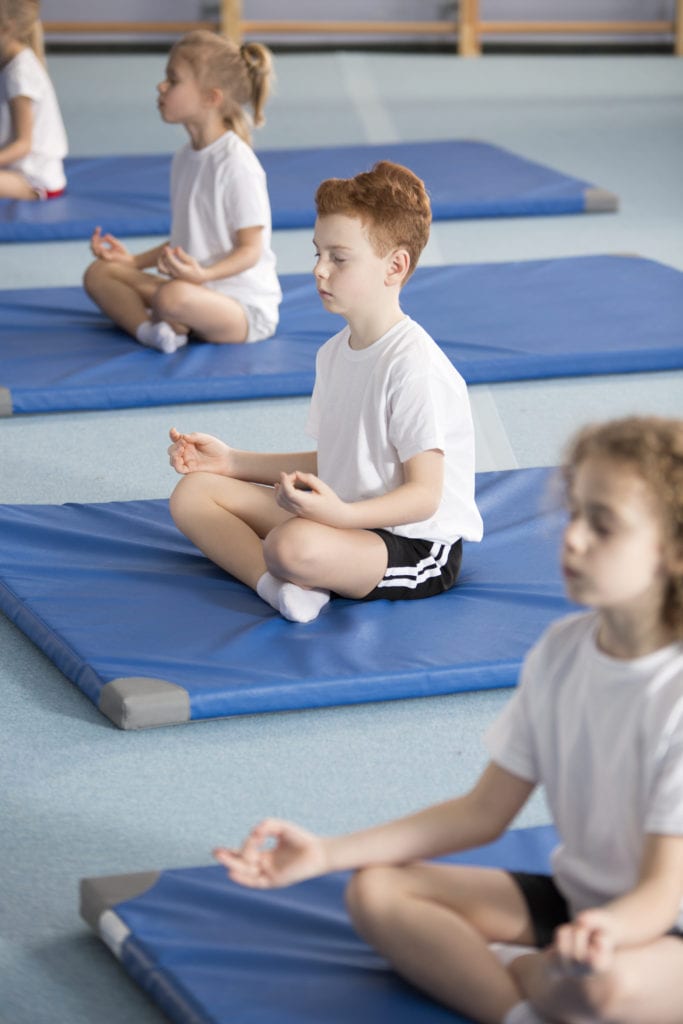
There are a number of ways to introduce children to mindfulness. One activity that children have responded positively to is being challenged to sit still and silent for as long as they possibly can. I have used this strategy in classrooms of children from pre-k to high school, as well as individually with children of all ages. Sometimes they are able to sit for 15 seconds, but they embraced the challenge of trying to beat their record by trying it again. Another mindful technique that works well with children is called “grounding.” Grounding techniques use the five senses to bring ourselves into the present moment. One grounding technique is finding five things in the room – they can be 5 things of the same color or any five things; four things the child can feel; three things the child can hear; two things the child can smell; and one thing the child can taste. Mindfulness can be playful and fun for children and families while effectively reducing stress, improving coping skills, improving ability to self-regulate and building resilience in children.


Helpful resources for families:

Mindful Games Activity Cards: 55 Fun Ways to Share Mindfulness with Kids and Teens. Susan Kaiser Greenland and Annaka Harris

A Still Quiet Place: A Mindfulness Program for Teaching Children and Adolescents to Ease Stress and Difficult Emotions By Amy Salzman, MD

I am Peace: A Book of Mindfulness By Susan Verde and Peter H. Reynolds

Breathe Like a Bear: 30 Mindful Moments for Kids to Feel Calm and Focused Anytime, Anywhere By Kira Willey


References:

Britton, W. B., Lepp, N. E., Niles, H. F., Rocha, T., Fisher, N. E., & Gold, J. S. (2014). A randomized controlled pilot trial of classroom-based mindfulness meditation compared to an active control condition in sixth-grade children. Journal of School Psychology, 52(3), 263-278.

Masten, A. S., Best, K. M., & Garmezy, N. (1990). Resilience and development: Contributions from the study of children who overcome adversity. Development and psychopathology, 2(4), 425-444.

Schonert-Reichl, K. A., Oberle, E., Lawlor, M. S., Abbott, D., Thomson, K., Oberlander, T. F., & Diamond, A. (2015). Enhancing cognitive and social–emotional development through a simple-to-administer mindfulness-based school program for elementary school children: A randomized controlled trial. Developmental psychology, 51(1), 52.

Schonert-Reichl, K. A., & Lawlor, M. S. (2010). The effects of a mindfulness-based education program on pre-and early adolescents’ well-being and social and emotional competence. Mindfulness, 1(3), 137-151.

Sibinga, E. M., Webb, L., Ghazarian, S. R., & Ellen, J. M. (2016). School-based mindfulness instruction: an RCT. Pediatrics, 137(1), e20152532.


About the Author

Dr. Cynthia Hess recently graduated from Rivier University with a PsyD in Counseling and School Psychology. Previously, she earned an M.A. from Antioch New England in Applied Psychology. She also worked as an elementary school counselor and school psychologist for 15 years before embarking on her doctorate. During her doctorate, she did her pre-doctoral internship with RIT in Rochester, N.Y. where she worked with youth ages 5-17 who had experienced complex developmental trauma. Dr. Hess’s first post-doctoral fellowship was with The Counseling Center of New England where she provided psychotherapy and family therapy to children ages 5-18, their families and young adults. She also trained part-time with a pediatric neuropsychologist conducting neuropsychological evaluations. Currently, Dr. Hess is a second-year post-doctoral fellow in pediatric neuropsychological assessment, working with NESCA Londonderry’s Dr. Angela Currie and Dr. Jessica Geragosian.


To schedule an appointment with one of NESCA’s expert neuropsychologists, please complete our online intake form


Neuropsychology & Education Services for Children & Adolescents (NESCA) is a pediatric neuropsychology practice and integrative treatment center with offices in Newton and Plainville, Massachusetts, and Londonderry, New Hampshire, serving clients from preschool through young adulthood and their families. For more information, please email info@nesca-newton.com or call 617-658-9800.


When is it Actually Bullying?

By | NESCA Notes 2019

By Yvonne M. Asher, Ph.D. 
Pediatric Neuropsychologist

Autumn holds excitement for many students – heading back to school to see old friends, meet new teachers and learn new skills. However, for some, a new school year holds more apprehension than enthusiasm. Students worry that their teacher will be mean, their math homework will be hard or that their recess time cut short by bad weather. One fear that is described more and more often by parents and children is the fear of bullying.

What is bullying?

There is no single definition of bullying, but most researchers describe the following necessary and sufficient characteristics:

  • unwanted, intentionally aggressive behavior that is aimed at harming another person
  • carried out repeatedly
  • in a relationship where there is a power differential

The quintessential example of this is the hulking, five-foot-five elementary schooler who pushes, shoves and steals the lunch money of a short, scrawny younger child every day. Luckily, this kind of aggression is rare; however, the rarity of “classic” bullying requires us to be somewhat more mindful of what childhood behaviors are (and, are not) considered bullying.

First and foremost, behavior must be unwanted and intended to harm. This means that the rambunctious children rough-housing on the playground is generally not a bullying situation. Playful acts, or acts with the intent of friendly, physical play, are not bullying. Certainly, there are times when children may misunderstand the intent of their peers or friends and perceive an action as hurtful. In that case, a frank discussion of intended message versus experienced consequence is required, but there is no immediate concern for bullying. If a child did not intend to hurt their peer, bullying is not the issue.

When researchers use the term “aggressive behavior,” it should be clarified that aggression is not always physical. Aggression comes in three forms: physical, verbal and relational. Physical aggression is exactly what you are imagining – punching, kicking, hitting and similar behaviors. This kind of aggression occurs in very young children (think: toddlers), most often as a means of communication due to their limited verbal skills. By early childhood, kids rarely use physical aggression to communicate, as most children are able to talk and verbalize their wants, needs and feelings.

The second type of aggression is verbal aggression. This can involve things like yelling, screaming, swearing, threatening and name-calling. This kind of aggression occurs throughout childhood and adolescence, with the frequency decreasing as children mature.

The last form of aggression is the most complex. It is called relational aggression. Researcher Nicki Crick defined relational aggression as any act that uses the social relationships, social standing or social experiences of an individual to harm them. The stereotypical examples of relational aggression come from films like Mean Girls. Gossip, social exclusion, humiliation, embarrassment, rumor spreading and intentional ignoring are all examples of behaviors that fall into the category of relational aggression. This frequency of relational aggression generally increases as children develop, as relational aggression requires more sophisticated verbal and social skills to carry out. In addition, relational aggression is rarely noticed by adults and often does not carry the same disciplinary consequences as physical or verbal aggression. Children learn quickly that refusing to play with a peer or spreading a nasty rumor is unlikely to get them “in trouble,” making this type of aggression far more effective for older children and adolescents.

It is important to note that both boys and girls engage in aggressive behavior. Girls tend to start using relational aggression younger, and use it consistently throughout their lives. Boys tend to start out using physical aggression, and shift to relational aggression as they mature. However, both boys and girls engage in aggressive behavior at all developmental stages.

Back to our definition of bullying – the next element is “happens repeatedly.” Bullying is not a one-time occurrence. The behavior, or harm caused by the behavior, must happen over and over. Two children who are angry and get into a fight in the cafeteria may well be intending to harm one another. However, if the fight is a one-time occurrence, there is no immediate concern for bullying. One challenging aspect of this part of the definition is how we handle online or cyberbullying (i.e., bullying that happens through electronic media such as text or social media). Because posts to social media, texts and images online can be viewed multiple times by multiple people, a single act carried out online may meet the definition of bullying. For example, posting a message that conveys a nasty rumor about a peer to one classmate’s profile can have untold impact on the victim’s social relationships depending on how many times that post is forwarded, tagged, “liked,” discussed or otherwise shared across the social network.

The last part of the definition of bullying is that it occurs “in a relationship where there is a power differential.” Power differentials exist in many relationships – parent/child, teacher/student, employer/employee, landlord/renter, therapist/patient and so on. In children, power differentials may exist when a child is:

  • older
  • physically larger
  • more popular
  • more socially skilled

While this is not an exhaustive list, these are the most common situations where we find power differentials in children. Without a power differential present in the relationship, bullying is not an immediate concern. It is not uncommon for children to have challenges in their friendships, such as teasing, unwanted horseplay, sitting with other friends at lunch and choosing to work with a different partner on a project. However, these challenges typically do not meet the “power differential” criterion of bullying. They are better defined as normal, healthy obstacles in relationships that, when worked through productively, can help children develop more sophisticated social problem-solving skills.

What to do when it is bullying

We’ve discussed many examples of what is not bullying, so what should happen when behaviors are best characterized as bullying? First and foremost, assess your child’s safety. If physical aggression is part of the bullying, consider immediate action, such as talking to your child’s teacher or school administrator. Note that bullying is now a legal matter in many states, including Massachusetts. When talking to your child, remember that bullying comes with plenty of shame and anxiety, so make every effort to ask simple, clear, direct questions with as calm a tone as possible.

If your child’s safety is not a primary concern, ask your child if they want your help to solve the problem. If so, consider helping your child map out the social dynamics of what is happening. Who is saying what? To whom? Is it just you who is the victim, or are the bullies doing the same thing to other children? Does the teacher notice? If so, do the bullies get in trouble? Depending on the answers, help your child work toward a strategy to solve the problem. Younger children may require more adult intervention, such as a parent reaching out to the teacher. Older children and adolescents may be able to try out problem-solving strategies independently, with your support at home.

If your child does not want your help, consider letting them try to solve the problem on their own. Remind them that you love and trust them, and have confidence in their ability to figure out tough situations. Encourage your child to participate in other social activities where they experience more positive interactions, such as martial arts, Girl or Boy Scouts, team sports or clubs outside of school. Having strong, positive friendships is one of the most important resiliency factors when a child is the victim of bullying.

It may help to know that upwards of 90% of adults report having been the victim of bullying at least once in their lifetime. Interestingly, over 70% also report having bullied someone else.


About Pediatric Neuropsychologist Dr. Yvonne Asher:

Dr. Yvonne M. Asher enjoys working with a wide range of children and teens, including those with autism spectrum disorder, developmental delays, learning disabilities, attention difficulties and executive functioning challenges. She often works with children whose complex profiles are not easily captured by a single label or diagnosis. She particularly enjoys working with young children and helping parents through their “first touch” with mental health care or developmental concerns.

Dr. Asher’s approach to assessment is gentle and supportive, and recognizes the importance of building rapport and trust. When working with young children, Dr. Asher incorporates play and “games” that allow children to complete standardized assessments in a fun and engaging environment.

Dr. Asher has extensive experience working in public, charter and religious schools, both as a classroom teacher and psychologist. She holds a master’s degree in education and continues to love working with educators. As a psychologist working in public schools, she gained invaluable experience with the IEP process from start to finish. She incorporates both her educational and psychological training when formulating recommendations to school teams.

Dr. Asher attended Swarthmore College and the Jewish Theological Seminary. She completed her doctoral degree at Suffolk University, where her dissertation looked at the impact of starting middle school on children’s social and emotional wellbeing. After graduating, she completed an intensive fellowship at the MGH Lurie Center for Autism, where she worked with a wide range of children, adolescents and young adults with autism and related disorders.


Neuropsychology & Education Services for Children & Adolescents (NESCA) is a pediatric neuropsychology practice and integrative treatment center with offices in Newton, Massachusetts, Plainville, Massachusetts, and Londonderry, New Hampshire, serving clients from preschool through young adulthood and their families. For more information, please email info@nesca-newton.com or call 617-658-9800.


To book an appointment with Dr. Yvonne Asher, please complete our Intake Form today. For more information about NESCA, please email info@nesca-newton.com or call 617-658-9800.


Why are they called “Soft” Skills?

By | NESCA Notes 2019

By Kathleen Pignone, M.Ed., CRC
Transition Specialist

If they are soft, why are they so crucial in this hard, cruel world? As a transition specialist, I meet with young adults and their parents on a daily basis. All parents want to know what is that missing piece for child to really succeed after high school? What should my priorities be? Is the right college more important than the right internship or vise versa? I often hear the saying, “I remember in my day, you just dusted yourself off and kept going. Why is this new generation struggling?”

While I don’t have an answer to those profound questions, I can offer some go-to skills that will support our young adults as they transition from high school to college, the world of work and the great beyond…soft skills—those intangible, hard-to-pin-down skills that we all know we need to succeed, but are so hard to teach. As a wise practitioner once told me, “Just because it is simple, it doesn’t make it easy.” While it’s critical to teach, prepare and equip our students with the necessary skills for academic success, soft skills can be just as important in many instances. Young adults need a balance of academic, executive functioning, communication and soft skills to set themselves up for success in their multi-faceted life after high school. These soft skills can make the difference between candidates competing for college acceptance and job opportunities.

I also like to refer to these skills as the job keeping and high achieving skills. Strong foundational academic, planning and team-building skills are necessary for success, but these soft skills are the subtle differences observed in the student chosen for that internship by the professor and recognized in the entry-level employee who quickly advances to the mentor employee.

In my practice, I am witness to amazing, capable, energizing and unique young adults, who are unaware of the many talents and strengths they already possess. I work to coach, teach and persuade them that these soft skills are in there, but are struggling to make an appearance. The key is identifying them and knowing when to call on them in stressful times. As a transition specialist, I offer the young people I meet with the opportunities to name and own these skills within themselves. For example, when a teenager is struggling with school, but shows up every day, I introduce them to their “grit,” their get-up- and-go and “try again” skill.  By identifying skills that may just be lying dormant or unrecognized, I offer them a chance to see that they have an innate strength that has both a name and a purpose. These skills are not only necessary, but are transferable to all aspects of their future lives. Their internal grit pushes them to go to class when their roommate is sleeping in and go to work even though they have a cold and could call out sick.

By definition, students ready to transition from high school are at an age and stage of curiosity, exploration, hope and optimism. But they may easily miss out on identifying these characteristics as strengths and skills, if we do not point it out and celebrate it with them. When they are resisting rules and boundaries, they are employing their skills of curiosity and exploration. When they want to protest against inequity in this unfair world and are perceived as naive and inexperienced, I praise their hope and optimism. We talk about how these soft skills are integral to their success as an adult and will serve them as they continue to grow and learn.

Young adults in our current society have no other option than to be flexible and adaptable. Technology is constantly updating and changing, forcing them to move forward or be left behind. Their resilience in handling all that social media exposes them to on a daily basis is admirable. I wouldn’t have stood as tall and strong as they do with such public scrutiny.

As we prepare our young adults for life after high school, let us always take the time to see, name and recognize the strengths and soft skills they show us. We have the opportunity to observe and learn from them and value these skills so that they may offer themselves as resources to their community. The balance necessary to teach young people how to manage an interdependent world as an adult is complicated. It is exciting and energizing to witness young people find these strengths within themselves, helping them to conquer that great big world.


About the Author:

Kathleen Pignone, M.Ed. CRC is a deeply knowledgeable and experienced transition specialist. Prior to her tenure at NESCA, Ms. Pignone was the Career Development Director at Bay Cove Academy for 15 years, providing students with classroom and real-world employment skills training, community job placement and on the job employment-training. She has also worked at Massachusetts Department of Secondary and Elementary Education and privately as a vocational rehabilitation consultant. As a certified rehabilitation counselor, Ms. Pignone brings unique expertise carrying out vocational assessment and employment planning for adolescents and young adults as well as supporting local school programs. In addition to fortifying NESCA’s premier transition assessment services, Ms. Pignone engages in person-centered planning with teens and young adults, consultation and training for parents, providers and schools, and community-based coaching services.

Neuropsychology & Education Services for Children & Adolescents (NESCA) is a pediatric neuropsychology practice and integrative treatment center with offices in Newton, Massachusetts, Plainville, Massachusetts, and Londonderry, New Hampshire, serving clients from preschool through young adulthood and their families. For more information, please email info@nesca-newton.com or call 617-658-9800.

To book a transition assessment or consultation with Kathleen, please complete NESCA’s online intake form


The Use of Adaptive Behavior Rating Scales in Neuropsychological Assessment

By | NESCA Notes 2019

By Jason McCormick, Psy.D.
Pediatric Neuropsychologist

In my work as a neuropsychologist, much of my practice involves assessment geared toward transition planning – the move from high school to college or from high school to the working world. For these cases, I find the use of measures of adaptive behavior skills – day-to-day skills associated with self-care, communication, community navigation, home living, socialization, use of leisure time, and functional academics – to be a critical part of the neuropsychological testing battery.

Historically, adaptive behavior rating scales were developed and primarily used for assessment of intellectual disability. While adaptive behavior has taken rightful prominence in the assessment and diagnosis of intellectual disability – overtaking the importance of intelligence testing – the use of adaptive rating measures also proves quite important to help with transition planning for individuals with a wide range of psychiatric and neurodevelopmental presentations, including those with exceptionally strong cognitive skills.

These measures (e.g., Adaptive Behavior Assessment System – Third Edition; Vineland Adaptive Behavior Scales – Third Edition), which take the form of parent/caregiver or teacher questionnaires/structured interviews, yield detailed information about an adolescent’s readiness for their upcoming transition out of their family’s home. Particularly for bright adolescents with strong academic skills who might, say, present with attention and executive function challenges but have largely been successful in school, an assessment of adaptive behavior skills is often overlooked. However, over the course of my career, I have heard multiple stories of students who have seemed “college-ready” in the traditional sense of the word (i.e., strong academic and cognitive skills) but have suffered “failure to launch” experiences, as they had not learned to take their prescribed medications consistently, never learned to self-regulate their sleep schedule, or were well behind in their capacity to strike a balance between work and leisure activities.

Although the scores obtained on these measures can be a helpful guide, I find that a closer look at the specific components that may point to a need for additional skill development can help generate a sort of “to-do” list for transition planning work. Thus, while at times simply confirming an adolescent’s suspected transition readiness, the administration of an adaptive measure often proves to be a valuable tool to help determine what skill areas need to be targeted prior to the transition and/or supported during the transition.


About the Author:

McCormick

Dr. Jason McCormick is a senior clinician at NESCA, sees children, adolescents and young adults with a variety of presenting issues, including Attention Deficit Hyperactivity Disorder (AD/HD), dyslexia and non-verbal learning disability. He has expertise in Asperger’s Disorder and has volunteered at the Asperger’s Association of New England (AANE). Dr. McCormick mainly sees individuals ranging from age 10 through the college years, and he has a particular interest in the often difficult transition between high school and college. As part of his work with older students, Dr. McCormick is very familiar with the documentation requirements of standardized testing boards. He also holds an advisory and consultative role with a prestigious local university, assisting in the provision of appropriate academic accommodations to their students with learning disabilities and other issues complicating their education.

To book a consultation with Dr. McCormick or one of our many other expert neuropsychologists, complete NESCA’s online intake form.


Neuropsychology & Education Services for Children & Adolescents (NESCA) is a pediatric neuropsychology practice and integrative treatment center with offices in Newton, Massachusetts, Plainville, Massachusetts, and Londonderry, New Hampshire, serving clients from preschool through young adulthood and their families. For more information, please email info@nesca-newton.com or call 617-658-9800.


Enjoying the Holidays with Sensory Needs

By | NESCA Notes 2018


By: Sophie Bellenis, OTD, OTR/L 
NESCA Occupational Therapist; Community-Based Skills Coach

School vacation! Bright lights! Snow! Holiday cards on the wall! Bells a’ringing!

For many of us, the holiday season is an exciting, family filled occasion that brings people together to celebrate yearly traditions.  However, for some of our children with sensory needs, the season can be over-stimulating, anxiety producing, and difficult to navigate successfully.  Even children who love the spirit of the season can quickly become saturated with the onslaught of visual, auditory, tactile, and olfactory input.  Here are some tips to consider as we head into December!

  1. Make Your Home a Safe Space – Consider reducing decorations, holding off on moving furniture, and choosing a select few holiday cards from friends and family to display. With everything from daily routines to the look of familiar neighborhood streets changing throughout the month, maintaining consistency within a child’s home can help offer a much needed respite from the visual clutter. While these changes may seem minor, visual clutter causes some children’s eyes to continuously scan the room, move from place to place, and constantly work to perceive all of the information. This is exhausting!
  2. Less is often More – For a child who is easily over-stimulated, opening two presents can be much more exciting and rewarding than ten. One hour visiting family can feel easy, while two hours feels impossible. And a small tree can look beautiful, while a huge tree feels intimidating and scary. Set children up for success by keeping activities manageable.
  3. Have a Designated Sensory Retreat – When venturing out to visit family or friends, preparation is always key. Discussing a sensory plan before arriving and having supports in place can catch stressful situations before they develop. A pre-planned hand signal or code word can save a child from having to explain that their body feels dysregulated and they are overwhelmed. Children may want to take breaks in a quiet bedroom, bring a popup tent to hide in, or eat their meal somewhere quiet before a big sit down dinner begins. For adolescents, this sensory retreat may simply be sitting in the car for 10-15 minutes in silence.  Give children permission to take what they need.
  4. Enlist the Help of Teachers – Social stories, modified visual routines, and exposure to holiday sensory input are all strategies that teachers and therapists in the school setting can help to develop and introduce to a child. Previewing the plan for school vacation can make the week off go much more smoothly.

In a household such as mine, that celebrates both Christmas and Hanukah, the month of December is fraught with routine change, decorations, and new smells from rarely cooked, homemade meals.  Allowing our children with sensory processing disorder, autism spectrum disorder, and other sensory needs to prioritize their internal regulation can help make the season fun for everyone!


About the Author:

Sophie Bellenis, OTD, OTR/L  is a Licensed Occupational Therapist in Massachusetts, specializing in pediatrics and occupational therapy in the developing world. For the past five years her work has primarily been split between children and adolescents on the Autism Spectrum in the United States, and marginalized children in Tanzania, East Africa.

Dr. Bellenis graduated from the MGH Institute of Health Professions with a Doctorate in Occupational Therapy, with a focus on pediatrics and international program evaluation. She is a member of the American Occupational Therapy Association, as well as the World Federation of Occupational Therapists.

Dr. Bellenis has worked for the Northshore Education Consortium at the Kevin O’Grady School providing occupational therapy services and also at the Spaulding Cambridge Outpatient Center. She also has extensive experience working at the Northeast ARC Spotlight Program using a drama-based method to teach social skills to children, adolescents, and young adults with autism, Asperger’s Syndrome, and related social cognitive challenges.

Internationally, Dr. Bellenis has done extensive work with the Tanzanian Children’s Fund providing educational enrichment and support. She has also spent time working with The Plaster House, a post-surgical, pediatric rehabilitation center in Ngaramtoni, Tanzania.

Dr. Bellenis currently works as a school-based occupational therapist for the city of Salem Public Schools and believes that individual sensory needs and visual motor skills must be taken into account to create comprehensive educational programming. Dr. Bellenis joined NESCA in the fall of 2017 to offer community-based skills coaching services as well as social skills coaching as part of NESCA’s transition team.


If you are interested in a consultation or individualized skill coaching with Dr. Bellenis, please complete NESCA’s online intake form today.


Neuropsychology & Education Services for Children & Adolescents (NESCA) is a pediatric neuropsychology practice and integrative treatment center with offices in Newton, Massachusetts, Plainville, Massachusetts, and Londonderry, New Hampshire, serving clients from preschool through young adulthood and their families. For more information, please email info@nesca-newton.com or call 617-658-9800.


Skip to content