
Tag

nesca newton ma Archives - Page 2 of 14 - NESCA

Subscribe to NESCA Notes

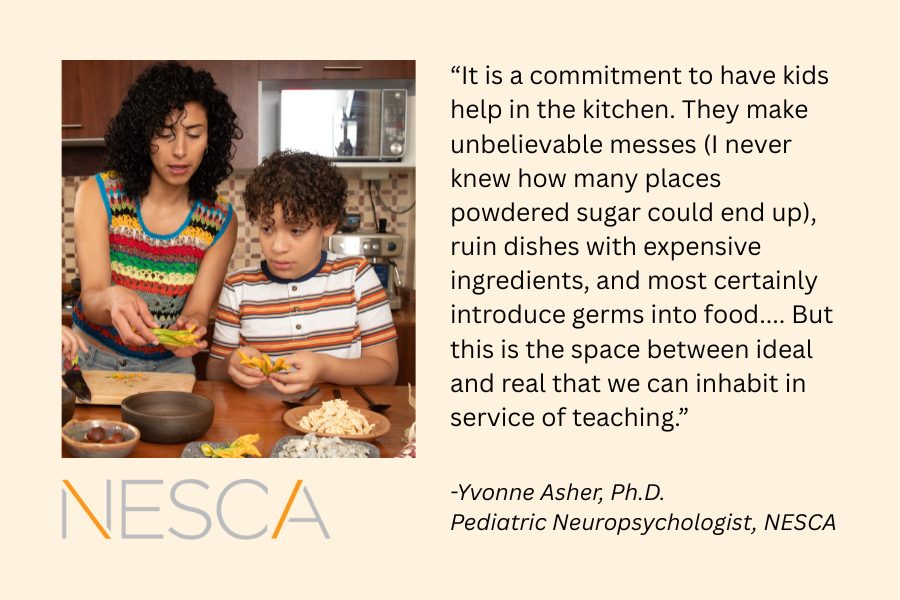
Image of kids helping to cook in the kitchen and a quote from Dr. Yvonne Asher

Kids in the Kitchen

By | NESCA Notes 2025

Image of kids helping to cook in the kitchen and a quote from Dr. Yvonne AsherBy: Yvonne Asher, Ph.D.
NESCA Pediatric Neuropsychologist

Cooking Thanksgiving dinner usually takes me about 8 hours by myself. With help, it’s closer to 12. But my kids LOVE to help. They always want to mix and pour and measure and dump ingredients hour after hour, standing beside me on a wobbly kitchen chair. I’ll leave the question of safety – you know your child best in that respect – except to say that the heavily marketed “Montessori style” kitchen tools are pretty great. Instead, I want to talk about the neurocognitive benefits of helping with cooking. There are other, wonderful benefits – bonding, sharing memories and family stories, creating traditions – but those probably do not require a neuropsychologist to opine on.

First and foremost, cooking is science and math. Actually, a ton of math. Addition, subtraction, multiplication, division, fractions, and more. Having company? We probably need to double our usual brownie recipe. Only Aunt Sue and Jimmy like cranberry sauce? Let’s halve that one. We need one and a half cups of flour for this pie crust, but only the one-quarter cup measure is clean. How many quarter-cups will we need? For science, we have states of matter, heat transfer, and chemical reactions. Why do carrots turn green in carrot cake? How do baking soda and vinegar get a chocolate cake to rise? What makes those dinner rolls so fluffy? The age of your child is (almost) irrelevant – younger children are intrigued by more basic concepts, and older ones can understand more complex and nuanced ideas. When I was a preschool teacher (long before my current career), I can still remember the wide eyes of my barely 3-year-old pupils when watching heavy cream turn into butter, yeasted dough turn into bread, and disparate ingredients turn into delicious cookies.

There is also a tremendous amount of executive functioning in cooking and food preparation. As anyone who has hosted a meal or, frankly, just tried to get dinner on the table before 9pm, will know, planning is crucial. Holding information in mind (working memory), organizing, setting smaller goals in the service of larger ones, tracking progress through multiple tasks, and checking one’s work are all vital to ending up with a special meal (did you remember to put the butter in the mashed potatoes???). If anyone in your crowd has particular eating requirements (babies learning solids, allergies, vegan/gluten-free diets, etc.), the executive functioning demands are ratcheted up by a lot. And, if you are the kind of person who sets an elaborate table with décor and such (my kids are lucky if I remember to grab a tablecloth), you have even more planning, organizing, and task management to do.

Last, but most certainly not least, learning to plan menus, shop, prepare food, cook, and bake are phenomenal life skills. Life skills are vital for everyone, but especially for individuals with developmental disabilities. Strong, confident mastery of life skills is critical for adolescents and young adults to achieve independence. I’m still patiently awaiting the day that one of my kids can cook dinner all by themselves, but I will be immeasurably pleased and proud when they do.

It is a commitment to have kids help in the kitchen. They make unbelievable messes (I never knew how many places powdered sugar could end up), ruin dishes with expensive ingredients, and most certainly introduce germs into food (even with the best of handwashing practices and “DON’T TOUCH YOUR FACE” admonishments). But this is the space between ideal and real that we can inhabit in service of teaching. Yes, it will take longer. Yes, things you envisioned may absolutely not happen (or not happen the way you hoped). Yes, it will be a crazy amount of work for you. Yes, you may need an extra grown up to actually help while your child “helps.” (You can, of course, designate certain dishes or elements of dishes as appropriate for “help” and others “just for grownups.”) But this is an incredible opportunity to help your kids learn math, science, executive functioning, and life skills in ways that are meaningful, filled with love, and built in to the fabric of their lives.


About the Author

Dr. Yvonne M. Asher enjoys working with a wide range of children and teens, including those with autism spectrum disorder, developmental delays, learning disabilities, attention difficulties and executive functioning challenges. She often works with children whose complex profiles are not easily captured by a single label or diagnosis. She particularly enjoys working with young children and helping parents through their “first touch” with mental health care or developmental concerns.

Dr. Asher’s approach to assessment is gentle and supportive, and recognizes the importance of building rapport and trust. When working with young children, Dr. Asher incorporates play and “games” that allow children to complete standardized assessments in a fun and engaging environment.

Dr. Asher has extensive experience working in public, charter and religious schools, both as a classroom teacher and psychologist. She holds a master’s degree in education and continues to love working with educators. As a psychologist working in public schools, she gained invaluable experience with the IEP process from start to finish. She incorporates both her educational and psychological training when formulating recommendations to school teams.

Dr. Asher attended Swarthmore College and the Jewish Theological Seminary. She completed her doctoral degree at Suffolk University, where her dissertation looked at the impact of starting middle school on children’s social and emotional wellbeing. After graduating, she completed an intensive fellowship at the MGH Lurie Center for Autism, where she worked with a wide range of children, adolescents and young adults with autism and related disorders.


NESCA is a pediatric neuropsychology and related services practice with offices in Newton, Plainville, and Hingham, Massachusetts; Londonderry, New Hampshire; Coral Gables, Florida; and staff in the greater Burlington, Vermont region, serving clients from infancy through young adulthood and their families. For more information, please email info@nesca-newton.com or call 617-658-9800.


To book an appointment with a NESCA clinician, please complete our Intake Form today. For more information about NESCA, please email info@nesca-newton.com or call 617-658-9800.


Teen reaching his or her goal at the top of a mountain with a quote from Kristen Simon

Building Self-determination Skills: Goal Setting without SMART Goals

By | NESCA Notes 2025

Teen reaching his or her goal at the top of a mountain with a quote from Kristen SimonBy: Kristen Simon, M.Ed, Ed.S
Transition Specialist; Psychoeducational Counselor

Summer break offers more than just a pause from school—it can be an opportunity for personal growth. With fewer academic pressures and a more flexible schedule, teens can use this time to build self-determination skills. Self-determination is a foundational skill that includes the ability to make choices, set goals, and advocate for oneself. Improving on these skills can mean the difference between total overwhelm and having the confidence to steer your own path.

Many teens come to coaching with vague goals in mind but have little practice in breaking their goals down and following through with planned steps. For some adolescents, using the SMART framework (Specific, Measurable, Achievable, Relevant, Time-Bound) helps them to set clear and realistic goals. For others, this framework can feel like too much pressure (e.g., leaves lots of room for “failure”). If the SMART goal framework is too constricting, the following supports may be helpful:

  • Build flexible systems: create routines and timelines that can flex with your energy and focus levels
  • Develop multiple lines of success (e.g., if your goal is to scroll on your phone less, you can track 1 hour less, 3 hours less, or 10 minutes less as tiers of success)
  • Use external scaffolding: body doubling, accountability partners, coaches, or scheduled time in a separate environment
  • Allow for play and novelty: Make sure your goals excite you; be sure to add fun reinforcers
  • Make them short term (e.g., seasonal or monthly)

Learning the best strategies to help adolescents plan for and stick to a goal is a great use of time over the summer.

NESCA offers coaching services for students who are looking to bolster their organization, scheduling, time management, goal setting, and routine building skills. Students work 1-on-1 with occupational therapists and education specialists to identify specific skills that will help them be more organized and in control of their academic and general life tasks. If you would like to explore ways to support your student in building executive function or real-life skills, please complete our online Intake Form.


About the Author

Kristen Simon, M.Ed, Ed.S, has worked with transition-aged youth as a licensed School Psychologist for more than a decade. She has extensive experience working with children and adolescents with a range of learning and social/emotional abilities. Kristen’s strengths lie in her communication and advocacy skills as well as her strengths-based approach. She is passionate about developing students’ self-awareness, goal-setting abilities, and vision through student-centered counseling, psychoeducation, social skills instruction, and executive functioning coaching. Mrs. Simon has particular interests working with children and adolescents on the Autism spectrum as well as individuals working to manage stress or anxiety-related challenges.

Mrs. Simon is an expert evaluator and observer who has extensive working knowledge of the special education process and school-based special education services, particularly in Massachusetts. She has been an integral part of hundreds of IEP teams and has helped to coordinate care, develop goals, and guide students and their families through the transition planning process. Mrs. Simon further has special expertise helping students to learn about their diagnoses and testing and the IEP process in general. She enjoys assisting students, families, and educators in understanding a student’s disability-related needs as well as the strategies that can help the student to be successful in both academic and nonacademic settings. Mrs. Simon has often been a part of teams in the years when students are initially participating in transition services, and she has helped countless students to build the skills necessary to be part of their first team meetings. She is committed to teaching students—as well as parents and educators—how to participate in student-centered team meetings and the IEP processes.

At NESCA, Mrs. Simon works as a transition specialist and psychoeducational counselor. She works with adolescents, their families, and their school communities to identify and build the skills necessary to achieve their postsecondary goals. Mrs. Simon provides transition assessment (including testing, functional evaluations, and observations), program observations and evaluations, case management and consultation, and individualized counseling and skills coaching.

To schedule an appointment with one of NESCA’s transition specialists, please complete our online intake form

NESCA is a pediatric neuropsychology practice and integrative treatment center with offices in Newton, Plainville, and Hingham, Massachusetts; Londonderry, New Hampshire; the greater Burlington, Vermont region; and Brooklyn, New York (coaching services only) serving clients from infancy through young adulthood and their families. For more information, please email info@nesca-newton.com or call 617-658-9800.


dictionary entry with the word ready and its definition

Is Your Teen Ready for College? Key Skills for a Smooth Transition

By | NESCA Notes 2024

dictionary entry with the word ready and its definitionBy: Kristen Simon, M.Ed, Ed.S
Transition Specialist; Psychoeducational Counselor

As the school year picks up momentum, many parents of 12th-grade students find themselves wondering if their students will be truly ready to take the plunge into college life. Parents of younger students may also be noticing academic or social challenges and wondering how to ensure their teens are on the right path to college readiness. These are normal concerns, and they often require a closer look.

Transitioning from high school to higher education is a significant step, and it’s essential to gauge your child’s readiness to determine whether college is the right next step or if additional supports will be needed during the transition. While academic abilities that match the rigor of college are essential, there are many practical, non-academic skills that are just as vital for college success.

Below are some important academic and non-academic skills necessary for a smooth transition to higher education. Focusing on these abilities can help you assess whether a student is prepared for this new chapter.

  1. Academic Preparedness
  • Engagement with coursework: Ability to read high volumes of text, think critically about the content and produce organized written work
  • Study habits: Prepare for assessments effectively and in a timely manner
  • Note-taking: Ability to take effective notes during class
  • Executive functioning: Track and manage assignments and grades, plan for future goals, break down long-term assignments and meet deadlines, absorb and follow multiple syllabi, manage significant free time, follow their individualized schedule
  1. Independent Living skills
  • Getting up: Wake up at a designated time without parent support
  • Managing medications: Taking them at the appropriate time, managing refills, and tracking side effects
  • Self-care: An independent hygiene routine (showers, haircuts, brushing teeth) they can follow on their own
  • Health: Ability to treat a cold or minor illness; Can the student identify when an ailment is something more serious? Can they head to the health center independently?
  • Maintain a living space: Room organization, keeping up with laundry, vacuuming, taking out the trash
  • Maintain a basic healthy lifestyle: Nutrition choices, sleep hygiene, regular movement or exercise, coping skills
  1. Self-determination
  • Disclosure: Describe their disability or diagnosis and the accommodations they require
  • Asking for Help: Recognize when they need help and ask for it
  • Self-advocacy: Advocate for accommodations with their college professor
  • Goal setting: Is your adolescent able to make, set, and attain realistic goals?
  • Self-awareness: Identify clear interests, preferences and strengths
  • Career Awareness: Explored career paths based on preferences and strengths; Linked potential careers to college degrees or areas of study
  1. Social/Emotional skills
  • Conflict resolution: Manage social conflict
  • Community engagement: Find a community of peers
  • Self-regulation: Regulate emotions under increased stress
  • Teamwork: Work in a group effectively

Determining if your 12th grader is ready for college involves more than just evaluating their academic skills. Readiness looks different for every student, and knowing which of these areas your 12th grader has not yet mastered allows for skill building prior to college as well as setting them up with some supports to bolster this area as they transition.

Resources:

Landmark College: A guide to assessing college readiness for Parents of College Bound Children with Learning disabilities or ADHD.

College Freshman and Executive Function: The Often Unexpected Demands by Dr. Sophie Bellenis.


If you are interested in taking a deeper dive into the questions and concerns around college readiness and have the opportunity to ask questions in a live Q&A to NESCA’s Transition Services experts, register today for our upcoming free webinar on November 6, 2024 at 11:00 AM ET.

Description of a college readiness webinar with registration information on it and an image of a college applicationRegister here: https://nesca-newton.zoom.us/webinar/register/WN_VVXHZBSESCaHAksfl_5oKg

NESCA offers many services designed to help students bridge the transition from high school to college, including executive function coaching, pre-college coaching, transition planning, and neuropsychological evaluation. To learn more specifically about our coaching services, visit: https://nesca-newton.com/coaching-services/ . To schedule an appointment with one of our expert clinicians or coaches, please complete our intake at: https://nesca-newton.com/intake/ .


About the Author

Kristen Simon, M.Ed, Ed.S, has worked with transition-aged youth as a licensed School Psychologist for more than a decade. She has extensive experience working with children and adolescents with a range of learning and social/emotional abilities. Kristen’s strengths lie in her communication and advocacy skills as well as her strengths-based approach. She is passionate about developing students’ self-awareness, goal-setting abilities, and vision through student-centered counseling, psychoeducation, social skills instruction, and executive functioning coaching. Mrs. Simon has particular interests working with children and adolescents on the Autism spectrum as well as individuals working to manage stress or anxiety-related challenges.

Mrs. Simon is an expert evaluator and observer who has extensive working knowledge of the special education process and school-based special education services, particularly in Massachusetts. She has been an integral part of hundreds of IEP teams and has helped to coordinate care, develop goals, and guide students and their families through the transition planning process. Mrs. Simon further has special expertise helping students to learn about their diagnoses and testing and the IEP process in general. She enjoys assisting students, families, and educators in understanding a student’s disability-related needs as well as the strategies that can help the student to be successful in both academic and nonacademic settings. Mrs. Simon has often been a part of teams in the years when students are initially participating in transition services, and she has helped countless students to build the skills necessary to be part of their first team meetings. She is committed to teaching students—as well as parents and educators—how to participate in student-centered team meetings and the IEP processes.

At NESCA, Mrs. Simon works as a transition specialist and psychoeducational counselor. She works with adolescents, their families, and their school communities to identify and build the skills necessary to achieve their postsecondary goals. Mrs. Simon provides transition assessment (including testing, functional evaluations, and observations), program observations and evaluations, case management and consultation, and individualized counseling and skills coaching.


To schedule an appointment with one of NESCA’s transition specialists, please complete our online intake form


NESCA is a pediatric neuropsychology practice and integrative treatment center with offices in Newton, Plainville, and Hingham, Massachusetts; Londonderry, New Hampshire; the greater Burlington, Vermont region; and Brooklyn, New York (coaching services only) serving clients from infancy through young adulthood and their families. For more information, please email info@nesca-newton.com or call 617-658-9800.


Individualized Education program written on blocks, IEP Symbol

Guide to Transition Planning and the New Massachusetts IEP

By | NESCA Notes 2024

Individualized Education program written on blocks, IEP SymbolBy: Kelley Challen, Ed.M., CAS
Director of Transition Services, NESCA

Transition planning has long been a critical component of special education, mandated by the Individuals with Disabilities Education Act of 2004 (IDEA 2004). Its purpose is to prepare students for life beyond high school in the areas of postsecondary education and/or training, employment, and independent living. While federal law requires transition services to begin at age 16, Massachusetts has gone a step further, requiring that postsecondary goals and transition services be included in a student’s individualized education program (IEP) by age 14.

However, the previous Massachusetts IEP format made it difficult to effectively integrate transition planning. Even with the introduction of a Transition Planning Form (TPF) to facilitate discussions, there was no consistent practice for embedding contents of the TPF into the IEP itself.  As a result, much of the transition planning that was included ended up in the “additional information” section, limiting its visibility and coherence within the broader IEP process.

After over a decade of development, the Massachusetts Department of Elementary and Secondary Education (DESE) released a new IEP document last school year, which all districts are required to adopt during the 2024-2025 academic year. One of the most promising features of this new IEP is its heightened emphasis on transition planning, now driven more clearly by the student’s vision and voice. Notably, the new format embeds transition planning directly into the structure of the IEP, making transition assessments a more visible and integral part of the process. While the legal requirements for transition planning remain unchanged, the new IEP format makes it easier to document these critical steps, ensuring that important aspects of transition planning are not overlooked.

So, what’s important to know about transition planning in the New MA IEP?

Student Voice and Vision are Up Front
One of the most significant improvements in the new IEP is its emphasis on the student’s voice and future vision. The “concerns” section is clearly labeled Student and Parent Concerns, empowering students to express what they want out of their IEP process. This is immediately followed by the Student and Team Vision, placing the student’s aspirations firmly at the center of the IEP process. Students ages 3-13 are encouraged to participate in visioning, fostering earlier goal setting, and encouraging teams to think explicitly about the student’s goals at younger ages. For students who will be ages 14-22, the IEP now more explicitly asks for the student’s postsecondary goals in key planning areas: education and/or training, employment, and independent living. This focus ensures that the IEP reflects the student’s ambitions and drives a more outcome-oriented process for postsecondary success.

Disability Categories are Transparent
The new IEP introduces a more transparent Student Profile section, where teams no longer need to select one “primary” disability category, making a student’s full profile more visible to all team members. While students can participate in the IEP process without fully understanding their disabilities, they can be more fully engaged if they know that they have one or more disabilities as defined by IDEA. Learning to disclose their disability and understand how it affects their learning, work, and daily life is a critical component of the transition process, empowering students to self-advocate and seek the supports they need. The transparency in the new IEP can help students gain a clearer understanding of the connection between their disabilities, their disability-related needs, and the accommodations and services they receive. Although transition-aged students are not required to participate in all aspects of their IEP, they must be invited when transition planning is discussed. Research shows that students who learn to lead their team meetings and self-advocate regarding their disabilities experience more success when transitioning to adulthood. This revision to the IEP offers a more balanced view of how multiple disabilities shape a student’s overall profile and enhances transparency in disability disclosure.

Assistive Technology as a Critical Component of the Student Profile
Assistive technology (AT) plays a vital role in helping students build independence and reduce reliance on prompting and support from adults or paid providers. The new IEP appropriately increases the visibility of assistive technology within the Student Profile. Whether used to support communication, mobility, learning, daily living skills, or work-related tasks, assistive technology empowers students to succeed both in school and in adulthood. The updated IEP format requires teams to specify whether these needs will be addressed through accommodations/modifications, goals/objectives, the service delivery grid, or another method, as documented in the Additional Information section. By thoroughly considering and documenting a student’s assistive technology needs, the IEP ensures students have access to the tools they need for greater independence and long-term success—a critical step in transition planning.

Life Skills and Self-Determination Can Be Explicitly Included at Early Ages
The new IEP organizes a student’s present levels of performance into four main areas—Academics, Behavior/Social/Emotional, Communication, and Additional Areas, including “activities of daily living.” Even before age 14, teams now have more explicit opportunities to describe strengths and needs in a broad range of areas that impact transition planning. Many students with disabilities require earlier planning and support to build independence in areas like personal care, home living, and community integration. When skill development takes longer, being thoughtful about life skills instruction, parent training, referrals to community resources, and assistive technology is crucial at earlier ages. While not explicitly in the document, the new format also provides an opportunity for teams to evaluate self-determination skills at younger ages. Self-determination—encompassing self-awareness, self-advocacy, self-efficacy, choice-making, decision-making, goal setting, and self-regulation—is one of the strongest predictors of successful transition to adulthood. Current performance with these skills can be addressed across various categories (Academics, Social, Communication) or as a key “Additional Area.”

Current Performance Levels for Transition Services are Built-in
A major improvement in the new IEP is the explicit integration of transition assessment data and transition services within the IEP itself. For students turning 14 to 22, the IEP now includes a dedicated postsecondary transition planning section, which can also be used earlier if the team determines transition planning should start sooner. This section starts with documentation of the student’s current performance, strengths, preferences, interests, and disability-related needs in each postsecondary planning area—education/training, employment, and community experiences/postschool independent living. All of this documentation is informed by transition assessment data. Teams will also specify whether accommodations/modifications, goals/objectives, services, or other activities—documented in Additional Information—are needed to support the student’s transition planning. This ensures that all team members know exactly where to find details on how transition services will be implemented. As a caveat, all skills developed through special education support transition planning; thus, all general content in the IEP is relevant. Teams can confidently reference other parts of the IEP when completing the Postsecondary Transition Planning section to avoid unnecessary duplication of content.

Course of Study and Projected Graduation/Exit Date are Centrally Documented
Federal law has always required teams to identify a “course of study” that aligns with the student’s postsecondary goals, but there was no obvious place to include this in the old IEP. The course of study—a semester-by-semester plan of the classes the student will take—is a critical part of transition planning. For instance, a student aspiring to become a doctor will likely need lab science and advanced mathematics in high school. The new IEP provides places for teams to document the student’s course of study, the anticipated type of completion document (diploma, certificate of attainment, etc.), the student’s expected graduation date, and the student’s progress toward meeting exit requirements. This information is essential for monitoring and informing transition planning and creates a clearer link between the student’s transcript and progress toward their individualized postsecondary goals.

Transfer of Rights and Decision-Making
Adult decision-making is a significant milestone, and the new IEP emphasizes discussing the Transfer of Rights at least a year before the student turns 18. The IEP now includes designated space to document when both the student and family have been provided notice of this transfer and a copy of procedural safeguards. In addition, the new IEP encourages teams to discuss and document the student’s Decision-Making Options for adulthood. Although this is a requirement once the student turns 18, its more visible presence in the IEP encourages earlier conversations. This is crucial, because preparing for adulthood may require putting legal, educational, medical, and financial decision-making frameworks in place—processes that can take time to complete.

Community and Interagency Connections
Transition planning takes a village, and a central part of effective planning is to build a supportive network that extends beyond the protections of special education. The new IEP includes a dedicated section for community and interagency connections, ensuring that teams discuss and document connections to community partners (such as independent living centers, job centers, pre-employment transition service providers, etc.) that are supporting the student. Additionally, the IEP incorporates prompts to ensure timely referrals to adult service agencies well before the student’s exit. In Massachusetts, Chapter 688 Referrals—referrals to adult human services to engage in transition planning for students who will need continued support—must be completed at least two years before the student’s expected exit from special education. The new IEP provides even more guidance to ensure that teams can make and document these referrals on time.

Final Thoughts

The new Massachusetts DESE IEP represents a significant advancement in integrating transition planning into the IEP process. As teams implement the new IEP, prioritizing adequate transition assessments will be crucial, as effective transition planning relies on thorough assessment processes that reflect each student’s strengths, needs, and aspirations for the future. The law requires the use of age-appropriate assessments to identify the student’s strengths, interests, preferences, disability-related needs, and, most of all, their postsecondary goals. Involving diverse voices, such as guidance counselors, is also essential for ensuring a seamless connection between a student’s course of study and postsecondary goals. While the law has not changed, the new IEP makes transition planning more transparent. More importantly, it places the student’s vision and voice at the forefront of the process.

Additional Resources

To download a PDF-Version of this Guide, visit https://nesca-newton.com/wp-content/uploads/2024/10/Guide-to-Transition-Planning-and-the-New-MA-IEP.pdf 

About the Author
Kelley Challen, Ed.M., CAS, is an expert transition specialist and national speaker with over 20 years of experience supporting youth andKelley Challen headshot young adults with diverse developmental and learning abilities. Since 2013, she has served as Director of Transition Services at NESCA, offering individualized transition assessments, planning, consultation, coaching, and program development. She specializes in working with students with complex profiles who may not engage with traditional testing tools or programs. Ms. Challen holds a BA in Psychology and a Minor in Hispanic Studies from The College of William and Mary, along with a Master’s and Certificate of Advanced Graduate Study in Risk and Prevention Counseling from the Harvard Graduate School of Education. She is a member of CEC, DCDT, and COPAA, believing it’s vital for all IEP participants to have accurate information about transition planning. Ms. Challen has also been actively involved in the MA DESE IEP Improvement Project, mentored candidates in UMass Boston’s Transition Leadership Program, and co-authored a chapter in Technology Tools for Students with Autism.

To schedule an appointment with one of NESCA’s transition specialists, please complete our online intake form

NESCA is a pediatric neuropsychology practice and integrative treatment center with offices in Newton, Plainville, and Hingham, Massachusetts; Londonderry, New Hampshire; the greater Burlington, Vermont region; and Brooklyn, NY (coaching services only) serving clients from infancy through young adulthood and their families. For more information, please email info@nesca-newton.com or call 617-658-9800.

How Do You Know if an IEP Addresses Transition Planning Requirements?

By | NESCA Notes 2024

By: Kelley Challen, Ed.M., CAS
Director of Transition Services, NESCA

As educators and professionals who support parents, having a checklist focused on transition planning requirements for students with disabilities can help to ensure that students are prepared for life after high school.

The most obvious source for such a checklist is Indicator 13, which is a compliance indicator required by the Individuals with Disabilities Education Act (IDEA) of 2004.

Every IEP must include a transition plan that addresses the student’s future goals, including postsecondary education, vocational training, employment, and independent living (when appropriate) and the steps needed to achieve those goals.

Here’s a checklist of what should be included in a transition-rich IEP:

  1. Age-appropriate Transition Assessment: Adequate transition assessment information (including input from the student) about the student’s strengths, preferences, interests, and needs.
  2. Measurable Postsecondary Goals: Clearly defined goals related to training, education, employment, and, where appropriate, independent living skills. These goals must be based on age-appropriate transition assessments and be updated annually.
  3. Transition Services: A detailed outline of the transition services (e.g., life skills training, job coaching, vocational training, career counseling, work-based learning, agency linkages, etc.) that will reasonably enable the student to meet their postsecondary goals.
  4. Course of Study: A multi-year description of the coursework that will reasonably enable the student to meet their postsecondary goals. Indication as to when the student is expected to exit public education and what type of completion document the student will attain.
  5. Annual IEP Goals: Specific, measurable, annual skill-based goals related to the student’s transition services needs. Skills that need to be addressed this year to ensure the student progresses toward their goals.
  6. Student Involvement: Indication that the student was invited to meetings where transition services were discussed. Documentation that the student has been involved in the transition planning process.
  7. Interagency Coordination: If appropriate, evidence that outside agencies (e.g., vocational rehabilitation, pre-employment transition service provider, department of developmental services, postsecondary education admissions or disability services, center for independent living) are involved in the transition planning with appropriate consent from the adult student and/or parent/family.

Remember: Transition planning is a collaborative effort. Student and parent/family involvement are vital to creating a successful roadmap for the student’s future.

For more detailed information, feel free to reach out or visit the IDEA website: https://sites.ed.gov/idea.

National Technical Assistance Center on Transition also has excellent Indicator 13 checklists and training resources: https://transitionta.org/i13-checklists/ (registration is required to use the site, but there is no paywall).

Together, let’s empower students to make a successful transition into adulthood!


About the Author
Kelley Challen, Ed.M., CAS, is an expert transition specialist and national speaker who has been engaged in evaluation, development, and direction of transition-focused programming for teenagers and young adults with a wide array of developmental and learning abilities since 2004. While Ms. Challen has special expertise in working with youth with autism, she enjoys working with students with a range of cognitive, learning, communication, social, emotional and/or behavioral needs.

Ms. Challen joined NESCA as Director of Transition Services in 2013. She believes that the transition to postsecondary adulthood activities such as learning, living, and working is an ongoing process–and that there is no age too early or too late to begin planning. Moreover, any transition plan should be person-centered, individualized and include steps beyond the completion of secondary school.

Through her role at NESCA, Ms. Challen provides a wide array of services including individualized transition assessment, planning, consultation, training, and program development services, as well as pre-college coaching. She is particularly skilled in providing transition assessment and consultation aimed at determining optimal timing for a student’s transition to college, technical training, adult learning, and/or employment as well as identifying and developing appropriate programs and services necessary for minimizing critical skill gaps.

Ms. Challen is one of the only professionals in New England who specializes in assisting families in selecting or developing programming as a steppingstone between special education and college participation and has a unique understanding of local postgraduate, pre-college, college support, college transition, postsecondary transition, and 18-22 programs. She is additionally familiar with a great number of approved high school and postsecondary special education placements for students from Massachusetts including public, collaborative, and private programs.

Ms. Challen enjoys the creative and collaborative problem-solving process necessary for successfully transitioning students with complex profiles toward independent adulthood. As such, she is regularly engaged in IEP Team Meetings, program consultations, and case management or student coaching as part of individualized post-12th grade programming. Moreover, she continually works to enhance and expand NESCA’s service offerings in order to meet the growing needs of the families, schools and communities we serve.

When appropriate, Ms. Challen has additionally provided expert witness testimony for families and school districts engaged in due process hearings or engaged in legal proceedings centering on transition assessment, services and/or programming—locally and nationally.

Nearly two decades ago, Ms. Challen began her work with youth with special needs working as a counselor for children and adolescents at Camp Good Times, a former program of Milestones Day School. She then spent several years at the Aspire Program (a Mass General for Children program; formerly YouthCare) where she founded an array of social, life and career skill development programs for teens and young adults with Asperger’s Syndrome and related profiles. Also, she worked at the Northeast Arc as Program Director for the Spotlight Program, a drama-based social pragmatics program, serving youth with a wide range of diagnoses and collaborating with several school districts to design in-house social skill and transition programs.

Ms. Challen received her Master’s Degree and Certificate of Advanced Graduate Study in Risk and Prevention Counseling from the Harvard University Graduate School of Education. While training and obtaining certification as a school guidance counselor, she completed her practicum work at Boston Latin School focusing on competitive college counseling.

Ms. Challen has worked on multiple committees involved in the Massachusetts DESE IEP Improvement Project, served as a Mentor for the Transition Leadership Program at UMass Boston, participated as a member of B-SET Boston Workforce Development Task Force, been an ongoing member of the Program Committee for the Association for Autism and Neurodiversity (AANE), and is a member of the New Hampshire Transition State Community of Practice (COP).

She is also co-author of the chapter, “Technologies to Support Interventions for Social-Emotional Intelligence, Self-Awareness, Personality Style, and Self-Regulation,” for the book Technology Tools for Students with Autism: Innovations that Enhance Independence and Learning.

To schedule an appointment with one of NESCA’s transition specialists, please complete our online intake form

NESCA is a pediatric neuropsychology practice and integrative treatment center with offices in Newton, Plainville, and Hingham, Massachusetts; Londonderry, New Hampshire; the greater Burlington, Vermont region; and Brooklyn, NY (coaching services only) serving clients from infancy through young adulthood and their families. For more information, please email info@nesca-newton.com or call 617-658-9800.

Correct Pronoun Use Saves Lives

By | NESCA Notes 2024

By: Kelley Challen, Ed.M., CAS
Director of Transition Services, NESCA

Let me explain…

For anyone who is working with children, teenagers, or young adults in 2024, there is no question that we are working with more openly transgender and nonbinary youth than we were in 2004. Because of this, NESCA recently held a staff seminar led by Dr. Sebastian Barr, speaking about the Psychosocial Wellbeing of Trans & Nonbinary Youth.

As Dr. Barr eloquently identified, “more people are recognizing their trans and nonbinary identities earlier in life.” These youth “have more unique needs” and are “more likely to struggle and need services.” But, for most of us working in education or health care, our academic experiences taught us very little, if anything, about supporting trans and nonbinary youth. Fortunately, in current times, there is research and publishing around this topic. And I was lucky to be able to absorb some of that research in just 75-minutes listening to Dr. Barr.

I learn well in lectures, and there is a lot that will stick with me from the presentation, but the most impactful point made was that “correct pronouns are suicide prevention.” If we care about kids and people, we should do whatever work we need to ourselves in order to learn and use correct pronouns. Trans and nonbinary individuals, especially teens and young adults, are at much greater risk of experiencing mental health issues, and suicidal thinking. There are many studies identifying factors associated with this risk such as bias, non-affirmation, exclusion, marginalization, trauma, etc. Fortunately, there are also studies identifying protective factors that are associated with wellbeing. Some of these variables include:

  • Parental and sibling acceptance
  • General affirmation of gender, like correct pronoun use
  • Access to competent medical support
  • Community support

Importantly, research from the Trevor Project, indicates that “transgender and nonbinary youth who reported having pronouns respected by all or most of the people in their lives attempted suicide at half the rate of those who did not have their pronouns respected.” *

This is why Dr. Barr indicated that many people in the field will say “correct pronouns are suicide prevention.” He emphasized that if you do make a mistake, you should “correct it quickly, not draw attention, and practice so you don’t repeat the mistake multiple times.”

I am not sharing this with any interest in getting into a debate about feelings or beliefs. I am sharing this in hopes that someone reads this, finds it useful in their parenting or professional work, and makes an effort to use correct pronouns in order to potentially save a life.

Resources:

If you want more information about Dr. Barr or his work, you can visit: https://www.sebastianmitchellbarr.com/

To download a Pronoun Fact Sheet from the @American Psychological Association, you can click here: https://www.apadivisions.org/division-44/resources/pronouns-fact-sheet.pdf

*For more information and data regarding #LGBTQ Youth Mental Health, check out the National Survey on LGBTQ Youth Mental Health 2020: https://www.thetrevorproject.org/survey-2020/


About the Author
Kelley Challen, Ed.M., CAS, is an expert transition specialist and national speaker who has been engaged in evaluation, development, and direction of transition-focused programming for teenagers and young adults with a wide array of developmental and learning abilities since 2004. While Ms. Challen has special expertise in working with youth with autism, she enjoys working with students with a range of cognitive, learning, communication, social, emotional and/or behavioral needs.

Ms. Challen joined NESCA as Director of Transition Services in 2013. She believes that the transition to postsecondary adulthood activities such as learning, living, and working is an ongoing process–and that there is no age too early or too late to begin planning. Moreover, any transition plan should be person-centered, individualized and include steps beyond the completion of secondary school.

Through her role at NESCA, Ms. Challen provides a wide array of services including individualized transition assessment, planning, consultation, training, and program development services, as well as pre-college coaching. She is particularly skilled in providing transition assessment and consultation aimed at determining optimal timing for a student’s transition to college, technical training, adult learning, and/or employment as well as identifying and developing appropriate programs and services necessary for minimizing critical skill gaps.

Ms. Challen is one of the only professionals in New England who specializes in assisting families in selecting or developing programming as a steppingstone between special education and college participation and has a unique understanding of local postgraduate, pre-college, college support, college transition, postsecondary transition, and 18-22 programs. She is additionally familiar with a great number of approved high school and postsecondary special education placements for students from Massachusetts including public, collaborative, and private programs.

Ms. Challen enjoys the creative and collaborative problem-solving process necessary for successfully transitioning students with complex profiles toward independent adulthood. As such, she is regularly engaged in IEP Team Meetings, program consultations, and case management or student coaching as part of individualized post-12th grade programming. Moreover, she continually works to enhance and expand NESCA’s service offerings in order to meet the growing needs of the families, schools and communities we serve.

When appropriate, Ms. Challen has additionally provided expert witness testimony for families and school districts engaged in due process hearings or engaged in legal proceedings centering on transition assessment, services and/or programming—locally and nationally.

Nearly two decades ago, Ms. Challen began her work with youth with special needs working as a counselor for children and adolescents at Camp Good Times, a former program of Milestones Day School. She then spent several years at the Aspire Program (a Mass General for Children program; formerly YouthCare) where she founded an array of social, life and career skill development programs for teens and young adults with Asperger’s Syndrome and related profiles. Also, she worked at the Northeast Arc as Program Director for the Spotlight Program, a drama-based social pragmatics program, serving youth with a wide range of diagnoses and collaborating with several school districts to design in-house social skill and transition programs.

Ms. Challen received her Master’s Degree and Certificate of Advanced Graduate Study in Risk and Prevention Counseling from the Harvard University Graduate School of Education. While training and obtaining certification as a school guidance counselor, she completed her practicum work at Boston Latin School focusing on competitive college counseling.

Ms. Challen has worked on multiple committees involved in the Massachusetts DESE IEP Improvement Project, served as a Mentor for the Transition Leadership Program at UMass Boston, participated as a member of B-SET Boston Workforce Development Task Force, been an ongoing member of the Program Committee for the Association for Autism and Neurodiversity (AANE), and is a member of the New Hampshire Transition State Community of Practice (COP).

She is also co-author of the chapter, “Technologies to Support Interventions for Social-Emotional Intelligence, Self-Awareness, Personality Style, and Self-Regulation,” for the book Technology Tools for Students with Autism: Innovations that Enhance Independence and Learning.

To schedule an appointment with one of NESCA’s transition specialists, please complete our online intake form

NESCA is a pediatric neuropsychology practice and integrative treatment center with offices in Newton, Plainville, and Hingham, Massachusetts; Londonderry, New Hampshire; the greater Burlington, Vermont region; and Brooklyn, NY (coaching services only) serving clients from infancy through young adulthood and their families. For more information, please email info@nesca-newton.com or call 617-658-9800.

Filled backpack ready for the first day of school

How to Prepare Students with Autism for the New School Year

By | NESCA Notes 2024

Filled backpack ready for the first day of schoolBy: Renee Cutiongco Folsom, Ph.D.
Pediatric Neuropsychologist

I know that summer is about to end here in New England when I see posts on Facebook from my West Coast friends about their children’s first day of school and when every other commercial on TV is heralding back-to-school sales. A little sense of panic sets in, because of all the preparations needed for children going back to school. In my work with children with special needs, one group that often struggles with transitions such as these is children with Autism Spectrum Disorder.

Autism Spectrum Disorder (ASD) is a developmental disorder that manifests in challenges with social communication and interaction, and in the presence of repetitive, restricted behaviors that significantly impact functioning. One of the symptoms of ASD is difficulty with transitions. Some children with ASD get really upset with even slight changes in routines or plans. This is the reason why the start and end of the school year is often difficult for them. Here are some strategies for helping children with ASD transition back to school. They can also be used for any child to prepare for any transition, major or minor.

Visit the new school/classroom – A lot of schools are already doing this, but a visit to a new school or classroom a few days before the official start of school could help your child get acclimated to their new environment or teacher. Teachers usually report for work the week before the first day of school to prepare their rooms. Set a time to meet with the new teacher and let them provide your child with a tour of the room and other areas, such as the library or cafeteria. Show the child their desk and cubby. Tell them about the schedule posted on the board. This will ease some of your child’s fears and anxieties about the first day of school.

Use social stories – Social stories are written or illustrated stories that present information about social situations. Developed by educational consultant, Carol Gray, they instruct students about what to do or say in social situations, for example, the first day of school, together with information about other people’s motives or expectations. Using pictures from the school visit above, you can create a social story about the first day of school that talks about what to expect, directives about what your child can do or say, and the reason behind these actions. Here is an example of part of a social story for the first day of school:

  • This is Ms. Smith, my new teacher. She is very nice.
  • My mom and I walk to my classroom.
  • Smith is there to greet me. I look at her and smile.
  • I say goodbye to my mom and give her a big hug. She will come back at the end of the day to pick me up.
  • I enter the room and place my bag in my cubby. I find my desk and take my seat.
  • I look at the kid next to me and say, “Hi.” I want other kids to like me.

For help with creating social stories, you can go to https://carolgraysocialstories.com/social-stories/what-is-it/ or https://www.autismspeaks.org/templates-personalized-teaching-stories.

Use video modeling – In my work with children with autism, I often find that they are visual learners; they have better developed abilities in thinking and reasoning with pictures. And with the popularity of technology, such as iPads and smartphones, they are usually attracted to videos. Speech and language pathologist Linda Hodgdon, M.Ed., CCC-SLP (www.usevisualstrategies.com) has developed a strategy of using videos to teach skills/competencies for children and adolescents with ASD. In video modeling, you can bring your child to the new school/classroom a few days early with a video camera. You can record walking the hallways from class to class, opening the locker, going to the cafeteria or the gym, and other things they would need to do when school is in session. While you are filming, you can add dialogue explaining each item or place of interest. Then, your child/teenager can watch the video at home to prepare for the first real day of school when students will be there. Video modeling can also be used to prepare for other transitions/novel situations, such as preparing for a holiday or a new experience (e.g., riding a train, watching a movie, visiting a new restaurant).

Transitions are difficult because they require us to leave a place or state that we have been accustomed to and enter something that is unknown or unpredictable. Preparing ourselves for transitions by demystifying some of the unknowns can help us cope better with the anxiety that is inherent in these situations. I hope the suggestions above can help you and your child transition back to school.


About the Author

Dr. Renee Cutiongco Folsom, Ph.D. has been working with families in the greater Boston area since 2015. Prior to this, she was on staff at Johns Hopkins University and trained at the University of California, Los Angeles (UCLA). She provides comprehensive neuropsychological evaluations of children, adolescents, and young adults who have learning, behavioral, and socio-emotional challenges. Her areas of expertise include Autism Spectrum Disorder and other conditions that usually co-occur with this diagnosis; Attention-Deficit/Hyperactivity Disorder; Dyslexia and other Specific Learning Disabilities; and Anxiety/Depression. She thinks that the best part of being a pediatric neuropsychologist is helping change the trajectory of children’s lives.

To schedule an appointment with one of NESCA’s pediatric neuropsychologists, please complete our online intake form

NESCA is a pediatric neuropsychology practice and integrative treatment center with offices in Newton, Plainville, and Hingham, Massachusetts; Londonderry, New Hampshire; the greater Burlington, Vermont region, and Brooklyn, NY, serving clients from infancy through young adulthood and their families. For more information, please email info@nesca-newton.com or call 617-658-9800.


When Average Doesn’t Feel Like Average

By | NESCA Notes 2024

By: Yvonne Asher, Ph.D.
NESCA Pediatric Neuropsychologist

When we conduct a neuropsychological evaluation with a child, adolescent, or adult, one important component involves administering a battery of assessments. This is certainly not the only, or many times the most important, component, but it is part of the unique skill set of a neuropsychologist. A large percentage of these assessments are interpreted by comparing an individual’s performance to the performance of others who are similar in age. For example, we may compare an 8-year-old’s reading skills to the reading skills of a nationally-representative sample of 8-year-olds. This comparison helps us to understand if the child’s reading skills are generally below their peers, about at the same level as their peers, or above the level of their peers.

A nationally-representative sample of children may not be the most salient comparison for some families. In fact, the concerns that bring parents to a neuropsychologist in the first place can often include comparing their child to friends’ children, classmates, or other children in their community. This is an almost inescapable process. As parents, it is nearly impossible not to compare children – meeting milestones, academic skills, temperament, behavior, sociability, etc. Although it can have significant negative impact when done in front of a child or in a detrimental manner (e.g., “Why can’t you be more like Johnny?” “Susie has already figured that out and she’s younger than you!”), comparing your child to others can be valuable in specific circumstances. Many parents have little experience with child development before having children, and the children in their community and friend group can serve as helpful “guideposts” for what to expect at different ages. Many times, a parent has brought concerns to a neuropsychological evaluation along the lines of “my child seems different than my friends’ children/nieces and nephews/other kids at daycare,” and I have confirmed a significant disability or disorder was present. Parental instincts are valuable and can be an important first step.

However, there are times where comparing a child to a very specific set of other children can be a fraught process, particularly when seeking neuropsychological evaluation. Parents may live in an area or socialize with a group of families who are far from the nationally-representative samples that we utilize in our evaluations. Cousins and the children of close friends may have unusually well-developed skills, unusually calm or easy-going temperaments, or unusually easy progress through school. Children may be learning in a school environment that is extremely competitive, the result of a highly selective admissions process, or inaccessible to most of the general population. Any or all of these can make a child seem more impaired than neuropsychological assessments may indicate.

This is certainly not to discount valid, important parent concerns. A child who is far behind their classmates, even when those classmates are part of a highly selective school environment with academic expectations far beyond most schools, is still struggling and may be suffering. What is vital for parents to understand is the profile of their own child, and from where the challenges that they see are coming. A mismatch between a child and their environment, be it a social environment or an academic environment, can still result in real, impactful struggles – even if the child appears “average” on neuropsychological assessment measures.


About the Author

Dr. Yvonne M. Asher enjoys working with a wide range of children and teens, including those with autism spectrum disorder, developmental delays, learning disabilities, attention difficulties and executive functioning challenges. She often works with children whose complex profiles are not easily captured by a single label or diagnosis. She particularly enjoys working with young children and helping parents through their “first touch” with mental health care or developmental concerns.

Dr. Asher’s approach to assessment is gentle and supportive, and recognizes the importance of building rapport and trust. When working with young children, Dr. Asher incorporates play and “games” that allow children to complete standardized assessments in a fun and engaging environment.

Dr. Asher has extensive experience working in public, charter and religious schools, both as a classroom teacher and psychologist. She holds a master’s degree in education and continues to love working with educators. As a psychologist working in public schools, she gained invaluable experience with the IEP process from start to finish. She incorporates both her educational and psychological training when formulating recommendations to school teams.

Dr. Asher attended Swarthmore College and the Jewish Theological Seminary. She completed her doctoral degree at Suffolk University, where her dissertation looked at the impact of starting middle school on children’s social and emotional wellbeing. After graduating, she completed an intensive fellowship at the MGH Lurie Center for Autism, where she worked with a wide range of children, adolescents and young adults with autism and related disorders.


NESCA is a pediatric neuropsychology practice and integrative treatment center with offices in Newton, Plainville, and Hingham, Massachusetts; Londonderry, New Hampshire; and staff in the greater Burlington, Vermont region and Brooklyn, NY, serving clients from infancy through young adulthood and their families. For more information, please email info@nesca-newton.com or call 617-658-9800.


To book an appointment with a NESCA clinician, please complete our Intake Form today. For more information about NESCA, please email info@nesca-newton.com or call 617-658-9800.


You’ve Got a Friend – The Importance of a Mentoring Relationship in ASD

By | NESCA Notes 2024

By: Renee Cutiongco Folsom, Ph.D.
Pediatric Neuropsychologist

It is graduation time again. Graduation speeches usually include a portion where the graduates thank their parents, siblings, friends, and teachers for their success. Most of the time they also thank coaches, mentors, and counselors for their accomplishments. Listening to them takes me back to my own graduation experience where I credited part of my success to people who came alongside me to mentor and support me through the various stages of my development. The encouragement and feedback provided by these mentors shaped me in ways that I would not have gotten simply by sitting in the classroom or reading books. The role of mentors is also important, and I should say more so, for children and adolescents who are on the autism spectrum.

Autism Spectrum Disorder (ASD) is a developmental disorder that manifests in problems with social communication and interaction, and in the presence of repetitive, restricted behaviors that significantly impact functioning. Children and young people with ASD usually have problems with what are called social pragmatic skills – those skills that are necessary for knowing how to act in social situations, reading social cues, and conducting back-and-forth conversation with others. Some persons with ASD have a hard time appreciating the unwritten “rules” of social engagement, for example, that you should look at a person you are talking to, smile, and nod occasionally to signify that you are paying attention and interested in what other people are saying. It is difficult for persons with ASD to read subtle cues and “feel” the room to know how to react to certain dynamics. Appreciating sarcasm or humor could be difficult for them. These skills are often the hardest to “teach” a child or adolescent with ASD because of the complex and dynamic nature of social interactions. Also, these are skills that come naturally or instinctively for many of us, so it is hard to break down interactions and make subtle behaviors (e.g., eye contact, nonverbal cues, gestures) more salient. This is where an older sibling or a mentor – a camp counselor, a coach, or a tutor – could be a wonderful resource for teaching these skills to a young person with ASD. Have you ever had a camp counselor model for you how to react when you are introduced to a new person? Maybe you had a coach hang out with you after a game to model how to engage in back-and-forth conversation and listen to other people’s interests. These mentoring relationships are a good venue for practicing skills that may have been taught to the person with ASD in the context of a formal speech/language therapy session or in the classroom. Indeed, I have found over the years that children and adolescents with autism and have older siblings or mentors do better in these social pragmatic skills than those without this kind of guidance.

Beyond teaching social pragmatic skills, mentors also provide guidance about practical everyday decisions. Has an older sibling ever given you feedback about how your top does not match your pants? Or that you should slow down eating that burger because you are such a messy eater? You may have had an older friend who has shared with you how they navigated dating. Teenagers, not only those with autism, are usually more open to receiving such feedback or information from those who are a little older than they are as opposed to older adults or parents because of wanting to develop their own personalities apart from parents. Therefore, for these young people I usually recommend having a mentor who is a little older than they are who can serve as a friend/mentor/model.

Many skills that are crucial in navigating social situations – how to behave appropriately, how to make friends, how to be a good team member – are usually learned in the context of organic relationships, such as a mentoring relationship, as opposed to a classroom lesson because the interaction itself is the “content” of the instruction. The mentor must be reminded, though, to be more intentional in modeling/teaching these social pragmatic skills to the client.

There is no better way of learning how to be a good and caring friend than to experience having a friend come alongside you to show you how it is done. As my favorite singer, James Taylor, sings, “Ain’t it good to know you’ve got a friend?”


About the Author

Dr. Renee Cutiongco Folsom, Ph.D. has been working with families in the greater Boston area since 2015. Prior to this, she was on staff at Johns Hopkins University and trained at the University of California, Los Angeles (UCLA). She provides comprehensive neuropsychological evaluations of children, adolescents, and young adults who have learning, behavioral, and socio-emotional challenges. Her areas of expertise include Autism Spectrum Disorder and other conditions that usually co-occur with this diagnosis; Attention-Deficit/Hyperactivity Disorder; Dyslexia and other Specific Learning Disabilities; and Anxiety/Depression. She thinks that the best part of being a pediatric neuropsychologist is helping change the trajectory of children’s lives.

To schedule an appointment with one of NESCA’s pediatric neuropsychologists, please complete our online intake form

NESCA is a pediatric neuropsychology practice and integrative treatment center with offices in Newton, Plainville, and Hingham, Massachusetts; Londonderry, New Hampshire; the greater Burlington, Vermont region, and Brooklyn, NY, serving clients from infancy through young adulthood and their families. For more information, please email info@nesca-newton.com or call 617-658-9800.


Building Executive Function Skills over the Summer

By | NESCA Notes 2024

By: Kristen Simon, M.Ed, Ed.S
Transition Specialist; Psychoeducational Counselor

As the countdown to Summer begins post April vacation, teens are getting excited for this season of rest, with more time to socialize and spend their days doing the things they want to do. While the first two weeks tend to be filled with high energy and plans, as the summer continues, the energy starts to slow down and boredom sets in. This part of the summer is a great time for adolescents to lean into building executive functioning skills that they may not have had time to practice fully during the school year. And the planning to do so should begin now, prior to the summer, instead of introducing this when they already feel unmotivated.

Executive dysfunction is supported through the school year with structure, routines, consistent visual schedules, online calendars, reminders, and many other external supports. As noted in previous blog posts for students with executive functioning challenges, the focus during the school year can easily fall into a pattern of “putting out fires” or providing intense support to catch up on never-ending assignments, instead of proactive skill building. The summer offers a low-pressure environment for students to practice planning, organizing, following through, and self-monitoring.

Some ways to practice and build these skills might include:

  • Manage their own schedule. Have your adolescent practice keeping a weekly schedule. Teens can print off a blank weekly schedule or utilize a digital version to list what needs to be accomplished each week (work, appointments, chores, exercise, social, hobbies, small goals) and plug these into a weekly checklist or visual calendar. At the end of each week, teens can reflect on how much they were able to follow the system they tried and what obstacles got in the way of anything they didn’t accomplish.
  • Practice setting alarms. Even if it’s for 10:15 AM (or later) and actually waking up at the time they needed to is important all year long. Allow them to troubleshoot if they sleep in, including what routine can they shift from the night before to meet this?
  • Set their own appointments. Is there a dentist appointment that needs to be made or a car service that family needs completed? Have your teen take ownership of calling or going online to make the appointment, tracking the appointment, and following through with going to the appointment.
  • Household chores. Ask your teen to take ownership of one part of the home (e.g., mowing the lawn). Work to schedule out how often throughout the summer this job needs to be completed and set a plan for how to follow through with this responsibility.
  • Make a meal for the family. Following through with all the steps included (finding a recipe, budgeting, food shopping, prepping, managing the timing of each item that needs to be cooked) is a great way to practice executive functioning skills.
  • Get a summer job. Working is a great way to build many executive functioning and self-determination skills for teens. Not only does it add structure to the week, it also helps with regulation and provides social opportunities.

Summer is a great time to build executive functioning skills for school but also life. If you’re interested in hearing more about NESCA’s executive functioning coaching session or real-life skills coaching, visit: https://nesca-newton.com/coaching-services/ or complete our Intake Form at: www.nesca-newton.com/intake.


About the Author

Kristen Simon, M.Ed, Ed.S, has worked with transition-aged youth as a licensed School Psychologist for more than a decade. She has extensive experience working with children and adolescents with a range of learning and social/emotional abilities. Kristen’s strengths lie in her communication and advocacy skills as well as her strengths-based approach. She is passionate about developing students’ self-awareness, goal-setting abilities, and vision through student-centered counseling, psychoeducation, social skills instruction, and executive functioning coaching. Mrs. Simon has particular interests working with children and adolescents on the Autism spectrum as well as individuals working to manage stress or anxiety-related challenges.

Mrs. Simon is an expert evaluator and observer who has extensive working knowledge of the special education process and school-based special education services, particularly in Massachusetts. She has been an integral part of hundreds of IEP teams and has helped to coordinate care, develop goals, and guide students and their families through the transition planning process. Mrs. Simon further has special expertise helping students to learn about their diagnoses and testing and the IEP process in general. She enjoys assisting students, families, and educators in understanding a student’s disability-related needs as well as the strategies that can help the student to be successful in both academic and nonacademic settings. Mrs. Simon has often been a part of teams in the years when students are initially participating in transition services, and she has helped countless students to build the skills necessary to be part of their first team meetings. She is committed to teaching students—as well as parents and educators—how to participate in student-centered team meetings and the IEP processes.

At NESCA, Mrs. Simon works as a transition specialist and psychoeducational counselor. She works with adolescents, their families, and their school communities to identify and build the skills necessary to achieve their postsecondary goals. Mrs. Simon provides transition assessment (including testing, functional evaluations, and observations), program observations and evaluations, case management and consultation, and individualized counseling and skills coaching.


To schedule an appointment with one of NESCA’s transition specialists, please complete our online intake form


NESCA is a pediatric neuropsychology practice and integrative treatment center with offices in Newton, Plainville, and Hingham, Massachusetts; Londonderry, New Hampshire; and staff in the greater Burlington, Vermont region and Brooklyn, New York, serving clients from infancy through young adulthood and their families. For more information, please email info@nesca-newton.com or call 617-658-9800.


Skip to content