


 By: Kelley Challen, Ed.M., CAS
Director of Transition Services, NESCA
Good transition planning is about building a “team” that can outlast special education and using resources wisely. There is often talk of “maximizing benefits” so that private funds can be reserved and made to last. In order to create an effective and individualized transition plan, you have to know what resources are available in your local community as well as on the state and federal levels. One resource that may be overlooked or underused is your local Center for Independent Living (CIL). In Massachusetts, and some other states, these are often named Independent Living Centers (ILC).
Across the United States, CILs are free community-based agencies that provide a range of services designed to help individuals with disabilities build skills for living more independently. The barrier to entry is typically very low as the intake process may sometimes just be a phone call and acknowledgement of having a disability.
At a minimum, each center is charged with providing the following core services:
- Information and referral: Learning about services, providers, benefits, and programs within your local community that can help you achieve your goals (e.g., advocacy, daily living, housing, recreation, etc.). Also, learning about resources offered through state and national organizations.
- Skills training: Explicit instruction of self-advocacy and/or life skills that can help you to live, learn, and work more independently. Examples areas for skill development include accommodations, personal care, housing and household management, managing finances, interview preparation, etc.
- Peer counseling/mentoring: Talking with a peer by phone, video conference, or in person for mutual support, confidence building, and ultimately to make more independent and informed choices.
- Advocacy: Learning to advocate on both individual and systems levels. Building skills to advocate for oneself, including filing complaints or taking legal action to remove barriers when needed.
- Transition services: Services to facilitate transition to postsecondary adult life, services to facilitate transition from institutions to the community, and services to assist individuals at risk of needing to be in institutions.
Additionally, ILCs/CILs may have developed services that are specifically useful for consumers in their local community or state. And there is generally no age requirement for accessing services. For example, many ILCs in Massachusetts have specific youth programming or Transition to Adulthood Programs (TAPs) which offer advocacy, skills training, and peer counseling specifically tailored to students.
ILCs/CILs are awesome agencies run by, and for, individuals with disabilities. However, in my experience, they are not talked about or accessed nearly enough as part of transition planning. If you are reading the blog and interested in building independence at home and in the community for yourself, your child, or a youth you work with—I strongly recommend you look up your local Center for Independent Living and call to find out more about accessing services today.
Resources:
Administration for Community Living – What is Independent Living? https://acl.gov/programs/aging-and-disability-networks/centers-independent-living
ILRU Directory of Centers for Independent Living and Associations – https://www.ilru.org/projects/cil-net/cil-center-and-association-directory
Massachusetts Independent Living Centers – https://www.mass.gov/independent-living-centers
About the Author
Kelley Challen, Ed.M., CAS, is NESCA’s Director of Transition Services, overseeing planning, consultation, evaluation, coaching, case management, training and program development services. Ms. Challen also provides expert witness testimony in legal proceedings related to special education. She is also the Assistant Director of NESCA, working under Dr. Ann Helmus to support day-to-day operations of the practice. Ms. Challen began facilitating programs for children and adolescents with special needs in 2004. After receiving her Master’s Degree and Certificate of Advanced Study in Risk and Prevention Counseling from Harvard Graduate School of Education, Ms. Challen spent several years at the MGH Aspire Program where she founded an array of social, life and career skill development programs for teens and young adults with Asperger’s Syndrome and related profiles. She additionally worked at the Northeast Arc as Program Director for the Spotlight Program, a drama-based social pragmatics program, serving youth with a wide range of diagnoses and collaborating with several school districts to design in-house social skills and transition programs. Ms. Challen is co-author of the chapter “Technologies to Support Interventions for Social- Emotional Intelligence, Self-Awareness, Personality Style, and Self-Regulation” for the book Technology Tools for Students with Autism. She is also a proud mother of two energetic boys, ages six and three. While Ms. Challen has special expertise in supporting students with Autism Spectrum Disorders, she provides support to individuals with a wide range of developmental and learning abilities, including students with complex medical needs.
To schedule an appointment with one of NESCA’s transition specialists, please complete our online intake form.
NESCA is a pediatric neuropsychology practice and integrative treatment center with offices in Newton and Plainville, Massachusetts, Londonderry, New Hampshire, and Burlington, Vermont, serving clients from preschool through young adulthood and their families. For more information, please email info@nesca-newton.com or call 617-658-9800.
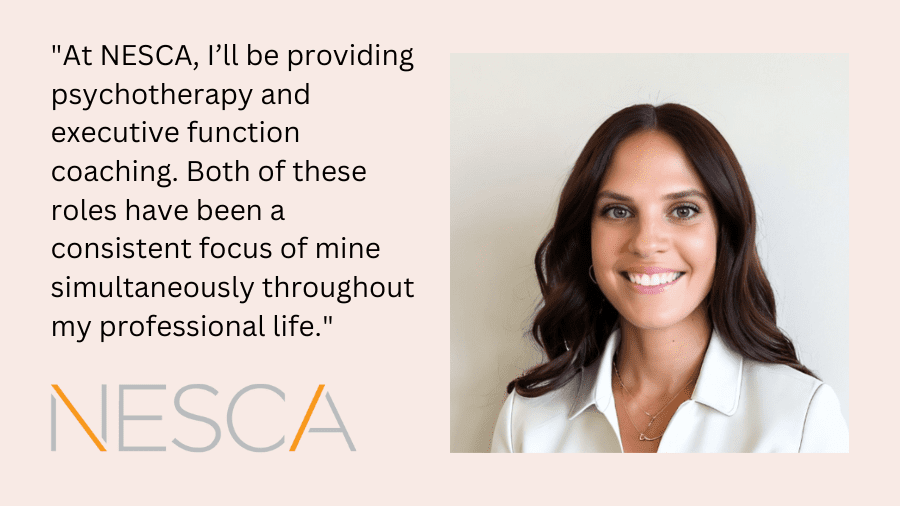
 private practice and schools, she has extensive experience supporting students, families and educational teams to make positive changes. Ms. Edelstein provides executive function coaching and psychotherapy to clients ranging from middle school through adulthood. She also offers consultation to schools and families in order to support her clients across home and community environments.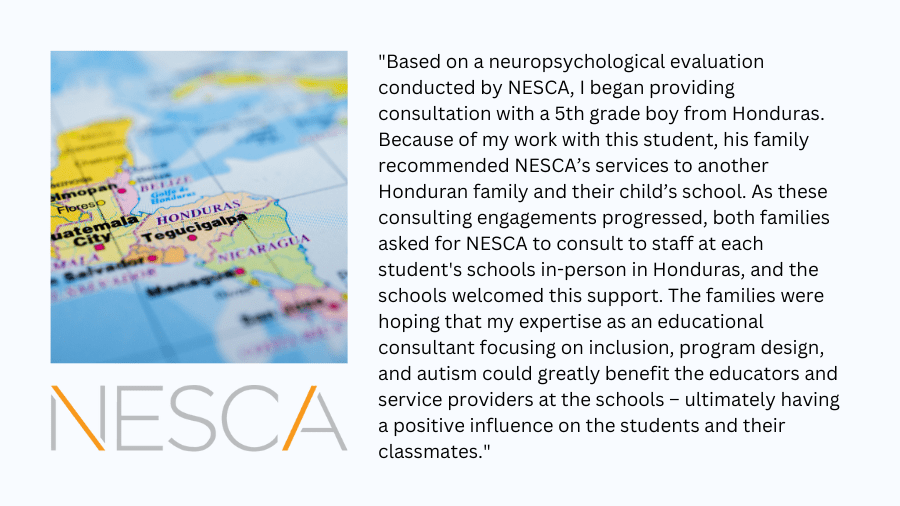
 research and academia for over 30 years. She is a national consultant and speaker on program design and the inclusion of children and adolescents with special needs, especially those diagnosed with Autism Spectrum Disorder (ASD). Prior to joining NESCA, Ms. Lucci was the Principal of the Partners Program/EDCO Collaborative and previously the Program Director and Director of Consultation at MGH/Aspire for 13 years, where she built child, teen and young adult programs and established the 3-Ss (self-awareness, social competency and stress management) as the programming backbone. She also served as director of the Autism Support Center. Ms. Lucci was previously an elementary classroom teacher, special educator, researcher, school psychologist, college professor and director of public schools, a private special education school and an education collaborative.
 meaningful skills in order to reach their goals. She has spent the majority of her career working in a private school for students with ASD. She has also spent some time working in an inpatient mental health setting. Lyndsay uses occupation-based interventions and strategies to develop life skills, executive functioning, and emotional regulation. While completely her doctoral degree at MGH Institute of Health Professions, Lyndsay worked with the Boston Center for Independent Living to evaluate transition age services. She uses the results from her research to deliver services in a way that is most beneficial for clients. Specifically, she focuses on hands-on, occupation-based learning that is tailored the client’s goals and interests.


 from elementary school through young adulthood. In addition to direct client work, Ms. Badamo provides consultation and support to parents and families in order to help change dynamics within the household and/or support the special education processes for students struggling with executive dysfunction. She also provides expert consultation to educators, special educators and related professionals.


 By:
By: 


 extensive experience working with children and adolescents with a range of learning and social/emotional abilities. Kristen’s strengths lie in her communication and advocacy skills as well as her strengths-based approach. She is passionate about developing students’ self-awareness, goal-setting abilities, and vision through student-centered counseling, psychoeducation, social skills instruction, and executive functioning coaching. Mrs. Simon has particular interests working with children and adolescents on the Autism spectrum as well as individuals working to manage stress or anxiety-related challenges.
Connect with Us