NESCA’s Newton, MA location has immediate availability for neuropsychological evaluations. Our MA clinicians specialize in the following evaluations: Neuropsychological; Autism; and Emotional and Psychological, as well as Academic Achievement and Learning Disability Testing.

Visit www.nesca-newton.com/intake for more information or to book an evaluation.

Tag

NESCA Archives - Page 26 of 34 - NESCA

Subscribe to NESCA Notes

Building Gratitude in our Kids

By | NESCA Notes 2020

By: Tabitha Monahan, M.A., CRC
NESCA Transition Specialist/Counselor

Would it be November without a blog post about gratitude? Gratitude feels both more important and harder to come by this year with the slew of events bombarding people’s personal lives and something different appearing what feels like every news cycle. But there must be something to all this gratitude if everyone from Forbes Magazine to Psychology Today is writing about it?

So what does the science say?

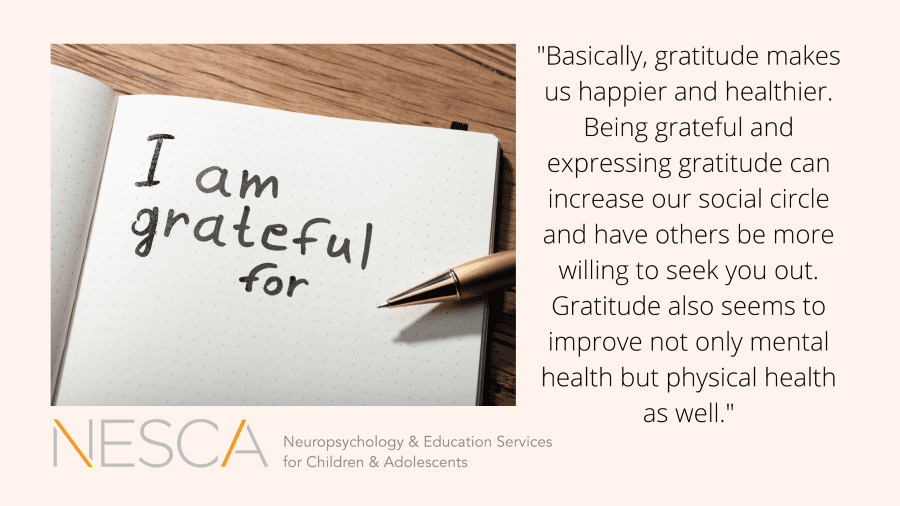
Basically, gratitude makes us happier and healthier. Being grateful and expressing gratitude can increase our social circle and have others be more willing to seek you out. Gratitude also seems to improve not only mental health but physical health as well. Studies show that grateful people take care of themselves better. They are more likely to exercise and more likely to follow up with medical personal. Studies show that writing in a gratitude journal before bed can even help you sleep better! (Morin, n.d.)

How can I help my child build gratitude?

Young people with disabilities, especially speech and language challenges, may have a hard time sharing their experiences at the end of the school day. Before my students left for the day, I would always ask them to go around the room and share one thing they enjoyed during their day. This way, no matter how challenging the day was, they ended it on a good note. Over time, the students began to look forward to sharing a positive experience from their day. Whether it was getting a compliment at their worksite or overcoming a challenge, they began to go looking for the positives.

Another wonderful way to build gratitude is to turn it into a scavenger hunt. Give each day a topic and share your gratitude topic at dinner. 

While we often think of a gratitude journal as something written, it doesn’t have to be. Have fun with it! Instead of writing down what you are thankful for today, take a picture with your phone or have your child make a drawing relating to the topic. Pinterest is full of great ideas, like the image below. Doing this for a month may turn you and your child a little more gleeful and find a brighter outlook on tomorrow.

Image Credit: Woman of Purpose (thepurposedwomanmag.com)

What are you grateful for today?


About the Author

Tabitha Monahan, M.A., CRC, is an experienced transition evaluator and vocational counselor. While she is well-versed in supporting a wide range of transition-aged youth, she is especially passionate and knowledgeable in helping clients and their families navigate the complex systems of adult services and benefits as well as medical and mental health systems. She is further adept in working individually with students of all abilities to empower self-advocacy and goal achievement.


To schedule an appointment with one of NESCA’s expert transition specialists or neuropsychologists, please complete our online intake form


Neuropsychology & Education Services for Children & Adolescents (NESCA) is a pediatric neuropsychology practice and integrative treatment center with offices in Newton and Plainville, Massachusetts, and Londonderry, New Hampshire, serving clients from preschool through young adulthood and their families. For more information, please email info@nesca-newton.com or call 617-658-9800.
 

Getting Through Thanksgiving Day

By | NESCA Notes 2020

By: Madelyn (Maddie) Girardi, OTD, OTR/L

Occupational Therapist, NESCA

Setting Expectations

Thanksgiving may be different this year, but it can still be a long day full of sensory stimulation, new social interactions and possibly unfamiliar faces and experiences. By providing clear expectations, this can help prepare the child for upcoming events, minimize surprises and set the child up for success. Talk openly about events, review pictures of anticipated people/events, and/or watch a video describing an experience beforehand. Use a calendar or visual schedule at home to display the sequence of upcoming holiday events. A social story is a great tool to prep the child for the day (Lewis, 2016).

Open CommunicationBeing transparent with family members/friends can allow for greater understanding and a more positive experience for those involved. Help those present understand if there are certain obstacles/triggers that can be avoided, or if there are particular tools/language that can be incorporated throughout the day (Lewis, 2016).

Devotion of TimeFor parents, we know that much of Thanksgiving is devoted to cooking and meal preparation. Make sure to communicate with family members beforehand about the plan for the day. Will there be other children or adults around to play with the child, or should my child be expected to play independently if I am occupied? If so, have a few preferred toys/activities accessible. Or involve the child in the meal preparation process as appropriate.

Consider the Environment

How will your family be celebrating Thanksgiving or other holidays this year – in-person or virtually?

In-personFestivities this year may take place with modifications. Will it be less crowded this year? Will events be taking place in a different set-up this year (outside, in the garage, socially distanced)? If so, prepare your child by communicating expected changes beforehand.

  • Is my child expected to wear a mask or keep a distance from others? If so, use a social story or designate a “code word” to act as a reminder for proper mask/social distancing etiquette. Allow the child to practice wearing a mask beforehand. Model expected behavior (Lewis, 2016). Provide mask breaks as appropriate.

VirtuallyWith current social distancing guidelines, Thanksgiving interactions may instead take place virtually. If possible, it can be helpful to make children aware of this change beforehand. Many children may experience difficulty attending to a Zoom call. Here are some tips to help:

  • Provide a tool to help with heightened arousal: fidget toy, squeeze ball, putty, fidget band (at feet), chewing gum/oral tool, etc.
  • Consider the environment: Eliminate distractions as much as possible (visual plus auditory), ensure adequate lighting and proper seating, etc.
  • Rehearse events beforehand, identifying potential “rough spots” and positive coping strategies (Lewis, 2016). Proactively establish talking points if helpful.
  • Establish guidelines for both the beginning and end of a videocall. Use a timer if necessary.

Sensory EnvironmentThanksgiving Day will likely be full of stimulation for the senses: sight, smell, touch, sound and taste.

  • Food sensitivity: Many children may experience sensitivities to food textures, tastes or smells. Ensure access to “safe,” or preferred foods beyond traditional Thanksgiving dishes. If attending a celebration outside of the home, make sure to pack a few options for meals/snacks. For children who experience sensitivity to smell, consider bringing a comfortable nose plug.
  • Sensory overload: Ensure access to calming tools in the case that overstimulation, or sensory overload, occurs. Some options include a weighted or compression vest/blanket, chewy, squeeze ball, pushing/pulling activities, noise canceling headphones or a mini trampoline for a movement break. Create a calming jar with the child beforehand. Ensure that the child has a safe space they can go to, such as a dark, quiet room, when feeling overwhelmed. For children who may experience challenges self-regulating, help to guide the child in identifying states of arousal before a meltdown occurs. Use visuals as needed.


References

Lewis, K. S. (2016). Full Inclusion Holidays: An SLP offers tips to prepare clients for a season full of social and sensory stimuli—and people who may not understand their communication and behavioral challenges. The ASHA Leader21(12), 52-56.


About the Author

Madelyn (Maddie) Girardi is a Licensed Occupational Therapist in Massachusetts with experience in both school-based and outpatient pediatric settings. Maddie received her undergraduate degree in Exercise Science/Kinesiology at The College of Charleston in South Carolina and  earned her Doctorate degree in Occupational Therapy from The MGH Institute of Health Professions in Boston.

Maddie is a passionate therapist with professional interest in working with young children with neurodevelopmental disorders, fine and gross motor delays and Autism Spectrum Disorder (ASD).

To book an appointment or to learn more about NESCA’s Occupational Therapy Services, please fill out our online Intake Form, email info@nesca-newton.com or call 617-658-9800.


Neuropsychology & Education Services for Children & Adolescents (NESCA) is a pediatric neuropsychology practice and integrative treatment center with offices in Newton, Massachusetts, Plainville, Massachusetts, and Londonderry, New Hampshire, serving clients from preschool through young adulthood and their families. For more information, please email info@nesca-newton.com or call 617-658-9800.


Linking Strengths and Interests to College Majors and Careers: The MassHire Career Information System

By | NESCA Notes 2020

By: Kelley Challen, Ed.M., CAS
Director of Transition Services; Assistant Director, NESCA

Due to Covid-19, many schools are functioning in a hybrid or remote learning status, making access to school-based guidance counselors, college counselors and transition personnel more complicated. Consequently, I am working with an unusually high number of high school students and families to provide assistance with the college selection and admissions process this year. For these students and others, working with a private transition specialist or college consultant/coach provides the structure and consistent support needed to ensure the student is able to find colleges that will be a great match, highlight the student’s strengths as a college applicant and complete the application process efficiently. Most importantly, the added support reduces anxiety—which is a natural response to the college process as well as living through a pandemic.

There are so many factors to consider when choosing a college—size, religion, location, tuition and fees, availability of internships, academic support, etc.—and one of the most important differentiating factors is often the availability of majors that a student is interested in. As such, career exploration is a very important part of my work with college-bound students. There are certainly many online resources that are useful for career exploration—YouScience, O*NET OnLine, Naviance, Khan Academy, Dr. Kit, CareerOneStop, etc.—but my personal favorite site to help teenagers learn to use is MassHire Career Information System (Previously MassCIS; https://portal.masscis.intocareers.org/).

MassHire CIS is a portal that any individual, from middle school to adulthood, can access for free by logging in with their Massachusetts City or Town Name and their Zip Code. Once inside, users can complete assessments related to their interests, skills and values, preferred lifestyle and more. The site also allows students to link results from previously taken career assessments to information about occupations and occupation categories within MassHire CIS.

Using career interests, from assessments or just a self-reported interest (e.g., photographer, elementary school teacher, personal trainer), users can research occupations and find out everything from the tasks associated with the occupation, to helpful high school courses that relate to the job, and expected future wages and occupational outlook. Users can also watch videos to learn more about occupations.

Importantly, users can easily click from careers of interest to programs of study and ultimately to Massachusetts Schools or other US Colleges and Universities that offer majors leading to occupations of interest.

MassHire CIS is one of my favorite resources to share with teens, young adults and families as part of a college transition process—but also when students are building career awareness at other times or seeking a different path to employment. I hope that by spotlighting this in my blog, more families, educators and professionals will also explore and adopt this resource as a favorite!


About the Author:

Kelley Challen, Ed.M., CAS, is NESCA’s Director of Transition Services, overseeing planning, consultation, evaluation, coaching, case management, training and program development services. She is also the Assistant Director of NESCA, working under Dr. Ann Helmus to support day-to-day operations of the practice. Ms. Challen began facilitating programs for children and adolescents with special needs in 2004. After receiving her Master’s Degree and Certificate of Advanced Study in Risk and Prevention Counseling from Harvard Graduate School of Education, Ms. Challen spent several years at the MGH Aspire Program where she founded an array of social, life and career skill development programs for teens and young adults with Asperger’s Syndrome and related profiles. She additionally worked at the Northeast Arc as Program Director for the Spotlight Program, a drama-based social pragmatics program, serving youth with a wide range of diagnoses and collaborating with several school districts to design in-house social skills and transition programs. Ms. Challen is co-author of the chapter “Technologies to Support Interventions for Social- Emotional Intelligence, Self-Awareness, Personality Style, and Self-Regulation” for the book Technology Tools for Students with Autism. She is also a proud mother of two energetic boys, ages six and three. While Ms. Challen has special expertise in supporting students with Autism Spectrum Disorders, she provides support to individuals with a wide range of developmental and learning abilities, including students with complex medical needs.

Neuropsychology & Education Services for Children & Adolescents (NESCA) is a pediatric neuropsychology practice and integrative treatment center with offices in Newton, Massachusetts, Plainville, Massachusetts, and Londonderry, New Hampshire, serving clients from preschool through young adulthood and their families. For more information, please email info@nesca-newton.com or call 617-658-9800.

Kids Want to Do Well and Would If They Could

By | NESCA Notes 2020

By: Cynthia Hess, PsyD
Pediatric Neuropsychologist Fellow and Therapist

Ross Greene, Ph.D., is the author of several books including The Explosive Child, Lost at School, Lost and Found, and his most recent book, Raising Human Beings. He also is the founder of Lives in the Balance, a non-profit dedicated to supporting families with behaviorally challenging children. The foundation of his approach is that all kids want to do well and would if they could. Dr. Greene emphasizes using a collaborative problem-solving approach, which he calls Collaborative and Proactive Solutions (CPS). This model is based on the assertion that challenging behaviors arise when a child is faced with expectations that exceed their capacity to respond adaptively. Thus, adults are encouraged to take a collaborative, proactive approach to managing challenging behavior as opposed to relying on punishment and rewards.

The focus of collaborative problem-solving is not on the child’s challenging behavior, which could range from crying and whining, to hitting and biting, but rather on the expectations the child is having difficulty meeting. Adults work to identify the problematic expectations and the skills the child is lacking to meet the expectations. Dr. Greene refers to unmet expectations as “unsolved problems.” The goal is to solve those problems rather than modify behavior. Dr. Greene describes the CPS model as non-punitive and non-adversarial, and as such, it decreases the likelihood of conflict, enhances relationships and improves communication.

As a result of the pandemic, many parents and children are spending much more time together. For some parents of challenging children, their child’s behavior has been exacerbated by the increase in uncertainty and constantly changing expectations. There are many situations that arise that may lead to power struggles with children. It is important to remember that behavior is communication. Families are encouraged to reconsider their expectations and work collaboratively with their children to solve problems, especially when faced with extraordinary circumstances.

The specifics of collaborative problem-solving are much more detailed than there is space in this blog, and I encourage you to check out the resources listed below. While the consequences of the pandemic are certainly very stressful, they also present a good opportunity for families to enhance communication, uncover unsolved problems, teach skills and foster resilience.


Books for families by Dr. Greene:

The Explosive Child

Raising Human Beings

Website – contains educational videos and free resources for families and educators: https://www.livesinthebalance.org/about-cps

There are many YouTube videos available about CPS, but this one is pertinent to our current circumstances


About the Author

Dr. Cynthia Hess recently graduated from Rivier University with a PsyD in Counseling and School Psychology. Previously, she earned an M.A. from Antioch New England in Applied Psychology. She also worked as an elementary school counselor and school psychologist for 15 years before embarking on her doctorate. During her doctorate, she did her pre-doctoral internship with RIT in Rochester, N.Y. where she worked with youth ages 5-17 who had experienced complex developmental trauma. Dr. Hess’s first post-doctoral fellowship was with The Counseling Center of New England where she provided psychotherapy and family therapy to children ages 5-18, their families and young adults. She also trained part-time with a pediatric neuropsychologist conducting neuropsychological evaluations. Currently, Dr. Hess is a second-year post-doctoral fellow in pediatric neuropsychological assessment, working with NESCA Londonderry’s Dr. Angela Currie.


To schedule an appointment with one of NESCA’s expert neuropsychologists, please complete our online intake form


Neuropsychology & Education Services for Children & Adolescents (NESCA) is a pediatric neuropsychology practice and integrative treatment center with offices in Newton and Plainville, Massachusetts, and Londonderry, New Hampshire, serving clients from preschool through young adulthood and their families. For more information, please email info@nesca-newton.com or call 617-658-9800.


What Is A Representative Payee?

By | NESCA Notes 2020

By: Tabitha Monahan, M.A., CRC
Transition Specialist/Counselor

Your child has turned 18. The application for Supplemental Security Insurance (SSI) has been submitted and approved. You’ve been assigned to be the representative payee to manage the SSI funds. How can you still help your child gain money management skills while managing the responsibilities as required by the Social Security Administration (SSA)?

What is a Representative Payee?

Many individuals with disabilities can safely and successfully manage their finances without assistance. However, due to their disability’s nature, many individuals are unable to manage their finances without help. In response to individuals who need assistance to ensure their needs are being met through their benefits, the SSA created representative payees. A representative payee is a person or organization assigned by the SSA to be responsible for the benefits that a person receives from the SSA and ensures that the beneficiary’s needs, such as housing, food and medical care are met. A representative payee can be a family member, friend or another person. When the representative payee is an organization, there is often a fee (determined by the SSA), but when the payee is a friend or family member, the payee provides this service at no cost to the beneficiary. The representative payee will make a budget for the beneficiary to ensure basic needs are met and provide money for savings and personal spending if funds allow.

A representative payee is responsible for tracking and keeping detailed records of how the funds are spent and must provide those records to the SSA when asked. Many payees also need to fill out an annual reporting to the SSA detailing how the funds from the previous year were used. Recent changes in the law amended who needed to fill out such reports. Now, parents and spouses who are representative payees and live with the beneficiary no longer need to fill out the annual report. However, they do still need to keep detailed financial records.

How can I support my child’s financial literacy as their representative payee?

I have been a representative payee for individuals with disabilities for the vast majority of my career. In that role, I also worked to increase the individual’s financial literacy skills and increase their understanding of their financial situation. Having the individual involved in the process has innumerable benefits, the most basic of being the respect for their human rights. By having the individuals involved as much as they are capable and is healthy for them, much of the animosity and much of the paternalism of having another person control their finances, can be dissipated. Some individuals will still choose to have minimal involvement in their finances due to anxiety, comprehension or individual priorities. But most will want a say. By meeting your child where they are in their financial journey, you can build their confidence, independence and autonomy.

The first step I like to take in building an understanding around finances is helping the person comprehend where their money is going. Maybe that will be showing your child a bank statement. Perhaps it will be showing receipts. For many young people, the amount they receive in SSI seems like a lot of money. Helping them understand the value of the funds they receive can be one of the most challenging tasks.

Another activity I like to do with the beneficiaries I assist is asking them to create their budget. How would they like to see their money spent? What are their financial goals? Do they want to live on their own someday? How much do they want to set aside for savings for more significant expenses or purchases, like first, last and security deposit; a car; a vacation? Below is a very basic budgeting form I like to use as a starting point.

Beneficiary Budget Month Year
Income
SSI $783.00
MA State Supplement $114.39
Total Income: $897.39
Expense
Rent $265.00
Groceries $200.00
Transportation $55.00
Electricity $60.00
Cable $105.00
Cell Phone $75.00
Medication $15.00
Personal Spending $75.00
Savings $25.00
Total Spending: $875.00

Within the last few years, ABLE accounts have been getting a lot of press – and for good reason. For individuals who became disabled at birth or at a young age, an ABLE account is a wonderful way for the individual to save money for important needs and not have those assets affect the essential financial and healthcare benefits they need. The IRS recently updated the rules for ABLE accounts. In the resources below is an article from Disability Scoop with information about these updates.

One of the best ways to increase your child’s money management skills is to have them be responsible for portions of their money. They are many ways to do this, and it may take some trial and error to find the best way for your child. It is important to remember that you are not allowed to give the beneficiary direct access to the bank account as the representative payee. That means you cannot just hand over the debit card to your child. However, many companies offer programs that help young people (and adults) manage their money. I tend not to use the word “allowance” for adults when managing their money. Instead, I use words like “personal spending” or “Flex Money.” Whether I write a check to the individual for these funds or reload a prepaid debit card, giving the individuals the remaining money after necessities have been met gives them the freedom to make their own spending choices, whether good or bad. And yes, I have worked with individuals who were without personal spending money within days of receiving their excess funds for the month. Still, I have worked with individuals who have, over time, been able to build some savings and a greater understanding of money management. I have listed some in the resources, but these are not ones I have personally used, so please review and see which ones you think would work best for your family.

Another method that I find beyond useful to help build financial independence and assess current money management skills is to transfer the responsibility of paying a bill over to the individual. This should be a lower priority bill, like the cable bill, a streaming service or a cell phone bill. As time goes on and the person can pay the bill on time without prompts, increase the number of accounts the person is responsible for paying. As they build their financial independence, increase their personal spending to include funds for necessities, such as groceries and prescription copays. And remember, once a person has a representative payee, it does not mean that they must have one for life. Suppose your child is able to build the financial management skills necessary to manage their finances independently. In that case, a representative payee can be removed. If your child now has the skills to manage their own money, talk to one of your child’s providers. They can fill out a form to return this right to your child.

Have you been working with your child on money management skills? How have you fostered financial independence?


Resources:

Social Security Administration Representative Payee Webpage

Disability Scoop: IRS Issues Final Rules on ABLE Accounts

The Balance: The Best Debit Cards for Teens

Capital One MONEY Account

Dough Roller: Best Prepaid Debit Cards for Teens

FAQs for Beneficiaries that have Representative Payees


About the Author

Tabitha Monahan, M.A., CRC, is an experienced transition evaluator and vocational counselor. While she is well-versed in supporting a wide range of transition-aged youth, she is especially passionate and knowledgeable in helping clients and their families navigate the complex systems of adult services and benefits as well as medical and mental health systems. She is further adept in working individually with students of all abilities to empower self-advocacy and goal achievement.


To schedule an appointment with one of NESCA’s expert transition specialists or neuropsychologists, please complete our online intake form


Neuropsychology & Education Services for Children & Adolescents (NESCA) is a pediatric neuropsychology practice and integrative treatment center with offices in Newton and Plainville, Massachusetts, and Londonderry, New Hampshire, serving clients from preschool through young adulthood and their families. For more information, please email info@nesca-newton.com or call 617-658-9800.


Organizing Screen Time During Remote Learning

By | NESCA Notes 2020

By Dot Lucci, M.Ed., CAGS

Director of Consultation and Psychoeducational Services, NESCA

Working remotely has placed all of us on our screens more. My eyes, back and head hurt!  For months, screen time has been our lifeline to our family and friends, work and learning. Adults and children are on screens to connect with our families/friends, to learn, to play etc. And with remote or hybrid learning most likely here to stay to some degree for the 2020/2021 school year – even with lessening restrictions – our students will remain on screens. Helping students manage the amount of screen time they have is and will remain a daunting task.

I often talk to parents about what goes into their day for healthy living (i.e. exercise, sleep, work, play, outdoor time, etc.). We can add things like responsibilities/chores, alone time, down time, family time, etc. A child’s day also consists of routines, activities, chores, sleep, outdoor time etc. This becomes even more critical as we think about all the ways we are using screens nowadays.

To help manage screen time for our kids, it is important for parents to set boundaries and guidelines around screen time and clearly communicate the specific activities they do on screens. Create a clear way to communicate about screen time:

  • “Friend Time/Social Time”
  • “Family Time” (talking with relatives, playing Pictionary over Zoom)
  • “School Time” (Math, ELA, etc. – whether it be asynchronous or synchronous)
  • “Down Time” (i.e. meditation apps, sleep apps, etc.)
  • “Free Time” (the child’s choice with parent guidance)
  • “Indoor Exercise Time” (movement apps, online exercise shows or classes, etc.)

By creating a clear and common language around screen time/use within your home, children will better understand what their role is within each of these blocks, and communication related to screens becomes easier. Children and parents can talk more clearly about what the child is doing, what the child should be doing, what they want to be doing, and about learning expected behaviors and limits around each specific time. For instance, during family screen time (talking with grandma and grandpa), it’s okay to be wearing your pajamas or be in bed,  but for school screen time, this is not okay – the child needs to be dressed and at their designated workspace.

Establishing some guidelines, expectations and rules around screen time also allows parents and caregivers to talk with their children about healthy living and responsibilities (i.e. getting outdoors, exercising, eating, chores/responsibilities, relaxation, etc.) and how all this fits into a day. For example, 30 minutes of exercise is part of every day, playing a board game as a family is a part of every week, doing chores and completing daily living routines (dressing, brushing teeth, etc.) are a part of every day, reading a book or being read to happens every day, etc.

To help children understand and comply with screen time and use guidelines, Create a screen time agreement/contract jointly with your child. After explaining the above distinctions, guide them to figure out what goes into each category. The types of activities, games they play, who’s on the calls, etc. and what the expectations are for each. Take notes during this brainstorming session to then create an actual agreement/contract from those notes. Make sure to include rewards and consequences. There are “have-to” or “non-negotiable” activities that parents want children to do. Make these clear to the child, especially about the number of warnings they receive to get off of a device when prompted. Use and make sure your child knows that parental controls exist and that you will use them as well as time- tracking technology to help them be successful in meeting their goals, getting their rewards and being a great family member. Make sure there are screen time-free zones/hours (no one in the house is on a screen). This helps the child develop and learn non-technology-based entertaining behaviors. Everyone agrees to and signs the contract.

Finally, you might want to create creative/imaginative time activities, quite time activities, among others, to round out your child’s development. Get a hold of screen time before it takes hold of you and your child. Screen time can be a very slippery – even dangerous – slope for all of us these days. Help your child and yourself to be more mindful of the amount of time you are using screens and for what purpose. Good luck!


About the Author

NESCA’s Director of Consultation and Psychoeducational Services Dot Lucci has been active in the fields of education, psychology, research and academia for over 30 years. She is a national consultant and speaker on program design and the inclusion of children and adolescents with special needs, especially those diagnosed with Autism Spectrum Disorder (ASD). Prior to joining NESCA, Ms. Lucci was the Principal of the Partners Program/EDCO Collaborative and previously the Program Director and Director of Consultation at MGH/Aspire for 13 years, where she built child, teen and young adult programs and established the 3-Ss (self-awareness, social competency and stress management) as the programming backbone. She also served as director of the Autism Support Center. Ms. Lucci was previously an elementary classroom teacher, special educator, researcher, school psychologist, college professor and director of public schools, a private special education school and an education collaborative.
Ms. Lucci directs NESCA’s consultation services to public and private schools, colleges and universities, businesses and community agencies. She also provides psychoeducational counseling directly to students and parents. Ms. Lucci’s clinical interests include mind-body practices, positive psychology, and the use of technology and biofeedback devices in the instruction of social and emotional learning, especially as they apply to neurodiverse individuals.


To book a consultation with Ms. Lucci or one of our many expert neuropsychologists, complete NESCA’s online intake form. Indicate whether you are seeking an “evaluation” or “consultation” and your preferred clinician/consultant in the referral line.


Neuropsychology & Education Services for Children & Adolescents (NESCA) is a pediatric neuropsychology practice and integrative treatment center with offices in Newton, Massachusetts, Plainville, Massachusetts, and Londonderry, New Hampshire, serving clients from preschool through young adulthood and their families. For more information, please email info@nesca-newton.com or call 617-658-9800.


Developing Self-Motivation So It Sticks

By | NESCA Notes 2020

By Dot Lucci, M.Ed., CAGS

Director of Consultation and Psychoeducational Services, NESCA

Motivation can be elusive for many of our students especially for activities they don’t like, they don’t find interesting or they find challenging. In other blogs, I’ve written about the 3 S’s: self-awareness, stress management and social competency, as keys to thriving in life. For this blog, self-awareness and stress-management are relevant. Being able to handle failures, set-backs and challenges are a part of life whether you are a child or an adult. Developing internal-motivation and self-efficacy are two powerful ingredients to thriving in life. So, how do we help children tolerate distress, rebound from setbacks and stretch beyond their comfort zones?

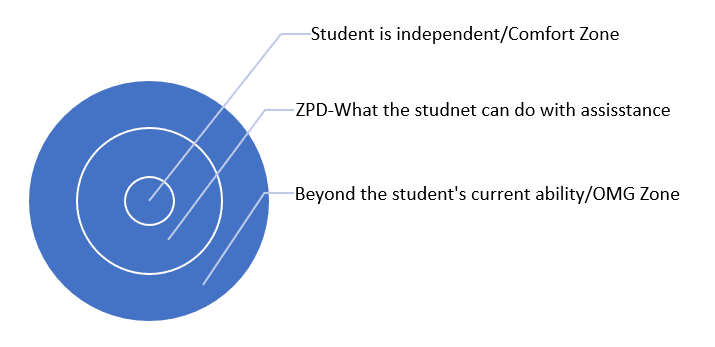
Russian psychologist Leo Vygotsky proposed a concept called the Zone of Proximal Development (ZPD). He defined ZPD as the area just beyond a student’s independent functioning level where he/she may need some assistance but isn’t too far out of reach. To hit the ZPD accurately, one has to assess the student’s knowledge and experiences accurately.

If we haven’t helped children recognize that new learning is challenging and takes effort, we have done them a disservice. When they struggle and haven’t learned that it is a part of learning, we see students push back with comments such as, “It’s too hard,” “I don’t know how to do it,” or “I can’t do it.”

Tasks in the student’s comfort zone don’t take much effort; they just “breeze through them” with little exertion or motivation. If adults raise the bar just beyond the student’s reach, but the student can reach it with minimal support, this develops efficacy, stamina and internal-motivation. Once they’ve reached the bar, there is often a sense of accomplishment and pride with the feeling of, “I did it!”

How do we encourage, support and guide students to “push themselves beyond their comfort zone”? The answers to this question are important, as they can backfire on us and discourage a student or encourage a student to move into their ZPD. In general, there are four approaches/steps:

  • Adults model what it means to be in the ZPD
  • Students imitate the adults
  • Adults fade the support/instruction
  • Adults offer feedback on the student’s effort and performance.

Adults model, guide, encourage and praise authentically. Think out loud about how you persevere. Provide support and guidance, such as, “I know this is hard for you, but let’s start with what you do know.” Or, “I like how you stuck with it even when you wanted to give up.” Finally, “You’re building tolerance and stamina for new learning.” As students become more comfortable in their ZPD, they become more self-motivated and develop greater self-efficacy.

Helping children get there can be a journey, but if the adults in their lives take the time and effort, the pay-off is worth it! When you give children guides to know when they are in each zone, it helps them know what to expect, how to think and what to do. For instance, when students are in their comfort zone you may hear, “I get it (and it is quick), “this is a breeze,” “this won’t take me any time,” or “I’m bored.” Little to no effort is required in this zone. In the ZPD, students may be saying, “I have to think,” “I have to work at this,” “I’ll get some wrong,” “I may get stuck,” or “It’s ok, I know some of it, so maybe I can do more.” It takes effort, thinking and the student feels challenged. And finally, in the OMG Zone, you may hear, “I don’t know where to begin,” “I can’t figure this out,” “I’m spinning my wheels; this makes no sense,” “I don’t care,” and “I’m frustrated and angry.” Adults are doing most of the work at this stage, and the student’s effort doesn’t pay off. He or she is not ready for this learning yet – it’s too far of a stretch. Helping students develop their comfort in their ZPD is paramount to developing self-motivation and self-efficacy.


Resources

Vygotskian Principles on the ZPD and Scaffolding

https://www.open.edu/openlearncreate/pluginfile.php/5904/mod_resource/content/1/Vygotskian_principles_on_the_ZPD_and_scaffolding.pdf

What is the Zone of Proximal Development

https://www.healthline.com/health/zone-of-proximal-development


About the Author

NESCA’s Director of Consultation and Psychoeducational Services Dot Lucci has been active in the fields of education, psychology, research and academia for over 30 years. She is a national consultant and speaker on program design and the inclusion of children and adolescents with special needs, especially those diagnosed with Autism Spectrum Disorder (ASD). Prior to joining NESCA, Ms. Lucci was the Principal of the Partners Program/EDCO Collaborative and previously the Program Director and Director of Consultation at MGH/Aspire for 13 years, where she built child, teen and young adult programs and established the 3-Ss (self-awareness, social competency and stress management) as the programming backbone. She also served as director of the Autism Support Center. Ms. Lucci was previously an elementary classroom teacher, special educator, researcher, school psychologist, college professor and director of public schools, a private special education school and an education collaborative.

Ms. Lucci directs NESCA’s consultation services to public and private schools, colleges and universities, businesses and community agencies. She also provides psychoeducational counseling directly to students and parents. Ms. Lucci’s clinical interests include mind-body practices, positive psychology, and the use of technology and biofeedback devices in the instruction of social and emotional learning, especially as they apply to neurodiverse individuals.


To book a consultation with Ms. Lucci or one of our many expert neuropsychologists, complete NESCA’s online intake form. Indicate whether you are seeking an “evaluation” or “consultation” and your preferred clinician/consultant in the referral line.


Neuropsychology & Education Services for Children & Adolescents (NESCA) is a pediatric neuropsychology practice and integrative treatment center with offices in Newton, Massachusetts, Plainville, Massachusetts, and Londonderry, New Hampshire, serving clients from preschool through young adulthood and their families. For more information, please email info@nesca-newton.com or call 617-658-9800.


Supporting Your Child’s Reading Development – Even During a Pandemic

By | NESCA Notes 2020

By: Alissa Talamo, PhD
Clinical Neuropsychologist, NESCA

Aside from allowing children to access school instruction, the ability to read provides a child with the opportunity to read for pleasure. Reading for pleasure has been shown to support a child’s cognitive development, improve concentration, increase a child’s vocabulary, expand a child’s level of creativity and imagination, improve empathy and provide the child with a deeper understanding of the world around them.

Here are some ideas to support reading for children of all ages:

Pre-school Years:

  • Develop awareness of different sounds
    • For example, have your child look for things around the home that start with a certain letter sound.
    • Play rhyming games.
    • Sing songs.
  • Read the same book to them daily for several days
    • Point out and talk about different vocabulary words each time.
    • Repetition helps build vocabulary and comprehension.

Early School Years:

  • Practice rhyming
    • Say a word and have your child see how many real or made-up words they can say that rhyme with that word.
  • Practice reading
    • Have your child read a page of a “just right” book aloud. Be sure it’s a page they can read with fewer than two or three reading mistakes.
    • Have your student use their finger to ensure they stop and look at every word rather than guess or skip words.
    • Another goal may be to pause whenever they see a period, since many struggling readers miss punctuation.

For All School Grades/Ages:

  • Read books of interest aloud to your child that they may not yet be able to read independently. This will allow your child to enjoy more sophisticated stories and increase their exposure to complex syntax and new vocabulary.
  • Continue to introduce a wide range of books.
  • Let your child’s areas of interest(s) help determine the books you choose.
  • Provide your child with experiences that help increase their background knowledge before reading about a topic, as this will then help with reading comprehension.
  • Ask your child questions about what you’re reading as you go. For younger children, this may involve them retelling the story. Ask older students to identify the key points in the text.

Finally, here is a list of apps and websites that can provide activities and books for you to enjoy as a family.


If you suspect your child may have reading challenges, join Dr. Talamo for a webinar on how to spot those early signs on October 15, 2020, from 2:00-3:00 PM ET.

Register in advance for this webinar: https://nesca-newton.zoom.us/…/WN_4XOoaw4IS-e8xEkHt6ev_A

References

https://www.childrensmn.org/2020/05/13/help-kids-keep-reading-stay-home-order-distance-learning/

https://www.eschoolnews.com/2020/06/30/how-to-effectively-support-struggling-readers-during-distance-learning

https://hr.uw.edu/coronavirus/caring-for-self-and-family/child-care/at-home-learning-resources/

www.commonsensemedia.org/lists/reading-apps-games-and-websites


About the Author:

With NESCA since its inception in 2007, Dr. Talamo had previously practiced for many years as a child and adolescent clinical psychologist before completing postdoctoral re-training in pediatric neuropsychology at the Children’s Evaluation Center.

After receiving her undergraduate degree from Columbia University, Dr. Talamo earned her doctorate in clinical health psychology from Ferkauf Graduate School of Psychology and the Albert Einstein College of Medicine at Yeshiva University.

She has given a number of presentations, most recently on “How to Recognize a Struggling Reader,” “Supporting Students with Working Memory Limitations,” (with Bonnie Singer, Ph.D., CCC-SLP of Architects for Learning), and “Executive Function in Elementary and Middle School Students.”

Dr. Talamo specializes in working with children and adolescents with language-based learning disabilities including dyslexia, attentional disorders, and emotional issues. She is also interested in working with highly gifted children.

Her professional memberships include MAGE (Massachusetts Association for Gifted Education), IDA (International Dyslexia Association), MABIDA (the Massachusetts division of IDA) and MNS (the Massachusetts Neuropsychological Society).

She is the mother of one teenage girl.


To book a consultation with Dr. Talamo or one of our many other expert neuropsychologists, complete NESCA’s online intake form.

Neuropsychology & Education Services for Children & Adolescents (NESCA) is a pediatric neuropsychology practice and integrative treatment center with offices in Newton, Massachusetts, Plainville, Massachusetts, and Londonderry, New Hampshire, serving clients from preschool through young adulthood and their families. For more information, please email info@nesca-newton.com or call 617-658-9800.

Sensory and Motor Strategies to Support Online Learning

By | NESCA Notes 2020

By: Julie Robinson, OT

Director of Clinical Services; Occupational Therapist, NESCA

For many families, this spring’s experience of remote learning and receiving integrated services was challenging, to say the least. As parents begin to think about their children returning to school this fall questions and concerns arise, not only about regression, but also how they will keep their children engaged in online learning.

For children with sensory processing difficulties and/or motor delays, there may be additional challenges in participating in Zoom classes and remote group learning. Some may have difficulty sustaining their attention, settling their body down to sit in front of a screen, managing the visual challenges of a screen, engaging socially or transitioning from a desired task to an academic one. Below are some suggested strategies, from an OT perspective, that may help your child participate in academics with less stress.

Regulation Strategies

The term “regulation” refers to someone’s ability to match their level of alertness (or arousal) to the environment and an activity. Throughout the day, our brain and our bodies are working to either increase or decrease our arousal levels for us to feel regulated and feel “just right” for the situation.

Sometimes children may have trouble with regulating themselves, causing them to experience dysregulation. Dysregulation can look very different depending on the child and can present as low levels of arousal or high level of arousal. This state may make it challenging for the child to be engaged and participate in certain activities, such as online learning. Sensory strategies are ways to help a child either increase arousal or lower arousal to match the needs of the task of online learning.

If a child is experiencing a low level of arousal, or their engine is running low, they should use a sensory strategy to help feel more alert. These include activities that have fast movement and increase heart rate. Taking movement breaks throughout the day is key! This could mean:

  • Jumping Jacks
  • Frog jumps or jumping on a trampoline
  • Playing at an outdoor playground
  • Creating an obstacle course
  • Doing something as simple as taking a walk around the house
  • Using a sit and spin or bouncing on a therapy ball
  • Hanging from a chin-up bar

If a child is experiencing a high level of arousal and their engine is running high, a sensory strategy to help them feel calm is beneficial. Calming strategies tend to be slower and more rhythmic. Ways to help slow down a child’s engine include:

  • “Heavy work,” such as wall push-ups, carrying books, laundry or groceries, wheelbarrow walk or crab walk can do the trick.
  • Yoga poses. Cosmic Kids Yoga on YouTube has some good videos with stories to encourage young children.
  • Creating a “sensory space” that is quiet and free from distractions. This could be a beanbag chair in the corner, a pop-up tent or a space behind a piece of furniture.
  • Using a weighted/heavy blanket or doing work on the ground with pillows underneath while spending time online may help your child to settle his or her body down. Explore the use of a therapy ball, T-stool, Move and Sit cushion or bike pedals that go under a chair to help kids who have difficulty sitting still.
  • Tactile play can be very calming for some children. Make a bucket of beans and hide small objects in it. Working with Playdough, shaving cream or water play can also help.
  • Encourage deep breathing to promote relaxation. Blow soap bubbles with a straw, pretend to blow out candles or blow a pinwheel.
  • An icy drink or popsicle can prove calming for many children. Or allow them to chew gum while learning to facilitate attention.

Strategies for Transition into Online Learning

As the new school year approaches, the change of routine into online learning may be a challenge for some kids. Here are some strategies to help your child adjust:

  • Create a clear schedule for your child that they can follow throughout the day (and make sure to schedule in plenty of breaks!). It may be helpful to use visuals or pictures, similar to a preschool schedule to help structure the time.
  • Make time for movement breaks around the house or outside. It may help to engage in a movement activity for 10-15 minutes before settling into an online class.
  • Use timers when needed (apps that have a visual timer, such as “Time Timer,” can be beneficial).
  • Create a designated space for the child to do their learning and make it their own.
  • Factor in a reward for good participation at the end of a virtual learning session, particularly for a child who seems resistant to remote learning.
  • Practice some brief online learning opportunities before school begins and slowly increase the time incrementally. Conduct Zoom calls with grandparents or other relatives where they read to the child to help maintain their attention. Search on YouTube together for some craft activities to follow along with. Khan Academy and Outschool have all kinds of online lessons for kids of all ages.

 Preventing Visual Fatigue in Online Learning

Along with the many challenges that come with online learning, the constant staring at electronics can cause strain or fatigue on the eyes. Eye strain can present as headaches, blurry vision, tired eyes and neck aches. In this world of virtual learning, it is more important than ever to help kids with strategies to prevent digital eye strain. Here are some strategies:

  • Turn down the screen brightness and turn up the contrast on screen settings.
  • Every 15-20 minutes, make sure to take a break from looking at the screen; set timers if needed. Sometimes placing your hands over your eyes and staring into them with open eyes can help. No matter what the day’s schedule is, always encourage a break from looking at the screen when needed.
  • Zoom in when text is too small.
  • Set limits for recreational use of electronics and avoid electronics before bed.
  • Sit in an ergonomically proper position when using the computer. This means keeping feet flat on the floor, lower back supported and shoulders related, and arms at a right angle.
  • Position the screen to avoid glare and use natural lighting as much as possible.
  • For a child who may have difficulty looking back and forth from a screen to paper, it may help to place the paper on a contrasting background of red or yellow.


About the Author

Julie Robinson is an occupational therapist with over 25 years of experience as a clinician. The work Julie does is integral to human development, wellness and a solid family unit. She particularly enjoys supporting families through the process of adoption and in working with children who are victims of trauma. Julie has extensive experience working with children diagnosed with an Autism Spectrum Disorder (ASD), or who have learning or emotional disabilities. She provides services that address Sensory Processing Disorder (SPD) and self-regulation challenges, as well as development of motor and executive functioning skills.

To book an appointment or to learn more about NESCA’s Occupational Therapy Services, please fill out our online Intake Form, email info@nesca-newton.com or call 617-658-9800.


Neuropsychology & Education Services for Children & Adolescents (NESCA) is a pediatric neuropsychology practice and integrative treatment center with offices in Newton, Massachusetts, Plainville, Massachusetts, and Londonderry, New Hampshire, serving clients from preschool through young adulthood and their families. For more information, please email info@nesca-newton.com or call 617-658-9800.


Encouraging Your Child to Read

By | NESCA Notes 2020

By: Alissa Talamo, PhD
Clinical Neuropsychologist, NESCA

According to Sally Shaywitz M.D., (Audrey G. Ratner Professor of Pediatrics-Neurology; Co-Director, Yale Center for Dyslexia & Creativity), dyslexia is highly prevalent, affecting one in five people, and it represents over 80% of all learning disabilities.

Even when a child does not meet the criteria for dyslexia, they may be a reluctant reader. Children who do not practice reading perform poorly on reading tests relative to children who do read on a regular basis. In addition, reduced reading time results in exposure to fewer words. In general, people use limited vocabulary during conversation compared to the language one is exposed to while reading. As such, a reluctant reader is at risk to have poorly developed vocabulary knowledge compared to same-age peers. They are also less likely to improve their reading skills over time. In her book, Overcoming Dyslexia (2003), Dr. Shaywitz shared the following information:

Through reading, a child is introduced to new concepts and information. In addition, the more a child is exposed to literature, the more likely reading will become an integral part of their daily life. However, how does a parent encourage a reluctant reader? Here are some ideas:

1.  Read a story to your child. Then ask them to talk about their favorite parts of the story.

2. Be ready to read or listen to books over and over again – this is how children learn. FYI – Did you know you can listen to the audio version of Mrs. Piggle-Wiggle (a series of children’s books by Betty MacDonald originally published in 1947) four times in a row on a drive from Boston to Maryland and four times in a row on the way back? I did this with my daughter when she was 4-years-old (she is now 16) and I do believe that, to this day, I can still quote parts of the book!

3.  Surround your children with reading material – this can be comprised of books, graphic novels, or magazines, anything that is of interest to your child.

4.  Let your child take out their own library card and go with you to the library to pick out their own reading material. Allowing a child to read for pleasure is the best way to create a more engaged reader. However, it is also important to make sure the child is choosing an age-appropriate book. A librarian can be very helpful in providing recommendations based on a child’s age and areas of interest.

 5.  Have your children practice reading whenever possible. Baking a cake? Ask them to help you read the instructions (perhaps your hands are too messy to turn the page!). Ordering food? Let them read the menu aloud to a younger sibling.

6. Use technology to your advantage. For example, I worked with a 14-year old boy with dyslexia who was intimidated by the size of the first Harry Potter book. However, I mentioned to him that, on the iPad, the book is no bigger than the iPad itself. He was more willing to carry an I-pad around and read at his own pace. Another advantage is that with an e-reader the child can place as much or as little text on a page as they wish, another way to reduce reading stress.

 7. Take advantage of audiobooks. This technology is a huge benefit for students who struggle to access books that are written for children their age but beyond their current independent reading level. The child can simply listen along, or they can hold the book and follow along with the text while listening. There are several ways to access audiobooks, including downloading them from your library for free!

8. Finally, model good reading habits. If your child never sees you reading, but you insist that they read, they will see reading as a chore rather than a pleasure. If you are not a strong reader, that is ok, you, too, can listen to audiobooks!

While these recommendations will hopefully help your child experience increased reading pleasure and exposure to literature, it is still important to find out the reason why your child is struggling to read. If your child has not had a thorough reading evaluation, you can ask your child’s school to complete such an assessment. In addition, you may wish to have your child evaluated by an independent evaluator.


This blog was previously published in NESCA Notes. 


About the Author:

With NESCA since its inception in 2007, Dr. Talamo had previously practiced for many years as a child and adolescent clinical psychologist before completing postdoctoral re-training in pediatric neuropsychology at the Children’s Evaluation Center.

After receiving her undergraduate degree from Columbia University, Dr. Talamo earned her doctorate in clinical health psychology from Ferkauf Graduate School of Psychology and the Albert Einstein College of Medicine at Yeshiva University.

She has given a number of presentations, most recently on “How to Recognize a Struggling Reader,” “Supporting Students with Working Memory Limitations,” (with Bonnie Singer, Ph.D., CCC-SLP of Architects for Learning), and “Executive Function in Elementary and Middle School Students.”

Dr. Talamo specializes in working with children and adolescents with language-based learning disabilities including dyslexia, attentional disorders, and emotional issues. She is also interested in working with highly gifted children.

Her professional memberships include MAGE (Massachusetts Association for Gifted Education), IDA (International Dyslexia Association), MABIDA (the Massachusetts division of IDA) and MNS (the Massachusetts Neuropsychological Society).

She is the mother of one teenage girl.


To book a consultation with Dr. Talamo or one of our many other expert neuropsychologists, complete NESCA’s online intake form.

Neuropsychology & Education Services for Children & Adolescents (NESCA) is a pediatric neuropsychology practice and integrative treatment center with offices in Newton, Massachusetts, Plainville, Massachusetts, and Londonderry, New Hampshire, serving clients from preschool through young adulthood and their families. For more information, please email info@nesca-newton.com or call 617-658-9800.

Skip to content