NESCA’s Newton, MA location has immediate availability for neuropsychological evaluations. Our MA clinicians specialize in the following evaluations: Neuropsychological; Autism; and Emotional and Psychological, as well as Academic Achievement and Learning Disability Testing.

Visit www.nesca-newton.com/intake for more information or to book an evaluation.

Tag

neuropsychology and education services for children and adolescents Archives - Page 3 of 13 - NESCA

Subscribe to NESCA Notes

The Benefits of Volunteering

By | Nesca Notes 2023

By: Kristen Simon, M.Ed, Ed.S
NESCA Transition Specialist; Psychoeducational Counselor

Volunteering has many benefits for school aged students beginning to participate in transition planning. Many charities and organizations rely on volunteers to continue their services and reach more people. In general, volunteering is a great way to form community connections, achieve a sense of purpose, and boost confidence and self-esteem, all while helping those in need. In thinking about a child’s eventual transition to adulthood, there are many additional hidden benefits to volunteering.

  • Build social connections: Volunteering allows individuals to engage and connect with others in a structured environment. Working with others through task completion towards a common goal is a great way for individuals to form friendships and positive connections in a low-pressure setting.
  • Mental health benefits: Volunteering has been shown to decrease symptoms of depression and loneliness. Many studies have shown that helping others and carrying out altruistic acts makes you happier. In fact, some therapists believe volunteering should be built into a treatment plan in the management of depression.
  • Employment/Transition Skills: Volunteering can help individuals build various skills that will help them in future jobs. Volunteering can help develop leadership skills, one’s ability to work in a team, customer service, following instructions, and punctuality to name a few important pre-employment skills. Volunteering helps individuals learn what type of work they enjoy through exposure to various work activities and work sites. Consistent volunteer work can also help build a young person’s resume.

It may be decided that a good match leads to long-term volunteering; however, it does not have to be a long-term commitment. Consistent volunteering can be a helpful tool in the stressful seasons of the year. Helping others can help to clear your head, reduce stress, and bring a perspective that allows you to engage more fully in your other commitments.

If your child and or family unit is looking for volunteer opportunities, you can start by contacting local animal shelters, senior centers, public libraries, community centers, or food pantries. Other websites to locate family volunteer opportunities in the greater Boston area include:

https://www.doinggoodtogether.org/family-volunteering-boston

https://community-harvest.org/

https://www.cradlestocrayons.org/boston/take-action/volunteer/


About the Author

Kristen Simon, M.Ed, Ed.S, has worked with transition-aged youth as a licensed School Psychologist for more than a decade. She has extensive experience working with children and adolescents with a range of learning and social/emotional abilities. Kristen’s strengths lie in her communication and advocacy skills as well as her strengths-based approach. She is passionate about developing students’ self-awareness, goal-setting abilities, and vision through student-centered counseling, psychoeducation, social skills instruction, and executive functioning coaching. Mrs. Simon has particular interests working with children and adolescents on the Autism spectrum as well as individuals working to manage stress or anxiety-related challenges.

Mrs. Simon is an expert evaluator and observer who has extensive working knowledge of the special education process and school-based special education services, particularly in Massachusetts. She has been an integral part of hundreds of IEP teams and has helped to coordinate care, develop goals, and guide students and their families through the transition planning process. Mrs. Simon further has special expertise helping students to learn about their diagnoses and testing and the IEP process in general. She enjoys assisting students, families, and educators in understanding a student’s disability-related needs as well as the strategies that can help the student to be successful in both academic and nonacademic settings. Mrs. Simon has often been a part of teams in the years when students are initially participating in transition services, and she has helped countless students to build the skills necessary to be part of their first team meetings. She is committed to teaching students—as well as parents and educators—how to participate in student-centered team meetings and the IEP processes.

At NESCA, Mrs. Simon works as a transition specialist and psychoeducational counselor. She works with adolescents, their families, and their school communities to identify and build the skills necessary to achieve their postsecondary goals. Mrs. Simon provides transition assessment (including testing, functional evaluations, and observations), program observations and evaluations, case management and consultation, and individualized counseling and skills coaching.

To schedule an appointment with one of NESCA’s transition specialists, please complete our online intake form

NESCA is a pediatric neuropsychology practice and integrative treatment center with offices in Newton and Plainville, Massachusetts, Londonderry, New Hampshire, and Burlington, Vermont, serving clients from preschool through young adulthood and their families. For more information, please email info@nesca-newton.com or call 617-658-9800.
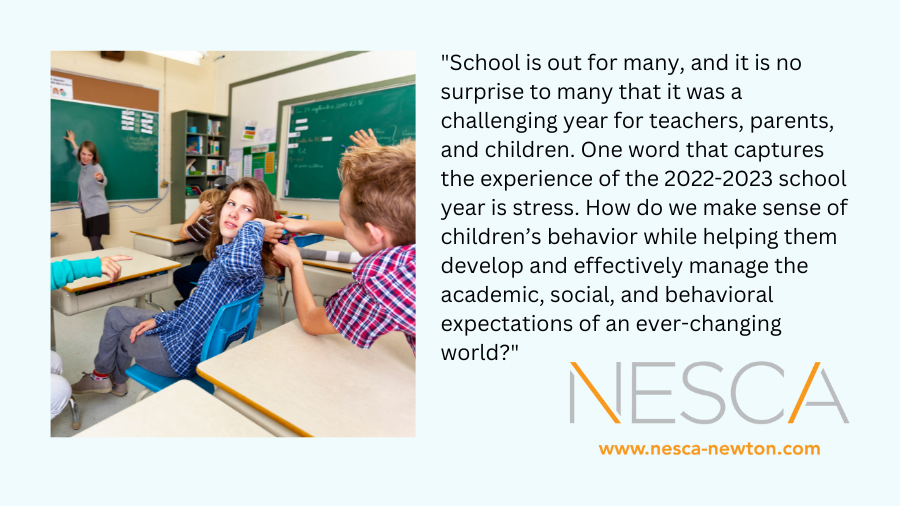
 

Understanding Behavior as Communication

By | Nesca Notes 2023

By: Cynthia Hess, PsyD
Pediatric Neuropsychologist

School is out for many, and it is no surprise to many that it was a challenging year for teachers, parents, and children. One word that captures the experience of the 2022-2023 school year is stress. Teachers were stressed as their students continued to contend with the academic and social deficits that resulted from the pandemic. Many students have struggled to adapt to post-pandemic learning, and incidents of acting out behavior have increased precipitously. How do we make sense of children’s behavior while helping them develop and effectively manage the academic, social, and behavioral expectations of an ever-changing world?

Ross Greene, Ph.D., states, “Children want to do well and would if they could.” Behavior is not just random or meaningless. It serves as a way for children to express their needs, feelings, and experiences, especially when they have not yet developed strong verbal or communication skills. When the demands of the environment exceed a child’s capacity to manage them, they are apt to become stressed, increasing the likelihood that they will act out. Stress is a complex concept that is a response to perceived or anticipated demands or pressures that exceed an individual’s coping abilities.

When stressed, the adrenal glands release cortisol, a stress hormone that helps mobilize energy reserves for the fight-or-flight response. Fear and anxiety also increase individuals’ vulnerability to responding with fight or flight. So, while fear is focused on a specific threat, physiologically, it feels much the same as stress. Behavior is, therefore, a way of communicating that something is amiss. For instance, a child who acts aggressively may express frustration, which is stressful. And a child who becomes withdrawn might feel overwhelmed or anxious, triggering a stress response. Behavior is a natural way for children to communicate their needs, emotions, or reactions to the environment.

Our job as adults is first to check our own emotional status, because if we are tired or stressed, it will likely influence how we respond when children behave badly. Observing and interpreting behaviors with a curious and open mindset is important. By paying attention to patterns, triggers, and context, adults can gain insights into what a child might be trying to communicate through their behavior. Our job is not to manage the behavior but to understand, per Dr. Greene, what skills are lagging or what problems need to be solved, build relationships, and work collaboratively with children to solve problems and change behavior.

Resources:

The Explosive Child, Ross Greene, Ph.D., 2021

Beyond Behaviors; Mona Delahooke, Ph.D., 2019

Podcast: Two Sides of the Spectrum; episode dated April 5, 2023; “Safety as the Foundation for Everything


About the Author

Dr. Cynthia Hess (Cindy), a licensed psychologist, worked as an elementary counselor and school psychologist for 15 years before starting her doctorate. In this role, she developed extensive expertise and aptitude for working with individuals and groups struggling with a wide range of emotional and learning challenges.

She completed her pre-doctoral internship with Rochester Institute of Technology in Rochester, N.Y., where she trained at Hillside Family of Agencies in a therapeutic residential school. At Hillside, she worked with youth ages 5-17 who had experienced complex developmental trauma.

She earned her Psy.D. in Counseling and School Psychology from Rivier University in 2018. Having a strong interest in the impact of social media on children and our culture, her doctoral dissertation studied the impact social media has on social skills development in fourth- and fifth-grade children.

Dr. Hess’s first post-doctoral fellowship was with The Counseling Center of New England, where she provided psychotherapy and family therapy to children ages 5-18 and young adults.

Dr. Hess joined NESCA’s Londonderry, N.H. office in 2019, where she completed a second two-year fellowship in pediatric neuropsychological assessment. Dr. Hess now conducts neuropsychological evaluations as a pediatric neuropsychologist and has a particular interest in working with children and young adults with complex emotional and behavioral profiles. Her experience allows her to guide families in navigating the complicated options for school and other support services.


To schedule an appointment with one of NESCA’s expert neuropsychologists, please complete our online intake form


NESCA is a pediatric neuropsychology practice and integrative treatment center with offices in Newton and Plainville, Massachusetts, Londonderry, New Hampshire, and the greater Burlington, Vermont area, serving clients from preschool through young adulthood and their families. For more information, please email info@nesca-newton.com or call 617-658-9800.


Don’t Let Summertime Chores Deflate Your Vibe

By | NESCA Notes 2021

By: Jessica Hanna MS, OTR/L
Occupational Therapist, NESCA

It’s summertime, and let’s face it, nobody wants to do chores. However, through learning about the benefits of chores in a previous NESCA blog post, we realized all that it can bring to the table to improve child development skills.

Nevertheless, let’s step back. No one ever said chores must be painful or that it is all business and no play. Even when it comes to chores, you can keep it fun! The beauty about chores is that in addition to learning personal responsibility, improved self-care skills, and teamwork, chores help children to incorporate and work on an array of skill sets, such as:

  • Visual perceptional skills
  • Executive functioning skills
  • Bilateral coordination skills
  • Fine motor skills
  • Upper body strength
  • Sensory regulation

Let’s take a closer look at exactly what that can look like:

 Water play chores

Stop what you’re thinking…yes, it can seem messy, but remember the goal: participation, have fun, work on important skills (bilateral coordination, sequencing, crossing midline, integrating sensory input).

  • Cleaning off sandy beach items Works on a 2-step or 3-step sequence and bilateral coordination skills.
    • 2-step sequence (rinse and dry using a water bucket or water hose)
    • 3-step sequence (rinse/dry/store back in beach bag)
  • Watering plants/flowers outside – Provides heavy work and promotes bilateral coordination to hold a water-hose and use upper body strength to maintain arms lifted above gravity.
  • Rinse dishes in the sink – Works on sequencing steps, crossing midline, upper body strength, and bilateral coordination.
  • Wipe down indoor/outdoor tables – Incorporates motor planning, crossing midline, and promotes upper body strength.
  • Clean reachable outdoor/indoor windows – Remember it is not about the streaks left behind. The task promotes and builds on upper body strength, hand strength, motor planning skills, and bilateral coordination skills.

Chores that work on visual perceptual skills

  • Sorting clean laundry – Play assembly line with clean clothes or turn it into a mini obstacle course. Sorting and putting away laundry can be a group effort for everyone in the family!   
    • Matching socks
    • Color coding clothing
    • Sorting by category (pants/shirts/undergarments)
  • Putting away groceries…what is more fun than playing store? – Have your child follow a pre-made visual or written checklist to make sure and check off all items purchased (e.g., create your shopping list on Prime Now or Peapod where visuals are supplied, and you print a copy for your child to follow and mark up).
  • Loading the dishwasher – When it comes to loading the dishwasher, we all know it can be a game of Tetris, even for adults! When helping your child load the dishwasher safely, make sure you place one item first in a designated area and see if they can sort items accordingly.
  • Cleaning up toys on a floor – When asking your child to pick up toys, reduce visual clutter, and be specific.
    • Place a perimeter (e.g., use a hoola hoop/painter’s tape) around toys that need to be picked up.
    • Use a visual checklist to identify toys to be picked up (e.g., books, Legos, crayons).
    • You can turn it into a scavenger hunt game (e.g., find 10 crayons on the floor).

Chores that promote regulation

Heavy work chores/activities help with sensory regulation through the act of pushing, pulling, and lifting heavy items.

  • Laundry – If you have a front-loading reachable washer and dryer, have your child pull wet clothes out of the washer, or dry clothes from the dryer. Or have your child (depending on size and strength) help carry a basket of clean or dirty clothes to and from the washer and dryer. (To add a fun twist, have them walk over items, around items, spin, bend, etc., with a basket of clothes).
  • Vacuuming/Swiffering – Make sure the size is appropriate. Little ones love handheld vacuum cleaners and dust pans if they cannot manipulate larger sized appliances. Handheld vacuums are fun for kids to use in helping to clean out the car! Turn it into a game to vacuum the treasures your car “ate” during those summer outings can be an adventure for them and a bonus for you!
  • Bed making – Have your child sit in the bed and help pull up those sheets and blankets from the sitting position. It’s fun when it fluffs up and gets tricky when you must sneak or crawl out without pulling the sheets down!

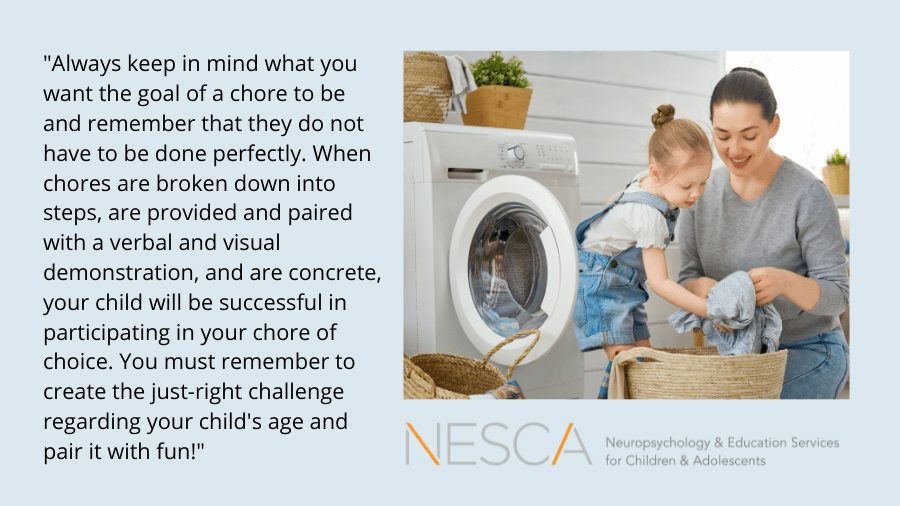
Always keep in mind what you want the goal of a chore to be and remember that they do not have to be done perfectly. When chores are broken down into steps, are provided and paired with a verbal and visual demonstration, and are concrete, your child will be successful in participating in your chore of choice. You must remember to create the just-right challenge regarding your child’s age and pair it with fun!


About the Author

Jessica Hanna has over 10 years of pediatric OT experience in conducting assessments and providing treatment of children and adolescents with a broad range of challenges and disabilities, including autism spectrum disorders, sensory processing disorders, visual impairments, cerebral palsy, executive function deficits and developmental disorders of motor function. Prior to joining NESCA, Jessica trained and worked in a variety of settings, including inpatient and outpatient hospital settings, private practice, schools and homes. She has served on interdisciplinary treatment teams and worked closely with schools, medical staff and other service providers in coordinating care. In addition, Jessica provided occupational therapy services at Perkins School for the Blind and Spaulding Rehabilitation Hospital pediatric inpatient unit, where she conducted comprehensive evaluations and interventions for children with a broad range of presentations.


To book an appointment or to learn more about NESCA’s Occupational Therapy Services, please fill out our online Intake Form, email info@nesca-newton.com or call 617-658-9800.


Neuropsychology & Education Services for Children & Adolescents (NESCA) is a pediatric neuropsychology practice and integrative treatment center with offices in Newton, Massachusetts, Plainville, Massachusetts, and Londonderry, New Hampshire, serving clients from preschool through young adulthood and their families. For more information, please email info@nesca-newton.com or call 617-658-9800.


Welcoming Renee Cutiongco Folsom, Ph.D., Pediatric Neuropsychologist

By | Nesca Notes 2023

By: Jane Hauser
Director of Marketing & Outreach, NESCA

NESCA recently welcomed Pediatric Neuropsychologist Renee Cutiongco Folsom, Ph.D. to its clinical staff. Dr. Cutiongco Folsom brings a wealth of experiences and vast knowledge in assessing and diagnosing autism spectrum disorders (ASD) as well as conducting international evaluations. Take a moment to learn more about Dr. Cutiongco Folsom from my interview with her. 

Tell us about your background and how you got to NESCA.

I grew up in the Philippines. I started my career as a preschool teacher there for two years. At that point, I knew I wanted to work with children. I eventually got my master’s degree in psychology and took a neuropsychology class with a professor who was trained at Boston Children’s Hospital. I immediately fell in love with neuropsychology. I then came to the U.S. to pursue my Ph.D. and did my fellowship in neuropsychology at UCLA. I planned to go back to the Philippines but met my husband here in the U.S. and decided to stay here.

Since I did not go back to the Philippines, I was interested in practicing neuropsychology internationally, which I was able to do in Baltimore at Johns Hopkins. I was interested in the work NESCA has been doing internationally. The opportunity to work with a talented team at NESCA and the ability to do international evaluations was the right move for me.

What do you mean by looking beyond the data when conducting neuropsychological evaluations?

I refer to employing the “Boston Process Approach” in my evaluations and assessments because my mentor in the Philippines was trained in this approach when she did her postdoctoral work at Boston Children’s Hospital. She tried to ingrain this methodology in her trainees. What it means is that when we look at the data, we do not just look at a score. There is so much more to a child’s story than a number. As neuropsychologists, we are always looking at how the child comes up with an answer to a test. It is possible for a child to get a low score on a test of reproducing designs using blocks, for example, because the child threw or even ate the blocks! We must decipher what is behind the process by which the child produced the answer. This critical information falls outside of the data or what a score is. It tells us how the child learns, and what will help them at school, at home, and in their day-to-day life. This is the approach I take when I work with a child. I take a LOT of notes! I look to see what the child says and does, whether he or she is paying attention, and note other behaviors throughout the evaluation process. Then, I analyze all the data and look for patterns and discrepancies across various tests and measures.

When we see the data associated with the performance on a test, we must ask why, for instance, they achieved a low score. What other factors are at play? Is it anxiety or a visual-motor issue? What we observe throughout the evaluation can guide us to administer some tests that may not have been initially scheduled. Our knowledge, experiences, and careful observations help us to tease apart where a score came from and what it is telling us. We end up with a fuller picture of both the strengths and vulnerabilities of a child or adolescent.

What kind of international work were you doing previously?

After I completed my fellowship in neuropsychology at UCLA, my first job was with the Kennedy Krieger Institute at Johns Hopkins. Because so many families go there from other countries seeking answers, the organization assembled interdisciplinary teams to serve international patients. We conducted week-long intensive and comprehensive evaluations involving a neurologist, neuropsychologist, occupational therapist, speech-language pathologist, and social worker who could help them access resources in their home country. At the end of the week of intense evaluation, we came together as a team to make a diagnosis, if warranted, and provide recommendations for interventions. It was a challenging and intense program because we needed to develop our impressions immediately. And we often saw some of the most difficult and complex cases because the families had already exhausted all the resources available to them in their home countries before traveling overseas.

What do you find most rewarding about being a pediatric neuropsychologist?

I have been practicing neuropsychology for a long time. I chose to work in pediatric neuropsychology vs. adult because we can do so much more with children. We have a particularly good chance of making a bigger impact on their lives at such an early age.

What I find most rewarding is to have patients come back for a follow-up evaluation, and I can see how the child has progressed. Their parents often thank me for providing them with a diagnosis and helping them to access resources and attest how far their child has come. Working alongside families to change the trajectory of a child’s life is very powerful.

 You specialize in autism spectrum disorders (ASD). How do you make a diagnosis and differentiate ASD from its related challenges?

You rely on years of training, your knowledge and expertise, trust your clinical judgment, and factor in the wisdom of colleagues when needed. This is how you make meaningful conclusions and diagnoses that impact a child’s life.

What do you feel makes NESCA a unique environment and practice?

The beauty of a practice like NESCA is that we get a broad spectrum of clients who present with different challenges or diagnoses. We get to see a range of ages and draw clients from all over the New England region as well as internationally. That variety enriches your perspective and gives more insight into your clinical work.

I have been at NESCA for about a month, and they take collaboration to heart. My colleagues at NESCA are a giving group of professionals when it comes to sharing experiences and knowledge. The clinicians are humble, candid, open, and eager to help children, adolescents, and young adults. As a pediatric neuropsychologist, I also get to collaborate with transition specialists, educational consultants, OTs, SLPs, and more. The multidisciplinary approach, learning from other perspectives, is a refreshing addition to my work experience.


About the Author

Dr. Renee Cutiongco Folsom, Ph.D. has been working with families in the greater Boston area since 2015. Prior to this, she was on staff at Johns Hopkins University and trained at the University of California, Los Angeles (UCLA). She provides comprehensive neuropsychological evaluations of children, adolescents, and young adults who have learning, behavioral, and socio-emotional challenges. Her areas of expertise include Autism Spectrum Disorder and other conditions that usually co-occur with this diagnosis; Attention-Deficit/Hyperactivity Disorder; Dyslexia and other Specific Learning Disabilities; and Anxiety/Depression. She thinks that the best part of being a pediatric neuropsychologist is helping change the trajectory of children’s lives.

To schedule an appointment with one of NESCA’s pediatric neuropsychologists, please complete our online intake form

NESCA is a pediatric neuropsychology practice and integrative treatment center with offices in Newton and Plainville, Massachusetts, Londonderry, New Hampshire, and the greater Burlington, Vermont area, serving clients from preschool through young adulthood and their families. For more information, please email info@nesca-newton.com or call 617-658-9800.


Summer Reading Ideas

By | NESCA Notes 2022

By: Alissa Talamo, PhD
Pediatric Neuropsychologist, NESCA

Research demonstrates that children lose reading skills over the summer break. A 2020 study found that students in 3rd to 5th grades lost, on average, about 20 percent of their school-year gains in reading during the summer. So, how do we encourage a reluctant reader to read during the summer? There are several fun opportunities that allow your child to read a book of their choice and earn prizes at the same time!

For example:

www.scholastic.com/site/summer-reading.html Scholastic Books offers a program that encourages children to “read books and stories; attend author events; interact with their favorite characters; play book-based games and activities; join dance parties; and more!” Children can read any book of their choice. They can also download and print a report of their reading progress. Additionally, by keeping Reading Streaks™, your child will help unlock a donation of 100,000 books from Scholastic to Save the Children, providing books to children in rural America with limited or no access to books.

Bookworm Wednesdays | Showcase Cinemas According to their website, Bookworm Wednesdays is “A fun and rewarding summer reading program developed to encourage young children to read during the summer months.” Bookworm Wednesdays allows children to earn free movie admission to a select children’s film when they present a book report at a participating Cinema de Lux, Showcase, or Multiplex Cinemas box office. There are several local participating sites, including Patriot Place and Legacy Place. (Parents, as well as children under the age of 6, receive free admission and do not need to submit a book report).

www.barnesandnobleinc.com This is an opportunity for your child to earn free books! Your child can read any 8 books and complete the reading journal available at the Barnes & Noble website. Then your child brings the completed reading journal to any participating Barnes & Noble bookstore and chooses their free book from the books listed on the Reading Journal list (see the website for the list of titles available to choose from this summer). Free reward books must be collected from a local Barnes & Noble store during July and August.

Finally, check out your local library for programs! Most local libraries have reading incentive programs that children can participate in all summer long.

Other ideas include…

  • Have your child read a book that has been made into a movie (If the book is above their reading level, read the book to them or allow them to listen to the book as an audio recording). Once the child has completed their reading, enjoy a family movie night with popcorn and more.
  • Have your child read about a specific topic or place and then plan a field trip. For example, an older student could read “Little Women” and then visit Louisa May Alcott’s house in Concord, MA, or watch the 2019 version of the movie and then visit Lyman Estate in Waltham where some of the filming took place!
  • Allow your child to pick their own books. Allow them to choose from subjects of interest to them (parent-approved, of course), as they are more likely to read something they picked! Also, allow them to choose books from different book types (e.g., paperback, graphic novel, audiobooks).
  • If you are going on a family vacation, encourage your child to read books about the area (fact or fiction) and plan to visit some of the places mentioned in the book. Day trips are also encouraged. Your child could read a book about animals and then visit a local zoo or aquarium.

If you are unsure of which books are at your child’s reading level, many libraries break down books by grade level. Ultimately, summer reading should not be so easy that it is boring, but it also should not be too difficult, as that can cause frustration. Allowing children to pick out books at their independent reading level is best. Research has found that children read more and learn best when they are allowed to select the books they read.

Happy Summer Reading!


About the Author

With NESCA since its inception in 2007, Dr. Talamo had previously practiced for many years as a child and adolescent clinical psychologist before completing postdoctoral re-training in pediatric neuropsychology at the Children’s Evaluation Center.

After receiving her undergraduate degree from Columbia University, Dr. Talamo earned her doctorate in clinical health psychology from Ferkauf Graduate School of Psychology and the Albert Einstein College of Medicine at Yeshiva University.

She has given a number of presentations, most recently on “How to Recognize a Struggling Reader,” “Supporting Students with Working Memory Limitations,” (with Bonnie Singer, Ph.D., CCC-SLP of Architects for Learning), and “Executive Function in Elementary and Middle School Students.”

Dr. Talamo specializes in working with children and adolescents with language-based learning disabilities including dyslexia, attentional disorders, and emotional issues. She is also interested in working with highly gifted children.

Her professional memberships include MAGE (Massachusetts Association for Gifted Education), IDA (International Dyslexia Association), MABIDA (the Massachusetts division of IDA) and MNS (the Massachusetts Neuropsychological Society).

She is the mother of one teenage girl.


To book a consultation with Dr. Talamo or one of our many other expert neuropsychologists, complete NESCA’s online intake form.

Neuropsychology & Education Services for Children & Adolescents (NESCA) is a pediatric neuropsychology practice and integrative treatment center with offices in Newton, Massachusetts, Plainville, Massachusetts, and Londonderry, New Hampshire, serving clients from preschool through young adulthood and their families. For more information, please email info@nesca-newton.com or call 617-658-9800.

Getting to Know NESCA’s Kristen Simon, M.ED, ED.S

By | Nesca Notes 2023

By: Jane Hauser
Director of Marketing & Outreach, NESCA

Although NESCA Transition Specialist and Psychoeducational Counselor Kristen Simon, M.Ed, Ed.S, has been with NESCA for several months, we are thrilled to announce that she will be joining NESCA on a full-time basis early this fall. Take a few minutes to learn more about her past experience and how she shares that experience with her students here at NESCA.  

Tell us about your educational and career path.

I studied psychology and counseling in undergrad and always knew I was interested in working with children and adolescents in a school setting. I entered graduate school right out of college and got my masters in School Psychology. I wanted to be able to advocate for children with disabilities and help provide students support in the moment they needed it most. When I finished my graduate work, I started as a school psychologist in a middle school and enjoyed my 10+ years in that role very much.

During my 10+ years at the middle school level, I spent a lot of time helping students understand themselves and their disability(ies). My work was strengths-based and focused on skill-building and self-advocacy. Middle school is a difficult time for any student. It was really rewarding to be able to do individual work and skill development with this age group. This is what really drew me to counseling students on social skills, learning disabilities, etc. School psychology offers a lot of variety in the day-to-day landscape.

In your 10+ years as a school psychologist, did you see any notable patterns or changes with students?

I think all educators have noticed a significant increase in anxiety and depression among school-aged students, and we certainly saw a shift in the increased need for support at the middle school I was working at. I was lucky to work in a school that responded to this shift by hiring additional counseling staff, creating therapeutic programs, and ensuring that mental health curriculums were provided to all students.

I also shifted the way I worked with students over the course of my time as a School Psychologist and helped students see themselves as a whole person with long-term goals. Helping students learn how to set goals, make informed decisions for themselves, and communicate and self-advocate across settings became the focus for almost all students I worked with. Many students in middle school had never been to one of their IEP meetings and had limited understanding of their disability(ies) and IEP goals, or why they were working with their school service providers. In Massachusetts, students who are 14 and older are invited to be part of their Team Meetings and IEP planning, so a big part of my job was helping to prepare students to participate. Most of the students I worked with initially were only focusing on their latest math test or English project, not looking at themselves as a person with a future to look toward and plan for. I noticed that they were more interested in the transition to 9th grade than the longer-term transition to adulthood and postsecondary plans. This is how I became interested in transition work.

How did you hear about NESCA?

I did not know too much about all NESCA’s services, but I certainly had read many neuropsychological evaluation reports written by NESCA clinicians for my students. I wasn’t as familiar with NESCA’s transition services and how in-depth they are. I learned that transition covers a lot of territory, and NESCA offers a huge range of those transition services, including the gaps in the services that schools can typically offer.

How do you explain your role as a Transition Specialist and Psychoeducational Counselor?

Transition services can encompass a lot of different things. Our team does transition assessments that look at a student’s skills across the areas outlined by IDEA: education/training, independent living, employment, and community participation. I do a lot of coaching with students to help them understand themselves, develop a vision, and then support them in goal-setting, self-determination, and advocacy. Psychoeducation can also encompass a range of services including self-awareness, understanding their disability and what it means to them, learning about the brain, developing regulation or social skills, and helping students participate in their IEP process.

How do you help prepare students to be part of their own IEP process?

Often, as a school counselor and now at NESCA, I help prepare students for their first IEP meeting in middle school, or whenever they begin attending. Some students have a clear vision for themselves, and I help them with their involvement and their delivery in their IEP meeting. Other students haven’t thought about postsecondary goals at all. The approach is individualized and very different for each student.

Some of the transition specialists at NESCA were involved in the IEP Improvement Project. What are your thoughts about the new Massachusetts IEP format?

I am thrilled that some of my fellow colleagues here at NESCA were involved in the development of the new IEP format. I’m excited about the new IEP format. The new format is intended to be much more student-driven. My hope is that student voices do become a bigger part of the conversation than they are now. Currently, students may say a little here or there in their team meetings. I hope their voices and visions really become a much larger part of the IEP meeting and overall plan.

What has been the most eye-opening finding for you since joining NESCA?

The most eye-opening and truly difficult realization for me has been how many parents and caregivers struggle to support their child after High School or don’t know the resources that are available to them (or what is no longer available to them). We understand that many families are operating “in the moment” and trying to support their teen in getting through High School but transition services and the IEP process are supposed to lead toward specific goals after high school and involve linkage with community services. Graduating from High School and special education tends to be a smoother process and less overwhelming if we can work with students and families to plan for this transition as early as middle school, if not beforehand.

What is the most rewarding aspect of your role with NESCA?

It’s always rewarding to help students find their voice and develop personalized goals. It has also been really rewarding to work with families to make a complicated and often overwhelming process more manageable for them.

What advice do you have for early middle school parents and caregivers?

Middle school is a great time for parents and caregivers to have conversations with their child around their IEP so they can be part of the educational decisions being made. Self-determination is a huge part of being able to succeed after high school. Middle school is a great time to help students think about and try to explain their longer-term goals and to identify the skills, actions, and steps needed to reach those goals. It’s also a great time for families to help their early-middle schooler present and participate in IEP team meetings.


About the Author

Kristen Simon, M.Ed, Ed.S, has worked with transition-aged youth as a licensed School Psychologist for more than a decade. She has extensive experience working with children and adolescents with a range of learning and social/emotional abilities. Kristen’s strengths lie in her communication and advocacy skills as well as her strengths-based approach. She is passionate about developing students’ self-awareness, goal-setting abilities, and vision through student-centered counseling, psychoeducation, social skills instruction, and executive functioning coaching. Mrs. Simon has particular interests working with children and adolescents on the Autism spectrum as well as individuals working to manage stress or anxiety-related challenges.

Mrs. Simon is an expert evaluator and observer who has extensive working knowledge of the special education process and school-based special education services, particularly in Massachusetts. She has been an integral part of hundreds of IEP teams and has helped to coordinate care, develop goals, and guide students and their families through the transition planning process. Mrs. Simon further has special expertise helping students to learn about their diagnoses and testing and the IEP process in general. She enjoys assisting students, families, and educators in understanding a student’s disability-related needs as well as the strategies that can help the student to be successful in both academic and nonacademic settings. Mrs. Simon has often been a part of teams in the years when students are initially participating in transition services, and she has helped countless students to build the skills necessary to be part of their first team meetings. She is committed to teaching students—as well as parents and educators—how to participate in student-centered team meetings and the IEP processes.

At NESCA, Mrs. Simon works as a transition specialist and psychoeducational counselor. She works with adolescents, their families, and their school communities to identify and build the skills necessary to achieve their postsecondary goals. Mrs. Simon provides transition assessment (including testing, functional evaluations, and observations), program observations and evaluations, case management and consultation, and individualized counseling and skills coaching.

To schedule an appointment with one of NESCA’s transition specialists, please complete our online intake form

NESCA is a pediatric neuropsychology practice and integrative treatment center with offices in Newton and Plainville, Massachusetts, Londonderry, New Hampshire, and Burlington, Vermont, serving clients from preschool through young adulthood and their families. For more information, please email info@nesca-newton.com or call 617-658-9800.


How Can a Neuropsychological Evaluation Help?

By | Nesca Notes 2023

By: Maggie Rodriguez, Psy.D.
Pediatric Neuropsychologist, NESCA

Recently I met with a family seeking a neuropsychological evaluation for their daughter. After talking about their reasons for pursuing testing, the parents asked me, “So…do you think this will help? Is this type of testing what our child needs?” It’s an important question and one I’m sure many families wonder about but don’t always ask. A comprehensive neuropsychological evaluation can be of tremendous value, but the process requires time and energy as well as a financial investment, so it makes sense to consider this question carefully.

Though it may be surprising to hear this coming from a neuropsychologist, the answer to the question of whether to have a child evaluated is not always clear-cut. For instance, parents sometimes wonder if there is practical benefit to seeking testing when a child or adolescent already has a diagnosis but there are questions about its accuracy. Consider the following scenario as an example. A child with issues regulating attention and with weaknesses in social skills has a diagnosis of Attention-Deficit/Hyperactivity Disorder (ADHD). Her therapist has raised the question of whether a diagnosis of Autism Spectrum Disorder (ASD) might better explain the issues the child is facing. Inattention can be present in both ADHD and ASD, and both conditions can result in social difficulties. Especially if a child is already receiving appropriate services, does the diagnostic label matter, and is it worth pursuing formal assessment?

There are valid arguments to be made in favor of seeking an evaluation in this type of situation and valid arguments to support choosing not to invest in an assessment.  In such a scenario, I would encourage a family to consider the following questions:

  • Will diagnostic clarification address unanswered questions that previous diagnoses have not fully addressed?

Sometimes an established diagnosis partially explains a child’s issues but there are lingering questions about other aspects of a child’s presentation. If a different or additional diagnosis could fill in the gaps, it may be worth assessing.

  • Could testing help identify your child’s unique pattern of strengths and weaknesses?

Especially when an existing diagnosis has been made without testing (for instance by a therapist or physician), there may be important aspects of a child’s neuropsychological profile that have not yet been identified. For instance, individuals with Autism Spectrum Disorder share certain key features, but they also differ in significant ways. A diagnosis alone cannot capture the nuances of an individual child’s strengths and weaknesses, while a full neuropsychological evaluation can more fully describe a child on an individual level.

  • Will understanding the root of the problem help guide recommendations?

NESCA’s clinic director compares a child’s observable difficulties to the “tip of an iceberg.” There are inevitably hidden underlying factors, and discerning these can be important in determining how to address the issues that are visible on the surface. For example, problems with social interactions can arise from deficits in social communication (e.g., difficulty interpreting facial expressions), as seen in Autism. Alternatively, a child with ADHD may encounter social challenges because they have trouble paying attention to relevant social cues or because impulsivity leads them to behave inappropriately. Someone with social phobia may have few relationships because their anxiety drives them to avoid social interactions. Effective intervention in each of these cases requires a nuanced approach that targets not just the surface issue but the factors underlying it.

  • Will establishing a particular diagnosis open up opportunities for additional support and resources that may be important?

In some cases, there are specific resources that are available to individuals with particular diagnoses. For instance, in Massachusetts, individuals with a diagnosis of Autism Spectrum Disorder or Intellectual Disability may be eligible to receive services through the Department of Developmental Services. If qualifying for such services could be beneficial, diagnostic clarification may be important.

More broadly, the internet and social media have allowed people with shared diagnoses to connect in new ways. The opportunity to connect with others experiencing similar difficulties can be invaluable, and online communities can provide a sense of support, educational information, and practical resources for children and parents alike.

The answers to these questions and to the bigger question of whether to seek neuropsychological evaluation will be different for different families. There are many factors to weigh in making the decision to seek testing. If you are considering an assessment for your child and need additional information to make an informed decision, answers to frequently asked questions about neuropsychological evaluation can be found on NESCA’s website.


About the Author

Maggie Rodriguez, Psy.D., provides comprehensive evaluation services for children, adolescents, and young adults with often complex presentations. She particularly enjoys working with individuals who have concerns about attention and executive functioning, language-based learning disorders, and those with overlapping cognitive and social/emotional difficulties.

Prior to joining NESCA, Dr. Rodriguez worked in private practice, where she completed assessments with high-functioning students presenting with complex cognitive profiles whose areas of weakness may have gone previously undiagnosed. Dr. Rodriguez’s experience also includes pre- and post-doctoral training in the Learning Disability Clinic at Boston Children’s Hospital and the Neurodevelopmental Center at MassGeneral for Children/North Shore Medical Center. Dr. Rodriguez has spent significant time working with students in academic settings, including k-12 public and charter school systems and private academic programs, such as the Threshold Program at Lesley University.

Dr. Rodriguez earned her Psy.D. from William James College in 2012, where her coursework and practicum training focused on clinical work with children and adolescents and on assessment. Her doctoral thesis centered on cultural issues related to evaluation.

Dr. Rodriguez lives north of Boston with her husband and three young children.  She enjoys spending time outdoors hiking and bike riding with her family, practicing yoga, and reading.


To book a consultation with Dr. Rodriguez or one of our many other expert neuropsychologists, complete NESCA’s online intake form.

Neuropsychology & Education Services for Children & Adolescents (NESCA) is a pediatric neuropsychology practice and integrative treatment center with offices in Newton and Plainville, Massachusetts, Londonderry, New Hampshire, and staff in greater Burlington, Vermont, serving clients from preschool through young adulthood and their families. For more information, please email info@nesca-newton.com or call 617-658-9800.

Individualized Education Program or 504 Plan? How do I Know which is Right for My Child?

By | Nesca Notes 2023

By: Alissa Talamo, PhD
Pediatric Neuropsychologist, NESCA

Both an Individualized Education Program (IEP) and a 504 Plan can provide supports for students in grades K-12 who are struggling in school, to ensure the student is able to receive “free and appropriate public education (FAPE).” However, not all students who are struggling will qualify for these supports.

An IEP provides a plan for students who require special education supports and direct related services to meet their unique needs, and these supports need to be provided at no cost to the family.

There are two requirements a child must meet to qualify for an IEP. The student must have one or more of the 13 disabilities noted in The Individuals With Disability Education Act (IDEA), which is the federal special education law for children with disabilities. Some of the disabilities listed include a Specific Learning Disability, autism (ASD), other health impairment (e.g., AD/HD), speech or language impairment, or an intellectual disability (for a full list of the 13 disabilities, see https://www.doe.mass.edu › sped › definitions). The second requirement is that the disability must affect the child’s educational performance and/or ability to learn and benefit from the general education curriculum, meaning the child must need specialized instruction to make progress in school. The IEP sets learning goals and describes the services the school will provide. Some components the IEP must include are: how the child is currently performing in school (e.g., academic and functional performance) along with annual education goals and services the child will receive. Additionally, the school will track progress toward those goals and the IEP team must review the IEP at least once a year.

A 504 Plan stems from Section 504 of the Rehabilitation Act of 1973. This is a federal civil rights law to stop discrimination against people with disabilities and requires the school to provide support and remove barriers for a student with a disability. A 504 Plan provides services and changes to the learning environment to enable students to learn alongside their peers. As with an IEP, a 504 plan is provided at no cost to families. There are two requirements to be eligible for a 504 Plan. A child has any disability, and the disability must interfere with the child’s ability to learn in a general education classroom. According to Section 504, the disability must substantially limit one or more basic life activities. Because the definition of disability is broader on a 504 Plan, a child who does not qualify for an IEP might still be eligible for a 504 Plan. In general, a 504 Plan is a good option for students with disabilities who do not require specialized instruction but do need specific accommodations to receive FAPE (e.g., extended time on tests, larger print text, priority seating close to the front of the classroom).

To determine if your child would qualify for an IEP or 504, it is important that they receive a thorough evaluation (cognitive, educational, functional, social/emotional, etc.) to determine their level of need. This evaluation can be completed through the public school system or an independent evaluator.

Sources:

www.understood.org

https://www.mpgfirm.com/back-to-basic-rights-iep-vs-504/


About the Author

With NESCA since its inception in 2007, Dr. Talamo had previously practiced for many years as a child and adolescent clinical psychologist before completing postdoctoral re-training in pediatric neuropsychology at the Children’s Evaluation Center.

After receiving her undergraduate degree from Columbia University, Dr. Talamo earned her doctorate in clinical health psychology from Ferkauf Graduate School of Psychology and the Albert Einstein College of Medicine at Yeshiva University.

She has given a number of presentations, most recently on “How to Recognize a Struggling Reader,” “Supporting Students with Working Memory Limitations,” (with Bonnie Singer, Ph.D., CCC-SLP of Architects for Learning ), and “Executive Function in Elementary and Middle School Students.”

Dr. Talamo specializes in working with children and adolescents with language-based learning disabilities including dyslexia, attentional disorders, and emotional issues. She is also interested in working with highly gifted children.

Her professional memberships include MAGE (Massachusetts Association for Gifted Education), IDA (International Dyslexia Association), MABIDA (the Massachusetts division of IDA) and MNS (the Massachusetts Neuropsychological Society).

She is the mother of one college-aged daughter.


To book a consultation with Dr. Talamo or one of our many other expert neuropsychologists, complete NESCA’s online intake form.

Neuropsychology & Education Services for Children & Adolescents (NESCA) is a pediatric neuropsychology practice and integrative treatment center with offices in Newton and Plainville, Massachusetts, Londonderry, New Hampshire, and Burlington, Vermont, serving clients from preschool through young adulthood and their families. For more information, please email info@nesca-newton.com or call 617-658-9800.

Preparing Students for First Team Meetings and the Transition to High School

By | Nesca Notes 2023

By: Kristen Simon, M.Ed, Ed.S
Transition Specialist

With Spring right around the corner, eighth grade students will begin to prepare for a transition to a new building. For students on IEPs, this means shifting to a new team and planning for supports that will help your child adapt and thrive in a new setting with different adults and expectations. Eighth grade IEP transition meetings tend to begin in March or April after students have had exposure to courses that are required and available in their ninth grade year. For many eighth grade students in special education, the transition meeting is one of the first IEP meetings they are invited to participate in. How can we help middle school students to prepare for and engage in this meeting?

Participating in IEP meetings is a great way for eighth grade students to build self-determination skills. Self-determination is a combination of skills, knowledge, and beliefs that help an individual gain autonomy and allows them to set their own goals, make thoughtful decisions, and manage their own life. Research has shown that for students with disabilities, this set of skills leads to both more positive adult outcomes (employment, higher wages, better living situation) and a higher quality of life (increased satisfaction, community engagement, independence, and productivity) Wehmeyer & Schwarz, 1997. For the middle school student craving independence, this can be the perfect time to build and strengthen this set of skills. We can prepare students to engage in their IEP meeting in a multitude of ways.

  1. Familiarize your child with their IEP, including their disability, what teachers do to help in (or outside of) the classroom as well as the goals that they have been working on with special education teachers or related personnel.
  2. Ask for the agenda ahead of time and review how the meeting will run and what adults will be present. It might be helpful for special educators/related service providers to demonstrate a “mock IEP meeting” to allow a safe space for students to ask questions and plan for or rehearse how they’d like to participate.
  3. Use visual maps or outlines to summarize their current transition planning forms. Their vision will help them develop the questions they’d like to ask high school staff. Examples of these types of questions might include: What classes in robotics or coding are available, and when can I take those? Is there a debate team, and how can I be a part of that? How do I join one of the after-school clubs? How do I make sure that a digital art class fits in my schedule?

These same maps can be used to discuss what kinds of academic support will they need with the type and level of classes they are
choosing. While students will have academic supports built into their service delivery, it can also be helpful to know about any additional high school academic supports, such as a writing center, student mentoring, career exploration opportunities, etc.

  1. If your child tends to have difficulty adapting to or has anxiety around change, students should work with team members to brainstorm supports that might be helpful in making the transition to high school more successful. Cueing students to think back to previous changes or first days of school can help them initiate this task. Students might request to meet with their point person before the end of their eighth grade year, participate in a small group or personalized tour of the new building/campus, identify someone who can help the student navigate the cafeteria on the first few days or maybe identify an alternative lunch space. Additionally, students might want to ask if there are programs happening over the summer in the high school building that will help the student acclimate to their new school before the start date.

After the transition meeting is over, it can be helpful for students and family members to create a chart that outlines the student’s questions and who their point person would be. For example, if I have a question about my schedule, I should find Mr./Mrs. ______. This chart should also include their email and list where their office can be found in the building. Empowering students to use this reference guide with guiding questions even before the year ends will further strengthen both their self-advocacy and self-determination skills.


About the Author

Kristen Simon, M.Ed, Ed.S, has worked with transition-aged youth as a licensed School Psychologist for more than a decade. She has extensive experience working with children and adolescents with a range of learning and social/emotional abilities. Kristen’s strengths lie in her communication and advocacy skills as well as her strengths-based approach. She is passionate about developing students’ self-awareness, goal-setting abilities, and vision through student-centered counseling, psychoeducation, social skills instruction, and executive functioning coaching. Mrs. Simon has particular interests working with children and adolescents on the Autism spectrum as well as individuals working to manage stress or anxiety-related challenges.

Mrs. Simon is an expert evaluator and observer who has extensive working knowledge of the special education process and school-based special education services, particularly in Massachusetts. She has been an integral part of hundreds of IEP teams and has helped to coordinate care, develop goals, and guide students and their families through the transition planning process. Mrs. Simon further has special expertise helping students to learn about their diagnoses and testing and the IEP process in general. She enjoys assisting students, families, and educators in understanding a student’s disability-related needs as well as the strategies that can help the student to be successful in both academic and nonacademic settings. Mrs. Simon has often been a part of teams in the years when students are initially participating in transition services, and she has helped countless students to build the skills necessary to be part of their first team meetings. She is committed to teaching students—as well as parents and educators—how to participate in student-centered team meetings and the IEP processes.

At NESCA, Mrs. Simon works as a transition specialist and psychoeducational counselor. She works with adolescents, their families, and their school communities to identify and build the skills necessary to achieve their postsecondary goals. Mrs. Simon provides transition assessment (including testing, functional evaluations, and observations), program observations and evaluations, case management and consultation, and individualized counseling and skills coaching.

To schedule an appointment with one of NESCA’s transition specialists, please complete our online intake form

Neuropsychology & Education Services for Children & Adolescents (NESCA) is a pediatric neuropsychology practice and integrative treatment center with offices in Newton and Plainville, Massachusetts, Londonderry, New Hampshire, and Burlington, Vermont, serving clients from preschool through young adulthood and their families. For more information, please email info@nesca-newton.com or call 617-658-9800.


What Could It Be: ADHD or Anxiety?

By | Nesca Notes 2023

By: Cynthia Hess, PsyD
Pediatric Neuropsychologist

Many of my clients find NESCA after experiencing years of difficulty, whether at school, at home, or in the community. They have often been evaluated previously but still do not clearly understand what underlies their challenges. When clients struggle for years, they have often received a variety of diagnoses. The DSM-V provides diagnostic criteria that label a person’s experience due to developmental concerns, learning differences, or psychiatric problems. In essence, diagnoses are a simplified way to describe complex, ever-changing, multi-layered differences and are difficult to pin down with a single term. One of the most challenging diagnoses for a neuropsychologist to make, and a person to live with, is attention-deficit/hyperactivity disorder (ADHD).

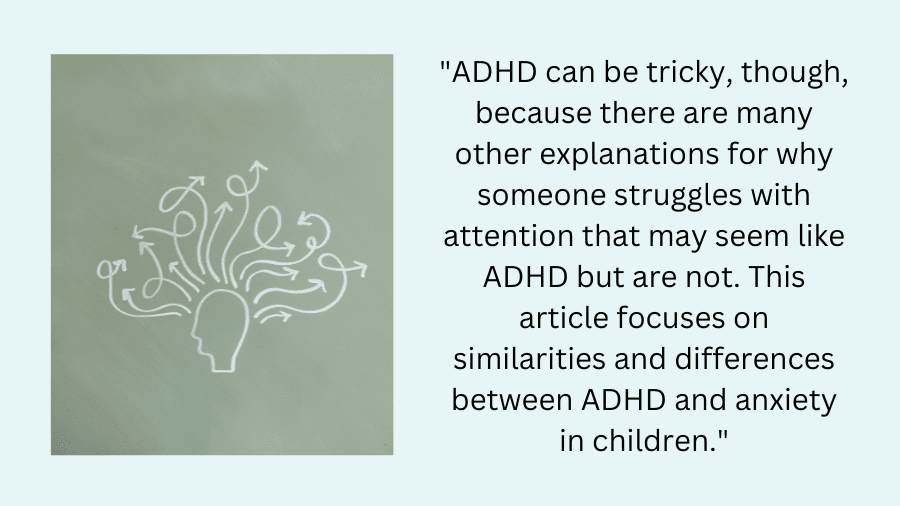
ADHD is diagnosed when an individual displays difficulty directing and sustaining their attention to the extent that it negatively affects functioning across multiple domains. They may be distracted by internal processes resulting in daydreaming or struggle to filter incoming sensory information in the environment. For example, sounds, lights, and feeling too hot or cold. Because the regulatory part of their brain is not fully developed, they are more likely to become distracted. ADHD can be tricky, though, because there are many other explanations for why someone struggles with attention that may seem like ADHD but are not. This article focuses on similarities and differences between ADHD and anxiety in children.

When a child is anxious or stressed, whether about getting a good grade, disappointing a teacher or parent, or how he/she is getting home after school, this takes her mind off instruction, work, and social interactions. The result is inattention, but not due to ADHD. Individuals with anxiety may hyperfocus on worry, limiting attention to other information. Furthermore, it is common for children with ADHD to experience anxiety; however, it is most often a consequence of poor attention regulation rather than a cause of inattention. Both conditions can be associated with procrastination, but the basis for delaying work differs. The child with ADHD may struggle with initiating a task, while the child with anxiety may be preoccupied with anticipation about how well she will perform. At times, anxiety and ADHD present so similarly that it can be difficult to distinguish one from the other.

As you can see from the graphic below, there is a tremendous overlap in symptoms between ADHD and anxiety, making a comprehensive evaluation necessary to make an informed diagnosis.

Humans are complex, and a single diagnosis rarely captures their emotional and behavioral challenges.


References:

Essentials of ADHD Assessment for Children and Adolescents, First Edition, by Elizabeth P. Sparrow and Drew Erhardt, Wiley, 2014


About the Author

Dr. Cynthia Hess graduated from Rivier University with a PsyD in Counseling and School Psychology. Previously, she earned an M.A. from Antioch New England in Applied Psychology. She also worked as an elementary school counselor and school psychologist for 15 years before embarking on her doctorate. During her doctorate, she did her pre-doctoral internship with RIT in Rochester, N.Y. where she worked with youth ages 5-17 who had experienced complex developmental trauma. Dr. Hess’s first post-doctoral fellowship was with The Counseling Center of New England where she provided psychotherapy and family therapy to children ages 5-18, their families and young adults. She also trained part-time with a pediatric neuropsychologist conducting neuropsychological evaluations.


To schedule an appointment with one of NESCA’s expert neuropsychologists, please complete our online intake form


Neuropsychology & Education Services for Children & Adolescents (NESCA) is a pediatric neuropsychology practice and integrative treatment center with offices in Newton and Plainville, Massachusetts, and Londonderry, New Hampshire, serving clients from preschool through young adulthood and their families. For more information, please email info@nesca-newton.com or call 617-658-9800.


Skip to content