NESCA’s Newton, MA location has immediate availability for neuropsychological evaluations. Our MA clinicians specialize in the following evaluations: Neuropsychological; Autism; and Emotional and Psychological, as well as Academic Achievement and Learning Disability Testing.

Visit www.nesca-newton.com/intake for more information or to book an evaluation.

Tag

neuropsychology and education services for children and adolescents Archives - Page 4 of 13 - NESCA

Subscribe to NESCA Notes

Why Does My Child Have to Read 20 Minutes Per Night After Being in School All Day?

By | NESCA Notes 2021

By: Alissa Talamo, PhD
Pediatric Neuropsychologist, NESCA

Reading 20 minutes per day has been shown to have many positive benefits. Did you know…?

  • Children who read 20 minutes a day/5 days a week are exposed to 1.8 million words in one school year. Compare this to students who read 5 minutes per day – they will be exposed to 282,000 words per school year.
  • Reading helps foster empathy – a child experiences “walking in someone else’s shoes.”
  • Children are exposed to different ideas and cultures.
  • Reading also improves critical thinking.
  • Reading increases knowledge of correct syntax and grammar, along with robust vocabulary knowledge, resulting in improved writing skills.
  • Students who read 20 minutes per day score significantly higher on standardized tests of reading.
  • Reading with your child, or having them read independently before bed, can help them to relax and wind down from their day.

It is important to recognize that despite all our good intentions, sometimes students are reluctant to read on their own. This reluctance can come from different reasons, such as difficulty reading, not yet knowing the types of books they would enjoy, or even that they would simply rather be playing video games or be on social media. To help make reading more attractive to your child, there are several things you can try:

  • Let the child choose what they are reading – help them find books that are about an area of high interest to them (anything from sports to fashion to history – all is fair game!).
  • If the book they are interested in is above their reading level, you can read to them (model the page) and then have them read it back to you.
  • Allow them access to audio books, and they can follow along with the text.
  • Encourage different types of reading material (comics, graphic novels, magazines, traditional books, etc.).
  • Look for book series – once they enjoy one, they will often want to read the rest!

Getting your child to read is not always easy. However, allowing them to read high interest material, asking them questions to help them interact with the text, and modeling that reading can be fun is a great start!

If your child demonstrates difficulties improving their reading skills, reach out to their teacher and discuss if there are any underlying concerns (visual issues, such as difficulty tracking; reading challenges, such as reduced phonemic awareness, etc.). If you continue to have concerns, consider having your child evaluated by a reading specialist or pediatric neuropsychologist to ensure that such an important skill is supported and developed as your child continues through school and beyond.

Sources

https://www.honorsgradu.com/importance-of-reading-20-minutes-a-day/

The Surprising Benefits of Reading 20 Minutes a Day

https://www.k12reader.com/why-read-20-minutes-a-day/

https://www.understood.org/articles/en/14-ways-to-encourage-your-grade-schooler-to-read


About the Author

With NESCA since its inception in 2007, Dr. Talamo had previously practiced for many years as a child and adolescent clinical psychologist before completing postdoctoral re-training in pediatric neuropsychology at the Children’s Evaluation Center.

After receiving her undergraduate degree from Columbia University, Dr. Talamo earned her doctorate in clinical health psychology from Ferkauf Graduate School of Psychology and the Albert Einstein College of Medicine at Yeshiva University.

She has given a number of presentations, most recently on “How to Recognize a Struggling Reader,” “Supporting Students with Working Memory Limitations,” (with Bonnie Singer, Ph.D., CCC-SLP of Architects for Learning), and “Executive Function in Elementary and Middle School Students.”

Dr. Talamo specializes in working with children and adolescents with language-based learning disabilities including dyslexia, attentional disorders, and emotional issues. She is also interested in working with highly gifted children.

Her professional memberships include MAGE (Massachusetts Association for Gifted Education), IDA (International Dyslexia Association), MABIDA (the Massachusetts division of IDA) and MNS (the Massachusetts Neuropsychological Society).

She is the mother of one teenage girl.


To book a consultation with Dr. Talamo or one of our many other expert neuropsychologists, complete NESCA’s online intake form.

Neuropsychology & Education Services for Children & Adolescents (NESCA) is a pediatric neuropsychology practice and integrative treatment center with offices in Newton, Massachusetts, Plainville, Massachusetts, and Londonderry, New Hampshire, serving clients from preschool through young adulthood and their families. For more information, please email info@nesca-newton.com or call 617-658-9800.
Boredom: The Good, the Bad, and the Ugly

By | NESCA Notes 2021

By: Cynthia Hess, PsyD
Pediatric Neuropsychologist Fellow and Therapist

According to the APA Dictionary of Psychology, boredom is defined as:

A state of weariness or ennui resulting from a lack of engagement with stimuli in the environment. It is generally considered to be one of the least desirable conditions of daily life and is often identified by individuals as a cause of feeling depressed. It can be seen as the opposite of interest and surprise

In an APA podcast called Speaking of Psychology, Erin Westgate, PhD, a psychologist who studies boredom, suggests that boredom is an unpleasant emotion similar to anger, sadness, fear, and pain. In her efforts to understand and define boredom, Dr. Westgate explored the ways in which attention and meaning affect emotions and explain boredom. She opines that boredom may result from one’s inability to sustain attention, which may occur either when a task is too easy or too hard. It may help to understand why students describe a less preferred subject (e.g., math) as boring. Boredom may also be due to a sense that what we are doing lacks meaning. In both instances, the mind wanders and we are faced with that sense of being alone with our thoughts. Dr. Westgate notes that some thoughts are more engaging than others, and there are certain conditions under which people enjoy or do not enjoy their own thoughts. It has become increasingly difficult for people to sit and think, and consequently they search for ways to escape or avoid the boredom that results. However, boredom is not all bad. Like many things in life, it depends on how we manage it.

Similar to other negative emotions, boredom alerts us that something is wrong in our body, and it is human nature to want to escape or avoid it. When escape and avoidance become the only method to cope with boredom, individuals may begin experiencing chronic boredom, which can be detrimental to emotional and physical wellbeing. When boredom becomes chronic, it no longer works as a useful signal. Boredom can be more impactful than loneliness and is often mistaken for loneliness. When boredom is not well managed, it can lead to depression and self-destructive behaviors, such as self-harm and addiction. As alluded to above, the ability to sit with our thoughts and feelings without trying to avoid or escape them has become increasingly difficult. Perhaps related to the ease with which they can be avoided; for example, when our body sends out the first signal of discomfort, we can distract ourselves by reaching for our phone. An article in TIME magazine stated:

We’re trying to swipe and scroll the boredom away, but in doing that, we’re actually making ourselves more prone to boredom, because every time we get our phone out we’re not allowing our mind to wander and to solve our own boredom problems, Mann says, adding that people can become addicted to the constant dopamine hit of new and novel content that phones provide. Our tolerance for boredom just changes completely, and we need more and more to stop being bored.

Relying on electronics is only one example of a way to avoid and escape the discomfort of boredom. It is highly reinforcing because, in the short-term, it works. However, when it is one’s only tool in the toolbox, it may quickly undermine their ability for learning to manage uncomfortable thoughts and feelings and use them for creating positive change. Therefore, it is necessary to find a positive, opposite behavior to replace the maladaptive behavior. This often leads to an increased sense of purpose and agency, and improved self-esteem and self-concept.

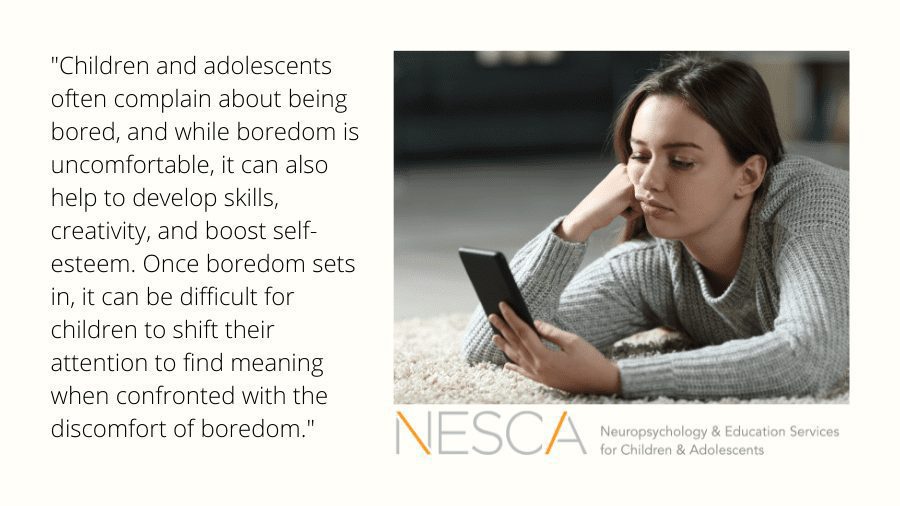
Children and adolescents often complain about being bored, and while boredom is uncomfortable, it can also help to develop skills, creativity, and boost self-esteem. Once boredom sets in, it can be difficult for children to shift their attention to find meaning when confronted with the discomfort of boredom. According to an article published by the Child Mind Institute, boredom can be a great way to teach children how to manage frustration and regulate emotions when things are boring or not going their way. It is not that boredom teaches the skills, but rather it is what they do when faced with boredom. There are many strategies outlined in the article to help parents nurture skills when their children are bored. In general, be aware that behaviors may be attention-seeking, and therefore, should not be reinforced. Otherwise, boredom offers an opportunity for children to do something meaningful that benefits them and those around them. When properly managed, it spurs creativity and innovation. Along the way, it is important to be realistic and recognize that there will be failure, and learning to manage the discomfort of failure is an added bonus.


About the Author

Dr. Cynthia Hess recently graduated from Rivier University with a PsyD in Counseling and School Psychology. Previously, she earned an M.A. from Antioch New England in Applied Psychology. She also worked as an elementary school counselor and school psychologist for 15 years before embarking on her doctorate. During her doctorate, she did her pre-doctoral internship with RIT in Rochester, N.Y. where she worked with youth ages 5-17 who had experienced complex developmental trauma. Dr. Hess’s first post-doctoral fellowship was with The Counseling Center of New England where she provided psychotherapy and family therapy to children ages 5-18, their families and young adults. She also trained part-time with a pediatric neuropsychologist conducting neuropsychological evaluations.


To schedule an appointment with one of NESCA’s expert neuropsychologists, please complete our online intake form


Neuropsychology & Education Services for Children & Adolescents (NESCA) is a pediatric neuropsychology practice and integrative treatment center with offices in Newton and Plainville, Massachusetts, and Londonderry, New Hampshire, serving clients from preschool through young adulthood and their families. For more information, please email info@nesca-newton.com or call 617-658-9800.


Paying Proper Attention to Inattention

By | NESCA Notes 2022

By: Maggie Rodriguez, Psy.D.
Pediatric Neuropsychologist, NESCA

One of the most common referral questions I see in my work as a neuropsychologist is, “Does my child have ADHD?” When a child has trouble focusing, Attention-Deficit/Hyperactivity Disorder, or ADHD, is one of the first things that comes to mind, and for good reason. However, ADHD is only one potential underlying cause of inattention. In fact, there are many cases in which attentional difficulties are present as part of another underlying issue. Some of these include:

  1. Anxiety—On a physiological level, anxiety involves activation of the “fight or flight” response. This adaptive process is designed to alter attention in order to prioritize survival. When the brain senses a threat, it tunes out everything else so it can focus on dealing with the danger at hand. This is extremely useful when the threat is something like a wild animal chasing you. In that case, you need to momentarily shift all of your attention to survival. It’s the worst possible time to be distracted by anything that could divert your attention from escaping a dangerous situation. But when students are anxious, especially for extended periods of time, the same process can make it difficult to focus on day-to-day tasks, including learning.
  2. Learning Disorder—Students who lack the academic skills to engage with the curriculum can appear to be simply not paying attention. If a student’s reading skills, for instance, are several grade levels below expectations, they won’t be able to actively engage with written assignments or materials in class.
  3. Communication Disorder—Deficits in receptive and/or expressive language often manifest in ways that mimic inattention. If a child cannot grasp what is being communicated, they will have significant difficulty following verbal instructions, answering questions, and retaining important information. This can easily be misinterpreted as a sign of an attentional issue when, in reality, the underlying problem has to do with communication.
  4. Autism Spectrum Disorders (ASD)—Many individuals on the Autism spectrum tend to be more attuned and focused on internal experiences (e.g., their own thoughts and specific interests) than to the external environment. As a result, they can miss important information, ranging from social cues to expectations communicated at home or within the classroom.
  5. Other neurocognitive disorders—Weaknesses in other cognitive functions, particularly those we refer to as “cognitive proficiency” skills (e.g., processing speed) and executive functions (e.g., working memory, organization) can also result in apparent inattention. Students who cannot process information quickly are sometimes unable to keep up with the pace of instruction, which causes a diminished ability to comprehend and retain information. Similarly, students who cannot hold information in working memory or organize ideas and concepts can demonstrate reduced comprehension.

There is a range of other issues that can contribute to children or adolescents appearing inattentive. Some of these include trauma, absence seizures, hearing impairments, thought disorders and/or hallucinations, and Tourette’s Syndrome. It is important to thoroughly evaluate the potential causes of inattention and to consider an individual’s full history and presentation.  Because different underlying issues will necessitate different treatment approaches, getting to the root of the issue can be tremendously important.


About the Author

Maggie Rodriguez, Psy.D., provides comprehensive evaluation services for children, adolescents, and young adults with often complex presentations. She particularly enjoys working with individuals who have concerns about attention and executive functioning, language-based learning disorders, and those with overlapping cognitive and social/emotional difficulties.

Prior to joining NESCA, Dr. Rodriguez worked in private practice, where she completed assessments with high-functioning students presenting with complex cognitive profiles whose areas of weakness may have gone previously undiagnosed. Dr. Rodriguez’s experience also includes pre- and post-doctoral training in the Learning Disability Clinic at Boston Children’s Hospital and the Neurodevelopmental Center at MassGeneral for Children/North Shore Medical Center. Dr. Rodriguez has spent significant time working with students in academic settings, including k-12 public and charter school systems and private academic programs, such as the Threshold Program at Lesley University.

Dr. Rodriguez earned her Psy.D. from William James College in 2012, where her coursework and practicum training focused on clinical work with children and adolescents and on assessment. Her doctoral thesis centered on cultural issues related to evaluation.

Dr. Rodriguez lives north of Boston with her husband and three young children.  She enjoys spending time outdoors hiking and bike riding with her family, practicing yoga, and reading.


To book a consultation with Dr. Rodriguez or one of our many other expert neuropsychologists, complete NESCA’s online intake form.

Neuropsychology & Education Services for Children & Adolescents (NESCA) is a pediatric neuropsychology practice and integrative treatment center with offices in Newton, Massachusetts, Plainville, Massachusetts, and Londonderry, New Hampshire, serving clients from preschool through young adulthood and their families. For more information, please email info@nesca-newton.com or call 617-658-9800.

October is Dyslexia Awareness Month

By | NESCA Notes 2022

By: Alissa Talamo, PhD
Pediatric Neuropsychologist, NESCA

According to the International Dyslexia Association (IDA), “Dyslexia is a language-based learning disability. Dyslexia refers to a cluster of symptoms, which result in people having difficulties with specific language skills, particularly reading. Students with dyslexia usually experience difficulties with other language skills such as spelling, writing, and pronouncing words. Dyslexia affects individuals throughout their lives; however, its impact can change at different stages in a person’s life. It is referred to as a learning disability because dyslexia can make it very difficult for a student to succeed academically in the typical instructional environment, and in its more severe forms, will qualify a student for special education, special accommodations, or extra support services.” Also, it is important to recognize that dyslexia is not due to either a lack of intelligence or a lack of desire to learn, and with appropriate and sufficient teaching methods, students with dyslexia can learn successfully.

Fortunately, there are effective strategies to help students with dyslexia. However, some common approaches to teaching reading (e.g., guided reading, balanced literacy) have not been found to be effective enough for the struggling reader. What research has found to be most effective is Structured Literacy. Structured Literacy instruction includes specific elements that are necessary for a dyslexic reader to make reading progress. Such elements include phonemic awareness (the ability to notice, think about, and work with individual sounds in words, such as separating the spoken word “cat” into three distinct phonemes), phonological awareness (the ability to recognize and manipulate the spoken parts of sentences and words), sound-symbol association (e.g., identify printed letters and what sounds they make), syllable instruction, morphology (smallest unit of meaning in the language), syntax (e.g., grammar), and semantics (meaning). In order to be most effective, students with dyslexia need to be taught using an explicit instruction method, with a teacher trained in a program that meets that student’s specific needs, the instruction needs to be taught in a logical order (basic concepts before more difficult ones), and each step needs to be based on previously learned concepts (cumulative).

According to the IDA, a comprehensive evaluation to assess for dyslexia, as well as to assess for any other potential language challenges or learning disabilities, should include intellectual and academic achievement testing, as well as assessment of critical underlying language skills that are closely linked to dyslexia, such as receptive and expressive language skills, phonology (phonological awareness, phonemic awareness), and rapid naming (e.g., quickly reading single letters or numbers). Additionally, a full evaluation should assess a student’s ability to read a list of unrelated real words as well as a list of pseudowords (made up pretend words to assess a child’s ability to apply reading rules), in addition to a student’s ability to read in context (e.g., stories). If a student is found to demonstrate that they meet criteria for a diagnosis of dyslexia, a specialized program should be developed by the school in order to provide appropriate services and accommodations.

Sources:

https://dyslexiaida.org/dyslexia-basics-2

https://dyslexiaida.org/effective-reading-instruction-for-students-with-dyslexia

www.readingrockets.org


About the Author

With NESCA since its inception in 2007, Dr. Talamo had previously practiced for many years as a child and adolescent clinical psychologist before completing postdoctoral re-training in pediatric neuropsychology at the Children’s Evaluation Center.

After receiving her undergraduate degree from Columbia University, Dr. Talamo earned her doctorate in clinical health psychology from Ferkauf Graduate School of Psychology and the Albert Einstein College of Medicine at Yeshiva University.

She has given a number of presentations, most recently on “How to Recognize a Struggling Reader,” “Supporting Students with Working Memory Limitations,” (with Bonnie Singer, Ph.D., CCC-SLP of Architects for Learning), and “Executive Function in Elementary and Middle School Students.”

Dr. Talamo specializes in working with children and adolescents with language-based learning disabilities including dyslexia, attentional disorders, and emotional issues. She is also interested in working with highly gifted children.

Her professional memberships include MAGE (Massachusetts Association for Gifted Education), IDA (International Dyslexia Association), MABIDA (the Massachusetts division of IDA) and MNS (the Massachusetts Neuropsychological Society).

She is the mother of one teenage girl.


To book a consultation with Dr. Talamo or one of our many other expert neuropsychologists, complete NESCA’s online intake form.

Neuropsychology & Education Services for Children & Adolescents (NESCA) is a pediatric neuropsychology practice and integrative treatment center with offices in Newton, Massachusetts, Plainville, Massachusetts, and Londonderry, New Hampshire, serving clients from preschool through young adulthood and their families. For more information, please email info@nesca-newton.com or call 617-658-9800.

College Freshman and Executive Function: The Often Unexpected Demands

By | NESCA Notes 2022

By: Sophie Bellenis, OTD, OTR/L
Occupational Therapist; Real-life Skills Program Manager and Coach, NESCA

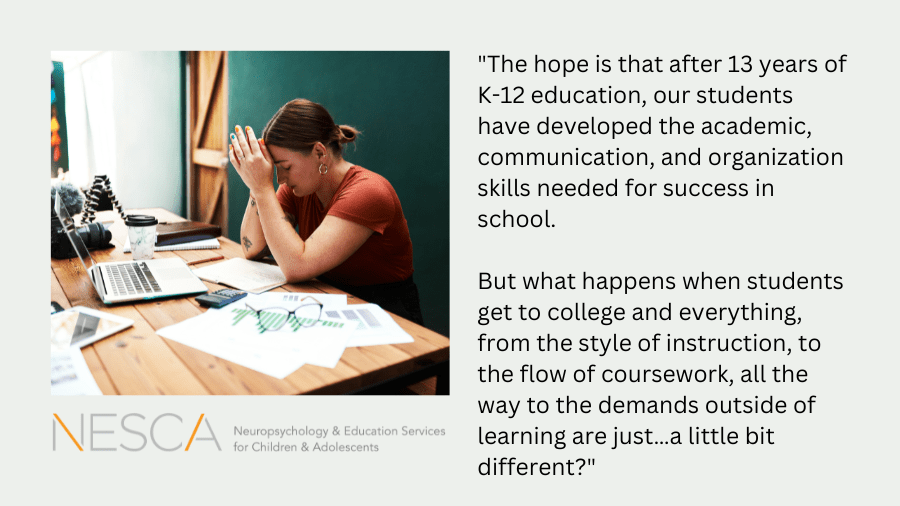
It is no surprise that the experience of a high school student is vastly different than that of a college student. This transition is seen as a pivotal step towards independence as we send students off to learn, grow, and explore in an often substantially less supported and less controlled environment. The hope is that after 13 years of K-12 education, our students have developed the academic, communication, and organization skills needed for success in school. They know the tricks of the trade. They have systems to employ and even more systems to fall back on if needed. They have become experts at learning, and they know the drill. But what happens when students get to college and everything, from the style of instruction, to the flow of coursework, all the way to the demands outside of learning are just…a little bit different? For some students, this is a welcome opportunity to rise to the challenge, but for others, this is a daunting, overwhelming, and seemingly impossible ask. As an occupational therapist specializing in executive function, I have spent the last few years directly supporting those college freshman – the ones who look at the new demands and think, “I was never prepared for this, I don’t know if I can do this.” And I don’t blame them for feeling that way! The demands and expectations truly change. Here are a few that stand out:

  • Time management – High school schedules are rigid. Students are expected to arrive at a specific time, follow a block schedule, and make it to each of their classes (generally all in one building). If they forget what period it is, they can ask a friend, teacher, or almost anyone in the hallway. Conversely, every student in college has their own schedule that they are expected to track and manage. On Monday, they may be in class from 10am-2pm, while on Tuesday they are in class from 3pm-5pm on the other side of campus. There is no one to quickly ask or check in with regarding when and where they are supposed to be and consistency is rare. This trouble is further compounded by the fact that college coursework requires a substantial amount of work to be done outside of the classroom that must be planned for and built into the weekly schedule.
  • Reading a syllabus – While “reading a syllabus” may sound simple, these documents are often over 20 pages long, providing information about course content, course expectations, professor’s preferred method of communication, grading systems, and a full schedule of what is due and when. Additionally, each of these documents uses a different format and is frequently amended during the semester. High school students are used to an online portal that is consistently used by their teachers and provides built-in reminders and updates. Syllabi are tricky, and many students skim them without absorbing.
  • Assignment tracking – As mentioned above, college portals are nowhere near as comprehensive, up-to-date, or accurate as most ex-high school students expect. Professors may change a due date in class without updating a syllabus or expect students to keep track of a paper that is due more than a month away. Many college students need support putting a system in place to quickly consolidate due dates, set internal deadlines, and track what they need to hand in. This is especially important when breaking down large assignments into manageable chunks or learning to prepare in advance to for busy times in the semester, such as midterms or finals week.
  • Communicating with instructors – Many college students need support in pushing themselves to attend office hours, reach out early and often via email if they have questions about classwork or assignments, and even introduce themselves to their professors.
  • Developing healthy habits and routines – On top of academic executive function demands, college students are dealing with an increase in life-based executive function demands. They are managing their own eating habits, morning routines, evening routines, and organizing all of their personal belongings in their own space. Completing all of this while maintaining life balance can be tricky, and may require some support.
  • Accessing accommodations – The accommodation process at a college level is vastly different from the IEP or 504 process in high school. While this topic could be a blog on its own, the biggest takeaway for me is the level of responsibility that falls on the students. They are in charge of letting each professor, at the beginning of every semester, know about their accommodations for sitting in classes, taking exams, or turning in assignments. This requires a level of self-advocacy and functional communication that they may not have had to demonstrate in high school. This demand does not disappear throughout the semester, as they often need to remind professors a week before an exam about their needs or independently book a room to take their test.

While this may seem like a lot, the good news is that our students have learned how to learn. Their systems may need updating, and their strategies may need fine tuning, but with guidance I have found college success to be a truly achievable goal. I often find that once provided with a foundation and tips for how to be successful, my college freshmen do rise to the challenge and eventually build the ability to do all of this independently. If you feel that your student could benefit from some executive function support as they embark on their college journey, please reach out about NESCA’s EF Coaching Program!


About the Author
Sophie Bellenis is a Licensed Occupational Therapist in Massachusetts, specializing in educational OT and functional life skills development. Bellenis joined NESCA in the fall of 2017 to offer community-based skills coaching services as a part of the Real-life Skills Program within NESCA’s Transition Services team. Bellenis graduated from the MGH Institute of Health Professions with a Doctorate in Occupational Therapy, with a focus on pediatrics and international program evaluation. She is a member of the American Occupational Therapy Association, as well as the World Federation of Occupational Therapists. Having spent years delivering direct services at the elementary, middle school and high school levels, Bellenis has extensive background with school-based occupational therapy services.  She believes that individual sensory needs and visual skills must be taken into account to create comprehensive educational programming.


To book an appointment or to learn more about NESCA’s Executive Function Coaching Services, please fill out our online Intake Form, email info@nesca-newton.com or call 617-658-9800.


Neuropsychology & Education Services for Children & Adolescents (NESCA) is a pediatric neuropsychology practice and integrative treatment center with offices in Newton, Massachusetts, Plainville, Massachusetts, and Londonderry, New Hampshire, serving clients from preschool through young adulthood and their families. For more information, please email info@nesca-newton.com or call 617-658-9800.


Private Neuropsychological Evaluation vs. School Evaluation

By | NESCA Notes 2022

By: Cynthia Hess, PsyD
Pediatric Neuropsychologist

While both a school evaluation and a private neuropsychological evaluation often provide valuable information, there are some considerable differences. The primary purpose of a school evaluation is to determine whether or not a student presents with a disability that impairs their ability to access the curriculum and fully participate in the academic and social life of the school. Once a student has been referred for special education, the special education team convenes to determine if, when, and how the student should be evaluated. They decide which instruments will be used for the assessment and who will be responsible for administering them. For example, if a student is referred for a suspected disability, a school psychologist conducts a cognitive evaluation, and a special education teacher will administer an academic assessment. A speech and language, physical therapy, functional behavior, or occupational therapy evaluation may be requested as well. After testing, each specialist writes their report and presents their results individually.

When a student participates in a private neuropsychological evaluation, the parents and student work closely with the evaluator through the entire process, from the intake to feedback and beyond. While there are certainly very comprehensive school evaluations, the information obtained by the evaluators is rarely integrated and instead presented as separate evaluations. This does not allow for a complete understanding of how deficits (or strengths) impact functioning across domains, especially when the child has complex challenges. A comprehensive neuropsychological evaluation is comprised of many elements. Most evaluations consist of a detailed developmental and family history, cognitive, academic, learning and memory (auditory and visual) assessment, visual-spatial and graphical motor skills, and attention and executive function. Depending on the referral question, the evaluation may include reviews of social skills and adaptive functioning or specific measures to assist with making a differential diagnosis. Generally, the assessment is conducted by a single evaluator. The data, including data from prior testing, is synthesized into a detailed report with specific recommendations for school, home, and community life when appropriate.

There are undeniably circumstances when a thorough school evaluation is beneficial. School evaluators have opportunities to observe students at school and consult with their teachers, which can be advantageous (although observations may be requested or necessary to complete a thorough private evaluation, too). School team members also have many opportunities to collaborate when evaluating and working with students. However, school personnel are limited in their ability to integrate data across disciplines, provide diagnoses, and directly assess medical conditions, such as attention-deficit/hyperactivity disorder (ADHD), autism spectrum disorder (ASD), and complex challenges, such as dyslexia and nonverbal learning disability (NLD). Additionally, while some parents establish a good working relationship with members of the special education team, they do not have the opportunity to develop a long-term, collaborative relationship with the evaluator as they would when a private evaluation is obtained.


About the Author

Dr. Cynthia Hess recently graduated from Rivier University with a PsyD in Counseling and School Psychology. Previously, she earned an M.A. from Antioch New England in Applied Psychology. She also worked as an elementary school counselor and school psychologist for 15 years before embarking on her doctorate. During her doctorate, she did her pre-doctoral internship with RIT in Rochester, N.Y. where she worked with youth ages 5-17 who had experienced complex developmental trauma. Dr. Hess’s first post-doctoral fellowship was with The Counseling Center of New England where she provided psychotherapy and family therapy to children ages 5-18, their families and young adults. She also trained part-time with a pediatric neuropsychologist conducting neuropsychological evaluations.


To schedule an appointment with one of NESCA’s expert neuropsychologists, please complete our online intake form


Neuropsychology & Education Services for Children & Adolescents (NESCA) is a pediatric neuropsychology practice and integrative treatment center with offices in Newton and Plainville, Massachusetts, and Londonderry, New Hampshire, serving clients from preschool through young adulthood and their families. For more information, please email info@nesca-newton.com or call 617-658-9800.


ADHD & Social Skills

By | NESCA Notes 2022

By: Maggie Rodriguez, Psy.D.
Pediatric Neuropsychologist, NESCA

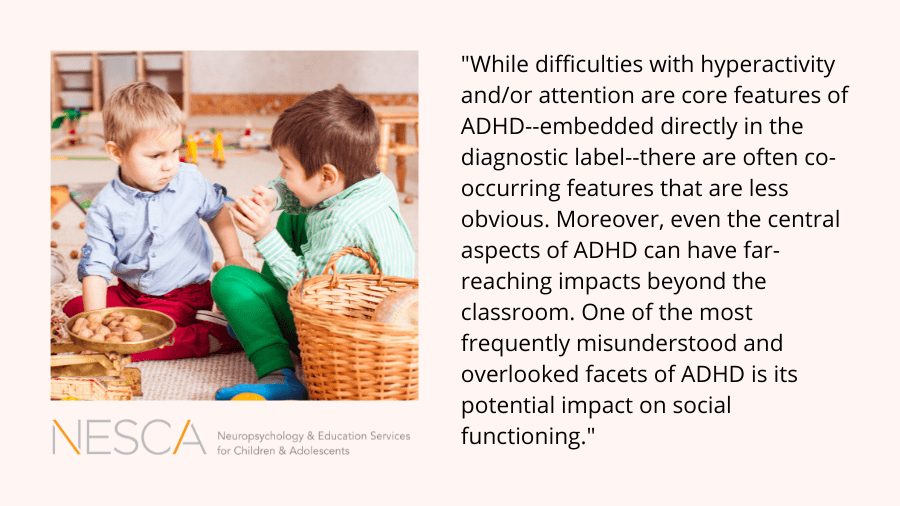
When most of us hear the term “ADHD (attention deficit hyperactivity disorder),” we think of the little boy who can’t sit still at his desk or the girl gazing out the window lost in her own thoughts during class. While difficulties with hyperactivity and/or attention are core features of ADHD–embedded directly in the diagnostic label–there are often co-occurring features that are less obvious. Moreover, even the central aspects of ADHD can have far-reaching impacts beyond the classroom. One of the most frequently misunderstood and overlooked facets of ADHD is its potential impact on social functioning.

In clinical practice, parents of children with ADHD are often confused by the unexpected and indirect ways that attentional and executive functioning deficits can affect social functioning. They sometimes wonder if their children have an additional challenge, such as autism spectrum disorder. Most often, that’s not the case. Rather, it’s more likely that one or more of the following is at play:

  • Kids with ADHD can have difficulty selectively attending to relevant social cues
    • Imagine looking through a camera with a broken zoom lens. At first everything is in frame at once; it’s too much information. Then you try to zoom in, but when you do, sometimes the lens focuses on unimportant things (like the random details in the background), leaving out what’s most relevant (like the person you’re trying to capture in your photo). Children with ADHD have difficulty figuring out what details to focus on and struggle to effectively “zoom in” on those elements. In social settings, which are often unstructured, kids with ADHD are even more prone to “zoom in” on unimportant things and miss the more salient information. They can also become easily distracted and fail to register important information in the moment. To others, this can come across as lack of interest (for instance, the child who seems not to be listening or is distracted by sounds, sights, or other sensory information in the moment). It can also lead children with ADHD to overlook contextual cues about what’s expected in a given social setting, which can lead to inappropriate behavior.
  • Children with ADHD often struggle with nuance, making inferences, and reading between the lines
    • Social situations are much more complex than we often realize. Successfully navigating social interactions requires paying attention, not just to surface level information but to the often subtle, implied meaning embedded in things like figures of speech, tone of voice, and body language. For many with ADHD, it’s already a challenge to maintain focus at the surface level; the task of trying to simultaneously attend to and interpret subtext is too much. Individuals with ADHD may focus on what another person says (the content of their speech) but fail to notice the eye roll or sarcastic tone of voice that goes along with it.
  • Impulsivity can lead to social faux pas
    • Impulsivity is a central feature of ADHD in many cases. In social settings, difficulty inhibiting impulses can take many forms. For some, it may simply present as rapid-fire speech, leaving little room for others to respond in conversation. It can also look like interrupting, cutting others in line, or expressing ideas and opinions in a way that can be hurtful or seem rude. Especially in younger children, impulsive behavior can lead to difficulty sharing, physical aggression towards others, and trouble with turn taking. Children who have more difficulty slowing down and inhibiting impulses are more likely to inadvertently offend others or to engage in behavior that their peers may view as odd or inappropriate; in turn, this can lead to trouble developing and sustaining friendships and other positive relationships.
  • Hyperactivity makes participating appropriately in some social settings difficult
    • There are some social contexts in which an abundance of energy is a very good thing. For this reason, many ADHD kids can excel in activities like sports, into which they can channel their high energy. But other social situations demand a different set of skills. For kids with hyperactivity as part of their ADHD, sitting still and maintaining quiet can be a challenge. They may struggle with activities like going to the library, watching a movie in a theater, attending church or religious ceremonies, or sitting at the table in order to have family dinner.

The good news is that there are ways to manage these social challenges. If your child with ADHD has difficulty with any aspects of social functioning, it may help to seek out social skills training with a therapist or through a structured social skills training program. Interventions often include a combination of explicit instruction, modeling, role playing, and feedback. Parents can also help by implementing simple, consistent ground rules for behavior and providing gentle but clear reminders as needed. Additionally, parents can facilitate play dates with peers, during which the parents take an active role in helping children utilize social skills and engage with each other appropriately.

Finally, though ADHD can present challenges in the social domain, kids with ADHD often possess many strengths that can help actually them succeed socially. Children with ADHD can be highly engaging, curious, energetic, creative, and open-minded. When these strengths are reinforced, kids with ADHD can often utilize them to create fun, rewarding social interactions and to develop rich, dynamic relationships.


About the Author

Maggie Rodriguez, Psy.D., provides comprehensive evaluation services for children, adolescents, and young adults with often complex presentations. She particularly enjoys working with individuals who have concerns about attention and executive functioning, language-based learning disorders, and those with overlapping cognitive and social/emotional difficulties.

Prior to joining NESCA, Dr. Rodriguez worked in private practice, where she completed assessments with high-functioning students presenting with complex cognitive profiles whose areas of weakness may have gone previously undiagnosed. Dr. Rodriguez’s experience also includes pre- and post-doctoral training in the Learning Disability Clinic at Boston Children’s Hospital and the Neurodevelopmental Center at MassGeneral for Children/North Shore Medical Center. Dr. Rodriguez has spent significant time working with students in academic settings, including k-12 public and charter school systems and private academic programs, such as the Threshold Program at Lesley University.

Dr. Rodriguez earned her Psy.D. from William James College in 2012, where her coursework and practicum training focused on clinical work with children and adolescents and on assessment. Her doctoral thesis centered on cultural issues related to evaluation.

Dr. Rodriguez lives north of Boston with her husband and three young children.  She enjoys spending time outdoors hiking and bike riding with her family, practicing yoga, and reading.

To book a consultation with Dr. Rodriguez or one of our many other expert neuropsychologists, complete NESCA’s online intake form.

Neuropsychology & Education Services for Children & Adolescents (NESCA) is a pediatric neuropsychology practice and integrative treatment center with offices in Newton, Massachusetts, Plainville, Massachusetts, and Londonderry, New Hampshire, serving clients from preschool through young adulthood and their families. For more information, please email info@nesca-newton.com or call 617-658-9800.

Executive Function: Skill Building and Maintenance over the Summer

By | NESCA Notes 2022

By: Sophie Bellenis, OTD, OTR/L
Occupational Therapist; Real-life Skills Program Manager and Coach, NESCA

With summer right around the corner, many students are thinking of warm evenings outside, days at the beach, pool or park, summer camps, and summer jobs. For parents, summer can sometimes feel like both a time of fun and a time of struggling to keep up with skills mastered and learned throughout the past school year, all while acclimating to a completely new summer routine. While some students receive summer services to keep up with important academic and executive function skills, there are absolutely ways for us to help support children and adolescents at home. Consider these three ways to incorporate executive function skill building into your child’s summer.

  1. Plan and Complete a Project – Work with your child to brainstorm a project that they would like to complete this summer. Some examples include having a lemonade stand, building a tree fort, doing a full bedroom makeover, or raising money for a cause they care about. Help your child figure out how to put together a plan to complete their goal. This will likely include a timeline complete with a comprehensive “To Do List,” a list of materials or supplies, and a list of people they may need to ask for help. The more intentional the planning of these steps is, the more a child will internalize the level of planning and prioritization that goes into accomplishing such a goal. You may need to jump in to help, but take every opportunity to defer to them and let them actively think things through before making suggestions or solving problems for them. Planning and executing a personal summer project helps to build organization, planning and prioritizing, flexible thinking, working memory, and task initiation.
  2. Organize a Family Outing – Summer can absolutely be a whirlwind, but reserve a day in the calendar for your child to plan a family outing or activity. This could be as big as a full day at the beach or as simple as a trip to lunch at their favorite restaurant. Help them think through everything that will be needed. What time will we leave? How long will it take to get there? How can you find that information? Should we check Google Maps together? How will we pay for the meal? By guiding your child through all of the steps before these activities, you help them recognize the level of planning and forethought that is necessary. For older children or adolescents, consider giving them a budget and asking them to plan a family outing independently, taking into account each family member’s preferences and schedules.
  3. Add a Weekly Task – During the school year, parents often do not have time to add chores or anything new at all to their child’s calendar. Dinners are often prepared and eaten on the fly between rehearsals, appointments, practices, and homework, and laundry gets done when someone has a free moment. Summer can be a great time of the year to add in an expectation for students who have been a bit overloaded with homework or other distractions. Consider adding a weekly task that student both need to complete and figuring out a way to remember (often a digital reminder!). One of my favorite options is to have a student cook a meal for the family one night per week. Have them set an alarm for 12pm that day, or even the day before, that prompts them to “figure out the plan for dinner.” This may look drastically different at various ages. An eight-year-old may be very proud of themselves for serving boxed macaroni and cheese (made with supervision), while a high school student may be up for trying to recreate a family recipe. The goal is not a gourmet Tuesday night meal, but practice with prior planning, sequencing, following directions, and building time management skills.

Incorporating children and adolescents into the planning, hard work, and many executive function tasks that go in to making a summer run smoothly allows them to build skills naturally. By handing down responsibility and increasing expectations bit by bit, we can allow our students to build their skills slowly and confidently. It’s important that students realize all of these many steps before they are expected to do everything on their own. Often, allowing children to feel this level of control and responsibility leads them to feel quite accomplished and proud of themselves! If you feel that facilitating this may be tricky, consider reaching out about executive function coaching, as all of these strategies can be practiced one-on-one with a coach!


About the Author
Sophie Bellenis is a Licensed Occupational Therapist in Massachusetts, specializing in educational OT and functional life skills development. Bellenis joined NESCA in the fall of 2017 to offer community-based skills coaching services as a part of the Real-life Skills Program within NESCA’s Transition Services team. Bellenis graduated from the MGH Institute of Health Professions with a Doctorate in Occupational Therapy, with a focus on pediatrics and international program evaluation. She is a member of the American Occupational Therapy Association, as well as the World Federation of Occupational Therapists. Having spent years delivering direct services at the elementary, middle school and high school levels, Bellenis has extensive background with school-based occupational therapy services.  She believes that individual sensory needs and visual skills must be taken into account to create comprehensive educational programming.


To book an appointment or to learn more about NESCA’s Executive Function Coaching Services, please fill out our online Intake Form, email info@nesca-newton.com or call 617-658-9800.


Neuropsychology & Education Services for Children & Adolescents (NESCA) is a pediatric neuropsychology practice and integrative treatment center with offices in Newton, Massachusetts, Plainville, Massachusetts, and Londonderry, New Hampshire, serving clients from preschool through young adulthood and their families. For more information, please email info@nesca-newton.com or call 617-658-9800.


Screen Time’s Impact on Child Development and How Play Can Be One Solution

By | NESCA Notes 2022

By: Cynthia Hess, PsyD
Pediatric Neuropsychologist

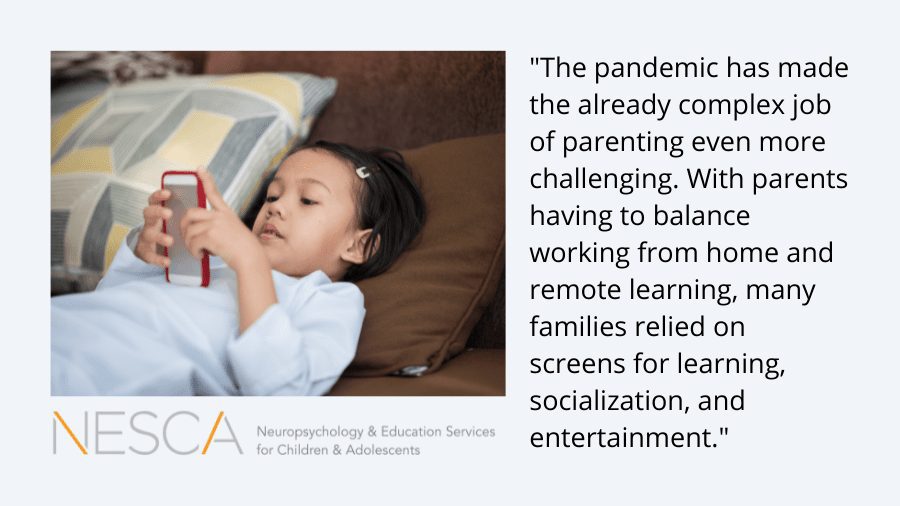
The pandemic has made the already complex job of parenting even more challenging. With parents having to balance working from home and remote learning, many families relied on screens for learning, socialization, and entertainment. Questions about screen time and the impact on child development were already hot topics in our digital age, but the pandemic brought about new and perhaps more compelling concerns.

It is common for children of all ages to engage with digital devices. Even prior to the pandemic, approximately 80% of parents reported that their child between the ages of five and 11 interacted with a tablet or computer, and 63% used a smartphone. For children under the age of five, 48% engaged with a tablet or computer, and 55% with a smartphone (pewresearch.org, July 2020).

While screens are an inevitable part of 21st century life, too much screen time can have a detrimental impact on child development. The American Academy of Pediatrics recommends no screen time for children younger than two years of age. Older children should limit their screen time to no more than one or two hours a day. According to the American Academy of Pediatrics, too much screen time can be linked to:

  • Obesity
  • Irregular sleep
  • Behavioral problems
  • Impaired academic performance
  • Desensitization to violence
  • Less time for play

It has been established that excessive screen time may lead to obesity due to inactivity and increased snacking that often coincides with screen use. Using screens too close to bedtime may disrupt the body’s biological preparation for sleep, making it difficult to fall asleep and disrupting sleep schedules. Research has shown that elementary school students who spend more than two hours a day watching TV, playing video games or using a computer or smartphone are more likely to have emotional, social, and attention problems. Furthermore, increased time spent on screens results in less time available for learning and practicing skills important for academic and social development. Such skills include, but are not limited to, managing emotions and behavior, paying attention, solving problems effectively and independently, dealing with conflict, and resilience. So, what is the remedy? Limited screen time and more opportunities for play.

The benefits of play are almost limitless. Play is brain building and leads to changes in even the smallest structures. Play develops skills in planning and organization, cooperation, self-control, and communication. Often play involves trying and failing, and learning from mistakes, which enhances children’s capacity for solving problems and learning to focus attention, ultimately promoting the growth of executive functioning skills. Play also provides opportunities for learning to cope with adversity, resulting in increased resilience. There are many great blog articles on NESCA’s website offering information and tips for engaging in play and its benefits. They are written from a range of perspectives, which aids in understanding the wide-ranging value of play.

References:

https://www.pewresearch.org/internet/2020/07/28/parenting-children-in-the-age-of-screens/

https://publications.aap.org/pediatrics/article/119/1/182/70699/The-Importance-of-Play-in-Promoting-Healthy-Child


About the Author

Dr. Cynthia Hess recently graduated from Rivier University with a PsyD in Counseling and School Psychology. Previously, she earned an M.A. from Antioch New England in Applied Psychology. She also worked as an elementary school counselor and school psychologist for 15 years before embarking on her doctorate. During her doctorate, she did her pre-doctoral internship with RIT in Rochester, N.Y. where she worked with youth ages 5-17 who had experienced complex developmental trauma. Dr. Hess’s first post-doctoral fellowship was with The Counseling Center of New England where she provided psychotherapy and family therapy to children ages 5-18, their families and young adults. She also trained part-time with a pediatric neuropsychologist conducting neuropsychological evaluations.


To schedule an appointment with one of NESCA’s expert neuropsychologists, please complete our online intake form


Neuropsychology & Education Services for Children & Adolescents (NESCA) is a pediatric neuropsychology practice and integrative treatment center with offices in Newton and Plainville, Massachusetts, and Londonderry, New Hampshire, serving clients from preschool through young adulthood and their families. For more information, please email info@nesca-newton.com or call 617-658-9800.


Yoga Therapy for Children and Adolescents

By | NESCA Notes 2022

By:  Stephanie Monaghan-Blout, Psy.D.
Pediatric Neuropsychologist

As a pediatric neuropsychologist, I often recommend yoga therapy for children with anxiety, impulse control, and/or motor/coordination/sensory issues, as well as issues that alienate them from their body (e.g., eating disorders and trauma). Another group for which a body-focused therapy like yoga would be helpful is children with language challenges who are not equipped to manage the challenge of “talking” therapy.

Yoga is a 4,000-year-old practice that originated in what is now known as India. The word means “yoke” or “union,” and the practice of yoga aims to quiet the mind in order to find the unity within ourselves and with the world around us. This ancient practice was developed to facilitate development and integration of the human body, mind, and breath to produce a strong and flexible body free of pain, a balanced autonomic nervous system with all physiological systems functioning optimally, and a calm, clear, and tranquil mind (1). As we make this transformation in ourselves, we hope to affect the larger world. This is done through a variety of elements, but the western world tends to focus on movement (asanas), breathwork (pranayamas), and meditation (dhyanas).

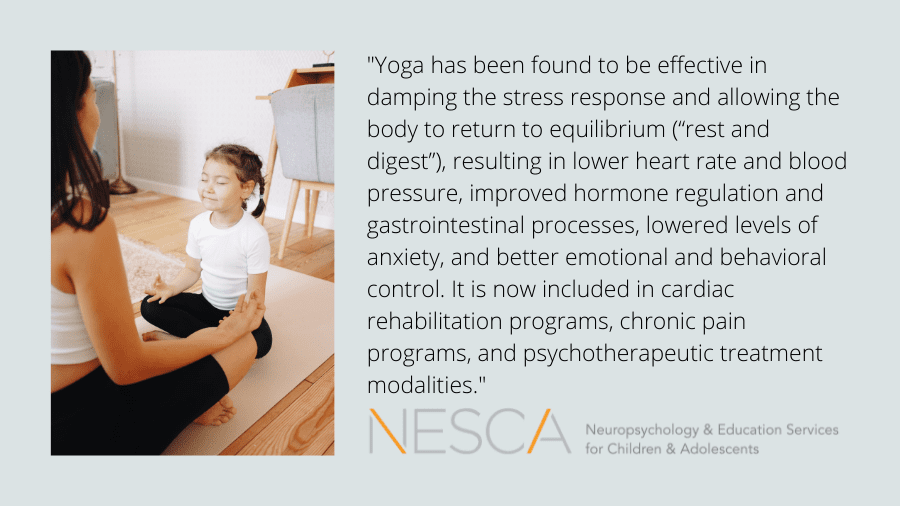
Yoga was introduced to the west in the 19th century and has become a popular form of physical fitness and injury rehabilitation. More recently, we have begun to investigate its impact on physiological function, specifically the autonomic nervous system which controls vital life functions and regulates our stress response and return to equilibrium. Research has shown that chronic activation of the stress response (“fight/flight/freeze”) is strongly associated with increased risk of cardiovascular problems and autoimmune disorders (including diabetes), as well as psychiatric conditions, such as anxiety and depression. Yoga has been found to be effective in damping the stress response and allowing the body to return to equilibrium (“rest and digest”), resulting in lower heart rate and blood pressure, improved hormone regulation and gastrointestinal processes, lowered levels of anxiety, and better emotional and behavioral control. It is now included in cardiac rehabilitation programs, chronic pain programs, and psychotherapeutic treatment modalities.

Recently, I became curious with what exactly happens in yoga therapy and decided to talk with the new yoga therapist at NESCA, Danielle Sugrue, M.S. An athlete throughout high school and college, Danielle became involved with yoga about 15 years ago because she was looking for something that “would get me back into movement.” She quickly fell in love with yoga and completed her 200-hour Yoga Teacher Training. In the meantime, she also completed her master’s degree in Marriage and Family Studies at Salem State University. With this combination of expertise, she is able to help children and adolescents become more in touch with their bodies and find their words through movement, breathing, and relaxation.

I asked Danielle what a yoga therapy session with a child would look like. She quickly assured me that interventions with young children hold little resemblance to adult yoga classes. Danielle described her sessions with children as a playful movement exercise to learn to come to their breathing when things get challenging. If a child becomes dysregulated, she helps them tap into their senses to ground them and begin to put words on the feelings. A session may start by spreading cards with animals doing various poses out on the floor and asking the child to pick the card that looks like how s/he is feeling. Based on the cards selected, Danielle may develop a flow of postures based on those selections. The poses and concepts are taught through stories and games using mythical characters, like Ganesh, the Hindu elephant god who clears obstacles and paves the way for us to move forward in life.

The sessions for adolescents tend to take a more direct approach to the issues of concern as described by the teenager. Learning breathing techniques tends to be a key element; because of body issues, many teenage girls don’t breathe deeply (belly breathing) because it makes their stomach stick out. This kind of shallow breathing activates the stress response, making the person feel more anxious, while deep breathing “turns on” the rest and relax function. Moving freely without self-consciousness is another big challenge for teens—and developing a flow that allows them to feel themselves moving with ease but also makes them feel capable of holding a pose just a little longer than they thought they could—helps with developing self-confidence. Directly addressing mindset (self-love and self-compassion) also tends to be an important focus of work with teens and may involve activities such as a mirror challenge of looking at oneself and identifying what s/he likes about themselves.

Yoga therapy usually involves purchasing a 10-session package of once weekly meetings of an hour’s length. If you are interested in having your child work with Danielle, please contact her directly at: dsugrue@nesca-newton.com or complete an online Intake Form at: https://hipaa.jotform.com/220393954666062.

In addition to her work at NESCA, Danielle also teaches yoga at Power Yoga Evolution in North Andover. Dr. Monaghan-Blout is in the process of completing her own 200-hour yoga teacher training.

  1. Kayley-Isley, L., Peterson , J, Fischer, C, and Peterson, E. Yoga as a Complementary Therapy for Children and Adolescents, Psychiatry 2010; 7(8): 20-32.
  2. Nourollahimoghadam, E., Gorji, S., Ghadiri M., Therapeutic Role of Yoga in Neuropsychological Disorders., World Journal of Psychiatry 2021, October 19; 11 (10): 754-773
  3. Permission to Unplug: the Health Benefits of Yoga for Kids. https://www.healthychildren.org, the American Academy of Pediatrics
  4. Barkataki, Susanna. Embrace Yoga’s Roots; Courageous Ways to Deepen Your Yoga Practice 2020, Orlando, FLA, Ignite Yoga and Wellness Institute


About the Author:

Formerly an adolescent and family therapist, Dr. Stephanie Monaghan-Blout is a senior clinician who joined NESCA at its inception in 2007. Dr. Monaghan-Blout specializes in the assessment of clients with complex learning and emotional issues. She is proficient in the administration of psychological (projective) tests, as well as in neuropsychological testing. Her responsibilities at NESCA also include acting as Clinical Coordinator, overseeing psycho-educational and therapeutic services. She has a particular interest in working with adopted children and their families, as well as those impacted by traumatic experiences. She is a member of the Trauma and Learning Policy Initiative (TLPI) associated with Massachusetts Advocates for Children and the Harvard Law Clinic, and is working with that group on an interdisciplinary guide to trauma sensitive evaluations.

To book an evaluation with one of our many expert neuropsychologists and transition specialists, complete NESCA’s online intake form.

Neuropsychology & Education Services for Children & Adolescents (NESCA) is a pediatric neuropsychology practice and integrative treatment center with offices in Newton, Massachusetts, Plainville, Massachusetts, and Londonderry, New Hampshire, serving clients from preschool through young adulthood and their families. For more information, please email info@nesca-newton.com or call 617-658-9800.

Skip to content