Tag

social skills Archives - Page 2 of 2 - NESCA

Subscribe to NESCA Notes

Questionnaires, Rating Scales, and Checklists, Oh My!

By | Nesca Notes 2023

By: Maggie Rodriguez, Psy.D.
Pediatric Neuropsychologist, NESCA

Before I had children, I knew parenting would bring with it new demands. If you’d asked me what tasks I imagined would take a lot of my time and energy as a parent, I would have listed things like feeding hungry little mouths, washing adorable clothes, driving kids to and from school and activities, dealing with bath time, and reading stories at bedtime. What I would never have guessed is how much time and mental effort I would spend filling out paperwork. From the moment a child enters a parent’s life—regardless of what process brings them together as a family—it seems like there are unending forms to complete. As a parent of three children, I cannot begin to calculate how many hours I’ve spent filling out forms for doctors, daycares, schools, camps, babysitters, and extracurriculars. It’s a lot.

Perhaps that’s why I sometimes notice a very relatable subtle sigh when I hand parents forms to complete as part of their children’s neuropsychological evaluation. I get it, and I never want to add to a parent’s already overwhelming list of tasks to complete. Nevertheless, carefully selected questionnaires are an important part of a thorough neuropsychological assessment. Here are a few of the reasons why.

  1. Simply put, parents are the experts on their children. No doubt about it, a parent (or primary caregiver) knows a child better than just about anyone else could. Parents are uniquely qualified to provide invaluable information about their children and are a tremendous resource.
  2. Parents have more data points. During an evaluation, I typically spend about five hours with a child over the course of two testing sessions. It’s a limited glimpse into mere hours out of years of a child’s life. Parents are typically positioned to observe their children much more frequently and on many more occasions. I may see a child at their best or on a particularly bad day, and I don’t want to rely on my observations alone. Having information from many points in time, and from different settings, is incredibly useful and helps capture a more complete picture of a child.
  3. I want and need to know what happens outside the testing office. By design, the testing environment is deliberately developed to be a quiet space as free of distractions as possible to maximize a child’s ability to focus and participate in formal testing. It’s a highly structured situation and a one-on-one interaction. Life outside the office is…well, quite different. I want to get a sense of what happens during the hectic morning rush to get out the door, on the playground and the soccer field, and at the family dinner table.
  4. On a related note, people present differently in different settings, and having data helps us make sense of this. Many parents can relate to the concept of “restraint collapse.” Essentially, kids often work hard to keep it together in the academic setting throughout the day and “fall apart” when they come home after a long day of school. Similarly, children are often on the “best behavior” in public settings and with adults other than their parents. For this reason, I often don’t get to see this important aspect of things, so I rely on parent reports.
  5. Some things simply cannot be readily assessed using standardized testing measures in an office environment. Two skill sets that fall into this category are executive functions and social skills. Executive functions, which include skills like working memory, are not easily captured through tests in the somewhat artificial environment of an office. To assess working memory, we rely on tasks such as asking a child to recall strings of numbers. In the real world, working memory applies to more complex tasks, such as following multi-step instructions in a busy classroom or home setting. A child may do well remembering single digit numbers, but this doesn’t always translate to being able to remember and complete a series of directions in the “real world.” Similarly, interacting with one adult in a highly structured environment doesn’t allow a glimpse into a child’s social skills within the more complex, unstructured situations they face day to day.

In short, neuropsychologists rely on information from parents to gain a clear and complete picture of a child and to provide answers to the questions that bring a family to us. One of the ways we obtain this information is through questionnaires, symptom rating scales, and checklists. So, parents, thank you, for taking the time to give us your unique and invaluable perspective. We couldn’t do our jobs without it or without you.


About the Author

Maggie Rodriguez, Psy.D., provides comprehensive evaluation services for children, adolescents, and young adults with often complex presentations. She particularly enjoys working with individuals who have concerns about attention and executive functioning, language-based learning disorders, and those with overlapping cognitive and social/emotional difficulties.

Prior to joining NESCA, Dr. Rodriguez worked in private practice, where she completed assessments with high-functioning students presenting with complex cognitive profiles whose areas of weakness may have gone previously undiagnosed. Dr. Rodriguez’s experience also includes pre- and post-doctoral training in the Learning Disability Clinic at Boston Children’s Hospital and the Neurodevelopmental Center at MassGeneral for Children/North Shore Medical Center. Dr. Rodriguez has spent significant time working with students in academic settings, including k-12 public and charter school systems and private academic programs, such as the Threshold Program at Lesley University.

Dr. Rodriguez earned her Psy.D. from William James College in 2012, where her coursework and practicum training focused on clinical work with children and adolescents and on assessment. Her doctoral thesis centered on cultural issues related to evaluation.

Dr. Rodriguez lives north of Boston with her husband and three young children.  She enjoys spending time outdoors hiking and bike riding with her family, practicing yoga, and reading.


To book a consultation with Dr. Rodriguez or one of our many other expert neuropsychologists, complete NESCA’s online intake form.

NESCA is a pediatric neuropsychology practice and integrative treatment center with offices in Newton and Plainville, Massachusetts, Londonderry, New Hampshire, and Burlington, Vermont, serving clients from preschool through young adulthood and their families. For more information, please email info@nesca-newton.com or call 617-658-9800.

ADHD & Social Skills

By | NESCA Notes 2022

By: Maggie Rodriguez, Psy.D.
Pediatric Neuropsychologist, NESCA

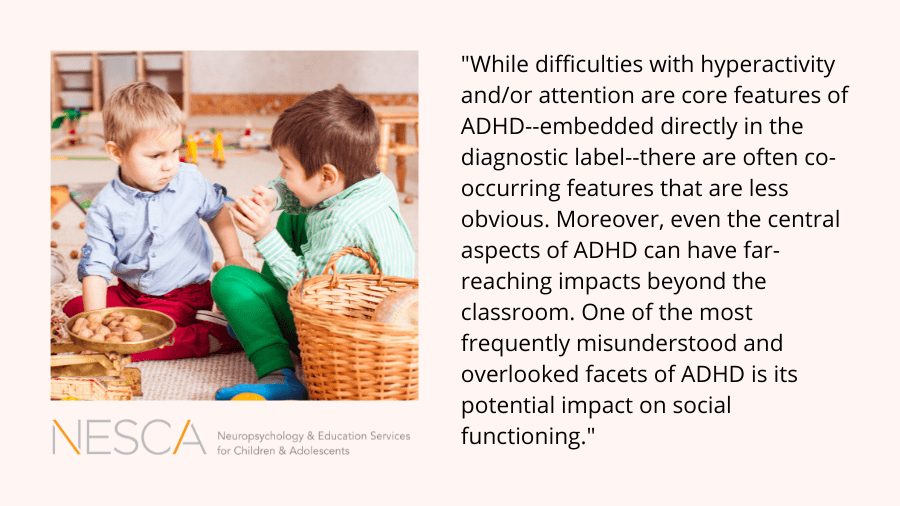
When most of us hear the term “ADHD (attention deficit hyperactivity disorder),” we think of the little boy who can’t sit still at his desk or the girl gazing out the window lost in her own thoughts during class. While difficulties with hyperactivity and/or attention are core features of ADHD–embedded directly in the diagnostic label–there are often co-occurring features that are less obvious. Moreover, even the central aspects of ADHD can have far-reaching impacts beyond the classroom. One of the most frequently misunderstood and overlooked facets of ADHD is its potential impact on social functioning.

In clinical practice, parents of children with ADHD are often confused by the unexpected and indirect ways that attentional and executive functioning deficits can affect social functioning. They sometimes wonder if their children have an additional challenge, such as autism spectrum disorder. Most often, that’s not the case. Rather, it’s more likely that one or more of the following is at play:

  • Kids with ADHD can have difficulty selectively attending to relevant social cues
    • Imagine looking through a camera with a broken zoom lens. At first everything is in frame at once; it’s too much information. Then you try to zoom in, but when you do, sometimes the lens focuses on unimportant things (like the random details in the background), leaving out what’s most relevant (like the person you’re trying to capture in your photo). Children with ADHD have difficulty figuring out what details to focus on and struggle to effectively “zoom in” on those elements. In social settings, which are often unstructured, kids with ADHD are even more prone to “zoom in” on unimportant things and miss the more salient information. They can also become easily distracted and fail to register important information in the moment. To others, this can come across as lack of interest (for instance, the child who seems not to be listening or is distracted by sounds, sights, or other sensory information in the moment). It can also lead children with ADHD to overlook contextual cues about what’s expected in a given social setting, which can lead to inappropriate behavior.
  • Children with ADHD often struggle with nuance, making inferences, and reading between the lines
    • Social situations are much more complex than we often realize. Successfully navigating social interactions requires paying attention, not just to surface level information but to the often subtle, implied meaning embedded in things like figures of speech, tone of voice, and body language. For many with ADHD, it’s already a challenge to maintain focus at the surface level; the task of trying to simultaneously attend to and interpret subtext is too much. Individuals with ADHD may focus on what another person says (the content of their speech) but fail to notice the eye roll or sarcastic tone of voice that goes along with it.
  • Impulsivity can lead to social faux pas
    • Impulsivity is a central feature of ADHD in many cases. In social settings, difficulty inhibiting impulses can take many forms. For some, it may simply present as rapid-fire speech, leaving little room for others to respond in conversation. It can also look like interrupting, cutting others in line, or expressing ideas and opinions in a way that can be hurtful or seem rude. Especially in younger children, impulsive behavior can lead to difficulty sharing, physical aggression towards others, and trouble with turn taking. Children who have more difficulty slowing down and inhibiting impulses are more likely to inadvertently offend others or to engage in behavior that their peers may view as odd or inappropriate; in turn, this can lead to trouble developing and sustaining friendships and other positive relationships.
  • Hyperactivity makes participating appropriately in some social settings difficult
    • There are some social contexts in which an abundance of energy is a very good thing. For this reason, many ADHD kids can excel in activities like sports, into which they can channel their high energy. But other social situations demand a different set of skills. For kids with hyperactivity as part of their ADHD, sitting still and maintaining quiet can be a challenge. They may struggle with activities like going to the library, watching a movie in a theater, attending church or religious ceremonies, or sitting at the table in order to have family dinner.

The good news is that there are ways to manage these social challenges. If your child with ADHD has difficulty with any aspects of social functioning, it may help to seek out social skills training with a therapist or through a structured social skills training program. Interventions often include a combination of explicit instruction, modeling, role playing, and feedback. Parents can also help by implementing simple, consistent ground rules for behavior and providing gentle but clear reminders as needed. Additionally, parents can facilitate play dates with peers, during which the parents take an active role in helping children utilize social skills and engage with each other appropriately.

Finally, though ADHD can present challenges in the social domain, kids with ADHD often possess many strengths that can help actually them succeed socially. Children with ADHD can be highly engaging, curious, energetic, creative, and open-minded. When these strengths are reinforced, kids with ADHD can often utilize them to create fun, rewarding social interactions and to develop rich, dynamic relationships.


About the Author

Maggie Rodriguez, Psy.D., provides comprehensive evaluation services for children, adolescents, and young adults with often complex presentations. She particularly enjoys working with individuals who have concerns about attention and executive functioning, language-based learning disorders, and those with overlapping cognitive and social/emotional difficulties.

Prior to joining NESCA, Dr. Rodriguez worked in private practice, where she completed assessments with high-functioning students presenting with complex cognitive profiles whose areas of weakness may have gone previously undiagnosed. Dr. Rodriguez’s experience also includes pre- and post-doctoral training in the Learning Disability Clinic at Boston Children’s Hospital and the Neurodevelopmental Center at MassGeneral for Children/North Shore Medical Center. Dr. Rodriguez has spent significant time working with students in academic settings, including k-12 public and charter school systems and private academic programs, such as the Threshold Program at Lesley University.

Dr. Rodriguez earned her Psy.D. from William James College in 2012, where her coursework and practicum training focused on clinical work with children and adolescents and on assessment. Her doctoral thesis centered on cultural issues related to evaluation.

Dr. Rodriguez lives north of Boston with her husband and three young children.  She enjoys spending time outdoors hiking and bike riding with her family, practicing yoga, and reading.

To book a consultation with Dr. Rodriguez or one of our many other expert neuropsychologists, complete NESCA’s online intake form.

Neuropsychology & Education Services for Children & Adolescents (NESCA) is a pediatric neuropsychology practice and integrative treatment center with offices in Newton, Massachusetts, Plainville, Massachusetts, and Londonderry, New Hampshire, serving clients from preschool through young adulthood and their families. For more information, please email info@nesca-newton.com or call 617-658-9800.

Social Skill Concerns in a Time of Reduced Social Opportunities

By | NESCA Notes 2021

By Yvonne M. Asher, Ph.D. 
Pediatric Neuropsychologist

Even in pre-pandemic times, we saw many children and adolescents where social difficulties were the primary concern. Now, almost two years into the life-altering changes brought on by COVID-19, it is rare that I see a young person whose parents do not raise social concerns. Some common concerns include:

My child does not know how to play with peers.

My child is anxious/fearful around peers.

My child avoids peers and/or would rather play alone.

My child does well with 1-2 peers but cannot handle a group.

My child does not have friends and/or does not seem to know how to make friends.

These are all important, valid concerns. Social development is critical to evaluate and understand when we look at a child’s overall functioning, and early social skills lay an important foundation for later independent functioning, fulfilling interpersonal relationships, and vocational/academic success. Concerns about social presentation (i.e., how your child “looks” or behaves socially) can have many varied causes. Sometimes the cause is clear and relatively straightforward to determine with a neuropsychological evaluation. For example, an evaluation may lead to an autism diagnosis, explaining why a child is struggling socially. Other times, the exact cause is unclear, and probably related to many different factors all coming together. For example, children with ADHD very often present with social challenges, though the path from ADHD to social problems is not always “cut and dry.”

For children coming in to testing now (and over the past 18 months), some of the biggest complicating factors are the social isolation, online learning, and reduced social opportunities related to the pandemic. This is not to say that there are no longer clear cases where a child has autism at the root of their social difficulties – there certainly are. However, for each child now, we must consider the impact that COVID has had on their specific social development. This will depend on the child’s age (and age at the onset of the pandemic), school placement and educational environment, family structure (e.g., siblings and/or other children in the home), and community policies. For example, young children who are attending daycare/private preschool may actually not have missed as much socialization time, as many daycares re-opened after only a few months of closure. This is not to minimize the disruption or extreme challenge of such closures to families; for young children, however, it is likely that their social development is not radically impacted by a few months of reduced social opportunities. In contrast, an elementary-age child may have experienced well over a year of reduced socialization, with remote learning in place for many communities until the fall of 2021.

In all cases, pre-existing and/or co-occurring areas of difficulty are extremely important in our conceptualization of why a child is struggling socially. If your child will have an evaluation soon and you have social concerns, you can prepare by thinking about:

  • What was my child like socially before COVID?
    • Did they have strong friendships? Did they have conflict or “drama” with peers often? Were they invited to playdates and/or birthday parties?
  • What was my child like emotionally before COVID?
    • Happy? Easy-going? Quiet and shy? Sensitive? Irritable?
  • What were the practical, observable things that changed from March 2020 through the present?
    • How much time did they spend doing online learning? Did someone in their family become very ill? Lose a job? How isolated were they?
  • What was my child’s response to the things that happened above?
    • Did they enjoy online learning? Were they fearful about becoming sick? Did they miss spending time with friends or family?
  • What other areas seem to be challenging for them?
    • Communicating? Reading? Managing feelings? Paying attention?

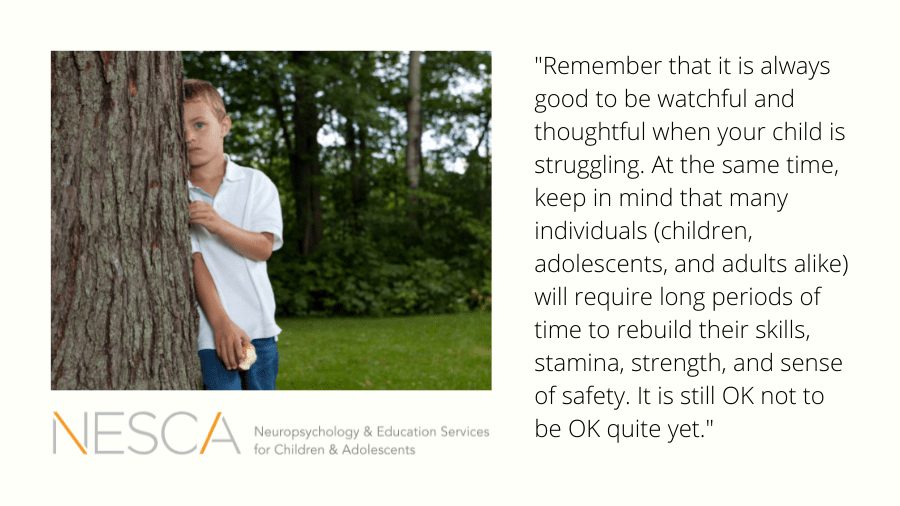
All of these are helpful pieces of information that you can communicate to an evaluator. This will build context for the concerns that you see now, and help us move through the web of complex possibilities that may be contributing to your child’s social challenges. Remember that it is always good to be watchful and thoughtful when your child is struggling. At the same time, keep in mind that many individuals (children, adolescents, and adults alike) will require long periods of time to rebuild their skills, stamina, strength, and sense of safety. It is still OK not to be OK quite yet.


About the Author

Dr. Yvonne M. Asher enjoys working with a wide range of children and teens, including those with autism spectrum disorder, developmental delays, learning disabilities, attention difficulties and executive functioning challenges. She often works with children whose complex profiles are not easily captured by a single label or diagnosis. She particularly enjoys working with young children and helping parents through their “first touch” with mental health care or developmental concerns.

Dr. Asher’s approach to assessment is gentle and supportive, and recognizes the importance of building rapport and trust. When working with young children, Dr. Asher incorporates play and “games” that allow children to complete standardized assessments in a fun and engaging environment.

Dr. Asher has extensive experience working in public, charter and religious schools, both as a classroom teacher and psychologist. She holds a master’s degree in education and continues to love working with educators. As a psychologist working in public schools, she gained invaluable experience with the IEP process from start to finish. She incorporates both her educational and psychological training when formulating recommendations to school teams.

Dr. Asher attended Swarthmore College and the Jewish Theological Seminary. She completed her doctoral degree at Suffolk University, where her dissertation looked at the impact of starting middle school on children’s social and emotional wellbeing. After graduating, she completed an intensive fellowship at the MGH Lurie Center for Autism, where she worked with a wide range of children, adolescents and young adults with autism and related disorders.


Neuropsychology & Education Services for Children & Adolescents (NESCA) is a pediatric neuropsychology practice and integrative treatment center with offices in Newton, Massachusetts, Plainville, Massachusetts, and Londonderry, New Hampshire, serving clients from preschool through young adulthood and their families. For more information, please email info@nesca-newton.com or call 617-658-9800.


To book an appointment with Dr. Yvonne Asher, please complete our Intake Form today. For more information about NESCA, please email info@nesca-newton.com or call 617-658-9800.


Assessing Social Skills Challenges: A Developmental Perspective

By | NESCA Notes 2021

By:  Stephanie Monaghan-Blout, Psy.D.
Pediatric Neuropsychologist

As parents and teachers, we want the world for our children, and one of the biggest worries is around social development and friendships. This worry is particularly acute when our child has a learning, emotional, or behavioral challenge that affects their functioning in school, the community, and at home. Knowing more about the developmental process and developmental expectations can help to identify challenges and develop appropriate interventions to support growth.

Human Development: A Dynamic Interactional Process

Human development is a dynamic and ongoing process between three factors:

  • the “hard-wired” general road map that governs the emergence and refinement of brain and body systems for all humans
  • the environment in which that development occurs, including relational components, such as availability of consistent attachment figures, threats to physical safety—including war, toxins in the water, etc., and access to resources, such as food, housing, education, and supportive family and friends
  • Unique constellation of the individual learning, temperament, and emotional style that provides resources as well as vulnerabilities

The ways in which these three factors interact can be hard to predict—just look at the difference between siblings who grow up in the same home. Some children are more vulnerable than others by virtue of a temperamental that “runs anxious,” in the words of one of my parents, which causes them to perceive unexpected events as threatening. Another’s vulnerability comes from their difficulties with understanding how social interactions actually work. How much difficulty each one encounters is likely to be calibrated by other elements, such as a consistent, predictable learning and social environment that makes developmentally appropriate demands and provides clear, reasonable (for the child) expectations. This can be a little trickier because vulnerable children are often delayed in their social-emotional development. For this reason, it is important to know more about the stages of friendship to know where your child is and how to help them grow.

The Laboratory of Childhood Social Development: Stages of Children’s Friendships (Robert Selman) This is one of many schemas for the meaning of friendship changes as a child grows and develops. Again, remember that there is a wide range of normal development, and that children with other challenges may move more slowly.

Level 0: Momentary Playmates (approximately 3-7 years old) Proximity is key; friends are people who are nearby and with whom you can have fun. The child assumes that “everyone thinks like me” and assumes that if a playmate has a different opinion, “s/he doesn’t want to be my friend anymore.”

Level 1: One Way Assistance (approximately 6-12 years) Friends are people who do nice things for you, like share a snack. Having a friend is very important, more important than someone being nice to you. Friendship can be used as leverage (“I will/won’t be your friend if…”).

Level 2: Two-Way Fair-Weather Cooperation (approximately 6-12 years) The child can take another’s perspective as well as his/her own—but not at the same time. Fairness and reciprocity become really important in a rigid way (“If I do something nice for you, you must do something nice for me”). Children are very judgmental about themselves and assume that others think the same way about them. Fitting in is also really important, and jealousy can become prominent. It is the time for cliques and secret clubs.

Level 3: Intimate, Mutually Shared Relationships (approximately 11-15 years) Friends are people who help you solve problems and will keep your secrets. They do kind things for you and don’t keep track because they care about each other. Best friends become really important and spend all of their time together. They can feel betrayed if their friend spends time with someone else.

Level 4: Mature Friendship (approximately 12 years-adulthood) Friends place a high value on emotional closeness. Trust and support maintain the relationship, not proximity. Friends accept and even appreciate their differences, and for this reason, they are not as threatened by other relationships.

You will notice as you read through these stages that there some key cognitive skills needed for social development. These include:

  • Self-regulation—the ability to inhibit impulses, control emotional reactions and manage behavioral responses . It also includes the ability to respond flexibly to changing demands.
  • Awareness of Others/Theory of Mind—the ability to recognize the difference between self and other; that other people do not share your thoughts and feelings.
  • Understanding of Norms, Rules, and Conventions—these are the agreed upon boundaries of expected behavior.
  • Perspective taking—the ability to not only recognize that other people do not think the way that you do, but to actually try to understand things from their point of view (“stand in their shoes”).
  • Mutuality-shared appreciation of each other and the reciprocal nature of the relationship.

Assessment: Before trying to intervene to help a child be more successful in making friends, it is important to distinguish between social skills and social competence. Social Skills are the discrete techniques for managing specific social interactions. These could range from maintaining eye contact to starting a conversation. Social Competence has to do with the overall ability to manage the variety of social demands in one’s environment. While we teach social skills, we are aiming for social competence. The criteria for social competence changes as children get older and the demands of their environment increase. This means that while a child may do perfectly well in one social environment, their mismatch in another could cause problems. Therefore, getting a general idea of how your child is thinking about friendship in relation to his peers is an important first step.

A second step in helping children become more socially competent is to figure out what the problem is. These problems can be divided into three general categories:

  • Skill Acquisition—Does the child know what to do? For instance, does the child know the steps to take to initiate conversations?
  • Skill Performance—Does the child have the motivation to perform the steps, and do they know when to do so (context)? For instance, does the child want to start a conversation, and do they know when to do so—like on the playground and not when the teacher is talking.
  • Skill Fluency—While they may know what to do to start a conversation and when to do it, how good are they at it? Can they do it in a timely manner without obvious awkwardness? Is there something else, like anxiety, getting in their way?

The final impediment to learning and using social skills to achieve social competency is the interference caused by anxiety. Anxiety is the experience of feeling unsafe and helpless to control a situation. It sparks a cascade of physiological changes that facilitate the process of escape by stimulating the sympathetic nervous system—when the danger is over, a complementary system takes over (parasympathetic nervous system) to calm things down and return to equilibrium. However, when a child is continuously stressed by, say, an unfriendly school environment, their system never calms down. They become stuck in “threat alert” where any unexpected stimuli is given a negative interpretation and the survival reflexes of “fight/flight/freeze” take over. How to “turn off” the threat alert? Make a child feel safe through a supportive relationship and then teach them the skills they will need to gain more mastery over the situation.


About the Author:

Formerly an adolescent and family therapist, Dr. Stephanie Monaghan-Blout is a senior clinician who joined NESCA at its inception in 2007. Dr. Monaghan-Blout specializes in the assessment of clients with complex learning and emotional issues. She is proficient in the administration of psychological (projective) tests, as well as in neuropsychological testing. Her responsibilities at NESCA also include acting as Clinical Coordinator, overseeing psycho-educational and therapeutic services. She has a particular interest in working with adopted children and their families, as well as those impacted by traumatic experiences. She is a member of the Trauma and Learning Policy Initiative (TLPI) associated with Massachusetts Advocates for Children and the Harvard Law Clinic, and is working with that group on an interdisciplinary guide to trauma sensitive evaluations.

To book an evaluation with Dr. Monaghan-Blout or one of our many other expert neuropsychologists and transition specialists, complete NESCA’s online intake form.

Neuropsychology & Education Services for Children & Adolescents (NESCA) is a pediatric neuropsychology practice and integrative treatment center with offices in Newton, Massachusetts, Plainville, Massachusetts, and Londonderry, New Hampshire, serving clients from preschool through young adulthood and their families. For more information, please email info@nesca-newton.com or call 617-658-9800.

Rating Scales/Questionnaires – Why Do We Give Them and Why Do They Matter?

By | NESCA Notes 2021

By Yvonne M. Asher, Ph.D. 
Pediatric Neuropsychologist

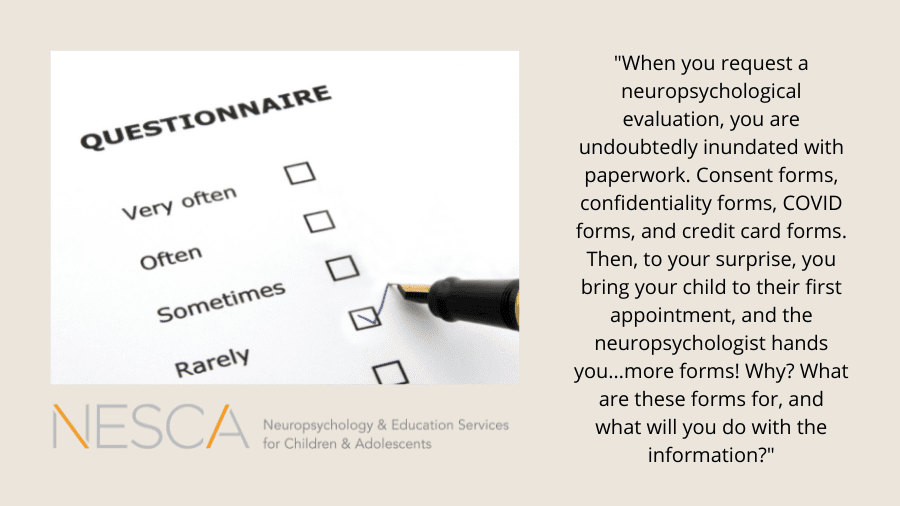
When you request a neuropsychological evaluation, you are undoubtably inundated with paperwork. Consent forms, confidentiality forms, COVID forms, and credit card forms. Then, to your surprise, you bring your child to their first appointment, and the neuropsychologist hands you…more forms! Why? What are these forms for, and what will you do with the information? These are great questions, and always feel free to ask your neuropsychologist. Here are some answers I give when I am asked:

Why do you need so many forms?

Our goal in completing a neuropsychological evaluation is to have as comprehensive picture of a child as possible. This means gathering information from many sources, including what you and/or others are noticing that is raising concerns (what we discuss in the intake appointment), prior evaluations and documentation (e.g., their IEP, testing done at school), your child’s performance on our assessment measures (what they do when they come to the office), and important people’s perceptions of your child’s functioning in daily settings – this is what we assess through the rating scales (also called questionnaires). The parent/teacher rating scales are an important source of information because they not only capture your concerns, but also show us how your concerns may be similar to or different from parents (or teachers) of same-age children. For example, concerns with “attention and focus” are common for us to hear. Attentional skills develop gradually over time, and having a standardized rating scale that evaluates your concerns (or your child’s teacher’s concerns) with attention helps us understand how far off your child’s skills are from what is expected for their age.

What do the forms ask about?

This depends on why your child is being referred for a neuropsychological evaluation. For example, if your child is referred for a question around autism, you will likely be given forms that ask about their social functioning, such as how they do at playdates, birthday parties, the playground, or other community spaces with peers. Your child’s teacher would also likely be given forms to evaluate how your child interacts with peers at school, such as how they do during lunch, snack, and recess; how well they work in groups; and if they have been successful in forming strong friendships. If the concerns are more related to mental health, you may be given forms that ask about their symptoms of anxiety, depression, etc.

What will you do with the forms?

We will take your ratings (or your child’s teacher’s ratings) and compare them to normative data. This is a fancy way of saying “we will see how your child compares to kids their age.” Then, we will take that information to help us form a more comprehensive picture of your child’s profile and our recommendations for how to best help and support them. For example, something I see often is a concern with kids following directions, remembering what they are told to do, and finishing all the steps necessary for a task or project (e.g., getting ready for school or bed). This can be (though certainly isn’t always) a difficulty with working memory or, holding information in mind. We assess working memory in many ways during testing. However, we can’t always see the deficits that parents and teachers see, because testing is inherently different from “real life.” So, rating scales serve as an important source of information in understanding what is going on day-to-day, which helps us to make more comprehensive recommendations.

How do I fill these out?

Please, please, please – read the directions carefully! Each form is meant to evaluate something different. For example, some ask you about your child’s emotional state “in general,” others ask about how they have been behaving over the last two weeks, and others ask about how well they can complete tasks independently (i.e., without any help or guidance). Do your best to complete each question – skipping questions that seem “irrelevant” or “inappropriate” may impact how well we can use the information later on. We realize that not every question will apply to every child – we are using the best tools we have, and some are designed to assess a wide range of children. If you have questions about the wording or phrasing, please ask your neuropsychologist – we really don’t mind!

I have a teenager. Why don’t you just ask them about how they are feeling?

If your child is old enough, we will absolutely talk to them about their perceptions of what is going on, what their concerns are, and what has been helpful for them. Many rating scales have a “child” or “self-report” version, and we may have them complete those, in addition to talking more conversationally about how they are doing.


About the Author

Dr. Yvonne M. Asher enjoys working with a wide range of children and teens, including those with autism spectrum disorder, developmental delays, learning disabilities, attention difficulties and executive functioning challenges. She often works with children whose complex profiles are not easily captured by a single label or diagnosis. She particularly enjoys working with young children and helping parents through their “first touch” with mental health care or developmental concerns.

Dr. Asher’s approach to assessment is gentle and supportive, and recognizes the importance of building rapport and trust. When working with young children, Dr. Asher incorporates play and “games” that allow children to complete standardized assessments in a fun and engaging environment.

Dr. Asher has extensive experience working in public, charter and religious schools, both as a classroom teacher and psychologist. She holds a master’s degree in education and continues to love working with educators. As a psychologist working in public schools, she gained invaluable experience with the IEP process from start to finish. She incorporates both her educational and psychological training when formulating recommendations to school teams.

Dr. Asher attended Swarthmore College and the Jewish Theological Seminary. She completed her doctoral degree at Suffolk University, where her dissertation looked at the impact of starting middle school on children’s social and emotional wellbeing. After graduating, she completed an intensive fellowship at the MGH Lurie Center for Autism, where she worked with a wide range of children, adolescents and young adults with autism and related disorders.


Neuropsychology & Education Services for Children & Adolescents (NESCA) is a pediatric neuropsychology practice and integrative treatment center with offices in Newton, Massachusetts, Plainville, Massachusetts, and Londonderry, New Hampshire, serving clients from preschool through young adulthood and their families. For more information, please email info@nesca-newton.com or call 617-658-9800.


To book an appointment with Dr. Yvonne Asher, please complete our Intake Form today. For more information about NESCA, please email info@nesca-newton.com or call 617-658-9800.


Meet Abigael Gray, NESCA’s Speech-Language Pathologist & Feeding Specialist

By | NESCA Notes 2020

This Fall, NESCA debuted its new feeding, speech and language and direct sensory/motor occupational therapy services. Leading NESCA’s feeding and speech and language therapy is Abigael Gray, MS, CCC-SLP. In today’s blog, we sat down with Abbey to learn about her role as a Feeding Specialist; Speech-Language Pathologist.

What led you to your interest in speech and language and feeding, in particular?

I received an undergraduate degree in psychology from Syracuse University. After graduating, I worked in a preschool for children with autism and developmental delays. This is really what made me interested in speech and language pathology (SLP), since all of the children there were receiving speech-language therapy. While I was working there, I observed quite a bit and decided I wanted to learn and do more in this area. After five years of working there, I enrolled at Emerson College to earn my Master’s in Communications Sciences and Disorders. While there, I discovered that Emerson has a great program for feeding. Many schools don’t have a focus on swallowing and feeding in pediatrics, like Emerson does. I had a placement with one of my professors at her practice in Needham. I eventually took a position with this clinic and received great training in pediatric feeding therapy there during my clinical fellowship. This is where I became passionate about feeding therapy. I eventually moved into a multidisciplinary practice for two more years and then joined the team at NESCA.

Why were you attracted to NESCA?

I saw this as a great opportunity to bring speech-language pathology and feeding therapy to NESCA. I loved the  multidisciplinary aspect to the practice and thought I could strengthen what NESCA already offers by adding feeding and SLP to it. I like how all of the various services are built into one practice right here. Many of the  kids being seen at NESCA can also benefit from the therapies that I offer. Having those services available to parents and children right in the same location is a huge plus for them.

After meeting Ann Helmus, Ph.D., NESCA’s founder and director, I knew that it was the right cultural fit for me, being so collaborative. It also gave me the opportunity to continue to work with Julie Robinson, OT, who oversees this new clinical offering. It’s great to be able to continue with my working relationships with the occupational therapists who also joined when I did. The seamless communication between all of us in the clinical therapy practice makes for really well-rounded therapy for the children we treat as well as more convenient for their parents/caregivers.

What are the most exciting and the most challenging parts of your role?

The most exciting part of my new role at NESCA is being able to offer speech-language and feeding  services in-house. Often the recommendations from neuropsychologists through their assessment is to have some SLP support, whether it’s having to do with reading, writing, social skills, expression or comprehension. Being able to offer that right in the same practice allows for continuity of care among clinicians on behalf of the child. It’s exciting for me because I can go back to the neuropsychologist or other clinician at NESCA who referred the client with any new observations or questions I may have. This makes the process much smoother for the parents and our clinicians. There’s just a lot less “red tape” to go through to be able to communicate and collaborate.

It’s also exciting to build this service offering from the ground up. I can take all of the experiences I have had and knowledge I’ve gained through my years in various positions and make our services our own at NESCA.

As far as challenges go, right now as we build out this new service, I am currently the only SLP on board. While that is the case for now, I have a great network of past colleagues and friends who are SLPs to bounce thoughts off of. Our plan is to have other SLPs join our team as we grow the practice.

What are your clinical interests?

Feeding is my big passion area. Within feeding, I am currently completing a lactation counseling training to become a certified lactation counselor. Babies can struggle with breast feeding, then can have even more difficulties transitioning from the breast to solid foods. I love working with infants and toddlers, and having this certification will round out my knowledge about feeding for this age range.

Within speech, I love working on articulation with kids who have speech sound disorders, phonological disorders and childhood apraxia of speech. Within language, I really enjoy working on social pragmatic communication with kids who are on the higher functioning side of the autism spectrum, or Asperger’s, or those who have social pragmatics difficulties.

I also really enjoy working on early literacy skills, sound letters, identification, rhyming and phonological awareness. When it comes to kids who may be in their older elementary school or early middle school years, I love to work on writing skills with them.

One characteristic among NESCA clinicians is that they are all lifelong learners. In what ways are you a lifelong learner?

I loved that having the curiosity to continue to learn is a draw here at NESCA! That’s really important to me. Right now, I’m currently working my way through three different courses:

  • The lactation counseling certification that I mentioned previously
  • A “Feed the Peds” course, which is a refresher course on feeding therapy with some new approaches in the areas of tethered oral tissues (i.e., tongue ties, lip ties) and how those impact feeding. The course covers how to assess and treat these issues. What’s interesting is that these new approaches are appropriate for people across the lifespan – not just for young children. There is also a module on treating those with medical complexities. Often times, medically complex patients have issues with feeding and/or are tube-fed, and can then go on to have challenges progressing through age-appropriate feeding skills or transitioning off of tube-feeding.
  • The third area I am currently in training for is with orofacial myofunctional disorders, including tethered oral tissues and the impact on speech and feeding. This covers anything that structurally or functionally impairs speech, the airway or feeding. This is a growing area in our field, so it’s important to be current and well-informed on this topic.

How has Covid-19 impacted the way you treat patients and families?

Right now, we are delivering speech-language and feeding therapy via teletherapy. While it’s always great to work with a child and/or family in-person, the plus side of teletherapy is that we get to see the child in their natural home environment as well as how the child communicates with family members. Sometimes, when we see the child in this setting, we can detect and observe a feeding or speech-language issue as the family sees it on a regular basis. It’s also nice to be able to work with parents in their own setting. We can better understand their priorities for therapy since we are talking directly with them. It also allows the child to generalize the skills they would normally learn in the clinic setting right into their home. As therapists, we can see what a typical meal at home looks like, which is obviously a more natural setting than the clinic. We used to have to ask parents to send us videos of mealtimes. Now, it’s like we are at a meal with them over Zoom!

Covid-19 was the catalyst for us to offer teletherapy, which has helped parents who work and have to travel to get to therapy tremendously. They are now able to be more hands-on in the therapy sessions. Also, for some medically complex kids, it’s just hard to get out of the house and drive to therapy. And, parents don’t have to cancel appointments if a sibling is home sick or even quarantining. And, we can stay on track with therapy via telehealth even in inclement weather that makes it challenging to drive to the clinic.

Covid-19 has certainly had its drawbacks, but we’re seeing some of the upsides in teletherapy as well.


About the Author

Abigael Gray has over six years of experience in assessment and treatment of a variety of disorders, including dysphagia, childhood apraxia of speech, speech sound disorder, receptive and expressive language disorder, autism spectrum disorder and attention deficit hyperactivity disorder. She has a special interest and experience in working with children with feeding and swallowing disorders, including transitioning infants to solid foods, weaning from tube feeding, improving sensory tolerance, developing chewing skills, increasing variety and volume of nutritional intake and reducing avoidance behaviors during mealtimes.


If you are interested in learning more about NESCA’s speech-language therapy or feeding therapy, please complete our online intake form, or email NESCA’s Director of Clinical Services Julie Robinson at jrobinson@nesca-newton.com.


Neuropsychology & Education Services for Children & Adolescents (NESCA) is a pediatric neuropsychology practice and integrative treatment center with offices in Newton, Massachusetts, Plainville, Massachusetts, and Londonderry, New Hampshire, serving clients from preschool through young adulthood and their families. For more information, please email info@nesca-newton.com or call 617-658-9800.


What Does Autism Look Like? Exploring the Differences among Girls and Boys

By | NESCA Notes 2019


By: Erin Gibbons, Ph.D.
Pediatric Neuropsychologist, NESCA

In 2018, the Centers for Disease Control and Prevention (CDC) determined that approximately 1 in 59 children is diagnosed with Autism Spectrum Disorder (ASD). Boys are still four times more likely be diagnosed with ASD; however, research indicates that the diagnosis is often missed in girls, especially those who have average intelligence and “milder” forms of ASD. To understand why ASD is more often missed in girls, let’s explore the differences between boys and girls with ASD. This discussion will focus on children with average to above average intelligence (about 50% of all children diagnosed with ASD).


Boys Girls
Poor impulse control, more acting out Likely to be quiet and withdrawn
Disruptive behaviors in the classroom setting Tend to be reserved and cooperative at school
Frequent repetitive motor behaviors that are directly observable Lower frequency of these motor behaviors
Lack of interest in imaginary play Very much engaged in imaginary play
Restricted interests may seem unusual – e.g., train schedules, maps, windmills Restricted interests may seem “age appropriate” – e.g., horses, unicorns, ballet
Trouble making friends Might have a few friends
Likely to exhibit angry outbursts when frustrated/anxious Likely to engage in self-harm or other behaviors that are not observed by others when frustrated/anxious
Lack of awareness of being different or not fitting in More motivated to fit in and “hide” social difficulties – might try to imitate the behavior of a peer that is perceived as popular


Due to these differences, the diagnosis of ASD is often missed in young girls. Adults might agree that a girl is “odd” or “quirky,” but dismiss these concerns because she has good eye contact, has some friends, and does not engage in hand flapping or other unusual behaviors. Unfortunately, other girls might be misdiagnosed, which could lead to ineffective or inappropriate treatment interventions. Most commonly, they might be misdiagnosed with ADHD or Anxiety Disorder.

In many cases, girls with ASD have increasing difficulties with social interactions as they get older and demands get higher. A young girl with ASD might be able to “get by” in social interactions but by the time she reaches adolescence, she is not able to navigate the intricacies of the social milieu. This can lead to social isolation and high risk of being bullied or rejected by peers.

Unfortunately, a missed diagnosis of ASD for a young girl can have long-reaching ramifications. She might experience depression, anxiety and/or low self-esteem, wondering why she doesn’t “fit in” and “feels different” from other girls. She might start to struggle in school or disconnect from activities that she used to enjoy. Moreover, missing the diagnosis in childhood means that she did not receive services to support her social and peer interaction skills during her formative years.

As always, when parents or other caregivers have concerns about a child’s development, it is important to seek an evaluation from a professional. And if the findings do not feel quite right, parents should never feel uncomfortable about seeking a second opinion.


About the Author: 

Erin Gibbons, Ph.D. is a pediatric neuropsychologist with expertise in neurodevelopmental and neuropsychological assessment of infants,

children, and adolescents presenting with developmental disabilities including autism spectrum disorders, Down syndrome, intellectual disabilities, learning disabilities, and attention deficit disorders. She has a particular interest in assessing students with complex medical histories and/or neurological impairments, including those who are cognitively delayed, nonverbal, or physically disabled. Dr. Gibbons joined NESCA in 2011 after completing a two-year post-doctoral fellowship in the Developmental Medicine Center at Boston Children’s Hospital. She particularly enjoys working with young children, especially those who are transitioning from Early Intervention into preschool. Having been trained in administration of the Autism Diagnostic Observation Schedule (ADOS), Dr. Gibbons has experience diagnosing autism spectrum disorders in children aged 12 months and above.


If you are interested in booking an evaluation with Dr. Gibbons or another NESCA neuropsychologist, please fill out and submit our online intake form


Neuropsychology & Education Services for Children & Adolescents (NESCA) is a pediatric neuropsychology practice and integrative treatment center with offices in Newton and Plainville, Massachusetts, and Londonderry, New Hampshire, serving clients from preschool through young adulthood and their families. For more information, please email info@nesca-newton.com or call 617-658-9800.
Social Creativity and ASD – Challenging the assumption that autistic people are not social

By | NESCA Notes 2018

Photo from the documentary, Autism: The Musical (2007)

By: Rebecca Girard, LICSW, CAS
Licensed Clinical Social Worker

The New York Times recently published an opinion piece titled, How to Meet Autistic People Halfway, an article that challenges the common belief that people on the autism spectrum are avoidant of social interaction and do not desire social connections. The authors, Vikram K. Jaswal and Nameera Akhtar are psychologists and researchers who study the social lives of people on the autism spectrum. They assert that while core deficits of autism may make social interaction more challenging, it does not mean people on the spectrum do not desire meaningful social connection. For years, many in the ASD community and their allies in the neurodiversity rights movement have attempted to combat this anti-social stereotype, but the notion stubbornly persists. Counter-narratives of the autistic social experience often reflect autistic people as extremely emotionally sensitive, hyper-aware of the feeling states of others, and indeed motivated to experience social success in the form of friendships and social acceptance. Additionally, an increasing number of people believe those on the spectrum may actually display more creative and interesting ways to connect and choose to describe autistic individuals as “socially creative” rather than having “social deficits”.

If we then acknowledge the desire to connect is present, how can we best facilitate social learning and promote social success? First, we can acknowledge that a person on the spectrum will have a myriad of ASD-related challenges that will likely make socializing difficult. These include trouble reading and interpreting social cues (eye contact, body language, facial expressions), attending to and managing sensory challenges during interaction, and repetitive and inflexible thinking (getting “stuck”, echolalia), all of which can lead to preemptive social rejection by peers and a lack of social opportunities to practice and improve upon their social interaction skills. These challenges require multi-disciplinary supports, including (but not limited to) occupational therapy, speech therapy, and cognitive-behavioral therapy. Second, we can provide positive social learning interventions that address and ameliorate the impact of these factors, while providing opportunities to explore and understand the social world.

A popular method of intervention is that of “social knowledge”, or didactic social skills training. This entails imparting concrete social skills, in the effort to explicitly teach what a person may not know about socializing. Think – programming a social computer with many algorithms; if a person does A, you do B. While this may be great at teaching the basics, it often does not adequately prepare ASD individuals for the unpredictability and fluidity of everyday interactions. Another approach is that of “social performance”, a dynamic method of encouraging social pragmatic development by providing semi-structured socialization opportunities in small group settings with immediate, in vivo feedback on what’s working or not. Think – flexing a social muscle. Drama-based social pragmatic groups are gaining in popularity as a method for not only promoting social connections but as a fun way to create an encouraging and supportive space to finds one’s own intrinsically motivating social style.

But enhancing individual social skills and providing adequate social opportunities is admittedly a one-sided approach. Equally important is challenging the stigma and bias that plague the ASD community. We need to be allies to this community by promoting greater acceptance of a wide-range of social styles and approaches to social engagement. To honor the neurodiversity mission, which “rejects the idea that autism should be cured, advocating instead for celebrating autistic forms of communication and self-expression, and for promoting support systems that allow autistic people to live as autistic people.” (What is Neurodiversity? [Website]. (2011).  National Symposium on Neurodiversity at Syracuse University)

As a therapist who has worked with ASD individuals across the lifespan since 2004, I know firsthand that autistic people feel the same loneliness and isolation when chronically socially disconnected, and feel the same anxiety and unease when experiencing social rejection. I have also had the pleasure of witnessing individuals find their own distinctive social style and the joy of connecting with others who appreciate what is different as interesting and exceptional, rather than off-putting or strange. The autistic people in my life, both professionally and personally, have challenged me to rethink narrow and strictly defined social expectations, and have made all my relationships richer as a result. Autistic people are often credited with “out of the box” thinking and innovation, which can be applied to their social lives as well, as they are uninhibited by social convention. For example, Asperger’s are Us are the first all-autistic sketch comedy troupe, and their performances reflect their original and offbeat sense of humor, as well as their deep connection to one another as friends. A great example of what is possible.

The New York Times article said it best in its conclusion, “improving the social lives of autistic people will require putting aside assumptions about how social interest is expressed and recognizing that it can be shown in unexpected ways.” As parents, professionals, and allies, let’s commit to challenging this very basic and long-held assumption and appreciate and embrace the unique and creative ways autistic people chose to engage the world around them.


About the Author: 

Rebecca Girard, LICSW, CAS is a licensed clinical social worker specializing in neurodivergent issues, sexual trauma, and international social work. She has worked primarily with children, adolescents, adults with Autism Spectrum Disorders and their families for over a decade. Ms. Girard is highly experienced in using Cognitive Behavior Therapy (CBT) as well as Socio-dramatic Affective Relational Intervention (SDARI), in addition to a number of other modalities. She provides enhanced psychotherapy to children with ASD at NESCA as well as to provide therapeutic support to youth with a range of mood, anxiety, social and behavioral challenges. Her approach is child-centered, strengths-based, creative and compassionate.

Reach out if you would like to work with Rebecca: Email rgirard@nesca-newton.com or call 617-658-9825


Neuropsychology & Education Services for Children & Adolescents (NESCA) is a pediatric neuropsychology practice and integrative treatment center with offices in Newton, Massachusetts, and Londonderry, New Hampshire, serving clients from preschool through young adulthood and their families. For more information, please email info@nesca-newton.com or call 617-658-9800.
First Recommendation: Take up Golf

By | NESCA Notes 2018


By: Ann Helmus, Ph.D.
NESCA Founder/Director

A five-year old boy, whom I will call Marcel, was referred by his parents for evaluation to determine if he had Autism Spectrum Disorder (ASD) because he isolated himself socially. With a great deal of effort, I got Marcel through the neuropsychological evaluation process and observed him at his pre-school. Results of the evaluation revealed a significant communication disorder but no other symptoms of ASD. He was socially isolated because he didn’t have the language skills to interact easily with others. Although his verbal abilities were limited, Marcel’s visual-spatial skills were superior, based on testing results. During my school observation, I was struck by his ability to focus intently, seemingly immune to distraction, on building an extensive highway system for his cars for more than an hour.In thinking about treatment for Marcel, my top priority was to conceive of a plan for luring him out of his “own world” where he retreated much of the time to avoid the communication demands inherent in engaging his surroundings. Because the language skills of young children develop most rapidly in social contexts, increasing Marcel’s opportunities for interaction with others would be expected to improve both his language skills and his social confidence. Since people can be most readily induced to change by leveraging their strengths, I asked myself, “What activity requires superb visual-spatial skills, and the ability to concentrate for hours on visual stimuli?”, both conspicuous strengths for Marcel. I also wanted an activity that would provide ample opportunities for interactions with others but not demand it.Deciding that Marcel was too young to become a pool shark, I recommended golf to his parents, explaining my reasoning. I told them that, in addition to using Marcel’s natural strengths to build a skill that would enhance his self-esteem, golf would provide a “controlled social arena”. Marcel could get away with socializing primarily about the game, which would require him to use a limited vocabulary (e.g. birdie, bogey, slice) whereas socializing in less controlled environments involves a broader range of topics and associated language demands.Marcel excelled with golf, quickly mastering the game and often playing more than 36 holes during weekends, such that he was interacting with others throughout the day, instead of engaging in solitary pursuits, but still “having a break” from other people while he focused on his game. He and his family were rightfully proud of his tournament trophies and Marcel established relationships with his teammates and coaches. As he spent more time interacting with others, Marcel’s communication skills and self-confidence blossomed.

When I saw him recently for his two-year follow-up evaluation, Marcel told me that he wanted to switch from golf to tennis “because its more social”.

Leveraging a child’s strengths can be one of our most potent tools for remediating weaknesses.


About the Author:

NESCA Founder/Director Ann Helmus, Ph.D. is a licensed clinical neuropsychologist who has been practicing for almost 20 years. In 1996, she jointly founded the  Children’s Evaluation Center (CEC) in Newton, Massachusetts, serving as co-director there for almost ten years. During that time, CEC emerged as a leading regional center for the diagnosis and remediation of both learning disabilities and Autism Spectrum Disorders.
In September of 2007, Dr. Helmus established NESCA (Neuropsychology & Education Services for Children & Adolescents), a client and family-centered group of seasoned neuropsychologists and allied staff, many of whom she trained, striving to create and refine innovative clinical protocols and dedicated to setting new standards of care in the field.

Dr. Helmus specializes in the evaluation of children with learning disabilities, attention and executive function deficits and primary neurological disorders. In addition to assessing children, she also provides consultation and training to both public and private school systems. She frequently makes presentations to groups of parents, particularly on the topics of non-verbal learning disability and executive functioning.


To book a consultation with Dr. Helmus or one of our many other expert neuropsychologists, complete NESCA’s online intake form.


Neuropsychology & Education Services for Children & Adolescents (NESCA) is a pediatric neuropsychology practice and integrative treatment center with offices in Newton, Massachusetts, Plainville, Massachusetts, and Londonderry, New Hampshire, serving clients from preschool through young adulthood and their families. For more information, please email info@nesca-newton.com or call 617-658-9800.


Skip to content