Tag

students Archives - Page 4 of 4 - NESCA

Subscribe to NESCA Notes

Understanding Behavior as Communication

By | Nesca Notes 2023

By: Cynthia Hess, PsyD
Pediatric Neuropsychologist

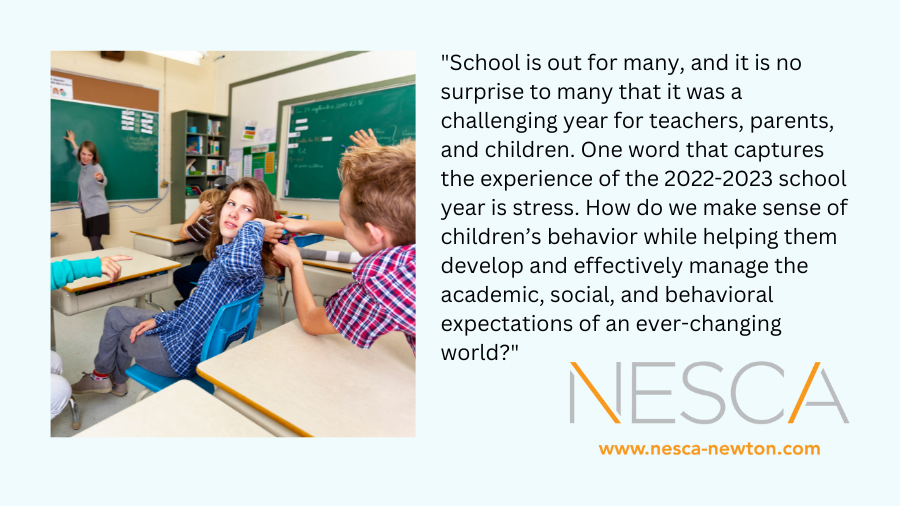
School is out for many, and it is no surprise to many that it was a challenging year for teachers, parents, and children. One word that captures the experience of the 2022-2023 school year is stress. Teachers were stressed as their students continued to contend with the academic and social deficits that resulted from the pandemic. Many students have struggled to adapt to post-pandemic learning, and incidents of acting out behavior have increased precipitously. How do we make sense of children’s behavior while helping them develop and effectively manage the academic, social, and behavioral expectations of an ever-changing world?

Ross Greene, Ph.D., states, “Children want to do well and would if they could.” Behavior is not just random or meaningless. It serves as a way for children to express their needs, feelings, and experiences, especially when they have not yet developed strong verbal or communication skills. When the demands of the environment exceed a child’s capacity to manage them, they are apt to become stressed, increasing the likelihood that they will act out. Stress is a complex concept that is a response to perceived or anticipated demands or pressures that exceed an individual’s coping abilities.

When stressed, the adrenal glands release cortisol, a stress hormone that helps mobilize energy reserves for the fight-or-flight response. Fear and anxiety also increase individuals’ vulnerability to responding with fight or flight. So, while fear is focused on a specific threat, physiologically, it feels much the same as stress. Behavior is, therefore, a way of communicating that something is amiss. For instance, a child who acts aggressively may express frustration, which is stressful. And a child who becomes withdrawn might feel overwhelmed or anxious, triggering a stress response. Behavior is a natural way for children to communicate their needs, emotions, or reactions to the environment.

Our job as adults is first to check our own emotional status, because if we are tired or stressed, it will likely influence how we respond when children behave badly. Observing and interpreting behaviors with a curious and open mindset is important. By paying attention to patterns, triggers, and context, adults can gain insights into what a child might be trying to communicate through their behavior. Our job is not to manage the behavior but to understand, per Dr. Greene, what skills are lagging or what problems need to be solved, build relationships, and work collaboratively with children to solve problems and change behavior.

Resources:

The Explosive Child, Ross Greene, Ph.D., 2021

Beyond Behaviors; Mona Delahooke, Ph.D., 2019

Podcast: Two Sides of the Spectrum; episode dated April 5, 2023; “Safety as the Foundation for Everything


About the Author

Dr. Cynthia Hess (Cindy), a licensed psychologist, worked as an elementary counselor and school psychologist for 15 years before starting her doctorate. In this role, she developed extensive expertise and aptitude for working with individuals and groups struggling with a wide range of emotional and learning challenges.

She completed her pre-doctoral internship with Rochester Institute of Technology in Rochester, N.Y., where she trained at Hillside Family of Agencies in a therapeutic residential school. At Hillside, she worked with youth ages 5-17 who had experienced complex developmental trauma.

She earned her Psy.D. in Counseling and School Psychology from Rivier University in 2018. Having a strong interest in the impact of social media on children and our culture, her doctoral dissertation studied the impact social media has on social skills development in fourth- and fifth-grade children.

Dr. Hess’s first post-doctoral fellowship was with The Counseling Center of New England, where she provided psychotherapy and family therapy to children ages 5-18 and young adults.

Dr. Hess joined NESCA’s Londonderry, N.H. office in 2019, where she completed a second two-year fellowship in pediatric neuropsychological assessment. Dr. Hess now conducts neuropsychological evaluations as a pediatric neuropsychologist and has a particular interest in working with children and young adults with complex emotional and behavioral profiles. Her experience allows her to guide families in navigating the complicated options for school and other support services.


To schedule an appointment with one of NESCA’s expert neuropsychologists, please complete our online intake form


NESCA is a pediatric neuropsychology practice and integrative treatment center with offices in Newton and Plainville, Massachusetts, Londonderry, New Hampshire, and the greater Burlington, Vermont area, serving clients from preschool through young adulthood and their families. For more information, please email info@nesca-newton.com or call 617-658-9800.


So, You Are Taking a Leave of Absence from College—Now What?

By | Nesca Notes 2023

By: Kelley Challen, Ed.M., CAS
Director of Transition Services; Transition Specialist, NESCA

Over three-quarters of college students (76%) reported moderate to severe psychological distress during the 2022-2023 school year (National College Health Assessment, American College Health Association, Spring 2023). College students across the country are continuing to struggle with depression, anxiety, self-harm, and suicidal thoughts this school year. My appointment calendar is often made up of meetings with college students or parents of college students beginning the process of taking a leave of absence and wondering what to do next. Here are some tips that I shared with many of these students and families.

Get Treatment

Many students need to participate in skill-based therapies (cognitive behavioral therapy, dialectical behavioral therapy, exposure and response prevention, acceptance and commitment therapy, etc.) in order to build up coping skills that may not have been developed in high school. Depending on the severity of current mental health issues, a student may need to participate in an intensive inpatient or outpatient treatment. Ultimately, many students need to find a supportive outpatient therapist—ideally someone who will be able to continue treating the student if they plan to make a future college attempt.

Psychopharmacological intervention (i.e., medication) can be important to consider. Sometimes students have not been taking medications as prescribed or they are taking medications exactly as prescribed but not gaining the intended benefits. Consulting with a prescriber can be an important treatment step for determining whether medication, or medication changes, are necessary.

Get Exercise

For any student, having a regular routine for exercise, sleep, and healthy diet has an impact. However, this is even more critical for students who are vulnerable to anxiety and/or depression. Exercise does not have to start big. Walking (with or without the dog), hiking, or just moving along to a YouTube fitness video for 10 minutes a day will make a difference. It’s critical to schedule the exercise in and often easiest if this is part of a morning or evening routine. For some students, working with a personal trainer or attending scheduled classes helps with accountability. Using a wearable exercise tracker like a Fitbit, Garmin Watch, or Apple Watch can also help with motivation and consistency.

Get a Job

Over the past 25 years, we have seen a notable decrease in the number of high school students who have participated in paid employment. Many students went off to college without taking time to connect college participation with future career interests. Using time off from school to explore work preferences and build transferrable skills (and a resume) can help students experience efficacy and improve mood. As a college student, no one is particularly excited when you show up to class, and the professor certainly doesn’t depend on you in order to get their job done. However, as an employee, students can experience tangible success through accomplishing work activities, receiving gratitude from coworkers and supervisors, and earning money. Work can also provide an important social experience. This is also an historic time to be looking for a first or early career position in the American workforce. Entry-level workers can make good wages. and there are plenty of part-time job openings across industries. Moreover, it’s difficult to get fired right now because good help is truly hard to find.

For students who are not ready to commit to paid work, and need time to recover and build energies up, volunteer jobs are also good opportunities. Some students will do better with brief drop-in volunteer activities while others my want to schedule more routine work hours.

Consider Taking Classes

When students take a leave of absence from college, the assumption is that the student will want to return to a college experience. But many students take a leave of absence and determine that they do not want to go back to college or that they do not want to go back to the same college. If a student wants to keep up academic skills, they can audit or take one or more college courses during the spring semester (depending on their college’s policies and whether they are planning to return). Community colleges, state colleges, and part-time or online college programs (like Harvard Extension School) are good options to explore for classes of interest as a non-degree seeking student. Starting back with a class that is high interest or a low degree of difficulty can be helpful for students who need to rebuild confidence. Additionally, when students are unsure if they are going to return to college or uncertain of a potential future major, it can be good to try classes that are likely to transfer and generally meet basic liberal arts requirements.

Get a Coach

Some students with mental health issues have other underlying challenges that contributed to their struggles in college. There could be a learning disability that wasn’t appropriately being addressed with accommodations, executive function challenges that impacted keeping up with pace, or volume of academics, social challenges that were exacerbated by the highly social dorm environment, or other issues. It is important to consider whether there are skill deficits that may have contributed to a student experiencing anxiety or depression. Some students will benefit from life skills, executive function, or social coaching in order to build up areas that are weaker before heading back to college (or may want to continue with that coaching when they head back).

Other students may want to take time to work with a career or transition coach to do some self-exploration. Taking a step back to participate in self-assessment related to one’s preferences and interests and to determine how those align with potential college major and future career interests can be helpful. I have worked with several students on leave to go through a career planning process. For some, they discover that they chose exactly the right college and major, and that can increase motivation when they get back to school, with proper supports in place. For others, this process sets a student on a completely new path.

Let us know, in our online Intake Form, if your student needs support during their time off from school and/or coaching to assist during their time off or when they return to college.


About the Author
Kelley Challen, Ed.M., CAS, is NESCA’s Director of Transition Services, overseeing planning, consultation, evaluation, coaching, case management, training and program development services. Ms. Challen also provides expert witness testimony in legal proceedings related to special education. She is also the Assistant Director of NESCA, working under Dr. Ann Helmus to support day-to-day operations of the practice. Ms. Challen began facilitating programs for children and adolescents with special needs in 2004. After receiving her Master’s Degree and Certificate of Advanced Study in Risk and Prevention Counseling from Harvard Graduate School of Education, Ms. Challen spent several years at the MGH Aspire Program where she founded an array of social, life and career skill development programs for teens and young adults with Asperger’s Syndrome and related profiles. She additionally worked at the Northeast Arc as Program Director for the Spotlight Program, a drama-based social pragmatics program, serving youth with a wide range of diagnoses and collaborating with several school districts to design in-house social skills and transition programs. Ms. Challen is co-author of the chapter “Technologies to Support Interventions for Social- Emotional Intelligence, Self-Awareness, Personality Style, and Self-Regulation” for the book Technology Tools for Students with Autism. She is also a proud mother of two energetic boys, ages six and three. While Ms. Challen has special expertise in supporting students with Autism Spectrum Disorders, she provides support to individuals with a wide range of developmental and learning abilities, including students with complex medical needs.


Neuropsychology & Education Services for Children & Adolescents (NESCA) is a pediatric neuropsychology practice and integrative treatment center with offices in Newton, Massachusetts, Plainville, Massachusetts, and Londonderry, New Hampshire, serving clients from preschool through young adulthood and their families. For more information, please email info@nesca-newton.com, call 617-658-9800 or complete our online Intake Form.

Neuropsychological Evaluations at Different Stages of Childhood & Adolescence

By | Nesca Notes 2023

By: Erin Gibbons, Ph.D.
Pediatric Neuropsychologist, NESCA

Having been at NESCA for more than 11 years, I have been fortunate enough to follow many clients throughout their childhood. In some cases, I have conducted two or three neuropsychological evaluations on the same student at different points in their life. After their first experience with an evaluation, parents will often ask, “Will we need to do this again?” or “How often should we get evaluations?”. As is the case for most things, the answer is different for every child depending on their needs. When determining how often to seek an evaluation, it might be helpful to think about what information you are trying to gather depending on the child’s age.

Preschool (2-5)

  • Concerns about developmental delays (not meeting milestones)
  • Concerns about autism spectrum disorder (ASD)
  • Transition from Early Intervention into preschool
  • Transition from preschool to kindergarten

Elementary School (5-10)

  • Concerns about academic skills – assess for dyslexia, dysgraphia, dyscalculia, or other specific learning disability
  • Why is the student not making expected progress in school?
  • Concerns about attention and executive functioning (possible attention-deficit/hyperactivity disorder (ADHD)
  • Concerns about ASD (if not already diagnosed)
  • For children who already have an identified disability – need to monitor progress
  • Plan for transition to middle school

Middle School (10-14)

  • If this is the first neuropsychological evaluation – it is usually because the child did okay in elementary school but is now struggling with increased demands in the areas of academics, executive functioning, and social
  • For students with a previously identified disability – need to monitor progress
  • Plan for transition to high school

Early High School (14-16)

  • Monitor progress – how is the student managing increased demands of high school?
  • Mental health – emerging concerns about anxiety and/or depression
  • Start planning for postsecondary transition
    • Is the student on track to graduate in 4 years?
    • Does the student need programming beyond 12th grade?

Late High School (16-18)

  • Heavy emphasis on postsecondary transition planning
  • Do we need to work on vocational skills?
  • If the student is college-bound – determine whether any accommodations will be needed
  • If the student is not going to college – what is next?
    • Remain at high school with ongoing special education services
    • Gap year
    • Young adult transition program for students with disabilities
  • Consult with transition specialist to help with planning

Early Adulthood (18+)

  • If the student is in college – do they need additional supports?
  • If the student is still accessing special education services – where should we be putting the emphasis?
    • Academics
    • Vocational
    • Life Skills
  • For students with developmental disabilities, need to plan for adult services
    • Should the parents seek guardianship?
    • Is the student eligible for DDS or other adult service agencies?
    • What resources are available to the family?
  • Combine with transition specialists to help navigate adult services


About the Author

Erin Gibbons, Ph.D. is a pediatric neuropsychologist with expertise in neurodevelopmental and neuropsychological assessment of infants,

children, and adolescents presenting with developmental disabilities including autism spectrum disorders, Down syndrome, intellectual disabilities, learning disabilities, and attention deficit disorders. She has a particular interest in assessing students with complex medical histories and/or neurological impairments, including those who are cognitively delayed, nonverbal, or physically disabled. Dr. Gibbons joined NESCA in 2011 after completing a two-year post-doctoral fellowship in the Developmental Medicine Center at Boston Children’s Hospital. She particularly enjoys working with young children, especially those who are transitioning from Early Intervention into preschool. Having been trained in administration of the Autism Diagnostic Observation Schedule (ADOS), Dr. Gibbons has experience diagnosing autism spectrum disorders in children aged 12 months and above.

If you are interested in booking an evaluation with a NESCA neuropsychologist/clinician, please fill out and submit our online intake form

Neuropsychology & Education Services for Children & Adolescents (NESCA) is a pediatric neuropsychology practice and integrative treatment center with offices in Newton and Plainville, Massachusetts, Londonderry, New Hampshire, and Burlington, Vermont, serving clients from preschool through young adulthood and their families. For more information, please email info@nesca-newton.com or call 617-658-9800.

Age of Majority: Preparing Students to Make Special Education Decisions as Adults

By | Nesca Notes 2023

By: Kelley Challen, Ed.M., CAS
Director of Transition Services, NESCA

One of the exciting aspects of being a transition specialist who evaluates and provides consultation to students and schools across the country is that transition services are dictated by the Individuals with Disabilities Education Act (IDEA 2004), a federal law. Students have similar rights across all 50 states regarding how their IEPs must prepare them for postsecondary learning, living, and employment experiences. However, there are additional rights and responsibilities related to special education that are dictated by state laws and regulations. Age of Majority and the Transfer of Rights to students is one of these issues that varies from state to state.

At the Age of Majority, or the age of legal adulthood, in each state, young adults are granted certain legal rights (e.g., voting, marrying, opening a credit card, signing contracts). Each state determines which rights will transfer to young adults within their state. IDEA 2004 gives states the right to transfer educational decision-making rights to students who have reached the Age of Majority—this means that all of the educational rights previously accorded to parents/guardians may transfer directly to the student. The Age of Majority is 18 in most, but not all, states.

In states that transfer educational rights at the Age of Majority, school districts are required to provide notice to parents and students ahead of time so that families are not surprised that the parents’ rights will transfer to the student. Additionally, at least one year before the student reaches the Age of Majority, the student’s Individualized Education Program (IEP) needs to include a statement indicating that the student was informed of their rights under IDEA.

There are exceptions to the Transfer of Rights when a student has been determined to be “incompetent” under state law—this often involves a parent/guardian taking partial or complete guardianship of the student. Students may alternatively have a Power of Attorney drawn up so that a parent can continue to represent their educational interests. States may also have their own processes for electing decision-making when the student reaches the Age of Majority. For example, in Massachusetts, students who have turned 18 are presented with a choice to take over decision-making, share decision-making with a parent or other willing adult, or delegate decision making to their parent or another willing third party; They sign a document indicating their elected choice on or after their 18th birthday.

There are many educational rights that a student may assume when they reach the Age of Majority. Some of these include receiving notice of IEP meetings, consenting to evaluation, placement, and/or an IEP, deciding to drop out of school, or deciding to accept a diploma and end eligibility for transition services. Parents and educators can help students prepare for the Age of Majority and Transfer of Rights ahead of time. Pacer’s National Parent Center on Transition and Employment has put together a handout with tips for doing this important work. Some of the tips are included within my longer list of preparatory activities below:

  1. Start building choice-making and decision-making skills as young as possible.
  2. Teach students about the IEP process in elementary or middle school.
  3. Encourage students to observe and participate in IEP meetings.
  4. Allow students to invite preferred educators, family members, and community members to IEP meetings for support.
  5. Role-play IEP meetings prior to participation.
  6. Begin talking about Transfer of Rights when students first begin attending IEP meetings.
  7. Prior to reaching the Age of Majority, talk about how the student thinks they will want to make decisions across areas of life—What decisions do you want to make totally alone? What decisions do you want to make in collaboration with others? What decisions do you want other people to make for you?
  8. Help students to develop good working relationships with school personnel and team members.
  9. Stay involved in the IEP process even after a child reaches the Age of Majority—but allow the student to be the primary participant in the development of their IEP.

For parents or guardians who suspect that a child will not be competent to handle educational decision-making, it will be important to consult with clinical and legal experts well in advance of the child reaching the Age of Majority. It is also important to keep the IEP team informed regarding any legal proceedings or arrangements that may impact educational decision-making. With that said, many students who are not competent to manage complex medical or financial decisions can be strong participants in their educational processes and transition services. For tools that you can use to help educate students regarding the IEP process, please check out the video and document resources from imdetermined.org. For tools that you can use to explore decision-making and supported decision-making as students approach adulthood, please review these resources from Charting The Lifecourse.


About the Author
Kelley Challen, Ed.M., CAS, is NESCA’s Director of Transition Services, overseeing planning, consultation, evaluation, coaching, case management, training and program development services. Ms. Challen also provides expert witness testimony in legal proceedings related to special education. She is also the Assistant Director of NESCA, working under Dr. Ann Helmus to support day-to-day operations of the practice. Ms. Challen began facilitating programs for children and adolescents with special needs in 2004. After receiving her Master’s Degree and Certificate of Advanced Study in Risk and Prevention Counseling from Harvard Graduate School of Education, Ms. Challen spent several years at the MGH Aspire Program where she founded an array of social, life and career skill development programs for teens and young adults with Asperger’s Syndrome and related profiles. She additionally worked at the Northeast Arc as Program Director for the Spotlight Program, a drama-based social pragmatics program, serving youth with a wide range of diagnoses and collaborating with several school districts to design in-house social skills and transition programs. Ms. Challen is co-author of the chapter “Technologies to Support Interventions for Social- Emotional Intelligence, Self-Awareness, Personality Style, and Self-Regulation” for the book Technology Tools for Students with Autism. She is also a proud mother of two energetic boys, ages six and three. While Ms. Challen has special expertise in supporting students with Autism Spectrum Disorders, she provides support to individuals with a wide range of developmental and learning abilities, including students with complex medical needs.


Neuropsychology & Education Services for Children & Adolescents (NESCA) is a pediatric neuropsychology practice and integrative treatment center with offices in Newton, Massachusetts, Plainville, Massachusetts, and Londonderry, New Hampshire, serving clients from preschool through young adulthood and their families. For more information, please email info@nesca-newton.com, call 617-658-9800 or complete our online Intake Form.

So, You Are Taking a Leave of Absence from College—Now What?

By | NESCA Notes 2022

By: Kelley Challen, Ed.M., CAS
Director of Transition Services; Transition Specialist, NESCA

Almost 75% of college students reported moderate to severe psychological distress during the 2020-2021 school year (National College Health Assessment, American College Health Association, 2021). College students across the country are continuing to struggle with depression, anxiety, self-harm, and suicidal thoughts this school year. In the weeks leading up to Thanksgiving, my appointment calendar consisted primarily of meetings with college students or parents of college students beginning the process of taking a leave of absence and wondering what to do next. Here are some tips that I shared with many of these students and families.

Get Treatment

Many students need to participate in skill-based therapies (cognitive behavioral therapy, dialectical behavioral therapy, exposure and response prevention, acceptance and commitment therapy, etc.) in order to build up coping skills that may not have been developed in high school. Depending on the severity of current mental health issues, a student may need to participate in an intensive inpatient or outpatient treatment. Ultimately, many students need to find a supportive outpatient therapist—ideally someone who will be able to continue treating the student if they plan to make a future college attempt.

Psychopharmacological intervention (i.e., medication) can be important to consider. Sometimes students have not been taking medications as prescribed or they are taking medications exactly as prescribed but not gaining the intended benefits. Consulting with a prescriber can be an important treatment step for determining whether medication, or medication changes, are necessary.

Get Exercise

For any student, having a regular routine for exercise, sleep, and healthy diet has an impact. However, this is even more critical for students who are vulnerable to anxiety and/or depression. Exercise does not have to start big. Walking (with or without the dog), hiking, or just moving along to a YouTube fitness video for 10 minutes a day will make a difference. It’s critical to schedule the exercise in and often easiest if this is part of a morning or evening routine. For some students, working with a personal trainer or attending scheduled classes helps with accountability. Using a wearable exercise tracker like a Fitbit, Garmin Watch, or Apple Watch can also help with motivation and consistency.

Get a Job

Over the past 25 years, we have seen a notable decrease in the number of high school students who have participated in paid employment. Many students went off to college without taking time to connect college participation with future career interests. Using time off from school to explore work preferences and build transferrable skills (and a resume) can help students experience efficacy and improve mood. As a college student, no one is particularly excited when you show up to class, and the professor certainly doesn’t depend on you in order to get their job done. However, as an employee, students can experience tangible success through accomplishing work activities, receiving gratitude from coworkers and supervisors, and earning money. Work can also provide an important social experience. This is also an historic time to be looking for a first or early career position in the American workforce. Entry-level workers can make good wages. and there are plenty of part-time job openings across industries. Moreover, it’s difficult to get fired right now because good help is truly hard to find.

For students who are not ready to commit to paid work, and need time to recover and build energies up, volunteer jobs are also good opportunities. Some students will do better with brief drop-in volunteer activities while others my want to schedule more routine work hours.

Consider Taking Classes

When students take a leave of absence from college, the assumption is that the student will want to return to a college experience. But many students take a leave of absence and determine that they do not want to go back to college or that they do not want to go back to the same college. If a student wants to keep up academic skills, they can audit or take one or more college courses during the spring semester (depending on their college’s policies and whether they are planning to return). Community colleges, state colleges, and part-time or online college programs (like Harvard Extension School) are good options to explore for classes of interest as a non-degree seeking student. Starting back with a class that is high interest or a low degree of difficulty can be helpful for students who need to rebuild confidence. Additionally, when students are unsure if they are going to return to college or uncertain of a potential future major, it can be good to try classes that are likely to transfer and generally meet basic liberal arts requirements.

Get a Coach

Some students with mental health issues have other underlying challenges that contributed to their struggles in college. There could be a learning disability that wasn’t appropriately being addressed with accommodations, executive function challenges that impacted keeping up with pace, or volume of academics, social challenges that were exacerbated by the highly social dorm environment, or other issues. It is important to consider whether there are skill deficits that may have contributed to a student experiencing anxiety or depression. Some students will benefit from life skills, executive function, or social coaching in order to build up areas that are weaker before heading back to college (or may want to continue with that coaching when they head back).

Other students may want to take time to work with a career or transition coach to do some self-exploration. Taking a step back to participate in self-assessment related to one’s preferences and interests and to determine how those align with potential college major and future career interests can be helpful. I have worked with several students on leave to go through a career planning process. For some, they discover that they chose exactly the right college and major, and that can increase motivation when they get back to school, with proper supports in place. For others, this process sets a student on a completely new path.

Let us know, in our online Intake Form, if your student needs support during their time off from school and/or coaching to assist during their time off or when they return to college.


About the Author
Kelley Challen, Ed.M., CAS, is NESCA’s Director of Transition Services, overseeing planning, consultation, evaluation, coaching, case management, training and program development services. Ms. Challen also provides expert witness testimony in legal proceedings related to special education. She is also the Assistant Director of NESCA, working under Dr. Ann Helmus to support day-to-day operations of the practice. Ms. Challen began facilitating programs for children and adolescents with special needs in 2004. After receiving her Master’s Degree and Certificate of Advanced Study in Risk and Prevention Counseling from Harvard Graduate School of Education, Ms. Challen spent several years at the MGH Aspire Program where she founded an array of social, life and career skill development programs for teens and young adults with Asperger’s Syndrome and related profiles. She additionally worked at the Northeast Arc as Program Director for the Spotlight Program, a drama-based social pragmatics program, serving youth with a wide range of diagnoses and collaborating with several school districts to design in-house social skills and transition programs. Ms. Challen is co-author of the chapter “Technologies to Support Interventions for Social- Emotional Intelligence, Self-Awareness, Personality Style, and Self-Regulation” for the book Technology Tools for Students with Autism. She is also a proud mother of two energetic boys, ages six and three. While Ms. Challen has special expertise in supporting students with Autism Spectrum Disorders, she provides support to individuals with a wide range of developmental and learning abilities, including students with complex medical needs.


Neuropsychology & Education Services for Children & Adolescents (NESCA) is a pediatric neuropsychology practice and integrative treatment center with offices in Newton, Massachusetts, Plainville, Massachusetts, and Londonderry, New Hampshire, serving clients from preschool through young adulthood and their families. For more information, please email info@nesca-newton.com, call 617-658-9800 or complete our online Intake Form.

College Myth Buster: Four-Year College Degrees Are Most Often Not Completed in Four Years

By | NESCA Notes 2022

By: Kelley Challen, Ed.M., CAS
Director of Transition Services; Transition Specialist, NESCA

One of the biggest challenges in supporting students with disabilities, and their families, as they contemplate the transition from high school to college is combatting the many “myths” that exist in our culture and brains about college. Chief among those myths is the expectation that a 17- or 18-year-old should be able to:

  • Select “the right” college—which is a “fit” for their interests and personality during a period of time when they are quickly changing and forming a new view of themselves and their identity.
  • Easily bridge the transition from high school to college—even though the expectations for time management, class and study hours, life skills, extracurricular participation, meeting graduation requirements, etc., are completely different.
  • And, successfully complete 120 or more college credit hours within just four years.

The reality is that the majority of students who enroll at a “four-year” college in the United States will not finish their bachelor’s degree in four years. Instead, according to the National Center for Education Statistics, just 49 percent of first-time, full-time college students earn a bachelor’s degree in four years. To rephrase, the majority of students who enroll at a college expecting to graduate with a bachelor’s degree in four years will be disappointed, although there are some differences in retention at public and private institutions. Given that colleges are excellent at marketing, you may notice when researching schools, that it is far more common for public and private universities to advertise their “six-year” graduation rate, rather than the four-year rate. Even so, the National Student Clearhouse Research Center data indicates that the six-year completion rate for full-time undergraduate students in 2023 in the United States was 62.2 percent overall—which is effectively unchanged since 2015. There is essentially a more than one in three chance that a student who enrolls at a particular college, will not end up with a degree from that college six years later.

While these numbers can be somewhat startling, it is important to go into the college process with eyes wide open and to pay attention to each college’s retention rates from freshman to sophomore year as well as their four-year and six-year graduation rates. There is also a great opportunity here to rethink college planning and college paths. Rather than trying to find “the right” college for seeking a bachelor’s degree, students might instead look for “the right” college to start being a college student at. Sometimes, this is the community college right down the street where the student can trial classes of interest to narrow down their choices of major and also trial classes in areas of challenge (such as math, or a lab science) if the student is worried about being able to pass such classes at a four-year college. Another possibility for students with learning disabilities can be to start at a college that is designed for students with learning disabilities or that has a great learning disabilities program. We have the opportunity to help students forge a college path that looks a lot more like a career path, starting with an “entry-level” school and working up to a school that offers the student the rigor and academic concentration that reflects the student’s highest potential. For students interested in this type of planning, familiarity with transfer rates and transfer agreements between colleges can be an important part of the college research process. Financial planning is also critical—rather than a student needing to fund six years of college at a private institution, participation in a community college as a starter school or taking classes at a community college or public college during the summer might help to curb overall college costs.

In addition to thinking creatively about college planning, I think it is important to talk earnestly about college retention and graduation rates with teenagers—to let students know that there is actually a good chance they might not like the college they choose, might decide to change colleges, or might not graduate in four years. These are the facts of college, and we need to normalize the experience of trying college and deciding it’s not the right school or right time, needing to take a semester off for mental health reasons, or simply needing more time to get through it. Because that is what’s normal!


About the Author
Kelley Challen, Ed.M., CAS, is NESCA’s Director of Transition Services, overseeing planning, consultation, evaluation, coaching, case management, training and program development services. Ms. Challen also provides expert witness testimony in legal proceedings related to special education. She is also the Assistant Director of NESCA, working under Dr. Ann Helmus to support day-to-day operations of the practice. Ms. Challen began facilitating programs for children and adolescents with special needs in 2004. After receiving her Master’s Degree and Certificate of Advanced Study in Risk and Prevention Counseling from Harvard Graduate School of Education, Ms. Challen spent several years at the MGH Aspire Program where she founded an array of social, life and career skill development programs for teens and young adults with Asperger’s Syndrome and related profiles. She additionally worked at the Northeast Arc as Program Director for the Spotlight Program, a drama-based social pragmatics program, serving youth with a wide range of diagnoses and collaborating with several school districts to design in-house social skills and transition programs. Ms. Challen is co-author of the chapter “Technologies to Support Interventions for Social- Emotional Intelligence, Self-Awareness, Personality Style, and Self-Regulation” for the book Technology Tools for Students with Autism. She is also a proud mother of two energetic boys, ages six and three. While Ms. Challen has special expertise in supporting students with Autism Spectrum Disorders, she provides support to individuals with a wide range of developmental and learning abilities, including students with complex medical needs.


Neuropsychology & Education Services for Children & Adolescents (NESCA) is a pediatric neuropsychology practice and integrative treatment center with offices in Newton, Massachusetts, Plainville, Massachusetts, and Londonderry, New Hampshire, serving clients from preschool through young adulthood and their families. For more information, please email info@nesca-newton.com, call 617-658-9800 or complete our online Intake Form.

Making the Most of Summer – Setting a Few Life Skill Goals (for College and Life in General after High School)

By | NESCA Notes 2022

By: Kelley Challen, Ed.M., CAS
Director of Transition Services; Transition Specialist, NESCA

Summer in the United States is in full swing. If you have teenagers, they may be working, completing driver’s education, visiting colleges, travelling, or even getting started with their college application this summer. No matter what your teenager is doing, this is great time to sit down and set a few “simple” life skill goals for the summer.

In 2020, I wrote a two-part blog series focused on eight life skills that are critical to build before college:

  1. Getting up “on time” each morning
  2. Washing, drying, and putting away laundry—including sheets
  3. Basic kitchen skills
  4. Using basic tools (e.g., screwdriver, hammer, measuring tape, etc.)
  5. Medication management
  6. Money management
  7. Routine exercise
  8. Using a calendar for scheduling

For teenagers in high school or heading off to college, these are great skills to begin tackling over the summer months. For example, getting up by a certain time is something that can be especially important to work on when consequences are low. For instance, it is hard to let a teen sleep in when they are going to miss an AP exam, but it can be easier to let them practice using an alarm (and possibly oversleeping) when they are going to a movie with a friend or attending a camp. Summer is a great time for teens to be able to experience natural consequences as they practice taking on new risks and responsibilities associated with some of the life skills above.

A challenge when working with, or parenting, teenagers who have a lot of skills to develop is figuring out where to start or how to gain “buy-in.” One of the ways that I like to work with students to set life skill goals is to have the student take a basic life skills inventory, such as the Casey Life Skills Toolkit, Life Skills Inventory, or Adolescent Autonomy Checklist. After a student rates their own skill levels, I ask them to review skills that they cannot already do and identify how important those skills are on a scale of 1 to 10. Then, we go through the list again, and I ask which skills they would like to learn in the next 2 months, 6 months, and year. Once the teenager has identified the importance of a skill and the desire to work on the skill in the near future, it is much easier to set short-term goals. We can work out a skill-building plan for the summer. including how much time to dedicate on a daily or weekly basis. We can also talk about the types of barriers or challenges that might get in the way of the teenager practicing these skills. Additionally, we can set expectations for how often the teen is going to report back to me on the skill so that there is built-in accountability, and the teen knows to expect the check-ins rather than feeling like someone is checking up on them.

Every teenager is different. If you are a parent wanting to help your child make the most of summer, you may find that you can go through the same process that I do to help your child set a few short-term goals. Other teenagers will be able to work on goals themselves—once they have gone through the exercise of setting them. And others, may benefit from having a coach who can build a relationship, support development of executive function and coping skills, and partner with the teen in making the most of summer. If you think your child would benefit from some coaching or an “expert” to work with them, we have a great team of professionals here at NESCA who are ready to help.

If you are interested in working with a transition specialist, executive function coach or real-life skills coach at NESCA for consultation, coaching, planning or evaluation, please complete our online intake form: https://nesca-newton.com/intake-form/.

About the Author
Kelley Challen, Ed.M., CAS, is NESCA’s Director of Transition Services, overseeing planning, consultation, evaluation, coaching, case management, training and program development services. Ms. Challen also provides expert witness testimony in legal proceedings related to special education. She is also the Assistant Director of NESCA, working under Dr. Ann Helmus to support day-to-day operations of the practice. Ms. Challen began facilitating programs for children and adolescents with special needs in 2004. After receiving her Master’s Degree and Certificate of Advanced Study in Risk and Prevention Counseling from Harvard Graduate School of Education, Ms. Challen spent several years at the MGH Aspire Program where she founded an array of social, life and career skill development programs for teens and young adults with Asperger’s Syndrome and related profiles. She additionally worked at the Northeast Arc as Program Director for the Spotlight Program, a drama-based social pragmatics program, serving youth with a wide range of diagnoses and collaborating with several school districts to design in-house social skills and transition programs. Ms. Challen is co-author of the chapter “Technologies to Support Interventions for Social- Emotional Intelligence, Self-Awareness, Personality Style, and Self-Regulation” for the book Technology Tools for Students with Autism. She is also a proud mother of two energetic boys, ages six and three. While Ms. Challen has special expertise in supporting students with Autism Spectrum Disorders, she provides support to individuals with a wide range of developmental and learning abilities, including students with complex medical needs.

Neuropsychology & Education Services for Children & Adolescents (NESCA) is a pediatric neuropsychology practice and integrative treatment center with offices in Newton, Massachusetts, Plainville, Massachusetts, and Londonderry, New Hampshire, serving clients from preschool through young adulthood and their families. For more information, please email info@nesca-newton.com, call 617-658-9800 or complete our online Intake Form.

Testing Outside the Box—Vocational Assessments for Nonverbal, Nonreading and/or Hard-to-Test Students

By | NESCA Notes 2022

By: Kelley Challen, Ed.M., CAS
Director of Transition Services; Transition Specialist, NESCA

My colleague Tabitha Monahan and I have dedicated several recent blog entries to vocational assessment—a vital tool for helping students to learn about career planning and employment and to set career goals for themselves. Previous blogs have included an overview of vocational assessment as well as an in depth look at career interest inventories, career aptitude testing, assessing work motivation and values and real-life experiences, such as informational interviews and job shadows.

However, many of the most “popular” or common tools for vocation assessment are intended for use with students who have functional reading abilities (i.e., basic reading skills at or above 5th grade levels). While there are many accommodations a skilled evaluator might use to help a wide range of students effectively access these tests, there are also students who receive special education services and cannot access these word-based and rating-based assessment tools. So, what tools can be used effectively with these students? How do we assess interests and aptitudes for students who are nonverbal, have reduced reading skills, or may provide unreliable responses to language-based testing methodologies? Below are a few of the methods that we find particularly useful at NESCA.

  • Picture-based Interest Inventories

Instead of using text-based items and rating scales, picture-based career interest inventories help individuals to express their occupational interests by selecting preferred pictures of people at work or people performing work-related tasks. Pictures are presented in sets of two, three, or more, and the student points to or circles the picture that seems most interesting. Based on the number and types of pictures selected, the test identifies work themes that are most appealing to the student. Evaluators can also look for themes among pictures selected, such as a student who selects a high number of pictures that have multiple people, computers, vehicles, outdoor activities, etc. Three popular picture-based assessments are the Picture Interest Career Survey (PICS) published by JIST, the Reading-Free Vocational Interest Inventory-Third Edition (RFVII-3) by Katherine Synatschk and Ralph Becker, and the Career Interest Inventory – Pictorial Version by Shasta Twenty-first Century Career Connections.

  • Video-based Interest Assessment

Video-based career interest assessments are more difficult to find but can be incredibly useful nonverbal tools for vocational evaluation and career planning. A tool that we use at NESCA is Your Employment Selections (YES), which is a CD-ROM-based reading-free job preference and career exploration program that has 120 videos of different jobs which are viewed and compared strategically in pairs. Through initial video-based trial, students indicate preferences, such as a desire to work indoors or outdoors, work alone or with coworkers, interact with the public or coworkers, and do light or heavy lifting work. These preferences are used to determine which subset of job videos the student will view. Traditional testing involves the student watching two videos and pointing to, or clicking on, the one they like more. However, the evaluator can work with a student who has limited verbal abilities to determine some of the features or tasks the student likes most, or dislikes most, within the specific job videos shown. While this video program is no longer available for retail, there are plenty of great career videos that can be used to carry out similar informal assessment on web sites, such as CareerOneStop, Dr. Kit, MassHire Career Information System, and even YouTube.

  • Functional Assessments and Observations

For all students, regardless of communication or self-determination skills, functional assessments and real-world observations play a vital role in career assessment and planning. For students who struggle with reading- and writing-based assessments, it can be important to have access to more hands-on standardized assessments of employment strengths and abilities. One such assessment tool is the Skills Assessment Module (SAM) published by Piney Mountain Press, which includes an auditory directions screen to determine how well a student can follow verbal directions and 12 work-related activities that simulate actual work aptitudes required in training and jobs (e.g., mail sort, ruler reading, assembling small parts, etc.). However, evaluators who do not have access to formal assessments can purchase or create pre-vocational and vocational kits for assessing and learning work skills and can carry out functional assessment of real or simulated work-related tasks in school, community, and work settings.

Observing students performing work-related behaviors and tasks is one of the most powerful evaluation tools that we have for determining strengths and needed areas for growth. If a student is performing vocational activities at school or has a volunteer or paid job during the week, that can be critical for an evaluator to observe. There are also protocols that can be used to formally assess students’ skills during observations, such as the Vocational Skills Assessment Protocol from The Assessment of Functional Living Skills (AFLS), and the Becker Work Adjustment Profile – Second Edition (BWAP-2).

  • Interviews and Parent/Educator Participation in Interest Inventories

While some transition-aged students may have trouble clearly expressing interests using words or inventories, all students have some way of communicating information to people who know them well. Transition and vocational assessments often require creativity and effort to gain informal, subjective, and anecdotal information from educators, parents, and other stakeholders who know the student well. It is useful to interview several people, asking questions about the student’s preferred leisure and school activities, areas of strength, preferences that need to be taken into account when planning for future employment, and specifically asking if there are any jobs that the interviewee is aware of that they think might be a good fit for the student in the future. Another technique is to use career interest inventories which are intended for self-report, such as the O*Net Interest Profiler (IP) or RIASEC, and ask parents or educators to fill out the inventory with what they believe the student’s preferences would be. Having a high level of correlation between parent report, educator report, and the student’s responses on picture-based or video-based testing can be extremely helpful in knowing where to focus career planning energy for the student.

Conducting vocational assessment, or any assessment, for this population of students—when tests are often not explicitly designed for them–is difficult. There are some tremendous tools specifically designed for testing students who are nonverbal or nonreaders, and there are many other assessment tools which can be made, modified, or used in nontraditional ways to gain a more complete picture of the student. The most important aspect of assessment is to choose the tools that are going to best suit the student.

For more information about vocational assessment and transition assessment at NESCA, visit our transition services page and our transition FAQs.


About the Author
Kelley Challen, Ed.M., CAS, is NESCA’s Director of Transition Services, overseeing planning, consultation, evaluation, coaching, case management, training and program development services. Ms. Challen also provides expert witness testimony in legal proceedings related to special education. She is also the Assistant Director of NESCA, working under Dr. Ann Helmus to support day-to-day operations of the practice. Ms. Challen began facilitating programs for children and adolescents with special needs in 2004. After receiving her Master’s Degree and Certificate of Advanced Study in Risk and Prevention Counseling from Harvard Graduate School of Education, Ms. Challen spent several years at the MGH Aspire Program where she founded an array of social, life and career skill development programs for teens and young adults with Asperger’s Syndrome and related profiles. She additionally worked at the Northeast Arc as Program Director for the Spotlight Program, a drama-based social pragmatics program, serving youth with a wide range of diagnoses and collaborating with several school districts to design in-house social skills and transition programs. Ms. Challen is co-author of the chapter “Technologies to Support Interventions for Social- Emotional Intelligence, Self-Awareness, Personality Style, and Self-Regulation” for the book Technology Tools for Students with Autism. She is also a proud mother of two energetic boys, ages six and three. While Ms. Challen has special expertise in supporting students with Autism Spectrum Disorders, she provides support to individuals with a wide range of developmental and learning abilities, including students with complex medical needs.


Neuropsychology & Education Services for Children & Adolescents (NESCA) is a pediatric neuropsychology practice and integrative treatment center with offices in Newton, Massachusetts, Plainville, Massachusetts, and Londonderry, New Hampshire, serving clients from preschool through young adulthood and their families. For more information, please email info@nesca-newton.com, call 617-658-9800 or complete our online Intake Form.

Transition Assessment: How to Prepare for the Team Meeting

By | NESCA Notes 2022

By: Kelley Challen, Ed.M., CAS
Director of Transition Services; Transition Specialist, NESCA

Every child who receives special education services in the United States is entitled to transition services—a coordinated set of activities that will facilitate the student’s preparation for postsecondary education and/or training, competitive employment, independent living, and community participation.[1] In order to provide these services, an IEP team has to first conduct “age-appropriate transition assessment.”[2] I have written about transition assessment in previous blogs, including Transition Assessment: What is it anyway? How is it different from neuropsychological evaluation? and Vocational Assessment and Transition Planning.

A challenge for students and families who are participating in transition assessment for the first time, is knowing how to prepare for team meetings where transition planning and services will be discussed. When you attend a team meeting after an occupational therapy evaluation or academic evaluation, you know that you are going to be discussing what occupational therapy services or academic instruction your child may need as part of their IEP process. However, when a student has participated in transition assessment, the team will be discussing a whole variety of activities (e.g., regular and specialized instruction, related services, community experiences, linkage to adult human service agencies) that the student will need to participate in as the student is preparing for adulthood. Some transition assessment reports contain dozens of recommendations for comprehensive planning. Recommendations may include activities that you are used to discussing with your team, such as instruction and services for a current IEP period, but recommendations may also include other activities that should occur outside of school with support from a parent or community member or actions that may need to occur at a later date. To make the most of your team meeting, it is helpful to do a little bit of homework and preparation after you receive your transition assessment report.

As discussed in previous blogs, if the student is going to be part of the team meeting (which they should be), then the student should have the opportunity to discuss the assessment results with the evaluator or another trusted adult. If your school district conducted the transition assessment, ask when and how they are going to review the results with the student prior to the meeting. If you obtained an independent or private evaluation, ask if you can schedule a student feedback meeting with that evaluator prior to the student’s team meeting. Students need to be aware of the findings and the recommendations that are being made, and they need to be prepared to actively participate in discussion about the results. Whether a student supports or disagrees with recommendations from a transition assessment can have a large impact on changes that are made, or not made, to the IEP.

In addition to student preparation, all team members should be prepared to discuss the assessment recommendations in a planful and organized manner. As a parent, it is helpful to read each recommendation in the report and consider the following questions:

  • Is this a skill or activity that you can reasonably tackle at home this year or in coming years? Do you need any training or consultation to be able to support the student?
  • Is this a skill or activity that would be best supported by a community provider rather than a parent, family member, or school staff?
  • Is this a skill or piece of knowledge that the student must attain this academic year in order to make progress toward their long-term goals? Do they need specialized instruction or related services to learn the skills or gain this knowledge?
  • Is this a skill, piece of knowledge, or service that needs to be focused on at a later time, but documented somewhere so that the team does not forget the recommendation?

It can be helpful to put together an abbreviated list of the goals, objectives, or services that you know your child will need this school year based on the assessment. Alternatively, some families find it useful to create a table or grid to organize transition planning activities. Here is one possible presentation that a family might use to prepare for a team meeting.


  Parent Community Providers School/IEP
Education/Training ·   Tour three colleges

·   Attend summer program on college campus

·   Counseling on enrollment process for postsecondary educational programs with Pre-Employment Transition Service (Pre-ETS) provider ·   Update postsecondary goals

·   Instruction of Study Skills, including notetaking

·   Assistive technology consultation

·   Personal Finance course

·   Sexual Health Instruction

Employment ·   Create first student resume

·   Set up informational interview with family friend who works as an accountant

·   Self-advocacy counseling with Pre-ETS provider ·   Help student obtain work permit

·   Support student in applying for paid part-time work

Independent Living ·   Review family health history

·   Teach student to complete medical history paperwork

·   Prepare questions with student ahead of medical appointments

·   Assist student in opening checking account

·   Include student in home maintenance activities

·   Individual counseling


·   Instruction in tracking sleep hygiene, diet, and exercise activities

·   Assistive technology consultation for health habits

Community Engagement ·   Support student in learning to carry out personal shopping activities ·   Social skills group with insurance-based provider

·   Study for driver’s permit test with Transition to Adulthood Program (TAP) provider

·   Travel orientation with local public transit authority

·   Make referral to Vocational Rehabilitation (VR) service provider

·   Invite VR service provider to team meeting with parent & student consent


It is also helpful to consider how the information from the transition assessment can flow through the IEP document. Information learned about the student’s postsecondary goals (i.e., the student’s goals for their life after high school) must be documented in the IEP and used to guide IEP development. Portions of the assessment may also be included as key evaluation results and current performance data, may inform how the team considers various federal and state special factors such as the students need for assistive technology or more functional means of communication, may suggest linkages that are needed with state resources and adult human service agencies, and may inform other aspects of the IEP. It is important to think about each section of your child’s IEP and how the assessment results might impact the team’s discussion of that section.

Many schools and families are familiar with transition assessment services at NESCA but do not realize that our transition specialists will consult with students, parents, and teams to plan for transition assessments, review assessments that have been conducted by other clinicians, or support the team meeting process. For more information about transition planning, consultation, and assessment services at NESCA, visit our transition services page and our transition FAQs.

[1] https://sites.ed.gov/idea/regs/b/a/300.43

[2] https://sites.ed.gov/idea/regs/b/d/300.320/b


About the Author
Kelley Challen, Ed.M., CAS, is NESCA’s Director of Transition Services, overseeing planning, consultation, evaluation, coaching, case management, training and program development services. Ms. Challen also provides expert witness testimony in legal proceedings related to special education. She is also the Assistant Director of NESCA, working under Dr. Ann Helmus to support day-to-day operations of the practice. Ms. Challen began facilitating programs for children and adolescents with special needs in 2004. After receiving her Master’s Degree and Certificate of Advanced Study in Risk and Prevention Counseling from Harvard Graduate School of Education, Ms. Challen spent several years at the MGH Aspire Program where she founded an array of social, life and career skill development programs for teens and young adults with Asperger’s Syndrome and related profiles. She additionally worked at the Northeast Arc as Program Director for the Spotlight Program, a drama-based social pragmatics program, serving youth with a wide range of diagnoses and collaborating with several school districts to design in-house social skills and transition programs. Ms. Challen is co-author of the chapter “Technologies to Support Interventions for Social- Emotional Intelligence, Self-Awareness, Personality Style, and Self-Regulation” for the book Technology Tools for Students with Autism. She is also a proud mother of two energetic boys, ages six and three. While Ms. Challen has special expertise in supporting students with Autism Spectrum Disorders, she provides support to individuals with a wide range of developmental and learning abilities, including students with complex medical needs.


Neuropsychology & Education Services for Children & Adolescents (NESCA) is a pediatric neuropsychology practice and integrative treatment center with offices in Newton, Massachusetts, Plainville, Massachusetts, and Londonderry, New Hampshire, serving clients from preschool through young adulthood and their families. For more information, please email info@nesca-newton.com, call 617-658-9800 or complete our online Intake Form.

Going with the Flow

By | NESCA Notes 2021

By Dot Lucci, M.Ed., CAGS
Director of Consultation and Psychoeducational Services, NESCA

It’s September, and a new school year has already begun for most children. We had hoped that Covid would be behind us and the start of this school year would begin with a greater semblance of the old normal. Sigh…it has not. We are still wearing masks, keeping our distance and washing hands amongst other health considerations. Many students are eager to get back to school and in-person learning even though they have to wear masks. Many are accustomed to it, and it is no big deal. However, there are those students who preferred virtual learning and have grown more and more anxious at the thought of going back to in-person learning.

Back at the start of the pandemic, I wrote a blog about going with the flow, and it seemed appropriate to reintroduce the topic again as we start another school year still with so much uncertainty. Will there be outbreaks of the new variants at school? Will there be quarantines happening again? Will someone in my family, class, school get sick and how serious will it be?  We don’t know the answers to these questions, and worrying about them doesn’t help us be in the moment. In Bostonia’s current cover piece, “The kids are stressed, anxious, lonely, struggling, learning, grateful, adapting, alright,” Eric Moskowitz summed it up accurately. What researchers found is that children who were at a disadvantage before the pandemic suffered the most – which is not surprising – yet overall kids are resilient.

In  Angela Currie’s recent blog, “Helping Students Transition Back to School,” she covers the essentials of establishing bed time/morning routines, connecting with teachers, mask wearing routines and many more. I would like to add to her list with the psychological, social and emotional routines and ways of being that will also make the transition smoother.

Education Week offers a few social-emotional checklists that are good to review to help you set your student off on the right foot as they start this school year.

  • First check in with yourself and your own emotions/feelings. If you are feeling anxious, do something to help calm your emotions and gain some centeredness. Take care of yourself so you can take care of others.
  • Establish those all so important sleep, eating and exercise routines.
  • Establish a calming routine that the family can do together for a few minutes (i.e., yoga, mindful minute, deep breathing, etc.).
  • Acknowledge the breadth of feelings your child may have and how rapidly they may change. Point this out to him/her when they are calm. Introduce the realization that thoughts are connected to feelings, and they can change their thoughts to help their feelings change. Be understanding, supportive and empathetic yet also encourage your student to use their “past data” to support their progress forward through their feelings.
  • As Angela said, establish routines and predictability at home but also model and help your child know that things don’t always go as planned. Have routines yet be flexible, adaptable and a “go with the flow” mindset will be essential as s/he enters this school year. There are always Plans B, C, and D when Plan A doesn’t work. For instance, you may insist your child wear a mask and another child in his class, or afterschool activity/sport, may not. Preview this possible scenario so your child can adept and accept. Or, a student starts the year in-person, but then hybrid (hopefully not) happens…again. You get the idea about teaching flexibility.
  • Stay positive even in the midst of uncertainty, as this helps create the right biochemical mix that allows you to think more clearly.
  • Be aware of your thoughts and help your child be aware of their thoughts. Thoughts influence our mood, feelings and behavior, and we can exert control over them.
  • Be grateful (end the night with a gratitude moment).
  • Be supportive. Acknowledge the efforts, tasks, feelings, etc. that your kids are taking on and experiencing. It helps them develop self-confidence, self-esteem, self-efficacy, pride and a sense of competence.
  • Be hopeful. Yesterday is history (don’t dwell there), tomorrow is a mystery (don’t worry about it) and today is a gift (even if you don’t feel like it is). Be present and allow whatever feelings come up (positive or negative) to flow through you so you can make way for new feelings.

Wishing everyone a smooth start to the 2021-2022 school year, and may the force be with us as we continue to combat Covid.

Resources

https://www.bu.edu/bostonia/

https://www.edweek.org/leadership/preparing-for-in-person-learning-a-covid-19-checklist-for-parents/2021/08?utm_source=nl&utm_medium=eml&utm_campaign=eu&M=63136722&U=1970318&UUID=f2e19d19dbb5bd4e92068a32311b141c


About the Author

NESCA’s Director of Consultation and Psychoeducational Services Dot Lucci has been active in the fields of education, psychology, research and academia for over 30 years. She is a national consultant and speaker on program design and the inclusion of children and adolescents with special needs, especially those diagnosed with Autism Spectrum Disorder (ASD). Prior to joining NESCA, Ms. Lucci was the Principal of the Partners Program/EDCO Collaborative and previously the Program Director and Director of Consultation at MGH/Aspire for 13 years, where she built child, teen and young adult programs and established the 3-Ss (self-awareness, social competency and stress management) as the programming backbone. She also served as director of the Autism Support Center. Ms. Lucci was previously an elementary classroom teacher, special educator, researcher, school psychologist, college professor and director of public schools, a private special education school and an education collaborative.

Ms. Lucci directs NESCA’s consultation services to public and private schools, colleges and universities, businesses and community agencies. She also provides psychoeducational counseling directly to students and parents. Ms. Lucci’s clinical interests include mind-body practices, positive psychology, and the use of technology and biofeedback devices in the instruction of social and emotional learning, especially as they apply to neurodiverse individuals.


To book a consultation with Ms. Lucci or one of our many expert neuropsychologists, complete NESCA’s online intake form. Indicate whether you are seeking an “evaluation” or “consultation” and your preferred clinician/consultant in the referral line.


Neuropsychology & Education Services for Children & Adolescents (NESCA) is a pediatric neuropsychology practice and integrative treatment center with offices in Newton, Massachusetts, Plainville, Massachusetts, and Londonderry, New Hampshire, serving clients from preschool through young adulthood and their families. For more information, please email info@nesca-newton.com or call 617-658-9800.


Skip to content