NESCA’s Newton, MA location has immediate availability for neuropsychological evaluations. Our MA clinicians specialize in the following evaluations: Neuropsychological; Autism; and Emotional and Psychological, as well as Academic Achievement and Learning Disability Testing.

Visit www.nesca-newton.com/intake for more information or to book an evaluation.

Subscribe to NESCA Notes

Madeline Manning Headshot and quote

NESCA Welcomes Neuropsychologist Madeline Manning, Ph.D., to its Hingham Location

By | NESCA Notes 2025

Madeline Manning Headshot and quoteBy Jane Hauser
Director of Marketing & Outreach, NESCA

I recently had the opportunity to get to know the most recent clinician to join NESCA’s neuropsychology practice, Madeline Manning, Ph.D. Dr. Manning is a wonderful addition to NESCA’s Hingham location, where she joins Dr. Moira Creedon in serving families on the South Shore. I hope you can take the time to get to know more about her as well.

Tell us about your background.

My background in pediatric neuropsychology has been shaped within academic medical centers, where I’ve had the privilege of working with children and families navigating complex medical and developmental challenges. During my doctoral training at Northeastern University, my clinical experiences focused primarily on understanding neurocognitive, behavioral, and social-emotional functioning in children with medical complexities—such as epilepsy, brain tumors, cardiac conditions, and genetic disorders—and how these health conditions impact a child’s overall well-being and day-to-day life.

This foundation led me to an APA-accredited internship at Nicklaus Children’s Hospital in Miami, Florida, where I received rich and diverse training in both neuropsychological assessment and therapeutic modalities. It was there that I deepened my understanding of neurodevelopmental disorders and how they often co-occur with complex medical and psychiatric presentations.

From there, I completed a two-year clinical post-doctoral fellowship at Massachusetts General Hospital/Harvard Medical School. At MGH, I gained extensive experience assessing youth with a wide range of neurodevelopmental presentations—including autism spectrum disorder, ADHD, learning disabilities, and complex profiles where psychiatric, neurological, and socioecological factors all play a role.

Throughout this journey, I’ve been incredibly fortunate to learn from and be supported by dedicated mentors, supervisors, and colleagues. Their guidance has been instrumental in shaping the clinician I am today, and I’m excited to bring that training and experience into my work with children and families at NESCA.

You mentioned your experience working with patients with medical complexities. Can you tell us more about who you worked with?

During my internship at Nicklaus Children’s Hospital, I had the opportunity to work closely with medically complex pediatric populations. I provided neuropsychological assessments for children with epilepsy undergoing Phase 1 pre-surgical evaluations, helping to inform surgical planning and overall treatment decisions. I also assessed patients referred through the oncology, hematology, and neurogenetics clinics, which gave me valuable insight into how medical conditions and treatments, such as chemotherapy, can affect cognitive, emotional, and behavioral functioning.

During my postdoctoral fellowship at MGH, I continued to build on this foundation. While many of the presenting concerns for patients were centered around neurodevelopmental and psychiatric symptoms, I also had the opportunity to work with young patients navigating complex medical conditions—including pediatric stroke, epilepsy, and a range of genetic disorders.

These experiences further strengthened my understanding of how neurodevelopmental, medical, and psychiatric factors interact in shaping a child’s development. They also enhanced my ability to conduct comprehensive, individualized evaluations that consider the whole child—not just the diagnosis—and offer tailored recommendations to support them across settings.

What made you explore a new opportunity?

I’m someone who truly values lifelong learning, which in large part is why I’ve appreciated working in hospital settings—they’re often centered around collaboration, teaching, and tackling complex clinical questions as a team. That environment has been incredibly formative for me. At this point in my career, I feel ready—and genuinely excited—to transition into a group practice setting, and NESCA felt like the perfect fit. Their strong commitment to teamwork, continued education, and high-quality, individualized care really stood out to me.

On a more personal note, I recently became a mom, and embracing this new season of life has been so meaningful. Finding a role that allows me to continue growing as a neuropsychologist in a supportive, mission-driven environment, while also being closer to home and more present for my family, is something I feel incredibly grateful for.

Why were you interested in joining NESCA?

NESCA’s mission is closely aligned with my values—both as a clinician and as a person. I’ve long admired NESCA’s reputation for providing the highest level of care to families, and that made me eager to learn more about the organization. When I met Dr. Ann Helmus, NESCA’s founder and director, I was deeply impressed by her dedication to fostering a positive team culture, while also holding an unwavering commitment to clinical excellence. I’ve felt that same sense of respect and appreciation in the way everyone I’ve spoken to during my transition has been incredibly welcoming and clearly proud to be part of this team.

What also excites me about joining NESCA is how it offers the best of both worlds—an organization with the flexibility of a group practice that also emphasizes collaboration and continued learning, similar to a hospital setting. The weekly case conferences and team meetings create a space for discussing clinical questions, sharing resources, and learning from one another, which fosters professional growth and ultimately allows us to provide exceptional care to the families we support. I feel so fortunate to be joining the team at NESCA, and I can’t wait to get started!

What do you think you will be able to bring to NESCA?

What I look forward to bringing to NESCA is my strong foundation in both clinical assessment and developmental psychology, as well as my passion for supporting children and their families with empathy and care. My training has equipped me to evaluate youth across developmental stages—from as young as 2 years old through young adulthood— experiencing a wide range of challenges. I approach each case with a commitment to understanding the whole child and place a strong emphasis on collaboration—with families, schools, and medical providers—to ensure that my evaluations translate into meaningful, practical recommendations. My goal is also to empower families with the knowledge and tools they need to support their child’s growth, and I strive to bring a warm, patient, and culturally sensitive approach to every case.

You will be joining NESCA’s Hingham office? Who will you be seeing there?

At NESCA’s Hingham office, I’ll be seeing a diverse range of children, adolescents, and young adults who are navigating complex neurodevelopmental, social-emotional, and/or medical challenges. This includes children with autism spectrum disorder, ADHD, learning disabilities, developmental delays, executive functioning difficulties, and those managing health-related conditions that impact cognitive and emotional development.

I’m especially looking forward to supporting families who may be seeking clarity around a diagnosis, looking for school-based recommendations, or working through transitions—whether that’s entering preschool, kindergarten, middle school, or preparing for high school and post-secondary life. I’m excited to collaborate with NESCA’s talented team of clinicians and to contribute to the high-quality, comprehensive evaluations that NESCA is known for.

You live on the South Shore. Why is it important to serve families in the South Shore communities?

As a South Shore native, I know there is a high level of need in this area for quality neuropsychological services. Families here are often traveling long distances in order to obtain the level of care their children need, which adds stress and limits access to services, especially for younger children or those with complex needs. That’s why it’s so exciting that NESCA has expanded its practice to Hingham!

There’s a real gap in local resources on the South Shore, and NESCA’s decision to meet families where they are at reflects a deep understanding of both the clinical and practical needs of this community. I’m thrilled to be part of that effort and to contribute to making high-quality neuropsychological care more accessible to families in this region.

Is there anything else you would like the NESCA community to know about you?

I’d love for the NESCA community to know that I’m deeply passionate about helping youth and families feel seen, understood, and supported every step of the way. I take a collaborative approach and aim to make the evaluation process not only informative, but also empowering, compassionate, and grounded in each child’s strengths.

Outside of clinical work, I am someone who values community, connection, and balance. I love being outdoors, spending time with family, and staying active—which helps keep me grounded and present in the work I do.

I’m truly honored to be joining the NESCA team, and I’m excited to grow alongside such an experienced and thoughtful group of professionals while contributing to the care of families in my own community.


About Dr. Madeline Manning

Dr. Madeline Manning is committed to providing comprehensive, collaborative evaluations that helpMadeline Manning, PhD Headshot families better understand their child’s unique neurocognitive, developmental, learning, and social-emotional profiles. She specializes in the assessment of toddlers, school-aged children, adolescents, and young adults. Her expertise involves working with youth exhibiting a diverse range of clinical presentations, including neurodevelopmental disorders, such as autism spectrum disorder, attention and executive functioning deficits, learning disabilities, developmental delays, intellectual disabilities, and associated emotional challenges. Dr. Manning is also trained in the assessment of children with medical complexities, recognizing how health conditions can impact a child’s development and functioning. She partners closely with families to develop practical, personalized recommendations that support each individual’s success and growth at home, in school, and within the community.

To book a neuropsychological evaluation at NESCA, complete NESCA’s online intake form

NESCA is a pediatric neuropsychology practice and integrative treatment center with offices in Newton, Plainville, and Hingham, Massachusetts; Londonderry, New Hampshire; the greater Burlington, Vermont region; and Brooklyn, New York (coaching services only) serving clients from infancy through young adulthood and their families. For more information, please email info@nesca-newton.com or call 617-658-9800.

Graphic with the words, "THE HIGH COST OF MISDIAGNOSIS" and a quote from Dr. Ann Helmus

When Neuropsychological Evaluations Fall Short: The High Cost of Misdiagnosis

By | NESCA Notes 2025

Graphic with the words, "THE HIGH COST OF MISDIAGNOSIS" and a quote from Dr. Ann HelmusBy Ann Helmus, Ph.D.
Founder & Director, NESCA

At NESCA, we often see students who have been through neuropsychological evaluations before—but whose needs remain unmet. Unfortunately, not all evaluations are created equal, and a poorly done assessment can have serious, lasting consequences for a child.

It’s important for parents to understand that test scores do not provide the answers; tests are tools that skilled evaluators use to evaluate hypotheses that arise from analyzing information provided by parents and teachers (e.g., the presenting concerns could be caused by ADHD, anxiety, or a poor teacher match). When an evaluator fails to carefully integrate the testing data with history and observations, the child’s underlying issues may not be accurately explained, and they are unlikely to receive the treatment or educational supports they truly need. Worse, they may be misdirected into interventions that are ineffective or even inappropriate. Time is lost. Money is wasted. And critically, the window for meaningful intervention begins to close.

Consider a recent case we saw at NESCA. A middle schooler had been diagnosed by an outside evaluator with Autism Spectrum Disorder (ASD) at a young age. More recently, she had another neuropsychological evaluation, again not at NESCA. The clinician didn’t question or reevaluate the ASD diagnosis and recommended placement in a specialized program for students with autism.

The problem? This student was not autistic.

She was more cognitively and socially advanced than her peers in the program and made little effective progress on her IEP goals.

Her parents knew that something was wrong and sought a reevaluation at NESCA. Our clinician doubted the diagnosis of ASD based on information provided by her parents and teachers. The results of NESCA’s comprehensive neuropsychological assessment clearly indicated that this student did not meet criteria for ASD. Rather, she was found to have a significant communication disorder, along with social anxiety, which is commonly seen in individuals with weak language skills.

Because these underlying challenges had not been identified, they had not been properly treated. By the time the student was reevaluated, she was already finishing middle school, and valuable years for remediation had been lost.

The differential diagnosis between autism, communication disorders, and anxiety can be complex. These conditions share many overlapping symptoms—difficulty with social interaction, trouble expressing oneself, rigid thinking patterns, emotional dysregulation—and it takes careful, thoughtful assessment to tease apart the diagnostic picture.

Too often, I read reports from outside of NESCA that show little analysis of the data: tests are administered, deficits are listed, and a diagnosis is selected without adequate integration of the child’s history, day-to-day functioning, and observed behavior. Neuropsychological testing is not a mechanical process or a checklist; it is a process of clinical reasoning based on experience, judgement, knowledge, and acumen.

When done properly, a neuropsychological evaluation can be life-changing. At NESCA, we take the power of this tool seriously and honor our commitment to parents to provide the high level of service that we would want for our own children. We train our clinicians to analyze test results in the full context of a child’s developmental history, real-world behavior, and educational trajectory. We make diagnoses carefully and intentionally, because we know that accurate identification is the first step toward effective support.

The NESCA Difference is in the level of training, support, and accountability that we provide for our clinicians. I am actively involved in training our neuropsychologists—reading and editing reports and providing guidance. We have two clinical directors who have been at NESCA for more than 15 years and are responsible for supporting clinicians in thinking through complex cases, reviewing reports, and honing recommendations. All NESCA clinicians participate in one to two case conferences each week for group discussion of complicated cases. All clinicians attend a weekly seminar or discussion group to learn about various evidence-based interventions and treatments, often from trusted professionals that we invite in to share their knowledge. Neuropsychologists who join the NESCA team are provided with at least six months of mentoring by a senior clinician on staff, regardless of how experienced they are when they are hired. As a result of these requirements, NESCA attracts intellectually curious professionals who want to continue to learn and develop skills as they progress in their careers. They are passionate about their work and take pride in the high quality of their evaluations, knowing that they are impacting the course of a child’s life.


About the Author

NESCA Founder and Director Ann Helmus, Ph.D., is a licensed clinical neuropsychologist who has beenAnn Helmus headshot practicing neuropsychology for 35 years and has been director of NESCA’s Neuropsychology practice for nearly three decades, continuously training and mentoring  neuropsychologists to meet the highest professional standards.

To book a neuropsychological evaluation at NESCA, complete NESCA’s online intake form

NESCA is a pediatric neuropsychology practice and integrative treatment center with offices in Newton, Plainville, and Hingham, Massachusetts; Londonderry, New Hampshire; the greater Burlington, Vermont region; and Brooklyn, New York (coaching services only) serving clients from infancy through young adulthood and their families. For more information, please email info@nesca-newton.com or call 617-658-9800.

1:1 EF coaching image with quote from Jasmine Badamo, EF coach

What Sets Executive Function Coaching Apart from Other Study Skill Supports?

By | NESCA Notes 2025

1:1 EF coaching image with quote from Jasmine Badamo, EF coachBy Jasmine Badamo, MA
Educational Counselor; Executive Function Coach

As families and schools are putting more focus on the importance of study skills for their child’s academic success, the idea of executive function coaching has become more mainstream. There are now more apps, online courses, school curriculum, and private companies offering this kind of support.  When I give families examples of executive functioning skills – organization, planning, time management, focus, prioritization – they immediately recognize them and see how their child could benefit from strengthening these skills. However, it can be difficult to understand exactly how (and why) hiring a 1-on-1 executive function coach is such an effective way to support a child’s executive function development.

While executive function skills overlap with study skills, they go beyond that. They are foundational higher-order cognitive skills that are required for every individual to engage in goal-directed behavior, which is, well…almost everything! Yes, executive function skills are necessary when your child wants to create and execute a study plan for their upcoming math exam, but they are also necessary in order for your child to wake up each morning and complete their morning routine in time to get to school at 8:00am.

A properly trained executive function coach has training and expertise in these cognitive skills and their development, and are equipped with strategies for strengthening these skills across multiple contexts. These strategies may include some of the “tips & tricks” you’ve read about online (e.g. Set a 5-min timer and see how much cleaning you can get done!), but they also include the use of coaching methodologies to guide an individual in recognizing patterns in their past experiences, identifying core barriers, and establishing meaningful goals in their life. Every day in my coaching, I make use of the training I received in my post-graduate coursework, and being a part of a group practice affords me the added benefit of pulling from the knowledge and perspectives of several masters- and doctorate-level occupational therapists, transition specialists, special educators, and neuropsychologists. 

A partnership with a trained coach offers structured, consistent, and personalized instruction that builds executive function skills in a clear progression towards a student’s goals and greater independence. Unlike using online focus apps or joining a group study-skills class, a 1-on-1 coach, especially one that has been thoughtfully matched with your child based on specialty area and personality, is able to facilitate a real connection and trust with a student. This relational approach is essential for sustainable student engagement and effective individualized support.

My colleague Sara LaFerriere perfectly described this when she said, “It’s hard for students to understand their full potential if the providers they work with can’t make a connection with them.” Aside from the increased effectiveness of a 1-on-1 coach, it’s just plain nice for a student to have another trusted adult in their corner, especially when they are struggling and feeling vulnerable (and especially when their parents or caregivers are at the end of their ropes from repeated attempts to improve their child’s executive function challenges).

On the family side, hiring an executive function coach beefs up your child’s support team. At NESCA, we put a lot of weight on collaboration, not just within our practice, but with other professionals. Whenever possible, I like to initiate communication across my students’ different service providers. For me, it provides a more robust understanding of my students and helps me ensure my coaching is aligned with the work they’re doing in other areas of their life. For families, it can provide relief to know that everyone on their child’s team is on the same page and working towards the same big-picture goals. A coach can even serve as another line of communication between a child and their family, sharing feedback with parents about the interventions and strategies that work best for their child, and giving parents ideas for successfully implementing strategies at home.

NESCA offers executive function coaching for students from elementary school through adulthood who are looking to bolster their organization, scheduling, time management, goal setting, and routine building skills. Students work 1-on-1 with occupational therapists and education specialists to identify specific skills that will help them be more organized and in control of their academic and general life tasks. If you have concerns about your child or student’s executive function challenges and want to try our 1-on-1 coaching, please complete our online Intake Form


About the Author

Jasmine Badamo, MA, is an educational counselor and executive function coach who works full-time at NESCA supporting students ranging from elementary school through young adulthood. In addition to direct client work, Ms. Badamo provides consultation and support to parents and families in order to help change dynamics within the household and/or support the special education processes for students struggling with executive dysfunction. She also provides expert consultation to educators, special educators and related professionals.

Ms. Badamo is a New York State Certified ENL and Special Education teacher. She has more than 10 years of teaching experience across three countries and has worked with students and clients ranging in age from 7 to adulthood. She earned her bachelor’s degree in Biological Sciences from Cornell University and her master’s degree in TESOL from CUNY Hunter College. She has also participated in graduate coursework focusing on academic strategies and executive function supports for students with LD, ADHD, and autism as part of the Learning Differences and Neurodiversity (LDN) certification at Landmark College’s Institute for Research and Training. In addition to being a native English speaker, Ms. Badamo is also conversationally fluent in verbal and written Spanish.

Having worked in three different New York City public schools, Ms. Badamo has seen firsthand the importance of executive function skills in facilitating student confidence and success. Her coaching and consultation work focuses on creating individualized supports based on the specific needs and strengths of each client and supporting the development of metacognition (thinking about one’s own thought processes and patterns), executive function skills, and independence. She will guide clients to generate their own goals, identify the barriers to their goals, brainstorm potential strategies, advocate for support when needed, and reflect on the effectiveness of their applied strategies.

Ms. Badamo is a highly relational coach. Building an authentic connection with each client is a top priority and allows her to provide the best support possible. Additionally, as a teacher and coach, Ms. Badamo believes in fostering strong collaborations with anyone who supports her clients including service providers, classroom teachers, parents, administrators, and community providers.

To book executive function coaching with Jasmine Badamo or another EF or Real-life Skills Coach at NESCA, complete NESCA’s online intake form

NESCA is a pediatric neuropsychology practice and integrative treatment center with offices in Newton, Plainville, and Hingham, Massachusetts; Londonderry, New Hampshire; the greater Burlington, Vermont region; and Brooklyn, New York (coaching services only) serving clients from infancy through young adulthood and their families. For more information, please email info@nesca-newton.com or call 617-658-9800.

Image of a child refusing to go to school and quote by Rebecca Dautoff, Psy.D., NESCA

Helping Your Child Overcome School Refusal: A Place for Parents to Start

By | NESCA Notes 2025

Image of a child refusing to go to school and quote by Rebecca Dautoff, Psy.D., NESCABy: Rebecca Dautoff, Psy.D.
Pediatric Neuropsychologist, NESCA

As a parent, it is excruciatingly difficult and painful to watch your child struggle with school refusal. School refusal often doesn’t involve a simple dislike of school; it can be a complex emotional challenge that affects your child’s mental health and academic progress, as well as the day to day logistics of parents and families. It can feel overwhelming to know where to begin and how to help.

Understanding the root causes of school refusal and applying a well-structured, therapeutic approach is key to helping your child reintegrate into the school environment and regain their confidence. While it is different for every child, a stepwise, therapeutic re-entry approach, such as the example below, can help provide practical ways to support your child.

Why a Gradual Return to School Matters

For children who have a long-standing pattern of school refusal, a sudden return to a typical school day may feel daunting and unmanageable. It’s essential to remember that the emotional and psychological barriers that prevent your child from attending school take time to address. As hard as it is to have a child out of school, rushing the process can lead to increased anxiety and reinforcement of avoidance behaviors.

Research shows that a gradual re-introduction to the school environment is the most effective approach. This method helps reduce the anxiety that comes with school refusal while promoting the confidence necessary for longer school days. Best practices suggest starting with just one hour of school attendance per day, then increasing the duration by one hour each week.

This “stepwise” method—beginning slowly and building gradually—has been shown to be successful and should be applied whenever your child transitions back into a school setting, whether at their current school or a new placement. The gradual re-entry helps to normalize the school experience, minimizing feelings of overwhelm.

A Collaborative Approach

School refusal places stressors on all parents and siblings alike, causing the anxiety and frustration emanating from the child to radiate throughout the family system. As a parent, it can be traumatizing to see your child struggle, but the trauma can be compounded by the adverse impact your child’s needs have on other facets of your life. Like the safety guidance offered before taking off in a plane, you must first put on your own oxygen mask before helping others. Parents who are able to be aware of these impacts, or better, seek help and support themselves, are often far more effective at addressing school refusal. Just as children sense the struggles of their parents, they can also draw strength from parents who model constructive behaviors.

Effectively addressing school refusal also calls for close collaboration between parents, teachers, and administrators. Developing a cohesive plan, tactics, contingencies, and even language, can help create consistency from which the child can draw a sense of safety and security. No one can plan for every contingency, and sometimes the best laid plans fall victim to an intransigent overwhelmed child, but consistency and coordination has been shown to dramatically increase the success of treating school refusal.

Key Components of a Successful Reintegration Plan

A successful reintegration plan for school refusal should involve more than just a slow return to the classroom. It’s important to address both the emotional and cognitive aspects of school refusal, as well as provide consistent, structured support. Below are the key components of a comprehensive plan to support reintegration and ensure that they are able to make a successful transition back to school:

1. Gradual Re-entry to Academic Demands: A plan should include a gradual re-entry to academic tasks, starting with smaller, manageable increments of time and progressively increasing in duration. This approach reduces the pressure of immediate academic demands, helping to prevent feelings of overwhelm. Begin by introducing your child to their preferred subjects—those they feel more comfortable with or enjoy the most. This positive reinforcement can help build confidence and reduce resistance to returning to school.

2. Addressing Distorted Thinking: Children with school refusal often experience distorted thinking about school. These cognitive distortions may include beliefs such as, “I’m not good enough,” “teachers and peers will judge me,” or “I won’t be able to keep up with my classmates.” Your child requires specific support in restructuring these distorted thoughts. It’s crucial that they work with a therapist or counselor to challenge these negative beliefs and replace them with more accurate and adaptive thoughts.

Role-playing and practice routines throughout the day can also help your child develop healthier perspectives on school and school-related social interactions. These exercises can prepare your child to cope with real-life situations and increase their readiness to face challenging scenarios in the classroom.

3. Prompt Response to School Refusal: One of the most important factors in overcoming school refusal is acting quickly when a refusal occurs. Research shows that the longer a child stays away from school, the harder it becomes to break the cycle of avoidance. Therefore, it’s critical that your child’s team (including you, their school staff, and any therapists involved) respond immediately when a refusal occurs. Ideally, you want to limit the number of school refusal days to one or two at most before implementing a formalized plan to address attendance.

If your child does refuse school, the plan should prioritize early intervention. This may include additional support, communication with the school to reduce missed work, and mental health check-ins to ensure your child feels supported emotionally. By acting swiftly, you reduce the risk of a prolonged period of school avoidance, which can become harder to reverse over time.

4. Managing Homework and Academic Workload: One of the most common sources of stress for children with school refusal is the idea of falling behind in schoolwork. Your child may feel overwhelmed by the accumulation of missed assignments, which can further fuel avoidance behaviors. To prevent this, it’s essential that a plan be put in place to manage missed work. This could include prioritizing essential assignments or offering extensions on deadlines to help your child feel less pressured.

By reducing the academic burden during the reintegration process, your child can focus on gradually adjusting to the school environment without being overwhelmed by the expectations of their coursework.

Concluding Thoughts

School refusal is not a simple issue to resolve, but with a thoughtful, stepwise approach, your child can successfully transition back into school. A gradual reintegration into the academic environment, support for restructuring negative thoughts, and quick intervention at the first sign of refusal are key to helping your child overcome this challenge.

Parents and caregivers play a vital role in this process. Your understanding, patience, and advocacy are essential to your child’s success. With the right support, your child—and other children facing school refusal—can regain confidence, rebuild their academic skills, and develop the resilience needed to thrive in school and beyond.

If your child is experiencing school refusal, don’t hesitate to reach out to your child’s school or a mental health professional to create a tailored plan that best meets their needs. Neuropsychological testing can also be useful in determining underlying causes of the school refusal and planning a re-entry to their current school or another program that sets your child up for a positive educational experience.

If you would like to learn more about NESCA’s neuropsychological evaluation services, please complete our online Intake Form.


About the Author

Dr. Rebecca Dautoff provides comprehensive neuropsychological and psychological (projective) evaluation services for children, adolescents,Headshot of Rebecca Dautoff, Psy.D. and young adults who have complex presentations with a wide range of concerns, including attention deficit disorders, psychiatric disorders, intellectual disabilities, and autism spectrum disorders (ASD). She also values collaboration with families and outside providers to facilitate supports and services that are tailored to each child’s specific needs.


If you are interested in booking an appointment for an evaluation with Dr. Dautoff or another NESCA neuropsychologist/clinician, please fill out and submit our online intake form


NESCA is a pediatric neuropsychology practice and integrative treatment center with offices in Newton, Plainville, and Hingham, Massachusetts; Londonderry, New Hampshire; the greater Burlington, Vermont region; and Brooklyn, New York (coaching services only) serving clients from infancy through young adulthood and their families. For more information, please email info@nesca-newton.com or call 617-658-9800.

Map of Hingham, MA and quote by Dr. Moira Creedon

Strengthening the South Shore Community: Supporting Our Children, Teens, and Adults

By | NESCA Notes 2024

Map of Hingham, MA and quote by Dr. Moira CreedonBy: Moira Creedon, Ph.D. 
Pediatric Neuropsychologist, NESCA

It was an exciting dream realized when our NESCA South Shore office in Hingham opened in November 2023. As a resident of the South Shore, I was looking forward to connecting to my community closer to home. I was expecting to enjoy a shorter commute and great location. Pausing to reflect after 16 months with our doors open in Hingham, I realize that it is so much more.

I am grateful for how quickly we were welcomed by pediatricians, therapists, psychiatrists, tutors and executive functioning coaches, attorneys, advocates, and public and private schools. We have all quickly aligned on the needs of our communities. There are many children, teens, and adults struggling with gaps in learning, trouble with social connections, high anxiety, depressed mood, and behavioral troubles. Many of these collaborations have also communicated the frustration and sense of burnout facing families who feel like they have been working hard and trying to make changes. Teachers feel discouraged when they have dedicated their hearts and minds to support students, and yet students continue to struggle. Adults are also going through this in record numbers. The experience in our community is universal – it’s so hard to watch our kids, teens, young adults, and our contemporaries struggle.

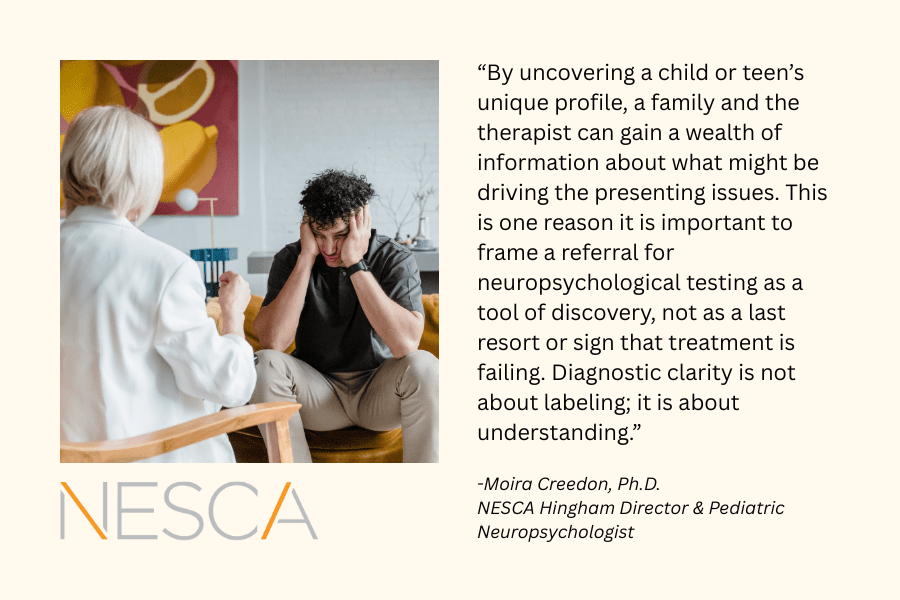
This can leave many wondering if neuropsychological testing is just one more “hoop” to jump through. Within the trenches of the daily struggle, it can be hard to see how testing might help – especially when change is so slow. I do all that I can to explain why neuropsychological testing is way more than a hoop; it can be a roadmap. How?

  1. Even if you or your child has had “evaluations before,” neuropsychological testing is a chance at an integrated and comprehensive evaluation. What does that mean? It means that if you have had pieces of testing before, you still have a pile of pieces – an educational evaluation from school, a private OT evaluation, an early speech evaluation, a diagnostic interview with a therapist, etc. My goal is to take all of those pieces, plus the new ones I add, and put them together into one cohesive puzzle demonstrating how a child or teen thinks and learns.  This is one of the reasons NESCA does academic testing as part of its testing batteries, because these pieces are essential for diagnostic clarity, to see how the profile impacts a person’s real life skills/functioning, and because being a student is a kid or teen’s full time job. It’s not a piece to be overlooked.
  2. Neuropsychological testing can be a chance to understand the “why” when there are many complicated layers. When an individual is struggling, we often start in the middle of the process. Often, parents and/or schools want to try to solve the problem with school support, or interventions such as a referral to a therapist or connection to a social skills group. When those efforts stall, the impulse is to try a different solution.  Neuropsychological testing lets us step back, learn about a larger profile or picture of all aspects of a child’s learning or thinking to make meaning of what is happening. Then, we can choose a path for intervention that has the best chance of success. When a child is struggling, trying to see what works in a way that’s not fully informed or that addresses the child as a whole, is often not the best use of time and resources. The same goes for adults who seem to be missing a piece of their own puzzle.
  3. Neuropsychological testing uses the data collected from the testing to outline the steps for what to do next. Any good plan needs a detailed understanding of a problem. Oftentimes, it’s a combination of services that are needed – in the community, at home, and/or at school. It can be hard to figure out how to prioritize the steps, and it’s important to consider what is realistic and feasible. Neuropsychological evaluation can help make those steps clearer.
  4. Neuropsychological testing can give us a good baseline and measure of progress. Caretakers know their children best, so they can often spot subtle issues before they bloom into the bigger issues. Neuropsychological testing can be proactive, and it can help to track how a student responds to interventions. We can also use neuropsychological testing to maximize potential, including how students find their strengths, build their “academic diet” of courses in high school and college, and build stronger study skills along the way.
  5. At NESCA, neuropsychological testing involves important collaboration, perspective, and insight. The reason I mention the community that I’ve met through our South Shore office is because collaboration is key. The observations and insight offered by anyone who comes in contact with a child or teen is invaluable. Standardized test measures are a critical piece of the puzzle, but it’s one part of the critical triad of history, observations, and testing. These collaborations are also helpful to keep the neuropsychological test report “alive” as the community putting the recommendations into action works best through communication.

In the upcoming year, we set many goals for NESCA as a leader in our field. I want to pledge to my community that we will continue to provide the highest quality care and to respect and value our clients and families.  We will continue to build connections to our community members to join the efforts in supporting children, teens, and young adults. I am thrilled for upcoming opportunities to learn and grow alongside you all.  I am deeply grateful to be part of the South Shore community supporting children, teens, and young adults.


About the Author

Dr. Creedon offers her expertise in evaluating children and teens with a variety of presenting issues. SheMoira Creedon headshot is interested in uncovering an individual’s unique pattern of strengths and weaknesses to best formulate a plan for intervention and success. She tailors each assessment to address a range of referral questions, such as developmental disabilities, including Autism Spectrum Disorder, learning disabilities, attention challenges, executive functioning deficits, and social-emotional struggles. She also evaluates college-/grad school-age/adult individuals with developmental issues, such as ASD and ADHD, particularly when there is a diagnostic clarity or accommodation question.


If you are interested in booking an evaluation with Dr. Creedon or another NESCA neuropsychologist, please fill out and submit our online intake form


NESCA is a pediatric neuropsychology practice and integrative treatment center with offices in Newton, Plainville, and Hingham, Massachusetts; Londonderry, New Hampshire; the greater Burlington, Vermont region; and Brooklyn, NY (coaching services only) serving clients from infancy through young adulthood and their families. For more information, please email info@nesca-newton.com or call 617-658-9800.

Images of a neuropsych eval and questionnaires and quote from Sean Hyde O'Brien

Beyond the Scores: The Comprehensive Approach to Neuropsychological Evaluations

By | NESCA Notes 2024

Images of a neuropsych eval and questionnaires and quote from Sean Hyde O'BrienBy: Sean Hyde O’Brien, Psy.D., ABPdN 
Pediatric Neuropsychologist, NESCA

When parents think of a Neuropsychological Evaluation, they often envision their child completing a series of tests that generate scores. These test scores tell parents how their child is performing compared to a large group of other students their age across a wide range of cognitive and academic domains. While this is accurate, the evaluation process also integrates data from multiple sources beyond quantitative test scores to develop a comprehensive picture of your child. These other sources of data may be less obvious but are highly essential to developing an accurate “diagnostic formulation” of your child’s strengths and weaknesses, as well as interventions specifically tailored to support their individual neuropsychological profile.

Here’s an overview of the types of data typically involved:

  1. Clinical Interview:
  • Symptoms and Concerns: The individual’s description of their cognitive, behavioral, emotional, and academic symptoms, as well as those reported by family members or caregivers.
  • Birth, Developmental, and Medical History: Information about the individual’s birth, medical, psychological, and developmental history, including any past or current health conditions, injuries, or psychiatric disorders.
  • Family History: Information about any family history of neurological or psychological conditions that may help understand potential genetic or hereditary factors.
  • Academic and Psychosocial History: Insight into the individual’s social relationships, educational background, and occupational history to understand the impact of cognitive or emotional issues on daily functioning.
  1. Standardized Psychological/Neuropsychological Tests:

These are structured tasks designed to measure different aspects of cognitive and academic functioning. They provide objective data that help evaluate brain-behavior relations.

  • Intelligence Tests (IQ Tests): Assess overall cognitive ability and intellectual functioning. A common test is the Wechsler Intelligence Scale for Children (WISC-V).
  • Speech-Language Tests: Evaluate expressive, receptive, and pragmatic language skills, including verbal fluency, comprehension, and naming. Examples are the Boston Naming Test and the Clinical Evaluation of Language Fundamentals (CELF-V).
  • Visual-Spatial Tests: Measure spatial processing, visual memory, and the ability to integrate visual and motor functions. Examples include the Rey-Osterrieth Complex Figure Test and the Block Design subtest from the WISC-V.
  • Sensory-Motor Tests: Assess motor skills, coordination, and fine motor skills (e.g., the Grooved Pegboard Test).
  • Memory and Learning Tests: Evaluate short-term, long-term, and working memory. Examples include the Wide Range Assessment of Memory and Learning (WRAML) and the California Verbal Learning Test (CVLT-C).
  • Attention and Executive Function Tests: Measure selective-sustained attention and cognitive flexibility, such as the Continuous Performance Test (CPT); as well as assess higher-order cognitive functions, such as planning, decision-making, problem-solving, and impulse control. Examples include the Wisconsin Card Sorting Test (WCST) and the Tower of London task.
  • Academic Tests: Assess reading, writing, and mathematical skills. An example is the Wechsler Individual Achievement Test (WIAT-IV).
  1. Behavioral Observation:
  • Behavioral Observations During Testing: The examiner notes the individual’s behavior, mood, and engagement during the testing process. This can provide insight into areas, such as attention, motivation, or emotional regulation.
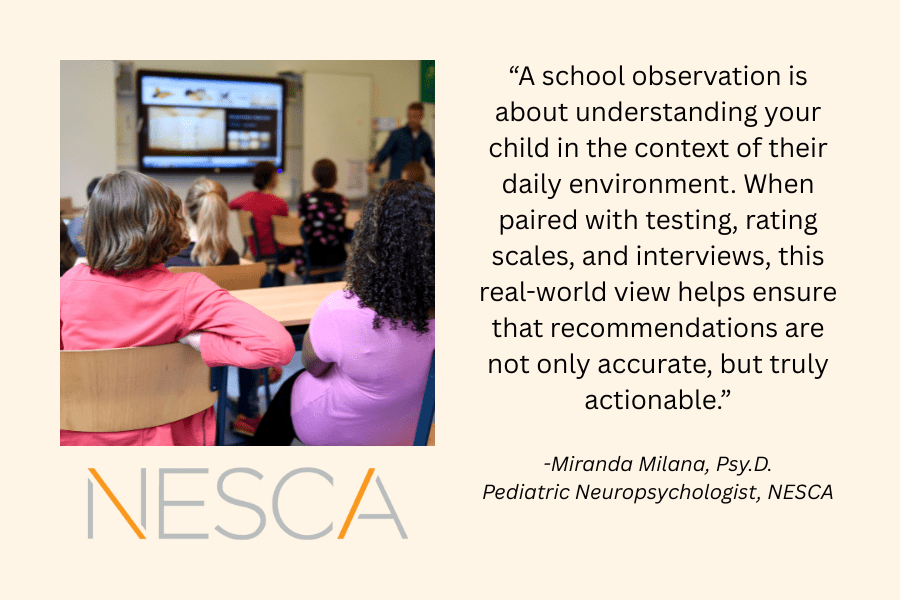
  • Classroom/Program Observations: This can involve observing a child’s functioning in a “real life” setting and provide insight about their ability to apply the skills noted in their test findings to more complex environments.
  1. Behavioral Rating Scales and Self-Report Questionnaires:

These are used to assess subjective experiences related to mood, behavior, and cognitive functioning.

  • Broad Band Rating Scales: Provide information about the individual’s functioning across multiple domains, which can be helpful to identifying areas of concern for additional investigation. An example is the Child Behavior Checklist (CBCL).
  • Targeted/Narrow Band Rating Scales: Provide information about specific domains, such as depression and/or anxiety, which can be helpful for gaining a deeper understanding of an individual’s particular symptom profile. One example is the Beck Depression Inventory (BDI).
  1. Collateral Information:
  • Reports from Family Members, Teachers, Coaches, and Tutors: Provide insight from those who know the individual well, often providing information about changes in behavior, memory, or mood.
  • School or Occupational Records: Include academic performance, work-related difficulties, or other performance metrics that may be reviewed to understand the functional impact of cognitive or emotional difficulties.
  1. Neuroimaging and Medical Data (if applicable):
  • Brain Imaging (e.g., MRI, CT scans, PET scans): Used to identify brain abnormalities, such as lesions, atrophy, or structural damage, which may contribute to cognitive impairments.
  • EEG or Evoked Potentials: Sometimes used to assess electrical activity in the brain, particularly if seizures or other neurological concerns are present.
  • Medical Reports: Data on neurological conditions, medications, or surgeries that may impact cognitive or emotional functioning.

By combining these different types of data, a neuropsychologist can create a comprehensive picture of an individual’s cognitive strengths and weaknesses, helping to identify any underlying neurological conditions or psychological factors that are contributing to their difficulties. While test scores are always important, interpreting your child’s performance on neuropsychological tests without the additional data outlined above can lead to misdiagnosis, ineffective treatment, and other unforeseen complications.


About the Author

Dr. Sean O’Brien has been providing comprehensive neuropsychological evaluations in the GreaterSean Hyde O'Brien Boston area since 2006. He specializes in the assessment of children and adolescents who present with a wide range of developmental conditions, such as  Attention-Deficit/Hyperactivity Disorder, Specific Learning Disorder (reading, writing, math), Intellectual Disability, and Autism Spectrum Disorder; as well as children whose cognitive functioning has been impacted by medical, psychiatric, and genetic conditions. He also has extensive experience working with children who were adopted both domestically and internationally.

To schedule an appointment with one of NESCA’s neuropsychologists, please complete our online intake form

NESCA is a pediatric neuropsychology practice and integrative treatment center with offices in Newton, Plainville, and Hingham, Massachusetts; Londonderry, New Hampshire; the greater Burlington, Vermont region; and Brooklyn, NY (coaching services only) serving clients from infancy through young adulthood and their families. For more information, please email info@nesca-newton.com or call 617-658-9800.

Poster stating Disability not a bad word and a quote from Kelley Challen

Disability is Not a Dirty Word—It’s a Legal Term

By | NESCA Notes 2024

Poster stating Disability not a bad word and a quote from Kelley ChallenBy: Kelley Challen, Ed.M., CAS
Director of Transition Services, NESCA

I recently listened to a podcast where the host shared that she avoids using the term “disability” because she doesn’t want her child to feel limited.

This really made me think. The word “disability” can feel heavy and tied to stigma, but it is not synonymous with limitation. In fact, it doesn’t describe anything about a person’s potential or specify what they can or cannot do. It’s simply a term—a legal one—that ensures access to equal rights, accommodations, and opportunities.

Yes, people with disabilities might use tools, supports, or accommodations to learn, work, and navigate the world. But needing those supports isn’t a limitation—it’s about finding ways to thrive and share unique strengths and abilities.

As a parent and professional who does not identify as disabled, I believe it’s essential to reflect on our own feelings and biases about the word “disability.” If we avoid using it because it makes us uncomfortable, how might that impact our children as they grow and learn to advocate for themselves?

When we don’t teach kids to understand and embrace the term “disability,” we might unintentionally limit their access to the tools, rights, and opportunities they deserve to realize their potential. Additionally, if we avoid using the term “disability” or reframe it when we hear it, we implicitly teach our children that it’s a “dirty word” and possibly associate it with shame.

Understanding disability as a legal term is particularly important because many critical services and protections are only available to those who identify as having a disability. These include:

  • Individualized Education Programs (IEPs) and 504 Plans, which provide accommodations and support in school settings.
  • Standardized testing accommodations, such as extended time, alternative test formats, or assistive technology for standardized exams like the SAT, ACT, and college entrance tests.
  • Vocational Rehabilitation Services, which offer career counseling, job training, and workplace accommodations.
  • Social Security Disability Benefits (SSI/SSDI), which provide financial assistance to eligible individuals with disabilities.
  • College disability support services, which can include priority registration, note-taking assistance, alternative testing arrangements, and more.
  • Workplace accommodations under the Americans with Disabilities Act (ADA), such as modified work schedules, assistive technology, or accessible office spaces.
  • Access to independent living programs and community supports that help individuals with disabilities navigate housing, transportation, and daily living needs.

We can’t break down stigma if we’re afraid to name it. Let’s change the narrative: Disability is just a term, not a measure of someone’s potential.

About the Author
Kelley Challen, Ed.M., CAS, is an expert transition specialist and national speaker with over 20 years of experience supporting youth andKelley Challen headshot young adults with diverse developmental and learning abilities. Since 2013, she has served as Director of Transition Services at NESCA, offering individualized transition assessments, planning, consultation, coaching, and program development. She specializes in working with students with complex profiles who may not engage with traditional testing tools or programs. Ms. Challen holds a BA in Psychology and a Minor in Hispanic Studies from The College of William and Mary, along with a Master’s and Certificate of Advanced Graduate Study in Risk and Prevention Counseling from the Harvard Graduate School of Education. She is a member of CEC, DCDT, and COPAA, believing it’s vital for all IEP participants to have accurate information about transition planning. Ms. Challen has also been actively involved in the MA DESE IEP Improvement Project, mentored candidates in UMass Boston’s Transition Leadership Program, and co-authored a chapter in Technology Tools for Students with Autism.

To schedule an appointment with one of NESCA’s transition specialists, please complete our online intake form

NESCA is a pediatric neuropsychology practice and integrative treatment center with offices in Newton, Plainville, and Hingham, Massachusetts; Londonderry, New Hampshire; the greater Burlington, Vermont region; and Brooklyn, NY (coaching services only) serving clients from infancy through young adulthood and their families. For more information, please email info@nesca-newton.com or call 617-658-9800.

child saying no to food.

Beyond Picky Eating: Understanding ARFID in Children

By | NESCA Notes 2024

child saying no to food.By: Maggie Rodriguez, Psy.D.
Pediatric Neuropsychologist, NESCA

Feeding children is one of the many aspects of parenting that seems pretty straightforward before you have kids of your own. But most parents will tell you that it can actually be mind-bogglingly difficult. That’s because “picky eating” is very common, so much so that it’s considered a normal developmental phase in early childhood. In fact, almost half of typically developing children go through a phase of “picky eating,” and the prevalence is even higher in children with neurodivergences, such as Autism Spectrum Disorder. The good news is that, as frustrating as picky eating can be, most children naturally outgrow this phase and eventually expand their diets to include more than chicken nuggets and buttered pasta. However, there is a subset of picky eaters for whom their selective food choices are part of a more serious problem that requires intervention.

In some case, highly selective eating may signal the presence of a condition called Avoidant Restrictive Food Intake Disorder or ARFID. A diagnosis of ARFID is made when an individual’s picky or selective eating is severe enough to cause secondary problems, such as nutritional deficiencies, reduced growth or weight loss, and/or social-emotional difficulties.

Unfortunately, little is understood about the underlying causes of ARFID. However, most people with ARFID fall into one or more of these three “subtypes,” each of which derives from different underlying factors.

  • In some cases, anxiety about choking, vomiting, or allergies drives avoidance of certain foods. This appears to be a factor for up to half of all children with ARFID and may develop after a traumatic experience, such as an illness.
  • Sensory sensitivities are another underlying factor for some individuals. These people may respond more intensely and/or have aversions to particular textures or flavors. Roughly one out of five of those with ARFID endorse sensitivities to flavors, textures, or smells. Interestingly, “supertasters”—people who have a higher concentration of taste buds—experience flavors much more intensely than is typical. These individuals may be more likely to develop ARFID as they avoid bitter foods.
  • Additionally, some people simply experience fewer hunger cues and may forget to eat or simply have a low level of interest in and motivation for eating. In these cases, individuals may be willing to eat a broader range of foods but struggle to eat enough.

Importantly, unlike most other eating disorders, ARFID is NOT related to concerns about body image or a desire to lose weight. It’s also important to recognize that ARFID is NOT just extremely picky eating, and individuals with ARFID won’t simply “outgrow” it.

Regardless of the initial triggering factors, limited or restricted intake is maintained by avoidance. That’s why early identification and treatment is important. It is also critical in order to prevent the development of potentially serious health problems related to nutritional issues, which can, in turn, cause difficulties ranging from fatigue and poor concentration to anemia, reduced immune system functioning, stunted growth, and even delayed puberty. Individuals with ARFID are also at risk of experiencing diminished self-esteem, may struggle to take part in social situations that center around food (e.g., meals with others), and develop emotional distress.

Though ARFID can be challenging to address, there are effective treatments. The goals of treatment depend upon individual factors but typically involve restoring weight if necessary, reducing anxiety, and gradually introducing new foods. Specific treatment modalities include family-based treatment, cognitive behavioral therapy, and exposure and response prevention. Treatment may also involve working with a physician and/or dietician.

If you’re concerned that your child’s “picky eating” may be more than a phase, please reach out to a professional who can further assess the situation and provide direction. There are screening tools that may be helpful in providing direction. One such resource can be found here: https://equip.health/arfid-screener. You can also contact the National Eating Disorders Association (NEDA) Helpline at 1-800-931-2237 or by texting NEDA to 741-741.

References/Resources

https://www.chop.edu/news/dos-and-donts-feeding-picky-eaters#:~:text=Do%20remember%20that%20picky%20eating,2%20to%20about%20age%204.

https://equip.health/conditions/arfid

https://www.nationaleatingdisorders.org/avoidant-restrictive-food-intake-disorder-arfid/


About the Author

Maggie Rodriguez, Psy.D., provides comprehensive evaluation services for children, adolescents, and young adults with often complex presentations. She particularly enjoys working with individuals who have concerns about attention and executive functioning, language-based learning disorders, and those with overlapping cognitive and social/emotional difficulties.

Prior to joining NESCA, Dr. Rodriguez worked in private practice, where she completed assessments with high-functioning students presenting with complex cognitive profiles whose areas of weakness may have gone previously undiagnosed. Dr. Rodriguez’s experience also includes pre- and post-doctoral training in the Learning Disability Clinic at Boston Children’s Hospital and the Neurodevelopmental Center at MassGeneral for Children/North Shore Medical Center. Dr. Rodriguez has spent significant time working with students in academic settings, including k-12 public and charter school systems and private academic programs, such as the Threshold Program at Lesley University.

Dr. Rodriguez earned her Psy.D. from William James College in 2012, where her coursework and practicum training focused on clinical work with children and adolescents and on assessment. Her doctoral thesis centered on cultural issues related to evaluation.

Dr. Rodriguez lives north of Boston with her husband and three young children.  She enjoys spending time outdoors hiking and bike riding with her family, practicing yoga, and reading.

To book a consultation with Dr. Rodriguez or one of our many other expert neuropsychologists, complete NESCA’s online intake form.

NESCA is a pediatric neuropsychology practice and integrative treatment center with offices in Newton, Plainville, and Hingham, Massachusetts; Londonderry, New Hampshire; the greater Burlington, Vermont region; and Brooklyn, NY, serving clients from infancy through young adulthood and their families. For more information, please email info@nesca-newton.com or call 617-658-9800.

Image of a supportive learning environment at home

Building a Supportive Learning Environment

By | NESCA Notes 2024

Image of a supportive learning environment at homeBy: Alissa Talamo, PhD
Pediatric Neuropsychologist, NESCA

Children will do their best when they feel safe and encouraged to try their best. Thus, a structured and supportive learning environment at home is recommended to support the development and well-being of your child. Establishing a structured learning environment involves several key components. Here are some ideas to consider:

  1. Developing a daily schedule with consistent routines helps children understand what to expect, offering them a sense of security and predictability.
  2. Visual aids, such as pictures or timetables, can be used to help children follow these routines.
  3. Breaking tasks into smaller, manageable steps can keep your child from feeling overwhelmed and can promote success, with each accomplishment celebrated to reinforce progress.
  4. Designating a specific area in the home for learning activities is important. This dedicated learning space should be free from distractions and should provide your child with the necessary materials to encourage independent learning.
  5. Engaging your child in multi-sensory activities, such as sensory play and interactive games, can enhance understanding and retention.
  6. Clear, concise instructions supported by visual and auditory prompts help children stay on track and complete tasks effectively.
  7. Setting achievable goals and celebrating small successes to build their confidence and motivation, while emphasizing effort and progress rather than just achievements.
  8. Identifying and encouraging the child’s strengths and interests.
  9. Maintaining open communication with educators and therapists, maximizing the effectiveness of interventions.

Overall, emphasizing effort and progress, providing consistent positive reinforcement, and encouraging strengths and interests, can help create a calm, organized, and predictable environment in the home setting, while collaborating with teachers ensures consistency in strategies between home and school.

By implementing these strategies, parents and caregivers can create a nurturing space where their children can thrive academically, emotionally, and socially. Each child is unique, so it may take time to find the best approach for each. Be patient, flexible, and adaptive, while celebrating progress and all those small victories along the way! For additional resources and support, consider visiting websites, such as childcare.gov, LDA America, and Understood.org.

Resources

https://www.helpguide.org/family/learning-disabilities/helping-children-with-learning-disabilities

https://atriumhealth.org/dailydose/2024/07/26/a-parents-guide-to-empowering-children-with-learning-disabilities


About the Author

With NESCA since its inception in 2007, Dr. Talamo had previously practiced for many years as a child and adolescent clinical psychologist before completing postdoctoral re-training in pediatric neuropsychology at the Children’s Evaluation Center.

After receiving her undergraduate degree from Columbia University, Dr. Talamo earned her doctorate in clinical health psychology from Ferkauf Graduate School of Psychology and the Albert Einstein College of Medicine at Yeshiva University.

She has given a number of presentations, most recently on “How to Recognize a Struggling Reader,” “Supporting Students with Working Memory Limitations,” (with Bonnie Singer, Ph.D., CCC-SLP of Architects for Learning), and “Executive Function in Elementary and Middle School Students.”

Dr. Talamo specializes in working with children and adolescents with language-based learning disabilities including dyslexia, attentional disorders, and emotional issues. She is also interested in working with highly gifted children.

Her professional memberships include MAGE (Massachusetts Association for Gifted Education), IDA (International Dyslexia Association), MABIDA (the Massachusetts division of IDA) and MNS (the Massachusetts Neuropsychological Society).

She is the mother of one college-aged daughter.

To book a consultation with Dr. Talamo or one of our many other expert neuropsychologists, complete NESCA’s online intake form.

NESCA is a pediatric neuropsychology practice and integrative treatment center with offices in Newton, Plainville, and Hingham, Massachusetts; Londonderry, New Hampshire; the greater Burlington, Vermont region; and Brooklyn, New York (coaching services only) serving clients from infancy through young adulthood and their families. For more information, please email info@nesca-newton.com or call 617-658-9800.

image of a girl impacted by trauma

Approaching Cultural Knowledge and Sensitivity as More Than Just Buzzwords: A Neuropsychologist’s Perspective

By | NESCA Notes 2024

image of a girl impacted by traumaBy Leah Weinberg, Ph.D. 
Pediatric Neuropsychologist, NESCA

In recent years, the conversation around cultural knowledge and sensitivity has gained significant traction across many fields, including education, healthcare, and psychology. Yet, despite the increasing prevalence of these terms, we must ask ourselves: Are we truly embodying cultural sensitivity, or are we merely paying lip service to it?

As a neuropsychologist, originally from the former Soviet Union (what is now Ukraine), I believe that cultural competence is not just a set of buzzwords we throw around to make ourselves sound aware; it’s a crucial, ongoing practice that demands attention, empathy, and, above all, genuine understanding. Now more than ever, as we witness global conflicts and societal shifts, it’s essential to engage deeply with the cultural and psychological needs of children who are affected by these events. The horrific events of October 7, 2023, in Israel, the subsequent rise in incidents involving anti-Jewish sentiments, and other crises around the world have had a profound impact on vulnerable children. How can we, as mental health professionals, approach these children in a way that truly honors their cultural identities while understanding the potential toll of trauma?

Children who experience trauma often find themselves at the intersection of multiple identities—cultural, familial, national, and personal. In the Jewish community, for example, the devastating events of October 7, 2023, marked a profound moment of collective grief and fear. For some Jewish children, the emotional impact of these events may be compounded by historical trauma, including awareness of past experiences of antisemitism and persecution. These children may be processing not only the immediacy of their own situation but also an ancestral history of violence and oppression. Similarly, Ukrainian children displaced by the ongoing conflict face a complex mix of trauma. These children might not only be mourning the loss of their homes, but also grappling with the disintegration of their sense of safety and national identity. The trauma of war is not just physical; it disrupts the very fabric of who these children are and how they see the world. Their cultural identity, bound up in language, traditions, and the shared history of their people, may suddenly feel threatened or fragmented.

It’s essential to recognize that cultural knowledge is not simply about understanding “facts” about a group’s history or customs. It’s about recognizing the psychological and emotional realities of that culture in the present moment, particularly when faced with trauma. When working with children from these communities, it’s important to begin by listening. Listen not only to their words, but also to the silence in between, to their body language, and to the nuances of how they express their grief and fear. Children from these communities may not always have the language to articulate their feelings, particularly when these feelings are wrapped up in both current trauma and long-standing cultural narratives. For instance, a Jewish child might not immediately say, “I’m scared because of antisemitism.” Instead, they may exhibit anxiety in social settings, avoidance of certain situations, or a sense of hypervigilance. It’s essential to recognize these subtler expressions of distress. Furthermore, cultural sensitivity means appreciating how culture influences coping mechanisms. For Jewish children, faith, community rituals, and family structures often play a significant role in both day-to-day life and in how they process adversity. These rituals, whether it’s a prayer or a specific practice for remembering the dead, can provide crucial emotional support, and understanding their importance can help guide effective interventions. Similarly, Ukrainian children may draw strength from their deep cultural connection to the land and their national identity. Understanding these cultural touchstones allows us to better support their emotional recovery.

To effectively support children affected by trauma, it is important to approach care from a framework that integrates both cultural sensitivity and trauma-informed practice. Children need to feel understood, and this means recognizing their cultural identity as an integral part of their experience. Safe spaces where children can express themselves without fear of judgment are paramount. It is important for clinicians not only to appreciate the current crisis but also the cumulative effect of historical events that have shaped the children’s cultures. As a clinician, this means being aware of the historical context and acknowledging the weight of collective memory. This helps to build trust and validates the child’s emotional experience. Working with families and community leaders helps ensure that interventions are not only culturally relevant but also supported by the broader social structure. This collaborative approach fosters resilience and provides ongoing emotional support.

Cultural competence is not a static goal, but rather a lifelong learning process. As clinicians, we must constantly engage with the evolving cultural, social, and political landscapes to ensure our approach remains relevant and respectful. This includes continuing education and being open to adjusting our practices based on new insights. Ultimately, cultural sensitivity is not about checking off a list of “do’s and don’ts.” It’s about recognizing and understanding that culture shapes how children experience and process the world. This empathetic approach allows us to meet children where they are—emotionally, psychologically, and culturally—and to support them as needed. As we move forward, let us take cultural sensitivity beyond a buzzword and make it a true cornerstone of our practice. In times of crisis, the need for empathy, understanding, and culturally informed care has never been greater.

NESCA has a long-standing commitment to working with internationally based clients, families, and schools through neuropsychological evaluation, consultation, coaching, and transition services. For more information on NESCA’s international work, visit: https://nesca-newton.com/international/.

About the Author

Dr. Weinberg specializes in the assessment of school-aged children and adolescents with a wide range of concerns including development disorders, such as autism spectrum disorder, learning disabilities (e.g. dyslexia, dysgraphia), language-based learning difficulties, AttentionHeadshot of Leah Weinberg, Ph.D. Deficit Hyperactivity Disorder (ADHD), Nonverbal Learning Disability (NVLD), and executive functioning disorders (e.g. slow processing speed). She also has experience in working with individuals with psychiatric difficulties, such as anxiety, mood disorders (e.g. depression), and behavioral disorders. Dr. Weinberg has expertise in working with children with complex profiles or multiple areas of strength and weakness that cannot be encapsulated by a single diagnosis. Dr. Weinberg is passionate about helping families better understand their child’s neuropsychological profile and the impact it may be having on their behavior or functioning in order to best support them in all areas of their life.

To book a neuropsychological evaluation with Dr. Weinberg or another expert neuropsychologist at NESCA, complete NESCA’s online intake form

NESCA is a pediatric neuropsychology practice and integrative treatment center with offices in Newton, Plainville, and Hingham, Massachusetts; Londonderry, New Hampshire; the greater Burlington, Vermont region; and Brooklyn, New York (coaching services only) serving clients from infancy through young adulthood and their families. For more information, please email info@nesca-newton.com or call 617-658-9800.

Skip to content