Tag

nesca newton ma Archives - Page 5 of 14 - NESCA

Subscribe to NESCA Notes

Understanding Behavior as Communication

By | Nesca Notes 2023

By: Cynthia Hess, PsyD
Pediatric Neuropsychologist

School is out for many, and it is no surprise to many that it was a challenging year for teachers, parents, and children. One word that captures the experience of the 2022-2023 school year is stress. Teachers were stressed as their students continued to contend with the academic and social deficits that resulted from the pandemic. Many students have struggled to adapt to post-pandemic learning, and incidents of acting out behavior have increased precipitously. How do we make sense of children’s behavior while helping them develop and effectively manage the academic, social, and behavioral expectations of an ever-changing world?

Ross Greene, Ph.D., states, “Children want to do well and would if they could.” Behavior is not just random or meaningless. It serves as a way for children to express their needs, feelings, and experiences, especially when they have not yet developed strong verbal or communication skills. When the demands of the environment exceed a child’s capacity to manage them, they are apt to become stressed, increasing the likelihood that they will act out. Stress is a complex concept that is a response to perceived or anticipated demands or pressures that exceed an individual’s coping abilities.

When stressed, the adrenal glands release cortisol, a stress hormone that helps mobilize energy reserves for the fight-or-flight response. Fear and anxiety also increase individuals’ vulnerability to responding with fight or flight. So, while fear is focused on a specific threat, physiologically, it feels much the same as stress. Behavior is, therefore, a way of communicating that something is amiss. For instance, a child who acts aggressively may express frustration, which is stressful. And a child who becomes withdrawn might feel overwhelmed or anxious, triggering a stress response. Behavior is a natural way for children to communicate their needs, emotions, or reactions to the environment.

Our job as adults is first to check our own emotional status, because if we are tired or stressed, it will likely influence how we respond when children behave badly. Observing and interpreting behaviors with a curious and open mindset is important. By paying attention to patterns, triggers, and context, adults can gain insights into what a child might be trying to communicate through their behavior. Our job is not to manage the behavior but to understand, per Dr. Greene, what skills are lagging or what problems need to be solved, build relationships, and work collaboratively with children to solve problems and change behavior.

Resources:

The Explosive Child, Ross Greene, Ph.D., 2021

Beyond Behaviors; Mona Delahooke, Ph.D., 2019

Podcast: Two Sides of the Spectrum; episode dated April 5, 2023; “Safety as the Foundation for Everything


About the Author

Dr. Cynthia Hess (Cindy), a licensed psychologist, worked as an elementary counselor and school psychologist for 15 years before starting her doctorate. In this role, she developed extensive expertise and aptitude for working with individuals and groups struggling with a wide range of emotional and learning challenges.

She completed her pre-doctoral internship with Rochester Institute of Technology in Rochester, N.Y., where she trained at Hillside Family of Agencies in a therapeutic residential school. At Hillside, she worked with youth ages 5-17 who had experienced complex developmental trauma.

She earned her Psy.D. in Counseling and School Psychology from Rivier University in 2018. Having a strong interest in the impact of social media on children and our culture, her doctoral dissertation studied the impact social media has on social skills development in fourth- and fifth-grade children.

Dr. Hess’s first post-doctoral fellowship was with The Counseling Center of New England, where she provided psychotherapy and family therapy to children ages 5-18 and young adults.

Dr. Hess joined NESCA’s Londonderry, N.H. office in 2019, where she completed a second two-year fellowship in pediatric neuropsychological assessment. Dr. Hess now conducts neuropsychological evaluations as a pediatric neuropsychologist and has a particular interest in working with children and young adults with complex emotional and behavioral profiles. Her experience allows her to guide families in navigating the complicated options for school and other support services.


To schedule an appointment with one of NESCA’s expert neuropsychologists, please complete our online intake form


NESCA is a pediatric neuropsychology practice and integrative treatment center with offices in Newton and Plainville, Massachusetts, Londonderry, New Hampshire, and the greater Burlington, Vermont area, serving clients from preschool through young adulthood and their families. For more information, please email info@nesca-newton.com or call 617-658-9800.


Welcoming Renee Cutiongco Folsom, Ph.D., Pediatric Neuropsychologist

By | Nesca Notes 2023

By: Jane Hauser
Director of Marketing & Outreach, NESCA

NESCA recently welcomed Pediatric Neuropsychologist Renee Cutiongco Folsom, Ph.D. to its clinical staff. Dr. Cutiongco Folsom brings a wealth of experiences and vast knowledge in assessing and diagnosing autism spectrum disorders (ASD) as well as conducting international evaluations. Take a moment to learn more about Dr. Cutiongco Folsom from my interview with her. 

Tell us about your background and how you got to NESCA.

I grew up in the Philippines. I started my career as a preschool teacher there for two years. At that point, I knew I wanted to work with children. I eventually got my master’s degree in psychology and took a neuropsychology class with a professor who was trained at Boston Children’s Hospital. I immediately fell in love with neuropsychology. I then came to the U.S. to pursue my Ph.D. and did my fellowship in neuropsychology at UCLA. I planned to go back to the Philippines but met my husband here in the U.S. and decided to stay here.

Since I did not go back to the Philippines, I was interested in practicing neuropsychology internationally, which I was able to do in Baltimore at Johns Hopkins. I was interested in the work NESCA has been doing internationally. The opportunity to work with a talented team at NESCA and the ability to do international evaluations was the right move for me.

What do you mean by looking beyond the data when conducting neuropsychological evaluations?

I refer to employing the “Boston Process Approach” in my evaluations and assessments because my mentor in the Philippines was trained in this approach when she did her postdoctoral work at Boston Children’s Hospital. She tried to ingrain this methodology in her trainees. What it means is that when we look at the data, we do not just look at a score. There is so much more to a child’s story than a number. As neuropsychologists, we are always looking at how the child comes up with an answer to a test. It is possible for a child to get a low score on a test of reproducing designs using blocks, for example, because the child threw or even ate the blocks! We must decipher what is behind the process by which the child produced the answer. This critical information falls outside of the data or what a score is. It tells us how the child learns, and what will help them at school, at home, and in their day-to-day life. This is the approach I take when I work with a child. I take a LOT of notes! I look to see what the child says and does, whether he or she is paying attention, and note other behaviors throughout the evaluation process. Then, I analyze all the data and look for patterns and discrepancies across various tests and measures.

When we see the data associated with the performance on a test, we must ask why, for instance, they achieved a low score. What other factors are at play? Is it anxiety or a visual-motor issue? What we observe throughout the evaluation can guide us to administer some tests that may not have been initially scheduled. Our knowledge, experiences, and careful observations help us to tease apart where a score came from and what it is telling us. We end up with a fuller picture of both the strengths and vulnerabilities of a child or adolescent.

What kind of international work were you doing previously?

After I completed my fellowship in neuropsychology at UCLA, my first job was with the Kennedy Krieger Institute at Johns Hopkins. Because so many families go there from other countries seeking answers, the organization assembled interdisciplinary teams to serve international patients. We conducted week-long intensive and comprehensive evaluations involving a neurologist, neuropsychologist, occupational therapist, speech-language pathologist, and social worker who could help them access resources in their home country. At the end of the week of intense evaluation, we came together as a team to make a diagnosis, if warranted, and provide recommendations for interventions. It was a challenging and intense program because we needed to develop our impressions immediately. And we often saw some of the most difficult and complex cases because the families had already exhausted all the resources available to them in their home countries before traveling overseas.

What do you find most rewarding about being a pediatric neuropsychologist?

I have been practicing neuropsychology for a long time. I chose to work in pediatric neuropsychology vs. adult because we can do so much more with children. We have a particularly good chance of making a bigger impact on their lives at such an early age.

What I find most rewarding is to have patients come back for a follow-up evaluation, and I can see how the child has progressed. Their parents often thank me for providing them with a diagnosis and helping them to access resources and attest how far their child has come. Working alongside families to change the trajectory of a child’s life is very powerful.

 You specialize in autism spectrum disorders (ASD). How do you make a diagnosis and differentiate ASD from its related challenges?

You rely on years of training, your knowledge and expertise, trust your clinical judgment, and factor in the wisdom of colleagues when needed. This is how you make meaningful conclusions and diagnoses that impact a child’s life.

What do you feel makes NESCA a unique environment and practice?

The beauty of a practice like NESCA is that we get a broad spectrum of clients who present with different challenges or diagnoses. We get to see a range of ages and draw clients from all over the New England region as well as internationally. That variety enriches your perspective and gives more insight into your clinical work.

I have been at NESCA for about a month, and they take collaboration to heart. My colleagues at NESCA are a giving group of professionals when it comes to sharing experiences and knowledge. The clinicians are humble, candid, open, and eager to help children, adolescents, and young adults. As a pediatric neuropsychologist, I also get to collaborate with transition specialists, educational consultants, OTs, SLPs, and more. The multidisciplinary approach, learning from other perspectives, is a refreshing addition to my work experience.


About the Author

Dr. Renee Cutiongco Folsom, Ph.D. has been working with families in the greater Boston area since 2015. Prior to this, she was on staff at Johns Hopkins University and trained at the University of California, Los Angeles (UCLA). She provides comprehensive neuropsychological evaluations of children, adolescents, and young adults who have learning, behavioral, and socio-emotional challenges. Her areas of expertise include Autism Spectrum Disorder and other conditions that usually co-occur with this diagnosis; Attention-Deficit/Hyperactivity Disorder; Dyslexia and other Specific Learning Disabilities; and Anxiety/Depression. She thinks that the best part of being a pediatric neuropsychologist is helping change the trajectory of children’s lives.

To schedule an appointment with one of NESCA’s pediatric neuropsychologists, please complete our online intake form

NESCA is a pediatric neuropsychology practice and integrative treatment center with offices in Newton and Plainville, Massachusetts, Londonderry, New Hampshire, and the greater Burlington, Vermont area, serving clients from preschool through young adulthood and their families. For more information, please email info@nesca-newton.com or call 617-658-9800.


So, You Are Taking a Leave of Absence from College—Now What?

By | Nesca Notes 2023

By: Kelley Challen, Ed.M., CAS
Director of Transition Services; Transition Specialist, NESCA

Over three-quarters of college students (76%) reported moderate to severe psychological distress during the 2022-2023 school year (National College Health Assessment, American College Health Association, Spring 2023). College students across the country are continuing to struggle with depression, anxiety, self-harm, and suicidal thoughts this school year. My appointment calendar is often made up of meetings with college students or parents of college students beginning the process of taking a leave of absence and wondering what to do next. Here are some tips that I shared with many of these students and families.

Get Treatment

Many students need to participate in skill-based therapies (cognitive behavioral therapy, dialectical behavioral therapy, exposure and response prevention, acceptance and commitment therapy, etc.) in order to build up coping skills that may not have been developed in high school. Depending on the severity of current mental health issues, a student may need to participate in an intensive inpatient or outpatient treatment. Ultimately, many students need to find a supportive outpatient therapist—ideally someone who will be able to continue treating the student if they plan to make a future college attempt.

Psychopharmacological intervention (i.e., medication) can be important to consider. Sometimes students have not been taking medications as prescribed or they are taking medications exactly as prescribed but not gaining the intended benefits. Consulting with a prescriber can be an important treatment step for determining whether medication, or medication changes, are necessary.

Get Exercise

For any student, having a regular routine for exercise, sleep, and healthy diet has an impact. However, this is even more critical for students who are vulnerable to anxiety and/or depression. Exercise does not have to start big. Walking (with or without the dog), hiking, or just moving along to a YouTube fitness video for 10 minutes a day will make a difference. It’s critical to schedule the exercise in and often easiest if this is part of a morning or evening routine. For some students, working with a personal trainer or attending scheduled classes helps with accountability. Using a wearable exercise tracker like a Fitbit, Garmin Watch, or Apple Watch can also help with motivation and consistency.

Get a Job

Over the past 25 years, we have seen a notable decrease in the number of high school students who have participated in paid employment. Many students went off to college without taking time to connect college participation with future career interests. Using time off from school to explore work preferences and build transferrable skills (and a resume) can help students experience efficacy and improve mood. As a college student, no one is particularly excited when you show up to class, and the professor certainly doesn’t depend on you in order to get their job done. However, as an employee, students can experience tangible success through accomplishing work activities, receiving gratitude from coworkers and supervisors, and earning money. Work can also provide an important social experience. This is also an historic time to be looking for a first or early career position in the American workforce. Entry-level workers can make good wages. and there are plenty of part-time job openings across industries. Moreover, it’s difficult to get fired right now because good help is truly hard to find.

For students who are not ready to commit to paid work, and need time to recover and build energies up, volunteer jobs are also good opportunities. Some students will do better with brief drop-in volunteer activities while others my want to schedule more routine work hours.

Consider Taking Classes

When students take a leave of absence from college, the assumption is that the student will want to return to a college experience. But many students take a leave of absence and determine that they do not want to go back to college or that they do not want to go back to the same college. If a student wants to keep up academic skills, they can audit or take one or more college courses during the spring semester (depending on their college’s policies and whether they are planning to return). Community colleges, state colleges, and part-time or online college programs (like Harvard Extension School) are good options to explore for classes of interest as a non-degree seeking student. Starting back with a class that is high interest or a low degree of difficulty can be helpful for students who need to rebuild confidence. Additionally, when students are unsure if they are going to return to college or uncertain of a potential future major, it can be good to try classes that are likely to transfer and generally meet basic liberal arts requirements.

Get a Coach

Some students with mental health issues have other underlying challenges that contributed to their struggles in college. There could be a learning disability that wasn’t appropriately being addressed with accommodations, executive function challenges that impacted keeping up with pace, or volume of academics, social challenges that were exacerbated by the highly social dorm environment, or other issues. It is important to consider whether there are skill deficits that may have contributed to a student experiencing anxiety or depression. Some students will benefit from life skills, executive function, or social coaching in order to build up areas that are weaker before heading back to college (or may want to continue with that coaching when they head back).

Other students may want to take time to work with a career or transition coach to do some self-exploration. Taking a step back to participate in self-assessment related to one’s preferences and interests and to determine how those align with potential college major and future career interests can be helpful. I have worked with several students on leave to go through a career planning process. For some, they discover that they chose exactly the right college and major, and that can increase motivation when they get back to school, with proper supports in place. For others, this process sets a student on a completely new path.

Let us know, in our online Intake Form, if your student needs support during their time off from school and/or coaching to assist during their time off or when they return to college.


About the Author
Kelley Challen, Ed.M., CAS, is NESCA’s Director of Transition Services, overseeing planning, consultation, evaluation, coaching, case management, training and program development services. Ms. Challen also provides expert witness testimony in legal proceedings related to special education. She is also the Assistant Director of NESCA, working under Dr. Ann Helmus to support day-to-day operations of the practice. Ms. Challen began facilitating programs for children and adolescents with special needs in 2004. After receiving her Master’s Degree and Certificate of Advanced Study in Risk and Prevention Counseling from Harvard Graduate School of Education, Ms. Challen spent several years at the MGH Aspire Program where she founded an array of social, life and career skill development programs for teens and young adults with Asperger’s Syndrome and related profiles. She additionally worked at the Northeast Arc as Program Director for the Spotlight Program, a drama-based social pragmatics program, serving youth with a wide range of diagnoses and collaborating with several school districts to design in-house social skills and transition programs. Ms. Challen is co-author of the chapter “Technologies to Support Interventions for Social- Emotional Intelligence, Self-Awareness, Personality Style, and Self-Regulation” for the book Technology Tools for Students with Autism. She is also a proud mother of two energetic boys, ages six and three. While Ms. Challen has special expertise in supporting students with Autism Spectrum Disorders, she provides support to individuals with a wide range of developmental and learning abilities, including students with complex medical needs.


Neuropsychology & Education Services for Children & Adolescents (NESCA) is a pediatric neuropsychology practice and integrative treatment center with offices in Newton, Massachusetts, Plainville, Massachusetts, and Londonderry, New Hampshire, serving clients from preschool through young adulthood and their families. For more information, please email info@nesca-newton.com, call 617-658-9800 or complete our online Intake Form.

Self-efficacy: An Important Characteristic to Develop in Children

By | Nesca Notes 2023

By Dot Lucci, M.Ed., CAGS
Director of Consultation and Psychoeducational Counseling Services, NESCA

We often talk a lot about wanting our children to have good self-esteem. There’s nothing wrong with good self-esteem; it means that a child has a positive view of themselves and their worth. However, self-esteem is not enough. Life has its challenges, failure being one of them. How are we helping children to pick themselves up and try again? If our children are lagging in this ability, we need to help them develop realistic self-efficacy.

Self-efficacy and self-esteem are related but are also qualitatively different. Self-efficacy is related to how you feel about your ability to succeed in different contexts. It is more specific and context-driven versus self-esteem. Is your child capable of preserving at performing a difficult task? Do they stay engaged and try again, or do they give up? Self-esteem is considered a global belief about oneself, whereas, according to psychologist Albert Bandura, self-efficacy is “the belief in one’s capabilities to organize and execute the courses of action required to manage prospective situations.”

A child with high self-efficacy believes their challenges are obstacles to overcome. Failures don’t immobilize them. Their inner voice says, “I’ve got this!” They may demonstrate good self-awareness by knowing their strengths and challenges, thus setting manageable goals and achieving success because the goals are indeed attainable. Their motivation to try difficult tasks is buoyed by a positive thinking style and an inner belief system that recognizes failure as a part of life. So, when they fail at something, their self-esteem remains intact. They don’t “beat themselves up” when they make a mistake. They recognize it as a part of learning. As they say, “they get back in the saddle.” Children with good self-efficacy have better self-regulation, utilize a growth mindset, and have a stronger sense of agency and mastery. As Henry Ford said, “Whether you think you can, or you think you can’t–you’re right.”

Children with poor self-efficacy often shy away from work that they failed at or with tasks that they perceive as difficult. They tend to believe that these tasks are beyond their capabilities, so they shy away from even trying to do them. Children with low self-efficacy often berate themselves when they make a mistake, lose confidence in themselves, and their self-esteem suffers.

Helping children develop self-efficacy is important to their overall social-emotional functioning and well-being. The earlier we start helping to develop self-efficacy in our children, the better off they will be at improving their self-efficacy independently throughout their lives. Bandura identified four influencers or sources that impact self-efficacy: performance experience, vicarious experience, social persuasion, and physical and emotional states. Using these as our guideposts when teaching our children enhances their development of self-efficacy.

Performance Experience refers to when we perform a task successfully, it strengthens our sense of self-efficacy. This can also be called Mastery Experiences. We feel good about ourselves, our skills, and our knowledge; however, the converse is true as well. Failing to perform a task well will further weaken self-efficacy, particularly if it was not strong to begin with. Thus, it is important to emphasize and normalize the concept that failure is a part of the learning process.

When we watch others who are like us succeed by persevering at and completing a difficult task, it can raise the observers’ beliefs that they, too, can achieve it. This is Vicarious Experience or Social Modeling. By watching another person succeed through dedication, a person can be inspired to achieve the goals they set for themselves.

Another way to improve self-efficacy is through Social Persuasion. It is just as it sounds – someone you trust as a credible source giving verbal encouragement about your ability to perform a task can have a positive impact on one’s self-efficacy, becoming a self-fulfilling prophecy.

The last influencer, Our Own Personal Physical Sensations, Moods, Emotional Reactions, and Stress Level, etc., can dramatically…and positively or negatively impact how a person feels about their skills and abilities to complete a task. Bandura, highlighted, “it is not the sheer intensity of the emotional and physical reactions that is important but how they are perceived and interpreted by the person.” If we can acknowledge the stress and minimize it when we are confronted with a challenging task, we can improve self-efficacy. These are all important ways to help facilitate a child’s development of self-efficacy.

Facilitating the development of self-efficacy in our children can be done through a variety of means, keeping Bandura’s four influencers in mind. Here are some approaches to consider:

  • Keep in mind Bandura’s four self-efficacy influencer types as your guideposts.
  • Model self-efficacy and point it out to your children. Share your struggles/set-backs and how you managed to persevere. Talk about how you are willing to work towards a goal even though you failed multiple times along the way. Typically, parents do it without even knowing it.
  • Help children develop realistic self-efficacy by praising them honestly and concretely. Praise their effort, not their ability. Help them recognize failure is a part of life and learning.
  • Preview new learning by saying something like, “Remember you’re learning ___. You might make some mistakes. It’s okay. Mistakes are a part of learning.”
  • Use failures to help build realistic expectations and self-confidence by pointing out growth from previous attempts. Help children learn from their set-backs.
  • Empathize with their emotions related to their failures, struggles, etc.
  • Name their strengths and challenges, and use them as jumping off points related to their effort, not ability.
  • Help children set “realistic” short-term goals and help them stay on track. Help children recognize that their achievements are related to internal strengths, skills, and thoughts – not on external factors (i.e., I learned that hook shot because I practiced, watched and analyzed videos, and listened to my coach, etc.).
  • Create opportunities that are within “their zone of proximal development” (i.e., just right learning level – not too hard or too easy). To help build self-efficacy, a child needs a difficulty level to hold their interest, feel challenged, and experience some amount of struggle while ultimately achieving success.

Self-efficacy is worth paying attention to as it is truly one of the best gifts we can instill in our children. As Mahatma Gandhi said, “If I have the belief that I can do it, I shall surely acquire the capacity to do it even if I may not have it at the beginning.”

References

Bandura, A. 1999. Self-efficacy in Changing Societies. Cambridge Univ. Press, UK.

Self-Efficacy: Helping Children Believe They Can Succeed https://www.forsyth.k12.ga.us/cms/lib3/ga01000373/centricity/domain/31/self-efficacy_helping_children_believe_they_can_suceed.pdf

If You Think You Can’t… Think Again: The Sway of Self-Efficacy https://www.psychologytoday.com/intl/blog/flourish/201002/if-you-think-you-can-t-think-again-the-sway-self-efficacy


About the Author

NESCA’s Director of Consultation and Psychoeducational Services Dot Lucci has been active in the fields of education, psychology, research and academia for over 30 years. She is a national consultant and speaker on program design and the inclusion of children and adolescents with special needs, especially those diagnosed with Autism Spectrum Disorder (ASD). Prior to joining NESCA, Ms. Lucci was the Principal of the Partners Program/EDCO Collaborative and previously the Program Director and Director of Consultation at MGH/Aspire for 13 years, where she built child, teen and young adult programs and established the 3-Ss (self-awareness, social competency and stress management) as the programming backbone. She also served as director of the Autism Support Center. Ms. Lucci was previously an elementary classroom teacher, special educator, researcher, school psychologist, college professor and director of public schools, a private special education school and an education collaborative.

Ms. Lucci directs NESCA’s consultation services to public and private schools, colleges and universities, businesses and community agencies. She also provides psychoeducational counseling directly to students and parents. Ms. Lucci’s clinical interests include mind-body practices, positive psychology, and the use of technology and biofeedback devices in the instruction of social and emotional learning, especially as they apply to neurodiverse individuals.


To book a consultation with Ms. Lucci or one of our many expert clinicians, complete NESCA’s online intake form. Indicate whether you are seeking an “evaluation” or “consultation” and your preferred clinician/consultant/service in the referral line.


NESCA is a pediatric neuropsychology practice and integrative treatment center with offices in Newton and Plainville, Massachusetts, Londonderry, New Hampshire, and Burlington, Vermont, serving clients from preschool through young adulthood and their families. For more information, please email info@nesca-newton.com or call 617-658-9800.


Getting to Know NESCA’s Kristen Simon, M.ED, ED.S

By | Nesca Notes 2023

By: Jane Hauser
Director of Marketing & Outreach, NESCA

Although NESCA Transition Specialist and Psychoeducational Counselor Kristen Simon, M.Ed, Ed.S, has been with NESCA for several months, we are thrilled to announce that she will be joining NESCA on a full-time basis early this fall. Take a few minutes to learn more about her past experience and how she shares that experience with her students here at NESCA.  

Tell us about your educational and career path.

I studied psychology and counseling in undergrad and always knew I was interested in working with children and adolescents in a school setting. I entered graduate school right out of college and got my masters in School Psychology. I wanted to be able to advocate for children with disabilities and help provide students support in the moment they needed it most. When I finished my graduate work, I started as a school psychologist in a middle school and enjoyed my 10+ years in that role very much.

During my 10+ years at the middle school level, I spent a lot of time helping students understand themselves and their disability(ies). My work was strengths-based and focused on skill-building and self-advocacy. Middle school is a difficult time for any student. It was really rewarding to be able to do individual work and skill development with this age group. This is what really drew me to counseling students on social skills, learning disabilities, etc. School psychology offers a lot of variety in the day-to-day landscape.

In your 10+ years as a school psychologist, did you see any notable patterns or changes with students?

I think all educators have noticed a significant increase in anxiety and depression among school-aged students, and we certainly saw a shift in the increased need for support at the middle school I was working at. I was lucky to work in a school that responded to this shift by hiring additional counseling staff, creating therapeutic programs, and ensuring that mental health curriculums were provided to all students.

I also shifted the way I worked with students over the course of my time as a School Psychologist and helped students see themselves as a whole person with long-term goals. Helping students learn how to set goals, make informed decisions for themselves, and communicate and self-advocate across settings became the focus for almost all students I worked with. Many students in middle school had never been to one of their IEP meetings and had limited understanding of their disability(ies) and IEP goals, or why they were working with their school service providers. In Massachusetts, students who are 14 and older are invited to be part of their Team Meetings and IEP planning, so a big part of my job was helping to prepare students to participate. Most of the students I worked with initially were only focusing on their latest math test or English project, not looking at themselves as a person with a future to look toward and plan for. I noticed that they were more interested in the transition to 9th grade than the longer-term transition to adulthood and postsecondary plans. This is how I became interested in transition work.

How did you hear about NESCA?

I did not know too much about all NESCA’s services, but I certainly had read many neuropsychological evaluation reports written by NESCA clinicians for my students. I wasn’t as familiar with NESCA’s transition services and how in-depth they are. I learned that transition covers a lot of territory, and NESCA offers a huge range of those transition services, including the gaps in the services that schools can typically offer.

How do you explain your role as a Transition Specialist and Psychoeducational Counselor?

Transition services can encompass a lot of different things. Our team does transition assessments that look at a student’s skills across the areas outlined by IDEA: education/training, independent living, employment, and community participation. I do a lot of coaching with students to help them understand themselves, develop a vision, and then support them in goal-setting, self-determination, and advocacy. Psychoeducation can also encompass a range of services including self-awareness, understanding their disability and what it means to them, learning about the brain, developing regulation or social skills, and helping students participate in their IEP process.

How do you help prepare students to be part of their own IEP process?

Often, as a school counselor and now at NESCA, I help prepare students for their first IEP meeting in middle school, or whenever they begin attending. Some students have a clear vision for themselves, and I help them with their involvement and their delivery in their IEP meeting. Other students haven’t thought about postsecondary goals at all. The approach is individualized and very different for each student.

Some of the transition specialists at NESCA were involved in the IEP Improvement Project. What are your thoughts about the new Massachusetts IEP format?

I am thrilled that some of my fellow colleagues here at NESCA were involved in the development of the new IEP format. I’m excited about the new IEP format. The new format is intended to be much more student-driven. My hope is that student voices do become a bigger part of the conversation than they are now. Currently, students may say a little here or there in their team meetings. I hope their voices and visions really become a much larger part of the IEP meeting and overall plan.

What has been the most eye-opening finding for you since joining NESCA?

The most eye-opening and truly difficult realization for me has been how many parents and caregivers struggle to support their child after High School or don’t know the resources that are available to them (or what is no longer available to them). We understand that many families are operating “in the moment” and trying to support their teen in getting through High School but transition services and the IEP process are supposed to lead toward specific goals after high school and involve linkage with community services. Graduating from High School and special education tends to be a smoother process and less overwhelming if we can work with students and families to plan for this transition as early as middle school, if not beforehand.

What is the most rewarding aspect of your role with NESCA?

It’s always rewarding to help students find their voice and develop personalized goals. It has also been really rewarding to work with families to make a complicated and often overwhelming process more manageable for them.

What advice do you have for early middle school parents and caregivers?

Middle school is a great time for parents and caregivers to have conversations with their child around their IEP so they can be part of the educational decisions being made. Self-determination is a huge part of being able to succeed after high school. Middle school is a great time to help students think about and try to explain their longer-term goals and to identify the skills, actions, and steps needed to reach those goals. It’s also a great time for families to help their early-middle schooler present and participate in IEP team meetings.


About the Author

Kristen Simon, M.Ed, Ed.S, has worked with transition-aged youth as a licensed School Psychologist for more than a decade. She has extensive experience working with children and adolescents with a range of learning and social/emotional abilities. Kristen’s strengths lie in her communication and advocacy skills as well as her strengths-based approach. She is passionate about developing students’ self-awareness, goal-setting abilities, and vision through student-centered counseling, psychoeducation, social skills instruction, and executive functioning coaching. Mrs. Simon has particular interests working with children and adolescents on the Autism spectrum as well as individuals working to manage stress or anxiety-related challenges.

Mrs. Simon is an expert evaluator and observer who has extensive working knowledge of the special education process and school-based special education services, particularly in Massachusetts. She has been an integral part of hundreds of IEP teams and has helped to coordinate care, develop goals, and guide students and their families through the transition planning process. Mrs. Simon further has special expertise helping students to learn about their diagnoses and testing and the IEP process in general. She enjoys assisting students, families, and educators in understanding a student’s disability-related needs as well as the strategies that can help the student to be successful in both academic and nonacademic settings. Mrs. Simon has often been a part of teams in the years when students are initially participating in transition services, and she has helped countless students to build the skills necessary to be part of their first team meetings. She is committed to teaching students—as well as parents and educators—how to participate in student-centered team meetings and the IEP processes.

At NESCA, Mrs. Simon works as a transition specialist and psychoeducational counselor. She works with adolescents, their families, and their school communities to identify and build the skills necessary to achieve their postsecondary goals. Mrs. Simon provides transition assessment (including testing, functional evaluations, and observations), program observations and evaluations, case management and consultation, and individualized counseling and skills coaching.

To schedule an appointment with one of NESCA’s transition specialists, please complete our online intake form

NESCA is a pediatric neuropsychology practice and integrative treatment center with offices in Newton and Plainville, Massachusetts, Londonderry, New Hampshire, and Burlington, Vermont, serving clients from preschool through young adulthood and their families. For more information, please email info@nesca-newton.com or call 617-658-9800.


Shouldn’t We All Get Neuropsychological Evaluations, Then?

By | Nesca Notes 2023

By: Yvonne Asher, Ph.D.
NESCA Pediatric Neuropsychologist

One frequent question I have been asked by parents following a neuropsychological evaluation is, “Wouldn’t this process be helpful for everyone?” This tends to come up around the issue of disclosing results of an evaluation to children and teenagers and helping them better understand “how their brain works.” Many families with whom I have had the privilege of working come back months or years later with siblings of an initial client, noting that the process was so valuable the first time, they are hoping for a similar experience for their other child or children.

So, should we all get neuropsychological evaluations? Largely, I think this question is motivated by parents who are eager to help their children understand their own strengths and weaknesses. This is a wonderful goal, as self-understanding is one of the most valuable and lifelong gifts we can give our children.

In my experience, many people come to this kind of self-understanding naturally, over time, through experiences in adolescence and young adulthood. In particular, experiences that involve more independence in living and learning promote this kind of understanding. During childhood, we may learn our relative skill among family members (“I’m good at soccer, and my sibling is good at piano”), but these relative differences may not hold once we leave our family of origin. Many people venture out into the world and find that, compared to their peers, they are actually quite skilled at getting groups of friends together, doing everyday math, putting their thoughts down in writing, or staying organized. These real-world strengths often reflect the strengths that could be found through formal evaluation. As we gain self-understanding, we may be prompted to enter certain professions, take on particular hobbies, or pursue friends and partners with specific traits.

A neuropsychological evaluation can “speed up” the process of self-understanding, giving some young people a head start on the identity formation process that naturally occurs during adolescence. For some, this head start is vital – their brains are structured in ways that present clear, observable differences between them and their peers. This may be the case with diagnoses like autism spectrum disorder, a learning disability, or ADHD. For these individuals, the feedback from a neuropsychological evaluation can (under the best of circumstances) stave off feelings of inadequacy, negative self-esteem, and shame, helping a young person to recognize the deeply important strengths that are present alongside their more observable challenges. In these cases, a neuropsychological evaluation is not only for self-understanding, but also for self-compassion. Our goal as neuropsychologists in these cases is not just to help the child or teen understand themselves, but also to be gentle and kind with how they view their difficulties. Our hope is that, when these individuals venture out of their families and into the broader world, they are able to show resiliency in the face of the obstacles that will almost certainly be present.


About the Author

Dr. Yvonne M. Asher enjoys working with a wide range of children and teens, including those with autism spectrum disorder, developmental delays, learning disabilities, attention difficulties and executive functioning challenges. She often works with children whose complex profiles are not easily captured by a single label or diagnosis. She particularly enjoys working with young children and helping parents through their “first touch” with mental health care or developmental concerns.

Dr. Asher’s approach to assessment is gentle and supportive, and recognizes the importance of building rapport and trust. When working with young children, Dr. Asher incorporates play and “games” that allow children to complete standardized assessments in a fun and engaging environment.

Dr. Asher has extensive experience working in public, charter and religious schools, both as a classroom teacher and psychologist. She holds a master’s degree in education and continues to love working with educators. As a psychologist working in public schools, she gained invaluable experience with the IEP process from start to finish. She incorporates both her educational and psychological training when formulating recommendations to school teams.

Dr. Asher attended Swarthmore College and the Jewish Theological Seminary. She completed her doctoral degree at Suffolk University, where her dissertation looked at the impact of starting middle school on children’s social and emotional wellbeing. After graduating, she completed an intensive fellowship at the MGH Lurie Center for Autism, where she worked with a wide range of children, adolescents and young adults with autism and related disorders.


NESCA is a pediatric neuropsychology practice and integrative treatment center with offices in Newton and Plainville, Massachusetts, Londonderry, New Hampshire, and Burlington, Vermont, serving clients from preschool through young adulthood and their families. For more information, please email info@nesca-newton.com or call 617-658-9800.

 

To book an appointment with Dr. Yvonne Asher or another NESCA clinician, please complete our Intake Form today. For more information about NESCA, please email info@nesca-newton.com or call 617-658-9800.


Signs and Symptoms of Common Eating Disorders

By | Nesca Notes 2023

By Miranda Milana, Psy.D.
Pediatric Neuropsychologist

In today’s world with the toxicity and normalization of diet culture, it can be difficult to identify possible signs and symptoms of a more serious problem such as an eating disorder. At what point does counting calories cross over into anorexia? When does binge eating meet criteria for bulimia? Listed below are the criteria for several eating disorders, possible warning signs, as well as information on how to seek help if you believe your child needs further help/treatment.

Anorexia nervosa is an eating disorder characterized by the restriction of food intake and is characterized by two subtypes: restrictive and binge-purging.

For both presentations, criteria for anorexia nervosa include:

  1. Restriction of food intake leading to a significantly low body weight for age, sex, and developmental trajectory
  2. Intense fear of gaining weight that interferes with one’s ability to gain weight
  3. Feeling disturbed by one’s weight or shape, reduced self-worth second to weight/body shape, or a lack of recognition of the seriousness of their low bodyweight

Criteria for the restricting type include not having recurrent binge eating or purging within the last 3 months

Criteria for the binge eating/purging type include recurrent episodes of binge eating or purging within the last 3 months

Bulimia nervosa is an eating disorder characterized by recurrent episodes of binge eating that include the following:

  1. Eating a “definitively” larger amount of food in a 2-hour period than what most other individuals would eat in similar circumstances
  2. Feeling as though one cannot stop eating or control how much they are eating
  3. Recurrent and inappropriate behaviors aimed at preventing weight gain (e.g., self-induced vomiting, misusing laxatives, fasting, excessive exercise) that occur, on average, at least once a week for 3 months
  4. Self-evaluation being dependent on body shape/weight
  5. Symptoms not occurring exclusively during episodes of anorexia nervosa

Bulimia nervosa is also characterized by two subtypes: purging type and nonpurging type.

To meet criteria for the purging type, one must have regularly engaged in self-induced vomiting, the misuse of laxatives, diuretics, or enemas.

To meet criteria for the nonpurging type, one must have used inappropriate behaviors, such as fasting or excessive exercise without self-induced vomiting, the misuse of laxatives, diuretics, or enemas.

Binge eating disorder and avoidant restrictive food intake disorder (ARFID) are also eating disorders recognized in the Diagnostic and Statistical Manual of Mental Health Disorders (DSM-5).

Binge eating disorder is characterized by:

  1. Recurrent episodes of binge eating (defined by eating an amount of food in a 2-hour period larger than what most people would eat in a similar period of time under similar circumstances as well as feeling a lack of control during the binge eating episode)
  2. Three or more of the following: eating more rapidly than normal, eating until feeling uncomfortably full, eating large amounts of food when not hungry, eating alone due to embarrassment over the amount of food being consumed, feeling disgusted, depressed, or guilty after overeating.
  3. Distress regarding binge eating
  4. Binge eating occurring on average at least 1 day a week for 3 months
  5. Binge eating not associated with the regular use of inappropriate compensatory behaviors, such as purging, fasting, and/or excessive exercise, and does not occur exclusively during the course of anorexia nervosa or bulimia nervosa

Avoidant restrictive food intake disorder (ARFID) is characterized by:

  1. A lack of interest in eating or food, avoidance of food based on sensory characteristics, and/or concern about consequences of eating that lead to one or more of the following:
    1. Significant weight loss or failure to achieve expected weight gain
    2. Dependence on enteral feeding or oral nutritional supplements
    3. Interference with psychosocial functioning
  2. The eating challenges should not be attributable to a medical condition or better explained by another mental health diagnosis. If there is another mental health diagnosis, the severity of the eating disturbance must exceed what is routinely associated with the mental health condition
  3. The eating challenges should not be better explained by a lack of available food or associated with cultural practices
  4. The eating challenges should not occur exclusively during the course of anorexia nervosa or bulimia nervosa

What are warning signs of an eating disorder that I should be looking out for?

  • A preoccupation with weight loss, dieting, exercise, and/or controlling food consumption
  • Refusing to eat certain foods, such as carbohydrates or fats
  • Not being comfortable eating around others, skipping meals, or eating smaller portions
  • Withdrawing from friend groups and/or typical activities
  • Noticeable fluctuations in weight
  • Stomach complaints/digestive concerns
  • Menstrual irregularities
  • Difficulties concentrating
  • Sleep challenges
  • An increase in dental problems

If you suspect your child has an eating disorder, begin by talking to a medical or mental health professional. You can also contact the National Eating Disorders Association (NEDA) Helpline at 1-800-931-2237 or by texting NEDA to 741-741. The Multi-Service Eating Disorders Association (MEDA) is another source of information with support groups and resources. More information can be found at https://www.medainc.org/.


References:

American Psychiatric Association. (2013). Diagnostic and statistical manual of mental disorders (5th ed.). https://doi.org/10.1176/appi.books.9780890425596

Warning signs and symptoms. National Eating Disorders Association. (2021, July 14) https://www.nationaleatingdisorders.org/warning-signs-and-symptoms


About the Author

Dr. Miranda Milana provides comprehensive evaluation services for children and adolescents with a wide range of concerns, including attention deficit disorders, communication disorders, intellectual disabilities, and learning disabilities. She particularly enjoys working with children and their families who have concerns regarding an autism spectrum disorder. Dr. Milana has received specialized training on the administration of the Autism Diagnostic Observation Schedule (ADOS).

Dr. Milana places great emphasis on adapting her approach to a child’s developmental level and providing a testing environment that is approachable and comfortable for them. She also values collaboration with families and outside providers to facilitate supports and services that are tailored to a child’s specific needs.

Before joining NESCA, Dr. Milana completed a two-year postdoctoral fellowship at Boston Children’s Hospital in the Developmental Medicine department, where she received extensive training in the administration of psychological and neuropsychological testing. She has also received assessment training from Beacon Assessment Center and The Brenner Center. Dr. Milana graduated with her B.A. from the University of New England and went on to receive her doctorate from William James College (WJC). She was a part of the Children and Families of Adversity and Resilience (CFAR) program while at WJC. Her doctoral training also included therapeutic services across a variety of settings, including an elementary school, the Family Health Center of Worcester and at Roger Williams University.

Dr. Milana grew up in Maine and enjoys trips back home to see her family throughout the year. She currently resides in Wrentham, Massachusetts, with her husband and two golden retrievers. She also enjoys spending time with family and friends, reading, and cheering on the Patriots, Bruins, Red Sox, and Celtics.​


NESCA is a pediatric neuropsychology practice and integrative treatment center with offices in Newton and Plainville, Massachusetts, Londonderry, New Hampshire, and Burlington, Vermont, serving clients from preschool through young adulthood and their families. For more information, please email info@nesca-newton.com or call 617-658-9800.
 

To book an appointment with Dr. Miranda Milana or another expert NESCA neuropsychologist, please complete our Intake Form today. For more information about NESCA, please email info@nesca-newton.com or call 617-658-9800.


Preparing Students for First Team Meetings and the Transition to High School

By | Nesca Notes 2023

By: Kristen Simon, M.Ed, Ed.S
Transition Specialist

With Spring right around the corner, eighth grade students will begin to prepare for a transition to a new building. For students on IEPs, this means shifting to a new team and planning for supports that will help your child adapt and thrive in a new setting with different adults and expectations. Eighth grade IEP transition meetings tend to begin in March or April after students have had exposure to courses that are required and available in their ninth grade year. For many eighth grade students in special education, the transition meeting is one of the first IEP meetings they are invited to participate in. How can we help middle school students to prepare for and engage in this meeting?

Participating in IEP meetings is a great way for eighth grade students to build self-determination skills. Self-determination is a combination of skills, knowledge, and beliefs that help an individual gain autonomy and allows them to set their own goals, make thoughtful decisions, and manage their own life. Research has shown that for students with disabilities, this set of skills leads to both more positive adult outcomes (employment, higher wages, better living situation) and a higher quality of life (increased satisfaction, community engagement, independence, and productivity) Wehmeyer & Schwarz, 1997. For the middle school student craving independence, this can be the perfect time to build and strengthen this set of skills. We can prepare students to engage in their IEP meeting in a multitude of ways.

  1. Familiarize your child with their IEP, including their disability, what teachers do to help in (or outside of) the classroom as well as the goals that they have been working on with special education teachers or related personnel.
  2. Ask for the agenda ahead of time and review how the meeting will run and what adults will be present. It might be helpful for special educators/related service providers to demonstrate a “mock IEP meeting” to allow a safe space for students to ask questions and plan for or rehearse how they’d like to participate.
  3. Use visual maps or outlines to summarize their current transition planning forms. Their vision will help them develop the questions they’d like to ask high school staff. Examples of these types of questions might include: What classes in robotics or coding are available, and when can I take those? Is there a debate team, and how can I be a part of that? How do I join one of the after-school clubs? How do I make sure that a digital art class fits in my schedule?

These same maps can be used to discuss what kinds of academic support will they need with the type and level of classes they are
choosing. While students will have academic supports built into their service delivery, it can also be helpful to know about any additional high school academic supports, such as a writing center, student mentoring, career exploration opportunities, etc.

  1. If your child tends to have difficulty adapting to or has anxiety around change, students should work with team members to brainstorm supports that might be helpful in making the transition to high school more successful. Cueing students to think back to previous changes or first days of school can help them initiate this task. Students might request to meet with their point person before the end of their eighth grade year, participate in a small group or personalized tour of the new building/campus, identify someone who can help the student navigate the cafeteria on the first few days or maybe identify an alternative lunch space. Additionally, students might want to ask if there are programs happening over the summer in the high school building that will help the student acclimate to their new school before the start date.

After the transition meeting is over, it can be helpful for students and family members to create a chart that outlines the student’s questions and who their point person would be. For example, if I have a question about my schedule, I should find Mr./Mrs. ______. This chart should also include their email and list where their office can be found in the building. Empowering students to use this reference guide with guiding questions even before the year ends will further strengthen both their self-advocacy and self-determination skills.


About the Author

Kristen Simon, M.Ed, Ed.S, has worked with transition-aged youth as a licensed School Psychologist for more than a decade. She has extensive experience working with children and adolescents with a range of learning and social/emotional abilities. Kristen’s strengths lie in her communication and advocacy skills as well as her strengths-based approach. She is passionate about developing students’ self-awareness, goal-setting abilities, and vision through student-centered counseling, psychoeducation, social skills instruction, and executive functioning coaching. Mrs. Simon has particular interests working with children and adolescents on the Autism spectrum as well as individuals working to manage stress or anxiety-related challenges.

Mrs. Simon is an expert evaluator and observer who has extensive working knowledge of the special education process and school-based special education services, particularly in Massachusetts. She has been an integral part of hundreds of IEP teams and has helped to coordinate care, develop goals, and guide students and their families through the transition planning process. Mrs. Simon further has special expertise helping students to learn about their diagnoses and testing and the IEP process in general. She enjoys assisting students, families, and educators in understanding a student’s disability-related needs as well as the strategies that can help the student to be successful in both academic and nonacademic settings. Mrs. Simon has often been a part of teams in the years when students are initially participating in transition services, and she has helped countless students to build the skills necessary to be part of their first team meetings. She is committed to teaching students—as well as parents and educators—how to participate in student-centered team meetings and the IEP processes.

At NESCA, Mrs. Simon works as a transition specialist and psychoeducational counselor. She works with adolescents, their families, and their school communities to identify and build the skills necessary to achieve their postsecondary goals. Mrs. Simon provides transition assessment (including testing, functional evaluations, and observations), program observations and evaluations, case management and consultation, and individualized counseling and skills coaching.

To schedule an appointment with one of NESCA’s transition specialists, please complete our online intake form

Neuropsychology & Education Services for Children & Adolescents (NESCA) is a pediatric neuropsychology practice and integrative treatment center with offices in Newton and Plainville, Massachusetts, Londonderry, New Hampshire, and Burlington, Vermont, serving clients from preschool through young adulthood and their families. For more information, please email info@nesca-newton.com or call 617-658-9800.


What Could It Be: ADHD or Anxiety?

By | Nesca Notes 2023

By: Cynthia Hess, PsyD
Pediatric Neuropsychologist

Many of my clients find NESCA after experiencing years of difficulty, whether at school, at home, or in the community. They have often been evaluated previously but still do not clearly understand what underlies their challenges. When clients struggle for years, they have often received a variety of diagnoses. The DSM-V provides diagnostic criteria that label a person’s experience due to developmental concerns, learning differences, or psychiatric problems. In essence, diagnoses are a simplified way to describe complex, ever-changing, multi-layered differences and are difficult to pin down with a single term. One of the most challenging diagnoses for a neuropsychologist to make, and a person to live with, is attention-deficit/hyperactivity disorder (ADHD).

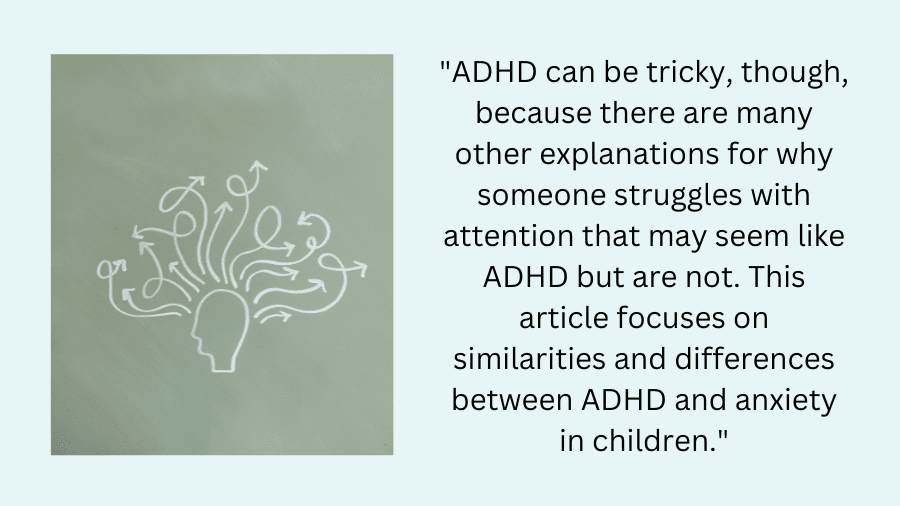
ADHD is diagnosed when an individual displays difficulty directing and sustaining their attention to the extent that it negatively affects functioning across multiple domains. They may be distracted by internal processes resulting in daydreaming or struggle to filter incoming sensory information in the environment. For example, sounds, lights, and feeling too hot or cold. Because the regulatory part of their brain is not fully developed, they are more likely to become distracted. ADHD can be tricky, though, because there are many other explanations for why someone struggles with attention that may seem like ADHD but are not. This article focuses on similarities and differences between ADHD and anxiety in children.

When a child is anxious or stressed, whether about getting a good grade, disappointing a teacher or parent, or how he/she is getting home after school, this takes her mind off instruction, work, and social interactions. The result is inattention, but not due to ADHD. Individuals with anxiety may hyperfocus on worry, limiting attention to other information. Furthermore, it is common for children with ADHD to experience anxiety; however, it is most often a consequence of poor attention regulation rather than a cause of inattention. Both conditions can be associated with procrastination, but the basis for delaying work differs. The child with ADHD may struggle with initiating a task, while the child with anxiety may be preoccupied with anticipation about how well she will perform. At times, anxiety and ADHD present so similarly that it can be difficult to distinguish one from the other.

As you can see from the graphic below, there is a tremendous overlap in symptoms between ADHD and anxiety, making a comprehensive evaluation necessary to make an informed diagnosis.

Humans are complex, and a single diagnosis rarely captures their emotional and behavioral challenges.


References:

Essentials of ADHD Assessment for Children and Adolescents, First Edition, by Elizabeth P. Sparrow and Drew Erhardt, Wiley, 2014


About the Author

Dr. Cynthia Hess graduated from Rivier University with a PsyD in Counseling and School Psychology. Previously, she earned an M.A. from Antioch New England in Applied Psychology. She also worked as an elementary school counselor and school psychologist for 15 years before embarking on her doctorate. During her doctorate, she did her pre-doctoral internship with RIT in Rochester, N.Y. where she worked with youth ages 5-17 who had experienced complex developmental trauma. Dr. Hess’s first post-doctoral fellowship was with The Counseling Center of New England where she provided psychotherapy and family therapy to children ages 5-18, their families and young adults. She also trained part-time with a pediatric neuropsychologist conducting neuropsychological evaluations.


To schedule an appointment with one of NESCA’s expert neuropsychologists, please complete our online intake form


Neuropsychology & Education Services for Children & Adolescents (NESCA) is a pediatric neuropsychology practice and integrative treatment center with offices in Newton and Plainville, Massachusetts, and Londonderry, New Hampshire, serving clients from preschool through young adulthood and their families. For more information, please email info@nesca-newton.com or call 617-658-9800.


Age of Majority: Preparing Students to Make Special Education Decisions as Adults

By | Nesca Notes 2023

By: Kelley Challen, Ed.M., CAS
Director of Transition Services, NESCA

One of the exciting aspects of being a transition specialist who evaluates and provides consultation to students and schools across the country is that transition services are dictated by the Individuals with Disabilities Education Act (IDEA 2004), a federal law. Students have similar rights across all 50 states regarding how their IEPs must prepare them for postsecondary learning, living, and employment experiences. However, there are additional rights and responsibilities related to special education that are dictated by state laws and regulations. Age of Majority and the Transfer of Rights to students is one of these issues that varies from state to state.

At the Age of Majority, or the age of legal adulthood, in each state, young adults are granted certain legal rights (e.g., voting, marrying, opening a credit card, signing contracts). Each state determines which rights will transfer to young adults within their state. IDEA 2004 gives states the right to transfer educational decision-making rights to students who have reached the Age of Majority—this means that all of the educational rights previously accorded to parents/guardians may transfer directly to the student. The Age of Majority is 18 in most, but not all, states.

In states that transfer educational rights at the Age of Majority, school districts are required to provide notice to parents and students ahead of time so that families are not surprised that the parents’ rights will transfer to the student. Additionally, at least one year before the student reaches the Age of Majority, the student’s Individualized Education Program (IEP) needs to include a statement indicating that the student was informed of their rights under IDEA.

There are exceptions to the Transfer of Rights when a student has been determined to be “incompetent” under state law—this often involves a parent/guardian taking partial or complete guardianship of the student. Students may alternatively have a Power of Attorney drawn up so that a parent can continue to represent their educational interests. States may also have their own processes for electing decision-making when the student reaches the Age of Majority. For example, in Massachusetts, students who have turned 18 are presented with a choice to take over decision-making, share decision-making with a parent or other willing adult, or delegate decision making to their parent or another willing third party; They sign a document indicating their elected choice on or after their 18th birthday.

There are many educational rights that a student may assume when they reach the Age of Majority. Some of these include receiving notice of IEP meetings, consenting to evaluation, placement, and/or an IEP, deciding to drop out of school, or deciding to accept a diploma and end eligibility for transition services. Parents and educators can help students prepare for the Age of Majority and Transfer of Rights ahead of time. Pacer’s National Parent Center on Transition and Employment has put together a handout with tips for doing this important work. Some of the tips are included within my longer list of preparatory activities below:

  1. Start building choice-making and decision-making skills as young as possible.
  2. Teach students about the IEP process in elementary or middle school.
  3. Encourage students to observe and participate in IEP meetings.
  4. Allow students to invite preferred educators, family members, and community members to IEP meetings for support.
  5. Role-play IEP meetings prior to participation.
  6. Begin talking about Transfer of Rights when students first begin attending IEP meetings.
  7. Prior to reaching the Age of Majority, talk about how the student thinks they will want to make decisions across areas of life—What decisions do you want to make totally alone? What decisions do you want to make in collaboration with others? What decisions do you want other people to make for you?
  8. Help students to develop good working relationships with school personnel and team members.
  9. Stay involved in the IEP process even after a child reaches the Age of Majority—but allow the student to be the primary participant in the development of their IEP.

For parents or guardians who suspect that a child will not be competent to handle educational decision-making, it will be important to consult with clinical and legal experts well in advance of the child reaching the Age of Majority. It is also important to keep the IEP team informed regarding any legal proceedings or arrangements that may impact educational decision-making. With that said, many students who are not competent to manage complex medical or financial decisions can be strong participants in their educational processes and transition services. For tools that you can use to help educate students regarding the IEP process, please check out the video and document resources from imdetermined.org. For tools that you can use to explore decision-making and supported decision-making as students approach adulthood, please review these resources from Charting The Lifecourse.


About the Author
Kelley Challen, Ed.M., CAS, is NESCA’s Director of Transition Services, overseeing planning, consultation, evaluation, coaching, case management, training and program development services. Ms. Challen also provides expert witness testimony in legal proceedings related to special education. She is also the Assistant Director of NESCA, working under Dr. Ann Helmus to support day-to-day operations of the practice. Ms. Challen began facilitating programs for children and adolescents with special needs in 2004. After receiving her Master’s Degree and Certificate of Advanced Study in Risk and Prevention Counseling from Harvard Graduate School of Education, Ms. Challen spent several years at the MGH Aspire Program where she founded an array of social, life and career skill development programs for teens and young adults with Asperger’s Syndrome and related profiles. She additionally worked at the Northeast Arc as Program Director for the Spotlight Program, a drama-based social pragmatics program, serving youth with a wide range of diagnoses and collaborating with several school districts to design in-house social skills and transition programs. Ms. Challen is co-author of the chapter “Technologies to Support Interventions for Social- Emotional Intelligence, Self-Awareness, Personality Style, and Self-Regulation” for the book Technology Tools for Students with Autism. She is also a proud mother of two energetic boys, ages six and three. While Ms. Challen has special expertise in supporting students with Autism Spectrum Disorders, she provides support to individuals with a wide range of developmental and learning abilities, including students with complex medical needs.


Neuropsychology & Education Services for Children & Adolescents (NESCA) is a pediatric neuropsychology practice and integrative treatment center with offices in Newton, Massachusetts, Plainville, Massachusetts, and Londonderry, New Hampshire, serving clients from preschool through young adulthood and their families. For more information, please email info@nesca-newton.com, call 617-658-9800 or complete our online Intake Form.

Skip to content