Tag

nesca newton ma Archives - Page 6 of 14 - NESCA

Subscribe to NESCA Notes

Boredom: The Good, the Bad, and the Ugly

By | NESCA Notes 2021

By: Cynthia Hess, PsyD
Pediatric Neuropsychologist Fellow and Therapist

According to the APA Dictionary of Psychology, boredom is defined as:

A state of weariness or ennui resulting from a lack of engagement with stimuli in the environment. It is generally considered to be one of the least desirable conditions of daily life and is often identified by individuals as a cause of feeling depressed. It can be seen as the opposite of interest and surprise

In an APA podcast called Speaking of Psychology, Erin Westgate, PhD, a psychologist who studies boredom, suggests that boredom is an unpleasant emotion similar to anger, sadness, fear, and pain. In her efforts to understand and define boredom, Dr. Westgate explored the ways in which attention and meaning affect emotions and explain boredom. She opines that boredom may result from one’s inability to sustain attention, which may occur either when a task is too easy or too hard. It may help to understand why students describe a less preferred subject (e.g., math) as boring. Boredom may also be due to a sense that what we are doing lacks meaning. In both instances, the mind wanders and we are faced with that sense of being alone with our thoughts. Dr. Westgate notes that some thoughts are more engaging than others, and there are certain conditions under which people enjoy or do not enjoy their own thoughts. It has become increasingly difficult for people to sit and think, and consequently they search for ways to escape or avoid the boredom that results. However, boredom is not all bad. Like many things in life, it depends on how we manage it.

Similar to other negative emotions, boredom alerts us that something is wrong in our body, and it is human nature to want to escape or avoid it. When escape and avoidance become the only method to cope with boredom, individuals may begin experiencing chronic boredom, which can be detrimental to emotional and physical wellbeing. When boredom becomes chronic, it no longer works as a useful signal. Boredom can be more impactful than loneliness and is often mistaken for loneliness. When boredom is not well managed, it can lead to depression and self-destructive behaviors, such as self-harm and addiction. As alluded to above, the ability to sit with our thoughts and feelings without trying to avoid or escape them has become increasingly difficult. Perhaps related to the ease with which they can be avoided; for example, when our body sends out the first signal of discomfort, we can distract ourselves by reaching for our phone. An article in TIME magazine stated:

We’re trying to swipe and scroll the boredom away, but in doing that, we’re actually making ourselves more prone to boredom, because every time we get our phone out we’re not allowing our mind to wander and to solve our own boredom problems, Mann says, adding that people can become addicted to the constant dopamine hit of new and novel content that phones provide. Our tolerance for boredom just changes completely, and we need more and more to stop being bored.

Relying on electronics is only one example of a way to avoid and escape the discomfort of boredom. It is highly reinforcing because, in the short-term, it works. However, when it is one’s only tool in the toolbox, it may quickly undermine their ability for learning to manage uncomfortable thoughts and feelings and use them for creating positive change. Therefore, it is necessary to find a positive, opposite behavior to replace the maladaptive behavior. This often leads to an increased sense of purpose and agency, and improved self-esteem and self-concept.

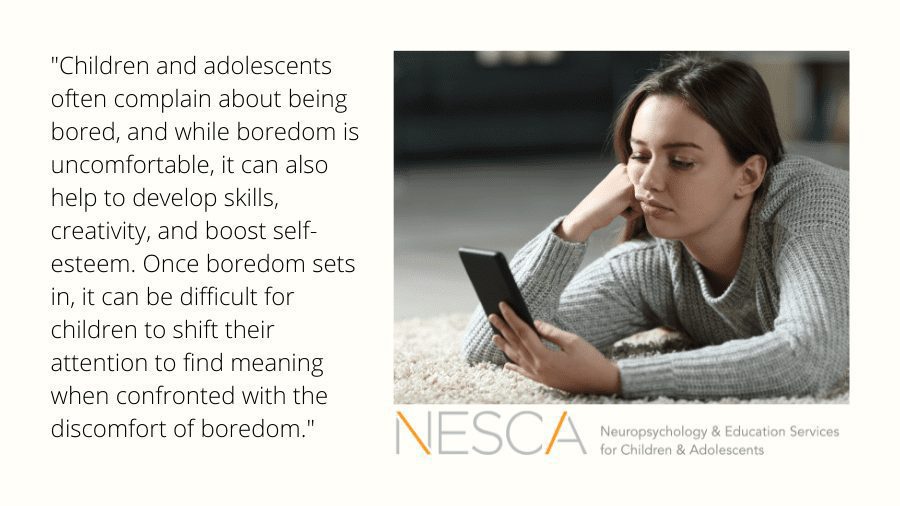
Children and adolescents often complain about being bored, and while boredom is uncomfortable, it can also help to develop skills, creativity, and boost self-esteem. Once boredom sets in, it can be difficult for children to shift their attention to find meaning when confronted with the discomfort of boredom. According to an article published by the Child Mind Institute, boredom can be a great way to teach children how to manage frustration and regulate emotions when things are boring or not going their way. It is not that boredom teaches the skills, but rather it is what they do when faced with boredom. There are many strategies outlined in the article to help parents nurture skills when their children are bored. In general, be aware that behaviors may be attention-seeking, and therefore, should not be reinforced. Otherwise, boredom offers an opportunity for children to do something meaningful that benefits them and those around them. When properly managed, it spurs creativity and innovation. Along the way, it is important to be realistic and recognize that there will be failure, and learning to manage the discomfort of failure is an added bonus.


About the Author

Dr. Cynthia Hess recently graduated from Rivier University with a PsyD in Counseling and School Psychology. Previously, she earned an M.A. from Antioch New England in Applied Psychology. She also worked as an elementary school counselor and school psychologist for 15 years before embarking on her doctorate. During her doctorate, she did her pre-doctoral internship with RIT in Rochester, N.Y. where she worked with youth ages 5-17 who had experienced complex developmental trauma. Dr. Hess’s first post-doctoral fellowship was with The Counseling Center of New England where she provided psychotherapy and family therapy to children ages 5-18, their families and young adults. She also trained part-time with a pediatric neuropsychologist conducting neuropsychological evaluations.


To schedule an appointment with one of NESCA’s expert neuropsychologists, please complete our online intake form


Neuropsychology & Education Services for Children & Adolescents (NESCA) is a pediatric neuropsychology practice and integrative treatment center with offices in Newton and Plainville, Massachusetts, and Londonderry, New Hampshire, serving clients from preschool through young adulthood and their families. For more information, please email info@nesca-newton.com or call 617-658-9800.


How Do I Know If My Child Needs Early Intervention?

By | NESCA Notes 2022

By Miranda Milana, Psy.D.
Pediatric Neuropsychologist

During the first few years of life, parents and caregivers are often tracking baby’s exciting first milestones, such as their first steps or first words. Routine well-child visits at the pediatrician’s office will often include the doctor asking what new skills you have noticed since baby’s last visit—Are they sitting unsupported yet? Crawling? Saying Mama or Dada? It can be stressful when your child is not yet meeting their milestones. It can be especially challenging when you notice they may be behind their peers at childcare or when around same-aged children at family functions.

The Centers for Disease Control and Prevention is a great resource to utilize as reference for what is expected of children by age. You can access more information here: https://www.cdc.gov/ncbddd/actearly/milestones/index.html or through their developmental milestone checklist.

What are age-appropriate milestones?

At a glance, several notable milestones listed by the CDC are as follows:

6 months:

  • Recognize familiar caregivers
  • Reach for toys/objects of interest
  • Roll from their belly to their back

9 months:

  • Respond when you call their name
  • Smile/laugh in response to interactive games, such as peek-a-boo
  • Babble (mama or dada)
  • Bang objects together
  • Sit on their on

1 year:

  • Call their parent by name (e.g., mama or dada)
  • Pull themselves up to stand
  • Walk while holding on to furniture

18 months:

  • Point to show you something interesting
  • Following one-step directions
  • Imitating your actions (e.g., putting on makeup, vacuuming, hammering)
  • Walking unassisted
  • Climbing on and off couches and chairs without support

2 years:

  • Look to you for your reactions in new situations
  • Putting two words together, such as “more milk”
  • Using gestures like nodding/shaking their head
  • Running
  • Eating with a spoon

Should you have any concerns regarding your child’s development, talk to their pediatrician! Your baby may qualify for a referral to Early Intervention (EI), which can help them to gain the appropriate skills in a way that supports you, your child, and your family.

What is EI?

EI is a federal grant program that was established in order to identify children at risk for developmental delays and to help families meet their children’s needs and maximize their potential. EI serves children ages 0-3 and provides a multitude of services depending on a child’s needs. Referrals for EI can be made by caregivers and/or providers for children who are exhibiting delays in their developmental milestones OR for children who have a medical condition that places them at risk for a developmental delay. EI referrals can be made as early as birth for medical conditions, such as prematurity, low birth weight, and Down syndrome. Many children receive referrals for EI from their parents, pediatricians, and/or childcare providers when there are observable delays in meeting speech milestones, motor milestones, speech milestones, and/or social milestones.

Who qualifies for EI?

Once referred to EI, your child will likely undergo a developmental evaluation. They will qualify for services if they have a diagnosed medical condition with a risk for developmental delays OR a delay in one or more areas of development of at least 30% OR a delay in one or more areas at least 1.5 standard deviations below the norm OR there is a questionable quality of skills based on the informed clinical opinion of the multidisciplinary team. Children can also meet criteria if there is a risk for delays due to four or more child or family risk factors (e.g., NICU stay, feeding challenges, chronic illness of a caregiver, lack of social supports for the caregiver).

At the end of the day, you know your child best. If you have concerns, reach out to their pediatrician. You can also reach out to a local EI provider on your own. In MA: https://www.mass.gov/info-details/ei-program-contact-information. In NH: https://www.dhhs.nh.gov/family-centered-early-supports-services.


About the Author

Dr. Miranda Milana provides comprehensive evaluation services for children and adolescents with a wide range of concerns, including attention deficit disorders, communication disorders, intellectual disabilities, and learning disabilities. She particularly enjoys working with children and their families who have concerns regarding an autism spectrum disorder. Dr. Milana has received specialized training on the administration of the Autism Diagnostic Observation Schedule (ADOS).

Dr. Milana places great emphasis on adapting her approach to a child’s developmental level and providing a testing environment that is approachable and comfortable for them. She also values collaboration with families and outside providers to facilitate supports and services that are tailored to a child’s specific needs.

Before joining NESCA, Dr. Milana completed a two-year postdoctoral fellowship at Boston Children’s Hospital in the Developmental Medicine department, where she received extensive training in the administration of psychological and neuropsychological testing. She has also received assessment training from Beacon Assessment Center and The Brenner Center. Dr. Milana graduated with her B.A. from the University of New England and went on to receive her doctorate from William James College (WJC). She was a part of the Children and Families of Adversity and Resilience (CFAR) program while at WJC. Her doctoral training also included therapeutic services across a variety of settings, including an elementary school, the Family Health Center of Worcester and at Roger Williams University.

Dr. Milana grew up in Maine and enjoys trips back home to see her family throughout the year. She currently resides in Wrentham, Massachusetts, with her husband and two golden retrievers. She also enjoys spending time with family and friends, reading, and cheering on the Patriots, Bruins, Red Sox, and Celtics.​


Neuropsychology & Education Services for Children & Adolescents (NESCA) is a pediatric neuropsychology practice and integrative treatment center with offices in Newton, Massachusetts, Plainville, Massachusetts, and Londonderry, New Hampshire, serving clients from preschool through young adulthood and their families. For more information, please email info@nesca-newton.com or call 617-658-9800.


To book an appointment with Dr. Miranda Milana, please complete our Intake Form today. For more information about NESCA, please email info@nesca-newton.com or call 617-658-9800.


So, You Are Taking a Leave of Absence from College—Now What?

By | NESCA Notes 2022

By: Kelley Challen, Ed.M., CAS
Director of Transition Services; Transition Specialist, NESCA

Almost 75% of college students reported moderate to severe psychological distress during the 2020-2021 school year (National College Health Assessment, American College Health Association, 2021). College students across the country are continuing to struggle with depression, anxiety, self-harm, and suicidal thoughts this school year. In the weeks leading up to Thanksgiving, my appointment calendar consisted primarily of meetings with college students or parents of college students beginning the process of taking a leave of absence and wondering what to do next. Here are some tips that I shared with many of these students and families.

Get Treatment

Many students need to participate in skill-based therapies (cognitive behavioral therapy, dialectical behavioral therapy, exposure and response prevention, acceptance and commitment therapy, etc.) in order to build up coping skills that may not have been developed in high school. Depending on the severity of current mental health issues, a student may need to participate in an intensive inpatient or outpatient treatment. Ultimately, many students need to find a supportive outpatient therapist—ideally someone who will be able to continue treating the student if they plan to make a future college attempt.

Psychopharmacological intervention (i.e., medication) can be important to consider. Sometimes students have not been taking medications as prescribed or they are taking medications exactly as prescribed but not gaining the intended benefits. Consulting with a prescriber can be an important treatment step for determining whether medication, or medication changes, are necessary.

Get Exercise

For any student, having a regular routine for exercise, sleep, and healthy diet has an impact. However, this is even more critical for students who are vulnerable to anxiety and/or depression. Exercise does not have to start big. Walking (with or without the dog), hiking, or just moving along to a YouTube fitness video for 10 minutes a day will make a difference. It’s critical to schedule the exercise in and often easiest if this is part of a morning or evening routine. For some students, working with a personal trainer or attending scheduled classes helps with accountability. Using a wearable exercise tracker like a Fitbit, Garmin Watch, or Apple Watch can also help with motivation and consistency.

Get a Job

Over the past 25 years, we have seen a notable decrease in the number of high school students who have participated in paid employment. Many students went off to college without taking time to connect college participation with future career interests. Using time off from school to explore work preferences and build transferrable skills (and a resume) can help students experience efficacy and improve mood. As a college student, no one is particularly excited when you show up to class, and the professor certainly doesn’t depend on you in order to get their job done. However, as an employee, students can experience tangible success through accomplishing work activities, receiving gratitude from coworkers and supervisors, and earning money. Work can also provide an important social experience. This is also an historic time to be looking for a first or early career position in the American workforce. Entry-level workers can make good wages. and there are plenty of part-time job openings across industries. Moreover, it’s difficult to get fired right now because good help is truly hard to find.

For students who are not ready to commit to paid work, and need time to recover and build energies up, volunteer jobs are also good opportunities. Some students will do better with brief drop-in volunteer activities while others my want to schedule more routine work hours.

Consider Taking Classes

When students take a leave of absence from college, the assumption is that the student will want to return to a college experience. But many students take a leave of absence and determine that they do not want to go back to college or that they do not want to go back to the same college. If a student wants to keep up academic skills, they can audit or take one or more college courses during the spring semester (depending on their college’s policies and whether they are planning to return). Community colleges, state colleges, and part-time or online college programs (like Harvard Extension School) are good options to explore for classes of interest as a non-degree seeking student. Starting back with a class that is high interest or a low degree of difficulty can be helpful for students who need to rebuild confidence. Additionally, when students are unsure if they are going to return to college or uncertain of a potential future major, it can be good to try classes that are likely to transfer and generally meet basic liberal arts requirements.

Get a Coach

Some students with mental health issues have other underlying challenges that contributed to their struggles in college. There could be a learning disability that wasn’t appropriately being addressed with accommodations, executive function challenges that impacted keeping up with pace, or volume of academics, social challenges that were exacerbated by the highly social dorm environment, or other issues. It is important to consider whether there are skill deficits that may have contributed to a student experiencing anxiety or depression. Some students will benefit from life skills, executive function, or social coaching in order to build up areas that are weaker before heading back to college (or may want to continue with that coaching when they head back).

Other students may want to take time to work with a career or transition coach to do some self-exploration. Taking a step back to participate in self-assessment related to one’s preferences and interests and to determine how those align with potential college major and future career interests can be helpful. I have worked with several students on leave to go through a career planning process. For some, they discover that they chose exactly the right college and major, and that can increase motivation when they get back to school, with proper supports in place. For others, this process sets a student on a completely new path.

Let us know, in our online Intake Form, if your student needs support during their time off from school and/or coaching to assist during their time off or when they return to college.


About the Author
Kelley Challen, Ed.M., CAS, is NESCA’s Director of Transition Services, overseeing planning, consultation, evaluation, coaching, case management, training and program development services. Ms. Challen also provides expert witness testimony in legal proceedings related to special education. She is also the Assistant Director of NESCA, working under Dr. Ann Helmus to support day-to-day operations of the practice. Ms. Challen began facilitating programs for children and adolescents with special needs in 2004. After receiving her Master’s Degree and Certificate of Advanced Study in Risk and Prevention Counseling from Harvard Graduate School of Education, Ms. Challen spent several years at the MGH Aspire Program where she founded an array of social, life and career skill development programs for teens and young adults with Asperger’s Syndrome and related profiles. She additionally worked at the Northeast Arc as Program Director for the Spotlight Program, a drama-based social pragmatics program, serving youth with a wide range of diagnoses and collaborating with several school districts to design in-house social skills and transition programs. Ms. Challen is co-author of the chapter “Technologies to Support Interventions for Social- Emotional Intelligence, Self-Awareness, Personality Style, and Self-Regulation” for the book Technology Tools for Students with Autism. She is also a proud mother of two energetic boys, ages six and three. While Ms. Challen has special expertise in supporting students with Autism Spectrum Disorders, she provides support to individuals with a wide range of developmental and learning abilities, including students with complex medical needs.


Neuropsychology & Education Services for Children & Adolescents (NESCA) is a pediatric neuropsychology practice and integrative treatment center with offices in Newton, Massachusetts, Plainville, Massachusetts, and Londonderry, New Hampshire, serving clients from preschool through young adulthood and their families. For more information, please email info@nesca-newton.com, call 617-658-9800 or complete our online Intake Form.

Technology to Relieve Holiday Stress – Really?

By | NESCA Notes 2022

By Dot Lucci, M.Ed., CAGS
Director of Consultation and Psychoeducational Counseling Services, NESCA

During this holiday season, life for most people gets a bit more hectic. Many of us feel more stressed, busy, and overwhelmed with everyday life as well as preparing for the holidays. Our children are stressed as well, as they feel our stress. Older students feel the end of semester stress of papers being due and final exams looming.

A client, who is a college student, called me the other day and said, “I am just so stressed and angry, I couldn’t wait ‘til my appointment. I am angry at nothing and everything. I am being hard on myself and others.” I reflected on these feelings, and we discussed that, at this time of year, many people feel more stress and have a “shorter fuse.” I reminded him that being angry at himself for being angry wasn’t the solution/remedy; that just intensifies the feeling. Instead, we talked about normalizing his feelings, remembering to focus on his breath, and have compassion. When we focus on our breath, we shift our attention away from the thoughts and feelings that make us spiral. This client plays video games, so introducing him to stress management apps/games was a “no brainer.” I reminded him to use the app at least once a day for a few minutes, especially during this holiday season. This practice helps him and can help all of us to establish a new habit of stress reduction to help us remember how to focus on our breath and shift our attention.

Since most adults and children are using technology daily, let’s focus on spending some of that screen time for managing our mental health and stress levels. Experiment with free versions of apps and find one that resonates with you or your children, then practice it every day. Make it a part of your daily routine for at least 5 minutes. Pick the time that works for you. It is something that can even be done as a family. We establish routines for reading at night, let’s establish a routine of stress management at night, whether it’s an app or another method. Prioritize the time; it will make all your lives better! This habit and skill development will ultimately help us develop stress management skills and be able to use them when we are stressed. The development of these skills also helps us feel less stressed in general. Instead of feeling stress during the holidays, let’s feel the joy, love, and gratitude that abounds.

Listed below are a sampling of several stress management apps related to mindfulness, emotional recognition and regulation, and anxiety/depression to help you and/or your children manage the stress of the upcoming holiday season. Hopefully one of them will resonate with you and your children so that you all may experience more resilience and peace when stress does happen.

Headspace (Children through Adult) is a mindfulness/meditation app that helps people reconnect with their breath. Headspace for Kids focuses on five areas: Calm, Focus, Kindness, Sleep, and Wake Up.

Calm (Children through Adult) is an app that focuses on mindfulness, yoga, guided meditation, breathing programs, improving focus, calming and relaxing music, and more.

Insight Timer (Children through Adult) is an app that includes lessons/classes, talks, music, and more on a variety of topics, such as mindfulness, stress reduction, achieving better sleep, anxiety, yoga, and other areas.

Super Better (Age 13 through Adult) is an app that uses games to build resilience, change mindset, emotional control, mental flexibility, achieve goals – even with challenges – and helps with anxiety, depression, chronic pain, and more.

Mindshift CBT (Teens through Adult) is an app that focuses on anxiety reduction, including worry, perfectionism, social anxiety, panic, phobias, and more.

Breathe2Relax (Teens through Adult) is an app that focuses on diaphragmatic breathing and stress reduction.

Smiling Mind  (Ages 7 through 18) is part of a broader collection of tools/curriculum that focuses on mental health for children and adults (teachers and parent). It focuses on mindfulness, deep breathing, body scan, gratitude, and more.

Positive Penguins (Ages 4 through 11) is an app that helps children understand how their feelings and thoughts are connected and to develop more positive thinking.

Resilient Family, Happy Child (Ages 4 through Adult) is an app that uses simple mindfulness- based movement to support the development of resilience and self-regulation.

Mightier (Ages 6 through 14) is a biofeedback tool that uses a heart sensor to help children understand their emotions and teaches them calming strategies.

HeartMath (Ages PreK through Adult) is a company that has many tools, games, music, curriculum, books, and more that focu on stress reduction. They have biofeedback apps and desktop computer versions for single users, classes, or multiple clients. They all use a heart sensor. Inner Balance is the app it uses within the program.

DreamyKid (Ages 9 through 18) is an app that uses guided visualizations, meditations, and affirmations related to mindfulness.

WellBeyond Meditation for Kids (Ages 4 through 8) is like DreamyKid but is geared towards younger kids with guided meditations, visualizations, and breathing exercises.

Breathe Think Do Sesame (Ages 2 through 5) is an app that helps children learn deep breathing, problem solving, an emotional vocabulary, positive thinking habits, and more through guided meditations, visualizations, stories, breathing exercises, and more.

Mindful Powers for Kids (Ages 5 through 10) Through play, games, stories, and more, kids learn about emotions, mindfulness, positive thinking, body scanning, and more. It uses Acceptance and Commitment Therapy (ACT) as a guiding principle of its platform.


About the Author

NESCA’s Director of Consultation and Psychoeducational Services Dot Lucci has been active in the fields of education, psychology, research and academia for over 30 years. She is a national consultant and speaker on program design and the inclusion of children and adolescents with special needs, especially those diagnosed with Autism Spectrum Disorder (ASD). Prior to joining NESCA, Ms. Lucci was the Principal of the Partners Program/EDCO Collaborative and previously the Program Director and Director of Consultation at MGH/Aspire for 13 years, where she built child, teen and young adult programs and established the 3-Ss (self-awareness, social competency and stress management) as the programming backbone. She also served as director of the Autism Support Center. Ms. Lucci was previously an elementary classroom teacher, special educator, researcher, school psychologist, college professor and director of public schools, a private special education school and an education collaborative.

Ms. Lucci directs NESCA’s consultation services to public and private schools, colleges and universities, businesses and community agencies. She also provides psychoeducational counseling directly to students and parents. Ms. Lucci’s clinical interests include mind-body practices, positive psychology, and the use of technology and biofeedback devices in the instruction of social and emotional learning, especially as they apply to neurodiverse individuals.


To book a consultation with Ms. Lucci or one of our many expert clinicians, complete NESCA’s online intake form. Indicate whether you are seeking an “evaluation” or “consultation” and your preferred clinician/consultant/service in the referral line.


Neuropsychology & Education Services for Children & Adolescents (NESCA) is a pediatric neuropsychology practice and integrative treatment center with offices in Newton, Massachusetts, Plainville, Massachusetts, and Londonderry, New Hampshire, serving clients from preschool through young adulthood and their families. For more information, please email info@nesca-newton.com or call 617-658-9800.


Receiving, Understanding, and Sharing Diagnostic Labels and Profiles

By | NESCA Notes 2022

By Yvonne M. Asher, Ph.D. 
Pediatric Neuropsychologist

A recent New York Times article described a trend, noticed by many mental health professionals, where adolescents and young adults have been exploring mental health on social media. The article references the explosion of TikTok videos in which individuals disclose their psychiatric diagnoses and symptoms. For young people searching on social media, these videos are shown at an increasing rate, based on algorithms. Young people are finding a great deal of validation and connection by watching these videos. Many begin to seek out mental health support, often entering the therapeutic relationship with a clear idea of what their diagnosis will be.

As a mental health professional, I see a great deal of complexity coming from this trend. Certainly, the dissemination of information about mental health and reduction in stigma seems to be positive. Allowing individuals to more readily learn about psychiatric conditions will hopefully reduce fear, embarrassment, shame, and avoidance of mental health care. In addition, promoting self-understanding is important, particularly for young people who are in a developmental stage of identity exploration.

However, there are also concerning implications. First, self-diagnosis can be problematic in mental health, as it is in the medical field. There is a fine balance between being an informed health care consumer and a patient unwilling to listen to the expert opinion of their physician. Entering a physician’s office, unwavering in certainty of your diagnosis, can lead to friction and frustration. In contrast, entering with relevant personal and family history, a thoughtful list of your current symptoms, and readily accessible notes on recent changes in your lifestyle can be invaluable in partnering with your doctor to determine the origin of the problem. This is paralleled in mental health. Entering a therapeutic or evaluation process with information and an open mind is vital to the partnership between clients and clinicians.

The other implication of this trend involves the necessity of a formal diagnosis. I hear from many individuals, after a comprehensive neuropsychological evaluation is completed, that they feel relief at “finally knowing what is wrong.” This validation is entirely understandable, and is not restricted to times when I have provided a diagnostic label. An in-depth exploration of neurocognitive strengths and weaknesses can provide invaluable information that can help individuals understand themselves, access what they need, and plan for their future. Sometimes, a client’s symptoms are best captured by a diagnostic label. However, other times, a person’s comprehensively evaluated profile does not warrant a formal diagnosis. The latter does not mean that a person’s symptoms are any less valid or impactful. Formal diagnoses generally require multiple symptoms, occurring within specified timeframes, and occurring in the presence or absence of other important factors. There are many instances where a symptom is clearly impactful and interfering for a client, without the client’s profile meeting the full range of criteria necessary for a diagnosis. At other times, a symptom that appears, on the surface, to indicate one diagnosis, may in fact indicate a very different diagnosis after a person’s full neuropsychological profile is explored.

As a wise mentor once told me that, in the evaluation process, we must “hold our hypotheses lightly.” We enter a therapeutic relationship, either as a client or a clinician, with a sense of what we might discover or be told. Our initial sense can be entirely accurate, or shockingly incorrect. Therefore, it is vital for all of us to hold our ideas about what may come from an evaluation lightly.


About the Author

Dr. Yvonne M. Asher enjoys working with a wide range of children and teens, including those with autism spectrum disorder, developmental delays, learning disabilities, attention difficulties and executive functioning challenges. She often works with children whose complex profiles are not easily captured by a single label or diagnosis. She particularly enjoys working with young children and helping parents through their “first touch” with mental health care or developmental concerns.

Dr. Asher’s approach to assessment is gentle and supportive, and recognizes the importance of building rapport and trust. When working with young children, Dr. Asher incorporates play and “games” that allow children to complete standardized assessments in a fun and engaging environment.

Dr. Asher has extensive experience working in public, charter and religious schools, both as a classroom teacher and psychologist. She holds a master’s degree in education and continues to love working with educators. As a psychologist working in public schools, she gained invaluable experience with the IEP process from start to finish. She incorporates both her educational and psychological training when formulating recommendations to school teams.

Dr. Asher attended Swarthmore College and the Jewish Theological Seminary. She completed her doctoral degree at Suffolk University, where her dissertation looked at the impact of starting middle school on children’s social and emotional wellbeing. After graduating, she completed an intensive fellowship at the MGH Lurie Center for Autism, where she worked with a wide range of children, adolescents and young adults with autism and related disorders.


Neuropsychology & Education Services for Children & Adolescents (NESCA) is a pediatric neuropsychology practice and integrative treatment center with offices in Newton, Massachusetts, Plainville, Massachusetts, and Londonderry, New Hampshire, serving clients from preschool through young adulthood and their families. For more information, please email info@nesca-newton.com or call 617-658-9800.


To book an appointment with Dr. Yvonne Asher, please complete our Intake Form today. For more information about NESCA, please email info@nesca-newton.com or call 617-658-9800.


The SLP’s Role in Written Language Disorders

By | NESCA Notes 2022

By Olivia Rogers, MA., CCC- SLP
Speech-Language Pathologist, NESCA

A written language disorder is an impairment in fluent word reading (i.e., reading decoding and sight word recognition), reading comprehension, written spelling, and/or written expression (Ehri, 2000; Gough & Tunmer, 1986; Kamhi & Catts, 2012; Tunmer & Chapman, 2007, 2012). As written language disorders are quite complex, appropriate assessment and treatment often incorporates many members. Members of the interprofessional practice team may include, but are not limited to, reading specialists, occupational therapists, special educators, learning specialists, and more.

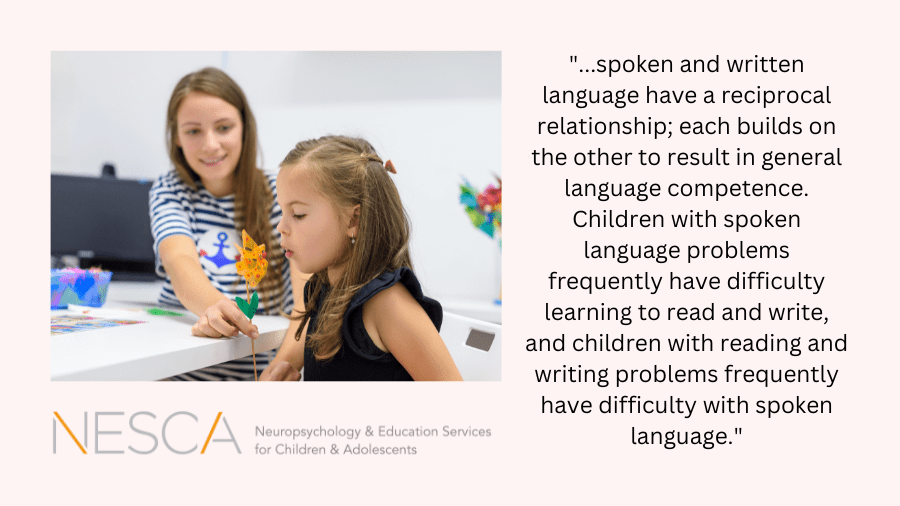
When you think of a speech-language pathologist (SLP), a few words probably come to mind; terms like articulation, language, or fluency. Often, SLPs are associated with spoken language only. Most people don’t think of reading or writing when they think of SLPs. However, in addition to the diagnosis and treatment of spoken language disorders, it is well within the scope of practice of a SLP to diagnose and treat written language disorders. In fact, spoken and written language have a reciprocal relationship; each builds on the other to result in general language competence. Children with spoken language problems frequently have difficulty learning to read and write, and children with reading and writing problems frequently have difficulty with spoken language. Children with speech and language deficits are at a higher risk for reading and writing difficulties. Higher rates of all forms of written language disorders have been documented in children with speech and/or language impairments. Take a look at these findings:

  1. Comorbidity between literacy difficulties and speech and language deficits occurred in as high as 50% of cases (Stoeckel et al. (2013).
  2. By the end of kindergarten, more than 25% of children with language impairment were reported to also be poor readers (Murphy et al., 2016).
  3. Approximately 20%-28% of children with speech sound disorders (SSD) have literacy difficulties (Overby, Trainin, Smit, Bernthal, and Nelson, 2012).

No matter the age, SLPs can assess and treat spoken and written language difficulties. SLPs bring knowledge of communication processes and disorders, and language acquisition to the literacy table. Additionally, SLPs are skilled in dynamic assessment and have clinical experience in developing individualized programs for children and adolescents. Here are just a few written language skills that SLPs work on:

Reading: Pre-reading Skills

Before a child can decode, or read, they must have an understanding that words are composed of smaller units and how these units operate separately and together. SLPs incorporate the following skills into sessions:

  • Rhyming (e.g., “flag and stag”)
  • Syllable segmenting (e.g., “student: stu/dent”)
  • Blending sounds into words (e.g., “sh/i/p says ‘ship’”)
  • Segmenting words into their sounds (e.g., “leg: l/e/g”)
  • Deleting sounds in words (e.g., “cup without the c is up”)
  • Substituting sounds in words (e.g., “change the ‘B’ in bat to an ‘M’”)

Reading: Language Comprehension

This is the biggest one for SLPs. To target language comprehension, we work on smaller goals, such as:

  • Grammar
  • Story Grammar Elements
  • Visualizing and Verbalizing
  • Vocabulary
  • Active Reading Strategies
  • Themes

Writing: Organization/Planning

Before writing, it is important to plan out what you will write. Many children with language disorders have trouble with these skills. Here are just a few ways that SLPs help children plan and develop their writing by:

  • Using visuals for story grammar components
  • Make and practice using graphic organizers
  • Teaching sentence, paragraph, and essay construction

Spelling

Yes, spelling! SLPs are equipped to work on spelling. After all, it is just another language skill. Some ways to target spelling include:

  • Working on phonological awareness and phonemic awareness
  • Teach students about morphology (the study of words and their parts)
  • Incorporation of working memory strategies, such as chunking, visualization, or mnemonics

If you have concerns about your child’s pre-literacy or literacy skills, or would like to support your child’s written language skills, please contact NESCA’s Olivia Rogers at orogers@nesca-newton.com or fill out our Intake Form, noting an interest in speech language pathology.


Sources:

Overby, Trainin, Smit, Bernthal, and Nelson, 2012) Preliteracy Speech Sound Production Skill and Later Literacy Outcomes: A Study Using the Templin Archive.

American Speech-Language-Hearing Association. (2001). Roles and responsibilities of speech-language pathologists with respect to reading and writing in children and adolescents [Position Statement]. Available from www.asha.org/policy.

Catts, H.W. & Weismer, S.E. (2006). Language Deficits in Poor Comprehenders: A Case for the Simple View of Reading. Journal of Speech, Language, and Hearing Research, 49, 278-293.


About the Author

Olivia Rogers received her Master of Arts in Speech-Language Pathology from the University of Maine, after graduating with a Bachelor of Arts in Communication Sciences and Disorders and concentrations in Childhood Development and Disability Studies.

Ms. Rogers has experience working both in the pediatric clinic setting as well as in public schools, evaluating and treating children 2-18 years of age presenting with a wide range of diagnoses (e.g., language delays and disorders, speech sound disorders, childhood apraxia of speech, autism spectrum disorder, social communication disorder, and Down syndrome). Ms. Rogers enjoys making sure therapy is fun and tailored to each client’s interests.

In her free time, she enjoys listening to podcasts and spending times with friends and families.


Neuropsychology & Education Services for Children & Adolescents (NESCA) is a pediatric neuropsychology practice and integrative treatment center with offices in Newton, Massachusetts, Plainville, Massachusetts, and Londonderry, New Hampshire, serving clients from preschool through young adulthood and their families. For more information, please email info@nesca-newton.com or call 617-658-9800.


To book an appointment with Olivia Rogers, please complete our Intake Form today. For more information about NESCA, please email info@nesca-newton.com or call 617-658-9800.


College Myth Buster: Four-Year College Degrees Are Most Often Not Completed in Four Years

By | NESCA Notes 2022

By: Kelley Challen, Ed.M., CAS
Director of Transition Services; Transition Specialist, NESCA

One of the biggest challenges in supporting students with disabilities, and their families, as they contemplate the transition from high school to college is combatting the many “myths” that exist in our culture and brains about college. Chief among those myths is the expectation that a 17- or 18-year-old should be able to:

  • Select “the right” college—which is a “fit” for their interests and personality during a period of time when they are quickly changing and forming a new view of themselves and their identity.
  • Easily bridge the transition from high school to college—even though the expectations for time management, class and study hours, life skills, extracurricular participation, meeting graduation requirements, etc., are completely different.
  • And, successfully complete 120 or more college credit hours within just four years.

The reality is that the majority of students who enroll at a “four-year” college in the United States will not finish their bachelor’s degree in four years. Instead, according to the National Center for Education Statistics, just 49 percent of first-time, full-time college students earn a bachelor’s degree in four years. To rephrase, the majority of students who enroll at a college expecting to graduate with a bachelor’s degree in four years will be disappointed, although there are some differences in retention at public and private institutions. Given that colleges are excellent at marketing, you may notice when researching schools, that it is far more common for public and private universities to advertise their “six-year” graduation rate, rather than the four-year rate. Even so, the National Student Clearhouse Research Center data indicates that the six-year completion rate for full-time undergraduate students in 2023 in the United States was 62.2 percent overall—which is effectively unchanged since 2015. There is essentially a more than one in three chance that a student who enrolls at a particular college, will not end up with a degree from that college six years later.

While these numbers can be somewhat startling, it is important to go into the college process with eyes wide open and to pay attention to each college’s retention rates from freshman to sophomore year as well as their four-year and six-year graduation rates. There is also a great opportunity here to rethink college planning and college paths. Rather than trying to find “the right” college for seeking a bachelor’s degree, students might instead look for “the right” college to start being a college student at. Sometimes, this is the community college right down the street where the student can trial classes of interest to narrow down their choices of major and also trial classes in areas of challenge (such as math, or a lab science) if the student is worried about being able to pass such classes at a four-year college. Another possibility for students with learning disabilities can be to start at a college that is designed for students with learning disabilities or that has a great learning disabilities program. We have the opportunity to help students forge a college path that looks a lot more like a career path, starting with an “entry-level” school and working up to a school that offers the student the rigor and academic concentration that reflects the student’s highest potential. For students interested in this type of planning, familiarity with transfer rates and transfer agreements between colleges can be an important part of the college research process. Financial planning is also critical—rather than a student needing to fund six years of college at a private institution, participation in a community college as a starter school or taking classes at a community college or public college during the summer might help to curb overall college costs.

In addition to thinking creatively about college planning, I think it is important to talk earnestly about college retention and graduation rates with teenagers—to let students know that there is actually a good chance they might not like the college they choose, might decide to change colleges, or might not graduate in four years. These are the facts of college, and we need to normalize the experience of trying college and deciding it’s not the right school or right time, needing to take a semester off for mental health reasons, or simply needing more time to get through it. Because that is what’s normal!


About the Author
Kelley Challen, Ed.M., CAS, is NESCA’s Director of Transition Services, overseeing planning, consultation, evaluation, coaching, case management, training and program development services. Ms. Challen also provides expert witness testimony in legal proceedings related to special education. She is also the Assistant Director of NESCA, working under Dr. Ann Helmus to support day-to-day operations of the practice. Ms. Challen began facilitating programs for children and adolescents with special needs in 2004. After receiving her Master’s Degree and Certificate of Advanced Study in Risk and Prevention Counseling from Harvard Graduate School of Education, Ms. Challen spent several years at the MGH Aspire Program where she founded an array of social, life and career skill development programs for teens and young adults with Asperger’s Syndrome and related profiles. She additionally worked at the Northeast Arc as Program Director for the Spotlight Program, a drama-based social pragmatics program, serving youth with a wide range of diagnoses and collaborating with several school districts to design in-house social skills and transition programs. Ms. Challen is co-author of the chapter “Technologies to Support Interventions for Social- Emotional Intelligence, Self-Awareness, Personality Style, and Self-Regulation” for the book Technology Tools for Students with Autism. She is also a proud mother of two energetic boys, ages six and three. While Ms. Challen has special expertise in supporting students with Autism Spectrum Disorders, she provides support to individuals with a wide range of developmental and learning abilities, including students with complex medical needs.


Neuropsychology & Education Services for Children & Adolescents (NESCA) is a pediatric neuropsychology practice and integrative treatment center with offices in Newton, Massachusetts, Plainville, Massachusetts, and Londonderry, New Hampshire, serving clients from preschool through young adulthood and their families. For more information, please email info@nesca-newton.com, call 617-658-9800 or complete our online Intake Form.

IEP or 504: What Do They Mean and How Can They Apply to My Child?

By | NESCA Notes 2022

By Miranda Milana, Psy.D.
Pediatric Neuropsychologist

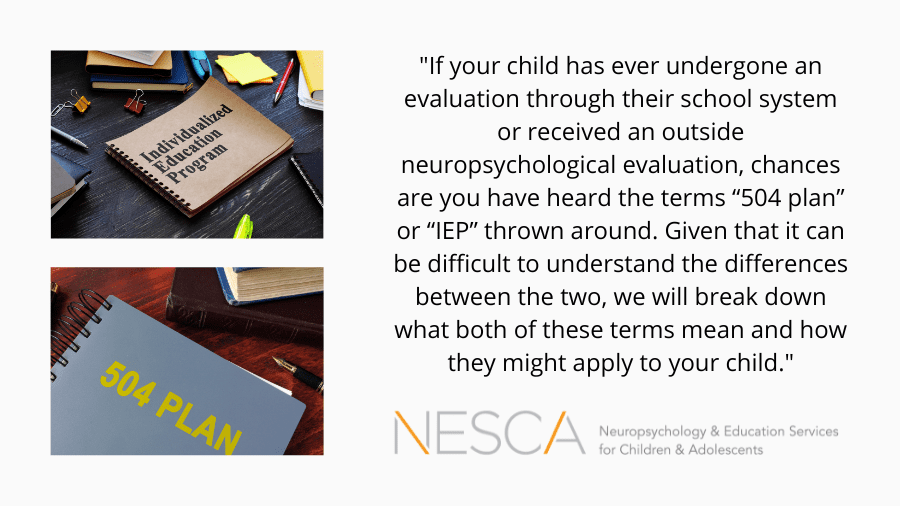
If your child has ever undergone an evaluation through their school system or received an outside neuropsychological evaluation, chances are you have heard the terms “504 plan” or “IEP” thrown around. Given that it can be difficult to understand the differences between the two, we will break down what both of these terms mean and how they might apply to your child.

What is an IEP?

IEP stands for Individualized Education Program and provides specialized instruction, program modification, and accommodations through the public school system based on a student’s disability and how it impacts access to the curriculum. IEPs must include:

  • Annual goals that are measurable via benchmarks
  • Progress reports of the student’s current performance
  • Descriptions of how services will be provided
  • Outlined transition services as the child ages

In addition, IEPs must detail what academic environment would be the least restrictive, and therefore, most suitable for the student to appropriately access the educational curriculum.

Who is eligible for an IEP?

In order to qualify for an IEP, students must receive an evaluation either through the school system or through an outside provider that outlines the student’s disability status and how it negatively impacts accessing the educational curriculum. Importantly, a diagnosed disability is not enough to quality for an IEP on its own. Instead, the disability must be impacting the student’s ability to make effective progress in the general education program, which includes both academic and non-academic offerings of the district. Some examples of qualifying diagnoses include (but are not limited to):

  • Autism
  • Emotional Disturbance
  • Intellectual Disability
  • Specific Learning Disability

A parent or caregiver may ask what happens if  their child has a diagnosed disability but does not require special education services? Instead, the team may determine, through the eligibility process, that the student only requires accommodations, such as extended time on tests.

This is a perfect example of when a student might not qualify for an IEP and would instead be considered for a 504 plan. Simply put, IEPs and 504 plans both provide accommodations; however, 504 plans do NOT provide for specialized instruction or program modifications.

 What is a 504 plan?

A 504 plan is referred to as such because it is covered under Section 504 of a federal civil rights law called the Rehabilitation Act. This law works to ensure that students receive appropriate supports and accommodations within the academic setting. 504 plans outline accommodations for students which can include some of the following (but again, accommodations are not limited to the following):

  • Preferential seating
  • Extended time on tests and quizzes
  • Reduced distraction testing environments
  • Access to class notes
  • The use of a calculator during exams

As you can see, none of these accommodations is modifying the curriculum or providing a student with educational services as would be the case with an IEP.

Who is eligible for a 504 plan?

Any student with a disability impairing functioning in one or more areas is eligible for a 504 plan. One common example would be a student with diagnosed Attention Deficit Hyperactivity Disorder (ADHD) who requires distraction-reduced testing environments and/or other associated accommodations but does NOT require specialized academic instruction.

Another example is a parent of a child with an autism spectrum diagnosis may find that their child was found to be ineligible for an IEP through the special education eligibility determination process. Shouldn’t the student qualify for an IEP based on the autism disability?

The answer is not necessarily. If a student has a diagnosis of autism but is showing no signs of impairment within the academic setting (i.e., making appropriate academic progress, showing no signs of emotional distress, doing well with their peers, etc.), an IEP would not be warranted. Instead, a 504 plan would likely be considered (but again, is not guaranteed if academic functioning is not impaired).

If you feel your child requires a 504 plan or IEP and you are not sure where to start, contact your child’s special education program at their school. You may also wish to consult with an educational advocate or attorney who has a thorough understanding of special education laws.

References:

Massachusetts Department of Elementary and Secondary Education. (2018, June 29). Education Laws and Regulations. 603 CMR 28.00: Special Education – Education Laws and Regulations. Retrieved August, 2022, from https://www.doe.mass.edu/lawsregs/603cmr28.html?section=05

Massachusetts Department of Elementary and Secondary Education. (2014, July 14). Section 504 and the Americans with disabilities act. Section 504 – Special Education. Retrieved August, 2022, from https://www.doe.mass.edu/sped/links/sec504.html


About the Author

Dr. Miranda Milana provides comprehensive evaluation services for children and adolescents with a wide range of concerns, including attention deficit disorders, communication disorders, intellectual disabilities, and learning disabilities. She particularly enjoys working with children and their families who have concerns regarding an autism spectrum disorder. Dr. Milana has received specialized training on the administration of the Autism Diagnostic Observation Schedule (ADOS).

Dr. Milana places great emphasis on adapting her approach to a child’s developmental level and providing a testing environment that is approachable and comfortable for them. She also values collaboration with families and outside providers to facilitate supports and services that are tailored to a child’s specific needs.

Before joining NESCA, Dr. Milana completed a two-year postdoctoral fellowship at Boston Children’s Hospital in the Developmental Medicine department, where she received extensive training in the administration of psychological and neuropsychological testing. She has also received assessment training from Beacon Assessment Center and The Brenner Center. Dr. Milana graduated with her B.A. from the University of New England and went on to receive her doctorate from William James College (WJC). She was a part of the Children and Families of Adversity and Resilience (CFAR) program while at WJC. Her doctoral training also included therapeutic services across a variety of settings, including an elementary school, the Family Health Center of Worcester and at Roger Williams University.

Dr. Milana grew up in Maine and enjoys trips back home to see her family throughout the year. She currently resides in Wrentham, Massachusetts, with her husband and two golden retrievers. She also enjoys spending time with family and friends, reading, and cheering on the Patriots, Bruins, Red Sox, and Celtics.​


Neuropsychology & Education Services for Children & Adolescents (NESCA) is a pediatric neuropsychology practice and integrative treatment center with offices in Newton, Massachusetts, Plainville, Massachusetts, and Londonderry, New Hampshire, serving clients from preschool through young adulthood and their families. For more information, please email info@nesca-newton.com or call 617-658-9800.


To book an appointment with Dr. Miranda Milana, please complete our Intake Form today. For more information about NESCA, please email info@nesca-newton.com or call 617-658-9800.


Private Neuropsychological Evaluation vs. School Evaluation

By | NESCA Notes 2022

By: Cynthia Hess, PsyD
Pediatric Neuropsychologist

While both a school evaluation and a private neuropsychological evaluation often provide valuable information, there are some considerable differences. The primary purpose of a school evaluation is to determine whether or not a student presents with a disability that impairs their ability to access the curriculum and fully participate in the academic and social life of the school. Once a student has been referred for special education, the special education team convenes to determine if, when, and how the student should be evaluated. They decide which instruments will be used for the assessment and who will be responsible for administering them. For example, if a student is referred for a suspected disability, a school psychologist conducts a cognitive evaluation, and a special education teacher will administer an academic assessment. A speech and language, physical therapy, functional behavior, or occupational therapy evaluation may be requested as well. After testing, each specialist writes their report and presents their results individually.

When a student participates in a private neuropsychological evaluation, the parents and student work closely with the evaluator through the entire process, from the intake to feedback and beyond. While there are certainly very comprehensive school evaluations, the information obtained by the evaluators is rarely integrated and instead presented as separate evaluations. This does not allow for a complete understanding of how deficits (or strengths) impact functioning across domains, especially when the child has complex challenges. A comprehensive neuropsychological evaluation is comprised of many elements. Most evaluations consist of a detailed developmental and family history, cognitive, academic, learning and memory (auditory and visual) assessment, visual-spatial and graphical motor skills, and attention and executive function. Depending on the referral question, the evaluation may include reviews of social skills and adaptive functioning or specific measures to assist with making a differential diagnosis. Generally, the assessment is conducted by a single evaluator. The data, including data from prior testing, is synthesized into a detailed report with specific recommendations for school, home, and community life when appropriate.

There are undeniably circumstances when a thorough school evaluation is beneficial. School evaluators have opportunities to observe students at school and consult with their teachers, which can be advantageous (although observations may be requested or necessary to complete a thorough private evaluation, too). School team members also have many opportunities to collaborate when evaluating and working with students. However, school personnel are limited in their ability to integrate data across disciplines, provide diagnoses, and directly assess medical conditions, such as attention-deficit/hyperactivity disorder (ADHD), autism spectrum disorder (ASD), and complex challenges, such as dyslexia and nonverbal learning disability (NLD). Additionally, while some parents establish a good working relationship with members of the special education team, they do not have the opportunity to develop a long-term, collaborative relationship with the evaluator as they would when a private evaluation is obtained.


About the Author

Dr. Cynthia Hess recently graduated from Rivier University with a PsyD in Counseling and School Psychology. Previously, she earned an M.A. from Antioch New England in Applied Psychology. She also worked as an elementary school counselor and school psychologist for 15 years before embarking on her doctorate. During her doctorate, she did her pre-doctoral internship with RIT in Rochester, N.Y. where she worked with youth ages 5-17 who had experienced complex developmental trauma. Dr. Hess’s first post-doctoral fellowship was with The Counseling Center of New England where she provided psychotherapy and family therapy to children ages 5-18, their families and young adults. She also trained part-time with a pediatric neuropsychologist conducting neuropsychological evaluations.


To schedule an appointment with one of NESCA’s expert neuropsychologists, please complete our online intake form


Neuropsychology & Education Services for Children & Adolescents (NESCA) is a pediatric neuropsychology practice and integrative treatment center with offices in Newton and Plainville, Massachusetts, and Londonderry, New Hampshire, serving clients from preschool through young adulthood and their families. For more information, please email info@nesca-newton.com or call 617-658-9800.


Parenting is a Hard Job – Remember You are Good Enough!

By | NESCA Notes 2022

By Dot Lucci, M.Ed., CAGS
Director of Consultation and Psychoeducational Counseling Services, NESCA

Much has been published about parenting and parenting styles, whether in YouTube clips, books, podcasts, scholarly articles, newspaper articles, and so much more. But basically, if you are a parent, you are just doing your job – you are parenting, trying to guide your children, teens, and young adults on their own paths so they grow up to be “good humans and lead happy, successful lives.”

My guess is you probably haven’t given your parenting style too much thought. You just go about whatever the day brings you with whatever you’ve got in your tank that day. You’ve probably heard the terms Helicopter Parents, Tiger Moms, Free-range Parenting, etc., to describe different parenting styles. Usually, our parenting styles emerge from our own histories, role models, experiences, and personalities. You may be parenting how you were parented because it worked for you or because you disliked the way you were parented so you moved to the complete opposite way of parenting.

Remember the book, “Battle Hymn of The Tiger Mother,” by Amy Chua from 2011? She wrote this book as a memoir – not as a parenting guide – but what a controversy it stirred regarding parenting styles! Alan Paul, a journalist for The Wall Street Journal then wrote, “Tiger Mom…Meet Panda Dad,” as a commentary against the Tiger Mom mentality and to bring dads into the parenting discussion. During this time period, there was much written about parenting styles, often characterized into four styles: Authoritative, Authoritarian/Disciplinarian, Permissive/Indulgent, and Uninvolved/Neglectful. As you can imagine, each style has its driving principles. In case you are interested in what the research says about the four parenting styles, the Authoritative parenting style wins out over the others in helping children develop into well-functioning adults.

No matter what style you are, you are giving it your best shot. Each of the styles has much written about them and their impact on child development – some good some not so good. Parents may change their style(s) depending upon a variety of factors and adopt new ways. Try to be aware of your style and its impact on your kids – this realization may happen as you go. That’s okay. You are learning this job as you go, and we all know there is no manual. You are just doing it, living each and every day with what it brings to you. Most parents do not think about what parenting style they are going to use in the moment. Sometimes you may “catch yourself,“ see your child’s reaction, and adjust your style. Perhaps you are the “softie” most of the time, but then turn on the “tough love” style when needed.

As a parent consultant, I often hear, “I must be the worst parent you’ve ever seen. You must think I’m a fool. Do all kids do this? Am I the only one who struggles getting their kids to follow directions?”…and so much more. Sure, I give them specific suggestions for parenting their child who has ADHD or is autistic; however, I match my recommendations to their parenting styles and personalities.

As a consultant, I often find myself saying these mantras in parent sessions:

You are good enough.
Show and tell your kids you love them.
You are giving it your best shot in this moment.
Be kind and gentle with yourself and your kids.
Have compassion and empathy for yourself and your kids.
Stay calm in the eye of the storm. ___ Happens!
You are human, and humans make mistakes – own them.
Don’t expect perfection. It is overrated. Cut yourself some slack.
Point out the positives. Catch ‘em being good!
Tell them what to do not what not to do.
Develop honest, authentic relationships with your kids.
Lead with your heart.

And as the saying goes….

If you are interested in learning more about NESCA’s Consultation Services, please complete our online Intake Form.

References

Alan Paul http://alanpaul.net/panda-dad/

4 Research-Backed Parenting Styles and How they affect your kids by Caroline Bologna https://www.huffpost.com/entry/four-parenting-styles-affect-kids_l_6270493fe4b0bc48f57e705f

4 Types of Parenting Styles and their effects on the child https://www.parentingforbrain.com/4-baumrind-parenting-styles/

Here’s what makes ‘authoritative parents’ different from the rest—and why psychologists say it’s the best parenting style by Francyne Zelster
https://www.cnbc.com/2021/10/05/child-psychologist-explains-why-authoritative-parenting-is-the-best-style-for-raising-smart-confident-kids.html


About the Author

NESCA’s Director of Consultation and Psychoeducational Services Dot Lucci has been active in the fields of education, psychology, research and academia for over 30 years. She is a national consultant and speaker on program design and the inclusion of children and adolescents with special needs, especially those diagnosed with Autism Spectrum Disorder (ASD). Prior to joining NESCA, Ms. Lucci was the Principal of the Partners Program/EDCO Collaborative and previously the Program Director and Director of Consultation at MGH/Aspire for 13 years, where she built child, teen and young adult programs and established the 3-Ss (self-awareness, social competency and stress management) as the programming backbone. She also served as director of the Autism Support Center. Ms. Lucci was previously an elementary classroom teacher, special educator, researcher, school psychologist, college professor and director of public schools, a private special education school and an education collaborative.

Ms. Lucci directs NESCA’s consultation services to public and private schools, colleges and universities, businesses and community agencies. She also provides psychoeducational counseling directly to students and parents. Ms. Lucci’s clinical interests include mind-body practices, positive psychology, and the use of technology and biofeedback devices in the instruction of social and emotional learning, especially as they apply to neurodiverse individuals.


To book a consultation with Ms. Lucci or one of our many expert neuropsychologists, complete NESCA’s online intake form. Indicate whether you are seeking an “evaluation” or “consultation” and your preferred clinician/consultant in the referral line.


Neuropsychology & Education Services for Children & Adolescents (NESCA) is a pediatric neuropsychology practice and integrative treatment center with offices in Newton, Massachusetts, Plainville, Massachusetts, and Londonderry, New Hampshire, serving clients from preschool through young adulthood and their families. For more information, please email info@nesca-newton.com or call 617-658-9800.


Skip to content