
NESCA’s Newton, MA location has immediate availability for neuropsychological evaluations. Our MA clinicians specialize in the following evaluations: Neuropsychological; Autism; and Emotional and Psychological, as well as Academic Achievement and Learning Disability Testing.

Visit www.nesca-newton.com/intake for more information or to book an evaluation.

Tag

NESCA Archives - Page 3 of 34 - NESCA

Subscribe to NESCA Notes

child with FASD and parent

Often Overlooked: Recognizing and Supporting Children with Fetal Alcohol Spectrum Disorder

By | NESCA Notes 2025

child with FASD and parentBy NESCA Pediatric Neuropsychologist

One of the reasons I joined the NESCA team was for the opportunity to continually learn and grow professionally. NESCA has a well-earned reputation for fostering an environment where clinicians can expand their knowledge and refine their skills in meaningful ways, and a session I was able to attend for our staff earlier this year was a perfect example of that.

I attended an insightful seminar on Fetal Alcohol Spectrum Disorder (FASD), a topic that is often overlooked yet critically important in neuropsychological practice. The presentation provided clinically relevant information and tools to better recognize and address this condition.

One key takeaway was a reminder of how challenging FASD can be to diagnose. While many people associate the condition with characteristic facial abnormalities, these features are present in only a minority of affected children. Additionally, the social stigma around alcohol use during pregnancy means parents may be reluctant to disclose this history. This can make it easy to miss the diagnosis, particularly in children who present with behavioral or learning challenges that could be attributed to other conditions.

Hallmark symptoms of FASD include executive functioning deficits (e.g., working memory), poor impulse control, difficulties with generalization (people, situations, consequences), difficulties with abstraction, perseverations, and diminished adaptive skills within the context of healthy levels of intellect.

The seminar emphasized why making an accurate diagnosis is so critical: It directly informs how we approach treatment, including how we assist families in accessing services, setting realistic expectations for the child, diminishing the risk of the child receiving inappropriate diagnoses (e.g., Oppositional Defiant Disorder), and assisting the child in developing stronger self-awareness and self-advocacy skills. Moreover, it is important for the adults in the child’s life, including parents and educators, to understand that behaviors that are part of the disability are not willful. Behavioral challenges in children with FASD, for example, often do not respond well to traditional behavioral programs. Instead, a trauma-informed approach is typically more effective, as it accounts for the neurodevelopmental impact of prenatal alcohol exposure and addresses the underlying emotional and regulatory difficulties these children face.

Being part of a team that prioritizes professional development, like the one at NESCA, means continually sharpening my skills and expanding my understanding to better serve the children and families we work with. The FASD seminar was not only a great learning experience but also a reminder of the importance of staying open to complex diagnoses and tailoring treatment plans to meet the unique needs of each child.

To book a neuropsychological evaluation at NESCA, complete NESCA’s online intake form

NESCA is a pediatric neuropsychology practice with offices in Newton, Plainville, and Hingham, Massachusetts; Londonderry, New Hampshire; and the greater Burlington, Vermont region, serving clients from infancy through young adulthood and their families. For more information, please email info@nesca-newton.com or call 617-658-9800.
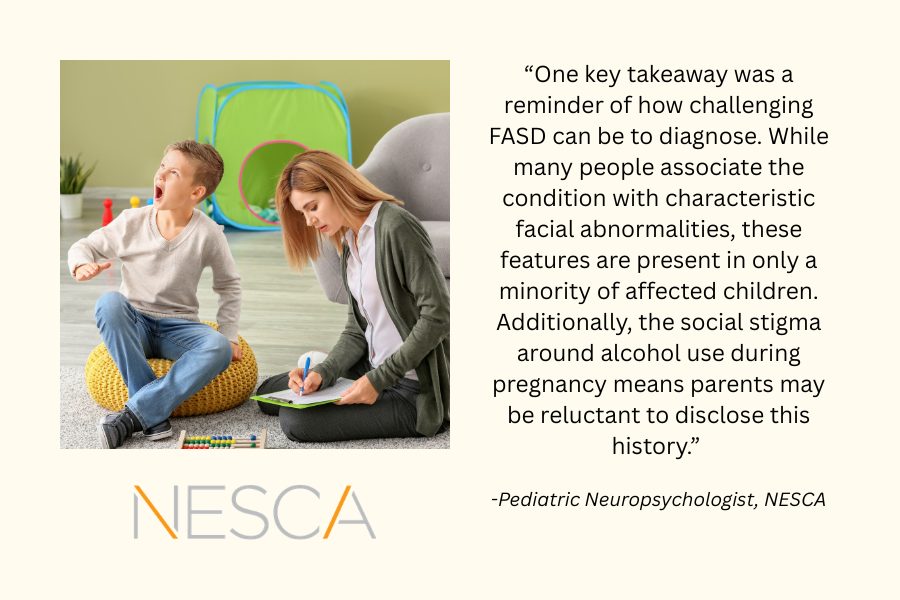
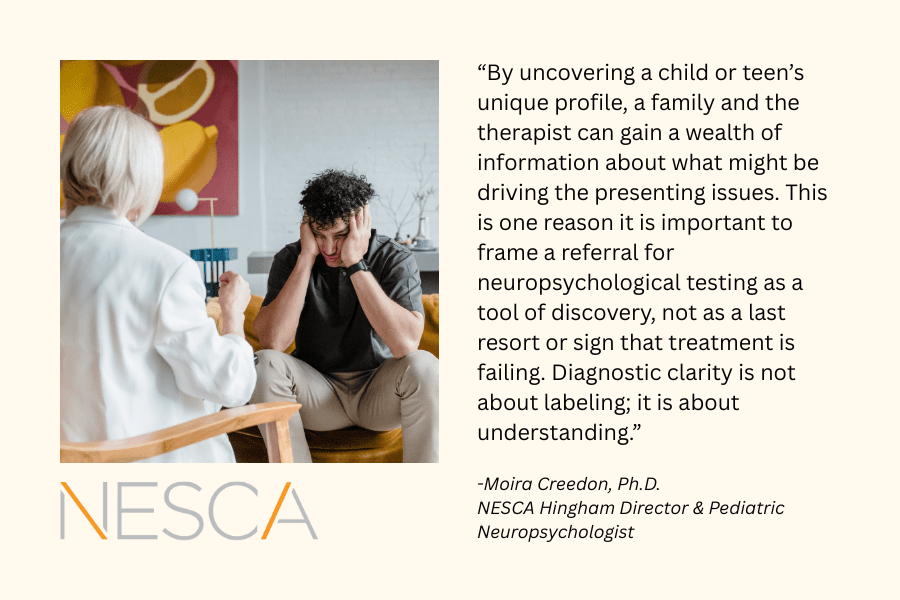
Image of a teen male feeling frustrated with a therapist and a quote from Dr. Moira Creedon

Bridging the Gap between Neuropsychological Testing and Therapy

By | NESCA Notes 2024

Image of a teen male feeling frustrated with a therapist and a quote from Dr. Moira CreedonBy: Moira Creedon, Ph.D. 
NESCA Hingham Director & Pediatric Neuropsychologist

Sometimes therapy hits a wall. A child or teen may be attending sessions regularly but still seems “stuck.” They might be unable to make progress, reluctant to engage, or struggling in ways that don’t fully add up. Even the most dedicated clients, those who do their therapy “homework” and participate openly, may continue to face challenges outside of the therapy room. This can be both frustrating and confounding for everyone involved. In these situations, neuropsychological testing does not have to be a last resort. It can be a powerful, collaborative tool that helps uncover what might be happening or why certain obstacles keep getting in the way. By clarifying diagnoses, identifying how a child or teen processes information, and highlighting cognitive or emotional patterns, neuropsychological testing offers insight that can shape therapeutic work to offer meaningful change.

There are few key gaps that neuropsychological testing can help to fill that are not a part of the normal course of therapy. First, neuropsychologists tend to get more extensive histories across all domains. Often times, therapists get some history about the presenting symptoms right away, but then they quickly have to dive into supporting a child, building rapport, providing psychoeducation, or practicing new coping strategies.

Neuropsychologists tend to get data across a broader range of developmental patterns for a holistic understanding of how the child has developed. Secondly, neuropsychologists then get concrete, quantifiable data on how a child or teen processes information – what their cognition is, how they encode and store information in their memory, how they tackle a hard problem, how they interpret a social challenge, and how they reflect on their own emotional experience. The focus is on how a person processes information, not just what their current symptoms are.

Why is this important? Take, for example, the case of a recent 16-year-old seen for neuropsychological testing who was in therapy for years due to a general sense of worry. Neuropsychological testing helped to highlight problems with cognitive flexibility, poor working memory, and distractibility. In addition to her anxiety, she was also struggling with ADHD. Lapses in attention were making her more anxious, leading her to long hours studying, blaming herself for her shortcomings. these long study sessions were disorganized and inefficient because of inherent executive functioning problems.

Take another example of a younger child who was 7-years-old. His parents felt frustrated by his dysregulated behaviors at home. He was disengaged in therapy and seemed unable to talk with his parents about what was going on after a big incident. Neuropsychological testing helped to undercover significant problems with language processing. This led to more frustration as he could not explain why he was upset, and traditional “talk therapy” methods had to be adapted so that language was simple and concrete.

By uncovering a child or teen’s unique profile, a family and the therapist can gain a wealth of information about what might be driving the presenting issues. This is one reason it is important to frame a referral for neuropsychological testing as a tool of discovery, not as a last resort or sign that treatment is failing. Diagnostic clarity is not about labeling; it is about understanding. It is a process of giving a complete picture of a child or teen’s functioning, seeking alternative pathways for change, and capitalizing on the client’s strengths.

With new information provided in neuropsychological testing, therapists can collaborate with a neuropsychologist to individualize treatment. Here are some examples for how testing can help therapists:

  • A therapist can slow down their interventions and offer more repetition for children with processing speed troubles.
  • A therapist can use simplified language for a child with cognitive impairments or reduced language skills.
  • A therapist can reduce the “homework” they assign for a teen with weak working memory and executive functioning deficits.
  • A therapist can pull in a new evidence-based treatment when anxiety veers into a pattern of intense obsessions and compulsive behaviors in a teen with OCD.
  • A therapist can support a teen overwhelmed with anxiety when facing a mountain of assignments at school if their executive functioning challenges make it hard for them to break down these tasks into smaller steps.
  • A therapist can explore the opportunity to collaborate with an executive functioning coach, group therapy program, or psychiatrist if a child’s profile suggests this is helpful.

When therapy stalls, it doesn’t mean a child isn’t trying or the treatment isn’t helpful. It might mean we are missing part of the picture. Neuropsychological testing can offer the insight needed to move forward with greater compassion, precision, and effectiveness.

Being “stuck” does not have to be seen as a sign of failure. It can be a turning point or an opportunity to uncover processing patterns that shift the focus from blame to change. When testing and therapy work hand in hand, they offer families not just answers, but a compassionate and informed way forward.


About the Author

Dr. Creedon offers her expertise in evaluating children and teens with a variety of presenting issues. SheMoira Creedon headshot is interested in uncovering an individual’s unique pattern of strengths and weaknesses to best formulate a plan for intervention and success. She tailors each assessment to address a range of referral questions, such as developmental disabilities, including Autism Spectrum Disorder, learning disabilities, attention challenges, executive functioning deficits, and social-emotional struggles. She also evaluates college-/grad school-age/adult individuals with developmental issues, such as ASD and ADHD, particularly when there is a diagnostic clarity or accommodation question.


If you are interested in booking an evaluation with Dr. Creedon or another NESCA neuropsychologist, please fill out and submit our online intake form


NESCA is a pediatric neuropsychology practice and integrative treatment center with offices in Newton, Plainville, and Hingham, Massachusetts; Londonderry, New Hampshire; and the greater Burlington, Vermont region, serving clients from infancy through young adulthood and their families. For more information, please email info@nesca-newton.com or call 617-658-9800.
How Executive Function Coaching and Therapy Complement One Another-Part 2

By | NESCA Notes 2025

Quote from NESCA and an image of two puxxle pieces fitting together showing how therapy and EF coaching can complement each otherBy Jasmine Badamo, MA
Educational Counselor; Executive Function Coach

Last week I wrote a blog about the complementary nature of executive function coaching and therapy. I discussed the ways in which each service is distinct, as well as where there are overlaps. Today I’d like to share examples of how each service can support the other. If you find the examples helpful, feel free to download the pdf version from our Resources page!

How executive function coaching can support your therapy work:

An executive function coach can…

  • Serve as another person to reinforce the concepts you’re learning in therapy and help you make note of everyday and/or academic situations that connect to your therapy goals.
  • Serve as a source of motivation and accountability to help you implement the recommendations made in therapy, such as improving your sleep hygiene, widening your social circle, or increasing your positive self-talk.
  • Consult with your therapist to provide examples of your everyday struggles and mindset towards them.
  • Provide a safe space for metacognitive and self-reflection discussions, which can serve as a stepping stone if you are not yet ready to embark on therapy or are questioning your current style of therapy. These discussions can promote a new openness to trying therapy or exploring new therapy modalities/approaches.

How therapy can support your executive function work:

A therapist can…

  • Address anxiety, depression, perfectionism, all-or-nothing thinking, or negative self-talk/narratives, all of which can present a significant barrier to coaching because they reduce your motivation and openness to trying new problem-solving strategies.
  • Provide a big picture, comprehensive understanding of the mental and emotional barriers facing you and guide you (and your executive function coach) in choosing motivation and routine-building strategies that would work best.
  • Help you to build coping strategies for managing daily life and novel tasks, freeing up energy for taking on new goals and challenges.

Every service provider brings something important to the table, and therapy and executive function coaching are an extra-special support combination that has truly benefited many of our clients at NESCA. It often takes a team to support an individual through challenging aspects of their life, and NESCA’s coaches are happy to be a part of that team!

NESCA offers executive function coaching for students from elementary school through adulthood who are looking to bolster their organization, scheduling, time management, goal setting, and routine building skills. Students work 1-on-1 with occupational therapists and education specialists to identify specific skills that will help them be more organized and in control of their academic and general life tasks. If you have concerns about your child or student’s executive function challenges and want to try our 1-on-1 coaching, please complete our online Intake Form


About the Author

Jasmine Badamo, MA, is a licensed special educator and seasoned executive function coach. SheJasmine Badamo headshot supports a wide range of clients, ranging from age 7 to adulthood, to develop executive function and independence skills necessary for success with school (including college and graduate school) and in life. She is also uniquely qualified to coach parents and train educators to support EF skill development across settings.

To book executive function coaching with an EF or Real-life Skills Coach at NESCA, complete NESCA’s online intake form

NESCA is a pediatric neuropsychology practice and integrative treatment center with offices in Newton, Plainville, and Hingham, Massachusetts; Londonderry, New Hampshire; and the greater Burlington, Vermont region, serving clients from infancy through young adulthood and their families. For more information, please email info@nesca-newton.com or call 617-658-9800.

Image of two puzzle pieces fitting together to represent therapy and EF coaching

How Executive Function Coaching and Therapy Complement One Another-Part 1

By | NESCA Notes 2025

Image of two puzzle pieces fitting together to represent therapy and EF coachingBy Jasmine Badamo, MA
Educational Counselor; Executive Function Coach

At a recent NESCA case conference, we had a thought-provoking discussion about the relationship between executive function coaching and therapy that inspired me to write this two-part blog series.

Executive function coaching is different from therapy in a few key ways:

  • Most executive function coaches are not trained mental health professionals.
  • Therapy is usually positioned to treat mental health concerns, such as anxiety, depression, OCD, and related emotional patterns.
  • Executive function coaching focuses more directly on improving cognitive skills and strategies (like planning, organizing, prioritizing, time management, focus, and self-regulation) to support clients in reaching their academic, professional, and personal goals.
  • Executive function coaching is often more practical and solution-oriented, while many therapy approaches focus on exploring past experiences and deepening a client’s understanding of themselves.

But there can also be overlap between the two supports:

  • Executive functioning and mental health both impact an individual’s self-regulation and ability to cope with daily life.
  • Executive function coaches and therapists might both implement skill-based activities with clients.
  • Executive function coaches and therapists both focus on improving an individual’s well-being by identifying challenges, setting goals, developing strategies, and building self-awareness.

The truth is that the work we executive function coaches do with our clients frequently relates to their mental health and emotional struggles. For example, we may help individuals strengthen their ability to regulate impulses; reflect inward to better understand their habits and patterns in behavior; move past low motivation to activate and take action; adapt their behavioral patterns to better meet their needs and goals; implement self-care routines; and tackle the logistical challenges of accessing other services, such as therapy.

Additionally, persistent mental health struggles (as well as a person’s naturally fluctuating emotional states) play a large role in a person’s ability to access their prefrontal cortex or “thinking brain,” where our executive function abilities reside. This is because emotional regulation and executive control are both housed in this part of the brain. When one skill set is taxed, the other suffers. Correspondingly, persistent executive function struggles can contribute to increased mental health struggles, such as anxiety or depression.

Given the connected nature of executive functioning and mental health, we recognize that executive function coaching and therapy are distinct, but are also connected and complementary. The two services not only balance each other, but help to amplify the success and effectiveness of each individual service.

Tune in for our blog next week where I’ll delve into the ways executive function coaching can support your therapy work and vice versa!

NESCA offers executive function coaching for students from elementary school through adulthood who are looking to bolster their organization, scheduling, time management, goal setting, and routine building skills. Students work 1-on-1 with occupational therapists and education specialists to identify specific skills that will help them be more organized and in control of their academic and general life tasks. If you have concerns about your child or student’s executive function challenges and want to try our 1-on-1 coaching, please complete our online Intake Form


About the Author

Jasmine Badamo, MA, is an educational counselor and executive function coach who works full-time at NESCA supporting students ranging from elementary school through young adulthood. In addition to direct client work, Ms. Badamo provides consultation and support to parents and families in order to help change dynamics within the household and/or support the special education processes for students struggling with executive dysfunction. She also provides expert consultation to educators, special educators and related professionals.

Ms. Badamo is a New York State Certified ENL and Special Education teacher. She has more than 10 years of teaching experience across three countries and has worked with students and clients ranging in age from 7 to adulthood. She earned her bachelor’s degree in Biological Sciences from Cornell University and her master’s degree in TESOL from CUNY Hunter College. She has also participated in graduate coursework focusing on academic strategies and executive function supports for students with LD, ADHD, and autism as part of the Learning Differences and Neurodiversity (LDN) certification at Landmark College’s Institute for Research and Training. In addition to being a native English speaker, Ms. Badamo is also conversationally fluent in verbal and written Spanish.

Having worked in three different New York City public schools, Ms. Badamo has seen firsthand the importance of executive function skills in facilitating student confidence and success. Her coaching and consultation work focuses on creating individualized supports based on the specific needs and strengths of each client and supporting the development of metacognition (thinking about one’s own thought processes and patterns), executive function skills, and independence. She will guide clients to generate their own goals, identify the barriers to their goals, brainstorm potential strategies, advocate for support when needed, and reflect on the effectiveness of their applied strategies.

Ms. Badamo is a highly relational coach. Building an authentic connection with each client is a top priority and allows her to provide the best support possible. Additionally, as a teacher and coach, Ms. Badamo believes in fostering strong collaborations with anyone who supports her clients including service providers, classroom teachers, parents, administrators, and community providers.

To book executive function coaching with Jasmine Badamo or another EF or Real-life Skills Coach at NESCA, complete NESCA’s online intake form

NESCA is a pediatric neuropsychology practice and integrative treatment center with offices in Newton, Plainville, and Hingham, Massachusetts; Londonderry, New Hampshire; the greater Burlington, Vermont region; and Brooklyn, New York (coaching services only) serving clients from infancy through young adulthood and their families. For more information, please email info@nesca-newton.com or call 617-658-9800.

image of adoption papers and a quote from Sean Hyde O'Brien

Myth vs. Reality: Adoption, Development, and the Role of Neuropsychology

By | NESCA Notes 2024

image of adoption papers and a quote from Sean Hyde O'BrienBy: Sean Hyde O’Brien, Psy.D., ABPdN 
Pediatric Neuropsychologist, NESCA

Adoption is a wonderful way to create family. I say this both as a psychologist who has extensive research and clinical experience working with this population, as well as a person who was adopted. However, my experience working with children and families in the “adoption triad” over the past 20 years has made me aware of the negative stereotypes that are perpetuated by well-meaning professionals that are simply not based in fact and can, in fact, have a deleterious impact on the health and development of those children whom they are trying to serve.

In simplest terms, there is nothing inherently pathological about the process of adoption or individuals who were adopted. Yes, there can be particular family dynamics and developmental issues unique to the adoptive experience (for an interesting perspective on child development through an adoptive lens, see Dr. Joyce Pavao’s “The Family of Adoption”). However, these can be thought of much like other demographic factors that contribute to our development but do not define who we are in totality, such as ethnicity, gender, sexual orientation, or socioeconomic status.

So, if adoptive status is not a causal factor for later psychopathology, why do some children who were adopted display emotional, behavioral, and learning challenges? This is where neuropsychology comes into play. Research suggests that children adopted at older ages, from foster care, or from institutional settings have a higher risk for certain psychological challenges compared to non-adopted peers. However, this increased risk is not due to adoption itself but rather to neurobiological factors that are known to result in developmental challenges regardless of adoptive status. These can include sensory, cognitive, and social deprivation; chronic early stress; attachment disruptions; and teratogenic exposure (e.g., factors that can cause developmental abnormalities in a fetus); all factors that are known to impact the developing brain.

For example, a child who has been separated from their primary caregiver during an early sensitive period of development may show delays in social cognition, understanding others’ emotions, and their ability to form peer relationships. While this child could have been adopted after living in an orphanage, they may also be a non-adoptive child who was separated from their birth parent secondary to an injury/illness and subsequent hospitalization or had a birth parent who was not consistently available due to their own medical or mental health issues. The adoptive status of the child is not the issue at hand, rather the specific experiences of the individual, and for a professional to simply label a child’s challenges as a result of their adoptive status is overly simplistic and possibly unethical.

Thus, as with all children, it is important to understand the “whys” (e.g., why are they having this particular problem) to figure out the “hows” (e.g., how do parents and professionals best address it) when working with children who were adopted. This often requires a comprehensive evaluation of neuropsychological functioning that goes beyond the label of “adopted child” and helps to identify both the risk and protective factors unique to that individual that will impact their health and development.


About the Author

Dr. Sean O’Brien has been providing comprehensive neuropsychological evaluations in the GreaterSean Hyde O'Brien Boston area since 2006. He specializes in the assessment of children and adolescents who present with a wide range of developmental conditions, such as  Attention-Deficit/Hyperactivity Disorder, Specific Learning Disorder (reading, writing, math), Intellectual Disability, and Autism Spectrum Disorder; as well as children whose cognitive functioning has been impacted by medical, psychiatric, and genetic conditions. He also has extensive experience working with children who were adopted both domestically and internationally.

To schedule an appointment with one of NESCA’s neuropsychologists, please complete our online intake form

NESCA is a pediatric neuropsychology practice and integrative treatment center with offices in Newton, Plainville, and Hingham, Massachusetts; Londonderry, New Hampshire; the greater Burlington, Vermont region; and Brooklyn, NY (coaching services only) serving clients from infancy through young adulthood and their families. For more information, please email info@nesca-newton.com or call 617-658-9800.

Image of teo children reading outside on the grass with a quote from NESCA Pediatric Neuropsychologist Alissa Talamo, Ph.D.

How to Encourage Summer Reading with Your Child

By | NESCA Notes 2025

Image of teo children reading outside on the grass with a quote from NESCA Pediatric Neuropsychologist Alissa Talamo, Ph.D.By: Alissa Talamo, PhD
Pediatric Neuropsychologist, NESCA

Summer is an important time for children to relax and recharge, but it also provides a valuable opportunity to make reading enjoyable. Research consistently shows that students who do not read over the summer are at risk for the “summer slide,” which is a decline in reading skills acquired during the school year. In contrast, children who continue to read during the summer not only maintain but can even improve their literacy abilities.

The benefits of summer reading extend well beyond academics. Regular reading helps expand general knowledge, improve vocabulary and spelling, and strengthen focus and attention. According to Dr. Sally Shaywitz, author of Overcoming Dyslexia, children who read for just 20 minutes a day are exposed to approximately 1.8 million words each year, compared to only 8,000 words for those who read just a few minutes daily. This increased exposure to language supports both language development and writing skills.

Reading for just 20 minutes each day offers numerous advantages. Children experience significant vocabulary growth, encounter diverse perspectives that foster empathy, and develop stronger critical thinking skills as they engage with stories and information. Additionally, reading can be a relaxing activity, particularly before bedtime, helping children unwind after a busy day.

Despite these benefits, some children may be reluctant to read due to reading difficulties, uncertainty about their interests, or a preference for other activities. To encourage reading, it is important to let children choose books that interest them, set aside time to read together, and create a cozy reading environment at home. Pairing reading with interactive activities, such as visiting a museum, landmark, or travel destination related to a book’s topic, characters, or setting, can also make reading more appealing. Regular library visits, audiobooks, and a variety of reading materials—including magazines, comics, and graphic novels—can also help sustain interest. Introducing children to book series and modeling your own enjoyment of reading are additional strategies to foster a positive reading culture.

Helpful Resources and Tools

There are many excellent websites and apps that can support your child’s reading journey. Here are some sites to consider:

  • Unite for Literacy: A collection of audio/picture books read aloud to your child.
  • Reading Rockets—Reading Adventure Packs: Downloadable guides with book suggestions and activities.
  • Starfall.com: Early literacy games and books, ideal for young children.
  • Talking is Teaching: Encourages parents to talk, read, and sing with children to boost early brain and vocabulary development.

Other Resources:

Conclusion

Encouraging your child to read over the summer—and throughout the year—can have lasting benefits for their academic, social, and emotional development. By making reading enjoyable and accessible, and by supporting their individual interests and needs, you can help your child build a lifelong love of reading.


References:

  • Sally Shaywitz, MD, Overcoming Dyslexia (2020 Edition): Second Edition, January 4, 2005
  • https://specialedresource.com/benefits-of-reading-20-minutes-a-day
  • https://www.k12reader.com/why-read-20-minutes-a-day/
  • https://www.understood.org/articles/en/14-ways-to-encourage-your-grade-schooler-to-read


About the Author

Alissa Talamo headshotWith NESCA since its inception in 2007, Dr. Talamo had previously practiced for many years as a child and adolescent clinical psychologist before completing postdoctoral re-training in pediatric neuropsychology at the Children’s Evaluation Center.

After receiving her undergraduate degree from Columbia University, Dr. Talamo earned her doctorate in clinical health psychology from Ferkauf Graduate School of Psychology and the Albert Einstein College of Medicine at Yeshiva University.

She has given a number of presentations, most recently on “How to Recognize a Struggling Reader,” “Supporting Students with Working Memory Limitations,” (with Bonnie Singer, Ph.D., CCC-SLP of Architects for Learning), and “Executive Function in Elementary and Middle School Students.”

Dr. Talamo specializes in working with children and adolescents with language-based learning disabilities including dyslexia, attentional disorders, and emotional issues. She is also interested in working with highly gifted children.

Her professional memberships include MAGE (Massachusetts Association for Gifted Education), IDA (International Dyslexia Association), MABIDA (the Massachusetts division of IDA) and MNS (the Massachusetts Neuropsychological Society).

She is the mother of one college-aged daughter.

To book a consultation with Dr. Talamo or one of our many other expert neuropsychologists, complete NESCA’s online intake form.

NESCA is a pediatric neuropsychology practice and integrative treatment center with offices in Newton, Plainville, and Hingham, Massachusetts; Londonderry, New Hampshire; the greater Burlington, Vermont region; and Brooklyn, New York (coaching services only) serving clients from infancy through young adulthood and their families. For more information, please email info@nesca-newton.com or call 617-658-9800.

Image of a couple with disabilities and a quote from Sarah LaFerriere

How We Teach Sexual Health Education at NESCA

By | NESCA Notes 2025

Image of a couple with disabilities and a quote from Sarah LaFerriereBy: Sarah LaFerriere, M.Ed.
Transition Specialist & Special Educator, NESCA

Sexual health education is often overlooked when it comes to students with disabilities—but it’s one of the most important subjects we can offer. In my last blog post, “Why Sexual Education is Crucial,” I explored the reasons why this kind of instruction is essential for adolescents and young adults with learning, developmental, and emotional challenges.

Today, I want to take that conversation further by sharing what sexual health instruction looks like in practice and how NESCA is helping students gain the knowledge, skills, and confidence they need to navigate relationships and their own well-being.

Meeting Students Where They Are

Sexual health education isn’t “one-size-fits-all,” especially for students with disabilities. Many of the individuals I work with have had limited or no access to comprehensive sexual health instruction. Some have received fragmented or confusing messages about consent, safety, or their own bodies. Others are at a developmental stage where typical school-based programming doesn’t match their learning profile.

At NESCA, our goal is to meet each student exactly where they are intellectually, socially, and emotionally. That’s why our sexual health instruction is individualized, paced appropriately, and rooted in respect and inclusion.

Using the Elevatus Curriculum

At NESCA, we use the Elevatus curriculum, a nationally respected sexual health education program designed specifically for individuals with disabilities. The curriculum offers two levels of instruction:

  • One for students with moderate support needs
  • Another for students with high support needs

This allows us to tailor content to the cognitive and communication levels of each learner. The curriculum emphasizes concrete language, repetition, and visual supports, making it accessible and meaningful for a wide range of students.

Instruction is available in-person or virtually, and we can modify both format and pacing to fit your student’s specific needs. Whether your child thrives in one-on-one sessions or small groups, we’ll work with you to design a program that supports learning and comfort.

What the Curriculum Covers

The Elevatus curriculum spans 22 lessons and includes topics such as:

  • Anatomy and puberty
  • Consent and personal boundaries
  • Healthy vs. unhealthy relationships
  • Online safety and media literacy
  • Understanding feelings and attraction
  • Decision-making and communication

Lessons are engaging and interactive, using visuals, stories, discussions, and role-play activities. We also incorporate functional goals, like understanding personal space on public transportation or recognizing signs of coercion in online messages.

Collaborating with Families and Schools

Sexual health instruction doesn’t exist in a vacuum; it works best when it’s integrated into a student’s broader learning and transition planning. At NESCA, we collaborate with families, educators, and support staff to align lessons with IEP goals, social-emotional supports, and the student’s overall educational plan.

We also guide families on how to reinforce learning at home, answer questions in developmentally appropriate ways, and create an open, respectful dialogue.

Why It Matters

At the core of sexual health education is empowerment. When students understand their bodies, their rights, and their choices, they’re safer, more confident, and more connected to others. This kind of instruction isn’t just about preventing risk it’s about promoting dignity, autonomy, and well-being.

If you’re interested in learning more about our sexual health instruction services, or want to explore whether it’s a fit for your child or student, please reach out to us here at NESCA via our Inquiry/Intake Form and visit our page about our Sexual Health Education Services.

About the AuthorHeadshot of Sarah LaFerriere, M.Ed.

Sarah LaFerriere, M.Ed., is a transition specialist and special educator who has nearly a decade of experience working with transition aged students in public schools, college, and home-based settings. She provides transition assessment, consultation, and coaching services to a wide range of clients, and specializes in supporting students with autism, intellectual disabilities, developmental disabilities, mental health conditions, and medical conditions.

To book a consultation with Sarah LaFerriere or one of our many other expert transition specialists, neuropsychologists, or other clinicians, complete NESCA’s online intake form.

NESCA is a pediatric neuropsychology practice and integrative treatment center with offices in Newton, Plainville, and Hingham, Massachusetts; Londonderry, New Hampshire; the greater Burlington, Vermont region; and Brooklyn, New York (coaching services only) serving clients from infancy through young adulthood and their families. For more information, please email info@nesca-newton.com or call 617-658-9800.

Image of a middle schooler writing and a quote about summer intensive therapy by Dr. Ann Helmus about summer intensive therapy

Supercharge Communication Skills This Summer: The Case for Intensive Speech & Language Therapy

By | NESCA Notes 2025

Image of a middle schooler writing and a quote about summer intensive therapy by Dr. Ann Helmus about summer intensive therapyBy Ann Helmus, Ph.D.
Founder & Director, NESCA

For many students, summer is a much-needed break from the pressures of the long school year. But it’s also a unique opportunity to make powerful strides in speech and language development—far more than is often possible with weekly sessions during the academic year.

At NESCA, we offer intensive summer therapy that targets both verbal communication (such as listening comprehension, expressive language, and social communication) and written expression, an area where many students struggle.

Here’s why summer intensives can be especially effective:

  1. More Frequent Sessions = Greater Momentum
    When sessions are scheduled every other day (rather than once a week), skills are reinforced more consistently. Students retain strategies better, build habits faster, and make visible progress over a shorter period of time.
  2. Longer Sessions Allow for Deeper Work
    Without the time constraints of school-day schedules, therapy sessions can go beyond the traditional one-hour format. This gives students and therapists time to dig into more complex language tasks, problem-solve in real time, and practice generalizing skills across different contexts.
  3. Less Time Lost Re-Orienting
    With weekly sessions, valuable time is often spent reviewing what was last covered. Frequent summer sessions minimize this start-up time and allow therapy to pick up right where it left off—keeping the focus on forward movement.
  4. Fewer Distractions, Better Focus
    The relaxed pace of summer means students are often more receptive to learning. Without competing demands like homework, tests, and extracurriculars, they can be more focused and emotionally available for therapeutic work.
  5. Support for Written Expression with Proven Methods
    Our speech-language pathologist is trained in the EmPOWER method, a structured approach to teaching written expression. EmPOWER helps students organize their thoughts, clarify their ideas, and express themselves in writing with greater clarity and confidence—skills that are essential for success in school and beyond.
  6. A Stronger Start to the School Year
    Students who make gains in the summer enter the fall with more confidence, stronger foundational skills, and better self-awareness as communicators and learners.

If your child struggles with speaking, listening, or writing, summer can be the perfect time to make meaningful gains that will carry over into the school year. Intensive speech and language therapy can provide just the boost they need.

To explore next steps with NESCA’s Speech and Language Pathologists, fill out our Inquiry/Intake Form or visit our Speech and Language Evaluation and Therapy page. Our team will be in touch with you shortly to provide more information or set up a schedule of sessions that work with your family’s summer plans.


About the Author

NESCA Founder and Director Ann Helmus, Ph.D., is a licensed clinical neuropsychologist who has beenAnn Helmus headshot practicing neuropsychology for 35 years and has been director of NESCA’s Neuropsychology practice for nearly three decades, continuously training and mentoring  neuropsychologists to meet the highest professional standards.

To book a neuropsychological evaluation at NESCA, complete NESCA’s online intake form

NESCA is a pediatric neuropsychology practice and integrative treatment center with offices in Newton, Plainville, and Hingham, Massachusetts; Londonderry, New Hampshire; the greater Burlington, Vermont region; and Brooklyn, New York (coaching services only) serving clients from infancy through young adulthood and their families. For more information, please email info@nesca-newton.com or call 617-658-9800.

Image of a child doing an obstacle course and a quote by Julie Weieneth, Ph.D.

Summer Treatment Ideas for Children with ADHD

By | NESCA Notes 2025

Image of a child doing an obstacle course and a quote by Julie Weieneth, Ph.D.By: Julie Weieneth, Ph.D.
Pediatric Neuropsychologist, NESCA

For many families with children who have ADHD, the end of the school year brings both relief and anxiety. While the break is welcome, the sudden loss of routine can be daunting, leading to unstructured days and endless requests for screen time. But what if this summer could be different? The season’s freedom presents a powerful opportunity to build new skills, strengthen family bonds, and explore creative ways to manage ADHD symptoms. To help you begin, we have gathered summer treatment and planning ideas for every age, including preschoolers, elementary schoolers, middle schoolers, and young adults preparing for college. If any of these ideas resonate with you, try one out this summer and let us know how it goes. We would love to share your experiences with other families!

Preschool (Ages 3-5)

For the little ones, learning through play and interaction is key.

  1. Parent-Child Interaction Therapy (PCIT): PCIT is a hands-on approach that helps parents build better relationships with their kids using play and clear discipline strategies, with real-time coaching from a therapist. It focuses on boosting positive behaviors and reducing the tough ones to create a happier home life. For more information, check out PCIT.org or reach out to NESCA for provider recommendations.
  2. Occupational Therapy (OT): OT can support young children with ADHD by targeting sensory processing, self-regulation, and fine motor skills.
  3. Academic Readiness through Play: Head to a local craft, school supply, or thrift store, or a learning store, like Lakeshore Learning, to find games and activities that build fine motor skills, counting, sorting, and creativity. Here are some additional fun ideas to try out:
    • Treasure Hunts: Create simple treasure hunts with clues to improve attention, focus, and listening skills.
    • Storytime with Puppets: Use puppets to act out stories, encouraging participation and retelling to boost language skills.
    • Craft Projects: Try out different crafts involving cutting, gluing, and coloring to strengthen fine motor skills and creativity.
    • Obstacle Courses: Set up indoor or outdoor courses to enhance physical coordination and follow instructions. If you have an older sibling, get them involved in setting up and running the obstacle course.
    • Cooking Together: Involve your child in cooking simple recipes to improve focus, following directions, and fine motor skills.
    • Memory Games: Play memory games with cards or objects to boost attention and recall.
    • Building Challenges: Use blocks or LEGO sets to encourage planning and problem-solving.
    • Dance and Movement Games: Play games, like freeze dance or follow-the-leader, to help with self-regulation and listening skills.

Elementary School (Ages 6-10)

Kids in this age group thrive with structured activities that enhance social skills and organization.

  1. Behavioral Therapy: Enroll your child in therapy sessions targeting goals including impulse control and organization.
  2. ADHD Summer Camps and Social Skills Groups: These camps/group programs offer structured environments tailored for kids with ADHD, focusing on social skills, self-esteem, and executive functioning.
  3. Bibliotherapy or Self-Help: Summer is a great time to read books on parenting children with ADHD, like “Taking Charge of ADHD” by Russell A. Barkley. There are also many children’s books, such as “The Secret Superpowers of ADHD” by Jennifer Everly. Explore resources on CHADD and ADDitude for more ideas.

Middle School (Ages 11-13)

As your child enters adolescence, focus on fostering independence and self-awareness.

  1. Cognitive Behavioral Therapy (CBT): CBT helps middle schoolers learn strategies to manage impulsivity and improve attention, with summer sessions focusing on real-life situations, such as managing social conflict and academic stress.
  2. Mindfulness and Relaxation Techniques: Introduce mindfulness practices –  meditation or yoga – to improve focus and reduce stress. Many apps can help integrate these into daily routines.
  3. Volunteer Opportunities: Encourage community service projects to boost self-esteem, teach life skills, and reinforce social skills and early vocational skills.

Young Adults Transitioning to College/Vocational Endeavors (Ages 14-18)

For these young adults, it is all about preparing for college or vocational work, and managing academic, social, and daily living demands more independently.

  1. Executive Function Coaching: Consider hiring a coach to work on time management, organization, and goal setting, which are key skills for college and career success. NESCA offers transition-related assessments and coaching services tailored to transition-age youth. Explore NESCA Transition Services to help determine if college or a different path is right for you, and NESCA Coaching Services to build and practice skills that will be needed for all future paths.
  2. Medication Management: Check in with your healthcare provider to review medications and make any necessary changes before college starts. Learn more about what they are, what they are for, how to refill them, and when a new prescription is needed.
  3. Transition Workshops and College Immersion Programs: Look for workshops or programs that focus on transitioning to college or postsecondary life, covering self-advocacy, stress management, academic strategies, and social problem-solving.
  4. Updated Neuropsychological Evaluation: Ensure updated testing within three years of starting college or work to receive accommodations. If you have relied on accommodations in high school, have a support plan in place before your first college semester in order to ensure your success. Get to know more about on-campus resources to support you. If you are interested in learning about neuropsychological evaluations, please check out our website or contact us by filling out an Intake Form for more information.

We hope that you have a relaxing, fun, and rewarding summer! Feel free to reach out with any questions or concerns, or if you have any additional ideas to share with the NESCA community!


About the AuthorJulie Weineth headshot

Dr. Weieneth is a licensed clinical psychologist who has worked with children and families with complex diagnostic and treatment needs for the last twenty years. Her areas of specialty include ADHD, autism spectrum disorders, anxiety, mood disorders, learning disabilities, executive functioning, and school-related challenges. That being said, Dr. Weieneth also understands that not all individuals fit cleanly into diagnostic groups or labels. Her goals for each evaluation are to help families feel comfortable with the process, use all the tools available to best understand each individual’s unique strengths and needs, and to write a clear and comprehensive report that will guide educational and treatment planning.

To book a consultation with Dr. Weieneth or one of our many other expert neuropsychologists or other clinicians, complete NESCA’s online intake form.

NESCA is a pediatric neuropsychology practice and integrative treatment center with offices in Newton, Plainville, and Hingham, Massachusetts; Londonderry, New Hampshire; the greater Burlington, Vermont region; and Brooklyn, New York (coaching services only) serving clients from infancy through young adulthood and their families. For more information, please email info@nesca-newton.com or call 617-658-9800.

high school student working as a grocery store clerk over the summer

What Should My High Schooler Do This Summer?

By | NESCA Notes 2025

high school student working as a grocery store clerk over the summerBy: Lyndsay Wood, OTD, OTR/L
NESCA Executive Function and Real-life Skills Program Manager

As summer approaches, many parents find themselves asking the same question: “What should my high schooler do this summer?” While it’s tempting to let the months slip by in a haze of late mornings and screen time, summer can be an incredible opportunity for teens to grow in ways that go far beyond academics. Whether your child needs to build their resume, explore career interests, or just enjoy some well-earned downtime, there are plenty of ways to use the summer months meaningfully. Here are six ideas to help your teen make the most of their summer break:

  1. Get a Job

It doesn’t have to be glamorous or connected to their dream career; just having a job can make a big difference in a teen’s development. Research shows that teens who work, even part-time in unrelated fields, often have better long-term outcomes, including higher earnings and stronger work habits. A summer job teaches responsibility, time management, and communication skills, while also boosting confidence and independence. Whether it’s scooping ice cream, lifeguarding, or stocking shelves, your teen will be gaining skills that matter.

  1. Volunteer

If a paid job isn’t in the cards this summer, volunteering can be just as valuable. Volunteer work offers teens a chance to develop important job-readiness skills, like collaboration, commitment, and leadership. It can also provide a strong sense of purpose and build self-esteem, especially when the cause is one they care about. From local food banks to animal shelters to community theater, volunteering helps teens learn what it means to contribute and be part of something bigger than themselves.

  1. Attend a Camp Related to a Career Interest

Is your child into coding, engineering, creative writing, or environmental science? Summer camps focused on specific interests or career paths can be an exciting way for teens to dig deeper into a passion. These experiences are not only educational but also energizing, they can spark new goals, introduce teens to mentors and peers who share their interests, and even inspire future college and career plans. Many camps now offer virtual or hybrid options, making it easier to find a good fit.

  1. Build Skills through Coaching

Summer can be the perfect time to focus on the skills that teens don’t always have time to develop during the school year. Executive function skills, self-determination, and future planning are all crucial for a smooth transition to adulthood. One-on-one coaching can help teens explore careers, practice goal-setting, and learn strategies for time management and self-advocacy. At NESCA, we offer a variety of summer intensives focused on transition planning, career exploration, executive functioning, self-awareness, and sexual health and relationship education. Many students benefit from individualized instruction in these areas to stay safe, informed, and confident. These short-term programs are designed to empower students and help them build a meaningful roadmap for the future. If you have any interest in these programs, NESCA’s intake form can be found here: https://nesca-newton.com/intake/

  1. Try an Overnight Experience to Practice Being Away from Home

Whether it’s a traditional sleepaway camp, a weekend college program, a college prep experience, staying with extended family, or planning a trip with friends, having an overnight experience can be a powerful step in your teen’s growth. Being away from home helps young people practice independence, responsibility, and problem-solving in a new environment. It can also reveal areas where they may need more support, like managing personal hygiene, communicating needs, or sticking to routines, giving families a clearer picture of what to work on before college or adulthood. Even short trips away from home can boost confidence and build valuable life skills.

  1. Allow Time for Fun and Independence

While structure and growth are important, don’t underestimate the value of downtime. Summer is also a time for teens to relax, socialize, and explore who they are without the pressures of school. Giving your teen some autonomy (whether it’s planning a trip with friends, trying a new hobby, or managing their own schedule) helps them build self-confidence and a strong sense of identity. Fun and independence aren’t just luxuries; they’re essential parts of growing up.

There’s no one “right” way to spend the summer, but with a little thought and planning, your teen can come away from the break with new skills, deeper self-knowledge, and renewed confidence. Whether they’re working, volunteering, exploring a passion, or simply learning how to manage their time, every experience counts. The goal isn’t to fill every hour; it’s to offer opportunities that support growth, discovery, and a smoother transition into young adulthood.

For more information about NESCA’s summer programming opportunities for students, check out our recent newsletter: https://mailchi.mp/nesca-newton/summer2025.


About Lyndsay Wood, OTD, OTR/L

Lyndsay Wood, OTD, OTR/L, Vermont-based Executive Function and Real-life Skills Program Manager, is an occupational therapist who focuses on helping students and young adults with disabilities to build meaningful skills in order to reach their goals. She has spent the majority of her career working in a private school for students with ASD. She has also spent some time working in an inpatient mental health setting. Lyndsay uses occupation-based interventions and strategies to develop life skills, executive functioning, and emotional regulation. While completely her doctoral degree at MGH Institute of Health Professions, Lyndsay worked with the Boston Center for Independent Living to evaluate transition age services. She uses the results from her research to deliver services in a way that is most beneficial for clients. Specifically, she focuses on hands-on, occupation-based learning that is tailored the client’s goals and interests.

Dr. Wood accepts Vermont- and Massachusetts-based transition and occupational therapy assessments. Her in-home and community-based coaching services are available in the greater Burlington, Vermont area. Dr. Wood can accept virtual coaching clients from both Massachusetts and Vermont.


To book coaching and transition services at NESCA, complete NESCA’s online intake form


NESCA is a pediatric neuropsychology practice and integrative treatment center with offices in Newton, Plainville, and Hingham, Massachusetts; Londonderry, New Hampshire; the greater Burlington, Vermont region; and Brooklyn, New York (coaching services only) serving clients from infancy through young adulthood and their families. For more information, please email info@nesca-newton.com or call 617-658-9800.

Skip to content