NESCA’s Newton, MA location has immediate availability for neuropsychological evaluations. Our MA clinicians specialize in the following evaluations: Neuropsychological; Autism; and Emotional and Psychological, as well as Academic Achievement and Learning Disability Testing.

Visit www.nesca-newton.com/intake for more information or to book an evaluation.

Tag

neuropsychology and education services for children and adolescents Archives - Page 2 of 13 - NESCA

Subscribe to NESCA Notes

The Intersection of Mental Health and Executive Function

By | NESCA Notes 2024

By: Carly Edelstein, MSW, LCSW
Licensed Clinical Social Worker and Executive Function Coach

Mental Health challenges and executive function (EF) deficits are often intertwined, as one can easily impact the severity of the other. As a psychotherapist and executive function coach, I find myself regularly assessing my clients with comorbid EF and mental health challenges in order to identify which presented first.

Why does this matter?
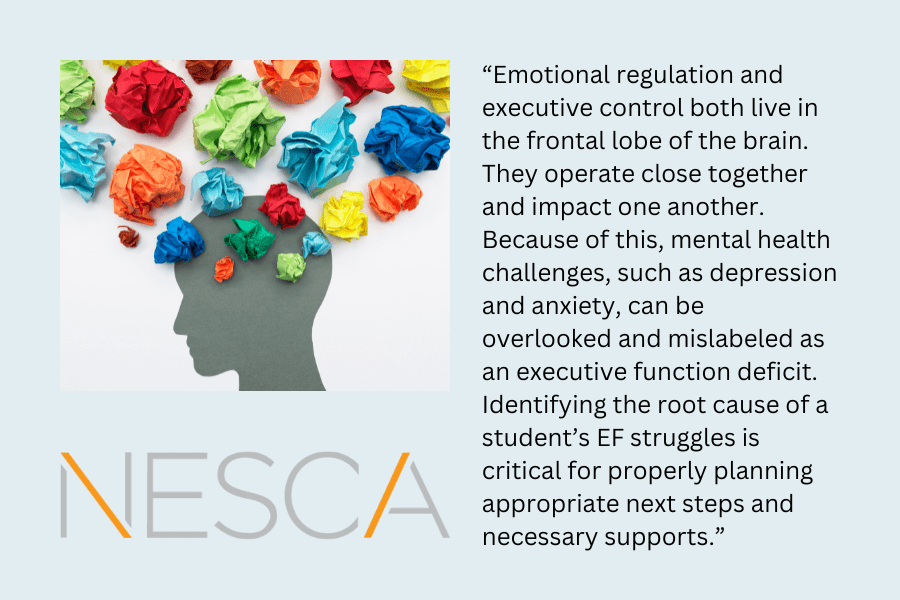
Emotional regulation and executive control both live in the frontal lobe of the brain. They operate close together and impact one another. Because of this, mental health challenges, such as depression and anxiety, can be overlooked and mislabeled as an executive function deficit. Identifying the root cause of a student’s EF struggles is critical for properly planning appropriate next steps and necessary supports. For example, if a student’s depression is causing them not to initiate and/or complete work, the depression usually needs to be addressed before they receive EF coaching. If the student is already working with a mental health professional, such as a therapist, it is important for them to be cleared by the therapist to add in an EF coach. Working on too many new skills at once can be overwhelming, so it is important that enough foundational coping skills are learned first.

An example of anxiety causing an EF deficit:
Clara gets extremely anxious in social situations due to a lack of self-esteem. She had a negative experience in middle school where other students made fun of her lisp whenever she read out loud in class. Now, in high school, Clara is afraid to ask questions, even when she is confused. She is left not fully understanding the material, class assignment expectations, or how to approach studying for quizzes and tests. Rather than asking for help, Clara keeps to herself. Even when teachers offer to help her, she responds with, “Thank you, but I’m all set.”

Clara’s parents can see that she struggles to initiate homework assignments, rarely studies for upcoming tests, and that her grades are declining. They don’t fully understand why, because when they ask her, she is quick to deflect and change the subject.

By checking in with Clara’s teachers, her parents may receive feedback that she often shies away from their support. With a lack of understanding why, her teachers aren’t sure how else to approach the situation other than continuing to check in. Jumping into EF coaching to address her task initiation and study skills may help, but it doesn’t address the root of the problem. A more appropriate action plan would be for Clara to first receive psychotherapy, addressing the bullying that led to her social anxiety and self-esteem issues and then shifting to EF skill building.

An example of an EF deficit causing anxiety/depression:
Gabriel is a seventh grade student diagnosed with ADHD. He has a difficult time advocating for himself and asking for help due to some additional communication challenges. His ADHD also makes it challenging to stay on task and pay attention to details. This results in Gabriel constantly forgetting what his homework assignments are and when they are due, creating a lot of missing work. Gabriel’s teachers are often redirecting him and reminding him of incomplete work. They have tried to help him develop plans to make it up, but he struggles to follow through with these plans. At home, Gabriel’s parents often share their frustrations with him and try to help him get back on track. With adults constantly reminding him he’s behind, Gabriel has developed internalized anxiety, often wondering why he can’t be like everyone else. He tries so hard to remember what his homework is and when it is due, but can never seem to get it right. Over time, he begins to experience symptoms of depression as his self-esteem declines.

In this situation, Gabriel’s lack of EF skills is the root cause of his negative thinking patterns. By receiving EF coaching, he can learn ways to regularly track his assignments. He can be taught how to break them down into smaller, more manageable tasks in a way that helps him overcome procrastination. Additionally, he is able to become proactive and communicate with his teachers so that they are kept on the same page. As these skills get stronger, Gabriel becomes more responsible, and gets praise from his teachers and parents in return. Given the impact of this situation, he may also benefit from short-term counseling to better understand the connection between his EF and anxiety. Increased self-awareness helps students learn how to advocate for themselves the next time they encounter a similar situation.

Does this sound familiar?
These scenarios are common and can be difficult to navigate without proper assessment and guidance from professionals. If you or your child struggles with mental health and EF-related challenges and you are not sure where to start, book a free introductory call with me or one of our other wonderful and experienced EF coaches. NESCA also offers comprehensive neuropsychological evaluation services and neuropsychological consultation for families who are wondering about possible missed learning, attention, mental health, or other diagnoses. We look forward to working with you!


About the Author

Carly Edelstein is a Licensed Clinical Social Worker practicing in Massachusetts and Rhode Island. Having worked both in private practice and schools, she has extensive experience supporting students, families and educational teams to make positive changes. Ms. Edelstein provides executive function coaching and psychotherapy to clients ranging from middle school through adulthood. She also offers consultation to schools and families in order to support her clients across home and community environments.

To schedule an appointment with one of NESCA’s counselors, coaches, or other experts, please complete our online intake form

NESCA is a pediatric neuropsychology practice and integrative treatment center with offices in Newton, Plainville, and Hingham, Massachusetts; Londonderry, New Hampshire; and staff in the greater Burlington, Vermont region and Brooklyn, New York, serving clients from infancy through young adulthood and their families. For more information, please email info@nesca-newton.com or call 617-658-9800.


Redshirting: Pros and Cons of Delaying a Child’s Entry to Kindergarten

By | NESCA Notes 2024

By: Alissa Talamo, PhD
Pediatric Neuropsychologist, NESCA

Redshirting is a phrase that has traditionally been associated with college athletics, such as when coaches “redshirt” first-year athletes, providing younger athletes an additional year to develop skills and extend their playing eligibility. Academically, redshirting your child means choosing to delay kindergarten for a year even though your child is technically old enough to attend kindergarten.

Current research suggests there are pros and cons to redshirting kindergarten depending upon your child’s development and needs. One advantage of redshirting is the opportunity for the child to develop emotional maturity. While some students are ready academically, they may not be ready emotionally. This difference becomes particularly notable in the middle school and high school years, as a year difference in age (or almost two years if some students have been redshirted and your child is young for their grade), can lead to exposure to topics and behaviors your child is not emotionally ready for.

However, if your child has an identified or suspected disability, or you feel they may need extra help in school, you may not want to redshirt, as doing so would result in delay of necessary services provided free through the public schools (e.g., occupational or speech therapy, specialized academic instruction), which research finds to have a meaningful impact on improving a student’s long-term outcome. Additionally, if redshirted, a child loses up to a year of special education eligibility at the other end of their school experience if a student has significant disabilities covered under the IDEA, as those services end based on age (e.g., special education rights end at the age of 22 in Massachusetts).

To help you make an informed decision, it is also recommended that you speak with your child’s preschool teacher in addition to any professionals (e.g., speech therapist or psychologist) working with your child. You may also want to consider meeting with an educational consultant who specializes in this area. Finally, you may consider a neuropsychological evaluation to gain a better understanding of your child’s strengths and challenges as well as to obtain educational recommendations.

Clearly, there is no right or wrong answer to redshirting in kindergarten. It is highly dependent on a child’s level of development and needs. Parents are encouraged to watch for signs of readiness, such as the ability of their child to communicate and listen well, follow instructions, and be able to sit and focus for 10-15 minutes at a time. Also, having a good understanding of your child’s developmental profile (language skills, self-regulation skills, social skills, etc.) can help a parent make an educated decision.


Sources

https://www.psychologytoday.com/us/

https://www.sciencedirect.com/

https://cepa.stanfod.edu


About the Author

With NESCA since its inception in 2007, Dr. Talamo had previously practiced for many years as a child and adolescent clinical psychologist before completing postdoctoral re-training in pediatric neuropsychology at the Children’s Evaluation Center.

After receiving her undergraduate degree from Columbia University, Dr. Talamo earned her doctorate in clinical health psychology from Ferkauf Graduate School of Psychology and the Albert Einstein College of Medicine at Yeshiva University.

She has given a number of presentations, most recently on “How to Recognize a Struggling Reader,” “Supporting Students with Working Memory Limitations,” (with Bonnie Singer, Ph.D., CCC-SLP of Architects for Learning ), and “Executive Function in Elementary and Middle School Students.”

Dr. Talamo specializes in working with children and adolescents with language-based learning disabilities including dyslexia, attentional disorders, and emotional issues. She is also interested in working with highly gifted children.

Her professional memberships include MAGE (Massachusetts Association for Gifted Education), IDA (International Dyslexia Association), MABIDA (the Massachusetts division of IDA) and MNS (the Massachusetts Neuropsychological Society).

She is the mother of one college-aged daughter.

To book a consultation with Dr. Talamo or one of our many other expert neuropsychologists, complete NESCA’s online intake form.

NESCA is a pediatric neuropsychology practice and integrative treatment center with offices in Newton, Plainville, and Hingham, Massachusetts; Londonderry, New Hampshire; the greater Burlington, Vermont region; and Brooklyn, New York (coaching services only) serving clients from infancy through young adulthood and their families. For more information, please email info@nesca-newton.com or call 617-658-9800.

Why Do So Many Girls Get Diagnosed with ASD Later in Life?

By | NESCA Notes 2024

By: Renee Cutiongco Folsom, Ph.D.
Pediatric Neuropsychologist

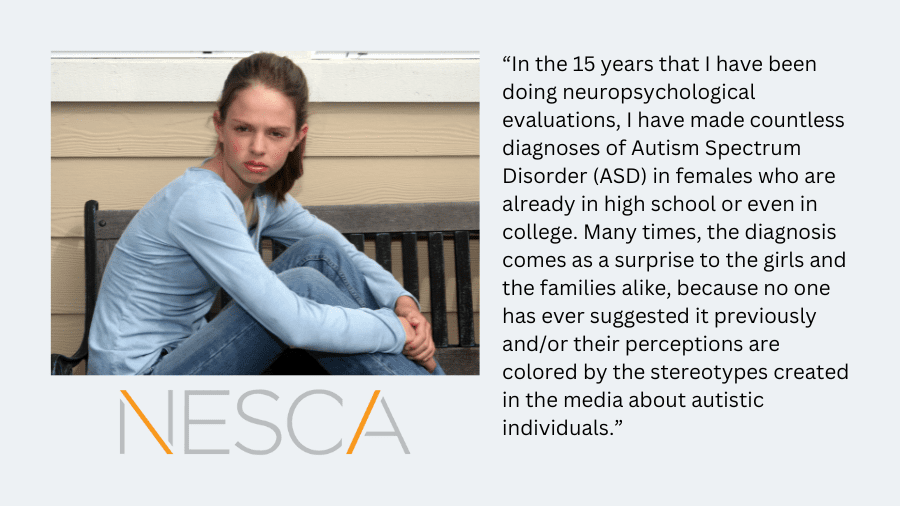
In the 15 years that I have been doing neuropsychological evaluations, I have made countless diagnoses of Autism Spectrum Disorder (ASD) in females who are already in high school or even in college. Many times, the diagnosis comes as a surprise to the girls and the families alike, because no one has ever suggested it previously and/or their perceptions are colored by the stereotypes created in the media about autistic individuals. However, a discussion about what ASD is and how it manifests in females as opposed to males usually helps my clients and their families understand the nuanced and comprehensive nature of the ASD diagnosis. They often pivot to feelings of relief and gratitude for having a label for what they have been struggling with for a long time. Many of my clients learn to embrace this new diagnosis and use it as a framework for celebrating their strengths and looking for supports to address their vulnerabilities. They often say, “It totally makes sense!”

Autism Spectrum Disorder is a developmental disorder that manifests in challenges with social communication and interaction, and in the presence of repetitive, restricted behaviors that significantly impact functioning. When autism was first introduced by Dr. Leo Kanner in 1943, he described children (boys) who showed little interest in other people, insisted on routines, and displayed unusual body movements, like rocking back-and-forth and flapping their hands. Many of the children could talk but they rarely used their speech to communicate with others, and they had a variety of pervasive learning difficulties. For the most part, this continues to be the image that is conjured when people mention autism. However, with advances in research, especially within the last few decades, we have come to recognize the various manifestations of autism in children and adolescents who are higher functioning, have better communication skills, and have fewer learning issues. Thus, the newer conceptualization of autism as a spectrum with a wide range of capabilities and communication skills. More recently, researchers have also discovered that the presentation of autism varies in boys versus girls. This has made the diagnosis of ASD in girls difficult.

In their book Girls Growing Up on the Autism Spectrum, ASD researchers Shana Nichols, Ph.D., Gina Moravcik, MA, CCC-SLP, and Samara Pulver Tetenbaum, MA, outlined some preliminary findings of differences between males and females on the spectrum. They reported that:

  • The play of boys with ASDs is more restricted in range and more repetitive when compared to girls with ASDs who have stronger pretend-play skills.
  • Girls have stronger communication skills.
  • Sex-related social difficulties emerge over time – boys have more impairments early on (thus leading to earlier diagnoses), whereas for girls, the difficulties appear more in early adolescence.
  • Boys are more easily distracted when compared to girls.
  • Girls with mild difficulties may not be included in research samples.

They added that these differences could impact the assessment and diagnosis of ASD. They wondered if girls with ASD are being missed or overlooked during an evaluation because their presentation does not fit how professionals currently characterize ASD based on a male prototype. Other researchers have suggested that girls with ASD may be better able to compensate for symptoms despite having persistent core deficits associated with ASD, which might contribute to greater social “camouflage” or what is called “masking” (an individual hides or suppresses symptoms, behaviors, or difficulties). Indeed, as I have been learning more and working with girls diagnosed with ASD, I have been keeping in mind these potential sex differences. For example, I often compare my client’s social and communicative abilities to what is considered normative for girls their age and cognitive ability. I have been avoiding comparing my female clients with what has been the prototypical profile of autism in males. I also think about other manifestations of repetitive behaviors and interests in girls with ASD that are more socially acceptable, for example, an obsession on reading or running as opposed to preferred topics of males on the spectrum (e.g., trains, schedules, calendars, etc.).

Researchers have speculated that these differences in the manifestation of ASD in girls versus boys stem from how girls are socialized at an early age to pay attention to social cues/actions as opposed to boys. There is also research that suggests that girls are more able to follow social actions by delayed imitation. They observe and copy other children more effectively than do boys. This could lead to the phenomenon of masking and to milder presentations when compared to boys.

Sources:

Evans, S., et. al. (2019). Sex/gender differences in screening for autism spectrum disorder: Implications for evidence-based assessment. Journal of Clinical Child Adolescent Psychology, 48 (6), 840-854.

Nichols, S., Moravcik, G. & Tetenbaum, S. P. (2009). Girls growing up on the autism spectrum. London: Jessica Kingsley Publishers.

Ozonoff, S., Dawson, G. & McPartland, J. (2002). A parent’s guide to asperger syndrome and high functioning autism. New York: Guilford Press.


About the Author

Dr. Renee Cutiongco Folsom, Ph.D. has been working with families in the greater Boston area since 2015. Prior to this, she was on staff at Johns Hopkins University and trained at the University of California, Los Angeles (UCLA). She provides comprehensive neuropsychological evaluations of children, adolescents, and young adults who have learning, behavioral, and socio-emotional challenges. Her areas of expertise include Autism Spectrum Disorder and other conditions that usually co-occur with this diagnosis; Attention-Deficit/Hyperactivity Disorder; Dyslexia and other Specific Learning Disabilities; and Anxiety/Depression. She thinks that the best part of being a pediatric neuropsychologist is helping change the trajectory of children’s lives.

To schedule an appointment with one of NESCA’s pediatric neuropsychologists, please complete our online intake form

NESCA is a pediatric neuropsychology practice and integrative treatment center with offices in Newton, Plainville, and Hingham, Massachusetts; Londonderry, New Hampshire; and the greater Burlington, Vermont region, serving clients from infancy through young adulthood and their families. For more information, please email info@nesca-newton.com or call 617-658-9800.
 

College Myth Buster – Your Child’s 504 from High School Does Not Apply in College

By | NESCA Notes 2024

By: Kristen Simon, M.Ed, Ed.S
Transition Specialist; Psychoeducational Counselor

There can be a lot of confusion for students who have received special education services or accommodations in high school about what stays the same and what changes in college. Some high school families and staff know that if a student has received IEP services throughout school, the IEP does not travel with them to college. This is because an IEP is a document that is developed in accordance with IDEA, a special education law that affords protections to students with disabilities up until they graduate or age out of their local high school. When a student transitions to work or a college or university, this law is no longer relevant and the IEP essentially “expires.”

There is often greater confusion for families around whether colleges are required to follow 504 plans (i.e., accommodation plans) developed in high school. While it’s true that students with disabilities are protected by Section 504 of the Rehabilitation Act, it’s important to understand that high school 504 plans also effectively “expire” once a child graduates. Students can still receive accommodations under Section 504, but they are unlikely to hear the term “504” or to have any written “plan” related to their disability or those accommodations. There are some important differences between Section 504 mandates under subpart E (which covers postsecondary institutions) and those that fall under subpart D (which covers secondary schools). The key differences are described below:

  • Eligibility: Colleges and universities will have their own process for eligibility, and students have to be determined eligible by their university – even if they had been deemed eligible for accommodations in high school. Students will usually need documentation from a doctor or a psychologist that demonstrates the presence of a disability as well as how that disability substantially limits learning.
  • Available Accommodations: Colleges don’t have any obligation to provide the same services and accommodations that students may have received in high school, and not all of the accommodations provided by high schools are available at the college level. Moreover, different accommodations may be available at different colleges because the law mandates that the college provides accommodations which are “reasonable” and effective, not the best or most expensive.
  • Shift in Delivery: Professors will not automatically provide an accommodation as was the case in high school. Students have to seek out accommodations and can register for them after they are officially enrolled. At the college or university level, the expectation is that the young adult knows what support is available to them and that they self-advocate for the accommodations they need. Also, even if a student qualifies for an accommodation, they have to make the choice to actively use that accommodation – if they don’t advocate, they won’t get it.

Students should also know that while accommodations help, they can only go so far (e.g., if you don’t understand the content, having extra time on the exam won’t help). Students should be sure to connect with disability services to hear about tutoring options, academic coaching, writing centers, counseling supports, and anything else that is offered.

Resources:

U.S. Department of Education: Students with Disabilities Preparing for Postsecondary Education

Elizabeth Cohen Hamblet Learning Disabilities Consultant website: College Disability Accommodations Information – Elizabeth C. Hamblet (ldadvisory.com)


About the Author

Kristen Simon, M.Ed, Ed.S, has worked with transition-aged youth as a licensed School Psychologist for more than a decade. She has extensive experience working with children and adolescents with a range of learning and social/emotional abilities. Kristen’s strengths lie in her communication and advocacy skills as well as her strengths-based approach. She is passionate about developing students’ self-awareness, goal-setting abilities, and vision through student-centered counseling, psychoeducation, social skills instruction, and executive functioning coaching. Mrs. Simon has particular interests working with children and adolescents on the Autism spectrum as well as individuals working to manage stress or anxiety-related challenges.

Mrs. Simon is an expert evaluator and observer who has extensive working knowledge of the special education process and school-based special education services, particularly in Massachusetts. She has been an integral part of hundreds of IEP teams and has helped to coordinate care, develop goals, and guide students and their families through the transition planning process. Mrs. Simon further has special expertise helping students to learn about their diagnoses and testing and the IEP process in general. She enjoys assisting students, families, and educators in understanding a student’s disability-related needs as well as the strategies that can help the student to be successful in both academic and nonacademic settings. Mrs. Simon has often been a part of teams in the years when students are initially participating in transition services, and she has helped countless students to build the skills necessary to be part of their first team meetings. She is committed to teaching students—as well as parents and educators—how to participate in student-centered team meetings and the IEP processes.

At NESCA, Mrs. Simon works as a transition specialist and psychoeducational counselor. She works with adolescents, their families, and their school communities to identify and build the skills necessary to achieve their postsecondary goals. Mrs. Simon provides transition assessment (including testing, functional evaluations, and observations), program observations and evaluations, case management and consultation, and individualized counseling and skills coaching.


To schedule an appointment with one of NESCA’s transition specialists, please complete our online intake form


NESCA is a pediatric neuropsychology practice and integrative treatment center with offices in Newton, Plainville, and Hingham, Massachusetts; Londonderry, New Hampshire; and the greater Burlington, Vermont region, serving clients from infancy through young adulthood and their families. For more information, please email info@nesca-newton.com or call 617-658-9800.


The Impacts of Handwriting Challenges

By | Nesca Notes 2023

By: Alissa Talamo, PhD
Pediatric Neuropsychologist, NESCA

After recently participating in the virtual conference of the International Dyslexia Association, two presentations that particularly sparked my interest were, “How Handwriting Impacts Literacy Development,” presented by Carol Armann OTR/L and Kathleen S. Wright of The Handwriting Collaborative LLC, and, “Dysgraphia – Recognize, Diagnose, and Remediate,” by Debi Buchanan, Ed.D. and Sheryl Frierson, M.D., M.Ed.

Within those webinars, research was presented that demonstrated the importance of handwriting and fine motor skills development, as those skills resulted in not only improved literacy skills, such as letter writing, but also kindergarten math performance, and these skills are associated with ongoing reading and math achievement as late as 5th grade (Dinehart et al 2013). Additionally, identifying early handwriting challenges and providing systematic handwriting instruction can reduce the number of children who ultimately will require special education services (Beringer, V& Wolf, B 2016).

Some fine motor skills necessary for the development of handwriting include in-hand manipulation (e.g., precisely picking up, manipulating, and releasing objects), graphomotor (e.g., handwriting strokes, lines used in forming letters), and visual-motor integration. Dysgraphia is an impairment in handwriting, characterized by deficits in legibility and/or fluency. However, it is not exclusively a motor impairment, but is a disruption in the coordination of the mental image (e.g., which letter, which way does it go? Where does it go in the word?) and motor output (e.g., motor sequencing, motor planning) that are required for legible and fluent handwriting.

As students move through the grades, handwriting becomes an essential component in gaining reading and writing skills. Handwriting fluency is particularly important as non-proficient hand writers cannot keep up with their ideas (Graham, 2010). While, positively, there are programs that can help students with graphomotor output challenges, such as speech-to-text programs, teaching early writing skills is essential to building literacy skills, as effective handwriting instruction has been linked to improved letter recognition, letter formation, spelling, and written composition (Berringer et al 2002, Graham Harris, &Herbert, 2011).

Depending on your child’s age, you can encourage fine motor skills development through fun activities. As examples, some good resources are https://napacenter.org/fine-motor-activities/ and https://www.understood.org/en/articles/6-fine-motor-activities-for-young-kids. If you are concerned that your child is not reaching outlined milestones in their development of the underlying skills necessary for writing accuracy and efficiency, consider asking Early Intervention (for children under 3 years of age) or your school district for an occupational therapy evaluation to determine if your child would benefit from specialized supports. For school age children, an occupational therapy evaluation to determine the functional level of your child’s writing skills would also be appropriate.


About the Author

With NESCA since its inception in 2007, Dr. Talamo had previously practiced for many years as a child and adolescent clinical psychologist before completing postdoctoral re-training in pediatric neuropsychology at the Children’s Evaluation Center.

After receiving her undergraduate degree from Columbia University, Dr. Talamo earned her doctorate in clinical health psychology from Ferkauf Graduate School of Psychology and the Albert Einstein College of Medicine at Yeshiva University.

She has given a number of presentations, most recently on “How to Recognize a Struggling Reader,” “Supporting Students with Working Memory Limitations,” (with Bonnie Singer, Ph.D., CCC-SLP of Architects for Learning ), and “Executive Function in Elementary and Middle School Students.”

Dr. Talamo specializes in working with children and adolescents with language-based learning disabilities including dyslexia, attentional disorders, and emotional issues. She is also interested in working with highly gifted children.

Her professional memberships include MAGE (Massachusetts Association for Gifted Education), IDA (International Dyslexia Association), MABIDA (the Massachusetts division of IDA) and MNS (the Massachusetts Neuropsychological Society).

She is the mother of one college-aged daughter.


To book a consultation with Dr. Talamo or one of our many other expert neuropsychologists, complete NESCA’s online intake form.

NESCA is a pediatric neuropsychology practice and integrative treatment center with offices in Newton, Plainville, and Hingham, Massachusetts; Londonderry, New Hampshire; and the greater Burlington, Vermont region, serving clients from infancy through young adulthood and their families. For more information, please email info@nesca-newton.com or call 617-658-9800.

Navigating Screen Time: Understanding the Impact on Child Development

By | Nesca Notes 2023

By: Cynthia Hess, PsyD
Pediatric Neuropsychologist

At school, we have had increasing difficulty with children refusing to leave their car at drop-off because they are on their tablets and do not want to stop what they are doing to go to school. Screen time has long been discussed regarding how much is too much and recommendations offered for limiting screen time. Now, with mobile devices, screens can be taken anywhere. Furthermore, there is never a shortage of entertaining options to engage with, from games like Minecraft, Roblox, and Fortnite to YouTube, all of which draw children in and make it difficult to stop. This article aims to provide a nuanced exploration of the impact of screen time on child development. While screen time is not inherently negative, it requires thoughtful management and consideration, particularly in the context of the developmental needs of children.

Screens are pervasive in daily life and have become integrated into the fabric of 21st century family dynamics, mostly due to the numerous ways of engaging with screens. According to the American Academy of Child and Adolescent Psychiatry (AACAP), children between the ages of eight to 12 spend at least four to six hours a day watching or using screens. According to Common Sense Media, children between birth and eight spend an average of two and one-half hours per day, with children two and under spending approximately 49 minutes on average. While screens can teach and entertain, too much may lead to problems.

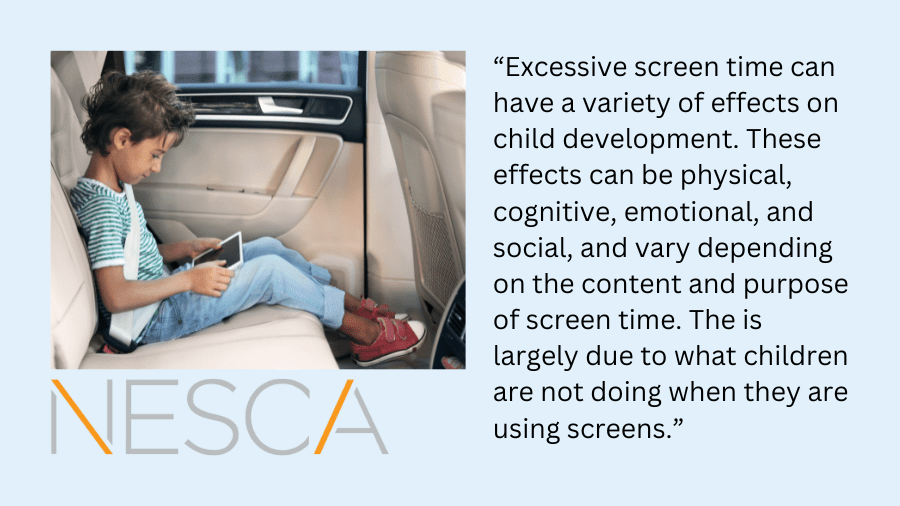
Excessive screen time can have a variety of effects on child development. These effects can be physical, cognitive, emotional, and social, and vary depending on the content and purpose of screen time. The is largely due to what children are not doing when they are using screens. Extended periods of screen time can lead to a sedentary lifestyle, which can lead to obesity, poor posture, and disrupted sleep patterns. In terms of cognitive development, overuse of screens with fast-paced and visually stimulating content can overwhelm a child’s developing brain and potentially affect attention span, impulse control, and the ability to concentrate.  It can also impede the development of language and communication skills. When children spend too much time in front of screens, they may have fewer opportunities to engage in real-life conversations and interactions, which are crucial for language development. And, while educational content can have benefits, excessive screen time can still disrupt the learning process. It may lead to reduced engagement with traditional forms of learning and limit a child’s ability to exercise critical thinking and problem-solving skills.

It is important to note that not all screen time is detrimental. Age-appropriate and high-quality content, as well as supervised and interactive screen time, can have educational and social benefits. Additionally, technology can be a valuable tool for learning and creativity when used in moderation and with parental guidance. Parent and caregivers can help mitigate the potential negative effects of screen time by setting limits, monitoring content, and encouraging a balanced lifestyle that includes a variety of activities, such as physical play, reading, and face-to-face interactions. Sometimes the best conversations happen in the car.

References:


About the Author

Dr. Cynthia (Cindy) Hess conducts neuropsychological evaluations as a pediatric neuropsychologist at NESCA. Dr. Hess enjoys working with children and young adults with complex emotional and behavioral profiles. She is skilled at evaluating social and emotional challenges as well as a range of learning profiles. Her experience allows her to guide families in understanding the supports and services their child requires to be successful in school.
 

To schedule an appointment with one of NESCA’s expert neuropsychologists, please complete our online intake form


NESCA is a pediatric neuropsychology practice and integrative treatment center with offices in Newton, Plainville, and Hingham, Massachusetts; Londonderry, New Hampshire; and the greater Burlington, Vermont region, serving clients from infancy through young adulthood and their families. For more information, please email info@nesca-newton.com or call 617-658-9800.


Why Teletherapy?

By | Nesca Notes 2023

By: Carly Edelstein, MSW, LCSW
Licensed Clinical Social Worker and Executive Function Coach

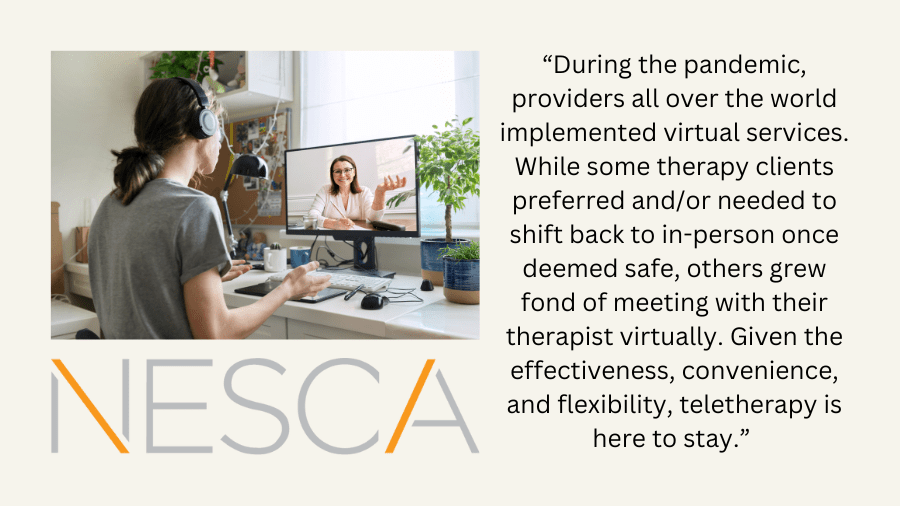
During the pandemic, providers all over the world implemented virtual services. While some therapy clients preferred and/or needed to shift back to in-person once deemed safe, others grew fond of meeting with their therapist virtually. Given the effectiveness, convenience, and flexibility, teletherapy is here to stay. Unlike medical doctors, most therapists don’t need to check your temperature or blood pressure when they see you. Rather, therapists aim to create a physical space where their clients feel safe and comfortable. That said, what if you feel the most comfortable being vulnerable in your home? While not everyone sees the appeal in teletherapy, having the option increases accessibility, and studies show clients attend teletherapy more consistently than in-person, yielding more desired outcomes.

Feeling emotionally and physically comfortable at home during teletherapy is just as important as its convenience. Perhaps you’re a college student or working parent with limited free time in your busy schedule. Teletherapy offers flexibility by removing transportation and wait times. With rates of anxiety, depression, and other mental health conditions rapidly rising, teletherapy is an option to consider if you’re seeking support.

Tips for preparing for your first teletherapy session:

  1. Consider privacy; place yourself in a room or space where you can discuss confidential information without others overhearing your conversation. Sound machines that make white noise can help to prevent sound waves from escaping the room.
  2. Limit any distractions; sign into the teletherapy platform in a brand new window versus a tab, so you’re not tempted to browse the web or check emails during your session. You want to set yourself up for success when it comes to being focused and staying present.
  3. Notice what’s in your background; in order to feel as comfortable as possible, make note of what your therapist may see behind you while on video.
  4. Sit back, relax, and trust the process!

Sources:

https://www.forbes.com/health/mind/teletherapy-for-mental-health-treatment/

How well is telepsychology working? (apa.org)


About the Author

Carly Edelstein is a Licensed Clinical Social Worker practicing in Massachusetts and Rhode Island. Having worked both in private practice and schools, she has extensive experience supporting students, families and educational teams to make positive changes. Ms. Edelstein provides executive function coaching and psychotherapy to clients ranging from middle school through adulthood. She also offers consultation to schools and families in order to support her clients across home and community environments.

To schedule an appointment with one of NESCA’s counselors, coaches, or other experts, please complete our online intake form

NESCA is a pediatric neuropsychology practice and integrative treatment center with offices in Newton, Plainville, and Hingham, Massachusetts; Londonderry, New Hampshire; and the greater Burlington, Vermont region, serving clients from infancy through young adulthood and their families. For more information, please email info@nesca-newton.com or call 617-658-9800.


NESCA Welcomes Back Carly Edelstein, MSW, LCSW, Licensed Clinical Social Worker and Executive Function Coach

By | Nesca Notes 2023

By: Jane Hauser
Director of Marketing & Outreach, NESCA

NESCA welcomes Ms. Carly Edelstein, MSW, LCSW, back to its coaching and psychotherapy services teams. She previously interned with NESCA, and we are thrilled to have her back on board as both a Psychotherapist and Executive Function Coach. Read more about Ms. Edelstein’s career journey and her return to NESCA in the following Q&A interview.


This is your second time working with NESCA. Tell us what you did with NESCA previously.
Yes, and I am elated to be back! During my graduate studies at Simmons University, I interned at NESCA as a psychotherapist. In addition to providing individual psychotherapy to children, adolescents, and young adults, I worked with a few high school and college students as an executive function (EF) coach. I also provided psychotherapy to clients from India and the Philippines, which was an incredible and unique experience. I have yet to find a practice as dynamic and integrative as NESCA and look forward to rejoining as a seasoned clinician!

You will be splitting your time and talents in two roles here at NESCA. Fill us in on your dual role and what your previous experiences bring to both.
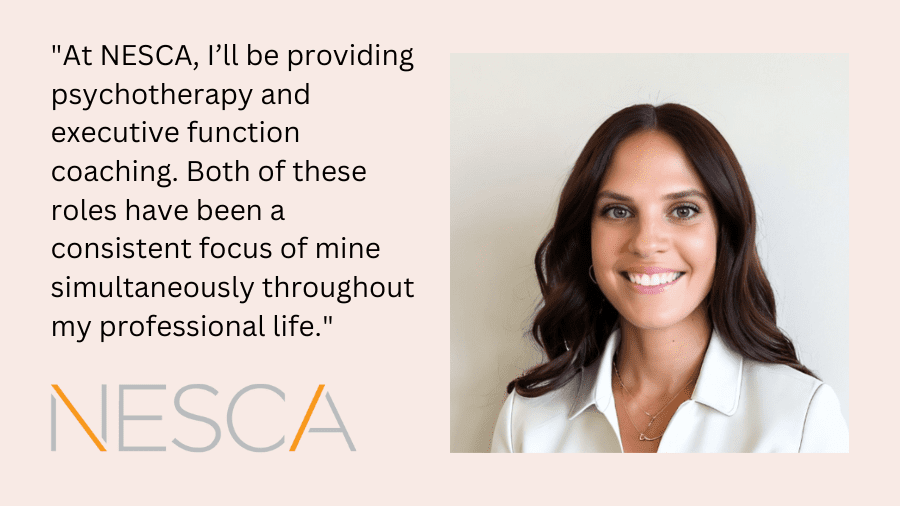
At NESCA, I’ll be providing psychotherapy and executive function coaching. Both of these roles have been a consistent focus of mine simultaneously throughout my professional life. After obtaining a B.S. in education at the University of Vermont, I worked in special education as a paraprofessional, supporting students with special needs in the classroom. In this role, I helped students learn new strategies to maintain their focus, self-regulate, and improve their organization. Additionally, throughout graduate school, I worked part-time as an EF coach at Engaging Minds, helping elementary, middle, and high schoolers with their homework and school assignments by finding ways to improve their task initiation, organization, time management, and planning skills.

My interest in social work/mental health counseling was sparked by my experience as a student teacher at UVM. During the entirety of my practicum, I found myself  gravitating towards students who struggled academically, mentally, socially, and emotionally. I was determined to help these students navigate their challenges by building meaningful connections, providing additional academic support, and increasing their self-confidence by focusing on their strengths.

My counseling experience officially started in graduate school with two full-year-long internships. My first internship took place in the counseling department at Boston Green Academy, a public charter school for grades 6-12, and my second was at NESCA. After graduate school, I worked as a school adjustment counselor at Newton South High School and also took on clients part-time at a private practice. In these roles, I supported the social and emotional wellbeing of students with special needs, as well as their families. After working in corporate wellness for the last year and a half, I am excited to return to the clinical setting, working for a practice that was a major part of my social work journey.

Having worked as a high school adjustment counselor, you must have seen many of the challenges students have with executive function. What are your biggest takeaways from that experience? How do you think that prepared you to be an EF coach?
The majority of my students struggled with executive function, therefore providing support in this area was part of my day-to-day routine. My biggest takeaways are:

  1. Identifying a “why” helps individuals become more motivated to be proactive in their EF journey. For example, I tend to ask people how improving these skills will affect their academic goals, mental health, social relationships, etc., so that there is significant meaning to the work being done.
  2. There is a system that works for everyone! Whether it’s electronic or physical, once someone identifies an organization system that increases their independence, it’s important that they stick to it and are consistent with it. Having a set system will allow them to easily locate their assignments, know when they are due, and how they’ll go about completing them. It’s always helpful for parents and teachers to be made aware of this system as well so that everyone is on the same page.
  3. Creating a regular homework routine is key to increasing productivity and limiting distractions. This includes having an identified start time, location, and plan. I always recommend structured breaks being part of this plan as well.
  4. I always advise folks to not compare themselves to others when it comes to their EF skills! We all have natural strengths. A skill that comes easy to you may be the most challenging task for someone else.

There have been countless reports and studies related to the negative impact COVID had on kids. As a psychotherapist to teens and young adults, what challenges are you seeing most in youth post-pandemic?
There’s no doubt that the impact of COVID on our youth has presented serious and complex challenges. The loss of structure, social opportunities, and extracurriculars (to name a few) is a shock to the system and very traumatic. The biggest challenges I’ve seen post-pandemic have been an increase in digital dependence, cyberbullying, school-based anxiety/refusal, and regression in social skills. That being said, as important as it is to identify post-pandemic challenges, there is value in pointing out gained strengths as well. A lot of students who I worked with learned new coping skills, acquired a deeper understanding of their needs, and discovered exciting new hobbies that they now get to share with others.


About Carly Edelstein, MSW, LCSW
Carly Edelstein is a Licensed Clinical Social Worker practicing in Massachusetts and Rhode Island. Having worked both in private practice and schools, she has extensive experience supporting students, families and educational teams to make positive changes. Ms. Edelstein provides executive function coaching and psychotherapy to clients ranging from middle school through adulthood. She also offers consultation to schools and families in order to support her clients across home and community environments.


To schedule an appointment with Ms. Edelstein for psychotherapy or EF coaching, please complete our online intake form


NESCA is a pediatric neuropsychology practice and integrative treatment center with offices in Newton and Plainville, Massachusetts, Londonderry, New Hampshire, and the greater Burlington, Vermont area, serving clients from preschool through young adulthood and their families. For more information, please email info@nesca-newton.com or call 617-658-9800.


Questionnaires, Rating Scales, and Checklists, Oh My!

By | Nesca Notes 2023

By: Maggie Rodriguez, Psy.D.
Pediatric Neuropsychologist, NESCA

Before I had children, I knew parenting would bring with it new demands. If you’d asked me what tasks I imagined would take a lot of my time and energy as a parent, I would have listed things like feeding hungry little mouths, washing adorable clothes, driving kids to and from school and activities, dealing with bath time, and reading stories at bedtime. What I would never have guessed is how much time and mental effort I would spend filling out paperwork. From the moment a child enters a parent’s life—regardless of what process brings them together as a family—it seems like there are unending forms to complete. As a parent of three children, I cannot begin to calculate how many hours I’ve spent filling out forms for doctors, daycares, schools, camps, babysitters, and extracurriculars. It’s a lot.

Perhaps that’s why I sometimes notice a very relatable subtle sigh when I hand parents forms to complete as part of their children’s neuropsychological evaluation. I get it, and I never want to add to a parent’s already overwhelming list of tasks to complete. Nevertheless, carefully selected questionnaires are an important part of a thorough neuropsychological assessment. Here are a few of the reasons why.

  1. Simply put, parents are the experts on their children. No doubt about it, a parent (or primary caregiver) knows a child better than just about anyone else could. Parents are uniquely qualified to provide invaluable information about their children and are a tremendous resource.
  2. Parents have more data points. During an evaluation, I typically spend about five hours with a child over the course of two testing sessions. It’s a limited glimpse into mere hours out of years of a child’s life. Parents are typically positioned to observe their children much more frequently and on many more occasions. I may see a child at their best or on a particularly bad day, and I don’t want to rely on my observations alone. Having information from many points in time, and from different settings, is incredibly useful and helps capture a more complete picture of a child.
  3. I want and need to know what happens outside the testing office. By design, the testing environment is deliberately developed to be a quiet space as free of distractions as possible to maximize a child’s ability to focus and participate in formal testing. It’s a highly structured situation and a one-on-one interaction. Life outside the office is…well, quite different. I want to get a sense of what happens during the hectic morning rush to get out the door, on the playground and the soccer field, and at the family dinner table.
  4. On a related note, people present differently in different settings, and having data helps us make sense of this. Many parents can relate to the concept of “restraint collapse.” Essentially, kids often work hard to keep it together in the academic setting throughout the day and “fall apart” when they come home after a long day of school. Similarly, children are often on the “best behavior” in public settings and with adults other than their parents. For this reason, I often don’t get to see this important aspect of things, so I rely on parent reports.
  5. Some things simply cannot be readily assessed using standardized testing measures in an office environment. Two skill sets that fall into this category are executive functions and social skills. Executive functions, which include skills like working memory, are not easily captured through tests in the somewhat artificial environment of an office. To assess working memory, we rely on tasks such as asking a child to recall strings of numbers. In the real world, working memory applies to more complex tasks, such as following multi-step instructions in a busy classroom or home setting. A child may do well remembering single digit numbers, but this doesn’t always translate to being able to remember and complete a series of directions in the “real world.” Similarly, interacting with one adult in a highly structured environment doesn’t allow a glimpse into a child’s social skills within the more complex, unstructured situations they face day to day.

In short, neuropsychologists rely on information from parents to gain a clear and complete picture of a child and to provide answers to the questions that bring a family to us. One of the ways we obtain this information is through questionnaires, symptom rating scales, and checklists. So, parents, thank you, for taking the time to give us your unique and invaluable perspective. We couldn’t do our jobs without it or without you.


About the Author

Maggie Rodriguez, Psy.D., provides comprehensive evaluation services for children, adolescents, and young adults with often complex presentations. She particularly enjoys working with individuals who have concerns about attention and executive functioning, language-based learning disorders, and those with overlapping cognitive and social/emotional difficulties.

Prior to joining NESCA, Dr. Rodriguez worked in private practice, where she completed assessments with high-functioning students presenting with complex cognitive profiles whose areas of weakness may have gone previously undiagnosed. Dr. Rodriguez’s experience also includes pre- and post-doctoral training in the Learning Disability Clinic at Boston Children’s Hospital and the Neurodevelopmental Center at MassGeneral for Children/North Shore Medical Center. Dr. Rodriguez has spent significant time working with students in academic settings, including k-12 public and charter school systems and private academic programs, such as the Threshold Program at Lesley University.

Dr. Rodriguez earned her Psy.D. from William James College in 2012, where her coursework and practicum training focused on clinical work with children and adolescents and on assessment. Her doctoral thesis centered on cultural issues related to evaluation.

Dr. Rodriguez lives north of Boston with her husband and three young children.  She enjoys spending time outdoors hiking and bike riding with her family, practicing yoga, and reading.


To book a consultation with Dr. Rodriguez or one of our many other expert neuropsychologists, complete NESCA’s online intake form.

NESCA is a pediatric neuropsychology practice and integrative treatment center with offices in Newton and Plainville, Massachusetts, Londonderry, New Hampshire, and Burlington, Vermont, serving clients from preschool through young adulthood and their families. For more information, please email info@nesca-newton.com or call 617-658-9800.

Redshirting: Pros and Cons of Delaying a Child’s Entry to Kindergarten

By | Nesca Notes 2023

By: Alissa Talamo, PhD
Pediatric Neuropsychologist, NESCA

Redshirting is a phrase that has traditionally been associated with college athletics, such as when coaches “redshirt” first-year athletes, providing younger athletes an additional year to develop skills and extend their playing eligibility. Academically, redshirting your child means choosing to delay kindergarten for a year even though your child is technically old enough to attend kindergarten.

Current research suggests there are pros and cons to redshirting kindergarten depending upon your child’s development and needs. One advantage of redshirting is the opportunity for the child to develop emotional maturity. While some students are ready academically, they may not be ready emotionally. This difference becomes particularly notable in the middle school and high school years, as a year difference in age (or almost two years if some students have been redshirted and your child is young for their grade), can lead to exposure to topics and behaviors your child is not emotionally ready for.

However, if your child has an identified or suspected disability, or you feel they may need extra help in school, you may not want to redshirt, as doing so would result in delay of necessary services provided free through the public schools (e.g., occupational or speech therapy, specialized academic instruction), which research finds to have a meaningful impact on improving a student’s long-term outcome. Additionally, if redshirted, a child loses up to a year of special education eligibility at the other end of their school experience if a student has significant disabilities covered under the IDEA, as those services end based on age (e.g., special education rights end at the age of 22 in Massachusetts).

To help you make an informed decision, it is also recommended that you speak with your child’s preschool teacher in addition to any professionals (e.g., speech therapist or psychologist) working with your child. You may also want to consider meeting with an educational consultant who specializes in this area. Finally, you may consider a neuropsychological evaluation to gain a better understanding of your child’s strengths and challenges as well as to obtain educational recommendations.

Clearly, there is no right or wrong answer to redshirting in kindergarten. It is highly dependent on a child’s level of development and needs. Parents are encouraged to watch for signs of readiness, such as the ability of their child to communicate and listen well, follow instructions, and be able to sit and focus for 10-15 minutes at a time. Also, having a good understanding of your child’s developmental profile (language skills, self-regulation skills, social skills, etc.) can help a parent make an educated decision.


Sources

https://www.psychologytoday.com/us/

https://www.sciencedirect.com/

https://cepa.stanfod.edu


About the Author

With NESCA since its inception in 2007, Dr. Talamo had previously practiced for many years as a child and adolescent clinical psychologist before completing postdoctoral re-training in pediatric neuropsychology at the Children’s Evaluation Center.

After receiving her undergraduate degree from Columbia University, Dr. Talamo earned her doctorate in clinical health psychology from Ferkauf Graduate School of Psychology and the Albert Einstein College of Medicine at Yeshiva University.

She has given a number of presentations, most recently on “How to Recognize a Struggling Reader,” “Supporting Students with Working Memory Limitations,” (with Bonnie Singer, Ph.D., CCC-SLP of Architects for Learning ), and “Executive Function in Elementary and Middle School Students.”

Dr. Talamo specializes in working with children and adolescents with language-based learning disabilities including dyslexia, attentional disorders, and emotional issues. She is also interested in working with highly gifted children.

Her professional memberships include MAGE (Massachusetts Association for Gifted Education), IDA (International Dyslexia Association), MABIDA (the Massachusetts division of IDA) and MNS (the Massachusetts Neuropsychological Society).

She is the mother of one college-aged daughter.

To book a consultation with Dr. Talamo or one of our many other expert neuropsychologists, complete NESCA’s online intake form.

NESCA is a pediatric neuropsychology practice and integrative treatment center with offices in Newton and Plainville, Massachusetts, Londonderry, New Hampshire, and Burlington, Vermont, serving clients from preschool through young adulthood and their families. For more information, please email info@nesca-newton.com or call 617-658-9800.

Skip to content