To accommodate requests for neuropsychological evaluations after the start of the new school year, NESCA has added evaluation dates in its Newton, MA office. Immediate openings are now available for scheduling. Please complete our Inquiry/Intake Form for more information or to start the scheduling process.

Tag

students Archives - Page 2 of 5 - NESCA

Subscribe to NESCA Notes

Student trying to write despite hidden language demands

The Hidden Language Demands of Upper Elementary and Middle School

By | NESCA Notes 2026

Student trying to write despite hidden language demandsBy Olivia Rogers, MA, CCC-SLP
Speech-Language Pathologist, NESCA

By upper elementary school, learning shifts dramatically. Students are no longer learning foundational skills; they are expected to apply them flexibly, independently, and across subjects. The academic language load increases quietly but significantly.

What Changes in Grades 4 to 7?

  • Students are reading to learn
  • Texts become denser and more abstract
  • Vocabulary shifts from concrete to conceptual
  • Sentence structures become longer and more syntactically complex
  • Students are expected to compare, analyze, justify, and synthesize
  • Writing moves from short responses to multi-paragraph compositions

The Cognitive Load Increases
Students must now hold multiple ideas in working memory, track shifting perspectives in texts, interpret figurative language, and integrate background knowledge – often simultaneously. These demands require strong executive functioning and well-developed language networks.

The Invisible Language Skills Required

  • Understanding complex sentences with embedded clauses
  • Interpreting nuanced vocabulary and morphology
  • Making inferences beyond literal meaning
  • Organizing ideas cohesively in speech and writing
  • Explaining reasoning using precise academic language

Common Signs of Strain

  • Strong verbal knowledge but weak written output
  • Short, underdeveloped written responses
  • Difficulty summarizing or explaining key ideas
  • Avoidance of reading-heavy assignments
  • Homework taking significantly longer than expected
  • Increased anxiety or shutdown around school tasks

Why This Stage Matters
Upper elementary and early middle school are pivotal years for our students. If language organization, executive functioning, and literacy systems are strengthened during this window, students often transition into higher grades with greater confidence and independence. When gaps remain unaddressed, demands compound year after year.

If This Sounds Familiar…
If your child is bright but suddenly struggling with writing, comprehension, or workload, it may not be motivation. It may be due to the increased language load. Strong academic performance is not just about effort. It’s about systems of learning. When language, executive functioning, and literacy are strengthened together, students gain not only skill, but confidence.


At NESCA, we view communication holistically. Our therapists use a comprehensive approach to treat the systems of learning as integrative, helping students develop valuable skills they can use in and out of the classroom! If you’re curious whether this integrative approach would benefit your child, I welcome the opportunity to connect to identify what targeted support may make the greatest difference. For more information on Speech and Language Therapy, Literacy, and Executive Functioning Support at NESCA, please complete our online Intake Form or email me directly at orogers@nesca-newton.com.


About the AuthorOlivia Rogers

Olivia Rogers is a licensed speech-language pathologist with experience in pediatric clinics and public schools, working with children from age 2 through young adulthood across a range of communication challenges. With a special interest in the connection between oral language and literacy, Ms. Rogers is trained in the Orton-Gillingham method and the Brain Frames program, supporting students in language comprehension, expression, and written organization. She is dedicated to making therapy engaging and personalized for each child.


To learn more about NESCA’s Speech and Language Services or schedule appointments, complete our online Intake Form or email orogers@nesca-newton.com.


NESCA is a pediatric neuropsychology and related services practice with offices in Newton, Plainville, and Hingham, Massachusetts; Londonderry, New Hampshire; and Coral Gables, Florida, serving clients from infancy through young adulthood and their families. For more information, please email info@nesca-newton.com or call 617-658-9800.


Image of student walking into middle school with a quote from Dr. Madeline Manning

Navigating the Transition from Elementary to Middle School with ADHD

By | NESCA Notes 2026

Image of student walking into middle school with a quote from Dr. Madeline ManningBy Madeline Manning, Ph.D.
Pediatric Neuropsychologist, NESCA Hingham

The transition from elementary to middle school is a significant developmental milestone, bringing new academic demands, shifting social dynamics, and greater expectations for independence. For students with attention-deficit/hyperactivity disorder (ADHD), who often experience executive function (EF) vulnerabilities, this period can be particularly challenging. Understanding and proactively addressing the academic, social-emotional, and behavioral needs of these students is essential to support their adaptation and long-term success.

Academic Demands and Executive Function

Middle school introduces a significantly more dynamic, fast-paced academic environment, characterized by multiple teachers, changing classrooms, and a heavier workload. Students must manage assignments from various instructors, each with different expectations and communication methods. This environment requires cognitive flexibility and other advanced EF skills, including organization, time management, task initiation, and prioritization. For students with ADHD, these demands can quickly overwhelm existing coping strategies, leading to forgotten assignments, missed deadlines, and difficulty transitioning between classes. This, in turn, can contribute to a reduced sense of self-efficacy as a learner.

Notably, many students have not yet been explicitly taught the EF skills needed for this new level of independence. Evidence shows that many students with ADHD require direct instruction, repetition, clear structure, frequent feedback, and opportunities to practice these skills in real contexts. Early identification of EF difficulties and targeted supports, such as executive function coaching, visual organizers, structured routines, and regular teacher check-ins, can ease the transition and build confidence (Giannakopoulos, 2025).

Social Dynamics and Emotional Development

Middle school is also marked by greater complexity in peer interactions. Friendships shift from more convenience-based connections, often formed through proximity and shared activities in elementary school, to deeper emotional bonds, and students face heightened peer pressure and the formation of social cliques. The onset of puberty, elevated emotional sensitivity, emerging interest in romantic relationships, and the influence of social media can further complicate peer dynamics during this developmental stage.

Students with ADHD are already at increased risk of experiencing challenges with impulse control, emotional regulation, and social problem-solving. The reduced adult scaffolding in middle school means students are expected to navigate social situations with more independence, which can be both empowering and challenging. Difficulties in these areas can negatively affect self-esteem and lead to anxiety or withdrawal.

Fostering resilience involves teaching prosocial coping strategies and promoting self-advocacy. This includes encouraging students to seek support from trusted adults when needed and to practice assertive communication skills. Guidance on managing peer pressure, conflict resolution strategies, and building and maintaining healthy friendships is critical for positive social development and emotional well-being in middle school and beyond.

The Adolescent Brain: Developmental Realities

During early adolescence, the brain undergoes significant changes. The prefrontal cortex (responsible for planning, decision-making, and self-control) is still maturing, while the limbic system (a complex set of brain structures governing emotions and reward systems) develops far earlier. This developmental mismatch means that adolescents are more likely to exhibit heightened emotional responses, increased impulsivity, and a greater sensitivity to rewards and peer influence, often before they have fully developed the cognitive skills necessary for effective self-regulation and long-term planning.

These neurodevelopmental factors mean that even typically developing students may struggle with EF tasks and social functioning during middle school. For those with ADHD, whose brains are already wired for greater difficulty with attention and self-regulation, the challenges can be far more pronounced.

Supporting Skill Development

To help students with ADHD navigate this transition, families and educators can collaborate to provide:

  • Explicit instruction in organizational and planning skills
  • Consistent routines and predictable expectations
  • Visual supports (e.g., checklists, planners)
  • Regular feedback and positive reinforcement
  • Opportunities for guided practice and reflection

These supports help students gradually build independence, resilience, and the executive function skills necessary to meet new demands.

A Critical Window for Evaluation and Intervention

The transition from elementary to middle school is a pivotal time to address concerns around academic, social-emotional, and/or behavioral functioning. A comprehensive neuropsychological evaluation can clarify your child’s unique strengths and challenges, guide targeted interventions, and support the development of formal education plans (e.g., IEPs or 504 Plans) to ensure they are receiving the services they require. Early identification and collaboration between home and school are essential for maintaining self-esteem, fostering self-efficacy, and ensuring access to appropriate supports.

If you have questions or concerns regarding your child’s transition to a new school, executive functioning, or any other aspect of their development, please contact NESCA for guidance. Comprehensive evaluation and targeted strategies can make a meaningful difference in your child’s educational journey and overall well-being.


About Dr. Madeline Manning

Dr. Madeline Manning is committed to providing comprehensive, collaborative evaluations that helpMadeline Manning, PhD Headshot families better understand their child’s unique neurocognitive, developmental, learning, and social-emotional profiles. She specializes in the assessment of toddlers, school-aged children, adolescents, and young adults. Her expertise involves working with youth exhibiting a diverse range of clinical presentations, including neurodevelopmental disorders, such as autism spectrum disorder, attention and executive functioning deficits, learning disabilities, developmental delays, intellectual disabilities, and associated emotional challenges. Dr. Manning is also trained in the assessment of children with medical complexities, recognizing how health conditions can impact a child’s development and functioning. She partners closely with families to develop practical, personalized recommendations that support each individual’s success and growth at home, in school, and within the community.

To book a neuropsychological evaluation at NESCA, complete NESCA’s online intake form. 

NESCA is a pediatric neuropsychology and related services practice with offices in Newton, Plainville, and Hingham, Massachusetts; Londonderry, New Hampshire; and Coral Gables, Florida, serving clients from infancy through young adulthood and their families. For more information, please email info@nesca-newton.com or call 617-658-9800.

Image of a road sign with College ahead on it portraying the topic of the blog about college planning with ADHD

College Planning for Families of Students with ADHD

By | NESCA Notes 2026

Image of a road sign with College ahead on it portraying the topic of the blog about college planning with ADHDBy: Julie Weieneth, Ph.D.
Pediatric Neuropsychologist, NESCA

The transition from high school to college brings stress for most families. As a parent of a high school junior, I am currently helping my teen juggle schoolwork, extracurriculars, and all the “must-do’s” for college planning. At times, it feels very overwhelming for me, so I can only imagine how it feels for my daughter. As a neuropsychologist, I often reflect on how neurodiversity, especially ADHD, shapes this journey.

Over the years, I have worked with many bright students with ADHD who have successfully navigated the college planning process. These teens bring unique strengths to the table. When families are able to recognize these strengths, support ongoing areas of need, and seek professional guidance as needed, college planning can become a process of growth for both teens and their parents.

ADHD Strengths in College Planning

  • Creativity and Problem-Solving: Many students with ADHD naturally think outside the box. They approach challenges from fresh angles, which can help them identify colleges, majors, or support services that might otherwise be overlooked. Their creative solutions can make the search process more dynamic and tailored to their needs.
  • Energy and Enthusiasm: Students with ADHD often bring a high level of energy and excitement to new experiences. This enthusiasm motivates them to explore a wide range of colleges, participate in campus tours, and engage with student groups. Their passion can help them stand out in interviews and application essays.
  • Hyperfocus on Interests: While ADHD is often associated with distractibility, many students experience periods of intense focus, especially on topics that truly interest them. This hyperfocus can be a tremendous advantage when researching colleges, preparing application materials, or delving into extracurricular opportunities that align with their passions.
  • Resilience and Adaptability: Navigating the ups and downs of ADHD often builds resilience. Many students learn to adapt quickly, bounce back from setbacks, and persist in the face of challenges. These qualities are invaluable during the college search and application process, which can involve rejection, waitlists, or unexpected changes.

How Parents Can Help

Parents play a key role in supporting their teens’ transition to college. Here are some practical steps:

  • Foster Self-Advocacy: Encourage your teen to understand their needs and practice asking for help. Role-play conversations about accommodations and celebrate their efforts.
  • Find the Right Fit: Focus on colleges that match your teen’s needs, not just prestige. Visit campuses, meet with disability services, and consider factors like class size and available supports.
  • Secure Accommodations: Keep neuropsychological testing up to date, as colleges require documentation. Encourage early use of academic supports and check in regularly.
  • Build Executive Function Skills: Practice time management and organization before college. Gradually let your teen take the lead and consider executive function coaching if needed.
  • Plan for Medication and Health: Help your teen set up prescription management and health routines. Practice independence with gentle reminders.
  • Support Social and Emotional Well-being: Encourage involvement in clubs and normalize seeking help from campus resources. Keep long-term supports in place, and encourage booster sessions with therapists, executive function and real-life skills coaches, tutors, during breaks or through virtual sessions as needed.

Also, it is important to remember to care for yourself! This transition is significant for parents, too. Seek support for yourself as needed.

At NESCA, in addition to neuropsychological evaluations, we offer consultations and executive function and real-life skills coaching. Please feel free to reach out to us if we can help you and your child navigate this process.


About the AuthorJulie Weineth headshot

Dr. Weieneth is a licensed clinical psychologist who has worked with children and families with complex diagnostic and treatment needs for the last twenty years. Her areas of specialty include ADHD, autism spectrum disorders, anxiety, mood disorders, learning disabilities, executive functioning, and school-related challenges. That being said, Dr. Weieneth also understands that not all individuals fit cleanly into diagnostic groups or labels. Her goals for each evaluation are to help families feel comfortable with the process, use all the tools available to best understand each individual’s unique strengths and needs, and to write a clear and comprehensive report that will guide educational and treatment planning.

To book a consultation with Dr. Weieneth or one of our many other expert neuropsychologists or other clinicians, complete NESCA’s online intake form.

NESCA is a pediatric neuropsychology and related services practice with offices in Newton, Plainville, and Hingham, Massachusetts; Londonderry, New Hampshire; and Coral Gables, Florida, serving clients from infancy through young adulthood and their families. For more information, please email info@nesca-newton.com or call 617-658-9800.

school student frustrated over the work

Navigating the Post-Honeymoon Phase: Signs Your Child May Need Support This School Year

By | NESCA Notes 2025

school student frustrated over the workBy Miranda Milana, Psy.D.
Pediatric Neuropsychologist

With the start of the school year well underway, we are beginning to see students and teachers settling into their classroom routines. Along with this increase in familiarity and comfortability, parents often start to see bits and pieces of challenges arise around this time of year that may have gone unnoticed during the initial “honeymoon period.” You may be wondering what challenges you should be looking out for and when those challenges warrant an evaluation to determine further supports and services. Let’s take some time to explore what to keep an eye on, and when it might be time to reach out to schedule an evaluation to dive a bit deeper into what is going on.

Academics

No matter their age, if you ever feel your child is inundated and overwhelmed with schoolwork, it is a great idea to reach out to their teachers; ask how long homework should be taking and whether it should feel like review vs. new material. If homework starts to consistently become a battle, it might be worth taking a closer look into why. It could be because it’s a new and appropriately challenging course. It could also be because there are underlying language-based learning disabilities, a nonverbal learning disability, executive function challenges, or increasing symptoms of anxiety or depression. Some specific things to watch for:

  • Frequent tears during homework that appear to be getting worse instead of better
  • Not appearing to “get it” even after review and repetition
  • Difficulty studying/holding information in memory
  • Dysfluent reading or not understanding what they’ve read
  • Challenges understanding math concepts or memorizing math facts
  • Difficulty applying and generalizing concepts
  • Opposition to handwriting tasks or when asked to compose a writing assignment
  • Poor penmanship that is illegible and/or immature for age
  • Not meeting benchmarks on assessments

Social Skills

At this point in the school year, children are typically starting to be interested in other peers within their classrooms. For younger kids, they are likely to feel more comfortable interacting with other children in their play. Common social concerns can include:

  • Not remembering any names or faces of kids in their class
  • Preferring to play alone; hesitant to join in with a group
  • Appearing unaware of social cues or how to initiate conversation with others
  • Rigidity in play – always wanting to play their own game by their own specific rules
  • Frequent peer conflicts and feeling rejected or left out

Emotional Functioning

A new school year often elicits feelings of anxiety in kids no matter how outgoing and social they may be! When might it be a sign that there is something more?

  • Continued and persistent resistance to going to school
  • Frequent somatic complaints with no apparent cause (e.g., headaches, stomachaches)
  • Change in sleeping patterns – not being able to fall asleep at night or waking up frequently
  • Difficulty with regulating their emotions/frequent tantrums
  • Changes in appetite
  • Negative statements about themselves
  • Increase in irritability
  • Withdrawal from others or previously preferred activities
  • Always wanting to know what is happening next and struggling with changes in routine (i.e., Does a substitute teacher derail their whole day? If a friend is out sick, is there a perseveration on where they are? Do you wait to tell them about changes in plans so they don’t worry in advance?)

Attention/Focus

Have you ever found yourself feeling restless and distracted when sitting through a work meeting? Kids are no different! Sitting still and paying attention for extended periods of time can be really tough – especially after being on summer break! Here are a few things to keep an eye on:

  • Frequently fidgeting in their seat or needing a fidget item to increase concentration
  • Difficulty with multi-step directions
  • Not remembering information presented during lectures
  • Acting impulsively
  • Easily distracted/daydreaming
  • Acting as if running by a motor
  • Blurting out thoughts, interrupting conversations
  • Teacher feedback that they are interrupting other students or not able to sit quietly and attend to class discussions

As always, you know your child best! If you feel like this year is off to a rocky start, or you’re starting to have questions regarding their functioning, do not hesitate to reach out and schedule an evaluation. A comprehensive neuropsychological evaluation is designed to look at ALL aspects of a child to determine what is getting in their way of reaching their potential. We are always here to help!


About the Author

Dr. Miranda Milana provides comprehensive evaluation services for children, adolescents, and young adults with a wide range of concerns, includingMiranda Milana Headshot attention deficit disorders, communication disorders, intellectual disabilities, and learning disabilities. She particularly enjoys working with children and their families who have concerns regarding an autism spectrum disorder. Dr. Milana has received specialized training on the administration of the Autism Diagnostic Observation Schedule (ADOS).

Dr. Milana places great emphasis on adapting her approach to a child’s developmental level and providing a testing environment that is approachable and comfortable for them. She also values collaboration with families and outside providers to facilitate supports and services that are tailored to a child’s specific needs.

Before joining NESCA, Dr. Milana completed a two-year postdoctoral fellowship at Boston Children’s Hospital in the Developmental Medicine department, where she received extensive training in the administration of psychological and neuropsychological testing. She has also received assessment training from Beacon Assessment Center and The Brenner Center. Dr. Milana graduated with her B.A. from the University of New England and went on to receive her doctorate from William James College (WJC). She was a part of the Children and Families of Adversity and Resilience (CFAR) program while at WJC. Her doctoral training also included therapeutic services across a variety of settings, including an elementary school, the Family Health Center of Worcester and at Roger Williams University.

Dr. Milana grew up in Maine and enjoys trips back home to see her family throughout the year. She currently resides in Wrentham, Massachusetts, with her husband and two golden retrievers. She also enjoys spending time with family and friends, reading, and cheering on the Patriots, Bruins, Red Sox, and Celtics.​

To book an appointment with Dr. Miranda Milana or another expert NESCA neuropsychologist, please complete our Intake Form today. 

NESCA is a pediatric neuropsychology practice and integrative treatment center with offices in Newton, Plainville, and Hingham, Massachusetts; Londonderry, New Hampshire; the greater Burlington, Vermont region; and Coral Gables/Miami, Florida, serving clients from infancy through young adulthood and their families. For more information, please email info@nesca-newton.com or call 617-658-9800.
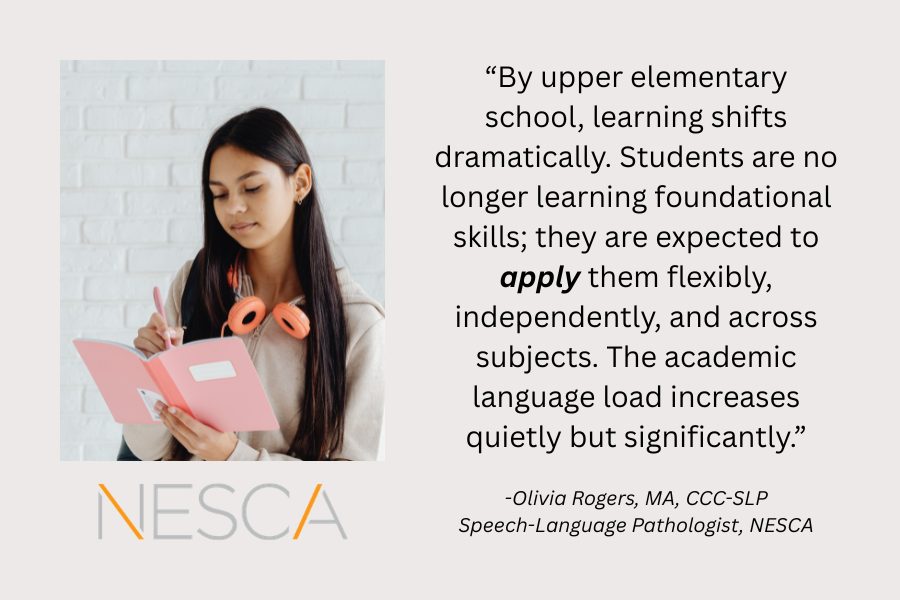
 

image of adults observing a school classroom

Why School Observations Matter in a Neuropsychological Assessment

By | NESCA Notes 2025

image of adults observing a school classroomBy Miranda Milana, Psy.D.
Pediatric Neuropsychologist

When families seek a neuropsychological evaluation for their child, it’s usually because they’re looking for a deeper, more comprehensive understanding of their child’s profile—including both strengths and challenges. This kind of evaluation helps answer important questions about how a child learns, thinks, manages emotions, and interacts with others.

By gaining this insight, we can better support a child in all areas of life—at school, at home, with friends, and in community settings. Sometimes, however, the most valuable piece of the puzzle doesn’t come from test scores at all.

In some cases, your neuropsychologist may determine that observing your child in their natural learning environment—a school observation—can provide crucial information that simply can’t be gathered in an office setting.

What Is a School Observation?

A school observation involves a trained professional—usually the neuropsychologist conducting your child’s evaluation—visiting your child’s school to observe them in real time.

This observation might include time spent watching your child:

  • During classroom instruction
  • In social settings like lunch or recess
  • While transitioning between classes
  • In additional services, such as speech/language therapy or occupational therapy

The purpose is to see how your child functions across different settings and situations throughout their school day.

Why Is a School Observation So Valuable?

You might wonder: if the evaluator already has detailed testing results, rating forms from parents and teachers, and information from the intake appointment and outside providers, why observe at school?

Even the best testing environment can’t fully replicate real-world situations. In a quiet, 1:1 testing setting, a child might appear regulated, focused, and engaged—but in a classroom filled with distractions and increased demands, their behavior and overall presentation might look very different. A school observation helps us understand how a child manages in the real-world environments where challenges often arise.

Observations allow us to:

  • Identify situations that may be triggering challenging behaviors (like transitions, group work, or unstructured time)
  • Determine whether a child is well-matched with their peers or may be in the wrong instructional group
  • Notice social dynamics—Are they connecting with peers? Are they withdrawn or overly controlling during play?

Another critical area we assess during school observations is whether the learning environment is a good fit for your child:

  • Is the classroom appropriately structured?
  • Are staff using the tools and supports outlined in the IEP?
  • Does your child respond well to the strategies, like visual schedules or token boards, being used?

Observing how a child responds to the classroom setup and supports can help determine whether their current environment is truly meeting their needs—or if changes are required to allow them to access the curriculum.

When Is a School Observation Recommended?

Not every evaluation requires a school observation, but there are several situations where it can provide especially meaningful insight. Examples include:

  • A child who struggles with behaviors at school that aren’t seen at home or during testing
  • A child who performs well on standardized tests but is reported to be having a hard time keeping up in class
  • Uncertainty about whether the child’s current classroom or program is the right fit for their learning profile
  • Questions about whether the child would benefit from a different instructional approach, such as a language-based classroom or one using ABA methods

At NESCA, our clinicians are trained to determine when a school observation would add helpful information to the evaluation process. We view it as one of many tools to build the most accurate picture of your child’s needs.

What to Expect During the Observation

If you and your evaluator decide that a school observation would be helpful, we’ll coordinate the visit with your child’s school—with full permission from you and the school team.

On the day of the observation:

  • The evaluator typically sits in the back of the classroom, making every effort not to disrupt the flow of the day.
  • The goal is to blend in and observe naturally occurring interactions and behaviors.
  • Observations are done in a respectful, non-intrusive manner with the sole purpose of helping your child.

Afterward, the evaluator will include a summary of the observation in the written report, and the insights gained will be integrated into the diagnostic impressions and recommendations.

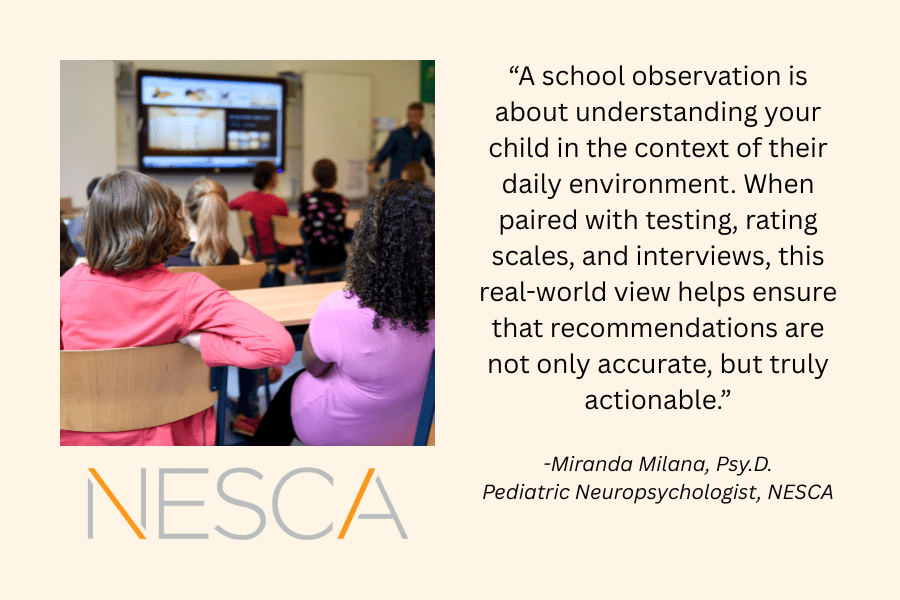
A school observation is about understanding your child in the context of their daily environment. When paired with testing, rating scales, and interviews, this real-world view helps ensure that recommendations are not only accurate, but truly actionable.

If you have any questions about the school observation process—or want to know whether it might be helpful for your child—don’t hesitate to reach out to your evaluator. We’re always here to help guide you through the process and help your child get the support they need to succeed.


About the Author

Dr. Miranda Milana provides comprehensive evaluation services for children and adolescents with a wide range of concerns, includingMiranda Milana PsyD headshot attention deficit disorders, communication disorders, intellectual disabilities, and learning disabilities. She particularly enjoys working with children and their families who have concerns regarding an autism spectrum disorder. Dr. Milana has received specialized training on the administration of the Autism Diagnostic Observation Schedule (ADOS).

Dr. Milana places great emphasis on adapting her approach to a child’s developmental level and providing a testing environment that is approachable and comfortable for them. She also values collaboration with families and outside providers to facilitate supports and services that are tailored to a child’s specific needs.

Before joining NESCA, Dr. Milana completed a two-year postdoctoral fellowship at Boston Children’s Hospital in the Developmental Medicine department, where she received extensive training in the administration of psychological and neuropsychological testing. She has also received assessment training from Beacon Assessment Center and The Brenner Center. Dr. Milana graduated with her B.A. from the University of New England and went on to receive her doctorate from William James College (WJC). She was a part of the Children and Families of Adversity and Resilience (CFAR) program while at WJC. Her doctoral training also included therapeutic services across a variety of settings, including an elementary school, the Family Health Center of Worcester and at Roger Williams University.

Dr. Milana grew up in Maine and enjoys trips back home to see her family throughout the year. She currently resides in Wrentham, Massachusetts, with her husband and two golden retrievers. She also enjoys spending time with family and friends, reading, and cheering on the Patriots, Bruins, Red Sox, and Celtics.​

To book an appointment with Dr. Miranda Milana or another expert NESCA neuropsychologist, please complete our Intake Form today. 

NESCA is a multidisciplinary pediatric neuropsychology practice with offices in Newton, Plainville, and Hingham, Massachusetts; Londonderry, New Hampshire; and the greater Burlington, Vermont region, serving clients from infancy through young adulthood and their families. For more information, please email info@nesca-newton.com or call 617-658-9800.

 

Image of a cell phone with a banned symbol over it; quote from Angela Currie, Ph.D.

Teaching Executive Function Strategies in the Landscape of Cell Phone Ban Policies

By | NESCA Notes 2025

Image of a cell phone with a banned symbol over it; quote from Angela Currie, Ph.D.By Angela Currie, Ph.D.
Pediatric Neuropsychologist; Londonderry, NH Director, NESCA

As students head back to school this fall, many are facing new policies and restrictions around cell phone use in school. For many states and districts, this is defined by a “bell to bell” cell phone ban, which prohibits students from using their phones from the first bell to final dismissal. For many, these policies are long awaited, as there has been growing concern about student distraction, social disengagement, and the negative impact of social media access in schools. By removing access to cell phones, tablets, and smart watches, “bell to bell” policies aim to reduce distractions and foster a more focused, interactive learning environment.

The benefits of cell phone policies are clear; however, they also may present unique challenges for some students who have learned to rely on technology as an appropriate tool for executive function. Executive function refers to a set of cognitive and self-management skills that help individuals manage time, stay organized, remember information, and meet goals efficiently. Because cell phones and tablets are readily accessible and have many embedded tools, many students have integrated technology into their daily routines, using features like calendars, alarms, and note-taking apps to stay on top of assignments and deadlines. These digital tools have become a practical way for some students to stay organized and ensure they are meeting expectations.

With “bell to bell” cell phone bans in place, students will no longer have “on demand” access to the apps or other executive function tools that previously kept them organized, possibly raising concern about increased forgetfulness, missed assignments, and heightened stress. Positively, the laws provide exemptions for students whose IEP, 504 plan, or Title IX needs identify specific technology accommodations (e.g., insulin monitoring, assignment log, communication tools, etc.). However, these students may feel hesitant to use their devices during the school day out of concern for standing out or feeling stigmatized. As a result, even students who are permitted to use their devices may choose to find alternative ways to manage their academic demands in order to avoid feeling singled out.

Cell phone policies are being developed for good reasons, but within this landscape, schools and families must start thinking about how to teach executive function strategies that are not technology-based. Children and teens are developing in a technological world, and they may not have the skills for managing demands without these supports. This provides an opportunity for them to learn more independent skills for daily management, but they may not figure this out on their own. To support students, educators and parents can introduce practical strategies, such as using physical planners to track assignments and deadlines, breaking down larger projects into smaller, actionable steps, and organizing materials with color-coded folders or checklists. Teaching time management techniques, encouraging regular routines, and modeling how to prioritize tasks can also help students build the foundational skills they need to succeed both in and out of the classroom, even without the constant aid of technology.

Ultimately, cell phone bans have the potential to create a more focused and engaged learning environment, fostering improved learning and social interactions. However, as access to technology is reduced, it becomes increasingly important for schools to provide explicit instruction in executive function strategies. By offering concrete tools and strategies, educators can help all students develop enduring, life-long skills that will benefit them not only in managing their responsibilities at school, but also in their future personal an


About the Author

Dr. Currie specializes in evaluating children, teens, and young adults with complex profiles, working to tease apart the various factors lending to their challenges, such as underlying learning, attentional, social, or emotional difficulties. She particularly enjoys working with the seemingly “unmotivated” child, as well as children who have “flown under the radar” for years due to their desire to succeed.


To book an evaluation with Dr. Currie or one of our many other expert neuropsychologists, complete NESCA’s online intake form. Indicate whether you are seeking an “evaluation” or “consultation” and your preferred clinician in the referral line.


NESCA is a pediatric neuropsychology practice and integrative treatment center with offices in Newton, Plainville, and Hingham, Massachusetts; Londonderry, New Hampshire; and staff in greater Burlington, Vermont, serving clients from infancy through young adulthood and their families. For more information, please email info@nesca-newton.com or call 617-658-9800.

school student frustrated over the work

Navigating the Post-Honeymoon Phase: Signs Your Child May Need Support This School Year

By | NESCA Notes 2024

school student frustrated over the workBy Miranda Milana, Psy.D.
Pediatric Neuropsychologist

With the start of the school year well underway, we are beginning to see students and teachers settling into their classroom routines. Along with this increase in familiarity and comfortability, parents often start to see bits and pieces of challenges arise around this time of year that may have gone unnoticed during the initial “honeymoon period.” You may be wondering what challenges you should be looking out for and when those challenges warrant an evaluation to determine further supports and services. Let’s take some time to explore what to keep an eye on, and when it might be time to reach out to schedule an evaluation to dive a bit deeper into what is going on. 

Academics

No matter their age, if you ever feel your child is inundated and overwhelmed with schoolwork, it is a great idea to reach out to their teachers; ask how long homework should be taking and whether it should feel like review vs. new material. If homework starts to consistently become a battle, it might be worth taking a closer look into why. It could be because it’s a new and appropriately challenging course. It could also be because there are underlying language-based learning disabilities, a nonverbal learning disability, executive function challenges, or increasing symptoms of anxiety or depression. Some specific things to watch for:

  • Frequent tears during homework that appear to get worse instead of better
  • Not appearing to “get it” even after review and repetition
  • Difficulty studying/holding information in memory
  • Dysfluent reading or not understand what they’ve read
  • Challenges understanding math concepts or memorizing math facts
  • Difficulty applying and generalizing concepts
  • Opposition to handwriting tasks or when asked to compose a writing assignment
  • Poor penmanship that is illegible and/or immature for age
  • Not meeting benchmarks on assessments

Social Skills

At this point in the school year, children are typically starting to be interested in other peers within their classrooms. For younger kids, they are likely to feel more comfortable interacting with other children in their play. Common social concerns can include:

  • Not remembering any names or faces of kids in their class
  • Preferring to play alone, hesitant to join in with a group
  • Appearing unaware of social cues or how to initiate conversation with others
  • Rigidity in play—always wanting to play their own game by their own specific rules
  • Frequent peer conflicts and feeling rejected or left out

Emotional Functioning

A new school year often elicits feelings of anxiety in kids no matter how outgoing and social they may be! When might it be a sign that there is something more?

  • Continued and persistent resistance to going to school
  • Frequent somatic complaints with no apparent cause (e.g., headaches, stomachaches)
  • Change in sleeping patterns – not being able to fall asleep at night or waking up frequently
  • Difficulty with regulating their emotions/frequent tantrums
  • Changes in appetite
  • Negative statements about themselves
  • Increase in irritability
  • Withdrawal from others or previously preferred activities
  • Always wanting to know what is happening next and struggling with changes in routine (i.e., Does a substitute teacher derail their whole day? If a friend is out sick, is there a perseveration on where they are? Do you wait to tell them about changes in plans so they don’t worry in advance?)

Attention/Focus

Have you ever found yourself feeling restless and distracted when sitting through a work meeting? Kids are no different! Sitting still and paying attention for extended periods of time can be really tough – especially after being on summer break! Here are a few things to keep an eye on:

  • Frequently fidgeting in their seat or needing a fidget item to increase concentration
  • Difficulty with multi-step directions
  • Not remembering information presented during lectures
  • Acting impulsively
  • Easily distracted/daydreaming
  • Acting as if run by a motor
  • Blurting out thoughts, interrupting conversations
  • Teacher feedback that they are interrupting other students or not able to sit quietly and attend to class discussions

As always, you know your child best! If you feel like this year is off to a rocky start, or you’re starting to have questions regarding their functioning, do not hesitate to reach out and schedule an evaluation. A comprehensive neuropsychological evaluation is designed to look at ALL aspects of a child to determine what is getting in their way of reaching their potential. We are always here to help!


About the Author

Dr. Miranda Milana provides comprehensive evaluation services for children and adolescents with a wide range of concerns, includingMiranda Milana Headshot attention deficit disorders, communication disorders, intellectual disabilities, and learning disabilities. She particularly enjoys working with children and their families who have concerns regarding an autism spectrum disorder. Dr. Milana has received specialized training on the administration of the Autism Diagnostic Observation Schedule (ADOS).

Dr. Milana places great emphasis on adapting her approach to a child’s developmental level and providing a testing environment that is approachable and comfortable for them. She also values collaboration with families and outside providers to facilitate supports and services that are tailored to a child’s specific needs.

Before joining NESCA, Dr. Milana completed a two-year postdoctoral fellowship at Boston Children’s Hospital in the Developmental Medicine department, where she received extensive training in the administration of psychological and neuropsychological testing. She has also received assessment training from Beacon Assessment Center and The Brenner Center. Dr. Milana graduated with her B.A. from the University of New England and went on to receive her doctorate from William James College (WJC). She was a part of the Children and Families of Adversity and Resilience (CFAR) program while at WJC. Her doctoral training also included therapeutic services across a variety of settings, including an elementary school, the Family Health Center of Worcester and at Roger Williams University.

Dr. Milana grew up in Maine and enjoys trips back home to see her family throughout the year. She currently resides in Wrentham, Massachusetts, with her husband and two golden retrievers. She also enjoys spending time with family and friends, reading, and cheering on the Patriots, Bruins, Red Sox, and Celtics.​

To book an appointment with Dr. Miranda Milana or another expert NESCA neuropsychologist, please complete our Intake Form today. 

NESCA is a pediatric neuropsychology practice and integrative treatment center with offices in Newton, Plainville, and Hingham, Massachusetts; Londonderry, New Hampshire; the greater Burlington, Vermont region; and Brooklyn, New York (coaching services only) serving clients from infancy through young adulthood and their families. For more information, please email info@nesca-newton.com or call 617-658-9800.


Individualized Education program written on blocks, IEP Symbol

Guide to Transition Planning and the New Massachusetts IEP

By | NESCA Notes 2024

Individualized Education program written on blocks, IEP SymbolBy: Kelley Challen, Ed.M., CAS
Director of Transition Services, NESCA

Transition planning has long been a critical component of special education, mandated by the Individuals with Disabilities Education Act of 2004 (IDEA 2004). Its purpose is to prepare students for life beyond high school in the areas of postsecondary education and/or training, employment, and independent living. While federal law requires transition services to begin at age 16, Massachusetts has gone a step further, requiring that postsecondary goals and transition services be included in a student’s individualized education program (IEP) by age 14.

However, the previous Massachusetts IEP format made it difficult to effectively integrate transition planning. Even with the introduction of a Transition Planning Form (TPF) to facilitate discussions, there was no consistent practice for embedding contents of the TPF into the IEP itself.  As a result, much of the transition planning that was included ended up in the “additional information” section, limiting its visibility and coherence within the broader IEP process.

After over a decade of development, the Massachusetts Department of Elementary and Secondary Education (DESE) released a new IEP document last school year, which all districts are required to adopt during the 2024-2025 academic year. One of the most promising features of this new IEP is its heightened emphasis on transition planning, now driven more clearly by the student’s vision and voice. Notably, the new format embeds transition planning directly into the structure of the IEP, making transition assessments a more visible and integral part of the process. While the legal requirements for transition planning remain unchanged, the new IEP format makes it easier to document these critical steps, ensuring that important aspects of transition planning are not overlooked.

So, what’s important to know about transition planning in the New MA IEP?

Student Voice and Vision are Up Front
One of the most significant improvements in the new IEP is its emphasis on the student’s voice and future vision. The “concerns” section is clearly labeled Student and Parent Concerns, empowering students to express what they want out of their IEP process. This is immediately followed by the Student and Team Vision, placing the student’s aspirations firmly at the center of the IEP process. Students ages 3-13 are encouraged to participate in visioning, fostering earlier goal setting, and encouraging teams to think explicitly about the student’s goals at younger ages. For students who will be ages 14-22, the IEP now more explicitly asks for the student’s postsecondary goals in key planning areas: education and/or training, employment, and independent living. This focus ensures that the IEP reflects the student’s ambitions and drives a more outcome-oriented process for postsecondary success.

Disability Categories are Transparent
The new IEP introduces a more transparent Student Profile section, where teams no longer need to select one “primary” disability category, making a student’s full profile more visible to all team members. While students can participate in the IEP process without fully understanding their disabilities, they can be more fully engaged if they know that they have one or more disabilities as defined by IDEA. Learning to disclose their disability and understand how it affects their learning, work, and daily life is a critical component of the transition process, empowering students to self-advocate and seek the supports they need. The transparency in the new IEP can help students gain a clearer understanding of the connection between their disabilities, their disability-related needs, and the accommodations and services they receive. Although transition-aged students are not required to participate in all aspects of their IEP, they must be invited when transition planning is discussed. Research shows that students who learn to lead their team meetings and self-advocate regarding their disabilities experience more success when transitioning to adulthood. This revision to the IEP offers a more balanced view of how multiple disabilities shape a student’s overall profile and enhances transparency in disability disclosure.

Assistive Technology as a Critical Component of the Student Profile
Assistive technology (AT) plays a vital role in helping students build independence and reduce reliance on prompting and support from adults or paid providers. The new IEP appropriately increases the visibility of assistive technology within the Student Profile. Whether used to support communication, mobility, learning, daily living skills, or work-related tasks, assistive technology empowers students to succeed both in school and in adulthood. The updated IEP format requires teams to specify whether these needs will be addressed through accommodations/modifications, goals/objectives, the service delivery grid, or another method, as documented in the Additional Information section. By thoroughly considering and documenting a student’s assistive technology needs, the IEP ensures students have access to the tools they need for greater independence and long-term success—a critical step in transition planning.

Life Skills and Self-Determination Can Be Explicitly Included at Early Ages
The new IEP organizes a student’s present levels of performance into four main areas—Academics, Behavior/Social/Emotional, Communication, and Additional Areas, including “activities of daily living.” Even before age 14, teams now have more explicit opportunities to describe strengths and needs in a broad range of areas that impact transition planning. Many students with disabilities require earlier planning and support to build independence in areas like personal care, home living, and community integration. When skill development takes longer, being thoughtful about life skills instruction, parent training, referrals to community resources, and assistive technology is crucial at earlier ages. While not explicitly in the document, the new format also provides an opportunity for teams to evaluate self-determination skills at younger ages. Self-determination—encompassing self-awareness, self-advocacy, self-efficacy, choice-making, decision-making, goal setting, and self-regulation—is one of the strongest predictors of successful transition to adulthood. Current performance with these skills can be addressed across various categories (Academics, Social, Communication) or as a key “Additional Area.”

Current Performance Levels for Transition Services are Built-in
A major improvement in the new IEP is the explicit integration of transition assessment data and transition services within the IEP itself. For students turning 14 to 22, the IEP now includes a dedicated postsecondary transition planning section, which can also be used earlier if the team determines transition planning should start sooner. This section starts with documentation of the student’s current performance, strengths, preferences, interests, and disability-related needs in each postsecondary planning area—education/training, employment, and community experiences/postschool independent living. All of this documentation is informed by transition assessment data. Teams will also specify whether accommodations/modifications, goals/objectives, services, or other activities—documented in Additional Information—are needed to support the student’s transition planning. This ensures that all team members know exactly where to find details on how transition services will be implemented. As a caveat, all skills developed through special education support transition planning; thus, all general content in the IEP is relevant. Teams can confidently reference other parts of the IEP when completing the Postsecondary Transition Planning section to avoid unnecessary duplication of content.

Course of Study and Projected Graduation/Exit Date are Centrally Documented
Federal law has always required teams to identify a “course of study” that aligns with the student’s postsecondary goals, but there was no obvious place to include this in the old IEP. The course of study—a semester-by-semester plan of the classes the student will take—is a critical part of transition planning. For instance, a student aspiring to become a doctor will likely need lab science and advanced mathematics in high school. The new IEP provides places for teams to document the student’s course of study, the anticipated type of completion document (diploma, certificate of attainment, etc.), the student’s expected graduation date, and the student’s progress toward meeting exit requirements. This information is essential for monitoring and informing transition planning and creates a clearer link between the student’s transcript and progress toward their individualized postsecondary goals.

Transfer of Rights and Decision-Making
Adult decision-making is a significant milestone, and the new IEP emphasizes discussing the Transfer of Rights at least a year before the student turns 18. The IEP now includes designated space to document when both the student and family have been provided notice of this transfer and a copy of procedural safeguards. In addition, the new IEP encourages teams to discuss and document the student’s Decision-Making Options for adulthood. Although this is a requirement once the student turns 18, its more visible presence in the IEP encourages earlier conversations. This is crucial, because preparing for adulthood may require putting legal, educational, medical, and financial decision-making frameworks in place—processes that can take time to complete.

Community and Interagency Connections
Transition planning takes a village, and a central part of effective planning is to build a supportive network that extends beyond the protections of special education. The new IEP includes a dedicated section for community and interagency connections, ensuring that teams discuss and document connections to community partners (such as independent living centers, job centers, pre-employment transition service providers, etc.) that are supporting the student. Additionally, the IEP incorporates prompts to ensure timely referrals to adult service agencies well before the student’s exit. In Massachusetts, Chapter 688 Referrals—referrals to adult human services to engage in transition planning for students who will need continued support—must be completed at least two years before the student’s expected exit from special education. The new IEP provides even more guidance to ensure that teams can make and document these referrals on time.

Final Thoughts

The new Massachusetts DESE IEP represents a significant advancement in integrating transition planning into the IEP process. As teams implement the new IEP, prioritizing adequate transition assessments will be crucial, as effective transition planning relies on thorough assessment processes that reflect each student’s strengths, needs, and aspirations for the future. The law requires the use of age-appropriate assessments to identify the student’s strengths, interests, preferences, disability-related needs, and, most of all, their postsecondary goals. Involving diverse voices, such as guidance counselors, is also essential for ensuring a seamless connection between a student’s course of study and postsecondary goals. While the law has not changed, the new IEP makes transition planning more transparent. More importantly, it places the student’s vision and voice at the forefront of the process.

Additional Resources

To download a PDF-Version of this Guide, visit https://nesca-newton.com/wp-content/uploads/2024/10/Guide-to-Transition-Planning-and-the-New-MA-IEP.pdf 

About the Author
Kelley Challen, Ed.M., CAS, is an expert transition specialist and national speaker with over 20 years of experience supporting youth andKelley Challen headshot young adults with diverse developmental and learning abilities. Since 2013, she has served as Director of Transition Services at NESCA, offering individualized transition assessments, planning, consultation, coaching, and program development. She specializes in working with students with complex profiles who may not engage with traditional testing tools or programs. Ms. Challen holds a BA in Psychology and a Minor in Hispanic Studies from The College of William and Mary, along with a Master’s and Certificate of Advanced Graduate Study in Risk and Prevention Counseling from the Harvard Graduate School of Education. She is a member of CEC, DCDT, and COPAA, believing it’s vital for all IEP participants to have accurate information about transition planning. Ms. Challen has also been actively involved in the MA DESE IEP Improvement Project, mentored candidates in UMass Boston’s Transition Leadership Program, and co-authored a chapter in Technology Tools for Students with Autism.

To schedule an appointment with one of NESCA’s transition specialists, please complete our online intake form. 

NESCA is a pediatric neuropsychology practice and integrative treatment center with offices in Newton, Plainville, and Hingham, Massachusetts; Londonderry, New Hampshire; the greater Burlington, Vermont region; and Brooklyn, NY (coaching services only) serving clients from infancy through young adulthood and their families. For more information, please email info@nesca-newton.com or call 617-658-9800.

Image of the words Fading Prompts fading out

Helping Students Become Independent: The Role of Fading Prompts

By | NESCA Notes 2024

Image of the words Fading Prompts fading outBy: Sarah LaFerriere, M.Ed.
Transition Specialist & Special Educator, NESCA

Supporting students with disabilities is an experience filled with opportunities to help them grow and succeed. One key area to focus on is promoting independence, which involves carefully managing the use of prompts. If not handled well, prompt dependence can become a significant barrier, especially as students move toward transition age.

What is Prompt Dependence?
Prompt dependence happens when students become overly reliant on external cues, like verbal or written instructions or physical guidance – from teachers, therapists, or caregivers. While prompts are a helpful tool in teaching, over time, too much reliance on them can make it difficult for students to act independently. This can become a bigger issue as they get older and need to function more independently in real-world situations, such as in jobs or community settings.

Why Fading Prompts Matters and How to Do It
Fading prompts is a technique used to gradually decrease the level of support given to students, helping them gain the skills they need to act independently. The goal is to provide enough support initially so that students can learn, and then slowly reduce that support as they become more capable on their own. This isn’t about suddenly withdrawing help but rather about making a gradual shift that encourages students to rely on their own skills.

  1. Start Early—Addressing prompt dependence early on is crucial. When introducing prompts, consider how you’ll gradually reduce them. For younger students, this could mean starting with more hands-on assistance and gradually moving to less direct forms of support, such as verbal or visual cues.
  2. Reduce Support Gradually—Fading prompts involves a step-by-step reduction of assistance. Begin with more direct prompts and, as the student improves, shift to more subtle forms of support. It’s important to pace this reduction based on the student’s progress, ensuring they have enough opportunity to practice and succeed before making further changes.
  3. Promote Self-awareness—Encouraging students to recognize when they need help and how to seek it can be very effective. By developing self-monitoring skills, students can learn to manage their own needs and understand when they are capable of performing tasks on their own.
  4. Be Consistent and Patient—Consistency among all those involved in a student’s education is key. This means that teachers, therapists, and family members should use the same approach and follow the same plan for reducing prompts. Patience is also important, as progress can be gradual and may require repeated practice.
  5. Customize Approaches—Every student is different, and so their path to independence will be unique. Tailoring the approach to each student’s specific needs can make a big difference. This might involve adjusting how quickly prompts are faded or choosing the types of support that work best for the student. Regularly reviewing and adjusting the plan ensures that students are receiving the right level of support.

Involving Families and Service Providers
Families and service providers are essential in this process. Good communication and teamwork between educators, therapists, and families help create a consistent approach to fading prompts. Families can support the skills being taught in various settings, and service providers can offer valuable insights and guidance.

Preparing for the Future
As students reach transition age, being able to act independently becomes even more important. By addressing prompt dependence early and using effective fading techniques, we can help students develop the skills and confidence they need for adult life. This preparation not only aids students but also benefits their families and communities by fostering a more inclusive environment.

In summary, fading prompts is a crucial practice in helping students with disabilities become more independent. By understanding and applying strategies to reduce prompt dependence, we can better prepare students for a future where they can navigate the world with confidence and self-sufficiency. This not only supports the students but also contributes to a more supportive and inclusive community.


About the AuthorHeadshot of Sarah LaFerriere, M.Ed.

Sarah LaFerriere, M.Ed., is a transition specialist and special educator who has nearly a decade of experience working with transition aged students in public schools, college, and home-based settings. She provides transition assessment, consultation, and coaching services to a wide range of clients, and specializes in supporting students with autism, intellectual disabilities, developmental disabilities, mental health conditions, and medical conditions.

To book a consultation with Sarah LaFerriere or one of our many other expert transition specialists, neuropsychologists, or other clinicians, complete NESCA’s online intake form.

NESCA is a pediatric neuropsychology practice and integrative treatment center with offices in Newton, Plainville, and Hingham, Massachusetts; Londonderry, New Hampshire; the greater Burlington, Vermont region; and Brooklyn, New York (coaching services only) serving clients from infancy through young adulthood and their families. For more information, please email info@nesca-newton.com or call 617-658-9800.

Child in bed suffering from a concussion, holding their head in pain

What School Supports Does My Child Need After A Concussion?

By | NESCA Notes 2024

Child in bed suffering from a concussion, holding their head in painBy: Alison Burns, Ph.D.
Pediatric Neuropsychologist, NESCA

Unfortunately, every year, many children and adolescents experience concussions. A concussion is a mild traumatic brain injury that occurs when an individual sustains a blow to the head or body that results in the brain moving rapidly back and forth. This causes the brain to stretch and strain, resulting in a vast array of possible symptoms. Symptoms of a concussion include:

list of physical, cognitive, emotional, and sleep concussion symptoms

Recent studies have shown that while it is important to rest for the initial few days after an injury, slowly reengaging in cognitive activities at a tolerable level helps to promote recovery. This period of rest followed by a slow increase in cognitive activity means that children are often out of school/slowly transitioning back to school for an unspecified period after injury. As such, many children will benefit from support and accommodation at school during the recovery period. Parents are encouraged to talk to their child’s academic team and school personnel to discuss the need for these supports. As children and adolescents experience differing sets of symptoms after an injury, the accommodations and supports should be tailored to the individual’s unique symptom profile.

Physical Symptoms: Students who experience headaches or fatigue may benefit from rest breaks or even a nap during the school day. Dizziness, balance problems, or nausea may necessitate the need for an elevator pass and it may be helpful for the student to transition to class before the bell rings when there are less people to navigate around in the hallway. Light and noise sensitivity can be particularly hard within the school setting. Students may need to wear sunglasses or a hat, be seated away from the window, and may need teacher notes as looking at a smartboard may be painful. In addition, computer-based work may need to be printed during the recovery period for light sensitive students. Students with noise sensitivity may need to wear ear plugs, avoid crowded and noisy areas, such as the lunchroom, assemblies, or music class, and they may need to transition to the next class before the bell rings and the hallway becomes noisy.

Cognitive Symptoms: A concussion can temporarily impact an individual’s attention, executive functioning skills, and processing speed. Therefore, it may be necessary to reduce a child’s workload (e.g., odd/even problems only, outline a paper instead of writing it fully, reduce homework load) and assign only essential work (i.e., waive non-essential assignments, quizzes, and tests). In addition, it may be helpful to break down tasks into smaller “chunks,” repeat information or instructions, and allow for extended time to complete essential classwork, quizzes, and tests. They may need access to teacher notes if they are unable to keep up with the pace of the instruction to take proper notes, and they may need information presented in a slower manner or repeated to ensure comprehension. Teachers should consider alternative ways to ensure mastery of information (e.g., oral discussion, multiple choice instead of open-ended questions) as students may not be able to demonstrate their true knowledge in standard ways while recovering from a concussion. Tests and quizzes should only be given if symptoms do not interfere, and the student is adequately prepared.

Emotional Symptoms: Emotional symptoms following concussion are often overlooked as they are not a commonly known symptom of concussion. Some children and adolescents may become overwhelmed about missing school and the accumulating workload, and they may feel isolated from their friends. This would also suggest the need to reduce a child’s workload for a short period of time, including waiving non-essential assignments, quizzes, or tests. Students should also be allowed to socialize with their peers as tolerated (e.g., quiet lunch setting with a few close friends).

Sleep Symptoms: A child or adolescent experiencing sleep difficulties as a result of their concussion may not have the energy to complete a full day of school. They may need a later start time or only be able to complete a half day of school. Some students with disrupted sleep may be able to complete a full school day, but they may require a nap in the nurse’s office.

In sum, a concussion presents in many ways and often has a significant impact on the day-to-day functioning of a child or adolescent. In particular, school is often disrupted after a concussion, even for children and adolescents who have a short recovery. School supports and accommodations should be tailored to the child’s individual profile of symptoms to best support them throughout their recovery.


About the Author

Dr. Burns conducts comprehensive evaluations of school-aged children, adolescents, and young adults with a variety of developmental, learning, and emotional difficulties. She has expertise in the evaluation of individuals following a concussion/mild traumatic brain injury and particularly enjoys working with individuals with attention (ADHD) and executive functioning (EF) difficulties. Dr. Burns is passionate about helping individuals and their families better understand their areas of strength and weakness and provides tailored treatment recommendations based upon that unique profile to make the evaluation most helpful for each client.


To book a consultation with Dr. Burns or one of our many other expert neuropsychologists, complete NESCA’s online intake form.

NESCA is a pediatric neuropsychology practice and integrative treatment center with offices in Newton, Plainville, and Hingham, Massachusetts; Londonderry, New Hampshire; the greater Burlington, Vermont region; and Brooklyn, New York (coaching services only) serving clients from infancy through young adulthood and their families. For more information, please email info@nesca-newton.com or call 617-658-9800.

Skip to content