Tag

pediatric neuropsychology Archives - Page 2 of 19 - NESCA

Subscribe to NESCA Notes

Graphic depicting a student growing, developing, and changing over time

Why Follow-up Matters

By | NESCA Notes 2026

Graphic depicting a student growing, developing, and changing over timeBy: Erin Gibbons, Ph.D. 
NESCA MA Clinical Director; Pediatric Neuropsychologist

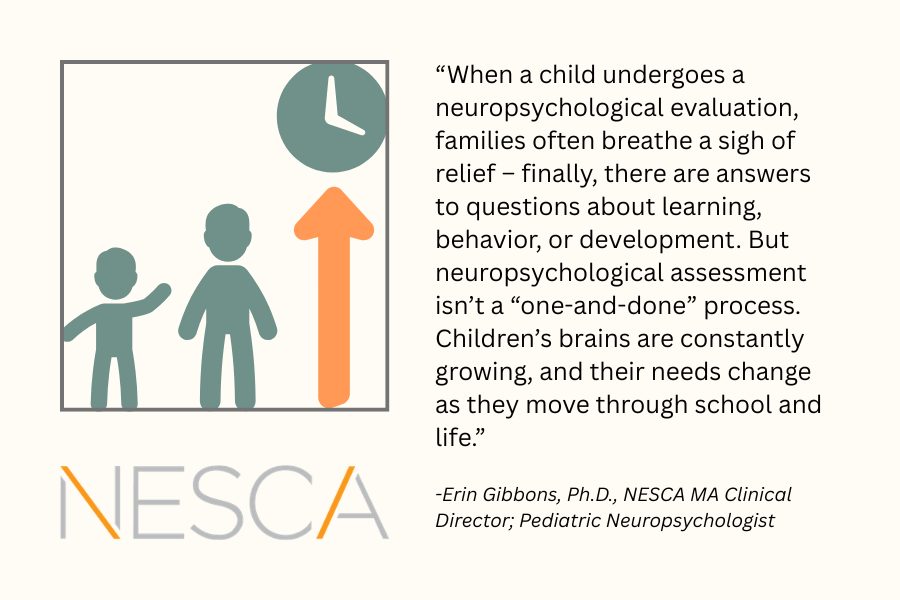
When a child undergoes a neuropsychological evaluation, families often breathe a sigh of relief – finally, there are answers to questions about learning, behavior, or development. But neuropsychological assessment isn’t a “one-and-done” process. Children’s brains are constantly growing, and their needs change as they move through school and life. That’s why follow-up evaluations are a crucial part of a family’s journey.

Why Is Follow-up Important?

  1. Children Change! Unlike adults, children’s brains are still developing. Skills like attention, memory, and executive function can improve or shift dramatically as kids mature. A child who struggles with reading in first grade may have different needs by fourth grade. Follow-up helps ensure recommendations stay relevant.
  2. Medical and Neurodevelopmental Conditions Evolve Developmental disabilities such as ADHD or autism may impact a child differently as they age. Some challenges become less pronounced, while others may surface later. Regular assessment helps families and providers spot these changes early and tailor services accordingly.
  3. School Demands Increase As children progress through school, academic and social expectations rise. What worked in elementary school may not be enough in middle or high school. Follow-up assessments help tailor services to new environments and demands.
  4. Interventions Need Adjustment Therapies, accommodations, and strategies should be reviewed periodically. Follow-up evaluations provide data to refine interventions, ensuring they are effective and appropriate.

What Does a Follow-up Look Like?

  • Consult Sometimes a short check-in is enough. A clinician can review recent progress reports, meet with families, and ensure that things are on the right track.
  • Academic Re-evaluation For some students, academic progress is the primary concern, whereas other areas (e.g., social skills, motor skills, emotional self-regulation) are less concerning. To ensure that your child is making appropriate academic gains, an academic re-evaluation can be critical. These are typically scheduled 6-12 months after interventions have been initiated.
  • Full Re-evaluation A complete re-evaluation might be necessary in order to monitor progress across domains and evaluate the effectiveness of current treatment. Schools must evaluate students with IEPs every 3 years. Many families use a similar timeline for independent evaluations.

The Takeaway

A quality neuropsychological evaluation is about more than a single snapshot in time. There needs to be a process of understanding, supporting, and celebrating each child’s unique journey. Follow-up evaluations empower families and professionals to provide the right help, at the right time, so children can thrive.


About the Author

Since 2011, Dr. Gibbons has been a trusted expert at NESCA where she evaluates children presenting with a range of attentional, learning,Erin Gibbons headshot and developmental disabilities. She has a particular interest in children with autism spectrum disorders, intellectual disabilities, and those with complex medical histories. In addition, she evaluates adults who have concerns about whether they meet criteria for an ASD or ADHD diagnosis.

If you are interested in booking an evaluation with a NESCA neuropsychologist/clinician, please fill out and submit our online intake form

NESCA is a pediatric neuropsychology and related services practice with offices in Newton, Hingham, and Plainville, Massachusetts; Londonderry, New Hampshire; and Coral Gables, Florida, serving clients from preschool through young adulthood and their families. For more information, please email info@nesca-newton.com or call 617-658-9800.
Student struggling in school

When Capable Children Struggle

By | NESCA Notes 2026

Student struggling in schoolBy NESCA Neuropsychology Clinical Staff

Understanding the Gap Between Intelligence and Performance

“I know my child is smart.” This is something parents sometimes say to me with both confidence and confusion.

During intake meetings, parents describe their children to me as being able to grasp complex ideas, ask thoughtful questions, and often seem to understand more than their schoolwork shows. Yet school feels harder than it should. Assignments take too long, work is inconsistent, focus slips under pressure, and emotions rise quickly when tasks become demanding.

Over time, a gap becomes visible where intelligence is clear, but performance does not consistently reflect it. Understanding that gap requires looking beyond intelligence alone.

Intelligence Is Only Part of the Picture

Intelligence reflects the ability to reason, understand concepts, and make connections. It is an important foundation.

Performance reflects how intelligence interacts with other essential skills, such as attention, language, memory, organization, emotional control, and follow-through. When one or more of these areas is strained, a child may know the material yet struggle to show it consistently.

Sometimes attention drifts. Sometimes reading or writing requires more effort than it appears. Sometimes instructions are harder to hold in mind. Sometimes frustration rises quickly when work feels open-ended. Often, it is not one issue. It is the interaction among several of these areas.

Intelligence and performance are not the same thing.

Why It Often Becomes More Noticeable Over Time

In the early years, structure is built in, tasks are shorter, and teachers provide frequent guidance. As children grow older, expectations shift, and assignments become longer and less structured. Organization is assumed, and independence is expected. As demands increase, underlying vulnerabilities become harder to compensate for. The child’s intelligence has not changed, but the demands have.

What Happens When Demands Rise

Academic tasks require coordination. A child must sustain attention, organize ideas, remember instructions, manage frustration, and monitor accuracy – often at the same time. When any part of that system is stretched, patterns shift, work slows down, mistakes increase, focus drops, frustration intensifies, and often voidance or shutdown follows.

These reactions are not signs of limited ability; they are often signs that demands are exceeding capacity in one or more areas. That distinction matters. It shifts the question from “Why aren’t they trying?” to “What is making this harder right now?”

When Structure Helps…and When It Doesn’t

Some children appear steady in structured settings but struggle during independent work. External support can temporarily reduce strain. But when that support is reduced, inconsistencies become more visible. Without context, this can feel confusing; however, with a broader understanding, it often makes sense.

A Broader View

Looking only at intelligence can leave the picture incomplete. Considering how intelligence interacts with attention, learning processes, language, emotional patterns, and self-management brings greater clarity. Children and students are not simply performing or underperforming. Instead, they are navigating a complex interaction of strengths and vulnerabilities within changing demands. Understanding that interaction allows parents and educators to respond with greater clarity and thoughtfulness.

My Approach

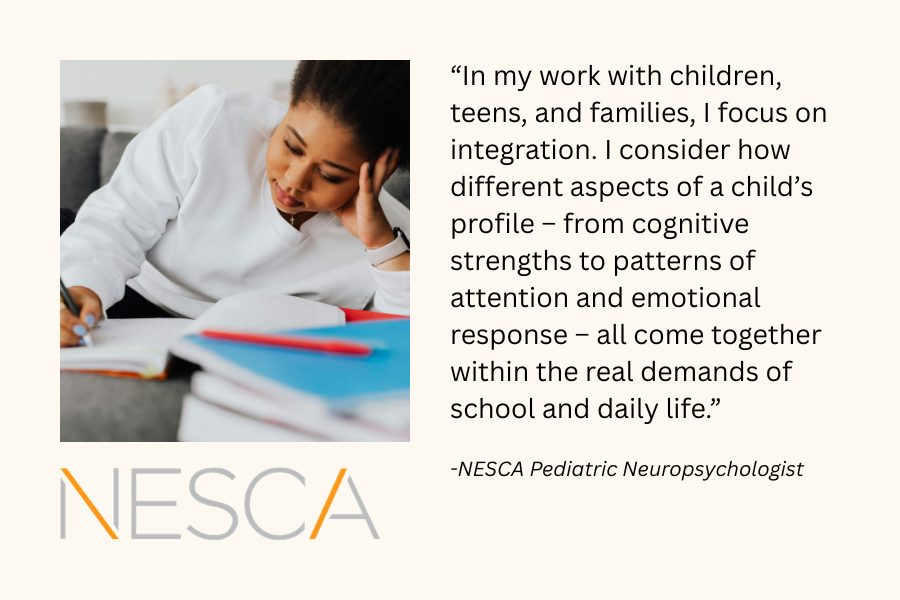
In my work with children, teens, and families, I focus on integration. I consider how different aspects of a child’s profile – from cognitive strengths to patterns of attention and emotional response – all come together within the real demands of school and daily life.

My goal is not to simplify difficulty to a single cause, but to clarify patterns. When these interactions are understood, conversations shift. Blame decreases, and direction becomes clearer.

Clarity does not eliminate challenges. It does, however, replace confusion with understanding, which helps adults respond in ways that are steadier, more precise, and better aligned with their child or student.

To book a neuropsychological evaluation, complete NESCA’s online intake form

NESCA is a pediatric neuropsychology and related services practice with offices in Newton, Plainville, and Hingham, Massachusetts; Londonderry, New Hampshire; and Coral Gables, Florida, serving clients from infancy through young adulthood and their families. For more information, please email info@nesca-newton.com or call 617-658-9800.

Child saying no

Understanding the Pathological Demand Avoidance (PDA) Conversation

By | NESCA Notes 2026

Child saying noBy: Rebecca Dautoff, Psy.D.
Pediatric Neuropsychologist, NESCA

Pathological Demand Avoidance (PDA) is a term that has sparked both interest and debate within the autism community and among professionals. While some families and clinicians find the concept meaningful, it remains a debated and not formally recognized profile within current diagnostic frameworks.

First described by British psychologist Elisabeth Newson in the 1980s and formally introduced in a 2003 research paper, PDA was proposed as a way to identify a group of children who did not fit the prevailing definitions of autism at that time. Instead, these children shared a key characteristic: a persistent and marked resistance to everyday demands. Since then, researchers and clinicians have suggested variations to this list, but the core descriptions have remained largely consistent.

The most commonly cited core features of PDA include:

  • Resisting and avoiding the ordinary demands of life: This resistance is continual and can be seen in daily routines, requests, or expectations.
  • Using social strategies (e.g., excuses or negotiation) as forms of resistance to avoid demands.

Other proposed characteristics include:

  • Appearing sociable, but experiencing differences in social understanding (such as recognizing social and family hierarchies);
  • Experiencing intense mood swings and impulsivity;
  • Appearing comfortable in role play; and
  • Displaying dedicated and focused interests, often centered on other people.

It’s important to note that historically, descriptions of PDA have used language associated with the “deficit model” of autism vs. a strengths-based perspective. Many now consider such language outdated and prefer terminology that recognizes the diversity of neurodevelopmental profiles without pathologizing difference.

While demand avoidance, especially when accompanied by social strategies, is widely recognized as a characteristic observed in some individuals, research has not yet provided strong evidence for the full group of traits proposed for PDA. Because of the current lack of research, PDA is not recognized as a clinical diagnosis in major U.S. or international medical manuals, such as the ICD or DSM. Although PDA is not a formal diagnosis recognized by the DSM, some individuals receive a diagnosis of autism with a “demand avoidant profile” or even a “PDA profile” noted. Others may self-identify with the PDA label and as a “PDAer.” There is also discussion about the terminology itself, with some objecting to the word “pathological,” preferring alternatives like “Persistent Drive for Autonomy.”

At NESCA, we focus less on labels and more on understanding the underlying drivers of a child’s behavior, such as anxiety, cognitive flexibility, sensory sensitivities, and social-emotional development,so that supports and recommendations can be individualized and clinically grounded, regardless of the terminology used.

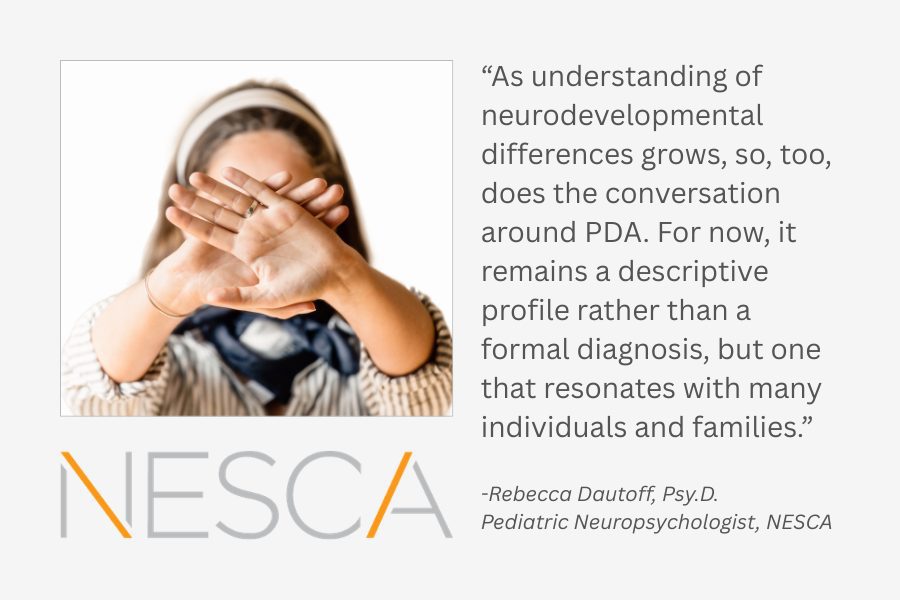
As understanding of neurodevelopmental differences grows, so, too, does the conversation around PDA. For now, it remains a descriptive profile rather than a formal diagnosis, but one that resonates with many individuals and families. Continued research and open dialogue are essential to better understand the experiences of this population and to ensure that support and language reflect their needs and perspectives.


About the Author

Dr. Rebecca Dautoff provides comprehensive neuropsychological and psychological (projective) evaluation services for children, adolescents,Headshot of Rebecca Dautoff, Psy.D. and young adults who have complex presentations with a wide range of concerns, including attention deficit disorders, psychiatric disorders, intellectual disabilities, and autism spectrum disorders (ASD). She also values collaboration with families and outside providers to facilitate supports and services that are tailored to each child’s specific needs.


If you are interested in booking an appointment for an evaluation with Dr. Dautoff or another NESCA neuropsychologist/clinician, please fill out and submit our online intake form


NESCA is a pediatric neuropsychology and related services practice with offices in Newton, Plainville, and Hingham, Massachusetts; Londonderry, New Hampshire; and the Coral Gables, Florida, serving clients from infancy through young adulthood and their families. For more information, please email info@nesca-newton.com or call 617-658-9800.

Image of a student being testing in school

When School-based Testing Is Not Enough

By | NESCA Notes 2026

Image of a student being testing in schoolBy: Sean Hyde O’Brien, Psy.D., ABPdN 
Pediatric Neuropsychologist, NESCA

Often when a child is struggling at school — whether related to academic, behavioral, or social-emotional functioning — they may be referred for testing by a member of their educational team (often at the parents’ request). Such testing can include psychological, educational, speech-language, occupational, and physical therapy assessments conducted by qualified school personnel, as well as more specialized transition, functional/adaptive behavioral, and autism-related assessments. These evaluations are generally conducted to determine a student’s eligibility for special education services, identify appropriate supports, and establish goals to monitor progress.

In many cases, school-based testing is sufficient to meet the needs of the student and family by facilitating access to services and supports. However, there are situations in which school-based testing may not be sufficient on its own:

Need for a Clinical Diagnosis
School evaluations are designed to determine eligibility for special education services under educational categories (e.g., “Health Impairment,” “Specific Learning Disability,” or “Sensory Impairment”), rather than to establish diagnoses for medical or treatment purposes. When a formal diagnosis is needed to guide treatment, medication decisions, or access to private insurance-based services, a neuropsychological evaluation may be necessary.

Complex or Co-occurring Issues
Neuropsychological evaluations are designed to integrate information across multiple domains, offering a more comprehensive understanding of the student as a whole.

Disagreement with School Findings
If parents have concerns about the conclusions or recommendations from a school evaluation, they may pursue an Independent Educational Evaluation (IEE) or seek private testing with a neuropsychologist to obtain an additional perspective.

Evaluation of Non-academic Concerns
Concerns such as anxiety, depression, trauma, or family stressors — which can significantly affect learning — may fall outside the primary scope of school-based testing and may be more fully explored through a comprehensive neuropsychological evaluation.

Legal or Eligibility Requirements
Certain services, accommodations, or agencies (such as Social Security Disability benefits, specific therapies, or independent schools) may require documentation or diagnoses from a licensed clinical provider. Neuropsychologists are licensed psychologists with specialized doctoral and post-doctoral training in brain-behavior relationships who can provide this type of documentation when needed.

In summary, school-based testing is often a valuable and important first step in understanding a child’s needs within the educational setting. In some cases, however, a comprehensive neuropsychological evaluation can provide additional insight into a student’s profile as well as medical documentation needed to access a variety of services.


About the Author

Dr. Sean O’Brien has been providing comprehensive neuropsychological evaluations in the GreaterSean Hyde O'Brien Boston area since 2006. He specializes in the assessment of children and adolescents who present with a wide range of developmental conditions, such as  Attention-Deficit/Hyperactivity Disorder, Specific Learning Disorder (reading, writing, math), Intellectual Disability, and Autism Spectrum Disorder; as well as children whose cognitive functioning has been impacted by medical, psychiatric, and genetic conditions. He also has extensive experience working with children who were adopted both domestically and internationally.

To schedule an appointment with one of NESCA’s neuropsychologists, please complete our online intake form

NESCA is a pediatric neuropsychology practice and integrative treatment center with offices in Newton, Plainville, and Hingham, Massachusetts; Londonderry, New Hampshire; the greater Burlington, Vermont region; and Coral Gables, Florida, serving clients from infancy through young adulthood and their families. For more information, please email info@nesca-newton.com or call 617-658-9800.

Unbiased Does Not Mean Uninformed

By | NESCA Notes 2026

By Angela Currie, Ph.D.

NH Clinical and Operational Director; Pediatric Neuropsychologist; PSYPACT-authorized

Families often come to NESCA after a long journey through previous evaluations, diagnoses, and educational plans, sometimes feeling frustrated or misunderstood. When seeking a new neuropsychological evaluation, it is common for parents to hope for a “clean slate.” Understandably, some request that we not review prior reports, IEPs, or teacher input, worrying that this information will bias our perspective or simply repeat what’s been said before.

This desire for objectivity is completely valid. If you disagreed with a previous diagnosis or felt that earlier testing missed the mark, it’s natural to want the new evaluator to approach your child or teen without any preconceived notions. However, it is important to understand that unbiased does not mean uninformed¸ and, in fact, review of previous documents and school input is a critical component of a fresh perspective and comprehensive evaluation.

Why Background Information Matters

A comprehensive neuropsychological evaluation is much more than a set of test scores – it is a synthesis of data, history, observation, and context. Reviewing previous reports, IEPs, and teacher feedback is not about accepting others’ conclusions at face value. Rather, it allows the evaluator to:

  • Understand the full picture: Seeing how strengths and challenges evolve over time helps identify patterns, progress, and trajectories, rather than isolated moments in time.
  • Spot gaps and inconsistencies: Previous testing may have missed key areas of possible concern or used measures that just scratch the surface. Knowing what was done helps the evaluator focus on what still needs to be explored.
  • Avoid unnecessary repetition: There are many measures that should not be repeated within a given timeframe, so it is important to know what to avoid. Knowing recent scores also allows the evaluator to avoid unnecessary redundancy and dig deeper into other skills.
  • Clarify and explain differences: If a previous diagnosis or past recommendations are not supported, the evaluator can integrate previous information into a bigger picture explanation for why a shift in perspective is supported.
  • Address discrepancies in presentation across settings: Often times disagreements between families and schools can result from the fact that children and teens may present differently across settings. Integrating teacher input is critical for determining if concerns are consistent across settings or if the client is working hard to compensate and “look good.”
  • Support IEP development and special education due process: Evaluations that lack integration of school records and input are much more likely to be rejected by the IEP team, as they do not provide a complete picture of the child’s functioning. They are also more likely to be viewed as lacking in credibility should the family proceed with special education due process.

Building Trust Through Transparency

Our role as neuropsychologists is to provide an assessment that is both thorough and fair. We approach each client with fresh eyes, critically evaluating all available information. Reviewing past reports allows us to be confident in our conclusions and build on what is already known. This allows for greater clarity and better advocacy for the client’s unique needs. By blending past information with new observations and data, we can provide the most accurate, insightful, and actionable recommendations possible.

If you have questions about how background information is used in our evaluations, please reach out. At NESCA, we believe that true objectivity comes from being informed and that every client deserves an evaluation that tells their whole story.


About the Author

Dr. Currie specializes in evaluating children, teens, and young adults with complex profiles, working to tease apart the various factors lending to their challenges, such as underlying learning, attentional, social, or emotional difficulties. She particularly enjoys working with the seemingly “unmotivated” child, as well as children who have “flown under the radar” for years due to their desire to succeed. She also evaluates adults for concerns regarding ASD and ADHD.


To book an evaluation with Dr. Currie or one of our many other expert neuropsychologists, complete NESCA’s online intake form. Indicate whether you are seeking an “evaluation” or “consultation” and your preferred clinician in the referral line.


NESCA is a pediatric neuropsychology and related services practice with offices in Newton, Plainville, and Hingham, Massachusetts; Londonderry, New Hampshire; greater Burlington, Vermont, and Coral Gables, Florida, serving clients from infancy through young adulthood and their families. For more information, please email info@nesca-newton.com or call 617-658-9800.

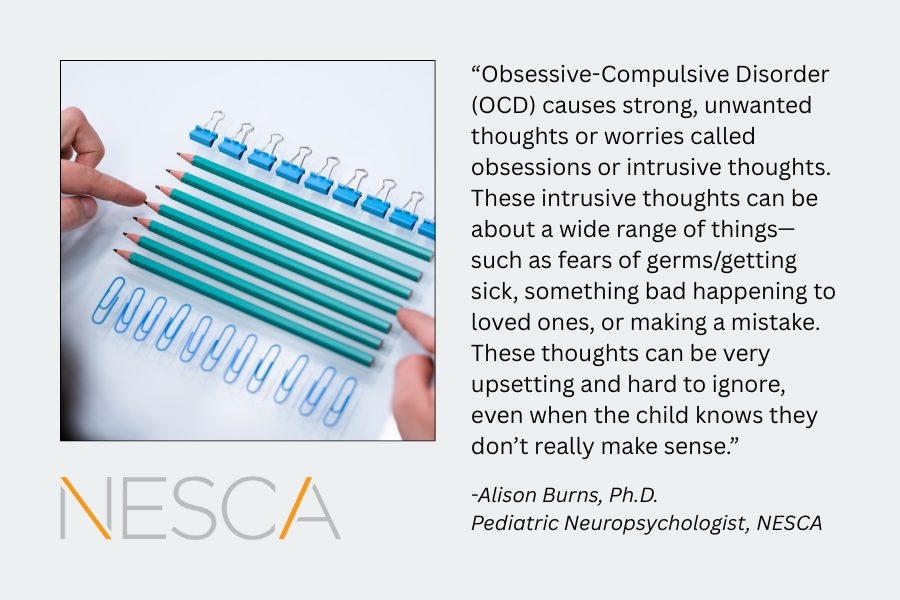
Image of pencils lined up perfectly, as a sign of OCD, along with a quote from Dr. Alison Burns

When Worry Becomes a Cycle: Understanding and Treating OCD in Children

By | NESCA Notes 2025

Image of pencils lined up perfectly, as a sign of OCD, along with a quote from Dr. Alison BurnsBy: Alison Burns, Ph.D.
Pediatric Neuropsychologist, NESCA

Obsessive-Compulsive Disorder (OCD) causes strong, unwanted thoughts or worries called obsessions or intrusive thoughts. These intrusive thoughts can be about a wide range of things—such as fears of germs/getting sick, something bad happening to loved ones, or making a mistake. These thoughts can be very upsetting and hard to ignore, even when the child knows they don’t really make sense. The anxiety caused by these intrusive thoughts can feel overwhelming and can take up a lot of mental energy.

To cope with these thoughts, children with OCD often develop compulsions—repetitive actions or mental rituals that they feel they must do to feel safe or to stop something bad from happening. These might include excessive cleaning, checking, counting, arranging items in a certain way, or asking for reassurance repeatedly. While these behaviors may temporarily relieve anxiety, they tend to reinforce the cycle of OCD and make it harder to break over time. Parents might notice their child spending a lot of time on these routines, getting very upset if interrupted, or struggling to keep up with school or social activities.

The good news is that OCD is treatable. The most effective therapy for children is a form of cognitive-behavioral therapy (CBT) called Exposure and Response Prevention (ERP), which helps them face their fears gradually while learning not to rely on compulsions. The Supportive Parenting for Anxious Childhood Emotions (SPACE) curriculum is a parent-focused program designed to help caregivers reduce accommodations of a child’s anxiety or OCD behaviors and promote healthy coping skills. Lastly, medication can also help reduce symptoms.

OCD must first be properly differentiated from other disorders that have overlapping symptoms, such as anxiety, autism spectrum disorder, or tic disorders. Anxiety disorders involve persistent worry, fear, or nervousness about real-life situations, whereas OCD is characterized by a cycle of obsessions and compulsions that the person feels compelled to perform. OCD and autism spectrum disorder can both involve repetitive behaviors or strict routines, but they differ in motivation, awareness, and broader patterns. In OCD, behaviors are driven by anxiety or fear. In autism, repetitive behaviors or routines are often comforting, sensory-driven, or based on special interests. Tics are sudden, brief, involuntary movements or vocalizations—such as blinking, throat clearing, or jerking—that are often preceded by a physical urge and relieved temporarily by performing the tic. While both tics and OCD can appear repetitive, tics are automatic and not driven by specific fears or beliefs, whereas OCD behaviors are purposeful responses to obsessive thoughts and aim to relieve anxiety. A comprehensive neuropsychological assessment will utilize a combination of interviews, observations, and standardized tools to understand the nature and impact of symptoms to ensure an accurate diagnosis and treatment plan.


About the Author

Dr. Burns conducts comprehensive evaluations of school-aged children, adolescents, and young adults with a variety of developmental, learning, and emotional difficulties. She has expertise in the evaluation of individuals following a concussion/mild traumatic brain injury and particularly enjoys working with individuals with attention (ADHD) and executive functioning (EF) difficulties. Dr. Burns is passionate about helping individuals and their families better understand their areas of strength and weakness and provides tailored treatment recommendations based upon that unique profile to make the evaluation most helpful for each client.

To book a consultation with Dr. Burns or one of our many other expert neuropsychologists, complete NESCA’s online intake form.

NESCA is a pediatric neuropsychology practice and integrative treatment center with offices in Newton, Plainville, and Hingham, Massachusetts; Londonderry, New Hampshire; the greater Burlington, Vermont region; and Coral Gables, Florida, serving clients from infancy through young adulthood and their families. For more information, please email info@nesca-newton.com or call 617-658-9800.

child with FASD and parent

Often Overlooked: Recognizing and Supporting Children with Fetal Alcohol Spectrum Disorder

By | NESCA Notes 2025

child with FASD and parentBy NESCA Pediatric Neuropsychologist

One of the reasons I joined the NESCA team was for the opportunity to continually learn and grow professionally. NESCA has a well-earned reputation for fostering an environment where clinicians can expand their knowledge and refine their skills in meaningful ways, and a session I was able to attend for our staff earlier this year was a perfect example of that.

I attended an insightful seminar on Fetal Alcohol Spectrum Disorder (FASD), a topic that is often overlooked yet critically important in neuropsychological practice. The presentation provided clinically relevant information and tools to better recognize and address this condition.

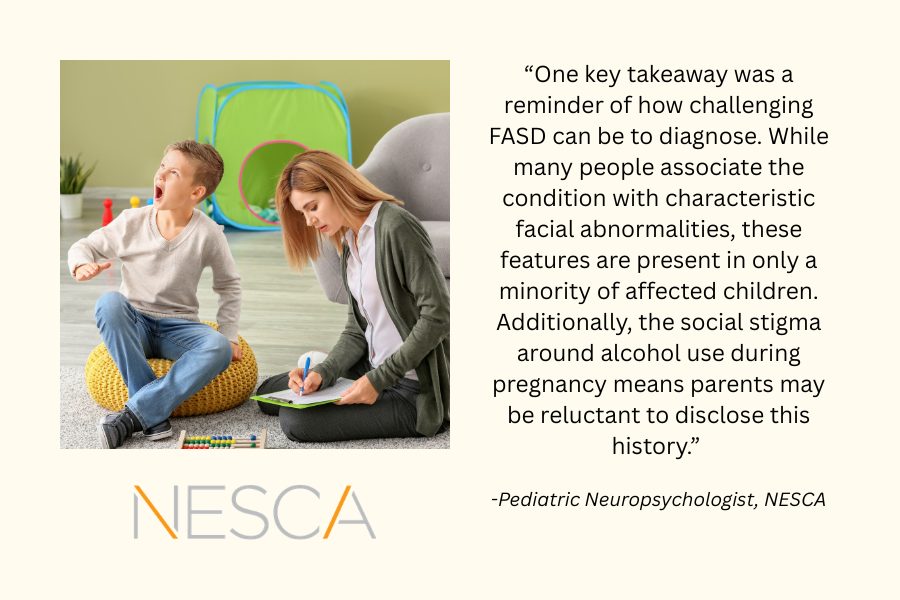
One key takeaway was a reminder of how challenging FASD can be to diagnose. While many people associate the condition with characteristic facial abnormalities, these features are present in only a minority of affected children. Additionally, the social stigma around alcohol use during pregnancy means parents may be reluctant to disclose this history. This can make it easy to miss the diagnosis, particularly in children who present with behavioral or learning challenges that could be attributed to other conditions.

Hallmark symptoms of FASD include executive functioning deficits (e.g., working memory), poor impulse control, difficulties with generalization (people, situations, consequences), difficulties with abstraction, perseverations, and diminished adaptive skills within the context of healthy levels of intellect.

The seminar emphasized why making an accurate diagnosis is so critical: It directly informs how we approach treatment, including how we assist families in accessing services, setting realistic expectations for the child, diminishing the risk of the child receiving inappropriate diagnoses (e.g., Oppositional Defiant Disorder), and assisting the child in developing stronger self-awareness and self-advocacy skills. Moreover, it is important for the adults in the child’s life, including parents and educators, to understand that behaviors that are part of the disability are not willful. Behavioral challenges in children with FASD, for example, often do not respond well to traditional behavioral programs. Instead, a trauma-informed approach is typically more effective, as it accounts for the neurodevelopmental impact of prenatal alcohol exposure and addresses the underlying emotional and regulatory difficulties these children face.

Being part of a team that prioritizes professional development, like the one at NESCA, means continually sharpening my skills and expanding my understanding to better serve the children and families we work with. The FASD seminar was not only a great learning experience but also a reminder of the importance of staying open to complex diagnoses and tailoring treatment plans to meet the unique needs of each child.

To book a neuropsychological evaluation at NESCA, complete NESCA’s online intake form

NESCA is a pediatric neuropsychology practice with offices in Newton, Plainville, and Hingham, Massachusetts; Londonderry, New Hampshire; and the greater Burlington, Vermont region, serving clients from infancy through young adulthood and their families. For more information, please email info@nesca-newton.com or call 617-658-9800.

Image of a child doing an obstacle course and a quote by Julie Weieneth, Ph.D.

Summer Treatment Ideas for Children with ADHD

By | NESCA Notes 2025

Image of a child doing an obstacle course and a quote by Julie Weieneth, Ph.D.By: Julie Weieneth, Ph.D.
Pediatric Neuropsychologist, NESCA

For many families with children who have ADHD, the end of the school year brings both relief and anxiety. While the break is welcome, the sudden loss of routine can be daunting, leading to unstructured days and endless requests for screen time. But what if this summer could be different? The season’s freedom presents a powerful opportunity to build new skills, strengthen family bonds, and explore creative ways to manage ADHD symptoms. To help you begin, we have gathered summer treatment and planning ideas for every age, including preschoolers, elementary schoolers, middle schoolers, and young adults preparing for college. If any of these ideas resonate with you, try one out this summer and let us know how it goes. We would love to share your experiences with other families!

Preschool (Ages 3-5)

For the little ones, learning through play and interaction is key.

  1. Parent-Child Interaction Therapy (PCIT): PCIT is a hands-on approach that helps parents build better relationships with their kids using play and clear discipline strategies, with real-time coaching from a therapist. It focuses on boosting positive behaviors and reducing the tough ones to create a happier home life. For more information, check out PCIT.org or reach out to NESCA for provider recommendations.
  2. Occupational Therapy (OT): OT can support young children with ADHD by targeting sensory processing, self-regulation, and fine motor skills.
  3. Academic Readiness through Play: Head to a local craft, school supply, or thrift store, or a learning store, like Lakeshore Learning, to find games and activities that build fine motor skills, counting, sorting, and creativity. Here are some additional fun ideas to try out:
    • Treasure Hunts: Create simple treasure hunts with clues to improve attention, focus, and listening skills.
    • Storytime with Puppets: Use puppets to act out stories, encouraging participation and retelling to boost language skills.
    • Craft Projects: Try out different crafts involving cutting, gluing, and coloring to strengthen fine motor skills and creativity.
    • Obstacle Courses: Set up indoor or outdoor courses to enhance physical coordination and follow instructions. If you have an older sibling, get them involved in setting up and running the obstacle course.
    • Cooking Together: Involve your child in cooking simple recipes to improve focus, following directions, and fine motor skills.
    • Memory Games: Play memory games with cards or objects to boost attention and recall.
    • Building Challenges: Use blocks or LEGO sets to encourage planning and problem-solving.
    • Dance and Movement Games: Play games, like freeze dance or follow-the-leader, to help with self-regulation and listening skills.

Elementary School (Ages 6-10)

Kids in this age group thrive with structured activities that enhance social skills and organization.

  1. Behavioral Therapy: Enroll your child in therapy sessions targeting goals including impulse control and organization.
  2. ADHD Summer Camps and Social Skills Groups: These camps/group programs offer structured environments tailored for kids with ADHD, focusing on social skills, self-esteem, and executive functioning.
  3. Bibliotherapy or Self-Help: Summer is a great time to read books on parenting children with ADHD, like “Taking Charge of ADHD” by Russell A. Barkley. There are also many children’s books, such as “The Secret Superpowers of ADHD” by Jennifer Everly. Explore resources on CHADD and ADDitude for more ideas.

Middle School (Ages 11-13)

As your child enters adolescence, focus on fostering independence and self-awareness.

  1. Cognitive Behavioral Therapy (CBT): CBT helps middle schoolers learn strategies to manage impulsivity and improve attention, with summer sessions focusing on real-life situations, such as managing social conflict and academic stress.
  2. Mindfulness and Relaxation Techniques: Introduce mindfulness practices –  meditation or yoga – to improve focus and reduce stress. Many apps can help integrate these into daily routines.
  3. Volunteer Opportunities: Encourage community service projects to boost self-esteem, teach life skills, and reinforce social skills and early vocational skills.

Young Adults Transitioning to College/Vocational Endeavors (Ages 14-18)

For these young adults, it is all about preparing for college or vocational work, and managing academic, social, and daily living demands more independently.

  1. Executive Function Coaching: Consider hiring a coach to work on time management, organization, and goal setting, which are key skills for college and career success. NESCA offers transition-related assessments and coaching services tailored to transition-age youth. Explore NESCA Transition Services to help determine if college or a different path is right for you, and NESCA Coaching Services to build and practice skills that will be needed for all future paths.
  2. Medication Management: Check in with your healthcare provider to review medications and make any necessary changes before college starts. Learn more about what they are, what they are for, how to refill them, and when a new prescription is needed.
  3. Transition Workshops and College Immersion Programs: Look for workshops or programs that focus on transitioning to college or postsecondary life, covering self-advocacy, stress management, academic strategies, and social problem-solving.
  4. Updated Neuropsychological Evaluation: Ensure updated testing within three years of starting college or work to receive accommodations. If you have relied on accommodations in high school, have a support plan in place before your first college semester in order to ensure your success. Get to know more about on-campus resources to support you. If you are interested in learning about neuropsychological evaluations, please check out our website or contact us by filling out an Intake Form for more information.

We hope that you have a relaxing, fun, and rewarding summer! Feel free to reach out with any questions or concerns, or if you have any additional ideas to share with the NESCA community!


About the AuthorJulie Weineth headshot

Dr. Weieneth is a licensed clinical psychologist who has worked with children and families with complex diagnostic and treatment needs for the last twenty years. Her areas of specialty include ADHD, autism spectrum disorders, anxiety, mood disorders, learning disabilities, executive functioning, and school-related challenges. That being said, Dr. Weieneth also understands that not all individuals fit cleanly into diagnostic groups or labels. Her goals for each evaluation are to help families feel comfortable with the process, use all the tools available to best understand each individual’s unique strengths and needs, and to write a clear and comprehensive report that will guide educational and treatment planning.

To book a consultation with Dr. Weieneth or one of our many other expert neuropsychologists or other clinicians, complete NESCA’s online intake form.

NESCA is a pediatric neuropsychology practice and integrative treatment center with offices in Newton, Plainville, and Hingham, Massachusetts; Londonderry, New Hampshire; the greater Burlington, Vermont region; and Brooklyn, New York (coaching services only) serving clients from infancy through young adulthood and their families. For more information, please email info@nesca-newton.com or call 617-658-9800.

Inattentive student image and quote from Dr. Alison Burns

To Test or Not to Test (for ADHD)?

By | NESCA Notes 2025

Inattentive student image and quote from Dr. Alison BurnsBy: Alison Burns, Ph.D.
Pediatric Neuropsychologist, NESCA

Attention Deficit/Hyperactivity Disorder (ADHD) is a neurodevelopmental disorder that is characterized by difficulty with sustained attention, hyperactivity, and/or impulsivity. Some kids mostly have difficulty with attention (referred to as ADHD, Predominantly Inattentive Presentation, formerly called ADD), some kids mostly have symptoms of hyperactivity and impulsivity (referred to as ADHD, Predominantly Hyperactive-Impulsive Presentation), and some kids have difficulty with both attention and hyperactivity/impulsivity (referred to as ADHD, Combined Presentation).

The diagnosis of ADHD can be very straightforward for a subset of children. These kids may demonstrate highly impairing, overt symptoms of ADHD, often from a young age. These children tend to have symptoms of hyperactivity and impulsivity that are quickly noted by parents and preschool or kindergarten teachers. This group of children may appear as if they are driven by a motor or always on the go, and they have trouble paying attention within a very short period of time. The diagnosis of ADHD for this subset of children is frequently made by a pediatrician after parents and teachers complete a questionnaire (often the Vanderbilt Assessment Scale) and the child scores above a certain threshold.

However, the larger majority of children exhibit symptoms of inattention, hyperactivity, and impulsivity that are not as overt or clear cut. This may present as a lack of focus for certain tasks or in certain situations, daydreaming or distractibility, poor attention to detail or rushing through work, talking constantly, or fidgeting. Parent and teacher questionnaires may show levels of inattention and hyperactivity/impulsivity that are above the threshold, but this subset of children would greatly benefit from testing to confirm the diagnosis. That is because there are many other reasons why a child may be distracted, inattentive, rush through their work, not start a task independently, fidget, or chat excessively. Here are a few examples:

  • A child with anxiety may be distracted because they are focused on their worries (e.g., “I forgot to study for my next period’s test!” “What if people laugh at me when it’s my turn to read aloud?”). They may rush through their work because they are worried about completing the test in the allotted time period or have trouble starting a task as they “freeze.” They may fidget or talk excessively when feeling nervous.
  • A child with a learning disability may zone out or appear distracted when they are having trouble understanding a concept or completing an assignment. They may get bored or frustrated and begin to move around in their seat, and they may rush through their work to get it done as quickly as possible out of embarrassment. They may also have trouble starting a task independently as they do not know how to complete the work.
  • A child with a language disorder may become inattentive and distracted when they cannot understand what the teacher is saying. They may become fidgety and “check out,” and they may not start tasks independently as they did not understand the task instructions.

These example children (a child with ADHD, anxiety, a learning disability, and a language disorder) may all present in a similar fashion, with the same behaviors endorsed on a questionnaire (e.g., does he have trouble paying attention? Is he fidgety or restless?). But the reasons why these behaviors are occurring are fundamentally different. Making an accurate diagnosis is critical to getting the right treatment plan in place. We would not want to treat a child with a stimulant medication if the underlying cause of inattention is a language disorder, just as we would not recommend speech and language therapy for a child with ADHD (without language issues).

This is where testing comes into play. A neuropsychological assessment is an excellent tool for teasing out the underlying root cause behind the surface symptoms. A comprehensive neuropsychological assessment, such as the ones done at NESCA, assesses a child’s intellectual ability, academic skills (e.g., reading, writing, math), expressive and receptive language skills, visual-spatial skills, learning and memory style, fine motor skills, attention and executive functioning, social-emotional well-being, and adaptive living skills. This breadth and depth of testing can help to rule out alternative explanations and ensure that attention difficulties are truly caused by ADHD.

Testing also allows us to compare a child’s performance on testing to a sample of children the same age. This objective information is considered along with a host of other information (e.g., history given by the parents/caregivers, record review, questionnaires completed by parents and teachers, behavioral observations during testing). This comprehensive evaluation provides a great deal of information and increases the likelihood of an accurate diagnosis and effective treatment plan.


About the Author

Dr. Burns conducts comprehensive evaluations of school-aged children, adolescents, and young adults with a variety of developmental, learning, and emotional difficulties. She has expertise in the evaluation of individuals following a concussion/mild traumatic brain injury and particularly enjoys working with individuals with attention (ADHD) and executive functioning (EF) difficulties. Dr. Burns is passionate about helping individuals and their families better understand their areas of strength and weakness and provides tailored treatment recommendations based upon that unique profile to make the evaluation most helpful for each client.

To book a consultation with Dr. Burns or one of our many other expert neuropsychologists, complete NESCA’s online intake form.

NESCA is a pediatric neuropsychology practice and integrative treatment center with offices in Newton, Plainville, and Hingham, Massachusetts; Londonderry, New Hampshire; the greater Burlington, Vermont region; and Brooklyn, New York (coaching services only) serving clients from infancy through young adulthood and their families. For more information, please email info@nesca-newton.com or call 617-658-9800.

Image of a stressed out teenager along with a quote from Julie Weieneth, Ph.D..

Is This Stress or Something More?

By | NESCA Notes 2025

Image of a stressed out teenager along with a quote from Julie Weieneth, Ph.D..By: Julie Weieneth, Ph.D.
Pediatric Neuropsychologist, NESCA

Understanding ADHD, Anxiety, Depression, and Typical Adolescent Development

As both a neuropsychologist and a parent, I see firsthand how challenging academic and social pressures can be for teenagers. Like many parents, I sometimes wonder whether my own teen’s struggles are just part of growing up or if they might signal something more serious, such as ADHD, anxiety, or depression. From my clinical perspective, recognizing the difference is crucial. Early intervention not only supports long-term success but can also help prevent more persistent issues in the future.

Why It Can Be Hard to Tell

Many symptoms, such as difficulty concentrating, mood swings, irritability, and sleep problems, are common and often temporary during adolescence. However, these same concerns can sometimes point to underlying conditions. Careful observation, professional support, and sometimes a thorough evaluation are needed to truly understand what’s happening.

Signs of ADHD

  • Ongoing struggles with attention, organization, and time management in different settings
  • Frequently losing items or forgetting important things
  • Trouble staying focused on tasks that require sustained effort
  • Restlessness or fidgeting
  • Symptoms usually begin in childhood (often by age 12) and are consistent, not just a reaction to stress or specific situations

Signs of Anxiety

  • Excessive worry about school, friendships, or the future
  • Physical complaints, such as headaches or stomachaches
  • Avoidance of stressful situations, including tests or social events
  • Perfectionism and fear of making mistakes
  • Symptoms often become more noticeable during times of increased stress

Signs of Depression

  • Persistent sadness or irritability
  • Loss of interest in activities that used to be enjoyable
  • Fatigue and low energy
  • Changes in sleep or eating habits
  • Withdrawal from friends and family
  • Symptoms last for two weeks or longer and can significantly affect motivation and daily functioning

Typical Adolescent Challenges

  • Occasional procrastination or forgetfulness
  • Temporary mood swings or frustration
  • Feeling stressed before exams or social events
  • Desire for more independence and privacy
  • These concerns are usually mild, short-lived, and tend to improve with support, structure, and time

How a Neuropsychological Evaluation Can Help

A neuropsychological assessment can help clarify whether a teen’s symptoms are part of normal development or indicate a clinical concern. This process includes reviewing developmental and academic history, conducting standardized testing, and gathering input from parents, teachers, and the teen.

Ways to Support Teens Based on Their Needs

  • For ADHD, strategies such as organizational (Executive Function – EF) coaching, academic accommodations, behavioral therapy, and sometimes medication may be needed
  • For anxiety, counseling, stress management techniques, a supportive environment, and sometimes medication may be needed
  • For depression, therapy, healthy routines, and sometimes medication can make a significant difference
  • For teens experiencing more than one of these concerns, a combination of strategies and coordinated care is often most effective
  • For typical adolescent challenges, open communication, structure, and encouragement usually work well

If your teen’s difficulties persist or begin to interfere with everyday life, reaching out to a neuropsychologist can provide clarity and guidance. Early understanding and tailored support can help your teen feel better and succeed both now and in the future. If you are unsure whether your teen needs a full neuropsychological evaluation, you can schedule a consultation with a NESCA clinician who will review your concerns and help you decide how best to proceed.


About the AuthorJulie Weineth headshot

Dr. Weieneth is a licensed clinical psychologist who has worked with children and families with complex diagnostic and treatment needs for the last twenty years. Her areas of specialty include ADHD, autism spectrum disorders, anxiety, mood disorders, learning disabilities, executive functioning, and school-related challenges. That being said, Dr. Weieneth also understands that not all individuals fit cleanly into diagnostic groups or labels. Her goals for each evaluation are to help families feel comfortable with the process, use all the tools available to best understand each individual’s unique strengths and needs, and to write a clear and comprehensive report that will guide educational and treatment planning.

To book a consultation with Dr. Weieneth or one of our many other expert neuropsychologists or other clinicians, complete NESCA’s online intake form.

NESCA is a pediatric neuropsychology and related services practice with offices in Newton, Plainville, and Hingham, Massachusetts; Londonderry, New Hampshire; the greater Burlington, Vermont region; and Coral Gables, Florida, serving clients from infancy through young adulthood and their families. For more information, please email info@nesca-newton.com or call 617-658-9800.

Skip to content