NESCA’s Newton, MA location has immediate availability for neuropsychological evaluations. Our MA clinicians specialize in the following evaluations: Neuropsychological; Autism; and Emotional and Psychological, as well as Academic Achievement and Learning Disability Testing.

Visit www.nesca-newton.com/intake for more information or to book an evaluation.

Tag

speech language therapy Archives - NESCA

Subscribe to NESCA Notes

Student trying to write despite hidden language demands

The Hidden Language Demands of Upper Elementary and Middle School

By | NESCA Notes 2022, NESCA Notes 2025

Student trying to write despite hidden language demandsBy Olivia Rogers, MA, CCC-SLP
Speech-Language Pathologist, NESCA

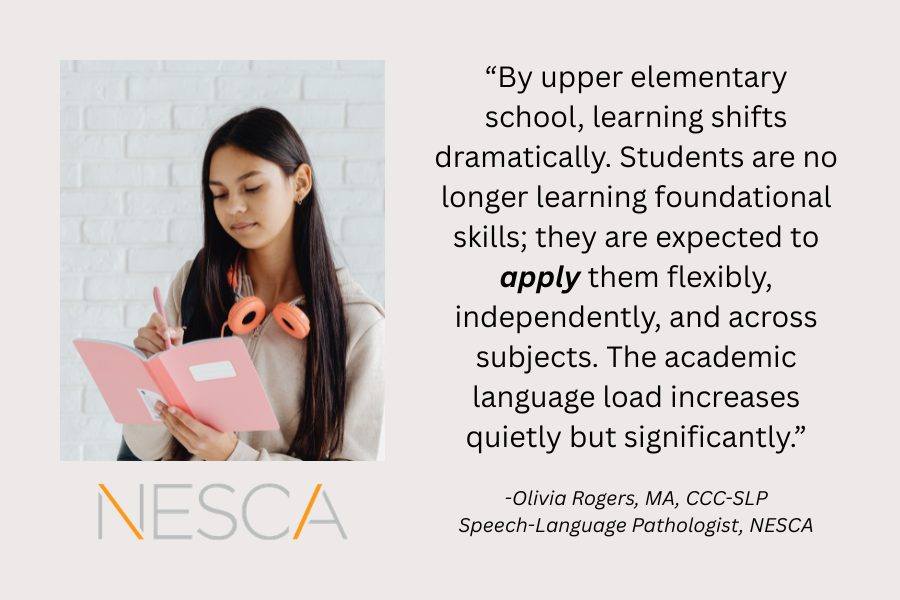
By upper elementary school, learning shifts dramatically. Students are no longer learning foundational skills; they are expected to apply them flexibly, independently, and across subjects. The academic language load increases quietly but significantly.

What Changes in Grades 4 to 7?

  • Students are reading to learn
  • Texts become denser and more abstract
  • Vocabulary shifts from concrete to conceptual
  • Sentence structures become longer and more syntactically complex
  • Students are expected to compare, analyze, justify, and synthesize
  • Writing moves from short responses to multi-paragraph compositions

The Cognitive Load Increases
Students must now hold multiple ideas in working memory, track shifting perspectives in texts, interpret figurative language, and integrate background knowledge – often simultaneously. These demands require strong executive functioning and well-developed language networks.

The Invisible Language Skills Required

  • Understanding complex sentences with embedded clauses
  • Interpreting nuanced vocabulary and morphology
  • Making inferences beyond literal meaning
  • Organizing ideas cohesively in speech and writing
  • Explaining reasoning using precise academic language

Common Signs of Strain

  • Strong verbal knowledge but weak written output
  • Short, underdeveloped written responses
  • Difficulty summarizing or explaining key ideas
  • Avoidance of reading-heavy assignments
  • Homework taking significantly longer than expected
  • Increased anxiety or shutdown around school tasks

Why This Stage Matters
Upper elementary and early middle school are pivotal years for our students. If language organization, executive functioning, and literacy systems are strengthened during this window, students often transition into higher grades with greater confidence and independence. When gaps remain unaddressed, demands compound year after year.

If This Sounds Familiar…
If your child is bright but suddenly struggling with writing, comprehension, or workload, it may not be motivation. It may be due to the increased language load. Strong academic performance is not just about effort. It’s about systems of learning. When language, executive functioning, and literacy are strengthened together, students gain not only skill, but confidence.


At NESCA, we view communication holistically. Our therapists use a comprehensive approach to treat the systems of learning as integrative, helping students develop valuable skills they can use in and out of the classroom! If you’re curious whether this integrative approach would benefit your child, I welcome the opportunity to connect to identify what targeted support may make the greatest difference. For more information on Speech and Language Therapy, Literacy, and Executive Functioning Support at NESCA, please complete our online Intake Form or email me directly at orogers@nesca-newton.com.


About the AuthorOlivia Rogers

Olivia Rogers is a licensed speech-language pathologist with experience in pediatric clinics and public schools, working with children from age 2 through young adulthood across a range of communication challenges. With a special interest in the connection between oral language and literacy, Ms. Rogers is trained in the Orton-Gillingham method and the Brain Frames program, supporting students in language comprehension, expression, and written organization. She is dedicated to making therapy engaging and personalized for each child.


To learn more about NESCA’s Speech and Language Services or schedule appointments, complete our online Intake Form or email orogers@nesca-newton.com.


NESCA is a pediatric neuropsychology and related services practice with offices in Newton, Plainville, and Hingham, Massachusetts; Londonderry, New Hampshire; and Coral Gables, Florida, serving clients from infancy through young adulthood and their families. For more information, please email info@nesca-newton.com or call 617-658-9800.
 

Teen frustrated with homework

When Effort Masks Inefficiency – The Student That Flies Under the Radar

By | NESCA Notes 2022, NESCA Notes 2025

Teen frustrated with homeworkBy Olivia Rogers, MA, CCC-SLP
Speech-Language Pathologist, NESCA

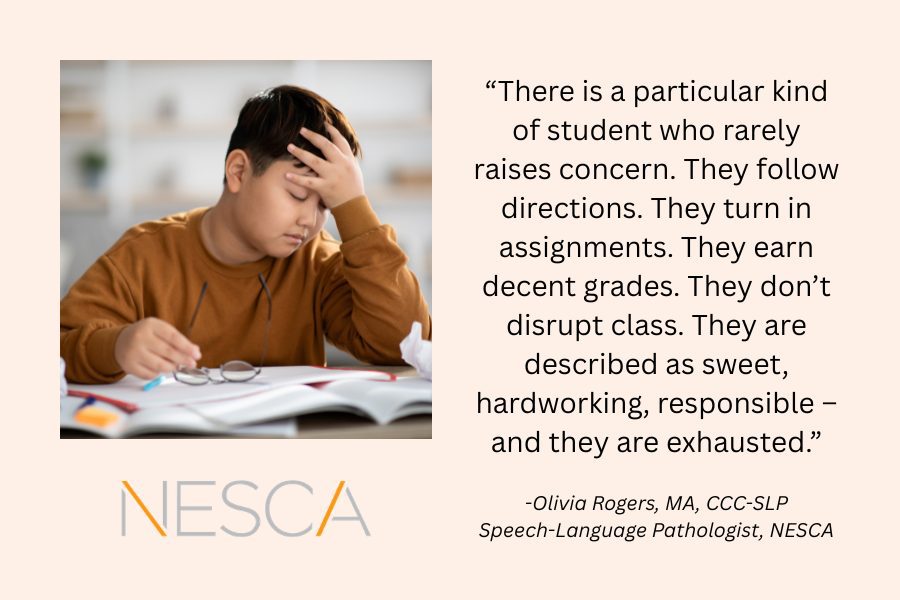
There is a particular kind of student who rarely raises concern. They follow directions. They turn in assignments. They earn decent grades. They don’t disrupt class. They are described as sweet, hardworking, responsible – and they are exhausted.

These are the students who fly under the radar. You may notice it at home before anyone else does. Homework takes hours. Writing assignments feel disproportionately heavy. Reading requires constant rereading. They erase and rewrite sentences repeatedly. They melt down at home – not at school. From the outside, everything appears fine. From the inside, everything feels effortful.

Tiered support systems are designed to identify clear gaps: measurable academic decline, benchmark concerns, noticeable skill deficits, etc. But under-the-radar students often compensate beautifully. They memorize sentence frames. They overprepare and tend to avoid risks. They rely on intelligence to mask inefficiencies and oftentimes, they meet expectations…but at a cost.

Compensation works…until it doesn’t. As academic demands increase, including longer texts, multi-paragraph essays, and independent projects, the effort curve steepens. Middle school is often when the cracks begin to show – not because the child suddenly can’t, but because the system was never optimized.

These students frequently have subtle weaknesses in:

  • Academic language processing
  • Sentence formulation flexibility
  • Discourse-level organization
  • Working memory under load
  • Cognitive flexibility
  • Idea generation efficiency

They can explain ideas verbally but struggle to organize them in writing. They understand what they read, but only after rereading. Frequently they know the answer, but tend to hesitate to share it. The issue is rarely intelligence; instead, it’s about efficiency.

Over time, this exhaustive effort can unfortunately become a student’s identity. Students begin to believe school is supposed to feel this hard. They start to internalize messages like, “I just need to try harder. I’m just slow. I’m not good at writing.” But often, they are working around systems that were never explicitly strengthened. This is not about remediation; these students are not failing. They are often highly capable.

What they need is system strengthening. When we strengthen language networks, syntactic flexibility, executive functioning integration, organizational frameworks, and generalization across contexts, tasks that once felt overwhelming become manageable.

Support does not have to begin with failure. Some of the most powerful growth happens when we intervene before burnout. An integrative model that targets language, literacy, and executive functioning together addresses the systems underneath performance, not just the performance itself.

When these systems are strengthened, families often tell us that it no longer takes three hours to do homework, that they are raising their hands to answer questions in class again, that students don’t dread writing anymore, and that everything seems to feel lighter. Strong academic performance isn’t just about effort. It’s really about the systems.

Working Smarter, Not Harder

High-functioning students don’t always need remediation. Sometimes they may need optimization. When we strengthen the underlying systems, like language organization, executive functioning integration, and discourse-level structure, effort decreases and independence increases. The goal is not to push harder; it’s about building smarter.

If your child is capable but working harder than they should be, an integrative approach focused on building foundational skills with a speech-language pathologist may provide the missing layer of support.

If you’re curious whether this integrative approach would benefit your child, I welcome the opportunity to connect to identify what kind of targeted support would make the greatest difference. For more information on Speech and Language Therapy, Literacy, and Executive Functioning Support at NESCA, please complete our online Intake Form or email me directly at orogers@nesca-newton.com.


About the AuthorOlivia Rogers

Olivia Rogers is a licensed speech-language pathologist with experience in pediatric clinics and public schools, working with children from age 2 through young adulthood across a range of communication challenges. With a special interest in the connection between oral language and literacy, Ms. Rogers is trained in the Orton-Gillingham method and the Brain Frames program, supporting students in language comprehension, expression, and written organization. She is dedicated to making therapy engaging and personalized for each child.


To learn more about NESCA’s Speech and Language Services or schedule appointments, complete our online Intake Form or email orogers@nesca-newton.com.


NESCA is a pediatric neuropsychology and related services practice with offices in Newton, Plainville, and Hingham, Massachusetts; Londonderry, New Hampshire; and Coral Gables, Florida, serving clients from infancy through young adulthood and their families. For more information, please email info@nesca-newton.com or call 617-658-9800.
 

SLP working with a student on a summer intensive program focused on speech

Seven Signs Your Child Would Benefit from a Summer Writing Intensive

By | NESCA Notes 2022, NESCA Notes 2025

SLP working with a student on a summer intensive program focused on speechBy Olivia Rogers, MA, CCC-SLP
Speech-Language Pathologist, NESCA

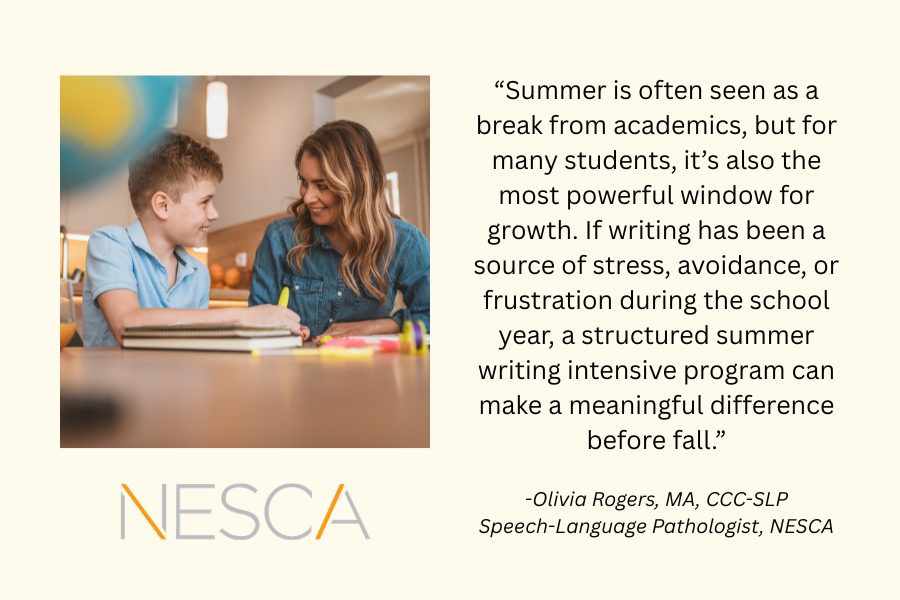
Summer is often seen as a break from academics, but for many students, it’s also the most powerful window for growth. If writing has been a source of stress, avoidance, or frustration during the school year, a structured summer writing intensive program can make a meaningful difference before fall. Here are the most common signs that a student may benefit from targeted, language-based writing support.

  1. They Have Strong Ideas. . . But Difficulty Getting Them Onto Paper
    Your child may speak clearly and express complex ideas verbally, yet struggle to translate those thoughts into written form. Pages remain blank, sentences feel short or incomplete, and written work does not reflect their true ability.
  2. Writing Takes a Long Time
    Assignments that should take 20 minutes stretch into an hour or more. Slow writing can signal challenges with planning, organization, working memory, or executive functioning fatigue.
  3. Paragraphs Lack Structure
    You may notice missing topic sentences, disconnected details, weak transitions, or repetitive ideas. These patterns often reflect underlying language organization challenges rather than simple grammar issues.
  4. Writing Causes Emotional Stress
    Avoidance, frustration, or shutdown at the mention of writing or during the writing process are common signs. When writing feels overwhelming, students often lack internal planning systems to guide them.
  5. Teacher Feedback Highlights Organization or Elaboration Concerns
    Comments such as, “needs more detail,” “ideas are unclear,” or “work lacks organization” often indicate that both language development and executive functioning need targeted support.
  6. ADHD or Executive Functioning Challenges
    Writing requires planning, working memory, inhibition, flexibility, and self-monitoring. Students with executive functioning weaknesses often benefit from explicit writing routines that reduce cognitive load.
  7. Transitioning to a New School Level
    Rising 3rd, 6th, or 9th graders face increased writing demands. Strengthening foundational systems before expectations rise can dramatically improve confidence and performance.

Why Summer Is So Effective
Without academic pressure and competing demands, students can build writing fluency, strengthen organization systems, and increase independence in a focused and supportive environment. Application can be embedded in students’ areas of interest, for added motivation. The goal of a writing intensive is not simply to be able to create “better essays.” It is reduced anxiety, stronger thinking on paper, increased independence, and systems students can carry into the fall.


At NESCA, we offer intensive summer therapy that targets both verbal communication (such as listening comprehension, expressive language, and social communication) and written expression, an area where many students struggle. For more information on summer intensives and written language support at NESCA, please complete our online Intake Form or email me directly at orogers@nesca-newton.com.


About the AuthorOlivia Rogers

Olivia Rogers is a licensed speech-language pathologist with experience in pediatric clinics and public schools, working with children from age 2 through young adulthood across a range of communication challenges. With a special interest in the connection between oral language and literacy, Ms. Rogers is trained in the Orton-Gillingham method and the Brain Frames program, supporting students in language comprehension, expression, and written organization. She is dedicated to making therapy engaging and personalized for each child.


To learn more about NESCA’s Speech and Language Services or schedule appointments, complete our online Intake Form or email orogers@nesca-newton.com.


NESCA is a pediatric neuropsychology and related services practice with offices in Newton, Plainville, and Hingham, Massachusetts; Londonderry, New Hampshire; and Coral Gables, Florida, serving clients from infancy through young adulthood and their families. For more information, please email info@nesca-newton.com or call 617-658-9800.
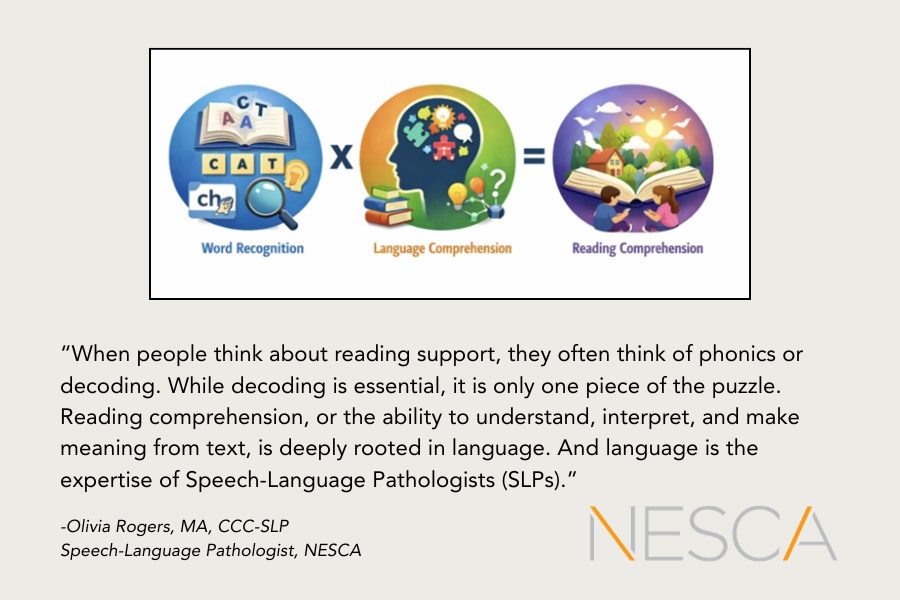
 

student writing in a notebook and quote by Olivia Rogers, SLP

Why Speech-Language Pathologists Are Uniquely Equipped to Support Written Language

By | NESCA Notes 2022, NESCA Notes 2025

student writing in a notebook and quote by Olivia Rogers, SLPBy Olivia Rogers, MA, CCC-SLP
Speech-Language Pathologist, NESCA

Written language refers to the system of communication that involves the use of written symbols to represent language, and it encompasses skills such as fluent word recognition, reading comprehension, written spelling, and written expression. It is one of the most complex academic skills students are asked to master. It requires vocabulary, grammar, organization, working memory, attention, reading skills, and the ability to translate ideas into structured sentences and paragraphs.

Because written expression sits at the intersection of language, literacy, and executive functioning, Speech-Language Pathologists (SLPs) are uniquely positioned to support it. At NESCA, speech language pathologists bring specialized training – including EmPOWER, Brain Frames, and The Orton-Gillingham Approach – that allows them to address writing and reading comprehension in a comprehensive, structured, and functional way.

Written Language Is… Language
Writing is not just handwriting or spelling. At its core, writing is language expressed on paper. Students must generate ideas and vocabulary, use grammar and sentence structure, organize thoughts into narratives or explanations, maintain cohesion across sentences, and consider audience and purpose.

Reading is not just decoding words on a page. True, reading happens when a child understands, connects, and makes meaning from what they read. Comprehension – linking new information to background knowledge, vocabulary, and language skills – is what transforms word calling into real literacy.

These are core areas of SLP expertise. SLPs are trained to analyze how language breaks down,  whether at the word, sentence, or discourse level, and to teach skills explicitly and systematically.

The Executive Function Connection
As discussed in last week’s blog, writing and reading are executive functioning tasks. When writing, students must plan what to say, hold ideas in working memory, organize information, initiate writing, and revise and edit. When reading, students exercise their working memory, inhibition, and metacognitive skills.

NESCA SLPs use the EmPOWER and Brain Frames approaches to make these invisible thinking processes visible. EmPOWER supports students in navigating “how” to bring the writing process from start to finish. Brain Frames provide visual scaffolds that help students map ideas before writing, organize paragraphs, and understand the structure of different text types.

Structured Literacy Strengthens Writing
Strong writing depends on strong reading and spelling skills. NESCA SLPs, trained in Orton-Gillingham, also bring a structured literacy lens to written language intervention through explicit teaching of phonology, morphology, and spelling patterns – all while integrating reading and writing instruction systematically.

SLPs Bridge Ideas and Expression
Many students know what they want to say but cannot translate it into written form. SLPs help students expand sentences, develop narrative and expository structure, use academic vocabulary, improve cohesion and clarity, verbalize ideas before writing, and revise language for precision.  Because SLPs focus on communication, written language therapy is functional and meaningful. Intervention often targets classroom assignments, essays and projects, note-taking, digital communication, and self-advocacy writing so that strategies learned transfer directly to school demands. SLPs brings a functional, real-world approach to written language.

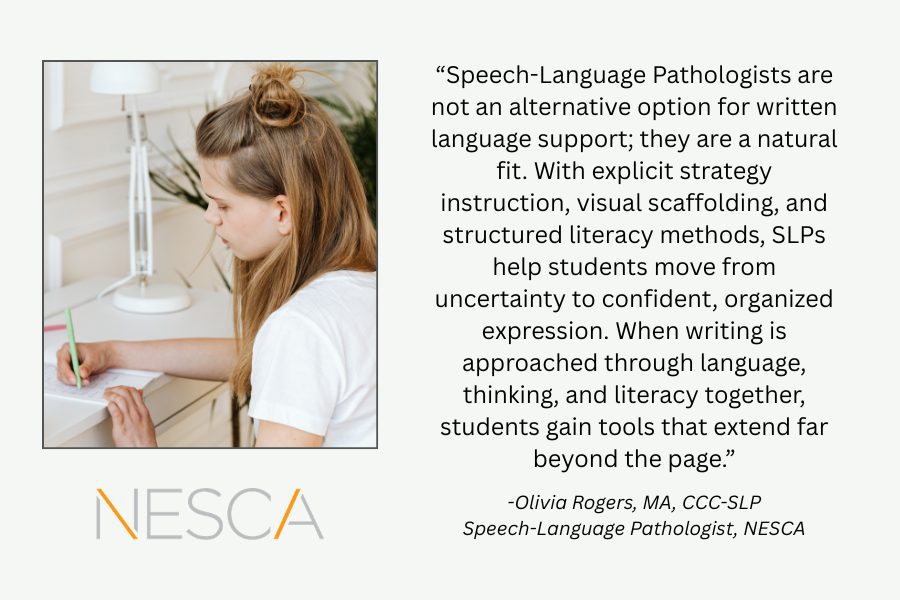
Speech-Language Pathologists are not an alternative option for written language support; they are a natural fit. With explicit strategy instruction, visual scaffolding, and structured literacy methods, SLPs help students move from uncertainty to confident, organized expression. When writing is approached through language, thinking, and literacy together, students gain tools that extend far beyond the page.

The NESCA Difference
NESCA SLPs combine deep knowledge of language development with specialized training in executive functioning and structured literacy. Our intervention addresses how students think, understand language, read and spell, and express ideas in writing.


At NESCA, we use evidence-based strategy to target written language. Our clinicians use a comprehensive approach to treat the systems of learning as integrative, helping students develop valuable skills they can use in and out of the classroom!  For more information on written language support at NESCA, please complete our online Intake Form or email me directly at orogers@nesca-newton.com.


About the AuthorOlivia Rogers

Olivia Rogers is a licensed speech-language pathologist with experience in pediatric clinics and public schools, working with children from age 2 through young adulthood across a range of communication challenges. With a special interest in the connection between oral language and literacy, Ms. Rogers is trained in the Orton-Gillingham method and the Brain Frames program, supporting students in language comprehension, expression, and written organization. She is dedicated to making therapy engaging and personalized for each child.


To learn more about NESCA’s Speech and Language Services or schedule appointments, complete our online Intake Form or email orogers@nesca-newton.com.


NESCA is a pediatric neuropsychology and related services practice with offices in Newton, Plainville, and Hingham, Massachusetts; Londonderry, New Hampshire; and Coral Gables, Florida, serving clients from infancy through young adulthood and their families. For more information, please email info@nesca-newton.com or call 617-658-9800.
 

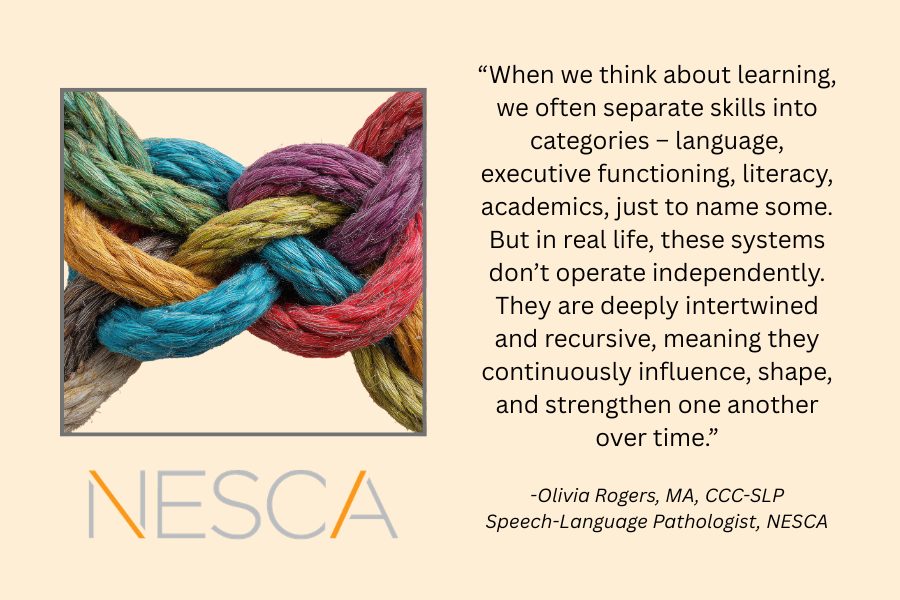
image of yarns intertwined representing EF and language skills being intertwined and a quote from Olivia Rogers, SLP at NESCA

Executive Functioning & Language: Intertwined and Recursive Systems of Learning

By | NESCA Notes 2022, NESCA Notes 2025

image of yarns intertwined representing EF and language skills being intertwined and a quote from Olivia Rogers, SLP at NESCA

By Olivia Rogers, MA, CCC-SLP
Speech-Language Pathologist, NESCA

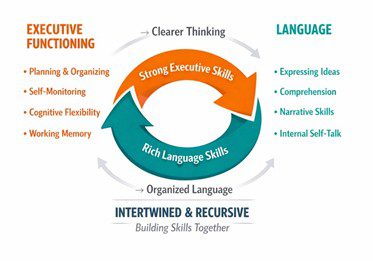
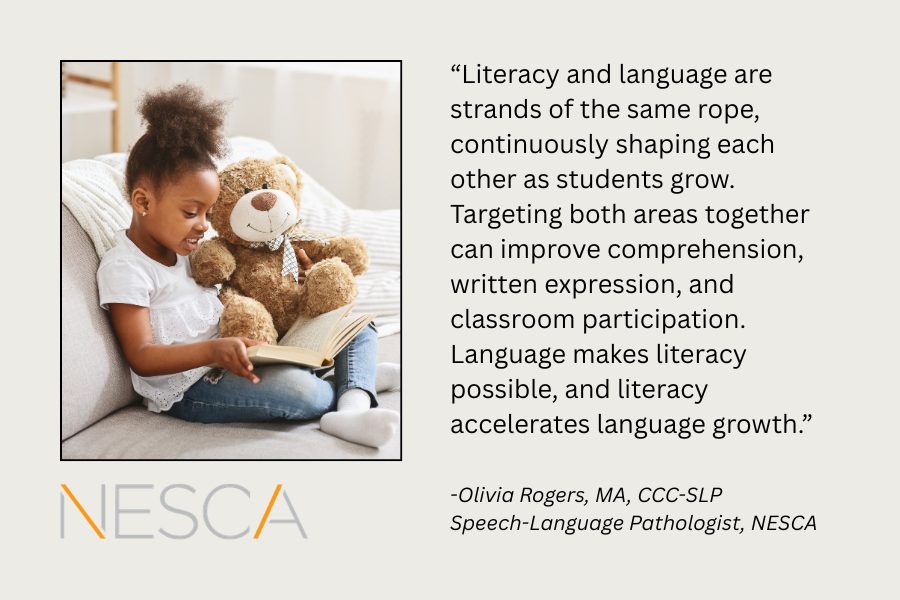
When we think about learning, we often separate skills into categories – language, executive functioning, literacy, academics, just to name some. But in real life, these systems don’t operate independently. They are deeply intertwined and recursive, meaning they continuously influence, shape, and strengthen one another over time.

What Is Executive Functioning?
Executive functioning refers to the brain’s management system. These skills help students plan and organize ideas, initiate tasks, hold information in working memory, monitor understanding, shift between strategies, and manage time and attention.

What Is Language?
Language includes understanding directions, expressing ideas clearly orally and in writing, narrative organization, comprehension of complex oral and written information, academic language use, and internal self-talk.

How Executive Functioning Depends on Language
Students rely on language to talk themselves through steps, plan written responses, explain reasoning, organize narratives, monitor comprehension, and use strategies independently.

How Language Depends on Executive Functioning
Producing and understanding language requires holding ideas in working memory, sequencing information, shifting between topics, inhibiting irrelevant details, revising messages, and planning written expression.

The Recursive Relationship image showing the recursive nature of EF and language skills
Growth in one area supports growth in the other. Stronger language supports clearer thinking, and better executive skills support more organized language.

The Big Picture
Integrated support helps students explain their thinking, plan before speaking or writing, use language as a strategy, monitor understanding, and become more independent learners. Executive functioning and language are overlapping systems that continuously shape each other. Supporting both together makes learning more accessible, meaningful, and transferable.

At NESCA, we view communication holistically. Our speech language pathologists use a comprehensive approach to treat the systems of learning as integrative, helping students develop valuable skills they can use in and out of the classroom! For more information on Speech and Language Therapy at NESCA, please complete our online Intake Form or email me directly at orogers@nesca-newton.com.


About the AuthorOlivia Rogers

Olivia Rogers is a licensed speech-language pathologist with experience in pediatric clinics and public schools, working with children from age 2 through young adulthood across a range of communication challenges. With a special interest in the connection between oral language and literacy, Ms. Rogers is trained in the Orton-Gillingham method and the Brain Frames program, supporting students in language comprehension, expression, and written organization. She is dedicated to making therapy engaging and personalized for each child.


To learn more about NESCA’s Speech and Language Services or schedule appointments, complete our online Intake Form or email orogers@nesca-newton.com.


NESCA is a pediatric neuropsychology and related services practice with offices in Newton, Plainville, and Hingham, Massachusetts; Londonderry, New Hampshire; and Coral Gables, Florida, serving clients from infancy through young adulthood and their families. For more information, please email info@nesca-newton.com or call 617-658-9800.
 

Welcoming Renee Cutiongco Folsom, Ph.D., Pediatric Neuropsychologist

By | Nesca Notes 2023

By: Jane Hauser
Director of Marketing & Outreach, NESCA

NESCA recently welcomed Pediatric Neuropsychologist Renee Cutiongco Folsom, Ph.D. to its clinical staff. Dr. Cutiongco Folsom brings a wealth of experiences and vast knowledge in assessing and diagnosing autism spectrum disorders (ASD) as well as conducting international evaluations. Take a moment to learn more about Dr. Cutiongco Folsom from my interview with her. 

Tell us about your background and how you got to NESCA.

I grew up in the Philippines. I started my career as a preschool teacher there for two years. At that point, I knew I wanted to work with children. I eventually got my master’s degree in psychology and took a neuropsychology class with a professor who was trained at Boston Children’s Hospital. I immediately fell in love with neuropsychology. I then came to the U.S. to pursue my Ph.D. and did my fellowship in neuropsychology at UCLA. I planned to go back to the Philippines but met my husband here in the U.S. and decided to stay here.

Since I did not go back to the Philippines, I was interested in practicing neuropsychology internationally, which I was able to do in Baltimore at Johns Hopkins. I was interested in the work NESCA has been doing internationally. The opportunity to work with a talented team at NESCA and the ability to do international evaluations was the right move for me.

What do you mean by looking beyond the data when conducting neuropsychological evaluations?

I refer to employing the “Boston Process Approach” in my evaluations and assessments because my mentor in the Philippines was trained in this approach when she did her postdoctoral work at Boston Children’s Hospital. She tried to ingrain this methodology in her trainees. What it means is that when we look at the data, we do not just look at a score. There is so much more to a child’s story than a number. As neuropsychologists, we are always looking at how the child comes up with an answer to a test. It is possible for a child to get a low score on a test of reproducing designs using blocks, for example, because the child threw or even ate the blocks! We must decipher what is behind the process by which the child produced the answer. This critical information falls outside of the data or what a score is. It tells us how the child learns, and what will help them at school, at home, and in their day-to-day life. This is the approach I take when I work with a child. I take a LOT of notes! I look to see what the child says and does, whether he or she is paying attention, and note other behaviors throughout the evaluation process. Then, I analyze all the data and look for patterns and discrepancies across various tests and measures.

When we see the data associated with the performance on a test, we must ask why, for instance, they achieved a low score. What other factors are at play? Is it anxiety or a visual-motor issue? What we observe throughout the evaluation can guide us to administer some tests that may not have been initially scheduled. Our knowledge, experiences, and careful observations help us to tease apart where a score came from and what it is telling us. We end up with a fuller picture of both the strengths and vulnerabilities of a child or adolescent.

What kind of international work were you doing previously?

After I completed my fellowship in neuropsychology at UCLA, my first job was with the Kennedy Krieger Institute at Johns Hopkins. Because so many families go there from other countries seeking answers, the organization assembled interdisciplinary teams to serve international patients. We conducted week-long intensive and comprehensive evaluations involving a neurologist, neuropsychologist, occupational therapist, speech-language pathologist, and social worker who could help them access resources in their home country. At the end of the week of intense evaluation, we came together as a team to make a diagnosis, if warranted, and provide recommendations for interventions. It was a challenging and intense program because we needed to develop our impressions immediately. And we often saw some of the most difficult and complex cases because the families had already exhausted all the resources available to them in their home countries before traveling overseas.

What do you find most rewarding about being a pediatric neuropsychologist?

I have been practicing neuropsychology for a long time. I chose to work in pediatric neuropsychology vs. adult because we can do so much more with children. We have a particularly good chance of making a bigger impact on their lives at such an early age.

What I find most rewarding is to have patients come back for a follow-up evaluation, and I can see how the child has progressed. Their parents often thank me for providing them with a diagnosis and helping them to access resources and attest how far their child has come. Working alongside families to change the trajectory of a child’s life is very powerful.

 You specialize in autism spectrum disorders (ASD). How do you make a diagnosis and differentiate ASD from its related challenges?

You rely on years of training, your knowledge and expertise, trust your clinical judgment, and factor in the wisdom of colleagues when needed. This is how you make meaningful conclusions and diagnoses that impact a child’s life.

What do you feel makes NESCA a unique environment and practice?

The beauty of a practice like NESCA is that we get a broad spectrum of clients who present with different challenges or diagnoses. We get to see a range of ages and draw clients from all over the New England region as well as internationally. That variety enriches your perspective and gives more insight into your clinical work.

I have been at NESCA for about a month, and they take collaboration to heart. My colleagues at NESCA are a giving group of professionals when it comes to sharing experiences and knowledge. The clinicians are humble, candid, open, and eager to help children, adolescents, and young adults. As a pediatric neuropsychologist, I also get to collaborate with transition specialists, educational consultants, OTs, SLPs, and more. The multidisciplinary approach, learning from other perspectives, is a refreshing addition to my work experience.


About the Author

Dr. Renee Cutiongco Folsom, Ph.D. has been working with families in the greater Boston area since 2015. Prior to this, she was on staff at Johns Hopkins University and trained at the University of California, Los Angeles (UCLA). She provides comprehensive neuropsychological evaluations of children, adolescents, and young adults who have learning, behavioral, and socio-emotional challenges. Her areas of expertise include Autism Spectrum Disorder and other conditions that usually co-occur with this diagnosis; Attention-Deficit/Hyperactivity Disorder; Dyslexia and other Specific Learning Disabilities; and Anxiety/Depression. She thinks that the best part of being a pediatric neuropsychologist is helping change the trajectory of children’s lives.

To schedule an appointment with one of NESCA’s pediatric neuropsychologists, please complete our online intake form

NESCA is a pediatric neuropsychology practice and integrative treatment center with offices in Newton and Plainville, Massachusetts, Londonderry, New Hampshire, and the greater Burlington, Vermont area, serving clients from preschool through young adulthood and their families. For more information, please email info@nesca-newton.com or call 617-658-9800.
 

The SLP’s Role in Written Language Disorders

By | NESCA Notes 2022

By Olivia Rogers, MA., CCC- SLP
Speech-Language Pathologist, NESCA

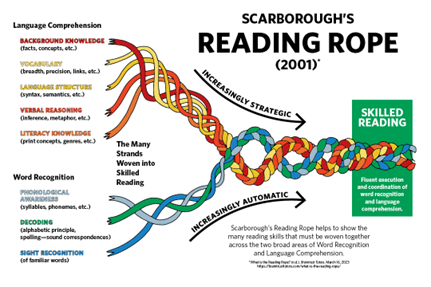
A written language disorder is an impairment in fluent word reading (i.e., reading decoding and sight word recognition), reading comprehension, written spelling, and/or written expression (Ehri, 2000; Gough & Tunmer, 1986; Kamhi & Catts, 2012; Tunmer & Chapman, 2007, 2012). As written language disorders are quite complex, appropriate assessment and treatment often incorporates many members. Members of the interprofessional practice team may include, but are not limited to, reading specialists, occupational therapists, special educators, learning specialists, and more.

When you think of a speech-language pathologist (SLP), a few words probably come to mind; terms like articulation, language, or fluency. Often, SLPs are associated with spoken language only. Most people don’t think of reading or writing when they think of SLPs. However, in addition to the diagnosis and treatment of spoken language disorders, it is well within the scope of practice of a SLP to diagnose and treat written language disorders. In fact, spoken and written language have a reciprocal relationship; each builds on the other to result in general language competence. Children with spoken language problems frequently have difficulty learning to read and write, and children with reading and writing problems frequently have difficulty with spoken language. Children with speech and language deficits are at a higher risk for reading and writing difficulties. Higher rates of all forms of written language disorders have been documented in children with speech and/or language impairments. Take a look at these findings:

  1. Comorbidity between literacy difficulties and speech and language deficits occurred in as high as 50% of cases (Stoeckel et al. (2013).
  2. By the end of kindergarten, more than 25% of children with language impairment were reported to also be poor readers (Murphy et al., 2016).
  3. Approximately 20%-28% of children with speech sound disorders (SSD) have literacy difficulties (Overby, Trainin, Smit, Bernthal, and Nelson, 2012).

No matter the age, SLPs can assess and treat spoken and written language difficulties. SLPs bring knowledge of communication processes and disorders, and language acquisition to the literacy table. Additionally, SLPs are skilled in dynamic assessment and have clinical experience in developing individualized programs for children and adolescents. Here are just a few written language skills that SLPs work on:

Reading: Pre-reading Skills

Before a child can decode, or read, they must have an understanding that words are composed of smaller units and how these units operate separately and together. SLPs incorporate the following skills into sessions:

  • Rhyming (e.g., “flag and stag”)
  • Syllable segmenting (e.g., “student: stu/dent”)
  • Blending sounds into words (e.g., “sh/i/p says ‘ship’”)
  • Segmenting words into their sounds (e.g., “leg: l/e/g”)
  • Deleting sounds in words (e.g., “cup without the c is up”)
  • Substituting sounds in words (e.g., “change the ‘B’ in bat to an ‘M’”)

Reading: Language Comprehension

This is the biggest one for SLPs. To target language comprehension, we work on smaller goals, such as:

  • Grammar
  • Story Grammar Elements
  • Visualizing and Verbalizing
  • Vocabulary
  • Active Reading Strategies
  • Themes

Writing: Organization/Planning

Before writing, it is important to plan out what you will write. Many children with language disorders have trouble with these skills. Here are just a few ways that SLPs help children plan and develop their writing by:

  • Using visuals for story grammar components
  • Make and practice using graphic organizers
  • Teaching sentence, paragraph, and essay construction

Spelling

Yes, spelling! SLPs are equipped to work on spelling. After all, it is just another language skill. Some ways to target spelling include:

  • Working on phonological awareness and phonemic awareness
  • Teach students about morphology (the study of words and their parts)
  • Incorporation of working memory strategies, such as chunking, visualization, or mnemonics

If you have concerns about your child’s pre-literacy or literacy skills, or would like to support your child’s written language skills, please contact NESCA’s Olivia Rogers at orogers@nesca-newton.com or fill out our Intake Form, noting an interest in speech language pathology.


Sources:

Overby, Trainin, Smit, Bernthal, and Nelson, 2012) Preliteracy Speech Sound Production Skill and Later Literacy Outcomes: A Study Using the Templin Archive.

American Speech-Language-Hearing Association. (2001). Roles and responsibilities of speech-language pathologists with respect to reading and writing in children and adolescents [Position Statement]. Available from www.asha.org/policy.

Catts, H.W. & Weismer, S.E. (2006). Language Deficits in Poor Comprehenders: A Case for the Simple View of Reading. Journal of Speech, Language, and Hearing Research, 49, 278-293.


About the Author

Olivia Rogers received her Master of Arts in Speech-Language Pathology from the University of Maine, after graduating with a Bachelor of Arts in Communication Sciences and Disorders and concentrations in Childhood Development and Disability Studies.

Ms. Rogers has experience working both in the pediatric clinic setting as well as in public schools, evaluating and treating children 2-18 years of age presenting with a wide range of diagnoses (e.g., language delays and disorders, speech sound disorders, childhood apraxia of speech, autism spectrum disorder, social communication disorder, and Down syndrome). Ms. Rogers enjoys making sure therapy is fun and tailored to each client’s interests.

In her free time, she enjoys listening to podcasts and spending times with friends and families.


Neuropsychology & Education Services for Children & Adolescents (NESCA) is a pediatric neuropsychology practice and integrative treatment center with offices in Newton, Massachusetts, Plainville, Massachusetts, and Londonderry, New Hampshire, serving clients from preschool through young adulthood and their families. For more information, please email info@nesca-newton.com or call 617-658-9800.
 

To book an appointment with Olivia Rogers, please complete our Intake Form today. For more information about NESCA, please email info@nesca-newton.com or call 617-658-9800.


Learning with Executive Dysfunction—How Graphic Organizers Can Help

By | NESCA Notes 2022

By Olivia Rogers, MA, CCC-SLP
Speech-Language Pathologist, NESCA

When it comes to executive dysfunction, we often see students struggle with the organization of language. This presents differently in each student, but may be seen as difficulty comprehending information, and getting ideas out of their heads and organized into words or on paper. They might recognize the words when listening or reading, but they hit a wall when it comes to making sense of the message or describing it. This often results in students feeling lost, confused, and overwhelmed.

When students struggle to organize language and grasp concepts independently in the classroom, we need to break it down and teach it differently. Graphic organizers help us to do so.

What is a graphic organizer?

Graphic organizers are tools that use visual symbols to express knowledge, concepts, thoughts, or ideas, and the relationships between them. The main purpose of a graphic organizer is to provide a visual aid to facilitate learning and instruction. They help students see visually what is expected of them, what they should focus on, and break complex tasks down for them.

What does the evidence show?

There is plenty of evidence demonstrating the benefits of using graphic organizers. The results of most studies have voiced the positive effects of graphic organizers in mainly comprehension and writing, in addition to remembering course content. One such study recommended the use of graphic organizers for teaching expository text structures with students to improve reading comprehension. A popular strategy to help students understand expository texts is to teach the various types of text structures: cause-and-effect, compare/contrast, problem/solution, etc. When students know the underlying organization of the information, it helps them create a working model of it in their minds, resulting in a better understanding and ability to recall. (Pyle et al., 2017). Another study sought to investigate how pre-writing activities based on graphic organizers, such as webs, and beginning, middle and end charts, affect the overall quality of student writing. The results of the study indicate that using appropriate pre-writing strategies based on graphic organizers and giving enough time for the students lead to better quality writing (Servati, 2012).

How are Graphic Organizers Used in Speech Language Therapy?

1. Graphic Organizers Help Students Focus

Many students exhibit disorganized thinking processes, poor initiation skills, word recall difficulties, poor attention, and decreased task endurance. These weaknesses can impact a student’s ability to get started on a project, organize a writing assignment, or even complete a math task. Graphic organizers help students access prior knowledge and get them actively engaged in learning.

2. Graphic Organizers Provide a Visual Map and Help Clarify Abstract Concepts

Have you ever had so much information that you couldn’t hold onto it all? Graphic organizers bring together large pieces of information and tie the relationships together. The concepts and linguistic relationships flow better and make sense to students.

3. Graphic Organizers Help Build Vocabulary

Students benefit from graphic organizers as they expand their word knowledge and make connections. Graphic organizers are great for teaching concepts like descriptive adjectives, antonyms/synonyms, items in a category, part/whole relationships, and definitions.

4. Graphic Organizers Improve Expressive Language

Graphic organizers support oral and written language in all areas of academic learning. Some students have difficulty creating pictures in their head, retrieving words to verbalize their ideas, and putting their thoughts in order. Utilizing a graphic organizer can help students when they need to present information orally or develop a draft for writing.


Resources:

Architects For Learning. (2022, May 18). Helping students manage what’s hard about school and thrive as life-long learners. Retrieved June 21, 2022, from https://www.architectsforlearning.com/students-parents/about-us/

Erwin, L. (2017, May 26). 5 reasons to use graphic organizers in speech therapy. My Speech Tools. Retrieved June 21, 2022, from https://myspeechtools.blogspot.com/2017/05/5-reasons-you-should-use-graphic-organizers-speech-therapy-sessions.html

Servati, Katrina, “Prewriting Strategies and their Effect on Student Writing” (2012). Education Masters. Paper 242. https://fisherpub.sjfc.edu/education_ETD_masters/242

Sherman, H. (2017, December 23). Using Graphic Organizers is Essential in Speech Therapy. Speech Time Fun Speech and Language Activities. Retrieved June 21, 2022, from https://speechtimefun.com/using-graphic-organizers-is-essential-in-speech-therapy/

Pyle, N., Vasquez, A. C., Lignugaris, K., & B., Gillam, S.L., Reutzel, D.R., Olszewski, A., Segura, H., Hartzheim, D., Laing, W., and Pyle, D. (2017). Effects of expository text structure interventions on comprehension: A meta-analysis. Reading Research Quarterly, 52(5), 1–33. https:// doi. org/ 10. 1002/ rrq. 179


About the Author

Olivia Rogers received her Master of Arts in Speech-Language Pathology from the University of Maine, after graduating with a Bachelor of Arts in Communication Sciences and Disorders and concentrations in Childhood Development and Disability Studies. She holds a Certificate of Clinical Competence in speech-language pathology from the American Speech-Language-Hearing Association, as well as a professional license in speech-language pathology from the Commonwealth of Massachusetts.

Ms. Rogers has experience working both in the pediatric clinic setting as well as in public schools, evaluating and treating children 2-18 years of age presenting with a wide range of diagnoses (e.g., language delays and disorders, speech sound disorders, childhood apraxia of speech, autism spectrum disorder, social communication disorder, and Down syndrome). Ms. Rogers enjoys making sure therapy is fun and tailored to each client’s interests.

In her free time, she enjoys listening to podcasts and spending times with friends and families.


Neuropsychology & Education Services for Children & Adolescents (NESCA) is a pediatric neuropsychology practice and integrative treatment center with offices in Newton, Massachusetts, Plainville, Massachusetts, and Londonderry, New Hampshire, serving clients from preschool through young adulthood and their families. For more information, please email info@nesca-newton.com or call 617-658-9800.
 

To book an appointment with Olivia Rogers, please complete our Intake Form today. For more information about NESCA, please email info@nesca-newton.com or call 617-658-9800.


Changes to the Developmental Milestones Guidelines Cause Confusion and Conflict

By | NESCA Notes 2022

By Olivia Rogers, MA, CF-SLP
Speech-Language Pathologist, NESCA

Recently, the Centers for Disease Control and Prevention (CDC) and the American Academy of Pediatrics (AAP) updated guidelines for developmental milestones in the Learn the Signs. Act Early program for the first time since its initial release in 2004. This program provides free checklists of developmental milestones and outlines warning signs of developmental delays in the following areas: social/emotional, language/communication, cognition, and movement/physical.

One of the biggest CDC developmental milestone changes involves language development. Since 2004, the CDC has stated a 24-month-old should have a vocabulary of 50 words. Now, that milestone of 50 words has been pushed back to 30-months-old. This new standard clashes with the American Speech-Language-Hearing Association (ASHA) guidance, which states that saying fewer than 50 words at 24 months is a potential red flag for a language delay or disorder.

Confusion regarding the recent changes may impact the (already) difficult decision that many parents are faced with in the first few years of their child’s life: whether or not to seek professional support for their child.

Despite the changes to the outlined milestones, the intentions behind this checklist remain consistent—early identification and intervention is key. When it comes to your child’s speech and language development, we suggest not taking the “wait and see” approach. The first three years of your child’s life—when the brain is developing and maturing—is the most intensive period for acquiring key speech and language skills.

Though children vary in their development of speech and language skills, they do follow a natural progression for mastering these skills of language. If you’re worried your child isn’t meeting milestones and wondering when the right time or the best age is for speech/language therapy, take action sooner than later. Contact a local speech-language pathologist. The earlier a child is identified with a delay, the better, as treatment and learning interventions can begin.

We urge parents to follow their instincts and seek guidance when there is a concern. You will either get much needed help for your child or peace of mind, and your local speech-language pathologists are happy to help.

If your pre-school-aged child is having difficulty with any of the following, concerns can be addressed through a speech/language assessment and/or therapy:

  • Saying first words or combining words into sentences
  • Using gestures
  • Naming and describing objects, ideas, and experiences
  • Pronouncing words or being understood by family or others
  • Interacting socially or playing with others
  • Understanding words, concepts, or gestures
  • Listening, following directions, or answering questions
  • Knowing how to take turns when talking or playing with others
  • Using correct grammar, such as pronouns and verb forms

Resources:

Centers for Disease Control and Prevention. (2022, January 31). CDC’s Developmental Milestones. Centers for Disease Control and Prevention. Retrieved February 24, 2022, from https://www.cdc.gov/ncbddd/actearly/milestones/index.html

The National Institute on Deafness and Other Communication Disorders. (2000). Speech and Language Developmental Milestones. NIH Publication No. 00-4781.


About the Author

Olivia Rogers received her Master of Arts in Speech-Language Pathology from the University of Maine, after graduating with a Bachelor of Arts in Communication Sciences and Disorders and concentrations in Childhood Development and Disability Studies.

Ms. Rogers has experience working both in the pediatric clinic setting as well as in public schools, evaluating and treating children 2-18 years of age presenting with a wide range of diagnoses (e.g., language delays and disorders, speech sound disorders, childhood apraxia of speech, autism spectrum disorder, social communication disorder, and Down syndrome). Ms. Rogers enjoys making sure therapy is fun and tailored to each client’s interests.

In her free time, she enjoys listening to podcasts and spending times with friends and families.


Neuropsychology & Education Services for Children & Adolescents (NESCA) is a pediatric neuropsychology practice and integrative treatment center with offices in Newton, Massachusetts, Plainville, Massachusetts, and Londonderry, New Hampshire, serving clients from preschool through young adulthood and their families. For more information, please email info@nesca-newton.com or call 617-658-9800.
 

To book an appointment with Olivia Rogers, please complete our Intake Form today. For more information about NESCA, please email info@nesca-newton.com or call 617-658-9800.


Thematic Instruction in Speech-Language Therapy

By | NESCA Notes 2021

By Olivia Rogers, MA, CF-SLP
Speech-Language Pathologist, NESCA

What exactly is a theme and why would we use them in speech therapy? A theme can be defined as the creation of various meaningful activities planned around a central topic or idea. For example, using activities that are all about the ocean, sports, or winter. Themed activities can be great for working on speech and language skills.

Here are some benefits of using thematic instruction (Hadley et al., 2018; Wallach, 2014):

  • Thematic instruction is a meaningful and motivating method of learning concepts.
  • Knowledge on different themes and categories supports a child in making connections between various concepts. It also provides the opportunity to teach and practice new skills by building on a child’s existing knowledge of the topic.
  • Teaching words linked in thematic groups allows for a deeper understanding of functions, categories, and features. Thematic instruction can improve vocabulary and increases a child’s understanding and use of synonyms and antonyms.
  • Activating prior knowledge and engaging students in prior knowledge activities increases the comprehension and retention of information. This, in turn, supports story retelling skills, as well as ability to answer “WH” questions – who, what, where, when and why.
  • Themes are relevant to a child’s real-life experiences; therefore, thematic instruction improves a child’s ability to make inferences and predictions. Children can make better inferences and predictions about situations they may encounter on a daily basis with this knowledge of various themes and categories.
  • Thematic instruction promotes generalization outside the therapy room.

Thematic instruction can result in improvements in overall language skills. Additionally, using themes can keep speech-language therapy interesting and help increase engagement. This is key, as it’s been shown that when a child receives eight more minutes of engaging therapy, there is significantly greater improvement than with regular therapy (Schmitt, 2020).

What can you do at home?

Fortunately, thematic instruction can be easily incorporated into daily life or special occasions at home – and can be adapted for any age. October is one of my favorite months as it is packed with themes. I like to dedicate the first part of October to autumn and leaves, as well as fire safety and occupations. Then it’s time to dive into all things Halloween! Here are some Halloween-themed activities you can do at home to support your child’s language development:

  • Read different Halloween stories while increasing the understanding of Halloween-associated vocabulary (e.g., pumpkin, leaves, haunt, eerie, costume, cauldron, ghost, broomstick, etc.) and Halloween lingo (e.g., “trick or treat,” “boo,” “hair-raising,” “if you dare,” “pumpkin carving,” etc. Some great books to help you with these words and phrases are:
    1. Room on the Broom by Julia Donaldson
    2. There was an Old Lady Who Swallowed a Bat by Lucille Colandro
    3. Goodnight Goon by Michael Rex
  • Encourage your child to recall details and retell the stories you read. Have them:
    1. Describe the setting of the story.
    2. Tell you about one story character.
    3. Identify their favorite part of the story.
    4. Say what happened at the end of the book.
  • Encourage the use of Halloween-associated vocabulary by going on a neighborhood walk and playing I Spy with your child (e.g., “I spy something orange, that you can carve during Halloween,” or “I spy something that changes colors then falls from trees,” etc.).
  • Discuss the history of Halloween and where it originated.
    1. Make predictions regarding this upcoming Halloween and Halloweens to follow.
    2. Compare and contrast Halloween traditions over the years.
  • Create a hands-on activity (e.g., carving pumpkins, drawing a haunted house, collecting leaves for a craft, etc.) where your child/children follow directions to cooperatively complete the project. This encourages problem solving, reasoning and use of appropriate social skills.
  • Engage in a pretend play scenario about Halloween using all the information your child has learned throughout your thematic intervention.

Resources:

Hadley, E. B., Dickinson, D. K., Hirsch-Pasek, K., & Golinkoff, R. M. (2018). Building semantic networks: The impact of a vocabulary intervention on preschoolers’ depth of word knowledge. Reading Research Quarterly.

Schmitt, M. (2020). Children’s active engagement in public school language therapy relates to greater gains. American Journal of Speech-Language Pathologyhttps://doi.org/10.1044/2020_AJSLP-19-00157


About the Author

Olivia Rogers received her Master of Arts in Speech-Language Pathology from the University of Maine, after graduating with a Bachelor of Arts in Communication Sciences and Disorders and concentrations in Childhood Development and Disability Studies.

Ms. Rogers has experience working both in the pediatric clinic setting as well as in public schools, evaluating and treating children 2-18 years of age presenting with a wide range of diagnoses (e.g., language delays and disorders, speech sound disorders, childhood apraxia of speech, autism spectrum disorder, social communication disorder, and Down syndrome). Ms. Rogers enjoys making sure therapy is fun and tailored to each client’s interests.

In her free time, she enjoys listening to podcasts and spending times with friends and families.


Neuropsychology & Education Services for Children & Adolescents (NESCA) is a pediatric neuropsychology practice and integrative treatment center with offices in Newton, Massachusetts, Plainville, Massachusetts, and Londonderry, New Hampshire, serving clients from preschool through young adulthood and their families. For more information, please email info@nesca-newton.com or call 617-658-9800.
 

To book an appointment with Olivia Rogers, please complete our Intake Form today. For more information about NESCA, please email info@nesca-newton.com or call 617-658-9800.
 

Skip to content