NESCA’s Newton, MA location has immediate availability for neuropsychological evaluations. Our MA clinicians specialize in the following evaluations: Neuropsychological; Autism; and Emotional and Psychological, as well as Academic Achievement and Learning Disability Testing.

Visit www.nesca-newton.com/intake for more information or to book an evaluation.

Tag

ANXIETY Archives - NESCA

Subscribe to NESCA Notes

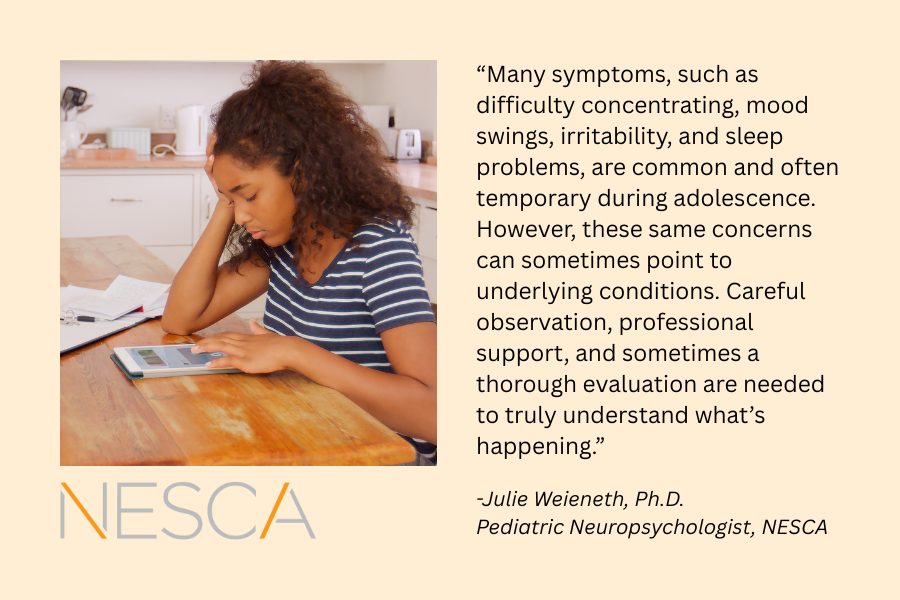
Image of a stressed out teenager along with a quote from Julie Weieneth, Ph.D..

Is This Stress or Something More?

By | NESCA Notes 2025

Image of a stressed out teenager along with a quote from Julie Weieneth, Ph.D..By: Julie Weieneth, Ph.D.
Pediatric Neuropsychologist, NESCA

Understanding ADHD, Anxiety, Depression, and Typical Adolescent Development

As both a neuropsychologist and a parent, I see firsthand how challenging academic and social pressures can be for teenagers. Like many parents, I sometimes wonder whether my own teen’s struggles are just part of growing up or if they might signal something more serious, such as ADHD, anxiety, or depression. From my clinical perspective, recognizing the difference is crucial. Early intervention not only supports long-term success but can also help prevent more persistent issues in the future.

Why It Can Be Hard to Tell

Many symptoms, such as difficulty concentrating, mood swings, irritability, and sleep problems, are common and often temporary during adolescence. However, these same concerns can sometimes point to underlying conditions. Careful observation, professional support, and sometimes a thorough evaluation are needed to truly understand what’s happening.

Signs of ADHD

  • Ongoing struggles with attention, organization, and time management in different settings
  • Frequently losing items or forgetting important things
  • Trouble staying focused on tasks that require sustained effort
  • Restlessness or fidgeting
  • Symptoms usually begin in childhood (often by age 12) and are consistent, not just a reaction to stress or specific situations

Signs of Anxiety

  • Excessive worry about school, friendships, or the future
  • Physical complaints, such as headaches or stomachaches
  • Avoidance of stressful situations, including tests or social events
  • Perfectionism and fear of making mistakes
  • Symptoms often become more noticeable during times of increased stress

Signs of Depression

  • Persistent sadness or irritability
  • Loss of interest in activities that used to be enjoyable
  • Fatigue and low energy
  • Changes in sleep or eating habits
  • Withdrawal from friends and family
  • Symptoms last for two weeks or longer and can significantly affect motivation and daily functioning

Typical Adolescent Challenges

  • Occasional procrastination or forgetfulness
  • Temporary mood swings or frustration
  • Feeling stressed before exams or social events
  • Desire for more independence and privacy
  • These concerns are usually mild, short-lived, and tend to improve with support, structure, and time

How a Neuropsychological Evaluation Can Help

A neuropsychological assessment can help clarify whether a teen’s symptoms are part of normal development or indicate a clinical concern. This process includes reviewing developmental and academic history, conducting standardized testing, and gathering input from parents, teachers, and the teen.

Ways to Support Teens Based on Their Needs

  • For ADHD, strategies such as organizational (Executive Function – EF) coaching, academic accommodations, behavioral therapy, and sometimes medication may be needed
  • For anxiety, counseling, stress management techniques, a supportive environment, and sometimes medication may be needed
  • For depression, therapy, healthy routines, and sometimes medication can make a significant difference
  • For teens experiencing more than one of these concerns, a combination of strategies and coordinated care is often most effective
  • For typical adolescent challenges, open communication, structure, and encouragement usually work well

If your teen’s difficulties persist or begin to interfere with everyday life, reaching out to a neuropsychologist can provide clarity and guidance. Early understanding and tailored support can help your teen feel better and succeed both now and in the future. If you are unsure whether your teen needs a full neuropsychological evaluation, you can schedule a consultation with a NESCA clinician who will review your concerns and help you decide how best to proceed.


About the AuthorJulie Weineth headshot

Dr. Weieneth is a licensed clinical psychologist who has worked with children and families with complex diagnostic and treatment needs for the last twenty years. Her areas of specialty include ADHD, autism spectrum disorders, anxiety, mood disorders, learning disabilities, executive functioning, and school-related challenges. That being said, Dr. Weieneth also understands that not all individuals fit cleanly into diagnostic groups or labels. Her goals for each evaluation are to help families feel comfortable with the process, use all the tools available to best understand each individual’s unique strengths and needs, and to write a clear and comprehensive report that will guide educational and treatment planning.

To book a consultation with Dr. Weieneth or one of our many other expert neuropsychologists or other clinicians, complete NESCA’s online intake form.

NESCA is a pediatric neuropsychology and related services practice with offices in Newton, Plainville, and Hingham, Massachusetts; Londonderry, New Hampshire; the greater Burlington, Vermont region; and Coral Gables, Florida, serving clients from infancy through young adulthood and their families. For more information, please email info@nesca-newton.com or call 617-658-9800.
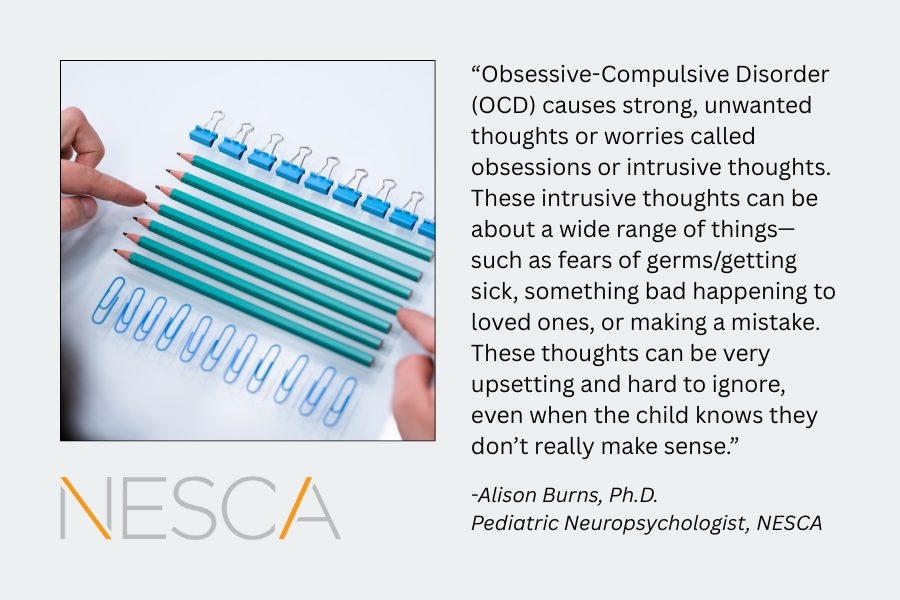
Image of pencils lined up perfectly, as a sign of OCD, along with a quote from Dr. Alison Burns

When Worry Becomes a Cycle: Understanding and Treating OCD in Children

By | NESCA Notes 2025

Image of pencils lined up perfectly, as a sign of OCD, along with a quote from Dr. Alison BurnsBy: Alison Burns, Ph.D.
Pediatric Neuropsychologist, NESCA

Obsessive-Compulsive Disorder (OCD) causes strong, unwanted thoughts or worries called obsessions or intrusive thoughts. These intrusive thoughts can be about a wide range of things—such as fears of germs/getting sick, something bad happening to loved ones, or making a mistake. These thoughts can be very upsetting and hard to ignore, even when the child knows they don’t really make sense. The anxiety caused by these intrusive thoughts can feel overwhelming and can take up a lot of mental energy.

To cope with these thoughts, children with OCD often develop compulsions—repetitive actions or mental rituals that they feel they must do to feel safe or to stop something bad from happening. These might include excessive cleaning, checking, counting, arranging items in a certain way, or asking for reassurance repeatedly. While these behaviors may temporarily relieve anxiety, they tend to reinforce the cycle of OCD and make it harder to break over time. Parents might notice their child spending a lot of time on these routines, getting very upset if interrupted, or struggling to keep up with school or social activities.

The good news is that OCD is treatable. The most effective therapy for children is a form of cognitive-behavioral therapy (CBT) called Exposure and Response Prevention (ERP), which helps them face their fears gradually while learning not to rely on compulsions. The Supportive Parenting for Anxious Childhood Emotions (SPACE) curriculum is a parent-focused program designed to help caregivers reduce accommodations of a child’s anxiety or OCD behaviors and promote healthy coping skills. Lastly, medication can also help reduce symptoms.

OCD must first be properly differentiated from other disorders that have overlapping symptoms, such as anxiety, autism spectrum disorder, or tic disorders. Anxiety disorders involve persistent worry, fear, or nervousness about real-life situations, whereas OCD is characterized by a cycle of obsessions and compulsions that the person feels compelled to perform. OCD and autism spectrum disorder can both involve repetitive behaviors or strict routines, but they differ in motivation, awareness, and broader patterns. In OCD, behaviors are driven by anxiety or fear. In autism, repetitive behaviors or routines are often comforting, sensory-driven, or based on special interests. Tics are sudden, brief, involuntary movements or vocalizations—such as blinking, throat clearing, or jerking—that are often preceded by a physical urge and relieved temporarily by performing the tic. While both tics and OCD can appear repetitive, tics are automatic and not driven by specific fears or beliefs, whereas OCD behaviors are purposeful responses to obsessive thoughts and aim to relieve anxiety. A comprehensive neuropsychological assessment will utilize a combination of interviews, observations, and standardized tools to understand the nature and impact of symptoms to ensure an accurate diagnosis and treatment plan.


About the Author

Dr. Burns conducts comprehensive evaluations of school-aged children, adolescents, and young adults with a variety of developmental, learning, and emotional difficulties. She has expertise in the evaluation of individuals following a concussion/mild traumatic brain injury and particularly enjoys working with individuals with attention (ADHD) and executive functioning (EF) difficulties. Dr. Burns is passionate about helping individuals and their families better understand their areas of strength and weakness and provides tailored treatment recommendations based upon that unique profile to make the evaluation most helpful for each client.

To book a consultation with Dr. Burns or one of our many other expert neuropsychologists, complete NESCA’s online intake form.

NESCA is a pediatric neuropsychology practice and integrative treatment center with offices in Newton, Plainville, and Hingham, Massachusetts; Londonderry, New Hampshire; the greater Burlington, Vermont region; and Coral Gables, Florida, serving clients from infancy through young adulthood and their families. For more information, please email info@nesca-newton.com or call 617-658-9800.

Image of a signpost with the words Wait and See" and "Check It Out" on it and a quote from Dr. Rebecca Dautoff

When In Doubt, Check it Out

By | NESCA Notes 2025

Image of a signpost with the words Wait and See" and "Check It Out" on it and a quote from Dr. Rebecca DautoffBy: Rebecca Dautoff, Psy.D.
Pediatric Neuropsychologist, NESCA

As a child psychologist, I regularly advise parents that our job is not to eliminate their children’s frustration, anxiety, and disappointment. Instead, our goal is to help kids process and tolerate these emotions. In fact, it’s critical that children face obstacles so they can learn to navigate and endure challenges throughout their life. But what happens when a child has a particularly tough time at school or a really difficult year? What are the next steps?

Deciding what to do can be a hard decision for concerned parents. Some parents question whether they should  “do something” to help the child, or to relieve their own anxiety and guilt. Other parents feel that their child’s issues are due to “a bad fit” with a particular teacher or classroom structure. This can be even harder when the school tells parents that everything is okay, or it’s just a phase that they see all the time. In some cases—such as a child grieving or adjusting to a new school—a short observation period (a few weeks) with close monitoring and open communication can be appropriate. However, this should always come with a clear plan to seek help if things don’t improve, because the “wait and see” approach can pose real risks to a child’s development, mental health, and emotional well-being. Here’s why:

First, childhood is full of developmental windows. These are essentially periods of time or opportunity when the brain is especially receptive to learning a specific skill. If a child is struggling in one of these areas and we wait too long, we risk missing this period of optimal learning. Language delays are a clear example. There is a critical period of language development before the age of 3, meaning that intervention for speech and language challenges are most effective before this age.

Second, children are incredibly perceptive. Kids are highly attuned and hyper aware when they feel like something is harder for them than it is for their friends and classmates. Often, kids internalize their struggles as personal failures. This can lead to frustration, anxiety, withdrawal, or behavioral problems/acting out. These outcomes are even more likely if a child is late to learn a skill. Take reading as an example. If a child is learning to read more slowly than their peers in first or second grade, they are less likely to internalize this as a problem because most of their classmates are also learning to read. It might come more easily to their friends, but they are all learning to read. If we wait to intervene, and a child is still having difficulty with reading in fourth grade, they are more likely to internalize their difficulty as a personal failure because they are no longer surrounded by peers who are also working on the same skill.

Taking a wait and see approach with your child’s mental health can feel like a cautious or hopeful strategy—especially when you’re unsure if something is truly wrong. Unfortunately, mental health conditions are often progressive, and waiting to treat them can allow symptoms to worsen, which makes them harder to treat. Undiagnosed mental health issues can lead to poor academics, social withdrawal, bullying, or acting out. The child may fall behind developmentally or struggle to make or keep friendships, which will impact their self-esteem and exacerbate their mental health issues. In older children and adolescents, we also see untreated mental health issues lead to more dangerous problems, like substance use, self-harm, eating disorders, or suicidal thoughts.

Instead of waiting, parents should proactively communicate with teachers, seek professional help when needed, and consider the child’s overall well-being when making decisions about their education.

What to Do Instead Of “Wait and See”:

  • Talk to your child: Open the door to conversation and let them know you’re there.
  • Keep track of behaviors, moods, or changes.
  • When in doubt, check it out: Even a single consultation with a pediatrician, school counselor, or therapist can provide guidance without committing to long-term treatment. If you suspect there is a deeper learning, emotional, developmental, or behavioral issue, a neuropsychological evaluation can also determine the root cause of the issues and set you and your child on a better path forward.


About the Author

Dr. Rebecca Dautoff provides comprehensive neuropsychological and psychological (projective) evaluation services for children, adolescents,Headshot of Rebecca Dautoff, Psy.D. and young adults who have complex presentations with a wide range of concerns, including attention deficit disorders, psychiatric disorders, intellectual disabilities, and autism spectrum disorders (ASD). She also values collaboration with families and outside providers to facilitate supports and services that are tailored to each child’s specific needs.


If you are interested in booking an appointment for an evaluation with Dr. Dautoff or another NESCA neuropsychologist/clinician, please fill out and submit our online intake form


NESCA is a pediatric neuropsychology practice and integrative treatment center with offices in Newton, Plainville, and Hingham, Massachusetts; Londonderry, New Hampshire; the greater Burlington, Vermont region, serving clients from infancy through young adulthood and their families. For more information, please email info@nesca-newton.com or call 617-658-9800.
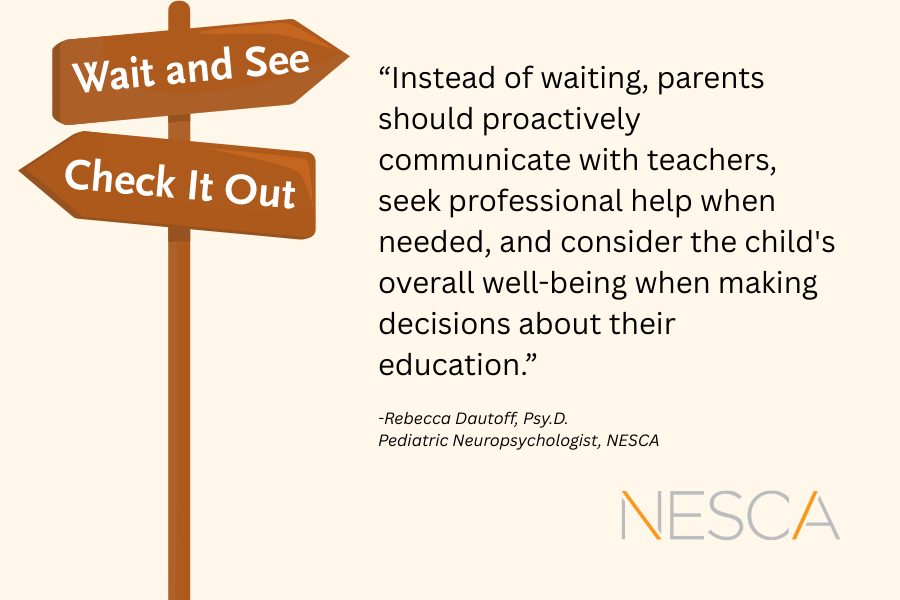
image of a teen stressed out, using a phone

Stress, Anxiety, and Social Media: Supporting Pre-Teens in a Digital World

By | NESCA Notes 2025

image of a teen stressed out, using a phoneBy: Cynthia Hess, PsyD
Pediatric Neuropsychologist, NESCA

In recent years, stress has become a more prevalent part of childhood. Fast-paced lives, evolving educational expectations, and the decline of unstructured social interactions have reshaped the developmental experience of today’s youth. One significant factor in this shift is the ever-expanding role of technology and social media.

Stress, fundamentally, is the body’s response to challenge. While short-term stress can be helpful, chronic stress has more lasting effects, keeping the body in a heightened state of arousal and often leading to anxiety. Anxiety differs from typical stress in that it is persistent, disproportionate to the situation, and frequently arises without a clear trigger. This type of emotional overload can significantly impede a child’s ability to learn, grow, and connect with others.

My own research, conducted with over 100 fifth- and sixth-grade students, revealed a strong correlation between time spent on social media and internalizing behaviors, such as anxiety and depression. Many pre-teens in the study reported having multiple devices and profiles on several social media platforms, with some spending an exceptional amount of time per week online, raising concerns about what is being lost in the process, both developmentally and emotionally.

Social media can disrupt nearly every area of development. Physically, pre-adolescents are navigating puberty and changes in body image, which are already sensitive subjects that curated online content can exacerbate. Neurologically, the brain is experiencing significant changes that facilitate higher-order thinking. However, constant digital stimulation can derail these processes, especially the development of executive functions such as attention, planning, and impulse control.

Cognitively, children at this age are becoming more curious, organized, and future-focused, but excessive screen time can reduce their attention span, ultimately making learning feel overwhelming. Emotionally, they are beginning to ask important questions about their identity and becoming more vulnerable to social pressures. When their emotional experiences are shaped more by online interactions than face-to-face ones, their ability to develop empathy, emotional intelligence, and resilience may be hindered.

Social development also takes a hit. The need to belong intensifies in pre-teen years, and social media often becomes a double-edged sword, offering connection, but also exposing kids to harmful trends, superficial relationships, and online bullying. Real-life communication skills can lag, leaving children less equipped to handle the challenges of peer relationships and conflict.

So, what can we do? First, we must recognize that our children are anxious. National data shows that a significant percentage of youth already carry a diagnosis of anxiety, and many more experience symptoms that go unnoticed. Repeated exposure to stress and the instant feedback loops of social media can create a cycle where children become increasingly anxious and reliant on screens to self-soothe.

As caregivers, educators, and community members, we can begin by fostering emotional awareness. Talk regularly with children about their feelings, help them differentiate between healthy stress and anxiety, and model appropriate emotional expression. Encourage healthy coping strategies, such as regular exercise, mindfulness practices, creative outlets, and spending time outdoors. Monitor their online activity, not from a place of punishment, but one of partnership, curiosity, and learning. Show genuine interest in what they’re doing online, who they’re talking to, and what content they’re consuming.

It’s also crucial to protect the basic developmental needs of children: ample sleep, nutritious food, physical activity, and unstructured playtime. Avoid overscheduling, set clear screen-time boundaries, and follow through with consistent expectations. Community matters, too, and building a culture where we support one another, share resources, and stay informed is essential. We are navigating uncharted and dynamic technological territory. But by staying connected to the needs of our children, both online and offline, we can help them build the emotional resilience and skills they need to thrive.

References:

Turkle, S. (2017). Alone together: Why we expect more from technology and less from each other. Basic Books.

Small, G., & Vorgan, G. (2008). iBrain: Surviving the technological alteration of the modern mind. New York: Harper Collins.

Uhls, Y. T., Michikyan, M., Morris, J., Garcia, D., Small, G. W., Zgourou, E., & Greenfield, P. M. (2014). Five days at an outdoor education camp without screens improve preteens’ skill with nonverbal emotion cues. Computers in Human Behavior, 39, 387-392. doi:10.1016/j.chb.2014.05.036


About the Author

Dr. Cynthia (Cindy) Hess conducts neuropsychological evaluations as a pediatric neuropsychologist at NESCA. Dr. Hess enjoys working with children and young adults with complex emotional and behavioral profiles. She is skilled at evaluating social and emotional challenges as well as a range of learning profiles. Her experience allows her to guide families in understanding the supports and services their child requires to be successful in school.


To schedule an appointment with one of NESCA’s expert neuropsychologists, please complete our online intake form


NESCA is a pediatric neuropsychology practice and integrative treatment center with offices in Newton, Plainville, and Hingham, Massachusetts; Londonderry, New Hampshire; and staff in the greater Burlington, Vermont region and Brooklyn, New York, serving clients from infancy through young adulthood and their families. For more information, please email info@nesca-newton.com or call 617-658-9800.


Inattentive student image and quote from Dr. Alison Burns

To Test or Not to Test (for ADHD)?

By | NESCA Notes 2025

Inattentive student image and quote from Dr. Alison BurnsBy: Alison Burns, Ph.D.
Pediatric Neuropsychologist, NESCA

Attention Deficit/Hyperactivity Disorder (ADHD) is a neurodevelopmental disorder that is characterized by difficulty with sustained attention, hyperactivity, and/or impulsivity. Some kids mostly have difficulty with attention (referred to as ADHD, Predominantly Inattentive Presentation, formerly called ADD), some kids mostly have symptoms of hyperactivity and impulsivity (referred to as ADHD, Predominantly Hyperactive-Impulsive Presentation), and some kids have difficulty with both attention and hyperactivity/impulsivity (referred to as ADHD, Combined Presentation).

The diagnosis of ADHD can be very straightforward for a subset of children. These kids may demonstrate highly impairing, overt symptoms of ADHD, often from a young age. These children tend to have symptoms of hyperactivity and impulsivity that are quickly noted by parents and preschool or kindergarten teachers. This group of children may appear as if they are driven by a motor or always on the go, and they have trouble paying attention within a very short period of time. The diagnosis of ADHD for this subset of children is frequently made by a pediatrician after parents and teachers complete a questionnaire (often the Vanderbilt Assessment Scale) and the child scores above a certain threshold.

However, the larger majority of children exhibit symptoms of inattention, hyperactivity, and impulsivity that are not as overt or clear cut. This may present as a lack of focus for certain tasks or in certain situations, daydreaming or distractibility, poor attention to detail or rushing through work, talking constantly, or fidgeting. Parent and teacher questionnaires may show levels of inattention and hyperactivity/impulsivity that are above the threshold, but this subset of children would greatly benefit from testing to confirm the diagnosis. That is because there are many other reasons why a child may be distracted, inattentive, rush through their work, not start a task independently, fidget, or chat excessively. Here are a few examples:

  • A child with anxiety may be distracted because they are focused on their worries (e.g., “I forgot to study for my next period’s test!” “What if people laugh at me when it’s my turn to read aloud?”). They may rush through their work because they are worried about completing the test in the allotted time period or have trouble starting a task as they “freeze.” They may fidget or talk excessively when feeling nervous.
  • A child with a learning disability may zone out or appear distracted when they are having trouble understanding a concept or completing an assignment. They may get bored or frustrated and begin to move around in their seat, and they may rush through their work to get it done as quickly as possible out of embarrassment. They may also have trouble starting a task independently as they do not know how to complete the work.
  • A child with a language disorder may become inattentive and distracted when they cannot understand what the teacher is saying. They may become fidgety and “check out,” and they may not start tasks independently as they did not understand the task instructions.

These example children (a child with ADHD, anxiety, a learning disability, and a language disorder) may all present in a similar fashion, with the same behaviors endorsed on a questionnaire (e.g., does he have trouble paying attention? Is he fidgety or restless?). But the reasons why these behaviors are occurring are fundamentally different. Making an accurate diagnosis is critical to getting the right treatment plan in place. We would not want to treat a child with a stimulant medication if the underlying cause of inattention is a language disorder, just as we would not recommend speech and language therapy for a child with ADHD (without language issues).

This is where testing comes into play. A neuropsychological assessment is an excellent tool for teasing out the underlying root cause behind the surface symptoms. A comprehensive neuropsychological assessment, such as the ones done at NESCA, assesses a child’s intellectual ability, academic skills (e.g., reading, writing, math), expressive and receptive language skills, visual-spatial skills, learning and memory style, fine motor skills, attention and executive functioning, social-emotional well-being, and adaptive living skills. This breadth and depth of testing can help to rule out alternative explanations and ensure that attention difficulties are truly caused by ADHD.

Testing also allows us to compare a child’s performance on testing to a sample of children the same age. This objective information is considered along with a host of other information (e.g., history given by the parents/caregivers, record review, questionnaires completed by parents and teachers, behavioral observations during testing). This comprehensive evaluation provides a great deal of information and increases the likelihood of an accurate diagnosis and effective treatment plan.


About the Author

Dr. Burns conducts comprehensive evaluations of school-aged children, adolescents, and young adults with a variety of developmental, learning, and emotional difficulties. She has expertise in the evaluation of individuals following a concussion/mild traumatic brain injury and particularly enjoys working with individuals with attention (ADHD) and executive functioning (EF) difficulties. Dr. Burns is passionate about helping individuals and their families better understand their areas of strength and weakness and provides tailored treatment recommendations based upon that unique profile to make the evaluation most helpful for each client.

To book a consultation with Dr. Burns or one of our many other expert neuropsychologists, complete NESCA’s online intake form.

NESCA is a pediatric neuropsychology practice and integrative treatment center with offices in Newton, Plainville, and Hingham, Massachusetts; Londonderry, New Hampshire; the greater Burlington, Vermont region; and Brooklyn, New York (coaching services only) serving clients from infancy through young adulthood and their families. For more information, please email info@nesca-newton.com or call 617-658-9800.

The Power of Mindset

By | NESCA Notes 2024

By: Carly Loureiro, MSW, LCSW
Licensed Clinical Social Worker and Executive Function Coach

Phrases like “mind over matter,” “the glass is half full,” and “making lemonade out of lemons,” are more than just popular sayings; they capture the essence of having a positive mindset. With the complexities that everyday life can bring, maintaining a positive mindset can feel overwhelming. Negative thoughts and emotions often creep in, clouding our judgment and affecting our mental health. Learning how to maintain a positive mindset can help individuals overcome these negative thoughts, leading to a decrease in anxiety and depression symptoms, higher self-esteem, as well as improved physical well-being and interpersonal relationships. Those needing assistance in gaining control of their mindset should consider Cognitive Behavioral Therapy, a therapeutic intervention that can aid in strengthening this skill, leading to desired outcomes.

Understanding Mindset

A mindset is a set of beliefs or attitudes that shape how we perceive and respond to situations. Broadly, mindset can be categorized as positive or negative:

  • Positive Mindset: Involves seeing challenges as opportunities, maintaining optimism, and focusing on potential rather than limitations.
  • Negative Mindset: Involves focusing on problems, expecting unfavorable outcomes, and feeling overwhelmed by obstacles.

Mindset shapes our internal dialogue and emotional responses, such as how we react to challenges. A positive mindset promotes constructive thoughts and emotions, leading to feelings of hope, joy, and contentment. For example, someone with a positive mindset is more likely to engage in proactive coping strategies, such as going for a walk, engaging in positive self-talk, and practicing mindfulness and gratitude. Conversely, a negative mindset can foster destructive thoughts and emotions, leading to avoidance, self-sabotage, or other harmful behaviors.

The Role of Cognitive Behavioral Therapy (CBT)

Cognitive Behavioral Therapy (CBT) is a powerful and effective psychotherapeutic treatment that helps individuals understand how their thoughts, feelings, and behaviors are interconnected. A CBT therapist helps clients learn new skills and strategies to gain more control of their thoughts, leading to a happier and healthier approach to problem solving. CBT is widely used to treat a range of mental health disorders, including depression, anxiety, phobias, and PTSD.

See below a visual of the cognitive triangle, often used to help people better understand the concept of CBT and how it applies to their own personal experiences:

Components of CBT That Contribute to Positive Mindset:

  1. Self-awareness: Becoming aware of your thought patterns and where they originated, noticing when you tend to think negatively, and really understanding how it influences your feelings and behaviors
  2. Cognitive Reframing: Challenging negative thought patterns when you notice them and replacing them with thoughts that are more positive, leading to actions that are productive
  3. Mindfulness and Relaxation Techniques: In order to gain more control of your thoughts, incorporating mindfulness and relaxation techniques can help individuals reset and shift their thinking patterns
  4. Gratitude Practice: Regularly reflecting on things you’re grateful for can also help shift your focus from what’s lacking to what’s abundant in your life, increasing motivation and self-esteem
  5. Positive Affirmations: Reinforcing your self-worth and capabilities with positive affirmations
  6. Homework: CBT therapists may assign tasks to be completed in between sessions in order to practice newly learned skills

An Example:

Tanya, a ninth grade student, has an upcoming history final. Final exams tend to be difficult, as her slower processing speed impacts her ability to grasp a magnitude of details. With her executive function coach, Tanya has learned new ways to memorize larger quantities of information, such as making associations and using mnemonic devices and visuals. In the past, prior to a test or quiz, Tanya got stuck in negative thinking patterns, such as telling herself she will not get a passing score, or that she isn’t smart enough. These negative thoughts would make her feel hopeless, inadequate, and self-conscious. Before the test or quiz, she’d become distracted by these thoughts, not putting forth her best effort, resulting in scores that didn’t reflect her knowledge.

Tanya began working with a CBT therapist to help her mitigate the impact of her performance anxiety. By incorporating mindfulness, gratitude, and thought log exercises (see examples below), she learned how to reframe unhelpful thoughts into productive ones, leading to scores that matched her knowledge and skill set. Instead of telling herself, “I won’t pass this test,” she’d tell herself, “I studied for this test, therefore I have the knowledge and my score will reflect that!” By shifting her mindset and correcting the negative thoughts, Tanya learned the impact they had on her performance. She’s now learning how to apply these strategies to all of her academic classes to normalize having a positive mindset.

Examples of Exercises:

Mindfulness exercise: Each morning while eating breakfast, Tanya listens to a quick 2-minute guided meditation, helping her become more present and ready for the day, moving away from negative thoughts that could impede her success.

Gratitude exercise: Tanya completes a prompt in her gratitude journal before bed, reflecting on daily highlights, such as something that made her smile that day, or a way she helped a friend or classmate.

Thought log exercise: Tanya’s therapist created a thought log for her to challenge her negative thoughts when she found herself experiencing them, and replacing them with an uplifting thought.

Looking for support in this area?

Negative thoughts can be difficult to overcome alone. If you are interested in CBT to receive support in gaining control of harmful thinking patterns, you can book a free introductory call with me by filling out our online intake form.


About the Author

Carly Loureiro is a Licensed Clinical Social Worker practicing in Massachusetts and Rhode Island. Having worked both in private practice and schools, she has extensive experience supporting students, families and educational teams to make positive changes. Mrs. Loureiro provides executive function coaching and psychotherapy to clients ranging from middle school through adulthood. She also offers consultation to schools and families in order to support her clients across home and community environments.

To schedule an appointment with one of NESCA’s counselors, coaches, or other experts, please complete our online intake form

NESCA is a pediatric neuropsychology practice and integrative treatment center with offices in Newton, Plainville, and Hingham, Massachusetts; Londonderry, New Hampshire; and staff in the greater Burlington, Vermont region and Brooklyn, New York, serving clients from infancy through young adulthood and their families. For more information, please email info@nesca-newton.com or call 617-658-9800.


How the Pandemic Changed In-Person Learning

By | NESCA Notes 2024

By: Maggie Rodriguez, Psy.D.
Pediatric Neuropsychologist, NESCA

Among the parts of my job that I find most meaningful are the conversations I get to have with parents during intake and feedback sessions. During an intake, much of the emphasis is on history taking. Some of it isn’t very exciting; trust me, I get that it can be tedious to review information like how much your child weighed at birth, how many ear infections they had, and when they learned to walk. Yet so often the information parents are able to share about a child’s history is crucial. There’s a quote attributed to Michael Ventura that says, “Without context, a piece of information is just a dot. It floats in your brain with a lot of other dots and doesn’t mean a damn thing. Knowledge is information-in-context… connecting the dots.” The history parents share provides essential context that helps us piece together and make sense of the data we get from doing an assessment in the office.

In recent years, we’ve added questions about COVID-19 to help us understand how that experience has impacted the children and teens we work with. I regularly ask parents, “How old was your child when COVID-19 hit? What grade were they in and how long did remote learning go on? When did they return to in-person instruction?” During a recent intake with a parent, I got an answer I wasn’t expecting. A very thoughtful and perceptive mom gave me some dates and ages then paused for a moment and added, “But even though they’re back in school, I don’t think learning has ever been the same since COVID.” I asked her to tell me more, and we had a wonderfully thought-provoking conversation. As so often happens, I learned a great deal from a parent. Since that time, I’ve extended the discussion to include some of my very insightful colleagues, who have also shared their thoughts. The consensus is that “in-person learning” in 2024 doesn’t mean the same thing it did in 2019. So, what’s changed?

Yes, students are, for the most part, sitting at desks inside classrooms rather than connecting remotely from their desks (or kitchen tables or couches) at home, but what happens in the classroom and beyond is different in some important ways.

  • Technology: In speaking with parents and colleagues in different fields, I’ve repeatedly heard that pandemic-related school closures “accelerated the use of technology” and “online learning platforms” in education. There was certainly a need to use online learning platforms during the pandemic, and the extent to which schools incorporated technology speaks to ingenuity and flexibility in the face of an unexpected and incredibly challenging situation. Moreover, technology is a wonderful tool that can be used to enhance learning in many ways. That being said, many parents and colleagues have observed that schools never went back to “how information and tasks were managed pre-COVID.” That is, technology and online platforms have remained a part of the learning experience. The challenge for some students is that even within the same school system, there can be a great deal of variability between the specific platforms individual teachers use and how they make use of them. Especially for students who struggle with anxiety or executive functioning weaknesses, keeping track of and switching between different platforms and applications for different classes can be overwhelming.
  • Different Teaching Methods: One of the trends I’ve observed directly and have gotten feedback on from others has to do with how teachers provide instruction in the classroom. Compared to “the before times,” the post-pandemic years have seen a rise in independent learning, even within the context of the classroom. More often, teachers have students work independently, whether that means reading through Google slides at their desks or completing worksheets and tasks on their own. There seems to be less direct teacher-led instruction and an increased reliance on independent learning, which often incorporates use of technology, such as Chromebooks, in the classroom. While some students thrive when given the freedom and flexibility to learn on their own, many students learn best when provided with instruction using more direct, structured, and an interactive approach.
  • The Boundaries are Blurred: Working adults will relate to this phenomenon. Back before COVID-19, many of us had pretty clear boundaries separating our work lives from our personal lives. We commuted to an office or other workplace, worked for a set time period, then went home. That all changed when many non-essential employees pivoted to working from home at the start of the COVID-19 lockdown. Suddenly our kitchens or bedrooms were transformed from private living areas to undefined spaces that housed both our personal lives and our work lives. And our work and home lives bled into each other as we tried to fit in work when we could, especially if we were also home-schooling or caring for children all day. Though many employees are back to the office at least to some extent, the boundaries remain somewhat blurred. The same phenomenon has happened for students. There is a “24-7 connectedness” that technology enables, which has both pros and cons. Because a lot of schools still use online platforms for assigning, submitting, and grading homework, teachers can post assignments at any time. One parent described a sense of assignments popping up online “like Jenga blocks, one layered in after another.” Similarly, students can turn in assignments at any hour of the day or night. One of my colleagues has observed that this has negatively impacted sleep habits for some students. Another colleague astutely pointed out that, not only can this be overwhelming for students, but it may also be contributing to some of the burn-out many teachers are experiencing.

Education has been perhaps permanently altered by the pandemic, just as many of us have been. The changes that have occurred bring benefits and challenges that our students and teachers are still adjusting to. I don’t have answers or solutions, but I know that I’m going to be adding to the questions I ask parents about COVID-19, education, and the impact on their student. It’s still important for me to learn when a student resumed “in-person learning,” but I’m no longer going to assume that phrase means the same thing it’s always meant. Instead, I’ll be asking parents to tell me what in-person learning looks like now, because the reality is that none of us has gone back to life circa 2019. Just like all of us, our students are living in the “new normal,” and we need to understand it so that we can support them in benefiting from the opportunities it brings and in navigating the challenges it poses.


About the Author

Maggie Rodriguez, Psy.D., provides comprehensive evaluation services for children, adolescents, and young adults with often complex presentations. She particularly enjoys working with individuals who have concerns about attention and executive functioning, language-based learning disorders, and those with overlapping cognitive and social/emotional difficulties.

Prior to joining NESCA, Dr. Rodriguez worked in private practice, where she completed assessments with high-functioning students presenting with complex cognitive profiles whose areas of weakness may have gone previously undiagnosed. Dr. Rodriguez’s experience also includes pre- and post-doctoral training in the Learning Disability Clinic at Boston Children’s Hospital and the Neurodevelopmental Center at MassGeneral for Children/North Shore Medical Center. Dr. Rodriguez has spent significant time working with students in academic settings, including k-12 public and charter school systems and private academic programs, such as the Threshold Program at Lesley University.

Dr. Rodriguez earned her Psy.D. from William James College in 2012, where her coursework and practicum training focused on clinical work with children and adolescents and on assessment. Her doctoral thesis centered on cultural issues related to evaluation.

Dr. Rodriguez lives north of Boston with her husband and three young children.  She enjoys spending time outdoors hiking and bike riding with her family, practicing yoga, and reading.

To book a consultation with Dr. Rodriguez or one of our many other expert neuropsychologists, complete NESCA’s online intake form.

NESCA is a pediatric neuropsychology practice and integrative treatment center with offices in Newton, Plainville, and Hingham, Massachusetts; Londonderry, New Hampshire; the greater Burlington, Vermont region; and Brooklyn, NY, serving clients from infancy through young adulthood and their families. For more information, please email info@nesca-newton.com or call 617-658-9800.

The Intersection of Mental Health and Executive Function

By | NESCA Notes 2024

By: Carly Edelstein, MSW, LCSW
Licensed Clinical Social Worker and Executive Function Coach

Mental Health challenges and executive function (EF) deficits are often intertwined, as one can easily impact the severity of the other. As a psychotherapist and executive function coach, I find myself regularly assessing my clients with comorbid EF and mental health challenges in order to identify which presented first.

Why does this matter?
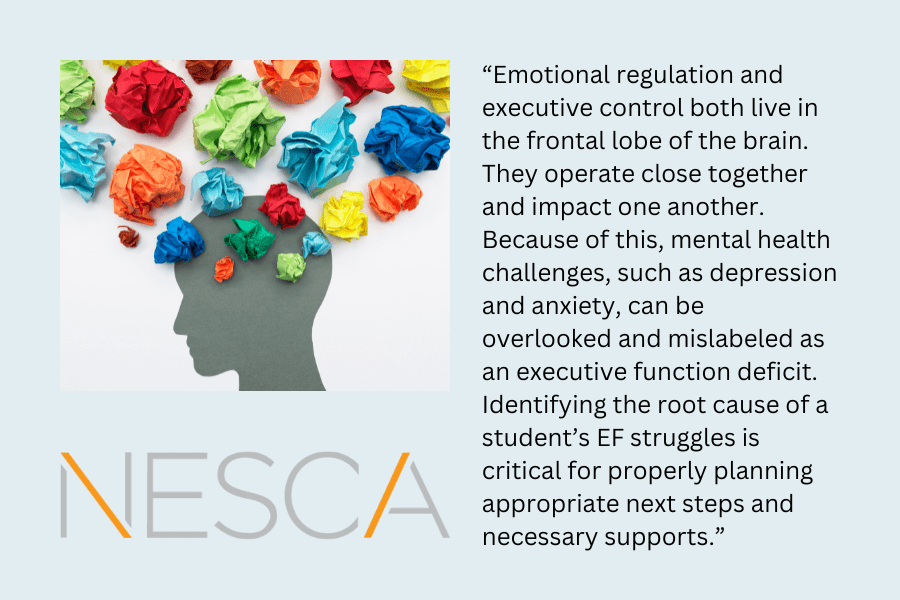
Emotional regulation and executive control both live in the frontal lobe of the brain. They operate close together and impact one another. Because of this, mental health challenges, such as depression and anxiety, can be overlooked and mislabeled as an executive function deficit. Identifying the root cause of a student’s EF struggles is critical for properly planning appropriate next steps and necessary supports. For example, if a student’s depression is causing them not to initiate and/or complete work, the depression usually needs to be addressed before they receive EF coaching. If the student is already working with a mental health professional, such as a therapist, it is important for them to be cleared by the therapist to add in an EF coach. Working on too many new skills at once can be overwhelming, so it is important that enough foundational coping skills are learned first.

An example of anxiety causing an EF deficit:
Clara gets extremely anxious in social situations due to a lack of self-esteem. She had a negative experience in middle school where other students made fun of her lisp whenever she read out loud in class. Now, in high school, Clara is afraid to ask questions, even when she is confused. She is left not fully understanding the material, class assignment expectations, or how to approach studying for quizzes and tests. Rather than asking for help, Clara keeps to herself. Even when teachers offer to help her, she responds with, “Thank you, but I’m all set.”

Clara’s parents can see that she struggles to initiate homework assignments, rarely studies for upcoming tests, and that her grades are declining. They don’t fully understand why, because when they ask her, she is quick to deflect and change the subject.

By checking in with Clara’s teachers, her parents may receive feedback that she often shies away from their support. With a lack of understanding why, her teachers aren’t sure how else to approach the situation other than continuing to check in. Jumping into EF coaching to address her task initiation and study skills may help, but it doesn’t address the root of the problem. A more appropriate action plan would be for Clara to first receive psychotherapy, addressing the bullying that led to her social anxiety and self-esteem issues and then shifting to EF skill building.

An example of an EF deficit causing anxiety/depression:
Gabriel is a seventh grade student diagnosed with ADHD. He has a difficult time advocating for himself and asking for help due to some additional communication challenges. His ADHD also makes it challenging to stay on task and pay attention to details. This results in Gabriel constantly forgetting what his homework assignments are and when they are due, creating a lot of missing work. Gabriel’s teachers are often redirecting him and reminding him of incomplete work. They have tried to help him develop plans to make it up, but he struggles to follow through with these plans. At home, Gabriel’s parents often share their frustrations with him and try to help him get back on track. With adults constantly reminding him he’s behind, Gabriel has developed internalized anxiety, often wondering why he can’t be like everyone else. He tries so hard to remember what his homework is and when it is due, but can never seem to get it right. Over time, he begins to experience symptoms of depression as his self-esteem declines.

In this situation, Gabriel’s lack of EF skills is the root cause of his negative thinking patterns. By receiving EF coaching, he can learn ways to regularly track his assignments. He can be taught how to break them down into smaller, more manageable tasks in a way that helps him overcome procrastination. Additionally, he is able to become proactive and communicate with his teachers so that they are kept on the same page. As these skills get stronger, Gabriel becomes more responsible, and gets praise from his teachers and parents in return. Given the impact of this situation, he may also benefit from short-term counseling to better understand the connection between his EF and anxiety. Increased self-awareness helps students learn how to advocate for themselves the next time they encounter a similar situation.

Does this sound familiar?
These scenarios are common and can be difficult to navigate without proper assessment and guidance from professionals. If you or your child struggles with mental health and EF-related challenges and you are not sure where to start, book a free introductory call with me or one of our other wonderful and experienced EF coaches. NESCA also offers comprehensive neuropsychological evaluation services and neuropsychological consultation for families who are wondering about possible missed learning, attention, mental health, or other diagnoses. We look forward to working with you!


About the Author

Carly Edelstein is a Licensed Clinical Social Worker practicing in Massachusetts and Rhode Island. Having worked both in private practice and schools, she has extensive experience supporting students, families and educational teams to make positive changes. Ms. Edelstein provides executive function coaching and psychotherapy to clients ranging from middle school through adulthood. She also offers consultation to schools and families in order to support her clients across home and community environments.

To schedule an appointment with one of NESCA’s counselors, coaches, or other experts, please complete our online intake form

NESCA is a pediatric neuropsychology practice and integrative treatment center with offices in Newton, Plainville, and Hingham, Massachusetts; Londonderry, New Hampshire; and staff in the greater Burlington, Vermont region and Brooklyn, New York, serving clients from infancy through young adulthood and their families. For more information, please email info@nesca-newton.com or call 617-658-9800.


How to Make the Holidays Less Stressful

By | Nesca Notes 2023

By: Maggie Rodriguez, Psy.D.
Pediatric Neuropsychologist, NESCA

Are the holidays the “most magical time of the year?” Maybe, but they can also be the most stressful. In fact, a recent survey by the American Psychological Association found that 41% of U.S. adults experience increased stress levels around the holidays, while 52% find their stress levels remain the same, and only 7% feel less stressed this time of year. A whopping 43% of American adults acknowledge that the stress that accompanies the holidays compromises their ability to enjoy them (and that number includes only the people willing to admit it!).

As an adult reading this, you may be thinking this information comes as no surprise and you’re all too aware of the stress that comes with the holidays. What you may not realize as fully is that this time of year can be stressful for children as well. While the holidays can bring excitement and fun, they can also present challenges, particularly for our kids and teens who struggle with underlying mental health issues (such as anxiety or depression) or neurodevelopmental conditions (such as Autism, Attention-Deficit/Hyperactivity Disorder, or Sensory Processing Disorder). For the next few weeks, many of us will be attempting to navigate our own holiday-related stress and manage the stress our children may feel and express in a variety of ways. So, if you’re feeling less overwhelmed with excitement and joy and instead simply overwhelmed, you’re not alone. Here are some strategies for making the holidays work for you:

Notice and recognize the impact of expectations. It all starts here. From Hallmark movies to the pictures posted by mom-fluencers on Instagram, we are bombarded with unrealistic images of what the holidays “should” look like. Social media is particularly insidious, as it tends to contribute to a sense that the everyday, real people around us (not just those celebrities in magazines) are living what we see reflected in their carefully edited and curated photos. It’s important to remind ourselves that these images don’t reflect the reality of life and that we don’t see 99% of what happens in the daily lives of those we follow on social media. We may see the images of perfectly decorated Christmas cookies but not the kitchen counters covered in flour, eggs, and frosting (or the parent yelling) in the background. We click on the beautiful photo of three kids all smiling at the camera from Santa’s lap but don’t see the 25 outtakes featuring those same children in tears, sticking out their tongues, or bolting out of the frame. Realizing this and taking a step back is key for ourselves and our children, who may also need explicit information about what they can expect (for instance, regarding the number of and type of gifts they will get based on your family’s budget versus what they envision).

Realize we also all harbor implicit ideas about what the holidays “should” look like based on our experiences growing up and the way our families did things, which we take for granted. If you’re in a relationship, you may have encountered your own hidden expectations if they ever come into conflict with those of your significant other. Even if you celebrate the same holiday(s), you may do so in very different ways. Some of you may be familiar with conversations, such as, “What do you mean your family decorates the tree Christmas Eve? Christmas trees go up as soon as we put our jack-o-lanterns in the compost on November 1st!” If you and your partner celebrate different holidays or your kids split their time between your home and that of another parent, all of this becomes much more complicated. So, talk about it openly and together. As a family, re-evaluate your expectations and traditions, and start with a blank slate. Sit down together, make your expectations explicit, then assess them together.

Ask some questions, such as:

  • What does each family member, kids included, envision the holidays will look like? This might be general and abstract (maybe Mom wants to ensure there’s downtime for rest and relaxation) or concrete (maybe the kids want to go ice skating over winter break, and Dad wants to make sure the family goes to midnight mass on Christmas Eve). How will you make this work both logistically and in terms of balancing different needs?
  • What traditions do you automatically take part in, and do they work for your family at this particular moment in time? Although traditions are important and meaningful, blind and rigid adherence to rituals and routines that don’t work for us don’t benefit anyone. We often take part in traditions without questioning whether they add to our lives or why we started doing them in the first place.

Once you’ve had these discussions, consider that you don’t have to “do” the holidays the same way ever single year. There’s no rule that says every holiday season has to look the same. Do you always go take photos with Santa at the mall even though your kids inevitably resist the idea, become anxious and overwhelmed, and you end up frustrated? Open up to the possibility of forgoing that tradition even if it’s just for the time being. Do you make an elaborate holiday dinner each year but aren’t up to it this year? Consider finding an alternative for now that takes the stress off of you and still aligns with your priorities. If what’s important to you is enjoying a meal with your family, maybe you can still do that while letting go of the need to do it all yourself.

Modify your expectations and make accommodations for your children given their unique personalities and potential challenges. This might mean forgoing busy and crowded events, such as parties, for children and teens who struggle with anxiety in social settings or become easily overwhelmed by sensory input. Or maybe you still attend, but you have a pre-established plan for leaving by a certain time and/or managing distress that may arise. These days, many public spaces that host events (e.g., museums, theaters) hold modified sensory-friendly versions of events at specified times. For many children, building in predictable routines, and previewing special plans or changes to their usual schedules can be very helpful. For kids or adolescents with significant “picky” eating or Avoidant-Restrictive Food Intake Disorder (ARFID), you might consider hosting a holiday dinner at your house so you have control over the menu or bringing food you know your child will eat if you’re visiting others. Many kids with ADHD will need movement breaks, so think ahead about how you’ll work those in depending on your plans. It helps to think ahead and have a flexible plan for meeting your kids’ needs in different scenarios.

Now for the twist. Remember that APA study I quoted at the start of this blog? Well, even though so many people reported significant stress, it also found that 69% of adults feel the stress of the holidays is “worth it,” and many endorse positive outcomes related to the holidays, including an increased sense of togetherness. No matter what or how you celebrate, the holidays can be a wonderful and meaningful time of the year, and the odds of finding joy, connection, and calm will be higher if you take a step back and figure out how to make the holidays fit into your life and work for your family.

References:
https://www.apa.org/news/press/releases/2023/11/holiday-season-stress


About the Author

Maggie Rodriguez, Psy.D., provides comprehensive evaluation services for children, adolescents, and young adults with often complex presentations. She particularly enjoys working with individuals who have concerns about attention and executive functioning, language-based learning disorders, and those with overlapping cognitive and social/emotional difficulties.

Prior to joining NESCA, Dr. Rodriguez worked in private practice, where she completed assessments with high-functioning students presenting with complex cognitive profiles whose areas of weakness may have gone previously undiagnosed. Dr. Rodriguez’s experience also includes pre- and post-doctoral training in the Learning Disability Clinic at Boston Children’s Hospital and the Neurodevelopmental Center at MassGeneral for Children/North Shore Medical Center. Dr. Rodriguez has spent significant time working with students in academic settings, including k-12 public and charter school systems and private academic programs, such as the Threshold Program at Lesley University.

Dr. Rodriguez earned her Psy.D. from William James College in 2012, where her coursework and practicum training focused on clinical work with children and adolescents and on assessment. Her doctoral thesis centered on cultural issues related to evaluation.

Dr. Rodriguez lives north of Boston with her husband and three young children.  She enjoys spending time outdoors hiking and bike riding with her family, practicing yoga, and reading.

To book a consultation with Dr. Rodriguez or one of our many other expert neuropsychologists, complete NESCA’s online intake form.

NESCA is a pediatric neuropsychology practice and integrative treatment center with offices in Newton, Plainville, and Hingham, Massachusetts; Londonderry, New Hampshire; and the greater Burlington, Vermont region, serving clients from infancy through young adulthood and their families. For more information, please email info@nesca-newton.com or call 617-658-9800.

NESCA Goes to Brain Camp – Exploring the Connections among Brain Anatomy, Emotional Health, and Neuropsychology

By | Nesca Notes 2023

By Angela Currie, Ph.D.
Pediatric Neuropsychologist; NH Director, NESCA

For three days every July, students, clinicians, and researchers from around the country descend upon Milwaukee for Marquette University’s Neuroanatomical Dissection Course. This Marquette course is the only one in the world that provides a continuing education opportunity to learn about advances in neuroscience research while also engaging in hands-on brain dissection within the university’s gross anatomy lab. This past July, my NESCA colleague, Dr. Erin Gibbons, and I had the pleasure of being two of the participants.

Perhaps not unexpectedly, the lab components of the course were insightful and impactful. This included watching 3-D computer-aided brain maps within the visualization lab at the engineering school, as well as hands-on brain dissection of donor specimens, some of which presented with unique pathologies that had never been seen first-hand within the lab. Across the three days of the seminar, lectures covered a range of topics, such as neuroanatomy, how emotions function in the brain, and functional and neurological presentation of brain pathology. We also had the opportunity to select from a range of presentations that provided a “deep dive” into more specific topics. There was a host of information that directly speaks to our practice as pediatric neuropsychologists. That said, as someone who often works with clients who face depression, anxiety, and trauma, certain information stood out as most relevant to my daily practice.

First, there is an increasing amount of research indicating that early-onset (onset in childhood or adolescence), prolonged depression can significantly reduce the growth and volume of particular brain areas related to learning and memory; however, this negative impact can be ameliorated with antidepressant medication.1,2 Often times, when working with clients, families are understandably reticent about giving medication to their developing child. While individual response to treatment cannot be predicted, this research shows that, when appropriate to the client’s needs, medication can actually protect brain development, and thereby better support learning and memory over the lifespan.

Another topic that was covered was the impact of trauma on brain development and later self-regulation challenges and treatment response. As a clinician who often sees children with developmental, complex trauma, I am often in the position of explaining to families how trauma affects brain development. There is research to suggest that ongoing adversity early in childhood inhibits development in areas of the brain that manage inhibition, emotions, and processing, and this may contribute to later difficulties understanding emotion and modulating stress.3 While trauma may affect brain development in any child, there are also some children who appear to persist through adversity with lesser effect. There is research to suggest that this “resiliency” may not just be a personality characteristic, but may be a result of a larger, better-developed area of the brain that is thought to integrate emotional and cognitive information, allowing them to better manage emotional responses.4 Stronger development in this area can also predict better response to cognitive behavior therapy in older individuals with PTSD. 5 While it is not always clear what allowed those individuals to have stronger brain development, research shows that early treatment and access to social supports results in improved emotion processing and brain function in children with trauma, emphasizing neuroplasticity within the brain.6,7

The message that can be extracted from the above research is that the brain is highly vulnerable, but it can also be very resilient and adaptable. While our experiences and genetic vulnerabilities may present their challenges to neurological development, proper therapies, social supports, and medications can change a person’s developmental course and support long-term gains. Actually measuring brain volume and conducting imaging is not necessary for understanding how these factors present within an individual person. Instead, comprehensive assessment of their neurocognitive functioning, processing, learning, and social/emotional functioning can elucidate their resiliency factors, as well as targets for intervention. This is what we have always strived to do at NESCA, and now with the advantage of the Marquette Neuroanatomical Dissection Course, we can demonstrate how our clinical process, values, and goals are supported by current brain research.


References

  1. Schmaal, L., Veltman, D., van Erp, T. et al.(2016). Subcortical brain alterations in major depressive disorder: findings from the ENIGMA Major Depressive Disorder working group. Molecular Psychiatry, 21: 806–812. https://doi.org/10.1038/mp.2015.69
  2. Sheline YI, Gado MH, Kraemer HC. (2003). Untreated depression and hippocampal volume loss. American Journal of Psychiatry,160(8):1516-1518. doi: 10.1176/appi.ajp.160.8.1516.
  3. Zhai ZW, Yip SW, Lacadie CM, Sinha R, Mayes LC, Potenza MN. (2019). Childhood trauma moderates inhibitory control and anterior cingulate cortex activation during stress. Neuroimage, 185:111-118. doi: 10.1016/j.neuroimage.2018.10.049.
  4. Stevens, JS, Ely, E.D., Sawamura, T., et al. (2013). Childhood maltreatment predicts inhibition-related activity in the rostral anterior cingulate in PTSD, but not trauma-exposed control. Depression and Anxiety, 33(7): 614-622. https://doi.org/10.1002/da.22506
  5. Bryant RA, Felmingham K, Whitford TJ, et al. (2008). Rostral anterior cingulate volume predicts treatment response to cognitive-behavioural therapy for posttraumatic stress disorder. Journal of Psychiatry and Neuroscience, 2008, 33(2):142-6. PMID: 18330460.
  6. Wymbs, NF, Orr, C, Albaugh, MD, et al. (2020). Social supports moderate the effects of child adversity on neural correlates of threat processing. Child Abuse & Neglect, 102: 104413. https://doi.org/10.1016/j.chiabu.2020.104413.
  7. Garrett A, Cohen JA, Zack S, C, et al. (2019). Longitudinal changes in brain function associated with symptom improvement in youth with PTSD. Journal of Psychiatric Research,114:161-169. doi: 10.1016/j.jpsychires.2019.04.021.


About the Author

Dr. Currie specializes in evaluating children, teens, and young adults with complex profiles, working to tease apart the various factors lending to their challenges, such as underlying learning, attentional, social, or emotional difficulties. She particularly enjoys working with the seemingly “unmotivated” child, as well as children who have “flown under the radar” for years due to their desire to succeed.


To book an evaluation with Dr. Currie or one of our many other expert neuropsychologists, complete NESCA’s online intake form. Indicate whether you are seeking an “evaluation” or “consultation” and your preferred clinician in the referral line.


NESCA is a pediatric neuropsychology practice and integrative treatment center with offices in Newton, Plainville, and Hingham (coming soon), Massachusetts; Londonderry, New Hampshire; and the greater Burlington, Vermont region, serving clients from infancy through young adulthood and their families. For more information, please email info@nesca-newton.com or call 617-658-9800.

Skip to content