NESCA now accepts United Behavioral Health for neuropsychological evaluations!

To book an appointment, complete our Inquiry/Intake Form.

Tag

behavior Archives - NESCA

Subscribe to NESCA Notes

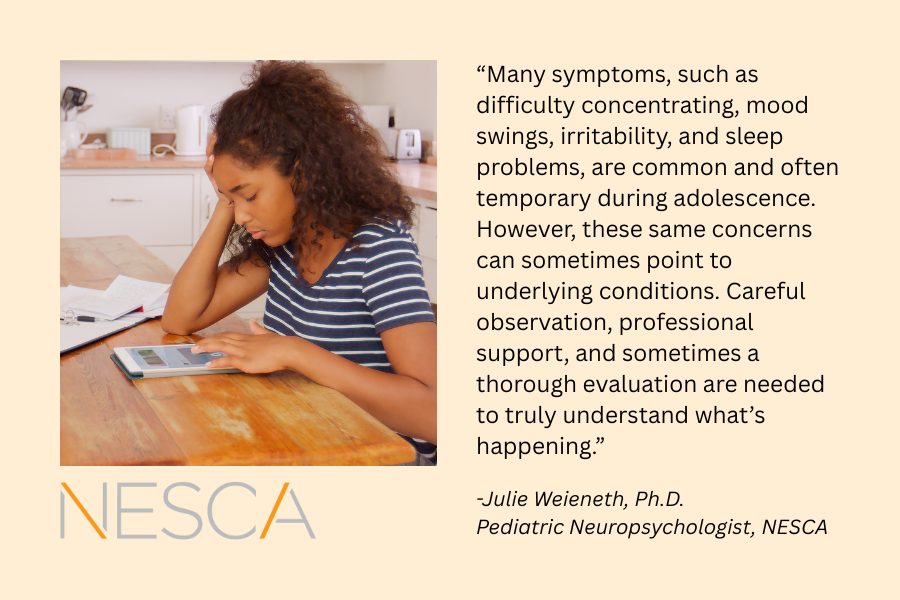
Image of a stressed out teenager along with a quote from Julie Weieneth, Ph.D..

Is This Stress or Something More?

By | NESCA Notes 2025

Image of a stressed out teenager along with a quote from Julie Weieneth, Ph.D..By: Julie Weieneth, Ph.D.
Pediatric Neuropsychologist, NESCA

Understanding ADHD, Anxiety, Depression, and Typical Adolescent Development

As both a neuropsychologist and a parent, I see firsthand how challenging academic and social pressures can be for teenagers. Like many parents, I sometimes wonder whether my own teen’s struggles are just part of growing up or if they might signal something more serious, such as ADHD, anxiety, or depression. From my clinical perspective, recognizing the difference is crucial. Early intervention not only supports long-term success but can also help prevent more persistent issues in the future.

Why It Can Be Hard to Tell

Many symptoms, such as difficulty concentrating, mood swings, irritability, and sleep problems, are common and often temporary during adolescence. However, these same concerns can sometimes point to underlying conditions. Careful observation, professional support, and sometimes a thorough evaluation are needed to truly understand what’s happening.

Signs of ADHD

  • Ongoing struggles with attention, organization, and time management in different settings
  • Frequently losing items or forgetting important things
  • Trouble staying focused on tasks that require sustained effort
  • Restlessness or fidgeting
  • Symptoms usually begin in childhood (often by age 12) and are consistent, not just a reaction to stress or specific situations

Signs of Anxiety

  • Excessive worry about school, friendships, or the future
  • Physical complaints, such as headaches or stomachaches
  • Avoidance of stressful situations, including tests or social events
  • Perfectionism and fear of making mistakes
  • Symptoms often become more noticeable during times of increased stress

Signs of Depression

  • Persistent sadness or irritability
  • Loss of interest in activities that used to be enjoyable
  • Fatigue and low energy
  • Changes in sleep or eating habits
  • Withdrawal from friends and family
  • Symptoms last for two weeks or longer and can significantly affect motivation and daily functioning

Typical Adolescent Challenges

  • Occasional procrastination or forgetfulness
  • Temporary mood swings or frustration
  • Feeling stressed before exams or social events
  • Desire for more independence and privacy
  • These concerns are usually mild, short-lived, and tend to improve with support, structure, and time

How a Neuropsychological Evaluation Can Help

A neuropsychological assessment can help clarify whether a teen’s symptoms are part of normal development or indicate a clinical concern. This process includes reviewing developmental and academic history, conducting standardized testing, and gathering input from parents, teachers, and the teen.

Ways to Support Teens Based on Their Needs

  • For ADHD, strategies such as organizational (Executive Function – EF) coaching, academic accommodations, behavioral therapy, and sometimes medication may be needed
  • For anxiety, counseling, stress management techniques, a supportive environment, and sometimes medication may be needed
  • For depression, therapy, healthy routines, and sometimes medication can make a significant difference
  • For teens experiencing more than one of these concerns, a combination of strategies and coordinated care is often most effective
  • For typical adolescent challenges, open communication, structure, and encouragement usually work well

If your teen’s difficulties persist or begin to interfere with everyday life, reaching out to a neuropsychologist can provide clarity and guidance. Early understanding and tailored support can help your teen feel better and succeed both now and in the future. If you are unsure whether your teen needs a full neuropsychological evaluation, you can schedule a consultation with a NESCA clinician who will review your concerns and help you decide how best to proceed.


About the AuthorJulie Weineth headshot

Dr. Weieneth is a licensed clinical psychologist who has worked with children and families with complex diagnostic and treatment needs for the last twenty years. Her areas of specialty include ADHD, autism spectrum disorders, anxiety, mood disorders, learning disabilities, executive functioning, and school-related challenges. That being said, Dr. Weieneth also understands that not all individuals fit cleanly into diagnostic groups or labels. Her goals for each evaluation are to help families feel comfortable with the process, use all the tools available to best understand each individual’s unique strengths and needs, and to write a clear and comprehensive report that will guide educational and treatment planning.

To book a consultation with Dr. Weieneth or one of our many other expert neuropsychologists or other clinicians, complete NESCA’s online intake form.

NESCA is a pediatric neuropsychology and related services practice with offices in Newton, Plainville, and Hingham, Massachusetts; Londonderry, New Hampshire; the greater Burlington, Vermont region; and Coral Gables, Florida, serving clients from infancy through young adulthood and their families. For more information, please email info@nesca-newton.com or call 617-658-9800.
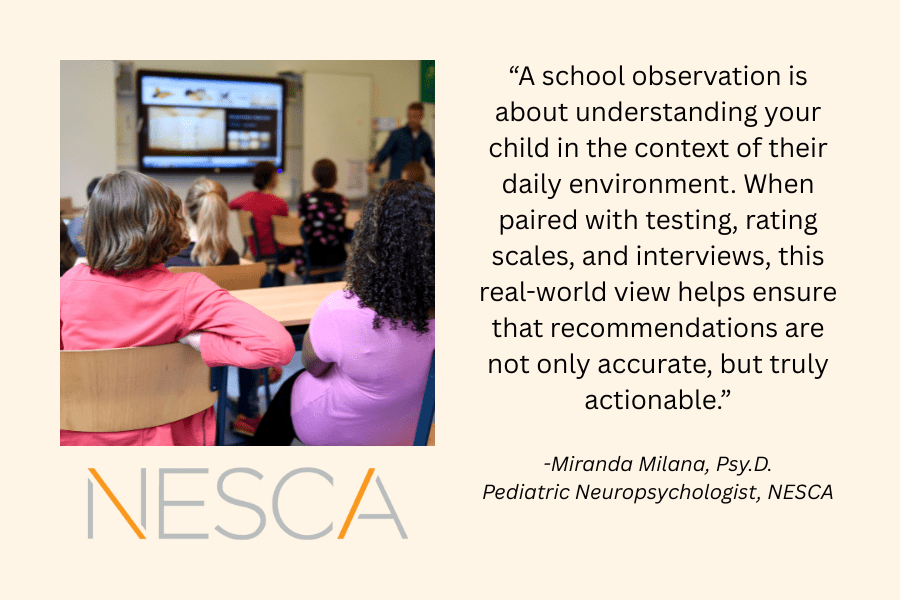
image of adults observing a school classroom

Why School Observations Matter in a Neuropsychological Assessment

By | NESCA Notes 2025

image of adults observing a school classroomBy Miranda Milana, Psy.D.
Pediatric Neuropsychologist

When families seek a neuropsychological evaluation for their child, it’s usually because they’re looking for a deeper, more comprehensive understanding of their child’s profile—including both strengths and challenges. This kind of evaluation helps answer important questions about how a child learns, thinks, manages emotions, and interacts with others.

By gaining this insight, we can better support a child in all areas of life—at school, at home, with friends, and in community settings. Sometimes, however, the most valuable piece of the puzzle doesn’t come from test scores at all.

In some cases, your neuropsychologist may determine that observing your child in their natural learning environment—a school observation—can provide crucial information that simply can’t be gathered in an office setting.

What Is a School Observation?

A school observation involves a trained professional—usually the neuropsychologist conducting your child’s evaluation—visiting your child’s school to observe them in real time.

This observation might include time spent watching your child:

  • During classroom instruction
  • In social settings like lunch or recess
  • While transitioning between classes
  • In additional services, such as speech/language therapy or occupational therapy

The purpose is to see how your child functions across different settings and situations throughout their school day.

Why Is a School Observation So Valuable?

You might wonder: if the evaluator already has detailed testing results, rating forms from parents and teachers, and information from the intake appointment and outside providers, why observe at school?

Even the best testing environment can’t fully replicate real-world situations. In a quiet, 1:1 testing setting, a child might appear regulated, focused, and engaged—but in a classroom filled with distractions and increased demands, their behavior and overall presentation might look very different. A school observation helps us understand how a child manages in the real-world environments where challenges often arise.

Observations allow us to:

  • Identify situations that may be triggering challenging behaviors (like transitions, group work, or unstructured time)
  • Determine whether a child is well-matched with their peers or may be in the wrong instructional group
  • Notice social dynamics—Are they connecting with peers? Are they withdrawn or overly controlling during play?

Another critical area we assess during school observations is whether the learning environment is a good fit for your child:

  • Is the classroom appropriately structured?
  • Are staff using the tools and supports outlined in the IEP?
  • Does your child respond well to the strategies, like visual schedules or token boards, being used?

Observing how a child responds to the classroom setup and supports can help determine whether their current environment is truly meeting their needs—or if changes are required to allow them to access the curriculum.

When Is a School Observation Recommended?

Not every evaluation requires a school observation, but there are several situations where it can provide especially meaningful insight. Examples include:

  • A child who struggles with behaviors at school that aren’t seen at home or during testing
  • A child who performs well on standardized tests but is reported to be having a hard time keeping up in class
  • Uncertainty about whether the child’s current classroom or program is the right fit for their learning profile
  • Questions about whether the child would benefit from a different instructional approach, such as a language-based classroom or one using ABA methods

At NESCA, our clinicians are trained to determine when a school observation would add helpful information to the evaluation process. We view it as one of many tools to build the most accurate picture of your child’s needs.

What to Expect During the Observation

If you and your evaluator decide that a school observation would be helpful, we’ll coordinate the visit with your child’s school—with full permission from you and the school team.

On the day of the observation:

  • The evaluator typically sits in the back of the classroom, making every effort not to disrupt the flow of the day.
  • The goal is to blend in and observe naturally occurring interactions and behaviors.
  • Observations are done in a respectful, non-intrusive manner with the sole purpose of helping your child.

Afterward, the evaluator will include a summary of the observation in the written report, and the insights gained will be integrated into the diagnostic impressions and recommendations.

A school observation is about understanding your child in the context of their daily environment. When paired with testing, rating scales, and interviews, this real-world view helps ensure that recommendations are not only accurate, but truly actionable.

If you have any questions about the school observation process—or want to know whether it might be helpful for your child—don’t hesitate to reach out to your evaluator. We’re always here to help guide you through the process and help your child get the support they need to succeed.


About the Author

Dr. Miranda Milana provides comprehensive evaluation services for children and adolescents with a wide range of concerns, includingMiranda Milana PsyD headshot attention deficit disorders, communication disorders, intellectual disabilities, and learning disabilities. She particularly enjoys working with children and their families who have concerns regarding an autism spectrum disorder. Dr. Milana has received specialized training on the administration of the Autism Diagnostic Observation Schedule (ADOS).

Dr. Milana places great emphasis on adapting her approach to a child’s developmental level and providing a testing environment that is approachable and comfortable for them. She also values collaboration with families and outside providers to facilitate supports and services that are tailored to a child’s specific needs.

Before joining NESCA, Dr. Milana completed a two-year postdoctoral fellowship at Boston Children’s Hospital in the Developmental Medicine department, where she received extensive training in the administration of psychological and neuropsychological testing. She has also received assessment training from Beacon Assessment Center and The Brenner Center. Dr. Milana graduated with her B.A. from the University of New England and went on to receive her doctorate from William James College (WJC). She was a part of the Children and Families of Adversity and Resilience (CFAR) program while at WJC. Her doctoral training also included therapeutic services across a variety of settings, including an elementary school, the Family Health Center of Worcester and at Roger Williams University.

Dr. Milana grew up in Maine and enjoys trips back home to see her family throughout the year. She currently resides in Wrentham, Massachusetts, with her husband and two golden retrievers. She also enjoys spending time with family and friends, reading, and cheering on the Patriots, Bruins, Red Sox, and Celtics.​

To book an appointment with Dr. Miranda Milana or another expert NESCA neuropsychologist, please complete our Intake Form today. 

NESCA is a multidisciplinary pediatric neuropsychology practice with offices in Newton, Plainville, and Hingham, Massachusetts; Londonderry, New Hampshire; and the greater Burlington, Vermont region, serving clients from infancy through young adulthood and their families. For more information, please email info@nesca-newton.com or call 617-658-9800.


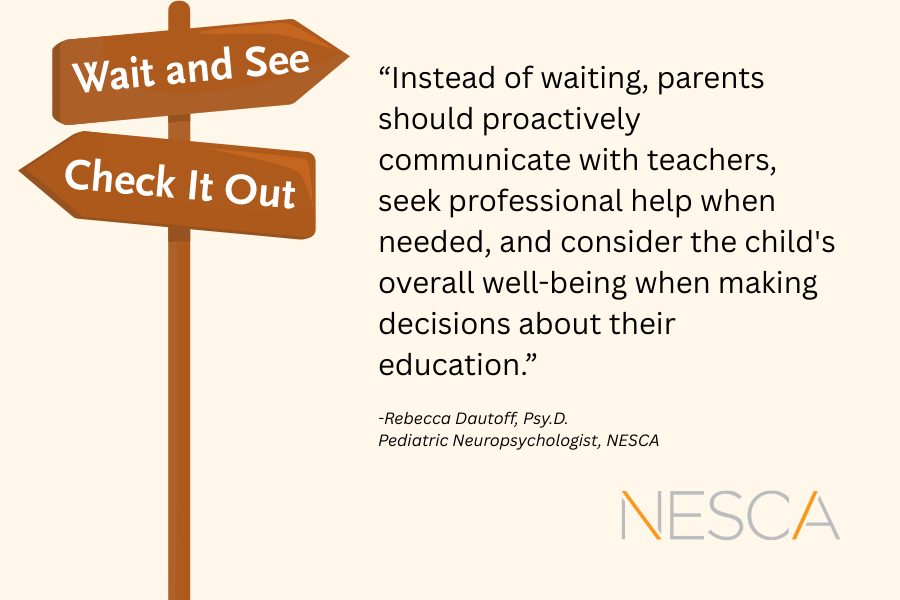
Image of a signpost with the words Wait and See" and "Check It Out" on it and a quote from Dr. Rebecca Dautoff

When In Doubt, Check it Out

By | NESCA Notes 2025

Image of a signpost with the words Wait and See" and "Check It Out" on it and a quote from Dr. Rebecca DautoffBy: Rebecca Dautoff, Psy.D.
Pediatric Neuropsychologist, NESCA

As a child psychologist, I regularly advise parents that our job is not to eliminate their children’s frustration, anxiety, and disappointment. Instead, our goal is to help kids process and tolerate these emotions. In fact, it’s critical that children face obstacles so they can learn to navigate and endure challenges throughout their life. But what happens when a child has a particularly tough time at school or a really difficult year? What are the next steps?

Deciding what to do can be a hard decision for concerned parents. Some parents question whether they should  “do something” to help the child, or to relieve their own anxiety and guilt. Other parents feel that their child’s issues are due to “a bad fit” with a particular teacher or classroom structure. This can be even harder when the school tells parents that everything is okay, or it’s just a phase that they see all the time. In some cases—such as a child grieving or adjusting to a new school—a short observation period (a few weeks) with close monitoring and open communication can be appropriate. However, this should always come with a clear plan to seek help if things don’t improve, because the “wait and see” approach can pose real risks to a child’s development, mental health, and emotional well-being. Here’s why:

First, childhood is full of developmental windows. These are essentially periods of time or opportunity when the brain is especially receptive to learning a specific skill. If a child is struggling in one of these areas and we wait too long, we risk missing this period of optimal learning. Language delays are a clear example. There is a critical period of language development before the age of 3, meaning that intervention for speech and language challenges are most effective before this age.

Second, children are incredibly perceptive. Kids are highly attuned and hyper aware when they feel like something is harder for them than it is for their friends and classmates. Often, kids internalize their struggles as personal failures. This can lead to frustration, anxiety, withdrawal, or behavioral problems/acting out. These outcomes are even more likely if a child is late to learn a skill. Take reading as an example. If a child is learning to read more slowly than their peers in first or second grade, they are less likely to internalize this as a problem because most of their classmates are also learning to read. It might come more easily to their friends, but they are all learning to read. If we wait to intervene, and a child is still having difficulty with reading in fourth grade, they are more likely to internalize their difficulty as a personal failure because they are no longer surrounded by peers who are also working on the same skill.

Taking a wait and see approach with your child’s mental health can feel like a cautious or hopeful strategy—especially when you’re unsure if something is truly wrong. Unfortunately, mental health conditions are often progressive, and waiting to treat them can allow symptoms to worsen, which makes them harder to treat. Undiagnosed mental health issues can lead to poor academics, social withdrawal, bullying, or acting out. The child may fall behind developmentally or struggle to make or keep friendships, which will impact their self-esteem and exacerbate their mental health issues. In older children and adolescents, we also see untreated mental health issues lead to more dangerous problems, like substance use, self-harm, eating disorders, or suicidal thoughts.

Instead of waiting, parents should proactively communicate with teachers, seek professional help when needed, and consider the child’s overall well-being when making decisions about their education.

What to Do Instead Of “Wait and See”:

  • Talk to your child: Open the door to conversation and let them know you’re there.
  • Keep track of behaviors, moods, or changes.
  • When in doubt, check it out: Even a single consultation with a pediatrician, school counselor, or therapist can provide guidance without committing to long-term treatment. If you suspect there is a deeper learning, emotional, developmental, or behavioral issue, a neuropsychological evaluation can also determine the root cause of the issues and set you and your child on a better path forward.


About the Author

Dr. Rebecca Dautoff provides comprehensive neuropsychological and psychological (projective) evaluation services for children, adolescents,Headshot of Rebecca Dautoff, Psy.D. and young adults who have complex presentations with a wide range of concerns, including attention deficit disorders, psychiatric disorders, intellectual disabilities, and autism spectrum disorders (ASD). She also values collaboration with families and outside providers to facilitate supports and services that are tailored to each child’s specific needs.


If you are interested in booking an appointment for an evaluation with Dr. Dautoff or another NESCA neuropsychologist/clinician, please fill out and submit our online intake form


NESCA is a pediatric neuropsychology practice and integrative treatment center with offices in Newton, Plainville, and Hingham, Massachusetts; Londonderry, New Hampshire; the greater Burlington, Vermont region, serving clients from infancy through young adulthood and their families. For more information, please email info@nesca-newton.com or call 617-658-9800.

The ABCs of Challenging Behavior

By | Nesca Notes 2023

By: Erin Gibbons, Ph.D.
Pediatric Neuropsychologist, NESCA

When a child or adolescent is exhibiting challenging behaviors, it is helpful to understand why the behaviors are occurring. The first step is to analyze the situational factors surrounding the behaviors:

A: Antecedent. What is happening right before the behavior occurred?
B: Behavior. What is the specific behavior that the child/adolescent exhibited?
C: Consequence. What happened right after the behavior occurred?

By looking at the ABCs of a particular behavior, we can start to understand the function of the behavior. That is to say, why is the child/adolescent engaging in the behavior? How is the behavior being reinforced?

Let’s look at an example:
Tom is in 6th grade. He arrives to math class, and the teacher distributes a worksheet. Tom rips up the math sheet and throws it on the floor. The teacher sends him to principal’s office.

A: Math class, being given a worksheet
B: Ripping up the paper
C: Being sent to the principal/leaving the class

In this example, the aversive situation might be math class itself, it could be the worksheet, or it could be the specific concept being worked on (e.g., multiplication is hard for Tom). Alternatively, something might have happened right before math class that upset him.

The consequence is that Tom is allowed to avoid the problematic situation. Thus, the teacher is inadvertently reinforcing the behavior. Tom has learned that if he refuses to do the work, he gets to leave class.

The more effective intervention would be to understand why he refused the work. In this case, it would be important to have a conversation with Tom. Was the work too hard? Does he need extra explanation of the concepts being covered in the worksheet? Did something happen before math class that Tom was still upset about? If the teacher is not able to engage him in this type of conversation, perhaps it would be better to send him to the school counselor as opposed to the principal.

As you think about your own children, it might be helpful to consider the ABCs of any challenging behaviors that are occurring. What was happening right before? If you can identify antecedents, you might be able to make some concrete environmental changes in order to avoid the behavior. What happened right afterward? Did your reaction to the behavior somehow reinforce it? Could you do something different next time the behavior occurs that would be more effective?

Resources
The Explosive Child by Ross Greene
How to Talk So Kids Will Listen & Listen So Kids Will Talk by Adele Faber and Elaine Mazlish
The Behavior Code Companion by Jessica Minahan


About the Author

Erin Gibbons, Ph.D., evaluates children presenting with a range of attentional, learning, and developmental disabilities. She has a particular interest in children with autism spectrum disorders, intellectual disabilities, and those with complex medical histories.

If you are interested in booking an evaluation with a NESCA neuropsychologist/clinician, please fill out and submit our online intake form

NESCA is a pediatric neuropsychology practice and integrative treatment center with offices in Newton, Plainville, and Hingham, Massachusetts; Londonderry, New Hampshire; and the greater Burlington, Vermont region, serving clients from infancy through young adulthood and their families. For more information, please email info@nesca-newton.com or call 617-658-9800.

Questionnaires, Rating Scales, and Checklists, Oh My!

By | Nesca Notes 2023

By: Maggie Rodriguez, Psy.D.
Pediatric Neuropsychologist, NESCA

Before I had children, I knew parenting would bring with it new demands. If you’d asked me what tasks I imagined would take a lot of my time and energy as a parent, I would have listed things like feeding hungry little mouths, washing adorable clothes, driving kids to and from school and activities, dealing with bath time, and reading stories at bedtime. What I would never have guessed is how much time and mental effort I would spend filling out paperwork. From the moment a child enters a parent’s life—regardless of what process brings them together as a family—it seems like there are unending forms to complete. As a parent of three children, I cannot begin to calculate how many hours I’ve spent filling out forms for doctors, daycares, schools, camps, babysitters, and extracurriculars. It’s a lot.

Perhaps that’s why I sometimes notice a very relatable subtle sigh when I hand parents forms to complete as part of their children’s neuropsychological evaluation. I get it, and I never want to add to a parent’s already overwhelming list of tasks to complete. Nevertheless, carefully selected questionnaires are an important part of a thorough neuropsychological assessment. Here are a few of the reasons why.

  1. Simply put, parents are the experts on their children. No doubt about it, a parent (or primary caregiver) knows a child better than just about anyone else could. Parents are uniquely qualified to provide invaluable information about their children and are a tremendous resource.
  2. Parents have more data points. During an evaluation, I typically spend about five hours with a child over the course of two testing sessions. It’s a limited glimpse into mere hours out of years of a child’s life. Parents are typically positioned to observe their children much more frequently and on many more occasions. I may see a child at their best or on a particularly bad day, and I don’t want to rely on my observations alone. Having information from many points in time, and from different settings, is incredibly useful and helps capture a more complete picture of a child.
  3. I want and need to know what happens outside the testing office. By design, the testing environment is deliberately developed to be a quiet space as free of distractions as possible to maximize a child’s ability to focus and participate in formal testing. It’s a highly structured situation and a one-on-one interaction. Life outside the office is…well, quite different. I want to get a sense of what happens during the hectic morning rush to get out the door, on the playground and the soccer field, and at the family dinner table.
  4. On a related note, people present differently in different settings, and having data helps us make sense of this. Many parents can relate to the concept of “restraint collapse.” Essentially, kids often work hard to keep it together in the academic setting throughout the day and “fall apart” when they come home after a long day of school. Similarly, children are often on the “best behavior” in public settings and with adults other than their parents. For this reason, I often don’t get to see this important aspect of things, so I rely on parent reports.
  5. Some things simply cannot be readily assessed using standardized testing measures in an office environment. Two skill sets that fall into this category are executive functions and social skills. Executive functions, which include skills like working memory, are not easily captured through tests in the somewhat artificial environment of an office. To assess working memory, we rely on tasks such as asking a child to recall strings of numbers. In the real world, working memory applies to more complex tasks, such as following multi-step instructions in a busy classroom or home setting. A child may do well remembering single digit numbers, but this doesn’t always translate to being able to remember and complete a series of directions in the “real world.” Similarly, interacting with one adult in a highly structured environment doesn’t allow a glimpse into a child’s social skills within the more complex, unstructured situations they face day to day.

In short, neuropsychologists rely on information from parents to gain a clear and complete picture of a child and to provide answers to the questions that bring a family to us. One of the ways we obtain this information is through questionnaires, symptom rating scales, and checklists. So, parents, thank you, for taking the time to give us your unique and invaluable perspective. We couldn’t do our jobs without it or without you.


About the Author

Maggie Rodriguez, Psy.D., provides comprehensive evaluation services for children, adolescents, and young adults with often complex presentations. She particularly enjoys working with individuals who have concerns about attention and executive functioning, language-based learning disorders, and those with overlapping cognitive and social/emotional difficulties.

Prior to joining NESCA, Dr. Rodriguez worked in private practice, where she completed assessments with high-functioning students presenting with complex cognitive profiles whose areas of weakness may have gone previously undiagnosed. Dr. Rodriguez’s experience also includes pre- and post-doctoral training in the Learning Disability Clinic at Boston Children’s Hospital and the Neurodevelopmental Center at MassGeneral for Children/North Shore Medical Center. Dr. Rodriguez has spent significant time working with students in academic settings, including k-12 public and charter school systems and private academic programs, such as the Threshold Program at Lesley University.

Dr. Rodriguez earned her Psy.D. from William James College in 2012, where her coursework and practicum training focused on clinical work with children and adolescents and on assessment. Her doctoral thesis centered on cultural issues related to evaluation.

Dr. Rodriguez lives north of Boston with her husband and three young children.  She enjoys spending time outdoors hiking and bike riding with her family, practicing yoga, and reading.


To book a consultation with Dr. Rodriguez or one of our many other expert neuropsychologists, complete NESCA’s online intake form.

NESCA is a pediatric neuropsychology practice and integrative treatment center with offices in Newton and Plainville, Massachusetts, Londonderry, New Hampshire, and Burlington, Vermont, serving clients from preschool through young adulthood and their families. For more information, please email info@nesca-newton.com or call 617-658-9800.

Understanding Behavior as Communication

By | Nesca Notes 2023

By: Cynthia Hess, PsyD
Pediatric Neuropsychologist

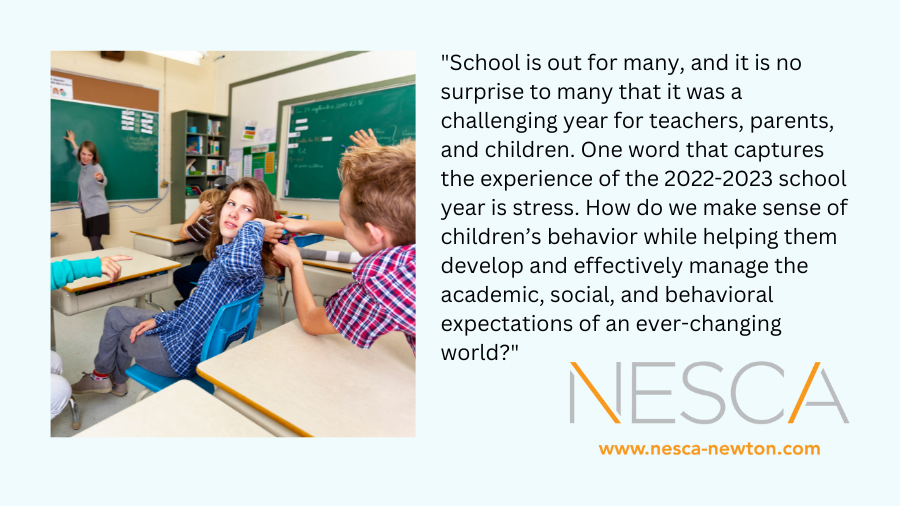
School is out for many, and it is no surprise to many that it was a challenging year for teachers, parents, and children. One word that captures the experience of the 2022-2023 school year is stress. Teachers were stressed as their students continued to contend with the academic and social deficits that resulted from the pandemic. Many students have struggled to adapt to post-pandemic learning, and incidents of acting out behavior have increased precipitously. How do we make sense of children’s behavior while helping them develop and effectively manage the academic, social, and behavioral expectations of an ever-changing world?

Ross Greene, Ph.D., states, “Children want to do well and would if they could.” Behavior is not just random or meaningless. It serves as a way for children to express their needs, feelings, and experiences, especially when they have not yet developed strong verbal or communication skills. When the demands of the environment exceed a child’s capacity to manage them, they are apt to become stressed, increasing the likelihood that they will act out. Stress is a complex concept that is a response to perceived or anticipated demands or pressures that exceed an individual’s coping abilities.

When stressed, the adrenal glands release cortisol, a stress hormone that helps mobilize energy reserves for the fight-or-flight response. Fear and anxiety also increase individuals’ vulnerability to responding with fight or flight. So, while fear is focused on a specific threat, physiologically, it feels much the same as stress. Behavior is, therefore, a way of communicating that something is amiss. For instance, a child who acts aggressively may express frustration, which is stressful. And a child who becomes withdrawn might feel overwhelmed or anxious, triggering a stress response. Behavior is a natural way for children to communicate their needs, emotions, or reactions to the environment.

Our job as adults is first to check our own emotional status, because if we are tired or stressed, it will likely influence how we respond when children behave badly. Observing and interpreting behaviors with a curious and open mindset is important. By paying attention to patterns, triggers, and context, adults can gain insights into what a child might be trying to communicate through their behavior. Our job is not to manage the behavior but to understand, per Dr. Greene, what skills are lagging or what problems need to be solved, build relationships, and work collaboratively with children to solve problems and change behavior.

Resources:

The Explosive Child, Ross Greene, Ph.D., 2021

Beyond Behaviors; Mona Delahooke, Ph.D., 2019

Podcast: Two Sides of the Spectrum; episode dated April 5, 2023; “Safety as the Foundation for Everything


About the Author

Dr. Cynthia Hess (Cindy), a licensed psychologist, worked as an elementary counselor and school psychologist for 15 years before starting her doctorate. In this role, she developed extensive expertise and aptitude for working with individuals and groups struggling with a wide range of emotional and learning challenges.

She completed her pre-doctoral internship with Rochester Institute of Technology in Rochester, N.Y., where she trained at Hillside Family of Agencies in a therapeutic residential school. At Hillside, she worked with youth ages 5-17 who had experienced complex developmental trauma.

She earned her Psy.D. in Counseling and School Psychology from Rivier University in 2018. Having a strong interest in the impact of social media on children and our culture, her doctoral dissertation studied the impact social media has on social skills development in fourth- and fifth-grade children.

Dr. Hess’s first post-doctoral fellowship was with The Counseling Center of New England, where she provided psychotherapy and family therapy to children ages 5-18 and young adults.

Dr. Hess joined NESCA’s Londonderry, N.H. office in 2019, where she completed a second two-year fellowship in pediatric neuropsychological assessment. Dr. Hess now conducts neuropsychological evaluations as a pediatric neuropsychologist and has a particular interest in working with children and young adults with complex emotional and behavioral profiles. Her experience allows her to guide families in navigating the complicated options for school and other support services.


To schedule an appointment with one of NESCA’s expert neuropsychologists, please complete our online intake form


NESCA is a pediatric neuropsychology practice and integrative treatment center with offices in Newton and Plainville, Massachusetts, Londonderry, New Hampshire, and the greater Burlington, Vermont area, serving clients from preschool through young adulthood and their families. For more information, please email info@nesca-newton.com or call 617-658-9800.


Why are Some Youths More Susceptible to Anxiety and Anxiety Disorders?

By | Nesca Notes 2023

By: Ferne Pinard, Ph.D.
NESCA Pediatric Neuropsychologist

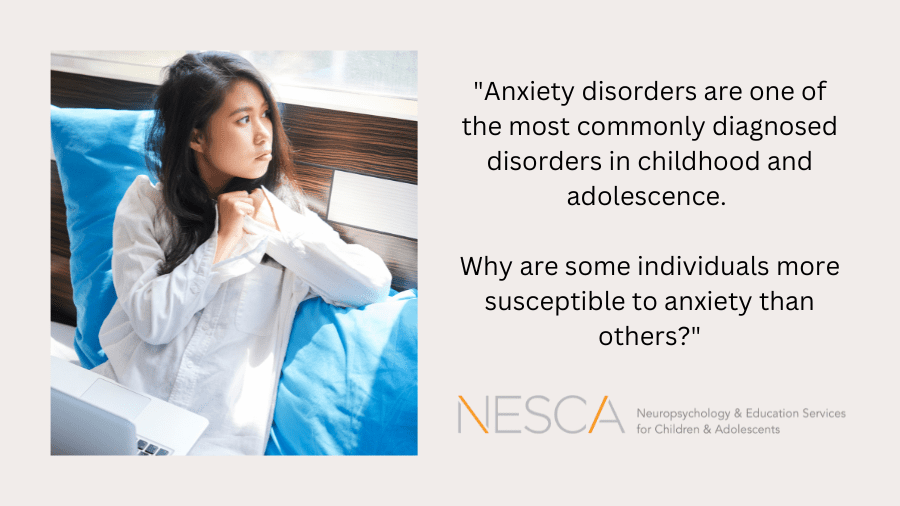
Anxiety disorders are one of the most commonly diagnosed disorders in childhood and adolescence. According to the Centers for Disease Control and Prevention (CDC), 9.4% of children aged 3-17 years (approximately 5.8 million) were diagnosed with anxiety between 2016-2019. These numbers have increased significantly during the COVID-19 pandemic. Some studies estimate that the prevalence of child and adolescent anxiety disorders nearly doubled during the pandemic.

Why are some individuals more susceptible to anxiety than others? The development of anxiety and anxiety disorders during youth is not simple or straightforward but involves complex interactions among the following variables:

  • Temperament: Children with the behavioral inhibition temperamental style described as timidity, shyness, and emotional restraint when with unfamiliar people and or in new places are more likely to develop anxiety disorders.
  • Parent-child Attachment: Children who did not experience a trusting and secure parental bond, but received inconsistent responses from caregivers and are preoccupied with the caregiver’s emotional availability (Ambivalent attachment) are at increased risk for developing an anxiety disorder.
  • Parental Anxiety: Children with anxious parents are at higher risk of developing an anxiety disorder. This relation is partly influenced by genetics. The risk of developing specific anxiety disorders has been associated with various genes. These can be passed to the child, thereby increasing their genetic vulnerability to anxiety disorders. However, parental behavior and practices are also important in understanding this link.
  • Parenting Behavior/Practices: When parents model anxious, overcontrolling, or demanding behavior, their children are more reluctant to explore new situations and display more avoidance behaviors.
  • Adversity: Trauma, negative/stressful life events as well as low socio-economic status are also risk factors for childhood anxiety. The more adverse life events an individual experiences in childhood, the greater the likelihood that they will develop an anxiety disorder. They also experience higher levels of anxiety.
  • COVID-19: The combination of social isolation and lack of support networks increased anxiety among youth during the COVID-19 pandemic.
  • Bullying: Being the victim or perpetrator of bulling is also associated with anxiety symptoms later on in life
  • Externalizing Disorders: Adolescents with early externalizing disorders are at increased risk for later anxiety disorders. Attention Deficit/Hyperactivity Disorder (ADHD), in particular, is a significant risk factor.
  • Sleep: Sleep disturbance often predicts the emergence of anxiety disorders.
  • Cognition: Maladaptive cognitive responses (e.g., inability to tolerate distress, negative beliefs about uncertainty, avoidance of new/unfamiliar people/things, and repetitive negative thinking) are associated with impaired emotion regulation and a greater risk of developing anxiety disorders.

Supportive relationships with family and peers as well as problem-focused coping strategies can guard against anxiety disorders. Problem-focused coping refers to strategies that directly address the problem to minimize its effect.

Parents, caregivers, and other adults involved can also help by:

  • being aware of the signs of anxiety
  • being mindful of expectations set for children and teens
  • encouraging participation in sports teams, clubs, community- or religious-based groups
  • supporting a healthy lifestyle, including a nutritious diet, exercise, and adequate sleep
  • providing access to support services


References:

Donovan, C. L., & Spence, S. H. (2000). Prevention of childhood anxiety disorders. Clinical psychology review20(4), 509-531.

Vallance, A., & Fernandez, V. (2016). Anxiety disorders in children and adolescents: Aetiology, diagnosis and treatment. BJPsych Advances, 22(5), 335-344. doi:10.1192/apt.bp.114.014183

Warner, E. N., & Strawn, J. R. (2023). Risk Factors for Pediatric Anxiety Disorders. Child and Adolescent Psychiatric Clinics. Published: February 26, 2023 DOI: https://doi.org/10.1016/j.chc.2022.10.001


About Pediatric Neuropsychologist Ferne Pinard, Ph.D.

Dr. Pinard provides comprehensive evaluation services for children, adolescents, and young adults with learning disabilities, attention deficit/hyperactivity disorders (ADHD), and psychiatric disorders as well as complex medical histories and neurological conditions. She has expertise in assessing children and adolescents with childhood cancer as well as neuro-immunological disorders, including opsoclonus-myoclonus-ataxia syndrome (“dancing eyes syndrome”), central nervous system vasculitis, Hashimoto’s encephalopathy, lupus, auto-immune encephalitis, multiple sclerosis (MS), acute disseminated encephalomyelitis (ADEM), and acute transverse myelitis (ATM), and optic neuritis.

To book a neuropsychological evaluation with Dr. Pinard or another expert neuropsychologist at NESCA, complete NESCA’s online intake form

Neuropsychology & Education Services for Children & Adolescents (NESCA) is a pediatric neuropsychology practice and integrative treatment center with offices in Newton and Plainville, Massachusetts; Londonderry, New Hampshire; and Coaching and Transition staff in greater Burlington, Vermont, serving clients from preschool through young adulthood and their families. For more information, please email info@nesca-newton.com or call 617-658-9800.

A Halloween for Those with Sensory Challenges

By | NESCA Notes 2021

By: Julie Robinson, OT
Director of Clinical Services; Occupational Therapist, NESCA

Halloween – a holiday full of tricks and treats. For some children, getting in the Halloween spirit by getting dressed up, carving pumpkins, and going trick-or-treating with friends is what they look forward to all year. For others, dressing up in an itchy costume, not being able to see someone’s face because they are wearing a spooky mask, being out in the dark with crowds of noisy trick-or-treaters, carving pumpkins and having to touch the oooey goooey insides of a pumpkin, and seeing decorations that make sudden noises or movements may make this holiday overwhelming for these children. Halloween can be tricky for families with children living with sensory processing difficulties, but with some creativity and planning ahead, families can build their toolboxes with their own tricks to combat the challenges that come with Halloween so their child can enjoy the treats that Halloween has to offer.

Here are some tricks for some common challenges that Halloween brings up:

Prepare for the day

Have an open discussion with your child about the traditions and activities associated with Halloween. You can read Halloween-themed books or watch Halloween movies (perhaps not the really scary ones!) to prepare your child for what to expect, because the anticipation of a new routine or anticipation of participating in unfamiliar activities can cause stress on a child. Discuss the plan for Halloween regarding decorations, attending parties, going trick-or-treating, etc., ahead of time so the child knows what to expect when celebrating the holiday. Consider the use of a visual picture schedule with activities that may be added into your typical routine. Provide ample warnings for transitions, when possible, to give your child time to move from one activity to another.

Be creative and imaginative with your child’s costume

The most important aspect of a costume for a child with sensory processing difficulties is ensuring that the costume is comfortable. Certain costume material may be itchy or scratchy, costumes with masks may occlude a child’s vision or be too tight on their head, or make-up may smell off-putting to a child. Children should have the opportunity to try on their costume when walking, sitting, and reaching for things before wearing it for real to make sure they are comfortable moving around in it. It is important to remember the idea of “less is more” and to use your imagination when coming up with costume ideas. For example, if a child wants to be a superhero, consider attaching a superhero logo to the front of a shirt they wear regularly rather than having your child wear a full superhero one-piece costume that may be itchy, tight, and hot.

Choose activities that best fit your child’s sensory needs

Meaningful participation in Halloween festivities doesn’t just include carving pumpkins and going trick-or-treating. Halloween activities can include roasting pumpkin seeds, setting out the candy bowl for trick-or-treaters, doing Halloween-themed crafts, etc. It is important for you to pick activities that best fit your child’s sensory needs. For example, if your child dislikes carving pumpkins because they have to touch the messy pumpkin insides, consider having your child paint their pumpkin or decorate it with stickers instead or make a pumpkin out of paper to decorate. If you and your child really want to go trick-or-treating but your child becomes overwhelmed with noisy crowds, consider trick-or-treating on only quiet side streets, or limit your time, allowing for breaks in between. If your child becomes overwhelmed with flashing lights, loud noises, or scary decorations, consider doing a drive-by of the neighborhood before taking your child out for trick-or-treating so you know which houses to avoid. For some children who crave a great deal of movement, it may be useful to engage in some heavy work activity before participating in a Halloween activity: wall push-ups, yoga poses, carrying weighty objects, for example. It may also be useful to engage in calming sensory activity to ease the transition from a busy setting back into the house: tactile materials like playdough or putty, water play, or a sensory table may be worth trying, or consider making a play tent or fort with quiet books or puzzles, or drawing to smooth the transition.

Monitor for overstimulation

Knowing when your child has had enough of Halloween festivities is just as important as knowing how to get your child engaged in them. A child may not be overstimulated at first, but may become overwhelmed minutes later. It is important to give your child choices of activities and next steps they can take as well as alerting your child about the sequence of events and the timeframe of events so that they know what to expect. If possible, help your child learn to advocate for themselves by saying things like, “please don’t touch me,” or “no thank you, I don’t want wear that,” in order to give them some autonomy over the activities that they participate in. However, in situations where this isn’t possible, it is important as the parent to know when to stop or disengage from festivities when sensory overload occurs and return home or to a quieter, more familiar space to give the child time to decompress.

Resources:

Enjoying Halloween With Sensory Challenges. (2021). Aota.org. https://www.aota.org/About-Occupational-Therapy/Patients-Clients/ChildrenAndYouth/halloween-sensory.aspx?fbclid=IwAR23ux4OKqJmXEZdnCIzb2_Uh0of55YKuCf8ek97UEAc1jZflndR_ZEBRwM

Morin, A. (2019, August 5). Halloween Challenges for Kids With Sensory Processing Issues and How to Help. Understood.org; Understood. https://www.understood.org/articles/en/halloween-challenges-for-kids-with-sensory-processing-issues-and-how-to-help

5 Ways to Help Children with Sensory Challenges Participate in Halloween Festivities. (2021). Aota.org. https://www.aota.org/Publications-News/ForTheMedia/PressReleases/2019/102419-Halloween-Tips-Sensory-Challenges.aspx


About the Author

Julie Robinson is an occupational therapist with over 25 years of experience as a clinician. The work Julie does is integral to human development, wellness and a solid family unit. She particularly enjoys supporting families through the process of adoption and in working with children who are victims of trauma. Julie has extensive experience working with children diagnosed with an Autism Spectrum Disorder (ASD), or who have learning or emotional disabilities. She provides services that address Sensory Processing Disorder (SPD) and self-regulation challenges, as well as development of motor and executive functioning skills.

To book an appointment or to learn more about NESCA’s Occupational Therapy Services or other clinical therapies, please fill out our online Intake Form, email info@nesca-newton.com or call 617-658-9800.


Neuropsychology & Education Services for Children & Adolescents (NESCA) is a pediatric neuropsychology practice and integrative treatment center with offices in Newton, Massachusetts, Plainville, Massachusetts, and Londonderry, New Hampshire, serving clients from preschool through young adulthood and their families. For more information, please email info@nesca-newton.com or call 617-658-9800.


Going with the Flow

By | NESCA Notes 2021

By Dot Lucci, M.Ed., CAGS
Director of Consultation and Psychoeducational Services, NESCA

It’s September, and a new school year has already begun for most children. We had hoped that Covid would be behind us and the start of this school year would begin with a greater semblance of the old normal. Sigh…it has not. We are still wearing masks, keeping our distance and washing hands amongst other health considerations. Many students are eager to get back to school and in-person learning even though they have to wear masks. Many are accustomed to it, and it is no big deal. However, there are those students who preferred virtual learning and have grown more and more anxious at the thought of going back to in-person learning.

Back at the start of the pandemic, I wrote a blog about going with the flow, and it seemed appropriate to reintroduce the topic again as we start another school year still with so much uncertainty. Will there be outbreaks of the new variants at school? Will there be quarantines happening again? Will someone in my family, class, school get sick and how serious will it be?  We don’t know the answers to these questions, and worrying about them doesn’t help us be in the moment. In Bostonia’s current cover piece, “The kids are stressed, anxious, lonely, struggling, learning, grateful, adapting, alright,” Eric Moskowitz summed it up accurately. What researchers found is that children who were at a disadvantage before the pandemic suffered the most – which is not surprising – yet overall kids are resilient.

In  Angela Currie’s recent blog, “Helping Students Transition Back to School,” she covers the essentials of establishing bed time/morning routines, connecting with teachers, mask wearing routines and many more. I would like to add to her list with the psychological, social and emotional routines and ways of being that will also make the transition smoother.

Education Week offers a few social-emotional checklists that are good to review to help you set your student off on the right foot as they start this school year.

  • First check in with yourself and your own emotions/feelings. If you are feeling anxious, do something to help calm your emotions and gain some centeredness. Take care of yourself so you can take care of others.
  • Establish those all so important sleep, eating and exercise routines.
  • Establish a calming routine that the family can do together for a few minutes (i.e., yoga, mindful minute, deep breathing, etc.).
  • Acknowledge the breadth of feelings your child may have and how rapidly they may change. Point this out to him/her when they are calm. Introduce the realization that thoughts are connected to feelings, and they can change their thoughts to help their feelings change. Be understanding, supportive and empathetic yet also encourage your student to use their “past data” to support their progress forward through their feelings.
  • As Angela said, establish routines and predictability at home but also model and help your child know that things don’t always go as planned. Have routines yet be flexible, adaptable and a “go with the flow” mindset will be essential as s/he enters this school year. There are always Plans B, C, and D when Plan A doesn’t work. For instance, you may insist your child wear a mask and another child in his class, or afterschool activity/sport, may not. Preview this possible scenario so your child can adept and accept. Or, a student starts the year in-person, but then hybrid (hopefully not) happens…again. You get the idea about teaching flexibility.
  • Stay positive even in the midst of uncertainty, as this helps create the right biochemical mix that allows you to think more clearly.
  • Be aware of your thoughts and help your child be aware of their thoughts. Thoughts influence our mood, feelings and behavior, and we can exert control over them.
  • Be grateful (end the night with a gratitude moment).
  • Be supportive. Acknowledge the efforts, tasks, feelings, etc. that your kids are taking on and experiencing. It helps them develop self-confidence, self-esteem, self-efficacy, pride and a sense of competence.
  • Be hopeful. Yesterday is history (don’t dwell there), tomorrow is a mystery (don’t worry about it) and today is a gift (even if you don’t feel like it is). Be present and allow whatever feelings come up (positive or negative) to flow through you so you can make way for new feelings.

Wishing everyone a smooth start to the 2021-2022 school year, and may the force be with us as we continue to combat Covid.

Resources

https://www.bu.edu/bostonia/

https://www.edweek.org/leadership/preparing-for-in-person-learning-a-covid-19-checklist-for-parents/2021/08?utm_source=nl&utm_medium=eml&utm_campaign=eu&M=63136722&U=1970318&UUID=f2e19d19dbb5bd4e92068a32311b141c


About the Author

NESCA’s Director of Consultation and Psychoeducational Services Dot Lucci has been active in the fields of education, psychology, research and academia for over 30 years. She is a national consultant and speaker on program design and the inclusion of children and adolescents with special needs, especially those diagnosed with Autism Spectrum Disorder (ASD). Prior to joining NESCA, Ms. Lucci was the Principal of the Partners Program/EDCO Collaborative and previously the Program Director and Director of Consultation at MGH/Aspire for 13 years, where she built child, teen and young adult programs and established the 3-Ss (self-awareness, social competency and stress management) as the programming backbone. She also served as director of the Autism Support Center. Ms. Lucci was previously an elementary classroom teacher, special educator, researcher, school psychologist, college professor and director of public schools, a private special education school and an education collaborative.
Ms. Lucci directs NESCA’s consultation services to public and private schools, colleges and universities, businesses and community agencies. She also provides psychoeducational counseling directly to students and parents. Ms. Lucci’s clinical interests include mind-body practices, positive psychology, and the use of technology and biofeedback devices in the instruction of social and emotional learning, especially as they apply to neurodiverse individuals.


To book a consultation with Ms. Lucci or one of our many expert neuropsychologists, complete NESCA’s online intake form. Indicate whether you are seeking an “evaluation” or “consultation” and your preferred clinician/consultant in the referral line.


Neuropsychology & Education Services for Children & Adolescents (NESCA) is a pediatric neuropsychology practice and integrative treatment center with offices in Newton, Massachusetts, Plainville, Massachusetts, and Londonderry, New Hampshire, serving clients from preschool through young adulthood and their families. For more information, please email info@nesca-newton.com or call 617-658-9800.


The Value of Mulligans

By | NESCA Notes 2021

By:  Stephanie Monaghan-Blout, Psy.D.
Pediatric Neuropsychologist

Let’s face it – a lot of parenting involves socializing children whose brains are in the process of being built. This means:

  1. They do not yet have the cognitive capacity to understand the moral principles behind such behaviors as “sharing, “being nice” and “using our words.”
  2. They are in the process of learning how to inhibit the impulse to grab, say whatever one thinks and using physical force to get what one wants.

Behavioral reinforcement strategies (rewarding desirable behavior) can be quite effective as a socialization technique – but only if the strategy is keyed to both an understanding of the level of the child’s cognitive/moral development and their capacity for impulse control. All too often, the parent’s efforts to shape their child’s behavior run aground because of problems in assessing either (or both) of these areas. The concept of a “mulligan” can be a very useful in compensating for either child or parent error.

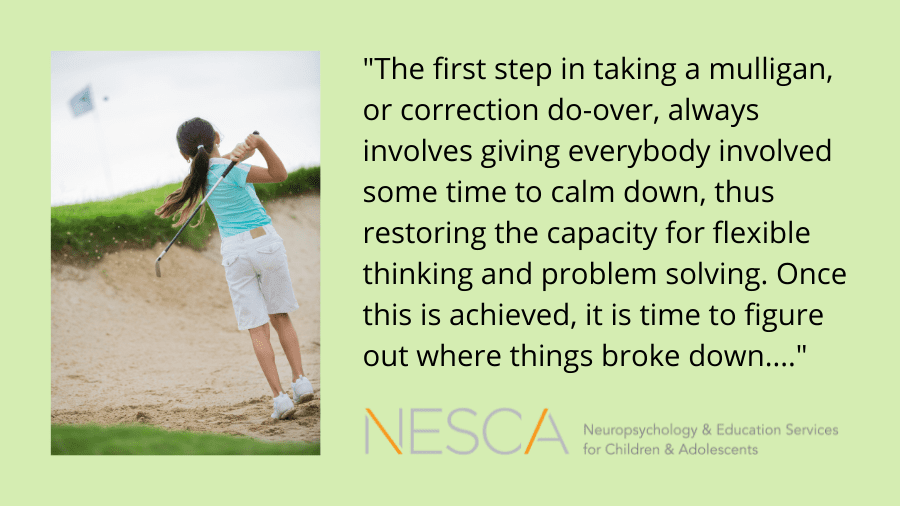
The term “mulligan” comes from the game of golf where it means getting an extra stroke after a poor shot. There are several stories about the origin of the term, but most involve a player named Mulligan who had been so rattled by a variety of events that he made a very poor shot on his first effort and claimed a “correction” – basically a do-over. This fits well with the dilemma presented to parents when a child has not been able to stick to an agreement, like “if you boys can work out your differences without verbal or physical fighting this morning, we will get some ice cream this afternoon.”

The first step in taking a mulligan, or correction do-over, always involves giving everybody involved some time to calm down, thus restoring the capacity for flexible thinking and problem solving. Once this is achieved, it is time to figure out where things broke down: was it overestimating the child’s capacity for controlling their impulses over time, in certain situations, or with certain people? Or was it because the child did not know how or why to take certain actions? If the problem involves impulse control, it will be up to the parent to restructure the situation in order to make it more realistically doable for the child or children – in other words, the parent takes a mulligan. For instance, s/he might say, “Look, this is not working out. I’m going to take a mulligan. Every 15 minutes that you guys can get along and work out your differences, I will give you a point. If you can get 3 points this morning, we will go for ice cream this afternoon.” Notice that this directive leaves some room for inevitable error, but still imposes reasonable expectations.

When the problem falls in the “how” or “why” category, parents also need to consider the child’s developmental status before engaging in problem solving. It is really important to appreciate that a child’s understanding of common conventions, like “sharing” and “fair.” In the egocentric and preconventional thinking of young children, “sharing” is too abstract of a concept and “fair” means “I get my way.” To speak about “taking turns,” make more sense to them. In the more conventional thinking of elementary school children, the key element in sharing is “fairness,” or, is the exchange equal? (In high school or college, some students will begin to struggle with the concept of equity, or how to allocate resources and opportunities in order to ensure an equal outcome, but this is a foreign thought to most children when it applies to their own resources, like candy or access to video games). Once the parent is clear about how the child is viewing the problem and where their strategies broke down, they can offer a chance for a mulligan while teaching more effective strategies than brute force or crying. Concrete aids, such as wind-up timers that show minutes, can help children understand the passing of time. Whimsical strategies, such as “shooting fingers” or “Rock, Paper, Scissors” are fun ways of determining who goes first or who gets to choose the video that also teach tenets of compromise and collaboration.


Resources:

https://www.golfdigest.com/story/did-you-know-where-did-the-term-mulligan-originate


About the Author:

Formerly an adolescent and family therapist, Dr. Stephanie Monaghan-Blout is a senior clinician who joined NESCA at its inception in 2007. Dr. Monaghan-Blout specializes in the assessment of clients with complex learning and emotional issues. She is proficient in the administration of psychological (projective) tests, as well as in neuropsychological testing. Her responsibilities at NESCA also include acting as Clinical Coordinator, overseeing psycho-educational and therapeutic services. She has a particular interest in working with adopted children and their families, as well as those impacted by traumatic experiences. She is a member of the Trauma and Learning Policy Initiative (TLPI) associated with Massachusetts Advocates for Children and the Harvard Law Clinic, and is working with that group on an interdisciplinary guide to trauma sensitive evaluations.

To book an evaluation with Dr. Monaghan-Blout or one of our many other expert neuropsychologists and transition specialists, complete NESCA’s online intake form.

Neuropsychology & Education Services for Children & Adolescents (NESCA) is a pediatric neuropsychology practice and integrative treatment center with offices in Newton, Massachusetts, Plainville, Massachusetts, and Londonderry, New Hampshire, serving clients from preschool through young adulthood and their families. For more information, please email info@nesca-newton.com or call 617-658-9800.

Skip to content